Ask ChatGPT
 What Next | Daily News and Analysis
28 Aug 2026 · 33m · 12 chapters
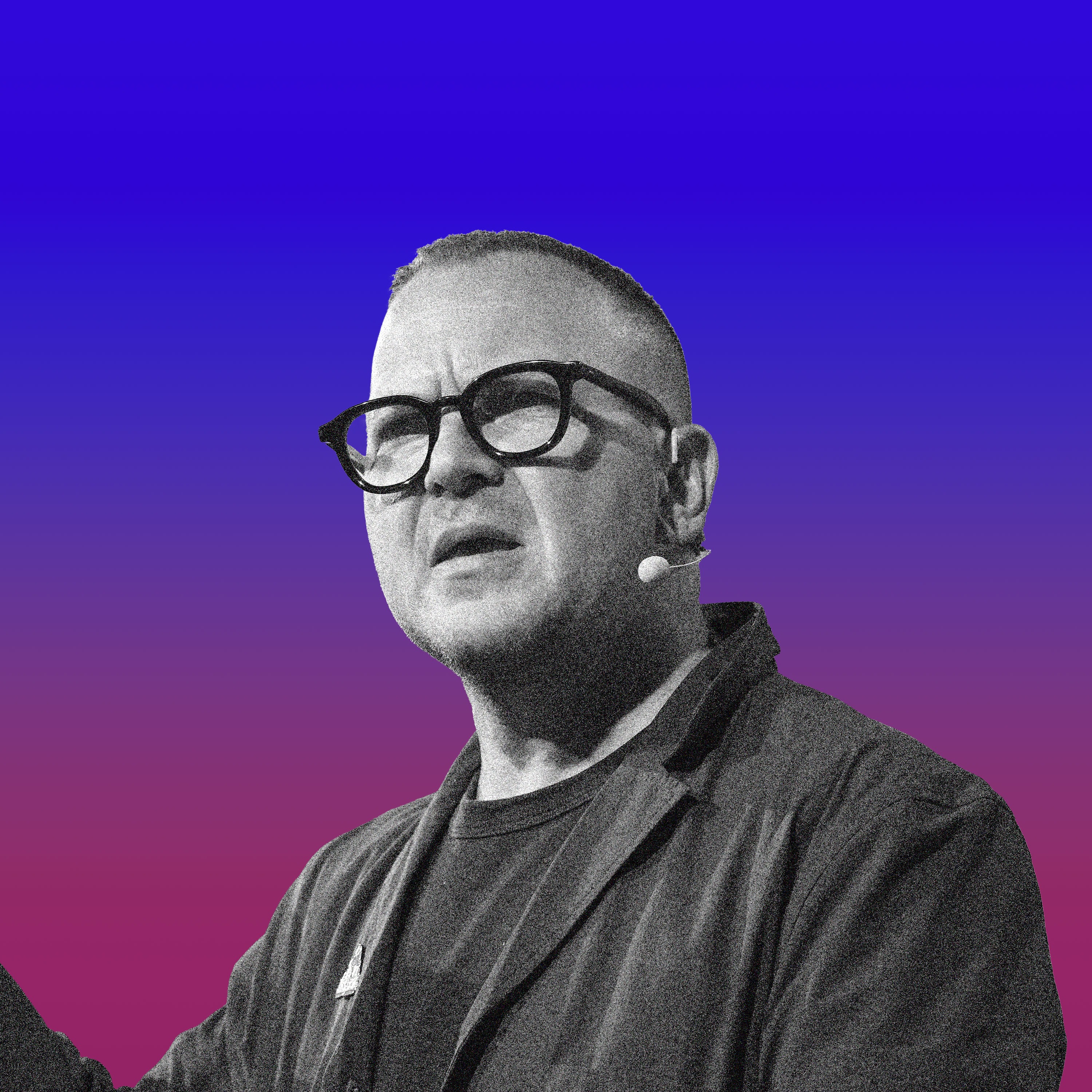
Cory Doctorow discusses “inshittification” and argues the current AI boom is a profit-driven bubble that degrades work and accountability, not a straightforward path to labor replacement or public benefit. He frames “reverse centaurs” as a better model: humans direct machines when machines need human attention.
Cory Doctorow is a journalist and sci-fi author who coined “inshittification.” He wrote The Reverse Centaur’s Guide to Life After AI.
AI economics haven’t paid off; AI sales narratives are used to justify firing workers while shifting blame to humans via “automation blindness.” The bubble’s growth story attracts financiers; AI companies lose money and have worsening unit economics.
“Lucy and Ethel” conveyor-belt metaphor; truck-driver automation math (BLS category inflation, gig-like unpaid waiting, repossession risks); “AI detects cancer” as a pitch to fire radiologists and have remaining staff rubber-stamp AI; TSA-style attention limits.
Written by AI. May contain mistakes.
Explore Cory Doctorow's concept of inshittification and its implications.
“Just a heads up here at the top of the show, our language gets a little spicy in this episode.”
Discussion on how humans are affected in the interaction with machines.
“Yeah, so a centaur in automation theory is a person assisted by a machine.”
Critical examination of the narratives surrounding AI and its growth.
“and also what the problems are with this idea that we can just replace humans with software.”
Exploration of why AI feels urgent and its potential effects on jobs.
“You and I have been doing this for a while.”
Discussing the misconceptions around AI's economic impact and its role in job automation.
“Because I think these really tangible examples are helpful to people if the big concepts are hard to get your fingers on.”
Exploring the high valuations of AI companies and the detachment from fundamental economics.
“But this is this is the Byzantine premium, right?”
Examining the claims of AI's role in cancer detection and the implications for medical professionals.
“I actually now want to talk about cancer.”
Explores the complexity of political activism beyond consumer choices.
“illegal to do that kind of reverse engineering and modification.”
Discusses the impact of local politics and community engagement on societal change.
“But that is also a group of people who could very easily identify and see the material harm to them, their families, society, et cetera.”
Examines the relevance of unions and trust busting in addressing modern issues.
“And then the last place to get involved is in your workplace.”
Analyzes the economic implications of AI and the unsustainable growth model.
“It was the Grangers, right, who were these very Luigi Mangione-ish farmers who were very angry at railroad barons and like threatening to kill them.”
Highlights the risks associated with artificial intelligence growth and market bubbles.

Get the gist, explore an idea or ask about something said.
 Claude
On What Next | Daily News and Analysis, what are the key points of this episode?
Searching your listeningAutomatic transcript. May contain errors.
0:00Being a serious business owner takes hard work, patience, and a drive to keep moving forward. So it's important to find a serious business card that goes the extra mile. With the VentureX Business Card from Capital One, you earn unlimited double miles on every purchase. And with big purchasing power, you can spend more and earn more. This is your sign to take your business to the next level. The Capital One VentureX Business Card. What's in your wallet? Terms apply. See CapitalOne.com for details.
0:30Stripe is built for whatever comes next, because as your business scales, so does the complexity of fraud. New customers, new markets, new AI-driven attack patterns. Stripe Radar protects your business as it scales with the scale of the Stripe network. The more payments Stripe sees, the smarter its AI gets at detecting those patterns as they emerge. Stripe's network is so vast, it has seen$1.9 trillion in payment volume across millions of global businesses. In fact, when a card is used, there's a 92 % chance the Stripe network has seen it before. All of this means fraudulent patterns across payments, accounts, and customer abuse can be detected, flagged, or blocked easier.
1:14Based on the rules you set up, of course. Blocking bad actors, welcoming good customers, keeping more of your revenue, your revenue. Learn more about fighting fraud with Stripe at stripe.com slash radar.
1:31Hey, everyone. It's Lizzie here. I am off today, but that does not mean that we don't deliver you an episode. Back in June, we talked with Cory Doctorow. You may know him as the creator of the idea of inshittification, the concept that everything online gets continually worse in the name of profit. Cory had a new book out this year called The Reverse Centaur's Guide to Life After AI. We talk about why the economics of AI haven't paid off yet, and why, when, and if the bubble will actually pop. Here's our conversation. Just a heads up here at the top of the show, our language gets a little spicy in this episode.
2:12Okay, you've been warned.
2:19All right, girls, listen carefully. This is the wrapping department. Now, the candy will pass by on this conveyor belt and continue into the next room where the girls will pack it. You probably know this classic scene from I Love Lucy. And if you've never watched it, your parents or your parents' parents did. Lucy and Ethel are working at a chocolate factory. They're wrapping pieces of chocolate as they move down the conveyor belt. But the belt starts going faster and faster. Lucy and Ethel cannot handle the pace. They're fumbling. They're eating chocolate. This whole thing is going totally haywire.
3:01I think we're fighting a losing game. And this losing game from 1952 shows up in Cory Doctorow's new book. And the human who is working with the machine is almost certainly the bottleneck.
3:22A.K.A. Lucy and Ethel are the problem here. Doctorow is a journalist, a sci-fi author, and he coined the term inshittification. The idea that goods and services online degrade over time in the service of profit. Now, Doctorow's written about AI in his book The Reverse Centaur's Guide to Life After AI. The human can't work as long or as fast or lift things as heavy or what have you. And so when you pair the human and the machine, the human gets worked very hard, as opposed to the other way around, when you pair the machine with the human and the human's in charge. And that brings us to reverse centaurs.
4:01Reverse centaurs. Yeah, so a centaur in automation theory is a person assisted by a machine. You know, riding a bicycle, you don't just look like a centaur, you are one in some figurative sense, right? You're a human in control of a machine. The machine can do things you can't do, move faster than you, but it doesn't tell you what to do. My notes right now. Yeah, your notes, a spell checker. Okay. Lots of times that a human just can't pay attention in the same way or can't lift the same weight or can't run as fast or what have you. So we use a machine. The reverse centaur is the opposite. It's when there's a thing the machine can't do, and so the human is directed by the machine to do the things that the machine needs the human to do so the machine can do its function.
4:48So Ethel and Lucy, they're the reverse centaurs. I wouldn't call Corey's book a polemic against AI itself exactly. More one against the narrative around AI, the story that bosses tell each other, that this tech is inevitable, that growth is unstoppable, and that we all better get on board. Every arrangement of AI that is deployed in service to that narrative has to be a reverse centaur one. It has to be one where you're like firing nine-tenths of your workers, putting the remaining tenth in charge of marking the AI's homework, and then making them bear the blame when things go wrong. Which means that that's the destructive power of the bubble.
5:31And so a material critique of it has to talk about why these growth stories keep getting thought up, these sort of ever more outlandish growth stories, and also what the problems are with this idea that we can just replace humans with software. Today on the show, Corey wants to stop the runaway AI train. Here's how he plans to do it. I'm Lizzie O 'Leary, and you're listening to What Next TBD, a show about technology, power, and how the future will be determined. Stick around.
6:09Stripe is built for whatever comes next, because as your business scales, so does the complexity of fraud. New customers, new markets, new AI-driven attack patterns. Stripe Radar protects your business as it scales with the scale of the Stripe network. The more payments Stripe sees, the smarter its AI gets at detecting those patterns as they emerge. Stripe's network is so vast, it has seen$1.9 trillion in payment volume across millions of global businesses. In fact, when a card is used, there's a 92 % chance the Stripe network has seen it before. All of this means fraudulent patterns across payments, accounts, and customer abuse can be detected, flagged, or blocked easier.
6:53Based on the rules you set up, of course. blocking bad actors welcoming good customers keeping more of your revenue your revenue learn more about fighting fraud with stripe at stripe.com slash radar
7:10with the spark cash plus card from capital one you earn unlimited two percent cash back on every purchase and you get big purchasing power so your business can spend more and earn more Stephen, Brandon, and Bruno, the business owners of SandCloud, reinvested their 2 % cash back to help build the company's retail presence. Capital One, what's in your wallet? Find out more at CapitalOne.com slash SparkCashPlus. Terms apply. Your call has been forwarded to an automatic voice message system. A missed call doesn't feel like anything. No red flag, no notifications screaming at you. It just disappears into your call log.
7:47And nine times out of ten, that was someone ready to hand you money. That's why today's episode is brought to you by Quo, spelled Q-U-O, the business phone system built so you never miss a call. Here's what I like about it. All your calls, texts, and voicemails live in one place, so anyone on your team can pick up a conversation, see the full history, and respond fast. No more, wait, who talked to this customer last? And if you're worried about after-hours leads slipping through, Quo's optional built-in AI agent can answer questions and even book appointments while your team's offline. It's the number one rated business phone system on G2, and over 90 ,000 businesses already trust it to stay reachable.
8:27Money is on the line. Always say hello with Quo. Try Quo for free. Plus get 20 % off your first six months when you go to quo.com slash tech. That's Q-U-O.com slash tech.
8:46So this book is also called Life After AI, which is kind of a major promise. You and I have been doing this for a while. I've been a journalist for 25 years, seen a lot of tech cycles. You've seen a lot of tech cycles. And I think a thing that links them all is this attempt to grapple with them and understand them as they are happening, which is sometimes successful and sometimes a total failure. Sure. this ai related grappling feels different and bigger and i i kind of want to understand why you think that is i mean my my thesis is that it's because it affects professional class jobs so it's like a class issue sure but i i want i'm i'm wondering why you think it feels so meaty and urgent in a way that crypto maybe didn't?
9:37Well, there's a causal arrow question that I don't know which direction it runs, but this is bigger, right? So is it bigger because of whatever that special zhuzh is that's making it more ubiquitous, or is it more ubiquitous just because the dollar figures are larger? And dollar figures are very big, right? When I wrote the book, it was a$700 billion bubble. Now it's a$1.4 trillion bubble. And so these are, you know, much, much bigger. Right. And so I don't know if it's bigger because the story is different or if the story is different because it's so much bigger. But I do think there's something to this idea that especially stuff that media people care about gets written about.
10:21I also think that the AI boosters had some very canny demos. So, you know, if you remember that the, in my view anyways, that the basis for AI and the bubble is displacing high wage labor, it's amazing how many of the stories we have about AI and the concerns we have about AI relate exclusively to some of the lowest wage labor we have. Taxi drivers, commercial illustrators, come on, right? It's not a very large sector of the economy. Well, but also the most precaritized sector of the economy. Zero out the wage bill of every commercial illustrator in America. Give it to Sam Altman. It won't cover the kombucha bill for the engineers who oversee a single image models training run.
11:02Right. So the idea that this like proves something about the market opportunity, it doesn't accept in a kind of emotional way. Even stuff like deepfake porn, you know, like one of the things I say in the book is that while deepfake porn is horrible and they should feel bad about making it, if you go into the prospectus for one of these AI companies and you remove the line item for expected return on deepfake porn, their total expected revenue doesn't change. That's not what the money is coming from. So actually, you're teeing me up for the part of your book that I wanted to read from, which is a chapter called The Funny Math Gets Dangerous.
11:40Tech companies are spending hundreds of billions of dollars on AI and cramming it into your every orifice with every hour that God sends in a desperate gambit to convince investors that they will conquer the AI market and in so doing continue to grow. So the audience is not you and me. Right. It's Wall Street. We're the convincers. Yeah, all of these things are the convincers. Because it's like a Ponzi scheme. Yeah. Well, I mean, every investment bubble has Ponzi vibes for sure. But it's true that like in many cases, what you need is a kind of Greek chorus of people saying this is really big in order to get the people who do all the big capital allocation to say it's really big.
12:22And it is amazing the extent to which this has worked. So I was in Toronto yesterday, like all the best Americans, I'm Canadian. And I did a panel on digital sovereignty in Canada. It's an issue I'm like really interested in. My next book is about this called The Post-American Internet. I write when I'm anxious. Dude. I know. It's a lot of writing. I know. So and I don't use AI to write them. So I'm like going in there thinking, well, you know, Trump just shut off the Microsoft 365 accounts of a bunch of public officials abroad that he doesn't like. Right. If he does it to a government ministry, that country shuts down.
13:01This is the digital sovereignty risk. And we go into the pre-meeting for the panel, and the other panelists are all like, well, what are we going to do about Canadian sovereign AI? I'm like, wait, what? If we shut off all the chatbots in Canada, what changes? Some kids have to do their own homework. We get less slop. Even if you're using it for workplace automation, what's the big deal? Whereas if you shut off Office 365 for Canada or, you know, John Deere tractors can be remotely bricked. They don't have their software update. So or not just this. You can push a software update to them that permanently immobilizes them, which is what happened after a bunch of Russian soldiers looted some Ukrainian tractors.
13:39So, you know, Canada decides not to give Alberta to America. Donald Trump bricks all the tractors in the prairies. That's like game over. Right. So, you know, like that's the digital sovereignty risk. And they're just like, no, it's AI. And I'm like, look, what? That feels like a nice to have, folks. Like, what are we talking about here? But even if you're a company that's using AI to now replace your junior software engineers, that does feel like it's a risk. But the idea that the national risk is that we're going to get rid of the AI and that like all the, I don't know, SMEs that are doing like multivariate analysis to figure out what fridge to put the milk in at the convenience store are going to have to like go back to, you know, wild ass guessing it or whatever.
14:24it's just it's just it's not it's deeply unserious right to talk about the the ai sovereignty risk i mean not not least because ai is the money losing this thing the human race has ever done and so if canada managed to roll out a sovereign ai it would have successfully launched itself into a phase of its economic development where it loses more money than it ever has right like i i still don't understand how this is contributing to the sovereignty picture in the funny math chapter you have a really good example using truck drivers. Yeah. I wonder if you could explain that. Because I think these really tangible examples are helpful to people if the big concepts are hard to get your fingers on.
15:06So you and I have been around a bit. You probably remember about 10 years ago, there was a lot of truck driver discourse. Yes. Because the Bureau of Labor Statistics category for commercial drivers, I forget what it's called. It's got a long name. It's got a number. says that it's the number one job in every state, right? That truck driver is the number one job in every state. And so you get these people just as like the AI is achieving liftoff. And I want to say there is like another material basis for the AI bubble, which is that the software is interesting. There are 2.2 million heavy tractor trailer drivers.
15:39That's right. Based on 2024 numbers. Right. Continue. So the software is taking off. It's all these dividends to scale are pouring in, right? They do the same trick that they did to get more performance out of these existing machine learning techniques. And instead of getting diminishing returns to scale, they get flat returns to scale. Every time they do more of it, they get more out. So people are getting really excited and they go, guess what? We could take trucks and we could give them their own lane and we could have AI coordinate among them to create like a constant flow where you wouldn't need a driver and we would offset all of the wage bill for those drivers.
16:22And then the number one job in every state would go away. And that's a huge automation labor crisis. Can we believe how crazy this is going to be? So it turns out the number is deceptive in many ways. Well, first of all, this is a bad truck, right? It's not just a bad truck. It's an even shittier train, right? A thing with its own lane that is just a bunch of container cars together. It's just like a less fuel efficient train. We don't need that. But also the BLS category encompasses everyone who drives heavy goods vehicles or commercial vehicles, including like florist vans. And so now we've got these florist vans that are being incorporated into this number that was being bandied about at the time.
17:02And, you know, the number of people you need in the florist van, whether or not it's driving itself, is one. because you can't just like catapult the flowers onto someone's porch or into someone's apartment. I guess the theory is a little robot could do it. But that's, now we're citing facts, not in evidence, right? Where is that robot and how reliably does it work? So this idea that we've invented the shitty train and that it's going to put everyone into work when in fact the number of workers you need hold steady is silly enough, But then you actually get granular on the way that heavy goods vehicles drivers operate.
17:41And like illustrators, they're among the most immiserated workers in America. So they are basically gig workers. They are not paid for time when they're waiting. So if you're like waiting at the Port of Los Angeles for 16 hours, that's unpaid wages. They buy their trucks on higher purchase through these, say, like installment sale agreements where if you miss a single payment, it's a full repossession. So you might have paid like$90 ,000 of the$95 ,000 in and you miss a payment and then they take it back and sell it to a different driver and start all over again. So they're like the worst treated workers in America whose wages have been eroded to the point of nothing.
18:21And so now we've got this thing where it's like, well, we're going to spend billions and billions of dollars and also have a national freak out about the coming robot apocalypse because we think maybe we can make a shitty train and that might put some of the worst paid workers in America out of work. But this is this is the Byzantine premium, right? Yeah. People, I think, don't like to look dumb in front of other people. Sure. And so if AI is there and it's a thing they don't totally understand, but someone says it's good. Yeah. Yeah, so economists call things that are hard to understand. They say they've got a Byzantine premium.
18:57They sometimes trade it more than they would if you understood them. We all became very familiar with the Byzantine premium during the Great Financial Crisis because we had these complex derivatives. And I was at a conference a little while ago, and a fairly famous AI booster came up to me and said, you know, we've got the AI that's now 51 % of the way to being human and conscious now, human intelligence. I'm like, really? What's a 52 % intelligent AI look like? And how is that different from a 51 %? And he's like, it's just a benchmark. And I'm like, so I don't even know that we have a consensus agreement of what human intelligence is.
19:33And he's like, well, if you don't know what it is, then how do you know I'm not making it? And I'm like, well, I don't know what the weather is in Paris. And I don't know what the weather is in Lisbon. That doesn't mean that they're the same thing. But here we are. It is late June. As you yourself say, seven giant AI companies account for 35 percent of the U.S. stock market. We are talking in a week where major tech stocks have freaked out and indexes have bounced around a little bit. We don't totally know where that's going. How do you understand the way public markets are reacting to this now?
20:13And I guess the place we are in in this arc or bubble or like, where are we? Corey Robin wrote something really good about this, that we can see the crazy valuations of the AI companies, especially now the SpaceX IPO, as reflecting something that started to happen in the cryptocurrency era where it's really just vibes based. that the fundamentals have gone out the window. Firms that lose money are getting crazy valuations and they don't just lose money. They also have bad unit economics. You know, one of the comparisons you often - But your Morgan Stanley's, your JP Morgan's, they're all attached to this.
20:49They're buying in. And, you know, there was a story, at least in the Web One days, that, okay, the web is losing money, but every user of the web makes more money for the web and every use of the web makes more money for the web and every generation of the web is more profitable than the previous one. So we can see that eventually we're going to reach a point where we will go from no profitability, profitability, and then growth. But AI is the opposite, right? Like every AI customer loses money for the business. The most prolific customers lose the most money for them. And every generation of AI loses more money than the one before.
21:26So there's this like great decoupling. And I think that the Musk IPO really shows just how sweaty it's all getting because you really got to find bag holders for a bubble. And Musk initially talked the S &P 500 and the NASDAQ 100 into allowing him to - S &P came back. Only because everyone freaked out. Yes. But NASDAQ hung in there, right? And so SpaceX debuts in the NASDAQ index. So if your retirement savings isn't an index fund, the manager, the fund manager, had to go and buy a bunch of SpaceX. They have no choice. But not only that, they got an exemption to the rule against insiders selling their shares.
22:13And then they restricted the amount of company shares they floated so that those fund managers all had to buy the shares from insiders, from his buddies, right, from whatever, you know, Emiratis and from Deutsche Bank and from everyone who gave him money for Twitter, everyone who gave him money for GrokX. And so this is his exit liquidity, right? We're the bag holders.
22:39When we come back, we often hear that AI can detect cancer. Is that actually true?
23:16You can spend more and earn more. This is your sign to take your business to the next level. The Capital One VentureX Business Card. What's in your wallet? Terms apply. See CapitalOne.com for details. State Fair food is getting smaller. And pricier. We'll have room for fried cookies. Okay, you never overspend on food. What's your deal? What's his deal? He went to Metro and got$450 in value on the new Samsung Galaxy A37 5G for free. And no activation fees. Free phone? Oh, sign me up. Get that more for your money feeling. Only on Metro by T-Mobile. Bring your number and activate$40 period plan. $450 based on device discount waived activation fee.
23:54Not available if with Metro or T-Mobile in the past 180 days.
24:01I actually now want to talk about cancer. Okay. Because there's this part in the book where you say, look, this is not about AI taking your job. It's more that an AI salesman can convince your boss to fire you and then the AI will not be able to do your job. Sure. So you and I are uniquely qualified to talk about this. I've had cancer. You've had cancer. Indeed. You seem to be doing well. I got my cancer-free diagnosis four days ago. High five. Yeah, five now. Okay. Yeah. But companies love to say that AI can detect cancer. Sure. So I think who better to try to puncture this a little bit? Sure.
24:40We have some moral authority. Yeah. Okay. So there's this example that you can use AI to find solid mass tumors and that maybe people can get rid of some radiologists. Talk me through the example. Yeah, sure. So, you know, if I imagine a sales call down at the Kaiser Hospital in L.A. where I get my treatment, where there's a sales guy in there talking to the CEO of the hospital system and they're like, look, you've got 10 radiologists on staff at$300 ,000 a piece. That's$3 million in your wage bill. I'm going to sell you a chap-op for another million dollars a year and it's going to sit on their shoulders and twice a day it's just going to whisper in their ear, take another look at that one.
25:23Because sometimes it can detect things that humans miss. Then I'd be like, this sounds great. I mean, you know, I don't want my premiums to go up, but this seems great. If, on the other hand, there was a pitch that was like, we've got the software that works so well that we can fire all the radiologists. And they weren't lying. And they were saying, let's get rid of all the radiologists. We'll have software do it. It'll be too cheap to meet her. I can imagine a potential cancer patient or someone who loves someone with cancer who says, look, the point of radiology is to fight cancer and not to pay the mortgage of radiologists.
25:56And so let's find a soft landing for those people. But I think that what the sales call actually consists of is something that that person wouldn't like, even if they don't give a damn about the radiologist. Which is what? I think the sales call is fire nine-tenths of your radiologist. Save$2.7 million a year on the wage bill. Split it between my boss, Sam Altman, and your shareholders or whoever, however you want to distribute it. Have the remaining radiologist mark the homework of the AI at a speed that no human being could ever pay attention to. Have the x-rays be more or less correct most of the time so that all they're doing is clicking OK over and over and over again and become inured to it, get automation blindness.
26:36And then when people die of cancer, we're going to blame them because it's their signature at the bottom of it. They're the accountability. And it's the automation blindness because most of the time it's right. Yeah. I mean, just like, yeah, yeah, yeah, yeah. If you've been through a TSA checkpoint, you know how this works, right? So we have, can I swear on this podcast? Of course. We have created. You're literally wearing a poop. I am wearing a poop. We've created the world's most water bottle finding as motherfuckers the human race has ever seen because those people spend all day looking at different angles of water bottles.
27:04And yet whenever a red team carries a fake bomb or gun through the checkpoint, they miss it because you cannot remain attuned to things that don't happen. It's just not how human attention works. So why does AI feel so inevitable right now? Well, inevitabilism is the kind of vulgar Thatcherism of the tech sector, right? There is no alternative. You know, they have always said this, that there is only one way to configure these gadgets. It has to be the way that is optimal for us and non-optimal for you. They kind of make it stick too. You know, in the old days, we used to have this idea of moving fast and breaking everyone's things, not just the things of people who couldn't fight back, where you were allowed to like hack stuff and change how it worked and reverse engineer it, make mods for it, alternative firmware.
27:54And then for the last 25 years, the period during which the Digital Millennium Copyright Act has been in force and as it's been expanding, it's become more and more illegal to do that kind of reverse engineering and modification. And so now we have this thing where it's inevitable, not because this is the only way that someone could make it work, but because it's a felony to reverse engineer and change how it works, sort of felony contempt of business model. So I guess the question and the pushback question is like, okay, well, how does one who, if you object to this idea of the future, have any control?
28:28Yeah. Well, I have good news and bad news. The bad news is that shopping isn't politics. And as much as it would be really nice if you could resolve all of the world's political problems just by shopping really carefully. I like shopping, right? It's fun. You don't need to get anyone else to come along and do it with you. It's quite solitary. Hell is other people. You don't have to convince anyone else to come and shop with you. I think that would be very nice if you could just vote with your wallet. You can't vote with your wallet. Billionaires love when you try to vote with your wallet because they can vote with their wallets because their wallets are thicker than all of our wallets put together.
29:01But we can't vote with our wallet. So we always get outvoted. So the way that you do politics is by doing politics. So even like a boycott, you know, the Montgomery bus boycott was not like a bunch of people waking up every morning for 380 days and deciding to walk to work, right? It was a cohesive movement where they had like meetings, but those meetings were to organize carpools and also to put pressure on bosses that were leaning on workers who were late because they were in the carpools and to articulate a crisp set of demands and to get the whole community behind them. And while, um, this is the good news, while it was a pain in the ass to have to do all of that work rather than just shopping, On the other hand, the residue of that effort was the backbone of the civil rights movement.
29:42But that is also a group of people who could very easily identify and see the material harm to them, their families, society, et cetera. This is much more diffuse. Well, OK, I don't think there's any shortage of people who are correctly worried about AI, but maybe incorrectly understand what to do about it. But maybe they're not bound together. Yeah. And so that's how you get a movement, right, is by like articulating a kind of agenda and a set of causal explanations for things that a lot of people are worried about but don't really understand what to do with. And so, you know, I've worked for the Electronic Frontier Foundation for 25 years now.
30:22And EFF, we do a lot of community outreach. We organize a lot of local groups. If you go to EFF.org, you can find ways to do that. There's also a lot of local politics intersection with this, you know. Because of data centers? Because of data centers, because of AI usage in municipal politics. So, you know, flawed cameras, automated decision making, you know, your kids being taken away from you by CPS or flagged as disciplinary problems by their school because of AI. Or the cops deciding where to police or the local courts deciding who gets parole. and you know if there's one thing we learn from Moms for Liberty it's that like the stupidest people in the world can take over unregarded local offices and completely upend the material conditions for people around them for the worse which means that people who aren't just total idiots could do stuff for the better and you know a failure to involve yourself in this ends up resulting not just in data centers and like all the farmland being taken over by eminent domain for data centers and, you know, all your water and energy being siphoned off and so on.
31:29It also determines whether or not there's like flock cameras that are used by chuds to kidnap your neighbors and send them to Salvador and slave labor camps. So, you know, this is like getting involved in local politics is good. And you can move the needle on local politics in a way that's much harder than moving state or federal politics. So there's a lot of opportunities to get involved there. And then the last place to get involved is in your workplace. Right. I was going to say you are a big advocate of unionization. Full disclosure, I am a WGA member. I'm unionized. But that also does seem like a very old fashioned answer to what feels like a modern problem.
32:05Well, it's funny because we used to not have a lot of the problems that we have now. We used to have like ways of addressing them. And then we stopped doing things like trust busting and organizing workers in unions. And then the problems came back. And now we say maybe we should do trust busting in unions. It's sort of like, well, those are very old-fashioned. But, you know, it's kind of like we used to not have a rat problem because we had all this rat poison. And then these neoliberal economists from the Chicago school said, you don't need the rat poison. And now rats are eating our faces off.
32:33And they're like, why are you blaming us for the rat problem? This is the great forces of history creating the time of the rat, making them more fecund than at any time in history. And while the rats did buy and shut down all the rat poison factories, that's just economically rational when you're not using rat poison. Rat poison is so old fashioned. What would we use the rat poison for? I mean, I don't think a union in 2026 is the same thing as a union in 1936. But I also think that it shares a lot of DNA with it. And the problems that we have are not dissimilar to the problems we had then. And in fact, like the material conditions are not a lot dissimilar.
33:10You know, the origin of American antitrust law, which grows in lockstep with the union movement, the origin of American antitrust law was a labor uprising. It was the Grangers, right, who were these very Luigi Mangione-ish farmers who were very angry at railroad barons and like threatening to kill them. Well, Luigi Mangione allegedly and threatening and threatening to kill them and sometimes enacting spectacular acts of violence on them. And so that was the circumstances under which John Sherman, brother of Tecumseh Sherman, a U.S. senator, passed the Sherman Act. so there will be people who listen to watch this interview and say like yeah okay i i i agree with you but like i find claude very useful for double checking my taxes or you know one parent i know said like actually i dumped the ikea instructions into chat gpt and it you know regurgitates it in a way that makes more sense to me.
34:08What do you say to them? Well, I think that we might be able to have that stuff. I mean, right now, the reason you're getting all that stuff and it feels great to you is because the AI companies are selling you$100 bills for a dollar a piece. What do you mean? They're just losing gigantic amounts of money. You know, there's this whole question about what Mythos, the Mythos model was. I was speaking to a friend of mine who's quite a well known security expert who said, you know, and also a big AI guy. And he said, you know, what I think they've done is they figured out how to make an AI that can produce a$20 ,000 security audit for about$100 ,000.
34:45And that's why they don't want to release it to the public, because they are going to lose a lot of money on it. And you may remember a couple of weeks ago, they tried to clean up their balance sheets preparatory to these IPOs that are being teed up. And they said, how about if we charge everyone$5 for these$100 bills? And all their major customers were like, that's too expensive. We are not getting$5 worth of value from these$100 bills. Well, we're now starting to see companies be in these token crises where they're like, wait, we've used all our tokens. Yeah. Yeah. And they can buy more, right?
35:12But they're like, well, these$100 bills were a bargain at$1 a piece, but they're not at$5 a piece. So you might like Claude, but do you like Claude well enough to pay$1 ,000 a month for it? That's one question. But the other question is, what do we do when the bubble's over? What AI will we have? Because there's this bedrock of finance Stein's law that anything that can't go on forever eventually stops. They're either going to unload on normies and we're going to stop subsidizing them and then we'll all go broke, or they won't find suckers and then they'll stop subsidizing them and the companies will fail.
35:47But one way or the other, this selling$100 bills at a dollar apiece just can't go on forever. You can't keep shoveling money into the money furnace. Before I let you go, you are wearing your in-shittification pin. In-shittification just like has gone everywhere, right? People understand what that comes. So to speak. So to speak. What is the thing you want people to take away from this? That the bubble has a material basis. And that material basis is not that AI is going to take your job. That material basis is that companies need a growth story and that stories about replacing workers are very attractive to financiers and to bosses, and that the worse the bubble gets, the worse the reckoning will be, and that whatever you think about AI, that this way of delivering AI is the worst way we can imagine, and we have to stop doing it really quickly, because the only thing worse than a$1.4 trillion bubble is a$2.8 trillion bubble.
36:55Corey, thank you for your time. Thank you. Cory Doctorow is the author of The Reverse Centaur's Guide to Life After AI, in addition to 30 other books. And that is the show for today. What Next TBD is produced by Rob Gunther, Evan Campbell, Madeline Thames-Ducharme, and Patrick Ford. Paige Osborne is the senior supervising producer of What Next and What Next TBD. Mia Lobel is the executive producer of podcasts here at Slate. and Ben Richmond is the Senior Director of Podcast Operations. I'm Lizzie O 'Leary. You can find me on Blue Sky. I'm at Lizzie O 'Reilly. Thanks so much for listening. Talk to you soon.
37:47Being a serious business owner takes hard work, patience, and a drive to keep moving forward. So it's important to find a serious business card that goes the extra mile. With the VentureX business card from Capital One, you earn unlimited double miles on every purchase. And with big purchasing power, you can spend more and earn more. This is your sign to take your business to the next level. The Capital One VentureX business card. What's in your wallet? Terms apply. See CapitalOne.com for details. State fair food is getting smaller. And pricier. We'll have room for fried cookies. Okay, you never overspend on food.
38:21What's your deal? What's his deal? He went to Metro and got$450 in value on the new Samsung Galaxy A37 5G for free. And no activation fees. Free phone? Oh, sign me up. Get that more for your money feeling. Only on Metro by T-Mobile. Bring your number and activate$40 period plan. $450 based on device discount waived activation fee. Not available if with Metro or T-Mobile in the past 180 days.
Through stealing your job or simply tanking the stock market—whichever comes first—the rise of artificial intelligence (companies) is a very futuristic sounding problem. It may have some very old-fashioned sounding solutions however.
Guest: Cory Doctorow, sci-fi author, journalist, blogger and author of “The Reverse Centaur’s Guide to Life After AI.”
This episode originally aired June 26. TBD will be back to regularly scheduled programming next week.
Want more What Next? Subscribe to Slate Plus to access ad-free listening to the whole What Next family and across all your favorite Slate podcasts. Subscribe today on Apple Podcasts by clicking “Try Free” at the top of our show page. Sign up now at slate.com/whatnextplus to get access wherever you listen.
Podcast production by Rob Gunther, Evan Campbell, Madeline Thames-Ducharme and Patrick Fort.
Paige Osburn is the senior supervising producer of What Next and What Next TBD.
Hosted on Acast. See acast.com/privacy for more information.