 Ask ChatGPT


The episode examines Michigan’s Senate primary between progressive Dr. Abdul El-Sayed and moderate Haley Stevens, arguing the race is being shaped by Israel policy and AIPAC’s influence.
El-Sayed is reframing “America first” as progressive by arguing U.S. money should go to Michigan rather than killing Palestinians; he also exploits Stevens’s financial ties to AIPAC, making her advantage a liability.
Peter Beinart, Jewish journalist and editor-at-large for Jewish Currents, formerly aligned with AIPAC, now critical; he says AIPAC functions as a matchmaking network that builds long-term relationships via fundraising and trips, and that it prioritizes candidates’ willingness to support Israel over other democratic concerns.
AIPAC’s Super PAC United Democracy Project spending $30 million in Michigan (per Politico); Cori Bush’s 2024 loss blamed on AIPAC; Beinart’s account of visiting the West Bank as a turning point.
Written by AI. May contain mistakes.
An introduction to the political landscape in Michigan focusing on AIPAC.
“Hi, I'm Angie Hicks, co-founder of Angie.”
Analysis of the dynamic between El-Sayed and Stevens in the Michigan primary.
“If you are a politics nerd, and I know there are a few of you listening, right now you're paying a lot of attention to Michigan.”
Exploring AIPAC's influence and its changing political strategies.
“I mean, I was watching some of this debate this morning, and it stood out to me that if you did a drinking game where you drank every time someone said AIPAC, you would not be well by the end of this debate.”
A journalist's reflection on their evolving views about AIPAC and its impact.
“It will actually shift its—it tries to do it subtly, But it actually shifts the policy positions that it supports based on what the Israeli government is doing.”
Discussion on Cori Bush's campaign and the implications for the Democratic Party.
“That might seem like an inflammatory thing to say.”
A personal narrative on the shifting relationship with AIPAC over time.
“Is your fulfillment ready for peak season?”
Explores the moral implications of American support for Israel amid oppression.
“Jewish and American support for Israel was a moral abomination because we were our money and our community were complicit in supporting Israel in a system of very, very profound oppression.”
Discusses AIPAC's influence in Washington and its relationship with politicians.
“Like there's no Palestinian version of AIPAC.”
Analyzes the long-term relationships politicians develop with AIPAC and its supporters.
“Especially because it's not really like you have other people until quite recently necessarily speaking in your ear on the other side.”
Examines the changing dynamics and voices within the American Jewish community.
“Safety is found in community with other people working through your differences, etc.”
Critically assesses AIPAC's role and the implications of its power in American politics.
“Like America does a lot of really terrible things in the world that AIPAC has nothing to do with and that Israel has nothing to do with.”
The speakers discuss how AIPAC has become derogatory shorthand for Jews in political discourse and why its prominent role in American politics is not good for Jewish people.
“I do feel like this idea that APAC has become shorthand for the Jews derogatorily is this thing that has, it's become problematic in the discourse for everyone.”
Explore how AIPAC and similar organizations influence political candidates and elections.
“You know, it's like that's like where you want the focus to be.”
Discussion on the pressures faced by pro-Israel Democrats in contemporary politics.
“only challenge the U.S.-Israel relationship.”
The potential impact of charismatic candidates on the Democratic Party's funding and strategy.
“What I am worried about is not an exodus of American Jews from the Democratic Party.”
How AIPAC chooses candidates based on their support for Israel and its implications.
“in the race, which when I first read it really surprised me.”
A discussion on AIPAC's potential crisis as support for Israel shifts in the political landscape.
“You can also see the way that Republican support for Israel is shrinking in lots of little ways.”
Exploration of various perspectives on Israel's future and its relationship with the US.
“a firewall between American public opinion and American policy.”
The role of anger in political discourse and its implications for various communities.
“And they see a version of what Donald Trump has done with politics, I think, which is he activated anger, in his case, anger at immigrants to say like, this is a this is a problem.”
Discusses the problematic linkage of Jewish identity with support for Israel.
“It dehumanizes immigrants and Muslims and trans people, you know, people from Somalia, et cetera.”

Get the gist, explore an idea or ask about something said.
 Claude
On What Next | Daily News and Analysis, what are the key points of this episode?
Searching your listeningAutomatic transcript. May contain errors.
0:00Business is booming. Is your fulfillment ready for peak season? Switch to ShipStation now and handle more volume with confidence when it counts. ShipStation connects Shopify, Amazon, TikTok Shop, and over 200 more integrations with one platform that does it all. You can manage orders, sync inventory, track returns, all automatically. Everything your operation needs, all in one place. Right now, qualified shippers get a real dedicated person to get you set up and switched over for free. So when peak season hits, you're ready to go. Switch today at ShipStation.com, code audio. Hi, I'm Angie Hicks, co-founder of Angie.
0:32And one thing I've learned is that you buy a house, but you make it a home. Because with every fix, update, and renovation, it becomes a little more your own. So you need all your jobs done well. For nearly 30 years, Angie has helped millions of homeowners hire skilled pros for the projects that matter. From plumbing to electrical, roof repair to deck upgrades. So leave it to the pros who will get your jobs done well. Angie, the one you trust to find the ones you trust. Find a pro for your project at Angie.com.
1:09If you are a politics nerd, and I know there are a few of you listening, right now you're paying a lot of attention to Michigan.
1:20Today's Senate primary in the Mitten State is one of those races that gives some Democratic strategists heart palpitations. You've got progressive firebrand Dr. Abdul El-Sayed going head-to-head with Haley Stevens, a three-term moderate congresswoman. Watching the two face off in their final debate last month, you could really sense the tension. More than that, you could sense the focus. Despite the local nature of this contest, the focus has been on Israel. You've heard all this before, how progressive politics have become tied up with the Gaza war. But journalist Peter Beinart says it's worth watching this race for other reasons, particularly the way Abdul El-Sayed is doing a kind of narrative trick.
2:11He's talking about Israel and AIPAC, the lobbying group that supports Israel, in a way that makes foreign policy feel domestically relevant. Abdul Sayyad is doing something that is going to be a model for a lot of national Democrats. First of all, I think he's almost found a way of making America first a progressive narrative. Because what he keeps on saying is, why are we spending this money to kill Palestinians when we should be spending it here in Michigan? The second thing he's doing is he's found a way to make his financial disadvantage a strength by making the money that AIPAC is giving to Haley Stevens, his opponent, so toxic that, ironically, her huge financial advantage actually becomes an albatross for her.
3:02I mean, I was watching some of this debate this morning, and it stood out to me that if you did a drinking game where you drank every time someone said AIPAC, you would not be well by the end of this debate. AIPAC came up again and again. But that said, there was only one person who really wanted to say AIPAC again and again, and it was Abdul El-Sayed. Haley Stevens, she almost never used the word. Right. This is part of why AIPAC is kind of collapsing politically. Powerful's effective lobbies don't make the news. They work quietly behind the scenes at fundraisers that no one knows about, that people don't talk about.
3:51The first rule of AIPAC is nobody talks about AIPAC. Yeah, and that's true for big pharma. It's true in general. APAC worked that way for many, many years. They raised money, but as an organization, they tried to keep a low profile. What happened was when the squad won, AIPAC shifted its strategy. It created a super PAC so it could raise more money, but it also became much more rhetorically and publicly aggressive. And this is the problem that Haley Stevens has, right? She has kind of locked herself in with those folks, but there isn't a good argument that she has to refute what Abdul Syed is saying.
4:34This is where I need to back up and explain a bit more about who Peter is. He's Jewish, was once closely aligned with AIPAC's mission. But he's no friend to AIPAC's project now. He simply thinks it's too beholden to an Israeli political structure that's lost its way. AIPAC will not cross the Israeli government. It will actually shift its—it tries to do it subtly, But it actually shifts the policy positions that it supports based on what the Israeli government is doing. Yeah. And APEC's Super PAC, the United Democracy Project, they've spent 30 million dollars in Michigan, which is more than double its next highest spend ever, according to Politico.
5:18That's it's just a lot of money, mostly advertising. Right. Right. And can we just pause on the name here for a second? United Democracy Project. First of all, of course, you would never know that it has anything to do with Israel, right? So it just shows how it doesn't think it can win that debate. But it's also the name is such a lie, right? And I think so, to me, appalling because in reality, what a part of what I think makes AIPAC so problematic is that it only evaluates candidates based on how much they are willing to support Israel. Right. Like it doesn't matter if they are an election denier.
5:55It doesn't matter any of that stuff. The democracy part actually doesn't matter that much. It's just the Israel part. What APEC is actually doing represents, I think, a kind of betrayal of the obligation that American Jews, like all Americans, should feel to fight for democracy. And there was a time when American Jews did have, American Jewish organizations, made the expansion of American democracy their central political goal. Whereas you see for AIPAC now, it's basically irrelevant. They don't really, they would rather have an authoritarian American political system that supports Israel than a democratic political system that doesn't support Israel.
6:36Now that might sound like. That seems dangerous. That might seem like an inflammatory thing to say. But just look at what they do. Look at the candidates they support. Their criteria is do you support Israel, not do you support free elections in the United States. You know, Michigan is going to the polls this week, but so is Missouri. And that's another state where APAC is a key player. You've got former Representative Cori Bush, who's trying to mount a comeback campaign. She lost her seat to Wesley Bell. She blames APAC for getting her kicked out of Congress in 2024. Are you watching Michigan and Missouri as like part of a piece?
7:16Yeah, the Cori Bush race is also really important. She was the person who co-sponsored with, I think, Rashida Tlaib, a call for a ceasefire just weeks, I think, after October 7th. And so for her to come back into Congress will be a sign that the Democratic Party is really in Congress, really starting to catch up to Democratic public opinion on this issue. I guess we should say if she comes back, like we won't know the results until Wednesday. And she's been clearly outspent. And so we don't know what will happen in the race. But we do know that the momentum is clearly pushing in one direction.
7:48And the pace of the transformation in the Democratic Party on this issue is really extraordinary. I mean, I can't think of another issue in my adult lifetime, except for gay marriage, where the politics of an issue have shifted so radically so quickly. Today on the show, the debate over AIPAC is heating up. In Michigan, it's just the start. I'm Mary Harris. You're listening to What Next. Stick around.
8:28Peter Beinart: Today's show is brought to you by Vanguard. To all the financial advisors listening, let's talk bonds for a minute. Capturing value in fixed income isn't easy. Bond markets are massive, murky, and let's be real, lots of firms throw a couple of flashy funds your way and call it a day. but not Vanguard. Vanguard bonds are institutional quality. Institutional quality is not a tagline. It is a commitment to your clients. It means top grade products across the board. The lineup includes over 80 bond funds. They are actively managed by a 200 person global squad of sector specialists, analysts, traders.
9:01Peter Beinart: Lots of firms love to highlight their star portfolio managers. Like it's all about that one brilliant mind making the magic happen. Vanguard's philosophy is a little different. They believe the best active strategy should not be locked away with one person. They should be shared across the team, which is why every client benefits from the collective brainpower they've got, not just one individual's take. The bond market's complex and it's not something one person or small team can realistically keep up with. Vanguard has been in the game a long time. Their scale gives them serious edge. They're able to invest across all kinds of sectors, maturities, and geographies, which means they can spot and act on opportunities others could miss.
9:40Peter Beinart: So if you're looking to give your clients consistent results year in, year out, go see the record for yourself at Vanguard.com slash audio. That's Vanguard.com slash audio. All investing is subject to risk. Vanguard Marketing Corporation Distributor.
9:58Peter Beinart: This episode is brought to you by Moo Moo. If you're an investor, you might have questions. You hear about a big IPO or you watch the market go up and down. and you might think to yourself, what is going on there? So if you want to do your homework, but you don't have time to read it all, you might want to look into Moomoo. Moomoo is an all-in-one investing and trading platform that brings market data, research analysis, and professional-grade trading tools together in one place. It's used by a community of more than 31 million traders worldwide with a parent company listed on NASDAQ. One account covers stocks, ETFs, options, crypto, IPOs, and prediction markets with 150 plus built-in analysis tools.
10:40Peter Beinart: And Forbes named Moomoo one of the best brokerage accounts for stock trading in 2026. And TradingView named Moomoo best stock broker in North America in its broker awards in 2024 and 2025. Right now, Moomoo is offering its new users up to$1 ,000 in NVIDIA stock, plus 8.1 % APY on uninvested cash for a limited time. And if you deposit$100, you get up to$200 in trading vouchers. Go to start.mumoo.com slash whatnext to learn more and get started with MUMU. That is start.mumoo.com slash whatnext. Regulatory fees, exchange fees, and index option contract fees may apply. Fees are subject to change.
11:27Business is booming. Is your fulfillment ready for peak season? Switch to ShipStation now and handle more volume with confidence when it counts. ShipStation connects Shopify, Amazon, TikTok Shop, and over 200 more integrations with one platform that does it all. You can manage orders, sync inventory, track returns all automatically. Everything your operation needs, all in one place. Right now, qualified shippers get a real dedicated person to get you set up and switched over for free. So when peak season hits, you're ready to go. Switch today at ShipStation.com, code audio.
12:03As a Jewish writer who's covered politics, you've written about AIPAC for a really long time. In fact, at some point, you were a paid speaker with AIPAC. Yes, and much earlier in my life, that's true. That's true. It's part of why I know the ecosystem so well. Yeah, I mean, to me, that tells me a lot about how much AIPAC itself has changed, because I simply can't imagine you doing that now. Can you just take me on your journey a little bit from when you, I won't say you were all in on AIPAC, but you were certainly aligned with their interests and then you are not now. Yeah. I mean, AIPAC has changed a bit, but I would say more it's my own change.
12:47I mean, you know, I grew up in a family that was kind of liberal Zionist, not right-wing Zionist, but in which the importance of the state of Israel and America supporting the state of Israel was really unquestioned. It was central to my political identity, my Jewish identity, that one could support a Palestinian state, support Israel, and that AIPAC wouldn't necessarily be an obstacle to that, that AIPAC could be part of that. I think that turned out to be profoundly wrong. And really what set me on a different course was, you know, about 25 years ago or now, for the first time going to the West Bank and spending time with Palestinians.
13:26I mean, it's really, I'm embarrassed to say that it took me until my early 30s to go and spend time with Palestinians in the West Bank, even though I've been going to Israel since I was a kid. And I thought I knew Israel pretty well. But the first day I spent in the West Bank, I realized I don't actually know almost anything about what it means to be a Palestinian under Israeli control. And so it was that experience and coming back from that that made me realize I had to rethink some of the things very, very fundamentally. And it meant that I began to see AIPAC not as an organization that I could have a relationship with, but as an organization that was in fundamental conflict with the principles that I came to understand, which was that American Jewish and American support for Israel was a moral abomination because we were our money and our community were complicit in supporting Israel in a system of very, very profound oppression.
14:25And that oppression has only deepened in the 25 years or so since I began to come to some of those understandings. I mean, a lot of people have been on a similar journey to you because I feel like the word APAC has become kind of a buzzword in liberal circles, implying both that you're in the pocket of corporate lobbyists, which is a critique that a lot of people on both sides of the aisle like to make. But then also that you're in the pocket of Israel specifically. APAC is powerful in Washington, in part because there hasn't really been much on the other side. Like there's no Palestinian version of AIPAC.
15:06Exactly. For a variety of reasons, Palestinians and also Arabs and Muslims more generally have not had the kind of organizations that develop the deep relationships with politicians, relationships lubricated by money that AIPAC has. That's partly because American Jews have just been in the United States for quite a long time, right? And so you have a community, immigrant communities in general, are less comfortable playing this kind of political game. But you're talking now in the American Jewish community, second, third, fourth generation American Jews who, in fact, one of the key ways of understanding AIPAC actually is this sense of guilt that has existed inside the American Jewish community.
15:49that the American Jewish community was not politically organized to do more during the Holocaust. And so didn't really, wasn't really able to pressure Franklin Roosevelt. But you have now, you have later generations of American Jews, the children, even grandchildren, of those people in the 1940s who are much more comfortable working the American political system. And one of the messages that AIPAC sends is this idea that you are going to use your power, your influence as American Jews, to save Jews in Israel from another Holocaust. That's always been at the kind of center, the kind of emotional core of what AIPAC says to American Jews.
16:26In terms of politics, AIPAC is powerful because, again, it's not just that many, many Palestinian Arab and Muslim Americans have come to the United States more recently. It's also that we have a climate of such profound anti-Palestinian racism and so much anti-Arab racism and so much Islamophobia that it's been very difficult for Palestinians and Arabs and Muslims who might have an interest in the Palestinian cause to be able to organize and to be able to develop the relationship with politicians that might actually give them a different perspective and then might fund their candidacy. Is there someone who's done the math of like, here is how funding from AIPAC actually then goes on to influence someone's behavior in Washington, their votes, things like that?
17:13Yeah. I mean, I think you can see a pretty clear relationship between candidates who get money from AIPAC and the votes. And the money, in a way, it's a little more subtle than the money. It's also the relationships that the money helps people build. AIPAC's power, I think, has never rested primarily on its staff in Washington. AIPAC, in some ways, is a matchmaking organization. That's what it has done. You want to run for office. Great. The first thing that the party comes and tells you is you have to raise tons and tons of money very fast. Where are you going to go? So then, you know, AIPAC will come along and say, there's this really nice person.
17:51This person will get to know you, talk to you about the U.S.-Israel relationship, and they'll roll a fundraiser for you. And so it develops a relationship early in politicians' careers. And then you run for Congress, and they hold fundraisers for you there. And then they take you on an AIPAC-sponsored trip to Israel. You get to know the people and you develop a friendship with those people. And then you're running for Senate and they're holding more fundraisers for you. And it's been going on for years or even decades. It's easy for me to see listening to you how difficult it would be for someone who's done that for years to decouple themselves from that relationship.
18:25Right. Especially because it's not really like you have other people until quite recently necessarily speaking in your ear on the other side. Or to fill the void like money and relationship wise. Yeah. So oftentimes, honestly, I think a lot of politicians think of AIPAC, not as AIPAC, but like my friend Dave, right? He's been supporting me for 25 years. I went to Israel with him. He went to my kid's thing. I went to his kid's thing. He's a nice guy. He's a Jewish guy. He's told me the story of his family. He really cares about Israel. And so why not? Israel's not my big issue. Anyway, I'm coming from Wisconsin because I want to deal with, you know, particular local issues, healthcare.
19:00But sure, Dave supports this and he's a great guy and I see the world through his eyes. It's only recently, I think, that the Palestine Solidarity Movement has developed enough power, and especially because of the genocide in Gaza, that this issue has become so central to politicians that that guy who's been talking to Dave about this issue for decades now, and Dave has been supporting him and Dave's friends have been supporting him, that now he's going to town hall meetings or he's going to the grocery store and he's having some person come up to him. The person might have a personal connection.
19:34They might be Palestinian, Arab, Muslim, but oftentimes they're not. They're just an American who says like, hey, Mr. Congressman, like, what the heck? Right. Like, I'm seeing kids being killed. Why are we support? Why are you supporting this? Well, it's so interesting to me that you say that AIPAC was born out of this Jewish guilt around not being able to stop the Holocaust, because, of course, we're seeing this rise in anti-AIPAC discourse at the same time that we're seeing the genocide in Gaza. and we're also seeing the rise of abdul el-sayyad as a candidate in michigan who is muslim and of course michigan is um it's the home of dearborn which is the i think it has been the only majority muslim city in the united states i'm assuming it still is um and so these things kind of make sense of a piece together when you say it like that right i mean look part of what we're seeing with Zora Mamdani and Abdul Sayyad and others is a natural and I would say healthy story in which newer communities that might be more immigrant heavy are starting to play their role in American politics and have a voice.
20:46And frankly, I think this would have happened faster for Arab and Muslim politicians if not for the profound Islamophobia and anti-Arab racism that we've been dealing with in the United States and is still completely hegemonic in the Republican Party. But it requires, I think, American Jews to think about the question of anti-Semitism and our safety in a fundamentally different way than these groups like AIPAC want us to think. They want to think in zero-sum terms, right, that if you have the rise of candidates like Abdul Sayyad who don't want America to support Israel, who don't want America to give weapons to Israel, then that threatens American Jews because the safety of American Jews equals support for Israel.
21:28I think that's nonsense, actually. Well, it's a redefinition of safety. It's a redefinition of safety. It's saying the safety is not a separate place where you are on your own and no one can touch you. Safety is found in community with other people working through your differences, etc. A hundred percent. You know, in American Jewish organizations used to understand this in the 50s and 60s, the 40s, the 50s and 60s. You know, the funding for the Kenneth and Mamie Clark's A Famous Dolls study that was cited in the Brown vs. Board of Education, which showed the profound psychological harm to young black kids of segregation.
22:04They preferred white dolls over black dolls, even when they were black. Yes, that was funded in part by the American Jewish Committee. The March on Washington was partly organized by the General Counsel of the American Jewish Congress. The speaker who preceded Martin Luther King that day was a rabbi from Nazi Berlin, Joaquin Prince, who was the head of the American Jewish Congress. These American Jews supported, Jewish organizations supported civil rights because they saw we are a group that has suffered terrible discrimination. Black people are the group that are suffering racism par excellence in the United States.
22:36If they succeed in moving towards equal citizenship, we also will be safer because America will be a country that is less racist and less authoritarian. That was a very wise logic, but it is a logic that groups like AIPAC have basically turned against. But I do think that AIPAC has kind of become a meme or a shorthand, too. And I feel like that's where things get messy and may even feel dangerous. One needs to be careful in a couple of ways. I think it's first and always important to say one's opposition to the corruption in American politics that's illustrated by AIPAC is not a singular thing.
23:18It's part of the broader corruption, right, that also exists with big pharma, with big energy, with crypto, now with AI, within a whole range of areas, right? So not to exceptionalize this. If the only special interest whose money you're concerned about is AIPAC, then I am a little bit worried about you. But I feel like it is the one that people are saying the loudest. It is the one that people are saying the loudest now. That's true. And again, I think it has a lot to do with what we've just witnessed in Gaza. But I think if you listen to someone like Zohan Mamdani or you listen to someone like Abdul El-Sayed or a lot of these progressives, you will also hear them talking about.
23:57In fact, I think El-Sayed has also been attacking now Haley Stevens for receiving money from other kind of corporate interests that he believes have an agenda that's hostile to Michigan. The other thing is that you can recognize that AIPAC is a powerful organization that has a significant impact on American foreign policy without suggesting that it is responsible for all of the ills in the world and all of the ills in American foreign policy. Like America does a lot of really terrible things in the world that AIPAC has nothing to do with and that Israel has nothing to do with. I sometimes do hear people on the right and the left talking in ways in which there's a conspiracy theory in which AIPAC is at the center of or Israel is at the center of absolutely everything.
24:41And I think that's firstly just factually inaccurate. And also it does play into certain notions of kind of Jews as these shadowy figures who control everything behind the scenes. And you can criticize AIPAC passionately without going in that direction.
25:02We'll be right back after a quick break.
25:11Thank you.
25:41checking things out and checking out comes down to the last few clicks. PayPal checkout is a trusted conversion engine fueled by 400 million active PayPal and Venmo accounts. Add pay later and turn holiday shoppers into regulars. 96 % of pay later shoppers are repeat users. PayPal is built for all business. Get started at paypal.com slash business. Disclaimer, PayPal pay later data, eight markets, March 2025 to February 2026. Repeat users more than one pay later purchase in the past year.
26:18I do feel like this idea that APAC has become shorthand for the Jews derogatorily is this thing that has, it's become problematic in the discourse for everyone. Yeah. And I don't see a great way through it that's clean. Well, look, I think one of the things as Jews that we can say is that it's not a good thing that we have this Jewish—not everyone at AIPAC is Jewish, but it is kind of mostly composed of Jewish people—that it's not a good thing for us that AIPAC has assumed the role in American politics that it plays. And it's also worth remembering that AIPAC is not like it's a democratically elected organization of American Jews in which all Americans use vote to like vote for the head of AIPAC.
27:12AIPAC is an organization largely controlled by the ultra wealthy who give it its large amounts of money. So partly what you see in AIPAC is the fundamental problem of American oligarchy in which within all kinds of different groups and communities, it's the ultra rich who control things and set the agenda. polls show that American Jews are generally much more critical of Israel than AIPAC is. Most American Jews don't support unconditional U.S. military aid to Israel, for instance. But AIPAC is representing the interests of its donors who are not representative of American Jews as a whole, in part because they tend to be billionaires and millionaires.
27:52It's interesting. It's like listening to you talk, I'm thinking about how maybe a reframing is that the problem with AIPAC isn't the A and the I necessarily, It's the P and the A and the C and the super PAC. You know, it's like that's like where you want the focus to be. Yes. And it's important to think of AIPAC not only as an organization, a Jewish organization, but an organization that has class interests because it's because it's basically controlled by billionaires. And so it's and you notice some of these races when AIPAC goes in against a candidate, the crypto people also go in. Right. And various different other corporates.
28:26Why? Because they have class interests that are similar. whether they're, you know, whether they're Jewish, Christian, whatever, right? And it's partly because they want to defeat left candidates. They want to defeat progressive candidates because they know those candidates would not only challenge the U.S.-Israel relationship. They would also challenge politics on a whole range of other issues that would be uncomfortable for basically American oligarchs. Regardless of what people mean when they use the word AIPAC or criticize Israel, I do feel like pro-Israel Democrats are having this moment of feeling a lot of pressure.
29:02Like one member of the Democratic majority for Israel told Politico that if Abdul El-Sayed wins in Michigan today, it means that my community is going to have to reassess how we're approaching this battle, reassess our role in the party itself. And I'm honestly, I'm not sure what that comment means. Do you think it means an exodus of Jewish people from the Democratic Party? No. Most American Jews are not actually voting primarily on Israel. Most American Jews have a series of commitments to issues like abortion rights, LGBT rights, concerns about climate change that just put them basically completely at odds.
29:43Donald Trump's popularity among American Jews is like 20 percent. Right. So I think it's important to remember that. What I am worried about is not an exodus of American Jews from the Democratic Party. The real issue is an exodus of some very large American Jewish donors from the Democratic Party. So a draining of resources. A draining of resources. Now, again, if the Democratic Party pursues a candidate in which they nominate charismatic candidates with a populist message that resonates, they may be able to replace that money with small donors, which is a much healthier system. But my fear is that what groups like AIPAC will do is they will say, well, the Democratic Party is now the party that represents a threat to the U.S.-Israel relationship.
30:29So let's double down on our support for the Republican Party, right? And when you're doubling down on your support for Trump's Republican Party, you're basically investing in American authoritarianism. Yeah, just this week, you wrote about how you think if El-Sayed wins the race in Michigan and becomes the candidate for Senate from the Democratic Party, AIPAC is going to throw its support behind Mike Rogers, the Republican in the race, which when I first read it really surprised me. But I think it's worth articulating why you think that's a given. Because AIPAC has one criteria for how it decides which politicians it wants to support.
31:07Do you support unconditional U.S. support of Israel? And so obviously Mike Rogers is a much better candidate on that criteria than Abdul Syed is. Haley Stevens, Syed's opponent, was fine. But once she's out of the race, Rogers is a much better bet. And so we just kind of take this for granted in the way that a group like AIPAC operates. But what I was trying to say in that video for my newsletter is like, guys, what are we doing here? To me, it's just insane that an American Jewish organization would prioritize U.S. support for Israel over the continued existence of American liberal democracy.
31:44American Jews have benefited. We have benefited a heck of a lot from America being a liberal democratic society. And that should be our top priority, is maintaining the existence of America as a liberal democracy. But it's not for an organization like AIPAC. Here's something I see when I look at what's going on right now with AIPAC and American politics. I wonder a little bit if we're in like a supernova moment, which is like when I say that, what I mean is that if you just look at, for instance, the vote that just happened in the House, over funding for Israel, you can see how democratic support for Israel is shrinking.
32:29You can also see the way that Republican support for Israel is shrinking in lots of little ways. I think less apparent, less like votes on the House floor kind of ways from Republicans, but you can see it, especially in the media infrastructure. In which case, that means that a group like APAC is going to be behaving the way it is because it sees the rug being pulled out from under it, right? It doesn't see a lot of paths forward. And so it's scrambling. And so this sort of rush of funding in both directions, it's chaotic because there's no clear path forward, which means something will happen to end this at some point, right?
33:13Right. Like AIPAC will have a crisis moment. What happens then? I think this could go in a number of different directions. I mean, the darkest, what I was, you know, which I was just alluding to is that AIPAC becomes AIPAC essentially de facto becomes part of the Trump coalition. You know, just as Elon Musk has done that, just as people like Jeff Bezos and, you know, Paul Weiss have basically sucked up to Donald Trump's authoritarianism. Now, they're doing it for their bottom line. AIPAC's doing it to try to preserve U.S. support for Israel. And they basically, they get on board the Trump, Trump's effort to basically establish an Orban, Victor Orban-style authoritarian regime.
33:55But how sustainable is that, where you see, like, just 22 percent of young Republicans support Israel's actions in Gaza? So it's like, I don't know that even, like, that would function. You know, in some ways, the great thing about authoritarianism is you don't have to worry as much about public opinion, right? Like, that's the appeal of it. Now, I don't know. It could be also that the Republican Party, after Donald Trump begins to fracture, we can see that J.D. Vance is in a somewhat different place on this than Marco Rubio. But I really worry about the effort to – and you've already seen this kind of pro-Israel media moguls like David Ellison buying CBS and now wanting to buy CNN in order to try to kind of basically build a firewall between American public opinion and American policy.
34:40That's, to me, the nightmare scenario. I think the much more positive scenario is that we have a new debate about Israel in the United States. And that debate features people like Zohar Mamdani, who takes the view that there should not be a Jewish state because it violates the principles of equality under the law to have a state that gives Jews legal privilege over Palestinians. That's also my view. That will be the left view. But what would be great is if the right view becomes the view that someone like Rahm Emanuel is suggesting, right? that the terms of the debate, that Ron Manuel says, no, no, we still want Israel to exist as a Jewish state, but we're going to fundamentally change our policy, and we're going to start to demand that if Israel wants to get American weapons and American diplomatic support, it has to not just stop settler violence.
35:24It has to end the settlement growth. It has to start to withdraw settlements from the West Bank. It has to commit to the idea of a Palestinian state. There would be many other things that Israel would have to do as well, but that would be a much healthier debate. And as I said, if groups like AIPAC were wise, they would start to get to go to the place that Rahm Emanuel is supporting and basically say, Israel, if you want American support and you want to survive as a Jewish state, you're going to have to fundamentally change the way you deal with the question of Palestinians. I think the thing that upsets some people who are like observing what's going on right now is that they look at what's happening in the Michigan Senate race or other races that have talked about APAC.
36:12And they see a version of what Donald Trump has done with politics, I think, which is he activated anger, in his case, anger at immigrants to say like, this is a this is a problem. These people are a problem. Got people riled up, got them to vote for him. It was very effective and incredibly toxic in how it played out. I think when I see people arguing about AIPAC, I also see them activating anger. And I think, like you said, they could be activating anger towards money and politics, billionaires, they could be activating anger in that way. But they also very well could be activating anger towards Jews.
37:01That's what I think concerns some people. Anger per se in politics is not a bad thing, right? If you are angry at a genocide in Gaza, if you're angry at the fact that Americans go bankrupt because their health care is so expensive and that they watch their relatives die, they're basically on the phone for like seven hours with these bureaucrats trying to get some health care coverage. You should be angry at that. You should be angry about that. Yeah. The question, it seems to me, is, is it a kind of anger that centers the dignity and rights and equality of all people? Right. Or is it an anger that dehumanizes people?
37:42Donald Trump's anger dehumanizes people. It dehumanizes immigrants and Muslims and trans people, you know, people from Somalia, et cetera. And I think so this where I think this is why it's really, really important not to make a clear distinction. Right. That AIPAC is part of a corrupt political system that needs to be changed. And AIPAC is pursuing policies that are supports policies that are fundamentally inhumane. And that doesn't have anything to do with your view about Jews and the right of Jews as citizens to be part of the political process. Part of the problem that I think the reason we're in this situation is that American Jewish organizations have basically said that to be Jewish means you are a supporter of Israel.
38:29And that linkage is, first of all, simply not just not true, right? The polling shows that among young American Jews in particular, literally almost a majority now, support the idea of an equal binational state, not a Jewish state. So it's factually incorrect. But it's also dangerous. It would make as little sense as saying that to be Muslim American means you're a supporter of Saudi Arabia or Iran, or Chinese American means you're a supporter of the Chinese government, right? These are fundamentally different things. And I think everyone has a role in making sure we keep these things separate, right?
39:03Your idea about American Jews is one thing. Your idea about Israel is a separate thing. And you can criticize American Jews or American Christians because Christians United for Israel is a Christian organization that's a big pro-Israel organization. You can criticize those organizations without being critical of Jews.
39:24Peter, I'm really grateful for your time. Thanks for coming on the show. I always enjoy it. Peter Beinart writes the Beinart Notebook over on Substack. He's also the editor-at-large for Jewish Currents magazine. And that's our show. What Next is produced by Rob Gunther, Evan Campbell, Madeline Thames-Ducharme, and Patrick Fort. Paige Osborne is the senior supervising producer of What Next and What Next TBD. Mia Lobel is the executive producer of podcasts here at Slate. Ben Richmond is the senior director of podcast operations. And I'm Mary Harris. Go find me on Blue Sky. Go say hi. I'm at Mary Harris.
40:03Thanks for listening. Catch you back here next time.
40:19Every restaurant wants to be busy. Most restaurants aren't ready for it. I'm Chef Mike from Detroit 75 and Toast helps us stay ready when the lunch rush hits. We prepare for lunch like we're preparing for battle. Orders are flying, tickets are stacking, and the guests should never fill the chaos. Toast keeps our team organized so we can serve more people, stay consistent, and keep growing. Visit toasttab.com to learn more. Pay testimonial from an actual Toast customer. Hi, Brooke DeVard, host of Naked Beauty. Picture this, you walking from the cold in every room already feels like fall. That's what whole home scenting means at Pira.
40:53One system working quietly in the background so your home always feels like the season and like you. Learn more at Pira.com.
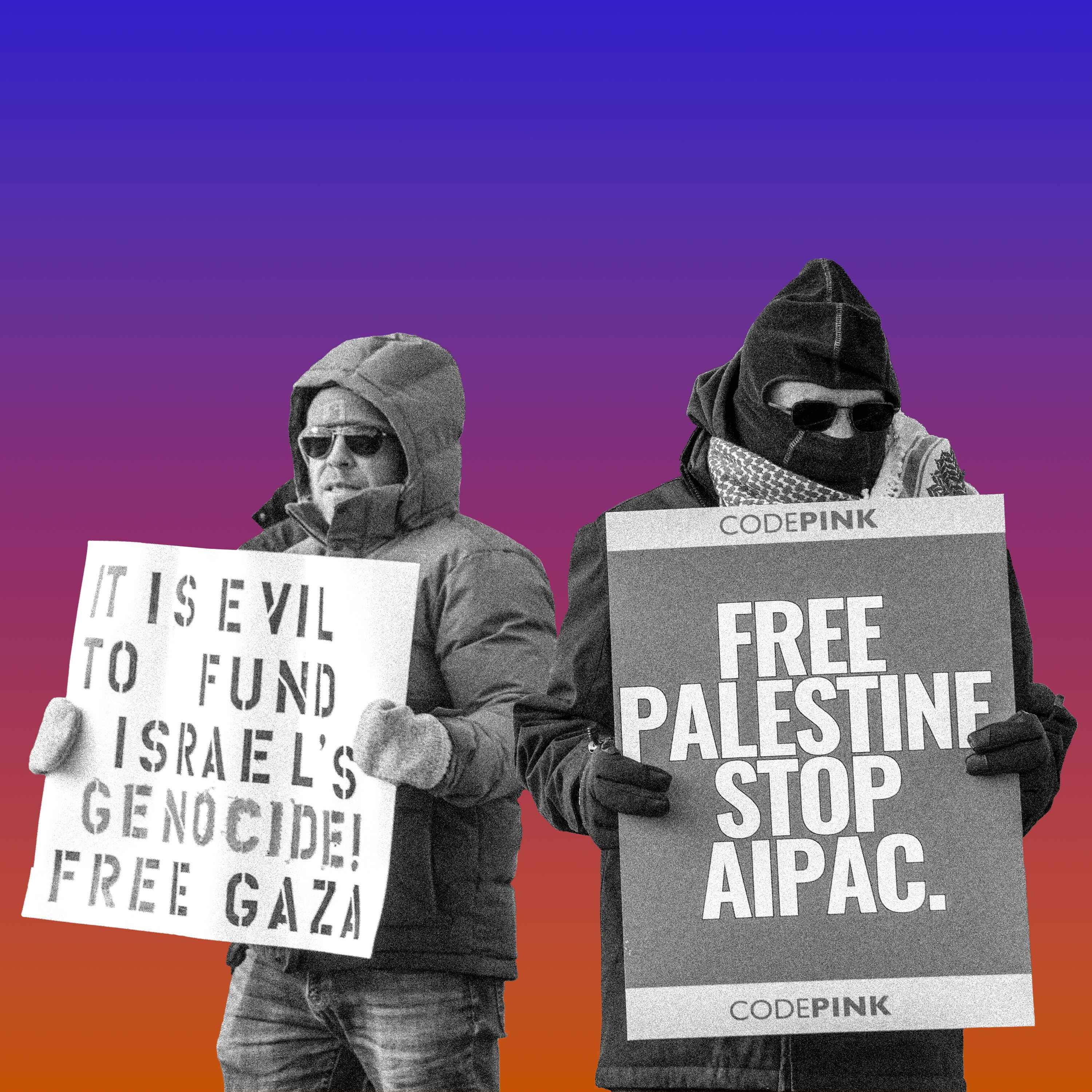
More Democrats than ever are suspicious of big money in politics and against unconditional American military support for Israel. The prominent lobbying group AIPAC sits right where these issues intersect, and it has become a bogeyman in primary races across the country this year.
Guest: Peter Beinart, editor-at-large for Jewish Currents, author of the Beinart Notebook Substack.
Want more What Next? Subscribe to Slate Plus to access ad-free listening to the whole What Next family and across all your favorite Slate podcasts. Subscribe today on Apple Podcasts by clicking “Try Free” at the top of our show page. Sign up now at slate.com/whatnextplus to get access wherever you listen.
Podcast production by Rob Gunther, Evan Campbell, Madeline Thames-Ducharme and Patrick Fort.
Paige Osburn is the senior supervising producer of What Next and What Next TBD.
Hosted on Acast. See acast.com/privacy for more information.