 Ask ChatGPT


The episode “Are Flock Cameras Watching You?” examines backlash against Flock Safety, a private network of automatic license plate reader cameras with AI-powered license-plate search. Host Lizzie O’Leary interviews Joseph Cox (404 Media; author of Dark Wire) about how Flock proliferated via homeowners associations and local governments, and how police can search across a national network of tens of thousands of cameras.
local searches can be used for ICE/HSI and other federal investigations without clear public consent; police may not realize their searches are accessible nationwide; and officers can misuse the system (e.g., repeatedly searching an ex’s plates).
an audit alleging a Texas search for a woman seeking an abortion across ~83,000 cameras; reports of cameras used in cases like missing people/carjackings; and a former Flock employee (Jonathan Paz) pitching the tech while allegedly helping detainees. Flock later announced controls (7-day retention, abnormal-search flags, case-number requirement).
Written by AI. May contain mistakes.
Exploring the emergence and impact of Flock surveillance cameras.
“It might look a lot like these videos that keep coming across my social media feed.”
How Flock differentiates itself in the surveillance market.
“How did Flock start selling its cameras?”
Public reactions and concerns regarding Flock cameras.
“There is literally not an Axon national network, and Flock does offer that.”
Examining the relationship between Flock and law enforcement agencies.
“But I think you do have to acknowledge as well that it is a useful tool to law enforcement.”
Discussion of specific cases where Flock cameras were used.
“So let's talk about some of the stuff that you guys have reported that I think is so striking, these individual stories.”
Learn how Flock became involved in tracking women seeking abortions.
Explore the implications of police searching nationwide cameras for individuals.
“Obviously to us, that is very, very interesting, especially after the overturning of Roe v.”
Discover instances of police officers misusing Flock's technology for personal reasons.
Learn about the strategies used by Flock representatives to sell camera technology.
“Availability and coverage vary by state and insurance plan.”
Examine the reaction of investors to the backlash against Flock's technology.
“And I can really appreciate the cognitive dissonance there must create.”
Discuss the emergence of organized groups opposing Flock's surveillance practices.
“I'm sure the flock is worried that it is losing business to Axon.”
Explore how public sentiment is shifting against surveillance technologies.
“I've never seen a surveillance company CEO apologize for any of their comments before.”
The discussion explores rising public anxiety over surveillance technologies like Flock cameras, highlighting a growing anti-tech sentiment.
“Well, it also seems to kind of knock down one of the traditional anti-surveillance talking points or surveillance talking points, which is if you're not doing something wrong, then why should you worry?”

Get the gist, explore an idea or ask about something said.
 Claude
On What Next | Daily News and Analysis, what are the key points of this episode?
Searching your listeningAutomatic transcript. May contain errors.
0:00What does it take to change your name without losing who you are? Two successful Georgia banks merged and built one new brand, Valant Bank, now the state's largest community bank. Hear Executive Chairman Jackson McConnell and President Spence Mullis in Building Culture Through Brand Change with Valant Bank. From Adrenaline, search Believe in Banking, Episode 91, and listen now.
0:33Stripe is built for whatever comes next, because as your business scales, so does the complexity of fraud. New customers, new markets, new AI-driven attack patterns. Stripe Radar protects your business as it scales with the scale of the Stripe network. The more payments Stripe sees, the smarter its AI gets at detecting those patterns as they emerge. Stripe's network is so vast, it has seen$1.9 trillion in payment volume across millions of global businesses. In fact, when a card is used, there's a 92 % chance the Stripe network has seen it before. All of this means fraudulent patterns across payments, accounts, and customer abuse can be detected, flagged, or blocked easier.
1:16Based on the rules you set up, of course. blocking bad actors, welcoming good customers, keeping more of your revenue, your revenue. Learn more about fighting fraud with Stripe at stripe.com slash radar.
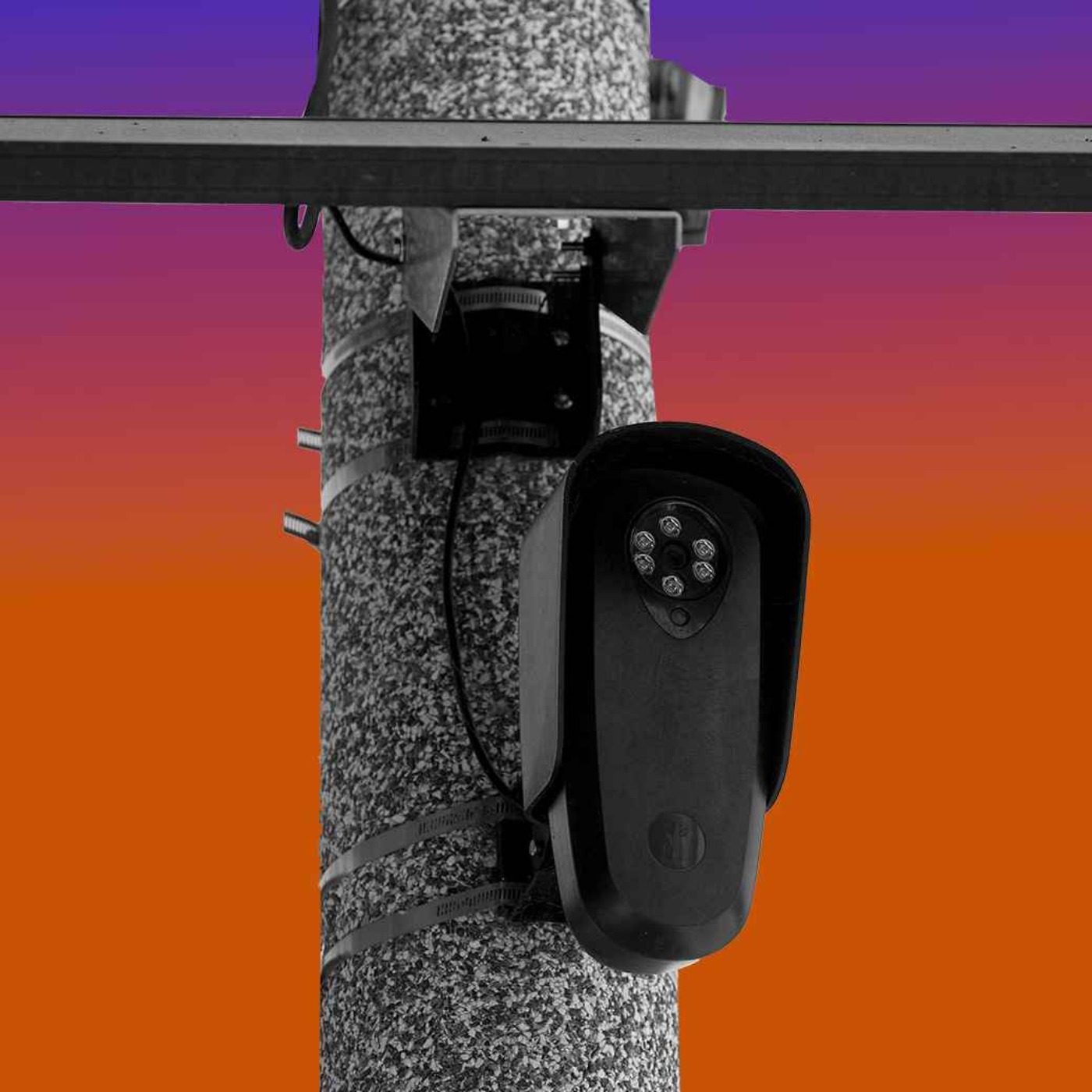
1:35What's your image of a 2026 vigilante? It might look a lot like these videos that keep coming across my social media feed. This one has got a heavy beat and a dude in a black skull mask. He goes out at night to a flock surveillance camera on the side of the road, and he's got a big roll of duct tape. He shimmies up the pole, covers the camera with the tape, and then cuts the wires. He does two more, and the video ends with a map of flock cameras all across the country. It says three down, 112, 614 to go.
2:12Joseph Cox: It is now a meme at this point on Instagram, on TikTok, where a lot of people are very angry about these cameras and they're voicing that in various ways. Some people are going and destroying these cameras. They're cutting down the poles. They're driving trucks into them. They are spray painting material over the front of the cameras. Like, this is straight up a meme at this point. And I did not expect that to happen. Joseph Cox, a four from Media, has been covering Flock for a couple of years now. The company has cameras all across the country that read license plates. Cops can use them like a search engine with AI-powered image recognition.
2:55And Americans, of all different political persuasions, seem to really hate Flock.
3:02Joseph Cox: You can almost see Flock being used as sort of the vessel for people's concerns with surveillance more generally. because you can't go, I don't know, destroy an advertising company that's siphoning location data from the advertising bid stream. Like people don't know what you're talking about, but they know what you're talking about with a camera that has gone up in my neighborhood. I didn't know this was happening. I don't want this. I'm now going to do something about it. Today on the show, the flock backlash. I'm Lizzie O 'Leary, and this is What Next TBD, a show about technology, power, and how the future will be determined.
3:35Stick around.
3:39So let's back up a little bit and talk about this company and the way they began proliferating, because I think it's very interesting and unusual. How did Flock start selling its cameras? And what is different than, say, Axon, which is the biggest or a very large law enforcement provider?
4:02Joseph Cox: so flock differentiated itself in two key ways the first is selling more to homeowners associations and to individual communities you can kind of put a parallel there with ring yeah the doorbells exactly people got really into ring because they thought wow i can finally buy a pretty powerful you know piece of surveillance technology and i can have it on my property and i can sort of enforce the rights of my tiny corner of America or whatever it is you want to do. There's a parallel to that, both license plate readers and flock is that parallel. So they got kind of popular with that and they differentiated themselves that way.
4:44Joseph Cox: The other way is through this national network where a cop in one state can search for a license plate and it won't just be in their town or even their state. It will potentially be across these tens of thousands of Flock cameras across the entire country. Now, Axon doesn't offer that. There is literally not an Axon national network, and Flock does offer that. So for police departments, that's obviously very, very attractive, and I think a big part of why Flock has become so popular. Yeah, let's talk about this network and the sort of AI apparatus behind it, because I think this is something that sets Flock apart from maybe, I don't know, you expect your license plate to be captured when you go through a toll booth yeah so flock cameras can be installed near tollbooths but they're often installed just all over ordinary neighborhoods now maybe the city council decides where that goes maybe the police department would like to say where that would go they'll erect a new pole and they'll stick the flock camera on that and what we found when we were reporting on the ice lookup specifically was that a lot of police departments didn't realize that oh we put up this camera in a small town in illinois they did not realize that other cops across the country could search those cameras as well i remember trying to i remember trying to get comments and statements from these police departments when we were telling them your cameras are being used on behalf of ice indirectly by other cops and they were like we have no idea what you're talking about we had to explain to them how the flock national network actually works as well so yes it's an attractive product but so much so that some of these police agencies had no idea what was actually going on i also think the the rate of growth of the company is really interesting it feels explosive um and i wonder what powered that i think flock has been really good at getting stories out there which do paint the technology in a very positive light it has marketed itself as a technology that is used to find missing people to stop or solve carjackings to find kidnapped people there was you know a murder case recently that flock flock cameras were used in that and then flock the company came out and said look this is how our technology is being used.
7:22Joseph Cox: And that's all true. You know, like it's all true that Flock is being used and can be used to locate missing people. It's just that the company doesn't highlight then the other stuff. Yeah. I mean, on the company's website, I think it says it has tracked down more than 10 ,000 people. Is that true? I have no idea. I have no idea. And maybe i'll ask flock and maybe they can provide you know some sort of verification for that i wouldn't i have no idea if the figure is correct i have no doubt the flock has been used to locate missing people i have no doubt they has been used uh to solve or contribute to the solving of murders that's not really where the conversation i think is moving it's whether law enforcement should have unfettered access to this network like should they require some sort of authorization or warrant to be uh able to do this i think that is where the conversation is or probably should be if people actually want to have a fruitful conversation about this technology because you can really um you can really hate the technology or you can be really passionate about it to the point where you're going to go and smash one off a pole or spray it with paint or whatever.
8:40Joseph Cox: But I think you do have to acknowledge as well that it is a useful tool to law enforcement. And that's the tension that we're seeing in these city council meetings or wherever across the country. So I think actually the ICE example is really interesting and illustrative here. I believe, and correct me if I'm wrong, but that FLOC does not have direct contracts with ICE, but that does not mean that FLOC cameras are not being used by ICE. I wonder if you could explain this a little bit. Yeah, well, I think that is a key part of the tension and the frustration that people are feeling is that because they may have been sold this technology that they were told was for finding missing people to stop carjackings.
9:21Joseph Cox: And it turns out actually that data is going to immigration and customs enforcement. So we revealed this in May 2025, where we got these things called network audits. And these are spreadsheets. You can get them from police departments if you file a public records request. And it says all of the searches that that police department did all were done against the police department's cameras. And some researchers discovered this. They wish to remain anonymous and they gave them to us. And we were going through and there's a term that say ICE or immigration or HSI. HSI is Homeland Security Investigations just for people.
9:59Yeah.
10:00Joseph Cox: Homeland Security Investigations, which is a part of ICE traditionally focused on stuff like cybercrime, money laundering, child abuse investigations, but data from the Cato Institute showed that something like 90 % of HSI officials have been reassigned to deportation, because that's what ICE is doing now, obviously. So we get that data, and it doesn't show that ICE is searching the cameras. It shows that local cops are searching the cameras for ICE, and they'll receive a license plate or whatever, they'll type it in, and then presumably because this is the reason the cops give themselves they will then hand that data to ice now uh we reported that and flock told us you know we don't have any direct relationship um with ice or hsi or whoever but they don't need to but they don't need to but then it also turned out that later they did anyway there were multiple pilot programs between flock and there was hsi in there secret service um the naval uh police as well and they were given direct access to the flock network and there was a lot of confusion about this there was frankly a lot of list uh misleading inside flock where i spoke to one now former flock employee who kept asking inside flock while we were reporting about the ice stuff they were asking inside the company do we give data to ice are we working with ice they were told repeatedly no and then it turned out there was actually a pilot program to give ICE and HSI direct access.
11:30Joseph Cox: And, you know, that's why that's part of why that employee quit.
11:43Stripe is built for whatever comes next, because as your business scales, so does the complexity of fraud. New customers, new markets, new AI driven attack patterns. Stripe Radar protects your business as it scales with the scale of the Stripe network. The more payments Stripe sees, the smarter its AI gets at detecting those patterns as they emerge. Stripe's network is so vast, it has seen$1.9 trillion in payment volume across millions of global businesses. In fact, when a card is used, there's a 92 % chance the Stripe network has seen it before. All of this means fraudulent patterns across payments, accounts, and customer abuse can be detected, flagged, or blocked easier.
12:27Based on the rules you set up, of course. Blocking bad actors, welcoming good customers, keeping more of your revenue, your revenue. Learn more about fighting fraud with Stripe at stripe.com slash radar.
12:44Your daily supplement routine doesn't need to be managing a handful of different bottles. Onnit's Total Human brings key research-based vitamins, minerals, herbs, and amino acids together in convenient day and night packs. One all-in-one product designed to make supplementation easier. The day pack supports cognition, focus, and cellular energy production. At night, the night pack helps you wind down and supports a calm, relaxed state. Less time managing your supplements, more support for your day and night. Shop Total Human now at onnit.com.
13:46P-A-R-L-O-A dot com.
13:51So let's talk about some of the stuff that you guys have reported that I think is so striking, these individual stories. I'd like to talk about the case of the woman who Texas authorities suspected had self-administered an abortion. How did Flock come into play here?
14:10Joseph Cox: yes so i'll just say i'll try to be careful about what i say here just because it is a little bit complicated so if i misspeak i'll just say but we were sent a flock network audit by a researcher and we looked inside it and the reason given for this search by a texas police official to look at cameras nationwide and the flock network was that it was looking for a woman who sought an abortion. Obviously to us, that is very, very interesting, especially after the overturning of Roe v. Wade, because people have been warning that, well, now that's gone out of the window, all sorts of surveillance technology is going to be used to track down women who are seeking reproductive health care.
14:56Joseph Cox: So we report that, we talk to the sheriff, and the sheriff tells us well no no no it's not because she self-administered abortion even though that was the reason given it's because the family was worried that she could bleed out from the abortion it was a self-administered abortion they're like okay that's interesting except the search was done two weeks after the abortion so that makes absolutely no sense whatsoever um flock was not helpful in providing any more context about this investigation so we published that piece and then the EFF the Electronic Frontier Foundation they get these court records and police reports and that sort of thing and it actually turns out that the woman was trying to escape an abusive relationship where the partner allegedly you know put a gun in her face and all this sort of stuff there's a lot more context about this this case and this investigation but the end result is that a Texas police officer searched cameras nationwide for a woman who self-administered an abortion and that was the explicit reason given in the network audit.
16:11I mean I think this search involved something like 83 ,000 cameras just that the the breadth of the search capabilities are pretty stunning.
16:21Joseph Cox: Yeah so when you've gone through a lot of these network audits it doesn't say this was a national lookup like it doesn't say that explicitly but when you've read enough you get a feel and a vibe for oh that was a national lookup because it said it searched 83 000 cameras and we've managed to figure out that's about the number of cameras in this national network so that's the power of flock right a cop in one state in texas can search cameras nationwide including in states that you know aren't supposed to allow the release of license plate reading data outside of state and they can just look for this one individual woman and i should say that it turns out in the end i don't think flock was actually instrumental in finding uh this woman so after all of that it didn't actually help anyway it did cause flock to change their policy didn't it yes uh our ice reporting and then the abortion reporting as well flock um published various blog posts uh around that but most importantly it pulled california out of the national network illinois as well uh and i believe virginia introduced a bunch of other mechanisms that would block sort of keyword searches and that sort of thing and potentially highlight you know dodgy searches or ones that aren't linked to um legitimate law enforcement uh investigations so like on one side flock will say this story isn't true uh don't pay attention to this then it will also in the same breath make radical changes to its products so i'm not you kind of have to do one or the other i'd like to also ask about police officers who appear to be looking up their exes using flock basically what happens is in many of these a law enforcement officer will log in to flock you know that's just a username a password maybe a two-factor authentication token as well off your phone or whatever and then they can just start searching the plates and there's one stunning example uh in in one of the cases that we covered where there are two cops in their patrol car um and one is just searching uh for their ex-wife or girlfriend repeatedly over and over again and the second cop tells them essentially you really should not be doing that and i think that shows sort of the brazenness and the audacity of some of these law enforcement officials they're not doing it quietly in a cupboard with their laptop so people can't say they're doing it in front of another cop and obviously that person was thankfully caught but that's sort of the culture of that's the culture around this tool
19:24500 orders a month was manageable 5 ,000 is madness embrace intelligent order fulfillment with ShipStation, the only platform combining order management, warehouse workflows, inventory, returns, and analytics in one place. What used to take five separate tools, ShipStation does in one. Automate fulfillment and rate shopping to ship up to 15 times more with up to 90 % savings. Go to ShipStation.com and use code AUDIO to try ShipStation free for 60 days. Therapy's biggest impact doesn't show up in some dramatic breakthrough. It shows up in the smallest moments. You bite your tongue instead of escalating.
20:03You put your phone down instead of firing off that text. You say what you actually mean instead of what would hurt someone else the most. Nobody applauds those moments, but they quietly change your life. That's what growing feels like, and that's exactly what Grow Therapy is here for. Grow is therapy that works, covered by insurance. Sessions average$21 with insurance, and some pay as little as$0 depending on their plan. There are no subscriptions, no long-term commitments. You just pay per session. Grow connects you with thousands of high-quality licensed therapists across the U.S., offering both virtual and in-person sessions, nights and weekends.
20:43You can search by what matters, like insurance, specialty, identity, or availability. And you can book a therapy session in minutes and begin in as little as two days, not the national 48-day average. See if you could pay as little as$0 for therapy in seconds at growtherapy.com slash start now. That's growtherapy.com slash start now. growtherapy.com slash start now. Availability and coverage vary by state and insurance plan. You spent a lot of time talking to a former Flock employee whose job it was to essentially go around the country and convince local governments and organizations to buy and install these cameras.
21:30What was his pitch?
21:33Joseph Cox: So Jonathan Paz, who was a government affairs representative or something along those lines, he actually comes from sort of the world of civil rights and activism and that sort of thing and local government he joins flock because he thinks there's you know really good potential for impact here this is a technology that's being used to find missing people like that's not a bad thing if anything that sounds amazing right and it was his job basically when a city was not quite deciding whether it wanted to buy these cameras or not jonathan would be flown out there he would go to one of these city council meetings and he would convince them hey this is a really really good technology for you now when ice ramped up its enforcement efforts across the country and we were doing the ice flock reporting he was essentially leading a double life where in his job at flock he'd be going to cities trying to sell this technology and then during the evening or weekends or whatever in his off time he'd be running support networks to try to help people who were being detained by ice or separated from their families or whatever.
22:45Joseph Cox: And I can really appreciate the cognitive dissonance there must create. And apparently it was so much that you had to quit eventually. Flock is a private company. It is backed by a bunch of venture tech firms. Andreessen Horowitz is one of them. Have you seen any nervousness on the part of those investors that suddenly this technology is becoming reviled in many quarters. I haven't seen any nervousness from A16Z, Andreessen Horowitz, or sort of any of the investors. What I do think there's nervousness in is that Flock is the target right now of people who are very mad about automatic license plate reading cameras they are taking basically all of the backlash while axon for example is quietly going into these cities and basically getting the remains of what's left as in we've reported that many many cities across the u.s are ditching flock axon is then coming in and the city immediately switches to axon oh wow so so i don't know if the investors of flock are worried i am I'm sure the flock is worried that it is losing business to Axon.
24:06There is this app called Deflock, which is basically trying to keep track of how many license plate readers there are throughout the US. They've mapped a lot of cameras, I think 120 ,000. The chief executive of Flock referred to them, I believe, as a terroristic project, though later walk that back a little bit. what do you make both of these organized projects against Flock and the kind of back on the heels sentiment of the company?
24:39Joseph Cox: Yeah so there's D-Flock which shows sort of location of cameras and is more a broader I would say campaign movement to educate people about hey what are these cameras? You could go to a city council meeting and you could try to talk to your representatives about it. Actually, while we're recording, D-Flock has sort of announced, you know, a planned week of action where people can go out and educate each other about this sort of thing, not go and smash up cameras, to be clear. Right, it's very clear. They're clear this isn't educational. Right, right. They do not endorse that in any way, even though people are using their logo and their name sort of without authorization it's getting very messy um on that side and in these documents we got from fusion centers it clearly shows that cops are paying attention to this planned week of action as well telling police go do more patrols around license plate and the flock cameras because there might be some vandalism um i think those groups like deflocked and there's another one called have i been flocked as well where you can search up your license plate or that of somebody else i mean these are manifestations of people's frustration with this technology some people go to city council meetings and they try to have their voice heard there other people talk to their friends or relatives or local community members some people get information and give it to journalists like us it manifests in all of all of these different ways um as for flock's response i mean i can't read it as any other ways than a company in crisis right going to this interview with forbes and calling d flock like a terrorist organization and then walking back on those comments um the ceo is clearly on a charm offensive going on good morning america and giving interviews to the new york times new Times doing coverage and all of these other outlets and that sort of thing.
26:40Joseph Cox: They absolutely must be in crisis. I've never seen a surveillance company CEO apologize for any of their comments before. And, you know, at the end of the day, and they really don't like this term, Flock doesn't like the term, but they are a surveillance company. One of the reasons that I really wanted to talk to you about this is not just your reporting, but you have spent a lot of time kind of in the world of law enforcement, law enforcement surveillance. You and I have talked about your book, Dark Wire, before, which is basically all about how the FBI built this encrypted phone app to catch criminals.
27:19And I wonder, as someone who has a decent amount of visibility into what law enforcement likes from technology, and also what a lot of citizens do not like from surveillance technology what does this moment tell you about kind of where we are as a country in figuring out how much of this we want to allow in our public
27:46Joseph Cox: life yeah um i think it's a really interesting question and i would say that i think it's particularly notable that i think this crosses like party lines it does and i don't mean like uh representative people i don't mean officials in the democratic party or republican party i just mean ordinary people on every side of every part carlson is against it and the aclu like it's a very wacky you know conglomeration of people yes and i think it shows that people are not just tired of this sort of technology to the point where they can you know uh team up essentially with people they would usually you know despise to be with or associate with but i would pull it in the context of a broader anti-tech maybe even anti-ai movement as it is very very similar to the data center issue where you go to these city council meetings and this big company you've never heard of are saying we're going to build this data center here it's going to use up all your water or whatever it's going to make your electricity bill skyrocket and we don't really care and we're going to do it um so i think there's absolutely a parallel there the another reason they're linked and we're seeing this is that usually surveillance or even tech stuff it happens elsewhere like it's in Silicon Valley and it's a big tech company doing their thing inside their office this now just became really really real for a lot of people because it is literally happening in their backyard whether that's a flock camera going up or whether that's a data center being built that hasn't been the case for the rise of like the tech industry or for the rise of ai right it's just been very much this thing over here that tech companies are doing it is now inside or just outside people's homes.
29:48Well, it also seems to kind of knock down one of the traditional anti-surveillance talking points or surveillance talking points, which is if you're not doing something wrong, then why should you worry? And yet people seem worried about Flock anyway, even if they are just driving their children to soccer practice.
30:08Joseph Cox: Yeah, because some of these cameras weirdly have been pointed at like children's playgrounds and stuff like that where people presumably are not driving uh vehicles or a gymnastics class or there has been we reported that flock used sort of cameras that may have swept up children as part of its sales demo uh we've reported that there are sort of overseas workers training the ai of flock cameras as well you know there's a security concern there we've obviously reported about cops using it for whatever they apparently feel like including stalking their ex-girlfriend wives or boyfriends or whatever the idea that well if you have nothing to hide you have nothing to fear simply does not apply here because there is no friction in place to stop a cop doing whatever they want with this technology like it would be different if it was like oh the fbi has this really powerful surveillance technology to break into your phone they have to go to a judge they have to get a warrant.
31:09Joseph Cox: It's used in very particular counterintelligence or sort of national security investigations. That's not what this is. This is there's a camera at the end of my street and is scanning me all the time. Joseph Cox, thank you so much for your reporting and for talking with me about it. Yeah, absolutely. Thank you so much.
31:31After we taped this interview, Flock announced it was rolling out a series of safety controls, including a seven-day data retention policy and a tool that flags abnormal search behavior. The company will also require users to input a case number to justify each search, a policy that was previously optional. Joseph Cox is an investigative reporter for 404 Media and author of the book Dark Wire, which is really great and you should check it out. All right, that is our show for today. What Next TBD is produced by Rob Gunther, Evan Campbell, Madeline Thames-Ducharm, and Patrick Ford. Paige Osborne is the senior supervising producer for What Next and What Next TBD.
32:12Mia Lobel is the executive producer of podcasts here at Slate. And Ben Richmond is the senior director of podcast operations. I am Lizzie O 'Leary. You can find me on Blue Sky, where I am at Lizzie O 'Reilly. Thank you so much for listening. Talk to you soon.
33:00We'll be right back. Call 1-800-GRAINGER, click grainger.com, or just stop by Grainger for the ones who get it done.
33:31then schedule a pickup right from your home or office. For a limited time, go to stamps.com and use code podcast for a free welcome gift. Taxes and fees apply.
In a world where everyone is carrying smartphones and setting up Ring cameras, you could be forgiven for thinking the war is over and the surveillance state won. But Flock cameras being denounced in town halls and smashed on the street have become a place for people to channel their heretofore unseen rage.
Guest: Joseph Cox, reporter for 404 Media
Want more What Next TBD? Subscribe to Slate Plus to access ad-free listening to the whole What Next family and across all your favorite Slate podcasts. Subscribe today on Apple Podcasts by clicking “Try Free” at the top of our show page. Sign up now at slate.com/whatnextplus to get access wherever you listen.
Podcast production by Rob Gunther, Evan Campbell, Madeline Thames-Ducharme and Patrick Fort.
Paige Osburn is the senior supervising producer of What Next and What Next TBD.
Hosted on Acast. See acast.com/privacy for more information.