 Ask ChatGPT

Whether the U.S. can still vote by mail in the face of a Trump-era USPS rule requiring states to meet “hoops” (including using specific envelopes/barcoding and providing eligible-voter lists for USPS to verify against DHS/DOJ lists), plus related litigation and timing issues for the midterms.
Richard Hassan, law professor at UCLA and director of the Safeguarding Democracy Project; discusses election law, courts, and federal vs state authority.
The rule aims both to make mail voting harder and to force citizenship-data sharing; Trump’s broader “Save America Act” would require in-person documentary proof of citizenship to register (stuck in the Senate). The president lacks constitutional power over election administration; courts have been blocking/limiting the USPS rule on standing/ripeness grounds, with possible further injunctions.
Supreme Court Aug. 24 decision dissolving an injunction; DHS claims of noncitizens on voter rolls in CA/NV/NJ; Purcell principle/timing debate; UOCAVA military/overseas ballots unaffected and due 45 days before election.
Written by AI. May contain mistakes.
An in-depth analysis of the changes to mail-in voting and the implications.
“So Rick, this is a little bit of a trick we're trying to pull.”
Exploration of the lawsuits against new voting regulations and their implications.
“Now you've got these Democrats that are coming after me, that they're trying to impeach members of my cabinet.”
Explore the legal battles surrounding USPS rules affecting mail-in voting.
“You know, it's going to be a big burden.”
Analyze the implications of recent Supreme Court rulings on voting rights.
“And now Justice Brown Jackson is saying, now you're saying this is too early.”
Learn about the advantages of voting early and the potential legal challenges in upcoming elections.
“And then vote as early as you can once you've made your choices.”

Get the gist, explore an idea or ask about something said.
 Claude
On What Next | Daily News and Analysis, what are the key points of this episode?
Searching your listeningAutomatic transcript. May contain errors.
0:00Every restaurant wants to be busy. Most restaurants aren't ready for it. I'm Chef Mike from Detroit 75 and Toast helps us stay ready when the lunch rush hits. We prepare for lunch like we're preparing for battle. Orders are flying, tickets are stacking, and the guests should never fill the chaos. Toast keeps our team organized so we can serve more people, stay consistent, and keep growing. Visit toasttab.com to learn more. Pay testimonial from an actual Toast customer. There's one thing that will forever change the way you sleep, and it's the softest 100 % organic cotton sheets from Bowlin Branch.
0:32You'll fall asleep faster, wrapped in the most luxurious comfort. You'll never sleep hot again with sheets that feel breathable to sleep in. You'll experience the purest softness on night one and feel your sheets get even softer with every wash. Discover the difference with 15 % off your first set of sheets at bowlinbranch.com with code BUTTERY. Exclusions apply. See site for details.
1:21lawsuits. I spoke with Richard Hassan. He is a law professor at UCLA, and he's the director of the Safeguarding Democracy Project. Rick says we probably shouldn't freak out about Trump stealing these midterms, but he also says the goal might not be so simple. Well, I think there are a couple of possible goals, right? One is you're trying to shake the electorate. But I think there's another goal here, which is to create chaos and uncertainty around the elections. And that serves as a way of delegitimizing Democratic victories. Today on the show, Trump is targeting mail-in voting again. Is it going to work this time?
1:56I'm Rob Gunther, filling in for Mary Harris, and you're listening to What Next. Stick around.
2:08Hey, I'm running out to drop off a stack of letters and packages. Need anything shipped while I'm gone? Save the gas. Stamps.com lets you print postage and schedule pickups right from your desk. Sync your contacts into the address book, get detailed accounting insights, and get notified the moment your certified mail is delivered. All from my desk? All from your desk.
2:29Richard Hasan: Join the 4 million businesses using Stamps.com right now with code podcast and get your free welcome gift. Stamps.com, code podcast. Taxes and fees supply. Hi, this is Mark Bittman from the podcast Food with Mark Bittman. I've been writing about food and restaurants for almost 50 years. My whole career, really. And what I know is that the good restaurants all have something in common. They're busy. Genuinely, chaotically busy. And somehow, in the last few years, the best of them have begun to make it look easy. And do you know why? Because they're running on Toast's technology. Toast is built for restaurant owners who understand that Toast's tools keep the line moving and keep their customers happy, with fewer mistakes and hiccups in ordering and paying.
3:16Richard Hasan: For owners, that turns busy into business. To learn more, head to ToastTab.com. That's T-O-A-S-T-T-A-B, ToastTab.com. Toast, built for busy. This message is brought to you by today's sponsor, Walden University. Set a course for change. Now is the time to make a real change in your life, career, and community. At Walden University, we give you the support and flexibility to get the W. Walden's online programs are designed for working professionals like you. You'll gain hands-on skills to take on real-world challenges and succeed. Your future is waiting, and Walden is here to help you achieve it.
3:59Take the first step to make your impact. Visit waldenu.edu. Walden University. Set a course for change. Certified to operate by Shev.
4:11Rick Hassan, thank you for coming back to One Next. It's great to be with you. So Rick, this is a little bit of a trick we're trying to pull. We right now are having this conversation Thursday morning. This will not air as a podcast until Monday. So we're expecting things to change. But if you look at this moment in time, this conversation that's happening, there's a rule on the books that gives President Trump and the Postal Service enormous power over how states can do mail-in voting. Maybe it's helpful to start big picture. What does the Postal Service's rule say about how ballots can be delivered?
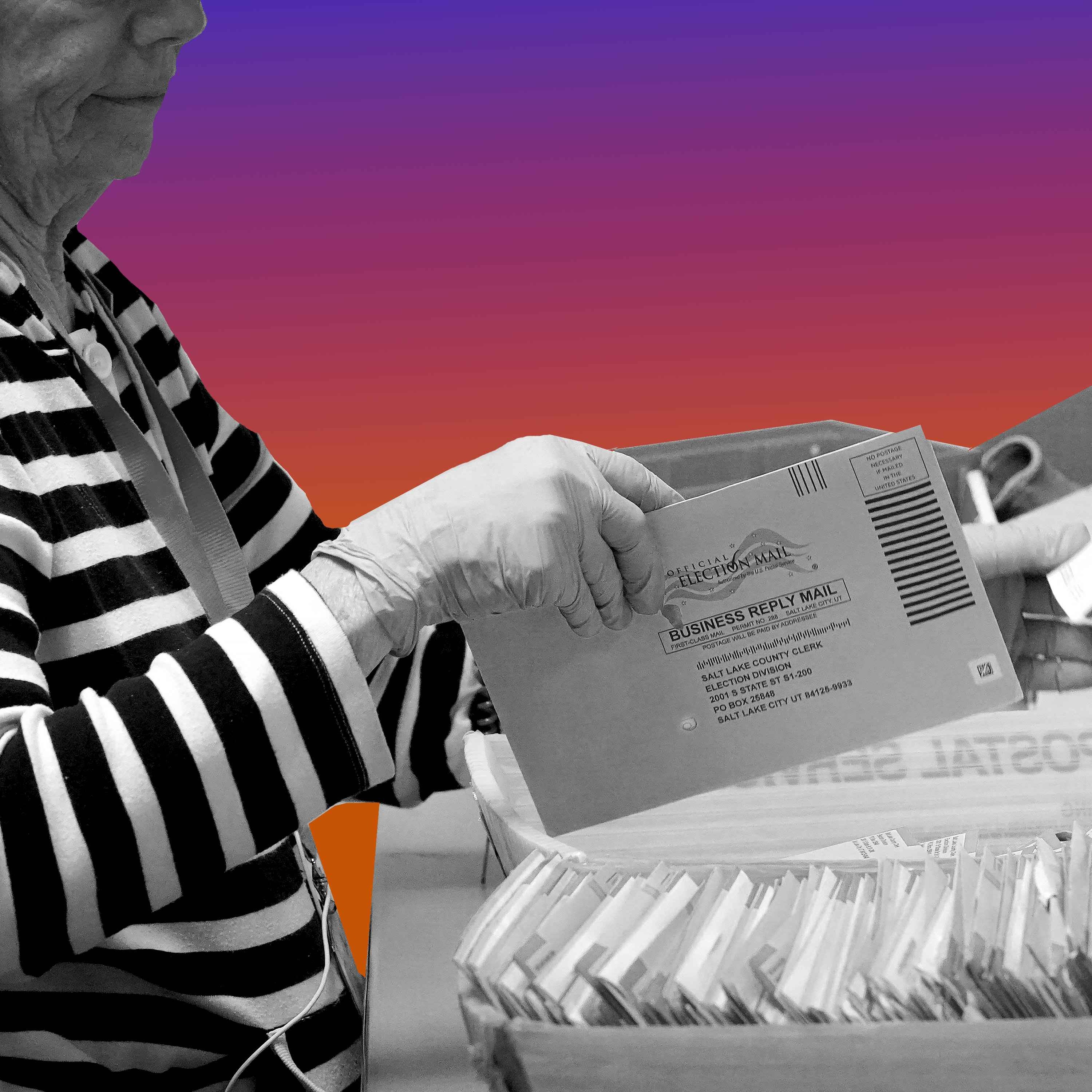
4:50So I should start with the way the Postal Service used to deal with ballots, which is that they delivered them full stop. That was it. In fact, they had special rules that said, let's give priority to mail ballots. And that's a good thing because with more people voting by mail and with deadlines to have ballots received, that's what we want the Postal Service to do to help facilitate the enfranchisement of voters. Trump put out an executive order in March. It did a bunch of things. Part of what it did is it told the USPS to put out a rule. That rule came out at the end of August. And it basically says to states, if you want us to deliver your ballots to voters, you have to jump through certain hoops.
5:45Now, some of those hoops are really technical. You have to use certain kinds of envelopes with intelligent barcoding on them. Some of them are less technical. Most importantly, it's you have to send us states your list of eligible voters. and we're going to check and make sure that that's who you're mailing your ballots to. And by the way, DHS is going to come up with its own list. And also the Department of Justice, which is in charge of criminally prosecuting people for breaking federal law, is going to be looking at you, election administrators, to see if you might be criminally liable for delivering ballots to non-citizens.
6:23The kind of the implicit threat here is if you don't check your list against the DHS list, then you might be in some criminal trouble. So, I mean, in general, if you're trying to talk about this in a general way, they're trying to make it much harder to vote by mail. They're trying to put a lot of restrictions on how these ballots can be sent and delivered. Is that correct? Is that the gist of it? I think it's trying to accomplish two things. One, make mail-in balloting harder, which is something Donald Trump has been saying he wants to do. The other is kind of force the states to give over this citizenship data, which Trump has been trying to get in a bunch of different ways based on his false claim that there's a lot of non-citizen voting.
7:05And he couldn't—his DOJ is, I think, zero for 23 in suing to get voter rolls directly from states. And so this is kind of an alternative way to get some of that information. And he's been doing this at the same time that he's been pushing Congress to pass a piece of legislation that has no chance of passing, at least in the near term, called the Save America Act, right? And that kind of does a lot of similar things that this rule is getting at, right? Right. Well, it does deal with some mail-in ballots. But the most important thing that the Safe America Act does, which is what was the subject of Trump's first executive order on voting that the courts put a stop to, is to require documentary proof of citizenship before you can register to vote.
7:55Now, some people hear that and they think, oh, voter ID. This is not voter ID. This is before you're allowed to register to vote, you're going to have to go in person to an election office. And it's a little ambiguous, but even if you're already registered to vote, you have to go in person to that election office. And you're going to have to show a birth certificate, certified Catholic birth certificate or a naturalization certificate. If you've changed your name, maybe your marriage license or a court order. You don't have to do this at your own expense. You know, Lisa Murkowski, the Republican senator from Alaska, she talked about how some of her constituents in more remote parts of Alaska would have to travel hundreds of miles.
8:36They'd have to fly. They'd have to stay over at a hotel. It costs thousands of dollars to be able to do this. That's a key part of what's in the Save America Act. That's not happening, as you say, because it's stuck in the Senate. But more and more states are adopting these rules. They're adopting similar measures. Well, the House passed the Save America Act. The Senate, it died. It can't clear the filibuster. But Trump has been vocal about the goal of this. Like they can say it's about election integrity. Like you said, it's about voter ID. Is that what they're talking about on its face? But Trump has said stuff like if you pass the Save America Act, you never have to worry about another election again.
9:11You don't have to worry about the midterms. You think about the Save America Act. You think about this United States Postal Service executive order. I mean, the overwhelming strategy is to put your thumb on the scales of the elections in order to maintain a Republican majority at a time when it's looking like that's probably not going to happen. Well, I think there are a couple of possible goals. One is you're trying to shake the electorate. And if that's the goal, I'm not sure that this is actually going to accomplish that. Because if you think about Trump's base of support, it's these so-called low propensity voters, voters who don't show up a lot.
9:44These are more working class voters. These are poorer voters. Those are the people who tend to be impacted the most by laws that make it harder to register and vote. So I think, you know, if this is this grand strategy, like rural voters, you're going to make it harder for them to vote by mail. You're really putting a burden on them. So if that's the goal, it's kind of a not very smart approach. But I think there's another goal here, which is to create chaos and uncertainty around the elections. And that serves some political purposes. One, maybe that deters turnout by people who are going to vote for Democrats.
10:21Again, I'm skeptical about that. But it also serves as a way of delegitimizing Democratic victories. So Donald Trump knows the Save America Act is not going to pass before November. In fact, it's too late probably for even this USPS rule, even if the courts say go ahead, to actually be implemented in time for November. But you can say, hey, look, we tried to stop the fraud. We couldn't stop the fraud. Now you've got these Democrats that are coming after me, that they're trying to impeach members of my cabinet. They're subpoenaing information. They're making my last two years miserable. But they're not legitimately elected because they cheated.
11:01I think that's probably part of this strategy. So, I mean, I think what this is all getting at, the president's elected, the president's executive order about mail-in voting, it's dancing around the fact that the president has no constitutionally mandated powers about voting. Is that correct? Right. So if you look at the Constitution, it doesn't say that much about voting, at least its original, the original Constitution before we had some amendments. But what it says in Article 1, Section 4, is that state legislatures get to set the rules for the time, place, and manner of conducting congressional elections.
11:39And it says that Congress can pass laws that alter those rules. And Congress has done that. So, for example, in 1993, Congress passed something called the National Voter Registration Act, more commonly known as the Motor Voter Law. This is a law that President Bill Clinton signed. And it says when you go to the DMV or other public offices, the states have to offer you the ability to register to vote in federal elections. So that's Congress altering a law, and Congress has the power to do that. It has to do it through a law. What does it say about the president and his power? It says nothing. And in fact, when Trump tried to do some of these things in his first executive order, the federal court said the president has no role to play in the conduct of elections.
12:24The most you could say about the president's role is that he has the power to take care—and again, I'm using the language from the Constitution itself—to take care that the laws are faithfully executed. So there's a law, for example, that says noncitizens can't vote in federal elections. OK, so the president can take care to make sure that that's enforced, for example, by prosecuting people who are non-citizens who vote. So he's going to try and say that some of this is basically to enforce federal statutes that already exist. But he's trying to do much more than that. He's trying to do a kind of put the President Trump stamp of approval or his vision of what voting should look like in America.
13:16He's trying to impose that on the states. And so far, the states and the courts have been resistant to that. Yeah, let's talk about how that worked in the courts. So this executive order comes out in March. It tells the Postal Service to make this rule. And immediately, pretty soon after, there are two separate lawsuits that wind up putting some gum in the tracks. What happens? It's actually five lawsuits, although two are the ones that are most important to us now. One of the lawsuits is brought by 23 states and District of Columbia. These are blue states. And they said, hey, this rule, it's coming.
13:52It's already causing problems. We've already spent millions of dollars on envelopes. Do we have to buy new envelopes? We're already, like, trying to get our elections going. How are we going to get this list together? What are we comparing it to? You know, it's going to be a big burden. And so federal district court put that rule on hold. The same court in a separate case brought by voting rights groups like the League of Women Voters, they said, hey, we don't know how to counsel our voters as to how they're supposed to vote. This burdens us. And at first, the district court said, well, we don't know yet what it's going to look like.
14:26It's too early. But then she eventually said, OK, this USPS rule can't apply anywhere in the country. So, right, so two different injunctions, one that only protects those 23 states and D.C. and the other that protects the country. The first one, the 23-state one, went up to the Supreme Court. This is what the Supreme Court waited on. So the Supreme Court on August 24th, after almost a month, this case got to them on an emergency basis on July 27th. On August 24th, they issued what looks like a six to three ruling saying, hey, states, you got relief too early. We don't know if there's going to be a final rule.
15:11We don't know what the rule is going to say. You can't just have enough standing, enough of a dog in the fight until the USPS actually comes up with its rule. And so injunction has to be dissolved. And this is kind of silly because, you know, this is a Monday where they released this emergency ruling. But the United States Postal Service actually put out its final rule the Friday before. So it was out. Right. It was kind of weird. Probably they had this thing, the Supreme Court had this thing almost fully baked on Friday, and they were still maybe checking their sites and proofreading. And they put it out, but it's really weird.
15:56And so when that came out, that meant that the district court had to dissolve that injunction, which the district court did. then the district court on Wednesday dissolved the other injunction on the same basis the League of Women Voters one because it existed before
16:19the rule had come out but both the states and these voting rights groups have amended their complaints they've asked for new relief and as we're recording this on Thursday the judge in the district court judge is considering issuing a temporary restraining order that would again put the rules on hold, and then we'll be holding another hearing on September 4th or September 3rd, where she's going to consider putting in place another preliminary injunction. So the rule is likely to be back on hold pretty soon because the judge has already indicated she thinks it exceeds the powers of the president and violates congressional rules about the Postal Service delivery of the mail, that'll go back up to the Supreme Court, presumably.
17:07Now, on September 4th, something else is happening, which is that North Carolina is going to be mailing its ballots. And in fact, by the middle of September, there's a federal law called UOCAVA, which protects military voters and overseas voters. And that requires ballots be sent to them at least 45 days before the election. Now, these USPS rules don't apply to those ULCAVA ballots, but it shows you that the gears are already working. It's too late to buy millions of envelopes with smart barcoding if they don't exist already. So it's kind of strange that there's this legal fight going on, but the very practicality is the USPS hasn't created the portal it's supposed to create under this rule for states to upload their citizen data.
17:59DHS hasn't come up with its own rule to figure out how it's going to get these citizenship lists that it's going to send to the states in order. So it's just really too late as a practical matter, putting aside the legal questions, for this to be implemented for the midterms. Can you think about like those portals, how they're supposed to work? I mean, we've seen something similar happened at the state level, right? Like Georgia has tried all these sorts of voter verification portals. And what happens is people are matched against these government databases. And if there's like a period off or a suffix off, you wind up seeing all these massive purges of people who should be on the ballots.
18:38So to think that this is something that's going to be rolled out nationwide between now and, you know, whenever these ballots are supposed to be sent out, it is pretty alarming. Well, I think it's even worse than that, right? So first of all, Well, the USPS, normally they would take a very long time to test a system like this and make sure it works. You don't roll out a system in the middle of an election. That's the last thing you want to do. But remember, DHS is going to be coming up with its own list. Well, DHS last month said that in four states, California, Nevada, New Jersey, and I'm forgetting the fourth state.
19:13In these four states, there were a quarter of a million non-citizens on the voting rolls. The states came back and said, show us your data. And oopsie, actually, we don't have high confidence, they said in a call with Nevada officials this week. That's actually correct. And in fact, you know, the list is riddled with errors for the very reason you gave. There are people with similar sounding names. There are people with the same birth dates. There are people who are flagged as non-citizens or actually citizens. To get this right requires doing it really carefully. After all, people's voting rights are at stake.
19:51But this is kind of the most slipshod, haphazard, half-assed, mendacious approach to election administration I've ever seen.
20:07This episode is brought to you by FreshBooks. Whether you just launched your service business or you've been at it for years, the money side has a way of pulling you from the work you actually love doing. FreshBooks changes that. FreshBooks makes the money side of your service-based business easy. You log your hours, you send a branded invoice, you get paid and know your numbers instead of chasing them. Money in, money out, all in one place. No more juggling one app for clients, another for billing, plus a pile of spreadsheets and emails. FreshBooks is designed for how small business owners think about money, not how an accountant does.
20:41You don't need a financial background to use FreshBooks. It's simple on purpose. Most owners are up and running in minutes, not days. And if you need help, a real person is available on every plan. FreshBooks has been trusted by service businesses for over 20 years, helping over 500 ,000 owners and solopreneurs run their business confidently. Right now, my listeners can get FreshBooks for less than three bucks a month for your first four months. That is 90 % off. Head to freshbooks.com slash podcast to get started. That's 90 % off under three bucks a month for four months at freshbooks.com slash podcast.
21:23Richard Hasan: With almost half a million customers and over a trillion dollars of secure payments, Bill isn't new to intelligent finance. It's the proven way to simplify bill pay and maximize cash flow. Want to learn more? Visit Bill.com slash Proven for a special offer.
22:05and says, we can't do this. It's too late. And now Justice Brown Jackson is saying, now you're saying this is too early. Talk to me about what's going on here. So as the person who coined the term Purcell principle with regret now, that's a principle that we've understood to say that federal courts shouldn't block state rules in the period just before the election, because doing so can cause election administrator difficulties and voter confusion. So strictly speaking, the question of whether or not to block the USPS rule is not a Purcell question. This is not a court that's trying to act at the last minute.
22:52It's the executive branch. Now, this came up in a somewhat different context this past spring, when Supreme Court decided this terrible voting rights case called Louisiana v. Calais, which changed how minority voters are protected under Section 2 of the Voting Rights Act, Louisiana and Alabama came in and tried to stop their primaries in the middle of the primaries so they could redo their district lines. And the lower court said, hey, you can't do that. And the Supreme Court said, oh, yes, you can. And Purcell is really a limit on what federal courts can do. It's not a limit on what states can do.
23:34If states want to create chaos, that's up to them. That's a really perverse rule. And it shouldn't be that a state could, at the last minute, make a restrictive voting change, and federal courts are powerless to do anything about it. Same kind of dynamic here, although without the federalism element, right? So now it's the federal government, the executive branch trying to do something. and the federal court's trying to stop it. But Ketanji Brown Jackson's larger point is certainly correct. The court said, as recently as this past term in a case called Boast, that it's much better for election questions to be resolved early rather than late.
24:15The later you get, the more it's going to cause confusion. And so if you applied that principle, they should have let this case go forward. They shouldn't have bounced it on technical standing rightness grounds. They should have actually decided it. And what she's saying is, you know, it's like the Goldilocks principle. You're telling this set of plaintiffs they're too early. You're telling other plaintiffs they're too late. When is just the right time to sue over an election problem? And I think this approach that the court seems to be backing into, maybe without completely understanding what it's doing, creates really bad incentives for last-minute moves by state and federal government actors to make it harder to register or to vote.
25:07So, Rick, there was another dissenting opinion by the other two liberal justices, Justices Alina Kagan and Sonia Sotomayor. What point were they trying to make separate from Ketanji Brown-Jackson? So this is really interesting inside baseball. The main dissent from Justice Sonia Sotomayor was only four pages long, and it only addressed the question of whether or not this case, there was standing, there was ripeness, like is it too early to sue? Justice Jackson, for herself only, wrote, I think it was nearly 20 pages, with numerous footnotes. And she addressed not only the ripeness and standing question, but also the larger questions about timing and also the merits.
25:50Is there this power? And so it's kind of a mystery as to what was going on behind the scenes. And here's my best guess. Justice Jackson is the justice who was initially assigned to look at this case. And that's just because the case came out of Massachusetts, which is part of the First Circuit Court of Appeals, which is the Supreme Court justice divide the country into areas where they're the circuit justice. They're the ones who receive emergency motions. And so she got it first. And ordinarily, as I understand Supreme Court practice, that justice would write up an order or an opinion. So I'm thinking she wrote something up.
26:27She couldn't get enough people to get on board. Maybe there have been some suggestions she was trying to slow walk this thing to kind of make it harder for this rule to actually put into effect. That may also be why the court issued its opinion on Monday after the rule came out on Friday and on Monday saying there's no rule yet. So we don't know exactly what's going on, but there's obviously some disagreement about strategy or tactics among the justices, the liberal justices on the court. that have three Democratic appointed justices, they're not always marching in lockstep anymore, and this is an example of that.
27:05So like we've said, this USPS rule is likely to be put on hold again, probably will be by the time this episode airs, but as of Thursday morning, it's still on the books. Your colleague Justin Levitt over at Election Law Blog, he says that this is right now going to be a huge mess for lawyers and judges, but for voters, they shouldn't see anything different when it comes time to vote. Do you agree with that? Well, unless the Supreme Court comes in, and everyone's going to hear about it if they do, and says the rule can go forward, and USPS actually tries to implement it, which I think is a tall order to speak generously, then, you know, I think voters should assume it's business as usual until they hear something otherwise.
27:53And what I'd say is this more generally. Make sure you're registered to vote. In some places, that registration deadline is coming up. And then vote as early as you can once you've made your choices. If you vote early in a lot of states and you make a mistake by sending in a vote-by-mail ballot and it's missing something, in many places you'll be contacted and told to correct it. It also helps with the bottleneck. California takes so long to count their ballots because so many ballots come in the last few days before the election. It just helps everybody. If you can vote early in person, you're much more likely to cast a ballot that won't have a problem because you're there with election officials.
28:34If there's a problem, they can tell you. So I would say for voters, keep looking straight ahead. do what you need to do, which is register to vote if you're not already registered, and cast that ballot as soon as you can. Do you expect any other attempts by the Trump administration to try to sow more confusion out of these midterm elections? I think there's going to be more litigation. Already we know about litigation that's coming over the campaign finance rules that are going to apply to political parties who want to spend adds that this is a really important case for the Georgia Senate race, where John Ossoff has a lot more money than Mike Collins, Ossoff, the incumbent Democrat.
29:18But the Republican Party wants to come in and they want to spend money on commercials and pay at the lowest rate. And there's a fight over at the FCC over what those rules are. So that's already on its way to the Supreme Court. There's going to be more litigation over state rules. It would not surprise me, and what I'm worried about the most is post-election litigation. And here, the biggest factor is how close is the election going to be. If the election is really close, you can expect to see the Trump administration siding with Republican states in trying to get those close elections to side in a way that help Republican candidates.
29:56The good news on that front is the election for the House of Representatives or for the Senate's going to have to be really close. And, you know, chances are either Democrats will have a wave election or they won't. And it won't be all that close. So we just have to wait and see. But it's not like a presidential election. We could say, everyone just focus on Wisconsin and Pennsylvania. We'll know what's going on. I mean, these close races could happen in any number of places. Rick Casson, thank you so much for coming on and helping explain all that. It was great to talk to you. And that's the show.
30:30What Next is produced by Evan Campbell, Madeline Thames-Ducharm, and Patrick Ford. Paige Osborne is the senior supervising producer of What Next and What Next TBD. Mia Lobel is the executive producer of podcasts here at Slate. Ben Richmond is the senior director of podcast operations. And I'm Rob Gunther, filling in for Mary Harris. Today is my last day at Slate, my last day at What Next. It has been such a privilege to be able to work on this show for such a great audience and with such a great team. Thanks for listening. I'll talk to you soon.
31:29Richard Hasan: all automatically. Everything your operation needs, all in one place. Right now, qualified shippers get a real dedicated person to get you set up and switched over for free. So when peak season hits, you're ready to go. Switch today at ShipStation.com, code audio. Hey, it's Paige DeSorbo from Giggly Squad. Everyone is always looking for a new way to make some extra cash, but sometimes the easiest place to start is your own closet, with a little help from Depop. Think about how many clothes you have that you love, but you just don't wear anymore. On Depop, it's quick and easy to list those pieces.
32:00There's no selling fees and suddenly those clothes have a chance to find someone who actually wants them. And the best part, you're making room for whatever you're into next. Make money on Depop with no selling fees and find what you want for less. This message is brought to you by Depop.
Donald Trump, Supreme Court justices, states, and even the Post Office are all trading legal salvos over mail-in voting. Where does it stand now? And what’s Trump’s end goal in making mail-in voting—something rural and elderly voters rely on—more difficult?
Guest: Richard Hasan, Gary T. Schwartz Distinguished Professor of Law, Professor of Political Science, Director, Safeguarding Democracy Project
Want more What Next? Subscribe to Slate Plus to access ad-free listening to the whole What Next family and across all your favorite Slate podcasts. Subscribe today on Apple Podcasts by clicking “Try Free” at the top of our show page. Sign up now at slate.com/whatnextplus to get access wherever you listen.
Podcast production by Rob Gunther, Evan Campbell, Madeline Thames-Ducharme and Patrick Fort.
Paige Osburn is the senior supervising producer of What Next and What Next TBD.
Hosted on Acast. See acast.com/privacy for more information.