Ask ChatGPT
 What Next | Daily News and Analysis
21 Aug 2026 · 34m · 12 chapters
Whether U.S. midterm prediction markets (Kalshi, Polymarket) can withstand risks like misunderstanding, insider trading, disinformation, and threats to election workers.
David Gilbert, a Wired reporter focused on prediction markets’ election impact. Interviewee: Jim Allen, elections director for Delaware County, Pennsylvania (oversees 383 precincts; trains ~2,500 election staff and poll workers). Additional sources referenced: a Partnership for Large Election Jurisdictions survey; a union representative for election officials; Dean Logan, LA County clerk.
Many users don’t understand what they’re wagering on; about 75% can’t correctly explain odds, and ~35% think markets reflect counted votes/official projections. Prediction markets could monetize manipulation (e.g., flooding markets with false scandal claims briefly, like crypto “rug pulls”). Financial stakes may intensify harassment and threats when outcomes differ.
Delaware County’s oath barring staff from trading; Wisconsin considering disenfranchisement for betting; LA primaries seeing increased threats; worst-case scenario discussed: betting on a Maricopa County polling disruption.
Written by AI. May contain mistakes.
An overview of what prediction markets are and their role in U.S. politics.
“you open up the homepages and everything looks, I don't know, kind of scientific.”
How election officials are grappling with the challenges posed by prediction markets.
“So for your reporting for Wired, you talked to an elections director in Pennsylvania.”
Discussion on the potential for insider trading among poll workers due to prediction markets.
“You know, they may have it seconds, minutes, hours before for the general Republican.”
Exploration of how prediction markets could incentivize manipulation of election outcomes.
“hundreds, thousands of election workers.”
Analyzing the role of prediction markets in recent elections and potential future impacts.
“they can just take a few percent, that could make them a huge amount of money, especially in the bigger election markets.”
Insights into how prediction market companies are using social media to influence betting.
“Yeah, I checked out the Kalshi website this morning, the elections hub.”
Exploring the impact of prediction markets on election worker safety and public perceptions.
“And I was really alarmed in your reporting by the link between people who lose money and then threats on election workers.”
Discussion about trust issues regarding companies in prediction markets.
“So it's kind of like that's that's a hard pill to swallow, I think.”
Exploration of the surveillance measures taken by prediction market companies.
“She formerly worked at Coinbase, I believe.”
Analysis of Wisconsin's legal stance on betting in prediction markets.
“So not really, like the Commodities Futures Trading Commission is the federal regulator that oversees these markets.”
Speculation on potential disruptions caused by prediction markets in elections.
“perspective, I get, you know, getting access to markets across the US.”
Discussion about how prediction markets could enable foreign interference.

Get the gist, explore an idea or ask about something said.
 Claude
On What Next | Daily News and Analysis, what are the key points of this episode?
Searching your listeningAutomatic transcript. May contain errors.
0:00When it comes to managing money, forget the hype and look at results. Bill has a trillion dollars of secure payments powering our BillPay tools. Instead of just moving money, Bill is powering the financial operations of nearly half a million customers. So stop the guesswork and start scaling with the proven choice. Ready to talk with an expert? Visit bill.com slash proven to get started. And grab a$150 gift card as a thank you. Terms and conditions apply. See offer page for details.
0:31Stripe is built for whatever comes next, because as your business scales, so does the complexity of fraud. New customers, new markets, new AI-driven attack patterns. Stripe Radar protects your business as it scales with the scale of the Stripe network. The more payments Stripe sees, the smarter its AI gets at detecting those patterns as they emerge. Stripe's network is so vast, it has seen$1.9 trillion in payment volume across millions of global businesses. In fact, when a card is used, there's a 92 % chance the Stripe network has seen it before. All of this means fraudulent patterns across payments, accounts, and customer abuse can be detected, flagged, or blocked easier.
1:15Based on the rules you set up, of course. blocking bad actors, welcoming good customers, keeping more of your revenue, your revenue. Learn more about fighting fraud with Stripe at stripe.com slash radar.
1:34If you go to any of the big prediction markets right now, like Kalshi or Polymarket, you open up the homepages and everything looks, I don't know, kind of scientific. These charts and tickers, it looks like what you see on a news site. They bring to mind what you'd find on a financial ticker. Things look official. Of course, this is by design. Kalshi and PolyMarket say that when you use their platforms, you're buying and selling contracts. You're not gambling. Sure. And on both platforms, a good chunk of the real estate is taken up by U.S. politics. Primary elections. Who do you think is going to win the midterms?
2:11How much money do you want to back that up with? It all sounds straightforward. But David Gilbert at Wired, he's not convinced that we have a solid understanding of what's actually happening.
2:20David Gilbert: It's very clear that people do not understand what prediction markets are and what they are actually wagering money on. David has been reporting on the outsized impact of these prediction markets on our elections. And I think that is so incredibly dangerous because if people believe that the prediction markets are showing them actual results, and then they're told that the result is different when it comes to election day, they are going to be extremely angry at an awful lot of things. They're not going to look at themselves and go, oh, I got that wrong. They are going to be told, no, you're right, you should be angry.
2:59David Gilbert: This was what the prediction market said. And now these state officials, these corrupt election officials, are telling us that the vote has been flipped or it has been rigged or whatever. Today on the show, what happens when democracy has a price tag attached? I'm Rob Gunther filling in for Lizzie O 'Leary, and this is What Next? TVD, a show about technology, power, and how the future will be determined. Stick around.
3:27So for your reporting for Wired, you talked to an elections director in Pennsylvania. His name is Jim Allen. He ran this recent training session for poll workers. Tell me about how this is all making his job a lot more difficult.
3:41David Gilbert: So when I spoke to Jim, he was kind of saying that this is just something they'd never had to kind of broach before. But when he now was talking to election workers, he has to bring up the idea of prediction markets because he understands that these poll workers have access to information. Some of them, at least, have access to information that may not be public. You know, they may have it seconds, minutes, hours before for the general Republican. Therefore, that information now is potentially tradable. So he's concerned about insider trading and the fact that these poll workers may want to use their position to, you know, make some money out of it.
4:21David Gilbert: So he's... And this is a lot of poll workers, right? He oversees 383 precincts. Yeah, 383 precincts in Delaware County. He's had, in the primaries, he had two and a half thousand between elections, full-time election staff and day of poll workers and everyone else who was kind of touching the election this is two and a half thousand people he told me he'll have more people when it comes to the midterms so for the the primaries he got them he said the only way that they can do it because legally it's kind of in a murky situation where states and don't have control over these um prediction markets and there's you know legal questions over whether it's a bet.
5:04David Gilbert: If you say it's betting because this is a prediction market, it's not betting, or at least that's what the prediction companies say. So in order to kind of circumvent that, he agreed with his board of supervisors that they would roll out a new oath that he got everyone to sign, which specifically says that people would not engage in making bets on prediction markets during the primary. When you talked to him, did he get a sense that people were on the same page he was as they go about administering these elections? I think broadly he did. But obviously there's people that he met during the course of this who kind of questioned it.
5:40David Gilbert: And he remembered one guy who stood up and said to him during a training session, he said, but look, what if we just bet on the number of people who are going to turn out on the election or other issues that weren't kind of who's going to win or who's going to lose? and you know the the person who brought it up kind of framed it in such a way that he didn't feel it was that big a deal but immediately Jim was saying that this is this is something that is not okay this is he shut it down straight away saying this is absolutely not okay we cannot have this um and that there cannot be any betting or interactions with uh prediction markets around the election in Pennsylvania.
6:24David Gilbert: So it's, he was fascinated to see that that kind of pushback or that kind of idea that people didn't even understand that what, you know, doing that. What's the big deal, right? Was an issue. Yeah, exactly. They didn't feel it was a big deal. You put it into scale. This is one county in one state, an important state, but we're talking about hundreds, thousands of election workers. There's no law that clearly prohibits them from gambling on these elections. And we're taking sort of bits and pieces of information from one worker who expressed something out loud. We don't know how everybody else is feeling.
6:59And they have to sign an oath, which it just seems like we really are entering into the Wild West here.
7:05David Gilbert: We are. And speaking to other election officials across different states, many of them are looking at what Jim Allen did in Delaware County and kind of trying to replicate it to an extent. But it's It's this patchwork of rules and oaths and getting people to sign pieces of paper. But no one really can tell you for certain what, you know, where the law is. And if these people did actually win money on this and they were found out, would they even be legally liable for it? Jim said something to you for your piece. He said, quote, the overriding concern is that prediction markets have the potential to monetize a reward for manipulating results.
7:45That was one part of what he said. But I want to drill down on it because I think, to my understanding, the big fear is that there's this new financial incentive for everyday people to manipulate election results, right? Does that, I think that can feel a little abstract to me. Like, how could someone who likes to gamble get in on manipulating results for a reward?
8:09David Gilbert: if someone wanted to you know manipulate the market they could potentially um try and flood the zone with some information fake information that a particular candidate was you know engulfed in a sex scandal or had been found to be corrupt or something like that and they don't necessarily need the prediction markets to you know maintain to believe that for a long period of time they just need it to change for minutes so that they can take advantage of it. Similar to the way you see kind of rug pulls happen with cryptocurrencies, where people inflate the market, inflate the market, and then just take the money and run.
8:54David Gilbert: And then the market goes back to the kind of way it should be. So I think there are, but also I think when you speak to election officials, they're not sure themselves exactly how this will work. They just know that there are avenues there where there are people who have information who can use these prediction markets to get an edge over everyone else. And that's where the danger is, I think, for them, that they can take that information as, you know, the information may seem innocuous, but in a market where, you know, they can just take a few percent, that could make them a huge amount of money, especially in the bigger election markets.
9:37We're a little bit away from the most recent big election in 2024. And, you know, these prediction markets did play a role, as you said. Do we know how or if prediction markets had that impact? Like what like what did we learn from 2024?
9:53David Gilbert: It doesn't seem as if there was a huge amount of that that has been learned or that has kind of been taken on board from the prediction markets in 2024, because we're still in a place right now where it's a wild west, where election officials are unsure exactly what to do. We saw a huge amount of money being bet on the outcome of the election, particularly the presidential election in 2024, billions of dollars bet on Calci and Polymarket, some people winning huge amounts of money, millions and millions of euro or dollars on this. But I think what is new this time that wasn't there then is that how central prediction markets are to all the conversations happening now, especially online around the outcome of elections and how they are being leaned on by people to predict the results.
10:47David Gilbert: That wasn't the case in 2024. Sure, people were making reference to it, but it was nowhere near as central as it was. And the amount of people using prediction markets today compared to 2024 has skyrocketed as well. Even in the last two or three months, the research shown that the amount of people using these markets has grown significantly. Plus, these markets know now that people want to bet on elections. So they both have midterm hubs on their homepages. So if you go on to Kalshi or you go on to Polymarket, you will see these hubs on these pages. And it's clear that they know that that's a big market for them and they want to take as much advantage of it as possible.
11:28Yeah, I checked out the Kalshi website this morning, the elections hub. And I I mean, we're taping this on Wednesday. There were several elections last night. And it is amazing to see how deep it goes. You know, we're talking about primaries for individual states. You can make bets about, you know, future outcomes of state races, of national races. It does seem like it's just so deep this time. Yeah.
11:57David Gilbert: Yeah, these companies are not, they're not putting these midterm hubs together because they're hoping people will be interested in this. They know from their data, they know from the primaries that this is something that people are placing huge wages on. These people are spending money on this. They want to spend money on the outcome of elections. And I think that's what we're going to see, what we're seeing already. And it wasn't really something we went into too deeply on in our piece. But what we did look at was how these companies are leveraging social media and social media influencers to hype their markets in relation to the elections.
12:43David Gilbert: Um, my colleague Kate Nibs previously reported about how, um, some of the, um, influencers who have been paid by these companies had, um, promoted election denial conspiracy theories via tweets. They ultimately had to take them down after we reported on it. But it's that kind of, the people who they are paying to promote these markets, these election markets are mostly on the right, but there are definitely people on the left who are promoting it as well on X and on Facebook and on Instagram. And so it's clear that they're trying to capture as much of the market as they can by appealing to as broad an audience as they can, who may be interested in betting on the outcome of an election.
13:41so does the complexity of fraud. New customers, new markets, new AI-driven attack patterns. Stripe Radar protects your business as it scales with the scale of the Stripe network. The more payments Stripe sees, the smarter its AI gets at detecting those patterns as they emerge. Stripe's network is so vast, it has seen$1.9 trillion in payment volume across millions of global businesses. In fact, when a card is used, there's a 92 % chance the Stripe network has seen it before. All of this means fraudulent patterns across payments, accounts, and customer abuse can be detected, flagged, or blocked easier.
14:20Based on the rules you set up, of course. Blocking bad actors, welcoming good customers, keeping more of your revenue, your revenue. Learn more about fighting fraud with Stripe at stripe.com slash radar.
15:01are. P-A-R-L-O-A dot com. There's one thing that will forever change the way you sleep, and it's the softest 100 % organic cotton bedding from Bowlin Branch. You'll fall asleep faster, wrapped in the most luxurious comfort. You'll never sleep hot again with airy blankets, cloud-like duvets, and breathable sheets. You'll experience pure comfort on night one and feel your bedding get softer with every wash. Discover the difference with 15 % off your first order at BolinBranch.com with code BUTTERY. Exclusions apply. See site for details. You mentioned people getting really upset because they could lose money on something, whereas it wasn't the case before this.
15:48And I was really alarmed in your reporting by the link between people who lose money and then threats on election workers. Tell me what's going on.
15:58David Gilbert: Yeah, like, look, threats against election workers, again, nothing new, unfortunately, since 2020. And Trump's claimed that he won that election and it was stolen from him. Election workers, you know, I've spent the last six years talking to election workers who are constantly receiving death threats or in fear for their lives or, you know, they've left the profession because of these threats and constant harassment against them. And so what this is going to do is this is going to take that and throw fuel on it because people have now a financial stake invested in the outcome of these elections.
16:34David Gilbert: So take, for example, someone who is subscribed to an election denial conspiracy theorist influencer who is promoting the idea that a certain candidate is going to win in Nevada or Arizona, and they're going to become governor or they're going to become secretary of state or they're going to be, you know, win the Senate seat. And they're listening to this for months and months and months on end. And so they bet money on that outcome. And when that doesn't happen, they are not only angry because they feel the vote has been rigged because that's what they will be told. But now they've lost hundreds, maybe thousands of dollars as well.
17:13David Gilbert: So I think it's extremely worrying that in an environment where election workers are already facing a huge flood of harassment, they are now going to be facing increased harassment, which we saw in LA in the primaries, because Dean Logan, who's the clerk there, said that his office had increased, had seen increased numbers of threats against their election officials as a result of the prediction markets getting it wrong in terms of the outcome. And so I think that's just going to be seen across the country come November. If people are told that the outcome of elections has been rigged and your money that you bet on this candidate has been lost in a fraudulent scheme.
18:02David Gilbert: And I think if you talk to the election officials, some of them didn't want to speak about this on the record because they were worried that it would make the situation worse, but they are deeply concerned about what's going to happen, especially in a number of high profile races in highly contested seats in states where these kind of conspiracies have become kind of widespread. Your reporting talks about a study that showed that 75 % of respondents of this survey, they were unable to correctly say what the prediction market odds actually represented. And, you know, when I looked at the markets themselves, like I've never used these markets before, but when you go onto the website and you see a particular bet, like, will, you know, Democrats win the House of Representatives next year, you're not just presented with an up or down, you're presented with like four options.
18:55Like there's a green and a red for each potential situation. And I guess my question is like, do people, when they're placing money, do they, do you have a sense that they even understand what is being presented to them? No.
19:09David Gilbert: And I think this was probably for me, the most astounding finding of our reporting. When I, when I saw the findings of this survey, which was conducted by the Partnership for Large Election Jurisdictions, the fact that the vast majority of people, three quarters of people didn't really understand what they're doing but a subset of that 35 percent which is a over one-third of people believed that what prediction markets were showing them were either actual counted votes or official projections from the state officials we were just talking about that that's incredible that people go on there and see this and think this is actually real results from election counting you know polling stations across the country that these are the actual results of elections one third of people so it's very clear that people do not understand what prediction markets are and what what they are actually wagering money on and I think that is so incredibly dangerous because just what we're speaking about in terms of threats to election officials if people believe that the prediction markets are showing them actual results and then they're told that the result is different what comes to election day they are going to be extremely angry at an awful lot of things either they're not going to look at themselves and go oh i got that wrong they are going to be told no you're you're right you should be angry this was what the prediction market said and now the official these state officials these corrupt election officials are telling us that the the vote has been flipped or it has been rigged or whatever.
20:47David Gilbert: So yeah, I think that the fact that people seem to struggle to identify exactly what a prediction market is showing them or how it works is problematic. And like you, I haven't used these prediction markets and I find it really difficult to navigate exactly what they're showing me and how much money has been wagered. And so I think a lot of people struggle with that. But a lot of people still are placing money, placing bets on there. I guess, how is this different though? Because you mentioned that polling has been getting it wrong, you know, in the past, which has always been the metric for how we try to like judge the outcomes of these races ahead of time.
21:31And I'm thinking back to, you know, in 2020, when Trump would be like, we're up in these polls, there's no way that they won Georgia because the polls showed something different. And I guess, how is it different when a person looks either at a poll or at a prediction market and comes away convinced in the wrong outcome? Like what's, what's different about this?
21:52David Gilbert: I don't necessarily think there's much of a difference really. I think, um, like the difference obviously is the fact that a poll is based on a survey of people and the response, you know, how many of the respondents that, um, they've asked the question to, and it's real people giving answers that, you know, if it's a reputable polling company, they can show you their methodology and they can back it up. But as you say, since 2020, depending on who you are, like looking, the polls really don't matter. Because if you're a Trump supporter and you're looking at polls and you're hearing Trump telling you that polls are all wrong, you're going to believe that.
22:37David Gilbert: And then you're going to believe his polls that he has, the Rasmussen polls and other polls that tend to favor Trump. You're going to believe those polls. So the idea that polls are this kind of independent, non-partisan arbiter of what's actually really happening has kind of been eroded to a huge extent in recent years. So there isn't much of a difference, unfortunately, anymore, even though polls are typically based on actual information. whereas prediction markets are just based on what whoever is funneling money into this race and well i want to like i want to push back a minute because you know there was this one study from vanderbilt university from 2025 but it just had me scratching my head because they came to the conclusion that these prediction markets were more accurate than traditional polling and that there's something about the wisdom of the crowds that can give us insight into a particular moment in time.
23:36And I'm just wondering if there is something of value in this, even though it might be dangerous in the way that it's being executed.
23:43David Gilbert: I think we just don't know. I think that report certainly laid out kind of a case for the fact that because so many people are now using prediction markets and because people are actually wagering their own money to back up what they're saying, that that is more legitimate than someone telling a pollster, yeah, I'm going to vote for Trump or I'm going to vote for the Democratic nominee because they're actually putting their money down and they're backing it up. The problem for that, for me, in terms of election specifically, is that we don't know who those people are. Like, I can bet on Calci or Polly Market.
24:31David Gilbert: I'm based in Ireland, I have no vote on the outcome of the election, but I can bet on that. So like we're getting the wisdom of the crowd, but the crowd could be anywhere. It could be me sitting here at my desk in Ireland, or it could be someone sitting at their desk in the Kremlin and funneling tens of thousands, hundreds of thousands of dollars into a race that they feel they want to tip in one way or the other, or just cause chaos, cause confusion. And then it kind of works the other way then. Because you put more faith in prediction markets, because there's money on the line, you're then more inclined to not believe the results if things turn around.
25:08David Gilbert: Exactly. You think, well, why would people bet on something they're going to lose? But there are reasons why people would bet on something they're going to lose. Because people want to, there's a lot of interested parties around the globe who want to cause chaos more than anything else. they don't want to win a couple of hundred thousand dollars. It doesn't matter to them, but because they want to upend and destabilize the US. And there's no way of knowing who is betting. There's no way of knowing how much money is coming from overseas. Is that correct? Well, they're obviously, Calchi and Pallermarket have their internal systems that they say will flag, you know, questionable accounts.
25:51David Gilbert: And they say they're able to monitor or if insider trading is happening and stuff like that. And we have to trust them that they can. But we've seen repeatedly with online platforms that foreign adversaries have been able to circumvent whatever measures have been put in place and able to, you know, get themselves into these platforms pretending to be, you know, people from the US or Trump supporters or anti-Trump supporters. And they have been able to kind of, you know, sow discord. And in the age of AI, where people can create hundreds, thousands of these accounts almost instantly, it's even harder for these platforms to make sure that their checks and balances are robust enough.
26:38David Gilbert: So we have to trust that Calci and Polymarket are doing their best, but I guess we won't really know until after the event, probably.
26:53Therapy's biggest impact doesn't show up in some dramatic breakthrough. It shows up in the smallest moments. You bite your tongue instead of escalating. You put your phone down instead of firing off that text. You say what you actually mean instead of what would hurt someone else the most. Nobody applauds those moments, but they quietly change your life. That's what growing feels like. And that's exactly what Grow Therapy is here for. Grow is therapy that works, covered by insurance. Sessions average$21 with insurance, and some pay as little as$0, depending on their plan. There are no subscriptions, no long-term commitments.
27:30You just pay per session. Grow connects you with thousands of high-quality, licensed therapists across the U.S., offering both virtual and in-person sessions, nights and weekends. You can search by what matters, like insurance, specialty, identity, or availability. and you can book a therapy session in minutes and begin in as little as two days, not the national 48-day average. See if you could pay as little as$0 for therapy in seconds at growtherapy.com slash start now. That's growtherapy.com slash start now. growtherapy.com slash start now. Availability and coverage vary by state and insurance plan.
28:11There's one thing that will forever change the way you sleep, and it's the softest 100 % organic cotton sheets from Bowlin Branch. You'll fall asleep faster, wrapped in the most luxurious comfort. You'll never sleep hot again with sheets that feel breathable to sleep in. You'll experience the purest softness on night one and feel your sheets get even softer with every wash. Discover the difference with 15 % off your first set of sheets at bowlinbranch.com with code BUTTERY. Exclusions apply. See site for details.
28:44I mean, we're placing our trust in these companies who are hiring, as your colleague Kate Nibbs reported recently, they're hiring ex-Doge staffers to come in and lead senior operations. Right. So it's kind of like that's that's a hard pill to swallow, I think.
28:59David Gilbert: It is. It's like, yeah, you just wonder because these these markets have ingratiated themselves so much with the Trump administration. to enable them basically to operate unchecked, unregulated effectively. That they are, there's a lot of questions to be asked about who is monitoring this stuff. I think we also reported Polymarket hired a former FBI official. She formerly worked at Coinbase, I believe. So she's the head of investigations and intelligence at the company, but they wouldn't say exactly what she was doing or whether it is what specific actions they are taking around the midterms. They would not, you know, detail that.
29:51David Gilbert: And there's always... But what are they saying, though? What is their defense? How are they reassuring either the public or regulators that they have this under control? Like, what's their line? So what they told us was that they are aggressively surveilling these markets, whatever that means. so they have their it's all automated systems they have surveillance software that kind of blocks certain traders before it even can place the trade and that's across all political markets but that's it we that's as much as we know we don't know what exactly that means what what signals are they looking at are they looking at IP addresses are they looking at you know people's names and checking them against a list of election officials in the US so that they can't place insider bets but polling workers aren't listed anywhere online they they have they turn up on the day and you know so so i i would love to know more about how these companies are doing this aggressive surveillance right you know also aggressive surveillance is not a very uh it's not a term that i think would in in there a lot of trust and um with these companies because it just sounds as if they're watching their own users.
31:06David Gilbert: And in a world where online surveillance is kind of now something that's unfortunately has to be taken as granted in many places, that it's a worrying stance to take that they're saying they're aggressively surveilling. They obviously must be aggressively surveilling US citizens because they're the ones that could potentially be conducting insider trading on elections. You talk about this as an unregulated landscape, but what role do government regulators play here? Are they doing anything? So not really, like the Commodities Futures Trading Commission is the federal regulator that oversees these markets.
31:51David Gilbert: But it doesn't seem to be taking any action against them in terms of limiting their role in political markets. And so far, it's been down to the states to implement rules that will prohibit people from voting. For example, in Wisconsin, the state lawmakers or state officials have said that anyone who places a bet on a prediction market about the outcome of the vote in the midterms in Wisconsin will no longer be allowed to vote in the elections, which has, you know, is a pretty strong response. Obviously, very, very difficult to implement those rules. What they've said is that if we find someone who has done it, we will prosecute them and they will be no longer allowed to vote.
32:46But it's kind of a warning shot that to try and get people not to do it, I think.
32:52David Gilbert: And, you know, Calci and Polymark are going to push back hard against this. They've said that it's kind of, this is a level of actor voter suppression. But obviously the Wisconsin state officials feel like, you know, these prediction markets pose a threat to the integrity of elections. And therefore they are trying to do what they can to eliminate that threat. Wait, so just to drill down on that, you're saying that Wisconsin is saying that anybody who places a bet that they find on an election will be no longer allowed to vote. Is that true? Yes. I mean, that system is very, like you said, hard to enforce.
33:27But then also, I imagine there's got to be a lot of core challenges that would come if somebody got disenfranchised in that way.
33:34David Gilbert: Yeah, it's part of this massive, like, open legal question about how any of this can be enforced, either from the state's perspective, from a federal perspective, or from poly markets perspective, I get, you know, getting access to markets across the US. And I think that the Wisconsin response stands out because it's so stark. It is so dramatic. They're basically saying that the rules already state that anyone cannot even indirectly make a bet or a wager on the outcome of an election and then vote in that same election. That's what the rules say. And they're saying that that applies to Calchi and Polymarket.
34:23David Gilbert: and any other prediction markets because that's what it is. Even though that is not how Caltech and Polymarket define what their prediction markets are. They define it as trading, you know, a commodity. Commodity future or something like that. Yeah, it shouldn't come under the rules, betting rules. So that's where the, you know, and that hasn't been hashed out in court. So we just don't know if Wisconsin's rule can stand up in court or not, because it just it's everything is in flux right now. David, I wonder if you had to imagine a worst case scenario for how this all plays out in this election cycle or even, you know, if this continues the way it's going in future elections.
35:11What does that look like? What does that worst case scenario look like for you?
35:15David Gilbert: so i was chatting to a representative from a a union that represents election officials and and they wouldn't speak on the record about this because they were a bit concerned about you know inflaming the situation even further but i asked that exact same question to them and this they were saying that what if there was a market for there was going to be a disruption at a polling location on midterm day in Maricopa County in Nevada, in Arizona. And it got to 12, 1, 2 p.m. And that, you know, people had bet that there would be a disruption, but there hadn't been. How much money would it take for someone to go, well, if I go and disrupt this polling location, i'll win this money wow now they said it's on like that's that's their worst case scenario but what they said was that this the prediction markets make that a possibility they they kind of incentivize those types of actions and that's in a in a kind of a situation that's already incredibly febrile and tense and divided that throwing this into the middle of it is going to It just caused so much more chaos, so much more concern for election officials who are already under-resourced and under threat.
36:46David Gilbert: And so I think it's something that is a possibility now that wasn't a possibility three or four years ago. So you don't have to think that even if the worst case scenario is not possible, we can just to use that as an example to think about all the other ways, all the other avenues that have been opened up because of what's happened. Yeah, like I think the idea that this is going to add another layer to the disinformation ecosystem is absolutely already happening and will continue to get worse and worse as the midterms happen, because it's another way for people who want to disingenuously say the election is rigged.
37:31David Gilbert: It's also opening an avenue for foreign interference, another avenue for foreign interference in elections by, you know, especially in markets where there isn't a huge amount of money being thrown around, they could make a big difference in cases down the, or in races down the ballot where they could, you know, inject, you know, tens of ten thousand dollars into a race and completely skew the market take a screenshot of the market post it and then say well polymarket predicted this was going to happen why did this happen so i think there there's and i think the problem is that we're trying to figure out how it's going to be leveraged but we're not the only ones doing that there's a lot of people trying to figure out how to take advantage of this unfortunately and i think we're only really going to understand what those potential harms are going to be in the days and weeks after the midterms.
38:26David Gilbert, thank you so much for coming on the show.
38:29David Gilbert: Thanks for having me, Rob. David Gilbert is a reporter at Wired. And that's the show. What Next TBD is produced by Evan Campbell, Madeline Thames-Usharm, and Patrick Ford. Paige Osborne is the senior supervising producer of What Next and What Next TBD. Mia Lobel is the executive producer of podcasts here at Slate. Ben Richmond is the Senior Director of Podcast Operations. And I'm Rob Gunther. You can find me over on Blue Sky. I'm at OneRobGunther. Thanks for listening. We'll talk to you soon.
39:10Too many credit unions are still the best kept secret in their communities. Tansley Stearns, CEO of Orsa Credit Union and leader of the Backbone Coalition, is changing that. In episode 86 of Believe in Banking, she shares how storytelling can build visibility and drive real growth. From Adrenaline, search Believe in Banking, episode 86, and listen now. Every restaurant wants to be busy. Most restaurants aren't ready for it. I'm Chef Mike from Detroit 75, and Toast helps us stay ready when the lunch rush hits. We prepare for lunch like we're preparing for battle. Orders are flying, tickets are stacking, and the guests should never fill the chaos.
39:54Toast keeps our team organized so we can serve more people, stay consistent, and keep growing. Visit toasttab.com to learn more. Pay testimonial from an actual Toast customer.
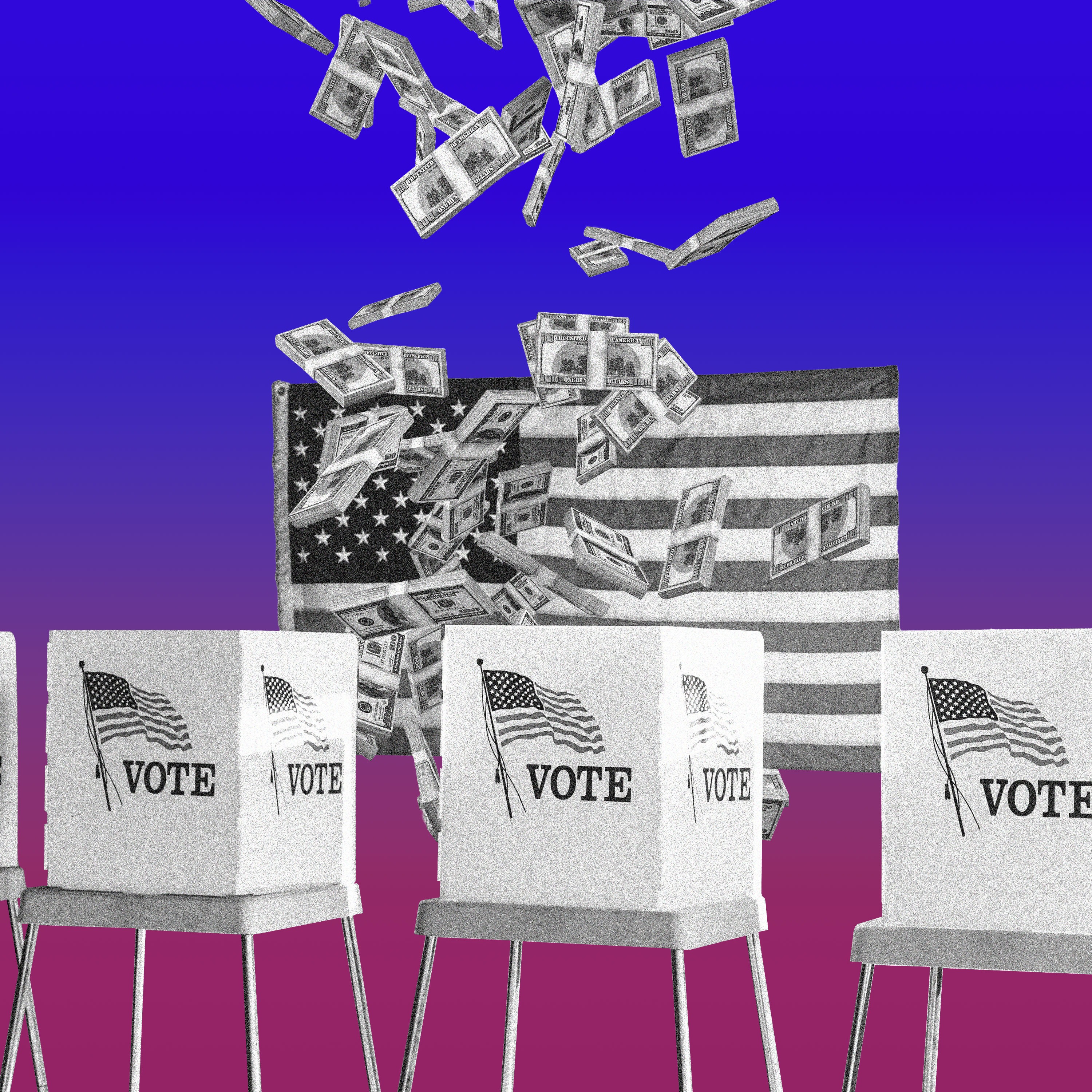
Hundreds of millions of dollars, desperation for insider info, fury and accusations of conspiracy when it doesn’t go your way—is this gambling or elections? Through the magic of prediction markets, it’s both!
Guest: David Gilbert, reporter at WIRED covering disinformation, online extremism, and how these trends impact people’s lives across the globe.
Want more What Next TBD? Subscribe to Slate Plus to access ad-free listening to the whole What Next family and across all your favorite Slate podcasts. Subscribe today on Apple Podcasts by clicking “Try Free” at the top of our show page. Sign up now at slate.com/whatnextplus to get access wherever you listen.
Podcast production by Rob Gunther, Evan Campbell, Madeline Thames-Ducharme and Patrick Fort.
Paige Osburn is the senior supervising producer of What Next and What Next TBD.
Hosted on Acast. See acast.com/privacy for more information.