 Ask ChatGPT

Paul Krugman explains why today’s wealth concentration is a “new Gilded Age” worse than the original, how it reshaped politics and public debate, and what history suggests about how it might end.
Paul Krugman, Nobel Prize-winning economist and long-time writer on inequality and the very rich; known for analyzing wealth/income trends and the political effects of austerity and “zombie ideas.”
Wealth is now held by an extremely small group (roughly 15 people vs 5 in 1918), with wealth-to-GDP and wealth-to-income shares more than 3x higher than late-Gilded-Age levels. Financialization and hype-driven asset booms, plus legalized and direct political influence, replace older forms of philanthropy. Backlash is weaker because elites have shed pretense and people underestimate how unequal things are.
Elon Musk’s asset wealth; USAID funding cuts tied to “DOGE”; crypto and SpaceX described as “Ponzi-ish”; campaign finance concentrated among ~300 billionaires; comparisons to 1918, 1929/Great Depression, and the New Deal.
Written by AI. May contain mistakes.
Exploring the drastic increase in wealth concentration among the elite.
“Nobel Prize-winning economist Paul Krugman has been writing about the very rich and the problems they create for as long as I can remember.”
Analyzing the historical trends of wealth and their societal impacts.
“And even even 10 years ago, we weren't that concentrated.”
Comparing the wealth of the top 15 today with the top 5 in 1918.
“Rockefeller was the richest man in America once upon a time.”
Examining the factors contributing to today's aggressive wealth inequality.
“And what history says about how this new Gilded Age ends.”
Explore how extreme wealth concentration influences politics and society today.
“He has wealth, but he hires people for income.”
Discuss what the original Gilded Age can teach us about modern wealth inequality and reform movements.
“to see how that ended, to maybe get ideas for how that public spirit regenerates?”
Explore the acceptance of progressive taxation in modern politics.
“And now it is part of what has become acceptable to some extent to say in politics.”
Discuss the historical context of wealth distribution and labor struggles.
“It struck me, looking back, it took so long for this whole Gilded Age thing to come toppling down and for us to see what it was, really, that like he wouldn't be Herbert Hoover.”
Examine how crises can lead to significant political reform.
“And a lot of people, I think I probably was guilty of that myself, was saying, OK, this is our second New Deal moment.”
Analyze public perceptions of inequality and the influence of the elite.
“But you can't just accept that as given.”
Reflect on the potential for meaningful political change over time.
“because you can see it in the way they respond to something like Zoran Mamdani winning office and the fear of like, oh, they're coming after me.”

Get the gist, explore an idea or ask about something said.
 Claude
On What Next | Daily News and Analysis, what are the key points of this episode?
Searching your listeningAutomatic transcript. May contain errors.
0:00Do you snore? Did somebody hand you a CPAP and did you quietly stop using it? The mask that never quite seals? The hose tugging at you every time you roll over? A machine sitting abandoned in a closet? it. ExciteOSA works a different way. It treats a root cause instead of managing the noise, and you use it while you're awake. 20 minutes a day, while the coffee brews, while you set your fantasy lineup. An FDA-cleared prescription device for primary snoring and mild obstructive sleep apnea. Then you go to bed like a person, nothing strapped on, nothing plugged in. In clinical studies, 90 % of patients saw a reduction in snoring.
0:44No sleep study required. Prescribed online, shipped to your door. ExciteOSA at springsleep.com slash sleep20. Code sleep20 for 20 % off. ExciteOSA is an FDA-cleared prescription-only device for primary snoring and mild obstructive sleep apnea. Not for everyone. Individual results vary. Risks and benefits at springsleep.com. 98 of the top 100 U.S. accounting firms trust Bill to simplify and secure BillPay. That's proven financial infrastructure built on over a trillion dollars of secure payments. Visit bill.com slash proven for a special offer.
1:35A couple weeks back, when the stock market minted the world's first trillionaire, I knew exactly who I wanted to speak with. Paul, welcome to the show. Hi, good to be on. Nobel Prize-winning economist Paul Krugman has been writing about the very rich and the problems they create for as long as I can remember. I wrote about rising inequality that was mostly focused on income back in 1989 when I wrote my first public book. So I've been on this for ages. At the time, lots of people were saying, why are you doing this? Nobody cares. But at this point, obviously, we all care. And the wealth side of it is relatively...
2:23I only really began focusing heavily on wealth more recently because it's become really conspicuous now that wealth is where the action is.
2:35By wealth, Paul means exactly what happened with Elon. The accumulation not of income generated by 9-to-5 work, but assets that a person owns. Think stock or property. And sure, Elon Musk is not quite a paper trillionaire anymore, but man is he rich. And he is part of a very small elite. What's happened now is that the amount of wealth that's being held by a really tiny number of people has drastically increased. That's where the real action is. The 1%, I might start talking about the 1%, but that's way too big a category. A lot of the wealth is in the hands of 150 people. So instead of one one hundredth, it's one millionth of the total population and quite a lot is in the hands of just, you know, 15 men.
3:31And it is all men who are up there with enough money to have enormous power aside from everything else. And even even 10 years ago, we weren't that concentrated. it. Yeah. I mean, part of what I like about your work is that you've been covering it so long that you've been able to see the way dramatic wealth reshapes public conversation. Like one of the places I saw you writing about wealth and the world was back in 2019. You were actually writing about the world around the time of the financial crisis of 2008. And you were putting your finger on the fact that a lot of governments decided to pull back, do austerity measures, address debt, which was a concern of the very wealthy, even though the majority of people may have benefited from further investment and how it became this unstoppable thing, partially because the very wealthy were dominating the conversation.
4:39Yeah. One of my ongoing concerns is with zombie ideas, not my phrase, but I picked it up, which are ideas that should be dead, killed by evidence that says they're wrong, but just keep shambling along, eating people's brains. If you ask why do zombie ideas persist, many of them persist because they're supported by a really handful of people. Part of what I think is different about now is that we're in such an extreme place that you can see the immediate wrongness of some of these ideas in action. Like I think about Elon Musk who is in charge of Doge, cut off so much support for USAID. You can literally find evidence of deaths of people because of that.
5:31Do you think that is going to change things? That's what we always want to know. In the early 20th century, there was a huge concentration of wealth at the top, and there was a backlash. And the progressive movement came out of a lot of ordinary Americans and a fair number of relatively elite but not billionaire Americans saying, this is wrong. What's striking now is, yes, there is the backlash, but the power of the people at the top is even greater. And they're even worse in a lot of ways than the robber barons ever were. Even by the numbers, the share of wealth owned by a tiny, tiny fraction of the populace is something like twice what it was at the peak of the old age.
6:29How did we get here so fast? That's a little bit of a mystery. I'm trying to understand it. But John D. Rockefeller was the richest man in America once upon a time. Elon Musk is now the richest man in America. Elon Musk has a bigger share of the pie. Today on the show, Paul Krugman on why the Gilded Age has nothing on today. And what history says about how this new Gilded Age ends. I'm Mary Harris. You're listening to What Next. Stick around.
7:14This episode is brought to you by Moomoo. If you're an investor, you might have questions. You hear about a big IPO or you watch the market go up and down. And you might think to yourself, what is going on there? So if you want to do your homework, but you don't have time to read it all, you might want to look into Moomoo. Moomoo is an all-in-one investing and trading platform that brings market data, research analysis, and professional-grade trading tools together in one place. It's used by a community of more than 31 million traders worldwide, with a parent company listed on NASDAQ. One account covers stocks, ETFs, options, crypto, IPOs, and prediction markets, with 150-plus built-in analysis tools.
7:56And Forbes named Moomoo one of the best brokerage accounts for stock trading in 2026. and TradingView named Moomoo best stock broker in North America in its broker awards in 2024 and 2025. Right now, Moomoo is offering its new users up to$1 ,000 in NVIDIA stock, plus 8.1 % APY on uninvested cash for a limited time. And if you deposit$100, you get up to$200 in trading vouchers. Go to start.moomoo.com slash whatnext to learn more and get started with Moomoo. That is start.moo.com slash whatnext. Regulatory fees, exchange fees, and index option contract fees may apply. Fees are subject to change.
8:42Today's show is brought to you by Vanguard. To all the financial advisors listening, let's talk bonds for a minute. Capturing value in fixed income isn't easy. Bond markets are massive, murky, and let's be real, lots of firms throw a couple of flashy funds your way and call it a day. But not Vanguard. Vanguard bonds are institutional quality. Institutional quality is not a tagline. It is a commitment to your clients. It means top grade products across the board. The lineup includes over 80 bond funds. They are actively managed by a 200 person global squad of sector specialists, analysts, traders.
9:15Lots of firms love to highlight their star portfolio managers. Like it's all about that one brilliant mind making the magic happen. Vanguard's philosophy is a little different. They believe the best active strategy should not be locked away with one person. They should be shared across the team, which is why every client benefits from the collective brainpower they've got, not just one individual's take. The bond market's complex and it's not something one person or small team can realistically keep up with. Vanguard has been in the game a long time. Their scale gives them serious edge. They're able to invest across all kinds of sectors, maturities, and geographies, which means they can spot and act on opportunities others could miss.
9:53So if you're looking to give your clients consistent results year in, year out, go see the record for yourself at Vanguard.com slash audio. That's Vanguard.com slash audio. All investing is subject to risk. Vanguard Marketing Corporation Distributor.
10:12500 orders a month was manageable. 5 ,000 is madness. Embrace intelligent order fulfillment with ShipStation, The only platform combining order management, warehouse workflows, inventory, returns, and analytics in one place. What used to take five separate tools, ShipStation does in one. Automate fulfillment and rate shopping to ship up to 15 times more with up to 90 % savings. Go to ShipStation.com and use code AUDIO to try ShipStation free for 60 days.
10:47yeah i want to dig into your numbers and i think it's important to really break them down for people because you do it so specifically like in your analysis you look at the top five richest people in the u.s in 1918 so before the big crash of 1929 you know gilded age etc and you compare them to the 15 richest people today so tell me about that comparison why are you comparing five people to 15, and what did you find? Okay, the reason for 15 versus five is that the U.S. population is more than three times what it was in 1918. So we're looking for roughly the same fraction of the population. And the reason for looking at that narrower group is partly that it's just so extreme, and that matters.
11:31I'm sorry, we look at a narrower group because an amazing amount of wealth is in the hands of this very small group. And there's a weird thing, okay, a weird thing about trying to track wealth at the very top. If you ask how much wealth does the top 1 % of Americans have, that's actually a little hard. Or the top, even the top 0.1%. We do have estimates which are done with great care, but particularly if we're going back, we have those numbers somewhat now. If you're trying to go back to 1918, and there's a reason I'm doing 1918, which I'll explain in a second. But if you're trying to go back to 1918, we don't really have, we don't have federal statistics on that.
12:13And wealth also is very good at going underground. Hiding. Hiding, yeah. Legally or not, but people are very easily able to hide their wealth if it's very large. And so in their first estimate was for 1918. So that's why I use 1918 as a benchmark. 1918 is kind of the tail end of the Gilded Age. It's possible that the progressive movement had already made some dent in those fortunes, so probably not much of one. But still, 1918 is the first year for which we have a pretty good source. And we have estimates of income at the very top, which come from, basically, from income tax. So I guess the income tax came in in 1916.
13:01I should know that. But if you're very wealthy, you don't need so much income. That's right. The very wealthy can find ways not to report their income or not even to manifest it. So we don't really have great income estimates at the very top, but kind of almost prurient interest. It's kind of wealth porn in Forbes. And because of that, we actually have a pretty good idea of how much wealth people had, even in the fairly distant past. So when you compare these two groups, 1918 to now, what did you find? Okay. Basically, the share of this tiny group, the one ten millionth of the population, their wealth relative to GDP, relative to total income, is more than three times as high.
13:54And the second number is relevant because if you want to ask basically how many minions can Elon Musk buy, you want to look. He has wealth, but he hires people for income. And so if we want to ask how much weight he can throw around, it's basically measured by his wealth relative to total income. And we are now, we're either at a double or a triple gilded age level of inequality. Wow. Which is kind of stunning here. But anyone who's thinking, will we ever, will we revisit the Gilded Age? We passed that probably in the 2000s, in the first decade of this century. And we're now just at a whole other level.
14:38I mean, as you lay this out, it's impossible for me as a lay person to see it as anything other than warped. And it just raises this question of how we got here. And you, I know you've said lots of brilliant people are trying to figure this out, how we got here so quickly. but I think you're a smart guy. So I'm curious if you were asked to give like a quick autopsy here of how we got to the point where you think the wealth is much more concentrated. There's much less philanthropy. The wealth is also potentially built on less than it was the first gilded age around and is certainly having toxic impacts on our political dialogue.
15:24How did we get here Okay. And the honest truth is that I don't have any kind of definitive answer. In fact, in general, economists are really bad at explaining. I mean, they're pretty good at describing. We're not very good at explaining extreme concentrations of income and wealth. There are, we know what it looks like. We even have, there are even mathematical descriptions, you know, it's a Pareto distribution that work, and we don't actually know why they work as well as they do. But there seem to be – I would say that there's a – part of it is the financialization of the economy. We have just in general become an economy in which people do things for their – how do you want to say this?
16:23They do it for because there's a market payoff and the markets themselves are as rumor fad driven as markets always are much more than just actually making money by delivering services people want. So that's a that's, I think, part of what's going on. Making money off of promises to make more money. Yeah. I mean, this is Robert Schiller, the great expert on financial irrationality, has said that a financial bubble is basically it's a natural Ponzi scheme. It's a situation in which people make money because other people think they can make money. It just keeps on feeding itself until at some point, but maybe many years down the road, it hits a wall.
17:13Yeah, I guess that's my other question, which is, doesn't that imply that it will pop at some point? But yeah, but that's unless, okay, let's talk about that first. So I should just say that in a lot of ways, you know, financial bubbles are kind of natural Ponzi schemes, and there are probably some actual Ponzi schemes out there as well. I mean, SpaceX certainly looks Ponzi-ish. then yeah it pops at a certain point unless and this is where it gets really kind of scary that unless they the wealth buys political influence and the political influence is then used to kind of solidify the position which is not capitalism like i mean like we should say like that's something else right yeah i mean it look a cryptocurrency uh there's a some people have become immensely well-filled.
18:04The super, super top is based on things that are sort of beyond crypto. But cryptocurrency appears to have no, it's been around for 17 years, appears to have no real use case except crime. But it got so big based on pure hype that it basically bought itself a friend in the White House. So corruption. Yeah, it's, well, it's corruption. To some extent, And it's corruption through what legalized corruption in the form of campaign contributions. But then also some actual corruption now is, well, it's huge. I mean, this is, you know, if we have the world's first trillionaire, we also have the first time that a president has made billions off his office.
18:46That didn't used to happen. So even that, you know, again, we think of the Gilded Age as a time of corruption and bought politicians and machine politics. But those guys were pikers by 2026 standards. So, and that can, you can get, you can definitely have a situation where somebody becomes enormously rich through, just because there's a narrative, there's a fad, whatever, that leads people to run up the price of stock that this person controls or assets that the person controls. And then they buy themselves political policies that lock in their wealth. Would you argue that instead of philanthropy, the sort of robber barons of this Gilded Age are basically spending money on political control or political power and influence?
19:36Certainly that's happening. I mean, although they – yeah, I mean, again, all of these things happened to some extent in the Gilded Age. It wasn't unheard of for – I mean, the senators were known as like the senator of Standard Oil, right? It's like there were people who were, at the time, clearly like known as bought and sold political actors. But now, and there were media, you know, there were newspapers that were owned by the ultra wealthy and so on. But the level of kind of direct purchase of influence is much higher now. I'm not sure that it's an alternative to philanthropy in the sense that even now, buying immense political influence doesn't take very much of a super-duper fortune to have an enormous impact.
20:29It's cheap. Yeah, if you spend a couple of hundred million dollars to buy a senator, well, if your wealth is$100 billion, then that's not a big deal for you, actually. And they could certainly afford far more philanthropy. I mean, as best we can tell, most of the people at the very top are giving, well, have given away less than, certainly less than 5%, maybe less than 1 % of their wealth. So it's not as if, you know, if they were to triple their philanthropy, it would still be rounding error. And I just saw that among the really the mega donors, the leading mega donor right now is, I think it's Mackenzie Scott, his Jeff Bezos's ex.
21:17So the wife out of her divorce settlement is spending probably more than the top five wealthiest men in America on philanthropy. So that's telling you something about just how tiny all of this really is. All of this is enraging to me. And yet you've written about how the backlash against this rigged system is far weaker than you'd expect. Why do you think that is? Okay. At that point, that's the point where I start to sound like a croshy old man. In my day, these things didn't. I will also be an old man yelling at the clouds with you. I feel the same way. I do think that there is some—it's odd.
22:06I mean, hypocrisy used to be a much stronger force than it is now and was beneficial because it's the tribute that vice pays to virtue. It used to be that the ultra-wealthy pretended to be public-spirited because that was what people did. They pretended to be good family men. Maybe some of them were. Many of them truly were not. But they didn't have Elon Musk-style double-digit numbers of children by multiple baby mamas. So that's a—this is a—somehow or other, we stripped away the delusions. We stripped away the pretense in many ways from life. We've also stripped away the actual acts of decency that people used to do for positive or whatever their motives.
23:14They actually did do some things that were positive. And I don't know. I mean, at some level, it's a little bit of a mystery to me how our society became so amoral.
23:32When we come back, if history says this is a new Gilded Age on steroids, what does that mean about how all this ends?
23:50When it comes to managing money, forget the hype and look at results. Bill has a trillion dollars of secure payments powering our BillPay tools. Instead of just moving money, Bill is powering the financial operations of nearly half a million customers. So stop the guesswork and start scaling with the proven choice. Ready to talk with an expert? Visit bill.com slash proven to get started and grab a$150 gift card as a thank you. Terms and conditions apply. See offer page for details. Do you snore? Did somebody hand you a CPAP and did you quietly stop using it? The mask that never quite seals? The hose tugging at you every time you roll over?
24:30A machine sitting abandoned in a closet? it. ExciteOSA works a different way. It treats a root cause instead of managing the noise, and you use it while you're awake. 20 minutes a day, while the coffee brews, while you set your fantasy lineup. An FDA-cleared prescription device for primary snoring and mild obstructive sleep apnea. Then you go to bed like a person. Nothing strapped on, nothing plugged in. In clinical studies, 90 % of patients saw a reduction in snoring. No sleep study required. Prescribed online, shipped to your door. ExciteOSA at springsleep.com slash sleep20. Code sleep20 for 20 % off.
25:17ExciteOSA is an FDA-cleared prescription-only device for primary snoring and mild obstructive sleep apnea. Not for everyone. Individual results vary. Risks and benefits at springsleep.com.
25:34Is it useful to look back at the original Gilded Age to see how that ended, to maybe get ideas for how that public spirit regenerates? Or what was it that woke people up back then? Well, okay. First of all, that's kind of a model. It's a roadmap for those of us who'd like to see this reversed. We look at what happened and we say, okay, if they did it that time, maybe we can do it again. And we can talk about the reformers. There was already a significant progressive movement and some reigning in of these extremes even before the New Deal. And then, of course, far more during the New Deal. So we know that it's possible both politically and economically.
26:31We know that by 1955, we were a far less elite-driven, far more equal society, less than we imagined ourselves to be, but still. So all of that as a role model. So I'm actually a little encouraged by less than the actual political stuff as the way that it seems to me that the things that were just not discussable even a few years ago are now on the table. Like what? Well, so first of all, that's just the way you frame it. Until just a couple of years ago, talking about great wealth as a problem, not just because, well, why isn't that money available for the rest of us, but that it's a problem because of the political influence.
27:21Just a few years ago, anyone who said that was a socialist communist, you were not welcome, even within the Democratic Party. And as we speak, you know, just last week, by the time this airs, there will have been three incredibly progressive people winning their Democratic primaries in New York, two of them calling themselves socialists. Yeah. Back in before he ran for president, Woodrow Wilson said, if there are men big enough to own the government, they will own the government, which these days would be considered, you know, that's something you might hear, expect to hear from Zora Mandani, not from a politician.
27:57But you are hearing it now in a way that that would have been sort of, again, totally beyond the pale, I think, even five years ago. And now it is part of what has become acceptable to some extent to say in politics. So that's a good thing. And you have real proposals. I mean, I don't think that the California Wealth Tax Initiative, which is a tax only on billionaires, is going to pass, though I might be surprised. But that's sort of— This is this ballot initiative that will be voted on in November. Yeah. But it's to even get this far for it to have a real chance of happening. That's saying that a serious return to progressive taxation, not just as a way to raise money, but as a way to limit extremes at the top, has become, again, an acceptable part of the discourse.
28:54So maybe, maybe we are painfully working our way up to a kind of 1908 level of political enlightenment where we're prepared to take this stuff on a little bit. I think we were saying there is many years to go, too. And I say that because when I looked back at the history, the sort of Gilded Age, I mean, you can think of a lot as like looped into the Golden Age, like some of the late 19th century, early 20th. what stands out to me is how long there was a push and pull between extreme wealth and labor essentially and how much had to happen to get to the new deal in the last few days Donald Trump made this reference of like I don't want to be Herbert Hoover the president who sort of presided over the Great Depression and was blamed for a lot of what happened.
29:50It struck me, looking back, it took so long for this whole Gilded Age thing to come toppling down and for us to see what it was, really, that like he wouldn't be Herbert Hoover. Do you know what I mean? Like he would be more, I don't know, he would be more like Warren Harding, one of the scandal blanked presidents before Herbert Hoover, because it's going to take a long time. Is that fair? Warren Harding is a good metric because we basically have a teapot dome-sized scandal every day now. Teapot dome was the major scandal of the Warren Harding administration. It was a few million dollars, or actually a few hundred thousand dollars, a few million in today's money.
30:33And it was nothing. I mean, this happens basically. I think there really is. We're having teapot-dong-sized scandals on an average day now. But I would give you a parallel. It is true. We didn't really have the great compression, the big reduction in inequality that took place in the 30s and 40s. We didn't have that until the 30s and 40s. And partially it was a world war that got us there. You know, there was a lot. Yeah. But this brings me back, if we think about, we had a really quite horrific financial crisis, a severe global recession in 2008. And a lot of people, I think I probably was guilty of that myself, was saying, OK, this is our second New Deal moment.
31:25We're ready to really turn it around. And we weren't. We got, you know, Obama did more than people give him credit for. There was some increase in rates of taxation. There were some expansion. You know, we got Obamacare. So things happened, but it was nothing like a New Deal transformation. And the question was, why? And I think we were just weren't ready for that. We hadn't yet built up the level of outrage. We hadn't sort of had the groundwork for a fundamental reform. And if we ask why did 1929 and the Great Depression bring on what it did, well, it was partly that people had spent a long time building up to that point.
32:06You already had role models. And FDR was governor of New York before he was president and had done a progressive agenda, though nothing like what he would do in the White House. Um, by probably we don't get a turnaround until there's another crisis, until there's another, uh, big failure. Like a financial crash? Financial crash, a, uh, um. A war? Another botched war. Maybe something we aren't even thinking about now. Maybe the, uh, the, the struggle to contain, uh, AIs run amok or something like that. But the, you know, give me a 21st century crisis that is quantitatively similar to the old ones, but qualitatively different because things are different now.
32:57But we maybe, I mean, this is not what you can actually say as a way of running a political campaign. Let's do this because even though it won't make much of a dent in the problem, it will prepare the ground for when we finally get to do something after the next crisis. But that may be how it works because that's – I think the lesson really of the New Deal is the New Deal would not have been possible in 1923 instead of 1933 because the ideological climate had to mature. And so maybe – or maybe we just end up in this irreversible iron heel oligarchy. That was a novel by Jack London. But you can't just accept that as given.
33:47It's dark, though. What you're saying is like we need to prepare for the next, like the crisis that actually makes change possible. Well, but that's kind of always been how it works, right? It's, you know, never let a crisis go to waste. And kind of we did let the last crisis go to waste. So, but maybe I think we're already in a different place politically, ideologically than we were. Part of the trouble right now is I think a lot of people have been convinced by influencers, crypto, whatever, like, oh, I can be the next oligarch. You know what I mean? And until that belief is just less prominent, it'll be harder to convince a lot of people that you need the kind of reforms that you need.
34:31One enduring result from surveys is people are opposed to extreme inequality, but they have no idea how unequal we really are. You ask people what share of wealth you think is controlled by the top tenth of a percent, they will give you a number that is much, much lower than the real share. They will, they, so that at some level, yeah, people do imagine I could be the next billionaire. First of all, I think most people have no idea how much money a billion dollars is. And they probably don't, therefore, don't really appreciate how few people are really in the serious ruling class. I don't want to, but, you know, call it whatever you like.
35:15But again, when the Times did its survey of basically who bought the 2024 election, they basically said 300 people. It's nothing. 20 % of campaign finance and more than that in terms of political influence came from 300 billionaires. I don't think people appreciate that the number is that small or appreciate how few that is. In general, I think we all have a little bit of a problem envisioning just how big the economy is, how big the America is, and realizing then that we have this really, you know, group of people who would fill only a corner of Trump's ballroom who are actually the actual elite.
36:06I don't think that that has sunk in with people yet. You know who it's sunk in with? The elite. because you can see it in the way they respond to something like Zoran Mamdani winning office and the fear of like, oh, they're coming after me. Well, yeah. And again, you know, Mamdani, first of all, his election is, you know, New York is very much not what the rest of the United States is like. But still, got to remember, not right on the eve of the 2008 financial crisis, but shortly before the financial crisis, Rudy Giuliani was mayor of New York. So think about if you want to be tempted to become hopeless about political change, bear in mind that New York over what seems to me at my age like not that long a stretch of time has gone from a Giuliani mayorship to a Mamdani mayorship.
37:03So we can change. Okay, you're leaving me in a hopeful place. I'm grateful for you, Paul Krugman. Thanks a lot.
37:14Paul Krugman is a Nobel Prize winning economist. Go check out his great Substack. It is paulkrugman.substack.com. And that's our show. What Next is produced by Rob Gunther, Evan Campbell, Madeline Thames-Dusharm, and Patrick Fort. Paige Osborne is the senior supervising producer of What Next and What Next TBD. Mia Lobel is the executive producer of podcasts here at Slate. Ben Richmond is our senior director of podcast operations. And I'm Mary Harris. Go track me down on Blue Sky. I'm Matt Mary Harris. Thanks for listening. Catch you back here next time.
38:17www.bill.com Ready to talk with an expert? Visit bill.com slash proven to get started and grab a$150 gift card as a thank you. Terms and conditions apply. See offer page for details. There's one thing that will forever change the way you sleep, and it's the softest 100 % organic cotton sheets from Bowlin Branch. You'll fall asleep faster, wrapped in the most luxurious comfort. You'll never sleep hot again with sheets that feel breathable to sleep in. You'll experience the purest softness on night one and feel your sheets get even softer with every wash. Discover the difference with 15 % off your first set of sheets at bowlinbranch.com with code BUTTERY.
38:56Exclusions apply. See site for details.
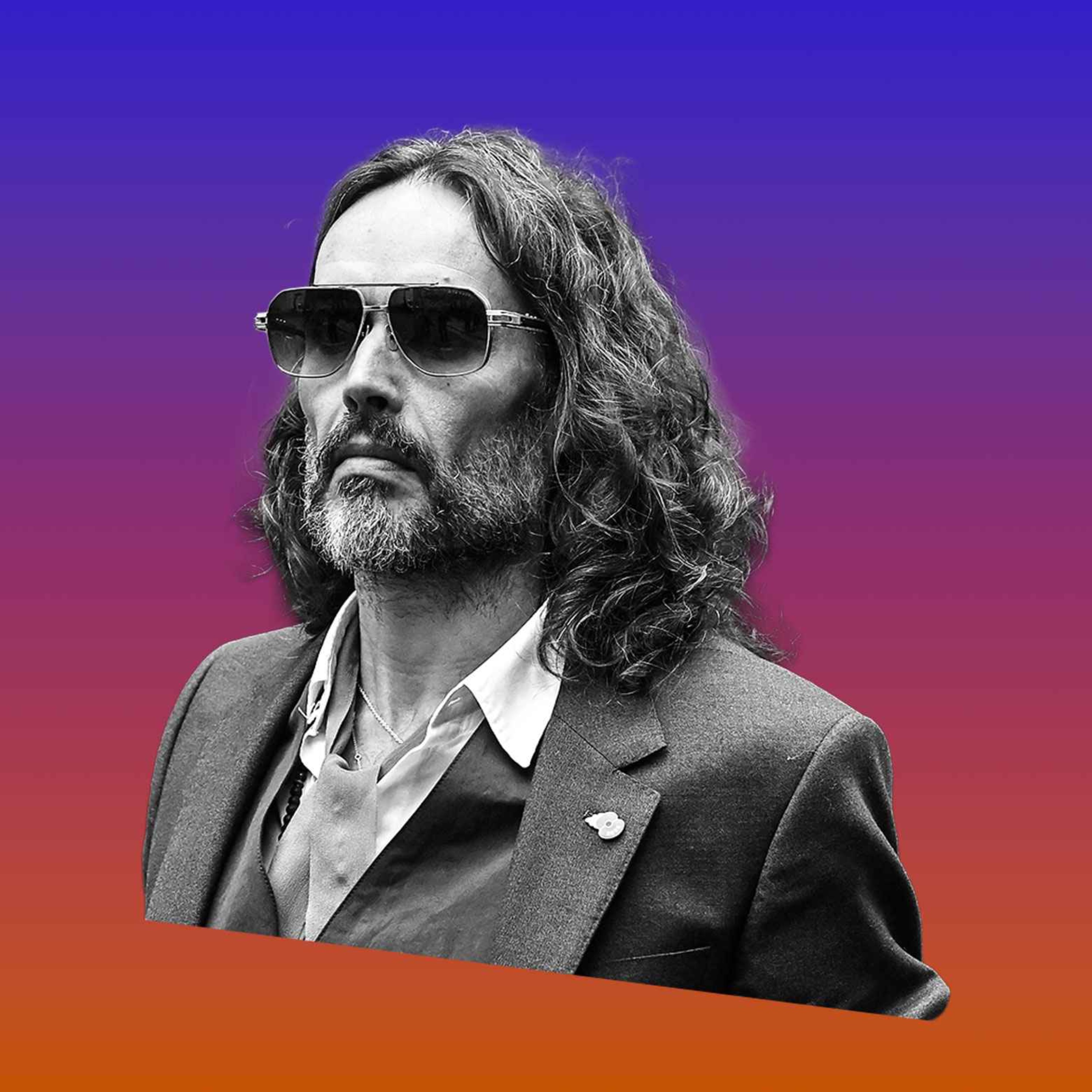
The Gilded Age has nothing on the present when it comes to a huge—and growing—portion of wealth being controlled by a smaller and smaller group of men—and they’re doing their best to keep it that way. Must everything that goes up come down?
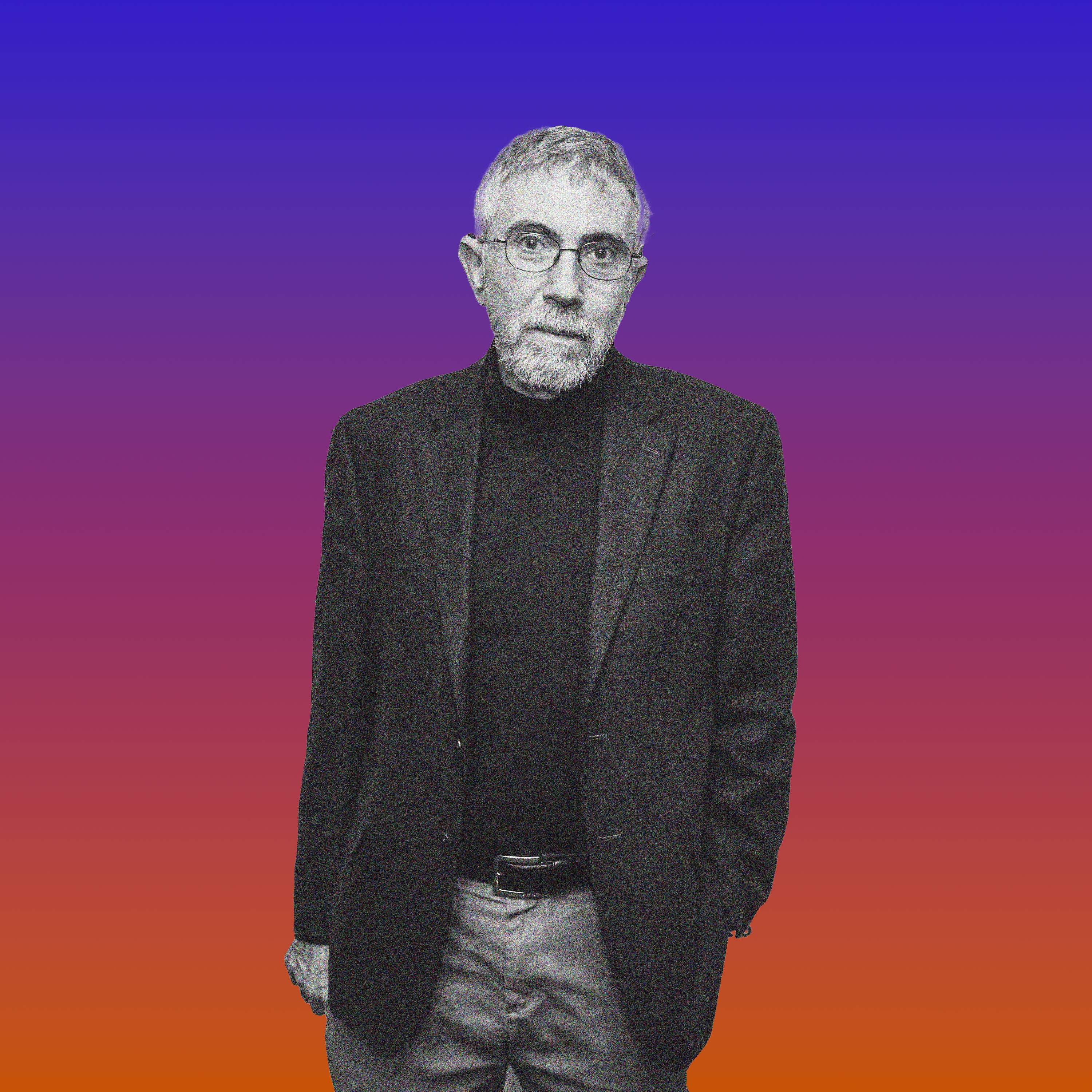
Guest: Paul Krugman, Nobel Prize-winning economist and professor at City University of New York’s Graduate Center.
Want more What Next? Subscribe to Slate Plus to access ad-free listening to the whole What Next family and across all your favorite Slate podcasts. Subscribe today on Apple Podcasts by clicking “Try Free” at the top of our show page. Sign up now at slate.com/whatnextplus to get access wherever you listen.
Podcast production by Rob Gunther, Evan Campbell, Madeline Thames-Ducharme and Patrick Fort.
Paige Osburn is the senior supervising producer of What Next and What Next TBD.
Hosted on Acast. See acast.com/privacy for more information.