Ask ChatGPT
 What Next | Daily News and Analysis
27 Aug 2026 · 26m · 6 chapters
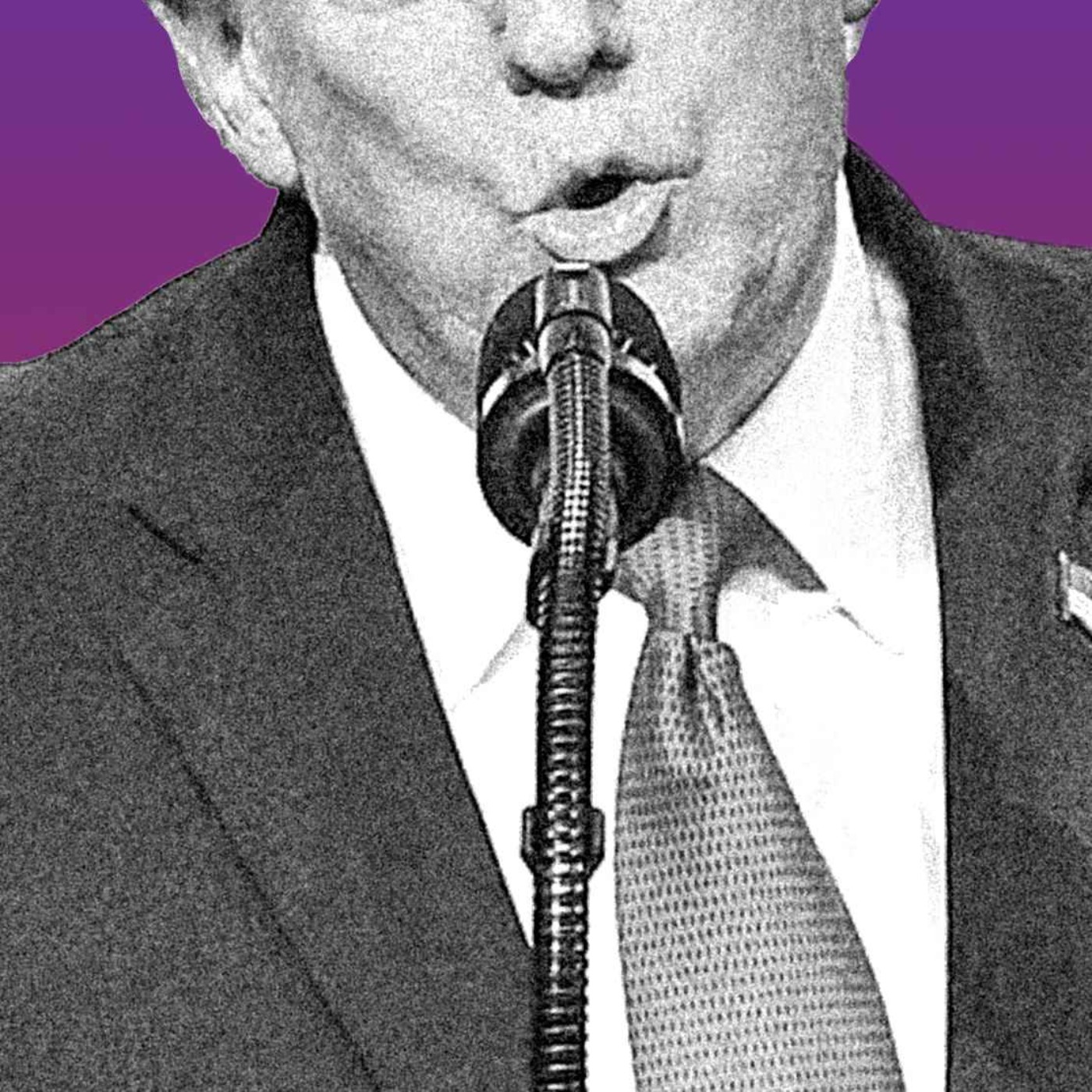
The episode argues that Trump’s economic strategy is undermining allies and destabilizing the post–World War II order. It covers Operation Economic Outcast/Economic Fury against Iran, claiming sanctions are being used as a “cudgel” without coalition-building, while Iran and other countries (notably China) are effectively exempted or able to evade enforcement. It also discusses a Canada–U.S. trade breakdown after USMCA-related demands, with new tariffs on both sides and claims that the dispute is driven by Trump’s ego and personal vendetta rather than economics. Key examples include Trump lifting Iran’s oil embargo early in the war, Russia/China exemptions, and Iran’s “Lego meme” information warfare.
Adam Kinzinger, former Republican congressman and Air Force veteran; he hosts The Kinzinger Report and writes at adamkinzinger.com.
Written by AI. May contain mistakes.
Explore how the U.S. dollar is being used in global economic strategy.
“This week, the White House is using the global power of the U.S.”
A discussion on Trump's trade wars and their implications for Canada.
“Adam Kinzinger, thank you so much for coming back to What Next?”
Analyzing the historical context and future of U.S. trade policy.
“And plus, you don't have to be a genius.”
Discussing how U.S. military and economic policies affect global power dynamics, particularly regarding Canada and China.
“We built the economic system to benefit the most people in the world that we can, but above everything, to benefit ourselves.”
Exploring the concept of an economic D-Day strategy and the implications of current military actions.
“say out loud again if we had the option of an economic d-day all along why didn't we use that before we went to war?”
Discussion on the military strategies and implications for Ukraine and Iran.
“bombings because they're not going to try to.”

Get the gist, explore an idea or ask about something said.
 Claude
On What Next | Daily News and Analysis, what are the key points of this episode?
Searching your listeningAutomatic transcript. May contain errors.
0:00With almost half a million customers and over a trillion dollars of secure payments, Bill isn't new to intelligent finance. It's the proven way to simplify Bill pay and maximize cash flow. Want to learn more? Visit Bill.com slash proven for a special offer. If you're still sleeping on cotton or satin, that could be the reason for frizzy hair, sleep creases, overheating, and even breakouts. Dermatologists actually recommend switching to silk because it's naturally cooling and much gentler on your skin and hair. That's exactly why over 3 million people have made the switch to Blissey. Blissey pillowcases are made from 100 % pure mulberry silk, the highest quality silk you can get.
0:40It's breathable, hypoallergenic, and surprisingly machine washable, so it's easy to care for. People love waking up with smoother hair, calmer skin, and no sleep lines. Plus, Blissey makes the perfect gift. And you can even complete the set with matching sleep masks, silk bonnets, and crease-preventing scrunchies. Blissey is offering 60 nights risk-free, plus 30 % off when you shop at blissey.com slash unwind. Your skin and hair will thank you.
1:16This week, the White House is using the global power of the U.S. dollar against both our enemies and our allies. Treasury Secretary Scott Besant announced Operation Economic Outcast against Iran. Trump has described it as an economic D-Day of sanctions that will further isolate the Iranian regime. At the same time, trade talks with Canada escalated into an all-out trade war after negotiations abruptly collapsed. This whole month, the story was that both sides were coming together, that a deal was in sight. But then right before the deadline, Canada walked away. They say the U.S. imposed too many last-minute demands.
1:55President Trump then called the Canadians clowns. Ontario Premier Doug Ford, who reportedly advised Canadian Prime Minister Mark Carney to walk away, said this about Trump. Well, he can kiss my ass as far as I'm concerned. We're going to go at him full steam. And we buy 400 % more cars than... So that was a thing that happened. New tariffs are going into effect on both sides of the border. And sure, Canada is definitely going to feel some economic pain, but things are going to get more expensive here as well. Former Republican Congressman Adam Kinzinger thinks this whole situation is a huge self-own, that we're throwing away decades of economic policy down the toilet.
2:34Adam Kinzinger: We built the economic system to benefit the most people in the world that we can, but above everything, to benefit ourselves. There's a reason the U.S. Navy protects all of the shipping lanes in the world. It's not because we're super generous. It's because now we get to write the rules. There's this idea that somehow we've been just shortchanged. And of course, you can always fight to have a better and fairer deal. Nobody's against that. But to go and do this and blow up the post-World War II order, I mean, sure, if you like America's power in 1874, then let's do exactly what we're doing.
3:13Today on the show, is Trump trying to wreck the economy? I'm Rob Gunther filling in for Mary Harris. You're listening to What Next. Stick around.
3:34Hi, this is Mark Bittman from the podcast Food with Mark Bittman. I've been writing about food and restaurants for almost 50 years. My whole career, really. And what I know is that the good restaurants all have something in common. They're busy. Genuinely, chaotically busy. And somehow, in the last few years, the best of them have begun to make it look easy. And do you know why? Because they're running on Toast's technology. Toast is built for restaurant owners who understand that Toast's tools keep the line moving and keep their customers happy, with fewer mistakes and hiccups in ordering and paying.
4:12For owners, that turns busy into business. To learn more, head to ToastTab.com. That's T-O-A-S-T-T-A-B, ToastTab.com. Toast, built for busy. Do you snore? Did somebody hand you a CPAP and did you quietly stop using it? The mask that never quite seals? The hose tugging at you every time you roll over? a machine sitting abandoned in a closet. ExciteOSA works a different way. It treats a root cause instead of managing the noise, and you use it while you're awake. 20 minutes a day, while the coffee brews, while you set your fantasy lineup. An FDA-cleared prescription device for primary snoring and mild obstructive sleep apnea.
5:02Then you go to bed like a person, nothing strapped on, nothing plugged in. In clinical studies, 90 % of patients saw a reduction in snoring. No sleep study required. Prescribed online, shipped to your door. ExciteOSA at springsleep.com slash sleep20. Code sleep20 for 20 % off. ExciteOSA is an FDA-cleared prescription-only device for primary snoring and mild obstructive sleep apnea. Not for everyone. Individual results vary. risks and benefits at springsleep.com. Hi, Brooke DeVard, host of Naked Beauty. Picture this, you walk in from the cold and every room already feels like fall. That's what whole home scenting means at Pura.
5:50One system working quietly in the background so your home always feels like the season and like you. Learn more at Pura.com.
6:04Adam Kinzinger, thank you so much for coming back to What Next? Yeah, it's great to be with you. Thank you. So there's been a lot of economic activity from the White House recently. Trump is trying to use the global power of the U.S. dollar to bend both allies and enemies to his will. I want to start with Canada. There was this last-minute breakdown in trade negotiations. Where do we stand right now?
6:25Adam Kinzinger: Well, we're in a really bad spot. I mean, the president is creating trade wars with people that aren't enemies, and not even not enemies, but literally our best friends and best trading partners. And this is this comes out of nowhere except for his own pride. It's like a way that he can win at something. I feel like he's probably out there feeling like a loser because of what's going on in Iran. And I think the other point that a lot of people are missing is, you know, the president goes out and claims that there's some bad trade deal that we're getting the short end of the stick. What he's talking about is USMCA.
7:00Adam Kinzinger: USMCA. The USMCA under the first Trump administration was the thing that he negotiated and claimed it was a massive victory. Yeah, it was a replacement for NAFTA, right? That was the 90s era trade deal. At the time, he claimed this was a massive victory, something that was amazing. We should all appreciate him for it. Now, evidently, it's the worst thing ever. Because we're in the middle. If you've seen the movie Canadian Bacon from the 90s with John candy. It is the best movie, and it shows where we are now, creating an enemy because he's bored. Well, you say this is a distraction for the debacle in Iran, but it's interesting that also this week, Treasury Secretary Scott Bessent, he played up the launch of what he's calling the Operation Economic Fury targeting Iran.
7:45He's calling it this economic D-Day. And that puts the focus squarely back on Iran. Explain the goal here. We're putting even more sanctions onto the Iranian regime, but we're also targeting other countries. What exactly is happening here and what are we trying to achieve?
8:00Adam Kinzinger: Yeah, this is what's nonsense. So look, I'm not against tightening economic sanctions against Iran. I think that's probably what we actually should have defaulted to instead of war. And so that in and of itself is fine. But when you do something like that, the only way to actually succeed is to bring your allies with you, to go and convince your friends, to convince your neighbors, to convince your trading partners to join you in this. And what we're really doing, instead of having a precision shot, so to speak, against Iran and its economy and its regime, we're basically chucking grenades everywhere around us and throwing stuff at everybody.
8:36Adam Kinzinger: Well, you're not going to win a fight like that. On top of it, the president has not been clear to the American people, what is the actual goal in Iran? You keep telling us we've won, but now we're entering some economic fury or whatever. And again, I think everybody's pretty aware of this by now, but Iran has a much higher pain threshold than the United States does. So it's nonsense to both engage in this while also starting a trading war with your allies. It's one or the other, and preferably never starting a trading war with your allies. It's striking how when you step back, what we're really trying to do, it seems like we're using our economic might as a cudgel for both our allies and our enemies.
9:19And I don't know, I seem to look at this both as, well, it's something that's not working. And I'm hoping maybe we could start with Canada and try to figure out why it's not working there. So you've written about the Canada situation. You say that Trump sanctions, they've undone decades of slowly built economic cooperation. And you mentioned this before, it all seems very personal to Trump. He's been belittling the Canadian government since day one. Is there anything in these negotiations that are actually about economics? Or is this truly just a personal vendetta?
9:51Adam Kinzinger: Well, I think it's a personal vendetta. I mean, there's, look, is there some things we can look at our trading relationship and say that the U.S. is being treated unfairly and a couple things? Maybe. I can't name what those specifically are. But inevitably, in any kind of relationship like that, there's going to be imbalance somewhere. And I'm sure that actually exists the other way, too. Probably Canada is getting the short end of the stick on something. But you live with the best you can. What it seems like right now is that Mark Carney, who's, you know, ostensibly fairly conservative for Canada, Trump believes should be on his side.
10:25Adam Kinzinger: Because Trump, in Trump's mind, conservatism has nothing to do with money. And it has everything to do with culture war. And he isn't. And Trump takes that extra personally. The other thing, look, it's when you have real competitors or enemies, well, let's look at North Korea, let's look at China, let's look at Russia. Those are the people who you actually should be taking on. But instead, Trump always goes after the friends because he knows, and whether he consciously knows this or not, I don't know, but he knows that you're not going to get into a shooting war with your friends. And so the downside, outside of the economic impact, but the downside militarily is low.
11:02Adam Kinzinger: And he has to feel tough. He has to feel like a bully. And by the way, you see this in his day-to-day in politics. He always goes after the people that are on his side and inevitably cowers to the people on the other side of his politics. He's a broken man that unfortunately now has the levers of power. Yeah, that's interesting you say that we're lobbing grenades at our allies and they're not willing to start a gunfight with us because of our relationship. And I think what we've seen previously, like trying to negotiate trade deals with European countries or previous trade deals with Canada, is that they are sort of coming to the table and giving up a little bit.
11:38And this seems to be one of the first times, maybe it's a trend, the New York Times pointed out, they had this analysis this week that said, Canada walking away from the table here, It's an example of how countries and then colleges and other institutions, they're starting to stand up for themselves a little more. They're not being as compliant. And it's not because this will be an easy thing to do for Canada, especially the economic pain is going to be real. Right. Is that correct?
12:01Adam Kinzinger: I believe so. Yeah, it's going to be very real. But I think Mark Carney's speech made it very clear that this is more than just kind of economic pain. This is about sovereignty. And if you think about sovereignty, let's look at our friends in Ukraine. Their economy is probably half of what it was at the beginning of the Russian full-scale invasion, but they're willing to sacrifice that and their own people for sovereignty. Sovereignty is the highest calling of any leader of any country, and that is what is being threatened here. Canada's sovereignty. And plus, you don't have to be a genius. Canada watches American news.
12:38Adam Kinzinger: I mean, they probably pay more attention to our politics than their own. You don't have to be a genius to see that Trump is generally hated in the United States of America and that there's about two years left of his quote-unquote leadership. There's nothing leading about it. And, of course, the Democrats are likely going to take the House and Senate. And so they see the writing on the wall. Look, it's similar to Iran. When day two of the bombing campaign, Trump is saying, we've won. They're going to come to the table. what he is saying to the Iranian regime is, I'm desperate to get out of this war.
13:13Adam Kinzinger: And if you show that in-state, you're going to lose every time. Yeah. In your recent piece about Canada, you say Trump is trying to go back to this old school style of geopolitics where might just makes right because that's the way it is. But it doesn't seem to be working. Ukraine is a good example. You know, countries just don't want to be dominated. That's right. That's right. And look, it's essential for all of us to realize, too, what was America like during the time of Might Makes Right? Well, we were a powerful country. We hadn't really gotten our sea legs under us, so to speak, yet. What happened after the new liberal post-World War II order was created?
13:52Adam Kinzinger: We became, for the most part, kind of the unchecked superpower of the world, especially after the fall of the Berlin Wall. We built the economic system to benefit the most people in the world that we can, but above everything, to benefit ourselves. There's a reason the U.S. Navy protects all of the shipping lanes in the world. It's not because we're super generous. It's because now we get to write the rules, right? We get to ensure that our goods get through. There's this idea that somehow we've been just shortchanged. And, of course, you can always fight to have a better and fairer deal. Nobody's against that, especially when you think of like China dumping steel in the United States, stuff like that.
14:37Adam Kinzinger: But to go and do this and blow up the post-World War II order, I mean, sure, if you like America's power in 1874, then let's do exactly what we're doing. Yeah. And you talk about the economic pain of might making right. And we're seeing that this might be on the horizon, especially when it comes to this Canada deal. It looks like the pain could be reciprocal. You start off your piece talking about the leverage that Canada has. They could spike our energy prices, for example. Do you think Trump even cares about the politics of this move at a time when cost of living is taking center stage out of the midterms?
15:09I think if you take like, does he care?
15:12Adam Kinzinger: Yeah. Let's put him at a three on a 10. Does he care about himself and his ego? That's a 37 on a 10. So does he care? Sure. Maybe. Does he care enough? Of course not. And I think, look, if I was still a Republican member of Congress, I'd be furious. But these guys are too scared to even be scared, too scared to push back on him. Because Donald Trump, it's almost like I could not think of a way to throw this election more than what Donald Trump is doing. But again, to him, it's all about ego. Yeah. And it's worth mentioning, too, that, you know, Canada is getting pushed closer to China as our alliance, economic alliance unravels.
15:52Look, this is the scariest thing, is that Mark Carney said in his words, basically, I'll paraphrase, we find good cooperating, honest partners everywhere now, except the United States.
16:07Adam Kinzinger: People trust China, okay, more than they trust the United States at this moment. When Iran puts out a statement about what's happening in the strait or what's happening in the war, instead of automatically dismissing it like we used to, if it contradicts with what the United States has said, now we take that and we're like, well, maybe they're telling the truth in the U.S.'s line. There is so much damage that's being done here. And what is the White House doing? Well, instead of putting out their own Lego memes or videos about the Iranian government, they're attacking Democrats. They're here dividing the country and the other side's winning.
16:45Adam Kinzinger: And we've got a bunch of kids that are trolls working the White House social media. Well, yeah, you mentioned the Lego memes. I just want to take a side detour here. That's the Iranian regime is putting out these like AI generated Lego videos of Trump acting like a clown and getting owned by the regime. Like, do you think that's working? Is that a form of soft power? OK, that works. Look, it's to fight a war. You have to use the dime model, diplomatic information, military economic. Right. All those are pretty understandable. But on the information side, it's how do we win the information war?
17:16Adam Kinzinger: Now, the information war nowadays isn't, you know, throwing newspapers over the wall like it used to be. It is things like humor on the Internet. If you think of NAFO, the North Atlantic Fellows Organization, this was an organic thing that rose up on X to push back against Russian propaganda. Very effective. So, yeah, Iran puts up Lego memes and jokes. We laugh about it, but that is effective information warfare. It's getting a message to the American people outside of the channels of the U.S. media. Is that the sense? Yes, and in a very entertaining way. I wonder, though, like, so if they're able to communicate with us, with regular people that way, it seems like the sanctions that the United States is putting on, they're sending a different message directly to the Iranian people that, look, you know, we're going to choke you off.
18:04We're going to make your cost of living higher. And we might push you closer to your own regime because they're portraying America as the enemy. What do you think about that?
18:14Adam Kinzinger: That's right. And let's think about where the information piece of that could be effective, right? Is, yes, I'm sorry that you guys in Iran are feeling economic pain. Here's our goal with this. It is not you. Our goal is to destroy your leaders so that you can have freedom and ultimately your children can be raised in a bright and flourishing economy. Now, if you can get that message into Iran, that will have an impact. If instead the White House is focused on putting out memes with Donald Trump in a fighter jet, which is the most humorous thing ever that he actually would even think of himself like that.
18:50Adam Kinzinger: Draft Dodger, right? Right, exactly. If you could put those out or instead that's what the White House is doing. So effective information warfare is adding on to the economics and saying this is why we're doing it. I don't know if that message is getting out, my man. And it's also true that the other message he's sending is I will nuke your cities if you don't come to the table. I'll bomb your bridges. I'll destroy your water plants. We blew up a girls' school. And as awful as that was, the thing that we have to do is take accountability for it. He still says he has no idea who's done it. And literally, everybody knows that everybody knows who did it.
19:26Adam Kinzinger: Why not say it and take accountability? There it looks like we just don't care. After the break, if we had an economic D-Day plan all along, why'd we even get into a war in the first place?
20:00FreshBooks makes the money side of your service-based business easy. You log your hours, you send a branded invoice, you get paid and know your numbers instead of chasing them. Money in, money out, all in one place. No more juggling one app for clients, another for billing, plus a pile of spreadsheets and emails. FreshBooks is designed for how small business owners think about money, not how an accountant does. You don't need a financial background to use FreshBooks. It's simple on purpose. Most owners are up and running in minutes, not days. And if you need help, a real person is available on every plan.
20:33FreshBooks has been trusted by service businesses for over 20 years, helping over 500 ,000 owners and solopreneurs run their business confidently. Right now, my listeners can get FreshBooks for less than$3 a month for your first four months. That is 90 % off. Head to freshbooks.com slash podcast to get started. That's 90 % off under$3 a month for four months at freshbooks.com slash podcast.
21:03Your call has been forwarded to an automatic voice message system. A missed call doesn't feel like anything. No red flag. No notifications screaming at you. It just disappears into your call log. And nine times out of ten, that was someone ready to hand you money. That's why today's episode is brought to you by Quo, spelled Q-U-O. The business phone system built so you never miss a call. Here's what I like about it. All your calls, texts, and voicemails live in one place, so anyone on your team can pick up a conversation, see the full history, and respond fast. No more, wait, who talked to this customer last?
21:39And if you're worried about after-hours leads slipping through, Quo's optional built-in AI agent can answer questions and even book appointments while your team's offline. It's the number one rated business phone system on G2, and over 90 ,000 businesses already trust it to stay reachable. Money is on the line. always say hello with Quo try Quo for free plus get 20 % off your first six months when you go to quo.com slash tech that's q u o.com slash tech i want to dig in on this because operation economic outcast this economic d-day you you alluded to this earlier in the conversation but i want to say out loud again if we had the option of an economic d-day all along why didn't we use that before we went to war?
22:25Adam Kinzinger: You know, it's a great question, because if you think about what happened at the beginning of the war. So we start the strikes, and immediately Donald Trump, the administration, lifts the embargo against the oil that Iran already has at sea. That is a billions of dollar infusion into the Iranian economy. Then what does he do? He allows Iranian exports. I mean, some of the estimates, I don't want to repeat them because I may get them very wrong, but some of the estimates of how much oil Iran was actually able to export during that time is egregious. There really is no stopping Iranian oil even now to China.
23:02Adam Kinzinger: And if you look at his operation, economic outcast, China is largely exempt from a lot of this. So what are we doing here? Yeah, because my understanding of economic D-Day, operation economic D-Day, is it's more sanctions on Iran, but it's also sending warning shots to other countries that sort of keep Iran in business. China buys most of their oil. Turkey and Russia reportedly helped them evade sanctions and stay connected to the global financial industry. But these announcements were very absent on enforcement or even naming countries by calling them out individually. Well, yeah. What's the fear of that, of calling countries out?
23:38Adam Kinzinger: Look, let's be very clear what we're seeing. Russia, China, North Korea, Iran. To rejuvenate an old phrase, axis of evil, right? Right. That's what we're seeing. North Korea sending 50 ,000 additional soldiers to fight Ukrainians and Russia, plus all the ballistic missiles, not to mention Iran. Same with the Shahed drones and the ballistic missiles of Russia. Russia was out of ballistic missiles on like the end of the first year. What are we doing? We're we're talking about how fantastic our relationship with Russia is. Or Kim Jong Un, right? Yeah, Kim Jong-un, we understand that Russia is giving detailed intelligence to strike packages against the United States and war in Iran, such that the Pentagon is now admitting over 700 casualties from the Americans and a significant amount of destroyed infrastructure.
24:27Adam Kinzinger: And what are we doing? We're going after Iran, exempting China, not saying a word about North Korea, and tacitly on the side of Russia, because just a handful of days ago on Ukraine's Independence Day, the UN voted to basically call for a ceasefire, and the U.S. voted no. And for North Korea, it's not that we're saying nothing. We recently just, Trump put out this Truth Social post suggesting that his close relationship with Kim Jong-un is a reason for why he is going to withhold military support to South Korea. They sort of diminish those joint exercises they have. And that's just like undoing another major alliance and pushing them closer to other countries as well.
25:06Adam Kinzinger: Yeah, it's like putting out a picture of you with, you know, your good friend appendicitis and talking about how amazing that is. Like, everybody knows what appendicitis is. Look how goodly we get along. That's destructive. And it's, again, there's something in Donald Trump's psyche that you see in 12-, 13-, 14-year-old children that are, you know, going through puberty and hate their parents for like a year. And that is, I am against everything that you are for. And so when people come out and say, we have too close of a relationship with North Korea, or North Korea is attacking Ukraine, what does Trump do?
25:42Adam Kinzinger: Puts out a picture of him with Kim Jong-un. What is it when they say that the USS Lincoln has been deployed for 250 days? What did Donald Trump say? They haven't been deployed long enough. I mean, who says it? What is in your brain that would make you say that? I don't know. I want to ask you what you think about this analysis that I've seen out there, that this economic operation against Iran, it's a signal that Trump has no appetite for a more active war with Iran, that this war is not popular. What do you think about that? Because I've seen, you know, before the Iranian war started, Trump said, oh, we're going to have a deal with them, you know, within two weeks.
26:21And then he launched bombs when no one was paying attention. What do you think our chances are of escalating this?
26:27Adam Kinzinger: I think it's fairly low. I think he desperately wants out. I think Iran knows it. And he screwed this war up, both him, Hegseth, and yes, General Cain. We always exempt guys with uniforms, but General Cain runs the Pentagon, and we need to be very clear. What did we do? Look, here's how you run an air war. I know this because I used to do it. You use all your high-quality missiles, the ones that we're out of now, you use those in the first week or so to take out air defense, radars, command and control, basically blind the enemy. And then that allows your fighter jets to get over the country and launch cheap weapons.
27:07Adam Kinzinger: Donald Trump is half right when he says we have almost infinite weapons. We do. Just not the high-quality GPS stuff. It's the stuff you need to be over the target on. And instead, because of his, I don't know if there's something Iran has, I don't know, or just generally he's risk-averse, he launched all the good stuff. That's where we have a lack now of weaponry. We could go to war with Russia or China and have bombs. We just have to put more people in harm's way. And so, yeah, and look, I've always been a big believer. Never, never, never, if you're a leader, say things like, there will never be troops on the ground or boots on the ground.
27:45Adam Kinzinger: That doesn't mean put boots on the ground. But if you ever tell the enemy what you're unwilling to do, the enemy already has their game plan. I get it. It's popular in the country to say, we're just going to bomb stuff. We're not going to put troops on the ground. But again, the second you say that, the Iranian regime goes, oh, okay, we just have to survive bombings because they're not going to try to. It's like the opposite of speak softly and carry a big stick. Right, right. Speak loudly and be unwilling to use a stick whatsoever. Eventually they catch on. You know, Mike Pence was in Ukraine this weekend.
28:16I saw an interview with him on CNN And he said something which I think echoed a lot of sentiment that's still out there, particularly with the Republican Party, that he said Trump is eventually going to have to go and finish the job. I'm trying to balance that with what you just said about him having no appetite for this. But then I'm also hearing your answer. And it sounds like you're saying there are still options to do this in a limited way without potentially putting boots on the ground, which I hadn't heard before.
28:43Adam Kinzinger: Well, look, I don't know if there's a way to finish it without putting boots on the ground. Now, one of the things you can do here, I just want to be very clear, there really is no good option right now. But here are the options that exist. You could restart the air war, but that would require using the cheaper bombs that we have, the glide bombs, the laser-guided munitions, stuff like that. And that's going to put pilots at harm's way. And we have to be willing to accept that, which is why Trump actually needs to make the case to the American people, which he never has. Look, we could defeat Iran tomorrow.
29:17Adam Kinzinger: Well, theoretically tomorrow. How do you do it? Well, you could invade the country. An invasion would overthrow the government. Now, there would be an occupation. We saw what happened in Iraq and Afghanistan after that. We'd be there forever. We'd be there forever. So is that what we want to do? I'd probably say no. Yeah. I mean, Russia's dealing with that with the Ukraine right now, right? I mean, they're stuck in this war. That's exactly right. And let me throw something else out there. For the cost of basically about 4 % to 5 % of our defense budget every year, we could be supporting Ukraine with everything they need.
29:52Adam Kinzinger: So we spend a trillion dollars a year to posture against China, Russia, Iran, and unseen enemies. So for basically 5 % of that, we could supply Ukraine with everything they need to defeat one of our greatest competitors or enemies over time. And we're unwilling to do that. But instead, we are willing to launch the most expensive weapons at a truck or a miraculously rejuvenated pile of ballistic missiles, which we were told was already destroyed. So, yeah. Yeah. And I think just to bring the human context in this, because we talked about Iraq almost like it was like a game of risk, but like a million people died, civilians, right?
30:31I mean, like we're talking about these options as if you can move a chess piece. But no matter what option you have, there's tons of lives at stake here.
30:38Adam Kinzinger: That's right. And I want to be clear, like I don't support a ground invasion, you know, not that I'm a voting member of Congress right now, so it doesn't matter. I don't support a ground invasion. However, he has that option. And I think he has to ultimately make a decision. What is his risk calculation? I think probably, I guess if I'm in his position now, if I quantum leaped into his body and had to make the position, I guess economic warfare is probably the best option at the moment. But you've got to bring your allies in. You've got to build a team with you. You can't do this alone. You need people on your side.
31:11Adam Kinzinger: But look, I also think that after stirring this hornet's nest, if we just pull up stakes and just roll out of the Middle East, we will have created a very untenable position for what the Middle East looks like. And my kid, who's four, will probably have to go back and fight Iran someday. Adam Kinzinger, thank you so much. You helped explain a lot. Good. I was glad to be with you. Thank you. Adam Kinzinger is a former Republican congressman and an Air Force veteran. He now hosts his own podcast, The Kinzinger Report, and also writes about news, politics, and Trump over at adamkinzinger.com. And that's the show.
31:47What Next is produced by Evan Campbell, Madeline Thames-Ducharm, and Patrick Ford. Paige Osborne is the senior supervising producer of What Next and What Next TBD. Mia Lobel is the executive producer of podcasts here at Slate. Ben Richmond is the senior director of podcast operations. And I'm Rob Gunther, filling in for Mary Harris. You can find me over on Blue Sky. I'm at 1RobGunther. Thanks for listening. We'll talk to you soon.
32:38risk, it's time to talk about screening. Cologuard Plus is a non-invasive at-home collection kit that requires no prep, can be completed in about 15 minutes, and is 95 % effective. If you've been putting it off, you're not alone, but timely screening matters. Let's talk about what isn't talked about. Talk to your provider or request Cologuard Plus online, Rx only. This is Hannah Burner from Giggly Squad. O-Pill is the first over-the-counter daily birth control pill available in the U.S. Let's be real, getting a birth control prescription is not always easy and it's so much admin. In fact, about a third of women face barriers to access prescription birth control.
33:17Between scheduling appointments, missing work, class, or just trying to exist, it's a lot. But now Opil is putting birth control in our control. Opil is a daily birth control that's FDA approved, full prescription strength, and estrogen free, and 98 % effective when used as directed. Grab it online or at most major retailers, no prescription or doctor's appointment needed. So if you're thinking about birth control, check out Opill to see if it's right for you. Use code Giggly for 25 % off your first month of Opill at O-P-I-L-L.com. That's code Giggly at O-P-I-L-L.com. Birth control in your control.
33:52We love to see it.
From the trade war with Canada to the literal war with Iran, US foreign policy seems to have become “flail at whatever Trump says to flail at, no matter the cost.” But the American people are the ones left holding that bill—and it’s adding up.
Guest: Adam Kinzinger, former Republican congressman and an Air Force veteran, host of The Kinzinger Report, writes about news, politics, and Trump on adamkinzinger.com.
Want more What Next? Subscribe to Slate Plus to access ad-free listening to the whole What Next family and across all your favorite Slate podcasts. Subscribe today on Apple Podcasts by clicking “Try Free” at the top of our show page. Sign up now at slate.com/whatnextplus to get access wherever you listen.
Podcast production by Rob Gunther, Evan Campbell, Madeline Thames-Ducharme and Patrick Fort.
Paige Osburn is the senior supervising producer of What Next and What Next TBD.
Hosted on Acast. See acast.com/privacy for more information.