Ask ChatGPT

 What Next | Daily News and Analysis
3 Sep 2026 · 30m · 6 chapters
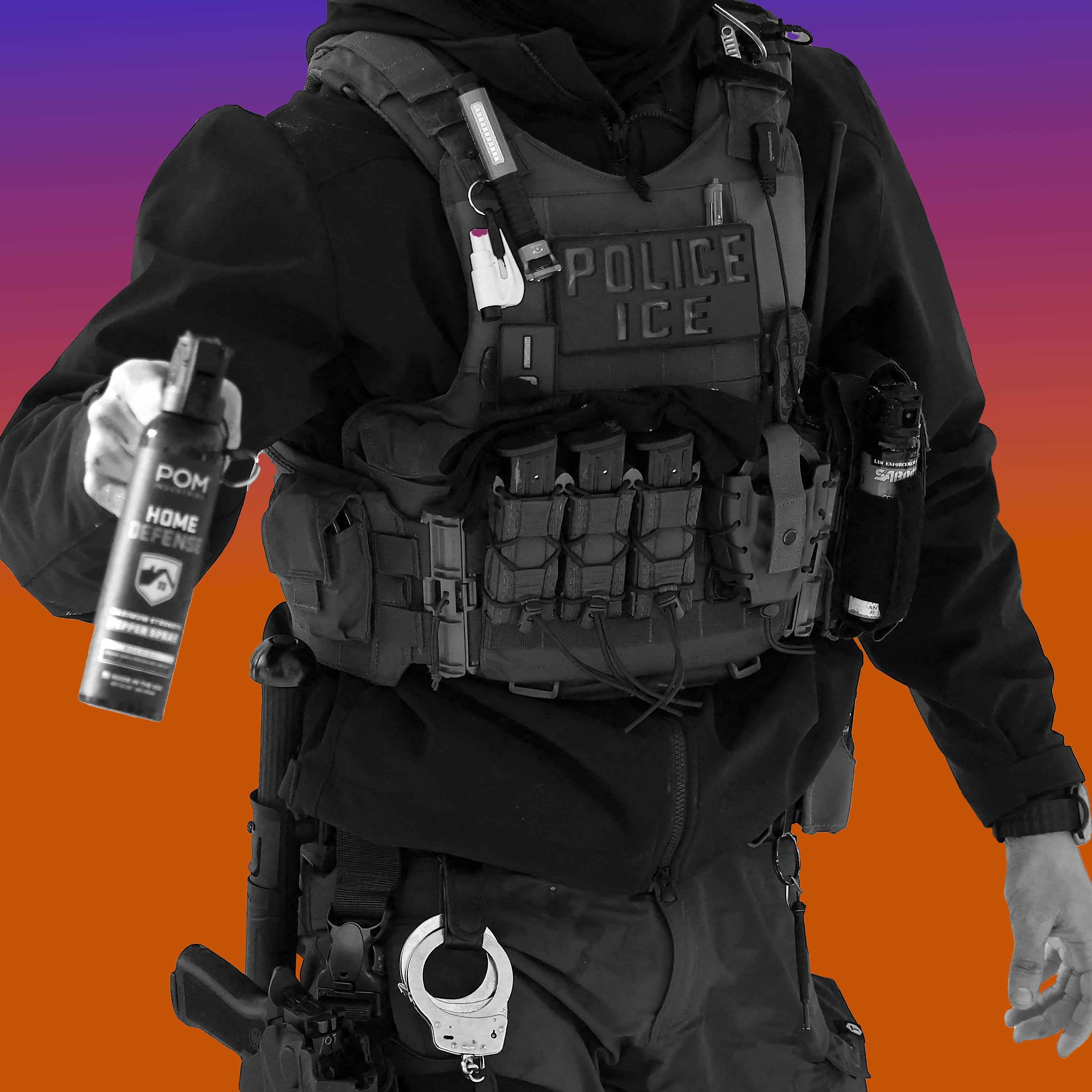
The episode discusses the January shooting by ICE agent Christian Castro in Minnesota and Texas’s refusal to extradite him to face Minnesota charges. Castro, stationed in Operation Metro Surge, allegedly shot Alfredo Alhorna’s roommate Julio Sosceles in the leg during a chase after an ICE plate check. The government initially claimed Castro was attacked with a snow shovel and broom; released city security video reportedly shows no shovel attack and a very brief scuffle before Castro fired, with the bullet lodging near a child’s playpen. Minnesota prosecutors filed charges in May, but Castro was sent back to Texas. Texas held him briefly, then released him after Governor Greg Abbott stalled extradition for 90 days.
Quinta Jurecic (staff writer at The Atlantic) and Mark (interviewer). Key claims include lack of accountability, disputed use-of-force facts, and “horizontal federalism” strain.
the Renee Good/Alex Preddy cases where federal authorities allegedly blocked evidence sharing.
Written by AI. May contain mistakes.
A detailed recount of the events leading to the shooting incident involving Christian Castro.
“Did somebody hand you a CPAP and did you quietly stop using it?”
Discussing the video evidence that contradicts the initial government narrative.
“Picture this, you walking from the cold in every room already feels like fall.”
Exploring the legal actions taken against Castro and the extradition challenges faced.
“In that time that it took to kind of figure out who was saying what and what was true, what happened to Christian Castro, the alleged shooter here, the ICE agent?”
Learn about the extradition process and the unique challenges in the Castro case.
“Texas and Minnesota cooperate on this kind of thing all the time.”
Explore the broader implications of states resisting extradition requests in the U.S.
“So you did this helpful thing in your reporting for me where you distinguished between vertical and horizontal federalism.”
Explore the tensions between red and blue states regarding abortion laws and extradition cases.
“You know, some states want to have a say over what other states do when it comes to abortion care.”

Get the gist, explore an idea or ask about something said.
 Claude
On What Next | Daily News and Analysis, what are the key points of this episode?
Searching your listeningAutomatic transcript. May contain errors.
0:00This message is brought to you by today's sponsor, Walden University. Set a course for change. Now is the time to make a real change in your life, career, and community. At Walden University, we give you the support and flexibility to get the W. Walden's online programs are designed for working professionals like you. You'll gain hands-on skills to take on real-world challenges and succeed. Your future is waiting and Walden is here to help you achieve it. Take the first step to make your impact. Visit waldenu.edu. Walden University. Set a course for change. Certified to operate by Shev. Think of a toilet as just an everyday object?
0:38Your entire perspective shifts the moment you experience a Kohler smart toilet. Design changes everything, transforming a basic routine into something extraordinary. With standout aesthetics and intuitive controls, these are functional works of art. Stunning design that never sacrifices performance. Enjoy customizable features for elevated comfort and convenience. It's more than a fixture. It's a cleaner routine and a more refined space. Experience the difference of Kohler smart toilets. Find more at Kohler.com.
1:15Quinta Jurecic: Heads up here at the top, the story you're about to hear is moving quickly. By the time you listen, things may have changed.
1:28Quinta Jurecic: I've been thinking a lot recently about what it means to be caught dead to rights.
1:36Quinta Jurecic: Like when does evidence become irrefutable? And how much does irrefutable evidence matter at the moment? I've been thinking about all this, especially when it comes to a case playing out in Texas and Minnesota. It's the case of Christian Castro. So Quinta, how sure are we that back in January, an ICE agent named Christian Castro shot a fleeing immigrant in the leg? We are pretty sure. I think it's fair to say. How sure are we that anything's going to be done about it? That is a much bigger question, Mark. Quinta Jurassic from over the Atlantic she's been thinking about all this too. So we're going to take a moment and tell you Christian Castro's story.
2:26Quinta Jurecic: In January, Castro was stationed in Minnesota, part of Operation Metro Surge. He was helping to pull over a car. He suspected the driver was in the country illegally. And then the man inside tried to flee. Initially, there was some dispute about what happened next. Federal agents under attack. Overnight protests did turn violent in Minneapolis. At first, the government claimed Christian Castro had been attacked. This has come after officials say an agent was forced to shoot and defend himself when he was ambushed, trying to arrest an illegal alien. Officers detained two men, Julio Sosa-Seliz and Alfredo Alhorna.
3:12Quinta Jurecic: Alfredo was the man in the car that night. Julio was his roommate, the guy who'd been shot. The Department of Homeland Security said Christian Castro had been attacked with a snow shovel and a broom for three minutes. They said he fired because he was defending himself. Later, city security video came out, and it showed something pretty different. So what the video footage showed is, you know, these two cars pull up in front of Aljornan Soscelis' house. The two men run out of the car. There's some kind of interaction with a third person chasing them who seems to be Castro, but there's definitely no attack with a snow shovel.
3:56Someone was shoveling and then he seems to drop the shovel and like book it. Nobody gets hit with a shovel in the video. Yeah. There is this some kind of long object that gets thrown at some point. I believe Ahorna's lawyers have said it was a broom. And then the men run into the house and Castro fires. So the version of the events that we see from that video is very, very different, especially because that scuffle takes place very, very quickly. It's really like a couple of seconds before they run into the house. I feel like this is such a familiar story now from the federal government. And the fact that video came out that seemed to disprove the government's initial story, it just raises this question of accountability, right?
4:45Like, will there be accountability for the officers involved here? It's a really tough question.
4:51Quinta Jurecic: The state of Minnesota wants there to be accountability in this case. They filed charges against Christian Castro back in May. But Castro's bosses, they'd already sent him back to Texas. And so far, Texas has refused to send him back.
5:12Eight months after this confrontation, does anyone know where Christian Castro even is at the moment? Right now, I don't think anybody does. Until last week, he had been in a jail in Texas, in South Texas. But he walked free. And I have not been able to find anything that indicates that anyone is keeping tabs on him. So he may be in Texas, but we don't know.
5:42Quinta Jurecic: Today on the show, why the decision to shield this ICE agent from accountability is so troubling. For the victims here, and for the rest of us, I'm Mary Harris. You're listening to What Next. Stick around.
6:08Do you snore? Did somebody hand you a CPAP and did you quietly stop using it? The mask that never quite seals? The hose tugging at you every time you roll over? A machine sitting abandoned in a closet? it. ExciteOSA works a different way. It treats a root cause instead of managing the noise, and you use it while you're awake. 20 minutes a day, while the coffee brews, while you set your fantasy lineup. An FDA-cleared prescription device for primary snoring and mild obstructive sleep apnea. Then you go to bed like a person, nothing strapped on, nothing plugged in. In clinical studies, 90 % of patients saw a reduction in snoring.
6:52No sleep study required. Prescribed online, shipped to your door. ExciteOSA at springsleep.com slash sleep20. Code sleep20 for 20 % off. ExciteOSA is an FDA-cleared prescription-only device for primary snoring and mild obstructive sleep apnea. Not for everyone. Individual results vary. Risks and benefits at springsleep.com. 98 of the top 100 U.S. accounting firms trust Bill to handle BillPay processes. Why? Because our tools are built on over a trillion dollars of secure payments. We're not just moving money. We're powering financial workflows for half a million customers. That's a level of expertise you just can't fake.
7:40Ready to talk with an expert? Visit Bill.com slash proven to get started and grab a$150 gift card as a thank you. Terms and conditions apply. See offer page for details. Hi, Brooke DeVard, host of Naked Beauty. Picture this, you walking from the cold in every room already feels like fall. That's what whole home scenting means at Pira. One system working quietly in the background, so your home always feels like the season and like you. Learn more at Pira.com.
8:14I want to go back to January 2026, Operation Metro Surge, because the story of what happened the night that Christian Castro allegedly fired the shot, which both hit a man in the leg and lodged in a child's playpen, which is like super alarming when you just say it out loud. It's a story that I think my listeners will be familiar with, right? Minneapolis, officers are driving around running license plates, run a license plate of someone and say, ah, that pings as someone who maybe we should be pursuing and begin pursuing. What happens then? Because it's sort of, it takes this very familiar path of like, they're tracking a license plate and then they, eventually they realize the person, like, that's not the person driving the car, but they're still pursuing kind of thing.
9:04So what happened? So this guy, Alfredo Alhorna, he's just driving around Minneapolis City streets? He's driving in Minneapolis. The ICE runs the plate on his car and discovers the car is registered to somebody who they believe should not be in the United States. So they start chasing Alhorna. He drives home. You can see on the surveillance footage that was later released, what happens is that the car pulls up in front of Alhorna's house. One of his housemates, Julio Sosceles, is standing there. Alhorna tries to run into the house. Castro follows him. What Castro says happened is that Castro was attacked with a broom and with a snow shovel.
9:53What the video footage seems to show is there's no snow shovel. There may be a broom, but it doesn't seem like Castro was attacked with it. Ahorna and Sosaceles run into the house, close the door, and Castro fires the shot, which then hits Sosaceles in the leg and lodges in a wall inside the house near a playpen where a child living in the house would usually play. Yikes. Yes. So what follows is like this weeks long process of figuring out exactly what actually did happen, partially using video footage. In that time that it took to kind of figure out who was saying what and what was true, what happened to Christian Castro, the alleged shooter here, the ICE agent?
10:41Castro leaves the state. We have documents now that were released as part of a lawsuit that shortly after the shooting, Castro's boss at ICE says, hey, we know that you've been assigned to Minnesota for this immigration surge, Operation Metro Surge. We want you to go back to your home office in South Texas. Any reasoning for that? Like, you fired your weapon while on duty or anything? So what the government has said in this court filing is that Castro was directed to return to Texas because of, and I'm quoting here, concerns for Dio Castro's, that's his title, Dio Castro's, personal safety and the safety of other ICE officers in Minnesota.
11:29essentially they're saying well we were you we were worried that you know he was going to be targeted he was going to be doxxed people were going to start following him around protesting and so we decided that he should return to his home ice office in texas huh okay so he returns to texas meanwhile like i remember from this time minneapolis prosecutors were basically asking anyone with information to come forward to them like we will investigate so are they beginning to put together their own case here? Like, are they thinking about this as something they would like to prosecute? Yeah, so what happens is that, you know, there's a sort of prolonged period of investigation by prosecutors in Hennepin County, where Minneapolis is located, and by the Minnesota Bureau of Criminal Apprehension, which is sort of their state investigative agency.
12:21That is a process that takes a few months, in part because the federal government has been refusing to hand over information in these cases. So both the Christian Castro case and then also in the shootings of Renee Good and Alex Preddy by officers from the Department of Homeland Security. Usually the federal government is happy to share information. This time they're not. What made this case something they could prosecute versus, say, what happened with Alex Preddy and Renee Good? So I spoke to Hennepin County Attorney Mary Moriarty about this, and what she said is basically It's a question of how much information was immediately available to the state of Minnesota.
12:59In the Renee Good and Alex Pretty cases, the government, the federal government, kind of swept in and blocked off state investigators from accessing the evidence that they would need. And that didn't happen, really, in the Christian Castro case. There was just there was more available to them that they could use to build a case. OK, so in May, Minneapolis prosecutors filed charges against Castro. He's in Texas. And my understanding is that at first, things seem to be kind of normal, like Texas Rangers arrest Castro. So it seems like, OK, maybe this guy is going to head back to Minneapolis and sort of face some sort of process for what happened there.
13:44But then when did things get weird? So what happens is that, as you say, Castro is apprehended in Texas by Texas Rangers. Everything's working smoothly, right? This is a sort of the normal way that things work if, you know, you commit a crime in state A and then go to state B and governor A is sort of asking for help to get you back to state A. Right. Texas Rangers are cooperating. Texas and Minnesota cooperate on this kind of thing all the time. Right. Castro is apprehended. He is held in a jail in the Rio Grande Valley close to the U.S.-Mexico border. And the process is moving forward. I spoke to Moriarty in June and she said, you know, look like we don't have Castro yet, but the paperwork is on, you know, Texas Governor Greg Abbott's desk.
14:37So literally all it would take to have him be extradited is for the governor to just be like, yeah, sure. Yep, that's right. Huh. And is it usual at all for there to be problems with an extradition? Like if a state comes to another state and says, hey, we want to accuse this person of whatever, we have evidence, how often is it that those asks are being rejected? It's extremely unusual for it to be rejected. States handle these kinds of interstate extraditions constantly all the time, right? I mean, if you imagine, like, it's a big country, people cross state borders, you know, there's sometimes you end up in one state if you did something wrong in another state.
15:18It is extremely regular for this to happen. It happens between red and blue states. It's basically just a kind of normal, boring, super ministerial action that takes place. And I don't think that, you know, if you subtract the kind of political valence from all of this, I don't think there's any reason to think that Castro's case would have been anything different. Yeah. I mean, why are you so confident in that? I know that it's like it all goes through Greg Abbott. Was he explaining his thinking here? So the reason is that Abbott actually legally has basically no leeway. There is a provision of the Constitution, the extradition clause, that requires that states honor these extradition requests for fugitives, essentially.
16:08If I rob a bank in state A, go to state B, state Governor B has a legal obligation under the Constitution and under some statutes passed by Congress to hand me back to Governor A. There is just very, very little wiggle room here, particularly after a Supreme Court precedent in the 1980s that basically said, you don't get to make a choice here, right? This is like you do need the governor's signature to move forward, but it's not a choice that the governor is making. It's something that he has to do. And so for that reason, I think people were relatively confident that Abbott was going to sign this paperwork because he didn't have an option to not sign the paperwork.
16:53But instead, what happened is that he stalled. He did this very lawyerly trick where she was like, well, he's not a fugitive, I don't think. because he didn't flee. He was told to leave by his job. And that's not fugitive behavior. Right. And that sort of sounds like it might be convincing, but there's actually very little to it. And technically, Abbott isn't even saying, oh, he isn't a fugitive. He's saying, oh, he might not be a fugitive. And I need more time to look into this legal question and determine whether he meets the criteria. So I can't weigh in yet. But there's also like a 90-day clock in Texas, right?
17:33Exactly. It's like you can only hold people for three months. So you can ponder something, but only for so long. So, right. So the problem is that Abbott ran out the clock. So Texas, my understanding is, is actually it's somewhat unusual for a state to have such a hard cutoff in these kinds of extradition detention laws. But Texas does say you can be detained while an interstate extradition request is pending for 90 days, and then they're going to let you go. And so Abbott essentially ran out those 90 days, twiddling his fingers with no explanation, really. And then at the very end of that 90 days, Minnesota sued, saying, you know, yeah, we want our guy.
18:14Yeah. And then at that point, Abbott files this court filing saying, as you say, well, I don't know. He might not be a fugitive. I need to think about it. The problem with that argument is that there is actually no ambiguity about what fugitive means in this context. And it doesn't have anything to do with why you left. The point is that you left. You crossed the border. And there is just nothing in the case law. One expert I spoke to, Ethan Lowens, who has studied this, said that there's just very little ambiguity here. And so Abbott is really, I think what you're seeing is that the governor's office is really just trying to come up with anything that they could to, you know, have an excuse for why they couldn't yet hand Castro over.
19:03Well, and meanwhile, it seems like Castro is talking to a girlfriend in Mexico about like, hey, I'd love to come move there. And we know this because, of course, phone calls in jail are recorded. So it's like you have evidence that this guy, it's not just he might want to be a fugitive again. He might be interested in that. Right. Right. As you say, you know, there are filings from Minnesota, in this case from Wellesley Abbott, where they say, look, like he's he's talking to this woman in Mexico. He's saying that he wants to go to Mexico. He is the jail that he's in, if you look it up. It is 10 miles from the U.S.-Mexico border.
19:42It's on the outskirts of Brownsville. So I think the legal term would be that he's a flight risk and that there is very good reason to keep detaining him. The problem is that Abbott won't hand him over and Texas can't detain him further. The sheriff of the jail where he's being held says, like, look, like, I, you know, 90 days is up, right? Like, I cannot legally keep holding him. Here's what I don't get. All of this had to legally go to a judge, right? And it's like, I can see a few things happening here. Like, first you have Greg Abbott, who's Texas governor. And I don't agree with what he's doing here, but it fits a pattern of behavior to me.
20:26like Greg Abbott, same person who under Biden was like, I'm going to send my own National Guard to the border. And, you know, that was weird. And also the same guy who sent buses of migrants up to blue cities, you know, to kind of prove a point. So it's like this like fits a pattern of behavior. Ice, I can understand why you would want to maybe not have a case against one of your agents. You know, that makes sense to me here. The person whose behavior doesn't make sense is the judge. Like, couldn't the judge have just said, like, no, sorry, we got to send this person up north. Too bad, y 'all.
20:57I think that your reaction is a reaction that a lot of people had. I saw a lot of frustration at the judge. I will say, so what the judge basically says, and this is Judge Fernando Rodriguez Jr., he says, look, there is just not very much I can do here. The Texas law says 90 days. It's 90 days. I can't make Texas keep holding him. I also can't force Abbott to do anything yet because he hasn't made a decision. If Abbott had said no, then maybe the judge could have said, well, you're denying this, but you can't actually do that, so I'm going to force you. Maybe that could have happened, right? We don't know.
21:38But not making a decision is a decision. Right. The problem is that I agree, like, that is clearly what happened here. But the judge is somewhat more constrained. And when I talked to Ethan Lowens, who's the fellow at the University of Pennsylvania, who's looked into a lot of these extradition laws, what he said is, you know, the judge is just kind of constrained here because there's not a lot of case law about this because governors usually work with one another in these instances. There's actually not any case where a court has had to decide, do I have the power to force a governor to hand somebody over if he's spelling?
22:20And so if you're a district judge, that kind of puts you in a box because judges never want to be the first one to say, you know, I'm breaking new ground here. You know who's not afraid of, like, setting precedent? Greg Abbott. Do you know what I mean? like that's the problem when you have one person who's like, you know, kind of bringing a knife to a gunfight, you're in trouble because Greg Abbott doesn't care. I think that's right. And I think what we see is that Abbott basically found a loophole that was created by this 90 day clock and augmented by the fact that, you know, Texas is a border state and Castro was being held right by the border and has these connections to somebody in Mexico who he Minnesota thinks might be interested in crossing the border to live with.
23:13And so all of that kind of combines to create a situation where Abbott's refusal to hand Castro over is a much more dangerous situation than it might have been if, you know, he was being held in Oklahoma, right, or somewhere else that didn't have that 90-day clock, that wasn't right on the border, but that Abbott is able to kind of create this, find this loophole because of all of these different factors and then take advantage of the fact that governors have historically not tried to kind of push the limits here and that if it turns out, if you stall, you can get a lot done. We'll be right back after a quick break.
24:26Quinta Jurecic: that. FreshBooks makes the money side of your service-based business easy. You log your hours, you send a branded invoice, you get paid and know your numbers instead of chasing them. Money in, money out, all in one place. No more juggling one app for clients, another for billing, plus a pile of spreadsheets and emails. FreshBooks is designed for how small business owners think about money, not how an accountant does. You don't need a financial background to use FreshBooks. It's simple on purpose. Most owners are up and running in minutes, not days. And if you need help, a real person is available on every plan.
25:00Quinta Jurecic: FreshBooks has been trusted by service businesses for over 20 years, helping over 500 ,000 owners and solopreneurs run their business confidently. Right now, my listeners can get FreshBooks for less than three bucks a month for your first four months. That is 90 % off. Head to freshbooks.com slash podcast to get started. That's 90 % off. under$3 a month for four months at freshbooks.com slash podcast.
25:30When it comes to managing money, forget the hype and look at results. Bill has a trillion dollars of secure payments powering our BillPay tools. Instead of just moving money, Bill is powering the financial operations of nearly half a million customers. So stop the guesswork and start scaling with the proven choice. Ready to talk with an expert? Visit bill.com slash proven to get started and grab a$150 gift card as a thank you. Terms and conditions apply. See offer page for details.
26:02Let's talk about the legal implications of what just happened here, because, as you said, it doesn't seem to be a good thing when states are just refusing extradition requests, whether they're doing that by sitting on their hands or flat out saying no. So you did this helpful thing in your reporting for me where you distinguished between vertical and horizontal federalism. And this sounds like so wonky, but I do want to explain it because Texas in particular is resisting both but in different circumstances. So when Joe Biden was running the country, Greg Abbott did this thing where he would resist the federal government's authority over Texas.
26:42And that is the vertical, top-down federalism. He'd basically be like, Texas doesn't have to abide by, you know, what you're telling me to do. Texas can do its own thing with its National Guard, et cetera, et cetera. What's happening here is a resistance to horizontal federalism, which is the agreements, the handshake agreements between the states that, like, we will respect each other's authority and say, send someone back when there's an extradition request. why is this distinction important? Why did you want to make sure to make it? I think that's useful as a way of conceptualizing sort of the different ways that governing structures in the United States have been placed under strain right now because of the sort of increasing politicization of what were previously very normal government functions, right?
27:34So as you say, you know, Abbott was kind of freelancing under the Biden administration in terms of Texas This is a border enforcement policy. There was a whole big fight, not only about the National Guard, but about barring off parts of the Rio Grande for people who were trying to cross when the federal government didn't want them to. And that pulls apart at the structure of the nation in terms of, you know, we have these state governments and then on top we have a federal government that unifies everything. I mean, I see this push and pull over horizontal control other places to like take abortion law.
28:11You know, some states want to have a say over what other states do when it comes to abortion care. And this is a blue and red thing where, you know, Texas doesn't want people to go other places to seek their abortion care or get abortion pills brought into the state of Texas. Then you have states like Connecticut that are passing laws that are saying, hey, we're not going to share information with you about reproductive care across borders because we believe here that reproductive care is something we want to support. And to me, it just – I like your fabric way of talking about it where it's like this tearing and fraying that's happening in two different directions and like both sides are pushing and pulling.
28:57And I look at what's happening in Texas and to me it really seems like this legalistic way to half secede from them. And I just don't know what to do with it in that regard, you know? It's definitely scary. I mean, I don't want to say, you know, this is the end of the union right here. But I do think it is part of a larger process of sort of atomization between red and blue states that is potentially really concerning. I do think that, you know, you point into abortion. I think that's a great example because there's actually a fight right now where Texas has criminally charged a doctor who's dispensing abortion medication from New York to Texas.
29:43And New York is refusing to hand her over. Now, that's a different situation than Castro because this doctor in New York is actually not legally a fugitive. Right. She never went to Texas in the first place. Exactly. And now she probably won't go. So the legally, New York actually doesn't have to hand her over in the same way that Texas legally has to hand Castro over. But it does put that strain there. And I think it is concerning insofar as, you know, we see red and blue states really going different directions in a way that just makes it difficult to carry out, you know, very normal functions of governing.
30:26You know, if you take this all the way, you can imagine, you know, you rob a bank in a blue state and go to a red state and then get away with robbing the bank because the governor of the red state doesn't like the governor of the blue state. So we're in this funny moment. The reason why Castro was released was that theoretically Greg Abbott is doing an investigation into whether he was truly a fugitive. And there will theoretically be some sort of finding from that investigation. And then I guess an extradition can proceed or not. Let's say Greg Abbott's investigation finds, OK, this guy was a fugitive because that's what all the legal precedent says.
31:08what will Minnesota do then? Will Minnesota be having to like track this guy down like wherever he is be like sending investigators into Mexico potentially to find him like what what happens? So I will say that Abbott's press office told me in their statement that and I quote if at any time the governor determines that Castro is a fugitive a governor's warrant will be executed immediately and law enforcement at the local state and federal levels will track him down and arrest him So that's Abbott saying, you know, if I reach the conclusion that he's a fugitive, we will find him. If he went to Mexico, he'd be a real fugitive then, right?
31:44Right. At that point, I believe you would need the assistance of the federal government to help track him down and ask Mexico to return him. And then you end up in all of the additional political complications of, you know, is this something that Trump's Justice Department, Trump's Department of Homeland Security would be willing to do? So I think it is, you know, theoretically, we know how that would play out, you know, but what that looks like in practical terms is much more of an open question. Do you think a blue state governor has the cojones to do what Greg Abbott did here? Well, I think it's the politics are different, right?
32:26I mean, you would need to imagine, OK, what's a kind of a comparable instance where a blue state governor would face pressure to not hand somebody over? I do think that the abortion care cases are kind of comparable here. You could also imagine maybe, you know, if a doctor provided gender affirming care or something like that. Now, again, it's different because usually, and in all the cases we've seen so far, like the New York case, these are red states trying to charge people in blue states who never actually went to the red state in the first place to carry out the alleged crime. And so the blue state governor is on much firmer footing in declining to participate.
33:08So it's a little hard for me to politically just to come up with like, what's the case that fits, you know, where someone would flee? But I mean, I think if that were to happen, you know, I think it would be a really tough situation because you can imagine how on the one hand, of course, you can imagine how there might be political pressure to resist a kind of a red state extradition effort. And I can understand where some of that anger might come from. But on the other hand, having these systems fall apart is really, really dangerous. And, you know, it's not the end of the union, but it's not not a step toward a kind of chaos that makes the sort of the splintering of what we understand as the United States much, much more more likely.
34:00And so I guess my bottom line is that I will simply hope that a blue state governor will never find themselves in that situation because that's a very dangerous place to be.
34:14Quinta, I'm really grateful for your time. Thanks for coming on the show. Thanks for having me.
34:20Quinta Jurecic: Quinta Jurecic is a staff writer over at The Atlantic. One last update for you. We recorded this interview on Wednesday, September 2nd. The next day, The New York Times reported that a federal grand jury indicted ICE officer Christian Castro for lying about this shooting. And that could allow Christian Castro to be detained once again.
35:09Catch you back here next time.
35:27There are two types of business owners, those who are busy and those who want to be busy. Toast is designed for both, with tools to keep you humming and help turn grind into growth. That's how you turn busy into business. Toast. Built for busy. Hi, this is Brooke DeVard from Naked Beauty. I am always looking for ways to elevate our daily rituals. And the Kohler Smart Toilet is proof that design changes everything. It's this stunning sculptural piece that feels like quiet luxury for your bathroom. It totally transforms your daily ritual into something elevated with customizable cleansing and touchscreen controls.
36:04It's functional art that makes your space feel cleaner and more intentional. A modern home deserves a modern toilet. Experience the difference of Kohler smart toilets. Find more at Kohler.com.
Extraditing someone who was arrested in one state for a crime committed in another state is an extremely routine process—or at least it was. But an ICE officer charged in a shooting in Minnesota was arrested in Texas and, rather than being sent to Minnesota for trial, he was simply released 90 days later.
Guest: Quinta Jurecic, staff writer at The Atlantic.
Want more What Next? Subscribe to Slate Plus to access ad-free listening to the whole What Next family and across all your favorite Slate podcasts. Subscribe today on Apple Podcasts by clicking “Try Free” at the top of our show page. Sign up now at slate.com/whatnextplus to get access wherever you listen.
Podcast production by Evan Campbell, Madeline Thames-Ducharme and Patrick Fort.
Paige Osburn is the senior supervising producer of What Next and What Next TBD.
Hosted on Acast. See acast.com/privacy for more information.