Ask ChatGPT

 What Next | Daily News and Analysis
1 Jul 2026 · 27m · 7 chapters

A roundup of the Supreme Court term, arguing the “colorblind constitution” approach lets conservative justices excuse racism and expand executive power, with special focus on Trump v. Barbra (birthright citizenship) and related immigration and voting cases.
Jay Willis, editor-in-chief of Balls and Strikes, Supreme Court reporter.
The court is not neutral; it’s controlled by Republicans and often aligns with Trump’s agenda while sometimes blocking only the most extreme moves. Birthright citizenship was upheld 6-3, but 4 justices said the Constitution doesn’t guarantee it; Kavanaugh’s partial dissent invites Congress to remove it by statute. “Colorblind” means stopping race-based remedies, echoing Roberts’s 2007 “stop discriminating on the basis of race” logic.
dissents reading fiery opinions from the bench; Sotomayor–Alito public clash; Alito’s temporary protected status reasoning; trans sports rulings (Little v. Hecox; West Virginia v. B.P.J.) likened to Plessy v. Ferguson; Mississippi mail-in ballot postmark grace-period decision with embedded dissent concerns.
Written by AI. May contain mistakes.
A discussion on the current tensions and dynamics within the Supreme Court.
“Answer to that question depends a lot on who you ask.”
A deep dive into notable Supreme Court decisions and their implications.
“I wonder if you and I can do something as we sort of get this conversation really going.”
Exploration of significant Supreme Court decisions and their implications.
“And it was actually, it was clearly very important to Donald Trump.”
Promotion for Boll & Branch bedding products with a discount offer.
“We'll be right back after a quick break.”
Discussion on recent Supreme Court rulings affecting trans rights and their implications.
“Let's talk about how the justices have waded into the culture wars this year.”
An analysis of recent Supreme Court rulings and their implications for progressive causes.
“What if we just removed black people from their train cars so there would be no opportunity for those assault to take place?”
Exploring the implications of the rejection of the birthright citizenship argument.
“I wonder if there's anything in these opinions that tells you how this argument might play out in conservative circles moving forward.”

Get the gist, explore an idea or ask about something said.
 Claude
On What Next | Daily News and Analysis, what are the key points of this episode?
Searching your listeningAutomatic transcript. May contain errors.
0:00You don't need me to tell you that rent and mortgages are only getting more expensive. That's why Bilt created three credit cards designed to offer the richest rewards on rent, mortgage, and everything else you spend on. Whether you rent or own, you can earn up to 1.25x points on every housing payment without the transaction fee. No matter where you live, points can be redeemed for flights, hotels, lift rides, a future housing payment, and much more. Turn one of the most unavoidable payments in your life into the most rewarding. Find the card that's right for you and apply at joinbuilt.com slash ACAST.
0:33That's J-O-I-N-B-I-L-T dot com slash ACAST. Use our link so they know we send you. Terms apply. Subject to approval and eligibility. Built cards are issued by Column N.A., member FDIC, pursuant to license from MasterCard International Incorporated. Hi, Brooke DeVard, host of Naked Beauty. Picture this, you walk in from the cold and every room already feels like fall. That's what whole home scenting means at Pira. One system working quietly in the background so your home always feels like the season and like you. Learn more at Pira.com.
1:16So, Jay, how's the Supreme Court doing?
1:24The silence. that met that really said enough. Answer to that question depends a lot on who you ask. Jay Willis covers the Supreme Court over at Balls and Strikes. And it took him a solid five seconds to answer me here. If you're a Republican politician who generally thinks that Trump's vision for America and the Republican Party's policy platform is on the right track. Supreme Court's doing pretty good these days. If you are literally anyone else, it's been kind of a tough week. I called Jay up because yesterday was the final day of the Supreme Court's official term, though they will continue ruling on their so-called shadow docket during the summer.
2:16Over nine months, the justices have reshaped the way voting, immigration, and all sorts of other things work in this country. And things seem tense. The liberals are sending off these fiery dissents, sometimes reading them from the bench for emphasis. Last week, there was even a public tiff between Justice Sotomayor, who was taking issue with an immigration decision, and Justice Alito, who seemed to express indignation that she'd said anything at all. That is an indication that for all the effort the justices put into emphasizing that they are friendly, they are collegial, they get along behind the scenes, they're really mad.
2:59They really hate each other's guts. At the same time this is happening, we see a sense of glee from some of the conservative justices. Like, have you seen this video of Clarence Thomas on Capitol Hill sort of stalking the halls and giggling? So what are you doing up here? Oh, just walking. No meetings in particular? I'm going to tell you about... Yeah, Thomas has always been sort of contemptuous of the liberal media, by which he means like any media to the left of Breitbart. um so to him sort of the idea of you know the idea that any journalist might have questions about his presence on capitol hill that they would want to report to people in his mind it's just sort of like what do you little people uh what business do you have with what i'm doing here that's not normal right imagine a world in which people who styled themselves as public servants, you know, told reporters generally what they were doing, or at the very least, like provided polite answers to their questions instead of, yeah, just sort of like snickering indignantly at the idea that someone would have the temerity to ask him any questions.
4:17But if there's one thing Jay wants you to know about this season of Supreme court rulings, it is that this court is not at all neutral. And even when it's making decisions most Americans would agree with, it's having to fight with itself to do so. Just take one of the biggest rulings of the year, the very last one. The justices did vote to uphold birthright citizenship, six to three. But when it came to the question of whether birthright citizenship was enshrined in the Constitution, that decision was five to four. Brett Kavanaugh, who ruled for the majority, nevertheless wrote a dissenting opinion, saying that actually getting rid of birthright citizenship did not violate the Constitution.
5:04It just needs to be done through Congress. You know, if you go to the New York Times dot com right now, the blaring headline is, Trump loses birthright citizenship case. Oh, my God. I wish those years could see you. You have like fully retreated in your chair like, no. It's really good that there are no sharp objects within arm's reach of me right now. Like it is it is strictly true that Trump lost the case, right? that the court turned away his effort to revoke the 14th Amendment's guarantee of birthright citizenship by executive order. But I think it's a lot more consequential that you had four sitting justices who took the position that actually the Constitution doesn't guarantee birthright citizenship.
6:05Putting this differently, we are one more Trump justice away from having a court that is willing to rewrite the Constitution and like maybe excited to do so. Today on the show, the Supreme Court understands its assignment, but you might not like it. I'm Mary Harris. You're listening to What Next? Stick around.
6:39This episode is brought to you by Moomoo. If you're an investor, you might have questions. You hear about a big IPO or you watch the market go up and down. And you might think to yourself, what is going on there? So if you want to do your homework, but you don't have time to read it all, you might want to look into Moomoo. Moomoo is an all-in-one investing and trading platform that brings market data, research analysis, and professional-grade trading tools together in one place. It's used by a community of more than 31 million traders worldwide, with a parent company listed on NASDAQ. One account covers stocks, ETFs, options, crypto, IPOs, and prediction markets with 150-plus built-in analysis tools.
7:20And Forbes named Moomoo one of the best brokerage accounts for stock trading in 2026. And TradingView named Moomoo best stock broker in North America in its broker awards in 2024 and 2025. Right now, Moomoo is offering its new users up to a thousand bucks in NVIDIA stock, plus 8.1 % APY on uninvested cash for a limited time. And if you deposit a hundred bucks, you get up to$200 in trading vouchers. Go to start.moomoo.com slash whatnext to learn more and get started with Moomoo. That is start.moomoo.com slash whatnext. Regulatory fees, exchange fees, and index option contract fees may apply. Fees are subject to change.
8:06Today's show is brought to you by Vanguard. To all the financial advisors listening, let's talk bonds for a minute. Capturing value in fixed income isn't easy. Bond markets are massive, murky, and let's be real, lots of firms throw a couple of flashy funds your way and call it a day. But not Vanguard. Vanguard bonds are institutional quality. Institutional quality is not a tagline. It is a commitment to your clients. It means top grade products across the board. The lineup includes over 80 bond funds. They are actively managed by a 200-person global squad of sector specialists, analysts, traders.
8:39Lots of firms love to highlight their star portfolio managers, like it's all about that one brilliant mind making the magic happen. Vanguard's philosophy is a little different. They believe the best active strategy should not be locked away with one person. They should be shared across the team, which is why every client benefits from the collective brainpower they've got, not just one individual's take. The bond market's complex and it's not something one person or small team can realistically keep up with. Vanguard has been in the game a long time. Their scale gives them serious edge. They're able to invest across all kinds of sectors, maturities, and geographies, which means they can spot and act on opportunities others could miss.
9:18So if you're looking to give your clients consistent results year in, year out, go see the record for yourself at Vanguard.com slash audio. That's Vanguard.com slash audio. All investing is subject to risk. Vanguard Marketing Corporation Distributor.
9:37When it comes to managing money, forget the hype and look at results. Bill has a trillion dollars of secure payments powering our BillPay tools. Instead of just moving money, Bill is powering the financial operations of nearly half a million customers. So stop the guesswork and start scaling with the proven choice. Ready to talk with an expert? Visit bill.com slash proven to get started and grab a$150 gift card as a thank you. Terms and conditions apply. See offer page for details.
10:10I wonder if you and I can do something as we sort of get this conversation really going. Can we spin through a few notable decisions from this Supreme Court term? Sort of the way if you were at a kid's graduation, there would be a weepy slideshow with Sarah McLachlan playing in the background. Like, I feel like a lot's gone on. We're only going to be able to talk about some of it in depth. First, can I just say I really like your metaphor because it avoids the like really obvious one, which is the snapshots we would use like at a funeral. So it's like, I will remember you. And we're like remembering the Voting Rights Act.
10:52So I will say that was a pretty good rendition for on the spot on this podcast. Thank you. Thank you. My through line for the term is like as between the court and Trump, I don't think it's right to say that the court, you know, drew a line at his most extreme attempts at asserting power, you know, something like birthright citizenship, because his attempts to impose tariffs, his attempts to end birthright citizenship, those were ambitious and extreme. But like, so is handing him the right to fire independent agency heads after, you know, 90 years of repeatedly upholding congressional legislative protections for those agency heads.
11:33So I think the better way to explain it is kind of the simplest way of understanding the court since Justice Amy Coney Barrett's confirmation, which is the court is controlled by Republicans who do what is best for the Republican Party. And usually this means doing what Trump wants, except there are some cases in which they are willing to sort of hold up if they think that his policy choices are unwise. So that's tariffs or, you know, handing him authority over the Fed. Or if, you know, Trump's acts are so brazenly illegal that upholding them would make them look stupid. And that's where I'd put birthright citizenship.
12:19I mean, let's get into the Worthright Citizenship decision, because that was the last one of the term. That's right. Very final. Yeah. On the last day. And it kind of came at the same time that we had a couple of rulings last week that did not constrain the executive's authority over immigration. You had a ruling that the executive can get rid of temporary protected status when they please, even though Congress has real opinions about that. And you had a ruling that the President Trump can decide to not allow asylum seekers to claim asylum at the border. And I feel like these things appear to be in conflict with each other, but I'm not sure that they are.
13:14And I think that's kind of what you're saying here, which is, while it may seem looking on its face like these are saying two different things, they're really not. Can you explain? I don't want to spend too much time on my soapbox about legal journalism, but sort of the way I'm thinking about these cases and their sequencing is the way every Supreme Court pundit wants to end the term is with a recap that has a headline that's like Supreme Court term mixed bag. Some wins for Trump, some losses for Trump. And I think that, you know, when you get a term that ends with an opinion like the birthright citizenship case, a case that has earned so much media attention, a case that came down as the very last opinion on the very last morning of the term.
14:07And it was actually, it was clearly very important to Donald Trump. He literally showed up for oral arguments for it. And, you know, the last case of the term, and it came down against Trump, the drama, the drama, right? I think that sort of accords with journalists' desire to frame the term as complicated. The thing that seems to surprise you and some other legal journalists I follow isn't that birthright citizenship was preserved. It's that so many justices seemed fine with getting rid of birthright citizenship. Why was that the thing that stood out to you? What became clear reading the dissenting opinions in Trump v.
14:52Barbara is that this massive cottage industry of reactionary law professors who have spent the last several years sort of ginning up scholarship arguing that, you know, actually the Supreme Court has had it wrong for the last 120 years. the impact that that scholarship had i just did not expect and it's important to note that a lot of these scholars changed their own minds they had written stuff saying birthright citizenship is guaranteed in the 14th amendment of the constitution and then within the last two or three years were like actually i'd like to revisit that question that that's exactly right because before donald trump started attacking birthright citizenship if you were a law professor saying that birthright citizenship isn't promised under the constitution makes you sound like a crank.
15:47Like there's just nothing, there's nothing to support it. It's only once Trump started this sort of racist invective against the children of non-citizens that a certain class of law professors said, oh, you know, there's an opportunity here. Maybe I could even score a appeals court appointment out of this. And I just think this shows how much quote unquote quote, originalist thought, originalist scholarship, actually just follows the conservative legal movement. In this case, you had Trump claiming something and basically extending an open invitation to conservative law professors to make the case for him.
16:29And the dissents cite to that stuff over and over again. It doesn't matter that it's more or less pulled out of thin air over the last two years. It was enough to persuade four justices. You've noted that in recent years, the conservative justices have become fans of this phrase, colorblind constitution. What does that mean, though? Like, we did fight a civil war, and then add amendments to the constitution. Like, what does colorblind constitution mean in practice to someone like Samuel Alito. So one of the first major opinions that Chief Justice John Roberts decided came in 2007. This would have been two years after his confirmation.
17:13It's a case about a school district's effort to ensure diversity in different student bodies, actually here in Seattle, where I live. And Roberts's quote in his opinion, he said, the way to stop discriminating on the basis of race is to stop discriminating on the basis of race. And that has been the through line of the Roberts court's treatment of what I will broadly term racial issues ever since. It's that racism is bad. Sure, racism is bad. And the law protects to some extent against racial discrimination, but also an equally pernicious form of racism is anytime the law tries to do anything about this country's history and tradition, pardon the phrase, of racism and tries to correct for it.
18:04So when the court talks about a colorblind constitution, it is transforming sort of the reconstruction amendments, like careful treatment of the rights, not just of emancipated black people, but of like the plight of, you know, minority groups without political power in this country. And it is saying, no, no, all the law does, all the law does is say that the government can't treat anyone differently based on their race. If you look at the rulings from this term, it really seems to me like colorblind is like emphasis on the blind. And I say that because you look at the ruling on temporary protective status for Haitians and Syrians, Justice Alito basically rejecting the idea that sending these people back to their home countries was about race at all, but not citing any of the language that had been used by the Trump administration.
19:04language about um haitians all having aids language about um haiti being dirty filthy disgusting and how undocumented immigrants were poisoning the blood of the country stuff that is on its face racist yeah the alita's opinion is pretty remarkable in that case because the upshot of it is he says look if if there's you know alleged racism in the ether and as you say like the the alleged racism in this case is so howlingly obvious that alito wouldn't even quote it right because uh because he understands that like if you say you know if you describe as heated partisan rhetoric the president of the united states calling you know majority black countries shithole countries that you sound pretty silly okay yeah so alita's opinion says that if there's you know racism in the ether as long as there are potential other non-racist justifications for the policy decision well that's fine that's okay like literally his language is he says the president's statements express policy views that could rest on race neutral justification So the benefit of the doubt just goes to the president.
20:28Benefit of the doubt goes to the president. But, you know, I think you can also look at read that alongside the court's opinion in Calais, the voting rights decision there. They say, again, if lawmakers draw districts in ways that, you know, draw their black constituents out of existence, as long as you can explain it away with something else, you know, partisan gerrymandering, incumbent protection. Again, no problem here. I think this term showed just how far the conservative justices are willing to go to bend over backwards, right, to find reasons to excuse racism and to read out of the law any attempts by Congress to do something about it.
21:18We'll be right back after a quick break.
21:51We'll see you next time. with 15 % off your first order at bowlandbranch.com with code BUTTERY. Exclusions apply. See site for details. When it comes to managing money, forget the hype and look at results. Bill has a trillion dollars of secure payments powering our BillPay tools. Instead of just moving money, Bill is powering the financial operations of nearly half a million customers. So stop the guesswork and start scaling with the proven choice. Ready to talk with an expert? Visit bill.com slash proven to get started and grab a$150 gift card as a thank you. Terms and conditions apply. See offer page for details.
22:35Let's talk about how the justices have waded into the culture wars this year. There were a number of rulings about trans kids. Two came on the final day. Little v. Hecox and West Virginia v. BPJ. I wonder if you could walk me through these just very, very briefly. Both of them were about the right of trans people to participate in sports, right? That's right. And I don't know. It was pretty clear from oral argument in these cases which way the court was going to go, that a majority of the justices were ready to allow states to limit the civil rights of trans people like this. There was a moment at oral argument when Robert said something about how a, in his words, a sex based classification with respect to sports wouldn't, again, I'm quoting here necessarily implicate transgender status.
23:31And thus, you know, this might not be discrimination at all. And at that point, sort of looking at these cases was the mystery was less how they would come down, but what the vote count would be. Right. Because the idea here is the 14th Amendment equal protection clause. It should be protecting everyone equally. And to your point about the culture wars, it's it's useful to look back and think that six years ago in 2020, in an opinion by Neil Gorsuch, the court extended statutory protections under Title VII. That's the federal employment discrimination law to transgender people. Like, again, this was a six three opinion from Neil Gorsuch, right, of all people.
24:16But that happened. That was sort of a a high watermark for the extent to which the court took trans rights seriously. And what's happened since then, since 2020, the right, the conservative legal movement of which these justices are a part has been in a full-fledged moral panic about trans people. The numbers are since 2021, so the year after that Supreme Court decision, state lawmakers have introduced more than 2 ,500 bills targeting trans people, including more than 1 ,000 just last year. Now, it's also the case that since 2020, the court's membership has changed, right? Justice Amy Coney Barrett replaced Justice Ruth Bader Ginsburg.
25:03So the court has become more conservative. Sure. But I think the court's willingness to retreat from this from its position of, you know, maybe possibly taking trans rights seriously is not just about its changing membership. It's it's about this sort of parallel political campaign to dehumanize trans people. You know what the rulings today reminded me of? And I'm curious whether you'll go with me on this. They reminded me of Plessy v. Ferguson, which was the 1896 ruling that found that a Louisiana law mandating separate but equal accommodations for white and black people on railroads did not violate the Constitution.
25:50Like this sports ruling, it was about visibility and public life and access to regular, dagular public things like traveling on a railroad or participating in a sports team. One of these plaintiffs, I believe, they weren't competitive. They were just in like a club at their college. And they're all about finding it okay for us to separate certain people out, distinguish them, and say where they belong. And of course, Plessy ushered in decades of segregation. Do you think I am overreacting? I think in these cases, you do see, again, the court straining to find reasons to explain away bigotry and discrimination as the product of something more innocuous.
26:50When you look at the Supreme Court's opinion in these trans sports cases, you know, they write that, you know, drawing the line basically at, quote, biology is a reasonable choice by state legislatures, given what Kavanaugh refers to as inherent differences between the sexes. He says that it's it's OK for states to make rules in order to preserve safety and competitive fairness. When I'm quoting here, females are forced to compete against males. And I do think that echoes some in the Plessy language. He's basically saying, you know, look, there's there's only so much that the law can do to to account for for differences.
27:35Well, in Plessy, they were like, well, people are less safe when they're in the same car together because fights break out. People don't want each other there. And it's like, well, hold it. Is the problem then isn't the problem the fighting people and not like we need to kick people out? It's a very Supreme Court justice approach to the work of policymaking to be like the problem here is not the racists who are assaulting black people. What if we just removed black people from their train cars so there would be no opportunity for those assault to take place? Boom. Problem solved. Yep. You know, I was reading your writing about this term and something that stuck out to me was that even when you were reporting on something that could be framed as good news for progressive causes, like the ruling on Monday that Mississippi can't throw out mail-in ballots if they are postmarked on or before election day simply because they arrive a few days after that.
28:31In ruling like that, even there, you found in the dissents, bad news embedded in there. Yeah, I think it's important to look at like what wins and losses look like when the court is controlled by six conservatives. All of the wins for conservatives are like have sweeping policy implications that will affect like the lives and rights of real people. all of the quote-unquote wins for the liberals are just like preserving what turns out to be a very fragile status quo for i don't know a little bit longer you know in the in the mail-in ballots case that you refer to it's not like you know it's not like the supreme court handed down sweeping protections for the right to to vote by mail it's not like the supreme court handed down a decision that requires states to make it easier for people to vote or, you know, extended states deadlines for counting votes.
29:32All the court said is that like the Republican Party's efforts to end grace periods for counting votes, those don't succeed for now. So like the conservatives are winning substantive changes to the law and to public policy on the rare occasions that the liberals win uh they're just like you know finger in the dike here against um against this like onslaught of authoritarian jurisprudence yeah i do think when this airs the big headline will be about birthright citizenship will be about the fact that donald trump lost even though he showed up in court i know we've gone over why you don't think that should be the headline But I do think it's worth asking about something else, which is to me, the rejection of this argument about birthright citizenship.
30:34It's just the first rejection. Do you know what I'm saying? This project is a long one. I wonder if there's anything in these opinions that tells you how this argument might play out in conservative circles moving forward. Meaning if you were pushing to end birthright citizenship and you got this rejection from the Supreme Court, what's your next move? One thing that sticks out to me in the birthright citizenship case is this partial dissent from Brett Kavanaugh, whose position is he doesn't think that Trump could, you know, take birthright citizenship away by executive order. but he says that an act of congress if congress wanted to take birthright citizenship away from certain classes of people that that that would pass constitutional muster it's an invitation to conservative activists to say look instead of you know maybe as you queue up your next challenge a word i'm using in the non-legal sense to birthright citizenship if you can just get Republicans to pass a law, you know, I bet Donald Trump will sign it.
31:54And I, Brett Kavanaugh, wouldn't have any problem with that. Jay, I'm really grateful for your time. Thanks for coming on the show. Thanks for having me. I'm going to go hydrate. Jay Willis is the editor-in-chief of Balls and Strikes. And that's our show. What Next is produced by Rob Gunther, Evan Campbell, Madeline Thames-Dusharm, and Patrick Fort. Paige Osborne is the senior supervising producer of What Next and What Next TBD. Mia Lobel is the executive producer of podcasts here at Slate. Ben Richmond is the senior director of podcast operations. And I'm Mary Harris. Go track me down on Blue Sky.
32:31I'm Matt Mary Harris. Thanks for listening. Catch you back here next time.
33:03www.bill.com
33:33Here's the secret. Thank you.
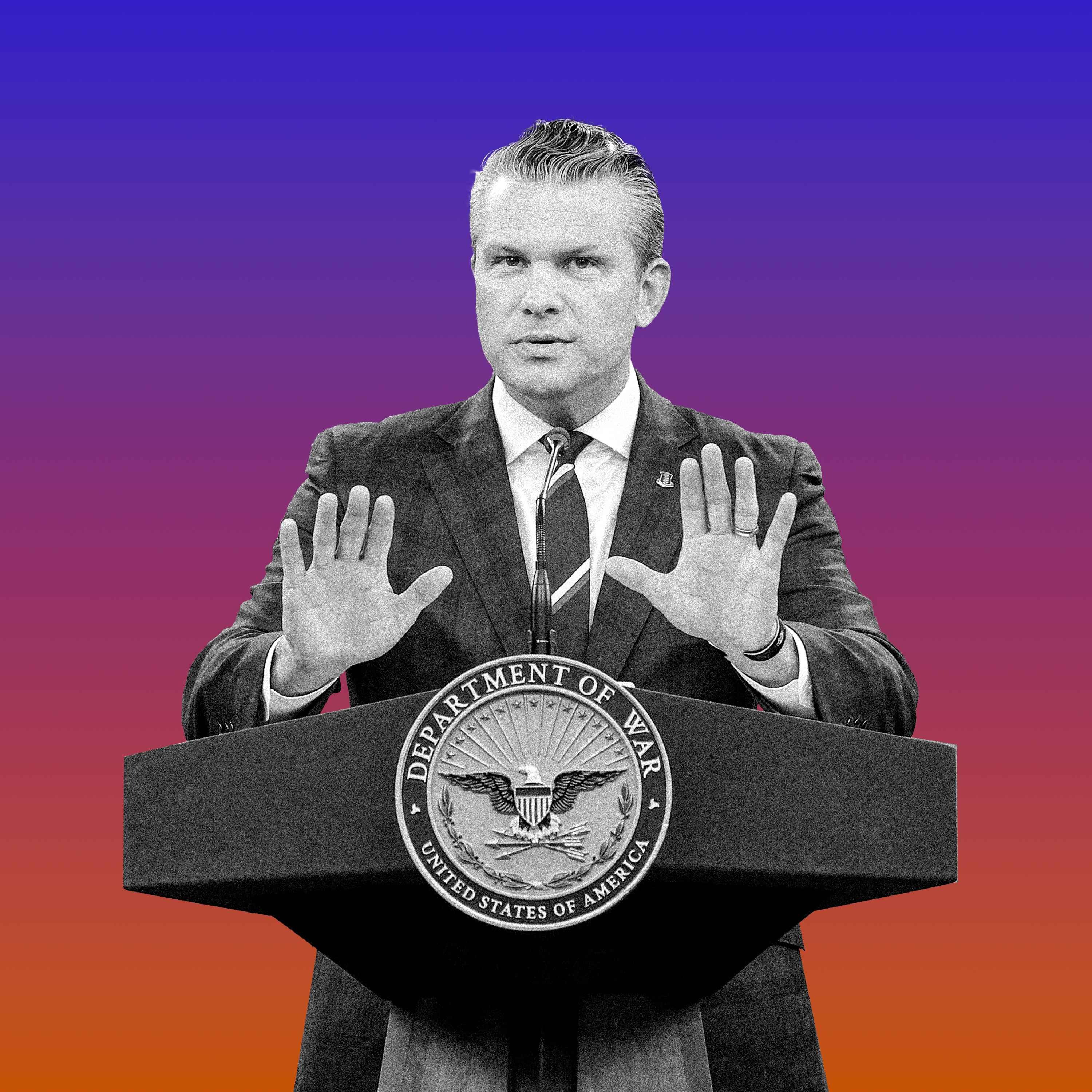
The Supreme Court wrapped up a year of giving Trump and the Republican Party nearly everything they could want. And even in the final, birthright citizenship case, what is remarkable is not that Trump lost, but how close he came to winning that one too.
Guest: Jay Willis, editor-in-chief at Balls and Strikes.
Want more What Next? Subscribe to Slate Plus to access ad-free listening to the whole What Next family and across all your favorite Slate podcasts. Subscribe today on Apple Podcasts by clicking “Try Free” at the top of our show page. Sign up now at slate.com/whatnextplus to get access wherever you listen.
Podcast production by Rob Gunther, Evan Campbell, Madeline Thames-Ducharme and Patrick Fort.
Paige Osburn is the senior supervising producer of What Next and What Next TBD.
Hosted on Acast. See acast.com/privacy for more information.