Ask ChatGPT
 What Next | Daily News and Analysis
10 Jul 2026 · 21m · 6 chapters
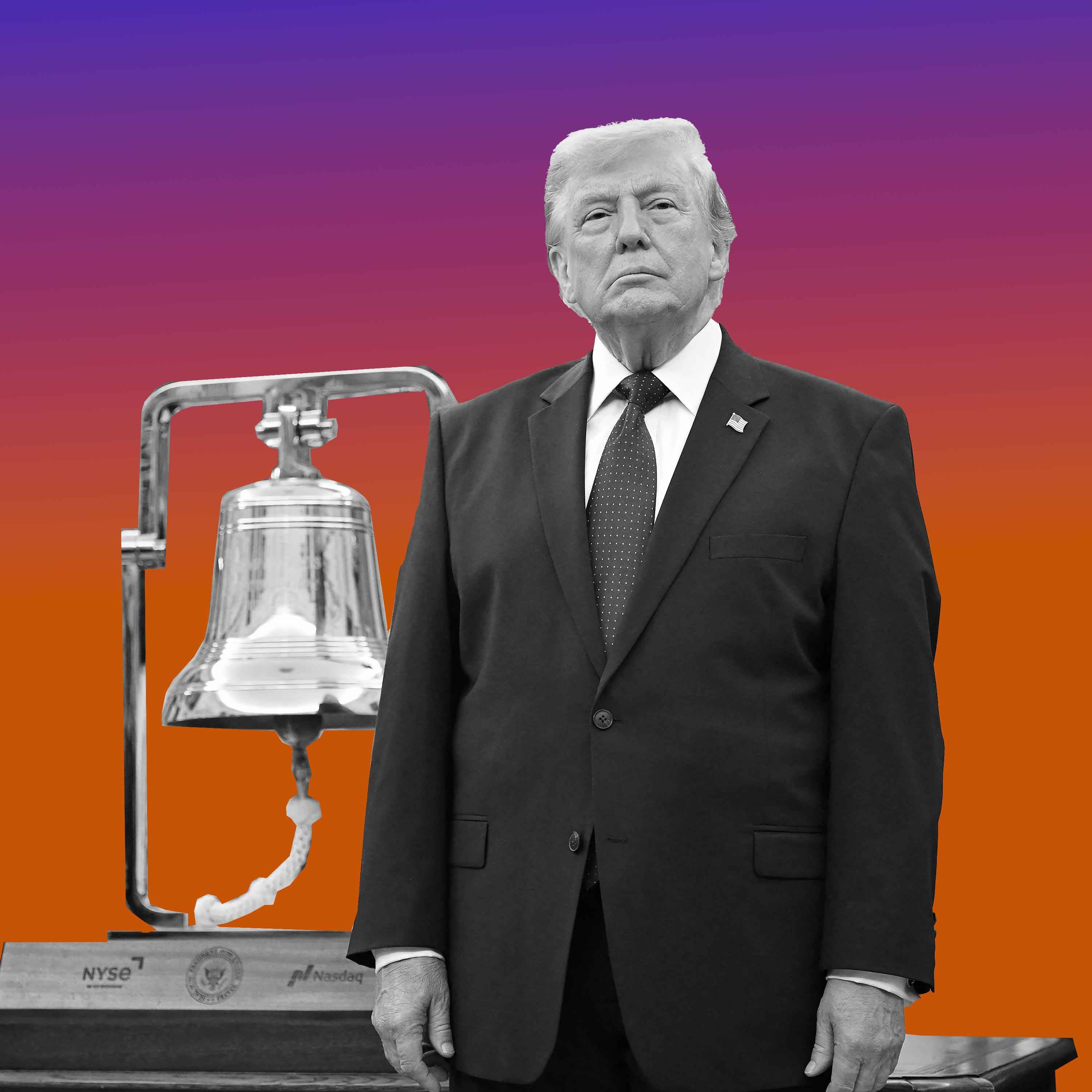
The episode debates whether to take “Trump’s free $1,000” for newborns, arguing it’s a misleading headline for a larger, wealth-skewed tax-advantaged savings program (“Trump accounts”) that functions like a subsidy for upper-middle-class and rich families. It contrasts this with progressive “baby bond” proposals and explains how tax breaks work as “tax expenditures” that grow with higher marginal tax brackets, plus why the policy sunsets after a short window.
Justin Wolfers, professor of economics and public policy at the University of Michigan and founder of Platypus Economics; a dad who discusses the policy’s economics and political framing.
The $1,000 is easy marketing; the real issue is tax deferral/savings up to $5,000 per year for parents. It’s politically sustainable like universal programs, but not truly universal. The stock-market investment is meant to connect labor to capital.
Baby bonds by Derek Hamilton and Sandy Darity (Duke); New York City kindergarten education savings; Australia’s superannuation; 529 plans as an alternative; mortgage interest deduction as an analogy for “bigger checks” via tax breaks.
Written by AI. May contain mistakes.
Discussion on the new Trump accounts for babies and their implications.
“I know your kids are older now, but Justin, if you had a baby right now, would you sign that baby up for a Trump account?”
Exploring the differences and implications of baby bonds and Trump accounts.
“Justin is a progressive economist, so I was curious what he would do with his theoretical child.”
Analyzing the mechanics and realities of the Trump account investment.
“So the idea is you get a grand from the government and it goes into an equity ETF, right?”
Discussing how Trump accounts may perpetuate wealth inequality in America.
“The second thing is all of this, there are two ways the government could try to help you.”
Discussing the implications of Trump's proposed $1,000 accounts and the concept of universal benefits.
“from Labor, even if they reduce the pie.”
Analyzing the viability of Trump's fiscal proposals and their implications on future policies.
“I think we've got to talk about the timing here.”

Get the gist, explore an idea or ask about something said.
 Claude
On What Next | Daily News and Analysis, what are the key points of this episode?
Searching your listeningAutomatic transcript. May contain errors.
0:01This episode is sponsored by Smart Travel, a new podcast from NerdWallet. You know that one friend who always finds the best travel deals, picks the right cards, and somehow ends up in first class for the price of coach? Smart Travel is like that friend, but in podcast form. They cover all things travel finance, like the quick math for knowing when to pay with points or just swipe, or which travel cards actually pay you back, and which just make your wallet heavier for no reason. travel smarter and spend less with help from nerd wallet follow smart travel wherever you get your podcasts stripe is built for whatever comes next because as your business scales so does the complexity of fraud new customers new markets new ai driven attack patterns stripe radar protects your business as it scales with the scale of the stripe network the more payments stripe sees the smarter its AI gets at detecting those patterns as they emerge.
1:01Stripe's network is so vast, it has seen$1.9 trillion in payment volume across millions of global businesses. In fact, when a card is used, there's a 92 % chance the Stripe network has seen it before. All of this means fraudulent patterns across payments, accounts, and customer abuse can be detected, flagged, or blocked easier. Based on the rules you set up, of course. Blocking bad actors, welcoming good customers, keeping more of your revenue, your revenue. Learn more about fighting fraud with Stripe at stripe.com slash radar.
1:44I know your kids are older now, but Justin, if you had a baby right now, would you sign that baby up for a Trump account? If I had a baby right now, first of all, I'm just so excited to just give it a cuddle. Justin Wolfers is an economist, yes, but he's also a dad. And I know we're going to get to the economics, but I just want to get this out there for all the dads to be. One of the things they tell you when you go to the hospital is take your shirt off and go skin to skin. Skin to skin. One of the most magnificent moments of my life. In fact, I remember three months into my baby being born, I was at the pediatrician and he handed out my baby and I started taking my shirt off.
2:29He's like, what are you doing? And I'm like, makes one of us happy. Comes both of us down. Anyway, he told me not to do that anymore. This story, amusing as it is, is not why I called Justin. I wanted to ask him about Trump accounts, the administration's investment vehicle for children that launched last weekend. with$1 ,000 from the government for babies born during the second Trump term. Justin is a progressive economist, so I was curious what he would do with his theoretical child. I would sign up my baby for a baby bond. Let me be clear what that means. Baby bonds and Trump accounts is one word which hides two policies that have nothing to do with each other.
3:16Would you be a little angry at yourself if you had to do it? I have been doing a lot of therapy. I'm not the problem here. The president is. Politics is. And arguably the media is because the true story of Trump accounts hasn't been told. So the true story is a populist rapper around a tax break for the upper middle class. We know about the populist part. The thousand bucks for the baby. That part, Justin says, is easy and deceptive. That's part one. Pretty simple. You like free money, take free money. The free money headline, though, is hiding something else. The underlying reality is it's tax-preferred savings for the parents of kids where you can sock away up to five grand a year.
4:09And this is a whole very different complicated mess, but it's really where the action is. Today on the show, how Trump accounts are a giveaway for the wealthy. I'm Lizzie O 'Leary, and you're listening to What Next TBD, a show about technology, power, and how the future will be determined. Stick around.
4:34This episode is sponsored by Climate Exchange's 11th annual electric vehicle raffle. Climate Exchange is a nonprofit that helps states protect communities from pollution and rising energy costs. This year, Climate Exchange is raffling off three cars, including an EV worth up to$120 ,000. It's all part of Climate Exchange's commitment to put more EVs on the road. And one of them could be yours. Tickets for the raffle start at just$100, and Climate Exchange pays the taxes and fees. So check it out. Visit www.carbonraffle.org slash what-next to learn more and win your dream EV.
5:39sees the smarter its AI gets at detecting those patterns as they emerge. Stripe's network is so vast, it has seen$1.9 trillion in payment volume across millions of global businesses. In fact, when a card is used, there's a 92 % chance the Stripe network has seen it before. All of this means fraudulent patterns across payments, accounts, and customer abuse can be detected, flagged, or blocked easier. Based on the rules you set up, of course. Blocking bad actors, welcoming good customers, keeping more of your revenue, your revenue. Learn more about fighting fraud with Stripe at stripe.com slash radar.
6:53So the idea is you get a grand from the government and it goes into an equity ETF, right? An exchange-traded fund, but that is the stock market. We're not talking about bonds. We're not talking about real estate or anything else. This is equities. and then families can do what with it? When the kid turns 18, whatever they want. And they can add up to five grand a year. Great. So let's not fall into the trap. There's a trap that's been set by the administration for how to talk about this. So the first thing is we've already fallen into it. We're talking about the$1 ,000, but most of the action is the second part, and we should understand these as distinct policies, which is a subsidy for savings for upper middle class and rich families.
7:41Explain that. I want you to notice that it's up to$5 ,000 a year. If you're a middle class or working class family - You don't have that money. You don't have$5 ,000 a year. The second thing is all of this, there are two ways the government could try to help you. It could give you money or it can give you a tax break. What it's doing is it's deferring the taxes. Now, here's the thing about that. Anytime they give you a tax break, it says here's the$5 ,000, which might earn$500 next year. That$500, you don't have to pay tax on that as income. Well, that then means that the higher your tax bracket, implicitly the greater the subsidy.
8:18Now, I want you to recognize something here. A large number of working and middle-class Americans pay a lot of taxes. They just don't pay income taxes. Right. And I think that framing is really important because lots of people say lots of people don't pay taxes. Nonsense. Right. They pay payroll tax, they pay sales tax, they pay state taxes, they pay city taxes, they pay tariffs. The only tax they don't pay a lot of is income taxes. But the only tax that we typically use for tax breaks is a break on income tax. And so what that means is this is a subsidy that's worth more, the more that you put in, obviously for the wealthy, and the higher your tax bracket, the bigger the tax break.
8:58So therefore, the bigger the implicit subsidy. And so right now you can see why this sounds like redistribution to enhance inequality and to make sure that your children's station in life more closely reflects your parents' station in life rather than working against it. The land of opportunity is we want all of us to have a chance, not just the kids or the wealthy. So this is where I want to kind of unpack this a little bit, because there have been multiple proposals and a lot of them have progressive roots. Derek Hamilton and Sandy Darity had this two progressive economists, Sandy Darity at Duke.
9:35This proposal really targeted at the racial wealth gap where the government would make an initial deposit into an interest bearing account for newborn babies and make deposits through childhood. Here in New York City, where I am, my kindergartner just got one hundred dollars from the city to go into an education focused savings account. He'll get more, actually, when he enters first grade. Why is this different from those progressive proposals? So, Lizzie, I'm just going to keep insisting that we describe this the right way because everyone in the media is getting it wrong. OK, so everything I just described is a tax break, tax advantage savings for the next generation.
10:17That has nothing to do with baby bonds. Completely unrelated. it. What I want you to understand is a Trump account is a way for the upper middle class to save money in a tax advantaged way for their kids. That's the most important policy. Now what happened, I don't know this is what happened, but here's how I imagine it. A bunch of really smart strategists got together and thought, you know what? As a populist, I think it's going to look bad if what we're doing is delivering bigger tax breaks to the country clubs that enhance inequality and enhance their mobility and make it harder for any other Americans to ever break into the country club.
10:51And they probably thought that's going to be bad. And they thought, what we need is to wrap this up in something that A, is populist and B, will get every liberal to spend all of their time talking about it so that they forget about the country club side of this. And then what they did, I reckon, is they probably read there were these progressive economists who came up with these ideas of what they called baby bonds. And they thought, let's do one of them, but instead of targeting it at the poor, we'll give them to everyone. And instead of making them big, we'll make them tiny. And then every journalist in America will be so enthralled by the idea that Trump picked up a progressive idea, even if he only did it for$1 ,000, equally for riches for poor, and in a way that disappears in the year 2029, it'll distract them.
11:39And that's all they'll talk about. And I will tell you, Lizzie, interview I've done, people are like, let's talk about the baby blondes. So let's talk about the difference here. Because if you wanted to build an actually progressive policy, you could have something invested in treasuries. You could have CDs. You could have something with a target date that is targeted toward 18 years old or something like that. You and I are going to disagree on that. Okay. So there are so many things that are different. Okay. Part of this distraction is we go over there and we all talk about$1 ,000 and you just fell for it again.
12:11Let's go over there and do it. That$1 ,000 is invested in the stock market. And you say, well, why isn't it in treasuries? Why isn't it in something else? I just think it's kind of a cute idea to put it in the stock market. So one, there's a view that maybe this is a form of financial education. All right. Your baby grows up in a few years' time. By the time they're 18, maybe they've got $4 ,000 and it's in the stock market and they can think about that. On average, stocks yield, returns higher than bonds of four to five, between four and six percent higher. One of the ways the working class get shut out of wealth creation is they've been shut out of the stock market.
12:49A lot of the fights in public policy and within economics have been about the returns to labor versus capital. If labor owns capital, the fight goes away. So you're saying it's collapsing the distance between the two? Yeah. Yeah. So in Australia, our equivalent of social security is a system called superannuation in which we save and that money is put to work in the market. And a lot of that savings directed by the unions. And so what that's done is it's given unions a stake in the future profitability of capital. And so the US less than most, so different countries have different divides. The US, the racial divide is the most obvious one, but in much of Europe and In countries like Australia, Labor versus capital is one of the most salient political divides.
13:36And it sometimes leads to very unproductive adversarial approaches. And if Labor owns capital, you get rid of a lot of those fights. You get rid of the tendency to want to strike, to get rid of the incentive for Labor to try to create rules that steal from capital, even if they reduce the pie, and also gets rid of the incentive for capital to try and lobby for rules that steal from Labor, even if they reduce the pie. So if you give everyone stock in the pie, now we've got a bigger incentive to grow it rather than fight other slices. Well, sure. If you had a policy that was fully funded and went on for more than four years.
14:14Absolutely. Right. And so, look,$1 ,000 per baby for four years doesn't do anything serious. But as a rhetorical move, finding ways to bring labor closer to ownership, I think, is very valuable. You mentioned Social Security, and I actually think it's a really interesting way to get into one question I have, which is about means testing. People love to talk about means testing. One of the issues with means testing in this country tends to be that the minute an economic proposal is for poorer people, and I'm using air quotes, it loses political support. Social Security remains incredibly popular because everybody gets it, even people who economically do not need it.
14:55And so that's why I'm sort of like, oh, maybe there is some value to the non-means testing part of this, even if the upper middle class are getting a huge tax break. OK, so let me pick part of that up. One is a lovely expression I learned last week, which is social security needs Warren Buffett more than Warren Buffett needs social security. The idea being that if we send checks to the wealthy, then the wealthy are no longer going to see this as a handout. And that creates the political sustainability for the system. And the proof of the pudding is that Social Security is, while currently not economically sustainable, we all sort of believe it's going to be there because the political equilibrium is I put money in, I get money out, you guys better fix it.
15:42And so that's the argument for universalism. So then I assume you were raising that with respect to Trump accounts. And so the question is... In a more theoretical way, because I understand we're talking about this four-year fantasy. So universalism, I think, really can be useful, but it needs to be real, not fake. So the thing about Trump accounts is it might actually turn out to be politically sustainable sustainable because it delivers goodies for the upper middle class who vote and are in a lot of pivotal states and who donate. And it turns out a lot of them are journalists. But again, realize that nothing is universal about a system which creates tax breaks for the upper middle class.
16:26And so let me just teach you an intellectual trick that I hope our audience can take away. Anytime someone talks about a tax break, it can sound very universal. But what I want you to do instead is imagine that we don't change the tax system, but instead we add this as a form of spending so the government sends out checks. So rather than reducing my taxes by$300, the government doesn't reduce my taxes by$300, it sends me a$300 check. It's literally identical, but I think it leads to clearer thinking. And economists actually describe it as identical. We call tax breaks often tax expenditures, spending through the tax code.
17:02And the moment you move from a tax break to thinking about it in terms of tax expenditures, then you're saying, hey, who do I want to send a check to? And then you start thinking things like, do I really want to send bigger checks to people on higher income tax rates? Realize every time we talk about doing something as an income tax break, that means because higher income people pay higher marginal rates, you're actually sending bigger checks for the same action to the higher income people. So I think this trick is really, really helpful. And so the other thing I want you to do is every time you think about a tax break, understand the lack of universalism in inflated.
17:37This is like the mortgage interest deduction. Which is evil. I mean, the mortgage interest deduction says the government is going to send you a bigger check. That's the language I'm going to use. It's not literally true, metaphorically true. It's going to send you a bigger check if you own a bigger house. Yep. And then for two people who have the same houses, the one who's earning the higher income has a higher marginal tax rate. So we're going to send that person the bigger check. and we're going to send checks to homeowners but not to renters. This seems like the opposite of making the world a more just place.
18:12We'll be right back after a quick break.
18:23Being a serious business owner takes hard work, patience, and a drive to keep moving forward. So it's important to find a serious business card that goes the extra mile. With the VentureX Business Card from Capital One, you earn unlimited double miles on every purchase. And with big purchasing power, you can spend more and earn more. This is your sign to take your business to the next level. The Capital One VentureX Business Card. What's in your wallet? Terms apply. See CapitalOne.com for details. State fair food is getting smaller. And pricier. We'll have room for fried cookies. Okay, you never overspend on food.
18:58What's your deal? What's his deal? He went to Metro and got$450 in value on the new Samsung Galaxy A37 5G for free. And no activation fees. Free phone? Oh, sign me up. Get that more for your money feeling. Only on Metro by T-Mobile. Bring your number and activate$40 period plan. $450 based on device discount waived activation fee. Not available if with Metro or T-Mobile in the past 180 days.
19:26I think we've got to talk about the timing here. We mentioned, right, that this is only for kids born in the second term. The cutoff is December 31st of 2028. So it's a ridiculous thing to talk about this as if it is a real or sustainable piece of fiscal policy. Yeah. Much like other things like the no tax on tips says, hey, these things sunset at a key moment. Is this all just about winning elections? I don't know what anyone's intentions are, Lizzie. But what I do know is that when I look at the reality of our fiscal situation and the rhetoric, I realize that there's been huge failures to communicate.
20:08And it makes me sad. But I'm not far away from that single solitary tear coming down my cheek right now. So the president won't stop talking about no tax on tips, no tax on overtime, no tax on social security. First of all, he never implemented no tax on tips. It's in specific occupations up to a certain amount, blah, blah, blah. He never implemented no tax on social security. In fact, social security is still taxed. He had a different related smaller tax break and he never implemented no tax on overtime. It's the, when you earn time and a half, the half is not taxed. So first of all, literally didn't do any of the things you said.
20:48But the important point, if you go back and read what the president called the one big, beautiful bill, the Trump budget, which is the most economically meaningful piece of legislation that he's passed, it is tax cuts for the rich, the pure standard run-of-the-mill country club, Republican sort of a deal. Those last forever. But all of these populist things that are on the campaign side, those things all sunset in four years. You could say four years, that's a coincidence. I know something's happening in four years, that's an election. That's probably some part of it. The other part is this was all passed through reconciliation.
21:29Let's put everyone to sleep by explaining what that is. Actually, let's not. No, we're not going to do reconciliation? Well, let me give the brief version, which is you're not allowed to blow out the budget in 10 years' time. And you only have to have a simple majority. Yep. Right. So you can pass a budget. So you can bypass the filibuster. The worst thing about a Congress is we can't pass anything. Because of that, you go through reconciliation, which is actually if you use this cheat code, you can. But there's a bunch of rules, and the rules are that you can't blow out the budget in the future.
22:03Right. And so what you do is you say, well, we're going to keep spending money and then we'll stop it. And in 10 years time, everything's all right. So they had to stop it at some point. And they just stopped it in four years time. And all those policies are going to disappear because no one ever meant them. It's fine. They're actually really bad policies. So we've gone through all of this. I'm going to give you a chance to rename this proposal. Instead of calling it Trump accounts, what would you like to call it, Justin? Okay, let's call it the Trump giveaway. That's one policy. We're going to call it two policies.
22:40I resist the, under no circumstances are these the same thing. Policy number one, the Trump giveaway. Every baby born within a four-year period, which happens to be when Trump is president, gets$1 ,000. That's policy one. I'm going to have a crazy marketing idea. I'm going to call the second one, which I think of as being something that raises inequality and leaves the working middle class behind. I think a really good name for that would be Trump accounts. Trump accounts, which is the majority of the policy we're talking about, are about enhancing inequality and reducing mobility. I want to put one big asterisk next to this.
23:23Here's the funny thing, as outraged as I am at this point, I now want to walk it back. Okay. the Trump accounts are actually a really shitty savings tech approach and lots of families aren't going to use them. And so the single best thing about Trump accounts is they're not very good. So we started this interview with me asking you, if you had a brand new baby, would you sign them up for this? Right. Okay. The Trump giveaway? Absolutely. The Trump accounts, the answer is talk to your accountant. And the reason there's the answer is because it turns out that the United States loves subsidizing savings by other middle-class Americans.
24:01So if that's in your future, you might want to think about the beautifully named 529. You might want to think about various forms of IRAs, and you might want to think about brokerage accounts. I'm so impressed I got all those financial words out, and I think I got them all right. Pretty sure you did. A brokerage account is useful because that's kind of those capital gains and taxed at the lower capital gains rate. 529s, that's saving for your kid's education. Tax advantage saving for education. Huge advantage though. So remember the Trump accounts are only tax deferral. These are, if you take the money out and spend it on savings, you never pay tax on it.
24:40Now, if you wanted America to be a land of opportunity, it's not clear that you would have a 529. But if I'm giving advice to you, my friend, I would say have a very close look at a 529. And let's rename 529s. What are we going to call them? Educational Savings Accounts. Justin Wolfers, thank you for talking with me. Thanks, Lizzie. Justin Wolfers is a professor of economics and public policy at the University of Michigan and the founder of Platypus Economics. And that is our show for today. What Next TBD is produced by Rob Gunther, Evan Campbell, Madeline Thames-Ducharme, and Patrick Ford. Paige Osborne is the senior supervising producer of What Next and What Next TBD.
25:28Mia Lobel is the executive producer of podcasts here at Slate. Ben Richmond is the senior director of podcast operations. I'm Lizzie O 'Leary. You can track me down on Blue Sky. I'm at Lizzie O 'Reilly. Thanks so much for listening. Talk to you soon.
26:15Transcription by CastingWords Capital One, what's in your wallet? Find out more at CapitalOne.com slash Spark Cash Plus. Terms apply. State Fair food is getting smaller. And pricier. We'll have room for fried cookies. Okay, you never overspend on food. What's your deal? What's his deal? He went to Metro and got$450 in value on the new Samsung Galaxy A37 5G for free. And no activation fees. Free phone? Oh, sign me up. Get that more for your money feeling. Only on Metro by T-Mobile. Bring your number and activate$40 period plan. $450 based on device discount wage activation fee. Not available if with Metro T-Mobile in the past 180 days.
If you’ve seen ads for Trump Accounts for kids, but also know anything about Donald Trump, you might be wondering “Free $1,000 per baby? Okay, what’s the catch?” It’s a classic.
Guest: Justin Wolfers, Professor of Economics and Public Policy, University of Michigan, and founder of Platypus Economics.
Want more What Next? Subscribe to Slate Plus to access ad-free listening to the whole What Next family and across all your favorite Slate podcasts. Subscribe today on Apple Podcasts by clicking “Try Free” at the top of our show page. Sign up now at slate.com/whatnextplus to get access wherever you listen.
Podcast production by Rob Gunther, Evan Campbell, Madeline Thames-Ducharme and Patrick Fort.
Paige Osburn is the senior supervising producer of What Next and What Next TBD.
Hosted on Acast. See acast.com/privacy for more information.