 Ask ChatGPT

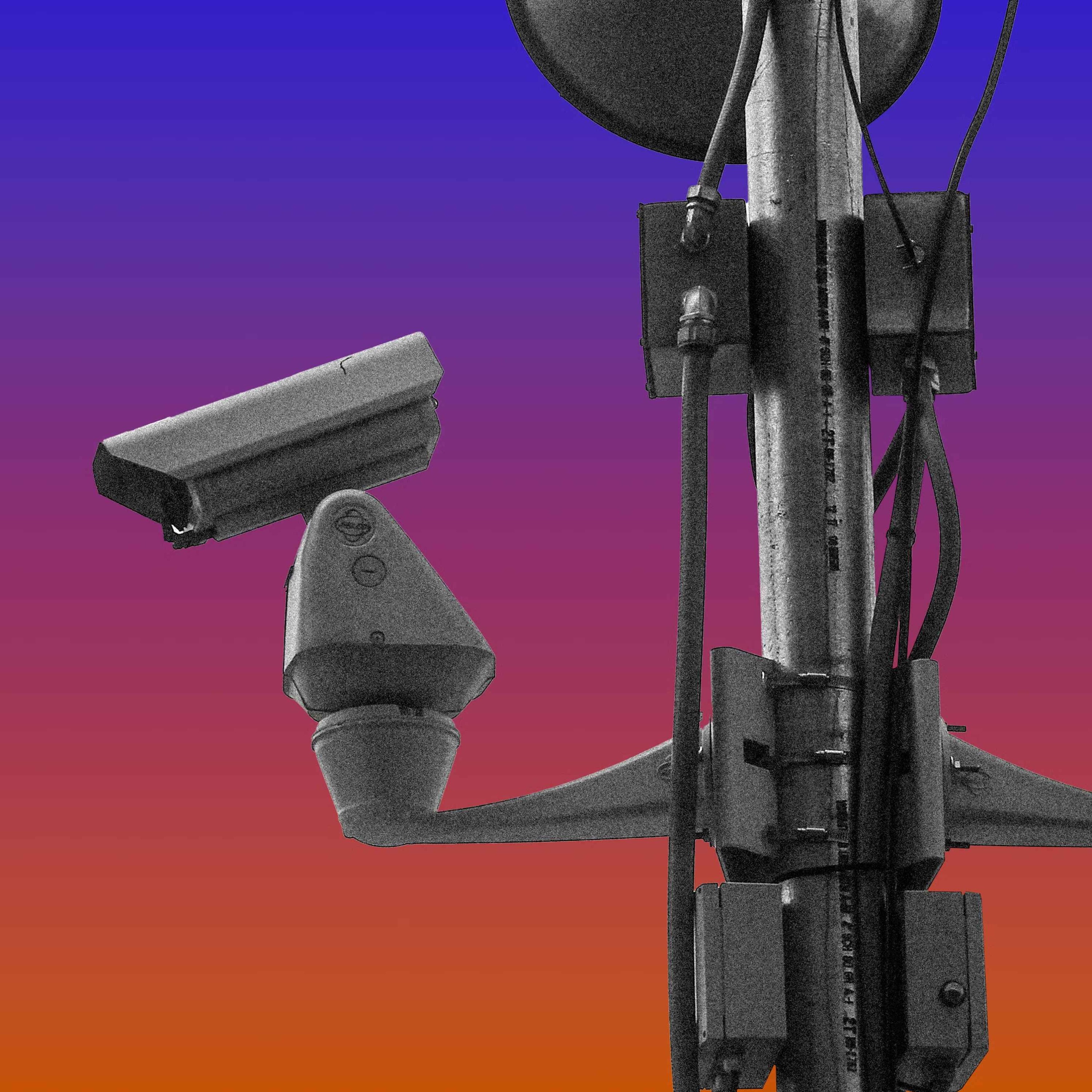
The episode argues that 9/11 created a “surveillance state” and a “structure of impunity,” where national-security claims block court accountability and enable ongoing rights violations (surveillance, detention, torture, and later uses like Guantanamo). It focuses on the Patriot Act, TSA/airport screening rules, and how whistleblowers and investigative journalism expose wrongdoing.
Ben Wisner, deputy legal director at the ACLU. Background: joined the ACLU as a “baby lawyer” in Aug 2001; worked on cases tied to Guantanamo and CIA black sites; has served as Edward Snowden’s legal advisor.
Patriot Act weakened the wall between criminal surveillance (warrants/probable cause) and intelligence surveillance; “magic words” of national security let the executive evade limits; lawsuits are dismissed on “state secrets”/standing, leaving legality unadjudicated for decades.
the Aviation, Transportation, and Security Act restricting airport screener jobs to U.S. citizens; Snowden’s revelations (“collect it all”); Guantanamo’s continued detention; Cheney’s “dark side” remarks; attempts to use Guantanamo for immigration under Trump.
Written by AI. May contain mistakes.
Ben Wisner discusses the lasting changes and overreactions after 9/11.
“On the 25th anniversary of the attacks, I wanted to speak to Ben because he's in this funny spot.”
Exploring the erosion of rights and the creation of a surveillance state post-9/11.
“I'm trying to remember what it was exactly that we expected.”
Introducing the main topic of discussion about structures of impunity.
“Today on the show, we're going to talk about those structures of impunity and whether, in the end, they are the most important legacy of 9-11.”
Examining the fortress mentality and its implications for airport security.
“I was struck looking back how quickly after the attacks that there was an attempt to make the U.S.”
Discussing the surveillance powers granted by the Patriot Act and their implications.
“Homeland was not really an American term.”
Explore how national security laws have bypassed legal checks and balances.
“that had always been considered a very serious crime, but something that could be dealt with under the rules that we use for apprehending, capturing, and punishing people who break the law.”
Transition to the ad segment for FreshBooks.
“We'll be right back after a quick break.”
Discuss the crucial role of whistleblowers in revealing government misconduct.
“Part of what I think is so interesting about Snowden and other whistleblowers and your work is that to me, as someone who's lived through the last 25 years, the narrative feels unfinished.”
Explore the evolution of government surveillance post-9/11 and its implications.
“You know, over the last 25 years, parts of the Patriot Act have expired.”
Discuss the potential changes and the future existence of the DHS in light of its history.
“I wonder if you think it's possible that you will be present both for the birth and the demise of this agency.”
Wrap up and acknowledge the contributions of the show team.
“Profound changes will happen and that we have to make a most out of the moment that we'll have after Trump and this gang has been pushed out.”

Get the gist, explore an idea or ask about something said.
 Claude
On What Next | Daily News and Analysis, what are the key points of this episode?
Searching your listeningAutomatic transcript. May contain errors.
0:00Ben Wizner: 98 of the top 100 U.S. accounting firms trust Bill to handle BillPay processes. Why? Because our tools are built on over a trillion dollars of secure payments. We're not just moving money. We're powering financial workflows for half a million customers. That's a level of expertise you just can't fake. Ready to talk with an expert? Visit Bill.com slash proven to get started and grab a$150 gift card as a thank you. Terms and conditions apply. See offer page for details.
0:29Mary Harris: Grainger knows if you're a procurement manager at an industrial manufacturing facility, you're balancing inventory and budget while sourcing critical supplies across the operation. Too much inventory? Costs climb. Too little? Production slows. Grainger's$2 billion in on-hand inventory helps you get what you need when you need it, so you can help keep budgets balanced and lines moving. Call 1-800-GRAINGER, click grainger.com, or just stop by. Grainger, for the ones who get it done.
1:08Ben Wizner: Ben Wisner wasn't supposed to be the ACLU's guy on surveillance or privacy. He wasn't supposed to be the guy who national security insiders leaked to. But he started working at the ACLU 25 years back. And a month later came 9-11.
1:28Mary Harris: Well, I started as a baby lawyer at the ACLU in August of 2001. And yeah, I mean, I had been working with the great Bryan Stevenson on death penalty cases in the South. I thought I was going to work on jail and prison reform. I did. It just turned out that those jails were in Guantanamo. Those prisons were secret CIA black sites. And the conditions of confinement were waterboarding, hanging people up, putting them in confinement boxes and not the more typical things that you see in America is brutal enough. So, yeah, you could say my life as a lawyer has sort of tracked the fallout from the 9-11 attacks.
2:14Ben Wizner: On the 25th anniversary of the attacks, I wanted to speak to Ben because he's in this funny spot. Pretty much everything you hate about the world right now is something he's been trying to warn you about for years. Maybe that's a little bit of an overstatement, but not much. Like, say you're worried about the Department of Homeland Security. Ben and his colleagues at the ACLU, they were opposed to the establishment of the Department of Homeland Security. Maybe you're concerned about artificial intelligence running amok. Ben published an essay in 2017 arguing that artificial intelligence is a recipe for tyranny.
2:52Ben Wizner: He was worried it would supercharge a post-9-11 surveillance state.
2:56Mary Harris: Yeah, I think it's fair to say that I was often screaming in the dark during the last quarter century.
3:04Ben Wizner: I got to ask, do you think Americans are remembering the right things about 9-11?
3:10Mary Harris: You know, it's a fair question. I'm trying to remember what it was exactly that we expected. Those of us who were sentient and adults on 9-11 had a feeling that things were going to change in a profound way. I do think, sadly, what we did predict was that there was going to be an assault on rights and liberties. There was going to be a government overreaction to this that would profoundly change the country. I remember that a number of organizations across the political spectrum, left and right, got together in the week after and put out a joint statement saying, essentially, don't set fire to the Constitution.
3:51Ben Wizner: Live from Camp David, a special edition of Meet the Press with Tim Russick.
3:58Mary Harris: You know, weeks later, Dick Cheney is on Meet the Press announcing that we're going to have to go to the dark side. His words.
4:05Ben Wizner: We also have to work, though, sort of the dark side, if you will. We've got to spend time in the shadows and in the intelligence world. A lot of what needs to be done here will have to be done quietly without any discussion using sources and methods that are available to our intelligence agencies if we're going to be successful.
4:23Mary Harris: Essentially, he was announcing that we were going to torture prisoners before we even had any prisoners in our custody. So they told us that the reason why these attacks happened was that we were too nice. And the way we were going to prevent this from happening was by being a lot less nice. I don't think I would have predicted the way that it played out.
4:44Ben Wizner: It doesn't feel like we're safer.
4:46Mary Harris: Well, I don't know what's safer. How safe do we need to be? You know, this is the safest and most secure society in the history of the planet.
4:58Ben Wizner: It really does feel to me like if I look back at the legacy of 9-11, it did kick off this era of weaponized safety. Do you know what I mean? Like people feeling unsafe and then people in control using that to do what they wanted.
5:19Mary Harris: That's probably not new, but I think that it's absolutely crystallized as a political strategy. And I had hoped that, you know, decades on from 9-11, we would not still be saddled with those kinds of politics. And we'll see. My concern is that people will view all of the excesses of the last few years as being about Trump and not look back at the kind of structures of impunity that we created starting a quarter century ago and not a few years ago.
5:50Ben Wizner: Today on the show, we're going to talk about those structures of impunity and whether, in the end, they are the most important legacy of 9-11. I'm Mary Harris. You're listening to What Next. Stick around.
6:15Ben Wizner: When it comes to managing money, forget the hype and look at results. Bill has a trillion dollars of secure payments powering our BillPay tools. Instead of just moving money, Bill is powering the financial operations of nearly half a million customers. So stop the guesswork and start scaling with the proven choice. Ready to talk with an expert? Visit bill.com slash proven to get started and grab a$150 gift card as a thank you. Terms and conditions apply. See offer page for details. When you're running a growing business, the right systems can unlock your full sales potential and make fulfilling every order effortless.
6:49Ben Wizner: Switch to ShipStation before peak season so you're prepped and ready before the rush hits. ShipStation connects Shopify, Amazon, TikTok Shop, and over 200 more marketplaces with one platform that does it all.
7:00Mary Harris: You can manage orders, sync inventory, track returns, all automatically. Everything your operation needs, all in one place. Upgrade your shipping operations to stress-proof your biggest sales days and capture every bit of potential revenue. Go to ShipStation.com and use code AUDIO and get 30 days free. Do you snore? Did somebody hand you a CPAP and did you quietly stop using it?
7:20Ben Wizner: The mask that never quite seals? The hose tugging at you every time you roll over? A machine sitting abandoned in a closet? Excite OSA works a different way. It treats a root cause instead of managing the noise, and you use it while you're awake. 20 minutes a day, while the coffee brews, while you set your fantasy lineup. an FDA-cleared prescription device for primary snoring and mild obstructive sleep apnea. Then you go to bed like a person. Nothing strapped on, nothing plugged in. In clinical studies, 90 % of patients saw a reduction in snoring. No sleep study required. Prescribed online, shipped to your door.
8:04Ben Wizner: ExciteOSA at springsleep.com slash sleep20. Code sleep20 for 20 % off. Excite OSA is an FDA-cleared prescription-only device for primary snoring and mild obstructive sleep apnea. Not for everyone. Individual results vary. Risks and benefits at springsleep.com.
8:31Ben Wizner: I was struck looking back how quickly after the attacks that there was an attempt to make the U.S. into a fortress. in these ways that feel very resonant now. Like you early on worked on a case about who could be an airport screener after 9-11, right? Like could people who are non-citizens do that work? And to me, it's so interesting to look at that case now because it really shows how Americans made their response to 9-11 a kind of fear of the other, which feels so resonant in this moment.
9:05Mary Harris: And that may sound like common sense. By the way, this was the first post-9-11 federal law. The Patriot Act was the second. This was the Aviation, Transportation, and Security Act that created the TSA. This was not a federal agency that did airport security. It was private companies that hired people. And maybe it's a good idea to transfer that function to a federal agency. I don't have an opinion one way or the other. What the law did, though, is it said, unless you were a U.S. citizen, you could not work as an airport screener. Well, people who we represented who were airport screeners were veterans of the United States military.
9:39Mary Harris: They were green card holders who had served, who had carried weapons, who had been overseas in the uniform. And now we're told that while they could carry an M-16 on a foreign battlefield, they couldn't work in an airport to do security screening. And so there's no real rationale that has to do with security for why you would have a rule like that. But as you say, this was very much part of that fortress mentality, the same mentality that created something called the Department of Homeland Security. Homeland was not really an American term.
10:13Ben Wizner: How quickly did you and your colleagues begin to worry about privacy and surveillance implications after the 9-11 attacks?
10:19Mary Harris: Well, I mean, the Patriot Act passed in 2001.
10:23Ben Wizner: It was 45 days after 9-11. Right.
10:26Mary Harris: And the Patriot Act is fundamentally a law about surveillance. It passed the Senate 98 to 1. Senator Feingold was the only person who voted against the Patriot Act at the time. And it's important to say the reason why the Patriot Act was passed into law 45 days after 9-11 is because most of it was written before 9-11, not after. This was basically a wish list of everything that the FBI and federal prosecutors wanted to remove obstacles to the kind of surveillance that they wanted to do, to make it easier to do suspicionless, broad or mass surveillance on people, not in the context of actual criminal investigations.
11:06Ben Wizner: Yeah. Describe to me what we know of what kind of superpowers the government got after 9-11.
11:13Mary Harris: There's two different questions. There's the powers they got and the powers they claimed and exercised. The Patriot Act fundamentally said there's two sets of rules for conducting surveillance. There's surveillance that's going to be used in criminal cases, where the evidence that is captured is actually going to be used to prosecute people and put them in jail. And there's pretty strict rules for that kind of evidence collection, or there used to be, where you need to have probable cause of a crime. You need to get a warrant from a judge before you can do that kind of surveillance that's going to be used as evidence in a court.
11:46Mary Harris: Then there's this other kind of surveillance where we never plan to prosecute anybody. We just want to know what our foreign adversaries or what terrorists are doing for security reasons. We're not going to use this evidence in any kind of legal proceeding, but we want to be able to collect it. And the rules for collecting that have always been looser. They were non-existent before the 1970s, but even after the 1970s, they were looser than for criminal cases. What the Patriot Act did is it kind of weakened the wall between those two kinds of surveillance. And so it allowed the government to use the looser rules for intelligence surveillance and still have the benefit of using the evidence in criminal cases.
12:24Mary Harris: That was controversial, but it's not completely scandalous, right? Completely scandalous was Bush and Cheney saying, under the constitution, under our executive authority, under Article 2 of the Constitution, the president can engage in any kind of surveillance against any kind of person, U.S. citizen or not, as long as he says that he's doing so because of this war on terrorism that we're in. If he uses that rationale, it can be secret and there are no limits on it whatsoever.
13:01Ben Wizner: Yeah, I see the main impact of the Patriot Act is like creating magic words. And those magic words are national security, where when the government expresses what it wants to do as protecting national security, it creates a cloud around, you know, what's going on. And I wonder how that impacted your work as an attorney who wants to protect privacy.
13:24Mary Harris: We should say here that that's not a creation of the Patriot Act out of whole cloth, that there is national security law that dates back to the Cold War. And the National Security Act is from the late 1940s, and it's aimed at giving the government Cold War powers. The real innovation of post-911 and the Patriot Act is that it took this body of law that was created to deal with things like nuclear proliferation, the threat of thermonuclear annihilation, something that was absolutely a threat to every living thing on the planet and imported it into something like counterterrorism that had always been considered a very serious crime, but something that could be dealt with under the rules that we use for apprehending, capturing, and punishing people who break the law.
14:15Mary Harris: And now, anytime you just say the word terrorism, even if it's some rinky-dink plot involving a couple of people. You're now in this box of national security and all the checks and balances are thrown out the window. And so the powers that I described, the surveillance powers that I described, there's no question that they are illegal, that they exceed what Congress authorized. I mean, I would go so far as to say they were unconstitutional. And yet every single case that we brought before Snowden appeared, every single case where we tried to go into a court and say, these surveillance powers that are either granted in the Patriot Act or claimed outside the Patriot Act are illegal, have always been illegal.
15:03Mary Harris: Every single one of those cases was dismissed without any adjudication of the law or the facts. The government came into court and said, the people who are challenging this have no standing to be here. They have no standing to be here because they can't prove that they themselves were subjected to these techniques. They can't prove that they were subjected to these techniques because they are a state secret, and therefore neither they nor anyone else has the standing to get a court to actually answer the legal question. And that has been the pattern of national security law in practice these last 25 years.
15:33Mary Harris: Such a neat trick. It's a neat trick. It's a real, it's a total catch-22. And, you know, of course, obviously this is a tragedy for victims who are trying to have their rights vindicated, but it's a much bigger problem for our system. Because what it means is that in 2026, we have not had courts ever say whether these practices are illegal or not. Even in the cases, you know, like in Guantanamo, where the Supreme Court did repudiate the Bush administration and say, no, you have to let lawyers go there. No, you can't get rid of habeas corpus. They didn't answer the question of whether indefinite detention at Guantanamo was lawful or not.
16:12Mary Harris: And so there's still people being held at Guantanamo without charge or trial 25 years after 9-11 because the courts have refused to answer the most fundamental questions.
16:23Ben Wizner: And of course, we've seen how having Guantanamo in the first place kind of opens the door. Now, you know, one of the, in the first months of the second Trump administration, you had, oh, now we're going to use Guantanamo for immigration purposes. It's like, you know, a Chekhov's gun sort of thing. Like it's on the table.
16:39Mary Harris: I mean, luckily we were able to sue and prevent them from using that this time around, but that's absolutely right. The whole thing is Chekhov's gun, right? This whole apparatus. And it isn't even just the specific tools that they're using. It is what I referred to before as the structure of impunity. The fact that courts said, you know what, we're living in dangerous times. We're going to defer to the expertise of national security officials. And if they tell us that this case shouldn't be litigated, we're going to dismiss the case. Well, you might like that outcome if you like Dick Cheney, or our friends might like that outcome if they trust Barack Obama.
17:20Mary Harris: But that is precisely the gun that you are handing to Donald Trump. And I will tell you, when he decides that he is going to fire missiles at suspected drug smugglers in the Caribbean and Eastern Pacific. And says it's about national security. Well, and he's confident. I hope he's wrong. But he's confident that courts are not ever going to weigh on the legality of that, that they will defer to a claim of national security and say this is a war, that there's a separation of powers, that this is a political question, not a legal question. And that is how the cases that we filed following drone strikes in the Bush and Obama administrations, they were dismissed without adjudication.
18:05Ben Wizner: You mentioned Edward Snowden, and all along the way, over the course of these 25 years, whistleblowers have been important to revealing what's happening behind the scenes. You have been Edward Snowden's legal advisor. Tell me how him coming forward changed the game, changed what you were able to argue, changed what we were able to know.
18:27Mary Harris: I will, but I want to return to your point about whistleblowers being important. And if you think about the last 25 years and you think about everything we know about the crimes committed by our own government after 9-11, I would venture to say that more than 95 % of that we know because of unauthorized leaks to the press. Now, most of the leakers were not Edward Snowden. They didn't raise their hand and say, I'm the one who did this and let me explain to you why in hyper articulate full paragraphs with an Academy Award winning documentary filmmaker filming it. Snowden is a gift in that way because you actually get to see him explaining his actions in real time.
19:11Mary Harris: Most of them were people who, you know, went to that payphone or met a reporter that they knew or as an Abu Ghraib, you know, took photos and got them onto a disc that, you know, somehow made its way to Cy Hirsch and to CBS News. And that's such an important lesson for today where we're seeing the Trump administration just really, you know, they're reportedly giving lots of people lie detector tests, looking for leaks.
19:38Ben Wizner: There's a reason they're doing that. Not just that.
19:42Mary Harris: They're also getting the phone records of reporters so they can see who they spoke to before they published their stories. Yes. I mean, what we know about government misconduct, we know because the press very aggressively competed with the government over its monopoly on secrecy, found sources who were willing to break the law in many cases and share this information that really belonged to the public. Snowden, as I said before, is rare in that he tried to conceal his tracks only to the extent that he was able to deliver information to journalists. And from then on, he wanted everybody to know who he was and why he had done it.
20:24Mary Harris: And he wanted people to understand that he had entrusted journalists and not himself with a decision about what to publish. He didn't need to work with journalists. He could have published the NSA's documents on the internet for everyone to see. But everything that we know from the Snowden Archive, we know because a journalist, after consulting with the government, decided that they wanted to publish it. So what did Snowden reveal? I mean, the pithiest way to describe it is that surveillance technologies far outpaced democratic controls. and that under the cloak of secrecy, and not just secrecy but lies, the government had constructed a surveillance apparatus that was with the goal of collecting and storing the world's communications.
21:11Mary Harris: The NSA had a very ambitious director, General Keith Alexander, whose mantra was collect it all. And he was confident that if he built the technology to collect everything, the authorities would follow. Notice I say would follow, right? He wasn't arguing that he had the authority to do it, but he understood if he could build it.
21:32Ben Wizner: Ask forgiveness, not permission.
21:34Mary Harris: Well, that really is what it is. That really is the pattern.
21:41Ben Wizner: We'll be right back after a quick break.
21:56Ben Wizner: This episode is brought to you by FreshBooks. Whether you just launched your service business or you've been at it for years, the money side has a way of pulling you from the work you actually love doing. FreshBooks changes that. FreshBooks makes the money side of your service-based business easy. You log your hours, you send a branded invoice, you get paid and know your numbers instead of chasing them. Money in, money out, all in one place. No more juggling one app for clients, another for billing, plus a pile of spreadsheets and emails. FreshBooks is designed for how small business owners think about money, not how an accountant does.
22:30Ben Wizner: You don't need a financial background to use FreshBooks. It's simple on purpose. Most owners are up and running in minutes, not days. And if you need help, a real person is available on every plan. FreshBooks has been trusted by service businesses for over 20 years, helping over 500 ,000 owners and solopreneurs run their business confidently. Right now, my listeners can get FreshBooks for less than$3 a month for your first four months. That is 90 % off. Head to FreshBooks.com slash podcast to get started. That's 90 % off under$3 a month for four months at FreshBooks.com slash podcast.
23:12Ben Wizner: 98 of the top 100 U.S. accounting firms trust Bill to simplify and secure Bill Pay. That's proven financial infrastructure built on over a trillion dollars of secure payments. Visit Bill.com slash proven for a special offer.
23:30Ben Wizner: Part of what I think is so interesting about Snowden and other whistleblowers and your work is that to me, as someone who's lived through the last 25 years, the narrative feels unfinished. The narrative feels unfinished because, yes, the ACLU could have this victory in court. But that never translated to accountability for anyone. And so I think if you ask a lot of people about what we're talking about right now, they may not have a clear memory of what happened or who did something that was illegal simply because that follow through never happened. Do you feel that, too?
24:11Mary Harris: I think that's a huge part of it. I think it's really, really important. And in fact, one of the reasons why the surveillance argument sort of took off so dramatically in the year or two after Snowden's revelations was because of Snowden, that we did have a narrative at that time. We had the narrative of this person.
24:32Ben Wizner: You had a guy, you had a face, you had a name.
24:33Mary Harris: He was willing to set his life on fire for his principles in a way that was extremely compelling around the world. And I will say another piece of this, and you'll appreciate this as a journalist, is that normally the government, when revelations of misconduct come out, they know what the story is. They go into immediate damage control, and they deny everything that's not already within the four corners of that disclosure. Here, they had no idea what was going to come out next. And so they were on their back foot for a year and a half, not knowing what Snowden had given to journalists. They still don't know what Snowden gave to journalists.
25:07Mary Harris: They never learned that. I think you're absolutely right on the accountability point. There wasn't this moment of resolution, but I also think that is somewhat of a structural issue here. The reason why we need whistleblowers, the reason why we need aggressive investigative journalists, and I would say those really are two sides of the same coin, right? Investigative journalists and whistleblowers. Whistleblowers are sources for investigative journalists. It's because our established system of checks and balances isn't really designed to work over time.
25:46Ben Wizner: That's depressing.
25:47Mary Harris: Well, but it's really true. I mean, the congressional committees that we created after Watergate and after the surveillance scandals of the 60s and 70s, these were supposed to be the most skeptical members of Congress, the ones who had access to everything. And although we couldn't all see the government secrets, they would be the ones who would look at it. Well, of course, they're the ones who get the most contributions from defense and intelligence companies. And they're the ones who are not the most skeptical, but often the most captured.
26:15Ben Wizner: How does that not drive you nuts?
26:17Mary Harris: It does. But I will say this. I mean, so here's the other side of it. The few times in our modern history where we have had energetic oversight from Congress and from courts have been following spectacular acts of whistleblowing and lawbreaking, right? So in the 1970s -
26:36Ben Wizner: So the act's just not been spectacular enough so far?
26:39Mary Harris: No, no, no. I'm making a different point, which is that these problems can't be solved, only managed. And in our system, we're going to need dramatic whistleblowing every few years or every decade. It's just a constant feature. So think of the executive branch doing what it does and not two entities checking it, but three, the courts, the Congress, and the press representing the public. And that the way that you get Congress and the courts to do their job is to get the public invested in the story in a way that creates the atmosphere for that to happen. So the massive scandals in the 1970s that led to bipartisan hearings, led to the creation of the Foreign Intelligence Surveillance Court.
27:23Mary Harris: We found out about the CIA and FBI having millions of files on American citizens and COINTELPRO and infiltration of movements. There was huge political energy for reform and we got it. Following Snowden, it wasn't just that judicial ruling, but Congress passed a law for the first time since the 1970s restricting rather than expanding surveillance authority. It didn't solve the problem. This is one of the things that I debate with Snowden all the time. He's a technologist and he thinks democracy is a problem that can be solved. And I'm quite sure that's not true. That really what you're trying to do is make sure that things are more in balance and make sure that powerful entities are checked by others.
28:02Ben Wizner: Can we fast forward to now? You know, over the last 25 years, parts of the Patriot Act have expired. But that doesn't mean that the government doesn't know things about you and me, right? Like how much information does the Department of Homeland Security have about us at this moment and how much of that has been enabled by the history after 9-11?
28:27Mary Harris: You know, not to be existential here, it depends what we mean by no. So, you know, we got to see these, the original data centers were not for AI LLMs, but for the NSA to create surveillance time machines. And a surveillance time machine means the government is sitting on years of information that no human being has ever looked at, but that can be rewound when someone becomes a person of interest or when a phone number becomes a phone number of interest.
29:00Ben Wizner: Yeah, I mean, corporate surveillance, we've all become much more accustomed to. Cameras everywhere, phones everywhere.
29:06Mary Harris: Even if the NSA didn't exist, as long as the government has the ability to get information from private tech companies, it doesn't need to collect anything by itself. Because we have gone from a world of the practical obscurity that we enjoyed when we were younger, where basically the things that we said and did were only observable by the people who were immediately around us, to a world in which everything we do on a daily basis is now comprehensively tracked.
29:34Ben Wizner: Especially if there's someone with some metaglasses nearby or a block camera or whatever.
29:38Mary Harris: But even without that, I mean, I don't know if I remember going to record stores and looking through records and now all of my clicks on Spotify are in some database. I mean, there's really no activity that you do that is not sort of somehow in somebody's database right now. And so then the question becomes, by what rules or restrictions does the government have access or not have access to all of that?
30:06Ben Wizner: It was so interesting what you were saying before about how democracy requires constant engagement and never a resolution. And I got to tell you, I'm really struggling with that because I look at the last 25 years and I just think it's important to recognize certain patterns of behavior from people in power. Like, you know, after 9-11, you have this tremendous surveillance state that gets stood up. It allowed all kinds of things, like foreign nationals could be kidnapped, essentially, held without trial, be tortured. Regular people were surveilled. President Obama comes into office and he basically defended the surveillance state.
30:48Ben Wizner: He wasn't out there shutting down Gitmo. He wasn't out there. Well, he tried. Yeah. He did.
30:54Mary Harris: He actually issued an executive order on his first day that purported to shut down Gitmo. And then he got cold feet.
31:01Ben Wizner: Yeah. And I think his emphasis was really looking ahead, not behind.
31:06Mary Harris: That was his famous line.
31:07Ben Wizner: Yeah. And then you have Trump in 2016, and there are tremendous abuses of power there as well. But Biden comes into office and really tries to avoid anything that looks like a political prosecution. And now here we are. And I feel like we see this repeated pattern of things we know weren't great, not a great history of accountability, maybe a history of no accountability. Do you think that pattern's going to be broken anytime soon?
31:34Mary Harris: Well, I mean, I think patterns repeat. I also think, look, we have to be more expansive in what we consider accountability. Now, I agree with you. And this is the drum I bang on. When it comes to national security law, there's an accountability crisis that we created and that we are suffering because of that. And I do think that part of any reform agenda that follows Trump, and a lot of us expect that there is going to be a moment of democratic reset after Trump, that there is going to be an emerging consensus across the political spectrum that things need to change somewhat fundamentally after what Trump did to the presidency.
32:15Mary Harris: And accountability has to be a pillar of that reset. We have to make it easier for people to use courts to hold government wrongdoers accountable for their violations of the Constitution. I think that is vitally important. I also think that transparency is a kind of accountability.
32:37Ben Wizner: But the cost is so high. Like we've talked about the importance of whistleblowers, but I do feel like the Trump administration is making it costlier to be a whistleblower. They are so aggressive and they are signaling so aggressively that they are going to take any kind of leaks seriously.
32:57Mary Harris: That's true. I think the flip side of that, for whatever silver lining this offers, is that Trump does almost all of his wrongdoing in plain sight. I wouldn't put in my top 10 concerns about the Trump administration secrecy.
33:14Ben Wizner: Like we're all blowing the whistle every day. We could all blow a whistle.
33:18Mary Harris: They tweet out their videos of murdering people in the Caribbean. They actually put it on social media. So, I agree with you that everything they're doing is more extreme. It's dialed up to 11. But I also think that paradoxically, we're probably less reliant on unauthorized leaks to the press in this administration than we have been in other administrations just because they are so shameless and brazen about their lawbreaking and so, in a sense, defiant about whether they can be checked by any kind of other institution. But again, I do want to say our attempts to bring cases on behalf of people who were victims of drone strikes or torture or surveillance.
34:09Mary Harris: In the torture context, we weren't able to get courts to hold these programs illegal and to say that our clients' rights had been violated. But we did fundamentally change the politics of this issue. We did get Congress engaged with the issue. we did make it politically too risky for any CIA director to allow CIA officers to be pulled into practices like that. Our work did result in people being indicted in courts around the world. There are indictments against CIA torturers in multiple countries. And to my knowledge, Cheney, when he was alive, and George W. Bush have not been to Europe since they left office because they've been advised by government lawyers that they can't guarantee that they won't be arrested.
34:56Ben Wizner: The whole reason we're talking is basically because of 9-11, 25th anniversary. And one thing I keep thinking about is that 9-11 was the birth of the Department of Homeland Security, which I think so many people at this point, My guess is when the Department of Homeland Security was born and the ACLU was so outspoken against it, the ACLU and maybe you yourself couldn't imagine the moment we're in now where I think a lot of people have come out and said the Department of Homeland Security should no longer exist. I wonder if you think it's possible that you will be present both for the birth and the demise of this agency.
35:43Mary Harris: I do think so. I really do. I saw how much things changed after 9-11, and that showed me that that kind of profound change is possible. I do think that there was a way in which most of what this country did after 9-11 was projected externally. Now, it was experienced by some here, particularly Muslim communities, Arab communities, South Asian communities, but most Americans were not affected in a tangible way by the crimes committed by the Bush and Cheney regime in the name of national security. What Trump has done is he has sort of taken these powers and turned them inward in a way that can't be ignored.
36:30Mary Harris: And so instead of the streets of Kabul and Baghdad, it's the streets of Minneapolis. And it's a different kind of invasion. Americans feel like they're being invaded by their own government. And I do believe that that experience is indelible. Profound changes will happen and that we have to make a most out of the moment that we'll have after Trump and this gang has been pushed out.
37:04Ben Wizner: Ben, I'm really grateful for your time. Thanks for coming on the show.
37:07Mary Harris: Thanks for having me, Mary.
37:09Ben Wizner: Ben Wisner is a deputy legal director at the ACLU. And that's our show. What Next is produced by Evan Campbell, Madeline Thames-Ducharme, and Patrick Fort. Paige Osborne is the senior supervising producer of What Next and What Next TVD. Mia Lobel is the executive producer of podcasts here at Slate. Ben Richmond is the senior director of podcast operations. And I'm Mary Harris. Go track me down on Blue Sky. I'm Mary Harris. Thanks for listening. Catch you back here next time.
37:43Thank you.
38:13Ben Wizner: Save the gas. Stamps.com lets you print postage and schedule pickups right from your desk. Sync your contacts into the address book, get detailed accounting insights, and get notified the moment your certified mail is delivered.
38:25Mary Harris: All from my desk? All from your desk. Join the 4 million businesses using Stamps.com right now with code podcast and get your free welcome gift.
38:34Ben Wizner: Stamps.com code podcast.
38:37Mary Harris: Taxes and fees apply.
America didn’t start down the path to a president who is unaccountable to even the Constitution under Trump. He’s the culmination of a change that dates back to September 11, 2001.
Guest: Ben Wizner, Deputy Legal Director and Director, Center for Democracy
ACLU
Want more What Next? Subscribe to Slate Plus to access ad-free listening to the whole What Next family and across all your favorite Slate podcasts. Subscribe today on Apple Podcasts by clicking “Try Free” at the top of our show page. Sign up now at slate.com/whatnextplus to get access wherever you listen.
Podcast production by Evan Campbell, Madeline Thames-Ducharme and Patrick Fort.
Paige Osburn is the senior supervising producer of What Next and What Next TBD.
Hosted on Acast. See acast.com/privacy for more information.