 Ask ChatGPT
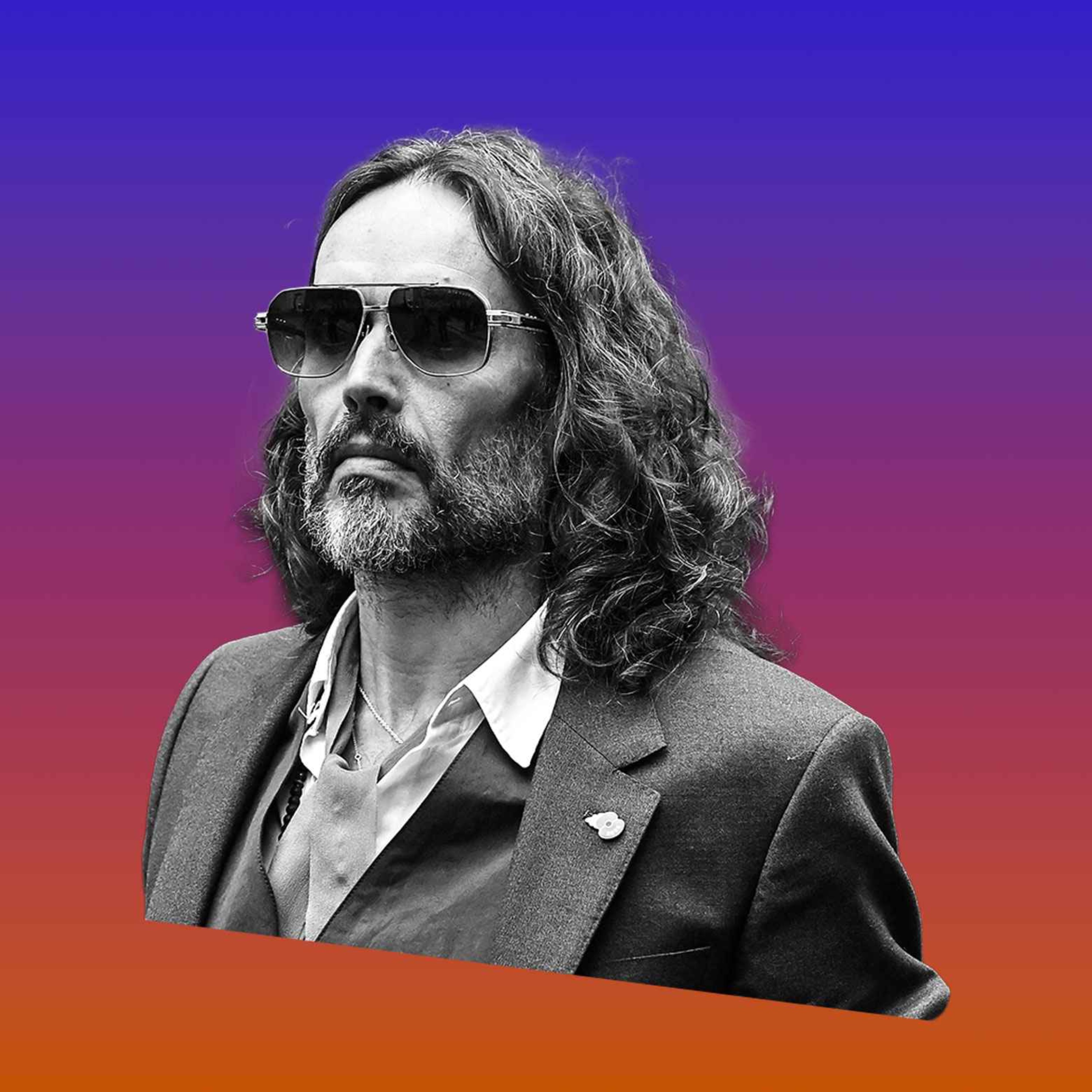

Congressman Greg Kassar argues Democrats must take a hard, “AI populist” stance against AI billionaires, warning AI will drive mass unemployment, mass surveillance, and major safety/national-security risks. He also addresses data centers, rejecting a broad moratorium while supporting rules like data-center cost responsibility and AI safety protections.
Greg Kassar is a left-leaning Texas Democrat, chair of the Congressional Progressive Caucus, and a House member for TX-35. He discusses internal Democratic messaging and election dynamics involving major donors.
AI oligarchs are allegedly using election spending (including “Leading the Future” and crypto-related “Fairshake” money) to push deregulation and intimidate Democrats. He proposes taxing AI to fund job creation, strong anti-surveillance rules, and a ban on “artificial superintelligence.”
“Flock camera” and phone tracking used for surveillance; AI-assisted tracking of employees; scientists using AI to create new viruses; Minnesota’s “nudification” ban and Elon Musk suing to overturn it.
Written by AI. May contain mistakes.
Congressman Kassar discusses the impact of AI on jobs and the economy.
“Congressman Greg Kassar has pretty strong feelings about the very rich.”
Kassar critiques Democratic leadership's hesitance to regulate AI.
“You have criticized Democratic leadership here.”
Kassar advocates for an AI populism approach to connect with voters.
“Clearly, that is one of the ways you describe yourself, but it also exists on the right.”
Discussion on the need for a populist approach in the Democratic Party regarding AI and corporate control.
“We should go tell those voters, no, you should have control of your life.”
Congressman Kassar discusses various legislative proposals to address AI-related issues.
“It's the second deadliest cancer and the number one cancer killer of people under 50 in the U.S.”
Exploration of the balance between federal and state legislation in the context of AI regulation.
“It would be really interesting to have the theoretical discussion on federalism, which law should be federal, which law should be state.”
Explore the implications of AI on job security and election strategies.
“And people have not yet openly disagreed here with me on that point.”

Get the gist, explore an idea or ask about something said.
 Claude
On What Next | Daily News and Analysis, what are the key points of this episode?
Searching your listeningAutomatic transcript. May contain errors.
0:00There are two types of business owners. Those who are busy and those who want to be busy. Toast is designed for both. With tools to keep you humming and help turn grind into growth. That's how you turn busy into business. Toast. Built for busy. Still waiting in line? Again? That's time you'll never get back. Save time and money with Stamps.com. Over 4 million businesses have skipped the line with Stamps.com. Join them to save up to 90 % off carrier rates from your computer or phone right now. Print postage for certified mail, registered mail, and packages in seconds. Then schedule a pickup right from your home or office.
0:39For a limited time, go to stamps.com and use code podcast for a free welcome gift. Taxes and fees apply.
0:53Congressman Greg Kassar has pretty strong feelings about the very rich.
0:58Greg Casar: Well, look, people all over the country are rightly upset that billionaires are screwing everybody over. And the place that so much of his anger is directed is at the people building artificial intelligence. AI is going to make it so that it's oligarchy on steroids. They're going to try to turn a few billionaires into trillionaires while trying to push for mass unemployment, mass surveillance and leaving us vulnerable to mass security risks. Kassar is in an interesting spot in his party. He's a lefty Democrat from Texas, chair of the Congressional Progressive Caucus, and someone who has a very pointed message for his colleagues who want to win in the midterms and in 2028.
1:48Greg Casar: Democrats should be able to build a coalition of people all across the country, coast to coast, who are deeply concerned about AI making your life worse off. But we can't afford as Democrats to be squishy on the issue. We can't afford to be paralyzed. We can't afford to say, well, that's some new tech that we don't fully understand. We should clearly be on the side of everyday people who are concerned, yes, about data centers, but also concerned about their jobs, concerned about their safety, concerned about their freedoms, be on the side of people and be willing to stand up against the big money and politics that's being used by these AI billionaires to try to intimidate Democrats out of taking a really strong position on these issues.
2:34Today on the show, Congressman Kassar makes the case against the current state of AI and makes the case for his Democratic colleagues to follow. I'm Lizzie O 'Leary in for Mary Harris, and you're listening to What Next? Stick around.
3:17We'll be right back. off, you're not alone, but timely screening matters. Let's talk about what isn't talked about. Talk to your provider or request Cologuard Plus online, Rx only. Do you snore? Did somebody hand you a CPAP and did you quietly stop using it? The mask that never quite seals, the hose tugging at you every time you roll over, a machine sitting abandoned in a closet. Excite OSA works a different way. It treats a root cause instead of managing the noise, and you use it while you're awake. 20 minutes a day, while the coffee brews, while you set your fantasy lineup. An FDA-cleared prescription device for primary snoring and mild obstructive sleep apnea.
4:01Then you go to bed like a person. Nothing strapped on, nothing plugged in. In clinical studies, 90 % of patients saw a reduction in snoring. No sleep study required. Prescribed online, shipped to your door. ExciteOSA at springsleep.com slash sleep20. Code sleep20 for 20 % off. ExciteOSA is an FDA-cleared prescription-only device for primary snoring and mild obstructive sleep apnea. Not for everyone. Individual results vary. Risks and benefits at springsleep.com. When it comes to managing money, forget the hype and look at results. Bill has a trillion dollars of secure payments powering our BillPay tools.
4:48Instead of just moving money, Bill is powering the financial operations of nearly half a million customers. So stop the guesswork and start scaling with the proven choice. Ready to talk with an expert? Visit Bill.com slash proven to get started and grab a$150 gift card as a thank you. Terms and conditions apply. See Offer page for details.
5:11So let me take you the word squishy and run with that a second. You have criticized Democratic leadership here. Hakeem Jeffries has convened, I believe, a three member commission to introduce a framework for artificial intelligence, but none of that would happen until after the midterms. Is that your definition of squishy?
5:30Greg Casar: My definition of squishy is where Democrats have landed on issues like cryptocurrency. Right now you have getting a lot of money from Fairshake. Yeah, exactly. Crypto billionaires basically have spent massive amounts of money in Democratic primaries and Democratic elections to basically spook Democrats away from taking a really hard line position against the massive amounts of money laundering and fraud and Ponzi schemes we see in some big corners of the crypto industry. But you basically have Democrats kind of in all sorts of positions on the issue. Even if Democrats are generally better on it than the Republicans who are all lined up behind crypto, it's just not clean enough for the American people to clearly know, hey, if you're a crypto billionaire, you're with the Republicans.
6:18Greg Casar: But if you're an everyday person that might get screwed over by a crypto scheme, you're with the Democrats. We haven't drawn that clean of a line. And it's because, as you pointed out, they have this thing called the fair shake pact. It's a very big pack. They're putting a lot of money into elections. Yeah. So people like Sherrod Brown, a senator from Ohio, who even when Trump would overwhelmingly win Ohio, still would get reelected. Basically, the deciding factor that got Sherrod out of the Senate was that this crypto pack spent, God, I don't know, it was like 30 or 40 million dollars, obscene amounts of money to get him out of the race.
6:54Greg Casar: And yes, that was about taking out Sherrod Brown, who has been really tough on regulating big banks and crypto. But it was also trying to send a message to Democrats to kind of be squishy on the issue to avoid talking about it. Well, you look at leading the future, right? That's one of the very big ones. They have supported some Democrats, Melissa Bean, Jesse Jackson Jr. How much of the hesitation around criticizing AI is about not wanting to cut off potential money sources? Look, I know for a fact, and there's been a lot of independent reporting on this, that there are consultants in Washington, D.C.
7:31Greg Casar: telling their Democratic clients, don't talk about AI because you don't want to attract a big money dump against you or for your opponent. And so candidates are being told just not to talk about it, to pretend it's not happening. And that would be devastating for the American people and ultimately for democratic politics. Because look, I want Democrats to be successful. And the best way for us to be successful is to be with the people, even if that means that we're not with those big money interests. So Greg Brockman, who's one of the big open AI guys, has dumped huge amounts of money into leading the future.
8:11Greg Casar: He is trying to make sure that Trump gets reelected, keeps his majorities, and make sure the Democrats don't take a strong stance against mass AI unemployment or mass AI surveillance. They're basically going for free reign, no regulation on AI. In fact, the main thing they've been pushing in Congress is to get rid of the existing small number of laws in states. So they're not trying to pass regulation. In fact, they're trying to get rid of even rules that an individual states like New York or Montana might pass. So we basically have the Trump administration totally captured by these AI billionaires.
8:52Greg Casar: And then that same AI money trying to maybe not fully capture the Democratic Party, but make the Democratic Party paralyzed enough or squishy enough that we don't really fight back. And that would be a huge mistake. What I'm working on is making sure the Democratic Party has a clear platform. No, we will not allow mass AI unemployment. We should tax AI to make sure unemployment doesn't rise. No, we should not allow mass surveillance by AI. The government or corporations should not be able to surveil you to jack up your prices or track you like ICE is doing. And then third, we cannot allow for massive AI safety risks.
9:32Greg Casar: And we've seen right now how you have these AI models that are reportedly breaking out of their security infrastructure, hacking onto the Internet that they're not allowed to hack into, and then hacking into other companies, which is why I think that we need real strong safety rules, including a ban on AI superintelligence. intelligence. These are the kinds of things that 80 percent of Americans support, Democratic, independent, Republican, whatever, because we think that we should get to run our lives, not just a couple of AI billionaires. So I think you have at least I've seen kind of some confusion in the Democratic Party about how to message around AI.
10:11I have seen some members go with this sort of like AI is raising the cost of everything. This is a cost of living question. You seem to go for a much more direct kind of anti-billionaire stance. What do you think is the right way to go?
10:29Greg Casar: Look, I think that we're living through an era of unprecedented corruption and where people are feeling that they don't have control over their future anymore. And that links all of these different issues together. So it's not just about somebody's electricity bill. Well, you've got these a few folks who want to literally become trillionaires and they don't care if they jack up your electricity bill. They don't care if they poison your water. They don't care if they are addicting your kids to their phones. They don't care if they potentially create a mass national security risk. We just read the other day that you have some scientists creating new viruses using AI.
11:10Greg Casar: Look, here in Austin, you've got to get a license before you open a damn food truck. but now people can use AI and create a virus. So they don't care about your safety, your freedom, your kids. They just care about making money. And people are really upset about that. And that links all of this together. And so I just don't think it's that complicated. We should be very clear that positive uses of AI, that sounds good. Yeah, let's work on curing cancer. Let's work on the root causes of dementia or the climate crisis. But all this other stuff, people are really upset about. And we should just say no.
11:46Greg Casar: We should say no to either your electric bill going up or your kid's school getting taken over by AI robot teachers. This is stuff that no matter which part of Texas I'm in, people are against. So let's be with the people and against the billionaires who just want to profit off of you. All right. So let's talk about AI populism, right? Clearly, that is one of the ways you describe yourself, but it also exists on the right. I'm thinking about the anti-AI commentator, Joe Allen, who is a regular on Steve Bannon's podcast. It is clear to me that there is a huge anti-AI and in many cases, anti-data center kind of groundswell.
12:27Are you comfortable aligning with these guys? Like, is this a strange bedfellows make for good politics? Are you like, I don't know.
12:36Greg Casar: Look, this isn't a bedfellows with Steve Bannon moment. It's that Steve Bannon. Well, no, no, because I know because look, I think Steve Bannon knows what it takes to try to win over voters and win elections. Right. Steve Bannon rightly pointed out that a continued Mitt Romney politics in the Republican Party was eventually going nowhere. And so he wanted to go and take working class voters away from the Democratic Party. And it's the terrible result has been his their success at taking some of the working class base away that has built the Democratic Party from the ground up since the Great Depression.
13:16But so then what do you do with like, you know, an ex post from a Christian nationalist account that says only you can prevent data centers? Like, clearly you agree with that message. Yeah, I mean, I don't go around.
13:30Greg Casar: I don't go around retweeting, you know, psychopaths. But let's be clear. Democrats need to stand with the vast majority of voters. We shouldn't leave an open lane for a Tucker Carlson to go and run for president and try to capture a lot of voters who are upset about what's going on in the world. We should be talking to voters who are deeply upset that a data center is jacking up their electric bills and making their city council sign a non-disclosure agreements. We should go tell those voters, no, you should have control of your life. We want you to be able to still have a job. We want your kids to have a better future.
14:11Greg Casar: And we don't think that a few corporations becoming, you know, infinitely big and having infinite amounts of money is worth the trade off. And so I think we should be a real AI populist speaking to the people. That's what look, I'm a Democrat. And when people ask, what's the Democratic Party really stand for? Why are you a Democrat? I say I'm proudly an FDR Democrat, an LBJ Democrat who beat back the Great Depression, built the New Deal, passed Medicare and Medicaid and Head Start, took on the robber barons in their day and built the middle class. We should be that kind of populist party in this moment.
14:53Greg Casar: And the robber barons of the 1920s, yeah, they were the railroad guys. But now you have the AI guys who, similar to the robber barons, want no regulations, want no check on their power. And we should stand with working people and with unions and with neighborhood folks that, just like FDR built the Democratic Party out of populism as we headed out of the Gilded age, we need, again, to build a populist brand for the Democratic Party that invites people in, including voters who chose to vote for Donald Trump, but who now have seen how Donald Trump is a corrupt liar. We should invite them back in by standing against those folks that are screwing them over.
15:34When we come back, why Congressman Kassar does not support a data center moratorium.
15:45This episode is brought to you by FreshBooks. Whether you just launched your service business or you've been at it for years, the money side has a way of pulling you from the work you actually love doing. FreshBooks changes that. FreshBooks makes the money side of your service-based business easy. You log your hours, you send a branded invoice, you get paid and know your numbers instead of chasing them. Money in, money out, all in one place. No more juggling one app for clients, another for billing, plus a pile of spreadsheets and emails. FreshBooks is designed for how small business owners think about money, not how an accountant does.
16:19You don't need a financial background to use FreshBooks. It's simple on purpose. Most owners are up and running in minutes, not days. And if you need help, a real person is available on every plan. FreshBooks has been trusted by service businesses for over 20 years, helping over 500 ,000 owners and solopreneurs run their business confidently. Right now, my listeners can get FreshBooks for less than three bucks a month for your first four months. That is 90 % off. Head to freshbooks.com slash podcast to get started. That's 90 % off under three bucks a month for four months at freshbooks.com slash podcast.
17:01Colon cancer is on the rise. It's the second deadliest cancer and the number one cancer killer of people under 50 in the U.S. Yet it remains one of the most preventable cancers. If you're 45 or older and at average risk, it's time to talk about screening. Cologuard Plus is a non-invasive at-home collection kit that requires no prep, can be completed in about 15 minutes, and is 95 % effective. If you've been putting it off, you're not alone. But timely screening matters. Let's talk about what isn't talked about. Talk to your provider or request Cologuard Plus online, Rx only.
17:39So let's talk about the pieces of legislation that you've introduced. You've got one about protecting rate inflation in consumer energy. Another is a Data Center Transparency Act. And then you also propose legislation that would tax AI token usage, token usage and AI models, the revenue would go toward job creation. It's a lot of plans, very hard to get anything through Congress these days. If you had to throw all your weight behind one, which is it?
18:10Greg Casar: Well, what I'm throwing my weight behind is having the Democratic Party have a plan and be willing to take on all of these challenges that AI is throwing our way. Because look, Lizzie, four years ago, Chad GPT hadn't even been released. We can't wait four years to see where this takes us. So we need to start having plans right now. That's where I'm throwing my weight behind to say the Democratic Party needs to not just be incremental, do little tinkers here and there, but take on all of the major issues. But you don't support a data center construction moratorium. Look, what I think that people are rightly pissed that the vast majority of these data centers are jacking up your electric bill or poisoning your water or aren't actually helping the local community, I don't think those should be built.
19:01Greg Casar: I think that what AOC and Bernie are out there saying is that we should actually have rules in place before we build those data centers. And I think they're right. But what I'm really trying to also focus people on is that the AI that these data centers are powering, many of the data centers that we already have, also has no regulation. And we need to really also focus on the safety rules that we need for our jobs and our freedom from any data center that already currently exists. Because right now, people are rightly pissed about the data centers. But if AI starts causing mass unemployment, man, are we going to have a real problem on our hands?
19:44Greg Casar: And so that's why I prioritize, yes, saying these data centers should cover their own electric cost. Yes, these data centers should only - But not, they shouldn't exist. Yeah, and I don't think Bernie and Alexandria are even saying that data centers shouldn't exist. They're saying we shouldn't be building data centers that make your life worse. And that's where I agree 100%. And what I think we should also be focused on is that if these data centers continue to power AI that has no regulation, then the national security risks are massive. The risks to our employment base are massive. So yes, I think we need to pass my bill or a bill like it, the AI Work Protection Act, which would make sure that AI pays a tax so that you're no longer getting a tax break for automating jobs.
20:35Greg Casar: That's the status quo. It's nuts. And instead, if the unemployment rate goes up because of AI, that tax would rapidly escalate and make sure that the unemployment rate comes right back down. We create jobs and we make sure that people that are getting rid of our jobs have to pay for it. I also think that we need strong rules against AI mass surveillance. Like a flock camera? Yeah, the way that they can use flock cameras all over the country right now to know exactly where you are, exactly where you're headed. And on top of the cameras, the way they can track you using your phone is really terrifying.
21:13Greg Casar: So I was just mentioning, I had a presentation the other day where you could literally ask AI with a pretty cheap subscription to track employees of a gun store or an abortion clinic and tell you where they drove from, what time they got to work, what customers came in and came out. That's already possible just on a subscription a civilian can get. Imagine what the FBI can do. Imagine what ICE can do. And so we need really strong protections to say, look, the Fourth Amendment to the Constitution applies here. You cannot have AI searching and seizing and following you every step of your day and of your life.
21:55Greg Casar: And then we have the national security risks of totally unregulated AI. And I am advocating for a ban on artificial superintelligence. That is the kind of AI that could say, no, I won't turn off. That could refuse orders to, if humans tried to flip a kill switch to turn off an AI out of control that actually could outsmart that. AI that would be better at humans than at most tasks and could in either the hands of the wrong person enable things like bioterrorism, major national security incidents, or actually not just in the hands of the wrong person, could actually get out of control of people entirely and do things on its own.
22:40Greg Casar: And so we also need to get together, ban that as a country, and also have some aggressive diplomacy with other nations, including China, for us to have treaties to ban this as well. Because just like nuclear war, and you have these nuclear non-proliferation agreements, I think you also need treaties around the world with other nations to say we cannot have artificial superintelligence because it would be damaging to the national security of everybody. Let me ask you one question about the way AI legislation has been kind of talked about in Congress, like really some of the only movement we have seen is about whether or not there should be a federal moratorium on making, you know, AI laws that that basically stops the states from making their own AI-related laws.
23:30I wonder where you think the right balance of power is between federal legislation and state legislation, and whether you think that there is a place for states to be making their own aggressive AI laws, you know, even though you sit in the federal government.
23:50Greg Casar: It would be really interesting to have the theoretical discussion on federalism, which law should be federal, which law should be state. But I want to peel the curtain back a little bit. You're rejecting the premise of my question. I'm not rejecting the premise of your question. I'm just in Congress. People aren't having the debate of what laws should be federal and what laws should be state. No, we have a few AI billionaires dumping money in elections, realizing that these state laws are passing and they're having trouble stopping the state laws. So they think they could just buy the Republican Party under Donald Trump and ram through an end to all those state laws.
24:27But interestingly, it was a Republican who really stopped that happening. It was Marsha Blackburn from Tennessee because she did not want A.I. created music to be essentially hurting one of the big industries in her state. Right.
24:43Greg Casar: Look, they have not so far been successful at completely capturing every single member. of the Republican Party in the Senate and in the House. So they've run into some of those speed bumps. And that creates the opening and the opportunity for us to say, yeah, now let's get serious about national legislation to protect people's safety. But I'm not interested in basically cutting the states off at the knees, not putting in place an adequate safety infrastructure at the national level. And then everybody is screwed right now. Now, you know, the Republicans are starting to get pressure from their base, from their voters for them to start tackling these issues.
25:25Greg Casar: So Donald Trump says he's putting a safety framework in place. Well, when we ask what the safety framework is, they say it's a secret. When we say, well, who knows the secret? They say our friends at the companies. I mean, that's nuts. It's completely unacceptable. He says there's a safety framework, but people in Congress can't even see it. I mean, that's the kind of BS that we're dealing with, which is why when you say, well, what's the appropriate balance of power between the states and the federal government. I'm like, well, let's start out with, shouldn't we have a national safety framework that everybody can read?
25:55Greg Casar: And so I think that's where we need to get to without going and cutting off things. Like I just met with a couple of great state legislators in Minnesota who successfully passed a ban on what's called nudification. Using AI basically to take somebody's clothes off. Yeah. I mean, everybody over here pitches AI on saying we're going to do medical research. And then, you know, Elon Musk is over here saying that he wants to defend his AI model's ability to non-consensually take people's clothes off. And I mean, what these state legislators were responding to is the way that it really helps the horrific child pornography industry.
26:36Greg Casar: And so they passed a ban on nudification. And, you know, you would think that the AI billionaires who say they're all for, you know, space exploration and cancer research would say, OK, that's fine. But no, Elon Musk is now suing the state of Minnesota to try to get rid of their nudification ban. I mean, give me a break. And so, again, I wish we were having a conversation about federalism and national safety laws. But what's really going on behind the scenes here, and in Elon's case, he's doing it out in public, is they don't want any regulations, any rules. And my main focus here is saying Democrats should be with the vast majority of the American people who want some form of common sense rules.
27:23Does the leadership hear you at all?
27:25Greg Casar: I've been having really productive conversations with the commission and with leadership, but we've got to move fast. I think we need to be able to clearly come out. So productive conversation is code for like, I said some stuff and they disagree. No, I don't. That's actually not code for that. It's just that we have, you know, over 200 members of the House. And I want our leadership to come out with a very clear message that we're going to take on these AI billionaires and that we are going to be for very strong rules and that we won't be cowed. And that debate has been ongoing. But I think it's time for us to be clear in time for the midterm elections.
28:03Greg Casar: That's my ask. And people have not yet openly disagreed here with me on that point. But I understand, as I said earlier, that there are people in the consultant class, more establishment people who are driven by fear of money being dumped into the elections. But I am much more afraid of allowing a future where the unemployment rate goes up to 10 percent. Or as some of these AI billionaires have talked about, going up to Great Depression levels, closer to 20 percent. I'm way more scared of that than taking on the AI money in the elections. Before I let you go, let me just ask you about the midterms, right?
28:42We have obviously seen data centers, even if you go back to the off-year elections and see how elections turned in Virginia on the data center issue. If you look at where AI ranks in voters' concerns, you have an unpopular war, a president with extremely low approval ratings. Where do you put AI in the kind of list of priorities that Democrats should be messaging on as we head toward the midterms?
29:11Greg Casar: AI and data centers in particular is going to play a role in the midterm elections, but I think it's going to move way up the ranking of important issues as it comes to the 2028 presidential election. And so right now we should be talking about how Trump is not only corrupt, he's deeply corrupt on AI issues. So you guys got to make a decision about who's going to take that money. I think we should be very clear that we aren't taking we should not take leading the future's money. We should do to leading the future what we've been doing to APAC to say these are essentially right wing money machines.
29:48Greg Casar: And we should say, no, we will not accept support from leading the future, just like I've been urging folks to not accept support from AIPAC because ultimately their goals are not aligned with the goals of the vast majority of the American people and they want Donald Trump to win. And so I think that data centers will be a major issue in many of these midterm elections, but taking on AI oligarchs who are trying to make us less safe, less free, less employed will be a really top issue in the next presidential election. So I'm letting anybody know that is thinking about running for president that they should very seriously be thinking about how to make sure people still have their jobs, still have their safety, still have their freedoms, despite what the AI oligarchs want.
30:38Congressman Greg Kassar, thank you so much for your time.
30:40Greg Casar: Thanks a bunch. Greg Kassar represents Texas's 35th congressional district in the House of Representatives. And that is our show for today. What Next is produced by Rob Gunther, Evan Campbell, Madeline Thames-Ducharme, and Patrick Fort. Paige Osborne is the senior supervising producer of What Next and What Next TBD. Mia Lobel is the executive producer of podcasts here at Slate. And Ben Richmond is the senior director of podcast operations. I'm Lizzie O 'Leary. In for Mary Harris, you can track me down on Blue Sky. I'm at Lizzie O 'Reilly. Thanks so much for listening. Talk to you soon.
31:32Every restaurant wants to be busy. Most restaurants aren't ready for it. I'm Chef Mike from Detroit 75 and Toast helps us stay ready when the lunch rush hits. We prepare for lunch like we're preparing for battle. Orders are flying, tickets are stacking, and the guests should never fill the chaos. Toast keeps our team organized so we can serve more people, stay consistent, and keep growing. Visit toaststab.com to learn more. Pay testimonial from an actual Toast customer. Hey, I'm running out to drop off a stack of letters and packages. Need anything shipped while I'm gone? Save the gas. Stamps.com lets you print postage and schedule pickups right from your desk.
32:07Sync your contacts into the address book, get detailed accounting insights, and get notified the moment your certified mail is delivered. All from my desk? All from your desk. Join the 4 million businesses using Stamps.com right now with code podcast and get your free welcome gift. Stamps.com code podcast. Taxes and fees apply.
Intertwined with many Americans’ contempt for data centers is their suspicion of artificial intelligence itself, which is being used to spy on you, being forced on anyone who still has a job, and will eventually, we’re promised, put them out of it. Seems like the Democrats easily could stake a claim as the party that won’t let A.I. wreck the economy—alas, there’s a lot of money in looking the other way.
Guest: Greg Casar, US Representative for Texas’s 35th congressional district
Want more What Next? Subscribe to Slate Plus to access ad-free listening to the whole What Next family and across all your favorite Slate podcasts. Subscribe today on Apple Podcasts by clicking “Try Free” at the top of our show page. Sign up now at slate.com/whatnextplus to get access wherever you listen.
Podcast production by Rob Gunther, Evan Campbell, Madeline Thames-Ducharme and Patrick Fort.
Paige Osburn is the senior supervising producer of What Next and What Next TBD.
Hosted on Acast. See acast.com/privacy for more information.