 Ask ChatGPT



The episode discusses the federal court-ordered pause of the Paramount–Warner Bros. Discovery $81 billion merger, plus broader claims that the Trump DOJ is “pro-corporate” and anti-consumer in how it enforces antitrust and other laws. It says 12 states sued to block the deal, alleging it would extinguish competition and reduce consumer choice. A judge halts the merger for at least two weeks; the case could drag on for months/years and potentially reach the Supreme Court. Key claims include DOJ “abdication” of antitrust enforcement, reduced merger scrutiny (often no “second request”), and alleged influence from MAGA-linked lobbyists (e.g., Mike Davis) over antitrust chief Gail Slater’s actions.
HPE–Juniper merger without second request; alleged “destroy you” testimony; DOJ scaling back FCPA and crypto enforcement (including disbanding a national crypto team).
Liz Oyer, former DOJ pardon attorney; she writes the Lawyer Oyer Substack.
Written by AI. May contain mistakes.
An analysis of the Paramount-Warner Brothers merger and its implications.
“Now to another bump in the road from one of the biggest media mergers in Hollywood history.”
Discussing the Department of Justice's current approach to antitrust enforcement.
Examining how Trump's administration affects antitrust practices and corporate mergers.
“And with big purchasing power, you can spend more and earn more.”
Discuss the internal conflicts and pressures within the DOJ's Antitrust Division.
“And he is, you know, posting photos of him next to Gail Slater saying, I'm so proud of my friend who is was just confirmed to lead the antitrust division.”
Examine the systemic issues and corruption in the DOJ related to corporate interests.
“But a couple of things really stand out to me.”
Explore the complexities of clemency decisions and the death penalty discourse.
“And there we could have a legitimate disagreement over, you know, whether Biden should or should not have commuted death sentences.”
Discussing the implications of current leadership in the Justice Department.
“Yeah, I am not ready to give up on our country in that way.”

Get the gist, explore an idea or ask about something said.
 Claude
On What Next | Daily News and Analysis, what are the key points of this episode?
Searching your listeningAutomatic transcript. May contain errors.
0:00Being a serious business owner takes hard work, patience, and a drive to keep moving forward. So it's important to find a serious business card that goes the extra mile. With the VentureX Business Card from Capital One, you earn unlimited double miles on every purchase. And with big purchasing power, you can spend more and earn more. This is your sign to take your business to the next level. The Capital One VentureX Business Card. What's in your wallet? Terms apply. See CapitalOne.com for details. Hi, this is Mark Bittman from the podcast. Food with Mark Bittman. I've been writing about food and restaurants for almost 50 years, my whole career, really.
0:37And what I know is that the good restaurants all have something in common. They're busy. Genuinely, chaotically busy. And somehow, in the last few years, the best of them have begun to make it look easy. And do you know why? Because they're running on Toast's technology. Toast is built for restaurant owners who understand that Toast's tools keep the line moving and keep their customers happy, with fewer mistakes and hiccups in ordering and paying. For owners, that turns busy into business. To learn more, head to toasttab.com. That's T-O-A-S-T-T-A-B, toasttab.com. Toast, built for busy.
1:30Now to another bump in the road from one of the biggest media mergers in Hollywood history. If you were writing the story of the big multi-billion dollar merger that is obsessing Hollywood these days, I think you might have expected what happened earlier this week, which I can only sum up as a plot twist. A federal judge is ordering Paramount and Warner Brothers to halt their$81 billion merger for at least two weeks. Quick reminder, for about a year, the very wealthy, very Trump-aligned Ellison family has had its eyes on Warner Brothers Discovery, the home of CNN and HBO. The Ellisons already own Paramount and CBS, but they're hungry for more.
2:13Now, some state attorneys general want to curb the Ellisons' appetite. Twelve states suing to block the deal allege the merger would extinguish the competition in Hollywood and lead to fewer choices for consumers. Usually, with a merger like this one, the states wouldn't have to act. The federal government would intervene, with antitrust attorneys weighing the pros and cons of creating a megacorporation. But, well, you know where we're at.
2:45I like to think of what's happening right now as a good old-fashioned Hollywood chase scene. Paramount's been ruthlessly pursuing Warner Brothers for months. They keep encountering obstacles. First, Netflix tried to outbid them, which the Ellisons managed to wait out. Then they slipped past federal regulators just weeks after throwing a big party, honoring the Trump White House. Now, Paramount and the Ellisons are facing a third test, the state attorneys general who say their merger is bad business, and the judge who's agreed to hear them out. Like any good chase scene, there's also a ticking clock.
3:25If this merger doesn't go through by the end of September, the Ellisons will be obligated to pay Warner Brothers shareholders$650 million on a quarterly basis. And this latest speed bump, the one in federal courts, it could last a while.
3:41Liz Oyer: It could. Yeah, yeah. I mean, antitrust cases generally are slow moving, and this judge will undoubtedly be under a lot of pressure from the corporate interests and the administration to move this forward quickly. But generally, antitrust cases are slow rolling and it could take quite a while to resolve. I called up Liz Oyer, who used to work at the Department of Justice, to talk about how unusual all this is. The answer is very. It could eventually go up to the Supreme Court, but that would likely be a ways off. Years. Months. Yes. But in some ways, Liz says, it's actually impressive there's been an intervention here at all, because inside the DOJ, corporations have started to run the show.
4:33This intervention in the Paramount Warner Brothers deal, it seems to me like it's the court essentially serving the purpose that the Justice Department used to serve. Is that how you see it, too?
4:47Liz Oyer: Yeah, exactly. The Justice Department has essentially abdicated its role for enforcing the antitrust laws, which is why state attorneys general are having to step in and bring these lawsuits. And courts are exactly, as you said, playing the role that the Justice Department generally would play because they really don't believe in corporate law enforcement.
5:10Today on our show, the Paramount-Warner Brothers merger is on hold. But Trump's DOJ is still supercharging corporate power. We'll explain how. I'm Mary Harris. You're listening to What Next. Stick around.
5:34This episode is brought to you by Moo Moo. If you're an investor, you might have questions. You hear about a big IPO or you watch the market go up and down. And you might think to yourself, what is going on there? So if you want to do your homework, but you don't have time to read it all, you might want to look into Moomoo. Moomoo is an all-in-one investing and trading platform that brings market data, research analysis, and professional-grade trading tools together in one place. It's used by a community of more than 31 million traders worldwide with a parent company listed on NASDAQ. One account covers stocks, ETFs, options, crypto, IPOs, and prediction markets with 150 plus built-in analysis tools.
6:16And Forbes named Moomoo one of the best brokerage accounts for stock trading in 2026. And TradingView named Moomoo best stock broker in North America in its broker awards in 2024 and 2025. Right now, Moomoo is offering its new users up to$1 ,000 in NVIDIA stock, plus 8.1 % APY on uninvested cash for a limited time. And if you deposit 100 bucks, you get up to$200 in trading vouchers. Go to start.mumoo.com slash whatnext to learn more and get started with Moomoo. That is start.mumoo.com slash whatnext. Regulatory fees, exchange fees, and index option contract fees may apply. Fees are subject to change.
7:01Today's show is brought to you by Vanguard. To all the financial advisors listening, let's talk bonds for a minute. Capturing value in fixed income isn't easy. Bond markets are massive, murky, and let's be real, lots of firms throw a couple of flashy funds your way and call it a day. But not Vanguard. Vanguard bonds are institutional quality. Institutional quality is not a tagline. It is a commitment to your clients. It means top-grade products across the board. The lineup includes over 80 bond funds. They are actively managed by a 200-person global squad of sector specialists, analysts, traders.
7:35Lots of firms love to highlight their star portfolio managers, like it's all about that one brilliant mind making the magic happen. Vanguard's philosophy is a little different. They believe the best active strategy should not be locked away with one person. They should be shared across the team, which is why every client benefits from the collective brainpower they've got, not just one individual's take. The bond market's complex and it's not something one person or small team can realistically keep up with. Vanguard has been in the game a long time. Their scale gives them serious edge. They're able to invest across all kinds of sectors, maturities, and geographies, which means they can spot and act on opportunities others could miss.
8:13So if you're looking to give your clients consistent results year in, year out, Go see the record for yourself at Vanguard.com slash audio. That's Vanguard.com slash audio. All investing is subject to risk. Vanguard Marketing Corporation Distributor.
8:47And with big purchasing power, you can spend more and earn more. This is your sign to take your business to the next level. The Capital One VentureX Business Card. What's in your wallet? Terms apply. See CapitalOne.com for details.
9:03I think to really understand what's happening with the Paramount Warner Brothers situation, it may help to just sort of take a bigger look at what's going on in the DOJ and how it's approaching antitrust at this time, because it is so radically different than it's worked in the past. Like if you had to characterize in a word or two what's happening with antitrust at the Department of Justice right now, how would you characterize it? It's very pro-corporate.
9:29Liz Oyer: All of the law enforcement policies of this administration are pro-corporate and anti-consumer. And it seems like the Justice Department is essentially tailoring its law enforcement priorities to suit Donald Trump's financial interests. They are enforcing laws in areas that Donald Trump doesn't care about, but they are not enforcing laws when it would be detrimental to the financial interests of the president. So they're not enforcing laws against corporate corruption and crimes. They're not enforcing laws against cryptocurrency companies like the one that Donald Trump owns. They're scaling back enforcement of the Foreign Corrupt Practices Act, which is a law that prevents corruption overseas, where Donald Trump has a lot of business interests, hotels, golf courses, etc.
10:23Liz Oyer: All of the sectors in which Donald Trump operates have essentially become immune from law enforcement. And the focus has shifted entirely to enforcing laws in areas that Donald Trump is not invested, like immigration. If a couple of companies wanted to merge back when you were at the DOJ, how would the department usually get involved in that process and why? Well, so I didn't work in antitrust. I'm not an antitrust specialist, but I can tell you generally there's a rigorous review process that takes place of mergers. And it often leads to something that's called a second request, which is a request that the Justice Department makes for extensive documentation from the companies so that they can assess whether the deal that's being contemplated will have anti-competitive effects that are harmful for consumers.
11:19Liz Oyer: Companies don't like that review process because it requires them to spend a lot of time and a lot of money on lawyers, giving the Justice Department extensive information so that they can review and make a decision. It also allows the Justice Department to decide whether changes need to be made to the corporate structures before a deal is approved. So that's a costly process for companies. And folks in Trump's DOJ have realized that it's costly because companies are paying lobbyists to say, you know, don't make us go through this process. It's going to cost us potentially millions of dollars.
11:55Liz Oyer: And DOJ has been really receptive to that argument. There are some powerful lobbyists who are having a tremendous influence on how DOJ is viewing antitrust cases. So was something like the Paramount Warner Brothers deal, was there a second request or was it just sort of like, yeah, first request is fine? Yeah. So generally they're signing off on these without second requests. And there have been cases when Justice Department career lawyers, as well as the former political head, Gail Slater, have said that a second request is appropriate and it has been shut down. There was one instance in which a MAGA lobbyist actually went over her head directly to Todd Blanche when she wanted when Gail Slater wanted to do an additional investigation, wanted to have a second request.
12:43Liz Oyer: This MAGA-linked lobbyist went over her head straight to Todd Blanche and said, this can't happen. It's going to cost our client millions of dollars. And so Blanche overruled Slater and the merger was allowed to go forward without the second request. When I was reading about this a little bit, it really seems like Donald Trump comes back to the White House and starts sort of putting people in position, loyalists. And then there were kind of disagreements among the loyalists about how to run things antitrust wise. And it all kind of begins with this woman, Gail Slater, who was until recently in charge of antitrust at the DOJ.
13:26And she was like a preferred candidate. She wasn't she wasn't someone who was a career DOJ person who would like come up and, you know, was part of the quote unquote deep state. She was someone who was put in place for reasons that made sense to Donald Trump, assumably, and his crew.
13:45Liz Oyer: Right. Yeah. I mean, she was appointed by the president. She was his choice to lead the antitrust division. Things very quickly changed 180 degrees in a way that I think is very hard to explain. One of Gail Slater's biggest boosters initially was this guy, Mike Davis, who is a MAGA connected lobbyist. And he is, you know, posting photos of him next to Gail Slater saying, I'm so proud of my friend who is was just confirmed to lead the antitrust division. And then within months, he is literally stabbing her in the front. He is knifing her to death. And you're like not in the back, in the front. Yes.
14:29Liz Oyer: I mean, he is responsible for taking her out, for getting her fired from her job as the head of the antitrust division. So why was she taken out? What was the deal that caused this rupture? Well, what happened was she initially was reluctant to rubber stamp an approval of a merger involving HPE, Hewlett-Packard Enterprises and Juniper. And it was made clear to her that she needed to sign off on the merger. It's been reported that she asked what will happen if I don't rubber stamp this. And she was told, well, we're going to fire your two deputies if you don't. Right. Like you're too hard to fire, but we'll get rid of anyone supporting you.
15:12Liz Oyer: Right. Right. So she didn't initially get fired, but her two deputies got fired. And one of them has been very outspoken about what happened. This guy, Roger Alford, who has been kind of doing a speaking circuit since his departure from the Justice Department. And he gave a deposition. So this is sworn testimony under oath in which he said that this guy, Mike Davis, told Gail Slater essentially that if she didn't get in line and sign off on the mergers that he was lobbying for, he would destroy her. I will destroy you is the quote. Mike Davis denies that, we should say. But also this guy did testify to this under oath.
15:53And it's clear from the Wall Street Journal's reporting that there are a number of text threads that the journal got access to that had everyone on them where it was quite spicy. And this lobbyist was, you know, not being very nice about these folks.
16:06Liz Oyer: Right. Yeah. Yeah. I mean, he was really just pulling out all the stops. And it's pretty shocking that that could work in the context of law enforcement by the Justice Department, that DOJ could be so influenced by the desires and agenda of a lobbyist who does not work for DOJ and does not work for the American people. But it fits into a broader pattern, right? Like Todd Blanche, who wants to be attorney general, the official attorney general, he's acting attorney general. He said he doesn't want the DOJ going after businesses themselves. He wants to focus on individuals at the businesses who might be wrongdoers.
16:49He doesn't want to hold corporations accountable. You've said this, but, you know, the current guy, Stanley Woodward, who's heading up antitrust, he thinks of antitrust as a corporate tax. So it's like you have this makes sense in this environment, but maybe not in any previous DOJ environment.
17:07Liz Oyer: Yeah. What is so disingenuous about all of this is Todd Blanche is sort of trying to spin this as like it's just as good to go after the individual criminals if you and not the organizations. But that is basically analogous to saying that the way to combat drug trafficking is to go after the corner drug dealers, but let the cartels have a pass. Like, we're just going to prosecute the guys who are standing on the corner selling a$10 bag of drugs. We're not going to go after the cartels that are shipping tons and tons of drugs internationally into this country and providing the supply. And making huge amounts of money on it.
17:48Do you know what I mean? It's like that's another big factor here. Right.
17:51Liz Oyer: And they're the ones who keep it going. They're the ones who keep the business going. The corner drug dealers are totally replaceable. And that's the case in all of these industries. I mean, Blanche was asked at his confirmation hearing about cryptocurrency enforcement. That is a huge area where DOJ has scaled back enforcement under Donald Trump. One of the first things Blanche did as deputy attorney general was to disband the national cryptocurrency enforcement team, which is this elite team that was prosecuting and investigating sophisticated cryptocurrency crimes involving corporations. Blanche said in his confirmation hearing that the reason he did that was because he wanted to refocus crypto enforcement on, you know, individual criminals.
18:32Liz Oyer: These cases are being prosecuted out of the U.S. attorney's offices around the country, so they don't need this specialized enforcement team in Washington. But that is absolute nonsense. I mean, U.S. attorney's offices around the country do not all have the resources to investigate these very sophisticated crimes. I mean, you've got a U.S. attorney's office in Idaho, in Utah, in Montana, like spread out around the country. They don't all have the same resources and they're not all equipped to go after these sophisticated criminals. It's unambitious. It's like small ball. Like if you're thinking about it as like an attorney who likes to like go to court, it's like you want to go after the big guy.
19:10Liz Oyer: Right, right. Exactly. It's very puzzling that there's no interest in going after the trading platforms. But in fact, Blanche signed a memo last year that said, we're not going after the trading platforms. We're just going after the individual fraudsters. And the reason for that is to protect an industry that has been incredibly lucrative for the Trump family. Donald Trump made over a billion dollars last year from cryptocurrency. So enforcement in that space at the corporate level is not in his financial interests. And therefore, his Justice Department has essentially ended it to the detriment of Americans.
19:53We'll be back after a quick break. Thank you.
20:26to the next level. The Capital One VentureX Business Card. What's in your wallet? Terms apply. See CapitalOne.com for details. Get under a blanket and get comfy. This message is sponsored by ADT. It's back to school, back to work, back to cozy nights at home season. And ADT is here for every moment of it. They handle your home security so you can focus on spending time with the people who matter. They make it easy with professionally installed systems you can access right from the ADT Plus app. If you need help, Their reps are on-call 24-7 at the most company-operated monitoring centers in the industry.
20:59You deserve some cozy back-to-home time. ADT will keep an eye out. When every second counts, count on ADT. Visit ADT.com today.
21:12The reporting that we've kind of detailed here from the Wall Street Journal, it is really shocking. But a couple of things really stand out to me. The first thing I'll say is it stands out to me how small the world of this antitrust division and the drama around it is. Like you have one guy, this lobbyist, Mike Davis, who seems able to pull a lot of strings with Donald Trump, with Todd Blanche. He gets this woman, Gail Slater, hired. Then some claim he gets her fired. the guy who's currently running antitrust, Stanley Woodward, he also, he signed off on the$1.776 billion slush fund. Like his fingerprints are kind of everywhere.
21:52Do you know what I mean? Like you can see how these people are closely knit together. Stanley Woodward also like represented a whole bunch of people who were involved in the Mar-a-Lago documents case. It's like, it's a tiny world here, very insular. For an attorney like you, is that an opportunity? Do you know what I mean? Like this is a small cast of characters doing things that you would say are not so great seems a little prosecutable to me. I don't know.
22:18Liz Oyer: Well, there are certainly people taking a lot of risks or playing fast and loose with the law to make a lot of money. I mean, there is a small group of people who are making tremendous amounts of money off of the Trump administration by influencing their decisions. It is certainly impossible that some of those people could be prosecuted for the role that they're playing in the future. But this Justice Department is not going to investigate or prosecute any of that corruption. There are laws that prohibit quid pro quos, essentially pay for play with government officials. And we now know that those laws are not going to be enforced against the president thanks to the immunity decision of the Supreme Court.
23:01Liz Oyer: But that doesn't mean that they can't be enforced against other people who are profiting off of official government actions, off of special treatment for their clients. I just don't know that there will be any investigation or oversight of that for quite some time now. We would need a change in administration for that to happen. Yeah, and of course, Donald Trump has said he's going to give a pardon to anyone within 200 feet of the White House, so we'll see what happens there. Another important fact, though, to me seems to be that everyone involved in this drama around antitrust at the DOJ is pretty MAGA.
23:36It seems to mirror to me the political division that we've seen between someone like, say, Marjorie Taylor Greene and the president, where there are people who are arguing that the right MAGA thing to do is not actually what Donald Trump's administration is doing. And I wonder what you make of that and whether that's worth honing in on, these sort of like inter-Nicene battles.
24:06Liz Oyer: Yeah, one of the most interesting things about antitrust law is that it kind of cuts across the political spectrum. There are people on the right and people on the left who believe in strong competition, which means enforcing the antitrust laws to prevent anti-competitive business arrangements like mergers of huge corporations. That is something that, in theory, is in the interest of the MAGA base. The idea of protecting the little guy, protecting hardworking Americans, not letting them be squashed by corporate interests is something that supposedly MAGA stood for. But that is really being called into question by the pro-corporate law enforcement posture.
24:55I do feel like there's an awful lot of corruption happening at the moment. Like we just got the news that Donald Trump's Truth Social is offering to sell faster access to his posts, essentially. It's faster access to like the top number of posters, which is always like Trump and his family. like hundreds of thousands of dollars for just a little bit of warning in terms of what they'll say. And of course, that's the place where Donald Trump explains what he's up to a lot of the time. It could be used for insider trading, potentially, by people who want to leverage that information. It just strikes me that's exactly the kind of thing the Department of Justice would be all over and investigating in years past.
25:37It's just wild to me that that is just something that's out in the open in this moment.
25:43Liz Oyer: Yeah, Trump has figured out how to monetize everything. He knows that his words carry so much power. His words literally influence the trajectory of our economy. And he intends to maximize his profits from that. And that's what this new stuff that he's taken to sell early access to his posts is all about. One more thing. I know that you went to Capitol Hill last week to testify against Todd Blanche becoming attorney general. Can you talk a little bit about that experience? Because I think I can understand why you testified in light of this conversation. You have a lot to say about how the DOJ is operating, especially under Blanche.
26:26But it sounds like this was a really frustrating experience for you. Why did you want to go and do that anyway?
26:34Liz Oyer: Well, I can't say I wanted to in the sense of like I was looking forward to it, but I felt a deep sense of obligation to my country to do it. When I was asked to go there, it was kind of a no-brainer for me that I had to say yes. I had to get up there and share my perspective and my experience and sound the alarm about the ways in which Todd Blanche has harmed the justice system. It was an incredibly unpleasant experience, thanks in large part to two Republican senators who really decided to sort of performatively attack me, I think because they felt a need to try to discredit what I was saying.
27:17Liz Oyer: They didn't really have any response to what I said about Todd Blanche. So they decided to go after me and it felt very disingenuous. It felt like they really weren't open to hearing any new information or facts. They had already made up their minds and their only goal was to push forward Blanche's nomination, even at the expense of, you know, of me by just attacking me. You brought a kid with you, right? Yeah, I brought my son who is 17. So he's not he's not a little, but what did he make of it? He was very upset. So the issue that arose that I was attacked over was President Biden's decision to commute 37 of the 40 federal death sentences at the end of his presidency.
28:05Liz Oyer: As pardon attorney, it was my job to provide advice about those clemencies. And there we could have a legitimate disagreement over, you know, whether Biden should or should not have commuted death sentences. People have different views on the death penalty. But that wasn't the nature of the discourse at all. Instead, these two senators tried to insinuate that I was essentially responsible for letting murderers and rapists out of prison was sort of how they tried to frame it, which is just totally disingenuous and false. I mean, the commutations that were granted commuted the sentences to life imprisonment.
28:47Liz Oyer: So these people are going to die in prison and maximum security prisons. It was nobody was let out onto the street. And the role that I played advising the president, it was my job as pardon attorney to do that. But they were so vitriolic in their attacks on me to the point that my son said to me afterwards, he said, they made it sound like you murdered those people. which was just he's right. I mean, that is how they made it sound. And it couldn't be further from the truth. That was an incredibly weighty decision. And I think we could have a reasonable disagreement about we should be able to have a conversation about the death penalty in this country and whether we should have it and whether we should be executing people.
29:34Liz Oyer: But this was not a discussion. It wasn't thoughtful. I didn't get any opportunity to respond to what was said about me. They just talked at me and literally got up and left the room when they were done. What do you make of the argument that some Republicans seem to be making about Todd Blanche that, well, we got to just let this guy through because if we don't, the next guy will be worse? Yeah, I am not ready to give up on our country in that way. I think that that's giving up. And we can't settle for a corrupt leader of the Justice Department because we think there could be a more corrupt one that comes next.
30:21Liz, I'm really grateful for your time. Thanks for coming on the show.
30:26Liz Oyer: Thanks for having me.
30:29Liz Oyer is a former pardon attorney at the U.S. Department of Justice she writes the lawyer Oyer sub stack and that's our show What Next is produced by Rob Gunther Evan Campbell Madeline Thames Ducharme and Patrick Fort Paige Osborne is the senior supervising producer of What Next and What Next TVD Mia Lobel is the executive producer of podcasts here at Slate Ben Richmond is the senior director of podcast operations and I'm Mary Harris Go track me down on Blue Sky. I'm Matt Mary Harris. Thanks for listening. I'll catch you back here next time.
31:25more and earn more. Stephen, Brandon, and Bruno, the business owners of SandCloud, reinvested their 2 % cash back to help build the company's retail presence. Capital One, what's in your wallet? Find out more at CapitalOne.com slash Spark Cash Plus. Terms apply. I love days like these at the pool, but my moderate to severe plaque psoriasis can sometimes take me out of the moment. I'm ready to make a splash with clearer skin thanks to SkyRizzy, Rizinkizumab RZA. SkyRizzy is a prescription-only injection for adults who are candidates for systemic or phototherapy. At four months, most people saw 90 % clearer skin when measured from head to toe, and many were even 100 % plaque-free.
32:06People also saw significant improvement in psoriasis symptoms of pain, redness, itching, and burning.
32:12Liz Oyer: Don't use if allergic to SkyRizzy. Serious allergic reactions, increased infections, or lower ability to fight them may occur. Before treatment, get checked for infections and tuberculosis. Tell your doctor about any flu-like symptoms or vaccines. Now there's nothing on my skin thanks to SkyRizzy, and that means everything. Ask your doctor about SkyRizzy, the number one dermatologist prescribed biologic and psoriasis. Visit SkyRizzy.com or call 1-866-SKY-Rizzy to learn more.
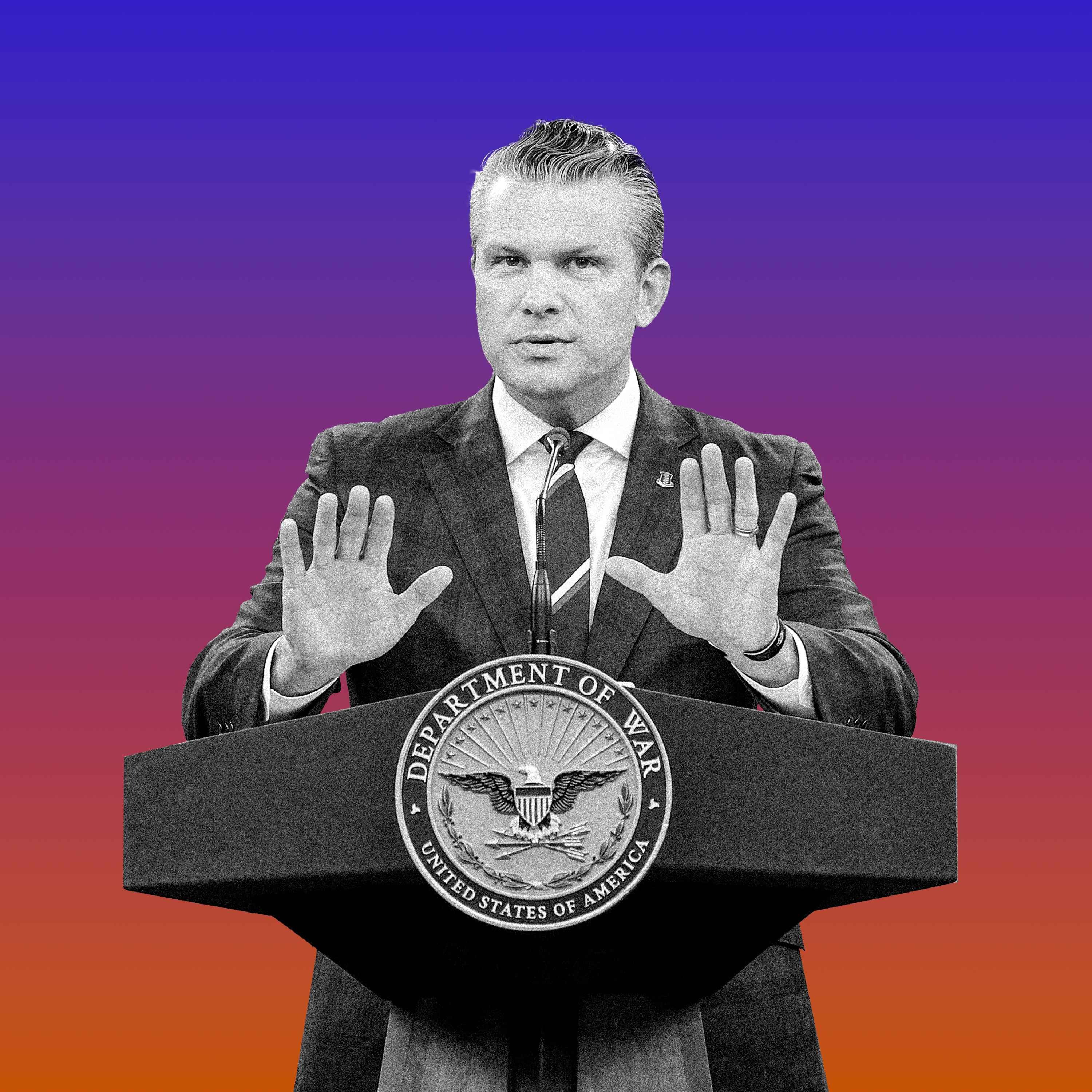
A federal judge paused the merger of Paramount and Warner Bros. Discovery. This may not have been a necessary step if the Department of Justice had taken its corporate enforcement mandate more seriously. But under this administration, a proven method has emerged to keep the government out of your business: make it personally profitable for Donald Trump.
Guest: Liz Oyer, Former U.S. Department of Justice Pardon Attorney
Want more What Next? Subscribe to Slate Plus to access ad-free listening to the whole What Next family and across all your favorite Slate podcasts. Subscribe today on Apple Podcasts by clicking “Try Free” at the top of our show page. Sign up now at slate.com/whatnextplus to get access wherever you listen.
Podcast production by Rob Gunther, Evan Campbell, Madeline Thames-Ducharme and Patrick Fort.
Paige Osburn is the senior supervising producer of What Next and What Next TBD.
Hosted on Acast. See acast.com/privacy for more information.