Ask ChatGPT
 What Next | Daily News and Analysis
23 Sep 2026 · 30m · 6 chapters
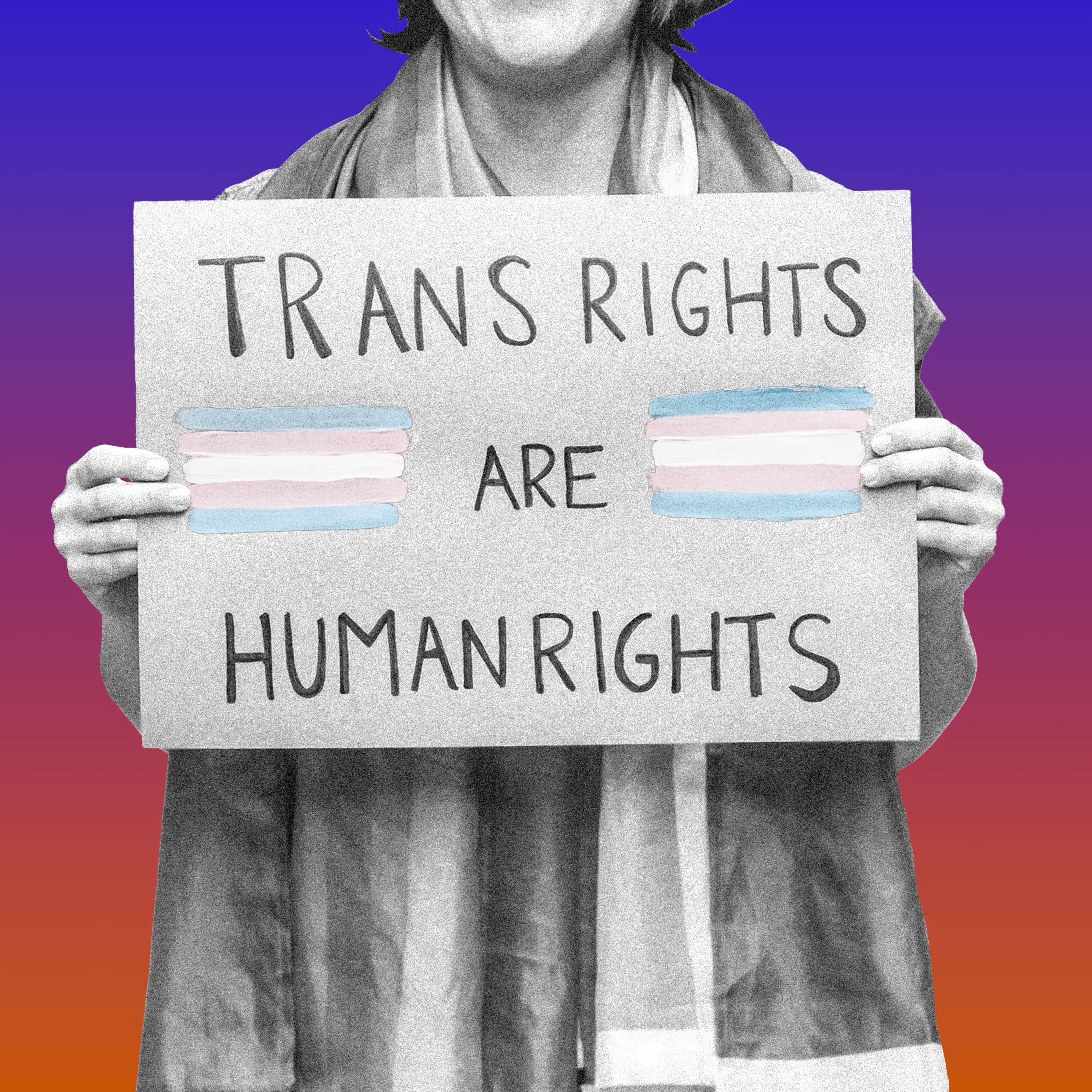
The episode analyzes how Democrats’ political messaging on “woke” culture-war issues is affecting trans civil rights, using Kansas as a concrete case study of exclusionary state policies.
M. Gessen is a Pulitzer Prize–winning New York Times opinion columnist and an expert on trans-rights debates, including trans people and politics/culture.
Kansas’s February law effectively “denationalizes” trans people by stripping everyday legal standing (driver’s licenses) and creating surveillance through bathroom enforcement. The episode argues these measures resemble fascist logic: making targeted people identifiable and vulnerable, with confusing requirements and random enforcement.
Kansas revokes driver’s licenses when gender markers change or don’t match sex assigned at birth; it also bans using bathrooms not aligned with birth sex and allows $1,000 bounties for lawsuits. Guests describe trans people avoiding bathrooms, a legislator’s clash with a breastfeeding woman, and a custodian receiving HR letters after being reported.
Written by AI. May contain mistakes.
Mary discusses AOC's comments and the implications for political discourse and trans rights.
“There was this moment back in the summer that we did not discuss enough on this show, especially given how much it has influenced political discourse.”
Discussing the impact of Kansas law on trans individuals and identity documentation.
“So I want to diagram this moment we're in right now when it comes to trans people's civil rights.”
Explore how denationalization affects trans individuals in Kansas and parallels to historical events.
“She wrote about how the destruction of European Jewry actually began with the denationalization of German Jews.”
Discuss the absence of conversations on trans children and sports within current narratives.
“there were a couple of groups of people you did not talk to.”
The conversation explores the political complexities surrounding trans issues, particularly focusing on children and how these issues are framed in public discourse.
“I would make that case, but it is harder than making the case for not excluding an entire group of adults from public life.”
The conversation explores the political complexities surrounding trans issues, particularly focusing on children and how these issues are framed in public discourse.
“Hey, it's Paige DeSorbo from Giggly Squad.”

Get the gist, explore an idea or ask about something said.
 Claude
On What Next | Daily News and Analysis, what are the key points of this episode?
Searching your listeningAutomatic transcript. May contain errors.
0:00Every restaurant wants to be busy. Most restaurants aren't ready for it. I'm Chef Mike from Detroit 75, and Toast helps us stay ready when the lunch rush hits. We prepare for lunch like we're preparing for battle. Orders are flying, tickets are stacking, and the guests should never fill the chaos. Toast keeps our team organized so we can serve more people, stay consistent, and keep growing. Visit toasttab.com to learn more. Pay testimonial from an actual Toast customer. Decisions made in Washington can affect your portfolio every day. But what policy changes should investors be watching? Listen to Washington Wise, an original podcast for investors from Charles Schwab, to hear the stories making news in Washington right now.
0:43Host Mike Townsend, Charles Schwab's Managing Director for Legislative and Regulatory Affairs, takes a nonpartisan look at the stories that matter most to investors, including policy initiatives for retirement savings, taxes and trade, inflation concerns, the Federal Reserve, and how regulatory developments can affect companies, sectors, and even the entire market. Mike and his guests offer their perspective on how policy changes could affect what you do with your portfolio. Download the latest episode and follow at schwab.com slash WashingtonWise or wherever you listen. Hey everyone, it's Mary, And I have a confession for you.
1:23Before I took this job hosting a daily news show, I really think I thought it was kind of glamorous, which it is in some ways. Like, I get to talk to really smart folks, elected officials. I get to press them when I think they're selling some BS. I get to follow my curiosity. But the thing I realized once I got going here at What Next is that a whole lot of my job, no matter who I'm talking to, is about you. It's about our listeners. When I'm writing questions, I'm thinking, what do you need to know? When I'm brainstorming a show, I'm wondering what conversation do you want or need to be having right now?
2:05And at this very moment, I'm thinking about you too. It is pledge drive season here at Slate. That means we are asking our listeners to join us and support the conversations, the ones we have every day. We're even offering you a deal, 50 % off yearly membership. You'll get ad-free listening here at What Next, plus all access to Slate.com. You'll even get these weekly episodes of the show where Lizzie and I get a little personal. We call it off the record. We talk about stuff you can only know if you're a member. So if all this sounds appealing to you, what you need to do is go on over to slate.com slash whatnextplus.
2:47That is slate.com slash whatnextplus. When you go to checkout, you just use the code whatnext50. That is whatnext50. You will pay that 59 bucks for a full year. And every time I write a question, just know I'll be thinking about you. because you made it possible. All right, join us. On to the show.
3:17There was this moment back in the summer that we did not discuss enough on this show, especially given how much it has influenced political discourse. This was back in August, an appearance on ABC by Congresswoman Alexandria Ocasio-Cortez. She's kind of doing a victory lap. And I'm very grateful, you know, that we now have a progressive movement that doesn't, that is in large enough numbers that, you know, it used to be that you could fit five people in a closet and that was the caucus. And now we've grown into quite a successful movement. But this whole 20-minute conversation has gotten telescoped down to what she said next.
3:59AOC was getting pressed on some of the more out there things her colleagues have tweeted about. And then she said this. And I have a local city councilman that has this saying, woke one was crazy. Woke one was crazy. And I think that what's important is that we have to assess what... It works because it's funny, right? It's also a phrase that sparked a million think pieces. First of all, because it is so broad. Like, what are we even talking about here? Defunding the police? Gender stuff? Who knows? But also, is the Congresswoman apologizing for that stuff? Waving a white flag? Some people heard AOC say this, and they breathed a sigh of relief.
4:50M. Gessen at the New York Times was not one of them. When you see politicians saying stuff like, woke one was crazy, does it bug you?
5:05M. Gessen: Yes.
5:09M is an expert in one particular corner of this woke one was crazy debate. The fight for trans rights. M's trans. They saw this discourse popping off a few weeks back and frankly, wondered what it meant for them. because they can see this strategic turn happening. I think there's a belief in much of the Democratic Party establishment that Trump's anti-trans ads cost Kamala Harris the election.
5:42M. Gessen: It's a belief that's very difficult to fact check. Reading those ads, and if you remember, the ads had this tiny clip of Kamala answering questions about the rights of transgender inmates in California prisons. For prisoners, every transgender inmate in the prison system would have access. Hell no, I don't want my taxpayer dollars going to that. Kamala supports transgender... And then it said Kamala is for they them. Kamala is for they them. President Trump is for you. And you now hear that same line in ads for other people. You can hear that in like a Senate race in Ohio. And we do know that those ads were enormously successful.
6:26Right.
6:28M. Gessen: But the question you have to ask is why were they so successful? Is it because people are really so opposed to somebody being for they them? Or is it that she looked so bad in that clip? In a way that she looked very bad on the campaign trail. And imagine that she answered, I was the Attorney General of California. I had a constitutional obligation to protect all inmates. And I made damn sure that every single person, whatever their personal gender identity, whatever their sexual orientation, whatever their background, whatever their disability status, was protected and received the proper medical care in the California prison system because that was my job.
7:19Yeah, that sounds much stronger.
7:21M. Gessen: That's not a usable clip.
7:27Nevertheless, this belief has spread so far that I think you do see a lot of Democratic politicians backpedaling in this moment. I think that some sort of two steps forward, one step back is normal in social change and cultural change. What we're seeing, though, is one step forward, three steps back. Today on the show, we're going to try to parse this moment, a moment when Democrats are building a case for themselves all over the country, but also run the risk of leaving some people behind, especially trans people. I'm Mary Harris. You're listening to What Next? Stick around.
8:33If you're still sleeping on cotton or satin, that could be the reason for frizzy hair, sleep creases, overheating, and even breakouts. Dermatologists actually recommend switching to silk because it's naturally cooling and much gentler on your skin and hair. That's exactly why over 3 million people have made the switch to Blissey. Blissey pillowcases are made from 100 % pure mulberry silk, the highest quality silk you can get. It's breathable, hypoallergenic, and surprisingly machine washable, so it's easy to care for. People love waking up with smoother hair, calmer skin, and no sleep lines. Plus, Blissey makes the perfect gift.
9:10And you can even complete the set with matching sleep masks, silk bonnets, and crease-preventing scrunchies. Blissey is offering 60 nights risk-free, plus 30 % off when you shop at blissey.com slash unwind. Your skin and hair will thank you. Standard size rugs shouldn't be the standard. Get a custom sized rug that actually fits with Ernesta. In as little as two weeks, Ernesta cuts, finishes, and delivers your rug straight to your door. No more awkward sizing. Just a designer quality rug made to work within your space perfectly the first time. Visit Ernesta.com to explore Ernesta's full range of custom sized rugs.
9:49And get$50 towards any style when you order five samples for only$10.
9:58So I want to diagram this moment we're in right now when it comes to trans people's civil rights. And I want to do it with you because I think Americans' concerns about trans people can get very abstract very quickly. And what I like about your work is that it's highly specific and concrete. And I think that's important right now. You went to Kansas to try to talk to trans people about how they're living their lives. And I just want you to start off for people who may not remember, why Kansas? Why did you want to go there in particular?
10:30M. Gessen: So I'll tell you why Kansas and then I'll tell you why I went, because there's actually two separate incidents. So Kansas passed a law in February of this year that overnight revoked the driver's licenses of people who had changed their gender marker or whose gender marker on his driver's license did not match their sex assigned at birth. And imagine living in the Great Plains and not having a valid driver's license. Pretty much impossible. Yeah. You need a car to go anywhere. Yeah. And that was widely reported in February when the law passed. And it struck me, you know, I think for Americans, driver's license is a very evocative object.
11:28The car is a very American object, first of all. The car is a very American object.
11:32M. Gessen: The driver's license is this thing that makes you an adult when you first get it. For people from other countries, the identity document is a very evocative object, right? When I talk to my Russian friends about Kansas, I can see them have a physical reaction to hearing that the people's main identity document became invalid overnight. Why? Because actually of all the reasons that apply to the United States too, but we just don't often think about it, it's very hard to be actually undocumented. The people we call undocumented are actually documented in the extreme, generally speaking. But it's very hard to move through the world without documents.
12:25You can't vote in Kansas. Kansas has one of the strictest voter ID laws in the country. That's a civil rights issue right there. You can't pick up your kid from school.
12:44M. Gessen: You can't enter a building with security. You can't buy alcohol. You can't enter a bar. You lose your world. You become excluded from the national community. You become worldless, as Hannah Arendt would say. But as a Russian, you also had this experience with identity documents where you realized how they could constrain you, too, right? Well, everybody's identity documents constrain you and give you rights, right? That's the tension. But if you don't have documents, you don't exist. And in Russia, we even have an expression for that, which is, without a piece of paper, you're a little bug. Bezbomashki te bukashki.
13:30M. Gessen: So, you know, that's what really struck me about the passage of that law. And at the time it was reported, and then six months later, people had sort of forgotten about it. But I have a book that's coming out with an academic press. And in the book, I make a passing reference to the denationalization of trans people. And denationalization is also a concept from Hannah Arendt. She wrote about how the destruction of European Jewry actually began with the denationalization of German Jews. Like first, they were forced out of public spaces. They were forced out of certain businesses. They couldn't own bicycles.
14:26M. Gessen: And then in 1935, German Jews were required to add a middle name to their identity documents. So women had to add Sarah and men had to add Israel to be identified as Jews. And she talked about it as denationalization. And the reason that I mentioned that it's academic press is because it had to go to a reader, right? And the reader sort of pointed out that line and said, well, that's an exaggeration. Trans people are not being denationalized. Not in a rent-in sense of the world. and I was like oh and this was like an incredibly friendly read and this person wasn't trying to invalidate anything and I thought okay this is somebody I have kind of an idea of who it is who is very much in the middle of the political conversation very well informed and they don't know that this is happening I need to go to Kansas and actually show what demationalization looks like.
15:34What did you find when you went there? Well, I found people who experienced it very much the way that my Russian friends flinching would indicate. People who didn't know whether they could still move through the world.
15:50M. Gessen: So there are two things, two provisions on that bill that are really scary. One is the driver's license, which I already mentioned. The other is bathrooms. So like many other bills around the country, this one makes it illegal to use the bathroom of sex not assigned at birth. But the Kansas bill, like the 2021 Texas abortion law, creates a bounty so that anyone can sue the person that they think is using the wrong bathroom for$1 ,000. dollars. Remember in Texas, the law allowed people who witnessed or thought they witnessed somebody who aided an abortion, you know, an Uber driver, a friend who helped somebody get to the abortion, nevermind doctor, nurse, et cetera.
16:48Yeah. An ex-boyfriend. An ex-boyfriend, whatever. Yeah.
16:52M. Gessen: To sue that person for$5 ,000. So that kind of law creates a system an incentive for watching other people, which was incredibly effective in Texas. Basically, abortions in Texas ended when that law passed, even though last I checked, no one had actually sued. And in Kansas, it creates an incentive for people to be watching other people to see if they're using the right bathroom. Were the people you spoke to feeling that? Oh, yes. How? Well, it's obviously an issue for trans women and for trans men in different ways. I think for trans women, going into the men's room is not really an option. It's too dangerous, right?
17:45M. Gessen: So they either avoid going to any kind of public bathroom, which, again, is something that takes you out of the world. or they hope to be able to rely on the kindness of strangers. Yeah, I mean, you spoke to a state legislator, Abby Boatman, who like there's one bathroom she can use. She like missed a vote at some point or some kind of point of discussion. She missed a house call. Yeah. And yeah. And she told me another story, which was in some ways even more poignant. And so there's like in the state legislature, in the state capitol, there's one old gender bathroom, which is also the lactation room.
18:26M. Gessen: Right. So there was one time that the room was occupied for a long time and she thought maybe the lock was stuck. So she asked security to open it. And they open and there's a woman breastfeeding. And Abby Boatman was like, well, great. Now you're like pitting a trans woman against a breastfeeding woman. Yeah. There was another person I spoke to who thought she worked in a supportive environment. She is a custodian in a university building. Everybody knows her. I mean, she cleans up after these people, right? And she's somebody who got originally a letter requiring that she change her driver's license.
19:09And then after we spoke the first time, like two days later, she got a second letter. And it was a letter from HR telling her that they had been informed that she had been using their own bathroom in violation of SB 244. So it makes you question everyone around you. It was a question for everyone around, right? And then there are trans men who go to the women's bathroom and basically explain, if they encounter anybody there, explain that they're following the law.
19:42M. Gessen: So, like, you know, imagine having to come out every time you have to pee. Yeah. I mean, there were so many things that stood out to me about your reporting here. one was the fact that even trans people who complied with this letter could find themselves in trouble so i think 1700 people about that many got this letter saying you need to change your driver's license you know you mentioned one person who complied immediately changed their driver's license back to their gender at birth then got pulled over for something presented their driver's license and the cop's like, why is this here? Why are you lying?
20:20And they're like, well, I'm complying with the law, actually. So it's like a trap. Yeah. And, you know, I don't think this trap is unintentional. And also it's a very interesting illustration of what the state's interest is in this case.
20:39M. Gessen: Generally speaking, and there's a scholar named Paisley Cora who does really good work on this, right? He writes about what the point of identity documents is. The point of identity documents is to make it easier for the representative of the state, whether it's a policeman or, you know, whoever, to make sure that you are who you say you are. The point of identity documents is not to establish the objective truth. it's to facilitate this interaction between the state and the individual. So the state actually has, under ordinary circumstances, a vested interest in making sure that the cop who stops you for speeding or, in that case, for not having your lights on in the rain, looking at you and looking at your identity document can match the two to each other.
21:36M. Gessen: So if the gender that they perceive, which in the case of that woman was clearly female, doesn't match the gender that's in the driver's license, that's a problem for the state. Unless the state's interest in identifying trans people supersedes its interest in just matching person to document, right? Right. And that's what Kansas has communicated to its trans people. We want you to be immediately identifiable, which is also the reason that I think that using the word fascism is right in this case, right? It's exactly what Nazi Germany communicated to Jews when it made them add the middle name or wear the yellow star.
22:21Yeah, I mean, you made this interesting choice in this article, which is very early in the article. You use the word fascism and you basically explain why. You're like, I'm going to use this word and it's going to feel hyperbolic. but I'm going to explain to you why it's not. And I thought it was very effective. And I wished more people in power would simply state the case the way that you did. Like not get worked up and like in a lather, but just be like, this is fascism. And let me explain why. Oh, yeah. I wish a lot of our political conversation were less vibes and more evidence. Yeah. Yeah.
23:03I mean, the other thing that was in this article that stood out to me was that a whole lot of trans people in Kansas had not gotten a letter from the state saying, change your documents, which was interesting to me because I didn't know how to see it. I didn't know and I'm sure that they didn't know how to see it either. Like, should I self-identify at the DMV and like take care of this so there's not trouble later? Or should I remain in my current state? And a number of people seem to have this question. To you, is that intentional too, like creating confusion? I don't think it's intentional, but it has the effect that fascist laws have.
23:46M. Gessen: Fascist laws create sort of random legal requirements aimed at particular groups that are being excluded from the political world. And then they also create random enforcement mechanisms. It doesn't really sound like law at all because it's not straightforward. It's not a rule. So because, again, the point of the law, right, is to exclude an entire group of people. The point of the law is not to do anything about driver's licenses. Nobody cares about driver's licenses. They care about exclusion. So the situation that's created, right, is people who haven't gotten the letter and sometimes go on the Kansas DMV website to check whether their driver's license is valid and find out that it's valid, don't know if they are quote-unquote legal.
24:43I mean, because actually they're not, right? The law says that if your gender market was changed, your driver's license is not valid. It's just because it comes up as valid on the Department of Motor Vehicles or whatever they call it in Kansas website doesn't mean that you're complying with the law.
25:04M. Gessen: But can you also go to the DMV and change your gender marker? Well, actually, you can't just willy-nilly change your gender marker. You have to have some documentation. So they're being forced to be in violation of the law. Exactly. That's how the exclusion works. We'll be right back after a quick break.
25:34This episode is brought to you by FreshBooks. Whether you just launched your service business or you've been at it for years, the money side has a way of pulling you from the work you actually love doing. FreshBooks changes that. FreshBooks makes the money side of your service-based business easy. You log your hours, you send a branded invoice, you get paid. and know your numbers instead of chasing them. Money in, money out, all in one place. No more juggling one app for clients, another for billing, plus a pile of spreadsheets and emails. FreshBooks is designed for how small business owners think about money, not how an accountant does.
26:09You don't need a financial background to use FreshBooks. It's simple on purpose. Most owners are up and running in minutes, not days. And if you need help, a real person is available on every plan. FreshBooks has been trusted by service businesses for over 20 years, helping over 500 ,000 owners and solopreneurs run their business confidently. Right now, my listeners can get FreshBooks for less than three bucks a month for your first four months. That is 90 % off. Head to freshbooks.com slash podcast to get started. That's 90 % off under three bucks a month for four months at freshbooks.com slash podcast.
26:51Hey, I'm running out to drop off a stack of letters and packages. Need anything shipped while I'm gone? Save the gas. Stamps.com lets you print postage and schedule pickups right from your desk. Sync your contacts into the address book, get detailed accounting insights, and get notified the moment your certified mail is delivered. All from my desk? All from your desk. Join the 4 million businesses using Stamps.com right now with code podcast and get your free welcome gift. Stamps.com code podcast. Taxes and fees apply.
27:23I noticed in your piece on Kansas, there were a couple of groups of people you did not talk to. And it stood out to me because so much of the public conversation about trans people involves these groups. I'm talking specifically about children. I'm talking specifically about people involved with sports. Why didn't you talk to people in those groups? Because it seemed like a choice to me. and an important choice?
27:49M. Gessen: It's a great question. I mean, I think that it's harder to make the case for gender-affirming care for minors. I would make that case, but it is harder than making the case for not excluding an entire group of adults from public life. and incidentally we exclude children from public life systematically which i also think we shouldn't um and and it's harder to make the case for sports i have written about trans people and sports and i will continue writing about trans people in sports and i think that that's uh that conversation is completely uh you know the the the people who've made it a political issue have not acted in good faith for one second.
28:40M. Gessen: And I think that some of the same issues are in play in the sports conversation because really the way that it affects high school athletes, middle school athletes, whoever, and that's the actual population that it affects, right? We're not talking about elite athletes. That's where this sleight of hand happens, is to exclude them from public life, to exclude them from public life from an early age. But here I wanted to focus on people whose belonging in the public should be uncontroversial. You know, just adults who are not in prison. Yeah. And, you know, it's interesting that you asked that question and I sort of feel compelled to defend that choice because another way to look at it is, well, look, When I write about some particular Jewish issue in the United States, nobody asks me why I'm not writing about all the other Jewish issues.
29:43M. Gessen: Trans people have a lot of different things happening to us. You know, I had a political strategist on my show a few days back, Sarah Longwell. She's gay. She's a former Republican. And I basically pressed her on this issue about whether strategists like her are willing to basically accept soft bigotry on trans issues, immigration issues, because they think they need to do so in order to win. And her point to me was that she thinks people need to be more patient with American politicians and Americans in general as they go through a big social change. Like basically don't force politicians to take a stance here if they don't have to.
30:24And I was just curious what you made of that take. you know I mean it sounds to me from your description that she didn't answer the question like yes it takes time for cultural change to take hold and yes it usually happens two
30:42M. Gessen: step forward one step back and yes I should you know we should absolutely be willing to talk to people who are potential allies but haven't gotten all the way there and that And that to me applies to people who are okay with trans adults, but have the heebie-jeebies when it comes to trans kids. And it also applies to people who were ardent Zionists three years ago and have come to doubt their Zionism, but think the only problem is Netanyahu, right? These are positions that are very, very far from my own political beliefs. But I think it's important to talk to people as they make their way out of their political comfort zone or their cultural comfort zone.
31:39But that's not the question you ask, is it?
31:43M. Gessen: I think the question you were asking is, is a lack of clarity on major cultural issues, whether or not they deserve to do major cultural issues, is that lack of clarity a viable political strategy? And it's not. It never is. To me, it all broke down because the people being targeted now are often children, like literally the most vulnerable. And I'm like, I just, but I did feel myself getting stuck in the like, I just think this is wrong. And I was like, that's what I got here. Yeah. And I think that I just think this is wrong. It's not unique to you. Even people who, again, have the heebie-jeebies when it comes to kids, which is what makes this such a powerful political tool, they think there's a right and wrong here.
32:50M. Gessen: And dealing with politicians who will not say that there's a right and wrong is really unsettling, right? Yeah. We expect leadership from politicians. And if the right has succeeded in making trans kids, trans adults, trans athletes into political issues, then you have to take a stand on that. Yeah. Em, I'm really grateful for your time and for a little extra time, too. Thanks for coming on the show. Thank you for having me. Em Gessen is a Pulitzer Prize-winning opinion columnist for The New York Times. And that's our show. What Next is produced by Evan Campbell, Madeline Thames-Ducharm, and Patrick Fort.
33:39Paige Osborne is the senior supervising producer of What Next and What Next TBD. Mia Lobel is the executive producer of podcast here at Slate. Ben Richmond is the Senior Director of Podcast Operations and I'm Mary Harris you can go track me down on Blue Sky I'm at Mary Harris thanks for listening catch you back here next time
34:19Hey, it's Paige DeSorbo from Giggly Squad. Everyone is always looking for a new way to make some extra cash. But sometimes the easiest place to start is your own closet. With a little help from Depop. Think about how many clothes you have that you love, but you just don't wear anymore. On Depop, it's quick and easy to list those pieces. There's no selling fees. And suddenly those clothes have a chance to find someone who actually wants them. And the best part? You're making room for whatever you're into next. Make money on Depop with no selling fees and find what you want for less. This message is brought to you by Depop.
34:51There's one thing that will forever change the way you sleep, and it's the softest 100 % organic cotton bedding from Bowl & Branch. You'll fall asleep faster, wrapped in the most luxurious comfort. You'll never sleep hot again with airy blankets, cloud-like duvets, and breathable sheets. You'll experience pure comfort on night one and feel your bedding get softer with every wash. Discover the difference with 15 % off your first order at bowlandbranch.com with code BUTTERY. Exclusions apply. See site for details.
Trans rights have become something that’s argued about in the abstract—are Democrats too far out on a limb defending them? Did they cost the Democrats 2024? Should they be more moderate in 2026? But the real-world effects of changing laws are anything but abstract, affecting the basics of public life like your ID and whether you can use the bathroom.
Guest: M Gessen, opinion columnist for the New York Times.
Want more What Next? Subscribe to Slate Plus to access ad-free listening to the whole What Next family and across all your favorite Slate podcasts. Subscribe today on Apple Podcasts by clicking “Try Free” at the top of our show page. Sign up now at slate.com/whatnextplus to get access wherever you listen.
Podcast production by Evan Campbell, Madeline Thames-Ducharme and Patrick Fort.
Paige Osburn is the senior supervising producer of What Next and What Next TBD.
Hosted on Acast. See acast.com/privacy for more information.