 Ask ChatGPT
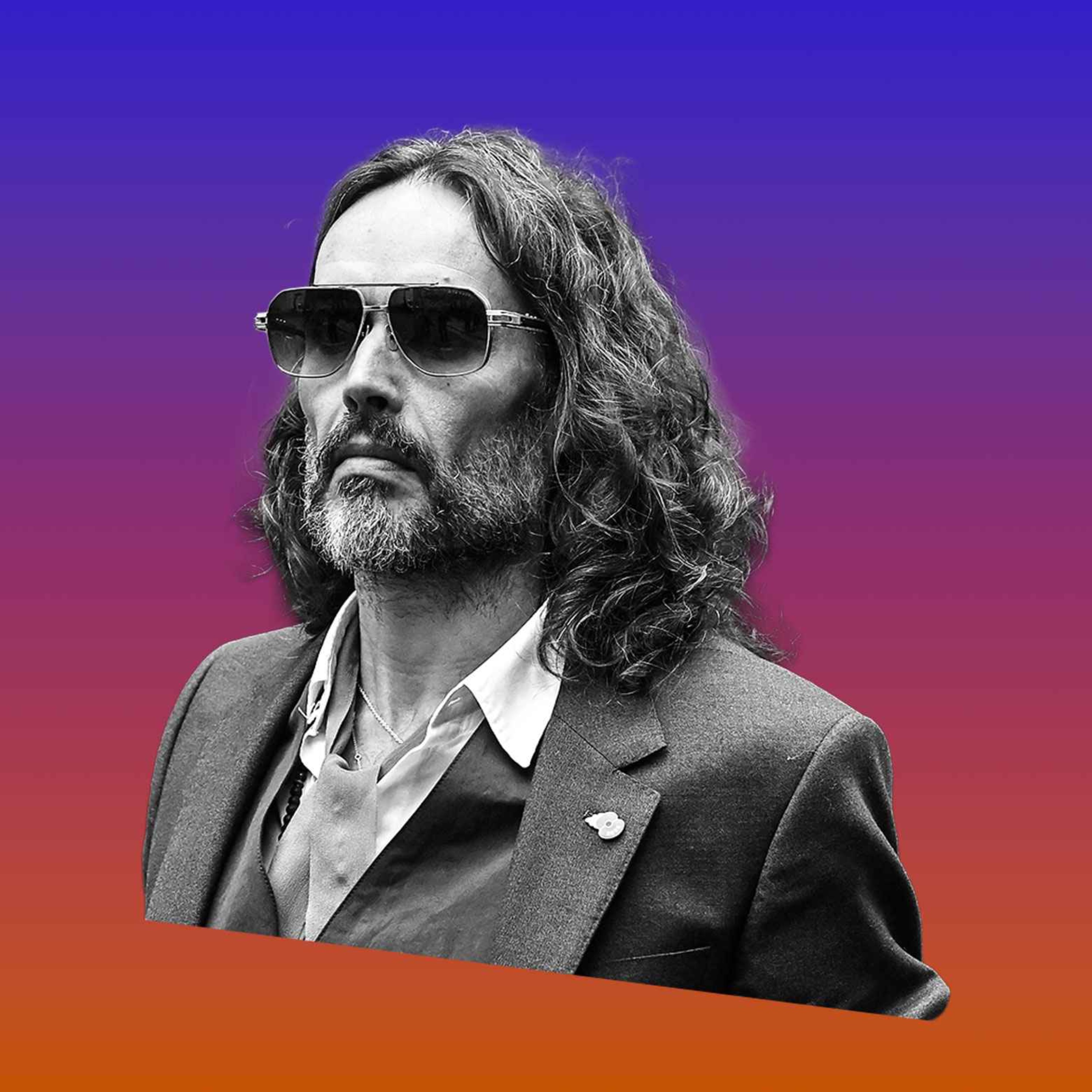

Alex Gibney’s four-hour documentary “Musk” and the making of a “terrifying portrait” of Elon Musk—how mythmaking, credit-claiming, and “con” tactics helped him gain power, plus the film’s use of a simulated interview and video-game style to put viewers “inside his head.”
Alex Gibney (Oscar-winning documentarian; previously covered Enron, Scientology, Elizabeth Holmes). Lizzie O’Leary (host/interviewer). Also referenced: Siobhan Zillis (Musk’s partner; posted breakup on X), Justine Musk (first wife), Ashley St. Clair, Claire Boucher (Grimes), Martin Eberhard, Jim Cantrell, Ed Niedermeyer, Brett Schreiber (lawyer), Katie Drummond (Wired), Sam Harris, Zoe Schiffer (book author), Lawrence Fossey.
Musk’s confidence becomes “gaslighting”; Tesla founder credit was seized via lawsuit; battery-swap demos were a “magician trick” used to win California incentives; autopilot failures led to deaths (67 cited), with data allegedly hidden; Musk’s power persists because institutions and investors enable “belief” like religion.
Benavides crash (Nybel Benavides killed); USAID “woodchipper” remark; Tesla battery-swap station investigation found no swaps; SpaceX launch success; Musk’s X posts and alleged racism; NDA “legion of children” arrangement.
Written by AI. May contain mistakes.
Discussion on Alex Gibney's documentary about Elon Musk and its implications.
“A movie made by Alex Gibney, the Oscar-winning documentarian who has covered torture, Scientology, and Enron.”
Alex Gibney discusses the challenging aspects of portraying Elon Musk in film.
“And so I knew most of the major plot points in this movie, but going and seeing it, sitting there for four hours, I walked out and I sent my husband a text.”
Explore the creative choices behind the portrayal of Elon Musk in the film.
“And also we chose a look for him, which I find, which frankly I think makes him look pretty good.”
Discussion on the controversy surrounding Elon Musk's role as Tesla's founder.
“I think there are two kind of big themes here.”
Examine the serious implications of Tesla's autopilot technology, including accidents.
“And that is one thing when it comes to typing things on X, right, that aren't true.”
Discussion on Elon Musk's influence on the stock market and public perception.
“SpaceX, because of the rules that were relaxed at Elon's behest, you know, SpaceX is in a lot of people's index funds.”
Exploration of Elon Musk's upbringing, beliefs, and evolving political affiliations.
“And that's where Lawrence Fossey, a sort of skeptic, says this wasn't investing.”
Discussion on Elon Musk's relationships, control over women, and power dynamics.
“Repeat users more than one pay later purchase in the past year.”
Explore how Elon Musk manipulates psychological and systemic flaws for personal gain.
“And also, you know, let's be honest about our legal system is as much as the judiciary writ large has been a check on some of the abuses in this current Trump administration.”
Learn about the production team behind the show and hear the host's closing remarks.
“Alex Gibney, thank you so much for talking with me.”

Get the gist, explore an idea or ask about something said.
 Claude
On What Next | Daily News and Analysis, what are the key points of this episode?
Searching your listeningAutomatic transcript. May contain errors.
0:00Think of a toilet as just an everyday object. Your entire perspective shifts the moment you experience a Kohler smart toilet. Design changes everything, transforming a basic routine into something extraordinary. With standout aesthetics and intuitive controls, these are functional works of art. Stunning design that never sacrifices performance. Enjoy customizable features for elevated comfort and convenience. It's more than a fixture. It's a cleaner routine and a more refined space. Experience the difference of Kohler smart toilets. Find more at Kohler.com.
0:39Stripe is built for whatever comes next, because as your business scales, so does the complexity of fraud. New customers, new markets, new AI-driven attack patterns. Stripe Radar protects your business as it scales with the scale of the Stripe network. The more payments Stripe sees, the smarter its AI gets at detecting those patterns as they emerge. Stripe's network is so vast, it has seen$1.9 trillion in payment volume across millions of global businesses. In fact, when a card is used, there's a 92 % chance the Stripe network has seen it before. All of this means fraudulent patterns across payments, accounts, and customer abuse can be detected, flagged, or blocked easier.
1:22Based on the rules you set up, of course. Blocking bad actors, welcoming good customers, keeping more of your revenue, your revenue. Learn more about fighting fraud with Stripe at stripe.com slash radar. Hey guys, it's Lizzie. So funny story. I was puttering around my house the other day and I suddenly heard Dahlia Lithwick's voice coming from the bathroom. I've heard John Dickerson in there too. And sometimes Mary Harris. It's all pretty weird. And the reason that all my colleagues are in the bathroom is that it turns out my husband listens to Slate Podcasts in the shower. He is, of course, a Slate Plus member, so he gets all his shows at free.
2:07You too can have this opportunity because right now we have a super cool offer where you can get a year of Slate Plus for half off. That's just 59 bucks for the year. So go to slate.com slash tbdplus to sign up and use the promo code TBD50. With Slate Plus, you too can confuse your spouse by having Slate hosts in the bathroom. Okay, here's the show.
2:35Last week, I went to a small screening room in midtown Manhattan to watch a movie. A movie made by Alex Gibney, the Oscar-winning documentarian who has covered torture, Scientology, and Enron. This project is a four-hour documentary about Elon Musk. One of the odds that we're in base reality, like we're in a simulation. Give it up for the greatest capitalist in history. Elon does not like this movie, does not want you to see it, and he's called it a hit piece. But while I was in the theater, a curious thing happened. Musk's partner, Siobhan Zillis, mother of at least four of his kids, announced their breakup on X.
3:26She posted, it's hard to go from being in love to let go in a week with no warning. But that's just how it is sometimes. And when I sat down with Gibney, I really wanted to know whether this post surprised him. I wasn't surprised. I mean, there comes a moment with Elon, seemingly, where he no longer finds women useful to him. And then it's over. The pattern kind of eerily repeated itself. You know, the pattern that I observed, you know, in terms of talking to or, you know, talking to people around Justine Musk, his first wife. Claire Boucher, Grimes, and Ashley St. Clair. So, you know, there's a pattern there.
4:10And he's charming, effusive, generous, good listener, you know, during the courting period. And then seemingly they have his kids and things change. You could have made a documentary that was all about his businesses, his work with federal government, all of these things. and yet you spend a lot of time with the women. And to me, watching that as someone who's covered him for quite a long time, it sort of felt like a skeleton key to understanding him. I agree. Did it feel that way in the process making this movie? It did. And I would say that the first skeleton key and the most important was Justine when I was talking to her about him because, you know, there are certain aspects in terms of the understanding the business that I understood from previous films I had done about Enron, Elizabeth Holmes, Steve James.
5:08Now, Justine was fascinated. One of the reasons she agreed to talk to me, she was fascinated with Elizabeth Holmes. And I would later learn why, because she was really interested in her ability to gaslight people. and there were two things that Justine said to me that really put me on track in terms of understanding Elon Musk in a sort of a deeper way and also understanding both his business and his politics and the first one was you know I asked her when she first fell in love with him what was it about him that she found so compelling and she said well he was so enormously confident and not just confident in a kind of braggadocious way like, you know, swagger, big dick on campus, whatever.
5:52It was more like a guy who really convinced you that he could move mountains, that there was something behind that confidence. It's just relentless. And then the other thing was, as soon as they got married, she learned the term gaslighting, which she hadn't really understood before. And that Elon Musk, with his confidence, would come to her and try to convince her that stuff she knew to be true wasn't true at all, and that she was crazy for thinking it was true. It became an obsession for him to try to bend reality to his mind. And that was really a deep insight. Today on the show, Alex Gibney turned his lens on Elon Musk.
6:36The result is a terrifying portrait of Musk's rise and our own complicity in letting it happen. I'm Lizzie O 'Leary, and this is What Next TBD, a show about technology, power, and how the future will be determined. Stick around.
6:56Stripe is built for whatever comes next, because as your business scales, so does the complexity of fraud. New customers, new markets, new AI-driven attack patterns. Stripe Radar protects your business as it scales with the scale of the Stripe network. The more payments Stripe sees, the smarter its AI gets at detecting those patterns as they emerge. Stripe's network is so vast, it has seen$1.9 trillion in payment volume across millions of global businesses. In fact, when a card is used, there's a 92 % chance the Stripe network has seen it before. All of this means fraudulent patterns across payments, accounts, and customer abuse can be detected, flagged, or blocked easier.
7:39Based on the rules you set up, of course. Blocking bad actors, welcoming good customers, keeping more of your revenue, your revenue. Learn more about fighting fraud with Stripe at stripe.com slash radar.
7:57Think of a toilet as just an everyday object? Your entire perspective shifts the moment you experience a Kohler Smart Toilet. Design changes everything, transforming a basic routine into something extraordinary. With standout aesthetics and intuitive controls, these are functional works of art. Stunning design that never sacrifices performance. Enjoy customizable features for elevated comfort and convenience. It's more than a fixture. It's a cleaner routine and a more refined space. Experience the difference of Kohler Smart Toilets. Find more at Kohler.com. Your call has been forwarded to an automatic voice message system.
8:37A missed call doesn't feel like anything. No red flag, no notifications screaming at you. It just disappears into your call log. And nine times out of ten, that was someone ready to hand you money. That's why today's episode is brought to you by Quo, spelled Q-U-O. The business phone system built so you never miss a call. Here's what I like about it. All your calls, texts, and voicemails live in one place, so anyone on your team can pick up a conversation, see the full history, and respond fast. No more, wait, who talked to this customer last? And if you're worried about after-hours leads slipping through, Quo's optional built-in AI agent can answer questions and even book appointments while your team's offline.
9:18It's the number one rated business phone system on G2, and over 90 ,000 businesses already trust it to stay reachable. Money is on the line. Always say hello with Quo. Try Quo for free. Plus get 20 % off your first six months when you go to Quo.com slash tech. That's Q-U-O dot com slash tech. I have been covering Elon for probably seven years at this point. And so I knew most of the major plot points in this movie, but going and seeing it, sitting there for four hours, I walked out and I sent my husband a text. I said, I feel like I've been punched in the face for four hours. I'm sorry. I'm sorry for that.
9:57Did you intend this to be a little traumatizing? Well, it is traumatizing because he is a traumatizing figure. And also, to some extent, in certain narrative, thematic and formal ways, I'm trying to put ourselves inside his head. Yeah. And we're going to talk about some of the filmmaking choices. Sure. And one of them is, say, you know, first person shooter games where it relates to actual human beings. And that was a that is traumatizing in some way because that's not funny, really. But there is an aspect of it that that goes directly to his character where he thought he finds it funny. You know, when he destroyed USAID, he said, I spent the weekend putting USAID in the woodchipper.
10:46But to understand it and to some extent, you know, this, again, some of my previous films had kind of prepared me for this kind of behavior because Musk, I don't think, is unique in this. You know, in Enron, you know, I uncovered all these audio tape recordings of the Enron traders who brought down the electricity grid of California. and their business character was to be, you know, ruthless sharks and to joke about the suffering that they were causing, that that became a kind of business ethic of theirs. You know, whereas inside their communities, some of them were very decent folks, but they felt that they had to be big, bad wolves.
11:28So I can understand how it would be somewhat traumatizing. and a lot of it goes to a dark place. So I was also trying to engage with some of the, I don't know, I hope at least you found, you know, Catch-22 is a pretty dark novel, but there are some laughs. You have this sort of video game, I mean, you described the first person shooter, but it's sort of like their video game graphics. You engage with the fact that Elon has talked about maybe the world as a simulation. why choose that as your device in because you could have gone like straight narrative documentary I could have but it didn't seem appropriate for this character for a couple of reasons I mean first of all you know I'm making a film about Elon Musk and the first thing I did was to reach out to him and we had a way into him but he responded by insulting me on x yes he called you a douche I think.
12:24Right. And then I responded, Duche. And that was the last time I heard from him. So, you know, normally in a film like this with a central subject, you hope that you're going to have a chance to have that deep, extended interview that will reveal something about the character. That wasn't going to happen. But at the same time, I still wanted it to happen. And then I kept being intrigued by coming over and over and over again, this obsession he has with being inside a, that we're all living inside a simulation. And that kind of gave me the cue to do a simulated interview in which we're playing in his, what is it Justine says his mind is a dangerous neighborhood?
13:11We're playing in his dangerous neighborhood, which gets at not only his character and in some ways, you know, the way we purposefully set the simulated interview, he's looking directly at us. So you used AI to build a version of him? Everything he says are actual words that he said, that is to say audio recordings of his voice. So the voice is not confected. It's not generated by AI. There are actual quotes from him. And then with our designers in LA, Makemake, we sort of created a set. We decided what our camera angle was going to be. We had a head-on, a side angle, and then we gave him a leather jacket.
13:56We sat him in a gamer chair. These were all choices we made. They weren't sort of like press the genre of AI and see what happens. And also we chose a look for him, which I find, which frankly I think makes him look pretty good. As the director of the movie, I want my star to look good. So we did all that, and then the AI tools come in in terms of the syncing. We had to make the avatar speak, and in order to create that kind of real, unreal feeling, and even to get involved in sort of that peculiar transference that takes place within LLM, we needed the character to speak, that is to say, the words to sync with the audio that we were using.
14:42But, you know, when you look back at the archival footage of Elon that you have in there, thinning hair, weaker jaw, hunched guy, totally different physique. It is clear that he has done some things to himself to embody this persona. But your version of him is hotter. Why did you make him more attractive? Well, I'm the director and he's my star. Of course, he's got to look good. But aren't you contributing to the mythos? Well, it's playing with the mythos is what I would say, you know, because he is a myth maker. So I'm playing with that idea. And all of the formal choices we made in terms of the video game and this character who's looking directly at you in a way that Elon doesn't often do.
15:30Very often, you know, people who tell me they're having conversations with him, he's looking here, he's looking there. He's not really looking at you. I wanted him to look directly at us. So I'm playing with the myth in ways that I hoped would be provocative. They are. I think there are two kind of big themes here. One is the sort of myth of self, right? The creation of that, the cruelty in there. And the other is the arc of what I think one could say is a con. And this is where I want to spend some time with Tesla because you really see this demonstrated in two big threads in the Tesla section.
16:10the interviews with Martin Eberhard and Elon getting himself declared the founder of Tesla. Yep. And then the battery swap technology piece of this. So let's start with the founder part. What do you feel like you saw in those moments? Well, we can agree that virtually every CEO is a credit grabber. Sure. So, OK, he's a credit grabber. But he went one step or two or three or five steps way further than that. When he had a big disagreement with Martin Eberhard and fired him, Martin Eberhard, who was the founder, both in terms of the technology and also the business plan of Tesla. He was the guy who had the idea that you start at the top of the market and then with a luxury product and then work your way down.
17:05When he fired him, he was refusing to give Martin Eberhardt what he felt he was owed. So there was a lawsuit that ensued, and the lawsuit was only settled when Martin Eberhardt would agree to say that Elon was what he wasn't, which was the founder of Tesla. Now, to go that far, to insist on that in a lawsuit in order to have it be official in some way, shape or form that what you are, what you weren't, seemed really interesting to me and part of a larger myth-making thing, which is not only myth-making in a sort of a grand sense, but in Silicon Valley, it's a real economic equation. Right. Are you the founder?
17:51Are you the founder? And to the founder goes all the spoils. It had a double utility. One, it enriched him personally, but it also allowed him to take on this appearance of sort of a Leonardo da Vinci character. He became the inventor as opposed to the investor, which is what he was. Do you think he's any good at engineering? So that was the subject of a lot of my inquiry. And, you know, you hear Jim Cantrell, who was with him at the beginning of SpaceX, and he says, and Jim says he's a damn good engineer, but he's not a trained engineer. So that gives you some sense. I mean, I do think Elon did read and he had the capacity to talk to engineers in a way that maybe many CEOs don't.
18:35But I also talked to people at Tesla when I said, is Elon a good engineer? They laughed out loud. Just as people, you know, when he took over Twitter, you know, he went and said, I'm a good coder. And they were like, dude, you are so not a good coder and you know nothing about our computer language. So what are you talking about? So, you know, I think there's a lot of fake. But just as he says he's a good gamer and he has other people play his games. Yeah, he cheats or he has other people play his games for him and he takes credit. So it's a classic Oz-like creation of this extraordinary person who becomes the leading man in Walter Isaacson's book.
19:20Let's talk about the battery swap technology because it's such a like eye-glazing sounding thing. And yet it allowed Tesla to really change its financial picture. Can you explain it? Sure. So it's not an easy thing to put into a movie, but it ends up being sort of this magician trick, which is a kind of a classic con. It's like watch me pull a rabbit out of my hat kind of thing. So what it is is, you know, the state of California said that they were going to give tremendous financial incentives if you could prove that you could massively improve the range of electric cars. The range is a big issue for electric cars because the first person somebody who drives a gas car will ask you if you're an electric car owner, as I am, is, well, aren't you worried about the range?
20:10OK. So then he has this huge demonstration. It's a big stage. And a BMW pulls up to a gas pump. And they start to pump the gas. And then a Tesla goes over this mysterious platform that we don't know anything about. And in theory, what they're doing is they're swapping out the battery in less time than it takes to fill up a gas tank. Right. And they're split screens. They're racing. That's right. They're racing. And indeed, they do two battery swaps while they're filling up the one BMW. You know, that's supposed to be there. But you never really see what's going on beneath. And he treats it as if he's solved the biggest problem that electric cars have, which is range.
20:52because now you can just pull into a gas station, swap out your battery. Now, if anybody were to really think about it, a Tesla battery weighs 1 ,000 pounds, and it's covered with sealant and all this other stuff coming out of the factory. So the idea that you're going to go someplace and swap it is, you know, fantastical, almost like going to Mars. But then he says, okay, but we're really going to do it. And then they set up these battery swap stations, and an enterprising reporter named Ed Niedermeyer just went out to see the station. And they're there. They have the garages. They have the hydraulic lifts.
21:29They have the batteries. But not one swap was done. Yet all they had to do to the state of California was to prove that they could do it once. And California gave them bucket loads of money for that. When California saw that it was a kind of reward hack, they changed the rules to show that you really did have to do it. And then Musk claimed, which was the most outrageous thing of all, that the customers just didn't want it. The customers just didn't want the solution to the fundamental problem of electric cars. So it was a fantastic con. And kept Tesla functioning. It did. It did. Because at a time when they desperately needed those government credits, it kept Tesla alive.
22:15And that was, you know, to some extent you can sort of see, you know, with an impish grin, like, isn't this kind of cool? Like the guy's doing anything he can. He's shucking and jiving to keep his company alive, take on the big three. But at the same time, he's engaging in larger and larger and larger elements of what you might call fraud. Well, when you talk to Sam Harris in the interview, he says, I think he's gone from being a liar, someone who has to keep track of the truth, to being a bullshitter, where you just make stuff up and kind of through the force of your personality, make it so. And that is one thing when it comes to typing things on X, right, that aren't true.
22:57That is another thing entirely when you are talking about technology that kills people. And in this movie, you see someone die. Correct. Tell me about the Vin Vides crash and why it is so important to understanding autopilot. So autopilot, which is— It's cruise control. It's cruise control, basically, because it's designated a kind of level two driver assist program. Level four is where you're really talking about autonomous driving. The idea was you're supposed to be able to just sit in the driver's seat and play video games if you want to. In fact, he goes on Joe Rogan, he meaning Musk, goes on Joe Rogan and basically says, here's the default for how you play video games and foil the technology we put in to say that you're supposed to keep your hands on the wheel.
23:51The Benavides case was something we ran across where somebody died, and the person who died was a woman named Nybel Benavides who wasn't driving a Tesla. She happened to be at the side of the road gazing up at the stars. But somebody was driving at a pretty fast clip and dropped his phone, and he thought, well, I've got full self-driving. I'm just going to go grab my phone while the car drives itself. And then the car drives itself right through a red light, right through a barrier, right in, sadly, to Nybel Benavides and kills her. and the sequence in the film chronicles not only how Tesla's faulty autopilot was responsible for that but in the investigation of it Tesla very consciously, according to the lawyer Brett Schreiber, really tried hard to hide the data that showed that full stop driving was at fault And in this case, I think they were able to succeed legally as many of the cases because 67 people have died as a result of – that's a lot of people.
25:0167 people have died as a result of autopilot issues. In this case, the lawyer was able to prosecute it quite effectively because the victim was a pedestrian. The victim hadn't signed any kind of Tesla contract agreeing to arbitration or any of those other things that so much of industrial America insists that consumers sign. And so they were able to take it and won a rather massive claim against Tesla. I feel like that is a big emotional, difficult moment in the film. But then there's also these emotional high points when, for example, SpaceX is finally able to get their fourth launch off the ground.
25:43And one of the things you did in here, which I found very fascinating, is I found myself rooting for them to succeed. I did too. And I think that's part of the myth. I mean, part of the myth is that it's reality. It's what makes Elon Musk different from Elizabeth Holmes. There's real technology here. And I think, you know, this is the progression of somebody. And one of the things that I suggest in the film is that he accreted as he accreted more and more power, he became more and more reckless and more willing to risk the lives of others. Doge probably being an extension of that. Doge and particularly the killing of USAID, which is kind of like in the film, if you think 67 people died as a result of autopilot, by the time he gets to Doge and the sudden shutdown of USAID, now we're talking about a body count in the hundreds of thousands of children.
26:39So, yeah, it's potent. You know, one of the things about SpaceX now that it has IPO'd, right, it is wound into the markets, into people's retirement accounts. If you own index funds, you may own a slice of some of Elon's company in your retirement account. And there's something that Katie Drummond from Wired says in here, which is that he has the control. It's too late for anyone to realize that he didn't earn it. And I wonder if you think about what it would take to unwind the kind of tentacles of Elon Musk. It's a really good question and kind of a scary one because, as you point out correctly with SpaceX, SpaceX, because of the rules that were relaxed at Elon's behest, you know, SpaceX is in a lot of people's index funds.
27:29And the stock is staying relatively high. Everyone thought it was going to crater. It didn't. even though if you look at its economic fundamentals, there's no reason it should be as high as it is. Same thing with Tesla. Tesla is like, I think, number 16 in terms of automobiles sold worldwide, just right around BMW. But its evaluation in terms of stock is greater than all car companies on planet Earth combined. So how does that happen? How does that meme stock stay at that meme level? And when Katie Drummond says he didn't really earn it, she's talking about a guy who's sort of manufactured value through the creation of belief in some mythical future embodied by a meme-like character like Elon, who he has created.
28:22And that's where Lawrence Fossey, a sort of skeptic, says this wasn't investing. This was more like religion. In creating that myth, you, you know, spend some time with the trauma that was his childhood, right? Talk to his father. I am curious, though, it did not feel like you spent a lot of time interrogating what it meant to be a white South African. Like the racism is often in the background or you put images of his racist posts up, but it didn't feel like you were deeply interrogating that. Why? I felt like I showed it. I talked about it. There's elements of it you can kind of hear in the background with Errol Musk.
29:10But I didn't want to create a simple cause and effect and say, well, he came from South Africa, apartheid South Africa, and therefore he's a racist. It just kind of seemed too simple. But I do think it's part of the toxic stew that led him to a kind of virulent racism, a virulent racism, by the way, which comes out late in the game for him. When he is part of the Obama crowd, the racist posts aren't in evidence. But he's a guy who deeply needs to be loved. And once he starts to surround himself with MAGA figures, lo and behold, he starts to evidence all of these kind of MAGA traits, including the racism.
29:59So I felt it wasn't as simple as simply saying he's South African. It was a bigger and weirder sort of toxic stew that's a kind of mix of being part of a club, which is a toxic club, a kind of human psychology and other stuff. But we had it in, but I didn't want to make it the only reason that he might have ended up being a racist. You know, with the sort of hewing to MAGA, I wonder where you think he found the connection with them. Is it just about this administration was not going to investigate my companies that a Harris administration would have? Is it about being able to create Doge and essentially make a data lake within federal agencies?
30:47Or is it about belief? And like, can you tease those things out? Well, I don't think he has a kind of deeply sophisticated political belief system like, say, Peter Thiel does. I mean, I think he has certain libertarian instincts. But I do think he's a man who wants to live a life without constraints. And things first start to turn for him during COVID. And I'm not talking about late COVID where people are arguing about should kids be kept out of school any longer. I'm talking about early COVID, like March, April 2020, where he's poo-pooing the whole idea. And why is he poo-pooing the whole idea?
31:26Because it's getting in the way of his factory, which is his factory. Like, out of sight, out of mind, is the risk of the workers who have to go to that factory and might get COVID. And we don't know at that point in time what kind of risk that poses for them. So it starts to go there. And not long after that, he moves his center of operations from California to Texas, a much more business friendly state, i.e. pay to play. And then we start to see some of his belief systems start to change. You know, he does have this personal issue, you know, where he feels that his then son, Xavier, transitions to a woman, Vivian Jenna Wilson.
32:15He says and he says outwardly, my son is dead, which I found kind of an appalling thing to say, considering his first child did, in fact, die of SIDS. And and Jenna, who's a very vital and dynamic person, is still living and very much with us. So there's that. But I do think that and I think there's the comfort of being in a group like having been called out during covid by some of his liberal friends. Now he's like, oh, this is this new group because he's starting to support Republican candidates in 2022. Secretly. Yes. Because he's not coming out of front, but secretly supporting them. And he was briefly in 2024 a DeSantis supporter.
33:01And Ashley tells him he's not going anywhere to Santa. So forget about it. And then when Trump is nearly assassinated. He goes all in for Trump. But at that point, I think. it became extremely practical because he made a lot of money. He was miffed by being left out of this economic summit during the, or this summit for electric car manufacturers during the Biden administration. But he made a lot of money during the Biden administration. But I think that he saw existential threat for him and his companies coming with a Harris administration. And he knew Trump was the most, was going to be the most transactional president in history.
33:43We'll be right back after a quick break.
34:13Alex Gibney: out and checking out comes down to the last few clicks. PayPal checkout is a trusted conversion engine fueled by 400 million active PayPal and Venmo accounts. Add pay later and turn holiday shoppers into regulars. 96 % of pay later shoppers are repeat users. PayPal is built for all business. Get started at paypal.com slash business. Disclaimer, PayPal pay later data, eight markets, March 2025 to February 2026. Repeat users more than one pay later purchase in the past year. We got to talk about Ashley Sinclair. Those interviews are incredible. And she details a whole system that exists to kind of rein in the women.
35:01Right. NDAs, lots of money. That's right. What's going on there? Well, it's this peculiar need to control and to control everything and to control the lives of the women who bear his children. It has that kind of, yeah, it has that kind of uncomfortable science fiction quality about it. You know, the Handmaid's Tale vibe to some extent. But also he's obsessed with spreading his seed, with having as many children as possible. But what I found peculiar and really interesting about what Ashley Sinclair brings up is that, you know, he pursues her, woos her. Ultimately, she decides to have a child with him.
35:59As soon as she has the child, she gets this NDA, which comes with a contract for a lot of money. You know, over 21 years, it would be$40 million approximately. But it comes with an NDA which says you can't ever say that Elon Musk is the father of your child, nor can your child ever say that. It's confounding. He wants in some way to – he calls it his legion of children, this kind of battalion or army of his seed going out all over the world to somehow help civilization. But they're not allowed to say that he's the father. It's extremely weird. She says in this movie, Elon is a nuke. And on the one hand, like she seems to mean that on a personal level.
36:47But on the other, like this is a man with massive defense contracts, satellite architecture. the ability to turn off a country's internet with a text message. Are you frightened making this movie about him? I mean, presumably he will probably sue you. I don't know if he'll sue me. He's already threatened to sue me. I mean, I'll give him that. We'll see if he sues me. I mean, he is the richest man. And of course, I'm concerned and I don't look forward to a lawsuit from the world's richest man. On the other hand, I would look forward to the opportunity to engage in discovery. There are a lot of things that he wasn't able to tell me in the interview that he didn't give me that I would probably be able to learn in the discovery process.
37:33But yeah, of course, you have to be concerned. And by the way, a lot of the people, you know, there were a lot of people, I think, who wanted to talk to me. I know they wanted to talk to me, but they wouldn't talk to me because they were desperately afraid of Elon. Some immigrants wouldn't talk to me because they were afraid of being deported because of Elon's connections with the president of the United States and his anti-immigrant values. So, you know, it's a concern. And one of the bells I was trying to sound, though, with this movie was this is what power looks like when there are no checks and balances.
38:09And we should really be concerned about that. Yeah, I came away feeling very much like this was a portrait of malignancy. But malignancy does not exist in a vacuum. What does it say about us that someone like this is allowed to exist, feels so unstoppable? Well, you know, I asked that question at the very beginning of the film, how did he get so much power and how and why did we give it to him? Because every step along the way, you know, as you pointed out in talking about the battery swaps, that was early on. And a lot of people could have raised issues then, but there was sort of this kind of like, oh, fake it till you make it, and it's kind of cute.
38:54And, you know, it's like he's the rascal and this and that. Corruption has a kind of momentum to it. You start out small, and then the layers of corruption get bigger and bigger and bigger and bigger and bigger as you go. You become more comfortable with it. But very often, corruption is hidden by a noble cause. Elon Musk want to go to Mars and I'm going to save the climate crisis by investing in electric cars. And I think people get comfortable with those tradeoffs without really thinking through the problem with that kind of corruption. and they give him a pass. And I think Democrats and Republicans both did.
39:41And now we're suffering the consequences. What do you think it takes to break through them? Because I've had, I mean, I think I've had one, two, at least three people on this show who have written books about Elon Musk. You know, these stories, many of them are not unknown, but seeing them all together is quite something. And I wonder, like, who's going to see that, right? If you love Elon, you're not going to go see this movie. I was going to make a comparison with a film I did about the Church of Scientology. Yeah, Going Clear. Called Going Clear. It didn't surprise me that John Travolta, who is a big Scientologist, denounced the film.
40:14And then when somebody said, well, what didn't you like about it? He said, well, I didn't see it. OK, so there are some people who won't go to see it. But I also know that there were a lot of people who, while they expressed great enthusiasm for the Church of Scientology, they did go see it. And it really changed their minds. And so I'm hopeful that those people will see it. The people who are fanboys but are a little disturbed about this or that, his racist tweets, you know, what he did at Doge because maybe they know somebody who was in the government. And certainly the people who fell out of Elon, they may feel more empowered to speak out, which is certainly what happened with the ex-Scientologists when they watched Going Clear.
40:58they were suddenly lifted up because they felt, oh, this is what I've been thinking about for a long time, but I haven't been able to express. Zoe Schiffer, who wrote a book about Twitter and is a journalist at Wired, says at one point, the truth will not protect you. And I thought, oh, my God, if if that's the case, what will? Like how can someone say the emperor has no clothes if that doesn't matter anymore? Yeah. Well, I think we have to keep saying it because if we stop saying it, then the game is lost. But I think that what she's talking about is just a present day reality that we hope someday will end.
41:44Because after all, when you have a Department of Justice and an FBI that is essentially either a protection racket for the Capo D2D copy or a mechanism for revenge, you're not looking to get justice on the federal level. And also, you know, let's be honest about our legal system is as much as the judiciary writ large has been a check on some of the abuses in this current Trump administration. Nevertheless, the system of law and courts is not particularly friendly to the poor in comparison to the wealthy. I mean, he could fund lawsuits forever. Forever. And before you'd even get to the issue of justice or who's right and who's wrong and what's the truth, he'd bury you.
42:34I mean, the classic example was that, you know, was the case that the guy who helped to rescue the Thai kids in the flooded cave. Right. He called him a pedo guy. Called him a pedo guy. And then doubled down on it as if to say you're a pedophile. Right. But then he won in court. And I don't think it was just, but he did win in court. And it gives you some sense of, you know, that that's the kind of thing that we we need to think about, because actually Elon Musk. This is a point I should have made earlier. The important thing about Elon Musk in a way is not Elon Musk, but. The important thing for us all to understand is how he exploited flaws in our psychology and flaws in our political and economic system in a way that enriched him and weakened all of us.
43:34And it'd pay for us all to think about those flaws if we're going to stop another Elon Musk from taking this much power or indeed from, you know, finding some sense of reckoning for Elon Musk for the damage that he's done. Alex Gibney, thank you so much for talking with me. Thank you, Lizzie. Alex Gibney's new film, Musk, is out now. And that is our show for today. What Next TBD is produced by Evan Campbell, Madeline Thames-Ducharm, Patrick Fort, and Micah Phillips. Paige Osborne is the senior supervising producer for What Next and What Next TBD. Mia Lobel is the executive producer of podcasts here at Slate.
44:17And Ben Richmond is our senior director of podcast operations. I am Lizzie O 'Leary. If you want to yell at me, you can track me down on Blue Sky, where I am at Lizzie O 'Reilly. Thank you so much for listening. Talk to you soon.
44:57Thank you. relaxed state. Less time managing your supplements, more support for your day and night. Shop Total Human now at onnit.com. Think of a toilet as just an everyday object? Your entire perspective shifts the moment you experience a Kohler smart toilet. Design changes everything, transforming a basic routine into something extraordinary. With standout aesthetics and intuitive controls, these are functional works of art, stunning design that never sacrifices performance. Enjoy customizable features for elevated comfort and convenience. It's more than a fixture. It's a cleaner routine and a more refined space.
45:41Experience the difference of Kohler Smart Toilets. Find more at Kohler.com.
An exchange of insults on X was all that director Alex Gibney got directly from the main character of his new documentary, “Musk.” But by interviewing his business partners, father, wives and girlfriends—and using a bit of movie magic—Gibney takes viewers inside Elon Musk’s head. Spoiler alert: it’s not pretty.
Guest: Alex Gibney, filmmaker and director of the documentary “Musk.”
Want more What Next TBD? Subscribe to Slate Plus to access ad-free listening to the whole What Next family and across all your favorite Slate podcasts. Subscribe today on Apple Podcasts by clicking “Try Free” at the top of our show page. Sign up now at slate.com/whatnextplus to get access wherever you listen.
Podcast production by Evan Campbell, Madeline Thames-Ducharme and Patrick Fort.
Paige Osburn is the senior supervising producer of What Next and What Next TBD.
Hosted on Acast. See acast.com/privacy for more information.