Ask ChatGPT
 What Next | Daily News and Analysis
24 Aug 2026 · 25m · 14 chapters
Midterm election strategy and why Democrats should be optimistic, emphasizing problem-focused messaging, organic breakthrough, and big-tent coalition-building despite money disadvantages and polling uncertainty.
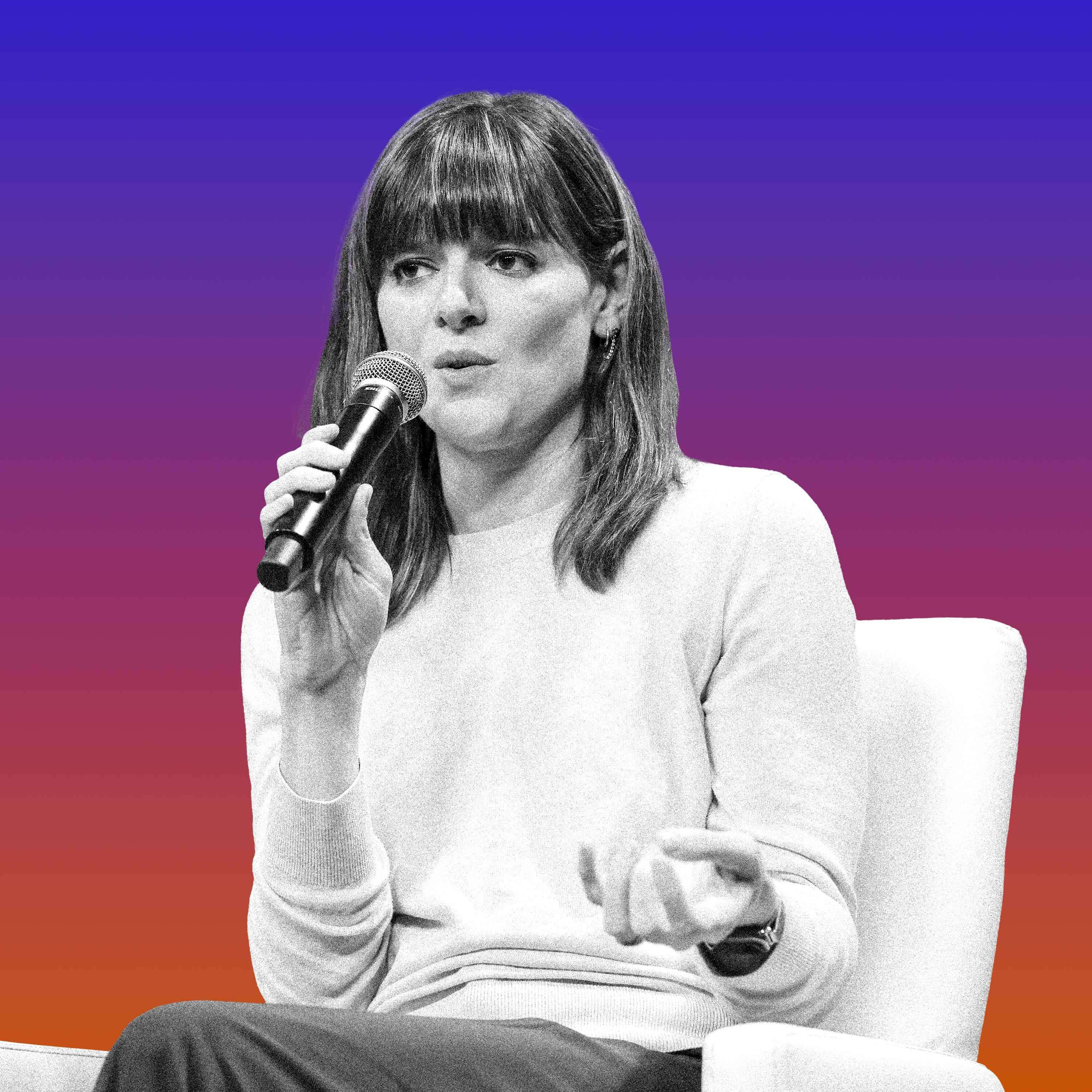
Amanda Littman, co-founder and executive director of Run for Something (a political action committee). Background: author of When We’re in Charge; leads endorsements for hundreds of candidates (about 456 endorsed for 2026, aiming to cross 500).
Democrats can win because voters want solutions to practical problems, not ideology or “electability” narratives. Third-way spending aimed at DSA-backed candidates is misallocated; money can’t compensate for an unpopular platform. DNC credibility issues and 2024 lessons matter (especially the decision to run Biden for reelection). Polling is unreliable in primaries; fake polls signal future manipulation risk.
Florida primary win by Angie Nixon (DSA member) despite heavy outspending; Michigan primary where Abdullah Syed won narrowly after a double-digit lead; Wisconsin governor race polling mismatch; New York outspend vs outcome; LA mayor fake poll about Karen Bass; NYC mayor race example about candidate connection to the city; Iowa governor race contrast between Rob Sand and a Republican living in Kansas.
Written by AI. May contain mistakes.
Discussion on Democrats' financial challenges and Amanda Lippman's optimism.
“With less than three months to go before Election Day, Democrats are at a huge disadvantage in the money race.”
Amanda discusses the endorsement of candidates and the significance of upcoming elections.
“Amanda Littman, thank you so much for coming on.”
Exploration of the current political climate and potential opportunities for Democrats.
“If you look out at the conditions right now, they are generically good for the Democrats, right?”
Amanda shares insights on voter needs and the importance of effective messaging.
“And yet there is this very noticeable push and pull right between the Democratic gold guard and the new guard and maybe most kind of visibly put into the face of the DSA.”
Discussion on financial strategies and the role of funding in political campaigns.
“But then what do you make of like a third way throwing$15 million against some of these DSA-backed candidates?”
Discussion on the DNC's trust and financial challenges ahead of midterms.
“Yeah, the DNC in particular has a real credibility issue.”
Amanda reflects on lessons learned from past elections and the importance of voter feedback.
“You know, I have thought a lot about this, and I think it's really difficult to tease out because in many ways what happened is quite simple.”
Insights on polling inaccuracies and the dangers of misinformation in politics.
“the primaries, Wisconsin's governor's race, Michigan Senate race, the polls ultimately seemed way off.”
Discussion on how Democrats are redefining electability in current primaries.
“Electability often means I am playing through the worst scenarios of maybe somebody else's biases and therefore making the safest choice that I possibly can.”
Explore how candidates can succeed despite being outspent and the changing dynamics of voter expectations.
“Now, that doesn't mean that they will guarantee like 100 percent go against the norm, norm, quote unquote, which is usually like old straight white man.”
Discuss the balance between personal authenticity and privacy for public figures like AOC.
“Toast is designed for both with tools to keep you humming and help turn grind into growth.”
Understand the importance of inclusivity and shared values within the Democratic Party for future elections.
“Because my whole life I have watched Democrats wrestle with what that means, right?”
Learn about the importance of local elections and maintaining core values in political conversations.
“the candidates in Texas or New York or Florida.”
Learn about the importance of local elections and maintaining core values in political conversations.
“It's the second deadliest cancer and the number one cancer killer of people under 50 in the U.S.”

Get the gist, explore an idea or ask about something said.
 Claude
On What Next | Daily News and Analysis, what are the key points of this episode?
Searching your listeningAutomatic transcript. May contain errors.
0:00When it comes to managing money, forget the hype and look at results. Bill has a trillion dollars of secure payments powering our BillPay tools. Instead of just moving money, Bill is powering the financial operations of nearly half a million customers. So stop the guesswork and start scaling with the proven choice. Ready to talk with an expert? Visit bill.com slash proven to get started. And grab a$150 gift card as a thank you. Terms and conditions apply. See offer page for details. This message is brought to you by today's sponsor, Walden University. Set a course for change. Now is the time to make a real change in your life, career, and community.
0:38At Walden University, we give you the support and flexibility to get the W. Walden's online programs are designed for working professionals like you. You'll gain hands-on skills to take on real-world challenges and succeed. Your future is waiting, and Walden is here to help you achieve it. Take the first step to make your impact. Visit waldenu.edu. Walden University. Set a course for change. Certified to operate by Shev.
1:10With less than three months to go before Election Day, Democrats are at a huge disadvantage in the money race. But Amanda Lippman is feeling pretty good about November. You can't outspend your way to winning with a shitty product. If you're trying to sell a candidate who is standing with the president, doesn't think that the cost of living is too high, doesn't really care about the housing crisis, doesn't really care about child care bills, wants to keep fighting this useless war in Iran, no amount of money can make that popular. The primaries are over. And now it's time for the Democrats to make their case in a general election.
1:45It's going to be really important that voters hear an alternative. And that's where being able to break through, if not in paid ways, but in organic ways, is going to matter a lot. And I think we're lucky that many of our candidates, not all, but many of our candidates are good at that. Today on the show, the head of Run for Something joins us to talk strategy in the final months before the midterms. I'm Lizzie O 'Leary in for Mary Harris, and this is What Next. Stick around.
2:18Amanda Littman, thank you so much for coming on. Thanks for having me, Lizzie. So we're now, what, a little more than 70 days until the midterm elections. Your slate of candidates did pretty well when you look at the primary tally. How are you feeling right now? Is it crazy if I say optimistic? Which feels like an insane thing to say, like I'm jinxing it. But actually, I feel good. Now, I feel good not because we are doing things right. I say we in terms of the broader Democratic Party, but I do. I feel good. I think November is going to be very satisfying. So for people who don't know, I'm asking you this because you're the head of the political action committee.
3:00You run for something. How many candidates have you had in this cycle? So in 2026, we are already endorsed about 456 candidates. We're likely to cross 500 by the time our final endorsement class is done. Not all of them will be on the ballot in November and all of them made it through primaries, but it is on track to be one of our bigger election years in the last decade that we've been doing this. If you look out at the conditions right now, they are generically good for the Democrats, right? You have a very unpopular war, an unpopular president. I drive past kind of astronomically high gas prices, all of the things that people think about very often.
3:43The president's approval rating, what, 32 percent? You say you're feeling optimistic, and yet I feel like there is this thing in the Democratic Party where it's like, oh, don't say that because you never know, because the Democrats might like trip over their own feet. Do you worry? Of course I worry. I'm a professional Democrat. That's what we do for a living. That's what I'm paid to do. No, I am a little worried because I do think we have a tendency to steal victory from the jaws of defeat or whatever the expression is. We tend to shoot ourselves in the foot. But I think you're right. The conditions are ripe for winning.
4:23I think they're ripe especially for winning in some really long shot places. I think especially outside of some of the big, flashy, headline-grabbing races, I think we're going to win big at the state and local level in a way that is going to lay the groundwork for more winning in 2028 and 2030 in a way that we maybe wouldn't have in a normal midterm year. One of the things I hear you say a lot is like voters don't have ideologies. They have problems. And yet there is this very noticeable push and pull right between the Democratic gold guard and the new guard and maybe most kind of visibly put into the face of the DSA.
5:05Right. this is not this is not news to you you know this and I guess I wonder like how do you how do you tease that out do you think this split is about kind of a progressive versus centrist thing as a lot of pundits seem to or is it just something about kind of fighting this I think it's a little bit about fighting this I think it's a little bit about frustration with the status quo in the sense that, you know, as you said, I like to believe people do not have ideologies. They have problems, they want solutions, and they want to not think about this too much. And the right now, the only part of the Democratic Party that is loudly and relentlessly putting forward solutions to the big problems is the far left, is the DSA or DSA affiliated or sort of DSA adjacent groups.
5:53I couldn't tell you what the centrist or moderate argument is for solving the housing crisis, or for solving the childcare crisis, or for making healthcare more affordable. Like, they're not making an argument beyond those people are crazy and can't win. And they no longer have credibility with many voters on the argument around electability because Trump's been president twice. What the fuck do you know? And their argument on crazy is like that's not enough anymore. That's not enough to say, like, not them. You have to make an affirmative case for yourself and how you're going to solve people's problems and in particular why voters should want you to win.
6:30But then what do you make of like a third way throwing$15 million against some of these DSA-backed candidates? I think third way is funded by lots and lots of business interests who really want to bring DSA down because they're spooked and they're scared. And I would really encourage them to think about redirecting that money and all their money to coming up with really compelling arguments on how you're going to solve people's problems. Like, this is not complicated. People want to know, how are you going to make my life better? Make an argument. I heard you say in another interview that if you had that amount of money, that you could do a tremendous amount with down-ballot races.
7:06You know, Run for Something's budget this year is just a hair under$8 million. And that is about as lean as we can do it because we know fundraising in this world is really hard. Nobody wants to fund flat, boring but necessary infrastructure work on our side because it doesn't get you invited to a cocktail party. It doesn't always make headlines as much as I might try, but it does build power. It does win elections. It does take places from red to purple to blue over the course of a decade. So, you know, when I see this stuff like 15 million being sent to wage war on DSA, it's like you spend your money however you want.
7:43That is not what I would do with it. Why do the National Democrats have such a financial problem? They are what, two million in the hole? Yeah, the DNC in particular has a real credibility issue. You know, this is both a Ken Martin specifically, but also institution generally problem where they are not trusted to be good actors. They are not trusted to do things competently. They also kindly don't do much in the 2026 midterm election. Like, I think that's worth being precise. The DNC does a lot for funding state parties. And as they should, that's important. State parties actually do a lot. But most of what they do in 2026, beyond moving money, if they have it, is preparing for 2028.
8:21They build the infrastructure for the Democratic nominee for president to take over once they win the primary. They keep the data file well organized and maintained and clean. They plan the presidential primary process. They organize debates. They function as an operating administrator for the primary. That is why it's such a big fucking problem that Ken Martin has no trust and that the institution has no trust. Do you think the Democrats can have whatever this reckoning is without, I know it's been discussed a million times, but some kind of real come to Jesus conversation about what happened in 2024?
9:03You know, I have thought a lot about this, and I think it's really difficult to tease out because in many ways what happened is quite simple. Joe Biden ran for reelection and he shouldn't have. and like who was we're not going to do that again we're not going to run the octogenarian in popular president for re-election fingers crossed and also like there's some tactical choices there's how did the money get spent there's who benefited who was making decisions i think it is worth continuing to like push for really honest you know as you said reckonings here but i also think the core original sin of that election we're not going to repeat so i i've been part of many different autopsies.
9:43I know that there's going to be a couple more that come out over the next, you know, weeks, months, probably years. And hopefully we will have learned the most important one, which is when voters are telling you they do not want this guy to run for reelection, which they were saying as early as like July 2022. Listen to them. Listen to them. Let's talk about another kind of message from voters, which is polling, right? If we look at the primaries, Wisconsin's governor's race, Michigan Senate race, the polls ultimately seemed way off. And yes, polling is a snapshot in time. It is not predictive.
10:20But if you look at Michigan, right, Abdullah Syed had a double digit lead. He won by a single percentage point. Similar situation in Wisconsin. What happened there? You know, I think primaries in particular are really hard to poll, is my understanding. I'm that these electorates are really hard to predict who will show up, which I think is really important as we look ahead to 2028, in which there's going to be all kinds of different people pushing different polling around who can win that presidential, who can win the general. Like, we should take all of it with not just one grain of salt, but a whole, you know, a box full, because most of it is we pushing a ridiculous narrative.
10:59More so than even those polls being inaccurate was a story from, I guess, just last week, where a company, unknown, Median Strategies, put out multiple fake polls, including one in the L.A. mayor's race that has Karen Bass up 20 points. Karen Bass's campaign, you know, posted about it. Then they announced all of our polls were fake. We were a social experiment trying to see if we could insert fake information. That's like, one, no, you weren't. You were probably messing around in predictive markets and betting markets. But two, I think that is a foreshadowing of some really dangerous stuff that's likely to happen in 2028, especially knowing how much of the anxiety in the Democratic primary electorate is going to be about electability.
12:05should never fill the chaos. Toast keeps our team organized so we can serve more people, stay consistent, and keep growing. Visit toasttab.com to learn more. Pay testimonial from an actual Toast customer. Hi, Brooke DeVard, host of Naked Beauty. Picture this, you walking from the cold and every room already feels like fall. That's what whole home scenting means at Pira. One system working quietly in the background so your home always feels like the season and like you. Learn more at Pura.com. Is there anything better than your team bringing home a W? How about a personal W for your health? If you're 45 or older and at average risk, it's time to screen for colon cancer.
12:45Now the number one cancer killer of people under 50 in the U.S. It's easy to put off when screening feels like a hassle, but Cologuard Plus makes it simple. It's non-invasive, requires no prep, can be completed at home in about 15 minutes, and is 95 % effective. Talk to your health care provider or request Cologuard Plus online, Rx only.
13:10I want to talk about the idea of electability because at least in, you know, my observation, I've been a reporter for 25 years. Electability often means I am playing through the worst scenarios of maybe somebody else's biases and therefore making the safest choice that I possibly can. How do you think Democrats, and that's a huge number of people, are coming to understand what electability means right now? You know, I think at least Democratic primary voters are being a little more open minded about what that definition could be. And we've seen that in a couple of these primaries in particular.
13:57They are open to a candidate who doesn't look or sound or seem like the kind of candidate who has won before. Now, that doesn't mean that they will guarantee like 100 percent go against the norm, norm, quote unquote, which is usually like old straight white man. Yeah. Not every time, but most of the time. But they are more willing to take chances. And I think you see this in Michigan. We saw this in Florida, which I think is such a compelling place where, you know, Angie Nixon, a state representative, DSA member, was outspent something like 16 to 1. I think she ran maybe five figures worth of ads, nothing on TV, and her opponent dramatically outspent her in that regard.
14:39And she won very handily in that primary. Now, a big part of that is because she is a good campaigner who was able to prove over the course of her campaign that she was serious. People could take her on face value as someone who was talking about the issues, who had roots in the community, who cares about the problems they care about. So there's, I think, a more open mindedness. Now, that's true among voters. That's true among like donors and pundits and even a certain amount of like elite actors who are so risk averse, in part because it's their livelihood and their money that they get scared.
15:16And so I do think that is where this conversation around electability, like voters are actually way more risk tolerant than we are. I mean, that makes sense. And I think we have seen, as you've talked, Florida, but then also Michigan, this question of money does not necessarily predict outcome. What do you make of that? It is very interesting to me to see those huge outspend margins and yet two candidates who won. We're seeing this over and over again. We saw it in New York last year. Like good candidates who can do the work can out hustle being outspent. And I think there is something here where, especially at this moment, voters really chafe against feeling like their votes are being bought.
15:56Or like, oh, there's so much money being spent on behalf of this candidate. Why? Why do the rich people want them? Who's behind this money? There's a lot more savviness, I think, about where money in politics is coming from. You know, we're seeing this in terms of like, is it coming from AIPAC? Is it coming from big tech? Is it coming from AI companies? Where is the source and why? I think that's a good thing. And I think it's forcing some really interesting conversations or should force some really interesting conversations about how we use fundraising and money spent as a measurement of electability early on in the process.
16:31And yet money is different in a primary and a general, right? Like it's a very different question. In a general, you're often looking at TV buys, right, which costs a lot more money. If we're looking at the amount of money that the RNC has, 128.5 million on hand, that is a staggering amount of money. And even with the amount of anti-incumbent sentiment that is circulating right now, that certainly makes me wonder, ooh, can Democrats do anything against that amount of cash? You know, I think so. And this is where it really depends on having candidates who can capitalize on the attention economy and who can break through in organic ways.
17:12It's why it matters to have really good communicators. Because, you know, really hard, we learned this in 2024, you can't outspend your way to winning with a shitty product. If you're trying to sell a candidate who is standing with the president, doesn't think that the cost of living is too high, doesn't really care about the housing crisis, doesn't really care about child care bills, wants to keep fighting this useless war in Iran, no amount of money can make that popular. However, it's going to be really important that voters hear an alternative. And that's where being able to break through, if not in paid ways, but in organic ways, is going to matter a lot.
17:47And I think we're lucky that many of our candidates, not all, but many of our candidates are good at that. Can we talk about age? You know, your organization focuses on young people. You have said, what, people should retire after 75? Yeah. Bye.
18:04I, on the one hand, I hear where you're coming from because we certainly have a gerontocracy. On the other hand, as a 50 year old, I now think, oh, man, there is so much that I know as a competent middle aged woman that I did not know at 35. And I wonder how you think through that when when you are looking at the Democrats and when you are looking at hard won wisdom about winning elections or legislating and balancing the like, get out of here when you're 75 question? Well, first at 50, you'd be a spring chicken in the United States Senate. So you should go there if you want to feel young. Like, I would never say that every member of Congress or every elected official should be in their 20s and 30s.
18:47However, they also shouldn't all be in their 70s and 80s. And right now, that's kind of where we are. Although again, that's changing pretty quickly. I also, you know, I chafe a little bit of this idea that all of that experience is being put to good use. And this is an argument people will make to me like, well, these elected officials have been in office for 30 or 40 years. They have so much experience. And that experience has gotten us to this point, to here. Like, you think this is a good outcome of those 40 years of experience in governing? I don't think so. I also think we're seeing, and there's a really great interview that Ested Herndon at Vox did with Representative James Clyburn about his age and his leadership and all these things.
19:27And at one point asked him about AI and Chachi PT in particular. And Representative Clyburn said, oh, I just heard of that last week. It's like, hmm, you are responsible for regulating a technology that you just learned about a week ago? That is not only a failure of your staff. That's also a failure of intellectual curiosity. That's a failure of meeting the moment. Like you are not willing to engage in the problems as they exist today because you are stuck in the institution and the systems that, you know, the world as it existed when you entered politics 50 years ago. That's not a moral failing.
20:01That doesn't make you a bad person. Just makes you not well suited to this particular moment as one of the four or five hundred most powerful people in the world. What do you think does make someone particularly well suited to this moment? because I would imagine that you're having a lot of conversations that people like me miss, right? Like we're not always talking to candidates on the ground. There's a lot of media talking to each other, right? We love a simple narrative. What are we not seeing that you think matters in this election cycle? We're seeing candidates who are really committed to the places they run, which feels so obvious to say because like, duh, of course you would love the place you lead.
20:41But man, there are so many elected officials who don't actually like the people they represent, who don't like the communities they lead. And you can tell. Give me an example. The New York City mayor's race is actually a pretty example here. Andrew Cohen does not like New York City, did not like New York City. And you could tell he was not interested in actually being or or of or with or in New York. And that comes through in your campaigning. Similarly, you know, in Iowa right now, the Republican running for governor of Iowa lives most of the time in Kansas, like does not actually like Iowa. Whereas Rob Sand, you know, really smart, really interesting, really engaging, like a weirdo in the best possible way, fucking loves Iowa.
21:28That man lives, breathes, dies Iowa. And it comes through because he genuinely cares for his neighbors. And I think when you have candidates like that, you know, it's tactile. You can see it.
21:51This episode is brought to you by FreshBooks. Whether you just launched your service business or you've been at it for years, the money side has a way of pulling you from the work you actually love doing. FreshBooks changes that. FreshBooks makes the money side of your service-based business easy. You log your hours, you send a branded invoice, you get paid and know your numbers instead of chasing them. Money in, money out, all in one place. No more juggling one app for clients, another for billing, plus a pile of spreadsheets and emails. FreshBooks is designed for how small business owners think about money, not how an accountant does.
22:26You don't need a financial background to use FreshBooks. It's simple on purpose. Most owners are up and running in minutes, not days. And if you need help, a real person is available on every plan. FreshBooks has been trusted by service businesses for over 20 years, helping over 500 ,000 owners and solopreneurs run their business confidently. Right now, my listeners can get FreshBooks for less than$3 a month for your first four months. That is 90 % off. Head to freshbooks.com slash podcast to get started. That's 90 % off under$3 a month for four months at freshbooks.com slash podcast.
23:07There are two types of business owners, those who are busy and those who want to be busy. Toast is designed for both with tools to keep you humming and help turn grind into growth. That's how you turn busy into business. Toast built for busy. I was interested in reading your substack. You had a very interesting read of AOC's use of Instagram talking about her egg freezing, which I am also fascinated with as someone who did fertility treatments. She reveals so much, and yet she reveals nothing. Nothing. And it's so compelling, and yet it is a masterclass in keeping what you want hidden, hidden.
23:52Yeah. It's what I call responsible authenticity, which is like it is her. She is being genuine. She is being herself. She's being vulnerable. She is also being very boundaried. She is telling us exactly what she wants to tell us and not one inch more. It's not necessarily secret. It's private. I love that. I think it's a real model for how you can see candidates and honestly, people in any kind of public leadership position. I really think about how much of myself do I show to folks that guilt allows them space to build a connection without making myself vulnerable to the kind of personal or direct attacks or bullshit that I don't want to have to deal with.
24:30Building on AOC a little bit, I just interviewed Jill Lepore about her new book, which is really fascinating about kind of technology and its corrosive effects on democracy. And when you look at the polling around data centers, and when you look at the candidates who do well with their messaging around data centers, It is very clear, and I think you said this earlier, that data centers are like a vessel, right, for people's frustration and anger and kind of sense of lack of agency around big tech. And yet, these are channels of communication that a lot of candidates need to use. How do you think about that?
25:09How do you think about using these tools, which are, after all, owned by a handful of oligarchs? you know we live in a society you like you know it's like can you be a socialist but still have private health care insurance yeah totally you need it and i think like this is where candidates um can really like speak to the moment and and understand that like you don't have to like the world we're in to live in it and as long as you're willing to advocate for more for better you do have to understand it and i do think that's like it's not surprising to me that you're seeing some of these younger candidates, both human people in their 50s, 40s, 30s, more so than people in their 70s and 80s, really speak to the feelings people are having around AI and around data centers, because it is as much about feelings as it is about facts.
25:57It's about the way that it feels like AI is going to take your job. They're telling us it's going to ruin the economy. I think we should believe them and be scared about that. Speaking to that emotional truth, knowing that the tools you have to do so may make you part of the problem, but they're also the most effective way to be part of the solution. What does it mean to have a big tent party in 2026? Because my whole life I have watched Democrats wrestle with what that means, right? A lot of this, at least when I was coming up, was around abortion and around gay rights. And now it seems to be much more, you know, kind of Medicare for All, DSA, where you fall on Israel.
26:44And I wonder, like, how much room is there in this Democratic Party for mess? I think there has to be a lot of room because it's the only way we're going to win. You know, I'm really proud that Run for Something has been able to build the big tent that we have seen so many people talk about for years and that, you know, on the same election night in 2025, we helped elect a DSA-affiliated candidate, Kelsey Bond, to the Atlanta City Council, a non-binary activist who was running on climate justice and renters' rights, union work, a really powerful sort of far-left platform. And same night, a former Republican who left the party after January 6th, so was there all the way through Trump 1, who left the party, became a Democrat, wasn't particularly activated around special education because his two kids were in public schools and really needed access to additional support, ran for and flipped a seat in a county that Trump won 70-30.
27:40The way that we have done that is being very tight on values and very flexible on how those values show up as policies. As long as we're all talking about rowing in the same direction, you can use lots of different kinds of oars to get there. You know, all of our candidates are pro-choice. What a pro-choice candidate might look like in Alaska and how they might talk about the issues and what the specific policy conversations they're having is going to be very different than the candidates in Texas or New York or Florida. That's okay. And you think, you know, it becomes a very different kind of conversation when we're thinking about president, which is where, you know, there's only one.
28:14But for us at the very local level and with a half a million elected officials that we need to be able to lift up and to win, tight on values, flexible on policy. But most importantly, and I think this is the conversation that gets missed around the big tent is you got to have a tent pole. The tent pole has to have a center. And if you don't have that center, if you don't have those core spine, there's no tent at all. Amanda Littman, thank you so much for your time. Anytime. Thank you for having me.
28:46Amanda Littman is the co-founder and executive director of Run for Something. She's also the author of When We're in Charge. All right, that That is it for the show today. What Next is produced by Rob Gunther, Evan Campbell, Madeline Thames-Ducharme, and Patrick Fort. Paige Osborne is the senior supervising producer for What Next and What Next TBD. Mia Lobel is the executive producer of podcasts here at Slate. And Ben Richmond is the senior director of podcast operations. I am Lizzie O 'Leary. Thank you so much for listening. Talk to you soon.
29:19Colon cancer is on the rise. It's the second deadliest cancer and the number one cancer killer of people under 50 in the U.S. Yet it remains one of the most preventable cancers. If you're 45 or older and at average risk, it's time to talk about screening. Cologuard Plus is a non-invasive at-home collection kit that requires no prep, can be completed in about 15 minutes, and is 95 % effective. If you've been putting it off, you're not alone. But timely screening matters. Let's talk about what isn't talked about. Talk to your provider or request Cologuard Plus online, Rx only.
30:19Make money on Depop with no selling fees and find what you want for less. This message is brought to you by Depop.
Since losing the 2024 presidential election, Democrats have been doing a lot of finger pointing. But with the midterms this fall, it’s time to stop pointing and start saying what you actually believe and why people should vote for you.
Guest: Amanda Litman, author of “When We’re in Charge” and head of Run for Something.
Want more What Next? Subscribe to Slate Plus to access ad-free listening to the whole What Next family and across all your favorite Slate podcasts. Subscribe today on Apple Podcasts by clicking “Try Free” at the top of our show page. Sign up now at slate.com/whatnextplus to get access wherever you listen.
Podcast production by Rob Gunther, Evan Campbell, Madeline Thames-Ducharme and Patrick Fort.
Paige Osburn is the senior supervising producer of What Next and What Next TBD.
Hosted on Acast. See acast.com/privacy for more information.