Ask ChatGPT

 What Next | Daily News and Analysis
17 Aug 2026 · 31m · 14 chapters
The Florida “Stand Your Ground” case of Jamarian Bird and Travis Roberts Jr., accused of first-degree murder in the 2025 death of 19-year-old Devin Powers Jr. (DJ Powers) in McClenny, Florida, and how stand-your-ground/self-defense laws are argued to be applied unevenly along racial lines.
Caroline Light, Harvard professor and historian specializing in U.S. gun and stand-your-ground law; author of Stand Your Ground: A History of America’s Love Affair with Lethal Self-Defense.
Light argues the laws were designed to amplify older exclusions in the criminal legal system; she says the defendants should not be in jail and that investigators allegedly ignored evidence supporting self-defense. She also argues the “neutral” laws disproportionately benefit some groups.
Comparison to the 2018 McClenny killing of Black man DJ Broadus by white man Gar Frazier, where evidence and outcomes differed (including claims of dismissal via castle doctrine/self-defense).
Written by AI. May contain mistakes.
Introducing the murder case involving Jamarian Bird and Travis Roberts.
“Repeat users more than one PayLater purchase in the past year.”
Examining the context of the Stand Your Ground law in Florida.
“are accused in the death of 19-year-old Devin Powers Jr.”
Caroline discusses her upbringing and expertise in gun culture.
“Caroline Light, you are a professor at Harvard, and you've developed this very particular specialty.”
Exploring the evolution of gun laws and their uneven applications.
“Yeah, a lot of your focus on stand-your-ground laws is about how they've been applied unevenly, basically from the beginning.”
Detailing the events of the shooting in McClennie, Florida.
“And what I found is that a lot of this really isn't new.”
Discussing the injuries and fatalities from the confrontation.
“It's just a few miles from the southernmost part of Georgia.”
Analyzing how the Stand Your Ground law was applied in this case.
“other teenager who's with him is injured.”
Examining flaws in the investigation of the shooting incident.
“Florida was the first state to pass a so-called stand your ground law in 2005.”
Contrasting this case with a previous shooting in the same area.
“But another thing that I just want to note that's really important about this case is that the investigation from the get-go was very problematic.”
Exploring the history and details of DJ Broadus's case from 2018.
“So do you want to tell briefly the story of the DJ from 2018 and explain how his case played out differently?”
Explore the circumstances surrounding the killing of DJ Broadus and the implications of self-defense laws.
“in McClennie, Florida, was killed on February 3rd, 2018 by his white ex-lover.”
Delve into the origins and implications of Stand Your Ground laws in America.
“In 2017, you published a book called Stand Your Ground, A History of America's Love Affair with Lethal Self-Defense.”
Discussion on the implications and history of stand-your-ground laws.
“I can't imagine a way to make the laws themselves better.”
Caroline Light shares her insights on injustices related to deadly self-defense laws.
“Caroline, I'm really grateful for your time and your insight.”

Get the gist, explore an idea or ask about something said.
 Claude
On What Next | Daily News and Analysis, what are the key points of this episode?
Searching your listeningAutomatic transcript. May contain errors.
0:0098 of the top 100 U.S. accounting firms trust Bill to simplify and secure Bill Pay. That's proven financial infrastructure built on over a trillion dollars of secure payments. Visit Bill.com slash proven for a special offer. Hi, this is Nikayla Matthews-Ocombe from SideHustle Pro. This holiday, the difference between buyers just checking things out and checking out comes down to the last few clicks. PayPal Checkout is a trusted conversion engine fueled by 400 million active PayPal and Venmo accounts. Add PayLater and turn holiday shoppers into regulars. 96 % of PayLater shoppers are repeat users.
0:39PayPal is built for all business. Get started at paypal.com slash business. Disclaimer, PayPal PayLater data, eight markets, March 2025 to February 2026. Repeat users more than one PayLater purchase in the past year.
0:57Right now, two men named Jamarian Bird and Travis Roberts are sitting in jail, accused of first-degree murder. Jamarian Bird and Travis Roberts Jr. are accused in the death of 19-year-old Devin Powers Jr. in a 2025 shooting in McClinney. But Jamarian and Travis say they were defending themselves against a couple of strangers who came up on them carrying weapons and fired. One of these guys allegedly called Jamarian and Travis a couple of N-words. Oh, and one more thing. Jamarian and Travis, they're behind bars in Florida, the birthplace of Stand Your Ground. In your opinion, should Jamarian, Bird, and Travis Roberts be in jail right now?
1:40Caroline Light: No, absolutely not. Absolutely not. This is an example of where we can see the bright lines separating the way in which certain types of people are treated in criminal law. Caroline Light is an expert on Stand Your Ground. She's been following this case. Stand your ground laws were crafted with elegant precision to amplify pre-existing exclusions in our criminal legal system. Oh, you think it's intentional? Oh, I know it's intentional. Today on the show, this case in Florida is revealing who gets to defend themselves in this country and who doesn't. I'm Mary Harris. You're listening to What Next.
2:22Stick around.
2:26Caroline Light, you are a professor at Harvard, and you've developed this very particular specialty. You're an expert not just in U.S. gun law, but particularly in stand-your-ground law. And before we get into everything in the show, I'm just kind of curious why. Like, what drew you to this topic in particular?
2:46Caroline Light: I was born and raised in Virginia, in the southwestern part of Virginia, not the D.C. area. And I was raised by parents who are very proficient gun users. Mom basically was a sharpshooter. She was very proficient. Do you shoot as well? No, I know how to. I have received some basic training, but it's just not my vibe. I never got into it really. And my dad is former military. He was a Navy SEAL. And so he is also proficient in gun use. And he hunted a bit while I was growing up. But the thing is, my parents didn't keep guns in the house. They were not used as tools of self-defense. They were either recreational or, in my dad's case, military objects.
3:37Caroline Light: And so they didn't have any place in my upbringing, but there was all kinds of gun culture that I did grow up in where classmates were really into hunting. And so it's the culture I grew up with that I know enough about that culture, having experienced and witnessed it, that I could see the drastic change from back then when I was growing up in the 70s and 80s to now, to the past couple of decades where there's been a seismic shift in the way Americans view firearms, not primarily as recreational tools, but as tools, essential tools of self-defense. Yeah, a lot of your focus on stand-your-ground laws is about how they've been applied unevenly, basically from the beginning.
4:25Caroline Light: From the very beginning. In other words, I know that my book is Stand Your Ground, and I study stand-your-ground laws, but as a historian, and I go and I look into the past and I try to understand the precursors and the kind of legal genealogy that leads us to where we are now. And what I found is that a lot of this really isn't new. It's just been translated into a new cultural paradigm. Yeah. Recently, you've been focused on one case in particular out of McElhinney, Florida. Am I pronouncing that correctly? McClennie. McClennie. McClennie, Florida. This shooting, it happened about a year ago.
5:02I'm wondering if you can just tell me the story of what happened in McElhinney, Florida on the night of June 26, 2025.
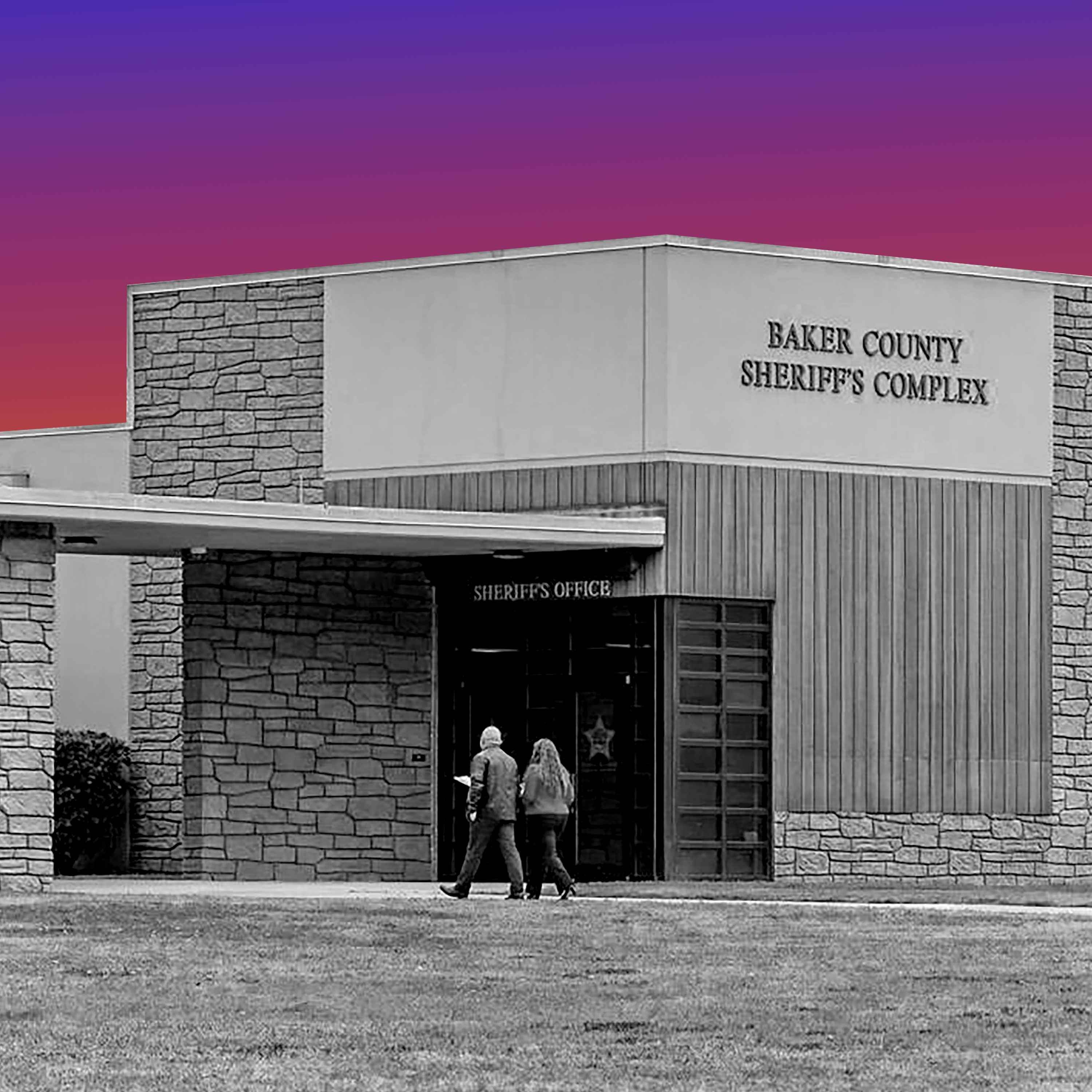
5:09Caroline Light: Right. So this is I'll set the scene. McElhinney, Florida is in Baker County. It's just a few miles from the southernmost part of Georgia. And at the end of June 2025, two young men, Jamarian Bird and Travis Roberts, who are really good friends, have been friends most of their life, were basically hanging out. And a couple of white teenagers approached them carrying firearms. Openly carrying firearms. Openly carrying firearms, which is legal in the state of Florida. So they weren't doing anything illegal. What was illegal is that at least we know one of them, Devin, also known as DJ Powers, aimed his shotgun at the young men.
6:01Caroline Light: And they saw that this guy, who they did not know, was aiming a shotgun at them. And then a shot was fired. Now, there is all kinds of conflicting information in the court records about who actually fired the shot. It could have been DJ Powers. It could have been his 14-year-old companion who, witnesses say, was also armed. However, a shot rang out, and Jamarian and Travis, who are both well-trained legal gun owners, armed themselves and shot back. And they kept shooting as this young man, DJ, retained hold of his weapon and as he started to retreat. So they were firing in large part because the person who instigated the confrontation held onto his gun even as he was retreating.
6:55And I just want to be really explicit. You have these two black men on a porch outside a home and then these two white teenagers approaching armed people they do not know aiming a weapon towards them. the black men fire. And then DJ, one of these white teenagers, he does end up dying. And the other teenager who's with him is injured.
7:23Caroline Light: He's injured. He's shot. So the younger teen, who's 14 at the time, was shot in the leg and survived his injuries. DJ Powers, however, was shot through the neck. And he died from his injuries just a few days later. So it was like, I think it was three days before he died. He is the one who all the records, all the details, the witness testimony confirmed he was the one who pointed his weapon at Jamarian and Travis and instigated the confrontation. But he was the one who ended up dying. And anyone who doubts the racialized nature of the violence that occurred. You know, you can look at accounts from the record that say that, you know, one of the teenagers who was shot, the white teenagers, when the police arrived said, go get those N-words.
8:15So it's like you can tell that there is something happening here. And the county where this shooting occurred, you've noted, it's got a history of racialized violence. The county courthouse has a big mural where there are Ku Klux Klan members like depicted on it. So there's a lot going into this, but you can see how the two Black men who fired have a stand your ground case in Florida, which has a stand your ground law, right? Right.
8:48Caroline Light: And Florida is the first stand your ground state. So to be absolutely clear, Florida was the first state to pass a so-called stand your ground law in 2005. And essentially, this is a law that removes the duty to retreat wherever you may legally be. That means that if you reasonably perceive that you are facing a potentially deadly threat, you are allowed to meet force with force wherever you are. In other words, it's not confined to your home by the so-called castle doctrine. You could be in a public street, as these young men were when this confrontation took place. So what happened when Jamarian Byrd and Travis Roberts went to court and tried to make a stand your ground case for themselves?
9:35Right.
9:35Caroline Light: They were denied. They were promptly denied. And the denial is on a few different grounds. So one of the grounds on which they were denied is that they continued shooting at DJ Powers even when Powers was retreating, Finding that his targets were also armed, DJ Powers, who is 19, started to retreat. And Jamarian and Travis continue shooting at him in large part because he retained access to his firearm. He held on to it while he was retreating. I have to say the details of this case are a little bit messy to me. Very messy. Advocates for the white victim in this case emphasize the fact that there were more than 40 shots fired on this evening.
10:23So if you were there, like, it must have felt like all of a sudden your street was a war zone, right? Absolutely. People in their homes had bullets flying through their homes. So this is a terrifying modern-day shootout like the Wild West.
10:40Caroline Light: It's a nightmare. But another thing that I just want to note that's really important about this case is that the investigation from the get-go was very problematic. How? One thing we find is that there's not a lot of careful due diligence in recovering the casings of the various bullets so that they could be definitively traced to specific weapons. There was not an effort on the part of investigators, for instance, to recover the firearm of the 14-year-old whose name is not released because he's a minor. There was not an investigation, a thorough investigation of either of the properties that were in play here.
11:27Caroline Light: So specifically the home of DJ Powers was not fully investigated, nor were his family members immediately interviewed about their experience trying to convince him not to go out into the street armed. So it's like from my vantage point, and I've seen this before in other cases, and we can talk about that if time allows, but it feels very much like there was an effort on the part of investigators to ignore certain evidence that might lead to Jamarian and Travis being able to claim, stand your ground. And also the possibility that the 14-year-old could be charged with a felony for having been present and likely armed at an encounter that resulted in his friend's death.
12:16In your opinion, should Jamarian Byrd and Travis Roberts be in jail right now?
12:19Caroline Light: No, absolutely not. Absolutely not. They were charged with murder one. This is the other part of the judge's ruling in their hearing is that this is premeditated murder. And this was what I wrote about in my article with my friends, Bob and David. We were shocked by the allegation that Jamarian and Travis somehow premeditated a lethal encounter when they were the victims and the targets of this encounter. The allegation is that somewhere in the span of these 26 seconds, less than half a minute, Jamarian and Travis went from legally defending themselves to suddenly premeditating a murder. And that's basically what the judge has decided.
13:06Caroline Light: So that to me is really shocking, especially if we compare it to other cases that have taken place in the very same location of Baker County, just a few miles away. where you compare this case to a case from 2018 right with another victim named dj another which is also like what what are the chances what are the chances but this is this is how history repeats itself right yeah but like in this 2018 case the victim the dj is black he's a black man yes and in this case from last year the victim is white yes and the trajectories for the people who um were shooting these men is very different. So do you want to tell briefly the story of the DJ from 2018 and explain how his case played out differently?
13:53Caroline Light: Exactly. I mean, you summarized it basically that DJ Broadus, a 31-year-old black man in McClennie, Florida, was killed on February 3rd, 2018 by his white ex-lover. And I say ex with hesitation because there's some pretty clear digital forensic evidence that the two were actually supposed to meet up, or at least in DJ's mind, they were meeting up for a sexual encounter. DJ was driving from Jacksonville out to McClenney to meet a man with whom he had had an intimate relationship for seven months. And the white man, Gar Frazier, shot DJ on the day that they were to meet on February 3rd, 2018. And two of the shots, he shot him four times, Mary.
14:42Caroline Light: Two of those times happened while DJ was lying on the ground. He was unarmed and he was basically helpless when Gar stood over him and shot him twice in the head to kill him. And then there's evidence that DJ's phone was taken and completely disappeared. We've never found his phone. So clearly, at least by the evidence, Gar Frazier was trying to hide the evidence of an affair. He was closeted. No one knew that he was attracted to men, that he was having an intimate relationship with a Black man, specifically in Baker County, Florida. And investigators in that case did everything they could, again, to obfuscate any traces of premeditation.
15:27Caroline Light: So we have these two cases in which it feels like the funhouse mirror of self-defense law is really clear. In one case, the killing gets dismissed by the so-called castle doctrine or self-defense law because the man was on his own property when he shot and killed DJ. But in the other case, in the other DJ case, the shooters who were not the instigators of the encounter are being held responsible and furthermore being accused of premeditation when all they did was fire back against what they perceived as a deadly threat. Yeah. I mean, notably Gar Frazier, this man who shot DJ Broadus, he's white.
16:14He has relatives in law enforcement, whereas these people who are accused in this new case, They are Black and they don't have those same allies that Gar Frazier did. And they really seem to be in a very different situation. It seems like the differences are so transparent. But is that actually uncommon when it comes to these self-defense laws? So I don't think it's uncommon. Actually, I'm so glad you asked that.
16:42Caroline Light: Thank you, Mary, because I find that this is actually more often than not the case. It's just that what's happened here in McClenney, Florida, is so starkly available to us. We have the receipts through court documentation, through evidence. Empirical evidence proves that these two cases are representing the disproportionate effects of self-defense law, the exclusionary principles that are baked into our self-defense laws, not just in Florida, but I would say nationwide. It's just that typically it's very hard to excavate the receipts that prove that these things are so inequitable and so based in racial injustice.
17:25Caroline Light: This is an example of where we can see the bright lines separating the way in which certain types of people are treated in criminal law.
17:46Hi, Brooke DeVard, host of Naked Beauty. Picture this, you walk in from the cold and every room already feels like fall. That's what whole home scenting means at Pira. One system working quietly in the background so your home always feels like the season and like you. Learn more at Pira.com. There's one thing that will forever change the way you sleep, and it's the softest 100 % organic cotton sheets from Bowlin Branch. You'll fall asleep faster, wrapped in the most luxurious comfort. You'll never sleep hot again with sheets that feel breathable to sleep in. You'll experience the purest softness on night one and feel your sheets get even softer with every wash.
18:26Discover the difference with 15 % off your first set of sheets at bowlinbranch.com with code BUTTERY. Exclusions apply. See site for details. Still waiting in line? Again? That's time you'll never get back. Save time and money with Stamps.com. Over 4 million businesses have skipped the line with Stamps.com. Join them to save up to 90 % off carrier rates from your computer or phone right now. Print postage for certified mail, registered mail, and packages in seconds. Then schedule a pickup right from your home or office. For a limited time, go to Stamps.com and use code podcast for a free welcome gift.
19:04Taxes and fees apply.
19:10So let's go back because I feel like you've done this whole history of Stand Your Ground. In 2017, you published a book called Stand Your Ground, A History of America's Love Affair with Lethal Self-Defense. Is it worth just stepping back and talking about where the whole idea of Stand Your ground originated to understand how we've ended up in this inequitable place? Like, when did self-defense become a legal idea? So my book goes way back, way back to British Commonwealth. We may not have that time. I don't want to. Yeah, I know we don't have time for that. But in a kind of nutshell, I just I referenced the Castle Doctrine.
19:52And I think most Americans are pretty familiar with this expression that a man's home is his house. You can defend your personal property. Yes, that you're allowed, like if someone attacks you in your home, you are in theory allowed without having to retreat to fight back, to meet force with force. That's the castle doctrine. But what I find in my research and what I document in my book is that from the very get-go, and this goes back to early 1600s in English common law, and then what would become the United States, the colonies that would become the United States, the castle doctrine was already shot through with all kinds of exclusionary principles.
20:32One of them is a gendered principle that still haunts us today. Can you explain just like very briefly? Very briefly. It's that if you are using lethal force against an attacker in your home, it better not be a lawful cohabitant. In other words... Oh, like a husband? Uh-huh. Or an abusive boyfriend or even an ex. So there's a gendered implication here where you can see time and time again through history and even today, the stay-in-your-ground laws do not often apply to women who use force against their largest statistical threat, their own intimate partners who are usually men. Where does race enter the picture?
21:12So where race enters the picture is that at the time that the castle doctrine became a thing in the 17th century, think of who had access to property at the time. Whose home was their castle? It was propertied white men. It wasn't indigenous people. They didn't have a right, a legal right to fight back when there were settlers encroaching on their land here in the colonies that would become the United States, right? It did not apply to human beings trafficked from the coast of Africa to serve as unfree labor in what would become a racial capitalist political economy of the United States, right?
21:51So certain people and also poor people, any poor people of any, you know, any race or creed or color, were not able to defend themselves against encroachment and violence from wealthy white men. And we see a long tradition of that kind of reserving the right to defend oneself for people who are already empowered and who are already seen as possessing full rights in the eyes of our justice system, right? How did Stand Your Ground laws in particular supercharge the whole Kessel Doctrine idea? Because there was a duty to retreat at a certain point. There was an idea that like you can defend yourself to a point, but if you can run away, that might work too.
22:42But I feel like stand your ground is a rejection of that idea almost, right?
22:48Caroline Light: In theory, it is. And I love the way you say it supercharges the inequities that are already baked into our self-defense law. The stand your ground laws were crafted with elegant precision to amplify pre-existing exclusions in our criminal legal system. Oh, you think it's intentional? Oh, I know it's intentional. I mean, all you got to do is look at who wrote these laws, who's been promoting these laws. It starts with the National Rifle Association, which became super radicalized in the 1970s around taking the Second Amendment and transforming it into a kind of unfettered right to keep and bear arms, but only, again, for super empowered folks.
23:40Notably, they did not want the Black Panther Party to have access to firearms. No, they didn't. So it's written through with all kinds of hypocrisies that we can see pretty clearly right now. But stay-in-your-ground laws are crafted, again, with elegant precision to look like they include everybody, to look like a universal invitation to all law-abiding citizens to carry firearms and to use them whenever they reasonably perceive a threat. However, not all of us are included under that umbrella of so-called law-abiding citizen. Is it just in the way that these laws end up being prosecuted in the way they interact with other laws that are on the books?
24:23Like, I'm just thinking like, if I'm a woman, I am a woman. If I have a firearm, if I'm in my home, if I'm defending myself, why do you say that a stand your ground law applies less to me?
24:35Caroline Light: Oh, okay. So the scenario is, let's say it's a stranger, a stranger breaking into your home and you have a firearm and you shoot that stranger, you are likely, I'm not going to say it's for sure, but you are likely to be able to access the stay on your ground law in that case. However, proportionally, empirically, your most likely statistical threat is not some stranger breaking into your home. More often than not, women are attacked by the men they know and love or loved. And so your largest statistical threat is not some random person breaking into your home. That's not to say that it doesn't occasionally happen.
25:15But the firearm used against that person who is your boyfriend or your ex or your husband or whatever, a lawful cohabitant of your castle, most states have an exception in their castle doctrine that says that you cannot use lethal force. You must try to retreat to get away from the threat before you use lethal force in your own home. So I think what you're saying is these laws don't account for who some groups of people may be more statistically likely to need to defend themselves from. Like if I'm a black person, I may more statistically need to defend myself from racialized violence. And so this law doesn't take that into account in any way, doesn't make any kind of nod to that.
26:06No. The law presumes that racial injustice is not a thing. It presumes that gender injustice is not a thing. In other words, the law presumes that we're all equal and that there's some universal access. Yeah, the authors of the law would say it was neutral, wouldn't they? Absolutely. Oh, of course they would.
26:24Caroline Light: So the NRA, the American Legislative Executive Council, these are the two groups that helped craft the laws and then use them as model legislation across the country so that we now have the majority of states have stand-your-ground laws. The marketing of these laws has always circulated on this idea that we should all have a universal right to defend ourselves. And indeed, that's a really seductive promise for Americans in this day and age, that we all have that universal right. In practice, however, there's nothing like that. Yeah. I mean, these stand-your-ground laws, they've evolved. Like in Tennessee, there's now a law that makes it easier to legally shoot someone who's not actually threatening your life.
27:06They're just stealing from you.
27:09Caroline Light: Yes. So there's different states have different caveats. That would be a state that has the capacity to defend property. So originally, stand your ground laws were crafted about or centered on the idea of protecting human life. And that's a very appealing concept. The belief that we have the right to defend ourselves and others, including loved ones, from a lethal threat, right? But many of these laws have morphed over time to allow people to shoot and kill somebody in the process of a forcible felony, which might include a robbery. It might include someone stealing a bicycle out of your garage.
27:50Caroline Light: In other words, it's kind of a get out of jail free card for people defending their property. So, again, celebrating property ownership over life.
28:11This episode is brought to you by FreshBooks. Whether you just launched your service business or you've been at it for years, the money side has a way of pulling you from the work you actually love doing. FreshBooks changes that. FreshBooks makes the money side of your service-based business easy. You log your hours, you send a branded invoice, you get paid and know your numbers instead of chasing them. Money in, money out, all in one place. No more juggling one app for clients, another for billing, plus a pile of spreadsheets and emails. FreshBooks is designed for how small business owners think about money, not how an accountant does.
28:45You don't need a financial background to use FreshBooks. It's simple on purpose. Most owners are up and running in minutes, not days. And if you need help, a real person is available on every plan. FreshBooks has been trusted by service businesses for over 20 years, helping over 500 ,000 owners and solopreneurs run their business confidently. Right now, my listeners can get FreshBooks for less than$3 a month for your first four months. That is 90 % off. Head to freshbooks.com slash podcast to get started. That's 90 % off under$3 a month for four months at freshbooks.com slash podcast.
29:27There's one thing that will forever change the way you sleep, and it's the softest 100 % organic cotton sheets from Bowlin Branch. You'll fall asleep faster, wrapped in the most luxurious comfort. You'll never sleep hot again with sheets that feel breathable to sleep in. You'll experience the purest softness on night one and feel your sheets get even softer with every wash. Discover the difference with 15 % off your first set of sheets at bowlinbranch.com with code BUTTERY. Exclusions apply. See site for details.
30:01what would it take to change the way these stand-your-ground laws are interpreted? And I ask that because I'm thinking a lot about what you said earlier, which is that you think, you know, these laws have these baked-in problems in how they, you know, they think they're neutral, but they can't be neutral. I can't imagine a way to make the laws themselves better. Can you? No. Not at all. Not at all. But like in a way, I hate this question because I love solutions. I love being able to say, oh, here's how we solve the problem. In your perfect world, would stand your ground laws not exist? Absolutely.
30:45I mean, I think they're part of the problem. But as I learned when I did all this research, they are not the problem. They come from a much longer historical landscape of exclusionary application of so-called justice. I mean, I've read some scholars who think about stand your ground laws who've said retreating has been historically viewed by some judges as like basically un-American. And that's part of how we got to this place. Would you agree with that?
31:25Caroline Light: Oh, definitely. It's part of the history. I mean, that's - How do you see that? That was early 20th century. I believe that case was 1920, where a judge very famously said that calm reflection cannot be expected in the face of an upturned knife. And in that case, it was about knives. But by the early 20th century, we had some pretty serious firearm technology where we had multi-firing weapons that it was very hard to retreat from that. So I would say going back to the late 19th century, early 20th century, already our laws were starting to look with quite a lot of suspicion on the duty to retreat because our firearm technology made retreat, safe retreat, basically impossible.
32:18But other countries have the same like weapons technology. Do they have the same laws? No, we they're they're no they stand your ground laws are very American. We have a unique set of laws that enshrine this so-called need to defend yourself, shoot first, ask questions later. We really own that. So what's next in this Florida case with Jamarian Byrd and Travis Roberts?
32:50Caroline Light: Their attorneys have filed an appeal to try to get the judge to revisit the case and to to rethink the murder one charge so that we can get them out of prison. They've been there now for over 13 months, which is horrific. It's been devastating for the young men and their families. Do you plan to get involved in the case? I, yes, I'm trying my best to do whatever I can to try to amplify the case, to spread the word on the injustices of Baker County. I've worked for a few years with my friend, Bob, the peace builder, Schley Huber, who's one of the co-authors on the piece in Slate, to keep our, quote, eyes on Baker County, to look at the ways in which history continues to repeat itself until we do better.
33:42Caroline Light: There are many residents of the county who are horrified at the continued injustices that they're seeing that are very starkly repeated in their county. And so I do hope that I continue to work alongside advocates and above all, on behalf of families who have been harmed by these kinds of disproportionately applied laws in the state of Florida and beyond. Caroline, I'm really grateful for your time and your insight. Thanks for coming on the show. Thank you, Mary. It's been a pleasure. Caroline Light is the author of Stand Your Ground, a history of America's love affair with lethal self-defense.
34:25She also teaches at Harvard. And you can find her writing at Slate.com. And that's our show. What Next is produced by Rob Gunther, Evan Campbell, Patrick Fort, and Madeline Thames-Ducharm. Paige Osborne is the senior supervising producer of What Next and What Next TVD. Mia Lobel is the executive producer of podcasts here at Slate. Ben Richmond is the senior director of podcast operations. And I'm Mary Harris. You can go track me down on Blue Sky if you want. Follow me. I'm at Mary Harris. Thanks for listening. I'll catch you back here next time.
35:24tickets are stacking, and the guests should never fill the chaos. Toast keeps our team organized so we can serve more people, stay consistent, and keep growing. Visit toasttab.com to learn more. Pay testimonial from an actual Toast customer. This is the story of the one. As a shipping manager, he's running the dock, stocking supplies, and making sure every order goes out on time. And Grainger helps him stay prepared. From shipping supplies to PPE to hand tools, He counts on Grainger to keep products moving and trucks rolling, so his operation runs smoothly no matter the shift. Call 1-800-GRAINGER, click grainger.com, or just stop by.
36:03Grainger, for the ones who get it done.
A stranger approaching and aiming a gun at you seems like the exact scenario that “Stand Your Ground” laws were made to address. But a case in Florida where the armed strangers were white and the people “standing their ground” were Black demonstrates that the law’s’ protections and application fall along familiar and unequal lines.
Guest: Caroline Light, Senior Lecturer and the Director of Undergraduate Studies in WGS at Harvard, author of Stand Your Ground: A History of America’s Love Affair with Lethal Self-Defense.
Want more What Next? Subscribe to Slate Plus to access ad-free listening to the whole What Next family and across all your favorite Slate podcasts. Subscribe today on Apple Podcasts by clicking “Try Free” at the top of our show page. Sign up now at slate.com/whatnextplus to get access wherever you listen.
Podcast production by Rob Gunther, Evan Campbell, Madeline Thames-Ducharme and Patrick Fort.
Paige Osburn is the senior supervising producer of What Next and What Next TBD.
Hosted on Acast. See acast.com/privacy for more information.