 Ask ChatGPT


The U.S.-Iran war’s “forever war” dynamics, focused on control of the Strait of Hormuz, the cycle of escalation/de-escalation, and the growing strain on U.S. air defenses and munitions. It also connects the conflict to a disputed Trump-era Saudi nuclear deal tied to Abraham Accords.
Josh Keating, senior correspondent at Vox covering foreign policy.
Reports on foreign policy; in this episode he explains how the war is covered and why reporting feels repetitive due to recurring escalation patterns.
The conflict is increasingly about Persian Gulf/shipping control, not just Iran’s nuclear program. An ambiguously worded Iran-U.S. MOU on “freedom of navigation” helped restart fighting. U.S. air defense interceptors (Patriot/THAAD) are being depleted, risking readiness for other conflicts. Iran’s cheap drones/missiles enable flexible “toll booth” leverage over shipping.
Iran firing missiles at ships and regional targets; U.S. service members killed in a Jordan drone/missile strike; Houthis’ Red Sea drone tactics as a model; Congress seeking ~$87B more for the Iran war; Saudi nuclear deal concerns about enrichment and potential arms race.
Written by AI. May contain mistakes.
Journalist Josh Keating discusses the ongoing conflict with Iran and the complexities involved.
“Do you feel like you're writing some version of the same article over and over again?”
Analysis of the renewed fighting in the Strait of Hormuz and its implications.
“Regulatory fees, exchange fees, and index option contract fees may apply.”
Analysis of the renewed fighting in the Strait of Hormuz and its implications.
“ExciteOSA is an FDA-cleared prescription-only device for primary snoring and mild obstructive sleep apnea.”
Learn about the current state of U.S. military resources and air defense concerns amid conflicts.
“But then, you know, for the world's biggest military power, I found it really alarming over the weekend.”
Explore the implications of Trump's nuclear agreement with Saudi Arabia amidst regional tensions.
“As we think about this conflict, this war spreading across the region, you know, impacting our allies, I wanted to ask about what happened last week with Saudi Arabia.”
Explore the potential benefits for the U.S. in a nuclear deal with Saudi Arabia.
“from the Saudis and just none of the officials who were talking to the Wall Street Journal and New York Times about this, if they just happened to forget.”
Discuss how Trump's ties to the nuclear industry could impact U.S.-Saudi relations.
“do they have connections with anybody in the Trump administration?”
Analyze the current state and future prospects of U.S.-Iran relations amidst regional tensions.
“So I think this is an area where his kind of business interests and geopolitical inclinations may overlap.”

Get the gist, explore an idea or ask about something said.
 Claude
On What Next | Daily News and Analysis, what are the key points of this episode?
Searching your listeningAutomatic transcript. May contain errors.
0:00Do you snore? Did somebody hand you a CPAP and did you quietly stop using it? The mask that never quite seals? The hose tugging at you every time you roll over? A machine sitting abandoned in a closet? Excite OSA works a different way. It treats a root cause instead of managing the noise, and you use it while you're awake. 20 minutes a day, while the coffee brews, while you set your fantasy lineup. an FDA-cleared prescription device for primary snoring and mild obstructive sleep apnea. Then you go to bed like a person. Nothing strapped on, nothing plugged in. In clinical studies, 90 % of patients saw a reduction in snoring.
0:44No sleep study required. Prescribed online, shipped to your door. ExciteOSA at springsleep.com slash sleep20. Code sleep20 for 20 % off. Excite OSA is an FDA-cleared, prescription-only device for primary snoring and mild obstructive sleep apnea. Not for everyone. Individual results vary. Risks and benefits at springsleep.com. Get under a blanket and get comfy. This message is sponsored by ADT. It's back to school, back to work, back to cozy nights at home season. And ADT is here for every moment of it. They handle your home security so you can focus on spending time with the people who matter.
1:29They make it easy with professionally installed systems you can access right from the ADT Plus app. If you need help, their reps are on call 24-7 at the most company-operated monitoring centers in the industry. You deserve some cozy back-to-home time. ADT will keep an eye out. When every second counts, count on ADT. Visit ADT.com today.
1:59Josh, what is it like trying to cover this war as a journalist? Do you feel like you're writing some version of the same article over and over again? Yeah, it's kind of the challenge is that news keeps happening, but in many ways, the underlining dynamic is always the same. Josh Keating covers foreign policy for Vox.com. Five months ago, the U.S. and Israel went to war with Iran. And since then, it feels like we've been stuck in a time loop. It's usually been there's a threat from Trump to escalate the conflict. Typically, he backs off and there are more reports of talks. They say we're close to a deal with Iran.
2:44And then Iran does something escalatory. It attacks shipping through the strait or some other move that just sort of sets off this cycle again.
2:58We're currently in that part of the cycle where the ceasefires are off and both Iran and the United States are shooting at each other in the Middle East. U.S. troops are dying abroad. Trump is back on his threats to bomb civilian infrastructure. and Defense Secretary Pete Hegseth is trying to get billions more from Congress to pay for what was once billed by the White House as a, quote, little excursion. Is this turning into another forever war? A couple of things are different now. One is that the conflict is expanding. And then we have the, you know, munitions question, just materially how much, you know, the US and its allies are able to escalate this fight.
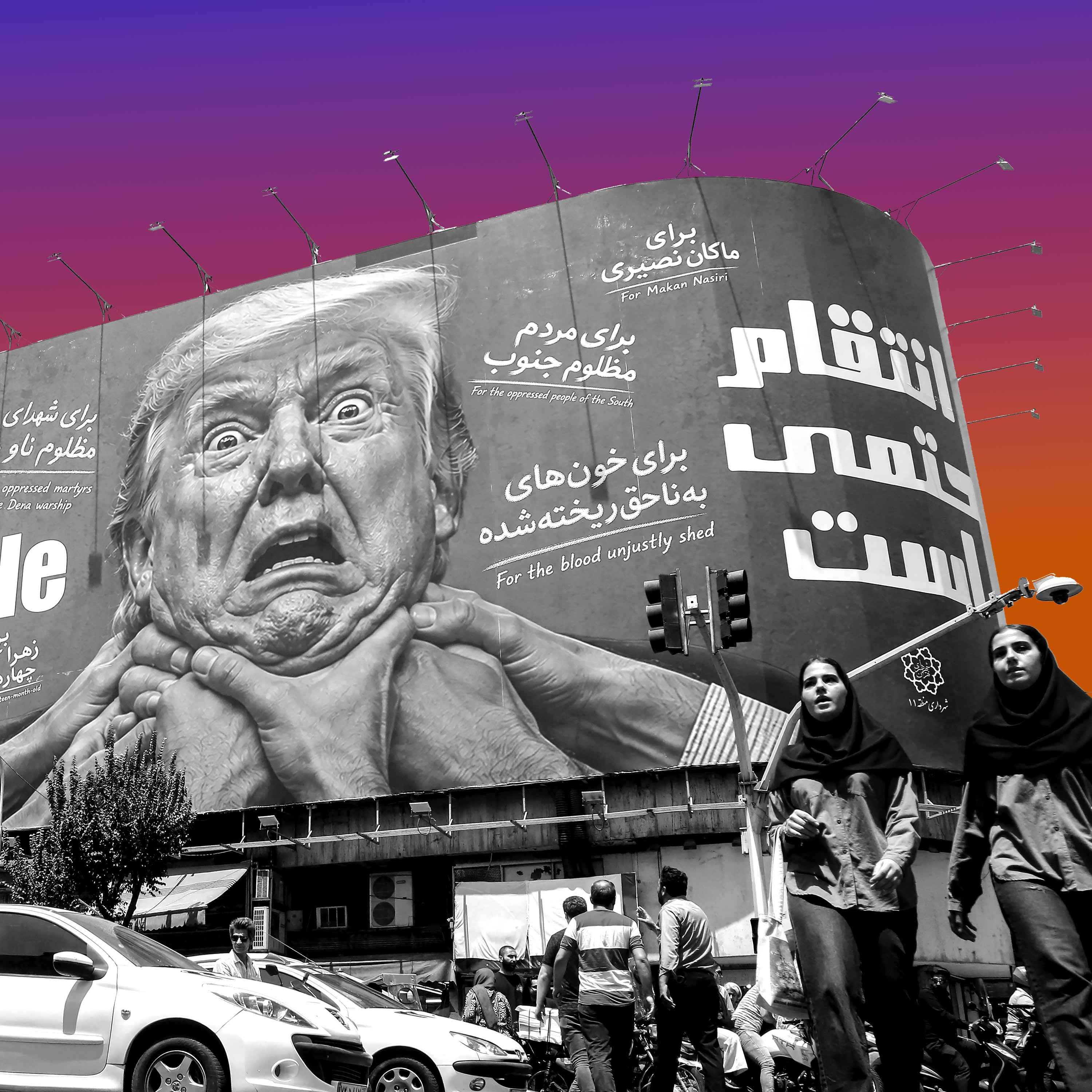
3:39So all those factors are kind of coming into play at the same time as we see these waves of escalation and de-escalation. The New York Times recently described Trump as being trapped by this Iran war. Do you think that we're trapped? I do, because I think that just leaving Iran in control of the Strait of Hormuz would be a kind of unacceptable state of affairs for the U.S. and its allies. Nobody really wants to see what's been an international waterway effectively have a toll booth on it controlled by Iran. But on the other hand, the U.S. doesn't really have its ability to impose its will on Iran.
4:27We've seen Iran doesn't actually change its course of action when the U.S. launches these airstrikes. And so, yeah, I think that we are in some degrees trapped in this escalatory cycle.
4:44And it's important to also take into account that, you know, this may have once been a war primarily about Iran's nuclear program. It's now primarily a war about control of the Persian Gulf, about control of shipping through the Strait of Hormuz. And that's an issue that wasn't even present when this war was announced. This is something that only became an issue as a result of Iran's retaliation for, you know, epic fury for the killing of Ayatollah Khamenei for these airstrikes. So I think we've found ourselves in this sort of dynamic that didn't even exist before this bombing started. Today on the show, the war with Iran enters its sixth month.
5:32Is anyone looking for a way out? I'm Rob Gunther, filling in for Mary Harris. You're listening to What Next. Stick around.
5:48Today's show is brought to you by Vanguard. To all the financial advisors listening, let's talk bonds for a minute. Capturing value in fixed income isn't easy. Bond markets are massive, murky, and let's be real, lots of firms throw a couple of flashy funds your way and call it a day. But not Vanguard. Vanguard bonds are institutional quality. Institutional quality is not a tagline. It is a commitment to your clients. It means top grade products across the board. The lineup includes over 80 bond funds. they are actively managed by a 200-person global squad of sector specialists, analysts, traders.
6:21Lots of firms love to highlight their star portfolio managers, like it's all about that one brilliant mind making the magic happen. Vanguard's philosophy is a little different. They believe the best active strategy should not be locked away with one person. They should be shared across the team, which is why every client benefits from the collective brainpower they've got, not just one individual's take. The bond market's complex, and it's not something one person or small team can realistically keep up with. Vanguard has been in the game a long time. Their scale gives them serious edge. They're able to invest across all kinds of sectors, maturities, and geographies, which means they can spot and act on opportunities others could miss.
7:00So if you're looking to give your clients consistent results year in, year out, go see the record for yourself at vanguard.com slash audio. That's vanguard.com slash audio. All investing is subject to risk. Vanguard Marketing Corporation Distributor.
7:18This episode is brought to you by Moomoo. If you're an investor, you might have questions. You hear about a big IPO or you watch the market go up and down and you might think to yourself, what is going on there? So if you wanna do your homework, but you don't have time to read it all, you might wanna look into Moomoo. Moomoo is an all-in-one investing and trading platform that brings market data, research analysis, and professional-grade trading tools together in one place. It's used by a community of more than 31 million traders worldwide with a parent company listed on NASDAQ. One account covers stocks, ETFs, options, crypto, IPOs, and prediction markets with 150-plus built-in analysis tools.
8:00And Forbes named Moomoo one of the best brokerage accounts for stock trading in 2026. And TradingView named Moomoo best stock broker in North America in its broker awards in 2024 and 2025. Right now, Moomoo is offering its new users up to a thousand bucks in NVIDIA stock, plus 8.1 % APY on uninvested cash for a limited time. And if you deposit a hundred bucks, you get up to$200 in trading vouchers. Go to start.moomoo.com slash whatnext to learn more and get started with Moomoo. That is start.moomoo.com slash whatnext. Regulatory fees, exchange fees, and index option contract fees may apply. Fees are subject to change.
8:47Do you snore? Did somebody hand you a CPAP and did you quietly stop using it? The mask that never quite seals, the hose tugging at you every time you roll over, a machine sitting abandoned in a closet. Excite OSA works a different way. It treats a root cause instead of managing the noise, and you use it while you're awake. 20 minutes a day, while the coffee brews, while you set your fantasy lineup. An FDA-cleared prescription device for primary snoring and mild obstructive sleep apnea. Then you go to bed like a person, nothing strapped on, nothing plugged in. In clinical studies, 90 % of patients saw a reduction in snoring.
9:31No sleep study required. Prescribed online, shipped to your door. ExciteOSA at springsleep.com slash sleep20. Code sleep20 for 20 % off. ExciteOSA is an FDA-cleared prescription-only device for primary snoring and mild obstructive sleep apnea. Not for everyone. Individual results vary. Risks and benefits at springsleep.com.
10:05So about a month ago, things looked a little different. The vice president and President Trump had just signed this memorandum of understanding with the Iranian government. And it seemed like things were wrapping up. It sounded like the strait was going to open back up. Traffic was going to maybe get started again. Like what happened since then? In some ways, the whole dispute comes down to one kind of ambiguous clause in the memorandum random of understanding, which concerned the transit through the strait. I mean, basically, the MOU said that Iran would take steps to restore freedom of navigation in the strait, and it would work with Oman, which is the country on the other side of the Strait of Hormuz on the Arabian Peninsula.
10:53And Iran basically interpreted this as meaning that they would have sort of say over the future arrangement for how business would be conducted in the strait. And the US interpreted it to mean that complete freedom, that the internationalization of the strait would be restored. And this ambiguity helped when they were conducting the talks. It's probably the reason both sides were willing to sign the thing in the first place. but it's also contributed directly to the conflict resuming because basically the U.S. Navy and international authorities were telling ships that they should take a route through the strait that goes close to the coast of Oman and avoids Iranian waters and Iran didn't like that at all because they saw their leverage over this situation slipping away if ships could just ignore them.
11:53So they started firing on these ships. And that's what led to retaliation. That's what led to the breakdown of the ceasefire. So that includes like resumption of the blockade, threats by Trump to take its own tolls, right? Those are rescinded. We've seen all sorts of back and forth since then. Exactly. But I think it comes down to the fact that the MOU was ambiguously worded, perhaps intentionally to get the thing signed. Perhaps it was just poor negotiation. But that has led to both sides having a very different understanding of what the state of affairs in the strait should be. And they're both willing to go to war to protect that understanding.
12:32So currently, the strait is not open. Is that correct? No, traffic is more or less ground to a halt as the fighting has resumed. Can you describe how the fighting has resumed? Where are the bombs coming from? Where are they going? Well, we've seen Iran has fired missiles at ships in the Strait of Hormuz, as well as at targets throughout the Persian Gulf, as well as at US military bases in Jordan, which is the reason we saw three US service members killed in a joint drone missile strike there. And so, you know, Iran attacking targets throughout the region. We saw these militias in Iraq and also the Houthis resume their attacks.
13:23Things have de-escalated a bit this week. We're seeing less firing by the US and Iran themselves, although these Iranian proxies are not de-escalating. So I think that this goes to show that this conflict is just getting more complex and that it's it's not even just a US Iran question anymore. As this fighting has resumed, there's always this lingering question of like, when is Trump going to pull the trigger and launch like a, you know, a more aggressive assault, like something with boots on the ground or just, you know, more intense missile strikes. But then, you know, for the world's biggest military power, I found it really alarming over the weekend.
14:07There were all these narratives about the United States running out of weapons, right? And you saw U.S. ambassador to the U.N. Mike Walls go on meet the press this weekend. And he was suggesting we couldn't do a bigger attack because our stockpiles were depleted. That was a quote from him. What's going on? Are we out of weapons? So the most critical issue here is air defense. These are things like the, you know, the Patriot missiles and THAAD air interceptors that protect both, you know, U.S. troops on their facilities and also, you know, energy infrastructure in the Gulf from attack by these Iranian missiles and drones.
14:45And those we are burning through very, very quickly. I have read something that, you know, the drones that Iran and its allies are sending to our bases are very cheap. And we're hitting them with these interceptor missiles that cost millions of dollars. Is that what you're seeing too? Yeah. And the U.S. likely burned through about a thousand of its stockpile of 2 ,300 Patriot interceptors during the first phase of this war. And so, you know, it may be that we're able to continue fighting for some months in Iran. But what military planners are really worried about is the position this leaves us in.
15:24If there were another conflict, you know, where we're sort of running, they've had to move aerial interceptor batteries from East Asia, for instance, from places like South Korea to the Middle East. So if there were a conflict with North Korea, with China, the U.S. would be dangerously unprepared. And so they're exploring now ways to sort of increase production of systems like the Patriot so that the U.S. can be more prepared in the systems. Yeah, we can only make the bombs so quickly, right? Like we can't we don't he hasn't invoked the Defense Production Act or anything like that. No. And anytime you're doing missile defense, you're basically on the wrong side of the cost curve because, you know, these drones and missiles that Iran is firing are very cheap to produce.
16:12It's well to me because, you know, we're, you know, it's always been such a role reversal. Like Ukraine has been begging us for help for the past several years. And now we're sort of like asking them for help because we don't have the equipment necessary. You talked about the United States being unprepared for another war. But I mean, your reporting makes it clear that we were unprepared for this war. Like it took us by surprise that they were able to close the strait. It took us by surprise that they were so effectively able to target our locations in the region. It's just, it's just wild to me.
16:40Yeah. I mean, it should not have come as a surprise that they were able to close the strait because this is the worst case scenario that everyone from the Pentagon to the energy industry have been afraid about for decades is talking about a Strait of Hormuz scenario. So I think the Iranians actually learned some lessons from their proxies, the Houthis. During the Gaza war, the Houthis were able to use very cheap drones and missiles to effectively shut down or at least drastically reduce shipping through the Red Sea. And I think the Iranians saw that and learned from it. The scenario everyone was always worried of Hours, they lay mines in the Strait of Hormuz.
17:27And they have done that to some extent. But, you know, actually what you can do is if you use drones and missiles, you can only hit, you know, a couple of tankers or ships. Nobody else wants to go through. Right. The shipping companies get freaked out. More importantly, the insurance companies that insure those ships going through the strait also get freaked out. And so very cheaply and very flexibly, you can shut down shipping. And this is what allows them to do things like give priority to certain countries. So like, you know, they'll let Chinese ships through, but not American ones, they'll, they'll sort of have this tolling system, like, that's something that the drones and missiles allow you to do, that just mining the strait, just blockading it would not have allowed you to.
18:10So they've had this very flexible response. So now, the Pentagon, Pete Hegseth, and the Trump administration, they're asking Congress for some more money. They need an additional$87 billion in more funding. They've already reportedly burned through$37 billion in taxpayer dollars. Right now, the Congress is trying to get this NDAA, the defense authorization bill, across the finish line. The House passed a bill that sets about$70 billion for the Iran war. I mean, just like in terms of dollars that are being spent and dollars that need to be spent, where do you see this continuing yeah i mean this is this is like a a sort of wake-up call that predates trump i think you know during the ukraine war i mean we got used to sort of decades of most um you know u.s military action being these sort of counterterrorism missions counter insurgencies uh in places like iraq and afghanistan and using drones and um places like Libya and Somalia, we're fighting very different wars now.
19:14We have in Ukraine this almost World War I style trench warfare, but with 21st century drones. Now we have this very air-heavy engagement with Iran. And so I just think the quantity, the mass of munitions we need, things like Tomahawk missiles, things like Patriot air defense systems. It's just a much higher mass of stuff than we've needed for war in decades. And I think there's a dawning realization that future wars are not necessarily going to be won by who has the most advanced, exquisite, capable fighter jet, but by the country that's able to get the most mass of ammunition and drones onto the field as quickly as possible and able to sort of adapt them to circumstances as quickly as possible.
20:17I think that's a lesson the Ukrainians have shown. And so this is kind of a new way of operating for the Pentagon and for, you know, the US military industrial complex. And it's, you know, that's a big aircraft carrier to turn around. Yeah. I mean, we've mostly been talking about this as this conflict, as if it's a matter of like dollars and cents. But you mentioned United States service members were killed in action last week. You wrote in one of your recent articles, the risks to the American military may be higher than most anticipated just a few months ago. And then we're getting reports that the Pentagon is sort of trying to change how it reports the deaths and casualties of Americans abroad, American service members.
21:04Do you think we're getting a true grasp of the human toll that this war is exacting? Yeah, well, if we are, it's no thanks to the Pentagon, which, as you said, is reducing the number of reported fatalities in this conflict on a technicality claim, I mean, that some of these people were killed after the ceasefire was declared. And, you know, there have also been dozens of injuries, mostly concussions caused by this Iranian strikes. U.S. air defenses are very good. The vast majority of these drones and missiles fired at U.S. bases are getting intercepted. But the longer this goes on, the more there are going to be risks of fatalities, of serious injuries.
21:55That's partly because of the munition shortages we were discussing, and partly just because none of these systems are perfect. And the longer it goes on, the more missiles the Iranians throw at us. Sooner or later, even the best air defense systems, some of them are going to get through.
22:19We'll be back after a quick break.
22:32Hi, this is Nikayla Matthews-O 'Konley from SideHustle Pro. This holiday, the difference between buyers just checking things out and checking out comes down to the last few clicks. PayPal Checkout is a trusted conversion engine fueled by 400 million active PayPal and Venmo accounts. Add Pay Later and turn holiday shoppers into regulars. 96 % of Pay Later shoppers are repeat users. PayPal is built for all business. Get started at paypal.com slash business. Disclaimer, PayPal Pay Later data, eight markets, March 2025 to February 2026, repeat users more than one Pay Later purchase in the past year.
23:09Hi, this is Mark Bittman from the podcast Food with Mark Bittman. I've been writing about food and restaurants for almost 50 years, my whole career really. And what I know is that the good restaurants all have something in common. They're busy, genuinely, chaotically busy. And somehow in the last few years, the best of them have begun to make it look easy. And do you know why? Because they're running on Toast's technology. Toast is built for restaurant owners who understand that Toast's tools keep the line moving and keep their customers happy, with fewer mistakes and hiccups in ordering and paying.
23:48For owners, that turns busy into business. To learn more, head to toasttab.com. That's T-O-A-S-T-T-A-B, toasttab.com. toast built for busy.
24:08As we think about this conflict, this war spreading across the region, you know, impacting our allies, I wanted to ask about what happened last week with Saudi Arabia. Trump announced that there was this nuclear agreement. It seemed like it was a done deal. It was signed. And then after the fact, it sounds like Trump tried to condition it on Saudi Arabia restarting its agreement to the Abraham Accords, which would formalize relations with Israel. What happened and how does that tie into what we're talking about with the war in Iran? Yeah. So, I mean, this is sort of a project that goes back to the first Trump administration trying to get Saudi Arabia to sign on to these Abraham Accords and also the discussions over nuclear sharing with the Saudis.
24:56So, you know, nonproliferation experts are really worried that if we help Saudi Arabia with their nuclear power program, that that could eventually lead to Saudi Arabia having the capability to develop nuclear weapons. Crown Prince Mohammed bin Salman has explicitly said that if Iran was ever able to get a nuclear bomb, that Saudi Arabia would want one of its own. So under the Biden administration, they had this big plan that they were working on this sort of grand deal where we share nuclear technology with the Saudis in return for Saudi Arabia, normalizing relations with Israel, and Israel then would make some progress towards a two-state solution with the Palestinians.
25:45They were working on this for a while and all fell apart after October 7th and never really picked up steam again. And so a couple of things were surprising about this deal, about the Trump announcement when it first was announced. One is that we're not only helping these Saudis build nuclear reactors for the first time ever. This is something the U.S. has never done with any country. the US would be helping them develop enrichment. So actually like enriching the nuclear fuel, and that could make it much easier to weaponize down the road. And there are safeguards they said were built in, but those aren't convincing to a lot of the experts who are looking at this.
26:31And the Saudis have their own regional enemies, right? You talked about the Houthis before, Or, you know, they've recently had that insane war against Yemen backed by the United States where lots of civilians were killed. Right. What would a nuclear weapon powered Saudi Arabia? How would that change a balance of power in the region? Well, I think the fear is that it would it would just be a nuclear arms race. You know, a lot of the concerns about giving Saudi Arabia a nuclear weapon are one, you know, its human rights record, you know, killing of U.S. citizens. the fact that it, you know, the sort of erratic and often aggressive Saudi foreign policy under Mohammed bin Salman.
27:12But part of it's Saudi itself. Part of it is just the idea of a arms race, of a nuclear buildup in the Middle East is kind of the last thing this region needs. And so that's the reason people are worried about it. And then, you know, so initially this deal was signed. And then one day later, Trump put out this truth social post that said a number of things that contradicted what had been reported. He said that there would be no enrichment as part of the deal and that the deal was off unless Saudi Arabia agreed to join the Abrahamic courts. Now, we haven't actually seen the deal. It hasn't been put out.
27:53Even though it's been signed already. Even though it's been signed already. So it's possible like some, but it would be very surprising if they had gotten these concessions from the Saudis and just none of the officials who were talking to the Wall Street Journal and New York Times about this, if they just happened to forget. Aside from having the normalized relationship between Saudi Arabia and Israel, which would benefit the United States, is there anything else that the United States could possibly benefit by signing this agreement that would give Saudi Arabia such nuclear capabilities? Well, I mean, it would be an enormous benefit for the U.S.
28:28nuclear industry. The company Westinghouse that would be involved in building these reactors in particular stands to gain quite a windfall. And it would also, you know, the advocates of this say it would deepen cooperation with an important security ally in the Middle East. And also, you know, there's a risk that if we don't work with the Saudis, they would work with China or Russia on building nuclear reactors. So they would deepen ties with US adversaries. And potentially those countries might put in even fewer safeguards than we would. So we'd rather have us helping Saudi Arabia build their nuclear program than have China or Russia would do it.
29:13To your knowledge, is anybody in Wessinghouse, the nuclear company you mentioned, do they have connections with anybody in the Trump administration? I'm just thinking of any dealing going on. Yes, this was in the first term when this came up. There was, actually, as part of the Mueller investigation, and then there was a congressional probe into Tom Barrack, who's the sort of longtime Trump world advisor. That's a deep cut. It's like a Trump 1.0. Mueller report deep cut. Well, he's still around. So he lobbied. He was lobbying for this deal at a time when he had economic interests in the Middle East.
29:53And he now is he's the U.S. ambassador to Lebanon and a kind of influential all purpose ambassador or advisor on Middle East politics. So he's in the mix. So is there is there a reality where this could just be like another, you know, example of Trump using his power to benefit his friends and benefit his own businesses? And it just happens to coincide with this regional conflict that we're getting more and more trapped in? uh yeah i mean the new york times had a had a pretty big article this week on trump's ties the nuclear industry that um uh definitely uh encompass this i mean i think that's part of it and i think when this still is going to go to congress in order to block it they have to pass a motion disapproving it okay which is a tough bar so basically you need a veto proof majority to oppose it, which is a high bar to clear.
30:48Interestingly, Senator Marco Rubio co-sponsored legislation that would have flipped it, that would have said, you know, any Saudi nuclear deal has to be affirmatively approved by Congress. This was Senator Marco Rubio, not Secretary of State Marco Rubio. But yeah, so it's unlikely Congress can block this deal, but there are going to be hearings on it. There is going to be debate on it. And those are issues that are going to be raised. I would expect them to talk about the conflicts of interest. But, you know, I mean, the close relations with Saudi Arabia and sort of a deepening of economic and security ties with the kingdom has been a pretty consistent position for Trump, you know, going back to his first term.
31:36So I think this is an area where his kind of business interests and geopolitical inclinations may overlap. Another coincidence. Let me ask. So if we're back to the war right now, United States options, it sounds to me like after our conversation, it's just more of the status quo. We could potentially have some sort of de-escalation or there's always this threat that we just do something wild and start bombing civilian infrastructure. How do you see this playing out in the next couple of weeks, in the next couple of months? Yeah, well, I would keep an eye on these Iran-Oman talks that are going on now about the governments of the strait.
32:14I mean, I think, you know, it feels like the way out of this may be through the Gulf rather than the US. I mean, we shouldn't underestimate the amount of economic stress Iran is under. They still want access to these frozen assets. They still want to be able to freely trade again, have the blockade fully lifted. So, you know, it may be a deal where, you know, these Gulf countries in Iran kind of like work out some arrangement quietly or not so quietly. The U.S. has now twice bombed Iran in the midst of nuclear negotiations, I guess three times if you count the most recent. but so that there's not a lot of trust in that relationship and and and you know the u.s was clearly overconfident before this war began and their ability in you know our ability to just shape the regional order to our preferences i i think it's possible the iranians may be a bit overconfident now they they've acquired this powerful economic weapon in the form of the Strait of Hormuz and they think this gives them, I think one official actually called it a golden weapon, then it gives them the ability to shape the future of the Middle East in a way where they're playing a kind of commanding role.
33:39I wonder how long that's going to last. I mean, you know, other countries are going to find workarounds. There are all these pipeline projects in the works. You know, the price of oil never actually got to the like the$200 barrel levels that many people were expecting. So I wonder if Iran is slightly overestimating its ability to impose its will on the United States. So that is a recipe for stalemate, unfortunately.
34:15Josh Keating, thank you so much for coming on the show. Anytime. Thanks. Josh Keating is a senior correspondent at Vox covering foreign policy And that's the show What Next is produced by Evan Campbell Madeline Thames-Dusharm and Patrick Ford Paige Osborne is the senior supervising producer of What Next and What Next TBD Mia Lobel is the executive producer of podcasts here at Slate Ben Richmond is the senior director of podcast operations And I'm Rob Gunther filling in for Mary Harris You can find me on Blue Sky I'm at 1RobGunther Thanks for listening. Talk to you soon.
35:18non-invasive at-home collection kit that requires no prep can be completed in about 15 minutes and is 95 % effective. If you've been putting it off, you're not alone, but timely screening matters. Let's talk about what isn't talked about. Talk to your provider or request Kologuard Plus online, Rx only. When you're running a growing business, the right systems can unlock your full sales potential and make fulfilling every order effortless. Switch to ShipStation before peak season so you're prepped and ready before the rush hits. ShipStation connects Shopify, Amazon, TikTok shop and over 200 more marketplaces with one platform that does it all.
35:52You can manage orders, sync inventory, track returns all automatically. Everything your operation needs all in one place. Upgrade your shipping operations to stress-proof your biggest sales days and capture every bit of potential revenue. Go to ShipStation.com and use code audio and get 30 days free.
The US can’t leave Iran in charge of the Strait of Hormuz, but it can’t wrestle control away without committing ground troops—but it also can’t keep going on like this. So where does that leave everyone?
Guest: Josh Keating, senior correspondent covering foreign affairs at Vox.
Want more What Next? Subscribe to Slate Plus to access ad-free listening to the whole What Next family and across all your favorite Slate podcasts. Subscribe today on Apple Podcasts by clicking “Try Free” at the top of our show page. Sign up now at slate.com/whatnextplus to get access wherever you listen.
Podcast production by Rob Gunther, Evan Campbell, Madeline Thames-Ducharme and Patrick Fort.
Paige Osburn is the senior supervising producer of What Next and What Next TBD.
Hosted on Acast. See acast.com/privacy for more information.