Ask ChatGPT


The episode dissects Donald Trump’s “primetime” election-interference speech (“Trump’s White Whale”) and argues it may be a step toward larger efforts to reshape or disrupt voting for the 2026 midterms, alongside state-level election rule changes in Georgia and North Carolina.
Ari Berman, national voting rights correspondent at Mother Jones; he watched the speech and focuses on voting rights.
Networks refused to carry the speech live; it was widely reviewed as a “dud” because it relied on old, unsupported allegations (e.g., non-citizens on rolls, China buying voter info, unclear Venezuela/machines). Berman argues the speech may be meant to support an “emergency” executive-order plan using wartime powers (seizing machines, restricting mail voting, forcing re-registration). He also claims the SAVE Act is unlikely to pass due to Senate math and GOP splits.
SAVE Act proof-of-citizenship requirements and in-person documentation; Georgia’s MAGA-leaning election board actions and Fulton County raid; North Carolina GOP power grab shifting election-board control and targeting early voting/college-campus voting.
Written by AI. May contain mistakes.
A breakdown of the content and reception of Trump’s speech on election interference.
“Unlike most of the major networks, I actually did, yes.”
Exploration of the motivations and implications of Trump's speech strategy.
“I don't think it was the speech that Trump himself wanted to give.”
Exploration of the motivations and implications of Trump's speech strategy.
Examination of the implications and challenges surrounding the SAVE Act.
“Okay, so I want to lay out a couple of cases with you if I can.”
Exploration of Trump's impact on voting processes and the concerns surrounding potential chaos in upcoming elections.
“But the fact is now like Democrats are like, keep talking about it because then you're not talking about Iran.”
Discussion on the changes to election processes in Georgia and North Carolina and their implications for future elections.
“I do wonder if you and I can talk about what's going on at the state level.”
Discusses the impact of voting restrictions and election integrity efforts, particularly in North Carolina.
“And this actually has a big impact on elections.”

Get the gist, explore an idea or ask about something said.
 Claude
On What Next | Daily News and Analysis, what are the key points of this episode?
Searching your listeningAutomatic transcript. May contain errors.
0:0098 of the top 100 U.S. accounting firms trust Bill to simplify and secure Bill Pay. That's proven financial infrastructure built on over a trillion dollars of secure payments. Visit Bill.com slash proven for a special offer. Colon cancer is on the rise. It's the second deadliest cancer and the number one cancer killer of people under 50 in the U.S. Yet it remains one of the most preventable cancers. If you're 45 or older and at average risk, it's time to talk about screening. Cologuard Plus is a non-invasive at-home collection kit that requires no prep, can be completed in about 15 minutes, and is 95 % effective.
0:38If you've been putting it off, you're not alone, but timely screening matters. Let's talk about what isn't talked about. Talk to your provider or request Cologuard Plus online, Rx only.
0:57Ari Berman: How did you take in the president's speech last week? The one that purported to reveal brand new allegations of election interference? This speech, it had all the trappings of a primetime presidential address. It was at nine o 'clock on Thursday. Trump spoke from a lectern between a couple of flags. But that's where the normal part ended. Half of the major news networks actually refused to carry it live. And when Trump opened his mouth, it became clear why.
1:30Ari Berman: Ari, did you watch Trump's special primetime address last week? Unlike most of the major networks, I actually did, yes. Ari Berman covers voting rights over at Mother Jones, so he kind of had to watch this speech. You, however, are listening to a podcast after the speech, so we're going to spare you. I mean, you called the speech a dud. It was. I mean, it was a total dud. If I was going to break down what made this speech a dud, I might start with the fact that it was a whole lot of very old and unsupported allegations from the president. And these allegations, they were all backward looking. They weren't about the election in 2024 because the president won that one.
2:10Ari Berman: They were about before that, in 2020. A former FEC official told The New York Times it reminded him of Captain Ahab going after Moby Dick. This is. I mean, this is Trump's white whale. It probably will destroy him and it may destroy the entire Republican Party in the process. But just the whole thing didn't really make sense, to be honest with you. Among the things that did not really make sense were allegations that hundreds of thousands of non-citizens were on voting rolls. Allegations the Chinese government bought voter information, which is not interference at all. There's also something about Venezuela and voting machines.
2:54Ari Berman: Hard to know what that meant. In the end, Donald Trump referred the audience to websites where they could sort through page after page of documentation themselves. The documents that were being released in real time seemed to undercut the kind of things they were saying. I saw there were other documents, for example, that show that there was plots of Russian intervention in the election, of course, which were totally ignored by Trump. So it seemed like to the extent that there was any evidence of interference in the election or attempts to interfere in the election, it was by Russia trying to help Trump.
3:23And of course, that wasn't discussed at all.
3:26Ari Berman: The speech ended with a plea to pass the SAVE Act, the voting rights law that GOP senators keep refusing to engage with. So it was a little hard to understand who this speech was even for. But Ari, he has a theory about what was going on here. I don't think it was the speech that Trump himself wanted to give. I think Trump wanted to give one of his patented hour and a half rambling conspiracy filled speeches. And it was only like 20 some minutes. Yeah. And they told him you can't do that in prime time. What I think happened is there was a version of the speech that Trump wanted to give that Susie Wiles ultimately persuaded him not to give, which is the unhinged full election denial conspiracy rant.
4:12I think he tried to mollify those people, but there clearly was another draft circulating.
4:19Ari Berman: So does that reassure you? Because I guess we have a number of interesting data points here. We have the fact that a whole bunch of news networks refuse to carry this speech live. We have the fact that the speech was widely reviewed as a dud, even by Trump allies. I look at all this and I'm like, huh, does this mean that somehow the system is working to contain the president?
4:49If you think the speech was the culmination of something, then it's a dud. If you think the speech was just one step in a much larger plan that they want to carry out and that they're not done here, then it becomes a little more unsettling. The fact that it was a dud, I think, will make it harder for them to do those kind of drastic plans they want to pull off. But I think it would be naive to believe that this one speech is the end of that plan.
5:21Ari Berman: Today on the show, how 2020 could be about to blow up 2026. I'm Mary Harris. You're listening to What Next. Stick around.
5:42Ari Berman: Today's show is brought to you by Vanguard. To all the financial advisors listening, let's talk bonds for a minute. Capturing value in fixed income isn't easy. Bond markets are massive, murky, and let's be real, lots of firms throw a couple of flashy funds your way and call it a day. But not Vanguard. Vanguard bonds are institutional quality. institutional quality is not a tagline. It is a commitment to your clients. It means top grade products across the board. The lineup includes over 80 bond funds. They are actively managed by a 200 person global squad of sector specialists, analysts, traders.
6:16Ari Berman: Lots of firms love to highlight their star portfolio managers. Like it's all about that one brilliant mind making the magic happen. Vanguard's philosophy is a little different. They believe the best active strategy should not be locked away with one person, they should be shared across the team, which is why every client benefits from the collective brainpower they've got, not just one individual's take. The bond market's complex and it's not something one person or small team can realistically keep up with. Vanguard has been in the game a long time. Their scale gives them serious edge. They're able to invest across all kinds of sectors, maturities, and geographies, which means they can spot and act on opportunities others could miss.
6:54Ari Berman: So if you're looking to give your clients consistent results year in, year out, go see the record for yourself at vanguard.com slash audio. That's vanguard.com slash audio. All investing is subject to risk. Vanguard Marketing Corporation Distributor.
7:13Ari Berman: This episode is brought to you by Moo Moo. If you're an investor, you might have questions. You hear about a big IPO or you watch the market go up and down. And you might think to yourself, what is going on there? So if you want to do your homework, but you don't have time to read it all, you might want to look into Moomoo. Moomoo is an all-in-one investing and trading platform that brings market data, research analysis, and professional grade trading tools together in one place. It's used by a community of more than 31 million traders worldwide with a parent company listed on NASDAQ. One account covers stocks, ETFs, options, crypto, IPOs, and prediction markets with 150 plus built-in analysis tools.
7:55Ari Berman: And Forbes named Moomoo one of the best brokerage accounts for stock trading in 2026. And TradingView named Moomoo best stock broker in North America in its broker awards in 2024 and 2025. Right now, Moomoo is offering its new users up to$1 ,000 in NVIDIA stock, plus 8.1 % APY on uninvested cash for a limited time. And if you deposit$100, you get up to$200 in trading vouchers. Go to start.mumu.com slash whatnext to learn more and get started with MUMU. That is start.mumu.com slash whatnext. Regulatory fees, exchange fees, and index option contract fees may apply. Fees are subject to change.
8:41With almost half a million customers and over a trillion dollars of secure payments, Bill isn't new to intelligent finance. It's the proven way to simplify bill pay and maximize cash flow. Want to learn more? Visit bill.com slash proven for a special offer.
9:04Ari Berman: Okay, so I want to lay out a couple of cases with you if I can. The first is the case to be freaked out about the 2026 midterms and what Donald Trump is about to do to them and with them. The other is the case to be a little less freaked out. And I guess I'll start out calmly and we'll ramp up. How about that? Sure. I mean, I feel like this is the eternal dilemma in my life is chill out versus freak out. Mine too. Okay. So maybe begin with the SAVE Act, this thing that the president keeps saying he wants passed and keeps not getting passed. It just really seems like people talking past each other here, right?
9:46Ari Berman: The speech last week has a big crescendo into like Congress, you have to pass the SAVE Act, which lands with a real whimper, right? No one thinks the SAVE Act is going to pass. Maybe just remind listeners what the SAVE Act would do if it did pass. Well, it's kind of the laundry list of what Trump wants to do on voting. It would require proof of citizenship, such as a passport or birth certificate to register to vote. These are not documents on like a driver's license that people tend to carry around with them on a regular basis. It also goes beyond that. For example, it says that you have to provide this documentation in person at an elections office, which would essentially end online voting, mail registration, voter registration drives.
10:25So it would make it a lot harder to register to vote. It would require states to hand over their voter rolls to the federal government. So far, the Justice Department is 0 and 15 in court and getting states to hand over that sensitive personal information. It would require ID on a national level to cast a ballot, which has not been ever required federally before. The process differs state by state by state. And Trump is called to expand it, for example, to essentially end mail voting and has added other things that have nothing to do with voting, like banning transgender kids from playing sports, for example.
10:59Ari Berman: So the Republican Party controls all of Washington right now. So why can't they pass this thing? It can't get 60 votes in the Senate to overcome the filibuster. And honestly, right now, it can't get 50 votes in the Senate just to get a majority because a number of senators have bailed on it, either because they don't think it's a good idea in terms of the practicalities of it, or they don't think the politics of it are good, or they don't think it could be implemented between now and November, because the legislation still says it needs to go into effect for the midterms. And the midterms are now less than four months away.
11:31So you're seeing an escalating group of Republicans. Lisa Murkowski of Alaska came out against it. Tom Tillis of North Carolina came out against it, at least in its current form for November. You had some of the senators that feel liberated from Trump because they lost their primaries. John Cornyn. John Cornyn, Bill Cassidy say, we don't think this is a good idea, or we don't think he should be talking about it, even if they support some of the larger aims here. So I mean, that's for senators right here, not to mention wherever Mitch McConnell is, he has opposed this based on the idea that he wants states to run their own elections.
12:03So I mean, I don't even think they have a bare majority for it, because Trump keeps saying, oh, we need to blow up the filibuster to pass this. Even if they blew up the filibuster to pass it, it might not actually pass. So the The case for optimism is that basically all of the things that Trump has tried to do to ensure some kind of federal takeover elections haven't succeeded so far. He hasn't been able to pass the SAVE Act. Both of his executive orders have been blocked in court when it comes to elections. Other things he's tried to do, like, for example, the Postal Service saying we're only going to give you mail ballots if you hand over your voter rolls.
12:37That's been blocked because that's clearly unconstitutional as well. And so Trump keeps running up to the problem of he wants to have dictatorial power over the election system, but that's not what the Constitution says. The Constitution says that states with oversight from Congress run their elections.
12:55Ari Berman: Yeah. Yeah. I have to say, I don't understand why the president is fighting so hard for something that clearly isn't going to get done. It just seems to me like it makes him look weak. And I don't understand why he would keep moving forward like this personally. I mean, I think he's like in dealmaker mode where he keeps feeling like if there's another threat, another pressure, it'll eventually happen. But the fact is, I think he's kind of run. I mean, they're still trying. I mean, they're now trying to put parts of it in this reconciliation bill. So I can't say for certain that none of it's ever going to become law.
13:32Ari Berman: We'll see what the parliamentarian says about that. Yeah, I mean, then he's going to say fire the parliamentarian. It's just like a never ending thing. And I think the problem was that he faced initially a math problem. And now I think it's gone beyond a math problem to the point where Republicans don't even want to talk about this anymore. And the idea was, oh, we're going to put Democrat, even if we don't pass it, we'll put Democrats in the offensive because we'll say you need ID to buy liquor and get on a plane and all this stuff and leave aside the fact that those are not constitutionally protected rights in the same way that voting is.
14:05But the fact is now like Democrats are like, keep talking about it because then you're not talking about Iran. You're not talking about the lack of affordability.
14:13Ari Berman: All these things that are actually important to voters. Yes. All the things that are actually important to voters. I mean, this is so far down the list of what matters to people, even many Republicans. This is nowhere near their top issue. So there's a segment of the Republican base that obviously has been really riled up about this, and they care about it a lot. And those are the same kind of people that urged Trump to give this primetime speech. The problem is, is that that is at odds with what most voters want and what even the more reasonable and responsible and mainstream Republicans in the party want.
14:44And that's why I think in general, they would just like Trump to stop talking about voting writ large and stop talking about the SAVE Act in particular. Yeah, it sounds like your concern basically is if the president and his friends jiggle
15:00Ari Berman: the doorknob of democracy enough, like eventually they'll force the thing open. Is that fair? Yeah, I mean, my concern is that we have a 2020 redux, but there's no one to talk Trump off the ledge. And therefore, all the crazy schemes that he thought about doing, like sending the National Guard in to seize voting machines, that he tries to do some of those things. And that we believe that the courts will stop him, but we don't actually know because it's never been done before. Therefore, it's very hard to game plan how it would all play out. And in the process, there could be a lot of chaos. And it's one of those things where once you do it, it's hard to contain itself.
15:45And we already saw an attempt to overturn an election, we already saw an insurrection. And so I think there's a lot of reason to believe that this could spiral in different kind of ways. But I do think that the end of the day, the most far-fledged plans, the plans that would ultimately cause the greatest interference in the midterms, those are the things that are the most likely to be blocked because they're so obviously unconstitutional at the end of the day. Yeah.
16:16Ari Berman: I mean, you've talked about thinking about this speech from last week as like a step towards something bigger. And you've written about how that something bigger could be yet another executive order that's just been sitting and chilling since the spring and everyone's known about it, but so far it has not been signed. Can you just explain what this kind of nuclear option executive order would do and why it has folks concerned and how this speech last week connects to it? There are a group of election deniers that have been trying for a year and a half to try to get Trump to sign an emergency executive order in which he would basically invoke essentially wartime powers to give the executive huge control over the voting process that they don't currently have.
17:14Do things like seize voting machines and ban mail-in voting and force every American to re-register to vote. I mean, really crazy.
17:22Ari Berman: On what basis? Like, what's the emergency here? Well, that's what connects to Trump's speech. They've been saying there was evidence of foreign interference, in particular, that China interfered in the 2020 election. Ooh, China, ding, ding, ding. I remember that from the speech. Exactly. So that's why you could view Trump's speech as the first act in this ultimate emergency executive order. Because the first step of that process was to say, we have evidence of foreign interference. So they don't actually have evidence of it, but they put it out there. They put the claims out there. The second step is based on the evidence we put out there, we are going to declare a national emergency.
18:01And then the third part of it is you basically shut down voting in all the ways that Trump wants to do.
18:09Ari Berman: So no mail-in voting, no early voting, that sort of thing? Yeah. I mean, basically no mail-in voting. You get rid of electronic voting machines in favor of a hand count of all ballots, which is far more error prone and takes way longer. But they've been talking about doing that. So wild, because like last time I checked in, everyone was complaining that California took so long to count ballots. I'm like, you want to talk about taking a long time, try hand counting. I know. Well, exactly. I mean, a lot of the solutions would, of course, make the problems that they're talking about worse. But I mean, just to give you one example of how draconian this would be, you would have to have your mail ballot be notarized before you could send it out.
18:49And then you could only even get one if you had some kind of medical emergency.
18:54Ari Berman: I get why you wouldn't sign this executive order now. You wait until the last minute. So you create this chaos when no one knows exactly how to address it. And the courts, you know, are going to take a long time, right? Yeah, exactly. I mean, you sign it now and it's easily challenged, right? And it doesn't amount to anything. And it's so crazy. You probably even have a bunch of Republicans who say like, we don't want to do this. But I'm just saying that is the plan that's out there. And people are wondering, why is Trump talking about this? Where is this heading? This is their ultimate goal. And the speech did get us one step closer to that point.
19:29Even though you could also argue the speech by offering so little evidence, ultimately undercut the effort to get here. Because if this is the evidence he's going to show, I don't think it's going to stand up in court, even in terms of a very conservative Supreme Court.
19:46The problem is, what if they do parts of it, right, Mary? Like to your scenario, what if they do like they did in Fulton County, Georgia? They show up right after voting ends and they take voting machines. Well, okay, how quickly are the courts going to act? Are the courts going to act that day? Are the courts going to act the next day? Are the machines going to be returned immediately? I mean, I have less confidence in the system because of what happened in Georgia.
20:16Ari Berman: Coming up, some very local efforts to control the 2026 midterms.
20:34with almost half a million customers and over a trillion dollars of secure payments bill isn't new to intelligent finance it's the proven way to simplify bill pay and maximize cash flow. Want to learn more? Visit bill.com slash proven for a special offer. Hi, Brooke DeVard, host of Naked Beauty. Picture this, you walk in from the cold and every room already feels like fall. That's what whole home scenting means at Pura. One system working quietly in the background so your home always feels like the season and like you. Learn more at Pura.com.
21:15Ari Berman: So far, we've mostly talked about the federal level and how that might impact the 2026 midterms. I do wonder if you and I can talk about what's going on at the state level. So there are a couple of states I think is worth talking about, Georgia and North Carolina, where you can really see what's going on. Maybe let's start with Georgia. Georgia, we all know it's a purple state, two Democratic senators right now, John Ossoff running for re-election. So what is happening in Georgia, in the Republican Party, in the mechanisms of the election system that make you think, huh, this could be a problem come November?
21:56Well, Georgia is really a case study of how they've tried to take over the local election boards. This is something we learned a lot about in 2020, which is the elections are not over until they are certified. And a lot of times they are certified by local election boards.
22:12Ari Berman: And are these boards supposed to be nonpartisan? That's the idea? They are either supposed to be nonpartisan or they have been less partisan. They've been like good government organizations. Yeah. Or they're like parties appoint people or the governor appoints people. But in the past, they appointed boring lawyers to these roles. And they attended a few meetings. They stamped some documents and that was it. And Georgia is one of these places where we see the MAGA-ification of the Republican Party, because you basically had three election denier types that formed a majority on the state election board and have done a lot of disturbing things, much of which has been challenged and ultimately blocked in court.
22:54So that's sort of the thing we've been talking about. But nonetheless, have done things like try to make it easier to challenge election outcomes, try to make it easier to remove people from the rolls, try to make it easier to limit polling places, to cut early voting in Democratic areas, giving platforms to election deniers. For example, you look at the raid in Fulton County, Georgia. So much of that affidavit, so much of the evidence, quote unquote, for that came from the state election board or election deniers who worked in conjunction with the state election board. So they've really kind of laid the groundwork for a lot of what Trump is trying to do now.
23:35And so it's disturbing because to the extent that Trump can pull off some kind of intervention in the midterms, he's going to need allies at the state and local level.
23:45Ari Berman: Well, it's notable too, because in Georgia, the state officials were kind of the tip of the spear pushing against Donald Trump in 2020. And I don't get the sense that things would go down the same way now. I'm just not sure, honestly. Yeah. I mean, it's hard to know. I mean, you still have the same Secretary of State. Rod Raffensperger. And the same Attorney General and the same Governor that you had in 2020. I mean, they're all leaving, and we'll see who replaces them. You could have Democrats replacing some of these people, which would be better, or you could have worse versions of Republicans potentially replacing them too.
24:19We don't know. And those people ultimately have the power over certification. But what we saw in the run-up to the last few elections was that the state election board in Georgia can be pretty influential in terms of trying to mess with the mechanics of voting.
24:39Ari Berman: What did they do? You said they've gotten involved in the last couple of elections. So what have we seen from them? Well, I mean, they basically issued a series of rules which were largely blocked in court. So that did ultimately downplay their influence. But they were going to make it easier, for example, to challenge election certification. So the kind of things Trump wanted, make it easier to throw out votes, make it easier to challenge voters. There's this process in Georgia where you can challenge an unlimited number of voters based on their eligibility after the fact. So you often have these elections and then you have these huge voter challenges after the election.
25:15And they wanted to make it a lot easier to be able to throw people off their rolls. If there's disputes about things like polling places at the county level, they can cast the votes, the ultimate votes to say like, yes, the county can cut early voting or they can close this polling place in a Democratic neighborhood or stuff like that. So they haven't been able to rule with the kind of unchecked power that they would like. But they're trying. But they're trying. And I think they're trying to do a lot of the things that Trump is talking about at the federal level, at the state level.
25:49Ari Berman: I know you've reported on North Carolina as well. The New York Times said a big article about what's happening there, too. And my understanding is that the Republican Party has sort of gotten very involved in these election rules locally. And now they're doing stuff like, OK, well, let's just, you know, we don't really need Sunday voting or why don't we change where early voting is? Make it not where there's more population density, but where there's a parking lot. All this stuff that is, you can see how it could make sense in some way to someone, but you know, like, souls to the polls is a big deal in the South, and Black voters are voting on Sundays, and you know that in urban areas, there may be less parking at an early voting location, but there may also be different kinds of voters going there, right?
26:43Yeah. And the larger context here is this was just a giant power grab by the North Carolina Republican Party. I mean, the law for 100 years said the governor would appoint a majority of members on the state election board and a majority of members on the 100 county election boards. And the North Carolina legislature took that power away from the governor.
27:01Ari Berman: Notably, the governor is now a Democrat. Yeah, exactly. So now you have Republican majorities, not just on the state election board, but on 100 local election boards. What it sounds like, and they transferred basically the authority of the election board over to the state auditor who's a Republican. And it sounds like the auditor's office has been leaning on local counties, including on Republicans that wanted to support, for example, voting on college campuses, more early voting to not do that. And they've specifically targeted voting on college campuses because they think college kids vote more for Democrats and Sunday voting because that's when black voters drew souls to the polls voter mobilization drive.
27:38So it's very clear they're trying to target college voters and black voters who they believe vote for Democrats. And this is, to the extent that counties can agree on this, it gets kicked up to the state election board. And the state election board in North Carolina is much like Georgia and now has a MAGA-aligned majority that is going to vote to do things like close early voting sites. And this actually has a big impact on elections. So a much bigger impact on some of the theoretical stuff that Trump is talking about, right? Because research shows that you cut early voting days, you move polling places.
28:14That kind of stuff can affect people's calculations over whether they cast a ballot, particularly in a midterm election in which fewer people may vote to begin with and fewer, like a lower information voters will turn out. So I am very concerned about that kind of thing. This is the kind of stuff that predates Trump, honestly. I mean, they were trying to do this stuff before Trump. They've been trying to do it in North Carolina for a decade and a half. But it's the kind of thing that since Trump has gotten more momentum because you have the election denier types taking over these election boards.
28:44And you also have them influencing the priorities of what these states are doing. And of course, just to give you the example of North Carolina, I mean, they have a very hotly contested Senate race.
28:55Ari Berman: Roy Cooper, the former governor, people are very hopeful that he could be a Democratic senator from the state of North Carolina. Yeah, I mean, I think he's going to win regardless of what they do. But again, you're going to have to pay attention to every level of voting in North Carolina because also I covered a state Supreme Court election where they tried to overturn that election when a Democrat won. And two courts in North Carolina voted in favor of overturning the election, unlike in 2020, until the federal court stepped in and blocked it. So we came much closer in North Carolina in 2024 to overturn an election than Trump did in 2020.
29:38And that made me ultimately more nervous because I felt like if you take the suit and tie approach to overturning election in terms of the insurrection approach to overturning the election, maybe you'll ultimately be more successful at the end of the day. Yeah.
29:52Ari Berman: What is the progressive movement to counter all this look like? Is that as robust as the Republican effort to restrict voting? Because it just feels like, you know, we're talking. There are just so many shots on goal here by the GOP. Do you know what I mean? They're just like, they're trying gerrymandering. They're like, let's end Sunday voting. Let's stack the deck with lots of Republicans in these election boards. It feels like a lot of infrastructure moving at once. And I don't know what the alternative looks like. If the zone is flooded against you, you kind of have to flood the zone back and challenge things on numerous different levels.
30:38There's been a lot of litigation that has so far been successful to block stuff that Trump has wanted to do. So that part of it has largely worked, although we're still waiting on the Supreme Court and other higher courts to weigh in on some of this. They're trying to mobilize election officials across parties to stand up to Trump. And you've started to see more Republicans start speaking out. When the Justice Department sent a letter to 50 states saying that election officials could be prosecuted if non-citizens vote, the attorney general from Idaho said, Stop threatening your friends. And you've seen the Secretary of State of Utah has spoken out.
31:18I mean, West Virginia refused to hand over their voter rolls. The thing that I really look for is that Democrats can't protect the voting system on their own. They're too weak and they're not in power in enough places. The system will only hold if enough Republicans stand up to. And we don't know the reasons why they might stand up for it. But generally speaking, at the state level, states are proud of how they run their elections. And states want to make sure that their elections are accurate. And they want to make sure their elections are free from federal interference. And that could even include free from federal interference from the Trump administration.
31:57But I do think to your question that we're going to need to see more people mobilized. I think of the Hungarian election when a lot of similar things were done in Hungary to try to rig the vote for Orban and there was overwhelming turnout against him, which overcame some of that structural rigging. But also there were 50 ,000 election monitors recruited to make sure that the vote wasn't stolen on the local level. And that's a lot of people in a country as small as Hungary. And I think there has to be some kind of similar mobilization of civil society to be ready if you have things like ICE at the polls or DHS or the FBI, whoever it is, seizing voting machines or the president declaring a national emergency.
32:44if it's only lawsuits through the court, I don't think that's enough.
32:50Ari Berman: Where's your 2026 doomsday clock right now? It's like one of those clocks that just goes back and forth. Because you look at some of the stuff they've already done, they've already succeeded. They've already succeeded in giving Republicans 10 extra seats because of mid-decade gerrymandering. I mean, that's just gone. Republicans have a 10-seat advantage in the midterms because of the gerrymandering alone. So whatever happens, like if we were to have a discussion and said like in a normal world with Trump's unpopularity, would there be any doubt that Democrats would take back the House? There'd be zero doubt.
33:23There'd be 100 % probability in normal circumstances that Democrats would take back the House. Now there's not. I don't know if it's 75 % chance. It depends on who you talk to on a given day. But the fact that there is even a question of whether that Democrats are going to take back the House just shows you that part of their election rigging strategy has already been successful. Do I think they're going to succeed in making the midterms as advantageous as possible so that Republicans are able to protect as many seats as possible? Probably yes. Do I think they're going to be able to do some kind of crazy takeover of the voting system to cancel the elections, to steal the midterms, to overturn the results?
34:04No, I don't think that's going to happen. Do I think they're going to try? I think you'd be foolish to believe that they're not going to try some of this stuff at the end of the day.
34:16Ari Berman: Ari, I'm super grateful for your time. Thanks for coming on the show. Always great to talk to you. Thanks, Mary. Ari Berman is the national voting rights correspondent over at Mother Jones. And that's our show. What Next is produced by Rob Gunther, Evan Campbell, Madeline Thames-Ducharme, and Patrick Fort. Paige Osborne is the senior supervising producer of What Next and What Next TBD. Mia Lobel is the executive producer of podcast here at Slate. Ben Richmond is our senior director of podcast operations. And I'm Mary Harris. Go talk me down on blue sky. I'm Matt Mary Harris. Thanks for listening.
34:50Ari Berman: Catch you back here next time.
35:20has a trillion dollars of secure payments powering our bill pay tools. Instead of just moving money, Bill is powering the financial operations of nearly half a million customers. So stop the guesswork and start scaling with the proven choice. Ready to talk with an expert? Visit bill.com slash proven to get started and grab a$150 gift card as a thank you. Terms and conditions apply. See offer page for details. When you're running a growing business, the right systems can unlock your full sales potential and make fulfilling every order effortless. Switch to ShipStation before peak season so you're prepped and ready before the rush hits.
35:53ShipStation connects Shopify, Amazon, TikTok Shop, and over 200 more marketplaces with one platform that does it all. You can manage orders, sync inventory, track returns, all automatically. Everything your operation needs, all in one place. Upgrade your shipping operations to stress-proof your biggest sales days and capture every bit of potential revenue. Go to ShipStation.com and use code AUDIO and get 30 days free.
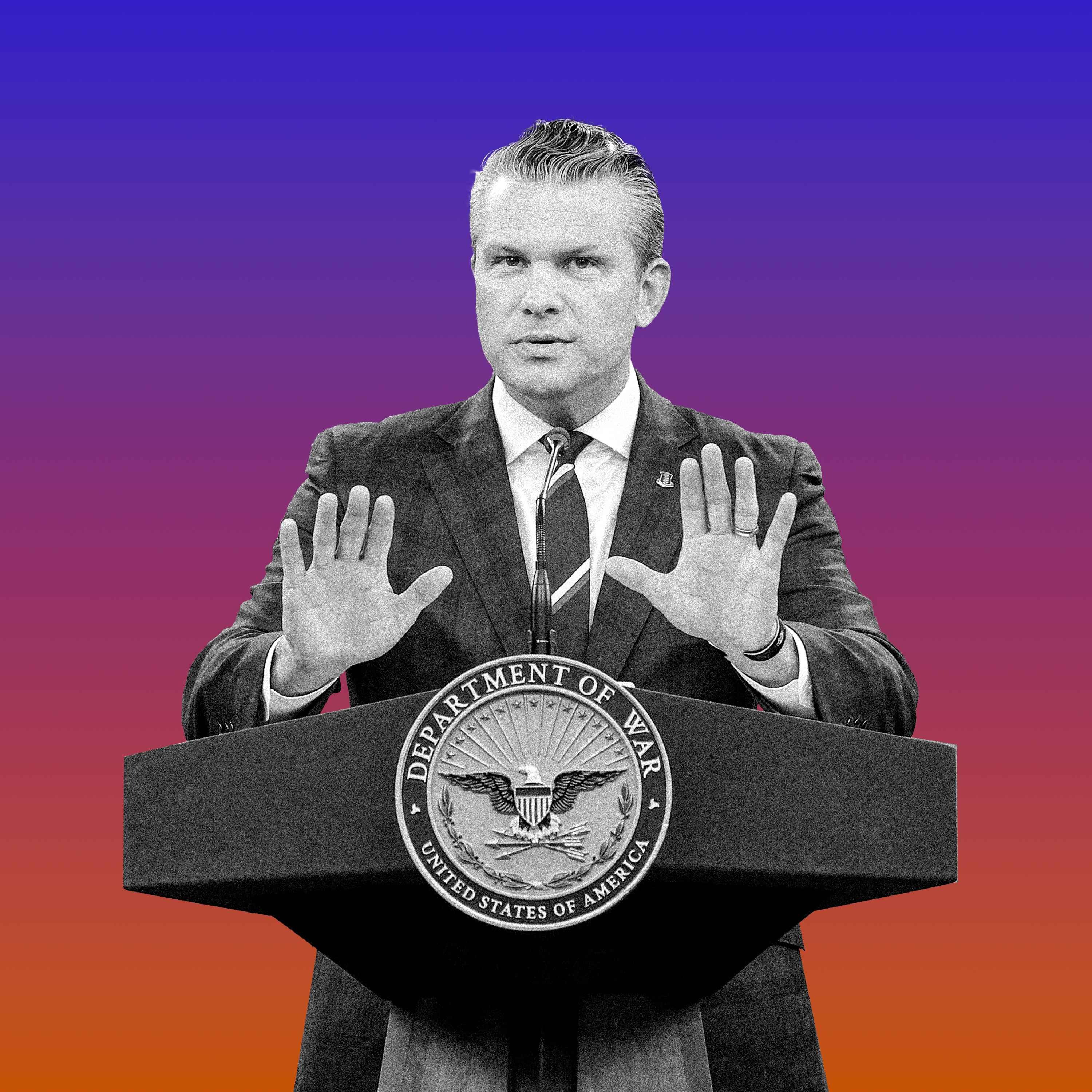
When Donald Trump seizes on an idea, he can riff on it nigh infinitely in any direction, which is why his fairly short and contained primetime speech on election security last week seemed so out of character. Why does Trump seem so determined to keep spinning his wheels on the likely-dead SAVE Act? How much damage can he do before the midterm elections this fall?
Guest: Ari Berman, national voting rights correspondent for Mother Jones.
Want more What Next? Subscribe to Slate Plus to access ad-free listening to the whole What Next family and across all your favorite Slate podcasts. Subscribe today on Apple Podcasts by clicking “Try Free” at the top of our show page. Sign up now at slate.com/whatnextplus to get access wherever you listen.
Podcast production by Rob Gunther, Evan Campbell, Madeline Thames-Ducharme and Patrick Fort.
Paige Osburn is the senior supervising producer of What Next and What Next TBD.
Hosted on Acast. See acast.com/privacy for more information.