 Ask ChatGPT


Election-night discussion of why Democrats’ “blue tsunami” happened, focusing on House and Senate races, gerrymandering backlash, and record turnout—especially among Black and Latino voters—plus what Democrats and Republicans should do next.
David Ferris, author of “It’s Time to Fight Dirty,” a Democratic strategist/commentator; Mary Harris, host of Slate’s “What Next” (co-hosting the conversation).
Polls were right and may have underestimated Democrats; GOP strategies like manipulating district lines backfired (“dummy mander”); Trump-era chaos and scandals drove voter repudiation; Supreme Court changes to the Voting Rights Act enabled GOP redistricting, but turnout and backlash still flipped key races.
Indiana’s 5th (JD Ford leading early); Kentucky 6th; Florida’s House/Senate dynamics; South Carolina Senate (Annie Andrews defeating Lindsey Graham); Texas statewide wins (Tallarico winning; first Democratic statewide federal win since 1988); Kansas Senate (Adam Hamilton); North Carolina House/Senate momentum (Roy Cooper up).
Written by AI. May contain mistakes.
Discussion on the unexpected success of Democrats during elections.
“behind me and um it's election night and by all accounts we just witnessed a blue tsunami the blue tsunami we've been saying might come for a long time david ferris it turns out the polls were right.”
Analyses of what the election results mean for future governance.
“Which is a decisive repudiation of Donald Trump and everything that he represents in a way that's unambiguous, that cannot be spun by people on the right.”
What Democrats should prioritize following their victories.
“If they choose to, which I think that they will.”
Details about an upcoming live stream to discuss election results.
“They have to make tough decisions about impeachment versus investigations versus oversight versus putting forward a positive policy agenda.”
Discussion with pollster Elliott Morris on election trends and predictions.
“Well, if I may, we actually had a Watergate every like six hours over the last two years.”
Analysis of unexpected election results in Trump districts for Democrats.
“Democrats were were likely to win, which is a which is a sharply Trump district in 2024.”
Discussion on the impact of gerrymandering on recent election outcomes.
“Yeah, like the rage, a justifiable rage among black voters in the South that they were about to see their congressional representation cut by the largest number of seats since Reconstruction.”
Exploring the significance of black voter turnout in the midterm elections.
“Most transfers arrive in under 20 seconds.”
Discusses the implications of recent election results and the backlash against gerrymandering.
“Annie Andrews, on the other hand, here we are.”
Explores the challenges the Republican Party faces in the aftermath of the elections, especially with Trump still in power.
“No, they're in a really tough spot, Mary, because he's still the president for two more years and he still wields enormous power in Republican politics.”
Examines how Democrats can navigate their new majority and deal with diverse constituencies in the coming years.
“These will all be deeply vulnerable people in 2032, right?”
Announces a post-midterms live stream and encourages audience participation.
“Okay, I'm going to let us catch a few Z's before we have to do this again, probably in other formats.”

Get the gist, explore an idea or ask about something said.
 Claude
On What Next | Daily News and Analysis, what are the key points of this episode?
Searching your listeningAutomatic transcript. May contain errors.
0:00Tired of buying seafood at the grocery store and wondering how fresh it really is? Finding high-quality fish you can trust shouldn't be a challenge. That's where Wild Alaskan Company comes in. Wild Alaskan Company delivers premium, wild-caught seafood straight to your door, on your schedule. Every box comes with individually portioned, vacuum-sealed fillets that are easy to prepare. Their fish is quick-frozen to lock in freshness, flavor, texture, and nutrients like omega-3s. Plus, there's no GMOs, antibiotics, or additives. Just responsibly sourced seafood that supports sustainable fishing practices and Alaskan fishermen.
0:38And with their 100 % satisfaction and money-back guarantee, you can try your first box risk-free. Go to wildalaskan.com slash cast for$35 off your first order of premium wild-caught seafood. That's wildalaskan.com slash cast for$35 off your first order.
0:56David Faris: You shouldn't have to overpay to watch the news and stay informed. Paying massive monthly bills just to keep up with current events feels wrong. If you're looking for real value and flexibility, there's a better way. With Sling TV, you can watch top national breaking news networks starting at just$19.99 a month. Pick a plan, add what you want, and only pay for what you actually watch. Tune in to national news and stream today. Sling lets you do that. Base pack required restrictions apply.
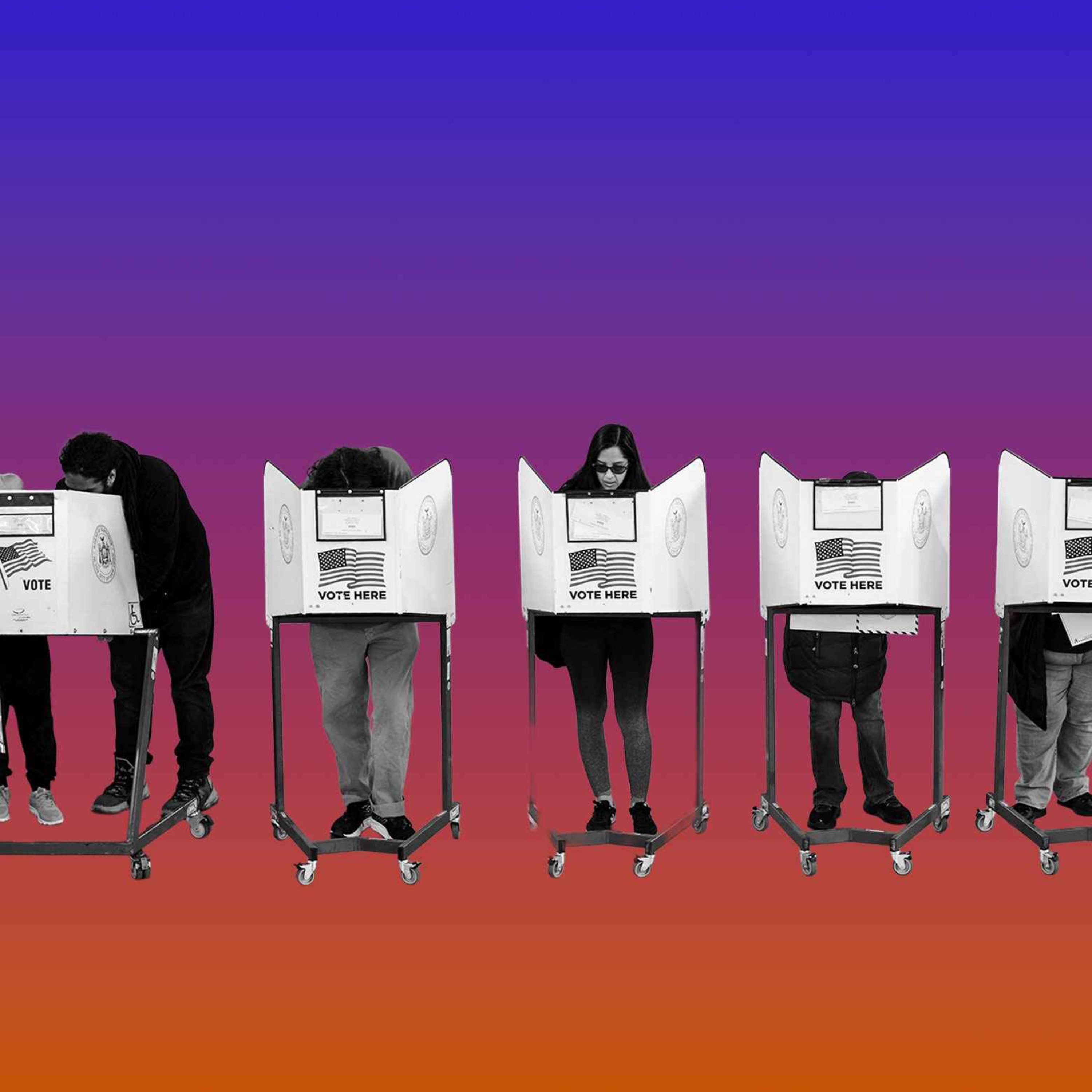
1:31it's tuesday it's 11 o 'clock i've got this like coffee beverage next to me my dog is asleep behind me and um it's election night and by all accounts we just witnessed a blue tsunami the blue tsunami we've been saying might come for a long time david ferris it turns out the polls were right. Yeah.
1:53David Faris: I mean, Mary, it turns out the polls were not just right, but may have actually underestimated Democrats possibly pretty substantially this year. Yeah. David, you were the author of It's Time to Fight Dirty. And one of my go to politicos like we were together on election night in 2024. We have been trauma bonded by that experience. The vibes are very different this time. How are you doing? The vibes are very different. I actually went back and listened to that episode recently. Really? It made me just as sad as I felt that night. So but no, the vibes are incredible. Obviously, there's still some races being called, but I think there's no question that Democrats will be taking the House and the Senate, not just easily, but with, I think, numbers that even the rosiest scenarios we're not predicting as of this morning.
2:39David Faris: So it's just an incredible night for Democrats. Yeah, I mean, according to The New York Times, by 10 o 'clock, Democrats had a greater than 95 % chance of winning the Senate. And this is because of states like Texas, South Carolina, and there's also North Carolina, Kansas, Ohio. The map is just wild. We do have reaction from Donald Trump. He is saying, if I was on the ballot, we would have won in a landslide. Frankly, I'm not sure about that. I would like a fact check. I don't know how that would work without a time machine. But yeah, at one point you texted me, this is the greatest night of my life.
3:20Sorry, wife and children.
3:24David Faris: I mean, look, the birth of my children and my marriage were really great nights. But this is this is something that I think, you know, I and many Democrats, many people on the left have been waiting for for years and years. Right. Which is a decisive repudiation of Donald Trump and everything that he represents in a way that's unambiguous, that cannot be spun by people on the right. And yeah, I'm not going to lie. It feels incredible. They're going to try, David. They're going to try to spin it. They're going to try, but they're not going to do very well with that. You can tell if you turn on Fox News right now, they look shell-shocked and for good reason, right?
3:58I mean, even -
3:59David Faris: God, it took so much though, David. Things had to get very bad for us to get here. Well, look, I mean, ideally. We had to go to war with Iran, David. Yeah, ideally we could win elections without a massive disaster of a war that spikes inflation and diesel prices and two years of authoritarian mayhem. I mean, you know, like. Thugs in the street, American citizens killed. Right. Like, you know, your neighbors being dragged out into the street and kidnapped and sent to South Sudan. I mean, this is the night we should have had in 2024. Right. This is the night that we should have had two years ago.
4:33David Faris: So it's an enduring stain on our electorate, but that's not what happened two years ago. But tonight, I think, is the first step in extracting ourselves from the disaster of the Trump era and moving ourselves to something better and brighter and more optimistic and hopeful. I mean, I hope so. Like, I mean, the leader of the Congressional Progressive Caucus released a statement saying this is a mandate for big change. the beginning of the end of the Trump era. My worry is like, is that big change going to happen anytime soon? Well, look, I mean, I think people need to keep their expectations in check about what can and cannot be accomplished in the next two years.
5:16David Faris: Right. Democrats were just handed a very clear mandate, I think, to check the Trump administration. But Donald Trump is still president. He is. No, for sure. But Democrats can do a lot with Congress. Right. They can do a lot oversight. They could do a lot of investigating. If they choose to. If they choose to, which I think that they will. I think that there's such... Your mouth to God's ears. Yeah. There's such demand, I think, for accountability from the Democratic base. I mean, that's like, this is a victory that was powered by two years of organizing in the streets, right? This is two years of organizing in congressional districts around the country, recruiting the best nominees that we could, pushing back, you know, the No Kings rallies, all of this stuff has gone into this victory.
6:01David Faris: And I don't think that people that made this happen are going to accept kind of status quo democratic politics of like, well, maybe we can get a little bipartisan bill here and there, right? Like, they want something bigger. I think they expect something bigger. And now's the time to lean in and demand it. And now's the time to do it, right? This is I mean, if ever there was a time to go big, this is it, right? We're going to have our largest Senate majority since 2008. And we need to ensure that we deliver something for the many, many people that put us in power and not, of course, to misinterpret why this opportunity was given to Democrats.
6:40David Faris: People also want to see things like the cost of living addressed. What would a misinterpretation look like? I think if Democrats acted like this was all about accountability for Trump, I think that would be a mistake. Right. It's also about like money in your pocketbook, etc. Money in your pocketbook, stopping the war, stopping the assault on civil liberties. I mean, I think that's that is a to do list, a long, hard one. It's a huge to do list. It's a huge task. Donald Trump is still the president. He will be the president until 2029. And of course, Democrats, you know, this is this is the apathy, right?
7:16David Faris: Like this is going to be the greatest night. And from here on out, it gets harder, right? We have to make tough decisions about the priorities that they want to pursue. They have to make tough decisions about impeachment versus investigations versus oversight versus putting forward a positive policy agenda. I don't know. That sounds crazy, right? Why not both? I know. Yeah. We can walk and chew down at the same time, I think. Okay. This is where I put my usual disclaimer. We're recording us around 1115 Eastern time. We're going to have more results by the time people hear this. Like, I feel uncomfortable saying words at this moment because things will change.
7:55And in fact, we are going to be doing a live stream a little bit later on Wednesday, 12 noon. If people want to tune in for that, they definitely should. Go to slate.com slash search live to sign up. But in the meantime, today on the show, David and I are going to talk about how this blue tsunami became a reality. I'm Mary Harris. You're listening to What Next. Stick around.
8:27This episode is brought to you by FreshBooks. If you are building a service business, the money side might feel like a whole second job, especially when you want every invoice to show clients you're the real deal, not just a side hustle. FreshBooks changes that. FreshBooks makes the money side of your service-based business easy. You log your hours, you send a branded invoice, you get paid and know your numbers instead of chasing them. Money in, money out, all in one place. No more juggling one app for clients, one for billing, plus a pile of spreadsheets and emails. FreshBooks is designed for how small business owners think about money, not how an accountant does.
9:05You don't need a financial background to use FreshBooks. It's simple on purpose. Most owners are up and running in minutes, not days. And if you need help, a real person is available on every plan. FreshBooks has been trusted by service businesses for over 20 years, helping over 500 ,000 owners and solopreneurs run their businesses confidently. Right now, my listeners can get FreshBooks for less than$3 a month for your first four months. That is 90 % off. Head to freshbooks.com slash podcast to get started. That's 90 % off under$3 a month for four months at freshbooks.com slash podcast.
9:43Decisions made in Washington can affect your portfolio every day. But what policy changes should investors be watching? Listen to Washington Wise, an original podcast for investors from Charles Schwab, to hear the stories making news in Washington right now. Host Mike Townsend, Charles Schwab's Managing Director for Legislative and Regulatory Affairs, takes a nonpartisan look at the stories that matter most to investors, including policy initiatives for retirement savings, taxes and trade, inflation concerns, the Federal Reserve, and how regulatory developments can affect companies, sectors, and even the entire market.
10:20Mike and his guests offer their perspective on how policy changes could affect what you do with your portfolio. Download the latest episode and follow at schwab.com slash WashingtonWise, or wherever you listen.
10:35Do you snore? Did somebody hand you a CPAP and did you quietly stop using it? The mask that never quite seals, the hose tugging at you every time you roll over, a machine sitting abandoned in a closet? Excite OSA works a different way. It treats a root cause instead of managing the noise and you use it while you're awake. 20 minutes a day, while the coffee brews, while you set your fantasy lineup. An FDA-cleared prescription device for primary snoring and mild obstructive sleep apnea. Then you go to bed like a person, nothing strapped on, nothing plugged in. In clinical studies, 90 % of patients saw a reduction in snoring.
11:20No sleep study required. Prescribed online, shipped to your door. Excite OSA at springsleep.com slash sleep20. Code sleep20 for 20 % off. Excite OSA is an FDA-cleared prescription-only device for primary snoring and mild obstructive sleep apnea. Not for everyone. Individual results vary. Risks and benefits at springsleep.com.
11:51so david earlier this week i spoke to the pollster g elliot morris elliot for short uh his take on tonight is as follows following him on social media he says this is shaping up to be the biggest house primary victory since 1974 this is a watergate level repudiation of the party in power is that how you would put it?
12:15David Faris: Yeah, absolutely. I mean, these results are unambiguous. But with Watergate, we had Watergate. Well, if I may, we actually had a Watergate every like six hours over the last two years. It's just that nobody wanted to do anything about it. And I think the voters did ultimately react to this. This isn't just about diesel prices. This is about a president who, you know, his allies in Congress just sort of abdicated their responsibility under the Constitution to hold him accountable for anything that he was doing. The number of scandals, I mean, we would need to be here all night, Mary. So late. We don't have that kind of time.
12:49David Faris: We don't. Because we had to go through the races. Okay, so let's go through the night, like how the night shaped up. Because I felt like really almost immediately we started seeing results that were telling a bad story for the GOP. Like we knew things were trending in a certain direction early, like 6.50 p.m., decision desk HQ is predicting Democrats are going to take the House. NBC called that at 10. Now there's an estimate they're going to have 252 seats. And like, I would say the story here where I started to be like, huh, was Florida, which ironically, the Senate candidate there, Angie Nixon, did not win her race, but she kept her race so tight.
13:31And it had not been predicted to be tight like that, that I feel like that was when I was like, huh, maybe tonight's going to go in a really interesting direction. Because if Ashley Moody wins the Republican, and there's like a two or three point gap, that's bad for Republicans. Was that the moment where you sort of started to clock in and think maybe blue tsunami is real too?
13:52David Faris: I mean, honestly, it was a little bit earlier than that. There was a race in the 5th congressional district in Indiana, where it looked like Democrats were were likely to win, which is a which is a sharply Trump district in 2024. A lot of people were leaning that. Hold on. I have like post-its over here. I'm going to like that was that was J.D. That was J.D. Ford, right? J.D. Ford is the Democratic nominee in that race. Yes. Right. Yeah. And like I think it was like early ballots or mail-in ballots came in right away and it was like, whoa, he's got like 60 percent. And that was surprising. He was up against a Republican incumbent.
14:26David Faris: Yes, it was surprising. There was Kentucky six, the 6th Congressional District in Kentucky. And these were races that had been identified well in advance as sort of canaries in the coal mine. And, you know, I've got six different tabs open and I'm looking at Republican strategists on Twitter, you know, the Nazi hell site that they're still on. What were they saying? They were not happy. Yeah. Even people, I think like, you know, well-respected people like Patrick Ruffini, who's a Republican pollster, who has been saying for months, you know, I think things look better for Republicans than they look.
15:00David Faris: And even he, I think the polls are a lie. The polls say not a lie, but like there's a lot of reasons to think that we may do better than the polls are saying, et cetera. And within 10 minutes of these results coming in, when the polls closed in Kentucky and Indiana, he said, oh, boy, this looks really bad. You know, and so I take those signals seriously from people on the other side who are who are straight shooters, who who are trying to win. And we won't talk about like, you know, why they're trying to win for this party. But I took that signal very seriously. And it started to shape up when the Florida results came in.
15:35David Faris: It just, you know, you looked around and you were like, I don't see anything good for the GOP here. Like nothing. Well, of course, like Florida is one of the states that gerrymandered. And so you had people really like fighting for their lives, like sitting Democrats, like Representative Kathy Castor in Florida's 14th. And then she keeps her seat. And it's like, huh, OK, so we did all this like messing around with the map and still Democrats are winning. Yeah, we call that a dummy mander. Right. That's when that's when gerrymandering backfires on you. And we'll have to wait until the dust settles to see whether that's really the case, you know, whether they would have done worse.
16:09How dumb were the maps?
16:11David Faris: How dumb were the maps? Right. But I think like in a broader sense. What is the IQ of the maps? Low IQ, as the president likes to say. I think in a broader sense, the strategy of trying to manipulate district lines to keep the house was disastrous from the start. It spurred a counter mobilization on the left that was counter gerrymandering and it just made people angry. And that's not even talking about the VRA. The voting rights amendment, yeah. Yeah, like the rage, a justifiable rage among black voters in the South that they were about to see their congressional representation cut by the largest number of seats since Reconstruction.
16:50David Faris: I think that was a really underrated factor in some of the results that we're seeing tonight. Yeah, I want to get to black turnout in like just a bit, but I think everyone was looking at the Senate in this midterm as like a far off dream for Democrats. And I remember talking to you about this, like, back in January. You're like, no, no, it really, really could happen. But I don't think even you, a real political sicko who was really, really optimistic, I don't think you would have been like, you know what? South Carolina and Texas, those are the states that are going to make the Senate possible for the Democrats.
17:30And yet here we are, David Ferris, looking at South Carolina and Texas. And South Carolina, I will say, for Democrats, may feel like an especially sweet victory since Donald Trump went so hard for Darlene Graham, Lindsey Graham's sister, to get the seat there. She flopped terribly. You know, Dr. Annie Andrews is the first. Is that my getting her name right? It's Annie Andrews, right?
17:56David Faris: Yeah, Annie Andrews. Dr. Annie Andrews is the Democratic candidate who's going to get that seat. And Trump was really terrible to her. Like he had names like Tranny Annie for her, like, ugh. Just vile. And then Texas, you know, same thing, like Tallarico, they tried to call him Tala Frico. And now he's winning. And that's been a Democratic dream for a long time. I'm stunned. Then we're not even going to talk about Kansas, where you have Adam Hamilton, the megachurch leader, who's winning over Roger Marshall. So it's like like all of these is like me with like the head exploding emoji, like, you know, craziness.
18:35David Faris: Yeah, I have to pinch myself to make sure that I'm actually awake right now, because, yeah, not just back in January, Mary, like, could I not have envisioned this level of a tsunami? I mean, three days ago, I was skeptical that Democrats could actually win South Carolina and Kansas. You know, despite all the signals saying that these were going to be close races and that we had a real shot, I was like, look, in the end, you know, the undecided voters are so heavily Republican leaning. Like, I just don't think it's going to come through. If they get close, that's a huge victory. And Decision Desk is apparently just called Iowa for Josh Turek.
19:06David Faris: Incredible. Which, remember, yeah, we talked about Iowa last time as the sort of purest test of this, where Republicans actually had a good candidate by their standards. They had a good candidate that wasn't just pushed on everybody by Trump, who seemed like Like she knew what she was talking about. She was a sitting legislator. She was kind of an appealing candidate, right? Like, and she couldn't she couldn't get it over the line either. And I think that's a sign that this wasn't just about bad candidate selection for Republicans. I think that didn't help. But I think that the environment that the president created for his Republican allies in Congress was so, so catastrophic that not even a good candidate in a heavily Trump state can get over the line in this kind of environment.
19:45Talk to me about the margins in these races. I feel like especially with Tallarico and Texas, looking at that swing data was like almost unbelievable. If you know Texans, like looking at it, they were like, what was causing it? Like there was a lot of talk about Latino voters going in tonight. Is that what this is? Is this something else? Is this unaffiliated voters? Do we know yet?
20:08David Faris: We don't know yet. I mean, Texas famously does not do that kind of partisan identification in their registration system. So it's a lot of guesswork. But I think there's no question that there was a huge, huge Latino backlash to kind of everything that's been happening over the last two years. I don't think anybody, again, like I don't think anybody in their wildest dreams could have imagined that Tallarico would win this race by what looks like eight points. I'm like, what? And Greg Abbott is not going to be governor there. It's going to be Gina Inejosa, which is like, that was like, maybe that'll happen, too.
20:43If maybe Tallarico wins, like they'll somehow supercharger charge each other and they'll both get in. That was the vision of the Democrats in Texas. And it's just like, oh, all right. And also there's gonna be a Democratic AG. Like it's just that's a massive change for that state.
21:00David Faris: It's a huge sweep of the statewide races. I mean, a Democrat has not won a statewide federal race in Texas since 1988. So we're talking almost 40 years of Republican dominance of Texas politics. I mean, I'm sure that you, like all the listeners, remember 2018 when there were such high hopes for Beto O 'Rourke. And he came pretty close to unseating Ted Cruz. But, you know, honestly, since the summer, that has looked different. You know, Beto never led that race, not for a single day in the polling averages. Well, my colleague Jim Neal did a really good article where he talked to people in Texas.
21:36this. And they were basically like, after that race, they realized they had to do a lot more fundamental rebuilding. Like they had to make sure the entire ticket was strong. They had to make sure they weren't leaving unions behind. They were just like, everyone was solidly working together in lockstep. And it seems like they did that. It took years of organizing work by the Democrats and a lot of mistakes. But now here we are. And a lot of mistakes, honestly, by Republicans, like Ken Paxton, the Senate candidate, was a terrible candidate. Greg Abbott had many, many mistakes, I would say, as governor and things that the voters were probably angry with him with.
22:14Okay, we should just list off more, like John Ossoff in Georgia and Keisha Lance Bottoms is the governor there, which of course now everyone's going to be talking about. John Ossoff could run for president in 2028, because if he resigned, then Keisha Lance Bottoms would be appointing his successor. So that'd be cool. You know, Chris Pappas in New Hampshire, which for a brief moment, people were scared about Chris Pappas in New Hampshire because he was a little more progressive. And no, that that happened. Roy Cooper, everyone was expecting in North Carolina. And he is in North Carolina. But also, like, if you look at the congressional races in North Carolina.
22:56In North Carolina, Richard Hudson, who's a Republican representative, he's trailing, he runs the Republican congressional campaign operation. So it's like people who were very fundamental to the Republican Party are not getting through in a place like North Carolina. Well, yeah.
23:15David Faris: I mean, this is what happens in a wave election, right? Is that races that are on the margin tend to go in one direction, you know, for the out party. And then you get surprises. Right. And I was expecting some pleasant surprises tonight. I wasn't quite expecting this many pleasant surprises or this early. But I think that North Carolina was a very early canary in the coal mine, too. Right. Like they called that race, you know, maybe half an hour, 45 minutes after the polls closed. Roy Cooper is up 20 points right now with 95 percent of the vote in. just just in a I mean, if you think about the last 20 years.
23:49And again, they gerrymandered in North Carolina. They literally tried to get rid of Don Davis's seat, I believe. And he's in the lead right now.
23:56David Faris: Yeah, he's going to win that seat. And I think if you think about the whole arc of Democrats in North Carolina, remember Kay Hagan won that race in 2008 for the Senate. She was brought in by Obama's coattails and everybody kind of had these big hopes that North Carolina was going to flip, you know, like a like a Colorado or Virginia and really become a lean Democratic state. We haven't won like a single thing other than the governorship in North Carolina since then. So this has been a long time coming. Right. Democrats in that state have been organizing and working extremely hard for many, many years with very little return on it.
24:31David Faris: And tonight is a real, I think, vindication for the opposition in North Carolina. They've claimed the North Carolina House, the half of the state legislature. So just a huge, huge earthquake across the Southeast in particular.
24:53This episode is brought to you by Monarch. Like a lot of folks, my biggest debt is probably my home. It's an investment I love, but also one where you gotta wonder, is this thing ever going to be paid down? What if you had a way to watch your debt dwindle bit by bit? A visualizer that helped you track your progress and even showed you how you could get out from under debt faster by paying more or differently. Monarch's Debt Pay Down Simulator, it is that tool. You plug in whatever you're trying to pay off, credit card debt, student loans. It'll give you an exact debt-free date. You can watch your timeline as it moves for a little motivation.
25:38And you can play out different payment scenarios. Pick the one that works best for you. Our producer Evan loves Monarch. He says it is his go-to finance app. He's used it for like a year now. It helps him track his finances. It gives him weekly recaps of his spending so he can see where the money's going and make different decisions if he wants. Monarch can help you break the debt cycle, turning the unknown into a plan with an end date. It also takes the burden of tracking your debt off your plate. With quick check-ins on your laptop or your phone, you'll always know exactly where your money is with Monarch.
26:14Write your own money story with Monarch. Use code whatnext at monarch.com to get your first year of Monarch Core half off at just 50 bucks. That's 50 % off your first year at Monarch.com with code WHATNEXT.
26:53David Faris: my money feeling. Most transfers arrive in under 20 seconds. Join millions saving billions on hidden fees. Be smart. Get wise. Download the wise app today. T's and C's apply.
27:09Okay, let's talk about takeaways. We've talked about the South a lot. We talked about North Carolina. I really do think we need to talk about black voters and how their turnout has impacted this midterm.
27:25David Faris: Well, I mean, again, we will not have the final numbers for a while, right? But like what it looks like is that there is record setting turnout across the South in particular and the Southeast that have put a number of seats that Democrats dreamed about for a long time into their column, like South Carolina. South Carolina. South Carolina. Unbelievable, right? This is a state that Donald Trump carried by 18 points in 2024. And Democrats have a core memory of missing on South Carolina. Also, Jamie Harrison, who ran the DNC afterwards. Right. Like he he was, you know, oh, maybe he's going to defeat Lindsey Graham.
28:02No, he did not. Ladies and gentlemen, he did not. He did not. Annie Andrews, on the other hand, here we are.
28:10David Faris: Yeah. And I think she ran an incredible race, too. I mean, I think a lot of the blame is going to go to Trump for kind of forcing Darlene Graham Nordeaux on everybody. um and i do think she was a an especially weak candidate but the but the margin that we're seeing in south carolina suggests to me that andrews may have beaten anyone at least by a little bit and i think that um there's no question in my mind that some of that is a is a really strong backlash um to the kind of post vra gerrymandering that republicans did in the spring in the summer which was greenlit by the supreme court right when the supreme court was like Bye-bye Section 2 of the Voting Rights Act.
28:46And not only that, they said, like, we're going to allow you to to redraw these districts much closer to the election than than I think would have been standard in American history.
28:54David Faris: Right. So the Supreme Court did everything that they could to make it possible for for GOP governors and legislatures to draw these black districts out of existence. Interestingly, they didn't do it in South Carolina. Right. So this is one of the states where I didn't actually go through with it. But the backlash was the same. either way. Clyburn made the case to them as I recall. He's like, I bring you guys money. Yeah. Are we going to be doing this? And I think that they were, I mean, I think they're afraid of Clyburn and the clout that he wields. I think that they were worried about juicing black turnout in a race that was like suddenly seeming like it was going to be closer than they thought.
29:28David Faris: But I don't think anybody really, I don't think anybody imagined that Andrews wouldn't just win, but would have a race called two hours into the night. I mean, before another a bunch of other kind of consensus battleground states it's just uh it's just wild is someone gonna be able to flip this around and be like see no one needed the voting rights act because look if people just turn out y 'all i mean this is the same case they made about the voter id stuff in the in the 2010s right it was like they imposed these voter id laws and and there was a counter mobilization right and And Democrats were able to offset that.
30:05David Faris: I think in the end, it would be nice to not have to fight an election with the other side sort of manipulating the rules to put you on the back foot. It would be nice to fight an election on equal footing with the opponents. And I don't think this means that the VRA was not necessary. I think this means that in a gigantic wave election for Democrats, the gerrymandering to eliminate black districts didn't work this one time. But that doesn't mean that it wouldn't work in the future. And then in a different national environment, Democrats really could suffer from seeing that VRA kind of dismantled as it has been over the last 20 years.
30:45Yeah, everyone has like a very close experience with Donald Trump and all of the things that have gone wrong in this moment. And so it's much easier to mobilize in that circumstance. I do think that one thing that we're seeing here is a bunch of constituencies who swung towards Donald Trump in 2024 just swung right back. Just whether we're talking about voters of color, whether we're talking about young voters. And I know that we're not going to really like no know this for a little bit, but that is the sense I'm getting looking at how people are voting and how these races are going. Yeah.
31:25David Faris: And that's that's something that's been apparent for well over a year. Right. I mean, if you go back into the presidential approval numbers over the past year, you could see Latino voters and young voters drifting away from the president in pretty large numbers. It coincided with the big ice surges in places like, you know, my city of Chicago and Minnesota. We all know about the horrific things that happened there. But that was the beginning of the end for that coalition, right? Those were the groups that Trump made inroads with in 2024. Shocking to me still that that's what happened, but that's what he did.
32:01David Faris: And they were the first people he alienated, really. So what do Republicans do now? They've spent the last couple of years remaking the party as I mean, it was already Trump's party, but they really like Taylor made the thing for Trump. This is Trump's party and what he says goes. And they've just had their asses handed to them. I don't it feels a little painted in the corner to me. It feels a little bit like, you know, the normal move would be like, well, we're going to change what we do here. On the other hand, the president, who's also, you know, the head of your party, is not going to like that very much.
32:42David Faris: No, they're in a really tough spot, Mary, because he's still the president for two more years and he still wields enormous power in Republican politics. If you think about the impact of a Trump endorsement in the primaries, I think that his endorsees won something like 95 percent of their primaries this year, which is it's just an incredible figure for a president who was very unpopular throughout the entire primary season. And so they're going to be really cross pressured, you know, between finally doing the right thing for the first time in like 10 years, which is reasserting their backbone, reasserting the role of Congress in our system and also thinking beyond tomorrow.
33:21Right. Like and we already have Ron DeSantis like going on podcasts or whatever and talking about blaming Trump's war for high gas prices. So it's like you're seeing some people, you know, notably, he is not a senator. He's not a congressperson. I feel like he's you know, he's an outgoing governor. I think that's kind of a privileged position to make a statement like that. You know, you're sort of like you're homering into the bushes over here and you're like, by the way, guys, you know. So but to me, it was interesting. But it was also like, I don't know how many people are going to be able to pull this move.
33:53David Faris: Well, I mean, I actually think you saw some of that from Republican candidates in the runoff to Election Day, right? You had people like Ashley Hinson in Iowa who lost. Who lost. Mike Rogers in Michigan. These are people that came out and said, look, we've got it. We've got to do away with these tariffs. We've got to end this war. But that's the important thing. They lost to me. Because that's the thing. It's like, I was wondering where this goes from here. And the people who backed away are not going to be the people who are still like the active front people of the party in Washington. So then the left behinds are whom?
34:28Right? Right.
34:28David Faris: Well, I mean, they're the survivors of this of this bloodbath. Right. Yeah. And I think that those survivors are going to be having one eye on 2028 or whatever the next election is. And I don't think that they're going to be happy with the direction that the president seems to want to take things, which is he's been talking for a couple of weeks now about resuming the war with Iran right after the midterms. um and i tucker carlson had this really like alarming tweet where he's like we're gonna nuke her on you know bb wants to do it and i was like oh my god why why are we speaking this um it's disturbing yeah um but i do think that kind of cooler heads in the party are going to look at this and say look the next cycle has already started right it's it's election night and we're gearing up for 2028.
35:16David Faris: Political time in America moves. Nuking Iran the move. Right. I don't think it is right. Because the president can really destroy a Republican's chances in 2028 if he doesn't make any adjustments. We saw this in 2006 when Democrats. But does he care? No, he doesn't care at all. He cares about his own personal repudiation. He will, I'm sure by the time we wake up tomorrow, he will have discovered a lot of fraud and a lot of excuses for what happened. And it'll always it'll be about him. And that's that's been the problem this whole time is that he stepped into the cycle in which Republicans were facing headwinds and he made everything worse by running around the country saying, pretend I'm on the ballot.
35:58I think people did.
36:00David Faris: I think they did. Yeah, I don't think it went the way you thought it would. I mean, my other question is, what do the Democrats do? Because a whole bunch of people are now going to be coming to Washington. who are kind of interesting. Like a lot of them, I would call them Democrat adjacent. Like if you look at Adam Hamilton in Kansas, Adam Hamilton was like, Kamala Harris, do not come here, please. And I'm just like, that's an interesting setup for you to be going to Washington and like, hello, Chuck Schumer. Hello, Hakeem Jeffries. How are we going to work together? Also, maybe hello, Abdul al-Sayed, if Abdul al-Sayed pulls out his race, which looks good, or hello, whoever.
36:40You know, it's going to be an interesting coalition and it's going to look pretty different than it has before. And it really raises a question to me of like, what you're going to do now?
36:52David Faris: Yeah. I mean, if you think about the majority that Democrats will have, it runs through a bunch of red states. These will all be deeply vulnerable people in 2032, right? Like I would not want to be running the Democratic Senate campaign committee in 2032. Nancy Pelosi always talked about the front liners. There's gonna be a lot of front liners, a lot of front liners. And you have to think about how some of the things that the base wants to do will play with these front liners, right? Like these are people who are already gonna have one eye on their next election are cognizant of the fact that like, they're probably only in office because the president screwed up so badly that it put their deep red state in play.
37:26David Faris: And I think it'll be really interesting to see how Chuck Schumer handles this, you know, this big split in the party between the people that got them the majority this year, which is, you know, effectively kind of like a few Joe Manchin types of people that are wild cards. We don't know that much about them. We don't know what they want to do. And they will have to be accountable to their own voters. Who's the new Joe Manchin in your mind? Oh, that's such a good question. I think Hamilton is probably the most likely to be that kind of person um i think somebody like annie andrews does actually seem to be on the left and yeah in a pretty meaningful way whereas hamilton was somebody who like really leveraged his identity and his background in kansas to make himself more palatable to the voters of kansas um now he doesn't seem like that squishy to me but we won't know until he gets into office it's true and i think another encouraging thing to me is that um is that he won as a democrat okay you you look a little bit north and you see Dan Osborne in Nebraska, it looks like he's going to lose that race.
38:29He ran as an independent.
38:31David Faris: As an independent, Democrats got out of the way, right? There was this whole thing in some deep red states where the Democratic parties were trying to get their own candidates out of the way of the independent in those races. It happened in Montana. It didn't work there. Yep, she didn't get out of the way. Right? No, she didn't. But in Nebraska, they did. They cleared the field for Dan Osborne, and it doesn't look like it's going to work in a very, very similar environment to Kansas, in a very similar environment to South Carolina in terms of the Trump margin in 24. And it looks like the people that ran as Democrats did better than the people that kind of like pretended that the party doesn't exist.
39:05David Faris: And one of the things that's encouraging to me is that you had a number of candidates take the troubled Democratic brand and they took it over the finish line in these deeply, deeply hostile places where Democrats have not won in a long time. And I think that they mostly did it without giving up their kind of core values or the core values of the party. It's kind of like a power wash of the brand from the inside out. Yeah, it's pretty great. It feels good. I would go through that car wash again. Sounds good. Okay, I'm going to let us catch a few Z's before we have to do this again, probably in other formats.
39:43Just before we go, I'll say the New York Times, NBC, Decision Desk, they have all called the Senate for the Democrats at this point. Do we know the margin page? Like what's the, how many seats we got? Are we in Fetterman proof?
39:57David Faris: Well, not yet, but the Times is projecting 55. The Times is projecting 55. For what it's worth. And I think that's probably what it's going to be. Whew. That's several times over Fetterman proof, right? That's three seats beyond Fetterman proof, which feels good. Damn. David, are we getting an impeachment out of these people? We better. Thank you, brother. Yeah. we better thank you thank you so much for joining me late at night i truly truly appreciate it every time we do it um and that's our show again if you are listening to this on wednesday we are doing a post midterms live stream a little later today 12 noon eastern time to sign up go to slate.com slash surge live leave your questions of your comments i'm going to be there with jim newell we're going to get to them all we're also you know special guests who've been up all night with Abdul Syed and Hassan Piker and the whole crew.
40:46What Next is produced by Evan Campbell, Madeline Thames-Dusharm and Patrick Fort. Paige Osborne is our senior supervising producer of What Next and What Next TBD. Mia Lobel is our executive producer of podcast here at Slate. Ben Richmond is the senior director of podcast operations. I'm Mary Harris. You can track me down in blue sky. Yell at me. I'm at Mary Harris. Don't yell at me. Okay. Thanks for listening. Talk to you later.
41:43and identity governance by helping you answer four simple questions. Where are my agents? What can they do? What are they doing? And how do I respond if they go rogue? It gives you full control, letting you manage task-scoped permissions, trace behavior with a full audit trail, and even flip an instant kill switch if an agent ever goes rogue. That way you can shine a light on agents operating across your organization. Bring AI agents out of the shadows. Okta secures AI. Learn more at Okta.com. That's OKTA.com.
42:21500 orders a month was manageable. 5 ,000 is madness. Embrace intelligent order fulfillment with ShipStation, the only platform combining order management, warehouse workflows, inventory, returns, and analytics in one place. What used to take five separate tools, ShipStation does in one. automate fulfillment and rate shopping to ship up to 15 times more with up to 90 savings go to shipstation.com and use code audio to try shipstation free for 60 days
Now we know how effective Trump’s reflecting pool-related closing pitch was.
And join Mary Harris and a team of Slatesters covering the election on Wednesday (11/4) at noon eastern time by signing up here.
Guest: David Faris, professor of political science at Roosevelt University and the author of It’s Time to Fight Dirty: How Democrats Can Build a Lasting Majority in American Politics.
Want more What Next? Subscribe to Slate Plus to access ad-free listening to the whole What Next family and across all your favorite Slate podcasts. Subscribe today on Apple Podcasts by clicking “Try Free” at the top of our show page. Sign up now at slate.com/whatnextplus to get access wherever you listen.
Podcast production by Evan Campbell, Madeline Thames-Ducharme and Patrick Fort.
Paige Osburn is the senior supervising producer of What Next and What Next TBD.
Hosted on Acast. See acast.com/privacy for more information.