 Ask ChatGPT
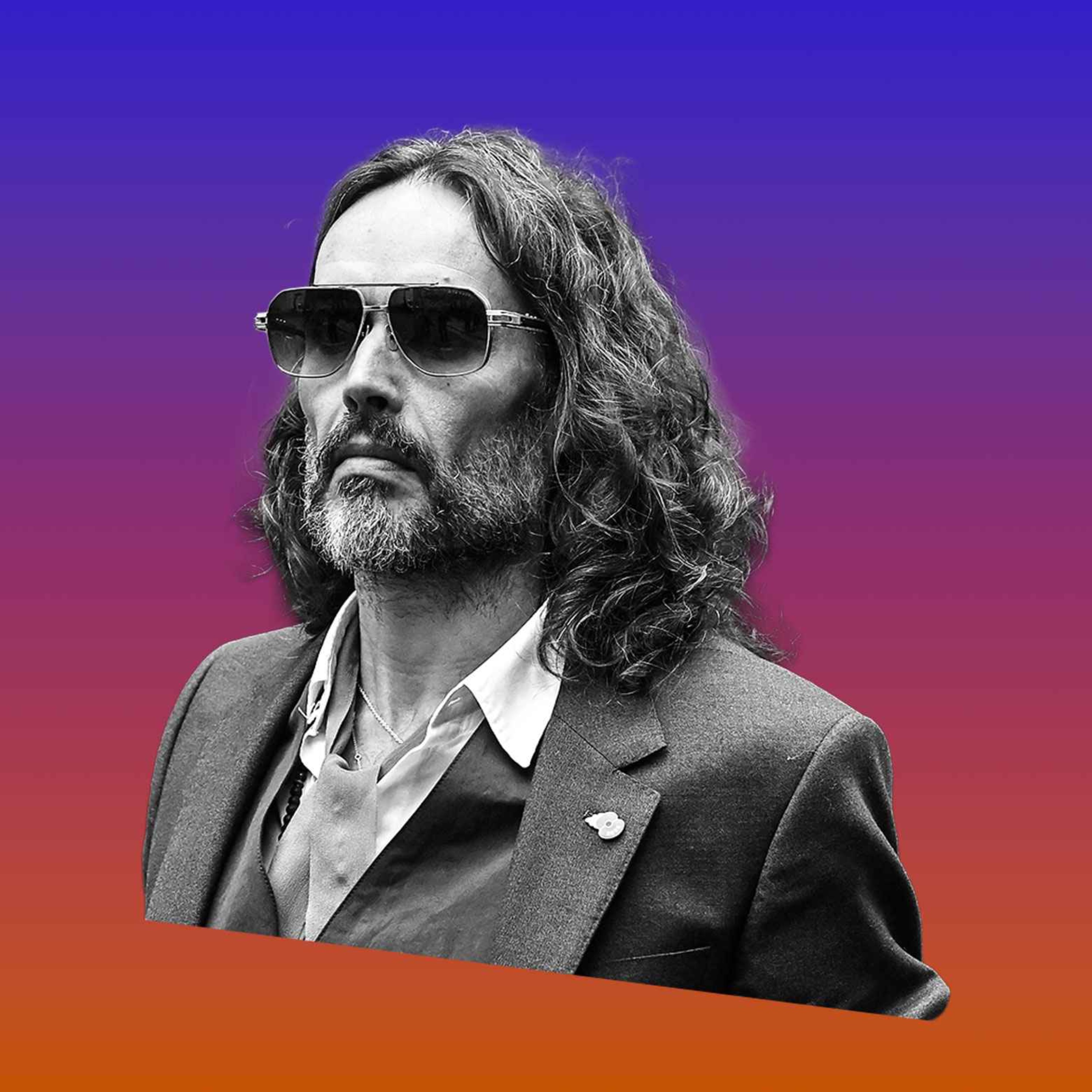

The episode argues that the June Venezuela earthquakes exposed the U.S. “true project” in Venezuela—U.S. control of assets and behind-the-scenes governance—while also assessing earthquake impacts and humanitarian response.
Josh Partlow is a staff writer at The Atlantic who has reported extensively on Latin America and Venezuela, including earlier coverage from Mexico City and attempts to enter Venezuela.
The U.S. has shifted from publicly backing democratic opposition to “stability” and economic development, working with Delcy Rodríguez’s government after Maduro’s removal. The U.S. is portrayed as managing Venezuela’s oil revenue accounts and coordinating disaster logistics (e.g., air traffic control at Caracas airport; running La Guaira port). Aid is described as significant but not as large as other disasters, and politically constrained (e.g., Maria Corina Machado’s plane reportedly turned around).
a college student’s 15-mile trek after a 16-story apartment tower collapsed; U.S. meetings with Diosdado Cabello (with a $25M bounty); uranium removal; a U.S.-drone strike on “Tren de Aragua” coordinated with Venezuelan forces; negotiations announced for August 1 with opposition figures.
Written by AI. May contain mistakes.
Explore the devastating impact of earthquakes in Venezuela and U.S. responses.
“Actually, at first, he tried to get into Venezuela, but his visa got denied.”
Discuss the evolving U.S. strategy towards Venezuela and its implications.
“Like, that's just been the bottom line of the foreign policy towards Venezuela.”
Discover the evolving dynamics between the U.S. and Venezuela amid complex interactions.
“requests to Delce Rodriguez's government are being honored, whatever they ask for, essentially, Venezuela is doing.”
Examine how the recent earthquake has influenced public sentiment and governmental control in Venezuela.
“Theoretically, there is a time limit for how long Delce Rodriguez, who's been running the country in concert with the United States, can keep doing that.”
Explore the challenges reporters face in Venezuela and the government's attempts to control the narrative.
“But they're very angry at their own government and they want change.”

Get the gist, explore an idea or ask about something said.
 Claude
On What Next | Daily News and Analysis, what are the key points of this episode?
Searching your listeningAutomatic transcript. May contain errors.
0:00Hey, it's Paige DeSorbo from Giggly Squad. Everyone is always looking for a new way to make some extra cash, but sometimes the easiest place to start is your own closet, with a little help from Depop. Think about how many clothes you have that you love but you just don't wear anymore. On Depop, it's quick and easy to list those pieces, there's no selling fees, and suddenly those clothes have a chance to find someone who actually wants them. And the best part? You're making room for whatever you're into next. Make money on Depop with no selling fees and find what you want for less. This message is brought to you by Depop.
0:32There's one thing that will forever change the way you sleep, and it's the softest 100 % organic cotton bedding from Bowlin Branch. You'll fall asleep faster, wrapped in the most luxurious comfort. You'll never sleep hot again with airy blankets, cloud-like duvets, and breathable sheets. You'll experience pure comfort on night one and feel your bedding get softer with every wash. Discover the difference with 15 % off your first order at bowlinbranch.com with code BUTTERY. Exclusions apply. See site for details.
1:09For the last few weeks, the Atlantic's Josh Partlow has been trying to get on the phone with people inside Venezuela.
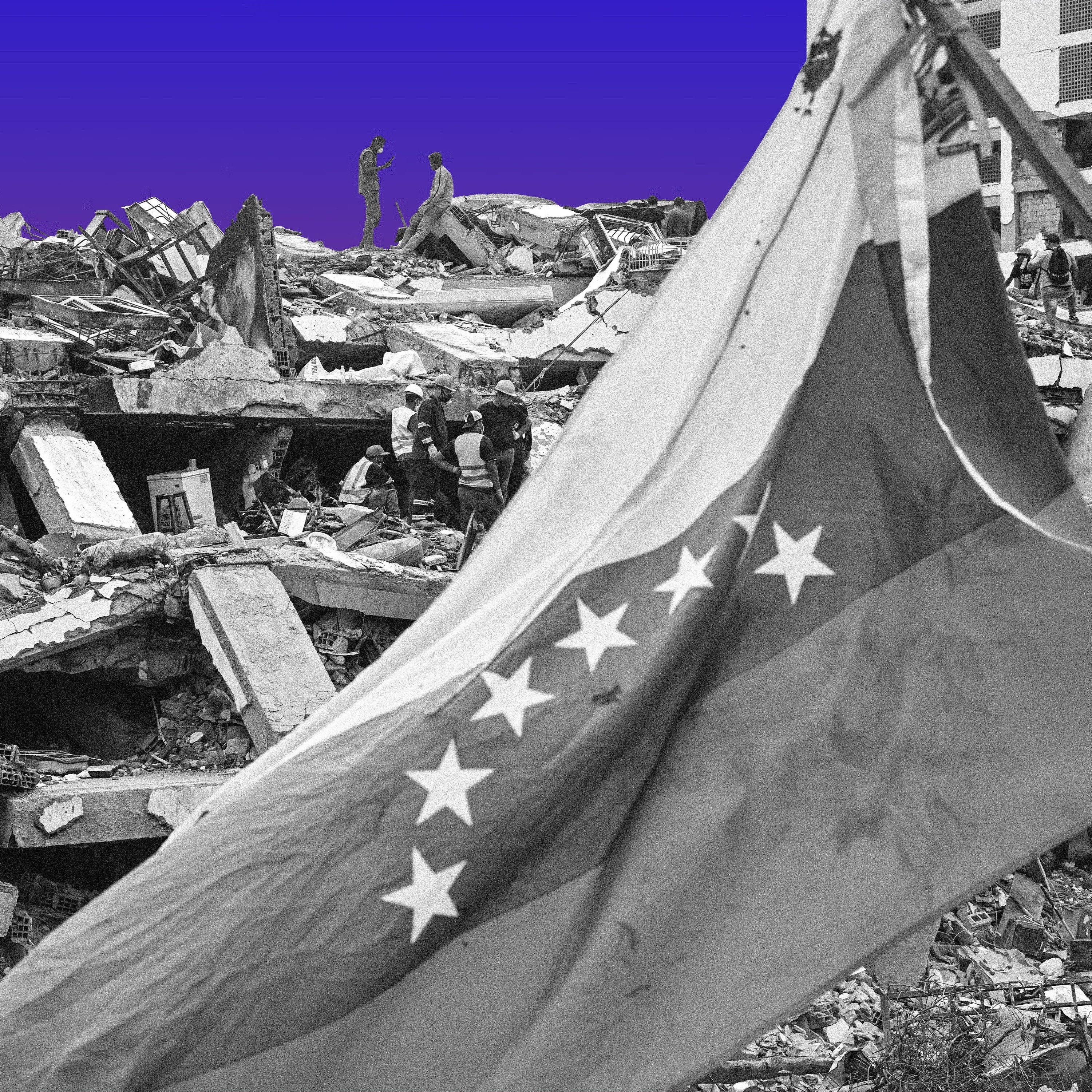
1:20Actually, at first, he tried to get into Venezuela, but his visa got denied. So he ended up in Panama, trying to describe the catastrophic damage June's twin earthquakes wrought hundreds of miles away and hoping his cell connection didn't drop. It's been hard. Yeah. I mean, Venezuela says the death toll from last month's earthquake is, I think it's more than 4 ,000 people at this point. You may have better numbers than me.
1:49Josh Partlow: Yeah, it's pretty staggering. It's something like 16 ,000 people still missing. Yet tens of thousands injured or without homes. Yeah, exactly. Josh says these earthquakes, they happened on a national holiday. There was a World Cup game. A lot of people were celebrating until they weren't. I remember talking to a young man, a college student who was about to graduate, who was at his uncle's house in the swimming pool enjoying this holiday when things started shaking. And he jumped out of the water, jumped over a concrete wall that separated him from the street and dropped about 10 feet to the ground.
2:33Josh Partlow: And he set off on a 15-mile walk and riding on back of motorcycles, multi-hour trip to try to see what happened to his own home. And when he got there later that night, his giant 16-story apartment towers had collapsed as well. So, I mean, it was just devastation all around.
3:01I remember when the earthquake first happened. It was the end of June. And I was just thinking, like, how could we talk about it on the show? especially because since January, the United States has been functionally running Venezuela from afar after removing Nicolas Maduro from power and installing what a whole lot of people see as a puppet government. I kind of wondered at the time, would Donald Trump do something like he did in Puerto Rico, where when Hurricane Maria struck, Donald Trump went there. And of course, there are these famous photos of him pitching paper towels into the crowd. And I was like, Like, are we going to see another moment like that?
3:39And of course, that's not what happened at all. What happened instead?
3:45Josh Partlow: There's definitely been a surge of humanitarian aid. But even so, it hasn't been on the scale of some other disasters in the hemisphere, like the earthquake in Haiti in 2010. I mean, I think you've reported that the U.S. spent$310 million on earthquake response, which seems like a lot. Yeah, it seems like a lot. But, you know, in other disasters, that's been in the billions. It's interesting to me, too, the kinds of aid the U.S. is willing to provide, like hundreds of millions of dollars. Sure. But also when the popular opposition figure Maria Corina Machado tried to return to Venezuela after the earthquake, the Wall Street Journal reported that the Trump administration ordered her plane be turned around.
4:26So it's like, OK, we want to help, but not that kind of help. We don't want to have that kind of help coming into Venezuela. And that tells you something, I think.
4:36Josh Partlow: Yeah. Like, it seems like in this moment, the Trump administration has, and they admit this, they're opting for what they call stability, economic development, U.S. companies investing in the oil industry in Venezuela. And then they say in certain unspecified amount of time that a transition to democracy. But democracy was always pushing for democracy is always front and center over the last number of years. the earthquake seems to have pushed that off even further. Yeah, it struck me, my initial response of like, will Trump go down there and throw some paper towels at folks was naive. Because like, of course, it just seems to me, the United States government seems very interested in maintaining control over Venezuela and Venezuelan assets.
5:26But it doesn't want to say that out loud too much.
5:31Josh Partlow: Yeah, it hasn't been that explicit. You haven't seen Secretary of State Rubio walking around or President Trump in Caracas or anything like that. I mean, I think the U.S. was trying to be more behind the scenes in Venezuela after capturing Maduro. And you can't be when there's a major disaster. You can't be when there's major disaster. And so. So, yeah, there have been these dramatic scenes where the charge d 'affaires, the top U.S. diplomat in Caracas, John Barrett, has been meeting with Diosdado Cabello, the interior minister, who's this wanted man. He's under indictment for drug trafficking and terrorism in the U.S.
6:08Josh Partlow: There's a$25 million bounty on his head. And Barrett's patting him on the back. And that's kind of what struck me most about this earthquake is this. These scenes were just unimaginable not too long ago, a year or two ago. And now the U.S. military is doing air traffic control at the Caracas airport. They're running the main port in La Guayra. There's American flags on all the boxes of aid that are going out. So the U.S. can't really hide from its role in Venezuela anymore. Today on the show, how devastating earthquakes in Venezuela have revealed America's true project there. I'm Mary Harris. You're listening to What Next?
6:55Stick around.
7:08This episode is brought to you by Moomoo. If you're an investor, you might have questions. You hear about a big IPO or you watch the market go up and down. And you might think to yourself, what is going on there? So if you want to do your homework, but you don't have time to read it all, you might want to look into Moomoo. Moomoo is an all-in-one investing and trading platform that brings market data, research analysis, and professional-grade trading tools together in one place. It's used by a community of more than 31 million traders worldwide with a parent company listed on NASDAQ. One account covers stocks, ETFs, options, crypto, IPOs, and prediction markets with 150 plus built-in analysis tools.
7:49And Forbes named Moomoo one of the best brokerage accounts for stock trading in 2026. And TradingView named Moomoo best stock broker in North America in its broker awards in 2024 and 2025. Right now, Moomoo is offering its new users up to$1 ,000 in NVIDIA stock, plus 8.1 % APY on uninvested cash for a limited time. And if you deposit$100, you get up to$200 in trading vouchers. Go to start.moomoo.com slash whatnext to learn more and get started with Moomoo. That is start.moomoo.com slash whatnext. Regulatory fees, exchange fees, and index option contract fees may apply. Fees are subject to change.
8:35Today's show is brought to you by Vanguard. To all the financial advisors listening, let's talk bonds for a minute. Capturing value in fixed income isn't easy. Bond markets are massive, murky, and let's be real, lots of firms throw a couple of flashy funds your way and call it a day. But not Vanguard. Vanguard bonds are institutional quality. Institutional quality is not a tagline. It is a commitment to your clients. It means top-grade products across the board. The lineup includes over 80 bond funds. They are actively managed by a 200-person global squad of sector specialists, analysts, traders.
9:08Lots of firms love to highlight their star portfolio managers, like it's all about that one brilliant mind making the magic happen. Vanguard's philosophy is a little different. They believe the best active strategy should not be locked away with one person. They should be shared across the team, which is why every client benefits from the collective brainpower they've got, not just one individual's take. The bond market's complex and it's not something one person or small team can realistically keep up with. Vanguard has been in the game a long time. Their scale gives them serious edge. They're able to invest across all kinds of sectors, maturities, and geographies, which means they can spot and act on opportunities others could miss.
9:47So if you're looking to give your clients consistent results year in, year out, Go see the record for yourself at vanguard.com slash audio. That's vanguard.com slash audio. All investing is subject to risk. Vanguard Marketing Corporation Distributor.
10:25so josh you're an expert in latin america can you just do me a favor can you explain how what's happening in venezuela right now is different from how the united states has traditionally operated in venezuela like even in the first trump administration the approach towards managing this country has been encouraging democratic opposition to nicolas maduro and before that, Hugo Chavez, right? Like, that's just been the bottom line of the foreign policy towards Venezuela.
10:52Josh Partlow: Yeah, right. From across the Obama administration, the first Trump administration, the Biden administration, that was all pretty standard. One former diplomat there told me this was just like kind of standard diplomacy towards an antagonistic regime. And sometimes that really didn't go well. Like you've written about how in 2019, the U.S. embassy was closed and the Chargé d 'Affaires James Story was worried he was going to be murdered. Yeah, that's right. You know, relations have really deteriorated, particularly since there's extremely one of the world's worst economic collapses since 2014, massive protest movements against the Maduro regime in the ensuing years and relations really deteriorated with the United States.
11:41Josh Partlow: By 2019, after there had been an election where Maduro didn't let the key opposition figures run, the U.S. denounced it as a sham and the Maduro government kicks out the U.S. diplomats. The embassy closed in March of 2019 after the top diplomat there, James Story, like you mentioned. And it was told by the foreign minister that he told me that he very well might be killed. There was a rumor that the extreme or information that the extreme opposition was planning to kill, assassinate him to foment a war between the United States and Venezuela. And nobody really trusted the Venezuelan government to do anything about that if that was true.
12:24Josh Partlow: Secretary of State Pompeo at the time was associated with Benghazi, did not want people coming over the walls and so ordered, ordered story to leave. They continue to to deal with Venezuela from from neighboring Colombia. But yeah, so that that building, the U.S. embassy sat vacant essentially for seven years. Now it's reopened, but it's like filled with black mold. And like, it's being reopened in this totally new time, right? Like in January, we have the US military come in, they take President Nicolas Maduro, they install Delce Rodriguez, his deputy as like the new person in charge. the relationships here seem strained and atypical like the new york times has basically argued that in the wake of nicolas maduro's ouster marco rubio our current secretary of state has taken over as viceroy of venezuela i mean viceroy that's the title that was given to governors who ruled the Spanish Empire.
13:33And like, that's wild to think of this mindset being how the United States is operating in Venezuela. Like, how do we know that? How do you see that in the actions the country and its leaders are taking and what they reveal to you about how actually the United States is pulling the strings here?
13:52Josh Partlow: Yeah, well, I think it's not always obvious to see. On one hand, the Trump administration officials, they say so themselves that all their requests to Delce Rodriguez's government are being honored, whatever they ask for, essentially, Venezuela is doing. Do they have any of their choice? Yeah, no, they don't have. I mean, there is a very real threat of military action again. So I think they're under an enormous amount of pressure. I don't think there's a whole lot of trust between these two governments still. But I mean, the way you see it also is, so when they reopened the embassy in March of this year, a team from the State Department went down there.
14:36Josh Partlow: They were operating out of a Marriott hotel while they repair this embassy that's covered in mold. They basically had to get to know a lot of these Venezuelan government figures that they hadn't worked with that were on sanctions lists or under indictment. Because they were the adversaries of the United States, theoretically. They weren't people you were shaking hands with in the same way. Yeah. So we don't have a lot of intimate detail of what those interactions have been like. I'm sure it's fascinating. But the U.S. officials cite certain moments of progress that they think shows that they can work with this government.
15:12Josh Partlow: For example, they removed some uranium that Venezuela wanted to get out of the country. The two countries worked together to do that quite quickly. There was a joint military strike on a Venezuelan gang, Train de Uruguay, that President Trump is very exercised about as being this, he calls it like a narco-terrorist group. And they killed one of the leaders in a remote part of Venezuela with a U.S. drone strike that apparently the Venezuelan military helped coordinate. You know, they've had trips where Secretary Bergrim from the Interior Department has gone down there to Caracas to talk about mining.
15:53Josh Partlow: The energy secretary has gone there to meet with the oil officials. So they've had these types of meetings are happening. Just a few days ago, Jorge Rodriguez, who's the head of Venezuela's Congress and Delcy's brother, also a notorious figure in U.S.-Venezuela relations, announced that there will be new negotiations starting on August 1st with former members of the National Assembly. These are opposition figures. So the U.S. has pointed to that as a sign that, look, there's some political opening happening here. Do you believe that? I don't know. You know, some Venezuelans I talked to just thought, oh, maybe this is just another way to push off elections.
16:34Josh Partlow: You know, the question of when there will be elections, whether they're free and fair is the crucial thing to me. And there's been no indication of when that might happen yet. And presumably the United States has a big say over when that will happen. Yeah. When the New York Times wrote about the U.S.-Venezuela relationship recently, I was struck by their language because it was strong, in my opinion, and almost editorial in its content. Like they described the financial relationship between the U.S. and Venezuela as akin to a parent who gives a child an allowance. Yeah. Would you agree with that?
17:13Josh Partlow: Yeah. I mean, that's another key aspect of this relationship is that the U.S. government is apparently controlling the accounts where the Venezuela's oil revenues flow into and has a direct say over how those get distributed. So there's not a lot of transparency in terms of where that money is or where exactly it's going. But yeah, I mean, that would show you that the U.S. is playing an extremely direct role in managing Venezuela's government right now. You've kind of alluded to this, but I wonder if you think last month's earthquake changes the patience the average Venezuelan has with this U.S.-Venezuela relationship.
18:02It sounds to me like in the first few months after Nicolas Maduro was taken from the country, there was some sense of like, let's see how this plays out.
18:15Josh Partlow: Does the earthquake change that? I definitely think it could. I mean, this has caused mass suffering on a huge scale. People are already frustrated with their government, and now thousands of people are sleeping in refugee camps outside. There's disease concerns, a shortage of fresh water. The hospitals, which were already in pretty dire shape in Venezuela, many of them have been damaged. Rebuilding after these earthquakes takes forever, no matter where you are. It's going to take a long time there for sure with so little capacity from the Venezuelan government. So I think that anger can really boil over quickly and can lead to unrest in the streets.
19:00Josh Partlow: You know, maybe it won't, but I think that's a very real possibility.
19:07We'll be right back after a quick break.
19:22There's one thing that will forever change the way you sleep, and it's the softest 100 % organic cotton sheets from Bowlin Branch. You'll fall asleep faster, wrapped in the most luxurious comfort. You'll never sleep hot again with sheets that feel breathable to sleep in. You'll experience the purest softness on night one and feel your sheets get even softer with every wash. Discover the difference with 15 % off your first set of sheets at BowlinBranch.com with code BUTTERY. Exclusions apply. See site for details. Get under a blanket and get comfy. This message is sponsored by ADT. It's back to school, back to work, back to cozy nights at home season.
20:01And ADT is here for every moment of it. They handle your home security so you can focus on spending time with the people who matter. They make it easy with professionally installed systems you can access right from the ADT Plus app. If you need help, their reps are on call 24-7 at the most company-operated monitoring centers in the industry. You deserve some cozy back-to-home time. ADT will keep an eye out. When every second counts, count on ADT. Visit ADT.com today.
20:37Theoretically, there is a time limit for how long Delce Rodriguez, who's been running the country in concert with the United States, can keep doing that. It's 180 days. I believe it's passed at this point. How is that deadline being seen? is it enforceable? Are people looking at it and saying, like, hold it? Something was supposed to have happened by now. Yeah.
21:06Josh Partlow: No, I mean, effectively, it's not enforceable. I think the U.S. and the Venezuelan government are making their own negotiations on this. There hasn't been a functioning legislature that really reflected the political will of the country for a long time. I think it's just another sign of the ad hoc nature of this relationship that basically President Trump, the Trump administration forced on Venezuela by capturing Nicolas Maduro and deciding to try to manage things themselves, at least for a period of time. Yeah. I mean, I really understood how hard the project was in Venezuela after reading your writing, because you, first of all, you lay out how diplomats have been working in Venezuela to try to get some kind of democratic solution for a very long time.
22:01So clearly this is something that's been on the agenda for a long time and has not been achieved for a very long time. That implies that it's something hard. But then there are all sorts of other basic issues. Like you've written how in Venezuela, Delce Rodriguez, who's running the country, her brother is the president of the National Assembly. I look at that and I just think, wow, there are so many structures that are clearly firmly rooted here that if the goal is some kind of democratic endpoint for the country, there's a lot of work to do.
22:34Josh Partlow: Yeah, not only that, I mean, I think what I think of mostly when I think of this Venezuelan government is just the extreme repression that they forced onto their people for more than a decade. It was really, really a brutal, violent government that suppressed protests there. I mean, huge, massive protests on a national scale in a really deadly way. And one of the reasons I wanted to go back to Venezuela and write about this at this point was just having visited Caracas and other parts of the country about a decade ago between from the sort of 2014 to 2017 timeframe when I was based in Mexico City as a foreign correspondent and would go down there to Venezuela regularly to write about it.
23:26Josh Partlow: I saw a level of uprising from the people and street protests that I've really never seen anywhere else. And it was every day, tens of thousands, hundreds of thousands of people would come out onto the main highways in Caracas and basically face off with the security forces of the Maduro government. And I remember tear gas, rubber bullets, and batons, and just running from security forces. And then the next day they would wake up and do it all over again. And that went on for months and months and months. Do you think anything like that exists now? No. I mean, the fact is, I mean, the Maduro government and these security forces were able to quell those kinds of uprisings with really violent means.
24:14Josh Partlow: There's the human rights reports have documented the torture and killings of opponents. And Diosdado Cabello, the interior minister was a key figure overseeing those security forces. And he had a television program where he would go on and talk about individuals he was targeting, and then the security forces would show up at their house and arrest them and throw them in jail. So when the Venezuelans, I think, now look at their government, they see a lot of the same people. Diosdado Cabello's daughter, the New York Times was reporting the other day I saw, who's a tourism minister, is being pushed as a potential leader in the future.
24:54Josh Partlow: The inner circle of the regime is still very much in place there. And the same people that were responsible for these abuses are still in power. So I think... It sounds like you're saying the public is worn down. Yeah, yeah. The public's definitely worn down from the deprivations of life as well as from these types of abuses. I mean, that was Venezuela over in recent years has been there's been hyperinflation. There's been shortages of food in the supermarkets. There's been hunger, widespread hunger. The economy has has improved a little bit. It has been since since Maduro's capture. It has been stabilizing and things were looking up.
25:38Josh Partlow: And now, again, the earthquake has set things back and the economists estimate the damage will be, you know, it will cause a significant hit to the country's GDP and will be basically, yeah, setting the country back that has already gone through so much. I mean, it just strikes me like the people in Venezuela, the opposition, they've been through so much. And for so long, they've taken that whole idea of like, no one's coming to save us pretty seriously. Like, you know, Maria Karina Machado tried to run when she got booted from the ballot. You know, someone else was in there basically representing her when it was clear that was going to be an election that was rigged to the mind of the opposition.
26:22They were counting their own votes. They had like independent sources where, you know, it's like they were really working. And then whoosh, like in comes the American government. They take Nicolas Maduro and then the people in charge are the very same people that have been pushing against this whole time.
26:40Josh Partlow: Yeah, you could imagine opposition leaders probably thought this was a great opportunity for them when Nicolas Maduro was captured. Yeah, for like 10 minutes. Yeah, for like 10 minutes. And now I feel like they're dealing with the reality of that's not going to be the case. And they have no idea when it might be. Some of the opposition figures I talked to, maybe it's out of politeness to the Trump administration, but they, you know, they say they have patience. They've waited so long. They can wait longer for this slow transition process to develop. And they think that the U.S. will ultimately help bring to justice some of these figures that are wanted for various crimes.
27:23Josh Partlow: but yeah they also have no idea at what pace that might happen or or or if it will are they mad are like are they mad at like marco rubio are they mad at these people who are you know kind of holding the strings here well i think you know there's a wide range of of views within the opposition and different factions but yeah i think a lot of people are the residents who i talk to, you know, who were wrapped up, caught up in this earthquake. They hold these two things in their head. They're grateful that at least somebody came to try to help them sort through the rubble and find survivors. And that was the international community for the most part.
28:03Josh Partlow: But they're very angry at their own government and they want change. So there have been a lot of reports in the few weeks since the earthquake where Venezuela and security forces, army and police have been looting from the rubble. There's been a lot of criticism that Venezuelan government basically cordoned off the La Guaira state to try to exert some level of control over this disaster zone, but that it also slowed down aid from reaching there in crucial moments. Do you feel like you were kept out of the country partially so people wouldn't see? I don't know if it was that. I think that's a possibility, whether it was more of a disorganized immigration system.
28:52Josh Partlow: I'm not sure. I mean, in the past, I've been able to report from Venezuela, like I mentioned, but also there have been other times where the government has not let me in the country. I was deported about a decade ago trying to get in to Venezuela, and they weren't letting journalists at the time. So I spent a night in the Caracas airport and was sent back the next morning. So it's, yeah, it's... It tells you a lot, though. I mean, that was under Maduro. You know what I mean? Like, you were kept out under Maduro, kept out under Trump. Yeah, yeah, exactly. So, yeah, I think it's, they've been, they're notorious for trying to control the narrative and the press.
29:33Josh Partlow: and it's a very hard place to work as a reporter, so. Josh, I'm really grateful for your time. Thanks for coming on the show. Thank you so much. I really appreciate it. Josh Partlow is a staff writer over at The Atlantic. And that's our show. What Next is produced by Rob Gunther, Evan Campbell, Madeline Thames-Ducharm, and Patrick Fort. Paige Osborne is the senior supervising producer of What Next and What Next TBD. Mia Lobel is the executive producer of podcasts here at Slate. Ben Richmond is our Senior Director of Podcast Operations. And I'm Mary Harris. Go track me down in Blue Sky. Say hello.
30:10I'm Matt Mary Harris. Thanks for listening. Catch you back here next time.
30:28Hi, this is Nicaela Matthews-Aconley from Side Hustle Pro. This holiday, the difference between buyers just checking things out and checking out comes down to the last few clicks. PayPal Checkout is a trusted conversion engine fueled by 400 million active PayPal and Venmo accounts. Add Pay Later and turn holiday shoppers into regulars. 96 % of Pay Later shoppers are repeat users. PayPal is built for all business. Get started at paypal.com slash business. Disclaimer, PayPal Pay Later data, eight markets, March 2025 to February 2026. Repeat users more than one Pay Later purchase in the past year.
31:05With almost half a million customers and over a trillion dollars of secure payments, Bill isn't new to intelligent finance. It's the proven way to simplify Bill Pay and maximize cash flow. Want to learn more? Visit Bill.com slash proven for a special offer.
A month after a pair of devastating earthquakes and more than six months after the US absconded with their president, how are the people of Venezuela faring under—wait, who’s actually in charge?
Guest: Josh Partlow, staff writer at The Atlantic
Want more What Next? Subscribe to Slate Plus to access ad-free listening to the whole What Next family and across all your favorite Slate podcasts. Subscribe today on Apple Podcasts by clicking “Try Free” at the top of our show page. Sign up now at slate.com/whatnextplus to get access wherever you listen.
Podcast production by Rob Gunther, Evan Campbell, Madeline Thames-Ducharme and Patrick Fort.
Paige Osburn is the senior supervising producer of What Next and What Next TBD.
Hosted on Acast. See acast.com/privacy for more information.