
 Ask ChatGPT

The episode (What Next) discusses what happens after a “blue wave” election outcome—especially the limits of what Democrats can actually change, and how voter anger and authoritarian-nationalist movements keep reappearing. It also compares U.S. dynamics to Brazil and France, arguing that prosecutions and elections don’t automatically resolve underlying discontent.
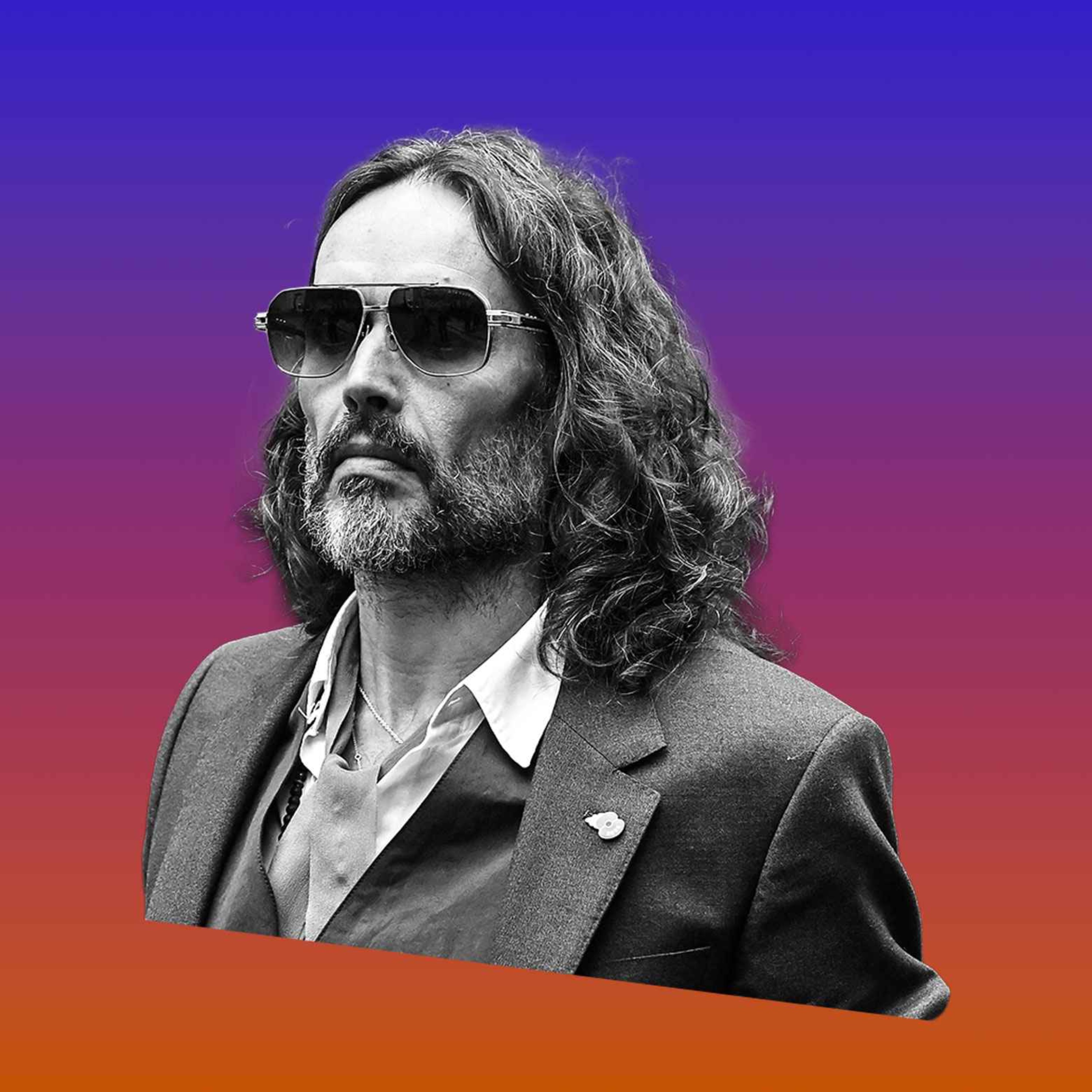
Jonathan Last, editor of The Bulwark, political commentator.
Mary Harris.
Democrats may win big (Last cites ~99:1 odds for House control; Senate “Fetterman-proof” majority around 52–53 seats), but winning won’t fix fundamentals or stop chaos. Brazil’s “success” framing is misleading; Bolsonaro’s family and allies can still compete. Nationalist movements can keep running repeatedly with low cost of defeat.
Brazil’s attempted coup and Bolsonaro’s conviction/house arrest; Bolsonaro’s son advancing in elections; France’s repeated Le Pen campaigns; discussion of potential Democratic impeachment of Pete Hegseth; mentions of candidates Brian Poindexter and Justin Pearson.
Written by AI. May contain mistakes.
Exploring the implications of a Democratic victory and what it means for the future.
“Jonathan Last is my pal and the editor of The Bulwark.”
Analyzing Brazil's political situation and its parallels with the U.S.
“With almost half a million customers and over a trillion dollars of secure payments, Bill isn't new to intelligent finance.”
Discussion on the enduring nature and strategic advantages of nationalist movements.
“It wasn't the case that you only had to defeat, you know, her fascist movement once.”
Exploration of potential healthcare reforms and the challenges facing Democrats.
“I'm saying we've got a lot of people talking about Medicare for all.”
The hosts discuss the implications of recent election outcomes on the Republican Party and the candidates running this cycle.
“And, you know, I think there is this real question of whether he cares enough about other people who are not him.”
The hosts share insights about emerging candidates who are engaging with constituents in unique ways.
“who are running in places where it's like, hmm, interesting that they have a shot this year.”
Discussion on the effectiveness of the Democratic candidates and the strategic moves made by their leadership.
“I think on the whole, the Democrats have done a really good job of finding good candidates for this this cycle.”
The hosts contemplate the sustainability of political success within the current party dynamics and cultural issues.
“It will be very nice if the Democrats win congressional majorities.”

Get the gist, explore an idea or ask about something said.
 Claude
On What Next | Daily News and Analysis, what are the key points of this episode?
Searching your listeningAutomatic transcript. May contain errors.
0:00Ninety-eight of the top 100 U.S. accounting firms trust Bill to simplify and secure BillPay. That's proven financial infrastructure built on over a trillion dollars of secure payments. Visit Bill.com slash proven for a special offer. Decisions made in Washington can affect your portfolio every day. But what policy changes should investors be watching? Listen to Washington Wise, an original podcast for investors from Charles Schwab, to hear the stories making news in Washington right now. Host Mike Townsend, Charles Schwab's Managing Director for Legislative and Regulatory Affairs, takes a nonpartisan look at the stories that matter most to investors, including policy initiatives for retirement savings, taxes and trade, inflation concerns, the Federal Reserve, and how regulatory developments can affect companies, sectors, and even the entire market.
0:55Mike and his guests offer their perspective on how policy changes could affect what you do with your portfolio. Download the latest episode and follow at schwab.com slash WashingtonWise, or wherever you listen. Hey, it's Mary. And if you have been over to Slate's website recently, you might have noticed something. The A in our Slate logo, it has been replaced by a big slice of birthday cake. Because Slate.com is 30 years old, three decades. Those are years in which this country has changed a lot, but Slate's commitment to helping you understand the world has not. The only reason we're still here, though, is because some listener or reader, someone just like you, made a choice.
1:39A choice to join us. Slate Plus is the way to do that. You give us a few bucks, you get ad-free listening to podcasts just like this one, special bonus content once a week, all access at slate.com. It's a pretty good deal. And right now it's pledge drive season, so it's an even better deal. If you go on over to slate.com slash whatnextplus, you're going to be able to join for half off just for the next few days. It's like 59 bucks for a full year of Slate. You use our offer code whatnext50, that's whatnext50 at checkout. You can even give a subscription to a friend if you already have one yourself.
2:18Your support is going to ensure Slate is here to celebrate our next big birthday. So if you haven't joined yet, join now. And if you have, thanks. Here's the show.
2:37JBL, I wanted to call you because I need someone to bum me out. And I figured you were just the guy. It's really nice to be needed. Jonathan Last is my pal and the editor of The Bulwark. After doing a whole bunch of shows about a coming blue wave, I felt like calling him could bring me back down to earth. I just feel like it's cold shower time for anyone who is excited about dunking on Donald Trump. And you're usually pretty good at that. I mean, it's my calling in life, my charism. I feel like that's what I do. I like to bring a little bit of cloudy rain into everybody's sunny lives.
3:25I mean, we should start here, which is even you, the Eeyore of American politics, have been bullish about this midterm cycle, like very bullish, like to put numbers behind it. I mean, like, what do you think the chances are of the Democrats winning the House or the Senate? So I think the chance of the Democrats winning the House is basically like 99 to 1. And the one is that every poll taken everywhere is wrong. JVL, like you probably, thinks this sounds good. Great, even. The Senate, I sort of did this as an exercise last week. If I was setting the Vegas line for the over or under, which means that what you want to do is you want to pick a number that gets people to bet an equal amount on either side, I would set it at 52 and a half Senate seats.
4:25And I think it is. That's pretty good, right? Is that Fetterman proof? Yeah, 52 is Fetterman proof. Wow. I mean, I think you said it was like 60-something percent odds that they get to a Fetterman-proof majority, which doesn't mean—it means it's the most likely outcome. The most likely outcome. Out of a lot of different outcomes. Yeah. There's a 1 in 20 chance that you could roll the dice here and get 56 Democratic senators. At this point, you might be wondering why JVL is sounding so glum. But don't worry. He got there. Like, you know, once once we get to, yay, you have 52 or 56 Democratic senators.
5:07Now what?
5:12I mean, the real upshot of it is that it gives the Republican nominee in 2028 something real to run against. And so you will then have two years in saying, look at this. You have all these Democrats in Washington and everything is terrible. It's because of them. Today on the show, we talk about what happens and what doesn't the day after Election Day. And we talk about the real downsides of Democrats winning. I'm Mary Harris. You're listening to What Next. Stick around.
5:57With almost half a million customers and over a trillion dollars of secure payments, Bill isn't new to intelligent finance. It's the proven way to simplify bill pay and maximize cash flow. Want to learn more? Visit Bill.com slash proven for a special offer.
6:14Jonathan V. Last: Hi, this is Nicaela Matthews-Oconley from SideHustle Pro. This holiday, the difference between buyers just checking things out and checking out comes down to the last few clicks. PayPal Checkout is a trusted conversion engine fueled by 400 million active PayPal and Venmo accounts. Add PayLater and turn holiday shoppers into regulars. 96 % of PayLater shoppers are repeat users. PayPal is built for all business. Get started at paypal.com slash business. Disclaimer, PayPal PayLater data, eight markets, March 2025 to February 2026. Repeat users more than one PayLater purchase in the past year. Hi, Brooke DeVard, host of Naked Beauty.
6:53Picture this, you walk in from the cold and every room already feels like fall. That's what whole home scenting means at Pira. One system working quietly in the background so your home always feels like the season and like you. Learn more at Pira.com.
7:13Okay, I want to go deep into why you think about this election. And even though you're feeling good about it, you sort of recognize it won't solve the fundamentals, which I think is where people get misled, right? They're like, oh, we're going to it's winning. And then like, yay. And then but like then there's like so much to do. And then what? Right. Exactly. And then what? And like the example you gave this week is Brazil. And I want to talk about why I want us to just lay out the case. And like, I think first we just need to remind people that Brazil's recent political history has mirrored our own.
7:54In January of 2023, Brazil had its own version of January 6th. I just wonder if you can explain that, explain how like Brazil reacted really differently than we did. Yeah. So Brazil took their attempted coup seriously and they launched criminal prosecution of Jair Bolsonaro. Bolsonaro and he was convicted and he's under house arrest and he can't run for president again. And yay, the story's over. We won. The forces of liberalism. I mean, this has been held up as an example. Like, I'm going to read you like three headlines from The New York Times, OK? Two Capitol riots, two very different results.
8:32This is January 2024. So it's like, America, look how good Brazil is, right? And then why Trump is returning to power while Bolsonaro faces prison. Why Brazil just succeeded where America failed. Do you know what I mean? Like these are, this is, this is the framing we've had here in the U.S. Like Brazil good, America bad. Now maybe we want to remind people what just happened in Brazil. It's all relative, right? I mean, it is relatively Brazil better. I mean, the Brazilian government treated its democracy more seriously than the United States government did. The problem is the Brazilian people may not have.
9:10So what we saw over the weekend was in the latest election, Bolsonaro's kid finished in front. He'd been not like way back in the polls, but he was not projected to win. And they're going to now advance to a final round of voting. I mean, I don't understand Brazilian politics. Maybe in the final round of voting, Lula will pull it out. But I don't know. The people who do observe this say, yeah, you know, Bolsonaro has a has a chance to win. And we should underline his father cannot run because his father cannot run because he is under arrest. He is sitting in his his mansion with his ankle bracelet on and he can't leave.
9:53Meanwhile, like if Don Jr. ran. Well, not not only if Don Jr. ran, because it would be like if Don Jr. and Melania and Eric and Tiffany all ran because there's a whole bunch of the kids who have run for the Senate. And I believe they've all won. And I believe his wife, she, I believe, has also won. And so it's, you know, it's a dynastic family. Again, it's the same movie. Yeah. It's the same movie. Different subtitles. This is why I keep saying everybody says I'm a crazy person. When everyone's like, do you think it'll be Marco or J.D.? I just look at this and I'm like, anyone who doesn't think that Don Jr.
10:35could have the nomination if he wanted it is crazy. Yeah. Because if he announced that he was running for president, he would clear the field. Nobody else would run. The Times had this op-ed about Brazil that I found so damning in this sort of like parallelism regard. It basically posits that the opposition to authoritarianism in Brazil, it is helmed by richer, whiter people. And that like those are the people taking to the streets against Bolsonaro. And all I could think about was, Ruh-roh, that sounds a lot like the No Kings protests. A little bit. Yeah. A little bit. I felt bad. Again, I don't, you know, this is one of those things where we see, we see right wing nationalism rising everywhere from Japan to Italy to Hungary to Germany to Brazil to America.
11:35And I just, I, so I, okay. In a previous life, I spent a lot of time writing about demographics. And one of the things that, that I talk about is fertility declines. You see fertility declines almost everywhere. There's like, you know, 2 % of the countries in the world that don't have declining fertility rates. And when something, when a trend is that widespread, it means that there are a whole bunch of general inputs which are broadly shared among these countries, but also there are a whole lot of very particularized inputs. And so, like, you know, there's the reason you see the reasons you see the fertility decline in Iran are not exactly the same as the fertility decline in Japan.
12:20I think it's probably the same with the nationalism stuff. I think there are probably broad factors which are true in many places, but then particularized things, which, you know, which is why I'm not I'm not willing to say that we're exactly like Brazil. So what's happening in the United States rhymes with what's happening elsewhere. It's not the same song. Yes. If I was more clever, I would have just said that instead of like doing a detour to demographics. I mean, another example I'd throw on the pile is France, which again, it's different, right? But it's like in 2024, they had this election.
12:56It was like a huge surge of people coming out across the spectrum of anti-authoritarian folks looking to stop the right wing there, right? What do we see like a couple years later? Like protests in the street. We have not solved like the basic fundamental undergirding issues, whatever they may be, that are causing discontent. People are pissed. People are pissed. They are. I mean, one of the things I think a lot about is how running a presidential level political campaign in the United States used to be the kind of thing that you only get to do once if you lose, right? If you crash and burn on that, it doesn't matter whose fault it was.
13:41It doesn't matter if you were a better candidate, it's just a bad environment. It's like, you don't get to do it again. You're one and done. You're one and done because the party, like, it has too much invested in it. There's too much money. There's too much infrastructure. And we have gone away from that, obviously, in America. And a lot of, yes, this is what happened in France. Like, Marine Le Pen just got to run over and over and over and over. It wasn't the case that you only had to defeat, you know, her fascist movement once. They just kept getting free shots, you know. And like, at some point, they're going to run when there's a recession on and they're out of power and people looking for change are like, oh, I don't know, they're still there.
14:18And so that is an advantage that a lot of these nationalist movements have. And they can learn. They can learn. And they can just keep going. And there's no real price for defeat for them. It's not great. We have to win every time. They only have to win once. Once. You know. I think part of what you're saying is that no matter what happens next month with the midterms, whoever gets elected in Washington, they're inheriting a mess. A mess made worse by two years of Donald Trump being in office. and the people who elected them will be hungry for something to change. There'll be limited power for things to actually change.
14:59Nothing that can change. Yeah. And I'd actually posit something else, which is like, if the Democrats win, there's a good chance their leaders will be like the dogs that caught the car. Do you know what I mean? Like, Donna Brazile wrote an op-ed in the Washington Post. Its title was, Republicans failed to control the fringe. Hakeem Jeffries won't. and I was like okay like who's this for right now like you're you're in like an interesting position right now in terms of like the blue wave territory and like the the thing you're saying is like everyone settle down I'm like yeah it made me a little bit worried about the leadership in DC and like what they're making of of people electing certain folks at this moment or seeming inclined to elect certain folks in this moment?
15:47I don't know. I mean, that's an interesting question. I mean, the good news is that the fringe Democrats won't be able to do anything more than the mainstream Democrats will after the election, which is say, you know, fuck all. Like, they just won't have any real power. They can hold a bunch of hearings. They can try to impeach PTAG Seth. But they're going to be elected on a platform of affordability with zero ability to impact affordability. I'm just not sure how that works out for them in the long run. On the other hand, I think you can say, looking at the Democratic fringe, some of it, not all of it, but some of it has really grown up and turned out to be interested in actually being serious legislators.
16:36And, you know, I'm thinking about AOC here. Sure. Soren Mamdani in New York, like, seems to be a pretty competent mayor, actually. You know, like, he's not there to wokeify and force everyone in New York City to have a trans surgery. It's like, he's just going out and, you know, governing in a pretty responsible way. I don't know. Like, that is, I think, hopeful. And, you know, where is it written that other of people who, you know, are on the fringe of the party now can't do the same. Is that too hopeful? Maybe I should take that back. I don't know. No, I'm thinking, no, no. I mean, I kind of want you to be hopeful.
17:18Like, I want to turn your frown upside down slightly if I can. Like, because I do think some things will definitely happen when and if whatever happens in November happens. Like you, you've mentioned a couple of times Pete Hegseth. I would like to say that I think there is a decent chance Pete Hegseth is impeached. And I wonder if you would agree with me on that. If the Democrats don't impeach him, it's political malpractice. Like, I just don't understand. And he is the middleman on the most unpopular war we've had in America since I don't even know what. He is demonstrably just an absolute shitheel.
18:11And he has fucked up everything. And if you impeach him, you force Republicans in the Senate and in the House to have another Iran vote. And so it's another chance to put them on the record as supporting Trump's war. Why wouldn't you do that? Yeah. I mean, like my main evidence here is that Hakeem Jeffries has said he wants to do it and he's not going to say something out loud that he doesn't mean, I don't think. I think he's very careful. And even Republicans don't seem to like Pete Hegseth at this point. A lot of them are trying to distance themselves from the Iran war as they're campaigning.
18:46I just feel like it's it. This is coming. This is coming. Yeah, well, you know, but of course, Republicans say that now because it's easy to say that now. If you actually have to go and vote on Hegseth, though, like then all of a sudden, like, I don't know, can you give the Democrats a win? The Democrats are the real enemy. They're the horrible one. It becomes very, very difficult for Republicans. And for Trump, it becomes hard. I don't think he would just toss Hegseth overboard. If he did, he would have to do, if the Democrats take the Senate, I think Trump would have to do it sooner rather than later.
19:26So you think the move if you're Trump is like, toss him out in like November, December, get someone new in there. That's what I would do. But the other problem with that is if he really is thinking about escalating post-election, can you escalate while pushing your SecDef out? How does that work? I mean, somebody does need to like turn lights on and stuff. Okay. Well, the analogy there, how do you do that? You analogize it to Kristi Noem, right? Kristi Noem's out, brought in Mark Wayne. Mark Wayne is still getting the job done in a less showy way. Well, I just mean in that bridge period where Hegseth is out and you haven't confirmed his replacement yet.
20:08I see. Yeah, because that replacement vote becomes really hard for Republicans, even the ones who are critical of Hegseth. So confirming somebody else who is an obvious dope, which I think is what Trump would have to do. I just don't, again, his project of co-opting the military and politicizing the military requires somebody like Hegseth. You can't put a Jim Madison there. You can't put a good actor in there and still do what he wants to do to the military. He's stuck. And so are we. Yeah.
20:48We'll be right back after a quick break. Quick reminder before we go to the ads. You could be listening to this without ads if you joined us. The way to do it is to go to slate.com slash whatnextplus, use our offer code whatnext50, and you'll be able to join for half off. Thanks.
21:13This episode is brought to you by FreshBooks. Whether you just launched your service business or you've been at it for years, the money side has a way of pulling you from the work you actually love doing. FreshBooks changes that. FreshBooks makes the money side of your service-based business easy. You log your hours, you send a branded invoice, you get paid and know your numbers instead of chasing them. Money in, money out, all in one place. No more juggling one app for clients, another for billing, plus a pile of spreadsheets and emails. FreshBooks is designed for how small business owners think about money, not how an accountant does.
21:47You don't need a financial background to use FreshBooks. It's simple on purpose. Most owners are up and running in minutes, not days. And if you need help, a real person is available on every plan. FreshBooks has been trusted by service businesses for over 20 years, helping over 500 ,000 owners and solopreneurs run their business confidently. Right now, my listeners can get FreshBooks for less than three bucks a month for your first four months. That is 90 % off. Head to freshbooks.com slash podcast to get started. That's 90 % off under$3 a month for four months at freshbooks.com slash podcast.
22:49Another thing where I think there might be movement after November is health care. And I'm not saying big movement. I'm saying we've got a lot of people talking about Medicare for all. That's not going to happen. But I do think a lot of people are talking about the Obamacare subsidies. And I think a lot of Republicans found it very painful that those subsidies got rolled back. I just think there's so much energy around health care right now. Like we've had this conversation for so long. People are tired. People are tired. Well, I mean, that, but the nationalists are open to it, is the thing. I mean, there's a reason Tucker keeps talking about it.
23:23And, I mean, this is, this, if you are looking to shift the Republican coalition to try to eat that gap in the horseshoe and try to pick up Bernie bros and sort of disaffected leftists, that's what Tucker is doing, right? That's why he's like playing footsie with El Syed and talking about how great El Syed is. Like there's a lot of anti-Israel overlap there, a lot of anti-corporate overlap, anti-flock, anti-AI. Like all that stuff is there for the taking. And I don't know. I think Democrats ought to get there first myself, but they don't ask me. Yeah. I mean, a problem that I see for Democrats, and I think you see it too, is that a big motivation for, I think, people voting right now is to stop chaos, whether you're referring to, like, immigration chaos, whether you're referring to, like, prices going up, gas prices being too high, Iran war.
24:26They'll have limited ability to stop that chaos. Like, you can't just be like, well, Iran war is over. Let's go home. That's not a possibility. Um, and also like stopping chaos would require its own measure of chaos. Like if you said, oh, we're, we're impeaching Donald Trump, like that's a whole other load of, of chaos, which is also very fraught. Which nobody's going to want. Exactly. Nobody's going to want that. I mean, I'm sorry, this is kind of on the voters. They voted for chaos. And here we are. I mean, Donald Trump did say, I'm going to give Elon Musk keys to the federal government and he's going to cut$2 trillion and I'm going to deport 20 million people.
25:07And what do people think that looks like? So you're basically electing more people to go to Washington and point at Trump and be like, still a problem. Still a problem, right. And to stop him from doing more legislation, I guess. Right. And to try to begin accountability, right? I mean, that's the point of congressional hearings is to try to start laying the predicate for criminal prosecutions starting, I don't know, I'd say 1202, January 20, 2029. I call this the like, we're stuck in the going on a bear hunt place. Just like we're going on a bear hunt. We can't go over it. We can't go under it.
25:51We have to go through it. But the vote here is about not wanting to go through it. And that's the problem. What does that mean for 2028? Because I think your big concern is that voters will get so high on their own supply of like midterms went well when like the fundamentals for the midterms are always going to go their way. Midterms are all about like the party that's not in power coming home. And like it doesn't mean anything about the next presidential. Right. I mean, I wouldn't say it doesn't mean anything. It does start to shape the environment of the next president, but it's not a direct line, right?
26:33I mean, it's not, you know, A to B. There's like a whole bunch of intermediary points. And where does it take us? I mean, the big question is, is Donald Trump ever going to say, I am not seeking re-election? I will not be running in 2028? Do we think he's going to? No, because then he can't sell the hats. Right. And so, like, the whole race is frozen because on the Republican side, like, if you want to not make enemies of Trump, you can't say I'm running for president or do any of the things that make it look like you're running for president until he says, I guess I'll abide by the Constitution.
27:21Which, by the way, he might not do. The audio has to find the video because the face he made was amazing. And also he might not do it, right? I mean, Trump might say, you know, I believe very strongly that I am owed a third term because they did steal the 2020 election from me. And a lot of very smart people are telling me that the Constitution does leave room for this and a loophole. So we're pressing forward. I've talked to other people about, like, the idea that will Trump fight for members of Congress, like the way he did in 2020. Like, is he going to like lean on Georgia or like North Carolina or whatever to like find some votes?
28:01And, you know, I think there is this real question of whether he cares enough about other people who are not him. But what you're saying actually frames that as part of strengthening himself. Do you know what I mean? Like casting these other people aside is fine. It makes his project more complete. It makes it make more sense. And so it's like, yeah, OK, cool. You guys lost, but still me over here. I was very wrong in 2018. I thought that the 2018 rebuke of Trump was going to cause Republicans to say, crap, so we actually did lose the 2016 election. I know we won, but it was a fluke. That was a one in a million shot.
28:39And now we just got pantsed here. The entire country is turning against us. We got to move off of this guy. And that's not what happened. It convinced the Republican Party to double down on Trump and become Trumpier and more MAGA. like why wouldn't that also hold for this election maybe this time it will be like that but i was burned by that theory once before and so i am i am not going to automatically assume that that's how it'll work out this time can i tell you uh a thing that's giving me hope just to like brighten your day we've been talking to people who um we're calling them long shots candidates who are running in places where it's like, hmm, interesting that they have a shot this year.
29:24Like we talked to Brian Poindexter, who's running against Max Miller in Ohio. We talked to Justin Pearson, who's trying to keep the one Democratic seat in Tennessee that was gerrymandered. He's great. I like that guy. Yeah. And I got to say, to me, they sound different than the baseline 2018 candidate. it. They are talking consistently about a few things. They're talking about visiting like every county in their district. They are talking about constituent services as really important. All this stuff is stuff that I think makes them and their case more credible in the long term. Also, their opponents don't want to debate them, which to me is a sign of weakness.
30:08And it gives me hope. And I don't know how long we have to do that kind of like roots growing work that these candidates are doing now. I really I think that's the issue. It's like a timing game. Like how much time do we have before the clock runs out? And we've really just messed this up. But beyond repair. Am I convincing you at all? I agree with you. I think on the whole, the Democrats have done a really good job of finding good candidates for this this cycle. And not not all of them. They're not all great. You know, most of them are pretty impressive. They've run really energetic campaigns.
30:43They've run well. I think Chuck Schumer deserves quite a lot of credit for that. I mean, he recruited some very good candidates. Sometimes. I mean, sometimes, you know, Angie Nixon's like the opposite of that. But like, yeah, the opposite. On the whole, Schumer just, I know, like, you know, no Democrat alive wants to give Schumer credit for anything. But like, I think he deserves credit for this. It is, it is It's interesting, though, again, there is there is no template here, though. Like they are they're all very, very different. Right. Amy Acton is very different from Sherrod Brown, who is very different from Tallarico, who is very different from, you know, Abdul El-Sayed.
31:26Right. I mean, you have lots of different things. And one thing I wish Democrats could learn from this is the idea of got to find candidates who fit their spot. You know, like the look, you might love Zoran. You might think he's great and he is great for New York. But you got to find somebody different in Texas. Right. You got to find somebody different in Florida. And, you know, I that would be a nice lesson to learn. I'd feel better about our chances the Democratic Party could learn. Okay, let me try to depress you. Great. That's why I called you. It will be very nice if the Democrats win congressional majorities.
32:08It would be better than if they didn't. Yes. It would be even nicer if Democrats also learned how to campaign better and message better and choose candidates in ways that were optimal. But at the end of the day, this thing of ours is not sustainable. if it depends on one political party doing everything right all of the time. Yeah. That doesn't work. You can't win every time. And until the Republican Party decides that it is basically okay with the liberal democratic experiment again, I just don't know why anybody would feel good about our long-term prospects. Counterpoint. the road to the Republican Party coming to that realization is getting their ass handed to them.
33:00At the ballot box, right? I don't know that that's necessarily true. What? Okay, so when putting them in jail, what are you doing with them? I mean, like, AFD lost a bunch of elections. And it didn't convince AFD to, you know, maybe all this Nazi stuff is not what we should be doing, right? Marine Le Pen lost election after election. It did not convince her. I do not actually subscribe to the idea that electoral losses lead to ideological changes. So is it something cultural that has to change? I think it is. Yeah. I think it's the culture has to change. People have to change what's in their hearts.
33:42And I don't know how that process works. And so I have no confidence that it can be accomplished intentionally. Maybe it happens by accident, right? Nobody ever sees a great reawakening. I don't know. Like, either the American people will stop sucking. It's just where the frog's in the pot. Maybe that's what it is. See? Maybe. Look at my optimism there. Oh, you mean frogs in the pot in a good way. Gotcha. It's getting colder? What do I, how do I mean that? We're escaping? Maybe that analogy doesn't work. I'm so grateful for your time. Thanks for coming on the show, JVO. Always good to be here.
34:26Jonathan Last is the editor of The Bulwark. And that's our show. What Next is produced by Evan Campbell, Madeline Thames-Ducharm, and Patrick Fort. Paige Osborne is the senior supervising producer of What Next and What Next TBD. Mia Lobel is the executive producer of podcasts here at Slate. Ben Richmond is our Senior Director of Podcast Operations. And I'm Mary Harris. Go track me down on Blue Sky. I'm Matt Mary Harris. Thanks for listening. Catch you back here next time.
35:03When it comes to managing money, forget the hype and look at results. Bill has a trillion dollars of secure payments powering our BillPay tools. Instead of just moving money, Bill is powering the financial operations of nearly half a million customers. So stop the guesswork and start scaling with the proven choice. Ready to talk with an expert? Visit bill.com slash proven to get started and grab a$150 gift card as a thank you. Terms and conditions apply. See offer page for details. Still waiting in line? Again? That's time you'll never get back. Save time and money with Stamps.com. Over 4 million businesses have skipped the line with Stamps.com.
35:44Join them to save up to 90 % off carrier rates from your computer or phone right now. Print postage for certified mail, registered mail, and packages in seconds. Then schedule a pickup right from your home or office. For a limited time, go to Stamps.com and use code PODCAST for a free welcome gift. Taxes and fees apply.
Voters are angry and it looks like they’re eager to express themselves in the midterm elections. But even if Democrats take both chambers of Congress, they won’t have the power to change much—but they will have enough power to be blamed if things continue to get worse.
Guest: Jonathan V. Last, editor at The Bulwark
Want more What Next? Subscribe to Slate Plus to access ad-free listening to the whole What Next family and across all your favorite Slate podcasts. Subscribe today on Apple Podcasts by clicking “Try Free” at the top of our show page. Sign up now at slate.com/whatnextplus to get access wherever you listen.
Podcast production by Evan Campbell, Madeline Thames-Ducharme and Patrick Fort.
Paige Osburn is the senior supervising producer of What Next and What Next TBD.
Hosted on Acast. See acast.com/privacy for more information.