Ask ChatGPT
 What Next | Daily News and Analysis
21 Sep 2026 · 30m · 9 chapters
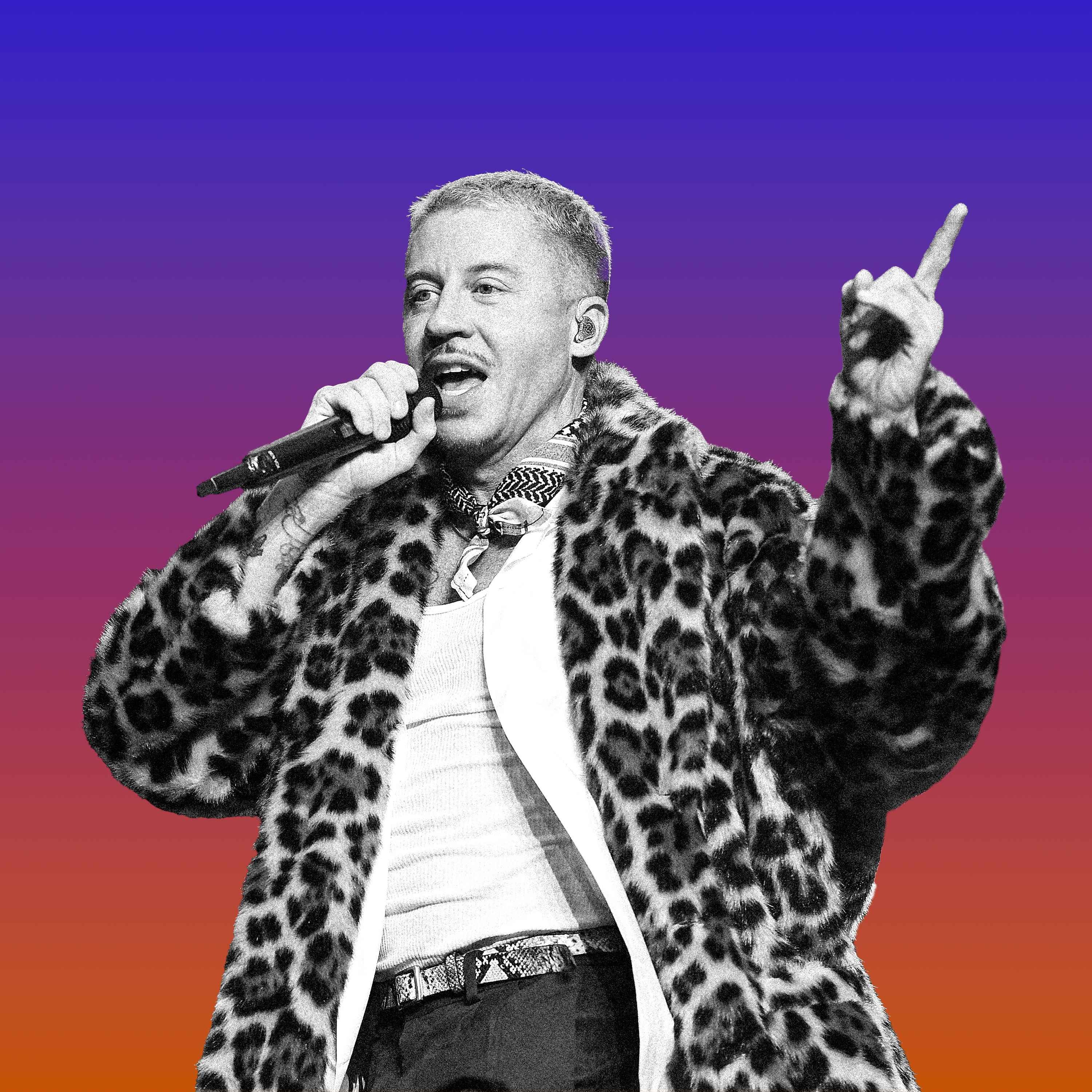
The cultural and political backlash around Macklemore’s “Free Palestine” speech during Ed Sheeran’s tour, and why it became a lightning rod for Gaza/Israel debate.
Soraya McDonald, a cultural critic.
Macklemore’s comments triggered stadium-owner and media pressure, but the controversy didn’t end with his removal; it spread to other opening acts and affected ticket demand. The episode argues Macklemore is a “normie” mainstream figure whose protest broke through, and that class/siloed information shapes public reactions. It also claims Ed Sheeran’s statement was “absolution seeking” by blaming promoters while implying neutrality that equals complicity.
Macklemore’s 2014 anti-Semitic costume (hooked nose/beard) and later apology; Robert Kraft calling “Free Palestine” hate speech; Ed Sheeran’s Instagram carousel; comparisons to “Sun City” and Nina Simone; mentions Mark Ruffalo, Hannah Einbinder, Yuval Abraham, Jonathan Glazer, and “No Other Land.”
Written by AI. May contain mistakes.
Discussion on Macklemore's comments about Palestine and their fallout.
“Soraya, before the last week or so, when was the last time you thought about Macklemore?”
Discussion on Macklemore's comments about Palestine and their fallout.
“No red flag, no notifications screaming at you.”
A deep dive into the complexities of Macklemore's stage comments and reactions.
“We have Macklemore, this artist who people are maybe familiar with because of a 2012 hit thrift shop.”
Explore the motivations behind Macklemore's stance on Palestinian liberation and the reactions of others in the industry.
“Please don't, you know, it's, I don't want to be like drawn into this.”
Discuss the significance of artistic protests and compare Macklemore's actions to historical events like apartheid.
“So I'm trying to understand what just happened better because I don't know if it's some kind of turning point at all in terms of how the American public thinks about Gaza or Israel.”
Examine the complexities of Jewish identity, power in Hollywood, and the impact of historical trauma on current perceptions.
“And I say that because after he made this speech, there was this push by, you know, stop anti-Semitism people who are like, we want refunds and here's what we want and like petition type stuff.”
Explore the complexities of Jewish identity and power in Hollywood.
“That is a harmful and insidious bigotry that has followed us.”
Discuss how Hollywood narratives struggle to represent Jewish pluralism.
“Including the stories that we tell ourselves about ourselves and that like we are constantly like renegotiating and arguing and getting in our feels about that.”
Analyze how generational and class differences shape Jewish discourse.
“in season of Teshuvah, you know, of thinking about how we want to and can, you know, make 57, 87, you know, a more peaceful, a more just, a more sweet year.”

Get the gist, explore an idea or ask about something said.
 Claude
On What Next | Daily News and Analysis, what are the key points of this episode?
Searching your listeningAutomatic transcript. May contain errors.
0:00Your call has been forwarded to an automatic voice message system. A missed call doesn't feel like anything. No red flag, no notifications screaming at you. It just disappears into your call log. And nine times out of ten, that was someone ready to hand you money. That's why today's episode is brought to you by Quo, spelled Q-U-O, the business phone system built so you never miss a call. Here's what I like about it. All your calls, texts, and voicemails live in one place, so anyone on your team can pick up a conversation, see the full history, and respond fast. No more, wait, who talked to this customer last?
0:36And if you're worried about after-hours leads slipping through, Quo's optional built-in AI agent can answer questions and even book appointments while your team's offline. It's the number one rated business phone system on G2, and over 90 ,000 businesses already trust it to stay reachable. Money is on the line. Always say hello with Quo. Try Quo for free. Plus get 20 % off your first six months when you go to Quo.com slash tech. That's Q-U-O dot com slash tech.
1:07Soraya Nadia McDonald: Decisions made in Washington can affect your portfolio every day. But what policy changes should investors be watching? Listen to Washington Wise, an original podcast for investors from Charles Schwab, to hear the stories making news in Washington right now. Host Mike Townsend, Charles Schwab's Managing Director for Legislative and Regulatory Affairs, takes a nonpartisan look at the stories that matter most to investors, including policy initiatives for retirement savings, taxes and trade, inflation concerns, the Federal Reserve, and how regulatory developments can affect companies, sectors, and even the entire market.
1:44Soraya Nadia McDonald: Mike and his guests offer their perspective on how policy changes could affect what you do with your portfolio. Download the latest episode and follow at schwab.com slash WashingtonWise or wherever you listen.
2:04Soraya, before the last week or so, when was the last time you thought about Macklemore?
2:15Oh, wow.
2:17Soraya Nadia McDonald: more than a decade ago, probably. Oh, yeah. This is Soraya McDonald. She is a cultural critic. And if you are like her or me and you have not thought about Macklemore in a very long time, give us 30 seconds to catch you up.
2:37Soraya Nadia McDonald: Macklemore is the guy behind the song Thrift Shop. Maybe you remember when he won a Grammy that even he thought should have gone to Kendrick Lamar. All you need to know about Macklemore now is he's still performing. In fact, Ed Sheeran took him on tour. But at the very first stop, Macklemore gave a speech about Palestine. I've been trying to figure out a way to say this all day. One of the reasons why I wanted to come on this tour was because I wanted to stand up here on stages and stadiums across America and say two words that are very near and dear to my heart, free Palestine. After this, the internet lost its mind.
3:23Soraya Nadia McDonald: I said free Palestine. How did you hear about this whole dust up? Oh, I mean, well, it's doing numbers on threads. Did you have a chance to listen to what Mack Macklemore's been saying from the stage. I didn't see anything that was particularly hateful or concerning to me. Macklemore got booted from Ed Sheeran's tour anyway, after the pop star Pink spoke out, and then some stadium owners intervened. What those decision makers did not seem to anticipate, though, was everyone else's opinions. The thing that's so weird to me about the trajectory of the story, the Macklemore story, is that the people who were worried about what Macklemore was saying, in some ways they won, right?
4:24Macklemore was removed from a tour he was on after comments about Palestine got so much attention. attention. But it just wasn't the end of the story, you know? Yeah. I don't know. I mean, did they win? I mean, so he's off the tour, and now all of the other opening acts for Ed Sheeran also left. His tickets are, I think, selling, you know, are being offered for like$65 in the stadium tour. Yeah. Wow. That's a deep discount, I assume.
5:00Soraya Nadia McDonald: Mm-hmm.
5:05Soraya Nadia McDonald: Today on the show, how did Macklemore become a lightning rod on Gaza? Why now? Why him? I'm Mary Harris. You're listening to What Next. Stick around.
5:26Your call has been forwarded to an automatic voice message system. A missed call doesn't feel like anything. No red flag, no notifications screaming at you. It just disappears into your call log. And nine times out of 10, that was someone ready to hand you money. That's why today's episode is brought to you by Quo, spelled Q-U-O. The business phone system built so you never miss a call. Here's what I like about it. All your calls, texts, and voicemails live in one place. So anyone on your team can pick up a conversation, see the full history, and respond fast. No more, wait, who talked to this customer last?
6:02And if you're worried about after-hours leads slipping through, Quo's optional built-in AI agent can answer questions and even book appointments while your team's offline. It's the number one rated business phone system on G2, and over 90 ,000 businesses already trust it to stay reachable. Money is on the line. Always say hello with Quo. Try Quo for free. Plus get 20 % off your first six months when you go to Quo.com slash tech. That's Q-U-O dot com slash tech. Hi, Brooke DeVard, host of Naked Beauty. Picture this, you walk in from the cold and every room already feels like fall. That's what whole home scenting means at Pura.
6:40One system working quietly in the background so your home always feels like the season and like you. Learn more at Pura.com. Do you snore? Did somebody hand you a CPAP and did you quietly stop using it? The mask that never quite seals, the hose tugging at you every time you roll over, a machine sitting abandoned in a closet. Excite OSA works a different way. It treats a root cause instead of managing the noise, and you use it while you're awake. 20 minutes a day, while the coffee brews, while you set your fantasy lineup. An FDA-cleared prescription device for primary snoring and mild obstructive sleep apnea.
7:23Then you go to bed like a person, nothing strapped on, nothing plugged in. In clinical studies, 90 % of patients saw a reduction in snoring. No sleep study required. Prescribed online, shipped to your door. ExciteOSA at springsleep.com slash sleep20. Code sleep20 for 20 % off. Excite OSA is an FDA-cleared prescription-only device for primary snoring and mild obstructive sleep apnea. Not for everyone. Individual results vary. Risks and benefits at springsleep.com. Okay, I want to dig into the Macklemore mishigoss with you.
8:13Because it's just really complicated. Yeah. We have Macklemore, this artist who people are maybe familiar with because of a 2012 hit thrift shop. There you go. White rapper. On tour with Ed Sheeran, of all people, who seems to have really put into his act this moment where he talks about the war in Gaza and Palestine and makes a real statement to the crowd about what he believes about it. And he says, free Palestine. And my colleague Alex Kirshner has pointed out, part of the reason I think this has attracted so much attention, what happened here, is that Macklemore is not an ideal ambassador in this fight.
9:02And I want to get into why, because I think that, I mean, we've talked about how his music is kind of not like highbrow music. Exactly. It's corny. It's corny. Thank you, Soraya. That is the correct terminology. But also he has a history, which I was unaware of until all of this, of like dressing up in an anti-Semitic costume on stage. This is 2014. Can you just tell this story? Yeah, there were images of him dressed to perform. I think what kind of really sends this over the edge in terms of plausible deniability or lack thereof is that the fact that he's sort of dressing up in this very big sort of hooked nose, a beard, which is black, and then dark black hair.
9:55Like the only other visually, maybe the only other comparison that I could make that is not of a sort of anti-Semitic Jewish stereotype is maybe the buzzards from the Jungle Book. Wow. OK, that was a deep cut. Yeah, so he dresses up this way. And that combined with, you know, the fact that he is singing about like, saving money, like buying all his clothes at the thrift shop, you know, really converges on this stereotype of Jews as especially tight-fisted. Yeah. And he did this at a concert and he said, I did this to like blend into the crowd and be in disguise. And he later apologized for it.
10:45I feel like we have to say all of those things did happen. But it really was this moment where people looked at him like, guy, what are you doing? And then it sort of went away. And then now it's like we hear about him again and he's very much speaking up in defense of Palestine. How quickly was it clear like, oh, this is going to be a problem for some people, specifically for people who own stadiums? in the United States where he might be performing. Yeah, I think it was the news story when Bob Craft specifically characterized Macklemore saying free Palestine as hate speech.
11:23Soraya Nadia McDonald: Bob Craft, notoriously the owner of the New England Patriots. Friend to the president. Friend to the president, friend to other stadium owners where Macklemore might be performing. You know, sort of someone who can rally the elite here. And I just think that how people responded in the wake of like Macklemore getting all this attention is so telling. Like you have like the social media response of like, you know, artists saying like, I support or don't support him. And of course, it creates all of this pressure on Ed Sheeran, who Macklemore is touring with to say something, anything about what's going on.
12:01Like I stand by this guy, don't stand by this guy, whatever. Or just artistic freedom, right? Like you could have just. Exactly. And eventually it becomes clear Macklemore is departing the tour and Ed Sheeran comes out with a statement. And I want to pick apart this statement because it's so telling. It's like a classic Instagram, like slide after slide kind of thing. and he basically says this wasn't my decision it was the promoter's decision which to me is the first misstep because you're not acknowledging your involvement at all as like the lead headlining artist yes it feels like absolution seeking like from from job exactly exactly and then he's sort of like well I want my space to be a place for children and all of these things and you're like well why why is saying free Palestine not for children?
13:00Like, it just creates all of these questions in your head. And he says, I don't want to be complicit. And I'm like, hold it.
13:06Soraya Nadia McDonald: Isn't this the definition of complicit? If you're like, if you're not, if you're just going along with what your promoters are saying here, you are saying something. He's trying to say he's not saying something, but he is. Yes. Right. That is the essence of, you know, when Howard Zinn said, you cannot be neutral on a moving train. And this train is definitely moving. And I'm not sure that Ed quite grasped that, you know, just going from the Instagram carousel statement that he made. I think it's strange because of what it reveals, perhaps, about his priorities. Tell me more about that. Like his first priority seems to be again, like one of absolution seeking, like, please don't blame me.
14:01Please don't, you know, it's, I don't want to be like drawn into this. I think he referred to this as a conflict, you know, like he, he would like to sort of remain politely on the sidelines, not being expected to have thoughts or opinions or anything, but like at best, then you're just, you're just passive. You know, you're just, you're Gumby. I'm confused about the motivations of some of the people involved in this fight. Because Robert Kraft, of course, like, he kicked things off, but he got other stadium owners sort of involved in this fight. And if you look at where Macklemore was prevented from appearing, some of those same places are places where you could find a Kanye West concert.
14:48And Kanye West has said much more explicitly anti-Semitic things than Macklemore. The only people whose motivations I understand in this very clearly, frankly, are Macklemore, who's been pretty explicit about, like, I believe in Palestinian liberation. Okay, I won't be performing at these places. And so, therefore, I will be donating$1 million to Palestinian causes. And by the way, I want all of you to keep paying attention to Palestinians and not myself. Like, I understand that motivation. I understand the motivation of people who have since left Ed Sheeran's tour people like Phineas who are supporting Ed Sheeran and we're like hey yeah sorry we just can't be a part of this anymore.
15:29Ed Sheeran Robert Crafty's other people it's harder for me to understand their motivations at all other than like they want to keep making money like that makes sense to me but. Yes I think that is that is the thing that they are that appears they are most loyal to.
15:47Soraya Nadia McDonald: god that feels so hard for us to say out loud but yes in this case consider you know seeing the fact that his his tickets now with dynamic pricing have dropped you know he's trying to sell tickets for 65 dollars i'd sure it is right the remaining ones for his tour yeah even from that standpoint of like well i'm just focused on the money well now you you've screwed that up too so we'll be right back after a quick break
16:26Soraya Nadia McDonald: this episode is brought to you by fresh books whether you just launched your service business or you've been at it for years the money side has a way of pulling you from the work you actually love doing. FreshBooks changes that. FreshBooks makes the money side of your service-based business easy. You log your hours, you send a branded invoice, you get paid and know your numbers instead of chasing them. Money in, money out, all in one place. No more juggling one app for clients, another for billing, plus a pile of spreadsheets and emails. FreshBooks is designed for how small business owners think about money, not how an accountant does.
17:00Soraya Nadia McDonald: You don't need a financial background to use FreshBooks. It's simple on purpose. Most owners are up and running in minutes, not days. And if you need help, a real person is available on every plan. FreshBooks has been trusted by service businesses for over 20 years, helping over 500 ,000 owners and solopreneurs run their business confidently. Right now, my listeners can get FreshBooks for less than three bucks a month for your first four months. That is 90 % off. Head to freshbooks.com slash podcast to get started. That's 90 % off under three bucks a month for four months at freshbooks.com slash podcast.
17:4298 of the top 100 US accounting firms trust Bill to handle Bill pay processes. Why? Because our tools are built on over a trillion dollars of secure payments. We're not just moving money. We're powering financial workflows for half a million customers. That's a level of expertise you just can't fake. Ready to talk with an expert? Visit bill.com slash proven to get started and grab a$150 gift card as a thank you. Terms and conditions apply. See offer page for details.
18:14So I'm trying to understand what just happened better because I don't know if it's some kind of turning point at all in terms of how the American public thinks about Gaza or Israel. But I do think it was an intentional event that moved in a way that I didn't expect. And I was trying to think of analogies in like artistic history, right? Like, what do I compare this to? The thing I immediately grasped for was that 80s song, I Ain't Gonna Play Sun City, about South Africa, where a bunch of artists sort of came together. And it was about money, right? Like, I'm literally not going to play this venue, which I think is a really important part of this, like the sort of money piece of it.
19:04Is that an analogy you'd reach for here? Like, would you reach for a different analogy? The other person who I think of with some sadness is Nina Simone. Um, purely, and I want to be clear, like politically, musically, not so much in terms of, in terms of similarities. Uh, but particularly toward the end of her life, um, or the latter half of her life after the assassination of Martin Luther King and after the assassination of Malcolm X. Um, you know, Nina had recorded so many protest songs, uh, whether it be Mississippi, Goddamn. Um, but also, you know, the beautiful, the beauty that is to be young, gifted and black, um, you know, all of these things, but she, she lamented, like she understood, um, that her appeal commercially, uh, had, had declined.
20:08And because she was so vocal and committed to the civil rights movement, you know, even after, say, the passage of the Civil Rights Act or the Fair Housing Act and, you know, Lyndon Johnson could say, see, we did something, you know, and she's still going. and kind of witnessing herself fade from the zeitgeist in a way, you know, because I don't know if it's because of necessarily even disagreement in the public with her sentiments or just fatigue, you know, like this is because these problems are so, so big and they can feel so overwhelming. and it's like, well, what else can I do? You know?
21:03Soraya Nadia McDonald: It's funny because Michael Moore, in this analogy, he's kind of like a Trojan horse. Like, I don't think of him as like the political guy. I think of him as like the thrift shop guy. And then all of a sudden he like comes out, he's like, also, I'm the God's guy. And you're like, what? You do not expect that. Really? This guy? Yeah, in some ways, like, I feel like you're pointing out like why it worked, quote unquote, like why it broke through. Like, you're just sort of like, why? It's like, yes, he is. Why do peanut butter and jelly work? Why do all these things work? You're not expecting it. You're not expecting it.
21:35And he is very much, he is a mascot for just normie. He is extremely normie. And I think has been able to kind of retain that in a way that even Ed Sheeran and Taylor Swift, who are also considered very, like, kind of mainstream, I don't want to say Starbucks musicians. That's not quite right. But there's a broad appeal.
22:06Soraya Nadia McDonald: He's so normie, he's not even that popular. Right. But they have... He's kind of mid all around. Just extremely mid. Just aggressively mid. Just, you know, just the emperor of mid. But I think that allows him, he's also in a different financial universe from either of those two people, right? From Ed Sheeran or Taylor Swift. So even as they are sort of like aesthetically occupying this middle ground, they're extremely wealthy people compared to the rest of us. Whereas Macklemore hasn't quite ascended to that level of financial success as the other two. The other thing I think is important about how this all played out with Macklemore is that unlike other political protests from people in Hollywood in the past, there was a place for regular people to enter.
23:05And I say that because after he made this speech, there was this push by, you know, stop anti-Semitism people who are like, we want refunds and here's what we want and like petition type stuff. And what they found was that when they riled regular people up like this, the response wasn't what they expected. They expected like we riled the people up and they're like, yes, we demand a refund. And it was like, huh, nope. Yeah, which seems to be like a recurring theme right now, like this year, this half, this quarter. I don't know. Yeah, I mean, well, one of the things that I think that people are finally sort of catching up to what we're seeing the ways that like, there is a class silo, I think, that exists in terms of the information that people get.
24:03And their attitudes about it and how that is shaping their opinions or lack thereof and responses versus where a kind of large plurality of people are. And when I say large plurality, I am also including American Jews who are extremely, you know, myself included, like furious at Benjamin Netanyahu. If you look at the sort of the most recent polling data, who do not support this military action that is taking place there, who do not support the sort of impunity with which settlers are acting in the West Bank. and who see through, you know, the ways that I think the White House and American foreign policy more broadly has kind of been able to enact this sort of like decades-long filibuster on a real Palestinian state.
25:10And like those chickens are coming home to roost. Like there's nowhere to hide.
25:15Soraya Nadia McDonald: You're saying people are underestimating the public anger about this. Oh, yeah. In part because, you know, we have we have gone through what we're now in our third year of seeing these horrific images appearing in our social feeds that are very, very real. Yeah. And this Macklemore thing came after what I saw as like a summer of artists speaking out continually about what's going on in Gaza. You had people like Mark Ruffalo, who got a lot of pushback because he was criticizing the Ellison family, linking them to Israel. The Ellisons are, of course, behind the Paramount Skydance merger. You saw actress Hannah Einbinder from Hacks speaking out and basically just saying, like, this is worth more than my career.
26:05Like me saying this is, like, more important.
26:07Soraya Nadia McDonald: And so it's like there's been, like, I feel like the path was made. And then all of a sudden there was Macklemore who you were like, wasn't expecting that. And so like it was all of this happened. Yeah. Is this the thing that breaks containment finally? Maybe? I don't know. Exactly. Maybe. You've also spoken, though, and I think this is so important about, you know, I sort of analogized the apartheid state South Africa thing. But you've talked about how criticizing Israel and what's happening in Gaza is different when you're talking about Hollywood people, people who are artists in the artistic industries.
26:47And I want you to talk about that a little bit more because I just think it's important and something that may be forgotten by some people. It's very tricky to talk about this. I think it makes people very uncomfortable because we are asking them to hold sort of complicated and competing realities in their head at the same time. in terms of the ability of a person or a people, right, to be, as Beyonce has said before, victims and villains at the same time. That our historical experiences, the literal epigenetic trauma that we carry in our bodies, both from Jews. And you're saying Jews in this.
27:34With the memory of the Holocaust, with the Shoah, but also thousands of years of being scapegoated and then driven, you know, from societies in the way that that has shaped Jewish life, right? The way it shapes the stereotypes and bigotry toward Jews, the idea of Jews as puppet masters or these people who are sort of working behind the scenes and subverting people's lives. That is a harmful and insidious bigotry that has followed us. At the same time, Jewish people hold real power in the entertainment industry. And that is also true. And much like you have this stereotype of Jews as bankers that arises, you know, from a history of Jews being excluded from other professions, you know, and sort of ghettoized into this industry.
28:50and then making it work. Just, you know, particularly salient for me as a Dutch Jew, because a lot of that history takes place right in Amsterdam. There is a similar sort of history and circumstances that shapes, like, why early Hollywood and those studios, uh warner brothers um are started and helmed um by you know like human imperfect sometimes really frustrating um imperious jews they're not imperious because they are jews they're imperious because they are humans right like yeah and it just sounds like what you're saying is all of this history makes it hard for people in Hollywood to tell a more nuanced story about themselves and the world because that involves reassessing.
30:00Yes. Right. Including the stories that we tell ourselves about ourselves and that like we are constantly like renegotiating and arguing and getting in our feels about that. But it's so funny to me because that questioning is so baked into Judaism. You know, if you, if you like, if you look at like Passover, for instance, there's this whole part where you talk about like, you could be the simple child, you could be the wicked child, and it's like, you can be all of these things. And so the idea that you can have multiple identities is actually not foreign to any of these people. It's just a matter of like breaking your...
30:40Like Judaism is, I think, like extremely, is beautifully sort of pluralistic in all of the ways that you can, that you can be a Jew, right? Like it's constantly being discussed and argued about and renegotiated and like, you know, to the point where like, I mean, you can have favorite heretics, you know, mine happens to be Spinoza. But do you feel like that's appropriately reflected in like the Hollywood discourse around Israel? No, not at all. And I think there are folks who are trying to push it in that direction. I think Hannah is a good example of that. Hannah Einbender. Yes. Hannah Einbender.
31:32Also, like Yuval Abraham, you know, one of the co-directors of No Other Land, who has faced, along with his colleagues, direct threats from the Israeli government because of the films that they have made. you know you could say that also about Jonathan Glazer you know the filmmaker who made the zone of interest and who very you know who did not shy away from the fact that there is a way that you can sort of look at that film and see parallels between the sort of peaceful bucolic just beautiful life that seems to be taking place just steps away from a murder factory
32:21Soraya Nadia McDonald: Yeah, the zone of interest was about a family that lives right by Auschwitz. Yeah, by a death camp. Like he is he's not discouraging people from from making those analogies with Israel and Chazer. In fact, like he sees them himself, right? Like he is I would say he is if not encouraging them, then certainly like he's not steering people away from that and has also been very vocal about. the suffering of the Palestinian people. And there are, you know, like so many Jews, I think myself included, who feel very deeply that it is our duty to speak up, you know, as we go about this, I think this very beautiful project of, in season of Teshuvah, you know, of thinking about how we want to and can, you know, make 57, 87, you know, a more peaceful, a more just, a more sweet year.
33:34Does this whole Macklemore thing give you, I don't know, more hope? Yes. And I will say, you know, I think part of what we see in this sort of like divide between like ardent Zionists and other American Jews. Like I think if you kind of, if you sort of spread open the data, what you will see, like there are generational distinctions, certainly. But I think this is also about class. And this is taking place at a time where like we are experiencing greater income inequality and wealth inequality in the United States And we were during the first Gilded Age, you know, like it is wide. And so when you have, I think, a generation of decision makers who have kind of held positions of power for a long time, right, and who have essentially built themselves up as the establishment and who hold a lot of institutional and financial power, the people who are challenging them um are their children uh their grandchildren right the ones who is it you know bobby the hannah einbinders yeah the hannah einbinders um the folks who are also like more politically aligned with socialism um and i mean i think that's wonderful like you keep we see that over and over again whether it be with naomi klein um speaking up whether it is uh molly crabapple's new book right um that is encouraging us to to to look back at the history of the jewish bund um and doiket and heurism uh and an embrace of diasporic judaism as opposed to this idea that like we all have to you know like the only place we could possibly be safe on Earth is Israel, which I just don't think is true.
35:45I really like living in Bed-Stuy.
35:53Soraya, I'm really grateful for your time. Thanks for coming on the show.
35:56Soraya Nadia McDonald: Thank you so much for having me. Soraya McDonald is a cultural critic, and you can go see what she's up to at soraya.press. She is about to launch something brand new, and you should really be checking it out. All right, that's our show. What Next is produced by Evan Campbell, Madeline Thames-Ducharme, and Patrick Fort. Paige Osborne is the senior supervising producer of What Next and What Next TBD. Mia Lobel is the executive producer of podcasts here at Slate. Ben Richmond is the senior director of podcast operations. And I'm Mary Harris. Go track me down on Blue Sky, say hello. I'm Matt Mary Harris.
36:32Soraya Nadia McDonald: All right, thanks for listening. Catch you back here next time.
36:45Hi, Brooke DeVard, host of Naked Beauty. Picture this, you walking from the cold in every room already feels like fall. That's what whole home scenting means at Pura. One system working quietly in the background, so your home always feels like the season and like you. Learn more at Pura.com. There's one thing that will forever change the way you sleep, and it's the softest 100 % organic cotton bedding from Bowlin Branch. You'll fall asleep faster, wrapped in the most luxurious comfort. You'll never sleep hot again with airy blankets, cloud-like duvets, and breathable sheets. You'll experience pure comfort on night one and feel your bedding get softer with every wash.
37:25Discover the difference with 15 % off your first order at bowlinbranch.com with code BUTTERY. Exclusions apply. See site for details.
What it means that Macklemore decided he’d rather keep speaking out for Palestine than continue opening for Ed Sheeran.
Guest: Soraya Nadia McDonald, cultural critic and writer.
Want more What Next? Subscribe to Slate Plus to access ad-free listening to the whole What Next family and across all your favorite Slate podcasts. Subscribe today on Apple Podcasts by clicking “Try Free” at the top of our show page. Sign up now at slate.com/whatnextplus to get access wherever you listen.
Podcast production by Evan Campbell, Madeline Thames-Ducharme and Patrick Fort.
Paige Osburn is the senior supervising producer of What Next and What Next TBD.
Hosted on Acast. See acast.com/privacy for more information.