
In short
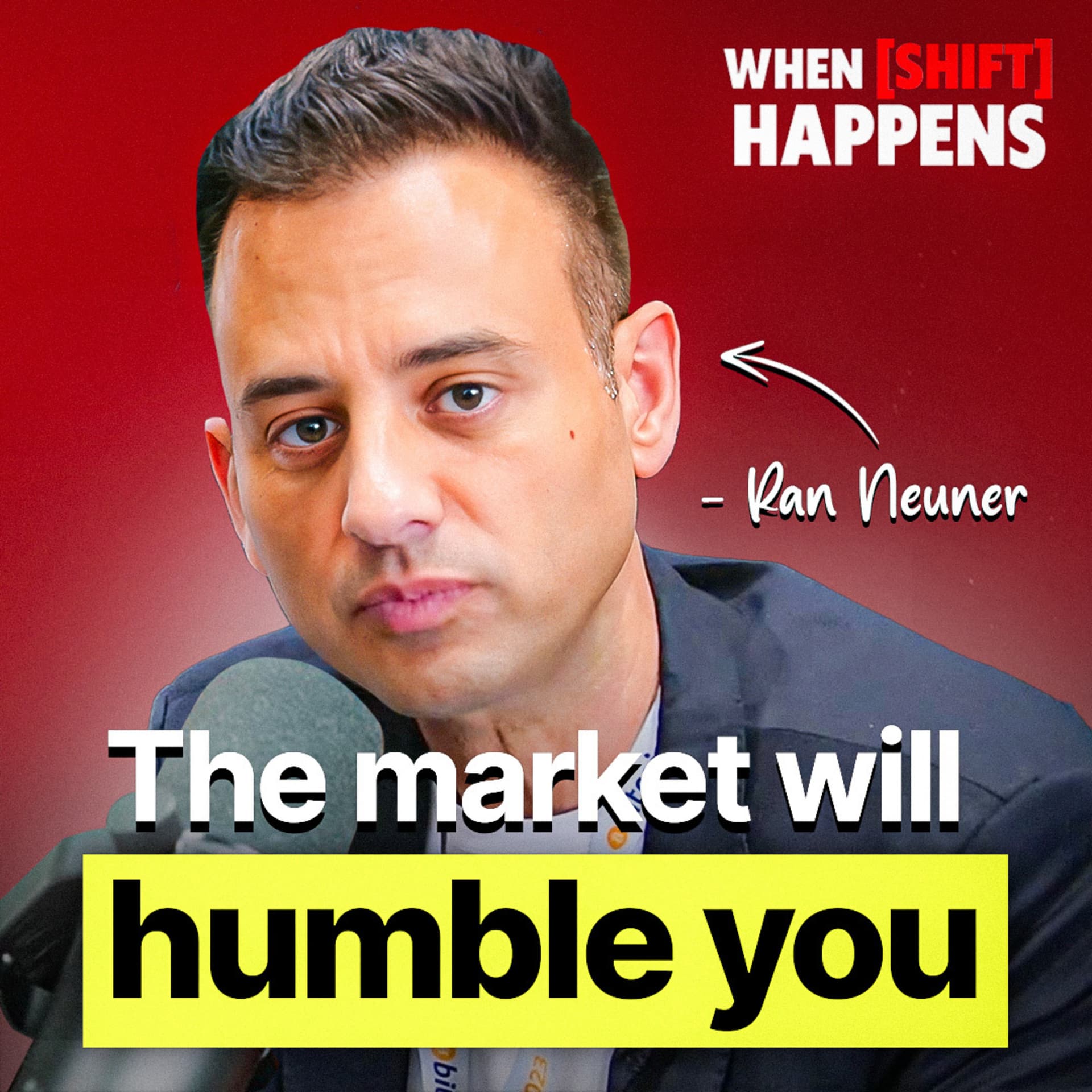
Podcast Notes: When Shift Happens Podcast - Episode E113: Ran Neuner: How I Lost $100M in 4 Days (What It Taught Me About Crypto)
Episode Overview In this episode, Kevin speaks with Ran Neuner, the CEO of Onchain Capital and the host of Crypto Banter, about his personal journey in the crypto space. Ran shares the impactful lessons he learned after losing $100 million in just four days and discusses the mindset necessary for success in the crypto industry.
---
Key Themes & Discussions
Introduction
- Podcast Purpose: Aims to create a safe space for in-depth conversations on crypto, educating not just enthusiasts but also mainstream audiences like politicians and business leaders.
- Guest Introduction: Ran Neuner is introduced as an influential figure in the crypto community.
The Financial Loss Experience
- $100M Loss: Ran recounts the devastating experience of losing a significant amount of money in a short time, which fundamentally shifted his perspective on risk and success.
- Emotional Impact: The loss led to deep introspection regarding obsession, winning, and the mindset of champions.
Lessons Learned
- Diversification: Emphasizes the importance of diversifying investments, regardless of conviction in a specific asset.
- Listening to Criticism: Highlights the value in listening to critics as a means of gaining insights and avoiding pitfalls.
- Understanding the Market: Acknowledges that the crypto market rewards those who are willing to adapt their strategies based on market dynamics.
The Nature of Crypto
- Information Asymmetry: Ran discusses his belief that early access to information leads to success in crypto investments.
- Self-Custody of Assets: Advocates for learning self-custody to secure investments, emphasizing the mantra “Not your keys, not your coins.”
The Role of Content Creation
- Podcasting as a Tool: Ran discusses how podcasting serves as both a platform for education and a means of personal engagement.
- Passion for the Industry: His daily routine includes consuming extensive crypto-related content to stay informed and provide value to his audience.
The Psychological Aspect of Trading
- Dopamine Feedback Loop: Explains how the thrill of trading and the validation of being right can lead to risky behaviors, particularly among inexperienced traders.
- Risk Management: Stresses that maintaining a disciplined approach to trading—such as avoiding excessive leverage and diversification—is crucial for long-term success.
Predictions for the Future
- Market Movements: Ran shares his view on the potential shifts in the market, including anticipated challenges and opportunities.
- Trends in Memecoins: Discusses how the nature of memecoins has changed, leading to more sophisticated tactics by insiders.
---
Key Takeaways
- Diversification is Critical: Never place all investments in a single asset, regardless of how confident you are in it.
- Embrace Constructive Criticism: Critics can provide valuable insights that can aid in better decision-making.
- Understand the Psychology of Trading: Recognize the emotional drivers behind trading behavior and manage them effectively.
- Invest Consistently: A consistent investment strategy can help mitigate the risks associated with market volatility.
---
Final Thoughts Ran's candid sharing of his experiences and lessons highlights the importance of resilience in the face of adversity and provides valuable insights for anyone looking to navigate the crypto landscape effectively. His journey underscores the need for both emotional discipline and strategic foresight in investing.
Follow the Podcast Hosts
- Kevin (Host):
- [Twitter](https://x.com/KevinWSHPod)
- [Instagram](https://www.instagram.com/kevinwshpod/)
- [Website](https://www.podpage.com/when-shift-happens/)
- Ran Neuner:
- [Twitter](https://x.com/cryptomanran/?lang=es)
- [Instagram](https://www.instagram.com/cryptomanran/)
Disclaimer The content of this episode is for informational purposes only and should not be construed as financial advice. Always conduct your own research before making investment decisions.
---
This markdown provides a structured and comprehensive summary of the podcast episode, highlighting the critical discussions and insights shared between the host and guest.
Written by AI. May contain mistakes. Listen to the episode to check what was said.
Transcript
Automatic transcript. May contain errors.0:27I was destroyed. I fucked it up. interviews with industry experts and his engaging content has made him a prominent figure in the global crypto community. Who are you? So who am I? I want to believe that I'm a champion. I am obsessive, terrible OCD, obsessed with being the best at everything that I do. What is crypto banter? It is a platform where we just want to make people financially free. Financial freedom is a term that's very much thrown around in crypto. Financial freedom is not the ability to go and buy whatever you want. It is the ability to have time where you don't have to think about how you're going to pay the bills so that you can actually enjoy life and do things without financial stress.
1:03Now let's talk about IWASCA. I went to do IWASCA and I felt the worst pain in the world to the extent that I started crying and I started to protect myself. IWASCA said to me, that's what's wrong with your son. That's how your son feels today. I was like, what do you mean? What is the game that the KOLs are playing that most retail people still don't understand? Are you willing to sell your influence for 0.1 % of a token supply? If the answer is yes, then my feeling is you're an idiot. So you were telling me that at CryptoVenter, you've never done that.
1:3569 % of the people who watch this podcast have not subscribed. If you enjoy this show, if it provides value to you in one way, shape or form, can I please ask you a little favor? Can you click that subscribe button, give this video a like and leave a comment down below? It helps this show more than you can imagine. My goal is to bring the absolute biggest and brightest people on this channel. And the best way to get there is to have all of us rally together and build the when shift happens family. Thank you. This conversation is supported by Jupiter, the most used decentralized trading platform on Solana and the largest DAO in the world.
2:08Bitwise Asset Management, the crypto specialist asset manager with more than$10 billion in client assets and more than 30 crypto solutions across ETFs, index funds, alpha strategies, staking, and more. Three, a scalable layer one blockchain that's fast, secure, and affordable built by previous Facebook developers and that delivers the benefits of Web3 with the ease of Web2. And Mantle, an Ethereum layer 2 that builds two products I particularly like. FBTC, which enables you to borrow and lend Bitcoin in DeFi and METH, or METH, one of the largest ETH liquid-staking protocols in crypto. I was actually wondering before the interview with Tushar, I was like, these guys are kind of the...
2:52they're the goats in the space, super early investor in Solana. but they're also seen as some guys who might come across as not the kindest, right? So I was a bit kind of almost scared. I was like, I don't know what I can get out of this guy, right? But then he was actually very chill, very cool and open to... What I realized is the more you ask those questions, the more people are open to answer, right? And we always come and we think, oh, but it's a crypto podcast. I cannot talk about childhood trauma or depression, anxiety, but actually it's not true. People love to talk about that stuff. and the fact that he's in studio changes the whole game.
3:27I don't think online they would be open to that. Yeah, I've interviewed Tishar many times and I've seen many interviews with him but I think you managed to get him out of the box and that was my aha moment that your podcast is actually going to be I think it's going to be huge. I think you're on, as I said to you earlier when we were prepping the studio, I think you're on the cusp of a major breakout here. I'm honored to be here. Amazing. I'm very happy to have you too. It's been a while. We have been talking a couple of months. And I hope you're right. You know, I think I have an eye for this kind of talent.
4:05I think I consume more content than probably 95 % of people. I consume about eight hours of content every single day, religiously. I'm a very regimented person, and I consume eight hours of, I would say seven of the eight hours is crypto content. And then one hour a day is dedicated to my other passions. Formula One is one of my passions. Understanding the human brain, how the human brain works and how people make decisions is another one. Behavioral economics is a third. So that's kind of like where I spend my time. Why do you spend seven hours a day consuming crypto content? Why? So a couple of things.
4:49I enjoy growth. I enjoy being the best at everything that I've done. You know, that's who I am. And what I enjoy is, obviously, we all enjoy making money. And anyone who tells you that they don't enjoy making money, because money is a scoreboard, right? And so we all enjoy making money because that's the only validation that we have that what we're doing is correct, right? That and friends telling you, wow, congratulations. But that's why people love crypto so much. um also what i realized very early in this game is that i got in early and information asymmetry in this game is is is right now until further notice is the winning thing problem is that you need to remain disciplined so how do you remain disciplined to learn every day at school we used to have a teacher and the teacher used to make us do homework and make your parents sign that you did the homework.
5:44In my life, my discipline is, I know that at four o 'clock every day, with my time, 9 a.m. EST, the camera goes onto my face. And when I talk, I've got two options. Either I'm going to know everything and be the smartest guy on YouTube or anything, or I'm not. And for me, instinctively, I've always wanted to be the winner at everything that I do. And so to me, it's very important that I deliver the best content. And I'm obsessive about delivering the best content. And the only way to do that is number one to listen to every single bit of content that's out there. A, so that you learn, but B, so that you also know what other people have spoken about so that you can differentiate yourself.
6:22And so literally regimented, I have, I listened to seven hours of content. Now, when do I listen? So I wake up before my kids. So I wake up half an hour to an hour before my kids. And immediately, the first thing I do is I open Twitter and I put my earphones in and I'm on two speed. 45 minutes in the morning drop the kids at school then i have an hour of listening time so i go to sit in the coffee shop and i read twitter and i read headlines and i listen so it's already two hours on double speed that's already four hours then i go to gym which is an hour and unless i'm swimming i've got my headphones in and then like i've got like when i get home and like when i drive home my drive home is 35 minutes or 30 minutes i've got my earphones in and i'm on speed and I know exactly which podcasts come out at which time so it's almost like it's like a routine like for example I know Ben Cowan who's into the cryptoverse he's in a different time zone to me his night is my morning so he's usually one of the first ones that I listen to if he drops a video and so I listened I just have a routine but I'm an obsessive listener I listen at two speed to everything and absorb as much as I can you talk about information asymmetry right and because the space is very native.
7:33And that's one of the key conversations I had with Raoul Pal that you also know very well, which is we're able to, and it's very counterintuitive when you start something in the media space in this industry, because you are able to talk to the people who are going to be huge tomorrow, right? Or who are already being huge. And so you have all the alpha right in front of you. But for me, it took some time. I think the first person I realized that was with Lucanets from Pudgy Penguins. A year and a half ago, I sat down with him and I talked to him for like an hour, an hour and a half. And then I realized, I went home and I was like, this guy's built different.
8:11But I couldn't really understand. I mean, I was like, if I talk to this dude and I think he's built different and I think that NFTs, there's pretty much nothing in this NFT kind of world except this dude who's doing something serious and he was 2023. So it's kind of like before you anticipate the next kind of bull market, right? But I don't do anything out of that, meaning I don't buy a bunch of Pudgy Penguins. I could literally miss the whole thing while having the alpha in front of me, right? But it's extremely hard to realize that it's possible, that you have this chance that is probably not going to happen again.
8:47And Raoul always compares that to the 70s or 80s being in London with the music industry and having these guys were playing music in the bar. You don't realize that these are the future stars of tomorrow, right? And so we get this alpha, right? We get this information asymmetry, which is amazing. But then you need to take action. So maybe it was my luck in terms of how my life actually played out. But before I came into crypto, I built and sold a very big marketing company. It was the biggest marketing company in Africa. We sold it in a very big acquisition. and that was my entry point into crypto.
9:28So I had money and actually the next phase of my life was actually just to invest and preserve my capital, right? At the same time, I stumbled onto the most crazy opportunity and that was I managed to launch the world's first televised crypto show and it was aired on CNBC. And I'll tell you the story probably at some time in an interview but what I didn't realize before I did it was that when you're in the media and remember this was in 2017 when mainstream media was not hated crypto and then there was this guy flying around the world filming stuff for CNBC so you can imagine that everybody wanted to speak to me spoke to CZ before he launched Binance I spoke to you name it like like I met everybody in crypto like and they all wanted to tell me their story because they all wanted a chance to be on CNBC and talk about crypto, right?
10:22And so what I realized was like, all these guys are coming to me and feeding me information. And that is exceptionally powerful. And I had on the other side, I had a war chest of money because I just sold my business. And so what I realized was that I was getting a lot of information. Now, some people came to me and said, oh, bro, you got inside information. No, it's not. I was doing research, but the way that I was doing research was in a different way. I did it with a camera in front of my face. And look, it was not planned. I wish I could go back and say, you know, I had this master plan of, it's just the way that my life worked out.
10:55And then I realized that the most powerful, I didn't realize the power of the media. But after being in the media, I realized how powerful being in the media actually is. And that is, for me, I think one of the most powerful tools is, I think I've built a credibility. I've been in a multi-cycle. This is like my third cycle now. and so people come to us with information and tell us because they want to be featured on the channel or because they want exposure and if you can use that information that you get to create an investment thesis and i'm glad you brought up luca because i i think you know he's he's he's an exceptional human being and i mean the way his brain sees five steps ahead is and and again we did the same thing we spoke to luca we saw five steps ahead that this guy was was you know he knows, he sees ahead.
11:46And you know, you use that to get an investment thesis. You invest and you tell your community that you're doing it in an open, honest and transparent way. And then you've got a great recipe. Dear When Shift Happens family, the following message is probably the single most important thing you should take away from today's podcast. If you're serious about your crypto investing journey, please take some time to learn how to self-custody your assets to make sure that nobody can take your coins away, ever. If you don't learn how to be your own bank, it is very likely that one day you will lose all your hard-earned crypto.
12:19The safest way to hold your crypto is in a cold storage that we also call hardware wallet. Hardware wallets are not complicated and they give you peace of mind. I personally use a hardware wallet called Treasure. It is open source, very easy to use, and the first hardware wallet created ever. As we like to say it in crypto. Not your keys, not your coin. You can order your treasure wallet with a 10 % discount by following the link in the description down below and by using the promo code WSH10. And now back to the episode. And there's not that many people in crypto were actually long-term thinkers and building amazing things.
12:56So if you go and sit down with them, it's not that hard to realize, oh man, I'm having someone in front of me who is built different. And I was talking because I also didn't realize, I was doing all this thing like every week, okay, I'll sit down. I have this kind of gut feeling, oh, this one could be a good one, et cetera. But with time, I realized I was talking to one of the co-founders of SwissBorg and he was telling me, Kevin, I used to be a trader in traditional finance on the trading floor where, I don't know, 100 people on the trading floor, 200 people, analysts. But we had eight managing directors, right?
13:27We had eight bosses. What were these bosses doing all day long? interviewing CEOs. That's why they were the bosses, right? And they were coming to us and then we're doing some analysis, etc. And so this is a very old job, right? Except now we have come around and we can use media as leverage to kind of like educate masses. But it's a very... I didn't realize that. And then I was like, fuck, actually, okay. Like, it's just a very old job. I didn't invent anything new. And yeah, sometimes I even... When I really think... Sometimes you should not think too much about what you're doing. I'm just like what am I doing concretely?
14:04I'm sitting down with people and I'm having a conversation and there's three cameras and we're just recording it sounds so primitive right? But in this new world of media where media is a big leverage and in this amazing industry that is like the highest leverage industry in the world it makes sense right? It's the concept of a masterclass and I must say to you I wear three hats or multiple hats in my day to day life so the first hat that I wear is I'm a broadcaster, which means I'm a personality. The second hat that I wear is that I run a business. I run the business of broadcasting, the business of banter.
14:39The third hat which I wear is I run a fund where I invest capital into projects. And if you ask me, like all those come with, you know, one is you put on the camera and you get the dopamine rush of validation of people watching you and commenting and views going up and numbers go up. And that's an addictive, addictive addictive drug right much more than crypto prices going up I realized it's this really fucked my mind completely whereas crypto prices going up and down even making crazy money in one day or losing like this is nothing compared to the dopamine addiction of look look at my YouTube app it's on and all I'm looking at is I'm looking to see the it's horrible the real time and then you have all the social media channels and you have all the comments and the likes and the clicks plus all your telegram plus all your emails and then it just fucking wounds your mental health completely.
15:29But it's a drug. It's an absolute drug. So that's the one drug that I have. The second part of my job is managing, running a business. And running a business, to be honest, is to me the worst part of the job. It's dealing with human problems and why aren't you performing well and you should be performing better. But then the part that I actually really love the most is meeting for the fund. I meet with founders of projects and we discuss what they're building. And that for me is the best part. And I'll tell you why that's the best part for me. The first one that I mentioned is internal validation.
16:01It's, hey, bro, you're still good looking. You can still smile. People love you. That's cool. Every human needs that. But the part that I love the most is building my knowledge base. And when I speak to a founder and he explains a new protocol to me and he explains what he's doing, and then I know that I can challenge him and perhaps even assist him and work collaboratively to build, that's the part that I actually enjoy the most. So if you were to say to me, like, if you could drop, if you could keep one part of your day, the one part of my days, I'd speak to project founders all day long. Because we speak to hundreds of projects.
16:35And that means that we have real information asymmetry. And it's like you start to get really, really, really smart. And I think it's the same for you because I've listened to a lot of your podcasts. And I imagine that inside you have got so much data that to sit with Raupel for three hours and to extract data from him. And then, you know, in the same year or month to sit with Tushar and extract data, you just need one computation to put the two informations together. Absolutely. You develop pattern and judgment. I mean, sometimes it's wrong. But in this industry, again, I was saying before, because there's not that many people who are really, really amazing.
17:19It's actually not that hard to see. You can always be wrong, right? but to be like, oh man, this is a real one. And I can go like, hey, there's a lot of that. Yeah, I mean, I think it's important. I think what you've done is you've got very high profile people on your podcasts. The way I see it is entertain discussions with as many people as possible, but also cut quickly. So like if you realize that you're interacting with someone who's not, and I use this analogy quite a bit. It's quite a blunt analogy, but, you know, the average person lives for 90 years, which is say 28 ,800 days or whatever it is, 20 ,000, 30 ,000 days.
17:57You know, the first part of your first five years and the last five years of your life are like, you can forget about them, which means that you've got 18 ,800 days. And the problem with 18 ,800 days is that your first 9 ,000 are like that and your other ones are like your health is going down, your energy is going down. Like, you know, that's the thing. And so you've got to be really selective about who you spend time with. Because when you break it down into days and then you break it down into hours and then you break it down into minutes and you then say, okay, I want to really get ROI. And ROI for me is gym, sleeping, spending time with my kids.
18:33The balance that's left, I really want to spend with good people. I want to work with cool people. I want to have interactions and fun with good people. I want to talk to good people. And so I think the people that you spend time with don't underestimate how important it is to surround yourself and have conversations with the right people. To that end, I think podcasting is a, it's a gift. It's the biggest life hack in the world. And the barriers to entry are so small. Like it's two microphones, a laptop, and you don't have to have a studio. You can do it with three cameras. But most people don't realize how simple it is to actually do.
19:14It's like the biggest life hack in the world. you gotta just get off your ass and actually do it. Which is very hard for most people. For some people. For most people it's very hard to get off your ass and do it consistently like everything else. Gym, meditation, business, relationship, every day and every year, day in, day out. That's the barrier to entry which actually makes a difference between something. What I realized is, yes, you need to have like some competitive advantage, whatever, something that you are doing a bit differently, but the main competitive advantage you have in business, I've been building businesses since 10 years now, is just how long can you keep doing this thing?
19:55That's it. It's a superpower. It's the most important superpower. The most important for me, I know I'm not the smartest guy in the room. I probably don't have the same IQ as a Vitalik or whatever else. I'll never be able to compete. My superpower, and therefore my business's superpower, and if you speak to anybody in our business, I'll tell you exactly the same thing. superpower is consistency in a bull market in a bear market every day you do your show at the same time you do every single day you march 15 miles every single day regardless of whether it's raining or sunshine every single day the second superpower is resilience and resilience is for me defined as the ability to get up okay that is resilience if you can combine resilience and consistency, it doesn't matter how talented you are, you're, I would say, guaranteed for success.
20:48And I know this because a lot of people will beat me on many axes, but I think a lot of people will struggle to beat me and therefore my organization on consistency. And so I think that our biggest advantage in the market is we are sticklers for consistency. You said I'm not the smartest guy in the room I mean in the crypto room obviously we're dealing with it who are you? just going back to the smartest guy to the smartest guy in the room when I was in marketing and I just have all respect to the marketers out there when I was in marketing I very often was I think one of the smartest people in the room and I spent 17 years in marketing and when I got to crypto you know i came from marketing i was i was creating brand campaigns and then i moved somehow i find myself in crypto and the and i say this with all respect to anybody who's in marketing but the difference in intellect between marketing and crypto because crypto is like computer geniuses it's mathematical geniuses it's it is a absolute absolute absolute paradigm shift so i went from being what i think was the smartest guy in the room or one of the smartest guys in the room to man like struggling to keep up with conversations and everyone that i speak to almost like feeling wow this guy is much smarter than me yeah so going back to who am i just one note on that absolutely for me that's why i i'm not mega technical that's why i spend hours preparing every interview which actually also makes a big difference people think they realize in front of this guy like prepared the thing and i did this interview i think which really made the difference in my, I would say self-confidence was Gavin Wood.
22:37I listened to it. The guy who invented the solidity and the EVM and I was like, beforehand, I was like, man, this is like, I don't know. Like, and then we spent three hours talking and I managed to two things. I managed first to like, not look stupid. And second, like he's a head of business came to me afterwards and he said, it's the first interview of Gavin where I understood everything he was saying. And then I was like, oh man. this is what I want, right? To make something simpler. But after that, I was like, I can talk to Vitalik. Or I can talk to these guys who are like gigabrains because I made it, right?
23:16But it's very intimidating because you, I mean, first they're all like multi-billionaires, but also from computer science, right? And so... Again, you know what? You've built a skill. Your skill, which I think, again, you bring is you get people to talk about things that ordinary they wouldn't talk about you know like we spoke about things yesterday when we had breakfast that I would nearly I wouldn't speak someone that I'd never met before you know and that's your skill I also came with a soup with a skill my skill was I was in marketing now if you think about at its core what is marketing marketing is taking something that is in a company very complicated and very jumbled and communicating communicating it to a consumer or a buyer in a very simple and effective way in a very limited amount of time so our my superpower was the ability to take technical protocols and explain them to people that ordinarily wouldn't be able to understand it, starting with Bitcoin, but then going into much more technical concepts and explaining things like, what is a smart contract and stuff like that?
24:14That was my superpower. And why the combination is so powerful. I met the team from a protocol called Axelar. Axelar is, in my opinion, one of the best cross-chain protocols in the universe, right in the in the cryptoverse but the guys that developed it are computer scientists and they just can't communicate to the public what they've built and that's where i found my superpower so it's i think we come with different superpowers and that's what i came to accept in crypto but having said that like the thing that i really love the most about crypto is the intellectual stimulation that i get on a day-to-day basis and it's also why i love traveling so much because i go to hong kong and i meet people like you and i meet more devs and it just makes me feel smarter when i get home and that growth is actually what fuels me.
24:58Again, we're all here to make money. Let's not all lie to each other, but ultimately it's all about how much can we grow. And for me, how much can I teach? Because my way of learning, my way of understanding that I've learned something is to be able to teach it. So if I learn something, the only way that I know that I really know it is can I teach it to you? And if I can, then I really understand it. And if I can't, it means that I didn't understand it and I need to go back and study it again. and that's that is that's the magic formula for me who are you so who am i um i am i want to believe that i'm a champion and why i say that is i am obsessive i've got terrible ocd and i'm obsessed with being the best at everything that i do and when i say everything that i do it started off when i was when i was a kid like i always wanted to be the best at everything that I did to the point where I live my life by this mantra of brilliance or nothing and always win by a mile.
25:59So those are very scary things to live your life by. But it's every aspect of my life. So when I say every aspect of my life, if I were to define myself, I was born with champion OCD, which means that if I'm in a position where I can't win, it gives me terrible anxiety. and so it now it goes down to every aspect of my life number one i want to be the best father in the world and that is for me the most important thing in life is i want to be the best father in the world to my kids nothing else really matters to me what does that mean being the best father in the world so bringing them up in so trying to be there as much as i possibly can but also balancing my own personal ambitions to actually continue to learn and continue to grow bringing them up in a way where they have all the knowledge and everything, but also allowing them to think, which is the same way that my parents brought me up.
26:53They gave me everything. And then they said, for now on, you've got to make your own decisions, which I think was a very big gift that they did. I want to bring up kids that are hungry. And I think that's one of my biggest fears is that it's very hard to bring up kids that are hungry when you have a certain level of wealth. Of course. I came from nothing. And I had hunger because I wanted to prove the world wrong. And because I think I was born with, I don't know if I was born or nurtured, but I was, I cannot, in my head, I cannot not win. I have to be the number one streamer. I have to be the biggest business.
27:29I have to be, otherwise it gives me, you know, people that work with me, people that work directly with me, there's a very high rate of people leaving and the reason is i have such big expectations of myself that i pass those expectations to the people that work closest to me not everyone can operate like that you know like not everyone can operate in a high performance environment where it's always brilliant and i think and every time you make a mistake it's like the world collapses right Right? It's not great. Like, I'll give you a very simple example. New person in our company yesterday, a new person, one week in the job, presented, not to me, but via somebody else, presented a logo to me.
28:13I didn't like the logo. It was a really bad logo. Now, what should I have done? What I should have done is I should have gone to the team that worked with them and said, look, guys, it wasn't really amazing. You should try again. What did I do? I exploded. I was like, this is so bad. How can you present this? Why? Because in my OCD, it wasn't brilliant. And I was upset that it was okay to present something that wasn't brilliant. Okay, now, that's the expectations I have with people around me. But the reason why I have that expectation is because that's the expectation I have of me. When I make a show every day, I live in anxiety every day that the show is not brilliant.
28:5215 minutes before my show, Kevin, 15 minutes before my show, bro. I do a show every day I've done I've done over 3 ,000 shows I don't know how many shows I've done 15 minutes before my show I'm in panic It's not good enough It's shit I don't have enough data I need more data Put in more data This is not good enough I have a research team I feel really bad for my research team Because Every day I tell them How bad the show is Okay Every day I tell them How bad the show is I don't mean to do it But I just For me I just feel that I have to win the race Now remember when you say When you take brilliance or nothing and then you mix it with another thing, which is another thing which I can't get rid of and that is win by a mile.
Read the full transcript
29:32Win by a mile means that when you beat your competitor, you don't beat them by that much. You aim to beat them by so much that it's, so I don't only want my show to be better, but I want my show to be that much better. Okay, now the problem with that is that you're not being chased by people, you're being chased by a ghost and the ghost is always here, but it doesn't really exist. And so I'm constantly, I have this, if you want to call it an anxiety, of not winning by a mile. And I'm not comfortable unless I feel that I'm very far ahead of my competition. So whereas I could probably get away with one or two researchers for my show.
30:10How many researchers do you think I have? I have 10. 10 researchers for one YouTube show. It's obscene. It's absurd. But that's how I am as a person. So you asked me to summarize myself. I have terrible OCD and I just want to win and I want to win by a mile and it's in everything that I do and I wish that it wasn't like that but I can't break it you can't break it or you don't want to break it I can't have you ever tried? yeah how? for example I try and go on vacations like vacations are really tough for me bro really tough have you ever seen a therapist? I have my ways of doing therapy and I don't know if I'm allowed to discuss them on your podcast, but I mean, I regularly go on ayahuasca retreats.
30:57We'll talk about that later. I don't know if I'm allowed to talk about it, but yes. I have tried CCA therapists, not for that, but once or twice. And I just don't really believe... Having seen what other means of therapy there are, which are naturally induced and stuff like that, I think that I could probably get better value for it. And I've tried it. but also to be honest I don't know if I want to stop winning because it's my drug so like it's like I love it bro that's what I enjoy so you think that's what I enjoy right Naval I think he says something along the lines of happiness is peace in motion peace in motion yeah it doesn't feel like your life is peace in motion right because you're saying like i'm always like kind of angry and not happy and stressed i mean not not not happy but stressed out and anxious and everything are you happy so i use you're looking at the bad side of it i'm always winning also and when you're always winning it's an amazing amazing feeling right like it's it's a sense of achievement every day that you're like that that you're you're good and and you're doing good things i watch my kids grow and and be who they I'm like, fuck, I've really succeeded here.
32:19I watched my business grow and succeed. I'm like, wow. So my piece is winning. The price that I pay for winning is the, anxiety is probably the wrong word, but is the pressure that I get, that I have all around me. You know what I found though as well? I think I'm addicted to pressure. And I think that when I'm not under pressure, I'll give an example. And again, it's a real life example. We take effectively one real summer vacation a year. And that's in South Africa. It's a December vacation, not June or July like Europe. And I booked two weeks with my family in Mauritius. So two weeks, one resort with a family in Mauritius.
33:04I came back one day early. Just because it was too much relaxation. It was too much rest. It was too much not winning. It was too much like chilling. I understand that. I understand that. Also, I think it comes from going through some traumatic events in business, right? And in money. And so you have this, you develop this thing, which I also have now, which is I become anxious when I'm not anxious, when I'm too chill. So for example, I could go on holiday a couple of days. It's fine, right? But if I go more than that, I start to disconnect and that's going to trigger like an anxiety because I'm like, fuck, I'm not, I'm too chill.
33:51Therefore, I'm anxious because you're already anticipating that this is going to fuck things up, right? Because you need to be in control of things and to push. Otherwise, things don't happen. So this I completely understand. you said you said you have your way to deal with this
34:13this character and stress and everything right you talked about ayahuasca so let's talk about that now I think just we'll talk about I just want to go back to one of the things that you said and you said it comes from maybe traumas in business and stuff like that And I don't know if it's traumas in business or traumas in life. And I'll tell you, I think one of the things that really drives me is that there's certain people that are not competitive at all and don't really care. And my wife is one of those people. So my wife is completely the opposite of me. She has zero competitive nature to the extent that she actually hates competitive sports.
34:48So she won't watch a game of tennis because she just doesn't like that one guy loses and one guy wins. Okay. So she's the opposite of me. I'm the other way around. When I was younger, I grew up in a house where we were not poor. When I say we're not poor, we always had food on the table and we always had, we always lived in a house and we never were on welfare or food stamps or whatever else. But we were one working parent and my parents decided to have five kids. So one working parent who was never really a director or an entrepreneur, he was just a salaried employee and five kids. And my parents also wanted us to all be well-educated.
35:23So they send us to the best schools or try to send us to whatever they could afford the best schools. That was a bit of a fight when I was younger. The problem is when you go to the best schools, the majority of the kids are rich because the best schools cost the most money. And so the problem is that I was always the poorest guy in the class or nearly the poorest guy in the class. The problem with that is that you can't have nice things when other people have nice things. Now, when you're a kid, it manifests itself in small things. Like all the kids have these playing cards and you have less playing cards.
35:53when you turn 18 in South Africa and all the kids get a car, but you don't get a car. It's impossible. You don't get a car. They all get a car. What it does is it builds an anger. It builds resentment inside you. And for me specifically - Against what? Against who? Against wanting, against the world. It's not them. You're not crossed with them. You cross with the world because you know you deserve because you work as hard and you try as hard, but you don't get. And so my resentment was at people that got, that had it easy. I'm much wealthier now. I've had an exit. I sold a big marketing business and I've obviously been in crypto for a long time.
36:33I'm much wealthier now. You know what my biggest fear is? Going back to where I can't have, where I was. I live with that anxiety every single day. Yeah, but I would argue it's a healthy anxiety to have. because that's what keeps you from not fucking up and losing it all or a lot, which already happened to most people who took risks, right? I don't drive fancy cars. I don't wear fancy watches. I don't buy crazy things. Why? Because I really, really, really appreciate where I came from. You know, like for me, I think the one thing which was like a massive paradigm shift for me was the upgrade between business and economy class travel.
37:13For me, It's a very good conversation to be had, actually. it's like for years I probably could have afforded to and should have used business class travel and I still landed up flying economy class and that and there was a time in my life where eventually it snapped and I was like okay you're getting a much better night's sleep but the price difference between business and economy even now it doesn't matter it doesn't matter and it doesn't make sense right if you think about if you calculate how that's it's so stupid but it's a very very very important conversation I think Like, I'm also like, I'm this Swiss dude.
37:47I like to live simply. My parents had, I mean, they didn't have a lot of money in the beginning, but my father did really well. But they have this, he has this trauma from being a child, having five brothers and sister or six, having a sausage to share, right? So no money, basically. And so my family, we grew up with very simple values and I still have them. but a lot of people are like, yeah, but Kevin, like you're making so much money. Why do you wear Zara t-shirts for 20 bucks since 10 years? Why do you, and this business flight, like I talk to my friends who make good money but they are employees, right?
38:28You don't like my Zara shirt? Is that a problem? I love it. I actually made my team print this on my favorite Zara shirt that I just used. It's the same for me. So. Is it what? A slim fit? I'm like 25 of them they're all black easy you should see my wardrobe same same so
38:52when is it okay I mean for everyone it's different but when is it okay to fly and this is also when you start to meet a bunch of girls and then hey I want to fly business but like the problem of if we take a business flight now it's not that it's going to cost first it's going to be too much for what it is but it's going to cost way more but not now it's going to cost way more for every future flight in the future so your 5 ,000 or 4 ,000 bucks decision now actually costs you a million dollars you can't go back once you've gone the one way you can't go the other way so now let's talk about ayahuasca because I think this is a good you wanted to go there let's go there and look I really hate talking about this in public forums because unless you've done it you can't understand it and then it's like me trying to explain to you the taste of a coconut when you've never tasted coconut before.
39:41It's impossible for me to do. Ayahuasca for me is a very spiritual journey. It's my connection to the source of the universe. We call it a God, call it a mother nature, whatever it is. And it's where I see the truth. And I know for sure that it's the truth because every big decision I've made in the last 15 years has been as a result in some shape or form because of guidance. And every single one of them has been for the better. And I've seen things when I've done ayahuasca journeys that you cannot imagine. One of the things that came to me in one of my journeys was, I was going to say to me, the thought that I had was, why are you so scared to spend money?
40:21And why are you always trying to accumulate? And then I realized that what it was, it was a confidence thing. The reason why I was so scared to make money is because I never had self-confidence that I would keep getting back up onto my feet. Scared to spend money, right? Let's get to spend money. Why? Because I had a subconscious fear, lack of confidence that I would be able to, if I got knocked down, the reason why I was hoarding money was because I had a, you always need to have a nest egg. And the reason why you always need to have a nest egg is in case one day you cannot generate. That's the psychology behind it.
41:02And the message that I got in the journey was, you've been knocked down so many times and every single time you've got up again and you've got up better and stronger. So you don't need to keep saving and saving and saving. And the message that I got, it was a very strong, overwhelming message. He said, live your life. Live your life so hard that you die in debt. In other words, the message was, don't store or hold anything. Enjoy every moment and spend as much as you can because the older you get, the less the marginal utility of a dollar, right? Today, a dollar can mean I can spend and I can fly around the world.
41:42Tomorrow, I might not be able to fly around the world and therefore responsibly live. She didn't say responsibly, but I'm adding the word responsibly. Responsibly, I wanted to say also, obviously. Live so hard that you actually land up dying in debt. And I don't think it meant dying dead. I just think it meant don't have assets when you die because there's no point in having assets when you die. That's also what's going to help your kids be hungry, by the way. Exactly. Well, that's one of the things that came up. That's one of the things that came up. She said, because it is a stress for me. The stress for me is that my kids won't be hungry.
42:16She said, well, just don't leave them anything. And then they won't be trust fund kids. I had the same conversation with Mike Novogratz, actually. Because he was saying, I came from a normal family, etc. But then I see all these kids. If it's too easy, they don't have the hunger. That's why I had the hunger. and then I asked him actually what he's going to do with these kids and then he was like, oh yeah. So for you, you had this conversation where you're like, okay, actually not giving anything to your kids? I don't believe that. You see, the problem is, it's very hard for anyone who doesn't have kids and I know you don't have kids.
42:47It's very hard for anyone who doesn't have kids to relate to, you know, when you have kids, something chemically changes inside of you. You go into, it actually does change inside you. Chemically, you get less testosterone and more estrogen. Actually, if you go and look at two subsectors of people and you say, let's take two people, both in the same class in the same year, one got married, one didn't get married, men specifically. And you see them 20 years later, the one that didn't get married will always be stronger and have more muscle. Normally you have stronger, more muscle mass, be better looking, et cetera, et cetera.
43:21Why? More testosterone. Because testosterone is the hunting hormone. And the you're not married if you're married you need to hunt less so something happens to you chemically when you have kids chemically there's a there's something that happens to you and from that point on all you actually care about is providing and caring for your kids and i remember specifically the moment that it happened to me i was watching my my son i was i was a bachelor then i obviously met my wife and i got married and and but even when you get married you are in bachelor mindset until there's one moment in your life where that changes.
44:00And that was when I watched my first son being born. So my wife gave birth and you're a man and you're watching and you're holding a hand. And then there's a split second in your life. And I'll never forget that second as long as I live because something happened to me chemically. I went from bachelor, bachelor pad, bachelor this, bachelor lifestyle to, I had a helicopter, I was bachelor with helicopter. Like bachelor. I was Jordan Belfort bachelor. And as the second my son was born, I watched it. Something happened to me inside. My knees wobbled. I had tears in my eyes. My knees wobbled. And from that second, I realized that every single minute of my life is no longer about me, but it's actually about protection of a clan, protection of a family.
44:50And that is chemical. So now let's go back to it. chemically, hormonally, my body is telling me to provide for my kids so that they, when I say provide, keep them safe. Okay. But safety also means that I mustn't give them when I must make them hungry. What I want to do is not leave them anything. But I'm not going to do that because then I'm going to be an asshole of a father, right? So I have to find the balance. I'm not sure what the balance is. I want them to be really, really, really hungry. I'm not sure how I'm going to achieve. it but it is something that stresses me out every single day so just one more thing that stresses you out i love stress but just keep putting it on right just keep putting it on what other what are the other things that mother ayahuasca told you so for those people who don't understand what it is it's basically what you do is you you feel things first you feel then you see and then you resolve.
45:51So I'll give you one example, a couple of examples. So I was going through one journey, one of my first journeys, and I used to have bad FOMO, very bad FOMO. How did it manifest? Well, for example, if you ever went partying with me, instead of going to one party, we would go to five parties in a night. Why? Because I'd have FOMO that I'm missing out on that party and then I'm missing out on that party. If anybody tells you and you can, I don't know, some of my friends from school may be listening to this, but we used to jump from nightclub to nightclub, nightclub, come back to the first one, go back to the third one, come back.
46:23That was our night. Okay, it was exhausting going out with me. Why? I had FOMO that there were better people, more beautiful girls at each party. That is a form of anxiety, by the way. So if it's FOMO, it's fear of not maximizing. Same thing with deals, same thing with clients. I used to chase deals that I didn't want to chase because I was scared to miss out on a deal. And that makes you a really bad investor. Then I went to Ayahuasca. And I realized that every time I get FOMO, actually what I feel is I feel anxiety. And so I was lying there and I was going through the journey. And I got FOMO.
47:02I just felt FOMO. And remember I said to you, it's first you feel, then you see. So I got this FOMO. It was very bad anxiety FOMO. And I was like, I felt this before. I felt this before. And it took me to the first time in my life that I felt it. It took me back to when I was six years old. now it it took me back to the day that i was six years old and it was the first time that i felt fomo and what was it two friends of mine jason and paul when i was and and if you would have asked me about jason and paul i probably would have forgotten i mean this is talking about friends from 30 40 years ago 45 years ago haven't seen them since just by the way haven't seen them for 40 years.
47:42Haven't thought about them for 40 years. But when you go to primary school, you feed from nursery schools, you feed from play schools, right? They came from the same play school and they were good friends. And I came from a different play school and we were put in the same class and the three of us became friends. Problem is that they were better friends than me and them. So I was always trying to, I was always scared, I was always left out of things because their parents knew each other and their parents were friends. And so they had a much better friendship than I had with the two of them. And so as a result, I always felt left out and I had this fear of being, and that was the anxiety that I used to get.
48:19But Ayahuasca resolved it because I knew what the source was and she reprogrammed my brain. I don't have that anymore. So now I'm very comfortable being in one place and I'm very comfortable not going from place to place anymore. And I don't really have the FOMO anymore. So why now you ask her and this is solved. you don't have to like kind of train or like like like uh like if you're developing self-awareness or through meditation or cognitive therapy that you have to kind of catch yourself let me tell you another thing let me tell you let me give you another one let me give you another one because then you'll understand it the last ayahuasca journey that i did was in november last year and um it was all about addiction and i'm like i'm not an addict like i'm i'm one of the things that i'm really proud of is that i can walk into a casino and i hate being in casinos i've never been addicted to drugs.
49:05I've never smoked. I don't drink. I'm not addicted. It's about money and women and... I'm not addicted to women. Business and work. I'm not addicted to women. So, my version of it was that I wasn't an addict. She said to me, you're an addict and you're here because we're going to solve your addictions. And I'm like, okay, I'm not an addict. Like, I'm not an addict. She said, you are. And I said, I'm not. And she said, well, let me prove to you that you are. I said, okay, well, what addiction do I have? She said to me, well, you're addicted to Coke Zero. Coke Zero, diet, cold drinks. And then I was like, you're right.
49:44I've actually drank at least one Coke Zero for the last 20 years. Every day with lunch, an addiction of mine is to drink Coke Zero. And I literally could not have lunch without ordering a Coke Zero. And I was like, okay, maybe there's a point here. And she said, well, let me tell you what else you're addicted to. You're addicted to number go up. And if it's not, if it's not your, so my routine in the morning, I open TradingView, number go up. I love green. I'm addicted to number go up. But if number is not, you know, TradingView, then I'll go to the bubbles and I look at the bubbles and then number better go up.
50:19And then if number doesn't go up on the bubbles, then I'll go to the YouTube studio and I see the number go up. She said, you're addicted. And you're, oh, you're addicted to leverage. You're addicted to number go up. You're addicted to the dopamine of the number go up. and then she said you know what you're also addicted to you're also addicted to uh drugs and medicines she said you get a headache immediately you take paracetamol you're traveling on a plane you take half a sleeping pill you you you have a sore muscle you immediately take a a muscle a muscle relaxant or whatever it is she said that's an addiction and then the the question was around how do I solve it?
50:57And then she said, the way to solve your addiction is to stop, is to, if you can solve the core of all your addiction is Coke Zero. It's like so stupid. It's like Coke Zero is a fucking drink and I'll actually, like Coke Zero is a drink. And it's not an addiction. She said to me, you have to solve your Coke Zero addiction to solve the rest. Okay, left the journey. Walked past the canteen on Monday, after the Sunday journey, after the weekend journey, walked past the canteen and ordered my lunch and ordered a Coke Zero. And as the waiter pulled out the Coke Zero, all I tasted was the metallic taste of the can.
51:36And I didn't even open it. I just, as I looked at the can, and even now when I'm talking to you, all I taste is I just think about the metal taste of the can and I cannot drink diet drinks anymore. I cannot drink them. Sometimes I crave them. And to be honest, once or twice I've actually even ordered them, I can't get myself to open the can. Okay, so you ask how does it, it has a profound impact that once your brain has programmed to see something, you can't unsee it, you can't unwind it. And so I can't drink it, I drink it. If you force me to drink one, I actually feel like I want to throw up.
52:10I actually really feel like I want to throw up. I check my YouTube studio 80 % less than I used to check it. I check my prices 80 % less than I used to check them. Because that addiction was solved. That addiction, I understand it. Now, even if I want to, I just can't. I can't drink a Coke Zero. I want to. I enjoy the taste of the bubbles. But all I think about is how disgusting the metal of the can tastes. And so I cannot drink it anymore. So it really reprograms your brain to see things. letting go things, old relationships, stuff like that. It helps you to resolve. I'll give you one other example.
53:00There was once in our business last year where the vibe in our business was very bad. Very bad. Everybody was under pressure. Normally in our business, everybody's under pressure because I'm under pressure because I want to win. but the vibe was exceptionally, exceptionally, exceptionally bad. And I went and I did a retreat and she said to me, oh, this is an easy one. I was like, what do you mean? We're going to make one small change and everything in your business is going to change. Okay. The problem is we went in a retreat at a certain time last year and we set ourselves a goal. And I'm going to just give you a figurative goal.
53:38So this is not the goal. Build a$1 billion business in 18 months. Okay, that was the, like, just call that the goal, right? And she said, the problem is that you said 18 months. And the problem is that with 18 months, not everybody's chasing this time period. And as a result, everyone's under pressure to achieve a certain number by a certain time. She said, just remove the 18 months. Okay, so then the goal becomes build a 500 million or billion dollar business. And there's no time, there's no time frame. And that way, people don't have this gun to the head. Don't make a mistake. you better run fast because otherwise we're not going to achieve our objectives to hey just do your best small thing small change massive difference to over a hundred staff that's the that's that's the journey that's the clarity of thought that it actually gives me maybe last example of what Ayahuasca told you to do start CryptoBenter yeah I think it was the first IOS card you've done?
54:41No, no. I did it. My first one was many years ago, but let's go back. So sold my marketing business, started crypto, did CNBC, was very successful. Remember when I did my marketing business, I was probably the most highly decorated entrepreneur in South Africa. I won EY Entrepreneur of the Year, Business Leader of the Year, National Business Awards, Business Leader of the Year. I was on the cover of every single magazine. and I was on the board of the national business leaders. It was like I was one of the number one entrepreneurs in South Africa. You said you had 1 ,500 employees. When we sold the business, we sold the business for$150 million.
55:21The exchange rate fluctuates. So it's between$100 and$150 million and 1 ,500 employees. And I remember that because we had to give them a manifest of all the employees and there was like 1551 or something like that, employees on the manifest. and sold the business, got into crypto, started doing CNBC, went to the United States to try and make it big in the United States, in New York. I really hated New York and then COVID hit. And so spent probably two years in the United States trying to build a business and nothing worked. First of all, it was the worst crypto bear market in the world. So there was no crypto deals.
55:59So I tried my hardest every single day to do crypto deals, to build crypto accelerators, to build the CNBC had no more appetite for crypto content, blah, blah, blah. So it's literally like it was the worst period, not the worst period of my life, I've had the worst periods, but it was a tough period in my life where I was losing my confidence because you go from being the best to not even being able to get the plane to take off. Okay. when they reopened. Now, that plus locked up during COVID for a year, a year we were all locked up, thousands of miles away from my parents and my family, not being able to see my parents and my family, and the anxiety that you knew that if, you know, remember the beginning of COVID was if your parents were 70 plus and they got COVID, they would probably die.
56:47Like that was like the mathematics behind it. And so you wake up every morning and you phone your parents every single day and you're like, hey, how are you feeling? How are you feeling? And you just hope to God that they don't say to you, my nose is running. And sometimes I did. Sometimes I've got a cold. I'm not going to be able to see you. I can't help you I can't fly to you the skies are closed like that was it was a very black period in my life on top of that I tried a hundred different things in crypto and out of crypto and I didn't land up getting the plane into there and so I came back to South Africa and I was in a black place two years of not for a champion two years of not progressing I went as I landed just coincidentally it just happened that on the next day there was ayahuasca ceremony and I went first night was absolute hell i purged my lungs out i i remember lying there thinking i'll pay anything and i will please god just make this journey stop it was the worst journey of my life i was literally i was i was purging and purging and purging and i wasn't purging food because you fast for a few days before but i was purging emotion i was purging dirt i was purging lack of confidence i was purging depression i was purging everything else and then once once it was all out and i I remember like, because I lay there and I was half dead.
58:06I was like, I lay there. I don't think you understand when I said purging. Every breath, it's like, every breath. And like, sometimes you try and breathe, but you're actually breathing in your own, it was bad. It's bad. It was really bad. I mean, I've never done ayahuasca. I will do it. But I did a rapé ceremony, which you usually do before ayahuasca to do some acid trip like a couple of years ago. And the rapé, I was told, hey, it's going to be tough for like 10, 15 minutes, right? I'm like, okay. I mean, I'm very sensitive. And because we talked about these health issues I had, all that stuff, right?
58:47There was probably a lot of still inside of me. So I did the rapé and I just threw up for two hours and a half nonstop. And I was like with my hands on the floor on like a sunbed in the mountains in Cyprus at night, like beautiful uh milky way everything but for two hours and a half instead of 10 minutes throwing up throwing up throwing up until the moment i was like man i i i would prefer to be dead now like than to go through this right and uh so i can kind of understand and it's not it's not ayahuasca so it's much less strong but the hours they're just like throwing up throwing up throwing up i mean purging as you call it uh endless i purged for four hours i was crying i was crying because i was mentally broken because I was like I'm going to die here something's going to happen I can't breathe I keep breathing in my own vomit it's like I'm going to die here and I lay there I lay there afterwards I had tears flowing down my face because I thought I was going to die I lay there and my energy was finished I was so sad and then all of a sudden I felt revitalized and re-energized and warm and beautiful and the message was I had to get all the negativity of New York.
1:00:02You hated New York so much. You were so depressed. You lost your confidence. I had to get it all out of you so that I could nourish you with the future. And then I had questions. When I say you have a conversation, it's just you having a conversation with your own brain. So the question I had was, well, what do I do now? It's been two years and I've tried to do a million and one things and I haven't worked. And she said, oh, that's easy. Do banter. Banter? Banter is an idea which I had in 2017 before or just after I joined CNBC, I had an idea to do a 24-7, 365 crypto talk radio where we would do this with crypto people 24-7, 365.
1:00:40And I would have multiple hosts doing it. But then I parked the idea of banter. And the reason why I parked the idea of banter was because I didn't want to be in a linear business anymore. I didn't want to be in a business where I have to work harder to make money. I wanted to build a platform. I wanted to be exponential. And so I was like, banter, but banter is not exponential. and she said no but banter is your platform to get into everybody else's exponential platforms and then i still didn't want to believe it but then as i said once you've done i was can she shows you the truth it's the truth then i started i got out of it and i was looking for things to do nothing came up it was like banter banter banter and we started banter and it was the easiest journey of my life for once like for once in my life everything that i was supposed to do worked and worked easily and I was like you know some people say that when you're doing the right thing when when the universe believes that you're doing the right thing then it becomes much easier so if I were to summarize what what ayahuasca actually does is ayahuasca to me is this mother nature she's a spirit she's the mother spirit of of the universe and her job is or her job is to make sure that everyone is doing what they're supposed to do in perfect harmony so that the world can work perfectly.
1:01:53And if I'm not doing what I'm supposed to be doing, then I'm disharmonious, but it means that also everything around me is disharmonious. And all she does is make, make it harmonious in your work relationships, in your personal relationships, in your, you know, if you, if you have time, I can give you one more amazing story about ayahuasca, which will blow your mind. If you have. So I have four kids. The oldest was seven when this happened. My oldest son is the one that I'm closest to. His name is Benji. He's seven years old. Now he's nine. And we are the closest because he's the oldest and because he's also the hardest work of all my kids because he has a few issues.
1:02:33Not bad or anything when you speak to him. It's great. But he has lower muscle mass than normal kids. And so it manifests in a lot of things. Benji and I, since the day he was born, every day lie in bed together for half an hour before we go to school. Okay? Every day. He sleeps in a different bed. He runs to me. Sometimes we sleep in the same bed. Benji and I lie together every single day until the age of seven. At the age of seven, he stopped lying with me. And I was like, well, look, he's seven. He's a big boy now. It's not so cool to lie with your dad anymore. I mean, I have to just accept.
1:03:09And I was very upset about it because it's like I'm letting my son go now and he's not cuddly anymore. Like when you have kids, you'll realize just how amazing it is to cuddle with your kids. I went to do ayahuasca. I just went. And I felt the worst pain in the world, the worst depression in the world, the worst pain in the world, to the extent that I started crying. And I was like, oh my God, I'm going to have a nervous mental breakdown. And I started to protect myself. And she said, that's what's wrong with your son. I was like, what do you mean? She's like, that's what's wrong with your son.
1:03:43That's how your son feels today. I'm like, what do you mean? I thought he was the happiest kid and we had the best relationships. She says, no, you don't. I said, why? She said, his biggest event is when you come home from work. And when you come home from work, you go and play football with his brothers. Because I'm sporty and they're sporty. And Benji's not sporty because he's like slightly low muscle mass. He waits every single day. He counts down to Friday night when you come home for the weekend. And what do you do on the weekend? You go and do jujitsu with the boys. he doesn't want to do jiu-jitsu and so so many times he's been so excited to see you ah my daddy's here and you arrive and then you hurt him by by doing like going to his brothers and doing stuff that he doesn't enjoy and so what he's done he's actually started to protect himself from having from having expectations of you and from being excited about you and so that's why he doesn't want to get close to you and I didn't even know he wasn't close to me anymore I just thought it was a natural kid growing up and then I was like oh my god like I felt his pain and then And then it all made sense.
1:04:46Like, he's not that close to me. He doesn't hug me anymore. And I said, okay, well, how do I fix it? And she said, spend one-on-one time with your kids. Don't spend time. I've got three boys and the three boys and I, I've got four kids, but three boys. And the three boys, we always do things together. And she said, do one-on-one. And so I took him to a safari for four days, just me and him. And, you know, we stepped in the same bed. And ever since then, ever since that day, every morning, half an hour before he's supposed to wake up, Benji's in my bed and we cuddle for half an hour and he's nearly 10 years old now.
1:05:21Now, could I have seen that without the beauty of Ayahuasca? I could never have seen that. Had I not seen that, maybe I would have lost my relationship with my son. But I didn't. And now my relationship with him is better than ever. And I saw something that I ordinarily wouldn't have seen.
1:05:39I'm going to do something, Asuka. I think it's the best thing you can ever do. I've been to my body for like two, three years and I was like, Like, my excuse was always, I love myself too much to go through that much pain. Potential pain, but it's just an excuse. You will pay to go through that pain because you'll realize that that pain is a purging of things that are holding you back in life. And that's why I do it so much. What is crypto banter, if you had to explain it to your kids? It is a platform where we want to make people where we're led by a mission. And the mission is we want to make people financially free.
1:06:17And I can talk to you about what financially freedom is. But our mission is to just, we just want to make people financially free. And I think financial freedom is a term that's very much thrown around in crypto. And that's not what it actually means. The reason why I'm so obsessed with financial freedom is the following. Financial freedom is not the ability to go and buy whatever you want. That is not financial freedom. people who don't have financial freedom spend all their time in their minds, mind time, thinking about how they're going to pay the bills, how they're going to eat and how they're going to sleep.
1:06:54Okay, now if you add kids to that and you say, if you've got a kid and you now have to provide for this kid and you don't have money, all day long, 24-7, 365, you are stressed about how you're going to provide for this kid, for this family, for your wife, for you.
1:07:14then you're actually in jail. You don't have metal bars around you, but in jail, you still get food, you get accommodation, you get exercise. For most people, they're actually in worse conditions than they are in jail. Not me, not you, probably not a lot of people watching this, but there are a lot of people, most people around the world. I realized that I can't be a surgeon and I can't change people's lives by doing heart surgery and I'm not a psychologist and I'm not a healer, but what I can do is I can help people achieve financial freedom. And when I say financial freedom, not walking into Gucci and buying shit.
1:07:47The ability to have time where you don't have to think about, where you're not in prison and you don't have to think about how you're going to pay the bills so that you can actually enjoy your interactions with your, you can actually enjoy life and do things without financial stress. That is what you call financial freedom. It's not this concept of, oh, let's win Lambo, win Gucci. That doesn't matter. It's the ability to actually live life and not live life in the prison of having to provide people. So what is our mission? And it's been our mission since day one. Make people financially free. How do we do it?
1:08:22We have a formula. Learn as much as you can. Make whatever portfolio changes based on whatever you've learned. And then in an honest, open and transparent way, tell people what you've done. And then evaluate the results. so I what I do what I do all day I learn about crypto all day and I have the help of 10 amazing researchers we learn about crypto together all day long I then process the information make portfolio changes to my own portfolio first and then communicate exactly what I've done for good and for bad sometimes we win and sometimes we get lunar and we lose and ultimately hopefully if my efforts are successful then anyone who is watching and applying the same learning methodologies should also be successful and that way we can become financially free
1:09:18too many questions here how do you you're in the media business me too we're in the media business media is all about attention and mind share in crypto we have this crazy world where the attention is on something else every two days right which is extremely unproductive because you think about financial freedom and investing we always say investing should be like watching a paint dry right so the media game of getting people attention in an industry that changes every two days is in complete contradiction if you want to get engagement and attention and mindshare is it complete contradiction to the actual investing game which will really make people financially free yes yes you're right in the world where computers make investment decisions but i'm a human and as i explained to you what banter is it's a reality show.
1:10:21The reality is, what do I learn? How do I process the information? And what do I do about it? Okay. So 90 % of my investment portfolio, I hope, and sometimes I deviate because I'm human, is in watching paint dry. Bitcoin, Ethereum, Solana, Radium, Uniswap, blah, blah, blah, 10 % of my attention and my investment decisions is in attention narratives. That is ideally how I play the market. With one caveat, I'm human. Sometimes humans get, because we're not computers, sometimes we get carried away and we make mistakes. And most times when I've made those mistakes, I've paid a very, very, very heavy price for it.
1:11:15so i'm not i'm not i'm not going to sound the perfect investor i am just broadcasting my journey and that means that if you watching my journey then let's say you followed my journey one-to-one which i don't encourage anybody to do then you are going to go through the same ups and downs that i go through hopefully at the end of it we land up higher than we started and so far it's that's been the case but at the same time we will make many many many stupid mistakes along the way You said my portfolio is 90-10, right? 90 % boring. Should be, yes. Should be, yeah. What percentage of crypto banter shows are the 90 % boring, which would get much less views and much less attention?
1:12:04And what percentage of crypto banter shows is more on the DGN side, which gets much more views? and your business. You need the views. You have sponsors. Very good question. I understand it is the game, right? Very good question. Number one, let's talk about sponsors. We never, ever, ever let sponsors dictate our content. I think we're also the only people that I know, and maybe you do the same thing, where I don't guarantee sponsors when they're going to be mentioned on my shows. I have some sponsors that signed with me a year ago and I haven't mentioned them once. And the reason is... I don't do that.
1:12:38No, the reason for that is, and it's a frustration in our business because if you're the guy in my business selling sponsorship, okay? Let me give you an example. I'm not going to mention names, but we have a very, very, very good privacy dex that has been a sponsor of ours for a long time and has been mentioned once. They've paid for 12 months of sponsorship, they've been mentioned once. And every day, the guy, the rep, we have a business development guy who wants to earn his commission and he also wants to look good in front of his client. And every day he's like, do you think you can build it into the narrative today do you think it can be built i'm like no it's not why because privacy hasn't been a narrative right there hasn't been a privacy narrative in crypto for a long long long time it's in fact it's been an allergy of crypto right so we are probably one of the only people that don't commit to sponsors how many mentions they're going to get exactly per month and and you know like we can give you an indication of what we want to try and achieve but if it doesn't suit the narrative it doesn't suit the narrative now let's go back to your actual question.
1:13:38Again, what is banter? Banter is what, or what is my show on banter? It's what interests me on the day, what I'm spending. Because remember what, when I do a show, let's just think about the process. Number one, I have to read and listen all day about the topic. Number two, 10 researchers have to prepare a pack for me on that topic. Number three, I spend three hours pre-show, three hours every day, pre-show, blocked in my diary, you can't get a phone call with me three hours pre-show studying that narrative or whatever I'm going to be playing on the show. So yes, last year, there were lots of times where memes were top of mind.
1:14:15We actually had a big problem with memes because we can talk about memes in a second, but eventually what I did was I split out the meme show into a different show. And I said, look, we'll have the normal shows, which is the 90 % shows. Memes on Sunday night. If you watch the meme show, you know, you're going to lose all your money. You're playing in a casino, there's insider trading like crazy. You're saying that. That's it. You can go listen to my shows. I used to say, guys, you're going to have to shower after this. It's so dirty that you're going to shower. If you're watching the show, you know what it's about.
1:14:47Why? Because to be honest, I was playing memes. Now, to make content, to say, hey, guys, don't play memes. When I'm playing memes myself is dishonest. And that's not why I make content. I don't make content because I have commitments to make content. I don't make content because anyone tells me what the script is I make content because I'm learning and what I'm learning, I'm teaching that is how I make my content I never ever ever make a show because I need to make a show about something ever and I won't do it because I don't have a passion I'm not going to spend three hours of my day learning about something that I don't want to learn about So by definition, the boring things at work will have much less hours of show because they're less interesting now?
1:15:32I talk about Fortcoin all the time. I talk about Solana all the time. I talk about Ethereum all the time, every day almost. That's not boring. I gave memes. I'm not speaking about memes anymore because actually I really hate what memes have become. But in the beginning of memes, I gave memes a lot of time. Why? Because I was curious and that's what I wanted to learn. Again, I don't need to make content. I make content because that's what I'm learning. And if I don't, you can't force me to learn something. I'm not going to spend three hours of my day learning about something. I couldn't give a shit about.
1:16:01Give me an example. NFTs. NFTs. I don't like NFTs. I didn't like NFTs. I love them now, but I didn't like NFTs. I never made NFT shows. Like, why? It doesn't interest me. I just... But you also know I'm interested. So it's kind of like a good excuse to say, and it's fair. It's a fair comment because I'm interested into that and my business is to showcase or broadcast what I'm interested in. If I'm interested in meme, I'm not interested about memes, but you also know because you're very smart, you understand your human brain, you understand marketing, you understand what people are interested in, is the kind of narrative of the moment.
1:16:36You also know that people will watch that, right? And you also know that you're way more likely to get caught up in some drama or troubles or to be called a scammer or whatever because you fed this narrative and you probably profited from it in one way or another because it's the media business, right? Like, yeah, but I don't let the money decision again. Like if I, if I paid you today and I said to you, look, you're going to earn a lot of money, but you have to make podcasts about, I don't know, something that you doesn't interest you. Maybe you could do it for three days. And after that, you were like, look, also look, as I say, I want money, but this is not, I'm not doing this because I, because I have to, I have enough money that can stop working.
1:17:22It's not, that's not why I'm here. I'm here because I'm, I want to learn and grow and teach and whatever else. Right. It's not about, I don't do this because I've got a gun to make because I have to pay bills. Right? And so everything that I say I do, I do. And everything that I make content about is something that I've learned. And I don't ever script or get scripts or read off a script. No, I don't do that. That's not what I do. It's not what my business is. It's not what my humanness is. you said you you much less of the meme coin game because you can mean coin because you you you don't like what it has become i would argue if it meme coins and the meme coin game actually has maybe some people would say oh it's been kind of more fair in the beginning but i would argue not that much and the game that we've been seeing that being exposed now has been running for much longer than we think.
1:18:17Can you explain? Because for me, the most important is I want people to understand because people with influence, all this KOL game, how does this meme coin game or AI agent or whatever other next narrative is, how does it work? So people who make a decision, their goal is financial freedom. Yes, they should do it for 5 % of their net worth, but they will not because they will say, listen, I have 5k or 10k. I'm not going to buy Bitcoin with that. Therefore, they're going to put the whole thing into the shitcon of the day. What is the game that KOLs, and you are one of them, are playing that people need to understand?
1:19:03I would say limit risks a lot of the people who have influence. Because, I mean, it's arguably also, someone who builds influence, the whole game is for the majority of people is to profit from it or to benefit from it or to use it in a certain way what do people need to understand and then they can choose freely how participate in that yes or no about kols and meme coins or the next big narrative which i don't know what it's going to be you've heard you've touched on a lot of things which are not as simplistic as you say so first of all let's define what influence is influence is attention times credibility it's a function of how many people are watching you and how credible you are if a lot of people watch you but you have no credibility you don't have influence right if you have a lot of credibility and few people watch you you actually have a lot of influence right so influence for me is attention times credibility very important that you keep credibility what is credibility credibility is you have five bullets in the gun and you got to make sure that all five hit and if you shoot one and it doesn't hit 20 of your credibility is gone and if you shoot two and it doesn't hit 40 of your credibility is gone now let's talk about losing credibility you start off with 100 % credibility okay and when you lose credibility that's gone so you're always on a point of credibility making losing credibility is always easier than gaining credibility because if you watch me and then you stop watching me you're not going to come back and there's actually a chemical reason as to why you do it and explain you how it works.
1:20:38Let's just take a very simple example. If you were a subscriber to my channel and then you unsubscribed. When you unsubscribed, you made a conscious decision to unsubscribe. So what was in your brain, you had to justify to yourself why you unsubscribed. You often find it with people who leave countries. Let's say you lived in one country and then you moved to another country. And then people say to you, hey, how's it going in Switzerland? How's it going in Thailand? You know what you'll do? You'll always say, ah, Thailand's amazing. Because it has low tax and because the weather is amazing. I didn't ask you about that.
1:21:07I just asked you how you are. What are you doing? You're justifying the decision that you've made. When someone makes a decision not to listen to you in the extreme, they unsubscribe or block, whatever, right? They have made a decision which they have justified with reasoning into their brain and therefore that's now programmed into their brain, which means that your job is to make sure that you keep your credibility all the time because you know that if you lose it, you ain't getting it back. I call it water in a bucket with holes. If you put water in a bucket and the bucket has holes, the water will flow out of the bucket and you can never get that water back because it goes into the sand.
1:21:36Right. So that is how we define inference. Now let's talk about meme coins and specifically let's talk about meme coins. I don't think the meme coin gain has always been this. And I'll actually give it to you very systematically. The first meme coin that I know of was Doge. Doge wasn't this. Let's be honest. Doge was much more about attention. It was much more fair. Right. That is how meme coins started. and then meme coins actually were about attention for a long period of time meme coins were actually about attention and then this the insiders realized that they could game the system and initially it wasn't like this initially gaming the system just meant sniping the tokens and no one would know about it right and then that evolved into more sophisticated stuff sniping the tokens and allocating them to influencers and then that became sniping the tokens and allocating it to presidents.
1:22:32And so the game became more and more and more rigged. What do I think of meme coins in general? Number one, I love the experimentation. I've got to be honest. The fact that anybody can launch digital value, the fact that we can use attention to increase the value of a digital value, the fact that we can prove that blockchains are fast, The fact that we can prove that all these things, I love that because that is the gateway to many other things that we don't know about, right? If we didn't have meme coins, we probably wouldn't have created Pump.Fun. If we wouldn't have created Pump.Fun, we wouldn't have created the ability for anyone to launch a social currency.
1:23:16By the way, already we are seeing that the fact that we created meme coins also created tools to protect people from scams. Like if you are in the trenches, many people don't know this yet, but if you are in the trenches, there's a lot of tools that show you what percentage have been snagged, how safe this is, et cetera, et cetera. None of those tools wouldn't have been built in doing that. Now, I want to give you an anecdotal example. In the beginning, when I got into crypto, it was mainly Bitcoin and there was Litecoin and a couple of others, but it was mainly crypto. And then Ethereum came along.
1:23:51and everyone said, oh, you shouldn't allow Ethereum and Ethereum is really bad for you and that kind of experimentation is shit. Fast forward a little bit longer, Ethereum created smart contract blockchains which gave us the whole industry today. I'll give you another example, right? Do you remember when CryptoKitties launched? No, it was 2017, right? I was not really in crypto. So let me tell you what happened when CryptoKitties launched. The market was super, super, super angry because CryptoKitties stopped the Ethereum blockchain because people were minting stupid cats on the blockchain. What is a cat?
1:24:23It's this new token standard called an NFT. How stupid is this? How dare you? Vitalik shouldn't allow this. They should put it. Okay, but wait, that became the NFT. The NFT became an in-game item. The NFT became an event ticketing system. The NFT became an identification protocol, right? Now, had we cut that at the beginning and we said it was bad, we would never have got to that point. So you can't cut experiments. Memecoins is an experiment. I agree that there's a very shady part of the experiment, and that's why I'm kind of avoiding that I don't touch the meme coins anymore. But there's also a very good part of it where we've built amazing on-chain analytics tools, which we would never have needed.
1:24:59We've built the ability for everyone to launch a social currency. And so I think that we're not allowed to cut experiments just because we can't see their value immediately today. Because you never know where these things are going to land up. And if you cut it too soon because of the issues, then you're not going to let the industry expand. And I think NFTs is probably the best example of that. Because if you were around in 2017 or 2018 or whenever they launched, the hate that NFTs got is the same hate that meme coins got today. It's the same hate. How dare you stop the blockchain? This is a financial services tool.
1:25:34You guys are launching pictures of cats. Your cats are breeding. It's the same thing. I understand that. And I think it's completely fair. The only thing is when you said before, I mean, for a meme coin game, or for I think altcoin game that people need to understand you said we sniped and then we allocated to KOLs right and so for me I really want people to understand and maybe now it's not memecoin anymore or maybe memecoins come back and it's continuing or what's the game that coins or these cabals launching coins or whatever are playing and what is the game that the KOLs are playing and therefore that most retail people still don't understand or don't want to understand.
1:26:21Well, like, I mean, very concrete. I know that most KOLs of a certain size get 0.5, 1 % of the supply for free to talk about the meme coin without ever saying that they got paid in meme coin. And then they just dump on people, right? And that's stupid. That's stupid because then, again, you've got five bullets of credibility. you're wasting your bullets of credibility. Are you willing to sell your influence, because influence is attention times credibility, for 0.1 % or 1 % of a token supply? Without disclosing. If the answer is yes, then my feeling is you're an idiot. So you were telling me that at CryptoBenter, you've never done that?
1:27:03Without disclosing, I can tell you for sure we've never done that because it's in our code of conduct. And our code of conduct is actually audited. Do you think it could, I mean, you have 100 employees. Yes. Do you think it would have happened because when i mean i'm not saying it happened i'm just i'm just i understand corporations and kind of politics and when something grows there's less control do you think it could have happened well let's look at banter versus a lot of others okay number one a lot of the cabal and a lot of the influencers are faceless it's avatars with lots of followers right very few of them have actually like i deal with some meme coin influencers and i know with the art i've never seen them and if they if you were sitting right next to me at a restaurant i wouldn't know it's them.
1:27:42Okay. We're different. Here I am. People know where I live. People know everything about me. So already that's, that's a major separator. Second thing is we're in this for the long-term. Like I don't really care about making short-term money. I want to build a huge business and I want to make people financially free. We're in this for the long-term. So we have a very strict code of conduct. What is our code of conduct? Number one, if you have a relationship, you disclose it and you disclose it in writing and very big. If we have, if you go to any one of my meme coin shows and we did meme coin shows.
1:28:11The first thing I say in the meme coin shows, remember the Sunday meme show is a sponsored show. Here is a list of our sponsors. There's a sponsor below. They're all in red, marked in red at the top of the screen. Sponsor, sponsor, sponsor. And it could be meme coins themselves sponsoring this show? They did, they were. They were. And we disclosed it. We said, hey, this show is sponsored by, I'm not going to mention names, by XYZ Dog and XYZ Cat and here's the website and you can go and check it out. Yes. Always disclosed. Always disclosed in writing at the top of the screen. Never underhand, I'll give it to you, you never speak about it, never, ever, ever underhand, et cetera, et cetera.
1:28:44Okay, so why? Because let's understand, we are in the business of media and how do media companies make their money? They do advertising and sponsorships. And that is, I think, a very legitimate way. So number one, we have a sponsorship vetting. I don't really talk about sponsors I don't care about. with, you know, like I've got much more inbound than I need. And actually, I most of the time am turning sponsors down. Because why? Very simply, I can have one sponsor slot per show, right? If I give you 10 units of alpha, nine units of alpha, I get the right, because I've worked so hard to give you free alpha, I get the right to tell you about a sponsor that I like so that I can pay my bills.
1:29:31I don't have the right to do five sponsors. I have the right to do one. So already I've got to be very selective about who I work with. With meme coins, it was a little bit more complicated because we didn't know what the meme coin game was. It was just about who would get attention.
1:29:47And what was attention? In a world where you have a million coins and 200 million people in the market, as a million coins, how do you differentiate yourself? Only through attention, only through influences, only through media and influences. And so they were all knocking on our doors to get in and we made selections as to who we thought were the most credible ones to talk about. In the meme coin game, it's very, very, very hard, which is why we had a separate show with separate disclaimers saying, look, this is not normal. With protocols, we expect protocols to fail. Like, hey, you know, like nine out of 10 protocols will fail.
1:30:22Even the ones that you think are the most sure will fail. With meme coins, it was even worse than that. And so we said, hey, Sunday show, you have to have a shower after the show, et cetera, et cetera. You know that if you're touching this, you're in the casino, it should be 1 % of your portfolio. You know what the problem is? And I'll be honest with you. It's not something that I'm very proud of. The problem is that people who watch the meme coin show or watch the AI agent show or watch the crypto show. And I'll tell you this actually in a real example. I once had a guy after one of the big crashes and he sent me a thing and he's like, I'm going to sue you because of you, I lost my whole portfolio.
1:31:01Okay. Well, you shouldn't have because I still have my portfolio and I'm not doing very well, but I didn't go to zero. And he said, no, I followed exactly what you said. Okay. It's weird because my portfolio is not at zero. I said, okay, can you send me, can you show me? I want to help the guy. I don't like people lose money. It's not my fault. The markets go down. Can you send me your portfolio? He sent me his account address. I said buy Bitcoin, Ethereum, Solana and have 1 % in garbage he only bought the garbage because he wanted to make 100x right and I was like well where's your Bitcoin? where's your Ethereum?
1:31:43where's your Solana? where's your this? I don't have it I'm like so you went and bought just the 1 % of the portfolio you put 100 % of your portfolio into the 1 % that's the problem the problem is that I can tell you what to do but I can't monitor what you're doing and a lot of people don't have the same discipline as others. And so what they do is they try and make the 100x and they ignore the fact that the 80 % of your portfolio needs to be in a certain amount of tokens. And that's the big mistake. I try my best every time I show a portfolio, I try my best to show it. I educate through the school, but ultimately I can't hold people's hand and I can't put a guard and say, you're not allowed to do that.
1:32:23That's every person makes their own decision. And that's the problem. And the problem is that people are going into the speculative stuff, 90 % of their portfolio. And also they're hopping because they are selling my Bitcoin. I'll buy the meme coin. And that's when, that's when the shit, that's when the shit happens. When you start selling your Bitcoin, Ethan Slana to try and gamble in the casino. That's when the shit happens. Which is why our common friend Raul talks about don't fuck this up. Right. But I think he also had to go through the, like you have to go through a cycle where you almost get like murdered by people actually we talked about we took for two hours and a half the first time he was on the podcast and i asked him about all this fud how we took the fud and he was saying it was horrible spent a couple of weeks doing yoga etc and and kind of disconnecting and then he came up with this don't fuck this up thesis the problem with the don't fuck this up thesis is that unless you've been fucked up you don't understand what don't fuck this up actually means and that's the problem.
1:33:25I'm sorry to talk about this on YouTube but I can say to you don't fuck this up 100 % but if you haven't felt what fucking this up actually means I fucked it up very badly with Luna. Tell me more about that. I mean more than 50 % a portfolio that I built for multiple years more than 50 % of the portfolio was sitting in Luna like an idiot broke every single one of my investment rules because Luna could never collapse it was the new monetary system It had$3 billion worth of Bitcoin. It could never collapse. And then it did. And then I lost hundreds, I mean, over$100 million. In a few days? In four days.
1:34:05You know what happened. It started on the Sunday and by Friday it was finished. And you know because I know you were there too. I was destroyed. Okay, now I fucked it up. Now guess what? Let me tell you what now happened. because I fucked it up so badly. Now, even though I really love Solana, like, bro, I think it's Bitcoin, Solana, everything else. Okay? I looked at my portfolio a few times this year. I saw Solana was a very big part of my portfolio. And I had to make some very tough decisions to get rid of a lot of my Solana. Okay? For other stuff. just not to have all my eggs in one basket.
1:34:52Now, the truth is, the only reason why I can do that is because I realized, not because someone told me, but because I felt what fucking this up actually means. And now, the only reason why Raul Paul can say, don't fuck this up. Look, a few weeks ago, there was the big liquidation of ETH, which cascaded into the altcoins and wrecked, probably one of the biggest liquidations in crypto ever. So, Raul Paul's rule is no leverage. Okay? Now, a lot of people had leverage. Right? Only when they felt what it was like to lose, I can guarantee you that most of those people will never take leverage ever again.
1:35:32So, before they heard the words, don't fuck this up, and now they know what it actually means. And that's why my theory is that if you're coming into crypto, you're never going to make money in your first and second cycle. No chance. and I mean no leverage is one of them but the other is keep 70 to 90 percent in the top three majors right and I think a lot of people started to realize that because they didn't have 70 to 90 percent in Bitcoin ETH or SOL I mean ETH is kind of it's another story but at least it's not going down too much right it's not going up too much but it's not going down too much either but they had the majority of their coins in anything else than the top three coins, which are by definition more close to shit coins, which went down 70, 80, 90, 95%.
1:36:25And which again joins my, for me, there is, I'm not here to blame anyone, but like if I look at the type of content that's being promoted, but again, it's what people want, right? It's what people click on and what people watch it's all these shit coins it's like this ai whatever agents shit coins or these meme coins and then people get wrecked and they will get wrecked when bitcoin is down 15 you can't make money first cycle or second cycle in crypto you'll only make money in the third cycle why you got to fuck it up in the first and second cycles to really feel the pain i'll tell you i'll tell you like a story like when this collapse happened obviously i got like hit hard because everybody got hit.
1:37:06But when I looked at my portfolio, I was like, wow, actually, sure, we're actually looking good. Right? Why? Because the majority was Bitcoin and Solana. Like a massive, massive, massive portion of our portfolio was Bitcoin and Solana. The rest was, and so yes, we got hit, but 80 % was safe. And now, in the previous cycle, would I have been like that? No. What did I do in the previous cycles? I cashed in my Bitcoin to buy altcoins. Okay. But because I've been there, done that, and you know what? You can never teach that to someone. They've got to feel it. You felt it. I felt it. Raoul's felt it many times.
1:37:45And that's why we can be disciplined. When I'm broadcasting, I always keep in the back of my mind that the average viewer hasn't experienced this before. And so they, you know, like friends of mine phoned me and they got wrecked. And I'm like, how did you get wrecked? Oh, and this shit coin, this shit. But why were you in all those shit coins? And where is your Bitcoin, ETH, and Solana? Ah, well. You said you understand the human brain. Why? And we talked the other day, I think it was yesterday, about the dopamine feedback loop. Why are people overexposed to shit coins? And therefore, and this is something that everyone in crypto, especially your community, who is there to build financial freedom, they need to understand that.
1:38:32Why is everyone's first reflex to come and get overexposed to shit coins, which will never get you rich, actually? It will never. Because crypto is evil. It's not evil, but it has a very evil component to it. It is the most amazing thing that can bring you financial freedom. However, it's constructed like a casino. How does a casino work? A casino is that you play cards and when you call the card right, you get a feedback loop in your brain that says, hey, you're a genius. You know exactly when to call a card. And what happens is the rush that we get is not actually from making money in crypto.
1:39:15The rush that we get is from being right. It's not about money. Believe me, it's not about the number go up. You put money down. When you call a coin and the coin goes up, the dopamine that your brain releases says, bro, you are a genius. And what we enjoy is we don't enjoy the money. It's not the money. Because most of us never spend the money. What we enjoy is we enjoy the scoreboard telling us that we are right. And unfortunately, or fortunately, what we love and what we hate about crypto is that crypto has an online 24-7 scoreboard. The only industry in the world, the only place that your brain can 24-7, 365, make decisions and within 30 seconds know whether, be validated as to whether the decision is right and whether the decision is wrong.
1:40:01Let me ask you a question. Which tokens do you love in your portfolio? You love the ones that you've made money on, right? Why? Because you call it right. You're an absolute genius. That is why we're in crypto. Now, you hold Bitcoin and you hold ETH. The number doesn't go up, right? So you're not getting that dopamine that keeps telling you, bro, you're a genius. And so you're not getting that self-validation. Humans are all about self-validation. You want to get into someone's heart, give them a compliment. Hey, bro, look, you look beautiful. You look good. That's how you get into people's mind.
1:40:36Why? Because you're giving them self-validation. Humans by nature are insecure and they need self-validation all the time from themselves, from others. Crypto is exactly that. In the bull market, why do people come here? Because they're geniuses. Imagine you're walking around and everyone's telling you that you're a genius. Hey, bro. And that's also why, by the way, why streamers love streaming in the bull market and not in the bear market. In the bull market, they give you a call. In the comments of the YouTube, it's like, wow, bro, thank you. You gave me this. You're amazing. You're a legend.
1:41:06You're a genius. And that's why they stream because they're like, I switch on the camera and everyone just shows me the compliments. Those guys aren't around in the bear market. In the bear market, they're not around. I've been around bull, bear every single day without fail. but there are a lot of streamers that do it. Why? It's human nature. So you're asking me, why do people go into shit coins? Because they need the self-validation. You're not going to get it. Do you think that you could have got self-validation in Solana? Maybe if you're 97 and you're living in a nursing home and$1 moving up or down is...
1:41:36No. Where do you get the most self-validation? Bro, I'm a genius. I'm in the trenches. I told you yesterday about MemeCoin 1. It made 100%. Now listen to me again. I called MemeCoin 2 100 % now I've got pressure how am I going to call MemeCoin 3 I better start finding out who the insiders are and where they're getting their calls from 3, 4, 5 bro you're an absolute genius market crashes all the geniuses are humbled that's the mechanic that's the mechanic remember I told you that in the beginning of this I said to you that I had an ayahuasca journey and at the journey she took away the FOMO and she took away the need to be validated in my decision.
1:42:22It's gone. It's not gone completely because I'm human, but it's much less than it was before. Much, much, much, much, much less than it was before. And so, I mean, I'm playing much more of a long game. I don't need the validation. My thesis, which I tell the community every single day, you're not going to make the most money watching me, but you're going to keep the most money. So you're going to watch a lot of other channels and friends and Twitter posts, which are going to make hundreds of Xs. I guarantee you at the end of the cycle, they won't keep the hundreds of Xs. My mission is to help you to keep the money.
1:42:55And so it's a bit more boring. I keep saying it on my show. It's a bit more boring. It's Bitcoin, it's ETH, it's Solana, it's Jupiter, it's Radium, it's Uniswap. So when you say me, you say run. Run. Not the CryptoBandor channel, right? You say run. My shows are more boring. crypto banter crypto banter is a platform for multiple hosts um one of the conditions that we have in our contract is that we don't dictate to the hosts what they can and can't say because each host must be themselves i can speak for myself and i hope and i think that i've surrounded myself with amazing people right uh but i can tell you that my people are human and that a lot of them make mistakes and a lot of them are not as experienced as others and so i can tell you what I'm preaching.
1:43:41You know, let me give an example. Sheldon, who's, he's my brother. I love the guy. He's not my brother, but he's, he's the first host at Banter. And I love the guy. Like he's really blood for me. And our opinions differ. He's an optimist. He's exceptionally, exceptionally, exceptionally bullish now. And I'm not as bullish at this particular moment as he is. And he keeps typing to me saying, I miss my brother. And I'm saying, and I'm watching him being bullish, but the market continued to go down. Him being bullish and market continued to go down. In this case, I think I've been more right and he's been wrong.
1:44:13Sometimes he's more right and I'm more wrong. But I'll never tell him what to do because he is he and I'm me. And Banter is a bunch of really cool hosts that hang out together and have the same culture, but we don't always think the same. And it's very often a case where we all disagree. We have big bets in the office. We have a bet actually going now, whether Solana will win or Ethereum will win by December, what do you think the payout for the bet is? The loser has to shave one eyebrow off, one, and walk around with one eyebrow for until it grows back. The stakes are high. What do people say?
1:44:54What do you mean? In the office. Who wins? No, that's very broken actually. It's exactly 50-50. And also on Twitter, it's 50-50. I mean, I'm going to ask you what you say because you already sell it for Bitcoin and so on. Solana. I think. But you're also biased because you have more. No, I think Solana... I mean, I'm the same, right? I think the same. I'm also biased because I don't have ETH and I have... Look, since we've been very open in this conversation, my last ayahuasca journey, again, and I'm very open. I don't know how we got to speaking about ayahuasca on this podcast and I don't think we should have...
1:45:30Ayahuasca podcast. Yeah, but the last journey she said to me, she said, I just want to say before I say this I want to say goodbye to all my ETH fan followers because you'll never talk to me ever again but what she said is she said ETH is a bunch of people that are all very smart very talented people that are all solving hard every single day to solve a problem that's already been solved by Solana she's like these guys are all trying to solve scalability speed latency it's already just look up look at it it's already been solved So my thesis is that ETH has a roadmap, a five-year roadmap to achieve something that Solana has already achieved.
1:46:11And also the culture of Solana versus ETH is too big, too slow, too corporate. Solana is, in my opinion, startup mentality, startup culture. Chains and communities are actually about cultures. Now, which culture suits my personality more? Because I'm not an institution. should i'm not goldman sachs i'm i'm a risk taker slash more nimble more dynamic less governance type person and that's why for me solana is where i want to be you mentioned a bunch of your shows right one of them is called how to make money in crypto one of my shows is called how to make money crypto i think it's called how to make money in crypto is on the if i go on crypto banter first page there is different playlists okay yeah I think the playlist is out of run but yeah it could be one of the other hosts I mean not yours I'm saying crypto banter shows not yours it could be one of the other hosts yeah it is one of the other hosts it is one of the other hosts after spending many years in the industry and because your mission is to help people reach financial freedom in other words get rich without getting lucky how can someone become rich in crypto without getting lucky?
1:47:30Consistency. Going back to the principles of being disciplined, being consistent. You want to get rich in crypto, be disciplined in terms of high risk, medium risk, sorry, low risk, medium risk, high risk, 80%, 20 % going down, and consistent investment despite the weather conditions outside. so you want to get rich in crypto take X amount of money invest it 80 into non-risky and 20 into risky and be consistently doing it even when it feels very scary or very euphoric outside and if you can do that then you will get rich in crypto how will you lose money in crypto is if you don't do that, why?
1:48:18because you're human and you will be tempted to take your money my first bitcoins not my first first, but the first time I started trading Bitcoin. I bought Bitcoin at$1 ,000. I sold it the same day at$500. And I bought it back at$800. Okay? Sounds like a classic. I remember I was at the dentist. And the dentist was working on my mouth. And I was trying to get out of the position. And then it bounced. And I tried to buy the position back. And I lost all my money in that kind of stupidity, right? So you're human. Humans have emotions. Emotions are going to destroy you. So what you need to do is you need to be a computer.
1:48:55Invest$100 or$1 ,000 or$10 ,000. Do it every Friday. Invest it into a mix of 80. And I really mean 80 % safe. Right now, my portfolio is 80 % safe. When I say 80 % safe, Bitcoin, little bit of ETH, Solana. I consider the decentralized exchange. My theory around blockchain is very simple. Back to first principles. What are first principles? What is blockchain? Blockchain is the creation of digital value, which we can trade, right? So then you've got three layers. You've got creation of value, trading of value, actual value, right? Creation of value happens in the layer one. Trading of value happens on the exchange and the perpetual exchange.
1:49:39And the value itself is the individual project. Be 80 % in the L1 and the DEX, and I say the DEX meaning DEX and trading infrastructure. and be 20 % in the actual projects, which is counterintuitive because that means that you're going to be 80 % in Solana, Radium, Jupiter, and Drift, which is the trading ecosystem, and then 20 % in the projects. Now, why that's counterintuitive is because there's way more projects than there are DEXs and layer ones. But it's actually put, not giving people advice, but put 80 % into Sol and the different trading infrastructures and put 1 % into 20 projects underneath and then lie back and chill and know that the 1 % of the projects underneath are all going to go to zero.
1:50:27But there's one that's going to do 1 ,000x and that one that does 1 ,000x will save your entire portfolio. And that's how I invest. And that's how I tell people around me to invest. And it might not even happen. Might not happen. It might not happen. It's extremely hard to outperform. I would say even this is not layer twos because layer twos is another thing in crypto, but these infrastructure tokens, it's extremely hard even for those to outperform a Bitcoin or a Solana over a certain period of time, right? That is more than a couple of days, a couple of weeks. And the game is getting harder and harder.
1:51:00Depends on the timeframe. I think Solana has outperformed Bitcoin since it was launched. Yeah, but I consider it as kind of like one of the key layer ones, right? But then you go down, you say... Most won't, most won't. You know the problem with people? people hear the concept of risk return but they forget about the first part which is risk until risk is actually actualized sometimes um i'll give another recent example there's a protocol there is a protocol called thought chain rune i actually wanted to talk about that yeah so it's a protocol called thought chain rune um had jp on the podcast last year yeah so um rune at its core design is really an amazing piece of technology um and to me that was actually one of my blue chips funny enough that was in my portfolio of my safe assets and it's pretty much gone close to zero it's not at zero but it's also recovering now but that was an asset where i thought it was a blue chip and i allocated a big amount of my money to it and i haven't exited but I've lost a lot of money on that specific transaction.
1:52:04That just shows that. And now people called me in the YouTube comments. Oh, scammer, you told us to buy Rune. Yeah, I told you to buy Rune because I bought Rune because I believed in it. But you guys forget that there's risk. And the risk means that sometimes you will get the return. But actually in crypto, 90 % of the time, the risk will be realized. And it means it's going to zero or close to zero. Close to zero. what do you feel when people call you a scammer um i take it very personally because i'm human and i work with very good intentions and you know if you ask anybody that works with me close to me knows me go ask anybody in the office like all the reason why i work is to change people's lives i don't need money bro i've got money i've got money from my first exit i invested in bitcoin after my first exit it's not i don't work for money i work for validation validation means i'm getting smarter and validation means I'm changing people's lives.
1:52:58That's why I work. When I see the word scammer, it upsets me because I always work with good intention. I'm a scammer because I told people to get into Runa. No, I got myself into it. Come and look at my portfolio. I'm a scammer because I got people into Luna. No, bro, I had my money in Luna because I thought it was really good. Yeah, the Luna one is a good example. Okay.
1:53:28So it hurts, but I've come to a point where I understand how it works. You know how it works? Red candle, I'm a scammer. Green candle, I'm the best thing. I'm a god. And I just said, like, I understand it, and I don't really pay much attention to it. I don't really pay much attention to it. I just keep on keeping on with the best intentions. I can't listen to the noise because then I'll be deviated from the mission. The mission is just keep on keeping on consistently doing good work every single day. And hopefully, you know, we win.
1:54:05You have a, I mean, CryptoBenter has a bunch of trading shows. How much do you believe people can make money by trading crypto? I used to believe not at all. In other words, I always believe that traders will lose. I'm starting to believe now that there is merit in trading and charts. And I only believe because Sheldon, who's one of my posts, before that I was like, the charts mean nothing. And then he actually is right a lot more than he's wrong. Like he can tell you in two hours, be ready for a trade. And in two hours, holy shit, the trade actually happens. So I've seen it actually happen. And I do believe that there's some merit in the charts.
1:54:47I always think that the investor will make more money long term than the trader. Give you another example. I think in crypto, there's a lot of information asymmetry. And that means that people that get information quickest and trade on the information quickest will actually make money. So we have another guy in our business. His name is Joe. I'm convinced that Joe wears adult diapers and never, ever, ever moves from his bed or his desk or wherever he works. I'm convinced. And what he does is he has terminals that feed him information and he trades on speed based on the information. So like he sits there and he watches multiple terminals that flash information.
1:55:21How many trades? He can make money. Do I want to do that? No. I believe in studying something's fundamentals, investing in the something and then just relaxing and watching it grow over time and hoping that your thesis around the fundamentals plays out. Have I seen those people around me actually making money out of trading? Yeah, they have. I can't deny it. They've made a lot of money. So it must work to a certain extent, right? It's just not what I do. And the average Joe and Jane who are watching these trading shows probably will lose most of their money because, yeah, maybe the entry is good, but they will not be able to sell, which is a problem that most of us have.
1:55:58We can teach people the rules. And the rules are, example, we can teach people only buy when there's a break of trend, have a tight stop loss, have a take profit on the way up. We have a trading school. We teach people that. I can't ensure that people comply with what they were taught. So they will get in on the entry, but they won't put the stop loss in. You know, we tried, we showed you, we taught you what the rules were, but you decided to break one or two rules. Sometimes also the movements aren't what the rules are. It happens. But like, I do believe that you can make money trading. I'm just not a trader.
1:56:32For me, I think there's better uses of my time. But I have seen people make money in trading. What's your biggest learning from losing$100 million in four days in May 2022? lots of lots of learnings um the first learning is obviously the basic one of always no matter how much you believe in something diversify your portfolio it doesn't matter how much you believe in something i believe in solana i think it's the best thing in the world after bitcoin but unfortunately i can't hold too much of a position in solana because that's something that i learned and it's hard because you really believe in something you're you're advocating it that's much you believe in it second rule is the most important people in crypto are the haters.
1:57:18and you should listen to the haters and you should amplify the volume of the haters times 10 because the lovers and the good people in the comments are just validating what you already know. There was a guy called Galois Capital, Kevin. Yeah, Kevin, yeah. So Kevin warned us about Luna. And about Thorchain. And about Thorchain. And he got hate on both. Yeah. And he got hate on both. And let me just give you an example of how I played each one of them. when Kevin pointed out the bad things about Luna, my reaction was mute him or in the comments, comment about how stupid he is. That was it. When Kevin commented to me, not him, but people around him commented to me in my DMs and said, look, you're talking about torture and you need to know the protocol is insolvent and, and, and, and, and.
1:58:11My response was, literally, and I'll show it to you. It was, thank you very much. I really appreciate that you've taken the time to highlight this information to me. I have processed this information and I've evaluated the risk. And despite what you say, I'm still willing to take the risk. But you also have a commercial interest in there, in that you have a deal with Thorchain. I don't have a deal with Thorchain. They're not my sponsor. I'm an investor. I bought tokens, but they're not my sponsor. And even if I do, even if I am, so what? So they're paying me for media space on my channel. But how do you...
1:58:49I can sell a token. How do you react if you have a commercial relationship with a token and then you know you have one of the smartest guys in the space coming and saying, you should be careful? Well, if I'm going to sell, I'm going to tell my community that I'm selling. I literally posted in my community group and I said, guys, the risk return of the thought chain trade has completely changed. there was a day when the validators stopped validating blocks. I don't know if you remember that day, but there was a day where, where the, where they thought the protocol was going to shut down. And I went onto the group and I said, look, the risk return, the, the risk return of last week was, I thought that there was a greater chance of survival, of survival than demise.
1:59:30A week later, the risk return profile changed. I went onto the group. I was like, guys, look, just so you know, my thesis initially involved the fact that the validators would continue to validate blocks. They may not continue to validate blocks now. The risk return has changed. Trade accordingly. Trade accordingly. By the way, I also got liquidated that day because I had a leverage position and that was just after the big ETH liquidation. And I mean, so like I'm not a fortune teller. I have to trade what the market is giving me and I don't know what the market is going to throw at me next. I didn't know the validators were going to stop building blocks.
2:00:05And actually the same guy that alerted me and I'll show you the text afterwards and I'm happy to if you want to share them in the edit the same guy that alerted me I went back to him and I said thank you turns out you were actually right on this one you know like why because my lesson in Luna was don't worry about the people that are validating what you already know worry much more about the people that are going to challenge your thinking but you have to really you have to really I don't know like sometimes you listen but you don't listen like you listen but you don't hear you have to listen and you have to really process information and that's very hard when you have conviction in something right and you see people who were right before go kind of against you right I have a similar experience I had Jordi Alexander yes on the podcast in when I was in 2025 in September 2023 23, we spent two hours talking like that.
2:01:04We talked about relationship, the game theory of like relationship, everything. And at some point we talked about Solana, obviously, because I knew he didn't believe in Solana. And two months before that, I had gone like with 70 % of my portfolio in Solana because of Raoul Pal, because of Akshay from my Solana Foundation and because of Chris Bernis. and so I know I'm going to ask Jordi who was completed right on Luna also he was one of the few ones who was saying that Luna was not really sustainable and I got massively wrecked on Luna too and I'm in front of him in this podcast and I know my I took a big bet between$17 and $20 on Solana and he's there and he's way smarter than me right and I asked him about Solana and it's basically unlocked all that stuff and i'm in front of him i'm like this guy was so right about last time but i have my conviction what do i do now right and did you the my question is did you take in the information did you use all the knowledge which you had to process the information and then do you still have the same amount of conviction and if the answer is yes then i did that's what makes you you and jordi jordi and jordi was wrong about solana jordi's been right about a million other things so um chris benisky who by the way i have a lot of respect for in this industry as well he's been right i think maybe just a few a few more times and he's been also wrong right and it's the same with me and the same with everybody like i think it's the same as when you look at a when you cut a tennis match right you can see for example a player winning 6-2, 6-3, 6-1.
2:02:48But if you look at how many points they won, it's actually just a few more. 51%. Exactly. 51%. And it can make a big difference at the end. Exactly. And that's like, you know, like you asked me what the biggest learnings were. I'll tell you what the biggest learnings were. Number one, never undiversify your portfolio under any reason. Number two, listen very, very, very much to the haters. And number three, just very simply, remember to be humble and remember that you can always go backwards in life and I think one thing that you'll hear about me is that I try and really be humble and try and speak to as many of the people as possible and I never elevate myself above and whatever else because I remember what it was like and after Luna I was humbled again I thought I was a fucking genius I knew everything about Luna and I told her no be humble, be humble you're going to be wrong and you're going to get knocked down and that's why you must always stay at a good level of humility and don't, don't, don't, don't get a, the world has a way of humbling people that don't, that go too fast, too quickly.
2:03:53Yeah, for sure. I've seen it a million times. It's almost like nature or the world doesn't want people to get arrogant. And so I always say to my team, watch that guy. I don't want to mention names because there's a few people that everybody knows. and I always say to my team, I bet you that he gets humble before the next cycle. And lo and behold, they get humbled and they get humbled and they get humbled. Why? Because they're too arrogant. And that's for me the main thing. Just stay humble. You will get tamed by this industry. You will get tamed by this market. You will get tamed by the world.
2:04:25You know, like I always say, we're so smart, right? And we're so clever and we're such successful business people until your body temperature goes up one degree. it goes from 36.5 to 37.5 and then you're not that smart anymore, you're lying in the bed and you're shivering. Just be humble bro, the difference between where you are now and where you're going to be is, you know this because we had long discussions about how important health is, but one degree change in your body temperature and it's a completely different playing field of survival. One pill that you take once in your life. One pill that you take once in your life will destroy, can destroy everything that you've built.
2:05:05And that's why you've got to be humble. You've got to be respectful with everything that you have, your abilities. Specifically, people ask me, what's your biggest fear? I have two really big fears in life. One is, I think like everybody else, I have a real fear of losing my parents. I love my parents greatly. I just can't imagine a world where I don't have my parents around me. And the second thing is, my biggest fear in life is losing my energy. I have amazing energy. I enjoy my energy so much, whether it's at work, whether it's being able to travel, whether it's being able to teach, whether it's being with my kids.
2:05:39And my biggest fear is just losing my energy and not being able to do all the things. It's like a paranoia that I have. It's like I go to gym every day to push myself every single day. Why? To make sure that I keep my energy so that when I need it, I have energy. And I think you probably have a very similar outlook in life. What's something that you believe in that most people would not agree with?
2:06:05that people would not agree with? Interesting question.
2:06:14I don't know. I mean, I think maybe remaining, like just not over, staying in equilibrium. I think people think that when you grow, you have the right to get out of equilibrium in terms of what you spend. just stay stable stay in equilibrium I don't know if that's a big belief I also don't think that XRP is worth being the third or fourth biggest crypto asset but I don't know if most people believe that I'm going to try to get Brad on the podcast and the founder also Chris Larson and hopefully it works out and then I'll be able to tell explain to try to understand why crypto Twitter doesn't like XRP that much and what these guys have to say because they built something massive I'll tell you why I don't like it.
2:07:01Because I think that if you're going to be in a token, then you can't be in a company. And if you're going to be in a company, you shouldn't have a token. Because then there's a conflict of interest between the token holders and the company. And the reason why I don't like what they did is because I believe that they sold tokens to fund the company. And the shareholders got the value of the company, which wasn't realized by the token. And there's another very, very blatant example, which I call the biggest cash heist in crypto. And that's EOS, Block One. Why? They raised billions and billions and billions of dollars to use that money to create a blockchain and fund a blockchain ecosystem called EOS.
2:07:44They still have the money. They're one of the biggest private Bitcoin holders, private, not government and institution Bitcoin holders in the world. and they completely abandoned the token holders who put the money in. I think that that is, to me, one of the most unethical things that has ever been done in this industry. And I've raised it with the guys before. And I think it's like, I cannot believe that the market has been so forgiving to that institution or that token. And I'm quite surprised. They still have$4 billion of Bitcoin. They're spending it on building things that have no benefit to the EOS holders.
2:08:19How is that allowed? But I mean, that's what, because there were no rules, because there were no security rules, because there was a gray area, they managed to do that. Still kind of the case. The market is still way too forgiving. But that's the story for another day. What's your biggest prediction for the next 12 months?
2:08:39The crypto prediction? Any prediction? I think it's not really like a big revelation, but I think Trump is doing incredibly, incredibly, incredible things. And I think he's actually going to change the entire world, not only the US. And for me specifically, he's changing the world in a direction which I really, really, really believe in. One of the reasons why I left the United States was because I just felt it was too woke and too bureaucratic and too Democrat and too corrupt. And that's what I was like, I don't want to be here. It just doesn't feel right. And I think that Trump's making all the right moves.
2:09:11I think he's doing the right things. One of my predictions though is that him and Elon will have a fallout because I think right now it's very romantic and it's very bromantic and they do podcasts together. But I think at some point, both of them are big egos. And I think that at some point in the next 12 months, there's going to be a blowout. And I don't think that the world has factored in what that blowout means. Because imagine, you know how Trump's personality is. Trump's a bully. That's how he... And I said it in a nice way. That's his style. And imagine the day when him and Elon have that fallout and he bullies Elon.
2:09:47And he does it by... electric vehicle. I don't know. You know Trump. You know Trump. And so I think that one of the things that the world is not ready for is an Elon and Trump blowout. And I think it's, if there was a poly market here, I would say that the odds would be quite high. Thank you, Ryan. Thank you so much for doing that. Thank you, brother. It's been amazing here, but it's also been amazing just to get to know you the last couple of days. Absolutely. And hopefully this conversation enables people to see another aspect of the run that they know online. Yeah, you know, I'm usually the one asking the questions and I'm usually the one talking, you know, like driving the conversation.
2:10:37And it's quite rare that I'm sitting on the other side and also sitting on the other side with someone who, as I said at the beginning of the podcast, someone who's as talented as you. I think you have a real gift in being able to get people to talk about things. We ended up talking about ayahuasca. I promised myself we weren't going to talk about ayahuasca, but we ended up doing it. So I think, yeah. And again, I think that I wish you that you have all the health and all the energy to continue this journey because I think you're doing an amazing, amazing, amazing job. Thank you. Thank you, brother.
2:11:09Thank you. Thank you, man.
2:11:16We'll see you next time.
From the publisher
In this raw and unfiltered conversation, Ran Neuner - CEO of Onchain Capital and the face behind @CryptoBanterGroup and @CryptoBanterTV (2M+ subscribers) - opens up like never before.
He shares how losing $100M in four days changed his perspective on crypto, risk, and success.
But this isn't just about money - it's about obsession, winning, failure, and the mindset that builds champions.
This is not the Ran Neuner you see on Crypto Banter - this is the real, unfiltered story behind the success, failures, and everything in between.
Watch now and learn from one of the most intense minds in crypto.
__________________________________
PARTNERS
💳 Trezor is the safest cold storage wallets for crypto security and financial independence.Buy your Trezor Wallet (use PROMO Code from the video for a 10% discount): https://trezor.io/?transaction_id=1026f18ed46409e495c6db4bff90ab&offer_id=133&affiliate_id=35356
🚀 Jupiter is the most used Decentralized Exchange in Crypto and the largest DEX by volume on Solana.https://jup.ag/
🌱 Bitwise Asset Management is the crypto specialist asset manager with more than $10 billion client assets and more than 30 crypto solutions across ETFs, index funds, alpha strategies, staking, and more.https://bitwiseinvestments.com/
💧Sui is a first-of-its-kind Layer 1 blockchain and smart contract platform designed to make digital asset ownership fast, private, secure, and accessible.https://sui.io/
♾ Coinsilium provides vital funding and expert advice to Web3 and AI-powered early-stage technology companies. https://www.coinsilium.com
🔘 Mantle Network enhances dApp development with Ethereum's security, low fees, and quick transactions through innovative layer-2 technology. Users can stake ETH for mETH, contributing to a transparent, community-driven ecosystem governed by $MNT token holders, fostering innovation and collaboration.https://www.mantle.xyz
__________________________________
FOLLOW Ran Neuner
• Twitter: https://x.com/cryptomanran/?lang=es
• Instagram: https://www.instagram.com/cryptomanran/
FOLLOW KEVIN & WHEN SHIFT HAPPENS👇
Twitter (X): https://x.com/KevinWSHPod
Instagram: https://www.instagram.com/kevinwshpod/
TikTok: https://www.tiktok.com/@kevinfollonier_
Linkedin: https://www.linkedin.com/in/kevinfollonier/
Website: https://www.podpage.com/when-shift-happens/
__________________________________
DISCLAIMER
The info contained herein is for informational purposes only. Nothing herein shall be construed to be financial, legal, or tax advice. The content of this video is solely the opinions of the speakers who are not a licensed financial advisor or registered investment advisor. Trading cryptocurrencies poses considerable risk of loss. The speakers do not guarantee any particular outcome.
#Entrepreneurship #Crypto #news
__________________________________
0:00 Trailer
1:32 Please Subscribe
2:00 Partnerships
2:46 Opening Up on WSH
3:52 Consuming Crypto Content
7:26 Information Asymmetry in Crypto
11:56 Self Custody with Trezor
15:33 Podcasting Is a Secret Weapon
21:06 Finding Your Superpower
25:29 Living with “Champion OCD”
31:20 Addicted to Pressure
34:02 Resentment That Fuels Success
39:26 Ayahuasca: A Spiritual Awakening
41:03 The Chemical Shift of Fatherhood
48:45 Overcoming Addiction
52:56 Removing Business Time Pressure
54:29 Purging the Past, Embracing Purpose
1:06:01 What is Crypto Banter?
1:06:25 What is Financial Freedom?
1:09:18 Balancing Media and Investing
1:11:44 Banter's Approach to Sponsorships
1:13:34 Passion-Driven Content Creation
1:17:50 Meme Coin Narrative
1:25:38 Avoiding the Meme Coin Trap
1:32:45 Lessons from the Luna Collapse
1:38:09 Dopamine Rush Behind Sh*t Coins
1:43:12 Solana vs Ethereum
1:46:43 How to Get Rich in Crypto
1:52:28 Dealing with Criticism
1:54:05 Trading vs. Investing in Crypto
1:56:35 Lessons from Losing $100M in Days
2:05:55 Non-Consensus Beliefs
2:08:32 Prediction for the Next 12 Months
2:10:08 Concluding Remarks


