
In short
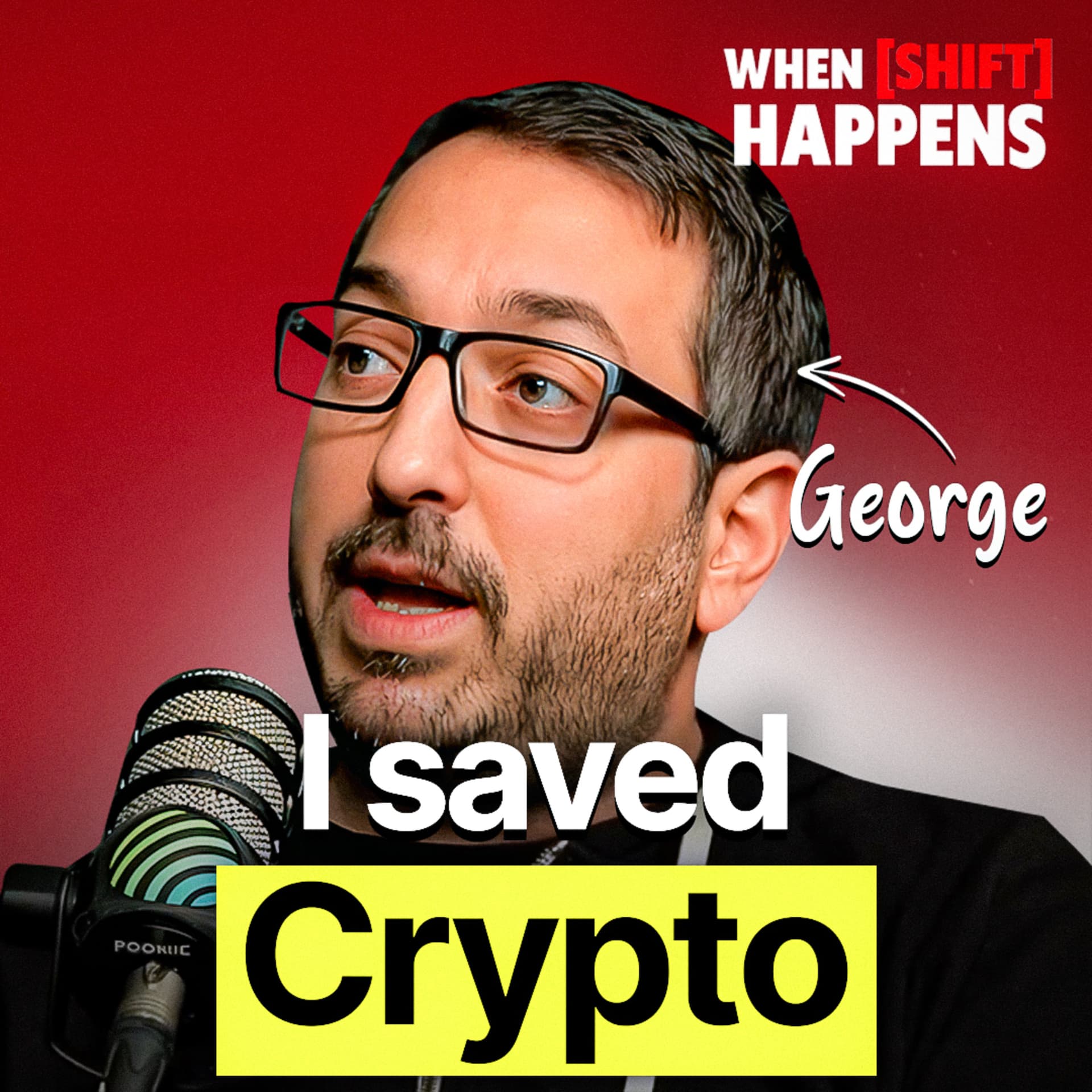
Podcast Notes: When Shift Happens Podcast - Episode E114
Episode Overview Title: E114: Walrus CoFounder: He Spent 20 Years Chasing This Problem – Crypto Finally Let Him Solve It Host: Kevin Guest: George Danezis, Chief Scientist at Mysten Labs and co-creator of the Sui blockchain and Walrus Protocol.
Key Focus The episode centers on George Danezis's journey in the crypto space, specifically discussing the development of the Walrus Protocol, a decentralized storage solution, and the broader implications of blockchain technology in addressing historical data storage challenges.
---
Table of Contents
- [Introduction](#introduction)
- [About George Danezis](#about-george-danezis)
- [Understanding Decentralized Storage](#understanding-decentralized-storage)
- [The Walrus Protocol](#the-walrus-protocol)
- [Challenges of Data Storage](#challenges-of-data-storage)
- [The Future of Decentralization](#the-future-of-decentralization)
- [Predictions for the Next Year](#predictions-for-the-next-year)
- [Conclusion](#conclusion)
---
Introduction
- The podcast aims to create a safe space for deep conversations about cryptocurrency and blockchain, targeting builders, investors, and newcomers in the Web3 space.
---
About George Danezis
- Current Roles: Chief Scientist at Mysten Labs, co-creator of Sui blockchain, and architect of the Walrus Protocol.
- Background: Previously worked in Microsoft Research and academia, focusing on security and privacy engineering.
- Passion for Education: Enjoys teaching and applying learned concepts to real-world problems.
Key Insights
- His experience combines academic rigor with practical application in technology development.
- Advocates for leveraging blockchain to solve long-standing coordination problems in various sectors.
---
Understanding Decentralized Storage
- Definition: Decentralized storage refers to storing data across a network of nodes rather than relying on a single entity or server.
- Advantages:
- Redundancy: Protects against data loss from single points of failure.
- Access Control: Users can maintain control over their data without centralized oversight.
Challenges in Traditional Storage Systems
- Data loss due to provider failures or policy changes.
- Difficulty in verifying data integrity and ownership.
---
The Walrus Protocol
- Description: A decentralized storage network designed to handle rich media and large data files.
- Key Features:
- Decentralization: Files are stored across multiple nodes.
- Security: Ensures data is accessible even if parts of the network fail.
- Blob Storage: Capable of storing large files (e.g., videos, images) that traditional blockchains cannot manage effectively.
The Need for Walrus Protocol
- Addresses limitations of existing data storage systems and the need for a reliable, decentralized solution in the crypto ecosystem.
---
Challenges of Data Storage
- Availability: Ensuring data can be accessed reliably without central control.
- Integrity: Verifying that the data retrieved is the same as what was stored.
- Economic Sustainability: Providing a model for compensating storage nodes for their services.
Historical Context
- Past attempts at decentralized storage were hindered by the lack of transaction systems to support economic models and operations.
---
The Future of Decentralization
- Vision for Misten Labs: Create a fully decentralized stack replacing centralized cloud services.
- Impact on Society: Aims to empower individuals by reducing reliance on powerful intermediaries that control data and transactions.
Predictions
- The world should transition toward a more decentralized framework that enables people to interact without intermediaries exerting control.
- Emphasizes the importance of building decentralized infrastructure for the future.
---
Predictions for the Next Year
- Expect gradual maturation of the blockchain industry with increased recognition of its potential uses.
- Fundamental change will take time, but the groundwork will begin to solidify over the next 12 months.
Key Takeaway
- Change often happens slowly but can accelerate rapidly once foundational pieces are in place.
---
Conclusion The episode concludes with a reflection on the importance of decentralized systems and their potential to reshape society. George Danezis expresses optimism about the future of decentralized technologies and their ability to empower individuals.
Final Thoughts
- The podcast emphasizes the need for continued innovation and commitment to decentralization to create a more equitable technological landscape.
For more insights and to follow the developments of George and the Sui network, refer to:
- [George Danezis on Twitter](https://x.com/GDanezis)
- [Sui Network](https://sui.io/)
- [When Shift Happens Podcast](https://www.podpage.com/when-shift-happens/)
Written by AI. May contain mistakes. Listen to the episode to check what was said.
Transcript
Automatic transcript. May contain errors.0:00You told me the other day Walrus is that vision that you had 20 years ago but couldn't put into practice because the infrastructure wasn't there. Why is today the right moment? Right. We are in a unique place in the history of technology to be able to build a system like Walrus because now we have effective coordination layer at a very low latency, very high bandwidth, very low cost. But there's a huge problem that we're facing, and that is... George Danazes, the chief scientist and co-founder at Mistin Labs, is one of the masterminds behind the Walrus Protocol, a decentralized storage network designed for rich media and large data files.
0:33What is Walrus Protocol? Walrus Protocol is a decentralized secure storage network. Let me make it easy for you. It is decentralized because files are not stored in one place, they're stored across multiple places. Secure means that a huge amount of that infrastructure can go away and you can still access your files. What is a blockchain good for? A blockchain is good for coordination. For thousands of years, people suffered by the inability to coordinate across space. So you said Ethereum was your aha moment? Yes. When Ethereum came along and it came with a programming language, that was pretty cool.
1:06Because suddenly you can program this thing. You were a professor at the University College London. Why do you teach? I actually love being in front of students. In my career, I have used everything I learned. When I design blockchains, new protocols, I pretty much apply everything that I have been teaching students to design these protocols. Let's talk about data storage. We're here for Walrus Protocol, obviously. What's the biggest problem with data storage today? Right. That's a very good question.
1:58build the WhenShiftHappens family. Thank you.
2:28and that delivers the benefits of Web3 with the ease of Web2. And Mantle, an Ethereum layer tool that builds two products I particularly like. FBTC, which enables you to borrow and lend Bitcoin in DeFi, and METH, one of the largest ETH liquid-staking protocols in crypto. Do you want me to look at the cameras? No, we look at each other. It's like a nice conversation around a nice coffee, nice tea with a penguin who is judging, mediating the conversation in case we get into an argument. that's great how are you doing george yeah i'm sleepless in hong kong basically sleepless how do you deal with that you said before i wake up in the night and i just work that's right i don't deal with it whenever i wake up i just pick up my phone and usually there is some message somewhere around the world related to sui or walrus or you know and labs and I just respond to it um it's only through exhaustion that I go to sleep honestly do you sleep a lot I do actually yeah I have no trouble sleeping yeah and because there's some people on this podcast who sleep like three four hours a night right and I'm like how do you even do that for like a month or even years right they're just yeah I never managed to lose my sleep when I was younger I was actually a very light sleeper um after camping for a few weeks I now manage to sleep on anything, any public transport, train station, floor, hotel, anything.
3:59No problems. So you sleep like a baby now that you're an adult? That's right. That's right. Who are you? So I'm George Anesis. I'm the chief scientist of Miston Labs and co-founder. I'm one of the folks who designed the SWE L1 protocol. and one of the folks who's designing the Walrus decentralized storage protocol. What is a chief scientist? That's a good question, actually. Well, in theory, chief scientist is the one that kind of manages the kind of R &D side of a company, right? Like they would usually have an organization full of like researchers that look more kind of like in the midterm. In practice, in Web3, everything we do is so new that the organization that I have, which is very small actually, is pretty much involved in every aspect of our operations, from building new protocols, designing things that solve immediate problems, all the way to operations and going around and speaking about what we do.
5:07So the role of chief scientist, I guess, in our industry is quite different than, let's say, in the pharmaceutical world or even in Microsoft, with Microsoft Research that I used to work at. Do you want to tell me the difference with, for example, experience at Microsoft and what you're doing now? Yeah, of course. So Microsoft Research, where I worked maybe for, I think, seven years or so, six, seven years, it must have been, was a pure research department, right? So Microsoft had its engineering division, it had its commercial division. Then Microsoft Research was sitting on the side doing its own thing, researching computer science.
5:46At the time, there wasn't actually a lot of connection with what Microsoft itself was doing. This is a kind of sleepy research organization, as I call it. You know, they're thinking about what's hot in 20 years' time. What I do now is really a kind of like, you know, a fighting research position, right? I mean, you have to basically keep up with the latest advances in computer science, and then as soon as possible, apply them to the real systems we're building. And sometimes this makes all the difference, right? I mean, sometimes some of the edges that, let's say, the SWE network has or Walrus has really have to do with literally heart of the press science that we manage to put straight into products.
6:34And sometimes we do that even before we manage to publish a scientific paper or go through any of that kind of usual scientific process. It goes straight into products and gets pushed basically out in order to make sure that you have the edge over the competition, but also you can do the kind of things we do at all. very often we start off not even knowing how to do a bunch of things we would like to do so when you're working for for example on sui you have that kind of direct market feedback on your research right whereas if you're working for microsoft i was really just wondering how do they judge whether your work is good or not if you're thinking in kind of like 20 years term like what's good work what's good research and what's not good research you know one you have direct market feedback, the other it's so far away that you could be there and like working on things that don't make really sense.
7:32Maybe they want you to work on things that don't make sense because that's how you find the next big thing. But I don't think they ever solved this problem to be honest. I think that the question you ask is a really good one but it actually has no answer. I think that they have too much money to throw out. At the time they had a lot of money. Look, I worked at Microsoft during the Balmer years, right? Balmer was an excellent salesman. He was not so much into technology, though, right? So he wanted to continue this kind of like Microsoft selling operating systems and office suites forever and ever, right?
8:05And what he needed was very straightforward. He needed some way when basically his big customer said, but you don't innovate, do you? To say, no, of course we innovate. Look, we're spending X billion dollars on Microsoft Research. clearly were innovating. That's all he needed from Microsoft Research at the time. So as long as he had that, it was a success. But of course, the world moved on, right? There was mobile, there was cloud, there was like now AI. So eventually they had to actually really deliver technology that made a difference. And under a different leadership, the nature of the organization entirely changed to do that.
8:40At the time, I don't think anyone had an answer to your question of, is what you're doing relevant? Or is it even in 20 years time going to do anything good for the company of the world. How much of all these corporate companies that say that they're working on, you know, it was, as you said, big data, AI, but many years ago, blockchain, we're here to do crypto blockchain, right? How much of them are talking versus actually really doing? How much of them are saying it or doing it because they have to say that you're doing it versus actually trying trying to build something that makes sense. Look, I mean, you asked earlier, what does a chief scientist do, right?
9:19And, you know, my job really is exactly solving this problem, namely to make sure that there is a pipeline between the kind of pure science that all companies say they would like to do, and actually the products that land in the market. And I agree with you, to some extent, it is rare for this pipeline not to be broken. In most organizations, and the larger the organization, the more it is the case, that pipeline is entirely broken. You have people doing maybe some blue sky research, and then there is like a gap. And that never really makes it to the next stage of engineering or prototyping. And then usually there is another gap, and that never really makes it in front of customers.
10:01And it's kind of tragic at some level, right? In many of these organizations, you have excellent research. Actually, Microsoft Research, at the time I was there, produced some excellent research. And it is only when these researchers left and actually they went to DeepMind, they went to Google, they went all sorts of places that some of that research actually reached the market outside this initial context. And some of them, of course, went to universities, blockchain startups, and that is my story to some extent. You were professor of security and privacy engineering at the University College London.
10:37Why do you teach? Why do I teach? Well, that's an interesting question. I find it easy. It's an easy job for me. You know, lots of academics say that teaching is really hard. I actually love being in front of students. And I love teaching computer security specifically, which is my discipline. Because the kind of stuff you teach is super fundamental and kind of like very pleasant to come back to. I mean, the reality of our job is sometimes quite hard. Like when you build real systems, you face very hard problems that you have to solve. Whereas when you teach, you, by definition, usually teach things that are well-known, well-understood, but you still need to find, solve a little puzzle, which is how to explain to people what these simple things are.
11:26So it's a simple enough problem on a discipline that I love. And I find that actually very relaxing. And I find also the immediate feedback from students very rewarding, right? When people ask questions and then at the end of the one hour session or two hour session, they show that they understand something that they didn't understand at the beginning. That's actually a really nice hit. It's a nice feeling, which you don't get when you do research, which, you know, can take years to give you that kind of feeling. Dear When Shift Happens family, the following message is probably the single most important thing you should take away from today's podcast.
11:59If you're serious about your crypto investing journey, please take some time to learn how to self-custody your assets to make sure that nobody can take your coins away ever. If you don't learn how to be your own bank, it is very likely that one day you will lose all your hard earned crypto. The safest way to hold your crypto is in a cold storage that we also call hardware wallets. Hardware wallets are not complicated and they give you peace of mind. I personally use a hardware wallet called Treasure. It is open source, very easy to use and the first hardware wallet created ever. As we like to say it in crypto, not your keys, not your coin.
12:33You can order your treasure wallet with a 10 % discount by following the link in the description down below and by using the promo code WSH10. And now back to the episode. How does teaching and research help your job as chief scientist at Misten Labs, the company behind the SWE network and the Walrus Protocol? Well, a lot of the stuff we do at Misten is quite foundational. So even the essence of what is a blockchain, right? Defining that question, namely, you know, what are blockchains are systems good for? What could you use them for? What kind of vertical they could be useful in? Besides the hype, right?
13:17My background in computer security has really kind of guided me through that, right? So the fact that, for example, I was teaching really, really basic computer security concepts, and as part of that, you get taught commercial policies that were defined sometime in the 80s or the 90s, etc., suddenly allows me to relate this technology that we're building today in 2024 with these very classic concepts. if I didn't have this classic concept in my head all the time because I teach them then I would have a gap I'd be like I don't know what this system really does whereas now I have that grounding and it's really helpful to at least define what are systems really good for to some extent because one of the criticisms that I always had from school right was that everything we're being taught is from 20 years ago or from a long time ago and the excuse will always be like, yeah, but university, you're not being taught tools, you're being taught theory, right?
14:23Which doesn't really change. But what you're telling me here is that what you're teaching is much more up-to-date and therefore it's helpful for your job, right? Because otherwise I would ask you, yesterday I had the founder of Wallet Connect and he was saying, for me, a founder who is like an investor is kind of a red flag or invest too much because they're not focused enough, right? They should just be kind of locked in. And that's why I asked before, I was like, why are you a teacher and what's the relationship with your job? For people to understand that, hey, there is a kind of like symbiotic relationship between both or it's actually my passion or, right?
15:09yeah so in my career i have used everything i learned let's say as part of my computer science degree which is quite unique right lots of people say oh i learned all that stuff and then it was not particularly useful i actually have pretty much used in anger every single thing i learned and similarly when i when i you know design blockchains beat suite walrus new protocols I pretty much apply everything that I have been teaching students to design these protocols. And it's not because you teach new things. It's more because you teach foundational things that keep coming back again and again and again.
15:48Like maybe computer science or engineering is not that deep, and the same things just keep coming back. And as soon as you've seen it one or two or three times, you just keep seeing it again and again. And once you've been teaching it, you see it in front of you all the time. So having said that, I don't have much time for teaching right now. Last time I actually taught a class was about five or six years ago. So I'm pretty much full-time with Miston at this point. Actually, we are in teaching. We always say that the best way to see if you understood something is if you're able to explain it simply, right?
16:23That's right. So that's probably one of the reasons why it's actually very helpful. you told me the other day when we discussed that you come from the world of ideas what is a great idea what is a great idea a great idea is something that transforms the world how do you come up with a great idea i think that great ideas come from engaging with the world right i mean you have to go out there and you have to see problems it's not like you know all the problems have been solved in the world, right? And well, if you inhabit the world of ideas when it comes to engineering and technology, as I do, you're like, okay, well, how can you use this realm of knowledge, technology, let's say, to solve these problems that are in front of me, right?
17:11That's how great ideas come from. I don't believe that great ideas come from, you know, sitting in a library and just looking at the ceiling and then somehow it just comes, or reading even books and stuff. I mean, reading books and reading papers, reading other people's work, give you tools to think about the problems and come up with great ideas. But the source of the idea has to be the real world at the beginning. And also the judge of whether it is a good idea has to be the real world. Because if at the end of the day, you think it's a good idea, but you try to apply it to change the world and it doesn't really change the world in a good way or it doesn't change it at all, it was probably not a great idea.
17:51What's the biggest and most amazing idea you ever had that never came to fruition? That's a very interesting question.
18:03It's getting a bit technical here, but early on, we discussed the other day about my engagement with peer-to-peer systems. There is a foundational question in peer-to-peer systems, which actually Bitcoin to some extent solves in a particular way, which is this kind of problem of sybil attack, as we call it, right? I mean, online, no one knows if you're a real entity or if you're one of a thousand, you know, suck puppets or, you know, who's real, who's not real, et cetera. Now, that is a huge challenge, right? Because if we want to build online protocol societies, et cetera, right, we're immediately faced with this problem that, you know, voting doesn't work under that context.
18:47you know, making decision by upvoting, downvoting doesn't work, etc. Right. So one of the great ideas that never really worked out is that, you know, we could solve this problem through effectively, you know, encoding social networks, encoding social connections that never really worked out for me at the end. Whereas Bitcoin, for example, solves it with proof of work. Why have you, you spend some energy, you come up with, you know, a number that is, you know, that has a particular form, now you basically can generate some Bitcoin. That's one way of solving it. Nowadays, we solve it with proof of stake and delegated proof of stake, the idea that we can define sets of validators in L1s or storage nodes in the case of Walrus by actually having some token of value that we delegate.
19:33So these ideas actually took root, whereas my idea is that we could maybe solve this without either spending energy or resources or delegating value effectively never really worked out for me. Maybe they will in the future, though. I haven't given up.
19:51We often say being too early is the same as being wrong. How much have you suffered in life from being misunderstood or just too early to some big ideas?
20:05I'm not much of an early comment to ideas, I have to say. I usually, I'm one of these folks that warms up late to ideas. So I never really suffered this very much.
20:21It's more actually the opposite. Very often I come to ideas and I'm like, oh, clearly everything must already have been done. And I discovered that maybe there is a little bit more. I mean, what's also, if you're thinking about something, there's probably at least five teams that are working on it already right now, right? Yeah. But it's all about execution, not just thinking about something. Ideas are simple and cheap, to be honest. It's always the execution that creates the problems. And usually where the best ideas come from is the difficulties in executing ideas that you think are ready. You mentioned peer-to-peer before.
21:00You did a PAG in the early 2000s, when the hot topic was the internet. was the most exciting part of the internet for you
21:12yeah i mean i did my phd in the early 2000s the internet already had gone through one cycle right of boom and bust so at the time the most interesting idea was that the internet would allow people to interconnect and start doing things that are not mediated through the usual big telecommunication or banks or whatever kind of organizations. This is what the peer-to-peer movement meant at the time. It was also associated around property. It had a very clear character around copyright and intellectual property and contesting some of these issues. This is what the essence of the internet was at the time to me, this idea that you could build communities that are not mediated through these big institutions and organizations.
22:05And it kind of continues to be like that. Like I miss a little bit the ethos of that days. And that's what brings me back to the whole Web3 space, if you want. What is a peer-to-peer system? Explain simply. So a peer-to-peer system is a system that provides a service. At the end of the day, some service has to be provided, like let's say file storage or, you know, let's say, well, a monetary system in the case of Bitcoin, let's say. But that service is provided not by having some centralized entity acting as a special entity that mediates, let's say, communications or mediates transactions, but rather by having all the participants pretty much equally participating in order to provide that service.
23:00So to give you an example, if we're to build a peer-to-peer storage system, instead of storing our files, let's say, on some server that belongs to Google or to Dropbox or whatever, right, we would, let's say, you know, come together, all the people who want to store files, and store files in each other's computers and then hope that, you know, Someone is available when you want the file and get it back. And this is what creates this kind of peer-to-peer ethos, the fact that you use these resources that are equal to you. And this equality is really an equality of power rather than an equality of something else, right?
23:39They're all equal to you, and together you offer collectively that system rather than having to rely on, you know, usually a centralized single entity to provide this kind of services. why do we need peer-to-peer systems why were you so excited in the mid 2020 uh 2000s with the this kind of like first wave of peer-to-peer system opportunities well it has to do with uh power at the end of the day right um you know the the peer-to-peer movement at the time as i mentioned contested some very basic things like you know the notion of intellectual property, or tried to embody notions of privacy of communications by building peer-to-peer anonymity systems or peer-to-peer encryption systems, etc.
24:32At the time, these things were very contested. Like, let's not forget that in the 90s, encryption, for example, was a very controlled technology. If you went to the telecommunication providers and you said, I would like some encrypted email or some encrypted communications. They would just not give it to you. Why? Why? Because governments at the time said that they shouldn't. No. So to some extent, for some of these technologies, peer-to-peer was the only way of really building them. Either they were technologies that were contested or they were technologies that didn't really have a business model at the time.
25:11Again, before we have modern services like Netflix or Spotify, right, where they actually have some ways to get the rights and distribute media, at the time, in the early 2000s, the music industry, for example, was not interested in streaming over the internet. There was no service you could go to and listen to music on the internet. So peer-to-peer was the only option for actually doing what is absolutely normal today, which is download an app, listen to some music. What was the business model of these first-generation peer-to-peer systems? Well, I think part of what made some of these systems peer-to-peer is that they did not have a very solid business model.
25:54As soon as business models developed, usually big organizations and companies developed that that started offering some of these services. It was part of the ethos, but also part of the problem that at the time, these things were not very financially or economically sustainable. The idea was that, well, there is so much spare capacity in terms of compute, in terms of networking, in terms of storage, that you don't need an economic model. I think this was a bit of a fallacy at the time. It was a bit of a simplification. We have since realized that probably you do need an economic model to provide reliable services, even in a decentralized or permissionless or peer-to-peer way.
26:37So the guys who built these first BitTorrents and these kind of systems, they basically took massive personal risks to go against governments for no financial reward because they were building these new websites that were not profitable or were not businesses. Well, Well, it's hard to tell if at the time they realized that. So, I mean, with 20 years of hindsight, yes, we know that none of them, you know, kind of became as big as, let's say, Microsoft or Google by building these things. At the time, they did try to actually, you know, have businesses like PGP, for example, had a corporation. And Bitorena, I think, was a company as well that eventually was sold.
Read the full transcript
27:26Now, maybe at the time they did think that, well, this is the future. A bit like Skype, actually, at the time was using some peer-to-peer connections to do video calls. And yeah, they clearly did well. They had an exit, I think. They were bought by Microsoft. So maybe more of these folks thought that there would be a way to make money. The fact that at the end they didn't may have been a hindsight thing rather than planned. You said that in the mid-2000s, decentralization was a good idea in theory, but not in practice. Why? It's not in terms of value that I would say it was not a good idea in practice.
28:04It's more in terms of its realization, right? So as I mentioned at the time when I was doing my PhD, the kind of systems we were trying to design were really about file sharing, you know, anonymity, et cetera, right? And we were faced with some very serious problems in designing these systems. The first one was the Sybil attack problem that I already described, namely, you do not know which part of your infrastructure is real or in the hands of kind of real people versus which one is entirely virtual and belongs to a single entity that could, for example, pull it all away or corrupt your system.
28:45So that was a big challenge. We didn't really have very good ways of solving that Sybil attack problem. The second problem we had was that even though the idea was that peer-to-peer systems would rely on spare capacity, spare capacity still costs, right? You know, if you're going to do file sharing or if you're going to build mixed nets that provide privacy, this costs bandwidth, it costs storage, it costs computer, it also costs operations. Like people have to wake up in the middle of the night and turn back on the machine that has fallen over or had a failure, right? And there wasn't really an economic model to sustain those kind of operations at the time.
29:28And as a result, most of these systems either operated as best effort infrastructures that you couldn't really rely on for doing anything serious that was not just best effort, or eventually kind of folded and became very small systems and other services that were centralized kind of overtook them. There are some exceptions, right? So BitTorrent, for example, became very popular. I think during the mid-2000s, BitTorrent traffic was filling quite a bit of the capacity of the backbone of the internet. As I said, at the time, it was just the only way to actually get media on your computer, right?
30:06Until the streaming services came in. But you see, even though BitTorrent was actually very popular, like the other systems at the time they were limited in what they could do right they couldn't really do consistent transaction processing you couldn't really say well look you know i'm going to have basically transactions you know to to build monitor systems or to to actually make sure that you know if if someone has something someone else doesn't have it or something like that so So that limited to some extent the scope of what you could build with these peer-to-peer systems. And it took a while to be able to overcome these limitations, let's say.
30:51How long?
30:56Well, it's really with Bitcoin and with Ethereum that we started even imagining how we could overcome really these limitations in permissionless peer-to-peer settings. How did Bitcoin change the game for the peer-to-peer world and for what people could imagine what was possible? Well, Bitcoin and then Ethereum, I would put them together at least in terms of my trajectory in that space. Establish that you could build transaction systems. Like, you know, a transaction system basically involves having some state and making sure that everybody sees the same updates to that state. In the case of Bitcoin is a ledger of who owns what Bitcoin, right?
31:47We couldn't really do that before Bitcoin in this open permissionless setting. In fact, we could hardly do it in data centers, right? You know, these kind of consensus systems, people forget how new they are. Like, people kind of knew how to make them in the 80s. they only became practical in the 90s in data centers. This is why we see actually the rise of the data centers in the 2000s. So by 2009, when Bitcoin comes out and says, we could do these kind of things in a kind of permissionless setting, that was a bit of a revelation. And initially, people were ambivalent. They weren't quite sure, does it achieve it?
32:21Is it a bit cheating? Can forks maybe deny us the ability to do that? Once Ethereum establishes itself and says, well, not only we can build a ledger of who owns Bitcoin, let's say, which is a very simple kind of like transaction system, but we can build really smart contracts and define custom kind of transactions, et cetera. It became a bit more established that, yes, we can do this at all. And then the question became, how can we do it better, faster, with higher throughput, with lower latency, all of that stuff. But before 2015, 2014, it wasn't really clear you could do it at all. And before 2009, if you had asked me, could we do transaction processing in a permissionless way, I would probably have said, no, never.
33:10So you said Ethereum was your aha moment. Yes. Why? I mean, I'm a programmer, right? So when I saw Bitcoin, I was like, okay well that's interesting but i'm not so much interested in money so okay cool but whatever uh when ethereum came along and it came with a programming language solidity and it came with the ability to actually define your own rules about how you can update state and have contracts and all that stuff that was pretty cool because suddenly you can program this thing right so it's very exciting to me around that time you joined facebook not quite not quite so when when I started seeing aetherium I was still a professor at UCL still am but I was at the height of having a research group and PhD students etc once I started noticing that the theorem actually works because until it launched I wasn't even sure if it's gonna work at all, I actually kind of shifted my research interests to understanding how we can scale up these kind of systems.
34:18I thought it was really cool, but, you know, it could only do so much. The question became, how can I scale it up? How can I actually have more transactions, lower latency, et cetera? So I worked for a couple of years, two or three years, actually, at university with my students on ideas around that. we built a company called ChainSpace and that company was actually eventually in 2018-2019 acquired by Facebook well the team was acquired by Facebook let's say and then you worked at Facebook which is where you met your co-founders of Miston Labs and the SWE network what's the most fascinating thing that you worked on while at Facebook
35:01well obviously the DM network at the time was what we were all working on. So that's broadly speaking what we worked on. It's the first time that I was within a large organization that really was aligned around the goal of let's build a permissionless to some extent transaction system that can scale to billions of users. So that was exciting. How much did you believe in that mission when you are kind of early to the internet peer-to-peer moments, right? You have this idealistic version of how things should be like. Then 10 years later, you discover Ethereum. This makes a tough sense. But then you go work for a public company, right?
35:52Which is not a network. And you work on that. Right. So how much did we believe in the mission? How much did we believe that Facebook at the time believed in the mission? And it's the right company to do that.
36:08That's actually a very good question and a question no one has ever asked me up to now. So you'll get an exclusive here in hearing my opinion. That's what we want. So, first of all, I actually thought that the people who work there, all the way to the leadership level, had that conviction. And actually, I don't think I was wrong, right? If you look at all the, you know, the leadership that was working within the DM project, et cetera, after the DM project folded, they left Facebook and are building on decentralized, you know, Bitcoin layers or their own L1s or custody solutions for crypto, et cetera.
36:48So it's pretty clear that the whole team that was working there had that conviction, right? So, you know, we were not fooled, like, I was not the only one to be fooled, to be idealistic about it while everybody else was mercenary and not really believing in the mission. The second thing is, okay, you know, did I believe that the technology we would be building would, you know, would be, let's say, a permissionless, high throughput, you know, system, let's say, right? I believed it, right? And again, was I wrong in believing it? No. Because again, once DM folded, the technologies that were built within that in various forms went out there and became the basis of permissionless systems.
37:34And they're running. SWE is one of them. So I was not entirely fooled. Just a parenthesis on that, because it's kind of, it feels like similar to what you said before about Microsoft, all these research kind of thought, but never really used or never really achieved something. Right. And then used by people at Google. That's right. How much is that allowed? How much is it allowed? Because I would guess, right? Microsoft says, hey, all this research is kind of ours. You can go out there and build anything around that for a couple of years. Same with Facebook. I guess we're spending so much money in that.
38:08even if it doesn't work out. I mean, obviously people, true entrepreneurs will go and build some stuff, but how does that work in the real world, right? Yeah, the real world is messy around these questions. In practice, a lot of the technology we built was built around the DM project, which was, you know, kind of like an open source initiative amongst multiple companies. And as a result, you know, particularly the technologies we're using as part of SWE were not really covered by any kind of IP because they were very early. They were not actually in the DM product. They were things that DM could be if one day it needs to scale up.
38:49So SWE is not a DM, right? In the sense that SWE is the evolution of DM. We saw DM and we're like, well, if we were to redesign this to scale up, to have low latency, et cetera, this is how we would build it. So we learned a lot from being in there, but we didn't actually directly use any of the technology. Now, there are other chains that did use the technology more directly. And again, because DM was an open source project, etc., probably they are comfortable doing that. I don't really know any details about the IP around that. What was the biggest issue at Facebook? The biggest issue? Well, the biggest issue at Facebook was that ultimately, Facebook's revenue did not depend on the DM project succeeding.
39:36They make money from ads. They continue making money from ads when DM stopped and life went on. This is really interesting. I will never again work for a company on a project that the company's future does not depend on, because then you're a bit of a sideshow. And I mean, ultimately, you know, there was a lot of support for DM within Facebook, but it was a sideshow, right? I mean, maybe it would have produced some revenue, but it cannot really compete with the ads and, you know, whatever Facebook is doing actually for revenue. So when it became problematic, the support kind of like was, you know, not really there eventually.
40:21Could the biggest stablecoin in the world really have come from a non-crypto native company like Facebook? Well, it turns out not, right? Do you have examples where disruption in a completely new thing actually came from the old world? It's kind of like a startup thing, right?
40:46That's an interesting question, right? I don't think there are any hard rules.
40:56for example we see a lot of the current disruption around AI coming both from new players as well as traditional players. It's a bit of a mixture maybe the initial kind of advances were done in startups but by now some advances are done in big companies so I don't think that there is any any formula uh but it is true that in crypto we tend to see the advances coming from startups that are crypto native rather than big big companies that come in from outside it's probably because crypto is very weird right i'm thinking and i've always kind of thought it's so weird and different than a corporate because ai yes but ai is pretty corporate right there's not like this kind of like crazy weird crypto or ai native people that are acting completely different right and i was always thinking why if someone has an amazing idea and is amazing at executing why would they do it for a big company that doesn't really understand this kind of crypto native world versus doing it on their own side well i can give you the answer to why many of us did choose to try to do it as part of Facebook, it's distribution, right?
42:21Ultimately, if you have a distribution channel that can touch 2 billion people, that's an opportunity and you try to take it. Now, the fact that it's a long shot, that maybe it's not going to succeed exactly because an incumbent may not have a reason to push that, well, that is a risk and you have to take it. You told me I'm the first one of the Misten Labs co-founders who left Facebook. That's right. Why did you eventually leave Facebook? And why do you think you left? You were the first one to leave. It was pretty clear pretty early on that DM is not going to go very far. and it was pretty clear that to some extent the restrictions around the regulatory environment created restrictions on how interesting the technology we could create was.
43:18So for example, decisions were made very early on not to have a permissionless network, but instead having a very permissioned network. Yeah, my interests were in permissionless networks, so that was not particularly interesting. Then decisions were made, for example, not to allow for open publishing of smart contracts within the network. Well, that's a bit boring, right? Because as I told you, my imagination was captured by being able to program these things and having smart contracts, not just doing currency. So the regulatory pressures on the project created restrictions then on what we would build that made the project less interesting.
43:56And then after a while, you know, there was a little bit of, I mean, there was so much focus on trying to deal with the regulatory issues that the scope and the ambition of the project started diminishing internally. So by the time I left, there was a kind of, you know, people were resigned internally to the fact that, okay, this is going to be just a network DM that is going to settle just currency transactions amongst 20 institutions, probably in a netted way. So, you know, every few hours or something like that, not in a gross way. And that's it. That is not a very interesting system for me to be building.
44:36So after a while, honestly, we started developing ideas about how we could build decentralized systems, permissionless systems that are programmable, that scale up to billions of users having direct access to them. None of that was relevant by the end of the project. So at some point I was like, well, look, we have all this know-how on how to build this extremely interesting technologies. They're not going to be built as part of this project. let's get out of here and find other ways to actually commercialize them how good were you at quickly making this decision it's kind of the same as when you hire some it's kind of the same as when you have a partner and you know it's not going to be the right one but you still stick around or you have some employees or or a job right and you do that you know in your guts is not the right thing but you stay around how quickly would you say how good were you at making this decision.
45:33I mean, probably faster than all your co-founders, right? It was a very difficult decision. I have to say that I stayed on for about six to nine months longer than, you know, I was comfortable. I mean, look, I don't come from money, right? Financially speaking, you know, the company we had being sold to Facebook and then most of the payout for that being associated with me staying for four years, made the decision very difficult because we're talking about, to me at the time, life-changing amounts of compensation and income. So it was actually very difficult because on one side, yeah, it's not as interesting as if we were actually fielding permissionless systems.
46:19On the other side, I was faced with the prospect of going back and becoming again an academic in the UK, which is charity work basically. So it was tough to say, well, okay, I will only take half the payout of selling a company and go back into academia. You raised some key questions before of being an academic and doing research. one of them was, what is a blockchain good for? What is a blockchain good for? Why is a blockchain useful?
47:02Is it a question or do you want to try to answer it? It's the question. Right. So that is the fundamental question of our industry, isn't it? What is a blockchain really good for? I mean, we know a few things you can do with it, but really, what is the essence, right? I think we each have our own interpretation of that.
47:31In my view, a blockchain is good for coordination, right? And this is why very often we present SWE as a network as a coordination layer rather than as a blockchain. Now, what does that mean, right? It means that maybe we should take a step back to understand what I mean by it's good for coordination, and that's what really a blockchain is good for, which is that for thousands of years, people suffered by the inability to coordinate across space and time. I mean, here in Hong Kong, I'm in London. Let's say we try to do something together, like even arrange a particular meeting time to have this interview when I visit.
48:14it's a tough job, right? We have to send messages by boat and all that stuff and try to work out a particular time that we're both available. Things change as these messages travel around the world. It takes time. And it's actually very difficult to find even a slot, let's say, for when I visit here to get together and have this interview, right? Let alone if we're trying to do business, right? I mean, if we try to keep our business records, you know, your shipping stuff, I need to receive it, et cetera, this is difficult, right? Because we don't have a common reference. We, you know, I don't know what your books look like.
48:52You don't know what my books look like. We're like two continents away, right? So how did humanity deal with this problem, right? Because there was commerce, there were things happening, right, that required coordination. what happened was that institutions effectively emerged, right? That act as intermediaries that helped people across time and across space coordinate, right? Banks, you know, states, to some extent, functions of states, et cetera.
49:25And, I mean, you know, they serve a purpose that they help people coordinate, if you want, particularly important things like money transactions, shipments, et cetera. But they also were in the middle of it all, right? So when you're in the middle of important processes, you try to extract something out of being in the middle and doing something that is super useful, right? So there was this tyranny of the difficulty of coordinating that created entities that solved on one side the problem but then extracted value out of solving this problem. blockchains to me solve this problem with the potential to extract less value ultimately and allow people to coordinate because suddenly what they allow us to do is you know you use SWE let's say as a blockchain you keep your books on SWE I keep my books on SWE we can see each other state right like the transactions that I do on my book within 200 milliseconds, you can see them.
50:28I can see the transactions you do in your book. And furthermore, we can do transactions across our books effectively. That's settled again in 300 milliseconds. So suddenly, you know, me saying, okay, you know, is this time good to have a meeting with you and have an interview? We can decide it immediately. We don't need to use some calendar cloud service or whatever to help us do that, right? That's what I mean by at the end of the day, blockchains are really solving a coordination problem. And that coordination problem is solved without third parties that can extract some rent and these coordination problems are solved securely.
51:05And this is quite exceptional, actually. The fact that, you know, we can make sure that unless, you know, extraordinary adversaries, you know, try to act against us that can corrupt hundreds of machines, et cetera, et cetera, around the world. probably the conclusions we will draw from trying to coordinating through a blockchain is going to be robust right the blockchain is going to be there when we need it the blockchain is going to give us the right answer and all is going to be good which is extraordinary again to achieve that without having a very powerful entity helping us you know coordinate in that way you understood the potential of blockchain with Ethereum, but you also understood very quickly the limitations.
51:52Right.
51:56How did you think about that? And how did you come onto building the SWE network? Yeah, look, I didn't come to the conclusion that, let's say, Bitcoin or Ethereum have limitations, theoretically, I used the things, right? I mean, I waited there for 10 minutes for blocks to settle on Bitcoin, and then for 10 more minutes for the transactions to be confirmed. Similarly, I was a great fan of CryptoKitties. I had one. It was very cute. I was very fond of it. And, you know, I tried to breed it with one of my friends, and it cost me nearly$100, right? So I could see that limitation of Ethereum at the time firsthand, the limitations were and still are kind of obvious for these kind of early systems.
52:48Anyone who has used them more than a little bit can see them. So it was pretty obvious that we need to do better. And the thing that was not obvious maybe to many people is that they're super useful technologies and therefore we must do better. To me, it was obvious that they're super useful technology, and therefore, that was the important problem to solve. Let's actually make them cheaper, faster, so that more people can do transactions into them, from silly things like CryptoKitties to monetary transactions, do anything they want, right? So when you talk about CryptoKitties, I had Gavin Wood on the podcast a few months back, and I asked him, what is the best thing that ever came out of Ethereum?
53:31and you said CryptoKitties maybe? I think CryptoKitties was a revolutionary. I don't have any problem going on record saying that CryptoKitties was a revolutionary idea. Why? Well, because it kind of illustrated that you can use a transaction system for more than money, right, because, you know, it's kind of like there's this other asset, which is a virtual pet, right? And it had a kind of like very cute social aspect to it. I mean, you have a crypto kitty, I have a crypto kitty, you know, we could work something out and we can have more kitties. It's kind of cute. We all like the cuteness. Exactly, it's cute.
54:09It's kind of a bit racy, you know? You meet people and you suddenly have a conversation about breeding your cats. It's not a usual conversation, so it makes actually a cute kind of off-chain game as well to try to convince people to breed their digital cats with your digital cats. and it kind of like expanded our imagination about what these systems could do. They were not just for serious stuff like money. They were also for fun stuff, right? And social stuff. How much do you support all this social and fun stuff when we are now seven, eight years after CryptoKitties at the almost like opposite of the spectrum, which is it was starting back then and now we're in this kind of like insane meme coin world.
55:02Yeah, look, my view on meme coins is, I mean, first of all, I'm in the business of building permissionless platforms. and part of building a permissionless platform means that you have to take the good and the bad right people will build whatever they will build and the platform is there to support whatever people want to build right so so i'm starting there to say you know i am not a great fan of you know second guessing i guess what people want to build on permissionless platforms number one number two if you cannot build stupid stuff on a platform you probably also cannot build non-stupid stuff right so to some extent again the good will come with a bad providing a programmability means that probably the first 10 things that will happen are going to be a bit silly while people learn what you can do and then maybe build stuff that will you know solve humanity's problem.
55:58So I think that a lot of the meme coin stuff is a little bit silly, but it's kind of cute in some ways, right? Where I really draw the line is between the kind of like, I actually quite like meme coins where they are about culture and about community. You know, some of the meme coins, it's about belonging into this online community. It's a bit of an insider joke, but actually it's a nice insider joke because you buy a bit of dojo or whatever, right? And you're an insider, So it's kind of inclusive at the same time. I don't mind that. I like culture. I like belonging to a community. This is all good.
56:34Where I draw the line is when it is like literally a naked rug pull, right? Like when I see, you know, famous X, you know, launches a coin, convinces through their following on social media, whatever, everybody to buy it. And then suddenly the thing collapses and lots of people lose money. that I think is problematic I don't like this at all I think it actually you know brings back our space quite significantly yes but you say where I draw the line it means like in your mind right in my mind but you said for example one of the sponsors of this podcast is Jupiter they are providing some key infrastructure to launch these mega meme coins it's permissionless and you said before I'm in the business of developing permissionless blockchain or permissionless applications, meaning people can come and do good things or can come and do bad things.
57:34And I can tell people, where's the line? I cannot forbid them to do something. Otherwise, the entire system doesn't make any sense, right? That's right. So what do we do? Do we just let people... I mean, ultimately, we talk about markets, markets self-correct. You let people get hurt enough so they hopefully start to understand. Because it seems like we're testing the limits of this kind of permissionlessness now. It's hurting a lot of people. It's actually hurting the space, but also for the good of the space, we cannot come and start to implement limits or limitations. Otherwise, the whole thing doesn't make any sense.
58:16Great. Yeah, look, when I say I draw the line, I don't mean I want anyone to ban these things. But the fact that you cannot ban something doesn't mean that you cannot create norms. I mean, norms start by saying some things are good and some things are bad. We should be doing some things and we should not be doing other things. I create norms, right? And norms are not just about the ability to ban on a platform some things, but they're also about basically the story we tell ourselves about what we should be doing and what we shouldn't be doing. But let's also not forget that there are a lot of places, even in crypto, right, where at the end of the day, you can build products, for example, a wallet, right, that supports particular things or doesn't support particular things.
59:06There are many wallets, right? I mean, they might have different opinions, et cetera. I think that it is legitimate for these kind of user-facing tools to be a bit more opinionated at the infrastructure and what is good and what is not good. And again, people are free to choose the ones that they align with, the opinions, right? So I think that there are softer ways of kind of like, to some extent, using the norms, right, in order to protect people and not protect people. I don't think that it is the role of infrastructure to have an opinion, right? To be clear, I like my permissionless infrastructure.
59:42I do not want my permissionless infrastructure to say a meme coin with a picture of X is better than a meme coin with a picture of Y. That's an impossible problem for infrastructure to solve. But things that are around infrastructure, which are usually the ways in which people interact with that, that can be a bit more opinionated as long as, again, it doesn't act as some kind of centralized entity that you have to go through in order to access the technology. I don't like that. But I do like to say, well, okay, maybe I like this wallet team. I quite like the fact that they offer some allowed list of what is safe to use.
1:00:20And if I go outside that, it gives me a warning. And it's like, okay, are you sure you want to be doing this or not? I think that kind of softer way of enforcing norms is a good thing. It's not a bad thing. I was talking about that with the founder of Wallet Connect yesterday, Pedro. we're talking about the problem of Ethereum that is so decentralized that they don't want to make decisions and they don't want to pick indirectly winners but you still need to have a centralized sort of decision making on creation of norms or I mean that basically give a direction and that will ultimately indirectly pick winners based on the decision they made right they have this certification system I think which is hey look it's kind of like guiding people without telling them what to do.
1:01:08It's kind of gaining because you have to make a decision. Otherwise, you end up in this situation where no one makes decisions, like Ethereum, and that's kind of like going nowhere. What is the SWE network if you had to explain it to a child? If I had to explain it to a child, well, the way I usually explain the SWE network is not to children, but it is to people who don't know anything about computers. And the way I usually explain it is by saying, look, it's like having this big book, right? And everybody can write in this big book something. And, you know, once you write it, it's there. And there are particular rules for what you can write next, right?
1:01:48You can basically refer to the previous entries in the book and only follow the rules in order to write new entries. And everybody can at any point read the book and everybody can at any point follow the rules in order to add new entries. And this is really what the SWE network is, is this kind of like, globally shared accounting system, right? Where rules are followed in order to add new accounting entries effectively. And you can actually define new rules as part of basically these, the new stuff you write in there. I think a child would have maybe a little bit of difficulty understanding why that would be useful.
1:02:26But most people who have worked in business kind of see why this is kind of relevant. That's my next question. Why do we need the SWE network? well, as we talked about earlier, coordination, right? Ultimately, you know, when you're in business, when you have assets, when, you know, you need to coordinate with other people who are in business, have assets, you need some frame of reference to say, okay, you know, I see what you're doing, you see what I'm doing, let's agree to do something together, let's agree to exchange something, let's agree to, you know, to do something together, to manage some resources together in particular ways.
1:03:07And then you can use the SWE network in order to encode those rules and make sure that both of us basically agree on the rules and we are basically following the rules. And that's why you need the SWE network like any other blockchain. The SWE network does that extremely well. It's cheap, it's fast, you can do a lot of transactions, you will never run pretty much out of capacity. So in that category, it's probably one of the best of the breed. you built a layer one you have your opinions on layer ones and layer twos right what's the difference between a layer one and a layer two right this is a philosophical question rather than an engineering question really I mean look there is a textbook answer which is a layer two is trustless meaning that really things happen on the layer two but because they're all settled on the layer one you don't need to trust what happened on the layer two i happen to be a little bit more skeptical about this kind of very straightforward definition i think that it's blurry what is a layer one a layer two versus a layer one talking to another layer one versus a layer one talking to some other infrastructure when you look at it in the engineering detail things become a little bit less clear-cut about what is a layer one and a layer two.
1:04:32But broadly speaking a layer one depends basically on these days a set of validators to follow rules. In theory layer two again depends on you know the same set of validators rather some extra infrastructure in order to provide whatever services. Is that relevant to anyone except for, you know, people who are like into the detail? I'm not really sure. Why should a project build a layer one instead of a layer two? There's a lot of layer ones, there's a lot of layer twos. At some point, someone like me, who is not technical, but knows at least there is different type of layers, one and two, sometimes there's even layer threes, would ask or would wonder why to go for one or another.
1:05:34Right. Look, there are theoretical answers to your question and then there are pragmatic answers to your question, right? The main reason I feel everybody wants to build a layer one is because this is what you can go to venture capitalists and get a bunch of money to build. The narrative is, well, you build a whole new infrastructure. It has its own token and dot, dot, dot, get rich, right? I think the bias we have towards everybody building their own layer one really comes from the fact that you can get funding to build a layer one. Yeah, it's harder to get funding to build layer twos or apps on layer ones, right?
1:06:16Now, this is the practical reason why I think we see a lot of layer 1s. There are other practical reasons, which is that historically, right, before what I call modern blockchains, and SWE is a modern blockchain, you know, at the time of Ethereum and the previous generations, if you want, of smart contract platforms before SWE and friends, right, layer 1s were restricted, right? I mean, as we discussed, right, with Ethereum, fantastic vision, But in practice, if you want to really build a real application, right, that does a lot of transaction processing, that requires a lot of storage, requires, you know, specific things.
1:06:57It's difficult to build it early on, right, on these early L1s. So to some extent, you had to go and build your own infrastructure as a separate L1 to support that. And, you know, I am guilty of this. So, for example, back in 2018, at the same time as ChainSpace, I was advising at the time a project called Vega. They were trying to build basically an exchange for derivatives. And they said, well, could we use Ethereum? Made that. And I said, that's very unlikely, right? I mean, you will probably not be able to implement an order book for derivatives and do all the kind of, you know, calculations around exposure of positions, et cetera, on the Ethereum L1.
1:07:40It's going to be too slow, too expensive. Like, you know, your margins are just not going to work, right? So you have to build your own L1. And actually, they follow that advice and they build a kind of cosmos chain as an L1. So at the time, using an existing general purpose L1 was not really an option if you wanted to build something a bit more advanced, right? And that, again, is a second reason why we see this kind of proliferation of L1s. Number one, you build an L1, you get more funding because the token is assumed to maybe be more valuable. Number two, actually, if you want to do something a bit more advanced, an existing L1 is probably not going to do the job for you five years ago.
1:08:24And that leads to a proliferation of L1s. Now, roll forward in 2025 today. The first reason probably still is with us. It's easier to get funding to build an L1 than an app on another L1. The second reason is not there anymore. Today, if you're serious about building a decentralized application, probably you should use one of the existing L1s. They're excellent. They're cheap. They're fast. They have teams that are experts in distributed systems, security, cryptography, that you cannot reproduce no matter how much funding you have. They're real professionals. Like SWE is a marvel of modern technology.
1:09:05It's not trivial to say you're going to start your own L1 and reproduce all of the stuff that SWE will offer you. So building on top of SWE, for example, is a bit of a winner at this point in 2025, which five years ago was not an obvious thing to do. You understand all these things?
1:09:26Obviously, you're building suites, so you're a big believer in suites. Of course. What's another layer one that you think is actually really good at providing infrastructure for builders who need to build? Of course, yeah. Look, I mean, the competitors we have, they're all serious people. They're all serious teams. They build serious infrastructure. Solana is a serious infrastructure. If you want to build, you know, a coin, let's say, and, you know, have wide distribution and thousands of people using it, et cetera, et cetera. Solana is a serious infrastructure. You should build on that. Like, building your own L1 in order to do what Solana does very well is not a serious proposition today.
1:10:06There are other serious competitors out there. You know, Avalanche has a very good story. You know, depending on which vertical you're in, you know, Hyperliquid. If you're really into building, you know, a kind of financial tools, looking at that kind of ecosystem again is a very serious thing. So although they did build their own L1 to achieve that. So to some extent, that's a counterexample a little bit to my point. So look, the modern blockchains are not anymore the blockchains of 2014, 2016, 2018. These days, they are serious infrastructures and you can build serious applications without having to launch your own L1.
1:10:46You mentioned Hyperliquid and I want to come to the topic of decentralization versus practicality. Because you're involved right, you're a big believer, proponent of decentralization, but you also understand practicality. I had the founders of Hyperliquid, Virtuos and Wallet Connect on this podcast and they all kind of share a similar view, which is being practical matters much more than being decentralized especially for the first few years. If you care too much about decentralization too early you probably will not find product market fit because decentralization is slow and expensive so it's better to be centralized first, find PMF and then start caring or actually start decentralizing down their road.
1:11:44What do you think about that? Right. That's an interesting debate. I'm not entirely at any of the two ends of the spectrum on this, right? So, I mean, first of all, my view on decentralization is maybe a little bit unique in that space, right? To me, decentralization is, you know, a security property of a system. Namely, you know, there are some bad things that happen to a system if they're not decentralized. You know, you have some central entities that have too much control, they exert too much power, they can stop people from accessing a system, or they can pervert the rules of the system to suit their own needs, or they could come under compulsion by states or companies or whoever to change rules, et cetera.
1:12:31These are bad things that happen if a system is not decentralized enough. Okay? So what you want from a system is to have enough decentralization if there was such a metric, if you want, right? For all these bad things not to happen, okay? And to have some good margin to make sure that, you know, they're not likely to happen, right? So I quite like my systems to cross that line, for all these bad things to not happen practically and to not, you know, be able to happen, right? Under reasonable scenarios, right? I like my systems to be that decentralized. Now, my view, though, is that once you reach that state, right, there isn't really a huge advantage in continuing to decentralize more and more and more and more, right?
1:13:24So to some extent, you want enough decentralization for all the bad things that the lack of decentralization to not happen, right? And then you stop there. And then, as you say, you build systems that are practical by the fact that they have 100 entities or 200 entities, not 10 ,000 entities or 100 ,000 entities. You have, you know, 20, you know, participants that are very big that have to all agree. And that is quite a few people who are not going to make a cartel, not 1 ,000, right? So you see what I mean? like I'm kind of in the middle of the road here, right? I don't like four participants.
1:14:02That's too small. I don't like 10 ,000. That's too big. So what's for someone, again, who is not too technical, obviously talking about decentralization, nodes, all that stuff is kind of like technical, right? What's the minimum decentralization needed to kind of avoid the majority of the bad things to happen? I mean, obviously you cannot simplify things, but like if explained to me, normal guy, doesn't speak the very technical language. Of course. Well, to some extent, this is very relatable to, you know, the question of cartels in the offline world, right? I mean, if you want to buy shoes and only one person in your town sells shoes, basically, you know, if they want to sell them for very expensive, you'll have to just spend all your money buying shoes.
1:14:47That's no good. If there are two people who make and sell shoes, well, maybe it's a bit better, but two is too little because, you know, again, they could get together and be like, hey, you know, what if we charge a thousand bucks per pair of shoes? And, you know, that's easy to create a bit of a conspiracy between two people and then start exercising too much, you know, too much power and, you know, blocking you from buying shoes because they don't like you and charging me a thousand dollars, right? So then the question becomes, okay, well, how many people making shoes in your town is enough for you to make sure that there's going to be good competition, they're not going to get all together in the same room and agree to block you or to charge too much, etc.
1:15:33It's a difficult question to put a number to, right? Competition authorities, I think, very often are a little bit too much on the low side. They're like, well, if there are four or five market participants, it's fine. I think that's a little bit low, and we've seen that in some sectors, including energy, et cetera, where it's pretty obvious that it's not entirely a healthy competition. So look, I take a pragmatic view. If you have 100 entities that are all basically partaking in the business and are credible and provide services and all that stuff, I have observed, it's an empirical thing, not a theoretical thing, that bad things tend not to happen, right?
1:16:13So I quite like that three-figure number somewhere is probably the number I would go for when it comes to the sufficient degree of decentralization that I have observed. That's not some kind of timeless law of the universe. If I observe that bad things happen with a few hundred, I will revise, of course, that number. Let's talk about data storage. That's what we're here for today. What's the biggest problem? I mean, we had to talk about the foundations, right? Blockchain, I mean, your story, understanding peer-to-peer, then blockchains, blockchain evolution, three network. And now we're here for Walrus Protocol, obviously.
1:17:00What's the biggest problem with data storage today? Let's start. Let's define. What is data storage? Right. That's a very good question because that's really where we should be starting. So look, I have some data. I take a picture or you're going to, you know, have a video of this interview, right? And the question is, okay, well, where do you store that so that it's there tomorrow for yourself? Where do you store that so that other people can access it? That's really at the end of the story. This is really the question here, right? And, you know, the answer could be, well, you know, I store it on my own computer.
1:17:42Well, that's nice, but if you're, you know, if the building catches fire, your computer, you know, is in it, you've lost it, right? That's clearly not enough to make sure that it's there when you need it tomorrow. So, you know, people started thinking of, well, I'll put it on some cloud storage, right? And it's clearly going to be there if my house burns down. But now other problems start occurring, namely that, well, you know, if the cloud provider doesn't like you, if you don't pay your bill or if, you know, they go out of business, well, suddenly the file is not there again, right? So that's one dimension of the problem of kind of data storage, right?
1:18:22How do you make sure that the stuff that you're storing today is going to be available to you tomorrow? Now, the same problem occurs, of course, if you want the stuff you store to be available to me tomorrow, right? Or to your audience, right? Like, how can you make sure that actually you store something and then it's available to your audience? Similar problems occur. Someone that you store the file with can block effectively your audience from accessing it if it doesn't like you distributing whatever you're storing or publishing. And then there are more subtle problems associated with storage.
1:18:56Namely, you know, we do this interview, you store the interview. How do you make sure that when you access it tomorrow, it's the same one, right? How do you make sure that, how do I make sure that when I access the interview you send me, it is the one that you actually have done, not an edited version or a modified version, et cetera. So you see, storage is about, you know, of course, storing files, retrieving files for yourself, publishing them for other people, but also there are some security properties associated with storage. How do you make sure it's available, despite the fact that maybe some entities want to actually stop the distribution of material?
1:19:35And how do you make sure that what you're storing and what you're retrieving is actually the correct thing, broadly speaking, right? So the problem of storage, you know, is about solving all this problem. And decentralized storage is really there to make sure that you can solve all these problems, again free from central entities that might be able to violate some of these properties that we discussed, namely prevent you from accessing your files or modifying these files without you even realizing.
1:20:07What is Wawr's protocol? If you had to explain it to your dad, I think you told me your mom is very sophisticated people my parents are. Your dad too. Who is not sophisticated in your family? I think I'm the least sophisticated probably. We're in trouble here. Okay, what is Walrus Protocol if you had to explain it to me? Right, so Walrus Protocol is a decentralized secure storage network. Okay, let's take these things one at a time, right? It's decentralized because things, files that you store are not stored in one place, they're stored across multiple places, right and there is not like a single point of failure like a particular machine that you can say okay if that goes down i i lose my data or you know my data is gone right so that's the decentralized part secure means that you know a huge amount of that infrastructure can basically go when you can still read your files you can still write your files and also you're sure that whatever you wrote is the thing that you're reading right and that is also true for whatever you write, I can make sure that I'm reading the correct thing that you wrote, right?
1:21:18And blob storage or file storage basically means that you're storing big things. That's like the broad thing, right? I mean, to some extent, blockchains, modern blockchains like SWE offer storage, right? I mean, you can store some things on SWE, but you can store a few bytes. It's a few hundred characters to a few thousand characters if you want as a message or text size. Blob storage, like what Walrus provides, is really about storing big things, images, videos, training data sets for machine learning, audit logs of years worth of trading on some kind of order book, like megabytes, gigabytes, maybe terabytes of data.
1:22:01So that's a whole other order of magnitude than what we usually store on a commodity blockchain or a modern blockchain.
1:22:11You told me the other day, Walrus is that vision that you had 20 years ago, but couldn't put into practice because the infrastructure wasn't there. Why is today the right moment? Right. So yeah, as we discussed earlier, right, to some extent, the whole peer-to-peer movement in the early 2000s was really about file storage and file distribution. But it didn't work very well because we didn't have transaction systems at the time, right? Right. And why do you need transaction systems if you want to build a nice kind of reliable and also, you know, sustainable storage system? You need it, first of all, in order to have some economics.
1:22:52Right. I mean, storage costs. Right. You need to have some way of saying, look, you know, I'm going to pay this infrastructure to store my file for a certain amount of time. and the people who offer this infrastructure, this decentralized storage nodes need to be paid effectively for storing potentially petabytes of data down the line, or exabytes of data down the line. That accounting layer to make sure that everybody who does work for other people gets paid, broadly speaking, we couldn't do it in the early 2000s. So that means that all of these systems were best effort. We're friends, okay, I'll offer some storage, for free effectively, but that can only go so far, right?
1:23:36Maybe the spare space in my hard disk, no more than that, right? I'm not going to start provisioning machines on purpose to offer a decentralized storage service if I have no way to get paid for the work that I do and for the hardware that I'm buying. So at the time, it was difficult to actually build good decentralized storage systems because we didn't really have a good way to account. And then accounting is not just about the money. It's also about knowing, okay, who are these storage nodes? I have, let's say, 1 ,000 storage nodes, but who are they? What is their address? Who's up? Who's down?
1:24:08Who's reliable? Who's not reliable? Or what files exist in the system? Like, you know, from the point of view of a storage node, should I be storing this thing? Have I been paid for it? You know, what data should I be storing? What data should be deleted now? Now, all of these things require effectively a transaction system to manage, which we didn't have in the early 2000s. Now, we have one, right? And that great transaction system that we have is SWE. So what we did with Walrus is, in effect, rely on SWE as a transaction system to take care of the payments, managing space and who owns that space, managing what should be stored in that space, managing the set of storage nodes and how they change and how they hand over data from one to the other.
1:24:58All of that is happening on SWE at a very low latency, very high bandwidth, very low cost. And now what happens is that Walrus is effectively this infrastructure of storage nodes around SWE that communicate and coordinate, as we discussed through SWE, that effectively augments SWE with the ability to store big files. and it is unique we're in a unique place right in in the history if you want of of technology to be able to do that because now we have this kind of like very effective coordination layer to be able to build a system like walrus around why is the sweet network the best place to build decentralized data storage?
1:25:43Well, it's a modern blockchain, right? So it does do this coordination function very well. It's cheap, it's low latency, and all of that. The other reason is that once you start representing assets related to storage on SWE, you can combine them with other things that are happening on SWE, right? And there is a lot of stuff happening on SWE besides storage, which is really interesting, even for storage. Let me give you an example, right? So, for example, you want to store a file and you want it to be a kind of common resource, right? It's like, for the good of humanity, here is some data that should live forever, right?
1:26:30By actually having that data being represented on SWE and the storage that it takes being represented on SWE, what you can do is you can combine, for example, that with, let's say, some coins that you store along with that data, then use basically those coins as part of a DeFi protocol, produce a yield every year that then you basically use to buy more storage to extend the period that this data is going to be living in, right? And therefore, in effect, having some data that lives forever, right? And what does that illustrate? It illustrates that, look, if you have the storage resources being managed in the same system as, let's say, a DeFi ecosystem, you can combine the two to get totally new kind of functionality.
1:27:17So that's a second advantage of using a system like SWE, namely by adding storage resources to it and combining them with resources that have to do with coins, stablecoins, DeFi, etc. You can build whole new things by combining these together. What's the overall vision of Walrus Protocol? Well, Walrus is part of the overall vision of Misten Labs, which is to replace all the components of the centralized, if you want, stack of cloud services with decentralized components, right? You know, SWE kind of like replaces the accounting layer, if you want, with a decentralized accounting layer. Walrus now substitutes centralized cloud storage with decentralized cloud storage.
1:28:15So now you can build richer applications if you want that are fully in that kind of decentralized realm. And this is the vision that we have really as a company to provide developers all the components that they need to build decentralized applications and to make it as easy as it is today to build a centralized application on, let's say, Amazon Web Services or Google Cloud. And Walrus is that kind of storage piece that is necessary. Because let's face it, building decentralized applications without big storage is a bit boring. You can't have pictures, you can't have videos, you can't have websites, you can't have anything that looks fun, right?
1:28:56So Walrus kind of enables this fun to come back to Web3. Why is this open vision? of Miston Labs, a better future than what we have today? Well, it really, again, has to do with power, right? And the power of intermediaries. You know, I do not like the idea of just the infrastructure providers being able to extract so much, both in terms of value, but also in terms of power in our society. It's not healthy, right? It's like most things that we do as a society, are now intermediated by technology. This is a fact, right? And now saying that because things are intermediated by technology, it means that there are some powerful entities, a handful very often, that really can say who can talk with whom, who can store what, who can basically do what transactions, modify the rules under everybody's feet, and therefore basically enrich themselves.
1:29:56That's a bit of a dystopian future. So, you know, without, you know, pretending that, you know, we're just doing all this for the good of humanity, we are actually mission-driven in the sense that we do believe it is a better future, where this future looks like we still rely on technology, but that technology is neutral. There is no handful of parties that can basically suddenly be in the middle of all our interactions and extract a lot of value and stop us from basically interacting or changing the rules of the game, right? That is a more solid foundation for a technological culture than the technological culture we have today, where a handful of very large services really dictate what happens online.
1:30:44While Rust is not implementing its own blockchain, Why? As I said, implementing your own blockchain is not for the faint-hearted in 2025. There are perfectly good blockchains, SWE for example, so Walrus is using SWE. Why would you implement your own blockchain? Let's look a little bit at this, right? So Walrus has its own infrastructure, right? So the data that you store on Walrus is not stored on SWE. it is stored on storage nodes that are specific wall restorage nodes. These storage nodes need to coordinate with each other, right, so that they know what to store and they know what has been paid for, etc.
1:31:26And they use a blockchain, of course, to coordinate with each other. And I think your question really comes down to, should they be using their own blockchain that just does that, or should they be using SWE, which is what they do? And we basically say, lets you SWE. Why? Because it's cheap, it's fast, and also by using SWE, you, as we discussed, have access to all the other resources around SWE. You have access to DeFi, you have access to stablecoin. So, you know, let's imagine Walrus used its own blockchain. It means that basically you would have to somehow have a wallet that connects to the Walrus blockchain that just does Walrus, and now you would have to buy some wild token and then store something, and that's all you basically would be able to do.
1:32:07Whereas because Walrus now is using SWE, what you can do instead is say, well look, you know, I have some USDC. It's USD dollar. I used it for some random stuff on SWE, right? But now I want to store something. What I do is I use a DeFi protocol under the hood without even realizing I convert it to WAL and now I spend a while to actually store something. The fact that actually the reason exchange already between USDC and WAL allows you to transparently do that and get access to storage. Whereas if Walrus had its own blockchain, you wouldn't be able to do that. The only thing you would be able to do is go to an exchange, get some WAL, etc.
1:32:48It's a lot of hassle. So by actually using SWE, you're able to use the full ecosystem of resources that already is in SWE to supercharge effectively your experience of also doing storage.
1:33:03What's the vision after Walrus? The other day you told me conquer the world, take over the world. There are a lot of things out there that are very valuable and are run in centralized ways, isn't it? What's an example of something that you think needs to be decentralized? sooner than later, but it's not yet. Look, I mean, there are things that are easy for an engineer to think that should be decentralized as a priority, be it, you know, aspects of networking, aspects of, you know, digital infrastructure, right? That, you know, to some extent are centralized for legacy reasons. And I think there are other things that maybe society as a whole should really be thinking about decentralizing and kind of modernizing as part of decentralizing them technically, such as, you know, most aspects of production and logistics and all of that, right?
1:34:06I mean, you know, the future that I personally look forward to is a future where effectively each unit of production, Let's say each factory, each company that does logistics, shipping, and all that stuff effectively expresses its economic activity in part on some kind of ledger like a blockchain, right? and allows people to effectively program operations that go across basically the spectrum of economic activities where, you know, I can use some, you know, DeFi to fund basically the production of a widget, you know, in China that then basically is shipped to Hong Kong and then, you know, from Hong Kong is shipped to the US and then get some space in shops and distribution in the US.
1:34:58And all of that basically is coordinated through resources on what we understand today to be blockchains, right? Now, we're a bit far from that vision, but a world where you really have this kind of open interfaces to do production and commerce is a world that is much more transparent and much more efficient in doing economic activity than the world we have today, which is still largely pen and paper and PDFs going around by email and, you know, being lost around, right? So, you know, this is the big picture ultimately of where I would like us to go as a civilization. And, you know, we're just making some baby steps here with storage and accounting.
1:35:37Yeah, I think it's good to always come back to the real world, which is PDFs, emails. PDFs and emails. This is how the world goes around, right? It's disgraceful. It's disgraceful. What's your biggest prediction for next 12 months? Oh, 12 months is a difficult time frame. It's long enough for me to be wrong and, you know, short enough, you know, for everybody to assume that I should be saying something wise here. Look, I think that the next 12 months probably is going to be the beginning of our industry maturing, right? I think that we're not quite at the stage yet where blockchain has really proved itself in the wider world.
1:36:25I don't think that this will happen in the next 12 months, but I think in the next 12 months, we're going to see the beginning of that journey. Where, you know, some of the use cases that we believe in, right, will become a little bit better understood and we'll start getting a little bit more traction. But I don't foresee that, you know, that process will end in 12 months. It will just about begin. Yeah, I think, as you said before, the worst, that's so good. The worst deal is on PDFs and emails. It takes a lot of time to change habits. That's right. Right. And there are people in this space who say blockchain is maturing.
1:37:09There's so many users. we look at how many people kind of hold a coin and categorize them as a user right there's that many wallets everyone has a coinbase app right or robin hood or whatever app uh on their phone or is buying meme coin but this is not what true adoption looks like right absolutely not and it's gonna take probably i mean it's gonna take way more time than we think to have the actual blockchain rails powering the world and the day-to-day world for most people and we need to acknowledge that and that's why it's kind of really refreshing for me to always talk to like real builders who are like basically locked in since many years and have like a 10, 20, 30 years view and not like a 10 or 12 months view right?
1:38:01Yeah 12 months is that's why 12 months is an awkward amount of time to make a prediction for. Because as you say, it's too short to really see fundamental changes. But I think I disagree with you on one thing, which is that change takes a very long time. Because I remember when, let's say, smartphones first came out. That's not a very long time ago to me. Right? I remember when PDFs and emails were themselves a disrupting technology. That's not a very long time for me. So you see what I mean? Like one year is way too short, I agree with you. But actually fundamental change does not take centuries either.
1:38:49It takes five to ten years. You see what I mean? Like it happens slowly, slowly, slowly, and then all at once in a period of five to ten years. I think we say you always overestimate what you're going to achieve in one year. but underestimate what you can achieve in 10, right? That's right. So that's probably how we should look at that. Thank you so much, George, for doing this. That was a really super great, insightful conversation. Thank you for spending all your time trying to make this world a better world, more open world, more fair. And I look forward to talking to you back again on this podcast and to all the other people involved in the SUI network.
1:39:31who are spending their life, dedicating their life to make this world a better place. Well, maybe five years is the right time to speak again and see what has played out. Let's do that again. Let's run it back in five years. Thank you. Thank you for having me.
From the publisher
George Danezis is the Chief Scientist at Mysten Labs, co-creator of the Sui blockchain, and the mind behind Walrus - a decentralized storage protocol that’s solving a problem he’s been thinking about for over 20 years.
__________
PARTNERS
💳 Trezor is the safest cold storage wallets for crypto security and financial independence.
Buy your Trezor Wallet (use PROMO Code from the video for a 10% discount):
https://trezor.io/?transaction_id=1026f18ed46409e495c6db4bff90ab&offer_id=133&affiliate_id=35356
🚀 Jupiter is the most used Decentralized Exchange in Crypto and the largest DEX by volume on Solana.https://jup.ag/
🌱 Bitwise Asset Management is the crypto specialist asset manager with more than $10 billion client assets and more than 30 crypto solutions across ETFs, index funds, alpha strategies, staking, and more.https://bitwiseinvestments.com/
💧Sui is a first-of-its-kind Layer 1 blockchain and smart contract platform designed to make digital asset ownership fast, private, secure, and accessible.https://sui.io/
♾ Coinsilium provides vital funding and expert advice to Web3 and AI-powered early-stage technology companies. https://www.coinsilium.com
🔘 Mantle Network enhances dApp development with Ethereum's security, low fees, and quick transactions through innovative layer-2 technology. Users can stake ETH for mETH, contributing to a transparent, community-driven ecosystem governed by $MNT token holders, fostering innovation and collaboration.https://www.mantle.xyz
_________
FOLLOW GEORGE DANEZIS
• Twitter: https://x.com/GDanezis
• LinkedIn: https://uk.linkedin.com/in/gdanezis
• Website: http://www0.cs.ucl.ac.uk/staff/G.Danezis/
FOLLOW KEVIN & WHEN SHIFT HAPPENS👇
Twitter (X): https://x.com/KevinWSHPod
Instagram: https://www.instagram.com/kevinwshpod/
TikTok: https://www.tiktok.com/@kevinfollonier_
Linkedin: https://www.linkedin.com/in/kevinfollonier/
Website: https://www.podpage.com/when-shift-happens/
_____________
DISCLAIMER
The info contained herein is for informational purposes only. Nothing herein shall be construed to be financial, legal, or tax advice.
The content of this video is solely the opinions of the speakers who are not a licensed financial advisor or registered investment advisor.
Trading cryptocurrencies poses considerable risk of loss.
The speakers do not guarantee any particular outcome.
0:00 Trailer
1:35 Please Subscribe
2:00 Partnerships
2:46 Sleeping Habits
4:05 Who is George Danezis?
4:23 What is a Chief Scientist?
5:16 Research at Microsoft vs. Now
6:59 What is “Good Research”?
8:49 Corporate Innovation vs. Reality
10:31 Why I Love Teaching Security
11:52 Self Custody with Trezor
12:44 Teaching vs. Real-World Application
16:28 What Makes an Idea Great?
17:51 The Idea That Never Worked Out
19:50 Being Late to Ideas, Not Early
20:56 The Essence of Peer-to-Peer Networks
23:50 Why We Need Peer-to-Peer Systems?
27:51 Why Decentralization Was Hard to Realize
31:09 Bitcoin's Game-Changing Impact
33:10 ETH Aha Moment
34:46 Facebook’s Conviction in Blockchain
37:39 Scaling DIEM to Sui
39:20 Biggest Issue at Facebook
40:20 Why Facebook Bet on Crypto
41:40 Why I Left Facebook
45:07 Balancing Passion and Pay
46:43 What is a Blockchain Good For?
51:42 Understanding Blockchain’s Limitations
53:21 CryptoKitties
54:36 Meme Coins: Culture vs. Scam
57:02 The Role of Norms in Crypto
1:00:32 What is the Sui Network?
1:02:32 Why Do We Need The Sui Network?
1:03:34 Layer 1 vs. Layer 2
1:05:07 Why Build a Layer One?
1:09:21 Top Layer One Competitors
1:10:45 Decentralization vs. Practicality
1:14:06 Minimum Decentralization
1:16:33 Data Storage & Its Biggest Problem
1:20:05 What is Walrus Protocol?
1:22:09 Why Walrus is Possible Now
1:25:35 Why Sui Network for Data Storage?
1:27:37 Vision of Walrus Protocol
1:28:59 Building a Neutral Tech Future
1:30:44 Using Existing Blockchains
1:33:03 Future of Decentralized Production
1:35:51 Prediction For The Next 12 Months
1:39:04 Concluding Remarks


