
In short
When Shift Happens Podcast - Episode E116 Summary
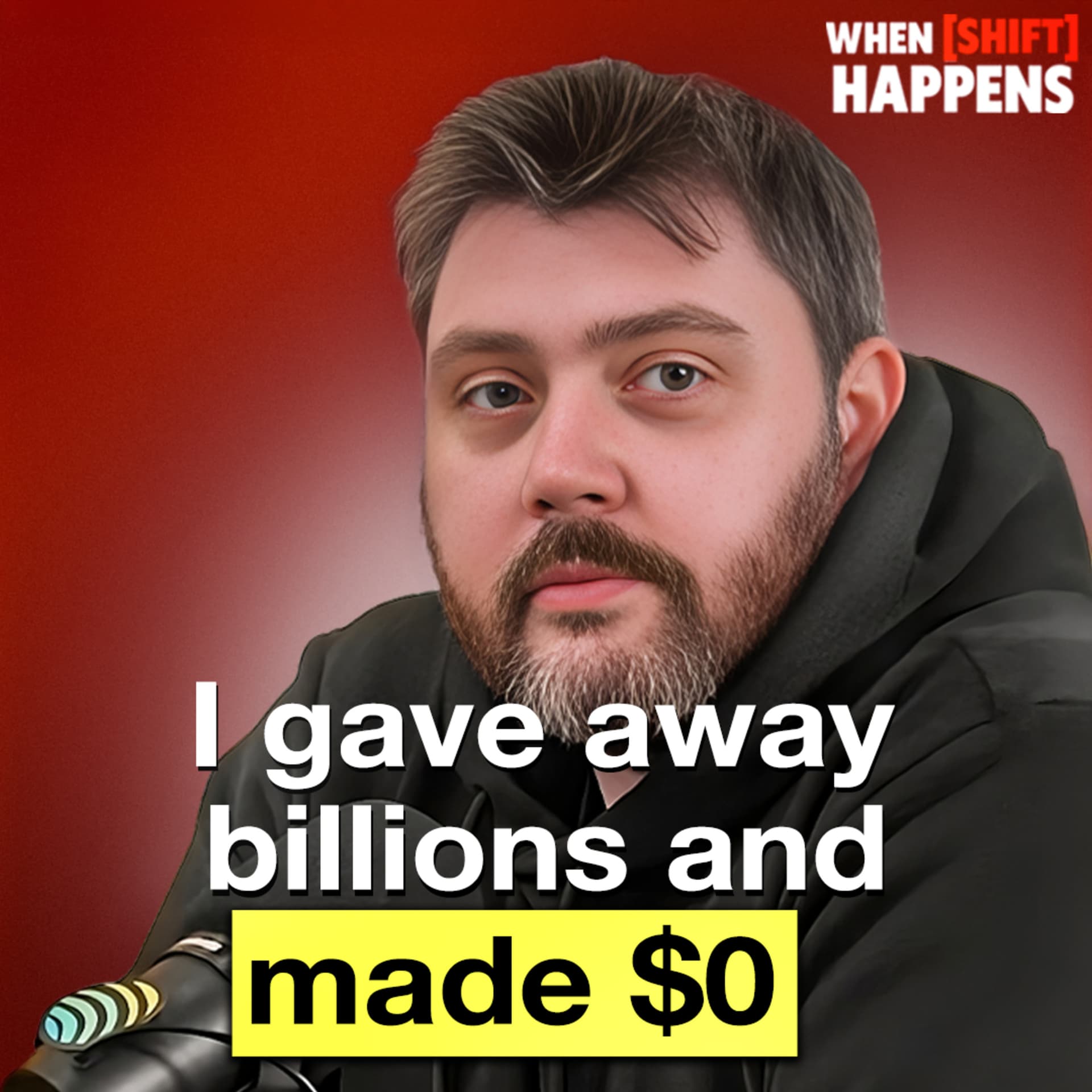
Episode Overview In this episode of "When Shift Happens," host Kevin talks with Andre Cronje, a prominent figure in the DeFi space and co-founder of Sonic Labs. The discussion dives deep into Andre's journey in the crypto world, his experiences with building protocols worth billions, and the significant decision to give away 100% of tokens for his projects, which he now regrets. Key themes include trust, online fame, and the evolution of crypto technologies.
Key Topics Discussed
- Introduction to Andre Cronje
- Background in software development.
- Creator of Yearn Finance protocol.
- Current focus on Sonic, a high-performance EVM blockchain.
- Fascination with the Crypto World
- Initial skepticism transformed into a deep engagement with DeFi.
- Experiences with various crypto projects, including Yearn and Solidly.
- The Decision to Give Away Tokens
- Andre's experience of giving away 100% of tokens in his projects.
- Reflection on how this decision changed his view on human nature and trust.
- Now considers the high risk of trusting others in the crypto space.
- The Impact of Online Fame
- Challenges of being a public figure in crypto.
- Pressure of managing expectations from the audience.
- The stress associated with handling large sums of money and community trust.
- Response to SEC Inquiries
- Personal experiences with regulatory scrutiny, including multiple inquiries from the SEC.
- Discussion on the implications of operating within a heavily regulated environment.
- Sonic Blockchain
- Introduction to Sonic Labs and its technological advancements.
- Differences between Sonic and Phantom—focus on performance and user experience.
- Features of Sonic: fastest consensus, low transaction fees, and better user experience.
- Lessons Learned and Future Direction
- Andre's shift in philosophy regarding human nature—believing people act in self-interest.
- Plans for future projects and the importance of aligning incentives differently.
- Emphasis on creating user-friendly decentralized applications (dApps).
Key Takeaways
- Trust Issues: Andre's experience has led him to a more cynical view of human behavior, emphasizing the need for transactional incentives.
- Evolution of Crypto Projects: The shift from immutable primitives to more traditional company structures in crypto development.
- User Experience (UX): The importance of UX in dApps is paramount for attracting and retaining users in an increasingly competitive landscape.
Noteworthy Quotes
- On Trust: "I have no more faith in humans. I don't think anyone behaves in anyone's best interest unless there is a transactional incentive."
- On Online Fame: "Everything's expectation management. The more niche famous you get, the less your audience knows about you."
- On Sonic: "Sonic is the best blockchain out there. Fastest consensus, lowest TTF, fastest read-writes."
Conclusion Andre Cronje’s insights into the evolution of the crypto landscape, his lessons learned from giving away his tokens, and his optimistic vision for Sonic Labs and future projects make this episode a deep dive into the complexities of the crypto world. The episode serves as a reminder of the ongoing challenges and opportunities within DeFi and blockchain technology.
Written by AI. May contain mistakes. Listen to the episode to check what was said.
Transcript
Automatic transcript. May contain errors.0:00You mentioned before that one day you received emails or letters from the SECC. Yeah, frequently. They're kind of just like, we know everything. You need to know, give us everything. We're going to compare. And if it's wrong, you're going to end up in jail. Okay, cool. If I answer these, we're good. But that's just not the case. What's the worst thing that could have happened? I asked them and they said that extradition is on the table if I don't answer. I decided not to taste that theory. Andre Kronhe, a software developer and entrepreneur best known for creating the Yearn Finance Protocol. He is now back with Sonic, the highest performing EVM blockchain, Combining speed, incentives and a world-class infrastructure.
0:34You're saying Sonic is the best blockchain out there. Why? Fastest consensus, lowest TTF, fastest read-writes. In 2030, theoretically 400 ,000 transactions per second. Time to finality with Sonic is sub 200 milliseconds. You click, it's done. I have no more faith in humans. I don't think anyone behaves in anyone's best interest unless there is a transactional incentive. That's what you said. Why? I still stand by. My living expenses were completely insignificant in South Africa. 99 % of that money I gave away to friends or family. Like 100 % of those things I did, I returned up into them hating me.
1:07If they made it successful, they refused to give anything back. Sometimes just straight up scams, but 100 % hit rate on people who would behave that way. There's a common pattern across very successful people who I interview on this podcast. They have a childhood trauma or an experience in their life that gave them a chip on their shoulder. What happened in your life? No, you're not going to dig into that past. We're not going there.
1:34but 69 % of the people who watch this podcast have not subscribed. If you enjoy this show, if it provides value to you in one way, shape or form, can I please ask you a little favor? Can you click that subscribe button, give this video a like and leave a comment down below? It helps this show more than you can imagine. My goal is to bring the absolute biggest and brightest people on this channel. And the best way to get there is to have all of us rally together and build the When Shift Happens family. Thank you. This conversation is supported by Jupiter, the most used decentralized trading platform on Solana and the largest DAO in the world.
2:08Bitwise Asset Management, the crypto specialist asset manager with more than$10 billion in client assets and more than 30 crypto solutions across ETFs, index funds, alpha strategies, staking, and more. Sui, a scalable layer one blockchain that's fast, secure, and affordable, built by previous Facebook developers and that delivers the benefits of Web3 with the ease of Web2. And Mantle, an Ethereum layer 2 that builds two products I particularly like. FBTC, which enables you to borrow and lend Bitcoin in DeFi, and METH, one of the largest ETH liquid-staking protocols in crypto. Yesterday evening I went to a restaurant, 15 minutes by car.
2:4915, 1-5, right? I mean, it was raining when I came back. It cost me$90. Just without eating, right? And I was like, what the fuck? It's just crazy. The prices here are exactly the same as in Cape Town, South Africa, where my home is. Like nominal values are exactly the same. So if it costs 10 Rand, South African Rand there, it'll cost$10 a year. But the difference is the exchange rate is like 20 Rand to$1. so it just it doesn't make any sense to me it's like how anyway but you live here now yeah with your June work don't want to don't want to don't want to be here don't want to be in New York as soon as I'm as soon as I'm done with what I need to accomplish I'll go back to South Africa what do you need to accomplish to go back to South Africa need to launch the exchange before we go into that if you had to describe what it is you do are we live yeah yeah Damn, he transitions, eh?
3:51If you had to describe what it is you do and why you do it, what would you say? I'm a dev, that's all. That's all I've ever been. I see problems that annoy me in my personal life or what I'm doing on chain, and then I code solutions if it doesn't exist. You're dev? You're probably more than that. Who are you? I don't think I'm more than that. I don't think so. I'm just a developer. People like labels, but it's not, right? There's a problem. You solve it. I don't even particularly develop solutions that'll help other people. It's just coincidentally the nature of how things happen on chain is if it solves a problem for me, it likely also solves a problem for other people.
4:39And then they just kind of use it because it's open and public and already there. But it's not specifically even developed to help other people. that's developed to solve the problem I'm facing. That's actually how the best businesses start. You start a problem with yourself, I mean, for yourself, and then you realize, oh man, I'm probably not the only person who needs that. Well, I think it's even a little bit easier in the blockchain world, right? Because everything is so open and accessible. Other people, there's a good chance other people will use it whether you wanted them to or not. I mean, practically with a business, you know, you'll solve the solution and then you're going to spend 80 % of your time trying to get other people to also use your solution for that problem.
5:24On-chain, you don't really even need to do that like marketing or BD or just put it out there. There's a common pattern across the very successful people who I interview on this podcast. They have a childhood trauma or an experience in their life that gave them a chip on the shoulder. What happened in your life? It's not the chip on the shoulder, I can tell you that much. No, you're not going to dig into that past. We're not going there. But first time someone's ever asked that question, I'll give you kudos on that. I read that you had a recurring problem when you were young. No one could keep up with you.
6:07Look, that was a blessing and a boom sometimes. It was just, there's two schools of teaching, right? There's basically the, here's the work, you figure it out yourself, do it at your own pace. Worked very well for me. Then there's the structured teaching where there's a very specific time limit curriculum, that kind of stuff. So, I mean, in some classes, courses, for example, when I did law, I did really bad at it. mostly because it's very time structured. So what would happen is like the first quarter I'd come in, I'd do like the first three quarters work, and then I'd realize I'm so far ahead, and then I'd stop participating.
6:53And then I'd space out for long enough that by the time I come back in, I'm behind. And that caused a lot of conflict for me and for teachers and lecturers and all over the place. And then when I got into computer science, I was lucky that the place's whole curriculum was do it on your own time. So they didn't have scheduled exams or anything like that. You do the course material and then you book for an exam and then they'll give you the next available slot. And that worked phenomenal for me because all of a sudden I didn't need lecturers. I didn't need to wait. You give me the book, I read it, I go write an exam.
7:29And that was fantastic and really fit my way of doing things. So I mean, yeah, they had three courses each a year long and I finished all of them within like eight months. I don't know if someone has beaten my record by now, but at the time it was the fastest anyone had ever finished those courses. So, you know, I think it's less, I wouldn't say people couldn't keep up with me. It's just that I worked well when I was left to my own devices. So in school as well, right? Like I had a phenomenal mathematics teacher that quickly realized that they can't really do homework and stuff and the normal things with me.
8:08And so they left me. They were just like, you do whatever you want at your own pace as long as you're keeping up and doing the exams. That's great. And that was so weird for me because that's the first time someone had given me that opportunity. So like automatically I went from, you know, like 70, 80 to 100 is almost consistently in that class because I was given that trust and that opportunity. So I think it's more about just, you know, people giving me that space to do it on my own terms which is useful but at the same time you know later on in my career a lot of my superiors one frequent word i always had in my reviews is unmanageable um specifically because i need to do sort of everything in my own way and i mean same in with my blockchain work right it's all very solo driven um how were you even employable um the people that realized that they unlocked my skills by giving me that freedom were the ones that really excelled um the ones that tried to structure me i normally quit before they even fired me so i mean the environment didn't work for me so and i was quick to change but i was very fortunate that um my my first job was structured like that i left within 30 days and then my second one the guys um quickly realized how they need to manage me which is by not managing me, you know, give me the problem and then let me be.
9:35And that worked great. I worked there for many, many years. I read that you had dreams of being a lawyer. Originally, yeah. So, I mean, I used to love debating. I really love arguing, I guess, irrespective of, you know, I'll take the counterpoint. I don't care. I think there's a certain beauty in sort of debate and oratory and arguments. and that's you know if you know nothing about the legal system like that's how movies and media and things portray it it's all these opening statements and closing statements and it's very similar to how traditional debating works and then I started studying it and it's 99 % just case law and reading all texts and trying to find relevant studies to the thing you're doing and that wasn't for me.
10:32So even though I would have liked the sort of in court part, the actual work that goes into it just wasn't a fit for my personality. When did you realize that? Year three, so the final year. What did you do after that? Then I, well, my goal was... You still finished the year? Yeah, but my goal after that was a break year. So just take a year off and try and see what I actually wanted to do. And coincidentally, my one mate, Philip, he started enrolling in this computer course. He didn't have a vehicle. So he asked me if I can go drop him off at classes in the morning and then we go back in the evening.
11:11So I was like, oh, why not? Started doing that for like a few days and then just got really bored of waiting around because it's quite a drive. It's like about 50 minutes away. So I didn't want to drive there and then back. So I used to just hang out in that town. They had a little mall and that kind of things. Got bored of sitting around, so I was like, yeah, I'm going to check out his course. My mom always wanted me to go to computer science. I refused. I actually failed computer science in high school. I was very good at computers, and I spent all of my time at computers, but we had an absolutely horrific teacher that That basically put me off of it completely.
11:48And then here, I started kind of impromptu joining the classes. I wasn't really allowed to, but I just showed up. And then really took a liking to it. And like I said, from there, I just started doing the exams and enrolled and finished it quickly. And the rest has kind of just been a snowball effect of events. Dear When Shift Happens family, The following message is probably the single most important thing you should take away from today's podcast. If you're serious about your crypto investing journey, please take some time to learn how to self-custody your assets to make sure that nobody can take your coins away, ever.
12:28If you don't learn how to be your own bank, it is very likely that one day you will lose all your hard-earned crypto. The safest way to hold your crypto is in a cold storage that we also call hardware wallet. Hardware wallets are not complicated and they give you peace of mind. I personally use a hardware wallet called Treasurer. It is open source, very easy to use, and the first hardware wallet created ever. As we like to say in crypto, not your keys, not your coin. You can order your Treasurer wallet with a 10 % discount by following the link in the description down below and by using the promo code WSH10.
13:03And now back to the episode. You said you worked many years for someone. Yeah. How did you get so fascinated by the world of crypto and the blockchain? I mean, my career in tech was fintech pretty much the majority of the time. So I was already doing, just before I got into crypto, I was a CTO at a new slash fintech bank. We were doing insurance product, lending products, the usual suite of things. Before that, I worked at Vodacom, which is a big telecommunications company in Africa. I helped set up the networks in like Congo and Tanzania and stuff. And a lot of that work was distributed networks, mesh networks, that kind of computing, etc.
13:45And in between that, I did a little bit of stint in ML back then, you know, which was just classification kind of data set stuff. And then at one point, it was around December, I got everything was quiet at the office. Most people were on leave. I got a little bit bored and I started hearing a lot about this blockchain stuff. But what I was hearing didn't make sense. So the things people were saying they had solved were problems that I knew the industry, the traditional finance industry, have had for decades, 40, 50 plus years. And here in blockchain, you've got 16, 17-year-olds claiming they've solved the problem.
14:31And something didn't reconcile there for me. So I originally got in as a pure skeptic. I got in doing code reviews for myself, which I just published publicly, about projects that say, you know, they solved XYZ, and then I'd go to the code, and I'd be like, well, here's proof they didn't solve XYZ. Do you have an example? Not of project, but like problem solved, problem that they said they were solved. I mean, an easy one is the trilemma, right? Like they'll claim that they can do a million TPS decentralized, and it's like, it's just not possible. It's just not going to work. or they'll make claims about data transfers or read Solomon codes or stuff that if you don't know sounds like it could work.
15:16But if you know, it just doesn't work. But there's tons. I probably did over 200 code reviews. And all of them? 99.99999 % of them were complete garbage. But that.0000001 that was real, that ended up hooking me. That was like, there is actually something here. there is a new way to do finance, maybe even communication, maybe even internet. And that's kind of where I got stuck in. What was that, this 0.001 %? No, I mean, there were a few projects. I'd have to go back and look at my code reviews at the time, but there were a few that were positive. And those ones, generally, the deeper I dug in, the more it kind of stuck.
16:04What made you say, okay, now I'm going all in? Again, accidents. So I was doing my code reviews on my Medium blog at the time. And again, I'm doing this, you know, for free. I'm just putting it out there because I'm doing it in any case. And it's more of just a log for myself. Then my Medium got banned for promoting cryptocurrency content because at that time you weren't allowed to do that on Medium. This was 2017, 2018, when pretty much any word of crypto was bad. Now it's not, but they still refuse to reactivate my account. I don't actually know why. But then Han Kao from Crypto Briefing, he reached out to me.
16:47They were doing like ICO reviews and that kind of stuff and they're a fairly decent media company now. And he was like, hey, you don't have a platform right now. Why don't you come do these code reviews on us? I was like, okay, cool, why not? Joined him. And through doing that, it formalized the process a little bit more. So, you know, something that I was just kind of doing spare time writing whenever I had free time now became a thing where teams requested us to do those reviews. And it became a little bit more procedural. And as part of that, I had been requested to do a code review by the original Phantom team.
17:28which originally I said no a bunch of times and then finally kind of gave in and accepted. Went out to their offices. And then the reason, so I kept on refusing because I kept telling them to just add me to their get up and then I can review. I don't need to have physical presence. They kept insisting, kept insisting, kept insisting. I finally gave in. First time I had left Africa as well. So I didn't want to travel at all. Very first time. Very first time. Never left Africa. Never left. Never left South Africa or Africa? South Africa, I went to Tanzania and Congo. So those three were my usual hangouts, but never, you know, cross the ocean.
18:05But anyway, so went. And then as it turns out, the reason that they didn't want to share it to me by the Kira was because they didn't have anything. They'd made a bunch of promises. They'd rate a bunch of money. They had a theoretical idea of what they wanted to do, but they actually didn't have any engineers or coders that could actually do it. They were trying to get me to build that out for them. I sort of semi-agreed that I would help them like hire a team and kind of get it going. But so parallel to that, having gone for all of these sort of code reviews and tech and everything, I had a fairly strong theoretical idea of how a new generation blockchain would look.
18:46I had none of the skills to potentially raise money to get a team to actually build that out. and it was too big to do on my own. So here was now an opportunity, right? Like I had the idea of a technical implementation. The idea they had would never have worked, but they had raised the money. Started kind of working together. And like, even though I started working with them, I think early 2018, I only like officially publicly joined them, you know, later in like 2020, 2021, because I didn't want to... At the time I joined them, I was still doing the code reviews and like I can't be seen as you know being now I'm motivated so like obviously I'm gonna say this new blockchain is shit because I'm I'm working for a different blockchain so you know there's there's just bias there um but ultimately also I stopped the code reviews um and then yeah just been working with them since what was phantom's idea back then they basically just plagiarized hashgraph they just that that was their whole idea was just hashgraph but the Korean version.
19:51Can you explain that for a normal person who doesn't really understand crypto?
19:58Maybe. I mean, it's pretty involved in how consensus works. So Hashgraph was a... It's a US-based company. But Hashgraph's basically a consensus that works for a permissioned validator set. So it can't be a public blockchain. That's number one, because you're trusting the communication between the validators. But they are essentially, it's been a while since I've read their white paper, but it's gossip-based information. So when they communicate via their gossip protocol, they are reaching consensus by sharing gossip about gossip. That's not going to work for a normie. It's technical. It's more like what was the main goal of Fantom?
20:52To provide a competitor to Ethereum, to help scale Ethereum? So the computer... Back then everything was just about faster blockchains, right? Everything was self-limiting. I mean, Ethereum, Bitcoin, everything back then was proof of work. Proof of work is not a scalable consensus mechanism. It's not designed to be scalable. It's designed to be secure. It was even what Ethereum, I think, was a minute block times or something, or six minutes. And that's just how long it took. You couldn't make that faster. So most of the research at that time, most of the big guys that came out then, Phantom, Avalanche, Solana, were all new consensus engines.
21:35Were all ways about how do we reach agreement over these transactions faster. you mentioned before you were a cto at a fintech so you have the technical background and understanding but you also understand finance right and then in 2020 decentralized finance is the big thing for you um coincidentally again sequence of events right so so when i started being a little bit more well originally i was just like a consultant to phantom And then the more of the team I hired, who were people I knew and trusted, the more I became fully involved. And around, what was it, probably towards the end of 2019, it had turned out that the original team had spent the majority of the money.
22:24So, I mean, of the 40 mil they raised, in their defense, a big part of that was also just ETH going from like 1 ,000 to like 80. So, I mean, that's a lot of, and they didn't divest. they raised an ETH 40 mile and kept it until basically all time lows. So obviously right off the bat, 40 quickly turned into, I think about eight and then conferences and sponsorships and parties and all the usual crypto dodgy stuff. Cause this wasn't a technical team. By the time I really like took over, took over, there was about two left, two mile. And that was fine. You know, our burn was less than like 200 K a year.
23:05So that could have lasted us long enough, but it had to be managed better. So at that point, I took over the treasury management. And what I was basically doing, I obviously want to try and offset our expenses. So I'm trying to hit about 200K. So I need to do what? About 10%. And this is kind of just when DeFi started. So you basically had Compound. I think Compound is the only one that actually survived from back then. Ava came a little bit later. you had BXC or something like that. And then there was another one, ID something. Anyway, there were basically three, four protocols of which only compound remains, which all were giving out their lending markets.
23:51So deposit the money, you get healed. And the markets back then were not efficient at all. So on any given day, one of those could be giving 10 % or 2%. So basically every single morning I logged in, I would go look at all of these different ones. I'd see where are we getting the best interest rates. And then I'd withdraw from that one and deposit into the other one. Your personal money. No, no, this is phantom. This is phantom money. So you're managing also phantom treasury. Yeah. Okay. That was the only money. I've never been money motivated, fortunately. Exactly. So then as I start getting more involved into the smart contracts, I started realizing, okay, well, look, I can at least programmatically do this so that instead of me needing to go look at every website on chain, I can have a contract that just tells me where's the best when I open it up.
24:46So coded that. And then that was kind of the first year, which was just a static page that just listed the protocols and their APYs. And then I'd still have to go through the process of withdrawing and depositing into the relevant one. And I mean, Ethereum transactions were cheap. You know, you were talking about sub cents to accomplish it. So it was financially worth it to do that every single day. And then after a while, I was like, okay, but surely I can just write a I already have the data from the contract. So surely I can upgrade that so that instead of me needing to withdraw and deposit, I can add that in as well.
25:18So every day I can just come in, I can just press a button and then it'll automatically do it. And that was really the first year. But every morning I still had to go and I still had to hit the deposit button. So I started thinking, how can I get this so that I don't have to hit this button every day? And that way was to allow, to open it up so that anyone could deposit or withdraw. And then every time someone deposits or withdraw, it rebalances. And that's actually the first proper year where now it's open to anyone, anyone deposits, it moves to the best place. And now all of a sudden, I don't have to do anything.
25:52I can sit back and it's doing its job. And that was really Yearn. And then as Yearn kind of kept growing, there was a need for more and more backend services. So, you know, something that needs to trigger rebalances or liquidations or cleanups or fee collections or all of these extra things. And that's when I built Keeper Network, which is just, so at that point in time, you know, I was running DevOps. So I had a little NPM script running on a server that was checking for when changes need to occur, and then it triggers the transaction. And again, I was like, I don't like doing DevOps. I don't like managing these servers because they go down, the space fills up, blah, blah, blah.
26:32How can I get other people to do this? And we built Keeper Network, which is an open decentralized network of keepers where they monitor the contracts. If there's something to do, they go do it. They get a fee for it, blah, blah, blah. Still used today. I know it's Maker also uses the Sky, et cetera. But yeah, that's when I really started, you know, digging in into the whole DeFi stuff and just kind of stuck with it. You said before I was not money motivated, fortunately. Why do you say fortunately? I think being money motivated in this industry makes you focused on that. And like a lot of the choices I made, if they were money motivated, would not have allowed me to build most of the stuff I built.
27:21I mean, perfect example is Yearn, right? Like when the token finally launched Wi-Fi, the goal was I wanted to move away to the next thing. for me to be able to move away to the next thing, I needed people who were incentivized to take over the protocol. And that was the goal behind issuing the token. And that's why it had to be 100%. Because if I had kept even 1%, then people would have been, oh, but he's got 1%, so he'll do the work. And I needed to make it clear, I'm moving away now here. I'm not going to be doing the work year. But now if I was money motivated, I would have definitely had kept, let's say, 10%.
28:03And now all of a sudden, no one else is going to do the work. Because that whole premise of Andre has no tokens, so he has no incentive, was important. If you think about Web2 companies, for example, right? Or let's talk about fintechs, right? We always talk about founder-led companies. They last through years and decades because the founder is the person who is going to have this long-term mindset. Yeah, the vision and the drive, etc. But there's a distinct difference between immutable primitives on-chain and companies. And back then, the distinction was a lot more clear. Back then, everyone involved in the ecosystem, I mean, something like transparent proxies, they existed, but no one used them.
Read the full transcript
28:49Everyone's north star was immutability. You wanted to deploy something that never needed to be touched again. And up until I kind of took a step back from the industry around 2020, 2021, that was always my ethos. Like not a single contract I had deployed during that time had any kind of upgradability. So the contracts were of such a nature that I could not modify them even if I wanted to. And that's different because back then everyone was building software for everyone else to build off of or use as well. Nowadays, we're building crypto companies. And there is a distinction there. Like the stuff I'm going to be launching going forward definitely will be under sort of my company banner with equity for me, with tokens for me, because they're not meant to be immutable primitives.
29:50They're meant to be products of a company. Is that better or is that worse? Or it is just what it is? There's value in both. Look, also the stuff we're doing now, it was practically illegal to launch a crypto company back then. You had no path to successfully do it. Basically, if you did do it, you would have gotten hunted. I mean, I had, you know, double-digit emails from the SEC about stuff I had to provide them and turn over and things. And I mean, I'm a South African living in South Africa, hasn't been to the US, like didn't sell a token, didn't provide a service. Like, guys, how am I in any way your jurisdiction?
30:40But still, you know, that doesn't stop all of these different agencies around the world from hunting you because of that stuff. And, you know, let's face it. I mean, if it wasn't for the more positive administration here currently, I wouldn't be risking launching this new stuff. The only reason I am risking it now is because there is finally a path forward. We're going to talk about that, the SEC and what you're doing now. Obviously, you made people a ton of money and created billions of values in just a few weeks. You became a god. Some called you Jesus. That was, people shouldn't do that. But there are many problems that come with this.
31:16What's the ugly side of online celebrity? Um, everything's expectation management, right? Um, I think that's what I struggled with most towards the end because you, the more, I don't want to use the word famous, but for practical reasons, let's use that, that the more niche famous, right? Non-traditional famous, the more niche famous you get, the less your audience knows about you. so you know early days everyone that interacted with my stuff knew my process so they understood that I did a lot of my work on chain because back then we didn't have the tooling we have now so a lot of things you had to do on chain and most of my apps were very composite so they involved you know so many different apps interacting at the same time that you could almost only practically do it on-chain.
32:12Like you couldn't do it in a replicated environment because now you try and testnet A has those two apps, but not those two. Testnet B has those two, but not those two. And so, because everyone was kind of siloed and choosing their own stuff. So, so that made it really hard. But the original participants, they all knew how I worked. The biggest wake-up call for me was with Eminence. So I had launched a theoretical framework of how gaming NFTs could work because I didn't like what I was seeing that was happening with NFTs. The tech is very powerful. How it was being used was garbage. It still is, mostly.
32:53Sorry, Bengu.
32:58But part of my process is doing things on-chain. So me and the developer I was working with, Anton, we have an iterative process. I deploy my contracts. He does his front ends. He catches bugs. I redeploy. We keep kind of back and forth thing like this. And as is natural with a process, you know, we work for 10, 12 hours a day, and then we have our normal lives. At that point, when I stopped deploying, people had assumed that that last one I had deployed, oh, cool, he's done. He's launching this thing now. and they started sending money into that a lot more than they should have 16 million dollars needless to say was exploited makali eight was returned and the other eight is still sitting in the contract whoever acted if you're watching this by the way i think it's enough time you can return the rest of those people now um they've never used it which is weird um but that was a big wake-up call to me that you know now there was a very large active audience that were not aware of how I had previously done stuff.
33:59And so everything just became about expectation management. But that in itself was exhausting because now I had to spend so much time with disclaimers and preface and blah, blah, blah. But I also think it's just, there's also just a learning process that you as an individual have to do. Because when I started, my goal was 100 % happy users. So if one person had said something negative, I would private message them. I'd get them on Telegram. I'd talk to them about their problem. I'd try and solve it. I'd try and see where they're coming from. Maybe I can do something better, et cetera. Fast forward a little bit, and all of a sudden, that's completely impossible because there's a demographic that you will never appease.
34:43They exist to hate you. So then my 100 % went to 51%. I was like, as long as I keep 51 % happy, I'm, you know, like standard proof of work, consensus-based. 51, I'm good. and that again worked for a while. I could appease, et cetera, but then as that fame got bigger again, started realizing 51 % is impossible. It's not going to happen because now all of a sudden there are people who are financially incentivized to hate you. So now I'm on the Pareto principle. I try and keep 20 % happy that provide the most value to the stuff I'm doing and probably as I continue along, that number will keep decreasing, but that's something that I needed to internalize and make peace with.
35:24How did you do that? Depression, hardship, like self-destructive tendencies sometimes. There's no easy way that you're going to go through that process. Like you have to rewire your brain. And unfortunately, thanks to kind of, you know, survival of the fittest, the only way we rewire our brain is through hardship. Did you do any therapy or you just did everything on your own? No, I should have probably, if I'm being honest, because I went through a really bad cycle after Eminence, but luckily I got through it. You mentioned these expectations, right? I also read about this project associated with called Solidly.
35:59Yeah, well, not associated. That was my code. Yeah. So people aped in$2.3 billion in like days or weeks. And then when you announced that you were leaving because there was a bug in the code, the total value locked by like 90%. Well, no. So I wasn't leaving because there's a bug and there wasn't bugs in the code. the bug people are referring to was a literal design feature. So, I mean, that code, Solidly Code, and VE33 specifically, that went on to be the code used by almost every single prominent Dex on every single new chain. It was Metis, it was Velodrome, Aerodrome, Ramses, Faro, Shadow, like all of those guys is that code.
36:46The difference, so I just want to address the bug statement first. The difference is, again, at that time, I couldn't launch companies. So that code was 100 % immutable. Couldn't be changed. There was no proxy upgradable. There was no multi-sig. There was nothing. It was exactly as it was. But now one of the things is the whole flywheel works on you vote emissions onto a pool and then you get the fees for that pool. Now, something that someone could have always done, and I wrote this in my Medium articles, and you can go back to them if you want to double check me on those, is I had written about the theory that someone could create a bricked pool.
37:30So they can create a pool that no one else can participate in, that only they can farm, because they just create two tokens that only they can mint. They can then add that pool. Then they can buy a lot of the token, so significant enough that they can impact the emissions. Then they have to lock that for four years, and then they could send emissions that way. Now, that is a way that they could game the system. I had believed no one would do that, because you'd be shooting yourself in the foot. Because the second you do that, other participants are going to withdraw out of the ecosystem. And you are going to be left with, sure, you can now vote on this own pool, but you're going to devalue anyone else's participation, which means everyone else is going to withdraw out of the system.
38:15Unironically, and I believe that's against human nature, you know, who would spend millions of dollars to acquire something that they then devalue by the very action that they are doing. And unironically, two different people did that day one within hours of launch. The one guy spent something like$13 million to do that, which became worthless overnight, exactly as the original theory. Why would they do that? I had believed that all participants in a system are rational actors. That assumption was false. That was also a good lesson for me because nowadays I don't build systems that assume rational actors.
38:57but so yeah so so the bug because then a lot of the forks for whatever reason whenever forks fork solidly the the first thing they do is talk extensively about how shit solidly was even though it's the entire premise of their company and model but anyway the the bug everyone is referring to is that decentralization so the fix that all of these teams did is they decide which pools get to be voted on. And they control that via their multi-sig or their team controls or whatever. So they removed the decentralized I had put in there and they had added a centralized component. So just to comment on that.
39:37Now, the other thing, this is also expectation management, because, and you can go check these on all of my Medium articles about Solidly, I always stress that this isn't a mutable primitive. The second it launches, I cannot change or update it in any way. So, you know, my stepping away from the ecosystem was seen as a reaction to that, but the second I launched it, there was nothing I could do about it anymore. And I had made it clear that the second it launches, I am no longer involved in it. The timing was probably a little bit annoying because like a few days after that, the SEC She ran up a lot of stuff, so we were like, okay, it's not worth the effort anymore.
40:20Let's just take a step back. But that was not the sequence of events. Yeah, you say go read my Medium articles, but most people don't read, right? They're like, Andre's new project, I'm just going to A-pin. Correct, like I said, that's part of that expectation management process I learned. And I mean, look, against my own statement, like I had known that sort of do your own research is basically a meme at that point even though I still again sort of believed people would do that but I mean it's just like your little NFA there on the side right like it's a meme exactly yeah yeah absolutely so so I mean if anything whenever you see NFA they're gonna be like this is financial advice thanks bro just means I don't have to pay you for it that's the only thing yeah so So, I mean, another thing I had to learn was that our audience had drastically started to change over time.
41:22You know, when I first got involved in DeFi, the participants were all highly technical. By the time I had left, it was probably 1 % technical and 99 % of people that just heard about something on Reddit or 4chan and then just somehow sent their life savings to it, which is still actions that I will never understand. But I also needed to recognize that the space had changed so drastically that it's an entirely different demographic now. How does it feel to have that much influence over people's money? Like, did you manage to dissociate with it? Or because it could feel like a lot of pressure. I've never really thought about that.
42:04To me, I'd say I'm the inverse. I don't actually think I have that influence. Like, I'm, even with Solidly, I thought, like, my, like, 50K or whatever I put in there would be the only money. With Yearn, I thought the Phantom money was going to be the only money. Even with the new exchange I'm launching now, I'm assuming it's just going to be my cash. But you say I put 50K in Solidly, but then you have$2.3 billion coming like that. you must feel something like stress or maybe oh that's awesome or anxiety yeah yeah no stress and anxiety are there but the stress and anxiety isn't because of the influence of the money it's because of the responsibility of the money um that's just purely like because when you know it's let's say 10k and something happens i can work with those people to try and or recoup that or figure something out.
43:05You know, if it's 2 billion, there's nothing in this world I can do to try and help those people. That's done.
43:14So that definitely exponentially increases the worry. But for example, I know it's a meme about test and prod and all of that stuff and that I didn't do audits. All of my projects had multiple audits from multiple teams. You can talk with the audit companies. Like I'm on first name basis with most of those guys. Huge amounts of test cases, this huge amount of tasting. I mean, the only stuff I had that was ever exploited was imminence that was literally actively being developed where people put all of their money in there. So I always took every reasonable precaution to protect people's money, but it did get easier over time.
43:54That's also something that your mind kind of gets used to because I remember with Yearn, when that went up to, I think, like 700 million, which I was not expecting at all and I couldn't sleep. I would be awake almost every five minutes checking to make sure everything's okay, double checking things. But by the time it got to solidly, I have to admit, I wasn't that stressed because I had known that there was no opportunity for something to go wrong there.
44:24It gets easier over time. You get used to the quantum. You get used to all the tolerance to stress. arises with time, right? Obviously, I mean, with experiences. I read that you didn't make any money on these things. That is true. Well, I mean, I gave away 100 % of the tokens, so there's no way to make money. Probably lost a little bit of money because I actually bought quite a bit of salt, but still have that, so whatever. How did you feel? I'm not making any money. I'm actually losing money. And I have all this stress and anxiety, right? It's not, I'm building something amazing that people buy or invest in and they're generating a lot of money for people.
45:04It's more at least the stress and anxiety and responsibility should be kind of worth it. Look, again, each project, definitely I had a different experience because like with Yearn, more so the participants knew that by me giving away 100%, I was giving up responsibility. So I didn't have that much. But again, it was a technical audience. They understood what was going on. By the time we got to Solidly, it was such a non-technical audience that their expectations of me were a lot higher. That, oh, but I launched this. I'm supposed to stick with it. Blah, blah, blah. Where am I? Blah, blah, blah.
45:51So again, changed a lot over time, dependent on the audience you were working with. but yeah I mean that still sucks and that's why I'm not going to do it again you know because you by the time it got too solidly I had none of the incentives or upside but I had all of the responsibility so it's just like this this is stupid which yeah like I said going forward that's definitely not going to be the case I'm going to make sure that incentives are aligned you mentioned before that one day you received emails or letter from the SEC yeah frequently frequently what did the first letter say it's always just a request for information under the guise of you know don't share this or it becomes an official investigation and as long as it you don't publicize or speak to anyone about this then then you know this is just an inquiry it starts friendly enough it quickly wraps up though because like the the more it's very much like my experience with tax agencies as well, where they're kind of just like, oh, we know everything, but we're going to not tell you, and you need to now give us everything, and then we're going to compare.
47:08And if it's wrong, you're going to end up in jail. Very similar experience. As it progressed, because there was probably, like I say, 10 plus sessions of this. And the amount of detail they request is comprehensive to the point where it was taking up originally days, then weeks, then months of my life to just collect the information they're asking for. And often it was information that I didn't have, so I had to go get alternative sources to provide it. It was a ton of effort. And you kind of start under this guise of, okay, cool, if I answer these, then we're good. But you realize that's just not the case.
47:55And they just try and look for different angles to drill down. Because when it started, it was all around the Yearn token Wi-Fi. And what investors did I have? What seed was there? Who did I sell it to? How much did I have? And a lot of that stuff is also proving a negative, which is really hard. Because now I have to prove that I didn't have any tokens. And it's like, how do I actually prove that? So basically they're asking you questions until you make a mistake. Correct. But I mean, like, again, I luckily had Brown Rutnik and Gabe from Metal X helping me as attorneys. And they'd been through that journey a few times.
48:33So they were great in guiding me on how to do that stuff. But we also saw, you know, the pattern evolve. So like when they started realizing, look, the token isn't an angle of attack, they started looking at the product as an angle of attack. because then they started, you know, sort of making the claim that the Yearn Vaults themselves are securities because a user is giving it money with the expectation of return. So then they started framing that as a securitized product. So, you know, it just kept scope creeping. And it really only stopped when, you know, the next election started coming up.
49:08Then it went quiet. Because you were based before, you said, you're based in South Africa, you're South African. What's the worst thing that could have happened? What can they do concretely? I asked them and they said that extradition is on the table if I don't answer. I decided not to taste that theory.
49:29And I mean, like, I'm a white guy in South Africa, South Africa is not going to stand up for me for one second. They will throw me to America for a banana.
49:42You ended up leaving crypto? I ended up leaving Twitter, which a lot of people assume was leaving crypto. I guess I did kind of leave crypto as well. I actually tried going back to my TradFi job. I also think once you've been in crypto, you can't get out. So I was still doing my part-time stuff. I was still doing some stuff with Phantom and Sonic, and I was still helping some of the Yearn guys, etc. And I could never stop thinking about the stuff, the problems I want to solve, the AMM, the lending market, the options, the derivatives, so much stuff that still needs to be solved in this industry that isn't solved.
50:24Yeah, that probably lasted maybe two, three months. And then I went back from part-time crypto to full-time crypto, but still lifted Twitter and all of that stuff off because that became so much noise and toxicity that the R &R just wasn't there. So there's no point to take that risk. I have no more faith in humans. I don't trust anyone anymore. I don't think anyone behaves in anyone's best interest unless there is a transactional incentive. Yeah. Yeah. That's what you said. Why? I still stand by. Well, like I said, Solidly was the perfect example where I thought that people were rational actors.
51:05And over the last few years, I just realized that no one is rational. Like everyone only behaves in their self-interest in the given moment. So one of my core beliefs up until probably like 2022 still was that all humans are inherently good and sometimes they do evil actions in bad situations.
51:31Don't think that at all anymore. I think all humans are inherently evil. That's how I like to think. And only act good if there is self-interest. Wow. That's a big change. That's a complete 180. How do you live with that thought? Oh, you just get used to it, right? It just becomes your new core principle. And my life has been significantly easier since I've adapted that philosophy. Even in your personal life? Everything. Is it the same? Everything. Everything, everything, everything. Like, when I believed... Because, for example, like, I... Again, not money motivated, but having been encrypted this long, I had opportunities to make a bit of cash.
52:12But my living expenses were completely insignificant in South Africa. So 99 % of that money I gave away to friends or families or when I met someone that had a cool idea, I was like, oh, here you go. Go do your startup or whatever. In a very nonchalant way. So never paper, never contractual agreements, never you're going to quit pro quo me, whatever. and like clockwork, 100 % of those things I did, I ever turned up into them hating me because I stopped giving them more or if they made it successful, it was all them and they didn't need my help and they refused to give anything back or sometimes just straight up scams.
52:54They just take the money and they never communicate again but 100 % hit rate. 100 %? 100 % hit rate on people who would behave that way. So now I just don't do that. Wow. And life's a lot easier. Do you still angel invest? No, I don't do anything anymore. That's so sad. That's so sad.
53:17So it's not only in crypto that people are bad. I was scammed more in TradFi than in crypto, unironically. Like in TradFi, I'd lost almost everything. In crypto, I'd never lost a cent, which is a little bit of an irony in there. You're back today and we're here in New York. Yeah. What made you come back?
53:47That's actually a really good question. When did I activate my stuff again? It was somewhere around when we were planning the launch of Sonic,
54:01which I do think is currently the best blockchain tech out there. And it was just an opportunity to amplify the stuff again, so I activated the Twitter. I mean, I'm assuming we're using that as the metric of comeback, is basically switching the Twitter on again. And it was really just to, you know, amplify some of the news and share that stuff. And then in the back end, you know, I'd always kind of still been working on some of my new primitives. There's a bunch of stuff I never launched. Insurance stuff, AMM stuff, derivative stuff. and then with the new administration there's now an opportunity to launch that again so which that's just coincidence and luck
54:45so yeah just increased participation from there but the original one was literally just activating the Twitter again to retweet Sonic stuff What is Sonic if you had to explain it to your mom? Provided your mom is not as technical as you because you said before my mom wanted me to do computer science, so maybe she's a computer science geek. No, no, no, she's not technical. I mean, the easiest way is just it's currently the fastest blockchain, but that assumes you know about blockchain, right? So I think the easiest way to describe it is analogies people are used to. So current blockchains are, you know, a 56K dial-up modem, and Sonic is ADSL.
55:27I think that's what it comes down to. It's just higher throughput, more responsiveness. You're saying, I believe, Sonic is the best blockchain out there. Currently. Why? Fastest consensus, lowest ETF, fastest read-writes. There's obviously a myriad of reasons. From the technical side, even when we launched the original Phantom, the consensus was one of the fastest out there. And the consensus we've almost not changed at all. There's been a few optimizations, but nothing significant. So when we released the original Phantom, this was, what, 2018, the consensus on raw transfer transactions could already do between 50 ,000 and 60 ,000 transactions per second.
56:15But it was hard capped at 200 transactions per second. That's the absolute max it could do. And why is that? That's entirely because of the Ethereum virtual machine. So since then, we basically spent that time rewriting that virtual machine into what we have now, where you still have solidity and Viper compatibility, but underneath the hood, it's something completely new. And that now allows us to get upwards of 10, 20, 30, theoretically 400 ,000 transactions per second. But we're also at a point where we have a lot more capacity than we have demand. So it doesn't really matter at this point. So the things we're focused on is time to finality.
56:50And that's responsiveness. That's when, again, if you look old internet, you click the button to download an image, you would go make a coffee and go make a pizza or whatever. And when you come back, it's still kind of buffering and downloading. That's how you can think of finality. It's how quickly does that image get done? Because even I could take Ethereum today and get them to a million transactions per second without a problem, but block times are going to be like 10 minutes. So you're going to wait 10 minutes until it's actually finalized. Our time to finality with Sonic is sub 200 milliseconds.
57:27So you click, it's done. It's faster than human responsiveness can recognize. And then other small things that we did, right? It's like almost all RPCs used by blockchains out there are asynchronous. So how that's designed is if I click on that button, it sends my request to that server. And then in the front end, you build some polling system that keep asking, is it done? Is it done? Is it done? Is it done? Now, normally you have to do that because if it takes, you know, a minute, you can't do it synchronous because your request is going to time out on the HTTP protocol before it actually returns the response.
58:04Ours is synchronous. So you click there, you get the response. By the time it gives that response to you, it's finalized. So stuff like that makes the user experience better. Then there's stuff that we've started to, I mean, technically, it is the fastest blockchain, but that to me matters less. So I'm still designing this blockchain from a DAP developer perspective because that's what I am. So I need a blockchain that can do certain things that make my apps better. So one of the first things, for example, is fee monetization. So normal blockchains, 100 % of the fees go to the validators. So every time you do a transaction, you know there's a small fee connected to it where it's a cent or whatever, 100 % goes to the validators for securing the network.
58:50In Sonic, 90 % goes to the DAP that generates that fee. So if you use my app and you generate$100 of fees, $90 is coming to my pocket. So that's already important because it allows me to subsidize user actions. It allows me to decrease it if I want. It allows me a revenue stream if I need because not all apps have a revenue stream. So they need some way that they can actually make money. So that's number one. Then number two is fee subsidies, which we're releasing next, which allows me to subsidize another user's transactions that is interacting with my app. So that means I can start having users that don't have a wallet, that don't have gas.
59:25Because to me, that is such a big barrier to entry for 99 % of dApps. If your first touchpoint with a user is go download this wallet and then go buy this token on an exchange, you've lost 99.9 % of your users. But if you're like, hey, just come use it. You don't need anything. all of a sudden you have a lot more attention. And once you have them hooked, you can still try and convince them to do that stuff. So that's fee subsidies. Then the last one, not the last one, but another one that we have in there, which is all about that sort of end user experience is native account abstraction with economic abstraction, which means the user will never need a wallet.
59:59They'll use their Google off, email password, fingerprint, face, whatever it is, to access the DAP and to interact with it. And they'll never need to know about Sonic or RIS token. And these are things I need to build dApps that are better for a user experience. So all of these things I've mentioned make our blockchain slower because every single transaction now has this extra little bit of overhead. So if we were complete performance maxis, we would never add this. But the goal isn't to be a performance maxi. The goal is to have enough capacity that we can maintain the demand. And, you know, it's always that sort of catch up because, like, eventually the demand will exceed it and then fees will increase.
1:00:36and then we have to hopefully be ready for the next capacity unlock, which we have, and that's what we're working on for a roadmap. But at the same time, we need to improve the UX and UI from the DApp developer side, because otherwise we're never going to have enough users to reach the demand that will fulfill that capacity. And I think that part's almost more important currently than the speed. I mean, the speed is great, but I mean, there's enough fast blockchains out there. And users also don't really care. I mean, L2s are showing us that it might as well be some dude's PC on AWS. Ultimately, they don't actually care.
1:01:10There just needs to be some security considerations. Absolutely. I had a brand done from Phantom on recently. We talked a lot about UX, right? It's everything. It's everything. It's everything. And also what we're seeing, you know, I mean, the way you interacted with these apps in original DeFi was basically directly via smart contracts. you know, CLI tools or Etherscan or whatever. Nowadays, it's all about that user channel. And then we can see it, right? I mean, Solana is going through that whole thing where Radium is now launching a Pump.fun and Pump.fun is launching a Radium because they all know how important keeping that user acquisition pipeline is.
1:01:51Absolutely. So it's changing. What will you tell people who are confused between Sonic and Phantom? What's the difference? Phantom's dead. We migrated everything over to Sonic. I mean, Phantom will keep running in theory, but that's like Ethereum Classic versus Ethereum. Us as a team, I forked, we're focused on Sonic, we'll be maintaining there. Phantom is obviously a decentralized blockchain, so it will exist for as long as there are validators or anyone out there willing to validate for it. Then we'll keep validators on there for pretty much as long as we exist, but the focus and attention isn't on there.
1:02:26Phantom was a, at the time of its release, was the fastest blockchain available. But it was released when this space looked completely differently. So it is no longer viable as a product for the current market demand. You said in the beginning, we're in New York. I don't like to be here. That's true. Where will you go? Cape Town. I don't even need to think twice about that. No, Cape Town, South Africa is home. best nature, best weather, best food. This place can't compete with it. When do you think that's going to be? As soon as I'm done with the exchange. That's probably a long time, but when done, then Cape Town.
1:03:14That's for sure. Thank you so much, André, for doing this. That was nice. Brilliant conversation. Don't forget Jupiter. Oh, sorry. Apologies, Mantle. I put my cup in front of you. Thank you.
From the publisher
In this revealing conversation, DeFi pioneer Andre Cronje discusses building protocols worth billions and his decision to give away 100% of the tokens.
After creating Yearn Finance without keeping anything for himself, Andre shares how these experiences dramatically changed his view of human nature.
From facing SEC threats to his work on Sonic blockchain, he explains why his approach to crypto has fundamentally changed.
Discover why one of the industry's most influential builders now plans to align incentives differently in his upcoming projects.
In this episode, we talk about:
• Crypto World Fascination
• The Truth Behind Solidly
• The Struggles of Online Fame
• Going All-In on Crypto
• Giving Away 100% of Tokens
• Why Andre No Longer Trusts Anyone
• The Pressure of People's Money
& much more!
__________________________________
PARTNERS
💳 Trezor is the safest cold storage wallets for crypto security and financial independence.
Buy your Trezor Wallet (use PROMO Code from the video for a 10% discount): https://trezor.io/?transaction_id=1026f18ed46409e495c6db4bff90ab&offer_id=133&affiliate_id=35356
🚀 Jupiter is the most used Decentralized Exchange in Crypto and the largest DEX by volume on Solana.https://jup.ag/
🌱 Bitwise Asset Management is the crypto specialist asset manager with more than $10 billion client assets and more than 30 crypto solutions across ETFs, index funds, alpha strategies, staking, and more.https://bitwiseinvestments.com/
💧Sui is a first-of-its-kind Layer 1 blockchain and smart contract platform designed to make digital asset ownership fast, private, secure, and accessible.https://sui.io/
♾ Coinsilium provides vital funding and expert advice to Web3 and AI-powered early-stage technology companies. https://www.coinsilium.com
🔘 Mantle Network enhances dApp development with Ethereum's security, low fees, and quick transactions through innovative layer-2 technology.
Users can stake ETH for mETH, contributing to a transparent, community-driven ecosystem governed by $MNT token holders, fostering innovation and collaboration.
https://www.mantle.xyz
__________________________________
FOLLOW ANDRE CRONJE
• Twitter: https://x.com/andrecronjetech
• Twitter: https://x.com/SonicLabs
• LinkedIn: https://www.linkedin.com/in/andre-cronje/
• Website: https://www.soniclabs.com/
FOLLOW KEVIN & WHEN SHIFT HAPPENS👇
Twitter (X): https://x.com/KevinWSHPod
Instagram: https://www.instagram.com/kevinwshpod/ TikTok: https://www.tiktok.com/@kevinfollonier_
Linkedin: https://www.linkedin.com/in/kevinfollonier/
Website: https://www.podpage.com/when-shift-happens/
__________________________________
DISCLAIMER
The info contained herein is for informational purposes only. Nothing herein shall be construed to be financial, legal, or tax advice. The content of this video is solely the opinions of the speakers who are not a licensed financial advisor or registered investment advisor. Trading cryptocurrencies poses considerable risk of loss. The speakers do not guarantee any particular outcome.
#Entrepreneurship #Crypto #News
__________________________________
0:00 Trailer
1:35 Please Subscribe
2:00 Partnerships
2:46 Solving Problems with Code
4:10 Who is Andre Cronje?
5:58 Thriving in Self-Paced Environments
9:38 Why Law Wasn’t for Me
10:46 How I Found Computer Science
12:12 Self Custody with Trezor
13:05 Crypto World Fascination
16:04 Going All-In on Crypto
19:41 Fantoms Original Idea
21:42 Building Yearn: The Beginning
26:55 Money Motivated vs. Long-Term Vision
31:00 The Struggles of Online Fame
35:52 The Truth Behind Solidly
41:49 The Pressure of People's Money
44:34 Giving Away 100% of Tokens
46:18 The SEC’s Persistent Inquiries
49:42 Leaving Twitter
50:45 Why I No Longer Trust Anyone
53:36 The Return to Twitter
54:52 What is Sonic Labs?
1:01:53 Sonic Labs vs. Fantom
1:02:41 New York vs. Cape Town
1:03:16 Concluding Remarks


