
In short
When Shift Happens Podcast - Episode Notes
Episode Title
E129: 10TFund Founder: Wall Street Investor's Bold Crypto Prediction (Bitcoin $1M)
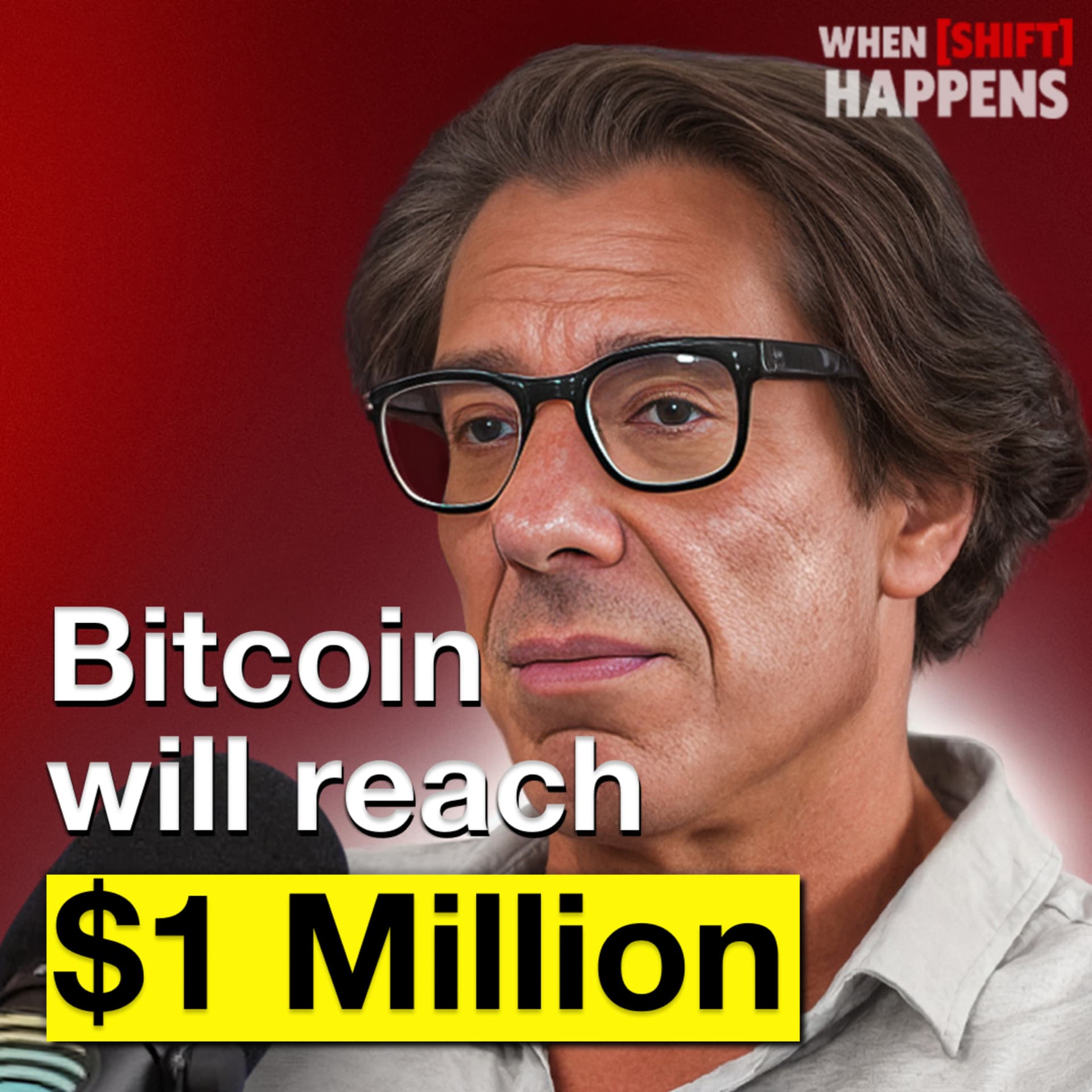
Episode Overview In this episode, Kevin interviews Dan Tapiero, a seasoned Wall Street investor with over 25 years of experience. Dan discusses his transition from traditional finance to the crypto space, managing $1.5 billion across 23 crypto companies through his funds 10T Partners and One River, and his bold prediction that Bitcoin will reach $1 million within a decade.
Key Themes and Discussions
- Introduction to Dan Tapiero
- Overview of his background in Wall Street.
- Transition from traditional macro trading to investing in crypto.
- Life Lessons and Personal Philosophy
- Importance of sleep and personal health for optimal decision-making.
- Emphasis on discipline over deprivation in lifestyle choices.
- Investment Philosophy
- The significance of calculated risk and learning from failures.
- The necessity of long-term thinking in investment as opposed to short-term gains.
- Crypto Market Insights
- Dan's strong belief that Bitcoin will hit $1 million in the next 10 years.
- The argument for institutional investors to have exposure to crypto assets.
- Personal Portfolio Management
- Dan's approach to risk management and portfolio diversification.
- Discussion of how he manages his investments in Bitcoin and Ethereum.
Key Takeaways
- Calculated Risk:
- Understanding and managing risk is crucial. Dan recounts a significant loss in 1994 while trading Japanese bonds, shaping his risk management strategy.
- Long-term Perspective:
- Dan emphasizes that the crypto market is much more volatile and challenging than traditional finance, necessitating a long-term investment horizon for success.
- Self Custody and Security:
- The importance of securely holding crypto assets, advocating for the use of hardware wallets for safekeeping.
- The Future of Bitcoin:
- Dan predicts a transformative future for Bitcoin and the blockchain space, seeing it as a pivotal part of the global economy, with potential to reach a market cap of $50 trillion.
Notable Quotes
- "You win by not getting wiped out."
- "If you don't learn how to be your own bank, you will likely lose all your hard-earned crypto."
- "When you feel absolutely confident, that’s often when you’re about to lose money."
Segment Breakdown
- 0:00 - Introduction
- 1:41 - Request for Subscription
- 2:08 - Optimizing Life Around Sleep
- 5:43 - Discipline Over Deprivation
- 8:38 - Who is Dan Tapiero?
- 10:43 - Lessons From Early Divorce
- 18:50 - Partnerships and Risk Management
- 26:38 - Self Custody with Trezor
- 31:33 - Lessons From Legendary Investors
- 38:54 - Portfolio Management Philosophy
- 44:00 - Risk Limits and Strategy
- 53:43 - Selling Strategies
- 56:49 - Going All-In in Crypto
- 1:01:49 - Investment Strategies in Crypto
- 1:13:30 - Bringing Crypto to Wall Street
- 1:17:48 - Morals Over IQ
- 1:21:48 - Concluding Remarks
Conclusion Dan Tapiero provides invaluable insights into the intersection of traditional finance and the burgeoning world of cryptocurrencies. He emphasizes the importance of disciplined investment strategies and the necessity for both individuals and institutions to adapt to the rapidly evolving financial landscape. With a clear focus on long-term investment and risk management, Tapiero's predictions for Bitcoin's future reflect a deep understanding of market dynamics.
Written by AI. May contain mistakes. Listen to the episode to check what was said.
Transcript
Automatic transcript. May contain errors.0:00Anybody can make a fortune short term. What happens is most people quit. And the reason this space is interesting, it's 50 times more difficult than everything in the old world. How many times until you learn? Many. The only way to survive. There's only one way. You buy it and you forget about it. Dan Tapiero, the founder of 10T Holdings and One Roundtable Partners. With over$1.5 billion invested in Web3 and digital assets. A former global macro investor, he's now all in on crypto's$10 trillion future. What's the day that you learned what calculated risk meant? In 1994, I had a very big bet on Japanese government bonds.
0:34I was a thousands of percent return. And in one week, I lost half of everything I made in the previous year. The idea of never being in a position to lose enough that you can't come back. So I give up a little bit of the upside to have control of the downside. How do you reflect your conviction in your personal liquid portfolio in terms of crypto? I have Bitcoin and ETH. How much of that is that in your personal portfolio? I have a pretty big exposure in the funds. I have exposure in some gold. But the reality is, is my exposure to this space, Liquid Plus, the funds, it's over 50%. You own a collection.
1:07Can you draw a parallel between old master paintings and NFTs? The old master's world has died. No one under 40 years old is buying old master paintings. The prices don't move. The young people have no interest. NFTs are really more about attaching digital value to something that's creative in the analog world. During these 25 years in the macro world, you worked with the top five investors. I think you sat beside Steve Cohen, the famous hedge fund manager worth more than$20 billion. What did you learn from him that you couldn't have learned anywhere else? Uh.
1:58bring the absolute biggest and brightest people on this channel. And the best way to get there is to have all of us rally together and build the When Shift Happens family. Thank you. Before I lose, you know, I'm older guy. There's only so much amount of time that my brain works. So you're catching the middle part of the, I have my morning, I have my now, but I would never do this at like five o 'clock. I, you know, it doesn't work the same way. you also wouldn't do it too early in the morning there is no morning for me because you sleep 8 hours every single night no matter what yes you told me if I don't have my 8 hours I take the day off I take the amount of time off that I need to get to sleep so like last night I was out with Pascal from Ledger 1.30 at night ok so I woke up at you know 9.30 yeah that's the way to do it going at 1.30 at night and then waking up at 7 to do a phone call with somebody no I'm too old for that I you know I did that in previous years in the markets and dealing with that kind of thing I would I mean anyways do we get going or yeah we're on okay oh I didn't know that we're on are you gonna edit at all we're gonna edit some part obviously oh I had no idea that we were on I like the organic start yeah Yeah.
3:23So the question is in the morning. Yeah. So look, bottom line, my first job really was at Tiger Management in the early 90s. And my job started at 3 a.m. I was the European bond and currency analyst and trader. And I was young. I had a lot of energy. I used to work out. And when I was playing water polo at Brown, I used to work out. We had two workouts. One started at went from 6 a.m. to 8 a.m. And then we had one from 3, 4 p.m. till 5, 6 p.m. every day. So I could do the early morning and, you know, just power through it. And then so when I got out of school, there was a position for, you know, there's a crisis, ERM crisis in Europe, lots of activity in bonds and currencies.
4:13So they needed a young guy to actually do the transactions and execute during your peen time. So for me, it was like, oh, no problem. But even though I went in at three o 'clock, I would leave it around noon, one o 'clock. I still, I used to go to bed at around 6 p.m. and I would wake up at 2.30. I still got my eight and a half hours of sleep, no matter what. Yeah. And I feel without that, you know, you're always functioning suboptimally. Absolutely. I mean, for me also, like I'm 33, three but I also like completely organized my life like that since probably six seven eight years because I realized if my brain doesn't work I cannot make the right decisions if I can't make the right decisions the impact is much less and it's not only with work it's also with relationship being present having your brain working can't be creative it's impossible to be creative to think out into the future without that clarity of mind and and look there's no faking it you know there's no you know when you're young you can maybe power through it you know you have an extra cup of coffee you know some people do drugs i never did drugs so it's not a thing but you know at some point uh if you're not getting that sleep then uh over time you will degrade and uh yeah am i supposed to be looking at this way some here here some people go as far as uh saying that even coffee is a drug right and removing coffee from their life i mean everything can be then sex is a drug and all these things that are addictive are drugs i mean i don't know uh eating pizza once a day because you love it that could be uh you know anything that's addictive i think that as long as you can balance things, you make an attempt to balance things.
6:12I had a period of my life where I was very overweight after college. I used to work out four or five hours a day, and then all of a sudden I'm working. I'm still working out an hour a day, but it's not the same intensity as I used to. And I gained a tremendous amount of weight, gained 50 pounds between graduating college, uh, 22, 23 and age 30 around when I was married, I was the heaviest. I would say on my wedding day, if you see a picture, I, you know, you, you don't recognize me. Um, and I think, you know, I was still working out, but it was very unbalanced my diet and maybe my sleep wasn't grade as much.
6:55But when I later on started to lose weight, I started cutting things out that my body couldn't handle. So dairy, for instance, was a terrible thing for me because if you think about it, milk products are for a baby cow to be nourished by a mother cow. It's not for a 40-year-old man, I don't need my bones nourished anymore. But I never cut anything out 100%. I cut out sugar dramatically 90%. I feel like if you cut off 100%, you then crave it and then you binge it. So if I see a beautiful pizza in front of me, I'm going to have a slice, right? I'm if but but cutting it out 90 % I then lost those 50 pounds 20 years later and I just feel like you can't function you can't be productive you know carrying around an extra 50 pounds it's impossible absolutely so anyway and it looks like you're very fit too you must be working out every day uh or five times a week but five times in one hour it's just yeah yeah yeah that's five hours a week people are like oh man you must i'm like yes that's five hours in a week like there's no excuse right and and and it i've always been like that and i remember when i was 23 so in my first company talking to cfos were 55 60 years old who were basically potential clients that's the thing they would tell me they would be like you look so fit yeah the the like the respect from like looking fit even if you're trying to do business stuff i realized is actually very important um so yeah who are you what do you mean who am i like with what uh uh it's such a broad uh question that's on purpose uh i'm like so many in my mind i'm so many different things so that's why it's it's hard you want me to on the spot order them in terms of priority so that i can give you something clear I guess at the root of everything, well, if you broaden it out, who am I?
9:11I mean, at very first, I'm a father and a husband. That's at the very first. I mean, my kids are very important to me, even though, you know, they sometimes don't want to have anything to do with me or they're busy or I can call them and they won't respond. But, you know, it's different. I feel like being a father, there's a very big difference between men who are not fathers and men who are fathers. Very difficult, I don't want to say to trust somebody who isn't, but they just don't have the life experience. And, you know, my son is also, my oldest son has some difficulties. He's a little bit on the Asperger spectrum.
9:49And, you know, it was not very straightforward. And my wife and I spent years and years dealing with, you know, his issues. And he's improved a lot. He just graduated from college with a degree in history and political science. I mean, he's grown tremendously. But the life experience that, you know, my wife and I both, and my two other girls, his sisters, have gone through, with that shapes you, gives you perspective, you know, and it's just, you know, you have a different life experience owning that responsibility. And it might be forever. Uh, he, he, he, I know I, he's doing, he's doing wonderfully now, but you know, you don't know.
10:35Um, and then I married 26 years. And so, you know, this is certainly one of the biggest accomplishments of my life. Uh, my parents divorced when I was young. Um, and how did you leave that? I'm sorry. How did you leave that? The divorce? Well, I was eight years old. So I, I mean, I didn't, I was not happy. I mean, but it worked out for the best in a sense, because my parents were not really compatible in a way that characters, their personalities were not really compatible. And it, it, it happened that the two families knew each other and basically got together and, you know, they were, this is the 19, early 1960s.
11:17And so, uh, you know, they were from a similar background sort of, and the, the, the families knew each other from business and, you know, they're about the same age, but there wasn't as much of a personality fit. So it, you know, it wasn't something that was going to last, but it also made me very independent. I used to spend my childhood years going back and forth from New York, often to Paris. My whole father's family lived there, my grandmother, my uncle, my cousins, everybody. And, you know, back then in the 70s and 80s, you know, there was no helicopter parent. There was, you know, you go to camp during the day.
12:03I walk from my father's place to like my grandmother's and I'd have lunch and then she would send me to go out and get a baguette or whatever it was. And, you know, I'm taking the metro all over the place, walking on the Champs-Elysees, you know, going to watch Bruce Lee movies, you know, things like that. And so you become very independent, figuring out that metro map. and that my uncle and my grandmother and my father lived very close to each other in the 16th, so I could actually walk around a little bit, you know, as a young person. And it was much safer back then. I think it was much safer.
12:47So you asked me about my parents' divorce, it became more independent, and I think that was a good thing. But on the other hand, I realized, I mean, I didn't really want that for my children. You know, whenever you have a marriage, there are always reasons. You know, every couple wakes up at some point and says, oh, this guy's, this woman's driving me insane. And, you know, she just spent$20 ,000 on a dress and she's ridiculous. And I can't, what's going on? How am I going to live with this? Right? That kind of thing. And you're thinking, what did I get myself into? Right? Hmm. But the reality is my wife and I have a very similar value system about the important things.
13:32And we also have, you know, we figured that out beforehand. You know, we were going out for a few years beforehand. I told you I met her. I don't know if this was recording before we met her. We're very close to here by mistake. um but you know uh if you have if you set sort of the the framework or you set the ground rules early these are the things that i think i need to be happy and successful these are the things you think you need to be happy and successful this is what we want in the future and if you both have a similar view about the future then a lot of things you know day-to-day things can be easier And so that's another thing I would not just say about being a father, but, you know, if you're not married, you haven't worked through all kinds of basic life problems.
14:27You know, I, it's hard. You have, I have kids who are working for me in their twenties and they actually have no idea. Like, I don't want to say how unformed as a human they are, but. You know, they can be very creative. They can understand the DeFi universe 10x better than me. They're, you know, crypto, you know, native super duper this. But they're still, their personalities are, their characters are massively underdeveloped, undeveloped. I'm not saying they won't or they don't have the capacity. But, you know, as a little bit of an older guy in the crypto blockchain space, it's like you have to deal with a lot.
15:12I mean, the average age is 28 of the guys in the space. So you have to deal with a lot of young people and know how to manage them. I can't say that I'm the best at that. Um, I have guys on my team, other partners who maybe are better. Um, I know what they don't know. I know what they need to learn, but I'm coming from such a different place that they can't imagine really. Uh, and it is an effort for me, you know, uh, at times, uh, because, you know, I'm thinking about the future. I have all these sort of big, uh, ideas about where the business is going. And then I'm dealing with, I mean, I had, you know, I am dealing with like sometimes absurd like things from the younger guys like absurd like uh you know a guy's girlfriend breaks up with him and he disappears for a week i'm like i i'm like what i'm not surprised that's a new generation are you kidding me what he needs some time to to to manage himself or whatever i'm thinking of myself okay i can't deal with this i have one of my other partners you know okay i'm not saying I'm not completely empathetic, but give me a break.
16:27I mean, this is a serious person. Ostensibly, you have to have your personal life in order. I was like, well, make sure you get your eight hours sleep. Make sure you work out every day for an hour and you'll be able to manage the vicissitudes of life. Yeah. I mean, I'm kind of like in between this generation, I'm 33, but I also notice a massive difference between the people who are 45, 50, 55, 60, and like these 20, 25 year old people who have like a completely different way of communicating and in my businesses have the same kind of issue. I kind of feel old with like the values, right? I'm like, how is this person not even saying anything and disappearing?
17:05For example, simple things like that, right? I'm like, I can't understand that. But anyway, we sleep eight hours so we don't get angry. And we go to gym when we are angry. We go to gym when we're angry. Yeah, if you just make sure that you're consistently doing it, Uh, I like, you know, when things become habit, you incorporate them into your life, then there's no effort. I remember in my twenties, I just, it was so painful. I would go down to this pool at the New York athletic club where I swim and I would look at the lane and I, I would look at it. I'm like, I can't go in. I can't, I always have to have a swim partner.
17:43I need somebody there to push me a little. And I would stare and like, I don't want to go in. I don't want to go. I would sit there staring at the lane. But then some people would come, I would jump in, I'd do a workout. And at the end of every single one, I would be thrilled. I'd be happy. I'd do my steam. And the importance is, is that once you make it a habit, just like going to the bathroom or having lunch, then, and there's no resistance, um, you know. It's not a question anymore. You just do it. Correct. I know these are basic things, maybe even some platitudes, but these are real things.
18:19I mean, this is... That's how you build health. That's how you build wealth. That's how you build relationships. That's how you build businesses. You just do the same over and over again. It's boring. And when it gets boring, you don't abandon. You keep at it. Absolutely. It's boring, but that's how it works. So I gave you a little bit about who I am, but I don't know if that's a good answer because that's only one little part, right? We'll discover more of you throughout the next hour.
19:14fast, secure, and affordable, built by previous Facebook developers, and that delivers the benefits of Web3 with the ease of Web2. And Mantle, an Ethereum layer tool that builds two products I particularly like, FBTC, which enables you to borrow and lend Bitcoin in DeFi, and METH, one of the largest ETH liquid-staking protocols in crypto. To support this show, please check the sponsors' links in the description down below. You have a high risk tolerance and love uncertainty. Where does it come from? I have high risk tolerance. I like uncertainty only because if there's no uncertainty, you'll never be, you'll not make any money and you certainly won't have any success.
19:58So that's the problem. You have to be comfortable knowing that there's a lot of stuff you don't know, because that stuff that you don't know is what's keeping other people from, let's say, making the investment if you want to specifically talk about investment. And money. Yeah, yeah, yeah. Because success, because you said if you don't make money, you don't, success is defined in money terms. Well, I mean, I'm a money manager and I'm an investment fund manager and I've been doing this my whole life. So success can mean lots of different things, but within this context, and you are sponsored by Bitwise, which is a Bitcoin ETF company.
20:36And Bitcoin does have to do with money and value. And so, you know, your audience should theoretically be interested in that. We're not going to necessarily be talking about like the perfect karma or, you know. We can't talk about anything on this podcast. That's the beauty. I know. But the reality is that if you go into something knowing 100 % sure that you're right, the odds are that it will not be a good investment. You must go into it, you know, thinking where you can be wrong, not just where you can be wrong, but that you might actually be wrong. And what happens when you're wrong? How do you manage that risk?
21:18So, you know, I think the two are together, that if you embrace uncertainty, you have to be comfortable with taking risk. And so I've done this for so long, so many years that even like I'm unmoved by it now. Like there's no amount of, you know, I think 25 years managing money now with my funds, you know, with 1.5 billion invested in 23 businesses, you know, we have 600 million alone in four companies. uh, it was a big bet, but I'm not, uh, I'm not phased anymore. I mean, maybe I'm just older and I've lost a little bit of that crazy. When you're in your twenties and thirties, you have a excess of testosterone and everything else.
22:08And now you're older and it goes away. I don't know, but I'm not, uh, I'm not shaken anymore really by anything because I've had a lot of, you know, volatility and a lot of, I've had a lot of failure as well, and then come back and had success. So you do that enough times. And it's very immediate. When you manage a portfolio, I was a global macro fund manager for many years, bonds, currencies, emerging markets, commodities in my portfolio, trading live every day. You see your P &L mark to market. there's no wiggle room there's nowhere to hide uh you you either made the right decision or the wrong decision and you have a daily outlook a weekly a monthly uh longer than monthly outlook and um that rigor that you need to be on it every moment uh over time allows you to internalize risk and volatility and to manage it.
23:13And I think that's the, you know, I mean, that's the, that's how uncertainty and risk come together. What's the day that you learned what calculated risk meant? Say that again? I'm not sure. What's the day that you learned what calculated risk meant? What's the day where you thought you knew, hey, I know what risk management is, but actually, oh no, I didn't know that. Uh, yeah. I mean, that goes back earlier. I would say I had those kinds of experiences often before the age of sort of 35. Like I think for me between 22 and 35, a lot of learning, um, you know, you know, well, I'll tell you, I mean, the big early in my life in 1994, I had a very big bet on Japanese government bonds in 93 and made a fortune in those.
24:14And then in 94, the market completely wiped out. 1994 was the worst year for bonds since 1929. So it was the worst year in, you know, whatever that is, you know, 50 years. And many of the global macro investors, portfolio managers got carried out or crushed in that 1994 year. Very difficult year. And thankfully, the position I had on was in options. And so I only lost my premium. But imagine this, in 1993, this is in my own account. This is while I was working at Tiger. I was of thousands of percent return, multiple thousands in one year in bonds, leveraged bonds. And in one week in March, I lost half of everything I made in the previous year in one week.
25:15So after that, I didn't really talk for about three months. I was completely shocked and I misassessed sort of that, you know where the market was and the macro fundamentals i ended up being right long term because the market collapsed for the rest of 94 and then in 95 96 97 they all those bonds you know went to basically zero yield so they ended up i had this view in 93 that japanese yields would go to zero for a long time and they were at the time like seven six five percent this is a very sort of bold call. And what you realize is that you can be right on the long term, but I was completely carried out in the short term.
26:03And so that's one of the, and I learned that many times, maybe not to that degree again, but that's, that, those kinds of experience inform my, you know, risk management and my portfolio management style, even how the 10T and 1RT funds are, are, are managed, They're managed based on the idea of never being in a position to be wiped out or to lose enough that you can't come back. So I give up a little bit of the upside to have control of the downside. Dear When Shift Happens family, the following message is probably the single most important thing you should take away from today's podcast. If you're serious about your crypto investing journey, please take some time to learn how to self-custody your assets to make sure that nobody can take your coins away, ever.
26:54If you don't learn how to be your own bank, it is very likely that one day you will lose all your hard-earned crypto. The safest way to hold your crypto is in a cold storage that we also call hardware wallet. Hardware wallets are not complicated and they give you peace of mind. I personally use a hardware wallet called Treasure. It is open source, very easy to use, and the first hardware wallet created ever. As we like to see it in crypto, not your keys, not your coin. You can order your treasure wallet with a 10 % discount by following the link in the description down below and by using the promo code WSH10.
27:29And now back to the episode. You mentioned 25 years career in hedge fund macro and now crypto. So, during these 25 years in the macro world, you worked with the top five investors of the last 100 years. I think. Stephen Cohen, Stan Druckenmiller, Julian Roberson, amongst them. Yeah. You sat for 10 years beside Steve Cohen, the famous hedge fund manager worth more than $20 billion. Five years. I was there 10 years, but I only sat next to him for about five. What did you learn from him that you couldn't have learned anywhere else? Believe it or not, I mean, one of the things is to keep it light if you can.
28:08One thing that is not generally known about Steve is that he's actually a very funny guy. He's on the trading floor often like telling jokes and things like that. Everyone sees him as being very intense and the media had his personality wrong for many years. But, you know, he has these little nuggets of wisdom that are these little sayings. I mean, I found him hysterical often. Um, you know, but when you're in a tense situation, everyone's competitive, uh, to be able to, to loosen it up, to keep it light. But that's obviously just a fun little aside. Steve is, you know, I think, uh, considered by most people, uh, and I saw it, you know, sort of one of the greatest short-term traders of all time and maybe the greatest, uh, actually long-term is different.
28:58I think he has, you know, informed long-term views and he's run, you know, one of the most successful hedge fund businesses in the space. Some of the other famous guys have not been successful in running a business. He manages a giant business and he's actually trading a lot less these days. But in terms of his ability to understand nuance and feel the winds changing in a very short term, you know, there's nothing like that. So I learned from him a little bit how to trade short term. It's not really my interest, though. I'm much more longer term, big picture macro. But it's valuable to be able to see the very short term as well.
29:41It's just not my natural style. You know, we had a portfolio about a billion dollars that we managed together for a little while. And I've mentioned this story before, but we were doing these little trades in the euro currency. And, you know, normally I would take a bet and it was the multi-month view or sometimes multi-week. Usually it was a multi-month view. And Steve really got into sort of trading the euro. And at one point, short term, medium term, we had 19 trades in a row for profit in the euro against the dollar, which is, I've never seen anyone or heard of anyone, you know, doing that.
30:28It's just, some was very short term, some was longer term, but he had a very good feel for, you know, trading the nuance of a market. The other guys don't. The other guys weren't trading short-term that way. I mean, Stan Druck, a little bit, you know, and much, of course, much more macro. But, I mean, you know, if you do, what is the probability that you can trade 19 trades in a row for profit? I mean, it's infinitesimal. I don't know what the probability is. so you see and also look i used i saw what kinds of things and metrics he used to make decisions and there were some similar ones that i use some different um but um and i saw each of those the five guys who i worked with um i they each had very different styles and i was able to sort of pick and choose uh what i liked and what suited my style as well You have a natural way and you can't force it.
31:36You can't force another way. So you can augment your investment style with extra tools from learning, but you may not replicate their style completely. How would you describe your natural way? Long-term, structural macro changes, world changes. I come more, you know, from studying history and philosophy. My interest is seeing things out five to 10 years that will happen. And I write things. So, you know, I think a lot of my views over the years I've written down starting in the early 90s. You know, I have an investment memo type of framework. Um, you know, I studied history in school, so it's the same thing.
32:25You know, you read a million things and then you write a thesis. And so, uh, I think the ability to write is one of the three most important things in being a successful investor. Uh, if you can't write, you can't articulate, uh, clearly your views, your views are pointless. Literally. You know, that's another thing working for these guys for 20 years. I was able to be successful because I could be clear in why I had a view. And I would say, listen, this is the risk. We could risk$1 over the next six months. I think we can make five. Here are the five reasons. Boom. I'll be wrong if X, Y, Z happen.
33:08I'll be right if A, B, C happen. so clarity simplicity very important um but for me it's that big macro structural change and i saw it in i started to see it in 2013 that was my first 12 13 my first introduction to crypto blockchain and then um but i was i sort of stopped i retired for a bunch of years in 2012 well, from active money management. And it wasn't until 2018, really, that I saw the opportunity and gave it the time and energy in crypto and the crypto blockchain space. And that, to me, is the single largest structural macro change in value and money in the last 1 ,500 years. I don't know.
33:58Much bigger than anything that I was involved with beforehand. I think we both are on that, which is the reason why we're sitting here today. You also worked with Stan Druckenmiller that you mentioned before. What did you do with him? Well, I ran a portfolio independently. I also worked with him a little bit on his portfolio. But interestingly, Stan showed me that you could take a macro idea and turn it into a business. And so in 05, 06, I was very focused on agriculture. Excuse me. And there was a big bull market set off by Chinese demand for soybeans and the US ethanol mandate. And I thought over the next five, 10 years, we're going to have a massive bull market in grains in 06.
Read the full transcript
34:50And I was working for Stan and I said, listen, you know, I have this idea. not only do we have a bull market in grains and we position very big in corn, soy and wheat, but I've come up with a way to value farmland in certain parts of the country. And my valuation model shows that we can buy land today at 70 to 80 % discount to where I think it will be in three years. So we came up with our own valuation model for land. This is me, a guy from Greenwich, Connecticut, um, you know, uh, coming up with something completely off the wall like this. And Stan was like, I love the idea. And we started a company called Agcoa, uh, in 06.
35:34And by 2013, it was the largest private holdings of farmland, farmland REIT, largest private farmland REIT in the U.S. Uh, seven years later, uh, we were partners together in that along with the Goldman Sachs partners. We brought them in to help us execute the idea. and we sold that for$450 million to the Canadian Pension Fund System, CPP. And that was, you know, we hired a CEO, he had a team, and we aggregated land in certain places, in Nebraska and the Mississippi Delta, where, and the main innovation that there was one innovative thought, which was that all land, farmland in the U.S. is priced for its, it's really more priced geographically than it is for its productivity.
36:21So land in Iowa, just as an example, which is the best quality dirt on the planet. They always say in Iowa, all you need to do is you spit on the dirt and your corn grows to 280 bushels or whatever it was. And I noticed that if you went a few hundred miles west into Nebraska, where the dirt wasn't as good and was under pivoted irrigation, so you needed to irrigate it, you could have corn, a land that was producing the same amount of corn as the Iowa, but for 40 to 50 % less. So land was not priced for its productivity and revenue potential, but it was priced geographically. You know, Iowa was more expensive than Nebraska.
37:10Nebraska was more expensive than the Mississippi Delta. So, excuse me. So what ended up happening was that we ended up investing in well over 100 ,000 acres. And, you know, I remember I was doing these calls every week or two with the CEO. We had a checklist of things about the property that we were looking for. And then we had the largest broker, farmland broker in the country, Farmers National, out there looking for properties based on the fundamentals that we were looking for. and for several years there, 2009, 10, 11, we were the single largest buyer in the country. So that was, I had a big picture macro idea.
37:55We wrote our 50 page, you know, investment memo thesis explaining it very clearly. And then we went out and we turned it into a business. One of the reasons why this is super important is because in trading, you're paying capital gains tax at the end of every year, short-term or long-term, but you're paying every year. Your portfolio, you true up, you get your P &L. So by paying that short-term, the trading capital gains, you're reducing your principle in a way. When you have a business, you start from zero, you sell it after seven years, you get all the accrual without paying tax. You pay tax at the end when you sell it.
38:37And so as a trader and portfolio manager, this was like an epiphany to me that, wow, much better to use macro idea to start a business at zero and then have the gains accrue over time. That's the main learning from Stan. I mean, one of the main. That was specific to Stan. No, Stan gave me my confidence. I was 38 years old. I'd worked for Steve for a while, but Steve was, you know, equity, short-term trading. It was not long-term macro. I was his sort of macro, you know, his right-hand macro guy. Anything that happened in macro, he would ask me. We would sometimes trade on it. But it was not his main business.
39:27and I had learned sort of more of a long-term structural macro investment style working for Julian Robertson in the early 90s. That was really my first big job and Julian sort of shaped the way that I've even today look at things. But, you know, when you're young, you're 20s and 30s, you don't have quite the confidence. Am I doing this right? Am I doing that right? I look at these indicators. I look at those indicators. I read these 50 things. are they the right things to read? Well, when I went to work for Stan Druck, I realized that the things that I'd been doing were the right things, that my analytical framework, he validated.
40:10And so, you know, I personally, I got along very well with Steve. Stan was a little more difficult for me personally. You know, your personality, you can't get along with everybody. Um, but, uh, that was the most important, uh, experience for me. I mean, Julian first, and then Stan 15 years later, um, sort of validated my mental processes. And after that, I didn't really have doubt anymore about my skill. Around 38, took me 15 years to feel like I was commander of my universe. I have a quote or two from Stan that I'd like you to comment based on your experience working with him and your experience as a professional investor.
40:58I like putting all my eggs in one basket and then watch, watching that basket very carefully. Yeah. I mean, for that a hundred times, uh, I mean, it's exactly the same way that I invest. um you know he you know would have a big view and um you know he would take outsized positions and just be all over it the reality is though that um his skill as a portfolio manager is sort of complicated um to um explain if you're not a professional money manager because it's very layered. And he might have in his portfolio 50 different individual stocks and currencies and bonds and commodities. And they work together on multi-planes.
41:49And sometimes they hedge each other, sometimes they don't. It's, you know, it's like a beautiful thing to watch in motion. You know, much more complex in my portfolio. At the time when I worked for him, I didn't have that equity portion. And I was also maybe a little more active trading than he would be because, you know, when I'm trading, it's normally it was for hedging purposes. And so sometimes that wouldn't always make sense. but I mean that's been my style even with the 10T and 1RT funds I have now I've put all my eggs in one basket growth stage crypto blockchain companies you know companies making more than 50 million in revenue or so but of the 1.5 billion 700 million of it is in 4 companies that's a lot I know So, and private companies and the, yeah, and they have, you know, they can be volatile.
42:58So I subscribe to that. When we did our Agcoa bet, it was the same thing. We had probably the largest position in the world at the time between 06 and 08 in grain futures and grain swaps. So we had that big position. He had it on. I had it on. The firm had it on. and we watched it very carefully. It's not suited for everybody. Like Steve Cohen is the opposite. Steve has many, many little diversified bets. Even in his own portfolio, very rare that he takes a big bet. So, like Stan, it's just a different style. Julian, on the other hand, was even more, had more appetite for risk than Druckenmiller.
43:45Julian, it was just a monumental, I mean, when I saw that so early in my career, I was just like, how does someone survive that? But it was natural for him. What's a big bet for you? You said out of$1.5 billion, for example, is that 10 %? Because you mentioned$600 to$700 million is across four companies. Yeah, that's a big bet. Do you have like 10 to 15 % cap or you don't even have a cap? No, 10 to 15. No, no position can be more than 15 % in the funds, but we do a lot of co-invest and we also have four funds. So I don't put more than 15 % of any one company into one fund, but normally, look, I'm one of the largest single LPs in the fund.
44:34I don't need to have, I mean, all the funds, I don't need to have all the exposure multiplied. So when I add it all up, I look at the overall portfolio, what the AUM is and what my exposure is. And, you know, the bottom 10 companies, for instance, are very small. We have in the top eight companies is 83 % of the portfolio. So I don't look at the bottom five or six. I have other people looking at those more carefully. You know, why do we even have them? You know, we have different reasons for different exposures. but um you know look when you see something that's clear uh and you've done all the work you want to have on as much as you possibly can bear yeah that's that's also what uh jocomio says right you have to be a pig but yeah i'm not so sure about that one for me i i know he i know he said that and i heard him say it and i i know it but that's easier said than done I tend not to go that far but that's why I'm not a billionaire
45:49you say when you're sure and you've done the work
45:55you have to not go all in but make a big bet you can if that's your temperament but you also told me once when I feel certain I most likely lose money Yeah. Right. When I feel absolutely confident and I'll tell you the time to sell. And this goes for everybody. You're in a bet a while. You have a view as to where it's going to go. It gets there. Or it's get close. And all of a sudden in your mind, you start thinking about a new house or are you thinking about a new car, something that you want to buy. or all of a sudden you start saying to yourself, you know what? I'm rich now. Okay. I feel rich.
46:38100 % that's when you sell. When you are feeling the best and when it somehow you were like, you know what? I've worked years. I've suffered. I've had pain. And now I finally made it. If you don't sell, you will lose it all back or lose a very big portion of it. That's my experience. having suffered through that. And I know the feeling. I mean, I know the feeling. I don't even have to articulate it anymore. You know the feeling of feeling like that, right? Of course. Because I want you to ask. Yeah. It takes years. It took me 15 years to have up and back, up and back, to know that feeling as natural as buying weakness is easy.
47:24I see pain on someone's face. They're going under. I love the bet. it's easy to buy weakness. Selling is different because you feel so good. You're like, I did it. I bought the Bitcoin in here and now it's up here. Bitcoin is different. Bitcoin you don't sell. So it's a different thing. It's a 20-year kind of thing. I'm talking about other investments or within the investment world. Yeah, I know. You feel good, you know, whatever it is. You go out on a date with a girl and you're feeling like, oh my God, I'm the greatest guy ever. Sell. What if you don't have anyone to tell you that you're probably not going to listen to if you're not experienced enough or you don't have...
48:13Well, you lose the money. How many times until you learn? Many. More than most people can survive. What happens is most people quit. It's too difficult. It's too debilitating. And the reason this space is interesting, crypto, blockchain, it's 10 times, 50 times more difficult than everything in the old world and much more volatile. And it's just civilians, people who are not professional money managers who've been doing this for 10, 20 years plus, they have no chance of survival. Their only way to survive. There's only one way if you're an amateur is you buy it, you put it on a ledger and you forget about it and you can't think about it and you can't trade it.
49:00You show me a young guy who's made some money in crypto and now he's trading, it's all going to go away. 100 % or 99%, right? And right. And it's too bad because it's too bad. But if you have the wherewithal to say, okay, it hit my target. I'm feeling great. I want to go buy a big house or whatever thing. If you begin to understand, even if you sell half, you sell some portion, and then you remember that feeling. I never got wiped out. You know, a lot of people get wiped out. I was always more careful. I never had any very big drawdowns. I mean, my worst year ever in the, when I was managing a portfolio, I was down four and a half, 5 % for one year.
49:52That was my absolute worst year. But I also truncated my upside. I never, I had one year where I was up a hundred percent. I had a bunch of years where I was up 20 and 30%, but I was not a guy who would be up 300 % and then down 70%, you know? And there are many guys like that and And they're very successful, but you need to have an investor base who's okay with that. And that needs to be your personality. I invested a lot of money in Luna. I made at the top like$7 or$8 million and lost everything in two days when you crashed. Of course. And then I started to learn why being all these risk management, the guys like Mike Novo, you, Raul, they come with their old school, traditional investor mindset and young people, they're like, this is boring, but actually there's no fucking way, even Raul calls it, don't fuck this up, right?
50:52There is no freaking way you survive and thrive if you don't apply risk management. Long term, long term. Anybody can make a fortune short term. There's no question. You know, anybody. And I think that's part of the problem is that there are a lot of young guys who make a lot very quickly. Some of them have the ability to sustain and live through it. There are some, but it's just a very small number. And look, from the absolute peak in 21, our funds, the most one marked down was 10 or 15%. So Bitcoin, ETH were down 60, 70, 80%. The venture funds were all down 60, 70. I think if you go down that much, if you're down 80%, you go from 10 to 2.
51:38And then the next year, you're up 100%, you're at 4. And the next year, you go up 100%, you're at 8. I mean, it's very difficult to even get back to your initial investment. So you know that it's very basic money management. I don't ever want to be in a position where I'm so down where I keep making money and you have a high watermark too. So you don't get paid until, at least for me, all my investors get their money back, I don't make an incentive fee. So I structured our portfolio so that it will benefit on the upswing and then not be hurt as much on the down. But look, my view is if I get to hold my portfolio for 10 years, we can make a 5 to 10x.
52:21Now, some of our, excuse me, portfolio companies, we're going to have realizations this year, but we are never shooting to make 30, 40, 50 X. And the VC funds that make 20, 30 X, they then lose 90 % every three, four years. And that's fine. And maybe net net, they end up making a lot more than me, but I sort of have a longer term, bigger picture view for what we're doing in this space. And I don't, I don't need to make that much. Yeah. Also, by the way, institutional investors,
52:57the space is virtually uninvestable for them with that kind of crazy volatility profile. So we have Texas Teachers Pension Fund. We have the Michigan Pension Fund, MERS. I have a New York City Union Pension Fund. I mean, with 30 million, 40 million, $50 million investment, they can't make a$50 million investment into a venture fund that then goes down 90%. It's not investable because of the volatility. So what we've said is, look, we're going to control the volatility by structuring the portfolio in a certain way. And it's asleep well at night. You won't get fired, but you will have access to all the growth that's happening in the digital asset ecosystem.
53:39And that's been my view from day one. is this how you sold your your uh school's endowment fund one percent in crypto is this how you sold them the yeah yeah yeah so right my prep school i've been on the uh investment committee there for well i've been 16 years on the board i'm finally stepping down in may i'll continue being on the investment committee but we were the first endowment certainly high school endowment I'm aware of to put 1 % in 2019. And I said, I've been saying the same thing for five years. You can put your money into our funds. That's very nice, wonderful. But every investor, I say you should have the same exposure.
54:30You should have Bitcoin, some exposure to Bitcoin, some Ethereum, you have a little bit of a venture fund and a little bit of a growth fund. And those four things, you can decide what percent you want. But if you have that exposure and you hold it for 10 years, I will guarantee you, you will make money. I guarantee. I can't say how many multiples. I don't know. But if you go back to 2019, I did that for our endowment and I was able to convince the other committee members. I also had some help from an emeriti, a guy who also went to the school who I brought in to help make the case because the guys on the committee were like, Dan, you're crazy.
55:11So I needed some help to go into Bitcoin. And in the middle of 2019, we bought Bitcoin ETH and we did a little bit of a venture fund. There was no growth fund. So we actually did two small investments in a venture fund. It was$5 million. And I think today that's well over$60 million for that endowment for that school. It's now 750 million, the total endowment. So we got 1%. 10 % almost. Yeah. I mean, a little less. Yeah. So I think in the future. What's that? It's going much higher. You might get to 100%. No. Or 50. No, no. We'll be selling before then because, you know, it is a committee. I'm the head, but I'm going to be stepping down.
56:03the next people will be, uh, you know, deciding they'll ask my opinion, but, um, look, I think in the future over the next 10 years, if you're not an endowment, if you're an endowment or a pension and you don't have exposure, I think your performance is going to be, I mean, obviously relatively problematic, but I, maybe you, you know, have your job, uh, your job is threatened. You know, I think it's been the best performing asset in the history of the world. And I think over the next 10 years now, you know, with the new 50T fund we have coming out, our view is that Bitcoin goes 10x from here in 10 years.
56:48We'll hit a million. When did you decide to go all in crypto? 2018, 19. Why? Well, so the market collapsed, as you remember, in 2017 peak, and it collapsed. And I'd seen that many times, where you'd have big bubbles and blow-offs, and then a collapse. In the traditional markets, that happens all the time. And I thought, okay, well, Bitcoin was 3 ,000, 4 ,000, 5 ,000. I I thought, well, it's either going to go to zero or, and if it doesn't go to zero, it's the bottom and there's going to be huge upside. So as a trader, what you normally do is you start buying first. So I started buying at that time for myself.
57:39I convinced the school. I did other things. And then as you buy and your position gets bigger and it starts to work, you do more and more and more and more work. And, um, you know, what I realized was that, uh, that Bitcoin was many, many different things. Um, a network, a new technology, a new system of value, so many different things. In fact, at the DAS conference just now, Michael Saylor spoke about his 21 points about Bitcoin. My original thoughts that I had and that I expressed in that 2019 interview with Raul Powell that ended up getting hundreds of thousands of views, he has refined and expressed that you know, 10x better than I did.
58:38And I, you know, I sat there and I've heard him 50 times, but he keeps refining. He keeps, you know, explaining different aspects of Bitcoin that make it valuable and more valuable in his mind. And it's just such an excellent presentation. But look, I had a very simple epiphany. I was like, well, this is the only and sort of the greatest decentralized network ever built. Um, you know, at the time, I think Amazon was worth $1 trillion or 2 trillion or something like that. The Bitcoin, uh, the value of Bitcoin at the time was two or 300 billion. So I thought to myself, okay, well, you have one company that sells stuff online that's worth 2 trillion.
59:28This is the greatest decentralized network ever built, never be built like to that degree ever again um it's got to be worth at least twice of amazon and so then that's part of the at least so that was my you know my initial i had many many points along the way that you know gave me confidence to go all in as you say but it was that initial comparison as an investment, um, compared to other investments that I saw that it was undervalued. And so my risk I thought was limited. Um, and I thought, well, wow, it could be much more than that. And I thought, well, where could it really go over the next 10 years?
1:00:13And that's when I came up with the name 10T, which stands for 10 trillion. And at the time, the space, total space had$300 billion of value. And I said, I think it can 30x in 10 years. And I said, no one will ever believe that that was my view unless I put it into the name of my fund. And so that's why. And today we're at 5T. Five trillion is the value of Bitcoin ETH. All the alts and all of the equity in the space are sort of internal assessment is five trillion. So for our fifth fund, there's no way. It can't be 10T. it'll be one round table partners rolling out our 50T fund because I think 10 years from now Bitcoin we hit we can hit 1 million which is just really a 10x it's not so big then that's 20 trillion then I have the alt coins will be 10 trillion and then I think the equity in the space and anything that touches blockchain from a business perspective will be 20 trillion That's what I think all of the scaffolding, all the blockchain use cases, all of the integration of payments, everything you can think of, integration of media and NFTs and everything, I think that's another 20 trillion.
1:01:36So that's where I have 50T now, I think, in the next 10 years. We really accelerate. And it's now we have the real catalyst for the first time ever, which is the Trump, the government change here. How do you reflect your conviction in your personal liquid portfolio in terms of crypto? What do you mean? I have Bitcoin and ETH and I don't talk about it. I don't think about it. I don't ever. It's out of my mind. How much of that is that in your personal portfolio versus other asset classes? is well i have a pretty big exposure in the funds so you have to be careful uh being too duplicative um i have my gold company i have exposure there and some gold um but the reality is is my exposure to this space uh liquid plus the funds plus anything i do it's it's over 50 and you're not planning to sell anything even if it goes up another five or ten x right to rebalance or No, but the funds will self-liquidate.
1:02:41I mean, like for instance, we own Circle. Okay, so I will get money back from my investment in Circle. But I will put that back into the space. Can you explain the difference between the different companies that you have, sort of TNT? then you said one rt yeah i thought you were going to ask about the businesses that we own i was like oh my goodness that's going to take forever goes through our whole portfolio um yeah 10t of the first three funds were generally just growth equity so the idea really for me was i wanted to get exposure to uh coinbase in the private market it was trading in around six billion.
1:03:32It was very difficult. Um, very difficult. And then that was in the middle of 2019. And then as I was investigating, I thought, okay, wow, there are all these other interesting companies. Um, I'm not a VC. I'm not in private equity. You know, why don't I just put together a fund with me, some of my friends, people from my network, and also the network of Michael who was one of my close friends and vice chairman of the funds. And, you know, we'll raise a hundred million and we'll invest in 10 of the, you know, more developed companies in the space. I said, I don't, I don't wanna, I can't compete with Andreessen or Polychain or Paradigm.
1:04:16These are the genius VC guys. I don't have a tech background. And, um, and so it was just supposed to be some exposure for me personally and some friends in these difficult to procure names. And it wasn't complicated at all. I mean, we did a lot of diligence, a lot of research, but it was a diversified portfolio, sort of like my farmland REIT, that was supposed to be leveraged to growth in the space. And each of the different companies, you know, did different things. We had a Bitcoin miner, we had an exchange, we had a, you know, a staker. It was just very straightforward. Then the space started to take off in 21 and there was huge demand.
1:05:00So we did three funds. The third fund had a bucket for metaverse blockchain gaming NFTs, about 30 % of the third fund. And that was just equity. So then in 23, 24, so we invested those funds. I wanted to invest. The bare face came and there were lots of opportunities. And it was very people, FTX really, in a way, killed the space, the growth space, because the outside investors who come in in 21, the Tomo Bravo, Silver Lake, Tiger, Co-Card. to the Canadian pensions, they really all, you know, have left the space and have not come back yet. So I wanted to set up a fund that focused on buying secondaries of companies in the space that we knew.
1:05:59And look, I have 11 board seats, a representation on 11 boards. So either observer or an actual board seat on 11 of our 23 companies. So I have direct access where there is no information. These are private companies. Like some of them don't publish anything. So, you know, I thought, okay, this is great. There are employees. There are VCs who need liquidity. I'm going to set up another fund, uh, and we will buy the secondary stakes at these 70, 80, 90 % discounts. Um, and so that's the fourth fund we didn't, there were no growth deals. Like in the last two years, there's only one growth deal of significance, which is Phantom that Sequoia did with Paradigm.
1:06:44So you have to imagine the last two years, there was no growth deals. And then the fourth fund also does special situations. We had a company in the third fund that ran into difficulty and was put into administration. We ended up buying those assets out of administration and we now operate that, the company. and we operate that business. It's called Zenrock and that's majority owned by the third and fourth funds. But that's been a completely new focus for us. And we launched a product called ZenBTC, which will be the first decentralized yield bearing wrapped Bitcoin. No yield yet, but there will be yield.
1:07:31And we have developed a decentralized MPC. So it's the next level after multisig, you know, IPC and securing digital assets. So we, the previous company, it's called Credo, they had spent four and a half years building that tech. And so now we, you know, took that company over and are operating it. And that's a skill set that we didn't have. You asked me, what are the differences? In the beginning, the funds, it's just, it was a relatively straightforward concept. Now, in the fifth fund, we will have a growth equity bucket, early growth and mid and late stage growth. Then there's going to be a new bucket for growth stage protocols.
1:08:18So protocols that are producing a lot of revenue. So again, trying to stay away from venture, you know, Aave would be a perfect example. And we didn't own tokens in the first four funds at all. I mean, we did on the company's balance sheets that we invested in the equity. And I think this is really important now because I've always believed that all value will be on chain eventually. I believe that. And I don't know when it's going to happen, but whether it's the value of your house or whether it's your stocks or whatever, it will migrate eventually only on chain. But that is a very long process and that is not going to happen overnight.
1:09:03But it's starting to be the case that there are legitimate businesses where the value and the revenues accrue to the token, there is no equity. So we have to invest in, we have a bucket, 15 % of Fund 5 will be just in the tokens. And then we have another bucket, 25, 30%, which we won't call from investors until the next bear market. I want to wait until the next bear phase so that we have a lot more capital to deploy into distressed in special situations. Yeah. How will you know it's a bear phase? That's what I do. I mean, you'll know too. You'll feel it. I think end of 26, 27, I think we go up to 180 on Bitcoin now.
1:09:55And then we probably get up into that zone is my view in the next 18 months. And then from 180, we probably go back down to 60. and then we go from 60 to 600 but that's 29, 30 you know You mentioned Phantom before Yeah I had Brandon on the podcast a couple of weeks ago and you mentioned MPC a couple of days ago I had Stephen from Arbitrum who is one of the early researchers on the MPC technology and we tried to explain that like in a simpler fashion Oh you did? Oh good for you That's a complex idea I was like hey computation. I was like, hey, the audience are normal people. You also mentioned NFTs before, and our mutual friend Raupal is a big NFT fan because of the art and cultural side of NFTs.
1:10:44You're very knowledgeable in old master paintings, so art. Well, I wouldn't say very knowledgeable, but I have some knowledge, yes. You have some knowledge. You own a collection. Can you draw a parallel between old master paintings and NFTs? No. No, because it's a totally different world. The old master's world has died. I mean, there's no real interest. Certainly no one under 40 years old is buying old master paintings. You know, the prices don't move. Look, at the very top end, if you have a fantastic Rembrandt, it's worth a huge amount of money. Or you have, you know, there's certain paintings.
1:11:28but there's no, the young people have no interest. And my wife and I, you know, when we buy something that's, let's just call it older, whether it's 19th century or, you know, 17th century Dutch or whatever it is, it's because we really like the painting. And I think there's lots of quality painting to buy if you know what you like and you have an eye for something that is exciting for you. So we also have contemporary, We have, you know, uh, you know, all sorts of different things, but NFTs, you know, I think really more are about attaching, uh, digital value to something that's creative in the analog world.
1:12:14so it can be like a music uh uh right it can be it's the the creator economy i really believe in that i believe artists should theoretically every time one of their paintings gets uh traded why not why shouldn't they have you know one percent clip or whatever it is so i like the idea of incentivizing a creator now there are a lot of problem is as within our space there's so much garbage. There is so much garbage. There's so many, you know, it's unfortunate, just, I don't want to say bad actors, but you know, nebulous players and you yourself were hurt in this scam of the Luna. It's a scam. There's no such thing as an algorithmic stablecoin.
1:13:01It doesn't make sense. I know what a stablecoin is. It's a peg currency. You can't be pegged and also move. I mean, I was telling people that and they're like, no, Dan, you have to get invested. You have to. And I was like, dude, listen, I broke currency pegs or I traded trades where currency pegs for 20 years. Okay. The Thai bot, the ERM crises. I, that I know what a currency peg is. The Hong Kong dollar, I never broke. I'm just saying a stable coin is like a pegged currency. It cannot be algorithmic. It's an oxymoron. I'm just saying it's a scam. And there are scammy people in the space. And what I'm hoping now is that because the US has sort of decided to make itself the crypto blockchain capital of the world, that we start to bring a little more legitimacy.
1:13:56And my view, and this is a very strong view, you're going to hear this for me for the rest of the year is the way to bring legitimacy, the way to make the US the capital is to start to bring the private companies, and there are many of them, making hundreds of millions in revenue, billions in revenue into the public arena, whether IPO, whether SPAC, whether M &A, on NASDAQ, on NYSE. I think Coinbase cannot be the only large crypto blockchain chain company that's public in the world. And five years from now, I guarantee you, I guarantee 99.9%, that won't be the case. I think we can have 40 or 50 companies public.
1:14:42And I think the American investing public wants to own businesses. Okay. You're not going to make America the hub by convincing people to own Chainlink versus Cardano or whatever it is. I'm just saying. Or even buy Bitcoin and put them on a ledger or it's. Well, maybe that a little bit, but that's not how you create mass awareness. The ETF and Bitwise and others have done a great job. And I think that's the first step. And people, the first step is you always have to buy Bitcoin and then you learn about it. And then you say, holy crap. There's a whole world in the digital asset world that exists that I didn't know about.
1:15:27And there are businesses making fortunes. And so to me, if I'm the US administration, I'm at the SEC, I'm at NASDAQ, NYC, how do we bring these companies public? And the bankers are slow. Goldman, Morgan, Stanley, they're not into crypto. So maybe they will be after we have a few IPOs and they see that they go well. But at the moment still, it's very thin. That makes a lot of sense. I want to have, as the crypto hub in the world, these companies on my stock exchange so people from all over the world invest in the US, right? And realize that crypto is serious. also one other thing is that to become public there's a standard it's difficult so that's the greatest problem in our space is the trust and okay you have bitcoin you don't have to worry about trust um but everything else and i think there are lots of different use cases it's very funny because i say to everybody i'm a bitcoin maximalist but i also believe in a multi-chain future.
1:16:44So, because I don't think that you use Bitcoin for everything. You don't use it for buying coffee. In fact, you should never ever sell your Bitcoin. I mean, 10 years, 20 years, whatever it is. It's not, you know, it has that pristine collateral digital gold. I think that's, you know, its use. But there are a million other interesting use cases that will be applied to the general economy. And so it's just a funny juxtaposition of views, Bitcoin, Maxwell's and multi-chain future. And I think the first step is to get American investors to own these businesses. And then these businesses will know how to allocate money into the space.
1:17:31Look, Kraken coming with ink, right? Think about some of these things. Ledger with Ledger Live, Right? Three years ago, there was no Ledger Live. It was just a hardware company. These companies will pivot and iterate into the future. What's the worst advice you've ever received? Regarding what? Anything. The worst advice... Well, the piece of advice that's most wrong, I would say, that is generally given a lot, and that was given to me too, is that, you know, when you hire somebody, you want to hire the smartest guy. Okay? Completely wrong. It's completely wrong. You don't need the smartest guy.
1:18:22You need the guy with the best values, with the greatest passion. So when I was young, I thought, you know, okay, I do well in school. I'm successful like this. I'm that. I'm very smart. you want to hire and have lots of guys who are smart around you. Or who is it? Bezos or some of the great billionaire guys are like, oh, I want to be the least smart guy in the room. I want to be surrounded only by smart people. So I think that's way overrated. Much more important to have passion about what you're doing and to have a good value system. I mean, I, unfortunately it's hard. I mean, two, three times in my career, you hire someone who's bad morally and it's, it's a terrible experience.
1:19:12What's a good value system? Oh, somebody who, uh, honestly, in my mind, I hate to say it way, but sort of is a little bit of a gentleman is a proper person who, um, you know, I think has human, uh, humanistic values. who doesn't necessarily place money above absolutely everything. Like, you know, very vulgar people out there, people who grew up with nothing, I understand they have that mentality. They need to grab everything from everyone. It's just maybe they're the most successful, I don't know, but I don't need to live in that world. And I never have. And so, you know, let me tell you, a bad value system, I would say, you'll know it when you see it.
1:20:04Unfortunately, sometimes they're good at hiding themselves. It's especially problematic, you know, in these very intense money making areas like crypto, where it's an open field and I love how open it is. And it's a little wild west. And I love all those things about it. But with that comes some grifters and you have to really navigate, you know, navigate, you know. Also, look, everything I do in my investment career and especially now is for my LPs and my investors. They're more important than I am. so I am a fiduciary for their capital. That is how you have to think. And a person who is morally problematic and greedy and this and that, they'll never put their investors ahead of themselves.
1:20:57But the difference is the investors in these funds are all my friends and people from my network, people I've known 30, 40 years. So all I care about is making them money. And anything that gets in the way of that to me is a problem. And my team now today, as we exist, everyone has that mentality. It was not always the case. It has to be. That is the most important thing. If you go into the money management business, if you are an investor, you must be a fiduciary for your investors' capital. Your number one priority is to make them return. That's it. Everything else is your social life, your personal life, hobbies.
1:21:41Don't confuse that with what your job is as a money manager. Thank you so much, Dan, for doing that. That was a brilliant conversation. Thank you. No, it was great.
From the publisher
Dan Tapiero is a 25-year Wall Street veteran who worked with legendary investors like Steve Cohen, Stan Druckenmiller, and Julian Robertson.
Today, he manages $1.5 billion across 23 crypto companies through his funds 10T Partners and One River.
He shares lessons learned from Wall Street's greatest traders, explains why he transitioned from traditional macro trading to crypto, and discusses his view that Bitcoin will reach $1 million within 10 years as part of his thesis for why institutions must have crypto exposure.
__________________________________
FOLLOW DAN TAPIERO
• Twitter: https://x.com/DTAPCAP
• LinkedIn: https://www.linkedin.com/in/dan-tapiero-22b41b191/
FOLLOW 10T HOLDINGS
• Twitter: https://x.com/10Tfund
• Website: https://10tfund.com/
FOLLOW KEVIN & WHEN SHIFT HAPPENS👇
Twitter (X): https://x.com/KevinWSHPod
Instagram: https://www.instagram.com/kevinwshpod/
TikTok: https://www.tiktok.com/@kevinfollonier_
Linkedin: https://www.linkedin.com/in/kevinfollonier/
Website: https://www.podpage.com/when-shift-happens/
__________________________________
DISCLAIMER
The info contained herein is for informational purposes only. Nothing herein shall be construed to be financial, legal, or tax advice. The content of this video is solely the opinions of the speakers who are not a licensed financial advisor or registered investment advisor. Trading cryptocurrencies poses considerable risk of loss. The speakers do not guarantee any particular outcome.
#Entrepreneurship #Crypto #news
__________________________________
0:00 Introduction
1:41 Please Subscribe
2:08 Optimizing Life Around Sleep
5:43 Discipline Over Deprivation
8:38 Who is Dan Tapiero?
10:43 Lessons From Early Divorce
13:01 Setting Relationship Ground Rules
14:17 Managing Across Generations
17:17 Consistency Builds Success
18:50 Partnerships
19:39 Embracing Risk and Uncertainty
23:23 Learning Calculated Risk
26:38 Self Custody with Trezor
27:31 Lessons From Legendary Investors
31:33 Seeing The Big Picture
34:04 Learning From Stan Miller
38:54 Stan Miller’s Confidence Boost
40:50 Portfolio Management Philosophy
44:00 Risk Limits And Strategy
45:49 How I Know When To Sell
48:04 You Win by Not Getting Wiped
53:43 How I Sold Bitcoin to Endowments
56:49 Going All-In in Crypto
1:01:49 How I Invest in Crypto
1:02:59 Understanding Our Company Funds
1:10:09 Old Masters vs NFTs
1:13:30 Bringing Crypto To Wall Street
1:17:48 Morals Matter More Than IQ
1:19:12 Good vs Bad Values
1:21:48 Concluding Remarks


