
In short
When Shift Happens Podcast Episode E132 Summary
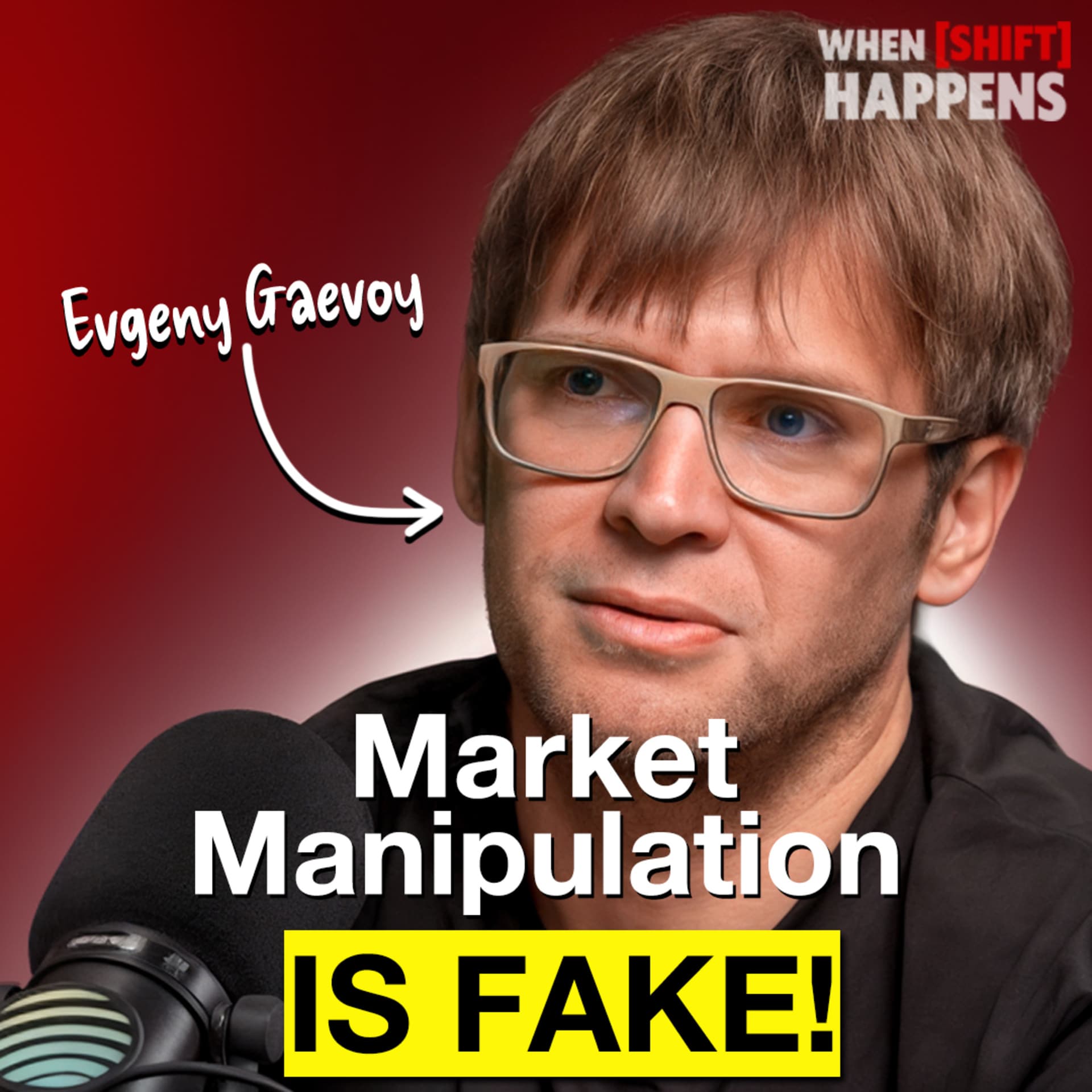
Episode Overview In this episode, Kevin interviews Evgeny Gaevoy, the founder and CEO of Wintermute, a leading algorithmic trading firm in the cryptocurrency space. The discussion centers around debunking several conspiracy theories surrounding crypto trading, market manipulation, and how Wintermute operates in the crypto market. Evgeny provides insight into his journey from Russia in the 1990s to building a multi-billion dollar crypto empire and shares his aspirations, including a dream of colonizing Mars.
---
Key Topics Discussed
- Market Making Explained
- Definition: Market making involves providing liquidity by showing bids and asks to facilitate buy and sell orders on exchanges.
- Comparison to Traditional Finance: Evgeny likens market makers to currency kiosks that profit from the bid-ask spread.
- Debunking Crypto Conspiracies
- Evgeny dismisses claims of market manipulation as "flat earth theory level stupidity."
- Discusses misconceptions about market makers being against retail investors, emphasizing that they often benefit from uninformed retail flow.
- The Role of Market Makers in Token Launches
- Process: When launching a new token, protocols provide liquidity to market makers; they deposit tokens in exchanges and show offers for buying and selling.
- Price Discovery: Market makers must effectively estimate the initial price based on various factors, including comparative analysis with similar protocols.
- Understanding Delta Neutral Strategies
- A delta neutral strategy involves hedging positions to minimize risk, ensuring that market makers do not have significant exposure to price fluctuations.
- Handling FUD (Fear, Uncertainty, Doubt)
- Evgeny shares his personal experience with handling criticism and misinformation on social media platforms.
- He emphasizes the importance of maintaining a trustworthy reputation in the builder community.
- The Value of Money and Personal Philosophy
- Evgeny reflects on his relationship with money, indicating he values freedom and experiences over material wealth.
- He expresses a desire to contribute to humanity's future, particularly through space colonization.
---
Key Concepts and Insights
- Market Dynamics: The interplay between market makers and retail investors is complex, and market makers often rely on retail trading to achieve liquidity.
- Long-term Vision: Evgeny promotes a focus on long-term success rather than short-term gains, valuing sustainable practices in trading.
- Transparency in Trading: Transparency with protocols about potential risks and market maker practices is essential to building trust.
- Regulatory Landscape: The current regulatory framework in crypto is evolving, and market makers must navigate these waters carefully to maintain compliance.
---
Conclusion Evgeny Gaevoy's insights into the world of market making, alongside his personal philosophies about money and life, provide a fascinating glimpse into the operational and ethical challenges faced within the crypto industry. This episode serves to clarify misconceptions while encouraging a more nuanced understanding of the cryptocurrency market.
---
Episode Details
- Guest: Evgeny Gaevoy
- Host: Kevin
- Podcast Title: When Shift Happens Podcast
- Episode Title: E132: Wintermute CEO Solves Crypto’s Biggest Conspiracies
---
Follow Evgeny Gaevoy
- Twitter: [Evgeny Gaevoy](https://x.com/EvgenyGaevoy)
- LinkedIn: [Evgeny on LinkedIn](https://uk.linkedin.com/in/evgeny-gaevoy-3148a61)
Follow Kevin & When Shift Happens
- Twitter: [KevinWSHPod](https://x.com/KevinWSHPod)
- Instagram: [KevinWshPod](https://www.instagram.com/kevinwshpod/)
- Website: [When Shift Happens](https://www.podpage.com/when-shift-happens/)
---
This summary encapsulates the essential discussions from the episode while providing insights into the intertwined nature of market making and the broader crypto environment.
Written by AI. May contain mistakes. Listen to the episode to check what was said.
Transcript
Automatic transcript. May contain errors.0:00Personally, I think it's not about having a billion dollars. I'm a very leaderboard kind of person. I have a leaderboard in mind where I'm not on top yet. And when I get on top, I basically just shift the leaderboard to include somebody else so that I can have other people to compete. I basically realized I really like winning. What does winning mean exactly? Evgeny Gavoy is the founder and CEO of Wintermute. A top algorithmic trading firm in crypto. He's built a major force behind token launches and daily market liquidity. Who are you? Most of the time I'm CEO. Besides that, I like to do computer games.
0:30How much do you gain? Not that much, but that part is fun. How fun is the CEO part? It's fun because it's... What's your view on money? I'm very low maintenance. I already have way more than enough to just live till the rest of my life. I wouldn't say I'm like grinding now just to get more money because I need to react to what I have. One of the things you guys do is help projects launch their tokens. A typical launch goes like this. Usually protocols would provide a loan to multiple market makers. Those market makers will deposit some parts of this loan to exchanges. Before that, they basically start showing offers and people just start buying.
1:02How can the normal retail know if the token they want to buy has real or fake volume? It kind of depends whether it's DeFi or CeFi. So in centralized exchanges, you just look at the best venues and you see if volume is real or not. You should always assume that Binance would have way bigger volume than it is now. And if there is some weird exchange that raised 10x of Binance volume, then it's almost guaranteed it's a worse trading thing. There's a lot of thought about Wintermute. How do you deal with FUD on a personal level?
1:3169 % of the people who watch this podcast have not subscribed. If you enjoy this show, if it provides value to you in one way, shape or form, can I please ask you a little favor? Can you click that subscribe button, give this video a like and leave a comment down below? It helps this show more than you can imagine. My goal is to bring the absolute biggest and brightest people on this channel. And the best way to get there is to have all of us rally together and build the When Shift Happens family. Thank you. This conversation is supported by Jupiter, the most used decentralized trading platform on Solana and the largest DAO in the world.
2:04Castcard, my go-to card to spend my stablecoins directly with my Apple Pay to buy anything, food, coffee, or plane tickets without having to use a bank ever again. Bitwise Asset Management, the crypto specialist asset manager with more than$10 billion in client assets and more than 30 crypto solutions across ETFs, index funds, alpha strategies, staking and more. SWEET A scalable layer 1 blockchain that's fast, secure and affordable, built by previous Facebook developers and that delivers the benefits of Web3 with the ease of Web2. To support this show, please check the sponsors links in the description down below.
2:43sweet how are you doing Evgeny that's all right good ready first time in the studio or you've done something yeah I've never done something like this no how do you feel I did I usually do podcasts online yeah how do you feel about that how does it look I think it's looks fine I mean it feels pretty natural like I mean I did like a few like recordings for like CNBC or Bloomberg yeah those I didn't enjoy that much but but it's primarily because it's like chat for our audience, so it's like, doesn't feel very like, I don't know, genuine. Also, how does it work? It's like probably very short, right?
3:18It's very short. Yeah. Yeah. That's the big, that's the big difference we're trying to do. That's what we call old media. And then you have like the new media podcast live streams where the idea is the person can just talk and for as long as possible. I think, I think with Johan, we did like two hours 45. It's not going to happen today. He was very inspired. and you had this like absurdly insane like promo video. The trailer. Yeah, I remember I was like, fuck, we're never going to get Evgeny on because he didn't like the trailer. It's too crazy. But it's happening. Beautiful. Finally. Welcome to When Shift Happens.
3:55Thank you. If you had to describe what it is you do and why you do it, but would someone who thinks market making and crypto sounds like monopoly, money, what would you say?
4:09uh no jargon interesting i guess if you're talking about monopoly money yeah i think it would be uh yeah somebody like you know in monopoly other banker who is like hanging and hanging people things and like making sure that the game like works in place i think that's kind of what market neg is doing crypto to a big degree basically making sure that people can buy and sell what they want to buy and sell and making sure everything works properly. Who are you? That's a big question. Elaborate. You can choose however you want to answer. Some people say I'm a dad, some people say I'm a CEO, some people say I'm multiple things.
4:55Yeah, I think it's definitely multiple things. Most of the time, I think it's a CEO. Most of the time it's basically, yeah, very much on the intermute side, but yeah, besides that, like I have circuits, I have a nice home. I like to travel. I like to do all kinds of hobbies, like computer games, Warhammer, like. Interesting. Yeah. There is, there are like other aspects of me. I like, I want to dig deeper in the, in the gamer. How does your game? Not that much, but because I don't have enough time for this. But yeah, I do get some time during the weekends. I still play Dotto with my kids every night, like once or twice a month.
5:42Yeah, that part is fun. I like playing with other people. How fun is the CEO part? uh it's fun because it's i think like my perception of that or like how i get fun for from it changed over the years quite a bit and now i basically realized over the years that i really like well winning i guess and like you can basically see any activity in life as like a game to a big degree and like the aspects that i enjoy quite a lot past like i would say two three years is basically yeah winning this game of being a prop trend firm and basically expanding into all kinds of new areas like we started with yeah very simple arbitrage strategies centralized strategies on centralized exchanges and we expanded identify and basically got to winning positions there, then we expanded the OTC business and got a winning position there.
6:43So it's quite like growing and winning and competing. What does winning mean exactly? Is it, ah, we want to reach a certain target of profit or revenue? We want to be the best, we want to be the most recognized, we want to have the best brand? It's a very good question. Like I think for me, starting with me personally, I think it's not about, like I don't have an absolute target of, I don't know, having a billion dollars or like having this or this like it's all very relative i'm very uh leaderboard kind of person and so i basically continuously see have like a leaderboard in mind where i'm like not on top yet and when i get on top i basically just shift the leaderboard to include somebody else so that i can have other people to i don't know outcompete basically uh it's pretty similar for vintremute like it's to me it's always yeah leaderboard is just like the best example the leaderboard would have a kpi yeah that you want to be better at than other people what is this kpi and that shift as well so it can be like at some point it was just a balance sheet for example now it's uh it can be can be volume it can be proppy now it really really depends um but that being said it's yeah just being on the leaderboard and like it's basically it's not winning using like any methods possible like it's still like limiting yourself and having certain other values which is also quite important i would say equally important to a big degree and like it's always it's always a conflict especially in crypto like it's you can make money easy way or hard way and we more often than not chose like a harder long-term place than like short-term place if you look at professional athletes there is this doping thing right and so at some point you're thinking it's kind of game theory if one starts then the rest has to do it in order to at least even be able to compete is it possible in crypto to win bigly or to be the absolute best by doing everything the right way it really i don't think there is such a thing as like one right way like there are many like really clearly bad things you can do and there are there is like there are things that clearly like are good things and there is like so there are so many things in the middle and the challenge of crypto is like those things in the middle are not like regulated by anyone and if you ask like 10 different crypto people they will have different opinions of whether this is a good sign or a bad sign or a neutral sign.
9:29And so, like, I know what we, like, so for us, I guess, and for me personally, it's about things I don't want to do. And that's pretty clear. And then there are all other things that we could potentially do, for example, because our competitors are doing it anyway, which some people might consider bad, simply because, well, potentially because they don't understand how markets work or they don't think it's fair, for example. If you think about DeFi, for example, people did not enjoy that we, people, like on the Ethereum ecosystem at some point, they did not like that we were so dominant in DeFi trading, so that's unfair.
10:11Like, is it a good thing, is it a bad thing? Like, for me, it's totally fine. For a lot of people, it was like defeating the purpose of, I don't know, decentralization, for example. Dear When Shift Happens Family, the following message is probably the single most important thing you should take away from today's podcast. If you're serious about your crypto investing journey, please take some time to learn how to self-custody your assets to make sure that nobody can take your coins away, ever. If you don't learn how to be your own bank, it is very likely that one day you will lose all your hard-earned crypto.
10:42The safest way to hold your crypto is in a cold storage that we also call hardware wallet. Hardware wallets are not complicated and they give you peace of mind. I personally use a hardware wallet called Treasure. It is open source, very easy to use and the first hardware wallet created ever. As we like to say it in crypto, not your keys, not your coin. You can order your Treasure wallet with a 10 % discount by following the link in the description down below and by using the promo code WSH10. And now back to the episode. You're talking about long-term transparency. where does this philosophy come from to think something that these values right hey i don't want to do the bad things something from home parents good question um i think it's more like a long term i like playing long-term games more than short-term games like it's you're long-term greedy uh what do you call short-term long-term greedy i think you can win way bigger if you play long-term games.
11:43Basically that's the same. Like you can, yeah, you can definitely like, I don't know, max extract something in one year and then go and retire. But basically two aspects of it is, I think you can build something way bigger if you plan for long-term. And if you look at it long-term, you just have to operate in a like good and ethical way. Like sure, we have like still a bunch of pretty scammy people in crypto industries that survived over the years. But most of them ultimately I either retire or I get to jail or something like this. Yeah, so it's I think it's it's just a better way to like achieve more success basically to think one time.
12:23You spent a decade at Optiver before starting Wintermute, so that was not in crypto obviously. What was the moment or insight that made you go from traditional high frequency trading to betting your future on crypto? I think it's basically there was a moment in between where basically when I quit October I actually didn't want to do anything with trading like I was actually I guess I guess the general context is I got into trading I got to October because I read a bunch of like finance fiction books like Liars Parker for example and most of those books have a main character who goes into finance like into trading or investment banking or whatever spends some time there makes a lot of money uh and then gets disillusioned with it and quits because they were like yeah all this money is stupid and like it's all pointless and horrible and i got into finance i got to optua basically too i was like okay a challenge accepted let me try it let me see if i get this illusion and i kind of got disillusioned to a degree but it was not like finance it was not like money it was more i did not enjoy the like high frequency game as it was played back then and still being played currently which is basically just making huge huge infrastructure investments of like tens of millions of dollars into i don't know micro towers and high-speed networks and it just felt like a red phrase it doesn't really add anything and i just didn't enjoy it anymore and so when i quit in january 17 i was basically looking to do pretty much everything about trading and so i applied to a bunch of startups i actually had like a bunch of um i applied i applied even to consulting firms i was like i made it to whatever final round at mckinsey and uh got rejected luckily how do you feel about that rejection if you love to win so much yeah no it was it was kind of mixed because in order to apply to those uh it was a very interesting experience because in order to apply to those consulting jobs uh you basically need to do lots and lots and lots of case studies and you need to build like those perfect answers about yourself like what was your i don't know biggest challenge to put your work before like stuff like that and for most people like those answers are pretty boring so you need to like spice them up and i basically i found like a few examples of like whatever what was my biggest challenge to top to world like when was the times that you failed and basically i like built some fiction on top of it which is pretty much most people do because like you need to tell a good story at some point i caught myself understanding okay i actually like a lot of the fictions that i added on top and i did like spend like hours and hours preparing to like give this perfect answer at some point like you lose track of what you came up with like all this like fiction you came up with and what actually happened in the past um and that was kind of scary to a degree because it's just it's like i know oral basically yeah um so i was not like it sucked that i didn't make it but i also i think that that's what i didn't enjoy i didn't enjoy like lying and well not lying but like making things up like it's like it's not what i enjoy doing and it's hard also to just remember as you said right what did i say okay it still makes sense at some point you say something that doesn't make sense anymore and then you realize oh man like i should just not lie life is easier but that's that's kind of like part of cryptos that i really enjoyed because in threadfi you don't talk about things on like social media like all your employer would be like really mad about you like posting things and yeah crypto twitter is a great thing like you can just yeah post post and post I have a bunch of tweets that we want to talk about because they're too funny I laughed a lot actually preparing this interview you mentioned money before you said right these guys who go into high frequency trading and then make too much money and so on and so forth you made a ton of money the last three years probably you had good money already before with this HFC thing, but then you built Wintermute super successful.
16:48What's your view on money? I think it's also a leaderboard sign for sure. Like I'm very low maintenance in general. Like I don't have like fancy cars or watches like, I mean, I can like buy any game on Steam that I want easily. I can buy any whatever Warhammer set if I want to. I think most money I spent as a family is probably travel these days and everything else is pretty like okay we have a nice house but that's pretty much it so like I already have way more than enough to just live till the rest of my life basically yeah like I wouldn't like I wouldn't say I'm like grinding now just to get more money because I need like 3x of what I have currently was the moment you realized because probably I mean maybe you were not like that but like a younger man let's say early 20s we're thinking that's the thing i need right i want to make this number and i want to retire i want to it's part of like the competition but also like kind of pride ego right was the moment realized it's actually i mean having good money is important but it's actually not as i mean there's other things that are much more important than that uh like i guess it went in stages like i started basically yeah i grew up in russia in 90s and And it was like 90s were pretty interesting time.
18:12Like it was some, it was kind of like crypto in a way, because it was very free time. Like there was a lot of freedom to do what you want to do. But there was a lot of bad stuff happening. Like, well, people lost jobs. The government was like non-functional. Like literally like people getting killed because like they were like gang wars and stuff like that. So it was very free. And there was like a lot of possibility to like make yourself. but you could also die. Like, okay, in crypto, like, there are not so many deaths, I guess, but still, it's like, it's a lot of possibilities to make it, but also a lot of possibilities to get wrecked completely.
18:52And so initially, I think I remember like my goal in life, like in university or something was to make, like, I had this number of 10 ,000 euros per month, and I thought, okay, once I make it, that's like, I probably, yeah, I'm fine. like i'm gonna make it but then yeah when i got optima like i got to that level pretty quickly because of bonus and so i was like at some point i understood okay oh wow i actually got there so and then you i think like most people start upgrading their lifestyle upgrading like how they see money what they want to spend this money on but kind of like both me and my wife like we never like okay we got a bit into art collecting and we like we upgraded our house but we kind of like knew that we're not gonna go like all in and i don't know buy like five mansions uh across the world and cars and everything we just like we never got there so i think the biggest unlock for us about money was just the amount of freedom it gives you as long as you don't keep like as long as your lifestyle doesn't keep like increasing life lifestyle costs don't get increasing because like the best things that money can buy here is just i don't know not worrying about i don't know basic things like if i go and rent a car on vacation like i used to worry about like scratching a car and then at some point okay you buy insurance and you still worry about like maybe you scratch it in the wrong way but like if you make enough you don't really care okay you scratch your car like even if you crash it like and as long as everything's fine with you like you don't really care and this freedom not to worry about things going bad like i know if if you lose your wallet or even the phone like it like freedom of not worrying it's like the best thing that money can buy for most people i think let's get back to market making what is market making if you had to explain it to your mom to my mom i think like the easiest just the same way to explain is how I explain to my mom actually like if you go to some foreign country and uh at least well I think it's still the case like you need to exchange money let's say like you have no cards whatsoever like in Kiev you just have like dollars or pounds and you need to buy I don't know yeah Japanese yen because you go to Japan so you go to currency kiosk and you can exchange dollars for yen or yen for dollars and you see like there is a bid-ask spread basically you can like sell doors for that many yen then you can buy yen for that many dollars and the offer basically like the price for which you can buy yen is like quite a bit higher than the price you can sell uh dollars first again the enforcer um and that's basically the bidusk spread that this kiosk charges and that's how they make money because some people buy some people sell and their whole business is basically making money on the spread because if they do lots of those transactions during the day they basically make the spread sometimes there will be a lot more buyers of this currency than sellers and then they will like this kiosk will need to call their bank and ask for more yen or for more dollars for example um and so that's ultimately what we do but in a very like we don't have a kiosk we don't have a like an office where people can buy bitcoin coming from us, but instead we basically onboard every single cryptocurrency exchange or centralized, decentralized, whatever.
22:27And ultimately we just show bits and offers. The exchanges are the kiosks. Exchanges are kiosks where us and other market makers and really everyone, like you can program a very simple bot yourself and a lot of people actually doing it. Everyone can be a market maker in Syria. It just became a lot more competitive. So you can still make money if you're like really smart if you're Elgosar like fast enough and smart enough. But yeah, it's basically a programmatic way to run those kiosks inside of, well, infinite number of kiosks. And so you're doing that with exchanges, right? In C5, centralized finance, but you're also doing two other things um so we are doing it on centralized exchanges that's basically still the highest volume business for us and like some of it is market making so it's basically providing liquidity so showing those bits and offers so people can buy or sell cryptocurrencies against us some of it is basically arbitrage strategies so for example if a price on binance is above price on coin price on coinbase we basically sell on binance and buying coin the base um and some of it is yeah like basically is also like it's either for liquidity or like taking strategies effectively taking liquidity from the market when there are arbitrage opportunities um another thing we do is DeFi and basically on DeFi there is a pretty big range of things that we are doing like it's quite a bit wider than what we're doing on centralized exchanges so yeah there are things that we use that are exactly like this so like if you look at hyperliquid for example we are doing exactly that because it's a central order book exchange so similarly provides bits and offers programmatically um but then you have for example rfq platforms like uh one inch or uh jupiter um where effectively customers can well customers of those exchanges can request a quote and uh jupiter or one inch will basically show it to a bunch of market participants like solvers and market makers and what's not and basically give a best price to the user um we also trade actively against uh amm pools and that's and that's basically like union swaps of this world where and usually our activities we don't provide liquidity on Uniswap because it's not super capital efficient for us.
24:58But what we do if, for example, binance price goes up, we will basically buy this token on Uniswap pool before anyone else. And so that's a pretty significant part of our activity on DeFi. And finally, we do more niche things like liquidations on Ava, for example, stuff like that. and the third thing we do is otc business and that's basically like the third big activity for us and that's basically where we deal directly with counterparties so we can onboard a big venture fund like our family office or exchange or we can onboard like a foundation we can onboard you we can basically like trade with pretty much everyone uh we do have like minimum size requirements but ultimately it just fits really well into our like general strategy because I don't know if it's a foundation and they want to diversify the treasury like they only have their own token but they want to maybe buy some ethereum or salana or just sell sell it into usdc they can do it with us uh we deal with a lot of hand-in-first individuals who want who want to get access to DeFi and they don't want to deal with wallets, we help them with that as well.
26:13But also things like trading on Robinhood, for example, like we do a pretty significant chunk of Robinhood crypto volume. You tweeted all our activities are very much delta neutral. This means that if we sell on Binance, we will look to buy back at whatever price is best across all liquidity sources available to us. There's a strong focus on something called Delta Neutral Strategies at Wintermute. What does a Delta Neutral Strategy mean? So basically, if you go back to this analogy of this kiosk, like, let's say I'm, I basically sold, well, let's say I bought a bunch of Yen because people are just like really selling Yen all the time.
26:57Now I can sit on those Yen and wait for somebody to buy them back. but then I run the risk of like yeah I'm going down and me losing effectively um and basically trading if you do that yeah but basically directional trading well it's a lot it's effectively like the I guess like okay well let me actually approach it differently like if you as a trader effectively like let's say you just want to like you have a strong opinion about bitcoin or some other cryptocurrency you go on exchange and you basically cross the spread so you buy the offer because you think Bitcoin will go up. And so you start with a small negative, like you start with a very small negative, like loss.
27:41Well, you started with a small loss because it crosses spread. Like you need to go up to start making money. So you suffer a bit in the beginning to make a lot of money in the end, hopefully. And market makers are the way around. So we basically, we get the spread first and our job is like busy not to lose it. So if somebody buys and sells, like if one guy buys and another guy sells, okay, great. We made money. But if, if there are only sellers, we need to find like, we show a bid on Binance and our bid is hit. So basically somebody sold to us, we need to, now we are on Bitcoin. So now we can sit on it and hope it goes up and maybe somebody buys it from us at a high price.
28:28Or we can try what's basically called hedging. For example, if we see that there is another bid on, let's say, in red Bitcoin on Uniswap, which is higher than the price that we bought on Binance, we'll sell this bid. And that would make us delta neutral because there is no risk anymore. And this concept of being delta neutral, it basically, like idea of hedging, basically, it does cost you money, usually, like hedging is not free. But it does remove a lot of risk from your activity. So it basically means that you're not sitting on hundreds of millions of Bitcoin exposure. you usually sit on as a market making space you usually sit maybe like a few million at any given moment of different cryptocurrencies maybe more like really depends of like your risk tolerance but the idea is because like your your goal as a market maker is just to do a lot of those small trades during the day and to keep your exposure to the minimum because yeah that's that's literally your job and that's that's how you program the algorithms and the reason i'm asking that is because there's people who think that you guys manipulate price prices crash the prices to get people liquidated but that's actually not your core business at all right because you are doing all these delta initial strategies so it's a completely different concept that people don't understand and with i mean people i would say like the what you call uninformed flow or retarded retail that's mean that maybe was a bit too harsh but um i will talk about that It's too funny.
30:10It's too funny. I think, yeah, it's for those people, it's basically fundamental misunderstanding of how business or like ours work. And it's on multiple levels. Like on one level, ask, crash, and it's basically, especially short in things, and I said in my Twitter thread, it's like, it's very dangerous thing to do because if you sell something, okay, the best you can make is 100 % on it. because like it can go to zero, like it can go negative, but your losses are virtually unlimited. Okay, Bitcoin is not going to double in price tomorrow, but people are usually curious and asked for dumping some shit coins.
30:53Those shit coins can 10x in a day just like that. They can 100x in a day just like that. So you have, I don't know, you can make x and you could lose 100x and that's a pretty crazy risk exposure um and like the liquidity in those tokens is usually pretty low so it's it's a very risky thing to play that's i guess like one thing another aspect of it is we are actually basically retail on the phone flow is the best flow we can get you can get as a market maker you and that's also how like a lot of exchanges make most of the money as well from retail flow so the idea is that and like some of the conspiracy theories is that us basically conspiring with exchanges to destroy retail it's a very it would be a very short-sighted strategy for us both for us and for exchanges because it's literally the best flow we can get um ultimately there is a pretty big misconception it's a market makers against retail but in reality it's actually market makers against what we call informed flow so it's against like basically it's one type of sophisticated uh parties against another type of sophisticated parties like our real like i would say enemies but like i really like people who we are really compete in a way uh besides other market makers are basically people who have strong views they can move the market like it can be some liquid funds that decides to buy some altcoins that doesn't trade much and basically they start like for example they can they start buying our offer and they buy another offer and then buy another offer and suddenly we are short and we need to hatch somewhere but the price goes against us and we hate those guys because they move the market against us like not in a manipulative way they they just want to get position but we basically get run over and that's kind of a yeah challenging part about being a market maker because yeah you love retail flow but you really don't like the sophisticated informed flow yeah just on on that topic of uh informed flow it's possible that this trade will make some of you trenches worry or change your mind about what winter mute and lots of other less public prop trading firms do but my hopes are pretty low.
33:15Reality is so many people are retarded and prop trading firms make the best margins on what we charitably call uninformed flow. I should therefore not complain that much. So basically you're saying, Hey guys, our, we make, I mean, everyone is making money on uninformed flow. Therefore we don't have any incentive to destroy them and that they don't come back. Right. Pretty much doesn't make sense. It doesn't make business sense. And ultimately that's what happened to the last few months, because basically I think people entered like post-Trump election people went levered long a lot and then there had a series of crashes with I think a lot of people were exiting on primarily like on sophisticated side of things and like so much retail got liquidated that the volumes we see now significantly lower than in January for example and which lowers your revenue by fast off like you said two or three right it's basically like if the volume is i know 50 of what it was for example our revenues will be i don't know 10 or 20 of what it was like it's significantly a big impact it's not one-to-one relationship for sure because like the more people trade like the like the more informed flows there is like the better for us and what happens in this bear market is this flow is like more likely to be like a market moving.
34:43So like we are much more likely to be run over for the, by the price moves. When these prices crashes, like people look for scapegoats, obviously, it's always the case. They don't blame themselves. And there's this, uh, people who say, Hey, we can see your on-chain activity. You're sending, you're sending coins to Binance. And you're saying basically, Hey, this is just part of our Delta Ninja strategy. strategy I mean literally what happens is actually like I haven't checked like those particular chain ones because people it's kind of annoying like if one of those people here is me like please don't do snapshots please like show I don't know soul scan links or other scan links like do the link so that I can actually respond I don't know like type over those things it's like it's really and nobody can actually like click on those either from those people who read it like it's I can disprove things much easier by following the transactions.
35:36It's just really annoying. But most of the time, pretty much always what happens is price on Binance is, let's say, probably somebody is selling on Binance, let's say Solana. Somebody sells Solana in size on Binance because that's the most liquid venue. We buy Solana on Binance. Now we have a lot of Solana. We need to sell Solana, for example, on Coinbase because that's where we hedge or maybe on jupiter or something like then what we do we effectively yeah send the solana to coinbase and that's where like this big misinterpretation of our activity goes because we effectively sell usdc from coinbase to binance and we send solana from binance to coinbase which is just a very natural arbitrage way of doing things um but yeah somehow
36:32very very basic from this very very basic activity some people made up this very weird conspiracy theory that i honestly don't even understand how it works like binance giving us coins for free so we can like sell them somewhere and so that people get liquidated it's it's very yeah i mean i really want to use our word a lot in this because it's It's basically like our answer to Flatter's theory, I guess, like the crypto Twitter answer to Flatter's theory because it's like the same level of stupidity. One of the things you guys do also is help projects launch their tokens. Take me inside the engine room, what actually happens when Wintermute provides equity to a token on a launch day.
37:19Because that's also, you have these crazy pumps on Binance, for example. So I want people to understand better what happens so because there's also a lot of i would say third door people who are critical on what are these exchanges doing what are these market makers doing um i mean like a typical launch goes like this basically usually protocols would uh provide a loan to multiple market makes it's usually multiple it's very rare it's just one uh those market makers will deposit like some parts of this loan to a bunch of exchanges that are listed in this token not not the whole loan because quite often what happens like quite a few exchanges actually it's there is a delay between talking launch and when they allow for withdrawals to be open which yeah I can cover it a bit later but ultimately so we'll start we deposit those tokens on let's say Binance uh Binance is in charge with us saying okay like this thing is going to launch I don't know 1 pm and before that we basically start showing bits and offers uh so that people can they usually start pretty wide because it's really like we can make predictions where the price should be and like in our case we look at protocols that are similar or like if it's i don't know if it's an l2 we compare it to other l2s we compare we try to do like as much comparative analysis as possible uh we look at the previous funding rounds we look at basically bunch of different things that can tell us where the token should see the trading but ultimately we don't know and the challenge is if we like once we start providing liquidity people will start buying and selling um if we show really wide prices we might make some money because we buy and sell but if we are wrong and this estimation will again get run over like if a single protocol is worth one billion but it's worth 5 billion will show they'll start showing offers which at like i don't know 1.1 billion or something implied variation and people just start buying and then we start showing offers at i don't know one and a half billion and people still buy and then we just get run over so you really need to do your homework really well trying to anticipate where the public will or like informed people will price the token and that's usually the usually the most challenging bit.
39:44Nowadays it's a bit easier than like two, three years ago because there are, for example, pre-launch markets which are fairly efficient. So we can, a lot of times we can basically anchor on that. And then at some point basically token get launched on, I don't know, two or three exchanges and we can stop thinking, okay, where this token should theoretically be trading. We can just start pricing those tokens from those two or three venues and it becomes much much easier afterwards and basically our spreads go tighter because there is way less risk for us because we can actually start hedging those tokens somewhere else but it still can be pretty inefficient because yeah like i said before like a lot of exchanges they don't allow withdrawals until i don't know half a day or sometimes a day after the listing happens so and on those exchanges the stocking would typically trade higher because we basically cannot, yeah, we cannot like sell too much.
40:43So it's like there are a lot of inefficiencies just because of that. You mentioned most of the time it's not only one market maker, there's multiple ones. Do you guys talk to each other for this kind of price discovery process and target price? Or it's everyone does their own diligence and kind of price discovery process. and then the average of that is going to be what's being shown as a price and ultimately as a FDV, right, on the exchange. It's a very game theoretical thing. There is generally no, I would say for us at least, there is no incentive talking to other market makers because if you tell them, okay, we think this thing is priced at$1 billion, then we tell them like a very important piece of information that they might like they might have a different opinion or like they might think okay maybe they thought it should be priced at five but now 2001 maybe they're on maybe we are on like they get free information from us like there is nothing for us so there is this aspect of it then i think it's also yeah i think it's it's basically like we are in competition uh we want them to have as little information as possible we like we would love to know what their theoretical price is but yeah i guess we'll we'll see it when they start providing liquidity themselves it was a big it's a bit better now but there was a big uh theme over the last year this low float high fdv token and token launches and i had a lot of people on this podcast and I had a lot of obviously all of them invest early or run some of the biggest VCs and I had an example of for example Athena right the Athena launch where some of the early investors were telling me ah we know tomorrow is on the launch at whatever 10 or 11 billion it makes no sense and they were telling me i'm happy but it makes no sense how is it possible that the protocol launches at whatever an amount that doesn't make sense if there is this price discovery that should kind of make sense like the big yeah i mean those kind of launches are always a challenge for market makers because yeah like there is a saying that market can stay rational like way longer that you can stay solvent.
43:13And that's definitely a case like if you're a small market maker and you have like, let's say, you have a loan of Acino tokens from your market making agreements. And it's priced like, let's say, I mean, like I don't like using Acino because we're also investors, so we actually like it. But let's say there is a new L1 that's being launched. And let's say it's being launched and it's priced at 100 billion valuation, which would put it into pretty top positions on CoinGecko, to say the least. Let's say there is no activity whatsoever on this L1. There is no value there. There is nothing. The ecosystem doesn't exist.
43:55Maybe there is a charismatic nice founder and something, and that's it. um like as a market maker okay you can sell this 100 billion like you have a loan like you can theoretically go short like you can basically sell some at 100 billion and hope that the market will adjust and it will go to I don't know 10 or 5 or 1 where you think it should be but yeah like if it's 100 billion it's kind of like more safe I guess because like it's more likely to go down And if anything, you basically, like, it's probably like the most, one of the most controversial things in general in crypto about this, because people, like a lot of people think that market makers selling at prices that just don't make sense is a like way of market manipulation.
44:43um i very much disagree with this notion primarily because like when we like if something is listed at a really stupid price it's pretty much like yeah us selling or somebody else selling at this price and because like we we have such such a big like impact like price should go down because of that um we are making money on that if we are right like if it should be worth five not hundred it uh but also retail investors not buying at those prices they don't lose money as a result like okay those people who bought at 100 billion they lose money but honestly it's on them like they should also make this comparative analysis and think okay like this thing should not be worth 100 billion um but it's it's very controversial because people like a lot of people think that it's like I don't know GameStop it should trade well like it should just go up if you wanted to go up like there are no I don't there are no rules there it's like it can be one trillion for what for what that matters like you should not like evil market maker you should not interfere um and yeah it's that that's why it's controversial because people saying that we should not take positions when we can take positions I can can go as a way around like maybe this like there is a new one and again with charismatic founder but at least at 10 million valuation which is like super low we're going to be doing as we're on then then we're going to be buying it because like for us it's like yeah it's just a good positional back to buying it so and a lot of market makers will go through this process of thinking okay like is it priced do we think it's priced too low or is it priced too high and that would be one of the very very few points in market maker life where we actually do take directional exposure because we because some like we are the only market participant who can quite often because especially when those things get listed because not not too many people are looking into it yet especially on the like short inside like not so many people can sell those things yet so you would short something that you think is worth way too much and you buy something something that you think is not uh worth enough basically yeah and yes and as i generally think it's like a lot of people would i think would disagree with me saying it's like it's an evil thing to do because you're crushing the prices i genuinely genuinely think it's a good thing to do because we make markets more efficient because the prices go to the more like natural equilibrium state I worked with some projects a few years ago actually 2020-21.
47:30I mean we're just early investors and the founders, it was the first time building a protocol and launching a token and they came to us and they said oh we're launching our token on these different exchanges and we're talking to the market maker and the market maker asked us if we want if we wanted a 30x a 40x or a 50x at launch and they were very surprised and we were like what the this is crazy is this normal i mean i guess it's normal in certain parts of the world like it's i mean that's something we would never like the best we can say to somebody like if somebody comes to us and they say like yeah what can you do like okay we cannot do anything but the thing the range of this token should be trading is probably like between this and this and this will be pretty wide range like we are not going to sell the token if i think it's like 10 overpriced like we are only going to step in if it's i don't know five or five x overpriced or something like because it's risky right like it's if something is let's say we go back to this like if it's 100 billion it's like an obvious sell but what if it's like 2 billion maybe it's still too high but if you sell it to be and it can easily go to 10 billion the same day and then then we lose 5x that's not nice um so at some point we will take those positions sometimes the risk return is just not adequate for us to take position so 100 billion is a good sell 2 billion if you think it's one worth 1 billion maybe not because it's like it can still be super risky and yeah markets can stay irrational for way longer um but that's the best feedback we can give to people and they can kind of infer where we will be pricing i guess uh from that but that's that's pretty much it but like we if somebody comes to us and say guys can you price at 30x and we're saying it's ridiculous we're gonna tell them no because we think it's ridiculous like because Because what happens then is if you price it at 30x and we think it's, well, if 30x is like this 100 billion example, somebody can sell against us.
49:44So we're basically going to be buying at 100 billion if people start selling and we'll end up being loan something at 100 billion, which makes no sense for us. Like we'll actually be losing money on this. And that's another aspect of why it's important for us to correct the price downwards in this example because if we let's say we let's say it's at least 200 billion and we show bits and offers there and somebody just starts selling to us we're gonna we're gonna end up being loaned the stock and at really ridiculous relation which we really don't want to so and as a market maker we actually have contractual obligations to effectively show bits and offers continuously like that's literally why we got the loan but not to well we want to make money but we get this loan for a reason we get this loan because we're providing liquidity to the market and if we price it at whatever price it got listed and this price is ridiculous we get can get over on one way or another which is just yeah losing money for us that makes sense
Read the full transcript
50:46um desert of wash trading and artificial liquidity in crypto and it's been the case since forever, but it's been more and more, I would say for the uninformed flow, me, in the last year or two, it was extremely obvious because there was so many tokens launched every day. And if you think just rationally, even if you're uninformed like me and you're not a trader, when you see like how many tens of millions of volume there is on each of these tokens, it's just not possible. Because there's just not enough money in the system for all this random shitcoin that people never heard of to have all this volume, right?
51:32How can DUMB, nor me retail, nor if the token they want to buy has a real or fake volume?
51:40It kind of depends whether it's DeFi or CeFi. On centralized exchanges, honestly, you should just look at the majors. Like, major exchanges are not doing it anymore. some of them used to in the past like but if you look at I don't know top five top ten exchanges by volume like I don't buy in so kx by bit coinbase cracking like they like I don't think there is any wash trading going on like at least not in and like there might be some happening in some single names because I know maybe some team hired a market maker to do wash trading for them but But those guys would not create artificial volume for Bitcoin, for example, which is how a lot of TS3, whatever, exchanges you used to and still advertise themselves.
52:30So on centralized exchanges, you just look at the best venues and you see if volume is real or not. and you basically discount like if something trades more on some 30 exchange that trades in Binance and something is probably very wrong because people like you should always assume that Binance would have like way bigger volumes than anything else and if I don't know there is some weird exchange that trades like 10x of Binance volumes and it's almost guaranteed it's to watch trading thing. DEXs are harder because what's like one thing that's, well, basically as a protocol, so I don't know, that market makers can do is effectively, they can create a pool, for example, on Uniswap.
53:19And especially if it's a low fee pool, they can effectively create like a bunch of addresses that just buy and sell against this pool to an unsophisticated user it will look like there is a lot of training going on, like people are buying and selling so it's interesting something is going on but it's pretty hard to figure out what is happening, I think we've seen a lot of positive developments because of pump.fun stuff on Solano I think one project for example was mapping out the holders of those meme coins and they were mapping out okay like are there clusters of them are they conspiring to do things together or are those like actual hundred holders like completely independent of each other like there was a thing that that was like one very positive thing that came from memecoin uh money last year that we started to develop like more or people independently started started developing more like instruments to detect those kind of things but it's still very hard like even for us at every single token would take like quite a big investigation by a research team to figure out like whether this volume is real or not so it's it's it is hard we talked about pricing at launch right and token launch let's talk about after the token launches and the role that market maker and the power that market maker can have on on the price of the token we've seen i have two concrete examples one is a trb teller I think Taylor Ezo was an oracle but anyway it was pumping like crazy in the past and we've seen more recently Mantra OM token pumping like crazy last year that didn't really look organic in both cases people joked that ETH needs the Taylor and the Mantra market maker on a scale from 1 to 10 how much control does the market maker have over the token price it's um it's very much related on the float like float is a key metric here so if like let's say total flow if total flow of token let's say is i don't know five percent and market maker controls four percent out of this five percent they obviously have massive power like one the best way to think about it is okay i explained like how we look at this hundred billion valuation token right like how we look at it um but the same like any person can go through the process through this thought process especially because the perpetuals are available for a lot of those tokens especially if they are if they have like massive market cap so anyone like if there is a pair upon this token and this purpose at hundred billion like anyone can sell this perpetual right so it's pretty easy it's you don't need a market maker to adjust the price down because like a lot of people can make decision if the token has no perpetual and if a market maker controls like four percent out of five like 80 percent of the supply and let's say the other one percent is like let's let's say it's i don't know let's say it's with somebody who doesn't want to sell for example or let's say this one percent is airdrop to people.
56:43Those people who get this token airdrop, let's say again this token goes to 100 billion, then people who would airdrop this token, they have a possibility to sell it there. But let's say it doesn't go to 100 billion. Let's say it's 100 million for example. What the market maker theoretically can do because there is just not enough supply supply or demand or anything besides them, they can basically are very much free to move price up or down, especially if nobody's watching. Because like, let's say, because they can basically just shift their market. Like if there's only market makers, they can shift their market up.
57:23Um, and it's all purely theoretical because like, I have actually no idea how this shit works. Um, but I would imagine like they would shift their price up. and as long as there is nobody to sell like as long as there are no perips as long as like there is no yeah there is no other supplier in the market who can actually like trade against those prices they can like move it to 1 billion 100 billion 1 trillion like really doesn't matter like in the crazy most crazy example like let's say mark like let's say there is 5 supply and all this 5 belongs to market maker they can move the price to wherever they want because nobody can sell nobody has the tokens so and that's like there are crazy examples like this and crypto is like there are there are some tokens that were like this where nobody if nobody can sell the price can be innocent really like at the same as I can like mint a token and create a uniswap pool that would value this token at one trillion and yeah I will be like a trillionaire but yeah nobody can trade against it because no nobody can like arbit effectively or bring bring the price in line and And basically, and kind of like the big challenge here is if you keep shifting this price of the token up, like people who are long, like they might be selling or they might be like, oh, maybe there is like something amazing going on with this token.
58:46Maybe it's like, I know. And create demand. It can create a demand even, yeah. Because like people might say, okay, something is going on. So basically the more supply market maker has, and also importantly, if it's only one market maker, because like once it's two market makers, like, okay, if somebody is pumping the price, the other guy can basically just tarp them. Well, not tarp, but like take another position because they also do have float. So as long as like as the less people there are who can basically look at it and say, okay, it doesn't make sense I'm selling. Like the less of those people like the more likely the talk, well, the easier it is to basically manipulate token up and down.
59:30The founder of Mentra admitted on Kofitzilla that they tasked their market maker to buy back 10 million worth of their token over time is this practice legal and if yes how can a market maker do this without manipulating the prices to the upside especially when the liquidity is very thin so i think it's like it's very important to actually like have the terms correct like what is market manipulation like how how is market manipulation defined and tried by actually and And there is actually a definition and, well, I'm not sure what the exact definition, but basically, if you go and manipulate prices on tried-fired exchanges, regulator and exchange will go after you and like find you or kick you out of the industry.
1:00:16And the basic heuristic that they use is, if you buy a token and you buy a token because you want it to go up and then you sell it later, like it's all fair game. if you buy a token because you want to accomplish something else like if it's not in your if it's not economic activity and basically like the key is economic activity like if you transact and if you show like bids and offers not because yeah like the most easy one like if i can show i know one million dollars bid on some shitcoin for example and that's like one of the most basic market manipulation things that you can do like i can show like this massive massive bit and the market might think oh maybe there is some like super sophisticated guy who wants to buy like a lot of tokens like and then prices will go up like this kind of behavior is like is clearly forbidden by intradify because you're basically showing a bit without intent to trade at that bid it was called spoofing yeah and if you basically show bits and offers without intention to trade on those bits offers but with intention to move the price that's basically yeah that's basically yeah very very clear market manipulation so in the case of market maker if if a protocol comes to us and say says like here's 10 million dollars uh can you buy us like can can you buy this token like there are ways to do it perfectly fine and like legally legal is it really depends on jurisdiction and rules and everything like but there are like clearly good ways to do it and there are clearly bad ways to do it uh how we would do it is effectively uh protocol comes to us let's say let's say a token trades at one dollar and then they say okay here's 10 million dollars we would like to buy a token and we tell them okay we can sell this token like it's it's not very liquid so will sell like we can show an offer for the stocking at one half dollars and then they're okay fine done so they buy those tokens uh from us paying they give us 10 million dollars and we effectively now we need to buy those tokens from the market because now we are short we basically sold them at one and a half and now our goal is a market maker to effectively buy it anywhere between one and one and a half ideally like all below one and a half but maybe we buy two thirds at one and a quarter and then the rest at one and a half or maybe we completely screwed up and maybe we buy some at one and a half and then it goes all the way to three dollars but the basic idea is we basically take all like the foundation did the purchase through us they're done like they they have the tokens.
1:03:10Now it's our economic risk to effectively hedge this exposure. And we can make on it, we can lose on it, it's all like it's our risk. And that's basically literally how OTC trading primarily works. So we take on the risk, we take over the risk from the foundation and we effectively try to hedge it the best way possible. This is like the normal good way to do things because we effectively assume risk we can lose on it we can uh making it yeah that's that's all fair and square uh the bad way to do it is to effectively foundation comes to us and gives us 10 million dollars and says here's 10 million dollars make sure that the price pumps as high as possible with this 10 million dollars and then we can do like spoofing we can do i know like some other manipulation techniques maybe do some worst trading on top i don't know i don't know like i really don't know how this stuff works but ultimately if you as a market maker effectively compensated not by taking on risk and being very efficient and handling this risk but you are basically compensated by like this still i don't know if talking 10 access and price you get i know half of this 10 million dollars or something that's this is like that because you are doing something which is clearly like not taking on risk you are actually taking no risk at all you're basically just manipulating the price literally but this is not legal in traditional finance but in crypto what can happen to a market maker doing that what's the worst thing that can happen today with today's rules?
1:04:57It really depends where they operate and where they operate from. And I think it also depends who they harmed in process. Like the way US people work, for example, like if you manage to harm some US people, like it's more likely that US will go after you. If you do this shit on Binance, for example, Binance will come after you. Like we've seen like quite a few examples lately which i think is a super positive development in general for the industry like i think my my biggest like one of my biggest beefs is most exchanges is that a they don't make those rules like very clear that you are not allowed to do it and b they don't publicize enough that they are punishing people who do it and a lot of them do but a lot of them are keeping it under wraps like they kick out the bad actors and they don't tell anyone um so exchanges are like the first line of defense because they literally see all this like they know exactly who is pumping the price they see all the spoof orders they see all the wash trading like they see everything like they are in perfect position to yeah control this and basically punish people so for for the moment is mostly the industry self-policing for them pretty much yeah but in thread fi i don't know binance in this case would be regulated by i don't know cftc for example or sec like depends like of the status of the token in question and those agencies would impose rules on binance to effectively police it and if binance would fail to police it then binance would be fined and yeah binance wouldn't want it so it would have to police market makers get mostly paid with a call option structure that you told me emerged around 2020 market makers they want to make money obviously so they want to these options to be in the money I guess it's after a few months I mean it depends on the contract I guess but it's probably after a few months of launch that you can do what that you're allowed basically to do something with that right?
1:06:57Is there a playbook or something that the market maker can do to maximize the chances of the token being above the listing price a few months after the token launch? um well i mean again like it's it really depends on float so again if it's like if market maker controls most of the float and like it's some obscure token yeah they can manipulate their price and anything they want i guess in theory in reality it's it's pretty hard especially if it's listed on all the major exchanges like for a reason like i know binance will go after you uh other market makers will go after you like it's it's pretty hard like it's a much safer bet for us to take a short position on something that's clearly pumped up, for example, because it's, yeah, especially if you have inventory or if there are perips, like, it's very clear that's okay, maybe it will pump a bit more, but eventually it will collapse, so it's a very good trade to short those kind of things and, like, good shorting trades actually don't come very often in crypto, because, like I said, it's a very risky thing to do.
1:08:03like I know that a lot of people are saying that market makers have incentive to manipulate prices up and because of this call option structures it does make sense but I mean I would say so do I know venture investors also have a incentive to manipulate the prices of their protocols up for example because then they can show better like better pay returns to the investors like a lot of people have incentives for private prices to go up it doesn't mean that everyone is manipulating the prices so it's and it's it's also kind of talking about the long-term games it's it's again like you have this you can do this and you can like max extract for the stock and send maybe it will work with like 10 protocols or 20 protocols and then like maybe get kicked from binance maybe i don't know some government agency go goes after you but maybe i maybe move to dubai and so you're free so you don't care but that's why we're recording that from here we can say anything we want nothing but as a long-term player like you have very clear incentive not to do this and as a long-term player ourselves like it's much better for us to play safe play clean and effectively like our best case scenario is basically work with a protocol provide liquidity in a delta neutral way uh then six months later maybe the maybe the call option is not in the money but the protocol is happy with us so they renew and then maybe after six months it will be the money because market goes up or maybe something wonderful naturally happened to the stock and then i know they discovered new groundbreaking tech and price goes up because of that so like for us it's we make a lot more money by working with protocols over and over and over again even if the call options never go into money because we we also make money by normal trading as well um we make money on normal trading they make money on otc like we basically looking to partner up with protocols in a lot of different ways, maybe investing to them, like who knows.
1:10:18So for us, like those long term relationships, they are much more important than Max Extract in like this particular month. You mentioned before that you like, you love Athena, a lot of people love Athena. And you said you're an investor. Wintermute is a market maker, but Wintermute is also a VC. do you see a potential issue or problem of Wintermute being both a market maker and a VC and why so I think like there are definitely potential conflicts like I know that like the I mean the most obvious way you can approach it and we do have it happen in crypto is I don't know a market maker comes to a protocol and says like oh you have this like nice funding wrong going we can like invest 100k and put our name on your cap table so they will see all this like big market make invested into us but for this you're going to give us a market making deal so this is like the most obvious thing and i know for a fact that it happens we don't do it primarily because of like a long-term game we want to play with protocols like we don't Like basically our investment team, our venture investment team is very separate from our trading team.
1:11:40It's basically, it's a completely different team. They operate like pretty much just like a venture fund would operate. Like it's not a fund, but they basically operate like in a pretty much same way. They even get compensated in a very similar way. So idea for our venture bets is basically whatever we invest into, we want to, like we basically want to make money on it as an investment and we do one two investments per month on average from our venture team and all the time it's always just like normal investment committee I'm an investment committee so like we have a normal investment committee we discuss like pros and cons of investment or something and it's never about oh we'll get a market making agreement for this it's always about is it a good investment or not.
1:12:28But the problem if you get or if you push to get the market making agreement on a VC? We kind of want it to be separate because we feel like it's a better way to do things. What can happen for someone who doesn't know, right? If a market maker comes and says, I'm going to be your VC, but only if you give me the market making deal. What can the market maker do if they're both the VC and the market maker? So remember, basically market maker is the one usually who has a float, while a lot of people don't um like the biggest conflict really and that's like I think it's pretty obvious like the biggest conflict the market maker who doubles down as investor can have is effectively like most of those investors have lock tokens like I don't know one two three four years whatever um they cannot sell and a lot of times their legal agreements are very strict about it that they cannot like sell in any shape or form they cannot use perpetual they can't do anything but like sometimes the legal agreements are not worded that harshly but still like your tokens are locked you cannot do anything with them but market maker can because they do have a loan so effectively like let's say i invested 100k into this protocol and then at the next so now this 100k became a million and i can sit in it for like four years and like slowly sell it uh hoping to stay there at the next but i can also use my loan to like sort of like hedge it there as well and kind of like lock in on my profits while other investors cannot do it.
1:14:01I think that's basically the biggest conflict there can be between the market making arm and the investment arm. Asked some founders and employees of some of the biggest market making firms in crypto to tell me what questionable practices might have been done in the past and still might be going on on the market making side. I'd like to ask you what you think about those and whether Wintermute might ever have done something similar. The first one is exactly what we just mentioned, right? Invest in a project and when the project comes out, get a loan either from the project, large stakeholders or DeFi markets and liquidate the tokens.
1:14:42When you get your invested token, just repay the loan. Look, so this one I would say, I think it's not a great practice. Like, is it like really evil practice? I don't think so. And, and the reason is because like it takes two to do it, right? Like the protocol is perfectly capable of understanding that this can happen. Like not that it will necessarily happen, but like they have, like if they do it, they are fully aware of this kind of conflict. So, and the way to kind of mitigate it ideally would be to make it just very transparent that okay this those guys invest but they also will be our market maker and then it's kind of transparent and everyone can like all the investors know okay yeah great they invested but like they'll probably hedge well they probably close down the investment way before us but okay such is life um i think ultimately if if this is transparent like there is nothing inherently like wrong with it uh if it's not transparent it's like it's perfectly legal to be clear like i think it's that you guys at winter mute could do if you're both market maker and investor yeah seriously but that's why we really like over the last three years really focused to make our investment arm like our venture arm as independent as possible and to make its its investment decisions based not on like our commercial arm but purely just like any venture fund would be so like any investment we discuss is like it's typically a very very long-term investment so i don't know if we invested 100k and it's like 150k uh next next week because the token launched like a trading firm would just lock in and sell it because like 50k in the pocket uh our venture arm would be like yeah it's way too little like we didn't buy it to make 50 percent we bought it to make like 10x and then we're gonna still sit and wait on it so for us it's quite important to yeah for our venture arm to have actually venture type returns in mind which is like starts at 10x I guess add a bunch of points uh but I only wrote two so the first one was this one the other one is work on volatility without caring about the price with an option you make money on the volatility the price doesn't matter so you want the price to go up and down as much as possible but not stay stagnant well i would say we want price to go up and down as much as possible naturally like it make like it doesn't really like it doesn't help us if we move the price up and down basically like we need people to be buying and selling a lot that like we are happy with they're happy with if it's an informed flow doing this or even informed flow doing this but like it makes no sense for us to move price up and down because like we are not going to make money on that we We're going to make money if somebody trades with us.
1:17:33So I'm not sure what this example is about. Like, I think it's one of those maybe misconceptions about what market makers do. But yeah, I don't think this is like, I mean, watch trading would be in this category, I guess. So, yeah. I guess like one reason would be watch trading. But yeah, watch trading, like I do think it's very wrong to do. And I think, unfortunately for our industry, so many people use the wash trading, used to use wash trading and still use wash trading as a marketing tool. And yes, it's definitely wrong. There's a lot of FUD about Wintermute. How do you deal with FUD on a personal level when all this happens?
1:18:17Yeah, it's a good one. It kind of depends. Sometimes I go on Twitter and reply to people because it's, I don't know, violence is fun. Sometimes, but most of the time, like what I guess really helps is like most of the fud you see, pretty much all the fud you see is coming from, I don't know, people who are not necessarily like the top rated people in the industry. Like things that helps me personally a lot is just like, if I got, like I was talking, talking 20 for tonight, I haven't met a single person who I talked to who would say something bad about us on the builder side. And if I meet somebody who has questions about Internet, I would always strive to answer those questions from the builder perspective.
1:19:08Because a lot of people do question how things work. But to me, it's important that we have a genuinely good brand on the builder side in crypto. like if you ask like any serious builder like chances they will have a way more they're more way more likely to have a positive opinion about as or not as or not and i think that's that helps me personally because i i mean everyone likes to be liked but i like that we build this brand over many years by surviving like things like 2022 and like basically surviving against competition surviving against like market changing quite significantly market structure changing quite significantly and build this brand where we are trusted and we are working with pretty much all the major people in the industry.
1:19:57So having that in mind and then seeing random people hating us, it kind of cancels out. I guess that's what helps the most. Is there a moment when this was at max volume, max level that you actually started to worry, this might change the view that the builders that we really care about might have on us? it's less about that it's more about i think it's more about perception on perception from the people who are just not aware like how this works like okay thread five people for example they might go on our twitter threads like from whatever january and they can see like the like like every second comment is like holding us cameras like they will know what what is going on here because they don't know how stuff works so that like that was not great i guess from that perspective um but yeah it's the same like it's there's not much you can do about it you can like basically be silent or you can like write a thread like i did but and people they're yeah but it's it's it's challenging yeah right like to me like intellectually for me to me is like the hardest thing about it is i i just don't understand why people are so stupid it and i like i really want like surely if i explain how things work people will like realize things but i'm also i know old enough to understand let's like some people just you just cannot explain things to them well they don't even try to understand they just like thrive on further and on engagement and that's that's a game also right yeah yeah that's a game and i like intellectually despise those people because it's like when you make your game when you make like this your profession like it's like I really really cannot respect you at all and they tend to have the most followers the most engagement what's the most single most important thing to you in life oof I would say my kids probably would be one of the top ones yeah tell me something about your life that i can take with me for the next half of my life
1:22:11interesting for my life i guess well kids are important but like there is one thing that i will like do just like that tomorrow like if i could do it could do tomorrow i would do it like right away and that's basically like if there is one single saying that that's not a leaderboard I mean, I guess it's sort of a little bit, but like, which is like, could be my whatever crowning achievement. And I would just like, if I do it, I would like condone next day because I'm like fine. It would be basically, yeah, if I would, if I could get a one way ticket to Mars and be like one of the first people who like colonized Mars, that would make me like, stay there.
1:22:49I would just stay there. Why? because it's like the most it's like a new frontier it's like a achievement that not so many people will do it's it's like it's impactful basically it's like bringing humanity to the next level there's there are very little like cool things you can do as a human being and we are likely in a position now where it's actually possible for most people on us to actually like go there theoretically and if you ask me like what the money is for like if I make enough money to like buy the sticker for example like yeah I would like that would be it for me like that would be like single most impactful thing and I think that yeah that's my family doesn't necessarily understand that because like they don't want me to leave them on earth for something very questionable but yeah that's that's I guess like the most weird saying about me thank you so much Evgeny for taking the time today to help us debunk the Wintermute FUD and for opening up as a person.
1:23:53Hopefully this conversation helped the audience understand what fair market making is and enlightens at least a few of the people who think that you're a bad actor in the industry. Thank you so much. Thanks for having me.
From the publisher
Evgeny Gaevoy, founder and CEO of Wintermute, dismantles crypto's biggest conspiracy theories with brutal honesty.
He explains why market manipulation claims are "flat earth theory level stupidity" and reveals how markets actually work.
From price crash accusations to wash trading conspiracies, Evgeny addresses every major theory while sharing his journey from 1990s Russia to multi-billion dollar crypto empire and his ultimate dream: colonizing Mars.
__________________________________
PARTNERS
🚀 Jupiter is the most used Decentralized Exchange in Crypto and the largest DEX by volume on Solana: https://jup.ag/
💳 KAST is a global financial platform that enables users to manage and spend stablecoins and cryptocurrencies using a Visa Card or Apple Pay. Available in over 100 countries: https://kastfinance.app.link/SHIFT
🔓 Trezor is the safest cold storage wallets for crypto security and financial independence.
Buy your Trezor Wallet (use PROMO Code from the video for a 10% discount): https://trezor.io/?transaction_id=1026f18ed46409e495c6db4bff90ab&offer_id=133&affiliate_id=35356
🌱 Bitwise Asset Management is the crypto specialist asset manager with more than $10 billion client assets and more than 30 crypto solutions across ETFs, index funds, alpha strategies, staking, and more.
https://bitwiseinvestments.com/
💧Sui is a first-of-its-kind Layer 1 blockchain and smart contract platform designed to make digital asset ownership fast, private, secure, and accessible.
🔘 Mantle Network enhances dApp development with Ethereum's security, low fees, and quick transactions through innovative layer-2 technology. Users can stake ETH for mETH, contributing to a transparent, community-driven ecosystem governed by $MNT token holders, fostering innovation and collaboration.
https://www.mantle.xyz
★ Forza! is Coinsilium's Gibraltar-based Bitcoin treasury company. Coinsilium’s shares are traded on the Aquis Stock Exchange (AQUIS:COIN) and on the OTCQB in the US (OTCQB:CINGF).
Find out more at https://www.coinsilium.com/
__________________________________
Follow Evgeny Gaevoy
• Twitter: https://x.com/EvgenyGaevoy
• Twitter: https://x.com/wintermute_t
• LinkedIn: https://uk.linkedin.com/in/evgeny-gaevoy-3148a61
FOLLOW KEVIN & WHEN SHIFT HAPPENS👇
Twitter (X): https://x.com/KevinWSHPod
Instagram: https://www.instagram.com/kevinwshpod/
TikTok: https://www.tiktok.com/@kevinfollonier_
Linkedin: https://www.linkedin.com/in/kevinfollonier/
Website: https://www.podpage.com/when-shift-happens/
__________________________________
DISCLAIMER
The info contained herein is for informational purposes only. Nothing herein shall be construed to be financial, legal, or tax advice. The content of this video is solely the opinions of the speakers who are not a licensed financial advisor or registered investment advisor. Trading cryptocurrencies poses considerable risk of loss. The speakers do not guarantee any particular outcome.
#Entrepreneurship #Crypto #news
__________________________________
0:00 Introduction
1:31 Please Subscribe
1:56 Partnerships
2:42 Market Making Made Simple
4:37 Who is Evgeny Gaevoy?
5:45 Business Feels Like a Game
8:34 Game Theory in Crypto
10:18 Self Custody with Trezor
11:12 Playing The Long-Term Game
12:21 From Finance To Crypto
16:19 Money Is Just A Leaderboard
17:36 The True Value Of Money
20:44 What is Market Making?
26:20 What Is Delta Neutral Trading?
29:38 Debunking Market Manipulation Myths
37:06 Inside A Token Launch
40:47 Price Discovery Is Competition
42:06 Controversies Around Token Pricing
47:22 Token Pricing Realities Explained
50:43 Spotting Fake Crypto Volume
54:33 How Market Makers Influence Prices
59:29 Market Manipulation vs Buybacks
1:04:47 Why Spoofing Goes Unpunished
1:06:32 How Market Makers Profit
1:10:27 Market Maker VC Conflicts
1:16:44 The Truth About Wash Trading
1:18:08 Handling FUD at Wintermute
1:22:03 Dreaming of Colonizing Mars
1:23:45 Concluding Remarks


