
In short
When Shift Happens Podcast: Episode E134 Summary
Episode Overview In this episode of When Shift Happens, host Kevin interviews Matt Hougan, Chief Investment Officer (CIO) of Bitwise Asset Management, which manages over $10 billion in assets. The discussion revolves around investment strategies, predictions for Bitcoin, and insights into the crypto landscape.
Key Concepts Discussed
- Boring Crypto Strategy: Matt emphasizes that a disciplined, "boring" investment strategy can yield substantial returns, outperforming 96% of fund managers.
- Bitcoin Value Prediction: He predicts Bitcoin could reach $200,000 by 2025.
- Institutional Investments: Matt argues that the institutional wave into crypto is just beginning, hinting at future demand growth.
Key Takeaways
- ### Crypto Investment Philosophy
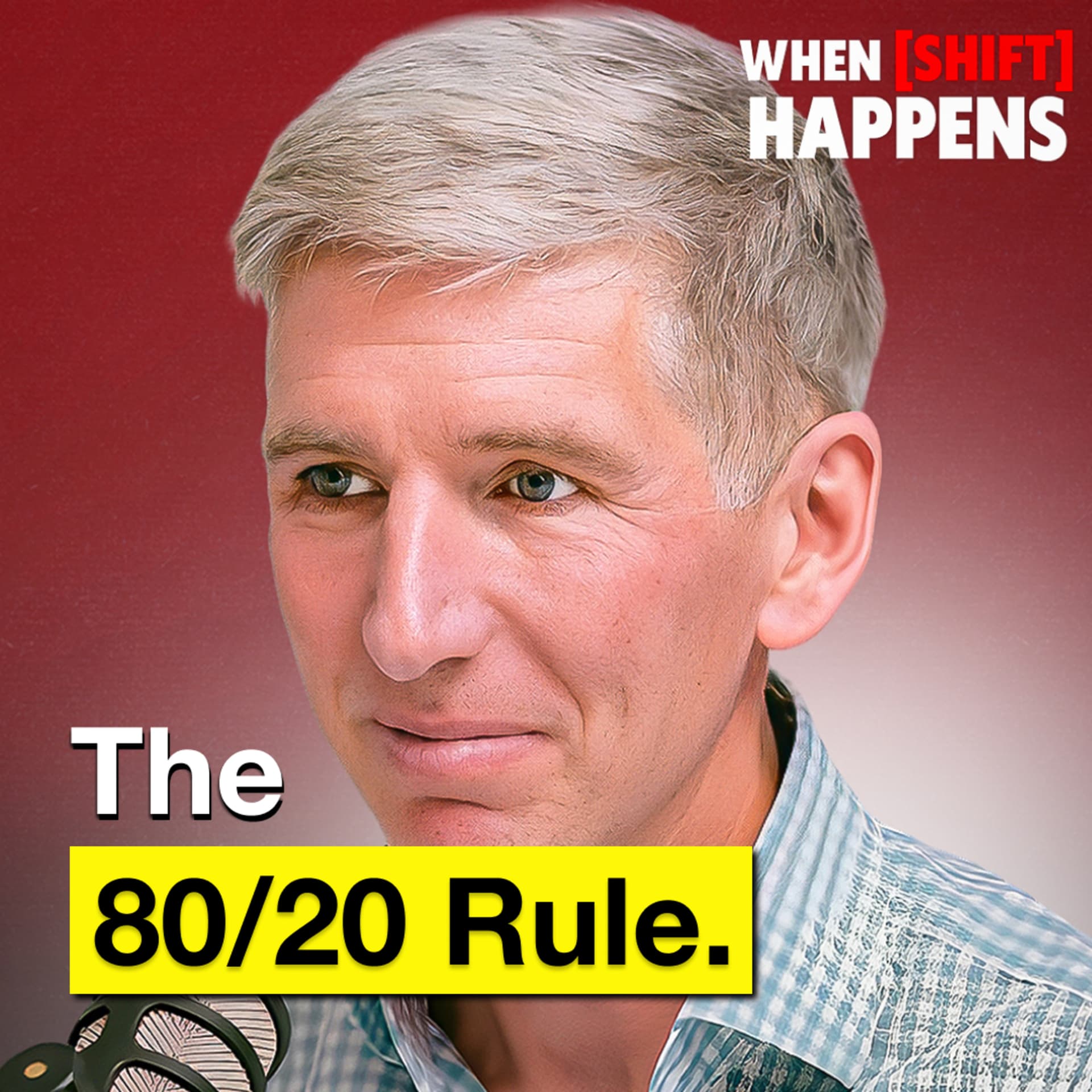
- 80/20 Rule: Allocate 80% of your portfolio into stable, long-term assets (like Bitcoin), and 20% for speculative trades.
- Risk of Certainty: Avoid the “danger of certainty,” which leads many investors to make poor decisions based on overconfidence in specific assets.
- Buy and Hold: Long-term holding strategies outperform trading in volatile markets.
- ### Bitcoin and Market Predictions
- Bitcoin as Gold Equivalent: Matt compares Bitcoin's potential to gold, suggesting a 10x growth to match gold's market cap.
- Market Cap Growth: As Bitcoin approaches gold's valuation, its price could surge, leading to massive gains for investors.
- ### The Value of ETFs and Index Funds
- Democratizing Access: ETFs allow everyday investors to access the same investment opportunities as large institutions.
- Simplicity over Complexity: Using index funds and ETFs can simplify investment strategies and reduce risk.
- ### Understanding Crypto Basics
- Blockchain Education: Matt breaks down complex crypto concepts, explaining blockchain as a public database, contrasting it with traditional banking systems.
- Stablecoins as a Gateway: He advocates for stablecoins, emphasizing their utility and efficiency in transactions.
Detailed Discussion Points
- Matt Hougan's Background: Insight into his personal and professional journey leading to his role at Bitwise.
- San Francisco's Advantages: Discussed why the city remains a hub for innovation and opportunity despite challenges.
- Self-Custody Importance: Emphasized the necessity of self-custody in crypto to secure assets effectively.
- Academic Majors and Career Paths: Matt shared insights on the irrelevance of college majors in determining career success, focusing instead on skills and adaptability.
- Filtering Noise in Crypto: Strategies for new investors to navigate the overwhelming amount of information in the crypto space.
Predictions for the Crypto Market
- Bitcoin: Expected to reach over $200,000 by 2025, driven by institutional investment and increased utility.
- Ethereum: Likely to achieve new all-time highs due to its role in major innovations like stablecoins and tokenization.
- Solana: Expected to perform well alongside Ethereum and Bitcoin, with potential price targets around $400-$450.
Conclusion In closing, Matt encourages a disciplined, long-term investment mindset in the crypto space, advocating for educational initiatives to help newcomers navigate this complex landscape. The episode stresses the importance of understanding the fundamentals of crypto and maintaining a balanced investment approach to avoid getting "wrecked" during market volatility.
---
This summary encapsulates the discussions and insights shared during the podcast episode, providing a comprehensive overview for anyone looking to understand the key themes and predictions in the evolving crypto market.
Written by AI. May contain mistakes. Listen to the episode to check what was said.
Transcript
Automatic transcript. May contain errors.0:00As a hiring manager, I've never looked at someone's major. I cite philosophy and environmental science. People joke about philosophy as a pathway to a career. I never even look at where anyone went to college. People stress about their major. They stress about their college. What matters is your ability to think clearly and work hard. Matt Hoogan is CIO at Bitwise Asset Management. Guiding crypto index funds and helping investors access digital assets. Previously CEO of ETF.com. He now connects the worlds of traditional finance and blockchain. Who are you? That's a good question. I'm a dad. I'm an entrepreneur.
0:31And I like to think of myself as a writer. I think if you put those three things together, that's a pretty good portrait. What is your mission? My mission at Bitwise. Mission in life. Ah. Well, what is Bitwise if you had to explain to your mom that we help people invest in crypto? We use our expertise to build products that are sophisticated on the inside, but easy to understand on the outside so that you can get exposure to the space in a way that's safe and secure, low cost in many cases. What's the S &P 500 in crypto? Is it just owning Bitcoin? If you think crypto is just money, then it's just owning Bitcoin.
1:00But if you think crypto can be money or it can be tech, then it's owning the top 20 high quality assets. What are the crypto assets that I can buy and hold for the long term? Bitcoin.
1:12Bitcoin, Bitcoin, and Bitcoin. It's not what you don't know that gets you in trouble. It's what you know for sure that ain't so. How does this principle apply to those who want to become better crypto investors? Well.
1:30the people who watch this podcast have not subscribed. If you enjoy this show, if it provides value to you in one way, shape or form, can I please ask you a little favor? Can you click that subscribe button, give this video a like and leave a comment down below? It helps this show more than you can imagine. My goal is to bring the absolute biggest and brightest people on this channel. And the best way to get there is to have all of us rally together and build the When Shift Happens family. Thank you. This conversation is supported by Jupiter, the most used decentralized trading platform on Solana and the largest DAO in the world.
2:02Cast Card, my go-to card to spend my stablecoins directly with my Apple Pay to buy anything – food, coffee or plain tickets – without having to use a bank ever again. Bitwise Asset Management, the crypto specialist asset manager with more than$10 billion in client assets and more than 30 crypto solutions across ETFs, index funds, alpha strategies, staking and more. SWI, a scalable layer one blockchain that's fast, secure, and affordable, built by previous Facebook developers, and that delivers the benefits of Web3 with the ease of Web2. To support this show, please check the sponsors' links in the description down below.
2:41How are you doing? I'm doing great. Yeah, absolutely great. we are recording this very exciting episode from san francisco where you're born are you no i moved out here about 15 years ago so i grew up on the east coast dc and then maine and then moved out here yeah about 15 years ago but i love it here when i interviewed hunter last year for the first time there was there's a lot of people who left san francisco right in some of the last few years after COVID and he was actually saying that last year he thought that the bottom was in San Francisco. He was actually very bullish on San Francisco and saying the bottom is in, the bottom is in.
3:26You were one of the ones who never left. Yeah. Why? It has three things that I think are the best in the world. So one, the outdoors here is absolutely incredible. I love being outdoors and you can be in a major city and then be in a national forest in like 20 minutes and hiking. I'm not sure there are that many cities where that's true. Two, the food I think is unparalleled. And the three, the thing that's really real, the thing that brought me here and that's kept me here is the sense of opportunity and the ability to find other people doing interesting things. There's just a higher density of that here than there is anywhere else in the world.
4:05And I would add, there's like a non-zero-sum element to it. When I'm on the East Coast, it feels a little bit competitive, a little bit zero-sum. Whereas out here, it's much more collaborative and build together. And I know that sounds very sort of ephemeral, but for me, it's a very real feeling when I'm here. And it keeps me here despite the taxes and the costs and all that. Just one word on the food. Yeah. How is food better here than in other places? Well, food is great in lots of places. I'm not saying it's necessarily better here than other places. There's amazing food all around the world.
4:45But the quality of produce here is, I think, unmatched, right? We are the produce capital of the U.S., some of the best farmland in the world, some of the best sort of organic farming and local artisanal food. So the quality of that is just extraordinarily high. And then you pair that with a established food scene and a wine scene. I don't know. It's pretty spectacular. I live in Berkeley across the bay. And even a bad restaurant in Berkeley is pretty fantastic. There are other cities. I spent a lot of time in San Sebastian, Spain. Yeah. That's another place. Very famous for the food. Unbelievable food.
5:21And even the worst restaurant is really, really exceptional. But I experienced that here too. You said you spent a lot of time there. How come? I mean, a relative a lot of time. So my last company before Bitwise was ETF.com. And we were virtual before anyone was virtual. So I was living on an island in Maine. the founder was living in San Sebastian, Spain. The other executives were in Atlanta and in Quito. And so we flew to those various cities to get together like once a quarter. So I probably spent, I don't know, 10 weeks in San Sebastian, something like that. Amazing. Yeah, very famous for very good food.
5:56Yeah. You love good food? I do. Who are you? Who am I? I it's a good question I'm I'm a dad that's a big part of who I am I have three kids I'm an entrepreneur loves building things and loves working with people and I like to think of myself as a writer I sort of think through writing clarify thoughts in my mind so I think if you put those three things together that's a pretty good portrait of me What is your mission? My mission at Bitwise? Mission in life?
6:42Well, the thing that I focused my career on, I'll answer that and then maybe I'll take a bigger picture. The thing that I focused my career on is improvements in financial technology that makes the world cheaper and saves people money and makes the world better for a lot of people. So that's what I did at ETF.com. I feel like that's why I joined crypto. You know, more broadly, I'm just someone who's enjoying their path through life. It's a fun life. It's pretty great. You said before I'm a writer, right? That's one of your three persona. Yeah. You're the CIO of Bitwise Asset Management. But you studied philosophy and were very good at writing.
7:32Yeah. so you have a pretty unconventional path to where you come like where you are now right yeah how open-minded should students be when they think or they're actually stressing out about the fact that they think that their university majors that they enroll in are career defining yeah I don't think that's true for a lot of reasons You know, from my own perspective, right, I studied philosophy and environmental science. Those are, you know, people joke about philosophy as a pathway to a career. It's actually a phenomenal skill because most of philosophy is very hard to read. It's very complex.
8:21And your job as a philosophy major is to read really complex things and distill them in a simple way. And I think that's an extraordinary skill. But the other side of it is as a hiring manager, someone who's probably hired 50 or 100 people, I've never looked at someone's major. Maybe that helps you get your first job. I'm not sure. My first job was a sea kayak guide, so I didn't follow the traditional path. Maybe it helps you get your first job. But to me, I never even look at where anyone went to college. There may be four or five colleges that stand out. Like the Naval Academy will stand out.
8:58Maybe Stanford will stand. Everything else is like all the same. So people stress about their major. They stress about their college. What matters is your work and your ability to think clearly and work hard. And that's all I've ever hired for. Did you stress about your major? No, not at all. You just trusted destiny. Trusted destiny. destiny has something good yeah i had a i had a lot of confidence in myself and my uh my ability to navigate the world when it came time to get a real job i wrote a really great cover letter and uh i think that got me in the door and then you just work as hard as you can once that door opens dear when shift happens family the following message is probably the single most important thing you should take away from today's podcast.
9:49If you're serious about your crypto investing journey, please take some time to learn how to self-custody your assets to make sure that nobody can take your coins away, ever. If you don't learn how to be your own bank, it is very likely that one day you will lose all your hard-earned crypto. The safest way to hold your crypto is in a cold storage that we also call hardware wallet. Hardware wallets are not complicated and they give you peace of mind. I personally use a hardware wallet called Treasure. It is open source, very easy to use, and the first hardware wallet created ever. As we like to say it in crypto, not your keys, not your coin.
10:23You can order your Treasure wallet with a 10 % discount by following the link in the description down below and by using the promo code WSH10. And now back to the episode. You said I had a very great confidence about my ability to navigate the world. Yeah. Where do you think that comes from? I think I've had that quiet confidence, I hope, since I was a kid. I don't know. I feel very comfortable. I've always felt comfortable talking to people of any level. That's never been intimidating to me. I've always felt able to think and analyze and solve any problem that I wanted to tackle. It doesn't mean it's easy.
11:05It doesn't mean I'm always right. But I've had that sort of quiet confidence since I was a kid.
11:12how good is it to be that confident? I don't know. I can't imagine. I don't understand the other perspective. I don't want to say I'm overconfident. I just feel just as confident in the ability of everyone that I work with as I do in my own abilities. I just think the reality is most people, if they set their mind to it and work hard, can get the thing done. absolutely I feel like people put put barriers in front of themselves and sort of limit themselves and I don't I don't I don't I don't understand quite where that comes from I don't see it in my colleagues I don't see it in my family I don't see it in you people can do amazing things that's so interesting I was talking to with a friend the other day we were talking about Bitwise I think seven years in right yep 10 billion in AUM yep and my friend was asking like how do you get there right how do you get to 10 billion in AUM and I was telling him I was like they've been doing that for seven years I mean obviously it's very hard right and you need to do the right things and the right decisions and but it's seven years right and it's seven years day in and day out and there are no you hunter like texting me at 5 a.m I'm like, hey, the guys are about 5 a.m.
12:40Since freaking seven years, right? That's right. And so, especially in this industry, it's so underrated. There is so much kind of short-term noise and people who come and disappear and come and disappear. There is really this element of kind of discipline and consistency, which is so key to entrepreneurship, that is lacking. And you can, like, Steve Jobs, I always use this quote. I think everybody does. when he says like 90 % of what separates or 80%, I think 90 % of what separates successful entrepreneurs from people who are not successful, I mean, entrepreneurs, it's just not stopping, like pretty much.
13:22I think it's completely, I think that's completely true. Yeah. Not stopping and not blowing yourself up. If you know, if you have, if you have sort of a confidence in, in one simple thing, right? In the case of Bitwise, it's that crypto will be more important in the future than it is today. And the world will want crypto-focused asset managers. Just keeping that in mind through thick and thin, not that there haven't been challenging moments. 2018 was very challenging. There were some dark periods. But if you re-underwrote the thesis on crypto and the thesis on a crypto asset manager, then why wouldn't you just continue?
14:01I think it's a once-in-a-lifetime opportunity. I feel enormously lucky to be involved in crypto at this stage. And of course, seven years ago, just as lucky. That was a rare opportunity. I feel like it's probably once-in-a-lifetime. So you say, that's very interesting, you say, you need to kind of underwrite the thesis that crypto is here for the long term and therefore we will need asset managers. You told me the other day that you're pretty good at simplifying crypto to what it is at its core. So let's start with the very basics. You have an 11-year-old child at home? Yeah. What is crypto if you had to explain it to your 11-year-old child?
14:49Oh, wow. That's a good question. What is crypto? I'll start by saying that he's grown up with crypto. right so i've been a bit wise since he was four he doesn't remember when he was four so his entire life you know this has been as real a part of the world as any other part of the world that that he operates uh operates in if i had to explain it to him where would i start
15:26I think for an 11-year-old, I don't think you can... If I was going with an adult, I would talk about the fundamentals of what a blockchain is and why that's such a unique architecture that enables digital property rights for the first time ever and lets property move at the speed of light. I'm not sure that Dash, my 11-year-old, would get that. Or even the majority of the adults who are not really financially destroyed, right? Oh, I think they can get it. I actually think... What would you tell someone who is... How old are you? 26? Yeah. He doesn't really know about crypto. Oh, that's it. What would you tell him about crypto that would make him more interested, but you need to explain things very simply...
16:09Yeah. ...to onboard him? That one's super easy, I think. And then we can go back to how I'd explain it to Dash, because I'm going to try to do that tonight. I would start by saying, Do you use PayPal or Venmo? Okay. Everyone uses PayPal and Venmo, and I think it's the perfect way in. So why does PayPal exist? It exists because it lets us move money instantaneously. Why can it let us move money instantaneously? It's not because Elon Musk is a genius. David Sachs is a genius. It's really something simple, which is just one database. so inside PayPal if I want to send you$100 it can check and make sure I have$100 and send it to you instantaneously it just moves a line like in an Excel document the reason banks are so slow so if I send you a check from my bank your bank has to check with my bank back and forth to make sure I have the money so all a blockchain is is the first time we're able to have a database one database that everyone in the world can see that updates in real time but that's not controlled by a company so paypal is one database controlled by paypal a blockchain is just one database that you don't have to trust anyone to control and that does amazing things so it lets you move money around the world instantaneously whereas banks take days but then maybe more fundamentally, it lets you own a piece of digital property for the first time in history.
17:42Because a piece of digital property is just letters and numbers. And if you think about owning a string of letters and numbers, the problem is anyone can copy it. So who are you going to trust to maintain the database that says you own this piece of property? Are you going to trust Elon Musk? Are you going to trust Mark Zuckerberg? Are you going to trust Wells Fargo? With the Bitcoin blockchain, you don't have to trust anyone. And I just think that those are some of the most incredible breakthroughs ever. Digital property and moving money or moving property at the speed of light. I struggle to think of a financial advance in the last 200 years as big as those.
18:24But Julian, I might still tell you, listen, I'm happy with PayPal or Venmo. Yeah. Why should I do crypto? Yeah, there are lots of reasons that you might do crypto. For one, you don't have to. Not everyone has to do crypto. But for two, from a payments perspective, it's cheaper. But then it has these other incredible benefits, which is, you know, for all of history, money has been controlled by governments, which gives them extraordinary power to inflate it or change it or seize it. And this is the first time we've had the opportunity to have money that was separated from governments. And not just money, but any database where you worry about the person who controls it having too much power, you can recreate that in blockchain.
19:15So if you're worried about X and Elon Musk having too much control over that platform, you could have that equivalent, but with Elon Musk removed. and uh it hasn't it hasn't changed many people's day-to-day lives so that you're starting to see that with things like stable coins um but as a as a power that you want out there in the world i think it's i think it's just a transformative idea yeah the stable coins is just the one i would just tell everyone even people who don't really care about crypto stable coins man it's so easy it's incredible i cannot do anything anymore without stable coins once you've once you've we accept so many things that's one of the incredible things about about just stay on stable coins we accept so many things as like just the way it is right so there's a two percent fee when you buy something that's just the way it is it's eight percent when you send money abroad that's just the way it is when you get a paycheck your money isn't earning interest it goes into an interest-free bank account, or you can't put it to work immediately.
20:22That's just the way. It doesn't have to be that way, right? Money could be frictionless. There could be no burden to open a bank account. And I think that's going to substantially change the world in the next probably three years. I think it'll be faster than many people think. Why? Why? Because we've had four years, maybe more, maybe eight years, where people have been building the infrastructure for this technology, but it hasn't been able to be unleashed into the world because there's been a political divide that separated us from doing that. And so the infrastructure, from my point of view, is actually overbuilt.
21:03It's like we laid these fiber optic cables before there was the internet. And so once you pull down that regulatory barrier, I think it can expand so much faster than most technologies do, right? Because most technologies, you need the use case and the infrastructure to grow together. And right now with stables, we've built so much infrastructure. And I think the use cases will be unleashed and catch up pretty quickly. I'm new to crypto. I get into the industry. Usually what I do is I get more, I mean, probably depends where you're from, right? But the first appeal is more like the potential gains than the actual use case, right?
21:45Even for stablecoins. probably stay because the second reason why you come into crypto. I mean, not everyone, but I would guess like many. The industry is super noisy, and that's the problem, right? You arrive, you say, okay, I'm going to use this thing, but I'm attracted by the gains. The problem is if you come to speculate, I mean, you basically come as an investor, but noise is very bad for investors, especially for new investors. Noise makes you panic, buy high, say low. how do you filter the signal from the noise in this crazy noisy industry that crypto is yeah on a on a personal basis how do i do it i would say yes because the people who are watching are people yeah and and you can link that to your role right cio it's all about basically investment yeah so explaining people hey look like the reason why matt and hunter are so chill and optimistic all the time.
22:45There's two words of crypto. Yep. It's because of that and stop panicking. Yeah. It's not just crypto. It's every investment, right? There's a famous, I think it was Fidelity study of the best performing stock brokerage accounts. And the best performers were the ones where the people were dead. Yeah. Which is an incredible fact. so much of the financial industry and then crypto has put this on steroids encourages people to try to trade try to pick the winners to you know pick this asset over that asset and for me that's just extraordinarily hard maybe impossible and you know we were talking about a little bit beforehand all of investment literature and and almost all the leading lights in investing from the from the traditional finance space said you shouldn't do that you should just buy an index fund.
23:40I have a view that trading alpha, which is to say like picking and choosing winners, is a fake story. It's virtually impossible. Why does that story exist though? Oh, because it's so tempting. And because the narrative is so loud. Because if you take a hundred traders and they're making effectively random trades, five or 10 of them are going to blow the doors off and they're going to become extremely wealthy and they're going to shout their story from the rooftops. And then 90 % are going to lose their shirt. And they're not going to tell you they lost their shirt because that's not what people do, right?
24:16They just keep quiet. So you hear from the 10 % and you don't hear from the 90%. And I just think it's the hardest thing in the world to do. You have the most sophisticated hedge funds in the world. I know you're a smart guy, but are you really going to go up against, you know, the most sophisticated hedge fund in the world we all tried of course we all try and even i try on the edge but my my view is there is one major source of alpha in the world and that's actually big picture alpha uh based mostly on behavioral biases so when i look at crypto uh whatever alpha i have like the alpha that i got joining bitwise seven years ago and focusing on crypto was just a simple insight which was the world has this wrong, that crypto is going to be more important in the future by a factor of 10 than it was when I joined.
25:07That's probably off, probably by a factor of 50. And the reason the world has it wrong is sort of classic behavioral biases, anchoring bias. People are inherently skeptical of digital things. They probably first heard about crypto from a negative story, like Mt. Gox or Silk Road, etc. And so they're biased way over here. Whereas if you look at the actual data around crypto or you understand the technology, it's somewhere over here, right? It's pretty good to great. And that is the alpha. If you then try to pick and choose between there, really hard. But if you feel confident in this view, then all you do is you buy these assets and you hold them.
25:52and then you continue to hold them. I think there's some advantage in screening out assets that are terrible because crypto is an unregulated space. And so I think there's maybe some negative screening that you can do. But with 90 % of my portfolio, it's just buy and hold Bitcoin or buy and hold an index of the top assets and just wait. If I do that 20 years from now, I think my family will be happy with that result. What do you tell someone who says, but I don't want to wait 20 years. Yeah. Well, I mean, good luck. I mean, right? Look, we all have a part of our portfolio that doesn't want to wait.
26:38I do too. I consider that like a cost of learning and I expect to lose money on it. and so I think the classic answer for what you should do is 80-20, put 80 % of your portfolio in this 20-year bet and then speculate to your heart's content on the other 20 % but there is no easy pathway to massive wealth it just doesn't exist and I think that's the it's tough in crypto because there's so much noise around that but I think that's the reality there's no easy way to there's no fast way to easy wealth sorry yeah yeah sorry guys oh he didn't say it he said it i'll share one i mean one other one other fact i'm the cio at bitwise i'm not close enough to sort of the the the insider path on crypto to to know enough to outperform the market right um and i'm in a relatively privileged position and uh there's just no way for me so there are people out there who will do it, but it's not for me.
27:45I read a tweet the other day that said, it's competing to that, I didn't want the 3 to 5x, so I chose the minus 99 % instead. I think that's right. I think that's right. You know, a funny thing about coming into crypto from traditional finance is the numbers are just so skewed. In traditional finance, you're talking about 7 % a year. 7 % a year. That's 3 to 4x over a lifetime and so from my perspective right like you know crypto is up uh 12x since i joined bitwise phenomenal that's that's more than a lifetime of traditional finance gains in seven years right phenomenal so i think there is some relative scale issue at work yeah but yet people will still tell you yeah but i know but uh i'm not meaning to create it for the otherwise i would do s p 500 or Yeah, very true.
28:42It's a tough game.
Read the full transcript
28:46Mark Twain said, it's not what you don't know that gets you in trouble. It's what you know for sure that ain't so. How does this principle apply to those who want to become better crypto investors? Yeah, I think it's exactly what we're talking about. I meet people every day who are absolutely convinced that Ethereum has no chance and Solana's going to crush it. And then I meet people who are absolutely convinced that Solana is old school tech and it's Sui or Aptos or Avalanche or Bera or Monad or name your favorite. And they have 100 % conviction that they're right. Which is reflected by their...
29:27Their allocation. Their allocation. Yeah, so they're 100 % in this asset. Maybe they're even short the other asset if they could be. But their level of certainty is so high. I don't know. that's just really hard like if you've been around technology every time it's just it's it's really uncertain who the long-term winner will be it was uncertain in search it was uncertain mobile uh it was uncertain in cloud it's it's uncertain in ai like tell maybe that's a way to approach it take another category um are you a hundred percent convinced that open ai will be the winner in ai like no no way not a chance but people in crypto are so tribal and so convinced that they have this right um I think it's just really tough it would be terrible to be in crypto for 15 years and have negative returns while the market you know 50x's uh that would be painful I think it happens to a lot of people though I think it happens to a lot of people because they're over allocated to shit right yes to the to the to the minus 99 % instead of the 3 to 5x, right?
30:41That's right. And again, it's not to not do it. It's just to 80-20 of it. You have to scratch that itch. You can't, like, I can't resist it. I can't resist not speculating. No way. You could ask me what I... Yeah, I want to know what you're doing in your 20 % of, like, itch. Yeah, I'll answer that for sure. But you have to allow yourself to do it. But you shouldn't allow yourself to do it with everything. Because you're, I don't know, Maybe you're way better than me, but I'm not that good for sure. You're a CIO, so you understand portfolio allocation. Yeah. So before understanding this 20%, how much is crypto?
31:22Of my own personal portfolio? Liquid? Yeah. It's probably 30 % or 40 % of my liquid portfolio. And then I work in crypto and I'm a shareholder in Bitwise. um you know so the the overall allocation is really significant yeah how responsible is that i think it's fine i think it's fine i love it that's what i wanted to hear yeah look i have a high degree of conviction uh on this space um i wish i owned uh more bitcoin to be sure yeah i think we all do right we probably all own less bitcoin now than we used to own in the past Yeah. Yeah. We should all own more Bitcoin. So what's the 20 %? What's the 20 %?
32:12Right now, there are two areas that I think are undervalued. So one, I think there's going to be a DeFi renaissance that's really significantly bigger than most people think. So that's part of the 20%. The reason for that is, we talked about this infra being built up, but the use not expanding because of this regulatory barrier. So you have like a dam that's filling up to the very top. If you look at DeFi, that's exactly the case. There's incredible technology and incredible infrastructure and incredible revenue in users and proof that it can survive in volatile markets up and down. It's so phenomenal to watch.
32:56But both the penetration into real world assets has been limited and then the tokenomics of the projects has been terrible because if they had any real value drivers, they went to jail. And I think that that's changed. And so I think there's a massive unlock there. And then I don't want to name individual names, but there's some of the emergent layer ones that I think are interesting and I like owning a little bit of. Interesting. What's a great investor? a great investor is someone who's comfortable with their investment doesn't panic uh to me that's the whole game how hard is it to become a good investor it's really easy it's really easy that's so interesting it's really easy just 80 20 it and you're already um you know there's a i i come from an index investing background right what's what is index investing.
33:59Sure. It's, it's, it's, you know, it's, it's owning the S and P 500 in stocks, which say instead of trying to pick and choose stocks, you just own the entire market. And a funny little story from index investing history is it was, it was created in the 1970s and early 1980s. And when it launched, it was seen as un-American. And there was this phenomenal statement. I think it was from someone at Fidelity, which was an active shop, which was, I don't think the majority of Americans will be comfortable getting average returns. And the reason that's funny is by definition, they have to because they own the entire market.
34:40So by definition, they're going to get those average returns. But he was the point they were making is no one would be comfortable with this index-based strategy. The reality is the long-term investors in index-based strategies historically beat 70 to 80 percent of all investors so you can be in the top 25 percent of investors by just doing nothing it's so it's so that part is easy but you just have to hold yourself back yeah actually i read the i told you the other day i read three books 10 years ago 12 years ago about investing to understand how the hell do i become financially free and you read all these i mean i read the little common sense of investing jack bogle um a random walk down wall street yeah burton malkiel and then tony robbins when he mastered the game they all say the same thing by index funds by by ets right yep and do nothing um they also the same thing and even buffett says the day i die i'll put everything in sap 500 because I don't think people can beat the market.
35:47And in one of these books, I think it was the one of Tony Robbins, he was actually saying not 70 to 80%, he was saying 96 % of the active fund managers don't outperform the market after taxes and fees and all that stuff, right? That's right. Which is crazy, right? Think about that. And those are guys getting huge salaries with huge teams, today using the most advanced AI tools, using the most sophisticated traders. they probably have direct relationships with the people running these companies and 96 % of them can't beat my son Dash who owns index funds he is crushing these people making 10 million dollars a year taking stocks and that's just the facts I mean those are just the data and I think it's doubly true in crypto for what it's worth that's what I wanted to ask 100 % but what's what's the S &P 500 in crypto?
36:42Is it just owning Bitcoin? No. Or is it owning... Great question. So if you think crypto is just money, then it's just owning Bitcoin. But if you think crypto can be money or it can be tech, then it's owning the top five, the top 10, the top 20 high quality assets. Trying to screen out the junk. We can talk about that. I can see the eyebrows. It's getting too good. Yeah. It's getting too good. Look, I talked about this earlier, that there may be alpha in screening things out. Right? And I think if you look back through crypto's history, we can all identify some things that we wish we had screened out.
37:30Right? So Luna, I know, is an example of something that people wish they had screened out. FTX's token is something that you wish you could screen out. I think there are ways to do that. I think you can look at, you can at least get warning flags from some of those assets if they're not available from high-quality custodians or if there's no, in the US, no US dollar rails to get in and out of those assets or if there's flaws in the tokenomic design. And you're not going to get them all right and you may miss a few high quality assets. But I think you can get some of them. But even if you don't, even if you just buy the index, you're going to do fine.
38:18The thing about crypto is the space is undervalued by a factor of 10 in terms of where it's going and it's important in the world. So if you get that 10, even if you bought some things that went to zero, as long as that didn't spook you out of the market, who cares? But do these index fund of the top 10 or 15 or 20 beat Bitcoin. Oh, I don't know about that. It's so hard to beat Bitcoin. I don't know if it'll beat Bitcoin. You said before 90 % of my crypto is in Bitcoin, right? Oh, Bitcoin and top 10 assets. So I invested in the next one. But here's the thing. Even if you don't beat Bitcoin, I'd still would buy the index because otherwise, there's just going to be a moment when a friend calls you up and is like, you got to look at this thing, right?
39:05And you're going to get excited about it. It's going to have high returns. And you're going to jump into it. And you're going to blow yourself up. I think the controlling your own personal behavior, it's the whole key. It's the whole key. So if you can, will it be Bitcoin? I don't know. Bitcoin's really amazing. And it's going after the largest market in the world. So that's a pretty good bet. But I do think it's nice to have a way to resist temptation. Are ETFs, you said you were working, you were CEO of ETF.com. Yeah. Yeah. You're qualified to talk about ETFs. Had to say it really. I guess. Are ETFs a good thing?
39:49Yeah. So there are two ways to answer that question. I don't know which angle you're going to, but from one perspective, the core thing an ETF does is it lets my uncle invest on the same terms and the same cost as the Harvard endowment or the largest institutions in the world. So you know that because these institutions own the same ETF that my father owns in his retirement account, right? They use it to get exposure to the S &P 500 or bonds or whatever. It's such a good deal. And that's true in crypto too. The Bitcoin ETFs are priced at such low levels that you would have to be putting$5,$10 billion of money to work buying Bitcoin to get the same deal.
40:34So it's an incredible democratic idea. there's this other debate within crypto which is the you know not your keys not your crypto does it make sense to have an intermediated financial product right instead of owning bitcoin directly um what's your answer to that oh yeah absolutely man for sure look i love people who uh own bitcoin directly i think that's phenomenal um do you i don't yeah i don't I know, which is shocking to some people. But I'm not, I wouldn't trust myself from a security perspective. I'm the CIO, not the CTO. And I have a great deal of confidence in our ETF setup. Can I ask a question about that?
41:21Yeah. Because I was actually interviewing Ben from Bybit. Yep. I'm actually not a security expert, right? but I was essentially saying, hey, if you guys were talking about self-custody, but the fact that they got hacked shows that, because they are sort of self-custody in their client's assets, right? Yeah. If with all the security measures they have in place, Bybit, I think they had 20 billions in AUM. Yeah. I mean, in client's assets. They can get hacked. it means that almost everyone can get hacked. And then it just, then they said, oh, look, this part was basically one that we didn't do internally.
42:07We're using another external company. And then I started to kind of think, or even ask him, I was like, do you think, for example, ETFs, right? The Bitcoin is somewhere. Which means there is still a risk. So even when you said before, I'm not comfortable, especially when you have a certain amount, money. I want to basically delegate that. But what you need to understand when you delegate your crypto, I mean, when you have your own crypto, you're responsible for it. So you could lose it very easily. But also when you're delegating it, and it's one of the key learnings he had was, if I start to delegate some part of these things, I become more complacent about, you know, it's fine, like, right.
42:49And then you realize, maybe it's not, right? Sometimes it's not. Yeah. How is... Obviously, an exchange and an ETF is very different. There's probably much less movement of the assets, but how different is it in terms of security? An exchange and an ETF, and how likely would it be that something similar happens to an ETF? And people might say, Kevin, you're so dumb with your questions, but in this industry, you have to ask the dumb questions because all the shit that happened... Yeah. now or two years ago. It's because people were taking things for granted. Yeah. Yeah. I think it's really important to ask.
43:29I mean, the level of security procedures and sort of the fracturing of crypto into multiple wallets that ETF custodians do limits the risk. And, you know, I know in terms of the level of due diligence that Bitwise applies and the various security protocols in terms of where crypto can and cannot be sent out of custodians gives me a great deal of confidence in that approach. You can never say never, right, in this industry in particular. And I hope we don't ever get to that point. And I feel confident in Bitwise's approach, but we're not the only asset manager in the space. Some haven't been in crypto that long.
44:11So I worry a little bit about that. But the good news is these are, the custodians have gotten very institutional in nature. yes it's our home cold storage if they're trading right it should never touch an exchange um and so i feel very confident in it but i completely understand the other side and i love people who self-custody their own bitcoin so we talked about traditional investing before basically all these books you can read two, three, five, six hundred pages, they will tell you buy or buy an ETF, buy the S &P 500, buy the NASDAQ. Yep. And then we send in crypto buy an index, right? How much does this traditional investing principle work in crypto?
45:09It all works. We even have our own words for it. Like what is HODL? all those buy and hold right if you put it in a pinstripe suit and put a top hat on it same thing as buy and hold same thing you read in those books you just make fun of it here in crypto um yeah what is uh buy the fucking dip it's dollar cost average right we just use a different word for it um i think with a few small exceptions where i can't think of a direct tie almost everything that is true about traditional investing is true in crypto so costs matter uh long-term buy and hold will outperform most uh asset picking um dollar cost averaging is a good idea you should buy low and sell when it's high to keep in your your tolerance there are a few areas where i think there are differences crypto is a less efficient market so i think there is arbitrage opportunities that exist in crypto that are real that don't exist in the traditional world at the scale they do in crypto i think staking is a fairly unique thing in crypto for which there's no sort of direct analogy in traditional investing but the same rules of like buy hold rebalance those are gonna you know those those worked in investing for hundreds of years i don't think there's anything about crypto that's changed it these 10 000 new coins every day i mean could be much more could be less yeah i read something like that you know 80 000 a week yeah millions of coins now out there yeah what are the crypto assets that I can buy and hold for the long term?
46:57Yeah. Bitcoin.
47:02No. Look, the way I think of Bitcoin. Bitcoin and Bitcoin. Bitcoin and Bitcoin. I don't think you could just buy it and be dead. I think you have to rebalance it. You know, I would guess that Bitcoin, Ethan, Solana will be here for the long term and everything else underneath that may or may not. Yeah. You know, that's so important. That's so important because when you say, hey, 80-20, that means like, hey, you're 80%. I mean, that's what also Raupal says all the time, right? He says, don't fuck this up, don't fuck this up. Yeah. 70 to 90 % should be in top three assets. Yeah. Otherwise, you're just going to end up like most people are ending up now, right?
47:45In the middle of a bull run, most likely. But wrecked. Wrecked. And depressed and down. That's right. It's the saddest thing in the world. Whereas if you have the 80 % in mostly Bitcoin, you're up 100 % over the last year. Like pretty good. So what if you got wrecked? You know what you said before? And that's so important for people to understand, but they don't. And they don't want to hear it, which is, let's say you're at the beginning of a bull market. So you're in the bear market. you look at, okay, I think we were at like 1 trillion more or less at the bottom, right? Yep. And then you say, and maybe previous bear market, maybe 200 billion, I don't remember, right?
48:38But you go 200 billion, or let's say 100 billion to 3 trillion, so that's 30x for the whole industry. And then down to 1 trillion, but you're still like up 5x. Yeah. Yet people end up with less money. They not only lose their money, they put in more money and they lose that money too, right? That's right. While the industry goes up 5x. Yes, yes. 30x from bottom to top and then 5x from bottom to bottom. And then you're thinking, okay, 1 trillion. I was actually tweeting about that like a year and a half ago. I was like, the industry will go from 1 trillion to 10 trillion, whatever it is, whatever it is, but let's say 10x.
49:18And then we go back down to 5 trillion. so basically it would be 5x yet you will manage to lose all your money and some more that's the thing that most people don't understand, like how is that possible yeah, yeah, and that's really sad, and it's really sad and you could do even better if you had a target allocation you sold you know, when it went up a lot, you bought when it went down a lot but yeah, don't let that happen to you right, like if you're in crypto right now, you've had this insight that most of the world hasn't had, which I feel very confident is right, which is that this thing is just getting started and it's going to be really important.
50:00It's a generational opportunity. You've already done the hard work. Don't then, you know, shoot yourself in the foot. You said it's just getting started. It's just getting started. Yeah. Tell me more. Again, I have to repeat the tweet from before. I didn't want the three to five X, so I choose the minus 99 % instead, which is hitting, this hits hard a lot of people in crypto. 325x, this is a tweet. What's the realistic long-term upside from here for assets like Bitcoin, ETH, and SOL? And you are the best position to understand that because you're seeing institutions and what they're doing, and you know how much money they have.
50:43And therefore, you know what's the potential upside and before you said when i went into bitwise 2017 i was thinking 10x yeah i think more 50x right so tell us more about that yeah i mean i'll give you two quick views on on bitcoin specifically i think until bitcoin is as large as gold we were just getting started it's still early and i think once we get to as large as gold then we can talk about you know is it 5x bigger than gold is it 3x bigger than gold is it 2x bigger than gold but there's still a 10x until we match gold and try to think of another area where there's a physical and a digital analog where the physical is still bigger is physical newspapers bigger than digital newspapers is physical advertising bigger than digital advertising are dvds bigger than stream there's just i've really struggled to come up with even one example um and so i think until we get to bitcoin you're actually still or i mean until we get to gold level you're actually still early and it's only after gold that uh that we start counting like how big could this thing be um so you have a 10x until you're no longer early right and then beyond that the other angle is from an institutional perspective the thing about the thing about institutional investors is their starting point is what's called a benchmark portfolio and a benchmark portfolio means owning everything.
52:11So like an index of stocks, the S &P 500 is, you can think of that as the benchmark portfolio, right? That's where they start. And then if they want to overweight NVIDIA or underweight Ford or overweight Tesla, they can tweak around the edges, but they have to get to this starting point. Crypto is now part of the global capital markets, right? It's$3 trillion dollars. Stocks are a hundred trillion dollars. Bonds are another hundred trillion or something. So it's a sliver. It's like a percent. But of those 200 trillion dollars, they have no exposure to Bitcoin. They don't own it yet. So it's not like a little bit of money has to come into Bitcoin.
52:50I think institutions have to buy a trillion, a trillion and a half dollars worth of Bitcoin until they get to level. Imagine what a trillion and a half dollars coming into Bitcoin does to the price. Like who is going to sell? How much will it go up? I think it'll be really significant. People look at the Bitcoin ETFs last year, they did$37 billion. People put$37 billion in. The price went up substantially. This is more buying than selling. I think you got to put a trillion dollars into this just to get to level and um it's just too much money it just has to it has to come in so i think the people who are worried that all the best i actually think there's never been on a risk-adjusted basis a better time to buy bitcoin than right now i think it's eliminated all the risks of failure.
53:47Those are all gone. And I still think it has 10x upside until it's getting started, until it's no longer early. And then I think it has upside from there. What does that mean for the rest of the industry? It's a very tricky question because the logic would be if Bitcoin is the most liquid asset, right? Because of 10x, the rest should go up much more. But what we've been seeing is actually that's not the case. Yeah, I actually think the nature of that is changing. So the reason I think there used to be this Bitcoin goes up and everything goes up more is that crypto was driven mostly by speculation, right?
54:30The hope that it will be better in the future than it is today. And I think where we're at right now is it's starting to be driven more by fundamentals. So like if Bitcoin goes up because governments adopt it, what should that mean for ETH? Not much, right? ETH is going to have to win on its own terms. Solana is going to have to win on its own terms. Uni is going to have to win on its particular terms. And I think this idea that Bitcoin will drag these other assets up is probably from an era where crypto was mostly speculative. And retail. and retail and i think we're moving into an era where it's more utility and more institutional and so you're going to see these assets have very different returns it's going to look more like the stock market does nvidia going up help ford no right they're basically irrelevant to each other and i think we'll get to the point in five or ten years where bitcoin and uh solana are basically not quite irrelevant because they're both within this crypto ecosystem but they have they have a loose affiliation from their returns.
55:39Which one do you think goes up the most in the next 10 years? I don't know. I'm telling you, I think this DeFi revolution is real. I think it's bigger than people think. Nice. Yeah.
55:53We're in this beautiful office. Bitwise office. I have a beautiful Bitwise t-shirt. I have to ask you, what is Bitwise if you had to explain it to your mom? Yeah, Bitwise is a specialist crypto asset manager. So we help people invest in crypto. We use our expertise to build products that are sophisticated on the inside, but easy to understand on the outside so that you can get exposure to the space in a way that's safe and secure and low cost in many cases. So I think that's what we do. I think we do it well. We've been doing it for seven plus years. the stewards of the crypto space you write a weekly CIO memo but you don't do this when you're at your desk you do it while hacking and running that's right, why?
56:49because it's actually the same thing we've been talking about, when you're at your desk looking at the screen, crypto is so hard to understand because you're looking at Twitter it's all extreme opinions and then you're looking at the price move and it's up and it's down and you're letting the price movement influence what you're thinking about, the particular market activity, right? So you see a piece of news, you think this is good for crypto. It fits my long-term view about where this industry is going and then the price craters and you start to ask yourself, wait, wait, am I wrong? And that's healthy to a degree, but it's hard to get away and think what does this really mean when you look at a screen you have to you have to get out so I go hiking how much are you guilty of that oh you're a professional you're a CIO you understand long term investing yeah you're working for a very serious I look at it so company in the institutional space yeah and you talk about looking at Twitter and the prices and being kind of affected yeah how guilty are you I'm totally guilty yeah how guilty are you I'm just a kid no you can't get away from it you can't and it's important you gotta be part of it I'm just an addicted kid yeah aren't we all aren't we all we're all addicted kids we're all DGens at the core but but you have to you have to separate that from your investment decision making except in that 10-20 % of the portfolio where you know knock yourself out yeah but yeah I can't get away can't turn off X which is why you go hike and run yeah and that's literally where you start to have like all your ideas or i write i write the whole thing usually in my head while i run or hike how long is the memo oh they're like 800 words so i'll i'll write at least the full intro in my mind i i've sort of write by speaking i find it easier so i'll write it in my head and then i'll try to remember it when I get home and type it out.
58:57What do you mean exactly when you say I write it in my head? Yeah, you see the words. You see the words and I... You sing the words. No. I mostly speak the words to myself. I was a speechwriter in a former life. And then you remember them. And then I remember them and I write them down as soon as I get back from the run. Or sometimes, sometimes, if I have my phone, I'll stop and take a note. But it's, you know, otherwise there's a screen that's calling up for you and Slack messages. You need to get that separation in crypto. Again, this is like a 10-year trend. How do you focus on that trend when the price is moving?
59:35So every week, you know you're going to go for a run at a certain moment of the week and that run or those runs will be basically for this CIO memo. That's right. Yeah, yeah. It's a couple. It's usually a couple. One to sort of think about what you're doing and then one where I actively write it in my head. And usually, it's not the full memo. It's not like I come home and it comes out word for word. But it's about 50-60 % of the words that end up on the page.
1:00:08How much can you use AI for this memo? I had a conversation with Mike Novogratz last summer. And he was telling me, he was like, I'm so bullish on this AI stuff. AI agent. Like he was basically catching like this thing, like a couple of months before. Yeah. He kind of blew up. And he was giving an example. He was like, hey, um, Scaramucci, uh, Anthony Scaramucci wrote a book on Bitcoin. And I had to, to, to write the, the, the, the words in the beginning. Do you say four words? Yeah. Yeah. The four words. Yeah. And, uh, he asked me to do a thousand words, but he was like, man, like a thousand words, what the fuck?
1:00:49like and then he just like used the AI and he said hey if you were Mike Novo and you had to write four words about this this this he put the whole book in there yeah and then like the AI helped him a lot and then he just literally likes I mean change a few things and it was done right yeah how much can you use a mix of running and hiking in the nature and AI I love it I love it I'm really bullish on AI. I use it all the time for data gathering or to write sort of formulaic things. I'm on the board of an AI investing company. But for the memo, not at all zero. My view is that the challenge in writing the memo is actually the thinking.
1:01:36Once you do the thinking, and once you have it really, really clear in your head what you're trying to say, then it writes pretty quickly. And I haven't found a way for AI to yet do the really clear thinking for me. Maybe it will. I'm not counting it out, but so far, so far I don't use it. For this podcast, I'm actually thinking about something similar. A friend of mine was like, the other day was like, you should take, for me, every episode is a blank piece of blank sheet, right? Yeah. It's absolutely not scalable. Yeah. But that's how you have the best conversation. you have to understand who do I have in front of me and how can we get the best out of this person that is useful for people who are listening yeah like just otherwise it would be like most of these conversations that I see too much online which is like very shallow right yeah so you could have like a template but if you have a template you get bored people get bored right but then with AI I was thinking I mean actually my friend was like you could take all your previous episodes them into an AI and then if you're able to have this kind of conversation prep that I have often, not always, but often, I could take the notes from the prep and then put in the AI, like, analyze all the...
1:02:50I don't know. I don't know. Maybe. Maybe. Maybe, but... I mean, my conversation is so... Again, like, the more it's still, it's not scalable. If I'm recording 15 episodes, like, this month, like, it's going to be crazy preparation. but it makes the whole thing so much better I don't know I think it makes it much better I still think maybe it'll get there but I still think there's like a 20 % that we haven't yet replaced so I don't know, maybe it could throw out a few good questions but it has to be the questions you want to know yeah exactly but I have to say I interviewed an AI, you know the virtual ecosystem I had these AI agents and one of them is called Luna and she has like a million followers.
1:03:37She's like an AI doll playing music live on TikTok. She has a million followers and she's worth like$17 million. It's crazy. So I went to the studio and I interviewed her. That's amazing. For like 70 minutes, 70 minutes, like an hour and 10 minutes we talked. Yep. And one of her big plan this year is actually to have her own podcast. So I was like, holy shit, like, you know, like maybe we're just hoping like, hey, my CIO memo, I can't really use AI. Me, my podcast, I can't really use AI, but we're probably, I don't know. Maybe there's some coping there. That's incredible. That's incredible. What's something that you believe in that most people would not agree with?
1:04:14Well, I mean, come on. I think crypto is, that's too easy. It's crypto. This is actually important. You think most people would not agree with the fact that crypto is important and it's going to get big? I think 95 % of people still don't think crypto is important. And they just signed a 0 % chance to the idea. We have one here. There you go. we still love you. We do. That Bitcoin could be a globally important monetary asset. And I think most people may agree with stable coins. I don't get a lot of pushback on stable coins. But the idea that Bitcoin could be a globally important monetary asset or that we could be using crypto in our day-to-day lives in three years on a widespread basis, I don't think, I think maybe 98 % of the world disagrees with that.
1:05:02Do you think that's wrong? I'm not sure about the numbers, but the only thing I want to say is I've been in crypto since late 2018. I thought I was late. Like we all do, right? Of course. Man, I'm late. Yeah. There's this very weird thing in crypto where if it's a bear market, for example, two years ago, everyone got completely wrecked with all these exchanges going bust. Obviously after that, it's kind of lame and kind of like you don't want it tell people to measure in crypto, right? So you don't feel good about it. And then you think, yeah, but at some point, when things get better, I should be proud and say, kind of like, this is my moment, right?
1:05:45Yeah, yeah, yeah. I mean, stay humble, but like, this is my moment. Hey, I was right. We always say like the best drug is not making money, is actually being right, right? Being proven right. Yep. But when crypto goes up, or let's say when Bitcoin goes up, the attention goes on so much shit, like it goes on all the wrong places, that still makes you feel that you're kind of lame to be here and that make most of the people out there not trust it and be like, this is fucking lame and weird. So basically, yeah, I'm not sure about 95 or 98, but like there's way too many people that still don't understand.
1:06:20And the reason is because because humans' attention goes on, obviously is disgusted by all this stuff when it goes down 95 % and everybody loses all their money. But when it goes up, there's too much shit happening and the attention goes on the wrong thing, which is why I'm doing this podcast. I'm like, how do I talk to the most credible people? And the same as a Bitwise is doing in crypto with like this, you know, long-term investing, boring. Like I'm trying to do the same in education. Like, hey, look at the right people who are doing the right things and stop. Obviously, yeah, like the meme coin, whatever, like it just, it's great, but it feels good for like five minutes, but then you lose everything and then you don't come back or like you always feel like this industry is kind of scammy, which it kind of is, right?
1:07:09So it's, to answer your question, yeah, it still feels like the image is not good. The image is really not good. And the other thing, one thing that strikes me about that, I mean, I have lots of thoughts on what you said there, is, you know, the market is mostly Bitcoin and then some ETH and some Solana and then a handful of very small assets. But the media attention and weight that is paid to meme coins or to these scams is like almost equivalent, right? Which is an incredible fact. Because, again, the market is 70 % Bitcoin. And it's 90%, you know, Bitcoin, ETH, Solana, BNB. But is the media attention that?
1:08:00No, absolutely. It's mostly on this negative stuff. I was talking about that with Ran Neuer from CryptoBenter. Yeah. And I was challenging him. I was like, hey, you have multiple shows, but most of them are about trading. Do you really believe that people can make money trading? He's like, yeah, I start to believe a bit more, but actually, don't do that much, right? And then I'm like, you talked about all these meme coins or AI agent, etc. Like, what's the ratio? Same, right? What's the ratio? You're doing media. And I understand, I mean media, I understand the attention game. Yeah, yeah. So you need to give people what they want to click on and read.
1:08:36But you also need to do it kind of the right way. Otherwise, they're going to get screwed. So do you want to use your attention or do you want the right education and have to use your attention? The right is very hard, right? Very hard. So I told him, what percentage of your shows are all this crap? And what percentage? Because your portfolio is 90 % Bitcoin. Yeah. So therefore, 90 % of your shows should be in Bitcoin. Right, right. Same, right? And it's like, obviously, yeah, we don't do that because people, right? But like, that's the freaking problem in media outside of crypto, but also in crypto.
1:09:09It's a big problem. It's so hard. I mean, yeah, you know, I was running ETF.com and we literally could have written one story that said buy an index fund and then that's it. And then period. But that's not a good media business, right? And I think this is a really, I think it's a really big issue. we spent so much time focused on all these wrong things i don't know there's a way out of it eventually the real things prove themselves in a way that can't be denied and i think we've we're starting to get there with bitcoin we're starting to get there with stable coins um but yeah there's this media circus it's one of the reasons i'm sympathetic i'm not a maxi but i'm sympathetic to the bitcoin maxis uh in the sense that this circus does color people's perception of this market in a way where if it was just bitcoin and we were talking about governments adopting it as a sovereign asset and you know regulation improving that would give one view um so yeah it's a painful reality my approach to this is uh i come to the us i record 15 episodes i keep them one two three four five months i don't release them when it's the right moment the attention oh you're doing an IPO oh you're doing a TG oh there is something around your company boom I realize it so the attention is there the content is not necessarily about the the drama whatever but keep half your attention I like that it's still serious right but like and I started to understand this better since mid last year and like the views and everything exploded a lot but I was like how do I stay credible by not surfing the latest wave, which by definition means you're too late already.
1:10:58Because you're giving information about AI agents when people click on AI agents. Or the other thing I was doing, I was using my seven, eight years in crypto to try to anticipate some trends, to be able to say, I need to get this founder just before they blow up. And then you kind of seen as like the podcast credible, also that almost research service before free, right? Very hard to do, especially in studio but you have to do that right otherwise yeah otherwise you're just surfing and people at the end of the day people get wrecked and if they get wrecked they're not going to stay and that's a big problem that we have right that's exactly right yeah it's so complicated yeah yeah I love that what's your biggest prediction for the next 12 months biggest prediction within crypto I I'm really bullish really bullish I mean I think, I know that's too easy to say.
1:11:55We can get to a more specific prediction if you want. But unless you lived in crypto the last four years, you didn't know how challenging it was and how repressed the industry was from the regulatory overhang. And as a result, I think people don't understand how good it is now and how significant forward will be in crypto. So my general prediction is just it's going to be an amazing year in crypto. I know it's noisy. I know it's good news and bad news. But I think that I think it was just tied away in positive change. I usually never do like price prediction and all that stuff because it's kind of noise.
1:12:32But now that we talk about that, you see, I'm so bullish. People are kind of like, yeah, it's very noisy. So one day they're super bullish. The day after they're down, other people got wrecked on all these shit coins, right? And they had the majority of the portfolio in. so to give a bit of hope yeah i remember some time ago you guys released the uh a paper saying giving some price targets we did 2025 for bitcoin ethan solana yeah yeah tell me more about that i mean it's we'll start with bitcoin we think bitcoin's going to 200 000 or above this year 2025 25 my view is if you look at uh if you look at bitcoin i want want to go too far into prices, but if you look at Bitcoin since the ETF launched, it's done two things.
1:13:22So first it ran from 50 ,000 to 72 ,000, and then it traded sideways. And then it ran from 72 ,000 to 100 ,000, and then effectively traded sideways with a lot of volatility. I think that tells you everything you need to know about the market. The ETF introduced structurally more demand for bitcoin than there is new supply they bought half a million bitcoin last year we're producing 165 000 so there's more demand so why did it trade to 72 000 that was the last all-time high people are people they're willing to sell at the all-time highs why did trade to 100 000 and then stop there it's a round number that's it so people are willing to trade at 100 000 i love it the reason i bring that up is i think if we get north of 100 000 the next place where 200 200 right and it'll probably stop there and you know boy that doesn't sound like a sophisticated CIO view you said before yeah but you said before I have one alpha which is like the long term big alpha that's right yeah keep it stupid simple keep it stupid simple there's more demand than supply and people are people I think that tells you how this thing people are people yeah if yeah Yeah, I think ETH, I'm bullish on everything.
1:14:39I've realized maybe that's not that interesting. I think ETH will get back to a new all-time high. I think ETH is the contrarian bet in crypto right now. And here's my argument for ETH. What are the things people are most excited about outside of Bitcoin in a serious way right now? They're probably most excited about stable coins. They're most excited about tokenization. And they're most excited about agentic AI, right? We just talked about those things. Where are those three things happening? It's all happening on ETH, right? ETH is the largest platform for stable coins. It's got the highest share of tokenization, like an 80 % market share.
1:15:17And most of the agentic AI stuff is on ETH or base or whatever. I don't know. Like I know Solana has been the cool kid because it's been the center of meme coins and the technology is very exciting. But if you look at the things people are bullish on, they're based on ETH. And so I'm pretty bullish about ETH. So I think it gets back to new all-time highs. I think Solana also does well. And maybe people ask, well, how can ETH do well and Solana do well? It's because I think we're going to 100x the number of people interacting with these blockchains. And they have different value props, Solana and ETH.
1:15:55One is more institutional, one is more retail. And so I think they're both going to do fine. So I think Solana will do quite well as well. What does that mean in terms of price for Solana? $400,$450, maybe more. Not 10x. That's the challenge for people. But 2x is great. Reax is amazing. In traditional finance, those are life-changing returns. And in crypto, they can be really significant as well.
1:16:29Thank you so much for doing this, Matt. Thank you for having me. That's awesome. Thank you for being a steward in the crypto space. We need more people like you who stay optimistic through the thick and thin and who have the right mindset, the boring and the long-term mindset. Your mindset is boring, not you. I know what you mean. I'm down. Boring is good. Boring is good. Investing should be like watching a paint dry. In crypto too. We always say in crypto, crypto is a get-rich-slow scheme and a get-wrecked-quick scheme. I think that's very right. We need more people like you who can help new investors navigate this super noisy industry and not just say, hey, I'm part of crypto, but actually make money, which is a big problem we talked about today, right?
1:17:22Thank you so much. Thanks for having me. This was fun.
From the publisher
Matt Hougan, CIO of Bitwise Asset Management ($10B AUM), reveals why his "boring" crypto strategy outperformed 96% of fund managers and delivered 12x returns over 7 years.
Matt shares his 80/20 portfolio rule, predicts Bitcoin hitting $200K in 2025, and explains why the trillion-dollar institutional wave is just beginning.
__________________________________
PARTNERS
🚀 Jupiter is the most used Decentralized Exchange in Crypto and the largest DEX by volume on Solana: https://jup.ag/
💳 KAST is a global financial platform that enables users to manage and spend stablecoins and cryptocurrencies using a Visa Card or Apple Pay. Available in over 100 countries: https://kastfinance.app.link/SHIFT
🔓 Trezor is the safest cold storage wallets for crypto security and financial independence.
Buy your Trezor Wallet (use PROMO Code from the video for a 10% discount): https://trezor.io/?transaction_id=1026f18ed46409e495c6db4bff90ab&offer_id=133&affiliate_id=35356
🌱 Bitwise Asset Management is the crypto specialist asset manager with more than $10 billion client assets and more than 30 crypto solutions across ETFs, index funds, alpha strategies, staking, and more.
https://bitwiseinvestments.com/
💧Sui is a first-of-its-kind Layer 1 blockchain and smart contract platform designed to make digital asset ownership fast, private, secure, and accessible.
🔘 Mantle Network enhances dApp development with Ethereum's security, low fees, and quick transactions through innovative layer-2 technology. Users can stake ETH for mETH, contributing to a transparent, community-driven ecosystem governed by $MNT token holders, fostering innovation and collaboration.
https://www.mantle.xyz
★ Forza! is Coinsilium's Gibraltar-based Bitcoin treasury company. Coinsilium’s shares are traded on the Aquis Stock Exchange (AQUIS:COIN) and on the OTCQB in the US (OTCQB:CINGF).
Find out more at https://www.coinsilium.com/
__________________________________
Follow Matt Hougan
• Twitter: https://x.com/matt_hougan
• Twitter: https://x.com/bitwiseinvest
• LinkedIn: https://www.linkedin.com/in/matthew-hougan
• Website: https://www.yellow.org/
FOLLOW KEVIN & WHEN SHIFT HAPPENS👇
Twitter (X): https://x.com/KevinWSHPod
Instagram: https://www.instagram.com/kevinwshpod/
Linkedin: https://www.linkedin.com/in/kevinfollonier/
__________________________________
DISCLAIMER
The info contained herein is for informational purposes only. Nothing herein shall be construed to be financial, legal, or tax advice. The content of this video is solely the opinions of the speakers who are not a licensed financial advisor or registered investment advisor. Trading cryptocurrencies poses considerable risk of loss. The speakers do not guarantee any particular outcome.
#Entrepreneurship #Crypto #news
__________________________________
0:00 Introduction
1:29 Please Subscribe
1:54 Partnerships
2:40 San Francisco’s Unique Advantages
5:25 Time Spent in San Sebastian
5:59 Who is Matthew Hougan?
6:33 Improving Financial Technology Globally
7:14 Why Majors Matter Less
9:41 Self Custody with Trezor
10:35 Discipline and Consistency Win
14:18 What is Crypto?
18:29 Why Should I Do Crypto?
21:29 Filtering Noise in Crypto
23:40 The Myth of Trading Alpha
27:44 Crypto Gains Vs. Traditional
28:44 The Danger Of Certainty
32:12 How I Allocate To Crypto
33:28 Why Index Funds Win
36:38 Crypto’s Version of the S&P
39:36 ETFs Democratize Investing
41:18 ETF vs. Self Custody
44:37 Traditional Investing Works In Crypto
46:39 80/20 Crypto Strategy
50:11 Bitcoin’s Long-Term 10x Potential
54:00 From Speculation To Fundamentals
55:50 What is Bitwise?
56:32 Separating Emotions From Decisions
58:27 Writing Memos While Running
1:00:04 AI Can’t Replace Thinking
1:04:10 Crypto’s Undervalued Importance
1:07:16 Media Perception vs. Reality
1:11:38 Prediction for the Next 12 Months
1:12:29 Crypto Demand Outpaces Supply
1:16:29 Concluding Remarks


