
In short
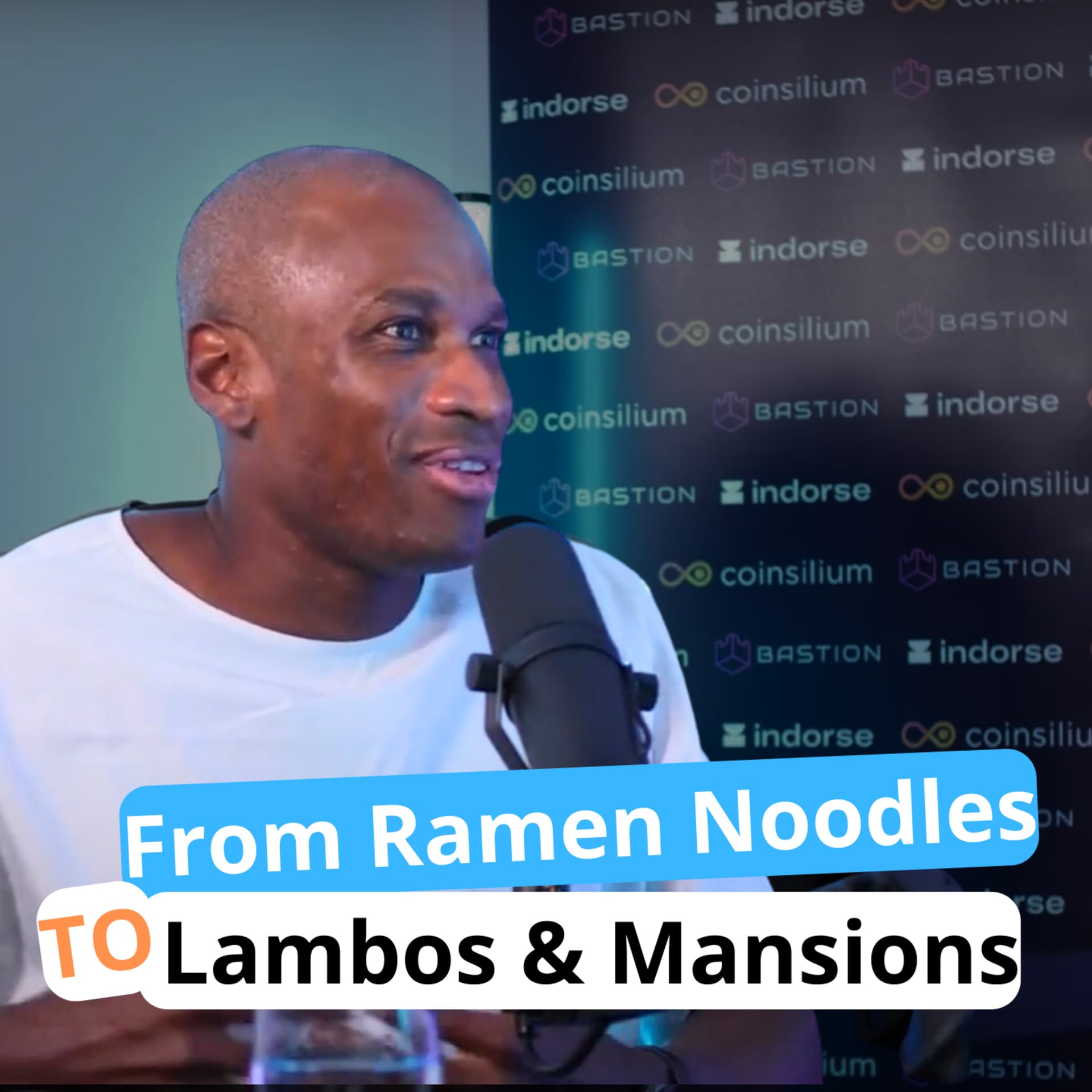
When Shift Happens Podcast - Episode 43: Arthur Hayes: Everyone Will Get RICH Before Getting POOR
Episode Summary In this episode, host Kevin Follonier interviews Arthur Hayes, co-founder and former CEO of BitMEX, who shares his journey through the world of cryptocurrency trading, the establishment of BitMEX, and insights into the current financial landscape. The conversation covers Hayes' early experiences with Bitcoin, the evolution of BitMEX, and a broader discourse on macroeconomic trends and the future of the financial system.
Guest Introduction
- Arthur Hayes: Co-Founder and former CEO of BitMEX, now CIO at Maelstrom Fund.
- Notable for macroeconomic writings and deep insights into the crypto industry.
Key Topics Discussed
- Personal Background
- Hayes shares his passion for coffee and food.
- Discusses his move to Asia post-university, influenced by a desire for adventure and opportunity in the financial markets.
- Early Engagement with Bitcoin
- Began arbitraging Bitcoin in 2013 using cash and physical transfers between exchanges.
- Highlights the unique opportunities available in Hong Kong due to its favorable environment for cryptocurrency trading.
- Establishing BitMEX
- Launched BitMEX in November 2014 during a bear market.
- Initially faced challenges with low trading volumes but remained confident in the potential of crypto derivatives.
- Innovation in Cryptocurrency Trading
- Introduced the "Perpetual Swap" contract, which became a significant product in the crypto market.
- Discussed the evolution of trading strategies and technology improvements that facilitated higher leverage trading on BitMEX.
- The 2020 Market Crash
- Recalls the chaos of March 12, 2020, during which BitMEX faced a DDoS attack amid a market crash.
- Reflects on the psychological impact of the crash and the operational decisions made during the crisis.
- Current Financial Landscape
- Discusses the "stealth banking crisis" and the insolvency of the global financial system.
- Highlights the over-reliance on government interventions and the potential for a societal reset, drawing parallels to historical economic crises.
- Predictions for the Future
- Hayes forecasts a significant rise in debt-driven government spending, leading to potential inflationary pressures.
- Emphasizes the importance of Bitcoin and other cryptocurrencies as potential hedges against economic instability.
Key Takeaways
- Persistence in Adversity: Hayes' journey emphasizes the importance of resilience and patience within the volatile crypto space.
- The Role of Innovation: The success of BitMEX underscores the value of innovation and adaptability in creating financial products that cater to trader needs.
- Macro Trends: Understanding macroeconomic factors is crucial for navigating the investment landscape, particularly in the context of rising debts and inflation.
- Future Outlook: Hayes believes that while challenges are imminent, there are also immense opportunities for wealth creation in the crypto sector.
Conclusion Arthur Hayes provides a compelling perspective on the intersection of cryptocurrency and macroeconomics, offering insights into both the challenges and opportunities that lie ahead in a rapidly changing financial environment. The episode serves as both an educational resource for newcomers to the crypto space and a deep dive into the experiences of a key player in the industry.
Follow Arthur Hayes
- Twitter (X): [@CryptoHayes](https://twitter.com/CryptoHayes)
Follow When Shift Happens
- Website: [when-shift-happens.co](https://www.when-shift-happens.co/)
- Instagram: [@kevinffollonier](https://www.instagram.com/kevinffollonier/)
- TikTok: [@kevinfollonier](https://www.tiktok.com/@kevinfollonier)
- LinkedIn: [Kevin Follonier](https://www.linkedin.com/in/kevinfollonier/)
- Twitter (X): [@yieldlabs](https://twitter.com/yieldlabs)
---
This markdown file encapsulates the critical discussions and insights from the podcast episode with Arthur Hayes, providing a structured format for easy reference and understanding.
Written by AI. May contain mistakes. Listen to the episode to check what was said.
Transcript
Automatic transcript. May contain errors.0:00If I was a fly on the wall on the 12th of March 2020 in the BitMEXH2, what was happening? the exchange doesn't work anymore everything goes to zero what's going on through your mind we didn't really do anything we said these are the rules and that's just part of the game our guest today is arthur hayes is the co-founder and ex-ceo of bitmex now the cio at maelstrom fund and a popular macroeconomics writer where do you think beatmex would be today if there was no covid the end game is some sort of societal reset i think hopefully not as bad as the great depression or, you know, World War I or World War II, but I think we're headed in a similar sort of direction where you're going to have to choose one or the other.
0:37Buy a house and become a farmer. Yeah. You're bootstrapping, basically, BitMEX? Yes. I know how to do this. I did this for my whole professional career. I could do it better. It took us 11 months to build the product. We launched in November 2014, and then for the next, basically, year, we basically did no volume, essentially, like, zero. How did the BitMEX ID come along? The issue with ICBet, the exchange, was me and a lot of the other traders We really wanted them to improve the product offering, offer more stuff, increase liquidity because we were all making money. We just want to make more money.
1:07So we needed them to grow as an exchange. So we had more people to trade against. Yeah, it was very disheartening. It's hard. In the back of my mind, I was 100 % confident that Bitcoin derivatives or crypto derivatives would be massive. There would be companies making a lot of money. The only question is, can I survive long enough to get there? What was the golden moment of Bitnex, the pair market or more like the bull market 2017?
1:31How are you doing man? Excellent. It's good to have this conference and where I live so it's nice Are you in Korea last week? Yes, I was in Korea. How was it? Excellent. The energy in Korea is amazing So many retail punchers of crypto. I love it. Have you been often there? The last time I was there was in 2019 I think. Well, they've been many a few times before so I love Seoul. It's a great place I so I'm a fan of your articles. I love them. One of them you talk about the fact that you love coffee. Yes I love coffee too. Like what can you tell me about coffee? You love for coffee. I wrote about this cafe that I went to in Paris like a few months ago and it was amazing.
2:08So it's this one guy, you had to make a reservation, you show up, it's about six or eight other people in the bar. And he's got a board on there and he's just talking about the different coffees he has. He has a special coffee of the day and I'm not a big espresso drinker. I find that it's usually very burnt. and he's like okay because you got to try my espresso it's like my signature thing he had a special way of um i don't know not even grinding the beans that's how he filtered them he had a metal filter and the temperature and the roast that he used for the beans and i have to say it's the best espresso i've ever had in my life and then all of the single origins you know he did the pour over as well but he also would do them in espresso format as well it was really nice to have like some super high quality like I love geisha varietal beans like floral light roast and to taste that in espresso format um this guy was excellent he even made his own water you know different like uh minerals that he put in the water that he distilled so that it brought up a certain taste that he wanted in his coffee so I thought it was excellent experience do you have the same passion for wine uh I love drinking wine do I know enough about it probably not much less yeah much less um obviously because you actually get drunk so So it's not like you can't gain wine all day.
3:23But I do like lower intervention wine. It's one of my things. Actually, Singapore is a great scene for that. Yeah. In terms of like different, lots of different wine bars and restaurants that only serve like low intervention, low sulfite wine, which I like. I see on Twitter, you're also a foodie. You like to post pictures of food. Yeah. It's really interesting, you know, because I mean, for this podcast, today is a bit of a different format. It's shorter. But for this podcast, to go viral, we use AI and data analytics to kind of script questions and everything to be more likely to go viral on these short clips.
3:54Because today, consumption is all through short clips, right? And I really had a big laugh because I usually send the guests and I say, okay, this is Arthur. Here are these socials. What can you write that would be interesting to talk about that could go viral? And I was laughing because I knew they would struggle with you. And they basically came back and they said, sorry, but we can't do anything with this dude. So the online strategy of sheet posting is working really well. But I know a lot about, I mean, crypto and your story. So like for me, the interesting is why you study in the US, right?
4:30Why did you move to Hong Kong initially? Why did you choose Hong Kong and Asia? So in like my last year of high school, I was reading a book called The Ugly Americans. I forgot the name of the author. and it's about this American guy, graduate from university, didn't know what he wanted to do, somehow decided he was going to move out to Tokyo. And so he started trading the Nikkei back in either the late 90s or early 2000s. It's a true story. And it takes you through his life and like partying and having a lot of fun. And then eventually he makes, he hits it really big on this one particular trade.
4:59I think it was a Nikkei rebalance in some particular year. He made a lot of money and then he started a hedge fund. And the hedge fund, the real name of the hedge fund is called Evolution. And I know a lot of people who work there And I never actually met the guy in person. But I was like, wow, I really this sounds like a lot of fun. I'm sitting in my suburban, you know, house in Buffalo, New York, boring ass small town and like New York State. Like I want to get out of here and go somewhere interesting. And like this sounds so cool. But at the time I thought, well, Japan, that was sort of a, you know, or 80s story.
5:28Like what's the what's the early 2000s place of growth? And I thought, well, it's China. So I decided that I was going to go to China. And when I graduated from high school and I studied Chinese in school, I never got fluent, unfortunately, got a little lazy, but I went out to Hong Kong as a study abroad student in 2006, first semester. And then I was like, I'm moving here. So I've just found a way to get a job. So it was Hong Kong, not China? Not China, yeah. Because you loved Hong Kong? Well, because I couldn't speak Chinese fluently. So the other program - Even Shanghai is very difficult if you don't speak Chinese.
6:00Yeah, so my regular university, it was a full immersion program. And if I didn't - We weren't fluent in Mandarin, you couldn't take the course. So Hong Kong was the next best option. And then I loved Hong Kong. Hong Kong is amazing. I also lived there in 2013. It's amazing. Like, oof. Oof. The memories. Something is not to be talked about on this podcast. So you start to work in Hong Kong for a bank, right? Yes. I worked for Deutsche Bank for three years and then Citibank. And then I eventually got let go from my job. And that's how I found crypto. How did you find crypto? I think you were doing some arbitrage in the beginning, right?
6:35I read about it on Zero Hedge first. And then when I lost my job, I was like, well, I want to do something different. And then I was, oh, I heard about this Bitcoin thing. What is it? So I just started reading everything I could about it. Read the white paper, read whatever research there was out there at the time. And then I was like, okay, well, how do you trade Bitcoin? So I read about every exchange that you could do spot trading, every exchange you could trade, futures contracts and options at the time. And I stumbled upon this small exchange called ICBit. And there was two Russian guys in the Caribbean, anonymous, and they had launched the first futures contracts on Bitcoin.
7:08And it was super interesting because, you know, if you're familiar with futures trading, usually they traded a premium discount to the spot price, right? And so I did this trade all day long on like equities. In banking. In banking. So I was like, well, okay, what's it like in Bitcoin? So I downloaded the specs and I looked at the price. I said, wow, like it's a 200 % annum return. I did the calculation. Like this is, this can't be right. So let me just try it out. So I was like, okay, well I'll send, I sent$1 ,000 to MT Gox because I thought it sounded less sketchy to send money to Japan than to Slovenia where Bitstamp was based.
7:44So I sent them$1 ,000. I bought some Bitcoin. I sold these futures contracts on this random exchange. And then I waited a month and I did the math on my Excel and my calculations of anticipated profit matched exactly what my, what the exchange did. wow wow amazing and this is this is your you got laid off and then you have some time to figure out what to do and you're like oh there's this bitcoin thing and there is this future contract i can it's first it's very interesting and second i can try to make money around that right exactly so you did that for did it for a few months then i started doing arbitrage between china and the rest of the world and then i decided what did this look like concretely doing arbitrage between china and the rest of the world what did this look like Basically, back in the day, there were three big exchanges, Huobi, BTC China, and OKCoin.
8:31And anyone could open an account, so I opened an account. And I was able to buy Bitcoin at most of the exchanges where, thankfully, they were based in Hong Kong, even though they were international. So I literally could walk out of my apartment with a bag of cash, go to the bank, deposit the bank in my bank account in Hong Kong, wire it to these exchanges based in Hong Kong, like Bitfinex and some of the other ones that are based there, buy Bitcoin at the dollar international price, send it to Chinese exchanges, sell it for RMB. Then I go to the bus station, I get on the bus with my backpack to withdraw my cash from the bank, and then I go back across the border, and then I make 20 % to 40%.
9:09So this would not have been possible in any other place. Hong Kong is the only place in the world. So you were at the right spot there. I mean, obviously, luck is where preparation meets opportunity. And like, you prepared for five years before that. And then you're curious, but then you are at the right spot where you can actually do all this physical thing. Yeah, it's faster, it's cheaper. It's amazing. Okay, amazing. And then, how did the BitMEX ID come along? Is it from this experience? Well, the issue with ICBit, the exchange was me and a lot of the other traders, we really wanted them to improve the product offering, offer more stuff, increase liquidity because we were all making money.
9:50We just want to make more money. So we needed them to grow as an exchange. So we had more people to trade against. And I just wasn't feeling that they were really trying to grow their exchange so that I could make a living doing this. So they go, fuck it. I know how to do this. I did this for my whole professional career. I can do it better. And so that's where the idea came from. And - When is that? Futures contracts on Bitcoin. But no, when is that? 2013? End of 2013. Okay. So, you know, through my network, I was able to find my other two co-founders who, one built trading systems, the name is Ben Dilo, and the other was Sam Reid, and he built, like, web applications.
10:25And so they were both into crypto. I was like, hey, guys, why don't we build a derivatives exchange on Bitcoin? And I'm like, yeah, let's do it. So we came together in early 2014, and then we started building BitMEX. And just after a few months, Mt. Gox happens. So you're super motivated. You're like, oh, it's amazing. We can build that. But then Mangox happens, the hack of Mangox, and it's the start of a bear market, right? So like you are starting a new business in the beginning of a bear market, which is pretty much the worst moment to do it. Well, I think it was good because I think we went into it thinking, okay, we're not going to raise any venture capital funding because we're actually, we know that exchanges make money.
11:06Like it's a business model that makes money. Now, maybe the U of ACs didn't understand what derivatives were, but I've seen ICBit. I knew how much money they made. It wasn't big money, but it was like, okay, we can have a comfortable life like this Bitcoin thing. We can make money doing it. We don't need outside financing as long as we can figure out ways to make money to pay the rent and whatever. And I wrote side hustles. So it wasn't like all of a sudden we were banking on this check from some VC and now because of Mal Gox, they weren't investing. If anything, it basically gave us the ethos of transparency, honesty.
11:39Not your keys, not your coin, like all that sort of stuff that I think is very inbred for people who've been around for long enough to understand these concepts because they viscerally have experienced, you know, major setbacks. Yeah, absolutely. Yeah. I mean, I thought that this was only, you know, old stuff in crypto, but we will happen last year. Like there's a great reminder that, hey, either we're still early in crypto, either this stuff is still happening for quite a while. So you're building, you're bootstrapping basically BitMEX. Yes. Right. For quite a long time because people would always, people always think, you know, overnight success story, right?
12:16And the classic, it's a classic 10 years or classic seven years overnight success story. So how long are you in basically this stealth mode and what's going on in your mind there? Are you thinking at some point, man, this is not going to take off as much as I want. I should maybe do something else. Or you're thinking, it's cool. I'm making decent money and I do what I love. So I'm as patient as what's needed for the market to pick up again and for us to basically explode, you know? So, I mean, it took us 11 months to build the product. We launched in November 2014. And then for the next basically year, we basically did no volume, essentially like zero.
12:55It's very little trades. And yeah, it was very disheartening. It's hard. but in the back of my mind, I was 100 % confident that Bitcoin derivatives or crypto derivatives would be massive. There would be a few companies making a lot of money. The only question is, can I survive long enough to get there? So I'm just going to keep going until I utterly fail because I know someone's going to make a fuck ton of money doing this. I hope it's me. We kept going and we iterated at the product and thankfully the market started recovering in 2015. We oriented our business towards China, which is where all the volume was back then.
13:30And, you know, perpetual swap came in 2016. And we started making a little bit of money and just getting momentum. So is there a tipping point or it's more how we do perp swap? Basically, we invented it, the contract 100X. And this makes the whole difference. Like that's what people like to read and hear. But like it's probably not the truth, right? The truth is we try this, we try that. It's a bit better, it's a bit better. So the first big change was in the fall of 2015. We said, okay, fuck it. We had a very conservative margining model because we were guaranteeing all the contract payouts with our own meager de minimis cash flow.
14:08Then we said, fuck it. Well, the Chinese, they want leverage. And let's do it better than them. If they were doing 20x, we're going to do 100x because we know that we can build this tech better. We know where they're making mistakes in terms of how they're margining things. And that's what we did. So that's where we became known for overnight was the exchange that offered the highest leverage of anyone in crypto And we did it without losing money as the exchange Whereas a lot of other players offered high leverage But they lost money as the exchange because they didn't have the math right or their tech wasn't fast enough And so that was the difference was the math and the tech yeah concretely And this made a big difference in terms of volume Almost immediately and we started cash flow positive making money being able to like actually pay ourselves.
14:50I mean, it was 10 outs of money, but at least pay the rent and whatever. And a lot of us would just keep going and keep iterating on this concept and just survive. And then there is the crazy bull market. So in 16, 17. Yeah, so in 16, we created the perpetual swap. That was basically, it was an abject failure. You know, I would say two thirds of me and my partner, so me and one other partner were very pro the swap. Okay. Another partner hated it because we got so much negative comments from our clients. They're like, what are you doing? What's this swap thing? I don't understand funding. Why don't you just do it like, okay, coin, just go back to the futures contracts.
15:29And we're like, when we did this for a reason, we did it because our clients didn't understand what a futures contract was. We wanted to create something that was a little bit more intuitive from a trading perspective. And then we wanted to consolidate the little liquidity that we had in one product versus spread out across a bunch of different expiries. So, you know, I won the political battle internally to keep it up. And we kept iterating on it. And finally, like starting in 2017, it started to catch on. And over like, we woke up one day like, wow, this thing is doing massive volumes. Like, how did this even happen?
16:01So 2017 happens, like we all know it was crazy. And then 2018 happens, bear market. But for you, because people are able to short, it's actually amazing. It's basically the only business in the crypto game where it's amazing whether it goes up or down. You don't really care. You're making money both ways, right? What was the golden moment of BitMEX? The bear market or more like the bull market 2017? If you have to say like... 18, 19, I think. 18, 19. So actually when everybody's struggling, you're there like... Yeah, luckily we had a product. It took the competition about one and a half years to accept that they should build it.
16:39So we had the market to ourselves. We were able to charge relatively high fees. if you think about where fees are today and derivatives. So it was a great time. Yeah. So controlling most of the derivative market, basically.
16:55What was a typical week like for you in that moment? Because obviously you're so successful. Like you still go to work every day, like super focused, like build the next thing. Or you're just like, oh man, I can relax a bit more. It's the better market. People are struggling, but we're doing great. or like what's your focus at that moment? I mean, it became a lot of HR stuff, right? So we hired a lot of people. We went from 10 to, I don't know, 100 something in two years. So there was a lot of problems, drawing pains, trying to do that. Our tech didn't work at scale. So there was just putting out fires, trying to, you know.
17:36The classic interview story actually. Everything works well, but like you have basically fire day, fire day, fire day. I need to, what's the most important one to take care of? Yeah. Okay. And then 2020 happens. COVID. I was actually, I had 80 % of my network on BitMEX on the ETH contract. Right. At 2X leverage, right? I was, I was, I was thinking I was smart. I was like, oh man, I can play higher numbers. But 2X leverage. I didn't really understand the funding fees that were higher on ETH contract. And I didn't think that, you know, the World Health Organization would declare COVID as pandemic and then like stock market 34 % down and crypto within one day, 12, 13 or whatever, 14th of March.
18:21Down 50, 60, 70%, whatever, like wrecked. Spent three days in my bed. But that was actually with the other 20 % of my money that was in gold and stocks down. I sold everything to buy ETH because ETH is sub 100. like this is so I was in my bed like with pain in my belly but buying that anyway if I was a fly on the wall on the 12th or 13th of March in the Bitcoin Bitnext H2 like what was happening because it's fucking madness like I even remember that exact moment in Switzerland in Geneva that moment I get liquidated like I'm sweating everywhere like how did you guys handle that well we unfortunately got DDoS that day so exchange went down for I don't know 15 minutes or however long it was, prices collapsing, right?
19:08Yeah, we think it goes to zero. The exchange goes offline. I know popular Twitter things that we shut off the exchange and say, no, we got DDoS and got fucked, right? We would love to keep the exchange up. Our goal isn't to try to time the markets or anything. And then that happens. We get the exchange back up after an hour or so, and then the market fucking rallies, right? Classic. Just like the death liquidation candle. Once everybody's dead, it goes back up. Yeah. But it wasn't, obviously, it wasn't a very good moment for the exchange because a lot of people lost a lot of money because they didn't understand how these exotic derivatives actually work on the downside.
19:48And as a result, a lot of people left BitMEX and went to other platforms that didn't use Bitcoin as a collateral mechanism. And it's, you know, probably not interesting for this crowd and the non-linearity of these things when they go down. but this is why people didn't understand it and they they got wrecked um and so they said well we want to we want to use a different type of one of them margin and currency that we didn't offer at the time and so we lost a lot of business because of that incident what was happening in your mind that that day basically when the the exchange exchange doesn't work anymore like what's going on through your mind like what is the first thing you even do you can't do anything but you think what is what you're thinking okay what's going on do we understand when the problem is Yes.
20:25Okay. Then you fix it. Right. Then you, after that, you analyze the damage, you know, is the exchange okay? Do we lose any money as the exchange? No. Okay. Obviously there are lots of customers, um, that have complaints. And so then we, we have meetings, right? With all the senior managers like, okay, there's these customers who lost money because of this, or these customers lost because of that. Can we do anything? Does it make any sense? Are we encouraging moral hazard on the exchange? If we try to change policies to favor one group over the other. So it's a lot of philosophical discussions, and then people arguing for their particular client base of why they should get some sort of special treatment or not.
21:01In the end, we didn't really do anything. We said these are the rules. And unfortunately, some people lost. They didn't like that, obviously, but that's just part of the game. Where do you think BidMix would be today if there was no COVID? No COVID crash, no COVID? Have you ever thought about that? No, never thought about it. Like, oh, man, like, this was really bad, because you said a lot of customers left. Never thought about that. You love to talk about macro and I love your macro pieces. It's super cool, super interesting. What's your view right now? I mean, I know the view, but like for the audience, what's your view?
21:39The view is basically whatever the Fed does, Bitcoin is going to buy the dip. But like, can you elaborate on that? Yeah. So I think that we're at this point in history where we've had this idea that the government can fix everything, right? So that's Keynes, right? If you have a problem, government spends money and plugs the hole, and then we're all better for it, right? And so we've all taken this theory, and this is everybody, not just, you know, the United States and, you know, England, Western Europe, China, Japan, everybody, right? We're going to have this Keynesian economic theory, and that's going to inform how we try to eliminate the business cycle, right?
22:18So we've basically amassed all of this debt starting after World War II and essentially, you know, Europe was destroyed, Asia was destroyed, and there was just the U.S. left in terms of like a productive economic unit. And we drilled a bunch of hydrocarbons and then we spent all this wealth on whatever, right? Some countries bombed the fuck out of the world. Other countries had free healthcare, like whatever. Depending on your political situation, you spent the money somehow. And then we stopped having kids and technology of like hydrocarbons sort of plateaued in terms of like getting that initial boost in productivity.
22:56And so now we still have all this debt to pay back and we're accustomed to growing at a very fast pace because, you know, humanity essentially has just like skyrocketed in terms of complexity as a civilization over the past hundred years. And so we just compile on debt because there's not more humans that need more stuff, but we've got all this debt we have to pay back and we don't have enough people that need to do things to pay it back. And so we just keep piling on debt and keep piling on debt. And every time there was a crisis, the economic theory says that all the government should run a deficit and the central bank should print money and then save the banking system.
23:29So we kept doing it over and over and over again. And now we're to the point where every single part of the fiat financial system, the government authorities have destroyed the free market and everything. Everything's a manipulated market. And the only market left that actually is almost free-ish are government bond markets because they're so big and so hard to control. And so now we're seeing, well, we have, you know, declining productivity in terms of how we extract resources. We have political choices that say we don't want to use hydrocarbons anymore. So cost of energy is going up. We are less integrated as a world and certain countries are saying, well, hold on.
24:08Yeah, it was great for the US and Western Europe the past 80 years, but it wasn't so great for me. And so I want, you know, instead of taking my natural resources and giving me back, like, fuck all, I want you to develop, you know, value added products in my country and export them. And that increases the price of stuff. So we have this inflation and inflation is one thing that governments can't will out of existence. And so what's the response? I think we are going to blow the biggest fiat money printing bubble ever over the next few years to try to save the biggest market in the world, which is a sovereign bond market of governments.
Read the full transcript
24:42When you talk about inflation, do you talk about inflation, inflation as we experienced in the last year and a half, or do you talk about asset price inflation or both? I think the asset price inflation has been happening forever. The inflation that really pisses off the common person is when food goes up. We can feel it here. food rent everything people are starting to go really get really mad the taxi drivers everyone is really mad about it so and that's and when that happens and that the government has to do something and so that well we need to tighten my energy supply but at the other end the the government's have made all these promises to people like health care and education and defense budgets and blah blah blah whatever and so and they don't want to raise taxes because no one actually wants to pay for this stuff out of their own pocket they want everyone else to pay for it And so, well, what do you do?
25:30On one hand, you have to fight inflation by restraining credit growth and reducing economic activity. But then that means that the government can't fund itself on all this massive debt to make good on the promises that they made. And so we're at this sort of inflection point and see which one they choose. So if you were the Singaporean government, because we both live in Singapore, and you have the taxi drivers and all the people, all the normal people who are suffering because of the high rents and the high food and the inflation, what would you do? Well, Singapore is in a lucky position. They have one of the largest sovereign wealth funds in the world.
26:02So it's just a political choice of like, how much do they want to dip into their pockets and pay for stuff, right? There's been consumption vouchers. You know, they kind of massage the bus fares and all that sort of stuff. So if there's enough public outcry, the Singapore government is lucky enough that it's a small country, export led, they can afford to mask the effects. I think I hear that Singapore government has enough money so that if Singapore was erased like nine times, they could rebuild everything again. Now, if you're the US government, what would you do? people complaining about inflation, but you have your promise.
26:40I mean, you have these promises on one side of like healthcare, all that stuff, but it's also the promise, the hidden promise of like making market go up forever, right? Well, I think you're going to have to think about, well, I'm a politician and I want to get reelected, right? From their perspective, it's, well, I could go out there and tell the people, well, you know what, I'm really sorry, but people that are now dead made the decision that they wanted to give a bunch of free stuff away and they mortgaged your future. And now the bills come due and you're gonna have to pay it. And that means that there's not gonna be Medicare and Medicaid for you and the quality of things is gonna go down.
27:20But if you persevere, maybe your children will have a better future, right? That could be one politician. They won't be wrong for very long. Or the other one says, hey, I've heard of this thing, I've heard of this thing called the printing press, And we're just going to do this inflation thing. I'm not going to tell you about it. We're going to run the inflation really, really hot. And everyone's going to have a job. We'll just get wage increases. And we'll punish the evil corporations that are price gouging and blah, blah, blah. Right. So, again, if I'm a politician and I want to get reelected, I don't tell the sober truth, which is unfortunately we just can't afford to do, make good on these promises anymore.
27:59I'd say I have this thing called the printing press and I'm going to use it. Right. Like, what's the end game? The end game is some sort of societal reset, I think. Hopefully not as bad as the Great Depression or, you know, World War I or World War II, but I think we're headed in a similar sort of direction where you're going to have to choose one or the other. And this sovereign debt market is just so big and so large and almost probably uncontrollable that some countries are just not going to make it. A friend of mine, he's a hedge fund manager. I had a coffee with him a few weeks ago, And he had a really poignant statement.
28:34I'm going to write an essay about it maybe in a few months' time when I have some time. He said, global crisis, Japan lights the match, the fire burns brightest in China, and Europe gets destroyed. And that's sort of where we are today. There is a match being lit in terms of how Japan, which is at the furthest end of this ridiculousness in terms of money printing and a government bond dysfunction, they have to make a choice. that choice is going to influence what China does because they're big competing export powers and then America should be fine because America can feed itself and have enough energy and they have population growth and secure borders Europe, I think the euro is fucked and when some countries want to leave the euro and other countries say we need to be tight as Europeans there might be war in that kind of event, like massive deleveraging event where everybody becomes poor basically even if you own assets.
29:30Right. Where do you store your, where do you become the least poor? Where do I make my money? It's more like, you know, forget all the material stuff. It's like, do I have a house? What's my food supply? Right. And that's it. And am I in a place that is able to provide those two things? Otherwise, yes, then you have to start becoming a big speculator. Okay, is this particular currency that I hold going to be useful enough in the near future for me to feed myself? Yeah. So buy a house and become a farmer. Yeah. you talked about you talked about the stealth I mean Balaji and you stealth financial crisis where are we at with that because it's I mean stealth financial crisis for a reason because they don't talk about it too much but there was quite a lot of talk on Twitter a couple of months back and now gone seems gone yeah the banks in 20 and 21 at least in the US they took in a lot of deposits and this is around the world right COVID stimulus, everybody's got a lot of money.
30:31Government's busy handing it out, left, right, center. So what do you do? You stick your money in the bank, right? And what do the regulators want you to do? They want the banks to buy the government debt because no one else will do it because it's a bad trade. If the economy is going at 2 % or 3 % and they offer you 1%, why would I buy that debt? Why give me 3 %? Don't make money off of me, government, right? So no one in their right mind wants to own government bonds. So financial regulation is all about taking captive pools of capital, whether that's your pension fund, insurance products, bank deposits, and through accounting rules, making it very profitable for them to just buy the government debt.
31:11So if you buy a treasury bond as a bank, you can lever it in an infinite amount, and it doesn't count against your capital requirements. So what do the banks do? They bought as much government debt at the lowest interest rates in human history because they had all these deposits because they were encouraged to by the rules and their financial regulators. And then, unfortunately, what happened was inflation. And when inflation shows up, the central banks have to try to do something. And they raise interest rates, which bond yields go up, bond prices go down. The entire world banking system is insolvent, essentially.
31:41Is it only the banking system? It's the banking system. They're all insolvent, every single one of them. But is it only the banks or is it other insurances or I hear like Malachi talks about pension funds and other things out there. The entire fiat financial system, if you actually used proper accounting and valuation of what they own, they're all insolvent. So now the question is, who pays the bill? It's a political question. And every single country has a different political structure and they determine who pays the cost of the bailout of the financial services sector. And so that's what's going on right now.
32:17It's we're trying to determine, okay, well, which organization is going to take the fall for this? Whose head's getting chopped? Who's getting blamed? Who's going to be out of office? That's the fight that's going on behind the scenes right now because it's insolvent. Unless we somehow discover some new form of energy that makes us all super-duper productive immediately, then it's really just managing this insolvency. And so to help this situation, we could lower interest rates, which would be good for Bitcoin, for asset prices, basically for risk asset prices. Or they can continue, say, we fight against inflation, we increase interest rates.
32:53But then you have these insolvent companies and banks that basically go bankrupt and need to be bailed out with money printing, which is good for Bitcoin too. That's basically the thesis. So basically in both situations, a bit like after 2020, after COVID, I mean, the beginning of COVID, it was, okay, everything is aligned if you're patient enough. Exactly. Especially given the halving and everything is aligned for crypto to go. Yeah, we can't predict the timing and no one could tell you that, but it's all about constructing a portfolio that has, you know, asymmetric return to the upside and doesn't cost you a lot in terms of to hold it.
33:32Right? That's the point. So like, I mean, like your BitMEX story in 2016, 15, 16 is, can I stay in the game long enough to reap the rewards of the next bull market? And now people should think like that. Can I be invested long enough and have a normal job or whatever that pays the bill to reap the benefits of the next bull market, which hopefully comes next year, in the next two years as this cycle. We'll see. Bull market is so much fun. I want more bull markets. We all want more bull markets. Amazing. Thank you so much for this. This is awesome. And see you at the pool party tomorrow. Exactly.
34:04Thank you. This is awesome. That was very cool. Nice.
From the publisher
Arthur Hayes is the Co-Founder and previous CEO of Bitmex, and the current CIO at Maelstrom Fund. He is not only one of the most influential and wealthy personalities in crypto but also a super cool dude who writes epic macroeconomic pieces.
In this episode we talk about Arthur's love for coffee, why he moved to Asia after university, how he was arbitraging Bitcoin daily in 2013 with just a bag of cash and a bus ticket, the fascinating Bitmex story - from boot-strapping the business in the 2014/15 bear market to owning the crypto derivative markets later on, what happened during the infamous March 12th 2020 crash at Bitmex HQ, and last but not least - the "stealth" banking crisis and why the entire financial system is currently insolvent.
[00:00:00] Meet Arthur Hayes
[00:03:00] Seeking Riches in Asia
[00:05:00] Bootstrapping in a Bitcoin Winter
[00:07:00] Pioneering High-Stakes Crypto
[00:10:00] Persisting Through Early Struggles
[00:15:00] The Perpetual Swap Breakthrough
[00:19:00] Steady at the Storm's Eye
[00:22:00] Explosive Monetary Moves Ahead
[00:25:00] Societal Unraveling Prophesied
[00:28:00] Surviving the Unknown Future
[00:31:00] Inside the Banking Timebomb
Sponsor:
We are proud to partner with Coinsilium, a focused Web3 investor and venture builder supporting innovative startups building a decentralized future.
Coinsilium provides vital funding and expert advice to Web3 and AI-powered early-stage technology companies. Coinsilium also provides strategic advisory services to projects looking to issue tokens.
With deep expertise across crypto, DeFi, and Web3, Coinsilium helps accelerate ambitious Web3 startups to the next level.
Learn more at https://www.coinsilium.com
Follow Arthur
Twitter (X): https://twitter.com/CryptoHayes
Follow When Shift Happens:
Website: https://www.when-shift-happens.co/
Instagram: https://www.instagram.com/kevinffollonier/
Tiktok: https://www.tiktok.com/@kevinfollonier
Linkedin: https://www.linkedin.com/in/kevinfollonier/
Twitter (X): https://twitter.com/yieldlabs


