
In short
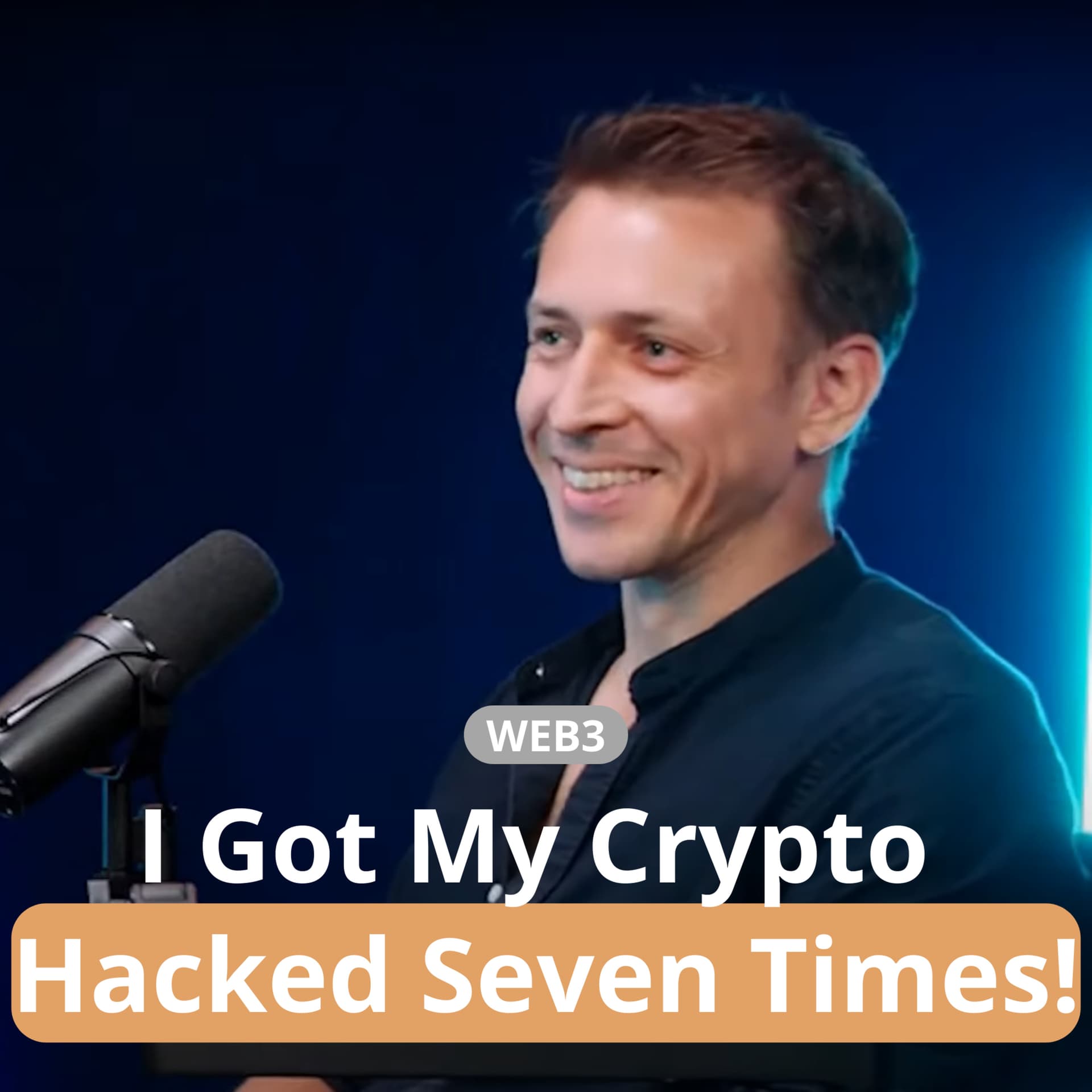
When Shift Happens Podcast - Episode E54: "Request Network Founder: I Burned Out 3 Times And Got Hacked 7 Times!"
Summary In this episode of the "When Shift Happens" podcast, Kevin Follonier interviews Christophe Lasuic, the founder of Request Network, a platform that simplifies payments using blockchain technology. Christophe shares his journey through entrepreneurship, discussing significant personal challenges such as burnout and repeated hacks. He emphasizes resilience and the importance of learning from experiences, while also touching on various key topics related to success in the crypto space.
Key Topics Discussed
- Entrepreneurial Journey and Background
- Transition from being a young CFO at 22 to founding Request Network.
- Early adoption of Bitcoin and understanding its implications on cross-border payments.
- Burnout Experiences
- Christophe discusses three significant burnouts and their impact on his mental health.
- The importance of recognizing stress and taking proactive measures like therapy, meditation, and exercise.
- Hacks and Cybersecurity
- Details of being hacked seven times, including sophisticated phishing attempts.
- Importance of security measures, including multi-signature wallets and diversification of assets.
- Customer-Centric Business Strategy
- The significance of understanding customer needs versus simply listening to them.
- Building a product that aligns with what customers truly want, even if they may not articulate it.
- Learning and Adaptation
- Emphasis on continuous learning as a key driver for personal and professional growth.
- The importance of evolving with experiences, especially in the fast-paced crypto environment.
- Investment Philosophy
- Christophe’s approach to investing, focusing on alignment with founders and the potential for positive impact rather than just financial returns.
Key Takeaways
- Resilience in Adversity
- Overcoming challenges such as burnout and hacks can ultimately lead to stronger business practices and personal growth.
- Value of Community
- Building a supportive community around a project can serve as a crucial asset during tough times.
- Importance of Alignment
- Success in entrepreneurship hinges on alignment with values, both personally and within teams.
- Continuous Learning
- Lifelong learning is vital; entrepreneurs should actively seek knowledge and adapt to changing circumstances.
- Proactive Security Measures
- Given the risks in the crypto space, it’s essential to implement robust security protocols to protect assets.
Christophe's Advice
- Emphasize Learning and Adaptation: Always seek to learn from experiences—both successes and failures.
- Take Care of Mental Health: Recognize the signs of burnout and prioritize self-care.
- Be Proactive About Security: Implement security measures to protect oneself and one’s assets.
- Build a Supportive Community: Foster relationships that encourage collaboration and support.
Episode Details
- Host: Kevin Follonier
- Guest: Christophe Lasuic
- Sponsor: Coinsilium, a Web3 venture builder.
Recommended Resources
- Request Finance: [Request Finance Website](https://www.request.finance/)
- Coinsilium: [Coinsilium Website](https://www.coinsilium.com)
- Books: "The Soul of Money" and others that focus on learning and self-improvement.
Conclusion This episode illustrates the complexities of navigating the crypto landscape while highlighting the importance of resilience, community, and continuous learning. Christophe's journey serves as both inspiration and a practical guide for current and aspiring entrepreneurs in the blockchain space.
Written by AI. May contain mistakes. Listen to the episode to check what was said.
Transcript
Automatic transcript. May contain errors.0:00And so I looked everywhere in the world and I found a job as a CFO at 22 years old. I heard about my friends doing audit, working 15 hours a day, looking at papers, checking boxes. Typically the kind of job that Chad GPT is doing today really easily. So I was like, okay, now I need to be a CFO without doing audit. Ever. Christophe Lasuic. The founder and CEO at Request Finance. A platform that simplifies payments using blockchain technology. With over$500 million in crypto payments in 2023. Steve Jobs had a vision and he adapted his vision based on customer feedback. and he tried to make something that is so good for the customer that it's better than what they imagined when he released the iPad after years of customer feedback.
0:42And we call it the iPad. But we forget that there's been years of work before that. What's the absolute most important quality to look for in a co-founder? Alignment, trust, and communication all together. At first, you don't need the co-founder to be an expert at everything. Let's say you've got the five best students at school at 15 years old and the five worst students. There's a high lackliness that among the worst, some of them are going to be good entrepreneurs. How much they think out of the box, how much grit, how much determination. So how much they contest what the teacher is saying and how much they're the bad kid in the class.
1:15It's 2017, 2018. We don't know if crypto is going to be accepted and I did not feel good. Every day I was talking with accountants, auditors, with tax authorities. Every day I was dealing with accounting stuff. Perhaps all crypto founders will go to jail. Obviously, I was in a border. So you're doing cross-border money payments using Bitcoin in the back end, but no one knows it. Yeah. How did this turn out for you guys? I had to ask you. It's 2014 and we are using Bitcoin as a backbone.
1:48So you said sometimes early in the morning. Sometimes I think so. I usually take one shot of coffee max per day. Yeah. To make sure like I'm good. And I'm not going to have, because it's more like if you compound more, for me, if I compound more than one shot of coffee per day, I start to realize with the stress of like working all the time until like midnight, 1am, managing different things, like taking planes. So like I take a shot of coffee max and then sometimes it's like three of, when I was in Bangkok, for example, this weekend at 4pm, I was like, I want the coffee because I love the taste and, but I already had one.
2:22So I go and I say, hey, can I have like half a shot? Usually it's two shots of coffee. Yeah. And you ask for one fourth. So then they say, oh, so half of that? I'm like, no, half of half. So one fourth or one quarter. And they're like, hmm, hmm. And like, then they say, ah, decaf. And I'm like, no, decaf has no caffeine because I thought it had no caffeine. So now I know. And the other day, the interesting thing is the girl from, it was Arabica Coffee in Bangkok. She was like, no, one shot or no coffee because otherwise it's not going to be a good coffee. And I was like thinking in my mind, I was like, on one hand I was thinking what prevents you from giving me what I want you know because the customer should be happy but then there's a religion about coffee honestly then I thought about it and I was like actually it's good because she has some principles that she wants to keep the brand intact and it's good it happens very often that I ask for a decaf and the barista says no way no way it's not about making the customer happy to them that's not coffee so they're never going to sell a decaf.
3:28Like, they won't do it. That's it. And I think there's a religion around coffee. That's it. Like, because, you know, the decaf, to do it, they have to use a solvent, which is a bit chemical. So it could be bad for your health. Some people say, no, no, I'm never going to sell that. But at the same time, in coffee, there's caffeine. And with caffeine, you end up not knowing that you are tired. which is also bad in certain ways. So it's just religion. When you choose like what you prefer and what you don't, just based on feeling, I consider there is a religion. I think there's many countries, like in Italy, decaf is not that easy to get.
4:13What do you think about this applied to a business? So should the people in the business, because I found that this woman, for example, I found it really, you know, a lot of employees, especially if you work in boutiques, they don't care about the brand. So they're just like, you know, like this one, she seemed to really care. So I was thinking it's really good, but should people or employees or basically should the culture from the top do everything for the customer to be happy or rather say actually our brand matters and our quality matters and like this is what we do and this is what we don't do.
4:47Brand matters. You need to respect that. In my opinion, you need to respect the brand. So they decided to serve customers with their idea of quality. They cannot please all customers. If they please all customers, they end up being a McDonald's or something. So they cannot do that. I understand. It's just that I keep asking for decaf, even at the coffee places where they don't have decaf. I'm like, someday they're going to think about it.
5:19So you're saying that people should protect the brand at all costs. And educate people. I mean, educate people who are willing to be educated. In my case, I feel like I'm educated, right? If they say they're not going to serve decaf, well, that's it. Sometimes I do. I take a caffeine coffee, like just a normal one. If I really am desperate, I want the taste. Actually, it's not about the taste. I think we figured out that we like it. But a kid does not like coffee, right? So we like sweet. its nature but liking coffee not really so it's more like a ritual it make us feel good so today i got a coffee because i'm like okay i'm gonna have a good time do you think people are addicted to caffeine or do you think yeah no definitely so basically basically take coffee every day like twice a day for 30 days um and most people they do that for 10 years and then try to stop coffee What happens to you?
6:24So what happens to you is that you have huge headaches for 5 to 15 days. That's withdrawal of science. So yes, we are addicted to coffee, but there's worse, right? Coffee is still okay. So for example, I don't smoke. I don't drink alcohol anymore. So coffee is not that bad compared to those two, I guess. We all have our addictions anyway. Why did you decide to stop smoking and drinking? I think. And also maybe talk about the caffeine because you were supposed to not drink coffee anymore, right? Yeah, so I'm going to start with caffeine. So if I drink caffeine every day for years, I'm never going to know when I'm tired.
7:17So what I'm going to do is coffee in the morning, coffee after lunch, coffee around 5 p.m., then sleep around midnight. But if I don't sleep, let's say I have got two hours of sleep, then coffee, I won't feel like I'm tired, right? At the end, what you do is that you ignore your body and it's going to show it to you in a way or another. So most of the time it can be burnout or stuff like that. Just like feeling extremely exhausted and even cafe cannot help anymore. So that's for cafe. Do you remember why you started cafe? Is it because socially or is it because you were working and you're thinking, oh, this is like the kind of the cheat code that's legal so I can be a machine while I'm building my businesses or working?
8:03Yeah, good point. But at first I used it, I think when you are young, you understand that cafe, caffeine, alcohol, smoking is for adults, right? So you are kind of attracted to it. so that's the first reason I think if we go way back and then socially like coffee machine discussions right socially you start smoking so many people start smoking start getting coffees just for social interactions at work especially we all know like there's a coffee machine somewhere everyone is enjoying so that's a very good reason and then you find out over time that if you use like two or three coffees you're going to be even more productive.
8:48And after a while, you're addicted. Coffee is not doing much to you. But if you remove it, you feel really bad. So that's what I want to avoid. You said something really interesting. When you're young, coffee, and especially drinking and smoking, is for adults. That's why you want to do it, right? I saw this documentary on Netflix about vaping, essentially. There's this vaping company. Exactly. that, you know, became really huge and then kind of went bust. And they revealed the marketing tactics on like how they got everyone addicted to vaping. Yeah. Which is going in to the schools to educate kids that smoking is bad.
9:34And because you tell kids that smoking is bad, they want to smoke. Yeah. Because that's how kids think. So they're saying, hey, look, we're doing something really good for society and for kids. but actually their tactic is to get everyone addicted because they know that kids will do what they're told not to do. Don't tell them this is bad. Make them understand that this is bad. Every time you do that, people, there's ego, right? And you're like, no, why? And I want to figure it out myself. So I'm going to figure out myself that smoking is bad. Yeah, so that kind of tactic works. I think it's the same for alcohol.
10:11Look at alcohol, how adult it is. Like how it's in every movie, how like the women drinking alcohol are emancipated, how the men drinking alcohol are the real men, right? It's like, it's in our culture, right? That it's good, good whiskey and you're a strong man. I think I read that every time you drink some alcohol, your fat burning process in your body shuts down for like 24 hours. Yeah. Yeah. So poisoned by alcohol. I poisoned myself with alcohol for maybe 15 years, like almost every day. Yeah. And I was thinking it was good because, you know, Jeanne Calment, who lived until like 125 years or something.
10:52Yeah, and the Queen of England too. So they always say my secret to live long is alcohol, is a glass of wine every day. Even my mother, she's like, this is like the ritual. She's like, oh, yeah, she's drinking a glass of wine every, red wine every evening. that's why she's past 100 years old. Probably a good marketing argument in the wine industry that they just, the same as you know, eating Kellogg's is good in the morning. Oh my God. Eating cereal is good. One of the worst thing. Yeah. It's like it's eating sugar. Eating sugar is good. Like, but no, they can't say it. Like eating Kellogg's is good.
11:26Like plenty of vitamins in it. But well, actually Kellogg's is just sugar, right? But it's really hard to understand. Like to understand that there's lies everywhere around you and realize it. And so you need to not influence yourself with those things. You need to basically forget about the delivery, think only about the content and challenge that. I think it's hard. Actually, that's a good quality for an entrepreneur to be able to do that. Can you give me a few examples of like the biggest lies that you've identified around us that most people don't even realize? are lies? Wow. Okay. That's a good question.
12:10I had to ask it. I'd say most of the democracies, they are very, very beautiful lies, right? We all kind of think that we should vote. I know what I'm going to say does not please everyone, but well, that's it. What I think is that we almost all think that we are in a democracy. We're not more of a democracy than other countries that we describe as dictatorships. For example, you get in France to vote for a president, but the person that we're going to vote for has been chosen before the game starts, right? With many different ways that are tactics, marketing and everything, but also chosen by oligarchs.
12:58So the richest people in the country decide on something. And sometimes they are still in the process of decision during the campaign. And then, oh, big contract,$5 billion for this oligarch. And, oh, no more opposition. Do you have another example? No, I think democracy is really a big one. So how do you think a country should be run? Maybe take the example of Singapore and France, like the two opposites, you know? like Singapore being run as a company almost. Yeah, I love this. So that's one of the reasons why I live in Singapore. So, okay, so the solution to this democracy issue, I'm not saying that we should do things differently, right?
13:44Perhaps the people need to think that they are in a democracy while it's not a democracy, right? Then what I would like is to improve how the country is run. And I would like the country like France, because I'm French, I would like this country to be run, as well as Switzerland or as well as Singapore. And in Singapore, the example is that it's run like a company. So it's like a country run by engineers with a very high emotional quotient, meaning really I'm amazed when I see how much they like the country to have productivity, how much they want the country to be attractive. I mean, the goals are clear.
14:24they protect their citizens, and they do it, right? They say what they do. The first year when I was in Singapore, the government said, hey, by the way, we collected too much in taxes, so we're going to reimburse you. Which country would do that? I mean, no country would do that ever. And so I like this kind of integrity. Plus meritocracy, like the Singapore system is excellent. However, you know, China has tried to do the same system. They've asked advice from Singapore, but you cannot run that kind of system in a bigger country. It's too big, yeah. And in Switzerland, it's a real democracy. So Swiss people, they tend to think that they're still, because everyone is voting like almost every week, Swiss people think there's too much influence with TV, radio, like everything where people are constantly being influenced to vote for something or something else.
15:22But at the end of the game, they vote, right? So they are the president. Everyone together is the president, is making decisions. And I really like it. I would like many more countries to be run like this. Perhaps technology can help. Do you think Singapore could be as effective if the, for example, prime minister was not paid that much? Because there is a lot of conversation about like key people in this country being paid millions of dollars, like a CEO of a big company. Yeah, which is, I mean, in my opinion, totally makes sense. Why? Why? Because, so think about from the beginning. In Singapore, you are a kid.
16:07And after a few years at school, you figure out you are one of the best, right? What happens to you is that you get selected. And you get selected to be in school and to pass exams. so that you're going to be able to work for the government. What happens is that the people who work for the government are the best people in the country, I mean, the best at school. And then they work for the government, and if they decide to stay for many years, fine, but they can also live and go to the private industry. And the ones who stay and manage to be at the top, they run a country that is managing billions of dollars, that is very attractive, that is neutral, that is the safest in the world, and the safest in the world for wealthy people and also one of the safest in the world in terms of crime rate, like almost no crime, sometimes no crime at all for one month.
16:57It's crazy. And I think they deserve, I mean, if that was 100 % variable salary, they deserve that much money. That's the way I see it. And some other countries, like, for example, what happened in Sri Lanka, Perhaps the president in this case did not deserve his salary. Right. So that could be 100 % viable. You talked about kids being good at school and then going to work for government. And hence, if the government works well and the security and the country is well managed, then they deserve this money. do you think that school results and grades are good at predicting someone's success in life and obviously you're an entrepreneur and you invest in entrepreneurs so like what's your thought on the school system as it is today especially because obviously you can talk about technology it's not following the technology let's not talk about that it's more a question about internet is making more and more opportunities available to everyone academic inflation so more and more people get university degrees therefore it's worth less therefore you can spend a lot of time studying something or even spend a lot of money depending on the country where you go study to end up being in a job that doesn't pay much so what's your thoughts on all this education system and maybe what, how old is your son?
18:36Five. What will you do with your son in terms of education? I'm going to start with how I see it. I've been thinking for many years, so that's totally in my opinion, that school is not that useful. So I've been thinking like, why do we have school in the first place? I mean, 100 years ago, there was no school. There was like kids living together with a family, being educated at home. There's also studies that show that homeschooling is actually more efficient than government school in terms of how the kids feel, depressions, results, like everything. There's very good examples of entrepreneurs.
19:26in France, for example, there's Ty Chris, he never went to school, not even at three years old. And the examples of entrepreneurs who stopped school, stopped university and started building billion dollar companies. However, to answer your question, if you look at kids at school and you look at their results, it is still a good indicator of their future success. It's just that we would need to measure something else to look at their future success as an entrepreneur. And the future success as an entrepreneur is someone who is not necessarily good at school, but can be very good at school if he decides to.
20:07And if he decides to do something totally different and he does not go there, then he's potentially an even better entrepreneur. Especially because now with the internet, you can learn so much. you don't need to go at school. So in my case, I went to school, I left the business school at 22 or something. I felt like school was useful, but not useful in terms of content. So everything I learned, every content I learned there, to me was useless because I could have learned it just on paper, just online or things like that. But socially, that was interesting. Basically discussions with people, projects, entrepreneurship, projects, parties, organizing events, those kind of things were interesting.
20:54But I never decided to be good at school, not that much. So I think if you looked at it 15 years ago, you would not have guessed that I would become an entrepreneur or even with a little bit of success. So yeah, that's why I sum it up. Schools are good for employees, basically, are good indicators. the grades you're getting at school are a good indicator if you go more of the kind of traditional path rather than building companies. But if you aspire more into building stuff, school might not be the best. And you said there is something else that should be looked at, but what should it be? How would you measure that?
21:35These guys or these guys, potential entrepreneurs. This is going to be harder to measure, but how much they think out of the box, how much grit, how much determination, how much action-oriented they are versus doing what people tell them to do. So how much they contest what the teacher is saying. Yeah. How much they're the bad kid in the class. I mean, I think I would, let's say you've got the five best students at school at 15 years old and the five worst students there at 15 years old. there's a high lackliness that among the worst, some of them are going to be good entrepreneurs. But the difference, I mean, how you would measure it is if the worst have decided that they don't care for school, then it makes sense that they are not good, right?
22:33And sometimes they have decided they want to be good and they don't manage to. These ones, it's harder to imagine. But, you know, there's... If you look at maturity, the most mature, whether they are very intelligent or not, they can be good entrepreneurs in terms of decision making. So what's the difference if you need to think about a problem for 30 hours versus three minutes? The difference is what you do about it. So someone action driven who is not that fast can be a good entrepreneur, I guess. you talked about your own case and you said that you left i mean you finished school at 22 right yeah and you thought school was good so let's talk about your background first yeah what do i need to understand about your early context to understand the chris who is standing today in front of me in this podcast studio in singapore Yeah.
23:37So very different. Like you would not imagine, but there's plenty of people like me. So I was born in a village, 500 inhabitants. Where? In the northeast of France. So in the middle of nowhere, many cows. My dad came from a family of farmers. My mother was an English teacher and then was working in a big firm. My dad also worked in a big firm in electricity in France. And I was a lot into sports. So I really wanted to do stuff around sports. I was not allowed to. Why? I mean, I was not mature enough. to force my choices to my family. If I had the courage to force them to accept my choice, I would have had probably a career in sports.
24:44Why do you feel you were so drawn to sport? Is it because you were kind of a hyperactive kid and you need to release energy? Or is it just, oh, I love like team sport or like individual sport or every type of sport? Yeah. What did you play? In my case, I played sports like tennis, football, always sports with other kids. And I'd say what makes me do that is playfulness. So when you do sports, even if you are an adult, like you are 36, I'm 36, sorry, and I want to play football, it's because of playfulness. So you are a kid again when you play football. Playfulness or competitiveness? Or both? There's competitiveness into playfulness.
25:30Yeah. If you enjoy, you're there just to enjoy, right? But you're going to make fun of the other people. You're going to try to run faster. You're going to make mistakes and you're going to fall and stand up again. Like all the things that the kids do and you're going to smile all the time, most of the time. I think that's the kind of thing that even when you are 60 years old, you can keep playing like a kid. I think that's one of the reasons and yeah of course when I was young I've always been very ambitious so I wanted to be like a professional in sports yeah why did you want to be professional in?
26:05because I felt like that was a nice job like doing sports all day long but which sport? which sport did you aspire the most to? yeah because I wanted you to make a choice football so what happened? you're playing football and you're thinking I want to become a football player but your parents yeah I see actually some of my friends they go to professional teams at like 13 years old. So they go to their classes. It's like study and sports together. They can become professional. Some others, they are detected and they say no, they don't go. I'm like, what? Why don't you go? And in my case, I told my family I wanted to do that.
26:48but the culture of work in my family is really really strong. I think I've been working since I'm 13 so like working on Sundays, working on Saturdays, working at nights, sometimes for like renovating my house, sometimes for a company. The year when I passed the exams, you know the ones you pass at 17, I actually worked for two months in the building industry. So I was a construction worker. Those kind of jobs that are really hard and made me understand that actually a job behind the desk might be interesting. Do you know that's super interesting? Because when I was, it's very similar background.
27:34I was playing a lot of tennis and football. Yeah. And I was really good at both. And at some point, the, I mean, it's called Neuchatel Xamax, like the team, they came and they said, we want this dude in the team. At the same time, I was going to play a Swiss tennis championship, minus 12 years old. And Swiss tennis, they said, oh, you want to come to play in Swiss tennis? So I went and I started to do that.
28:01And long story short, I played tennis, but then it was so intense. And like the trainers, they were from Russia, actually. so they were like you know the russian way yeah like if you don't run fast enough i'll take the racket i'll throw it on you so at some point we didn't even want to go train anymore yeah and after a few years i mean i had like i broke my uh my um tendon and i stopped the tennis and i started dj but to buy my first dj decks i needed money and what i was doing to get money and because I just wanted to work during summers, construction fields. And in Switzerland, I was 14, 15.
28:38And in Switzerland, you pay really well, actually. You pay like 3, 4K a month if you do that. And I was going 12, 13 hours a day on this construction field with all these dudes who it was their life, right? And the experience, like, it was, I mean, crazy tiring. Also, it was not really legal, but because the dude who owned the construction company was a friend of my parents, I could go and he would still pay me. Same. But the really, exactly as you said, like the main takeaway was, then I was going back to like secondary school, you know, like you're 12 to 15 before you go to high school. And I was thinking all these dudes, you know, the one you're talking about before who basically are in the least good class because they don't want to study.
29:25Right. I was thinking these dudes, they should go a couple of weeks now on the construction field. To understand, is this the life you want all your life in the future? Yes or no? And we should be forced to do that because it's really freaking hard. It's good. It enabled me to buy my first DJ decks and then be a DJ for a couple of years. But this is like a key... That's a key learning. Absolutely. Yeah. And what was fun is that, so I was going to do long studies and I was spending a lot of time with those construction workers, sometimes 55 years old, right? and they would like say they would see people uh run they would like okay this guy is not tired at work because like um in my case as a construction worker uh very young i had cramps at lunchtime i had cramps at dinner time every day for two months um and yeah i understand you You don't need to work out when you work in construction.
30:28And I understood. I was like, actually, so trying to have discussions with them. Actually, I'd like to do that. Sit in an office all day, have a tennis, like do tennis or run at night. That looks fun. I think it's important if you want to understand what you want to do. In my case, I think that was okay. I knew already that I was more like an intellectual compared to where my family came from. And I knew that I would study, even though I did not put lots of efforts into studying. Yeah, just like finishing the construction field. So for me, for what I realized, I didn't want to do that. I mean, obviously you're under the sun, 12 hours a day.
Read the full transcript
31:15I mean, you get time, cool. But I was really seeing these dudes lunch break. I mean first they were all bullying me Because I was a little kid you know But fine And second like lunch break It was literally one sandwich in the left hand Right hand they had this It was not smartphones yet Or maybe beginning of smartphones One sandwich in one hand And then watching porn On the smartphone And I was like what the fuck is that Like you know and I was just thinking man Like this is not really what I aspire to Yeah, just sharing the lunch of my colleague who was 55. We spent a lot of time together. His lunch was six glasses of alcohol.
32:00Wow. I mean, it's telling, actually. It's very telling about how the person feels inside. Yeah. So you worked since a very young age, right? Because it's kind of like culture within the family. Yeah. Yeah. Family values, yeah. And then I don't know how, but I developed some ambition. So around 14, 15, I looked at entrepreneurs, especially the entrepreneur in construction, for example. So I looked at the boss and I was like, okay, that's interesting. So he started like alone. Then he got his wife as his secretary. Then he got like 10 people, then 15, then material, then big houses and so on. I'm like, okay, it's super interesting to be building something like that.
32:49Not necessarily to be working, but like to be building. And I had the sense of entrepreneurship. So I was thinking, okay, I would like to be my own boss. I would like to build something like in a strategy game. And I see it as a game even today. It's like a strategy game. Forget about everything that feels like a lot of responsibilities. Just play the game. and I had this desire from quite young, maybe between 12 and 15, and it never left. I still have that. Can you elaborate more on this strategy game? Give a concrete example, because I'm not sure I really understood why you say this is like a strategy game.
33:32So when you are an entrepreneur, so I really compare the entrepreneurship to a game that you would play online. It's not a war, but there's parallels with a war. It's something that you want to win, but you're probably never going to win entirely. It's an infinite game. And there's strategies. There's a thing that you can start slow and speed up later. There's like plan A, plan B, plan C. If you look at it from the eyes of a kid who wants to play, it's really, really fun. If you look at it from the eyes of someone who feels a lot of responsibility with his employees and everything, then it feels like stressful.
34:21So I try the first option.
34:26How did this, how were you successful in your, I mean, how easy it is? Because in theory, it's easy. look it as a game not as the stressful one but then you always have as an entrepreneur you always have this thing where if you see it as a game you could say oh listen I'm doing my 8 hours today or 10 hours or 5 hours or I'll achieve something cool I can go to sleep now or I can chill or I can go with my friends especially when you start the company you know first 1, 2, 3 years like as you were saying it's an infinite game but at the same time you want to push really hard because that's how you pull things off the ground.
35:09And so finding this right balance is extremely difficult, I think, or I found, and I still have it now. I mean, I think the most difficult is not to find the balance, is to challenge and adapt the balance all the time. So for a young entrepreneur with a company with just a few employees or even no employee, you need to do a lot, right? If you work for 18 hours a day, you're definitely going to be much faster than all the others. However, if you've got people in your team and you need to take some decisions, sometimes the decision is worth$10 million or$1 million. Well, it would make sense to connect, to connect to work only for one hour to make the right decision and rest 23 hours a day.
36:03So it really depends. I think we need to have this decision intelligence. So that's why I think one of the best training for an entrepreneur is Decision by Design by Shane Parrish, where you learn how to take decisions. Sometimes you need to take a lot of time to make a decision. Some other times you need to absolutely not think about it, just make one of them. Is this a book or training? He just released a book, which name is Clear Thinking. I mean, it's live for like three days. I received it. And there's also a training. Training is like$1 ,000,$2 ,000. It's called the Decision by Design. It really helps.
36:44So basically, you understand which decisions are reversible, which one are irreversible. The ones that are reversible, you don't need to take them. You can have someone else take them. as long as you can go back. Irreversible decisions are the ones you need to think about for a month if necessary. Does the author also give some, not really tips, but like things to do to optimize your decision making? For example, you should sleep eight hours a day. You should go to gym. You should stop cough caffeine or stop drinking or stop smoking. Like things that are, how do you optimize your life to make the best decision for example i mean i know warren buffett eats a mcdonald every morning drinks coke fine but like he spends a lot of time walking right and he doesn't work a lot because he knows that these decisions make yeah are very i mean are gonna be a huge impact even me a very small scale like for every podcast i kind of prepare one or two days in advance on like how am i the best for the two hours conversation in terms of like my mind working the best how do i sleep what new tropics do i take do i fast before do i go to gym like everything all my life is kind of around being you know the most how does my mind work at its best for these two hours conversation because you talk with like some big people and then first everything is going to be recorded online forever second the entire reputation is on the the conversation of the quality and third the introduction come from these guests so if they have a great conversation they are much more likely to say, ah, I'll introduce this person and this person.
38:22I think that really makes sense. You've got like a timeframe in which you need to be kind of very productive and very emotionally present and everything. It totally makes sense to prepare for this. The book does not really mention how you get in a healthy life. I mean, it's pretty obvious. Actually, the founder of AngelList talks a little bit about that. he starts his day at 11 a.m., for example. Like, yeah, I wake up at 5 a.m. I'm doing many things, and at 11 a.m., I want to be totally sharp for the first meeting where I need to make the good decisions. Are you talking about Naval Ravikant or the other?
39:04Okay, Naval. Actually, before we're talking about some things, and I was directly thinking about Naval because Naval, obviously. Okay. Okay. Okay. So you, what did you study? I studied. Because at some point, sorry, but at some point you, your parents say, no, forget the sport. You can play sport for fun, but not for life. Or how do you go from there? So I was good in math. So I did the study around math at first. then I was there were a few things that I did not really like, I was not that interested in others that I found interesting like history, math economics and so on so I decided to go to a business school so you know you do the preparatory class, then you pass exams and you can go to the school that you choose or that chose you so that's what I did I chose a school that was very good like with a work culture again.
40:15And what I did is for a school that was supposed to be for three years, I spent around three years there, but more than two years in a company. So that's how I financed a school. It's a kind of internship for a bit more than two years. It was in the pharma industry. So I had a job that was a full-time job, definitely. They gave me a laptop so that I would go to school, to the business school with my laptop and I would work for my company during the classes and so on. And I got like two promotions in those two years. That was a huge experience. I wanted to become an entrepreneur and my way of becoming an entrepreneur was I need first to understand 100 % of a company.
41:06And to me, there's only one way to understand 100 % of the company is to be in finance, to be a CFO. So I was like, okay, how do I become a CFO? I'm 22. So I was like, okay, so you need to do audit for five years and you need to do management control for five years. And I heard about my friends doing audit. They were like, you know, working 15 hours a day, looking at papers, looking at the lines one by one, checking boxes, horrible job. Like typically the kind of job that ChatGPT is doing today, like really easily. So I was like, okay, now I need to be a CFO without doing audit ever. So I did those two years in the pharma industry.
41:47It was management control, more or less. And then I had a decision to make. So at this time, I graduate from school. Do I go full-time with them or do I do something else? And actually, I decided I wanted to be a CFO now at 22 years old. the pharma company was a big one they said me they said no not right now but maybe in six years so you do two years there two years there two years there and then you become a CFO I was like okay no shit I need to find a job as a CFO and so I looked at everywhere in the world like all countries in the world like Africa Asia USA I did not travel much yet and I found a job as CFO So I think when I turned 23, they hired me and they said, yeah, you're going to be a CFO in our subsidiary, German company.
42:43And I was like, okay. Where was that? In Geneva, Switzerland. In Geneva. Amazing. Yeah. So I did not care about the salary or anything. I remember the day when I had the interview, I was like, okay, I would pay to do this job. If they say no to me, I call them back. I would say, yeah, no, no, no, no. I pay you. I pay you, I want to do this job. So anyway, they ended up still paying me a small salary to do this job. How big was the subsidiary? What kind of company takes a 23 years old who would pay them to be a CFO as a CFO? What's very interesting is that the kind of company that is now doing 800 million in revenues yearly.
43:25When I left, there were a few thousand people. and I was in the eight people in the operational committee at 26 years old or something. And so, yes, to answer your question, when I started, the subsidiary was five people. Usually what they were used to, it goes from five to 500 people in a few years. What happened with me is that I took care of this company, five people, so I was doing payroll, finance, everything HR, everything accounting in German. And I was like, okay, that's interesting. But now what? So basically after, I think the second month, after one week, I had finished my job for the month.
44:08So I was like, okay, may I do something else? And I was used, you know, my dad taught me something. He said, you do your work and then you ask for more. Always ask for more, right? So to me, that was obvious, right? I've done it. I actually automated everything. It did not make any sense to automate something when there's five employees, right? I could do everything manually and be safe. But I automated everything. I said, now I think I can do what I did, but for like 10 types of thought in the same amount of time. So what happened within two years is that I became the boss of other CFOs. So I ended up managing 40 people in themselves managing 25 different countries.
44:52And all this because I was like an engineer in the finance department. with a lot of creativity. Of course, we were, every time we had to create a new country, like open a new country, I was there trying to open a new country. I was there to automate all processes. And that helped a lot, I think. What's the company doing? The company was doing IT consulting. Yeah. Today, it's doing a lot more than that. So you do that for a few years? Yeah. And then you say, I'm done here. yeah i was a machine what's more they called me a robot i said uh so the boss like the founder he said okay you were a robot v1 now you are v3 uh next uh upgrade is a v4 how do you feel about that being called the robot at first because it's good and bad it's good i was yeah remember i'm very young right i'm like okay they're saying i'm very productive it's cool i want to be productive They're saying I automate everything.
45:52Great. Like, that's what I want to do. But then I became more and more mature. I started to feel like I had values. I wanted to be aligned with my values. I ended up leaving. What were those values that you wanted to be aligned to? I think one of the values that is the closest to my personality is around honesty and integrity. And I needed that more. So you're saying like the company grew so much that it was too political and you couldn't be yourself there? Or what was the problem? No, it was common practice to not show any honesty. Yeah. In the company? Yeah. Yeah. And I mean, honestly, I respect a lot this company.
46:45It's like it's a group. It's a dinosaur now. It's huge. It's incredibly well managed. But as a person, when you find out who you are, sometimes you want to be aligned with who you are. So I felt this need after a while. How did you find out who you are? I mean, it takes time. I think it was directly related to a kind of burnout. Probably one of my first burnout. When you burn out, it's because you do something that you don't want to do. I did not want to lie to people. What's a burnout? Because people throw this word, you know, everywhere. I'm burning out. I'm burning out. But the real burnout is like you're really fucked for a couple of months and you can't even work and you're completely useless, right?
47:38Yeah, the violent burnout is you've got no more energy and your body needs to shake you so that you understand, so that you cannot even move. My burnouts were like very mental. So physically, yes, that's true. I was feeling tired all the time. And now I know that if I feel tired all the time, that means there's something wrong in what I'm doing. Maybe I'm not enjoying that much. but at the time I felt tired I was like okay I don't know why maybe I'm working too much and actually I was doing things that I did not want so for example the boss tells me you need to tell this person that we let her go because she's not good but the reality is that we let her go because she costs too much money and we can hire three people at this cost and I was like okay so now you put me in a position where either I lie to her and it's gonna change her forever or I lie to you because I tell the truth to her, right?
48:48So I chose to lie to the boss and tell the truth to the people and that's when I started to create a gap between me and the company. So what happened exactly? Is there one day where you just, I don't know, fainted or had the panic attack or just couldn't even wake up in the morning and said, I'm not going to work today. Like I'm just depressed or like, how did this show up for you? I decided, so I had almost no more energy, was incapable of doing anything. So I was capable of like going to work, but then really working, not really. Like what, you're reading an email and you don't understand it.
49:33Yeah. Like you're doing everything, you don't really understand what you're doing. Like you're floating around. Yeah, but so I'm not at this point, I'm not reading emails anymore, because I know that what I'm going to read is going to make me feel bad or like I'm not going to like it. So what I would do is I would become addicted to stuff like video games or become addicted to the first thing that helps me to avoid this. and when you find out that you're afraid of your emails, you're afraid of the phone calls, you need to go on vacation and on vacation your phone keeps ringing because they want you to work during your vacation, obviously.
50:08Obviously. Who doesn't work during their vacation? It's funny because it's funny. I think there's a purpose to vacation. Maybe. Just maybe. Even the machine says that. So imagine. Yeah, that's true. But I'm still very much attracted to productivity, but with a bit more maturity, right? With more boundaries. Yeah. So first burnout. And what do you do? Do you just quit? Yeah, I quit and I go travel to Asia. I went to many countries. I even forgot that there was a limit. So for example, in the Philippines, I got a fine because I stayed too long. So I just enjoyed. And quickly found a new job as a CFO.
51:00It was like super ambitious project. I really loved it. And after a few months in the job, for the second time, actually, in my experience, the CFO gets fired by the shareholders. And I'm like, oh, OK, that's really good news because now I launch my company, my own company. And that's that was the trigger to me. It was I just needed it. like just like try to change my world and I launched my company, whatever it is. So I like maybe 30 minutes after I learned that the CFO got fired, I called a friend and said, yeah, let's work together. Let's go. What was the first company? First company, it's in 2014.
51:45We're helping people with their cross-border money transfers. So basically remittances when someone, for example, in the US sends money to someone else in the Philippines. And what our clients don't know is that we are using Bitcoin as a backbone. And it's 2014. So if we tell them it's Bitcoin, we are dead. Everyone is afraid of Bitcoin. So before diving into that, you said, I call my friend and I say, let's work together. So your friend becomes your co-founder, I guess. Yeah. How risky is it to call a friend and ask them to be your co-founder? So actually, he asked me to be a co-founder way before that.
52:36And I already started to work on this as a side project. when the CEO got fired I called him and said let's do it let's get serious so there was this willingness to be co-founders existed for more than three years so previously we had weekly meetings it was called Pizza so that was our Thursday night meeting and every Thursday night we would think and discuss about what kind of company we would build and it took us three years. But there's a big risk with this. So I was actually a CFO, right? My job was very safe because the shareholders wanted me to stay as a CFO. Very safe, very well paid. It was the best paid job I've ever had.
53:30And I was indebted already. And I decided to decline this salary and start my own thing where I would not get paid for many years. So that kind of risk is a very big risk financially. But again, I did not think much. I just acted. Which is the key thing that entrepreneurs should do, act. The really interesting thing about founders and co-founders, how do you choose a co-founder? Usually in your first company, you'll go to people you trust, a friend. You're not going to think too much about, do we have like skills that are complementary? Or what's the business and what are the skills that are needed for this business?
54:13And who are the people who I know might be basically complementing me for that? Because if you have the exact same skills, it's probably going to be difficult, right? And one of the things that is not really documented, but is happening a lot, is businesses, why businesses fail, right? And we talk about, oh, bad product market fit, cash flow issues, or running out of money. But one of the key reasons why companies fail is because of co-founder issues and ego and pride and the team falling apart. Yeah, the way I see it, there's a scale for every relationship. Like let's say from zero to 10. Zero is you hate someone, 10 is communication level is crazy good.
55:01Like 100 % communication level. I consider that 10 out of 10 does not exist. There's no one who is a social human being and shares everything. But the closer you are to 10 out of 10, the better it is for having a co-founder. Because it's someone you're going to spend more time than with your partner, with your wife, for example. And it's also someone who, whatever the skills complementariness, you need to be able to tell him or he needs to be able to tell you, hey, you know what? This skill that you think you have, actually not really. We need someone else, right? So that kind of like ego-less discussions.
55:40So you need to have a certain level of communication that is crazily good and that rarely exists. And that's why there's plenty of success stories between brothers. So Hasher is working with his brother. The founders at Stripe are brothers. So basically those are people who tell each other, fuck you all the time. You would tell each other, no, you're saying that you're good at this, but no, right now it's your ego that's speaking. And I think that's very, very important. Like this level. And you also need to tell, so it happens a lot that you've got a co-founder and at a certain point you need to stop working together.
56:25And one of both need to keep going. And you need to have this discussion. I think that's not how to have that kind of difficult conversation. Again, there's a book about it, having difficult conversations. It can be helpful. So to summarize that, the skills are not the most important thing when you choose co-founders. What's the absolute most important quality to look for in a co-founder? It's alignment. In my opinion, it's alignment. And of course, there needs to be skills. But at first, you don't need the co-founder to be an expert at everything. If he's good at just something, that's fine. If he's good at nothing, really, you found someone really rare.
57:16And yeah, this alignment is alignment, trust, and communication all together. I think that's the most important. What about loyalty? I mean, imagine your co-founder is not that loyal, but he's 100 % honest. Isn't that good, right?
57:38What was the best quality that your co-founder had? this first co-founder? So many. So basically, as I see in people at work, I see Lionel Messi's and Cristiano Ronaldo's. Lionel Messi is a genius. He's good at something, just one thing. Left foot for Lionel Messi. And Cristiano Ronaldo is good at everything, like headers, left foot, right foot, talking, being a president, being an entrepreneur, He's good at everything. And my first co-founder, I think, was good at roughly almost everything. And so that's, I was lucky. What are you good at? Are you Lionel Messi or Cristiano Ronaldo?
58:31I think I'm well around it. But there's plenty of things that I'm not good at. At least I know. So in between, in my case. But there's one thing I'm really good at. It's analytical thinking and analysis. And so it's very much a link to decision making. So you're doing cross-border money payments using Bitcoin in the back end, but no one knows it? Yeah. How did this turn out for you guys? We learned a lot. so um i have had an experience in china before and by the way my money uh at the bank of china is still there because i never managed to bring it back so i knew that was a huge huge problem so when i was uh doing this uh adventure um i helped some friends back in china to send their money back to Europe.
59:35And I learned a lot because we had the most efficient technology and the most efficient product in the world to make cross-border transfer from China to any other country in the world. But we were tricked by the clients. So they told us that they did not trust their bank. and they told us that what matters was the cost of the transfers. But what the data told us was that they trusted their bank and what mattered to them was the speed of the transfer. And so we were wrong. Like building it in 2014 was early to market because we did not have a good solution. So basically the centralized exchanges we were working with as partners, like Kraken, for example, we were asking them to build the APIs for us to deal with the transfers.
1:00:32So there was nothing ready. And when the APIs were built, they were not like 100 % uptime. So we had to deal with lots of exceptions, lots of issues. Anyway, we learned a lot. We evolved a lot. when we joined the Y Combinator in San Francisco, we actually had around 30 ,000 users monthly. So really many people were making money transfers, but not only with our blockchain-based solution, we saw a few of them that we integrated. Did you understand Bitcoin and crypto before launching this company? Or did you say, we want to solve this problem of cross-border transfers between China and the rest of the world and then looked for a solution and found Bitcoin and understood Bitcoin through that.
1:01:23We looked at Bitcoin, especially we looked at blockchain and what industry it would disrupt. And then we mixed this up with my experience, especially with cross-border payments, not only as an individual, but also when I was managing the companies before. And we understood, okay, so there's plenty of perspectives. You can see Bitcoin from many different perspectives, the good ones, the bad ones and everything. There's plenty of industries that blockchain is going to disrupt. But the one I've always seen is cross-border payments. Like five years ago, there was only once, maybe like before Bitcoin, there was no solution other than Swift to do a cross-border payment.
1:02:15And today there's plenty of solutions. And all this thanks to Bitcoin. That's crazy. That's a huge change.
1:02:27So you talk about Y Combinator. And I have a bunch of questions about that because we talked about that already. and you essentially told me what's being told to entrepreneurs at Y Combinator. It's very different than what most entrepreneurs are told on the outside by, you know, VCs who invest into them, right? So first, what is Y Combinator? Just for everyone to understand. People describe Y Combinator as the best accelerator in the world. And I would add or describe it as the smartest investor in the world. What are some examples of companies, like huge companies today that started in this accelerator?
1:03:12Stripe, Coinbase, Airbnb, plenty of very big companies. And with very, very nice stories. like you know for example Airbnb took them 86 investors to get their first angel check you understand that no one believed in what they were building until someone did and that's crazy because sometimes the investors are wrong there's plenty of very interesting stories and I think that's how you learn the most one of the jobs that the Y Combinator is doing really well, tell the stories of the others to inspire us. And one of the things that Yacomirato explains to everyone is, you are an entrepreneur, you need to build something people want.
1:04:05It looks simple, but so many entrepreneurs don't. Build something people want. So you take this, you contemplate this sentence, you do a philosophy work about this, you need to find those people. the something that they want and you need to make sure that they want it. It's simple. It's like the equation of an entrepreneur. What examples of story do they give entrepreneurs there to show the difference between an entrepreneur, I mean, the classic entrepreneur who has a solution to a non-existent problem and the actual entrepreneur who has a solution to something that people need? yeah so okay this is a very good thing they tell us to go out of the building so they there are plenty of examples of people who have not been out of the building but just go outside go talk to your customers literally like go talk face to face and if not just make a call with them but talk with them understand them be them right in the in the mission that we have today i'm an ex-cfo myself and we're building something for the cfos and i love it talking together with cfos i think all entrepreneurs need to do that as much as possible understand as much as possible from their clients from their users and that's the biggest mistake that people make.
1:05:44Another thing is define the one KPI that is important to you and look at it every day. If it's bad, like if it's like minus 10 % this week, look at it every day and 10 times a day. It needs to hurt you when it's bad and make you happy when it's good. And that's something that all successful entrepreneurs do, I think. The fridge story. Yeah, the fridge story. So you use a printer, you print this like plus 18 % on A4 paper and you paste it on the fridge in an office. If you are working in an office, then everyone's going to see the 18 % every time they go to take something in the fridge. So for that one KPI, you put it on the fridge and you say, this is one single North Star KPI that everyone needs to focus on.
1:06:35Yeah. Because if people are focused on different things, we're going in different directions, right? Exactly. Yes. If you roll in different directions, potentially you go nowhere. Like you're just staying in one place. So it's very, very important to align everyone, even if it's not the perfect KPI.
1:06:57I have another good one because I'm always, I wouldn't say fighting, but like I know a few people, especially like one person who is like a CFO of a huge group, very close. I mean, he was CFO of like a bunch of big groups and he's always talking about planning and strategizing and everything. And every time he looks at me and like data analytics, my data analytics company, now the podcast is like, oh yeah, this is really super interesting. But like, I see you, you know, you're like the doer, like you have like your hand in the, under the water and you're doing all that stuff. But like, you need to plan a bit more into the business model and to do that.
1:07:30And I'm always like, so what do you think about strategy? So there's business model and strategy. So you need to think about your strategy, right? But thinking about it is not enough. You need to validate it, right? So first, it is dynamic. So whatever you define now is not the truth. You need to define how you're going to find out the truth about the strategy. And the best way is to just do it, right? You've got strategy, do it and see if it works and measure if it works and then you adapt it. Business model, of course, you need a business model. You need to have an idea of the business model.
1:08:19But at the same time, if you build a business model too early, you're going to put a perimeter in place. So you are drawing a box into which you're going to stay. Do you want to do that? Or do you want instead to have a direction and follow this direction? And for example, at Y Combinator, you do a seed round. If the investor asks you for a business model, like, you know, a business plan with like five years forecast and everything, just don't do it. Like, that's the advice I heard. Just don't take the investment. Or if someone asks you, just don't do it and you just don't leave them. Don't do it.
1:08:59Just explain. it's not a good time to build a forecast for the five next years, knowing that I haven't launched yet, knowing that we are not making revenues yet, knowing that the business model is not clear yet. I think there's a first step, a second step, a third step, a 54 step first, and then maybe I'm going to do a business plan, a proper business plan. So that's exactly linked to what I was asking before. When is the right moment to start to say, now we need more structure around our business and a concrete strategy and business plans and these things that as a pure entrepreneur, I don't have time for this shit.
1:09:41Like I need to do real shit, which is I need to find a way to make money and to find customers. I need to, I don't know, I need to grow the views. I need to find the best guests, you know, like I don't have time for this shit like what's the moment where you need to like you prioritize based on the problems that you meet so if you really need to structure then you're gonna get problems that are so bad because of this lack of structure that you're gonna want to have some structure right um and so i'm in my current project i'm very lucky i've got like a co-founder that are excellent and sometimes i'm like, yeah, actually, I think that's the best practice.
1:10:23We need to do that. And my colleagues will tell me, we have a problem to solve. No. So yeah, maybe we need to do that when we have this or this problem. I'm like, ah, yes, sure. Okay. So I'm going to write it down for whenever I got this problem. So I document a lot. Whenever we got this problem, then apparently this is a good solution. But let's not apply a solution to something that is not a problem yet. so if you don't need the structure just don't do it yet it's a very reactive way of working like we're trying stuff oh there's a problem oh shit the problem is so big now we need to solve it because now is the right timing to solve this because we have this problem and it's too big and if it's not too big or if we don't have the problem or if it's just small we just continue our own way because we want to be efficient and take care of like the actual big problem so if you anticipate 100 % you never do anything Paralysis by analysis.
1:11:20Yeah. So there's a balance, I guess. And the balance is you find out when the problem is going to be bigger and why and anticipate at this time. So I'm not saying wait until you cannot sleep anymore to solve this sleep problem. But whenever you find out that this sleep problem is going to increase and increase and increase, then it's a good time to figure out the solution. It applies a lot to recruitment. So you are too busy. And after a while, you're like, oh, sorry, I'm too busy to think about hiring someone. So I keep working head down. Yeah. You know, that's the typical mistake. Instead, you need to find out that we are going to be busier and busier because of this and that.
1:12:04Therefore, we need to anticipate three months in advance that we'll need to hire someone at this position. Let's hire this person, make him or her start in three months. so that within the next three months, I've made the anticipation that needed to be done. Absolutely. So you go to Y Combinator? Yeah. And then what happens there? What's the key learning? Like there's probably many, but the one that like every time you invest in a company or you start a new business, you think about and you go back to from Y Combinator. Um, mine is probably different than others, but mine is around customer centric, uh, being customer centric and what it means.
1:12:56So what it does not mean is listen to the customers and do what they say. What it means is understand them so much that you do what they need, even if they don't know. Um, and, and I think it applies to so many things. So listen to customers and understand customers is something that you need to do when you have a conversation with investors. So sometimes an investor is going to want you to do something strategically. The truth does not come from investors. The truth does not come from team members. The truth comes from customers buying your product. So the vision of the product is the vision that those customers have.
1:13:38They will make it happen, right? And then the founder is here to articulate it, to try to understand it, to tell it to the investor, to tell it to the world. So I think we really need to focus a bit more on the customers. And I also think that one of the reasons why we have so many entrepreneurs who think that they are visionaries instead of building stuff people want is because they've been inspired. by fake visionaries. And I'm talking about fake Steve Jobs. Those are not my words. It's Michael Seibel's words. So he was Y Combinator's director and he knew Steve Jobs. Fake Steve Jobs are the people who are visionaries and think about the vision and then try to do this vision.
1:14:34And that's it. They forget about the customers. For example, who is a fake Steve Jobs? It's really hard because those startups are failing. They're not around anymore. We don't know them. While the real Steve Jobs and the people who really knew him know that he was obsessed with customers. And yes, he had a vision and he adapted his vision based on customer feedback. And he tried to make something that is so good for the customer that it's like awesome and better than what they imagined. But what we know and what we understand firstly from Steve Jobs is when he released the iPad after years of customer feedback, right?
1:15:20But we forget that there's been years of work before that.
1:15:29What's the, I mean, how do you balance the short-term thinking of VCs and your investors, because they want to make a return, obviously, with this customer-centric approach or with what's best for your business? And I'll give you an example of that because I was talking with the co-founder of SwissBorg two or three weeks ago, who is actually coming on the podcast in two weeks and we were talking about FTX and Celsius and all these companies that were in the business of lending, borrowing and lending. So creating yield for the customers and SwissBorg was doing the same, right? But they were doing it through DeFi.
1:16:16So in the beginning you had like great rates for customers. So I think the product went very quickly to like a billion plus in like AUM. But then, you know, DeFi, yield went down. And then you have Celsius or BlockFi or FTX that keep rates really high, a way or another. And then SwissBorg is saying, our customers are leaving. The AUM is going down because they're all going to the competitors internally we have these big fights because me so him uh is called Anthony co-founder he was responsible for risk management and these these products and these decisions so he's there and he's saying first I don't understand what the other guys are doing but it's not possible but then he actually he actually told me the reason why he thinks that SwissBorg is still alive today is not that he was so good at decision making and he had his point but he say is it's because SwissBorg is not backed by VCs that were forcing or pushing their companies to go chase these higher yields because they want to get the results as fast as possible.
1:17:32And because they didn't have this pressure, they were able to make kind of more founder-led companies' decision, which are long-term thinking. That's why Amazon, Meta are such good companies because you have, I mean, obviously there's investors, but you have founders who really have this view of what's really good and they don't care about what investors say. She's probably right if that's his analysis. But I would challenge one thing. It depends which VCs, right? So those VCs who want short-term gains, they actually are not the best. there are excellent VCs out there like Y Combinator was one of them Balderton is one of them it's one of our VCs incredibly good incredibly patient supportive Exxon just so in Europe is really good Animoca brand is really good there's plenty of VCs who are patient and supportive and are not going to lead you to a direction that is not yours and this I appreciate a lot and it shows a lot of maturity from them.
1:18:45But there's also VCs who were attempted by the crypto space, attempted by liquid returns. So being able to make a return on investment within six months sometimes. And those ones are probably the worst because they don't care about the customer. They don't care about the founder. They don't care about the company. They only care about their return. and in this case you could have those VCs and still manage your boat the way you want if you don't listen to them even under pressure and I think that's a quality that a founder needs to have also is to be able to resist and be so strong-headed that you know what you want and you do what you feel is good.
1:19:31That was my next point actually which because we had this conversation last time and you said actually what i really like with you is i mean first i mean you've built these businesses so you understand all that but you also do a lot of invest investment and you say some things that some people out there who are investing might not like to hear and one of them was that was saying people will come you have mentors or everybody says you should have a mentor or your investor like should can help you and all that stuff and you were saying kind of like acknowledge what they're telling you but don't don't don't care like continue your thing because you have your vision yeah and your ideas of what and your understanding of what the what you're building is and they might come with all their best kind of advices you don't want to listen too much to what they're saying yeah that's the machine speaking here but if someone tells me So let's say the president of the United States tell me, no, if you want to run a big business, you need to be a partner with this company.
1:20:45Perhaps it worked for him in his experience. And perhaps it's the opposite of a good partnership for me personally and also for my company. So I think advisors should never tell you what to do. They should always say and tell stories. I've had this issue. We've tackled it this way. It worked out well for us. Does this inspire you? Well, nice. And the way I digest the information is there's many people who are sharing advice. There's many people who are sharing feedback and everything. And we've got processes for that. And I've got processes for that. So with my team, for example, customer feedback, it's like one customer, one way, special way that depends on the formula, like how big is the customer, how is the customer using the platform, blah, blah, blah.
1:21:45And then it's one data point, right? They want this in this color, right? And that's it, period. so after you've got a table like a very logic table you're like okay so there's one customer he wants a button in blue and there's 58 customers they want the button in red what do we do? and it's the same with advice you take it, you try to remember it but you don't apply it I personally list it in a document I'm like okay he said think about this and I'm like, okay, maybe it makes sense that I think about this and I will have a calendar event in my calendar in three weeks to think about this specific topic.
1:22:32That's it.
1:22:36We need to talk about the calendar. No, really, because most people don't know how to work and they don't understand that the calendar is like the most basic way to put yourself reminder and put all this stuff and actually get shit done. So how do entrepreneurs starting a business or even like an employee in a company wants to be very efficient, why should everyone has a freaking Google calendar or whatever calendar they use and put not only tasks of the day, but also every reminder, which is because you will depend on people for your job, right? And sometimes they need to do something and they might not use a calendar.
1:23:16so you need to think for them also right you need to think for yourself because you realize you know that your brain isn't going to remember everything even for your own task so you put the calendar okay i'll see that in three weeks maybe i'm going to have a few more feedback from people then i can you know and then i do another one in three weeks or four weeks later and because it's in my calendar maybe in this specific color it means like it's really important but also i need to make sure that i get this piece of work done from someone else to be able to continue mine so So I'm going to put a calendar reminder for this person just to chase them.
1:23:45How do you work with that to make sure you are as efficient as possible in the kind of madness of building a company? I love the calendar. I think it's very, so to me, that's very, very important to be very well organized so that you are productive and you are feeling good during your day. There's a few things that I want to explain. So when I started working, I figured that I had a to-do list and I had a done list. Done list is what I've done from the to-do list, right? And my first learning was, oh my God, the done list feels really good. If I look at the done list, I feel really good. If I look at the to-do list, not that much.
1:24:31So why do we always have to-do list and not necessarily done list? I'm like, okay, that's strange. and there's something that I did was okay so whatever I have to do I'm always going to use a keyboard I'm always going to have like this material and everything so basically if I can make my keyboard 1 % better I'm going to be really much better than all the others so I invest a lot on these on keyboard shortcuts on learning the kind of thing that you use every day and saves you 5 seconds every time you use it but you use it 100 times a day So this is something that I've been crazy about. And a few years ago, I decided to try a new method to organize myself.
1:25:15And it's using my calendar as a to-do list and done list at the same time in a very visual manner. So I think for the people who are visual and need to do stuff within a normal day, so let's say from 7 a.m. to 11 p.m., using a calendar and being very disciplined about it can help. So now my calendar looks very busy where there's actually, there's no minute that is free. There's plenty of reminders that like five minute reminders and everything that I have done, I put them in a specific color. So I see my done list and within the end of the week, I see that my done list is getting crazy big. So I feel better and better over the week.
1:26:05And at the same time, the different mission that I have, they are prioritized because what I do first is the priority number one. So like I keep organizing like small bricks, like a Tetris, right? Keep organizing. I do the most important first. And it's making me having a lot of step back over things because I'm like, okay, so I needed to really do this. It was important for this person today, but this matter is more important. so I'm going to delay it there and because I delay it there I'm going to inform the person that I will do it tomorrow afternoon but how reassuring is it for the people to know that I will do it tomorrow afternoon and also they trust that I will do it tomorrow afternoon because they know how I work and because you have this task for tomorrow afternoon and you know you'll do it and so you took your that's such an interesting topic because most people don't understand that they have this to-do list and then maybe done.
1:27:05So, for example, for me, in my calendar, every time it's done, I delete the task because I don't really care. I'm like, okay, I look forward. But actually, I'm going to try to just like put in green instead and be like, fuck, I've done all this shit this week. Probably I'm going to feel good. But it's really the concept of going from to-do list, which is kind of like two-dimensional, to saying I'm going to add another dimension, which is time. And what's the most important, like because you might say oh the to-do list I'm going to do the first one first and then second and then third but you don't have a time and that I mentioned it means that you might just and therefore you're not in the game of like other people rely on me and I rely on other people to get shit done and move forward it's like oh I'm not done today I'm going to do it tomorrow whereas if you just say it's in my calendar some things change and things change all the time so I can postpone this one because this dude is on holiday now whatever like I'm going to do that first and then I my word is my bond if I tell someone I do something by this day I do it and I'm good just by doing that people will trust me more than 99.9 % of the people because no one is reliable in this world whether in normal world or in work so yeah so with the people that I cannot trust with that kind of behaviors I've got a reminder like the day after to check with them whether they've read my message and they're gonna do that stuff and so so in that case that means that I'm organizing them yes so of course that would help if they organize themselves regarding this topic how much do you want people in your company that you hire to be able to do this stuff by themselves versus you having to chase them or how much do you want to educate them on like hey look in the beginning can give you a few reminders but like hey you need to use a calendar now like because i'm not gonna force people so one of the values i explained earlier that my values are a lot about around honesty and integrity but also a lot around the freedom and ambition i'm not gonna force someone to do something but again i will share my story i say you know what here is me before i use my calendar I was feeling bad all the time.
1:29:22After each day, I would feel like I've done nothing. After each week, I'm like Friday night, I'm like, oh, shit. I've done nothing this week, like nothing interesting. And now that I use my calendar, I'm reliable. People trust me. I feel good every day. I feel good. Actually, I get a dopamine shot every time I change the color of a task that I've just done. I can control my own calendar. People don't control me. I control when I speak to people. I control when I do stuff. So no Calendly. I've got Calendly, but Calendly is very limited. So there's like some space in my calendar. And most of the time, people can't find the time in three or four weeks with my Calendly.
1:30:06And it's on purpose. If it's urgent, I'm probably going to suggest times. Suggest time today or tomorrow. And actually, there's an interesting story. There's someone in the team a while ago who was not able to organize himself very well. And as a result, was thinking about career changes. And I shared my story. I explained, OK, so perhaps you need to compartmentalize a bit more. Here's how I organize myself. it's like there's only one rule it's discipline so if you organize your calendar this way then you do it and of course there's going to be exceptions but like 95 percent of the time you do it and that's changed him a lot and I respect him a lot because I think he's becoming a machine in terms of productivity but also he's feeling much better so there's a productivity community, emotionally, well-being.
1:31:13It's good, right? If you are well organized, you feel good. Everyone's happy. Last question about the calendar. But it's a really good one. How much of your life stuff goes on there? For example, date with my wife or spending time with my son or gym. I mean, gym is kind of part of like your personal, so it's probably going to be there. or, you know, do you organize your entire life in your calendar? Because for me, it's the case, for example. And I think it's so useful. Yeah. Close to 100%.
1:31:50Except for weekends where I like to have, like, no plan. So sometimes I like to have no plan at all. Like, okay, it's Saturday. I have no idea what I'm going to do. We're going to see with the flow, what the weather and what we're going to do. So this happens. but during the week like lunch always scheduled uh gym scheduled sport scheduled poker night out all the things are in my calendar as well yeah a different color actually so i can see i can see what's personal stuff and what's work stuff and also um because we're on this topic Like, it's very interesting to analyze it. Like, look at your last three months.
1:32:36Export the data on the spreadsheet. Analyze where you spend time. And you can understand if you spend time on a topic where you should not be spending that much time. If you spend too much time with the people who are not doing well in the company and not enough time with the people who are doing well. If you're spending, I don't know, like a lot of time doing, I don't know, doing lunches, right? And you're like, okay, maybe actually it's like 100 hours of launches in six months. Maybe I could do a bit less. So that's going to help you to decide and to control your life, actually. What tool do you use?
1:33:15Calendar. Yeah, just Google Calendar. Google Calendar and then you don't know if... That's super interesting. I never thought about that. But like, that's so interesting. Analyzing the last few months worth of data to see, am I happy with the result of like the company what we're doing if yes I'm probably doing some things that are kind of okay what am I doing okay if not I'm probably doing something that I'm not happy with what am I doing ah I've used it a lot actually to hire people like 2018 I do the analysis I'm like okay shit I'm mostly doing finance finance little bit of everything but finance taking a lot of time 50 of my time in i think october 2018 50 of my time is spent doing or handling payment related stuff in crypto i mean that's the reason why i'm building a request today and and so my decision there when went to hire someone who will handle payment related stuff.
1:34:21So that's HR, finance, payments, other things. And I've used it many times over the years where I found out if there's something that I should delegate and that's potentially someone we need to hire at this level. So what happened to that cross-border transfer company? So we, things were going quite well actually, but we still decided to pivot. So what happened is we pivoted to a payment request protocol. So we decided to build the hard stuff for a simple reason. When we were into money transfers, for people to receive money after having been through the Bitcoin network, they received money in fiat.
1:35:10Our biggest issue was banking systems. Because if a transfer took seven days, it was six days and 23 hours because of the bank system. And we're like, okay, we can't rely on this system. This system is fucked up. Like, it's never going to work. If we really want to build something that's going to solve the cross-border payments, we need to build blockchain stuff. And we had two of the 500 first engineers in the world in blockchain. We're like, okay, let's do it. Let's do a payment request protocol. so we decided to launch the payment request protocol things were going so well that we forgot about the previous project when was that?
1:35:53it was in 2017 okay so ICO era so basically we started building it in end of Q1 2017 then we we started to talk about the project payment request protocol There had been like maybe two or three ICOs so far, Ethereum ICO, Gnosis ICO. And when we decided to open discussions with certain form of community, we opened our Slack to have discussions with people from the space. And in, I don't know, maybe 10 days, we ended up with 20 ,000 in the Slack group. And we're like, okay, shit, there's a lot of enthusiasm here. So there were really thousands of people who were interested in the project. They were also interested in us doing an ICO.
1:36:48We decided to do it. We decided to use the power of the community to build a successful project. We decided to define tokenomics that would be based only on adoption so that we would be driven to make the protocol work forever. and we decided to make it backed by a Swiss foundation so that it's the safest, most regulated way to handle a protocol. And so we did it in a few months. There was an ICO. We raised$30 million, I think. And we went on a very interesting adventure, I would say, good and bad. Can you tell us about, start with the good? The good is that the enthusiasm was incredible. So you learn a lot.
1:37:39You've got people from everywhere in the world who are helping you. You've got some of intelligence that is not negligible. You actually have a superpower. Community is a superpower. You have a superpower because you have launched a token. The token, I think, did 50x in a few months. So I think we launched mid-October. At the end of December, we hear that many, like hundreds of our backers were millionaires for the first time. What was the valuation at launch? And then what was the valuation 50x later? I think valuation at launch was 50 million. And the valuation went to over$1 billion. Of course, when we see valuation there, it's like, okay, it's a nonsense.
1:38:31It's like speculation and everything. And we tried to explain that, but people don't listen. You say community is a superpower. Yeah. How much of the community comes from the degenerate aspect of people who want to make money and get rich overnight versus people who are really big believers in projects, especially in this crypto space? where we got to a point where, again, I was talking to the co-founder of SwissBorg and he was saying, you know, he's an engineer also. He was saying, you know, like, what you need to understand is that things change a lot since 2017 before you had like more, almost more dreams about what's possible, decentralization, all that stuff.
1:39:14And today you almost have this expectation from investors to have like a pump or something in the beginning. What's your thoughts on that? and think to your community and thinking about who is in there for, there's the meme in crypto, I mean it for the tech, you know? Like who is in there for the tech and who is in there for the gains and the pumps? Honestly, I think I've always been there for the tech, for what the tech can solve. And I've been very naive because in the first few months of the project, I really believe that everyone was there for the tech. And at first you think that 100 % are there for the tech.
1:39:59And a few months later, so end of 2017, big pump. End of January 2018, I think at the beginning of the bull, the bear market, right? So some people feel victim, right? Even though we've always been very careful trying to explain, it's going to take a very long time to build the project, you know, we've done only 1 % and everything. And then you find out that probably it's like 1 % who are there for the tech. And 99 % who are there for the PEMP. And those 99 % have a voice. Even if they invested 3 cents, they have a voice. And they're destroying us. They're harassing us. They are threatening us.
1:40:47Especially me, actually. So the face of the project becomes the people that they hate. And at this time, it becomes very difficult. So I learned something at the Y Combinator that said, in your the haters, but then you got haters everywhere. And those were lovers a few months later, and they become lovers again if there is a pump. So it's really hard to manage. it was harder to manage for the team actually so the you could feel that there was a feeling of like kind of depressed feelings in the team so they were geniuses before now they are a pariahs and and for me also it was hard I mean you feel attacked so much however I felt very good in in aligned with myself because that's what I always told I've been careful with myself with the others i've never told anyone buy my token or anything i've always told there's an adoption token economics we're gonna build uh we're never gonna stop that's it um and and after a while i decided to face them hard uh so what i did is i went to reddit and every time someone was being negative said hey you know what let's make a call let's make a face-to-face call we're gonna talk you and I, it seems that you've got a lot to say, and I want to learn more.
1:42:22And I want to show you to understand if there's things that we could do better and give your opinions on. A few had the courage to talk with me. All the others disappeared. And basically, you understand then that they were kids, right? I mean, even if they are adults, they had the behavior of kids. and it was not that big of a job to make them understand you are there in the project but sometimes you need to take the courage and do it, face them. And after that, actually, things went really smoothly. So constructive criticism and the power of community again came back. This project, which I'm not active anymore, is really doing well.
1:43:14It's like it kept growing over years. It kept building stuff. Last year, the growth was 5x. So it's even in the bear market, it's a payment protocol that is doing really well. You told me... So we talked about your first burnout before, right? You told me you had multiple burnouts. Yeah. One of them was during this crypto time, right? One of them was... In between the bull and the bear market of early 2018, I'd say that the crypto market definitely had its responsibility. So, I mean, I'm responsible, but I probably spent too much time talking online with people, doing stuff that I did not want to do.
1:44:06Back to you saying the reason why people burn out is because they do things they really don't love or they don't like or they actually hate, right? Yeah, I hated it. Yeah. So it's not how much you work that is going to make you burned out. Do you have the passion or does it make you, does it align to your values? I think you can burn out even if you have one task a day that takes five seconds, but these tasks you really don't want to do it. Yeah. Some people call that bore out also. But that would mean you've got nothing to do at all. Like you can, I don't know, you can do stuff and be okay. But if there's one thing that you have to do, but you don't want to do, it can be like go in front of someone and lie to his face.
1:44:53Just like just one lie, any lie. And that would make me feel really, really bad. I would not want to do that. And so I would not want to, I would not accept one million a month to do this job. But insurers do that. They accept much lower salaries, actually, most of the time. Do you want to give the example of what insurers do? Actually, if you want to sell well, you need to lie. So you tell people that they're going to be covered and they won't be covered. So they pay, they are not covered and they figure this out when they've got an issue. It happens a lot. I mean, it happened to me almost every time I needed an insurance.
1:45:36Is it because they make it really hard for you to claim your insurance policy? or is it because it's actually not even covered and they're lying to you when they're selling you something? Both. Yeah, actually both. Both. You subscribe to something you don't need. Then this something you don't need does not cover you for what you potentially would need. And then when you really need it to be reimbursed or something, they don't cover because there's a line in the 30-page document that you haven't read. Always the same, yeah. um yeah it happened i was in the hospital in the philippines i needed them to cover my my i needed my insurance to cover for my hospital bills in the philippines i spent one week in the hospital and they said they don't cover so i i had to make a lawyer intervene i explained that they should not have sold me this insurance if it was not covering for my travels and blah blah um and i won i mean at the end they reimbursed but it's so much effort right multiple women We'll never do that.
1:46:38If you're not hiring a lawyer, most of all, you don't even have the money to hire a lawyer. And at the end, if you need to hire a lawyer to be reimbursed for your insurance, maybe you don't need the insurance after all. So, story for another day.
1:46:57So, second burnout during, between the bull and the bear. Yeah. Plenty of reasons. It's not one. First, I just had my first kid. I was not prepared. I didn't know that I was not going to sleep for a long time. So that's the main thing, like lack of sleep. It's not the main thing, but it plays a part. Second, bull and bear market need to spend a lot of time dealing with people who are interested in the token. I don't care about the token. They hate when I say that, but I don't care about the token. I care about the adoption. I want achievement. I want to do something that is useful. and I want the token to reflect that.
1:47:37If we are useless, I want a token that is at zero. And also accounting. So I need to close the books. I need to handle a few different companies involved with crypto. So my role as a finance manager and I need to close the books. So I need to decide what do I do? Do I declare the Bitcoin on my balance sheet or do I forget to declare them? Because it's on a cold wallet somewhere. No, because the jurisdiction have no idea how to handle this. So if I tell them I've got Bitcoin, they're going to take three years and take probably 300 hours of my time for me to figure out how to pay taxes out of that.
1:48:21So it's not even I don't want to pay taxes on that. It's I know the freaking hassle it's going to be if I just even mention that. Yeah. So I need to anticipate. but by anticipating that I'm actually doing something kind of against the law which is not declaring some money that I have. So both will be bad. What's the worst? And then you need to make these decisions and this happens all the time as entrepreneurs actually and in crypto even more because this gray area. Oh wait, okay. So I felt responsible and I was responsible legally of everything that I was doing and I chose to save time. Meaning I chose to not spend the 300 hours with the tax authorities in different jurisdictions.
1:49:07And then I felt stressed about it. In our choices, we always chose the safest option, meaning the most regulated, the hardest, but the one that is the most legit. And doing that also meant that we had to face our content and auditors and authorities and tell them everything that we were doing. and every time I had that kind of discussions I was like okay shit it's 2017, 2018 we don't know if crypto is going to be forbidden or accepted right? Perhaps all crypto founders will go to jail like there's like I don't know 200 crypto founders like perhaps all the ones who have done an ICO which was like maybe 50 people would go to jail because you create a currency and it's not supposed to be okay and honestly I was feeling bad I was like okay I just got a son maybe I'm in an industry that is gonna make my life like hell and I basically did not feel good obviously and every day I was talking with accountants with auditors, with tax authorities, every day I was dealing with accounting stuff, I was dealing with haters obviously I was in a burnout So how did you get out of that?
1:50:25Um I went to see a therapist. What kind of therapy? Psychology. So talking therapy. Basically talking and she's listening or he's listening. Yeah. She was listening and she was talking a lot as well. And telling me what to do to be aligned with myself again. And so the way I understood is I took too much responsibly on my shoulders. Even though, I did everything the best way possible. So instead of thinking about responsibilities, so thinking about bad stuff, just think about the guidelines that I have applied. I've done everything perfectly. So it's the same as you've got a car, you're supposed to drive on the road, but there's no road, but you need to drive.
1:51:19Well, you need to do it, right? But you do it the safest way possible. Well, that's what we did. so I basically I started to try to hack my brain think about the positive and also start my days with something else than work so I started my day with sport and meditation and it took me around three weeks after three weeks of like everyday sport and meditation I felt like I was exhaling again like okay I'm alive again and so that's something I kept for a very long time. I kept those good habits for a very long time so that I would feel good again. Do you still meditate every day? So now I don't meditate anymore.
1:52:01I mean, almost no more because I found another activity that's like active meditation that is doing almost the same thing. It's reading. So I read books. And when I read books, after 10 to 30 minutes, I breathe. I'm like, okay, wow, okay, I breathe. And now it's okay, I can stop reading. I go back to something, I'm okay again. And the meditation was doing the same thing. Reading does, so I read. Some people play music. Some people go for a walk. Yeah. Absolutely. So what happened after that? You get back on your feet? So remember that I was very stressed out because of accounting. I was spending a lot of time with payments.
1:52:52We kept building the product. The traction got well. So technology, KPIs, adoption, going well. Community, sentiment, bad. But I don't care. The game is, it's like a 30 years game. This game that this company is working on. So I was like, okay, you know what? So there's people like Steve Jobs and Elon Musk. They are good inspiration, not because of their success, but because of what we thought about them when they were a failure. So those are people that we described as total failures at certain point in their careers. But they kept building stuff and they made it. So I was like, okay, well, we keep building stuff.
1:53:42We keep building stuff and perhaps that's the wrong stuff that we are building, but at least we feel aligned with ourselves and we feel good. So the sentiment got better and better and better. Until one day, I meet the first CFOs, finance people in the crypto space. So I was not alone anymore. So yeah, I was a founder, I was a CEO, CFO, right? I was doing many things. But I felt like, okay, the first time I see someone who is dealing with the same crypto stuff I'm dealing with, I've got like three, four years of experience. I figured the accounting part, I figured the payment part, I figured the stress of rules, regulations, tax authorities, I probably can help this person.
1:54:31And so I loved it. We decided to build request finance to help CFOs make compliant payments in crypto. and fast forward we're now helping hundreds of CFOs in their Web3 journey so that's basically a way or my way to help businesses all over the world Web2, Web3 to adopt crypto so to adopt blockchain via their for their payments and Request Finance has no token? no why? no need for now what you would consider even after going through the whole you know they always say having a token is almost like having a second company like in terms of how crazy it is and kind of the your token price is your best marketing everything goes well your company is amazing everything goes bad sorry the price goes well your company is amazing the price goes bad your company is shit no matter how well you're doing right yeah so my the way I see it you so there are some conditions in which we potentially gonna need a token but token is not in our roadmap but i have already pre-decided under which conditions it would make sense and under which conditions we would start exploring more and potentially launch one so i feel very comfortable comfortable that's one of my hacks around decision making is i pre-decide like in trading for example pre-deciding is okay when this token goes to five cents i buy for one thousand dollars and not think stop thinking right it's like 5.1 you don't buy 5.0 you buy that's it and at this price you sell and so you pre-decide at which price you you would sell and again you don't you don't think you you don't get this emotional sentiment whenever there's a pump or dump and you do it.
1:56:42I don't trade at all. Like it's like maybe once a year or so. I would say that as a machine side talking, like if you can avoid the, not feeling the, the greed basically on both sides, you know, because this crazy greed, it goes up, you think it's going to go up forever. You don't want to sell, even if you're up 10, 20, 50 X, but it's also the crazy greed to the downside. And in the last year I was telling people buy, buy Bitcoin, buy ETH, like it's closer to the bottom than to the top, right? But now it's going to go lower. It's going to go to 12K. I'm just waiting a bit more. And I was telling them, like, this is greed.
1:57:17It's as much greed. I'm just saying, I'm just going to wait a bit more and wait a bit more and always wait a bit more and you're never going to buy, basically. And you're going to buy higher and you're probably going to buy too late and then you're going to be exceedingly greedy, right? So you're saying you're not trading. No. No, actually, I bought a long time ago. and I pre-decided under which conditions I would buy again and under which condition I would sell what I have. And it would be like percentages and all this is on paper already. So I don't have to think about it. I don't have to look at the cryptos.
1:57:55Usually when the cryptos are going well, people tell me I don't look at those websites like CoinMarketCap or CoinGecko. When you say I bought a long time ago, do you mean you play the cycles or you mean like you bought like years ago and you're still not selling um i bought ethers around the time they did their ico and uh bitcoin before that so ether how much was the ico price um i'm not so sure i think it was below 50 cents okay so today 2k basically that's like a 4000x how much it is today 1.8 or 2k or ok so not playing the cycles or not too much not playing at all I mean it's a trade it's something I've got a lot of crypto lots of different cryptos but then I play the very very long game with those cryptos and sometimes I sell because I reached a milestone based on this document where I pre-decided everything.
1:59:04I think actually that pre-deciding is peace of mind.
1:59:17So, I understand the hoddle, right? buy and hold for a long time. And that's probably how you outperform everything, same as the traditional markets. You go through these crazy swings, ups and downs, but like you can't, the problem is your psychology as an investor. So you always like be so emotional that you'll probably buy at the, sell at the wrong time, buy at the wrong time if you try to time these markets, right? So you can do this buy and hold strategy, which is the one that probably gives you the best returns in traditional markets and in crypto. that's the classic theory that makes a lot of sense.
1:59:53But then you add a new factor in, which is what happened last year. Everything blowing up. So you might tell me, listen, I buy crypto, I put them on a ledger, so a cold wallet, and I don't touch them. Fine. But a lot of people won't do that. And a lot of people who did the right thing, which is I don't really understand Bitcoin or ETH, but I'm just going to buy them regularly and put them on FTX or Celsius or this safe platform that raised hundreds of millions of dollars. And then everything blows up. So like you add the factor of like everything can blow up or pretty much everything except your cold wallets.
2:00:32So that's one thing that might change your opinion on maybe I don't want the best returns by buying and holding, but I want to make decent return and then sell and then maybe reinvest a chunk when things are a bit lower. And then I don't aim the best returns, absolute best return, but at least I want to get out every now and then because I know that everything can blow up left and right. And then the other thing is the hacks, right? Which you can do a lot of right things and then get fucked. And I know you got hacked seven times, which is why I'm talking about the hacks. So first, can you give us a few examples of how you got hacked?
2:01:09Yeah. And then maybe after all these experiences, you know, because we all learn by doing, you can tell us I mean it's not 100 % probability but how do you not get hacked or how do you avoid getting hacked? Well this does not feel good when you get hacked and you don't avoid getting hacked especially if people know that you are into crypto so what you can do is get hacked for a very small part of what you've got. I'm not saying that I will get hacked again, but the last time I got a spear phishing scam attempt was last week. And so I consider I've got around one, two, four a month. And one day I'm going to feel tired.
2:02:01I'm not going to see it coming. Maybe I will fall for it and I will get hacked again. Basically, there's innovation from the hackers where they are very good at it's around crypto. So they do stuff that antivirus is never going to help against. But in my story, you have said I've been hacked seven times. Not directly, sometimes indirectly also. The first time is basically I used a GIF, so ETH client, where you know that the client in 2015 or 16 where you would download the whole Ethereum chain on it, on your laptop every day. But after a while, it was taking like three to six hours a day where my laptop was not usable just because it was downloading the blockchain there.
2:02:55So I decided to use exchanges. One of them got hacked. So I've lost 100 % of what's in this exchange. And seven years later, I still haven't got any cent from it. And so there's still liquidation going on and so on. I mean, it's fine. What I learned from it is it's really good to diversify. So diversify as much as you can, as safe as you can. So not everything in one cold wallet. You can use plenty of cold wallet. You can use FTX. I mean, I did not see it coming. I didn't know that FTX would blow up like this. And actually that's the kind of company which could not have blown up for 10 years. They would have solved everything over time.
2:03:41But the blow up was forced by another actor in the market. But you could use FTX, but for a small part of what you have. And so you need to understand in crypto, if you play this game of getting the highest yield with 100 % of your funds, it's highly likely if you play this game, like let's say for 10 years, it's highly likely that you will lose everything. Because the highest reward will be given by a Pondy scheme that will fuck you. So maybe there's safety in not doing anything. There's also safety in not... What does that mean, not doing anything? I buy crypto, I put them on a cold wallet. And I just don't touch them for 10 years or maybe two years and then I'm going to sell some.
2:04:34Yeah, that's what I... I would recommend to do that at least for a part of what you buy. Can you get hacked with a cold wallet?
2:04:47Good question. There's people who say you could.
2:04:54Like, you know, Ledger, for example, they are incredibly good in security. It's a security company, actually. and I've heard that some of the other ledgers out there can be dangerous but I've heard that from them and at the same time ledgers themselves have made an upgrade that gives them some power which actually puts yourself at risk so again we could analyze technically everything that they've done, all the cold wallets out there, but the best solution would still remain to have money on different cold wallets at different places, in different safety boxes. And understand that you likely will get hacked or will lose something someday.
2:05:56You just need to feel okay if you lose 1 % rather than putting all your eggs in one basket. what's the last what do the last two tentative of hack that you got what do they look like you told me last time that there was one where they actually kind of acted as if they were your co-founder and then they would like contact you and then they send you a google invite and like so can you tell about this one and about the one that happened last week too people see the kind of like sophistication that goes into that the the one last week is exactly the same. So I fell for it around two years ago. They, perhaps it's the same actually, hacker, and you're like, okay, I got him once.
2:06:41Perhaps I'm going to get him a few times. And so that's a time where DeFi, so it was in 2020, I think. DeFi was going really well. Like the project like Aave and everything were going really well. So perhaps like I had invested$1 ,000 in Aave, which transformed me to much, much more. And those things were on my hot wallets. So that's the first mistake. I've got money on my hot wallets. But it's because the market was getting crazy. So for example, a MetaMask is a hot wallet. And you don't have a cold wallet linked to your MetaMask. You're just saying, I don't want to have to press these stupid buttons every time I do a transaction.
2:07:17Yeah. So basically, I was playing around so much at this time with the new DeFi stuff that I needed to have some tokens. I did, but then like your portfolio where you initially put$100, you've got$10 ,000, that kind of stuff, right? And I receive an email. The email is from the personal email of my co-founder. And in the email, the title is the title of a topic we're working on these days. Inside the email, there's something that looks like a Google document that's being shared. again with the title uh with an extension like doc x that says that is a document that my co-founder is sending me so what i do is i open it and when i open it i'm like what the fuck is it and basically what happens when i open it is my screen becomes white they take control of my laptop i don't know about it so then i'm looking at it i'm like okay that's strange it's sent from not exactly his Gmail, but through another server and everything.
2:08:23So I replied to the email, which replies to my microphone. I said, did you send me this? And when he sees the email, he thought he sent me this email. So he also opens the document. So you forwarded it to him, right? Instead of replying? No, I replied. By just replying, it replies to him. So it's really his email. So, but it was not sent from his email. It's basically they manage to go around stuff. Ah, so there's not even a difference in the email. It's really his email that they're using. Yeah. Wow. It's really his email. So replying replies to him. And basically the hack is so good that he himself thought that he sent it.
2:09:03And again, I've got exactly the same one like one or two weeks ago. And exactly the same. It's a topic that we are talking about right now. It's from one of our investors. It's an internal topic that no one knows about.
2:09:19well no one knows that we are thinking about this topic right now but many companies in the crypto space are thinking about this topic right now around treasury and so on so so that that makes sense um the total makes sense but this time i'm like okay why does my investors send me that kind of document and now you cannot share google doc with me anymore i'm never gonna open like if i if i receive an email in and inside the email there's a shared google doc uh i'm never gonna fall for it again except if i was drunk but i don't drink alcohol so like yeah i think i'm safe now from this specific attempt at spear phishing and what happens once once they got you that they get access to your laptop for many days actually until you connect with your Metamask.
2:10:10And when I connect with my Metamask, if my ledger was connected to it, they would basically be able to submit a transaction to empty my ledger. And I was fortunate enough to not connect my ledger. It was still only HotWallet. But they completely emptied my HotWallet. And they did it with the founder of Nexus Mutual. He also shared about it. He lost, I think, 7 million something. And they did it with a few different founders over the last two or three years. This spear phishing attempts is really hard to detect, but you get used to it. Honestly, I think I'm going to get hacked again. It's fine.
2:10:47As long as the company is safe and the company is crazy about security, I will be fine. I mean, I'm okay to lose a very small percentage of my holdings.
2:11:01Wow. So... You're afraid now? A few things that I was really afraid after last time. but it's okay for hackers out there like I'm just a podcaster in crypto I don't own any crypto
2:11:17so a few key takeaways would be for example with your co-founder I mean obviously you have a company so you're gonna have to use emails but like what would be ideal is using more Slack or internal chat or Telegram or WhatsApp at least say I mean I've got a nice story about Telegram and LinkedIn even yeah Yes, you can use more Telegram, but there's a danger in Telegram. Slack, why not? And then you need to have processes. So especially actually when you manage finance, I continue the company, there's some internal policy and security policy that you need to have. And so we've got this not only in the companies, I've got this personally.
2:12:01Like, for example, my friend, they know that I will never contact them on Slack for that kind of topic or by email for that kind of topic. So there's plenty of secreties now that are in place that would drive a warning for the others and they would inform me. But there's been an interesting hack attempt recently. I contact someone on LinkedIn. She's a CFO like me, a crypto foundation. I'm like, okay, I'm sure I can help him. I contact him and he says, yeah, is it okay if we move to Telegram? Okay, but okay. Some people do that. So we move to Telegram. In Telegram, again, he's got the nice, so the name, like name, first name, last name.
2:12:49He's a CFO at this crypto foundation. He seems safe. We're in different groups together apparently. And he says, yeah, okay, so let's call each other tomorrow 10 a.m. I'm like, oh, okay, that fits. It's 10 a.m. I send you an invite. Give me your email. He said, no, no. Can you join on this link? I said, that's a warning. Yeah. So you want to be the one who sends the invites. So I want, I always want to know the email of the people I meet online. So someone on Twitter, LinkedIn, Telegram, WhatsApp, I don't care. I want the email. And the email, I want it to be a company email so that I can validate that they own the domain name of the company I'm talking about.
2:13:38And that's the kind of security we have in place of our own product. So that someone cannot send an invoice to get paid if they are not the owner of this email. So that's an additional security layer. But he did not want to do that. So I'm like, okay, perhaps he wants to be secretive, but perhaps he thinks I'm a hacker. That could be. because I'm reaching out to him. And he sends me this link, and I'm like, okay, this link, strange link. It's like Zoom dot online something like, you know, okay, a bit strange. And I Google the link. So I don't type the link in Google, right? I Google just the link, and I'm saying, is it a hack?
2:14:19And I see nothing. Then I ask my colleagues. I live in Singapore, so then I go to bed. and when I wake up, I've got the feedback from my colleagues. And one of them says, no, that does not look safe, but I could not find anything online. And the other one says, actually, I found online on Reddit that there's a hack with this specific link. So then I'm like, okay, so that's most likely a hack, but I'm going to play a little bit and I'm asking him to join the Google Meet and I send him the link to the Google Meet and he never answers and then I block him everywhere. But it was very, very close from making me potentially, you know, share my screen, give him access.
2:15:02And that would be passive, like inbound spear phishing. Well, he's actually hacking the people who reach out to him. That's very smart. Wow. In crypto, there's a matter that we need to solve. is how to protect people from themselves if they are the owner of their own wallet. Absolutely. And we're very close to it, actually. How? There's plenty of solutions. Solutions like multi-signatures, solutions where you are not the only one who is involved, social solutions. I mean, I can't predict the future, but I think this is a key driver to mainstream adoption. My mom is not going to use crypto until she feels safe.
2:15:56Like she feels safe with a bank today. There's going to be like bank-like organizations online that deal with that kind of topics. Absolutely. I think there's these things called smart wallets now that both help you kind of sign with like your social link or Facebook, Instagram. you don't have to do all this private key stuff. Plus some of them, they integrate multi-sig behind the scenes. Yeah. But it's still absolutely like still a big problem. And before this is solved, I don't see how most people who don't even use a ledger or a cold wallet, I don't see them like moving to the next level and saying, hey, I'm going to do multi-sig or whatever.
2:16:39Yeah. So around 10 years ago in the crypto space, there was only like those clients that you would download on your laptop to be able to interact with the blockchain. After a while, there's been the software wallet. Now there's multi-seq wallet, MPC wallets. There's the start of a smart account, smart wallet. We are, it's taking more time than what I thought when I discovered blockchain. It's like, I was thinking in two years, we would solve everything. It's been 10 years and it's not solved. Uh, but we're getting there. We're getting there as a matter of years. Yeah. Yeah. Everyone always says that actually it happens quickly, but much more, especially the builders in the space, they say it looks like it's happening quickly, but it's so slow.
2:17:21I was actually talking with the CEO a year and a half ago, CEO founder of Zengo, the crypto wallet, Uriel, and he was like, it's so slow, man. It's so slow. I'm so frustrated. It's so slow. That's why building in Web3 sucks. So why? Because you are building on top of a technology that has not been entirely built yet. So of course, it sucks the same way it sucked to build the internet in 1995. It sucks, but there's also a massive potential. Yeah, of course. In terms of, I mean, just returns. Yeah. And first mover advantage, of course. Absolutely. It's incredibly good to be good at those topics right now because the next generation is not going to know 1 % of what you need to know now.
2:18:17So you're going to be an expert forever about the technology that's definitely going to disrupt value transfers all over the world. Not bad. So you're a very early adopter. Obviously, you did. I mean, you made mistakes, but you also did really well. You do a lot of different investments now. You run a few companies. What's your relationship with money? Again, there's a book about this, The Soul of Money. I love it. So my culture, so the culture where I come from, a culture where money is very important, right? Money, family, work. and at first I thought money was important but again when I got my first job as a CFO at 22 or 23 years old I was willing to pay so first I had this relationship with money where I understood the investment component and when I left my job as CFO to be in-depth I mean more than 100k in-depth building a company without any funds.
2:19:31The reason of the debt was what? What was the reason of the debt? A house or linked to the business? So we needed to build the business and I needed to have funds to run the business. So we were very lean. And I already had debts before, but what I did is that I went to the bank and asked for like consumer debt. explained that I would buy a car, that I would actually finance my startup. Because no one would invest in the equity of the business or because you didn't want to give away equity because you were very confident. It was too early to get investors. And that kind of loan was like 1 % or between 0 % and 1%.
2:20:18So that's the kind of thing that made sense. But I was basically digging my hole, right? And the question was, okay, so if we don't succeed financially a little bit, we are going to need to work for five years to reimburse the debt. So that's challenging. And now my relationship to money is that it's like gas, gasoline. So it's a way to do stuff. It gives you freedom. but if you pursue money, you're probably making a big mistake. And there's this story that we often tell about entrepreneurs. I think it's globally correct to say that entrepreneurs who build something because they really want to build this stuff, they succeed more often than the ones who want to make money.
2:21:19so I think I'm in the category of the people who now is not driven into getting more money but driven into achievement like having a sense of achievement is making you feel good having more money can even make you feel bad because then you need to protect it yeah more money more problems yeah yeah
2:21:47So you talked about kind of achievement and probably like meaning. Have you, what's your, have you, I mean, you probably thought about it. What about your own purpose in life? Yeah, it's a strange question. I don't think I figured it out entirely. But there are things that are very important to me. Like, for example, have people do what they love. And I think I can help with that. Make people do what they love and make people love what they do. And so if we go in details where I'm helping today with the request plans, CFOs, they need to feel productive. They need to feel efficient. They need the company to run efficiently and so on.
2:22:42And I can help them to do that. and basically they're going to do what makes them feel good, especially if we help. And that's something I'm okay with that. I think I can really help. Team members, the same, like my ambition with team members is everyone is doing what he's best at. And then, of course, self-motivation, determination, passion, it just comes from there, right? when someone is at the right place. And I think we all have this challenge to feel aligned with ourselves, so to feel the right spot for everyone. And for some people, there's no right spot. For some people, the right stop is to change their role every year, for example.
2:23:31But once you figure this out for yourself, for people around you, I think you can bring a lot. So would you say that you apply the same in investment, basically? Your idea of investment is it, I want to make some return on that money, probably, or I want at least to kind of keep what I put in, right? Or you say, I see someone who is really doing something that they seem passionate about and that's making a difference, and I want to support that to make sure it happens.
2:24:02Or you still have this kind of more competitive, like, you know, footballer approach, which is like, man, I want to find the best deals here and get a really great return? For example, could you invest in someone you see is very good at what they're doing, but you feel is not necessarily passionate or doesn't have the right drive, but they're doing amazing and you think they're going to do even better?
2:24:27I think it's simpler than that. I'm not really thinking about return on investment because most of the companies I invested in are early stage. So it's a bit early. I'm thinking of how, yes, how aligned they are with what they are building and how aligned I am with what they are building. So that's why, for example, I almost never invested in any trading solution. I basically invest in what I believe and interestingly also I've got a framework for my decision around investment and so those are basically boxes I need to check if I don't check them and if the rate that I give the startups and the alignment between the startup and me is below 70%.
2:25:32Basically, I just don't invest. So I just make things simple. I check eight boxes. Wait, I want you to ask, how many boxes and what are they? A few different things. One of them is, would I feel comfortable running this business myself? And I think that's very important because it's going to show that I'm going to help. I'm going to help if I feel comfortable running this myself. there's stuff around so this is about me and my relationship with the project there's things about the founders are the founders the right team for this and are they educated as an entrepreneur so the best education for an entrepreneur is if it's a second time founder for example not a first time founder so those things i check it's black or white check or not checked then the notation below or above 70 percent then yes or no that's it um and what it turns out that i end up being having a network of companies i invested in plus others around of people and projects achieving stuff that is very much aligned with who i am and I'm feeling passionate about everything around that.
2:26:54So that's, I think that's making me feel good. What would you tell your 18 years old self if you met him today?
2:27:14Read books. so um interestingly i started reading books around five six years ago uh i mean i started really reading books five six years ago so like 50 to 100 a year and at 18 because of my school experience i felt like that was um a job to read a book i did not feel where is the learning right The only thing that I would have needed to do at 18 would have been to go to a library, find the one book I want to read about, find the thing I want to learn. And now a book is like nourishing me. It's making me more alive, making me feel good, making me learn stuff, get a lot of knowledge. And I did not know that before.
2:28:05Probably because of school. I can't blame school for that. How do you read your books? Because we're talking about Naval before. Yeah. Right, Naval Ravikant. And he actually talks about that. And he says he just looks at the chapters that he's interested in and then he reads those chapters. And so he's scheming, you know, throughout the book and say, oh, this is interesting, I'm going to read that. And like read multiple times, but never going like from the very beginning to the very end. Depends for which book, but for a business book, it's like, if it's not like a recipe where you need to do one before B, one before two and so on.
2:28:43Then you can read it as if it was a summary of blog posts, right? So then you can start with the end and so on. I do that sometimes. I think you need to get a discipline where you don't need to finish a book. If you are stuck on the book, there's a reason, right? It's like, fucking just throw it away, right? You don't have to finish that damn book. No. You don't have to. So many people don't read because they've got one book that they are in the middle of it when they don't want to read it, but it's there. And because it is there, they don't read it and they don't read anything else. So you need just, okay, stop.
2:29:21You're not reading this one. Throw it away. Put it somewhere. Read another one. And what I do is, so I read and I listen to books with audio books and I read physical books, but also with the Kindle. And basically, I read the way I feel like reading, like Kindle or book or audiobook. And I also read the content that I need right now. So it's almost always contextual. So right now I'm thinking a lot about, I don't know, a family. I'm going to read a book about family. I'm thinking a lot about founders and entrepreneurship and how you take decisions on. I'm going to read a book about that. So you're always reading multiple books at the same time, pretty much.
2:30:06yeah so technically uh yeah i've got a few books open at the same time but but i don't have like three books on the table i'm not at this level yet the machine the machine level yeah what's uh two days conversation key takeaway
2:30:37way it's it's funny because there's one topic we did not talk about but there's a lot of uh vocabulary that is related to it it's learning um and uh so books are about learning entrepreneurship is a lot about learning instead of failing and keep doing stuff and so on um and um and i think that would sum up a lot of those things. So for example, calendar and productivity are things that I learned how to do. And I think even the people who hear us or listen to the podcast, they can figure out a way to learn by themselves how to do stuff to reach their goals, whether it's in terms of emotional well-being or health or productivity.
2:31:27so it would be what everybody has a different way to learn and need to find first they need to define what they want out of life and then how to get there through learning you don't need to I mean maybe the end step is you have defined what you want but you need to learn to understand and learn how you're going to learn what you want so maybe learn what you don't want first yeah why not yeah and but basically learning is key so if i had to sum it up it's it's highly likely that learning is the number one driver for most of us uh it's mine and then you need to learn how to learn better um for example you were saying uh you need to figure out your purpose.
2:32:21Perhaps your purpose is going to change over time. So find a way to learn what is your purpose. And then apply it over time and you're going to learn that your purpose have changed. And that gets really interesting. We are not fixed people, right? We keep evolving all the time. So you're going to... I mean, I'm not a master and very knowledgeable person yet. It can be much better. but I think if you figure out a way to learn about most of the things you're going to be really good at what you do. Yeah and like who is a better example than Elon Musk for that who was basically reading entire libraries since like he's super young and build rocket ships and understand how a rocket, you know a lot of people who kind of don't like him or kind of cope because they're not as knowledgeable would say yeah but he's hiring amazing people, the best engineers but like the dude understands how to build a rocket ship And why?
2:33:17It's because he read freaking books about that, plus about a lot of other things, and he's putting everything together. And he's very extremely smart and can put all, you know, connect all the dots and remember all these things. But it's because he has this thirst or hunger for learning since he's super young and he's just been reading forever everything that he could. But see, he learned that he can learn anything with a specific methodology. and the methodology are things like books, but also then challenge the most knowledgeable people in the industry and also learn by doing. I think those are key things that we can all learn as well.
2:34:02Even if it's very, very brilliant, most of people can be as good if they learn even just half what he learns. That's so interesting because a few days ago I was in Bangkok to interview the founder, creative director of Black Paris, who is a super successful fashion brand. And he was saying exactly the same. He was saying, I understood that I can learn anything and it's a superpower. Because I, I mean, I have the intelligence, but I have the curiosity and the drive to learn anything. So anything in the company and they did some NFT related drops that you know, got 100 ,000 white listed in the first day sold out, like in a day and everything.
2:34:48He was like, I'm doing fashion here. Like I'm the designer of the company of the of the clothes, but he's very, he's also an engineer and, and, and he said, like, I just saw this NFT thing. And it made a tough sense to me because I'm, he loves to collect, you know, watches and everything. He was thinking, oh, digital objects or his products. Amazing. It's the whole, it's the same as physical, except I don't have the entire supply chain shit to figure out. I can just like create them and then sell them. And then he said, I created each of these NFT myself because I'm a designer and like I learned the entire thing.
2:35:25And I'm kind of mastering all these. And it's also very linked to when I built my first company, one of my kind of mentors, he was, he's called Guillaume Poussa. He was the founder of Checkout.com. and I saw him a bunch of times and one thing he told me was you need to master every part of your company. So every time you want to do something new, you need to learn about it and understand it that well that you could basically hire the right people and you always need to dominate your company and it's very linked. I mean, some people might say, oh no, I need external help, et cetera, but it's very linked to like this kind of hunger for learning all the time and kind of being so confident that you can learn anything that you have no limits?
2:36:14I think he figured out that if he decides that he's going to learn something, then with his grit and determination, he's going to learn something. And at the level he wants to learn it. If tomorrow morning you decide that you want to do archery, you want to learn how to do a perfect shot at 50 meters, you know that you can do it, right? The same applies to a business. The same applies to most of the projects you could do. And I think that it's a revelation when you understand that you can learn that way. You just need to decide and then focus on this. Amazing. Thank you so much for your time, Chris.
2:37:01Thank you. That was amazing.
2:37:06You
From the publisher
Chris is the founder of Request Network, a platform that simplifies payments using blockchain technology and has processed over $500 million in crypto payments.
Christophe survived 3 burnouts and endured 7 hacks, showcasing his resilience and determination in the face of adversity. These experiences have shaped his approach to business and life, making him more than just a successful entrepreneur; they've turned him into "the machine" as some people used to call him.
Key topics:
- Journey to Young CFO
- Caffeine: Health and Addiction
- Brand Integrity in Business
- Education's Role in Success
- Confronting Burnout
- The Startup Adventure at Y Combinator
- Customer-Centric Strategy
- Being hacked 7 times
Sponsor:
We are proud to partner with Coinsilium, a focused Web3 investor and venture builder supporting innovative startups building a decentralized future.
Coinsilium provides vital funding and expert advice to Web3 and AI-powered early-stage technology companies. Coinsilium also provides strategic advisory services to projects looking to issue tokens.
With deep expertise across crypto, DeFi, and Web3, Coinsilium helps accelerate ambitious Web3 startups to the next level. Learn more at https://www.coinsilium.com
Follow Chris & Request Finance
https://www.request.finance/
https://www.linkedin.com/in/christophel1310/
Follow When Shift Happens:
Website: https://www.when-shift-happens.co/
Instagram: https://www.instagram.com/kevinffollonier/
Tiktok: https://www.tiktok.com/@kevinfollonier
Linkedin: https://www.linkedin.com/in/kevinfollonier/
Twitter (X): https://twitter.com/yieldlabs
Chapters:
0:00 Meet Christophe
03:46 Quitting Addictions
17:41 Education's Role
27:38 Caffeine's Impact
39:25 Young CFO Journey
49:37 Burning out 3 times
50:46 Rediscovering Passion
51:47 First Company Journey
01:04:10 Customer Feedback Importance
01:06:16 Y Combinator Journey
01:15:34 Customer-Centric Balance
01:18:05 VC Role in Startups
01:22:42 Productivity via Calendar
01:33:50 Learning in Entrepreneurship
01:48:55 First Crypto CFO
01:58:09 Long-Term Crypto Strategy
02:01:31 Hacked 7 times!
02:30:32 Key Takeaway: Continuous Learning


