
In short
When Shift Happens Podcast - Episode 56 Summary
Episode Title
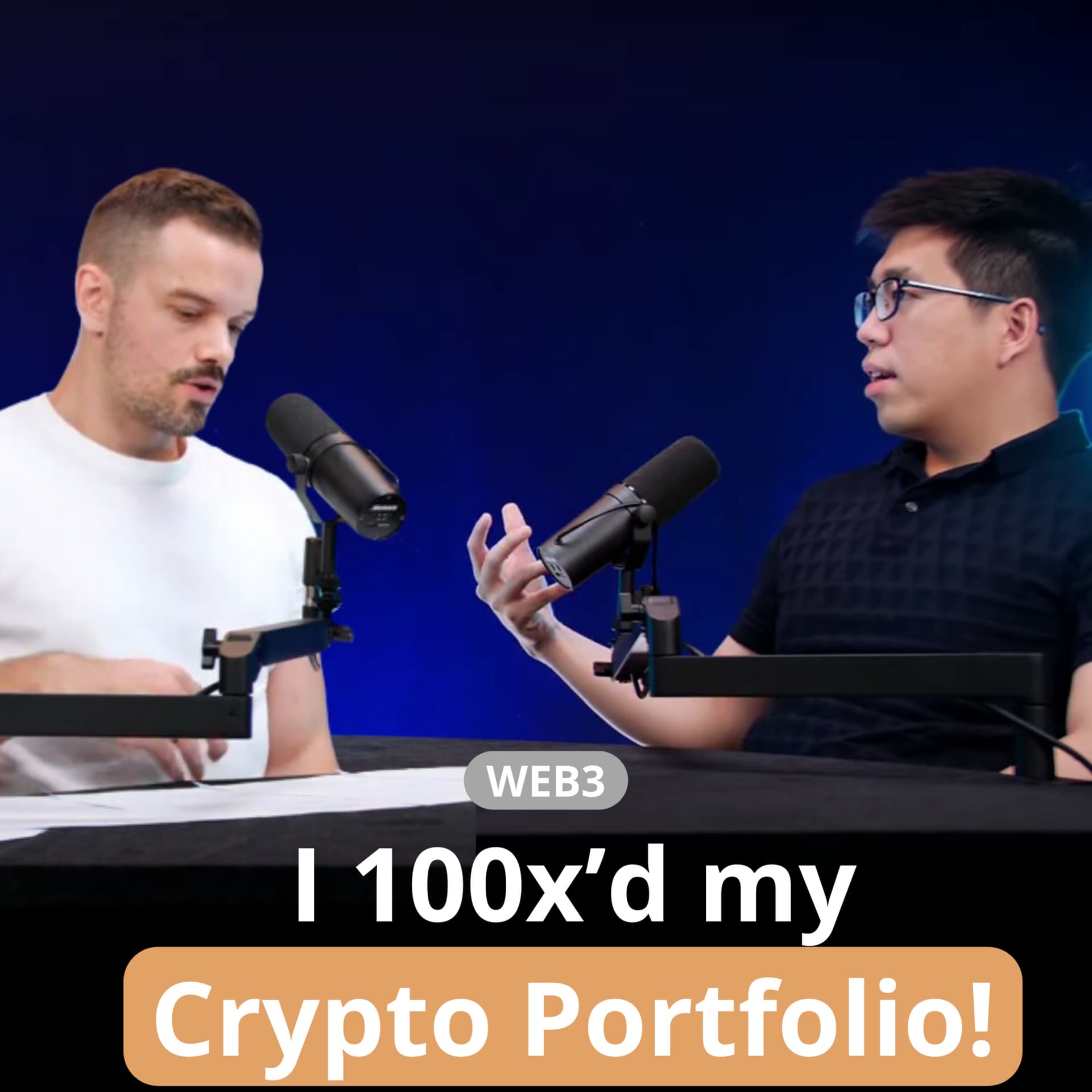
Arthur Cheong: "My Strategy to 100x Your Crypto Portfolio"
Host
Kevin Follonier
Guest
Arthur Cheong, Founder & CEO of DeFiance Capital
---
Episode Overview
In this episode, Arthur Cheong shares his incredible journey in the crypto space, detailing his rise from a modest Malaysian background to becoming a notable figure in cryptocurrency investment. He discusses how he achieved a staggering 100x return on his portfolio, the challenges faced during significant market downturns, and his strategies for success in the ever-evolving landscape of crypto.
---
Key Topics Discussed
- Achieving 100x Returns in Crypto Investment
- Arthur achieved over 100x returns on his mid-five-figure portfolio in just a few years.
- He emphasizes the importance of strategic investments and understanding market dynamics.
- Trust Issues and Startup Failures
- Discusses the implications of misplaced trust in partners and the importance of due diligence.
- Shares personal experiences with startups that didn't go as planned, emphasizing the need for clear agreements and roles.
- Role of Ego in Success and Failure
- Arthur reflects on how ego can cloud judgment and lead to poor decision-making.
- He advocates for a balanced approach of optimism and skepticism in business dealings.
- Cynical Optimism in Crypto
- He describes himself as a "cynical optimist," highlighting the need for critical thinking in a market filled with speculative behavior.
- Arthur stresses the importance of making informed decisions rather than blindly following trends or influencers.
- Wealth-Building Opportunities in Crypto
- Arthur argues that crypto represents the most significant wealth-building opportunity in modern history.
- He encourages new investors to take calculated risks while understanding the inherent volatility of the market.
- Resilience and Comeback Strategies
- After experiencing significant setbacks, including the collapse of DeFiance Capital's assets, Arthur details how resilience and a step-by-step approach helped him recover.
- He emphasizes that maintaining a focus on long-term goals is crucial during challenging times.
- The Impact of Market Downturns
- Discusses how market downturns can be detrimental but also provide valuable lessons for future investments.
- Arthur shares insights on how he managed his psychological well-being during the market's lows.
- Future Predictions for Crypto
- Predicts continued growth and maturation in the crypto industry.
- Foresees innovations in wallet management and self-custody solutions becoming more user-friendly and accessible to the average consumer.
---
Key Takeaways
- Invest in What You Understand: Arthur advises focusing on a few projects or sectors that resonate personally, rather than spreading investments too thinly.
- Stay Informed and Skeptical: Maintain a critical perspective towards authority figures and popular trends in the industry.
- Plan for Market Cycles: Recognize that markets fluctuate and prepare for both bullish and bearish conditions.
- Self-Custody and Security: The future of crypto wallets lies in creating secure, user-friendly options that do not sacrifice security for convenience.
- Mental Fortitude: Building resilience through challenges can enhance one's ability to navigate the complexities of entrepreneurship and investment.
---
Conclusion
This episode of the When Shift Happens podcast offers a deep dive into Arthur Cheong's experiences and strategies in the crypto sphere. His story serves as a powerful reminder of the importance of resilience, critical thinking, and the potential for exponential returns in the ever-changing world of cryptocurrency. Whether you are a seasoned investor or new to the space, Arthur's insights provide valuable guidance for navigating the complexities of crypto investment.
Written by AI. May contain mistakes. Listen to the episode to check what was said.
Transcript
Automatic transcript. May contain errors.0:00How much capital did you start with? the five figures five figures yeah and what's possible basically with five figures if you do it right it's possible to go 100x from there arthur chiang the founder of defiance capital is a genius in the crypto investment world renowned for achieving a staggering 100x growth in his portfolio at its peak before i started the whole entrepreneurship crypto journey i was probably 80 optimist and 20 cynical cynist can you give me an example of how you would express optimism and how you would express cynicism. The VC have this FOMO that they might miss out on the next Facebook, the next Apple, Google, right?
0:37If you miss out, the career risk is that, oh, you saw the deal you didn't invest. You're not a good VC. The cost of missing out one big home run is bigger than you invest in a few scam and go to zero. You want to make sure there's one investment that 1000x and just return the entire fund. Let's say I'm your cousin and I'm like, oh man, Arthur, you did so amazing. I want also to do 100x or 200x with my 5k. What the hell do I do and how do I even start? during June. Unfortunately, there's a crypto company that collapsed and dragged me and our company into a very challenging situation. I would say June is where shit hits the fan and it's like probably like the worst moment I ever experienced in my life.
1:11What makes crypto such an amazing opportunity for anyone, anywhere to build insane amount of wealth quickly? I think
1:28Arthur, it's been a crazy last few years for all of us in crypto. Yes. And a crazy last, I'd say, 12 to 18 months, especially for you. How are you doing, man? I'm doing good. It's improving. Yeah, definitely much better compared to the last 12 months. Do you want to tell us who you are first? I am Arthur. I am the founder of Defiance Capital, a crypto native investing firm based in Singapore. I've been investing in crypto since 2017 and launched my own crypto fund in 2020. And over the past few years, we've become one of the most active and recognized crypto investment fund in the space. We have invested more than 100 crypto startups and protocols.
2:25yeah you call yourself a cynical optimist why i think this is a the favorite way i describe myself right now because when it comes to life and especially in crypto you need to be optimistic so you have you can move forward because the world are full of bad things if you are only taking a pessimistic lens you are just gonna you know stop moving forward you think this is futile this is just not how i think one should live their life but at the same time you should not be blinded by the optimism to to get to a situation where you just take everything in the face value become too naive so i think combining uh optimism and like being cynical in terms of like how you see a lot of the crazy things in the world it's a good way to balance out a good balanced approach to to the world and to crypto especially is it something you've been kind of doing for a long time or is it something or you were more kind of optimistic person who went through some experiences and learned basically learned this through the hard way or you've always been that kind of person who is like able to say oh actually i'm very optimistic but i know there is like you know bad surprises and things here and there.
3:45I would say I'm definitely a much more optimistic guy before I started the whole entrepreneurship and crypto journey. If you want to put a number to it, I was probably 80 % optimist and 20 % cynical cynist. But right now it's probably more 50-50 or even I would say 40 % on the optimist side and 60 % on the cynist side. Because yeah, like a lot of events and you do experience changes yeah can you give me an example of like basically before crypto of what you would how you would express optimism and how you would express cynicism because you said okay 80 20 what does this especially the 20 look like yeah so i think uh i studied economics in university and so i consider myself almost like a economist when I come in terms of how I approach a lot of the issues in the world.
4:44So economies usually tend to be quite rational, you know, approach thing in a more logical manner. And I was always in a school of more like, I think that the free market can take care of a lot of things. So a lot of things that like too much human or government intervention is actually counterproductive. So and actually, when you come to crypto, one thing that attracts so many people is because it's before the whole regulation become more solidified it was a complete free market in certain sense you can fundraising there's no regulation and compliance i mean the government did publish a guidance after it become very popular but during the first phase it was wow wow west and the complete free market so that actually attracts a lot of the you know ardent free market believer to see oh you know we can create so many things there's so much potential.
5:36We can move so fast without all this cumbersome regulation. And then after spending six years in crypto, you realize that a lot of the so-called flaws is something that the complete free market cannot fix. So that kind of, and also human are just extremely terrible in general, in organizing governance. I would say like there's a phrase in crypto, actually it's not, it doesn't come from crypto we call it the morlock so morlock is like a deity that is like a they like the we describe that as a issue of the human coordination like morlock is what caused human to be unable to coordinate and this actually happened to crypto like crypto uh i would say to a big extent we largely failed at self-regulation so that the industry itself did not manage to self-regulate itself to a level where it can grow in a sustainable manner like it basically we go to we reach a stage and I still it still is right now we have an extreme boom bus cycle during the bull market the good times we go crazy and during the the bad times we go very bad like like in the real world you see this thing being smoothed out by the government and by policies and regulation but in crypto there's no such thing yeah does this mean that you don't really believe in full decentralization.
7:00Do you think it's possible for people to organize themselves when everything is fully decentralized and you don't have a third party to kind of play the bad cop? Yeah, I think this is possible, but there's actually, I think this is an area, I think that crypto do not really need to reinvent itself because over the past few thousand years, humanity have gradually progressed toward like a better form of governance but it took us so many years so many lessons experience to get there and like if you want me to give like a concrete example like switzerland right have probably one of the most robust and educated democracy in the world like it's one of the few countries in the world with a direct democracy where a normal citizens, civilians can put out a proposal.
7:51And if they get enough signature, they can put it out for voting. And if it passed, it become a law. But this is obviously conditioned on a situation where everyone is very educated on their civilian and citizenship duty and are informed on the issue. But this is actually very hard in a situation where the voters or people who are making decisions are not that well informed, and that will lead to a terrible outcome. So I think the department in identify whether these people are educated, are they informed of the issue, or are they actually malicious because anyone who acquired a token can vote.
8:28And this is still a big unsolved issue right now. So I do think that a lot of the protocol, like the more lower in terms of the technical stack you go, the more decentralized you need to be. So there was a very good article written by one of the Bitcoin OG, Nick Sable, if I pronounce his name correctly. So why he's such a pro Bitcoin is because he think that Bitcoin reduce a lot of the governance complexity and this create social scalability because it's so simple. You don't need too much governance input so everyone can understand it very quickly and people know that it will not be none of the parameters or whatever can easily be changed.
9:10So this lead the whole governance, the whole process and knowledge to be able to scale very quickly. The more complicated the governance process is, the harder it is to be scaled. So he called the term social scalability. Yeah. So I understand that, but you could also argue that if it's more rigid, like the Bitcoin protocol, you basically can build anything on top of that. And so the progress that's possible and what you were saying before, you know, what attracts a lot of people is everything that's possible without regulation, with decentralization, with, okay we start with Bitcoin removing banks so the toll collector but then how we, you know, building a decentralized internet, building decentralized, I mean pretty much everything that's probably not going to be done with Bitcoin.
9:59Yep, yes. So that introduced a layer of complexity that makes the whole thing almost impossible. Yes. So I think, like I say, the lower in terms of the more foundational your technological layer is, the more you need to be socially scalable, which is why Bitcoin is one of the foundational layer of crypto. It's like a decentralized money. That's it. It's hard. It's intended to be hard to build application on it. And I think this is also one of the ways that Bitcoin continues to be the most valuable crypto because it's so simple and easy to understand. It's hard to break as well because it's simple and it's hard to put complexity on top of it.
10:41Although that is actually changing this year. There has been a new tools that you can mean NFT using something called inscription. They call it the ordinals. So they actually have bring some technological innovation to Bitcoin. But for the last 12, 13 years, Bitcoin is a very simple tool. And because it's like a foundational layer, obviously the higher in terms of the technological stack you go, you optimize. So it's a spectrum. For Bitcoin, you should optimize for social scalability, but feature poor. But if you, on the more, you're going up to the tech stack where you want to build some feature-rich applications, then I think it's getting harder and harder to be fully decentralized because then you need to be iterate fast.
11:25Let's say you're building a consumer-facing applications. If you are not able to innovate at a certain pace like what your competitor is doing, you get out-competed. And in that sense, does it make sense for these applications to be as decentralized as Bitcoin? I do not think it makes sense. and it's impossible for such product to compete on the feature and product level if it's that decentralized. You talked about Switzerland? Yes. How do you think Singapore is doing? In what sense? Which part? So in the way basically the country is run and in the way, I mean, here there is, I mean, some people say it's almost not dictatorship but you know like closer to the Chinese way of doing things than the Swiss way of doing things but actually Singapore at least says that they're trying to copy a few things from Switzerland how well do you think they're doing at that?
12:25I think the better way to describe Singapore is illiberal democracy yeah so like in the US and Europe you have liberal democracy and Singapore is an illiberal democracy. It's still a democracy, but it doesn't blanket receive the liberal values of the Western world. I think there's a lot of learnings that Singapore has incorporated from Switzerland, but Singapore is trying to chart its own way. In that sense, I think, I would say Singapore have done a fairly good job, in a sense. And also this has to come from a perspective of the geographical location and the historical reason. So we talk about Asia.
13:07I would say when it comes to pure politics and governance, Singapore, if you measure on a holistically multiple factors, is, I would say, top five for sure. Probably it's not the most democratic country and the freedom it gives to the citizen are not as much as compared to Taiwan or Japan and Korea. But it's definitely in the top five or top ten in terms of, you know, you have a lot of freedom. and the citizens are actually able to voice their concerns to the government. And government actually do incorporate this feedback seriously. So it doesn't get demonstrated in the form of protest or, you know, we go on the street.
13:51That's just not the way that the Singapore, like Asia, but in general, there's less protest and rally. But there is some feedback mechanism for the citizenship to voice their concern and unhappiness. And usually what we have seen is they do incorporate this feedback. And when the matter gets very serious, they actually take it very seriously. Yeah. What's the mechanism for people to voice their concerns here in Singapore? Because my view coming from outside, right? And especially I came like, I mean, I moved kind of during COVID and I saw there was a lot of, there was something that people Singaporeans and non-Singaporeans would talk about which is kind of the opposite of what you're saying people are not really allowed to say what they want here if it's something bad and it doesn't even get reported in the media for example yeah so I think that it's the freedom of the speech we have here is definitely not comparable to US and Europe as well.
14:56And in terms of the media, so obviously SPH is funded by the government. They are definitely, you know, going to be a lot, there's more, I wouldn't say it's like an outright government censorship, it's like a self-censorship. So they will be very careful and they want things to be backed by facts. So I think this is something that what I experienced Singapore, like is you cannot just make outright allegations that it's not backed by any proof. like any and I would say sometimes they the government the burden of proof they require for you to just to make a statement is a bit too high like in US you can just say Donald Trump is crazy or whatever it doesn't matter you don't even need to back it up with any proof you can just say someone like Obama is a Muslim and you're fine right but in Singapore you just can't go and say some politician he is someone someone like without using a proof but if you actually have a proof to back it up the government cannot just say oh jail you or like you know say you know POFMA you.
15:50I actually do like there's a obviously there's this huge controversial law about the media censorship law is called POFMA but actually that is to correct if you make a like a wrong allegation or statement. If you actually you can stand by your facts that is the government actually can't issue a POFMA order to you like if you have a facts and evidence to back up your statement. So I think this actually there's a good and bad to it but the good thing is obviously it it makes it harder to spread false news and false rumors. Yeah but again this is a very delicate balance. I'm not saying the government have, you know, completely right.
16:22Sometimes they are a bit too overzealous in issuing this POFMA order and this also, in a sense, indirectly lead to a culture of self-censorship because people are worried of getting this, you know, POFMA order. They tend to be a lot more careful of what they are going to say. Yeah, so it's a delicate balance. But I think the feedback mechanism a lot of time is, media actually does matter. So like, I do think that the government actually care a lot about the media feedback. Like, you know, when some some news come out, you look at the comments on the social media, Facebook or like Instagram, whatever, or even LinkedIn, right?
16:57Like if it gets super bad, I think the government do realize it and they will take that into account for the future decision making. And also when it comes to the more business side industry, there's always a industry in the trade group that will solicit feedback from the industry, associations, whatever, before they make a further decision. But whether they take the feedback and incorporate that is another issue. I mean, and I think crypto industry, unfortunately, like if on the end that we, our feedback get incorporated less by the government compared to a lot of the other industry where government think that, oh, you guys are more credible.
17:33I think after what happened last year, there's one thing that have taken a hit, like the credibility of the crypto industry have taken a hit in to the eyes of the government. Yeah. How bad is it? Because when I came here two years ago, it was really, I think Singapore is really, you know, advanced compared to a lot of other countries. But I also realized because I lived in Geneva before, I was in Dubai, that a lot of countries, they kind of market themselves as crypto friendly since many years already. It's not really true, right? Even opening a bank account if you're a crypto business is very difficult.
18:06Yes. How much do you think Singapore is advanced in terms of crypto adoption and acceptance. Yeah. Despite what happened last year. Yeah. So I would say that I probably would not, I think it's also correct to say Singapore is crypto friendly, but that is actually, it stems from the fact that Singapore is business friendly. They are not particularly crypto friendly. They are business friendly. As a result, it doesn't matter what industry you're in, as long as it's not an outright illegal industry or an industry that Singapore government doesn't want to have in Singapore, like drugs or firearms, they will allow you to do business here.
18:47But how much support they are putting in is another question. So in that sense, I do not think Singapore government is putting a lot of resource to encourage the growth of the crypto industry, but only on a blockchain part. So they always make that statement multiple times on MS and the government ministers. They say, oh, they support tokenization. They support the blockchain technology to improve the human life or whatever, but they don't encourage speculation. So they are always in the sense that there's a love-hate relationship there. They know that crypto is, it's very hard to completely separate crypto from blockchain, but they are still trying.
19:24So they don't really like the crypto speculation part, but they recognize that there's potentially some value on the blockchain technology part that they can incorporate, which is why MS, you keep seeing them doing all this kind of Project Guardian, Project Ubin to incorporate blockchain technology although if I I mean coming from a more crypto native kind of view I think it's I think that if you take away all the crypto part the blockchain is just it's not like that superior of a technology yeah like I think you need crypto because that facilitate open source economy open source network and it is a coordination mechanism if you completely take away the crypto part the co-coordination mechanism just did not exist so then you're just left with you can even say is like a slightly inferior form of database technology.
20:09Yeah. Yeah. More expensive and slower, actually. We are doing this podcast from Singapore. Yes. We both live here. But you didn't grow up here. Yeah. You grew up, you were born in Malaysia. Yes. Grew up in Malaysia. What happened in your life before crypto and in your childhood that made you become such a high achiever, someone who has like so much fire in the belly and who is so resilient? Yeah, that's a good question. I do not think there's any like special turning point or events. I grew up as like a very standard, I would say, middle. I was probably even considered lower middle class in Malaysia.
21:02My parents is like a blue collar worker, but they did very willing to invest in our education. So I went to a very good school in Malaysia. And as a result, I'm able to come to Singapore for university. Is it the goal for most Malaysian high achievers to do a uni in Singapore? Was it for you a clear path? okay, if I do this school, I'm going to move to Singapore afterwards because that's where the opportunity is? Or how did this happen? Yeah, actually, no. I would say coming from, I was in one of the best Chinese schools in Malaysia, Singapore is the top choice because of the cost effectiveness.
21:45It gives you a relatively high quality of education with a more acceptable tuition cost and overall cost. And you can also take a tuition loan. And I came here not on scholarship, but on tuition loan actually from the Singapore banks and obviously that is a good financing option that is not that easily accessible for other countries. I would say if actually that if cost is not a factor most of the top Malaysian students actually want to go to UK and US. I would say UK number one and probably US number two. Singapore is probably number the third one. Okay. Yeah. In terms of the prestige and in terms of the you know where they would really want to go.
22:27So for you, you were thinking, I want to leave Malaysia because there's more opportunity in these other places, UK, US, Singapore. I'll have to take a loan. Yes. So I'll go to the place where it's kind of most cost efficient and I might just have the lowest loan and the best education. Yes. It's kind of trade-off, right? Yes, correct. Yeah. When was that? I came to Singapore on 2011. Right. So what did you do after that? I landed a job in BP, a multinational oil and gas company. I joined their management associate program. Actually, it's more like a trading associate program in their oil trading division.
23:10Singapore is the largest commodity trading hub in Asia. So a lot of these big oil and gas companies, they have their oil and gas trading division in Singapore. So I landed a job there. I worked there for almost three years before I joined the crypto space full time. How did you feel going to work every day for an oil and gas company? Did you feel like this is the logical next step for me after university? Or did you have already this thing within you that was saying, I can't stand still here. I need to do something. No, I think that is actually what I want to do. Because I mean, since very young, even before I come to NTU and Singapore, I always wanted to work in a more so-called market-facing role, whether it's on trading, whether it's on investment, whether it's on research.
24:02So that's always my aim. So obviously, I also considered to work at banks or like, you know, asset management company before. But ultimately, the best offer I got is from BP. And it's also a market-facing role. And Singapore being a commodity trading hub is also a good place and a good career path to be. that make me join BP. Did you like your experience there? Oh, yes. And I think this is a very formative and a very good experience for me because the good thing about being in a big company is they usually have a structure, a training program for fresh graduates. And I would say that this is very valuable because when you are just out of school, there's a lot of things you do not know.
24:44And actually it's good that you undergo a more structured kind of training program to get the basic foundational stuff learned first before you go on to chart it out on your own. Yeah, so I think that three years I spent on BP is very good. I make a lot of good friends there. A lot of them I still keep in touch. I learn a lot of way of business, of professional working ethic, which I think is something that, this is probably straying a bit off topic, but this is something I think crypto sometimes a bit lacking, especially on the younger generation. Some of the people who join crypto space right out of school, they unfortunately miss the whole opportunity to build a good business, like a work ethic.
25:27And this is something that crypto is not really good at because everyone just want to look in the market, very distracted and always want to trade their own thing. But if you work in a big company, it actually helps you build a character and a business and work ethic. Does it mean you don't back founders who are just straight out of university? Because of what I was about to ask before you said that actually, would you back or did you back people who are straight out of uni or just just stopped university to start a crypto company or you're still thinking oh man i want people i want to optimize my chances of success in this extremely risky game which is startups and in crypto it's even more risky and therefore like i think that people who work for a few years are more likely to become good founders?
26:15Yeah. Generally, we prefer to back experienced founder, not fresh graduates, but there are always exceptions. There are always some very brilliant team and co-founders that even though they are fresh graduates, they are just so brilliant. They are like subject matter experts that despite the lack of official working and business experience, it's still worth backing and investing in them. But obviously these are far and few betweens. Yeah, and you know, there was a, I forgot which university did the study. There was a research showing that veterans executives tend to have a higher success rate of founding a company, like the median age of successful founders is actually 40 years old.
26:58Yeah, exactly. 40 years old. Yeah, yeah. And it's, yeah, and also like, you know, after they accumulated enough industry contacts, connections, you know, they have some funding, you know, this always increase your chance of success but there's always exception right like you a lot like not you say uh Mark Zuckerberg and all this you know like carousel in Singapore it is always exceptions what's really interesting is how our perception is basically wrong because we are all thinking I mean I take my example but like most of our generation we're thinking that yeah you need to start when you're super young and you know because it's harder and then you take more risks yes if you have a family but it's clearly showed by this study that people who are 40 years old are more likely to be successful founders.
27:44Yes. Which for some reason we, yeah, it's much less sexy to think about a 40 years old founder than a 22 years old founder. Exactly. Who is starting a company from a basement or a garage. Yep.
28:01So you worked three years in oil and gas. When did you start investing? and how did it kind of happen? Because a lot of people actually don't think about this stuff until 30, 40, 50. Our parents' generation, it's more, I have my kids. I can get married to someone. I buy a house, which is a sort of investment. Yes. Fine. But then I have my kids and I don't, you know, my kids, it's expensive. Maybe I have one, two, three. I have to pay through their life, their school, all that stuff. And only when the kids are out, you're probably 50, 55, maybe 60. like oh man like i should start thinking about retirement yes and invest right then there is all other people who are extremely entrepreneurial and from extremely young have this thing from within themselves which is i don't know i want to invest like i want to to make to turn one dollar into five dollar right yes that's i think is more you yes how did this start uh i think it started where Growing up, our families, I think because my parents, they are not super well educated, they are not very good in financial, like personal finance management.
29:14So as a result, you know, they committed to a lot of the not so good financial decisions, like investing in the wrong things, you know. So this is always like instilled like a big kind of lesson that, you know, it's not just about how much money you make, but it's also about how good you are at managing it as well. so how did you know when you're younger that they're investing in things that don't work do they share this at home or do you feel in the life quality or like or in the mood of your parents or like how do you even know because you're a kid right yeah because i mean uh like they will argue over money and this always become like a common topic argument i think this fairly common in asian family absolutely argument over money yeah uh because you know it's there's always not enough money to use so that when as a kid you see so much argument about money it leaves a big impact to you that you know just stress the importance of a good financial management like how important is it to the happiness in the family and also just individually as well and also removing the stress yeah why is money so important in asia because i don't think that asian household or couples are doing necessarily worse than european couples or american couples right yeah but as you said and i've heard it so much from my asian friends or girlfriends so many arguments about money yes and actually a lot of trauma for the kids to hear this and like sometimes like threats of divorce and all that stuff all around money why is money such an important topic for Asian families and couples?
30:55Beyond the basic, which is you need enough money to survive, obviously. Yes. I think it's also, I think there's two factors. There's probably more factor. I think one is like, Asian society generally are poorer. It's a fact, you know, when you look at economic data, Asian countries usually have a lower purchasing power. even, okay, so there's two ways to look at it, right? Gross like a GDP per capital and income per capital. When you look at it, the ratio of income per capital compared to GDP per capital in Asia is actually generally lower than US and Europe. Means that as a percentage of the total economic output of the country, the income, less percentage of the income go to the household compared to the Western countries.
Read the full transcript
31:49So why is it there's a lot of, you know, public government take more out of it, you know, there's a lot of indirect taxes or what is that unfair distribution of the revenue between the company or workers, whatever. There's a lot of reason behind it. So like, it's just the pressure of the money is just very high. Actually, when you look at a lot of Asian countries, you realize that the cost of living are disproportionate compared to the income. Yeah, in Malaysia, and I would say probably in even China, you look at it like the things are, obviously you look at in US dollar terms things are cheap but if you look at local currency term it's very expensive especially compared to the salary the median salary of the population there.
32:28What do you think about Singapore? Singapore I think is one of the better ones in Asia for sure but if you want to compare to US it's actually still I would say below US. Because there's a lot of indirect tax and some of the biggest components of spending in Singapore are still very expensive but Singapore is better than a lot of Asia country for sure. Like, you know, just a comparison, like we take Starbucks, right? Like Starbucks costs like$5 to$7 here and median household income in Singapore is$7 ,000. In Malaysia, median household income is 10 ,000 ringgit. But a Starbucks costs like 15 to 20 ringgit in Malaysia.
33:09Obviously, you don't have to drink Starbucks, but, you know, we're taking an international brand to use as a benchmark. and the young people in Malaysia do love drinking Starbucks. Yeah. Yeah. So I think that's one reason. The second reason is obviously cultural. I think especially for Chinese, Chinese ethnicity, money is always one of the biggest, you know, elements in life, right? Like during Chinese New Year, we wish each other, we should have a good fortune, you know, we should become wealthier. like this is literally the way we we greet each other during Chinese New Year Lunar New Year right so it always become it always a very big element of the of the culture and because generally most Chinese especially in China and I think in Southeast Asia as well a lot of us we are not like very devoted in terms of religion like even to a Buddhist or like Taoist it's not like very hardcore compared to other religions so money is always kind of like I wouldn't say it's a religion but always be kind of like a central belief system that the richer you are it means the better you are doing yeah so that's always I think that has something to do with the whole you know the whole argument about money as well and it's also how you benchmark yourself because probably in some other religions you benchmark yourself oh I'm more religious I feel better this is also like reflected in your social status but in a lot of Asian culture your social status is purely reflected by how wealthy you are I mean unless you you are like minister or whatever but usually that doesn't really happen in most of the Asian country right you very small percentage of people are working in the government or are like you know ministers or what yep so you see your parents arguing about money yes and it kind of gives you this huge motivation to say i don't want that in my life yes so what do you what do you do then how old were you when you first invested yeah what did you do how did you go about it yeah so i I actually bought my first stocks in 19 years old.
35:10I actually bought my first stock in, I opened a brokerage account in Malaysia and I bought my first stocks there. I sold it very quickly because I don't understand the stocks enough. But yeah, I started investing in 19 years old and from then onward, I would just keep on reading different investing books. I think since then, I probably read more than 30 books related to investing. Obviously, all the classic of Benjamin Graham, Boron Buffett and like George Soros, all these like classics, you know, I probably read most of it. So yeah. So and during university times, I'm very active in investment clubs.
35:46I spent a lot of time doing various activities there. I was like the vice president of the club for two years to, you know, to direct all the activities and also like on a research and education side. Yeah. And actually, if you go to YouTube, you can still find a channel NewsAsia art video interviewing me when I was like 2013. I've seen it. as a young investor. I've seen it. Yes. But not preparing for this hotel. I've seen it like one or two years ago. Oh, wow. Yeah, yeah, yeah. Yeah, yeah. So yeah, yeah. This is, I've always been interested in investing since very young. Did you have a goal? Early 20s, you say, for example, me, I was like, I want to retire before I'm 30.
36:28And I had a certain number in my mind. Obviously, I didn't understand that the whole retirement thing is actually extremely boring and you don't even want it. But like, I was like, oh, you know, you have this kind of, did you have that? Or you were just thinking, I want to like build my craft to kind of, you know, we always say luck is when preparation meets opportunity. So I want to prepare for the right opportunity and I don't know when it's going to be and what it's going to be, but I believe in the future and in my future and I'm preparing for that. Or you were like, I have this goal and this is my kind of plan to get to this goal by this age.
37:05I do have a plan like a goal which is I say that I want to achieve a 1 million net worth by 30 years old okay but it's more like just to put a number to the target so it becomes more visualized that you can actually like have a more concrete number in mind yeah but it's not like something that it's just to put a number to it and it's also fairly I wouldn't say fairly it's like it's difficult but realistic I would say to a certain extent then in Singapore, it's realistic because Singapore, the tax is not too high. If you work in a high paying job, you make 100 to 200 ,000 annual salary. You save, you invest.
37:42If you do well in investment, it's not impossible. It's difficult, but it's not impossible to achieve 1 million net worth by 30 years. So if you do well in investing and you get a high paying job. Yep. So what do you tell people today who say, because you said 1 million, it's really interesting because if I talk to, I mean, my ex-girlfriend now or any friends, it's always like, when I get to 1 million, I'll do this. I'll change job. I'll go travel. There's always this 1 million kind of number, right? Given all what happened, and we'll talk about that later, but like, and how much over that you were even before 30, what do you think, what would you tell these people who say, oh man, especially on the, when I reach this number, I'll change my life, right?
38:40I don't really have this kind of specific, you know, to do things after I achieve that number. And I think it's also part of the journey. Like I think when you hit there, you just feel a sense of relief and like achievement. But in terms of, you know, are you like gonna commit to you know like buy something whatever that is usually quite secondary i think most people will will enjoy the whole sense of achievement more than anything that oh i finally can afford something or what it's really the sense of achievement of like a target unlock kind of things it's it's a bit like playing game you finally achieve some targets you know that that is something that feels more true to me like i set myself a challenging not impossible goal and i actually did achieve it and in a sense ahead of the target so that this is kind of things that you You feel a sense of achievement and accomplishment.
39:29Yeah. And I think that is something that is a better motivator. That's interesting. So you felt really proud and you felt positive feelings when you reached that? Yes, for sure. Okay. Because me, I was like feeling lonely. I didn't have anyone to talk. I didn't have anyone, especially when it's crypto related. Yes. You don't, it's difficult to find people who you can talk about that with and who will really understand the kind of magnitude of what's possible. So you end up feeling, at least for me, it was kind of like, I mean, before COVID, but let's see, like there's this weird thing happening.
40:07You don't even know who you can talk to about because they don't even understand and you kind of end up feeling almost lonely. Yes. Yes. Never experienced that? No. I think this is also part of the personal growth. So I think that because my interest in investing and also crypto are just so different with most of my other normal friends. And you will outgrow your initial network of friends. And so I think right now for me, I don't think there's anything wrong. And also I'm actually pretty happy with it. A lot of my good friends right now, they are in crypto industry. Most of my friends, most of friends I talk regularly to, they are in crypto some way or another.
40:54And I think that's just a natural progression. You outgrowth your personal network and your friends and then you go and focus on a different thing and you naturally build your network and your friendship around people of similar mindsets of like a interest. Yeah. So I think that's just what happened. Yeah. I mean, I did make a lot of new friends in the space and obviously everyone can emphasize and resonate with each other because we are all experiencing the crazy things together.
41:24So you're super interested into investing. You are, you said president or vice president of the club at university. Yes, correct. Then you start your corporate job, which probably pays you decently well and you can start, you know, the classic, I guess, save a chunk, invest in an S &P 500 or some stocks. Yes, yes. what happens then that was the kind of aha moment with crypto where you realize, oh man, this stuff is everything I thought about already in terms of investing, but compounded. And therefore, instead of investing a thousand bucks every month for 30 years, whatever, like I can do that and maybe achieve what I wanted in 30 years, maybe only in 10 years.
42:11or maybe only in five. Yes. Or maybe only in one. Like what's, how did you get sucked into this industry and what's kind of the key moment there? Yeah, I think that first of all, 2017 was like a year of like a, like I would say it's a year where Ethereum become mainstream. Ethereum I think started the year at 2017, I think it was like$10 to$20. It ended the year at like$300 to$400. So it's like about 30X. return for Ethereum. And it become like a few hundred billion. No, I would say like, I think it was around slightly less than a hundred billion. So it went from like a, like a less than a few billion market cap to almost like a hundred billion market cap in one year.
42:56And obviously there's like a exponential growth and naturally, and obviously there's a whole ICO thing going on. A lot of new token were being created. People talk about this like a newer form of crowdfunding. And obviously the ICO also make crazy returns. So you're, you not only make money on Ethereum, but if you also invest into the right ICO, you make even more crazy returns as well. So that obviously, as an investor, I just realized that I have to know what is happening. I cannot be missed on it. And actually, before that, I was investing in the Singapore stock market and a bit of US stock market.
43:29And Singapore stock market was just very boring. There's no growth stocks to invest in, very little of them. And also, it's just like a very sleepy and boring market. And there's also, I'm a very active guy. I like to participate in the whole investment process. And the problem investing in stocks is as a minority shareholder, you are very difficult for you to make any changes to the investments. I'm something that, I'm someone that was very obsessed about the whole investing process. So I like to, when I'm obsessed about it, I spend a lot of my time just, you know, every day after finish, I just look at it, look at the stocks, you know, look at what am I missing out on the information.
44:09But actually, I still would not be able to make any changes to this company I invested in. And also, it's just not fun as well. So, and crypto is something different, like because you can actually be early investor, you actually can shape the outcome of the investment you made, you know. Like you are the evangelist, right? You are the one of the earliest guys that talk about it and you promote it in a way that actually, you know, you participate in the growth of this investment. How did you realize that that was the case? because there is this thing for everyone, I think, where in the beginning you're like, okay, this crypto thing is interesting, but it's kind of intimidating, right?
44:45So I like to read. So then when I look at crypto, I did not immediately buy it. I actually spent at least like two weeks to read up on it. You know, obviously you go on internet, you'll find whatever the best source of information you can. You read on it. What is the technology about? Does it have any intrinsic or fundamental value? You know, is it a scam or whatever? And after spending a few weeks of research, my own conclusion it's not a scam it is a very early stage potentially promising technology there's a lot of exciting application to be built whether it will be successful or not it's unknown but it's exciting and it's a global asset class where anyone from the world as long as you can put your money into crypto you can participate in it it's a little bit different from like you know like if you're Singapore stock markets why would like you know a citizen from other countries invest in a Singapore stock market like they do not know the company here But crypto is inherently a global asset in a way.
45:40And I think that makes it very exciting. What's one of the main points for you that made you realize crypto is not a scam, especially when six years ago, I mean, some people still say it's a scam today, but like it's not as bad as a few years ago, right? Media. Yes. Especially when things go bad, it's a scam, it's a scam everywhere. It's a scam, I told you so. what's the key thing for you that made you really give you a lot of conviction that is not a scam and that you can kind of go all in? For me, for example, it was looking at who is dedicating themselves fully to crypto. Yes. Balaji, Naval, all these.
46:25And I was like, these guys have been, they're so good in what they say about everything, investing, life, even spirituality, everything, right? Yes. And then I'm like, these guys, they're leaving everything for crypto when everybody else is saying it's a scam? Like, it's probably telling. So it's probably safer than what most people think, right? Yes. So what was it for you? I think it comes from my background as a more pro-free market, liberal kind of person, where I always think that less government intervention is better. You know, I'm always a more pro-free market person. So the whole ethos of crypto and blockchain is always to promote decentralization of power and as a coordination mechanism as well.
47:15So this whole message just resonates deeply with me. and I do believe that in terms of finance I was also very big into this whole economic history and look at some country where they have high inflations a lot of the central bank government mismanaged their currency and as a result they have a lot of issues so I think that actually naturally lead me to believe that crypto always have a value but for me as an investor the more important question I ask myself is not whether crypto is a scam or not because I think that if you spend enough time, that is not the right question to ask. It's, does crypto have a lot more growth opportunity from here?
47:55I think that is a question that is more important asking because I think a lot of things are binary in life. It's like, is US dollar a scam? Is a lot of things a scam? If you take it to the extreme, if you only adopt a binary kind of approach, everything is a scam, right? And I think that's not helpful, right? So for me, it's more like, is crypto a billion dollar, just a$1 billion opportunity? Or is it like a$100 billion opportunity? or is it like multi-trillion dollar opportunity? And I think that is a question that I ask myself and I do believe that crypto is not just a billion dollar opportunity.
48:27It is like a multi, at least a hundred billion opportunity. It can potentially be even a multi-trillion opportunity. And obviously that kind of view turned out to be correct that right now, the entire crypto asset class market cap is one plus trillion. At the peak, it hit three plus trillion. So, and I think that going forward, we will always be at least a few trillion dollars in terms of the market capitalization of crypto as a whole. Can potentially go above 10 in 5 to 10 years if all the bouquets do materialize. But I think that is a question I ask myself and I do believe that at that point in time, given how small crypto is, given how fast the global wealth is increasing and given the geopolitical situation, that is just on a risk-adjusted basis, the chances of crypto going way higher is just way lower.
49:15than going down. So on a longer term basis, so it's always a risk reward and on a risk adjusted basis, can crypto go to zero? Yes, it's possible. What if 2017, 2018, Bitcoin and Ethereum have a zero day bug? It's actually possible. And even right now, I will not discount it to be zero. But the thing is that even right now, it's a Bitcoin, Ethereum, they have a zero day exploit. The community, we can all agree to hard fork the code to a new one, so it's fine. I think even right now, if Bitcoin Ethereum have a big vulnerability, we can hard fork the code to a new blockchain and the value can be retained because it's also, part of it is also about the social consensus of which chain we believe is the real Bitcoin and is the real Ethereum, right?
49:57And that's the whole historical Bitcoin hard fork of how the Bitcoin cash and Bitcoin, the wall come from, right? So, but at that point of time when the industry is not that mature, 2017, 2018, if you have a zero day, can they go to zero? It's actually possible. But I still think that on a risk-reward basis, the chances and probability of crypto going higher is way lower, way higher than, you know, crypto going to zero. So you, based on probabilistic count scenario, you should invest in crypto. Yeah. How did you do this transition into crypto? Was it, I have a normal job and I'm starting to invest in there with the intent of going full-time or at some point you just say, I'm going all-in?
50:39How did it happen? Obviously, I just started from investing in crypto you know just as an investor when did you buy crypto first? 2017 so in the bull run? in the bull run yes I bought my first Ethereum and it was at$300 okay and so but the more time you spend in research the rabbit hole just keeps sucking you in because there's so much news and you get the dopamine hit and it just it just it just keep coming you back especially when market is going up we all experienced that FOMO before and where you feel like there's just so much opportunity, the market just has so much news. And it started becoming a bit distracting and you just start to get sucked into the whole rabbit hole and believe that it's so powerful and so exciting and you need to be part of it.
51:24So after spending a few months doing research and thinking deep about it, I decided to just do this full time. So that's why when I made a decision to quit my job, obviously it's a pretty high risk decision to pursue crypto full time. So I left BP to start my own crypto startup. Initially, I want to build a crypto data and research platform. Yeah. But that startup didn't work out in the end. But what I found the most success actually is in investing. What did your parents say when you said, I'm going to leave my three years well-paying job that's safe to start a crypto-related startup? Yeah, so I think I kind of like didn't tell them too much details because there's just no point making them worry too much.
52:13I just say, oh, I'm gonna work for another different company in a different industry. Nice. Yeah, I didn't exactly tell them I'm working for myself. So you do this research, right? A couple of weeks and then you're like, man, this thing is amazing. What's the combination of factors that makes crypto such an amazing opportunity for anyone anywhere to build insane amount of wealth quickly. You talked about the fact that you can participate early before. What else? Because there's a few factors here that make this kind of asset class and industry extremely different from pretty much anything else.
52:53I think, first of all, it's permissionless. It means that anyone can come in and launch their own thing and invest in whatever things you want once your money is in crypto, right? So that naturally makes it a global asset class. And there is always a certain level of network effect even in the capital markets, right? Which is why US stock market is one of the best performing stock market in the world in the last 20 years because everyone have assets and have some demand for US dollar. And when they have US dollar, they need to store their wealth in the US dollar denominated assets. And US stock market is one of the biggest and most liquid market in the world naturally attract the most capital inflows for investment perspective.
53:37And this is the same in crypto because most of the crypto are US dollar denominated and also it attract inflow from globally. Like whether you're Chinese, you're American, European, you know, Middle East, everywhere, you are able to access crypto. So I think that kind of thing is something that doesn't really exist if you're not a US stock market. If you're like a South Korean stock market, you're capital control, I cannot buy your stocks, You know, this situation and all like you're a European stock market, but it's like what European company, I don't understand what is it doing. And what the product and services they're building is largely only relevant to Europeans or like in France or whatever.
54:17So that kind of thing, you just create a dynamic where it's so global in nature. It doesn't have any geographical restriction, even though you're like for Africa, you can identify with Ethereum, right? You don't have to be certain nationality or whatever to identify with Ethereum. So that make it a global asset class so it can attract a global inflow. so that also means that it can have a exponential growth and because it's permissionless innovation the the whole industry and a certain crypto as a whole can innovate at a much faster pace compared to the non-cryptos and this is something that i i was also obviously since university i was very big into the whole startup culture and also that is also the time where singapore government is actually actively encouraging the whole startup culture in singapore i think when they see the first batch of success in Singapore.
55:01Singapore government, I think from like an early 2010s onwards, they start encouraging and investing a lot in innovation. You have seen the Block 71, and I think Carousel was founded around 2013, 2012, around there. So that was like the first, you know, a few years where a lot of the Singapore startups' ecosystems, they really start flourishing. And also that kind of, you know, also I read Zero to One and all this kind of startup book. And just the whole permissionless innovation thing just make you believe that, you know, crypto as a whole can grow way faster compared to any other industry in the world.
55:33Yeah. So you go all in crypto first as a startup and then what happens? So we, the timing was terrible because we started full time in 2018 and that was when the bear market started. It's like you cannot get a worse timing and impossible to raise funding because I mean, obviously, you know, we have some working experience but it's nowhere near the level where you're considered to be super experienced. And my co-founder gave up halfway. You know, and I mean, I'm the non-technical co-founder. So in most startups, you need a technical co-founder to work. So the technical co-founder quit. So that make it almost impossible to start.
56:17So I just decided that it's going to be impossible or very difficult to do this, you know, without the technical co-founder. And I did continue for a while. but after a while you just realize it's super difficult to secure further around funding and you know without technical co-founder you're just doing everything yourself it's just almost like a mission impossible and also the bear market just you know go gross on you right you feel like oh the industry just keep going down the price keep going down everyone just retrenching firing it just seems like it's going to be a tough time so i just stopped doing it i just focus on transition to just investing instead yeah but still knowing that i would say that's the massive difference between crypto and any other industry.
57:00Any other industry, if you really want to make it big, you need to build a company with IP and scalability and that's how it works, right? Yes. But with crypto, you kind of have this plan B, which is, it's kind of weird, but like, oh, I don't need to build a business. Or if my business doesn't work, if I have some capital, even if it's not huge i'm still able to make amazing returns that might be as good or even better than if i was building a really successful company in another industry did you feel that back then so you're just when when this first startup doesn't work out right did you feel that like in your guts like it's fine like because first i mean it's complicated complicated time bear market but also I still have my plan B which is investing yeah I wouldn't exactly say so because uh the investing part is just coming that I don't want to leave the industry uh and I still have like some money so the best thing to do is just to invest uh instead of quitting the industry and obviously I was also looking for other jobs in the industry at the same time so it's not like I decided to become a full-time investor because I don't have that much money to be an investor forever.
58:14It's just more like, I'll do this while I'm looking for other jobs at the same time in the industry. Yeah. Yeah. But I think that's certainly true for a lot of people coming in, they're thinking that, I think that's also, I think you think about, you only think about being a full-time investor when you already have certain amount of capital because investor means that your time frame is longer. But they ask a lot of people, I think that they think that they can just become a crypto trader without that much money and they can actually make it. And actually, there are some successful examples and I do know a few personally.
58:44but it's not as easy as you think, but it is possible. And, but I would say this is also possible in the US as well, in the US stock market. So it's also, it's not exclusive in crypto, but crypto somehow popularized the whole story a lot more than the US stock market. Yeah. Until you have Wall Street bets. I think after that, you know, the whole Wall Street bet, the meme coins, the meme stocks and option degeneracy, it's the same trend, right? Like the whole people who have 50 ,000, 20 ,000, they put everything into like short-term options and then boom 50x oh then they become a million dollar you go to the WallStreetBets Reddit there are people who show how much money they have made from just putting 10 ,000 into some short-term options short-term call options yeah so this is kind of like a similar trend but this is not just in crypto I would say even in other markets it's possible but in crypto definitely this has been well more popularized in some sense the kind of gambling aspect yes because what you're describing here with meme stock and degeneracy on leverage, like it's basically gambling.
59:46But in crypto, if you do a lot of research, you're connected to the right people. Yes. And you have some capital. There is gigantic opportunities that are, it's still risky, but there are much more legit than pure gambling. You have much more merit to it when it works out. Yes. Right. And it's really what you've done, right? Yes. Can you tell us about this journey? Like when you started, how you kind of like, I mean, I know you were early in Aave, Synthetics. I think AXI also. Yes.
1:00:22How did you go, how did you find these projects? And again, for me, how do I apply that to broader people and audiences? It's how, I mean, first of all, what did you start with? How much did you start with? In what sense? Investing. So how much capital did you have to start with? Like five figures. Five figures. Yep. And do you mind sharing more or less what was like the, where you, what's possible basically with five figures if you do it right before things went bad? It's possible to go 100x from there. Okay. So now.
1:01:09Based on my question beforehand, we're not talking about gambling here, right? We're talking about investing in a asset that has a lot of potential a lot of risks too yes how do you go about it what do you tell your let's say i'm your cousin kevin i'm 20 years old and i'm like oh man arthur you did so amazing i want also to do 100x or 200x with my 5k right 5k yes what the hell do i do and how do i even start yeah so i think the market has also changed you know my approach that was working very well back then might not be as effective nowadays. Although I would say it's still effective, but there are probably other ways that can do that as well.
1:01:54I think this is a very cliche term, but I still think it matters. It's really coming from a first principle perspective because this market has so much noise. If you do not have a first principle thinking, the problem is people might share some very profitable and actually real investment strategy or framework, but how do you know to filter it out whether which one is something you should listen to and something that you should not, right? So I think start from the first principle with really thinking that, are you trading or are you investing? And also, what is your investment philosophy? Like, do you think that you are just a kind of trader that you don't really care?
1:02:35You just want to make the most money and then you're okay to sell everything. So you need to first of all identify the kind of like personality that fits your, like the kind of investment strategy and philosophy that fit your own personality. And then you go there to build your whole investment strategy and framework and process. So for me, I'm always more of an investor than trader. Although for me, sometimes the line is a little bit blur in crypto. So for me, it's really that this is coming out of the whole ICO bubble, where there's a big question asked in the industry that what is crypto good for except for speculation, money, and fundraising.
1:03:16Because a lot of the experiment failed. There's so much ICO just completely go to zero. There's people that want to build anything on the blockchain and almost none of them make sense. So going from a first principle perspective, going to research, talking to people, I narrow it down to really just, there's only very few use cases at that stage of the technology that it makes sense to incorporate crypto and blockchain. One of them is finance, which is why I was a very big believer in decentralized finance because I think that this use case makes sense with crypto. But a lot of other things doesn't make sense at the moment.
1:03:51Like you want to put Spotify, you want to put Uber on the blockchain, you can potentially make it work, but it's just you're trying to force something and it just end up that you're competing on a lower feature, more expensive. but finance is something I think that right now the financial industry does not exactly compete on the cost they compete on like being like an intermediary like being a trust all this thing which is why I think that crypto and blockchain are well positioned to abstract away and I think this is still true right now obviously there's a lot of issue but I think on a first principle perspective I think that makes sense so I think these make it worth investing and I think in the sense that you can say that DeFi is a better form of fintech in a way because fintech I think right now to the current state of fintech I think fintech doesn't actually bring anything new to finance anymore because whatever you know the fintech part that the technology can bring to the finance the bank can do it themselves the bank are doing this robo-advisor themselves the bank are doing all these things themselves they're just probably a bit slower but this is not something they cannot catch up in two to three years so there's actually nothing really new that fintech is bringing to the financial world but I think DeFi is fundamentally in a different paradigm It's a different way of organizing the financial world, which I think that, you know, this is just a sector worth investing in.
1:05:08So this is what lead me to invest in Synthetix, Aave, early on. And same for Axie, which I think that, you know, after looking at so many other sectors, I think that gaming is also one of the very few sectors that makes sense with crypto. We published a thesis about this one year ago in our company's website, writing.defiance.capital. Yeah, so I think that's really, this is really how we look at it. Like what sector makes sense and how can we, you know, invest in it, you know, if it makes sense. Yeah. But there's obviously a lot of other different ways. You know, there are some who are like just a trader.
1:05:41Like they really look at it from a pure trading perspective and they are also very successful as well. So you need to kind of define how you want to do it. Yeah. So you look at first principles and you say DeFi, so decentralized finance and gaming are some of the most interesting use cases use cases but that's not enough then you need to have conviction and you have a limited amount of capital yes and we actually talk about that I was having a dinner with Alex Van Evie two years ago I think probably near the top around November October 2021 and we were talking about Axie I think he invested also earlier but like 3k or 5k and then it became like a lot like billions But then he told me, man, I was like, man, that's awesome.
1:06:31Like 5K into whatever, one, two, three mil, whatever. And he invested for some friends of his and they were like, but then he was looking at me and he was like, yeah. And I was like, what's going on, man? And he's telling me, I really admire people who have real conviction and then do a few very concentrated bets. And then he said, with Axie and actually a few other coins, there's only a few people who did that. The Delphi guys and you. It was like Arthur, like it's amazing. We did well at that. And it's kind of counterintuitive because if you look at all the YouTube influencers, they're all like, invest 500 there, 500 bucks there, 500 bucks into like a thousand different coins or a hundred coins and you're going to become a millionaire.
1:07:20I mean, obviously clickbait, clickbait, fine. But you need to diversify. right but actually what we learn from traditional investing is billionaires concentrate or millionaires diversify billionaires concentrate right how much so and you've you've done that and you've done that really well how much do you still think this applies today or how much are you still following that kind of um principle because then there's a problem which is when the fuck do you diversify? Because at some point you have to, right? Yes. And that's the mistake that we all do. Yes. Yeah. That's a very good question. I think that, I think there's also a few caveat into it.
1:08:05So there's a lot of survivorship bias because the history also full of people who actually concentrate and it did not work out well for them. And they were just never mentioned again, right? So I don't want to be blinded by the survivorship bias just because I managed to do it doesn't mean that it will always be better to concentrate. But I do think that in crypto specifically, why it actually makes sense to be more concentrated than over-diversifying is because if you look at it, crypto as a whole treat a very high correlation, the benefit you get from diversifying is not really there. Like if market crash, everything crash.
1:08:47your market go up everything usually tend to go up a little bit more obviously some go up more than others some drop more than others so as a result you don't really get the benefit of diversifying because in the traditional asset the diversification makes sense because a lot of assets are like negatively correlated so if this one go up next one will go down so you actually you're getting the benefit of diversification but in crypto that doesn't really make sense so it's likely better to be more concentrated but understand what you invest in a lot more. Because why this makes sense? Because if you do not understand what you're investing, it's a lot harder to weather the volatility in crypto because crypto have insane and extreme volatility.
1:09:28If you don't understand it, what if you drop 20 %? You're like, oh, I'm selling. 20%, is it the end? Am I wrong? Because you don't understand enough, you're more likely to sell. But if you really understand, and I think it's not wrong to sell because it's a 20 % drop, but you need to have a very strong and deep understanding so you know that what is your investment thesis? and what is the trigger that will make you sell, it shouldn't be just because the price dropped 20%. Obviously, there's a signal for you to investigate further. But if there's no change in the fundamental, you shouldn't sell.
1:09:56Because there's a lot of cases where something you invest in, it dropped under 20 % to 30 % before it go up further. Yeah, so are you able to weather this kind of volatility? But if you do not understand enough, it's a lot harder. So, which is why I think in crypto, it makes sense to be a concentrator because that means you're able to build a deeper understanding into what you're investing in. And if you invest, you're over-diversifying, it's a lot harder to catch up and really to understand what you're investing in, especially as a retail investor. So I'm your cousin, Kevin. I'm 20 years old.
1:10:265K. How many coins do I invest in? Three, five, 10, two? How important is this 5K to you? If you lose all of it, are you going to be fine? Or is it going to be so important that you cannot afford to lose? No, it's not important. It's all my money, but I'm 20 years old and I'm going to be able to work and kind of make it. I think in that sense, you should find a few projects or sector that excite you the most, that you really are intrinsically motivated to understand more and invest in those sectors and become a sector specialist. Because with that amount of money, you should become a specialist in this sector that you become like almost like a foremost expert.
1:11:07Because I think one thing people ignore in crypto is there's so much public information that if actually, if you even bother to spend the time to read out on it, you can become a certain subject matter expert in a few months. And actually, you know more than some other full-time industry participants because they need to cover other things. And people like me, right? I am running a business. There's so much management and operational stuff I need to do. I cannot just spend all my time looking, sitting in front of a computer, reading blog posts, reading research. But this is something that a retail investor that only focus on a few projects or a few sectors can do better than me.
1:11:42So probably within three months, he will understand this project or this sector better than me because I cannot just only spend all my time looking at one project or one sector. Obviously, I try my best to do that. And because it moves so fast too. Exactly. So, like, you know, if you're like a gamer, you think there's potential in Web3 gaming or crypto gaming, yeah, you should spend all your time in crypto gaming. You understand who are the top players, what are the things, and you become the subject matter expert. That is where you have your alpha because you understand this sector better than the rest of the market.
1:12:12Probably better than 90 % of the market. So I think this is where like a small balance and you become a subject matter expert. This is how you really make it. It's so interesting because it's extremely similar to actually starting a company. Yes. Whatever the, or even picking up a job, right? But a company, most people say, ah, I want to start a company, but I don't know what. Probably the first thing you want to do is look at what are you the most passionate about. Don't look at what you studied before. Just look at what you're the most passionate about because you, if you're passionate about it, you're going to spend hours, hours, hours, and it's not even going to feel like work and you will not only have fun doing it, but also you, because you're passionate about, you will be able to last through all the shit that happens when you start a company.
1:13:04Right? So it's very similar. so let's say I invested my 5k into like the next two industries that do amazingly well what would what would they be for you right now what are the things you focus on the most for this upcoming bull run hopefully upcoming bull run yeah we both know it's coming but yeah for us obviously we run a crypto investment fund and we look at it from you know reconsider a lot of things and right now what we are excited the most is um we think that crypto is um uh there's like a like uh like i like i hate to use this term too much paradigm shift uh i think there's like a reshuffling of the industry after ftx and i think recently with the binance settlement as well.
1:13:59It kind of put some sort of closure into that cycle of the industry. I think going forward, the industry will have less cowboy. I think the cowboyness and the Wild Wild West will never be gone, but you'll get less and less. It's just a sign of the industry maturing. And I think what's going to happen is you will see more and more crypto exchange, they will go and get regulated, even though they're not regulated right now. They will want to find some countries, like a good jurisdiction to get their crypto exchange license, whether it's MECA in Europe or even like US, it's a bit problematic, but you can get a money transmitter license and then you can run a crypto spot exchange.
1:14:44Or in Singapore, you have the Payment Services Act. You can get a PSA license specifically to the digital payment token, which is crypto. So for your information, Singapore have given out I think 14 license to crypto exchange in Singapore so far CoinHarko you know and like Coinbase all of them have gotten the license and so more and more of these crypto exchange will be licensed and I think that that's the problem is like people still want to trade the crazy high risk stuff but these regulated exchange they cannot offer you the high risk stuff at least not the first six months I see where you're going not the first one here right So what happened?
1:15:27There's still this demand and you can never stop it because crypto is permissionless in this nature. And because people are gambling addicts who want to get rich overnight, I wouldn't want to go that far. And this is, we are only talking about spot. What about derivative? Crypto derivative is the bigger market than spot, but I can tell you there is no clear regulation for crypto derivative in any country right now. If you're in the US, by right, you need to be regulated by CFTC, Singapore, rest of the world, not sure. There is no clear, depending on which lawyer you ask, they will give you a different answer.
1:16:03Some say they should be regulated like any sort of normal derivative. Some say that, oh, crypto derivative is a bit different. Like probably it's different regulation. No government actually make a super clear guidance on how it should be regulated yet. So I think what happens is going to be you're going to get a too extreme end on the market where institutional players, they're going to trade on regulated exchange like CME or the regulated exchange like Coinbase or this thing but they cannot offer all the high risk things so quickly or even ever you go to the decentralized exchange to trade all the high risk stuff especially for derivative yeah and all the I would say also one of the biggest appeal is this is the biggest market opportunity and what will happen in the next few years a lot of the decentralized derivative trading platform crypto narrative trading platform especially, they will offer revenue sharing.
1:16:58So in a way that you can become part of the owner of the protocol as well that facilitate crypto narrative trading. And this is a big market opportunity. And so this is where we have one of the highest conviction. We think this sector will definitely become at least 10 times bigger from here. The question is who will be the winner? But it's also not an easy sector to invest in because there's so many people have realized this right now. there's at least 30 teams building a crypto derivative platform right now whether it's on like Arbitrum or on like whatever Solana like even Solana alone have three I think gonna have five soon and like there's like DYDX obviously we are a big investor of we are lead investor of DYDX for the Series B so there's so many so obviously not I can't say for sure who will be the winner obviously we have our own pick but I believe this sector will grow at least 10 times from here in the next two to three years.
1:17:53Yep. So gaming, which I mentioned, like if you're interested further, you can go and read the thesis we published two years ago. We think that it makes sense. You know, I can spend at least 20 minutes on that. I don't want to go too much into the details, but I think that among all the other consumer-facing sector that we have examined, gaming have the best fit with crypto. So far, it did not happen yet. Actually, you can say it's like a, it gives people some sort of imagination how it can be successful but I think you can see an even more successful example than XC can it be XC itself? potentially yes if they can manage to read Innoit again but it also can be other games that just you know break through imagination and also this also come into the play where I'm also a huge you know manga anime fan where you always see you know there's some like a lot of like the setting is always like you know ready player one or like you know some like a Japanese manga where you know in 50 years later there are some super successful gaming company, VR, everyone is just playing a game.
1:18:54Probably half the world population is playing a game. It's a whole metaverse concept, right? And I think that crypto is the platform to facilitate that to happen because it's a coordination mechanism. It can facilitate a permissionless exchange of digital assets. But obviously, the timing of this is a bit hard to call. Yeah. So again, your little favorite little cousin Kevin with his 5k invests with a bit of luck and a lot of research yes in the best perpetual decentralized exchange yes and in the best in the new Axie nice 2.5k each amazing yeah seed price because he got there before everyone
1:19:50When should he sell or diversify? And here we're going to introduce, I mean, not directly, but basically what happened to you, but also what happened to me at the smallest case and to everyone else, right? Because at the end of the day, it's great to be early. Yep. And finding the gems is not easy, but we say everybody's a genius in a beer market. It's easy to make a lot of money. It's actually much easier than people think. if you have conviction, you go because a rising tide lifts all boats. Yeah. But what's really hard for people in their first cycle, and that's what, you know, a bunch of people who've been through multiple cycles, they always say that.
1:20:32But when you're in the first cycle, you're like, yeah, yeah, yeah. They always say, what's hard is to keep your money, is not to make it, right? And you're like, yeah, yeah, yeah. I'm Kevin, right? I'm amazing. I'm 20 years old. Yeah. So when do you sell or when do you diversify? What would you tell your younger cousin? Yeah. So there's two parts to it. First is from a pure investment perspective,
1:21:04at what valuation, at what price, this is fairly valued or overvalued. So this is something that every different project you should, I mean, you can generalize it to a certain extent, but I think right now in crypto, we don't have a very standardized valuation methodology to value it. So there's a bit of art to this. And this is why we are managing our fund because we think we can value crypto better than the rest of the market. You need to determine at what price of valuation this project or crypto is overvalued or fairly valued. And this is where you start thinking about exit. So how do you determine that?
1:21:42There's a different way of doing it. Some people like to look at it from a market cycle perspective. Some people like to do it on a relative comparable perspective, on an absolute DCF cash flow perspective. There's no right or wrong, but you need to have a methodology to determine. And this should be adjusted to the fundamentals. Because sometimes if the fundamental is doing so well, you should actually not sell from a pure investment perspective. It's like a good example. Warren Buffett, he bought Apple, I think in 2018, 2019, when it's already, I think, 100 plus to 200 billion market cap. But it went on to do another 5 to 10x from there.
1:22:18Even though the Apple back then is already the top five biggest company in the US, in the world. So a lot of people back then questioned Warren Buffett, said, oh, they lost their touch. You know, they bought Apple too late. You know, they're already 100 plus billion. But I think what happened is Apple's fundamentals continue to keep up and keep up with the valuation. They continue to sell more and more iPhone and MacBook. It's getting more and more expensive. So the market cap become almost$2 trillion or$2 trillion right now, I think. So Warren Buffett make a 10x from an investment, even though it's already a$200 billion market company.
1:22:56So you obviously also need to adjust your valuation based on the fundamental of the company, of the project as well. So this is something that is obviously, there's more like an industry kind of expertise coming in as well. But then another aspect of this is your personal financial situation. At what point you should not be so concentrated because 5K, like what we say, right? Kevin, 20 years old, he can lose 5K. And obviously he's young, he can make all the money. But you should also look at it. If you lose that amount of money, how hard or how easy is it for you to make back the money? So for crypto, I said, we run a fund, right?
1:23:33So our strategy, we can take a bit more volatility because we know that our strategy is usually like a more skilled toward like a high volatility. And obviously we don't aim for high volatility. We aim for higher return, which means that we invest in the younger stage project. So we don't really invest in Bitcoin, Ethereum because those are what we call the market beta. We want to get alpha. And alpha, so usually we invest in the younger crypto protocol, like a, you know, few hundred million market cap or even like a low billions market cap, not, you know, Bitcoin, Ethereum. But this naturally is more volatile.
1:24:06But we know that because we think that, we believe that we have a good investment process skill set. So even though we are wrong on something, we are down 30-40%, our other investment will make up for the losses. Because they will go out 100%, so they will cover the 20 % loss we have on this one. It's the same for this, you know, Kevin, can he afford to lose 1 million? If you think he's so good that if he lose 1 million, it's not that difficult for him to make back the 1 million in one year, then probably he should not overly early exit if he still thinks this has a lot of upside. But if for his personal finance, he thinks that he cannot take this risk, he just does not have the mental fortitude to take like a 100K, 200K swing in his personal network, then he should probably start diversifying from there.
1:24:56And I think this is the part where it's really about personal preference because everyone have a different risk tolerance. But I think that it's important to set aside the market condition. don't care about the bull market or bear market do ask yourself what is a risk tolerance because the problem is like bull market amplify your risk tolerance absolutely you think that oh you can actually take that risk but when the market turns in you realize oh I actually I'm not able to take that much risk so it's better to just okay assuming that you set aside the bull bear market remove the market assessment ask yourself how much risk you are willing and are able to take that is the level you start de-risking and obviously I have some crazy friends I also consider myself having a fairly high risk tolerance I'm willing to take profit way higher because I just have that risk tolerance but some people a lot of people do not have that risk tolerance and do not want to take that amount of risk they can and it's okay to de-risk earlier yeah which makes a lot of sense especially it's difficult the first cycle because you I mean we all get greedy obviously and you know like you realize ah at 5k now I have 100k ah but maybe I could have 500 then you have 500 I could have a million if you sell you're never gonna have the million or the 500 or the 5 million right but if you don't sell at some point it's gonna turn against you so what's probably important like to understand is that there is there is cycles maybe they change a bit maybe but like there is cycles and there's probably gonna be more cycles in the future and based on that it's more like seeing your something I'm applying for myself like your financial goals as a sort of stairs we're like okay this was my you set your target in the beginning of the bull market and you make a few assumptions and yours this is this is like achievable you know yep without just praying and when i'm there i should really i mean it's very difficult and probably you need to get burnt a few times to really uh do that yes right But I sail and then on my first stair.
1:27:05And then there's another cycle. And instead of in one year, I'll get to this bigger target in five. Without killing my mental health too much in the middle. And also something important is to understand that once you reach your goal, like you're not a different person and you still want to, maybe you're going to go travel for six months, but like there's no such thing as retirement, like for young people, especially the ones who are in this industry who are very entrepreneurial. Yes. If anything, the retirement kind of like makes you bored or depressed. So like you might as well take a bit more time.
1:27:41Actually, Jordy, he was saying on the podcast, Jordy Alexander, he was saying, he has this framework where he thinks, he was talking about Do Koon and Kylan Su and he was saying, I think it's good to make money, but you should not make too much money too quickly because otherwise you always want more and you end up taking so much risk that you blow up. Yes. Basically.
1:28:09So, good one. How important is money to you? We talked a bit about that before about your childhood, but now that you're doing amazing, did it change something? Do you realize it's actually not as important as I thought? Or actually say, oh, no, absolutely, I love that. You know, I couldn't live without what I have now. like for me it's more like the level of maturity that comes through growing money so quickly but also losing a lot right and when you lose it you actually start to get more perspectives yes uh i think it will always be quite important to me um because i think it's a matter of like um being able to take care of yourself uh i think having money if you cannot even obviously there's a lot of you know objective circumstances that might make it challenging you know not everyone the same circumstances and conditions but for me personally if I'm not even able to sort out my finance that means I'm not taking a good care of myself like I basically lose control of my life if I'm not even able to be sort out my finance so that is to me personally how is it how is it so you know having money is important because that means that I'm actually having my life under control.
1:29:28Yeah. You bought a Lambo 2021. If I remember well, it was kind of like the kind of top of the DeFi coins, right? Yeah. Kind of mark the top. I actually bought it earlier, so... Okay, okay. Why did you buy a Lambo?
1:29:48It's a good question.
1:29:52I think it's kind of like I don't have other big purchases and I never owned a car until then and I think that it's just a first car yeah first car yeah so I think it's just a way of you know something material to kind of serving as a memorial to the achievement yeah it's obviously quite cliche you could have got other more tasteful things whatever yeah but sometimes it is uh it is good looking uh i saw it just two days ago it's very good looking so it's a good commemorative stuff to remind you of your achievement yes it's interesting it's something personal yeah so i i i don't really i actually regretted sharing it uh i i in hindsight i shouldn't have do it yeah Okay.
1:30:53It's interesting because I have two previous guests on this podcast who, one, he bought a Lombo when he was 27 and he told me, man, he was so stupid. I should never have done that. Very humble dude and doesn't really care about anything materialistic. Then I had another one, founder of Black Paris, which is a luxury fashion brand. he started to make money really early on 21, 22, he bought a really nice Porsche when he was 22 and I asked the same question and he was like man, it made me so happy and even now I'm so fucking happy when I go into my Lambo or my Ferrari like I love it and he's just honest about it, right?
1:31:28So I don't think it's a bad thing, it's more like to see there is different people who think different things and I think that's the most interesting right? This guy is a certified petrolhead
1:31:41so it's q1 2022 we are all drinking the crypto cool head we're all the kings of the world you're literally king arthur and but at some point like the music stops right yes because it always will for me it was a luna like watching millions of dollars melt into five dollars in i think two days or three days When did things start to smell bad for you?
1:32:15You mean our outlook on the market or like, you know, what happened? Everything that happened. Like basically, you know, there's this moment where everybody is like, I mean, street posting on Twitter, king of the world in life. Like, it's amazing. The moment you're like, and usually it's kind of overnight. It's not like, oh, things start to like be less good. it's really like there's a big event and you're like, fuck man. I think for us, we actually manage the market downturn better than the most. In that sense, we actually, in March, we kind of getting a bit more concerned about the macro risk because, you know, inflation is picking up.
1:32:55It's the high probability that Federal Reserve will increase the interest rate. So we already started de-risking in March. so in that sense, we are not super impacted by the market downturn, but definitely price has been dropping. Every month, our fund return is negative. But what started the whole, you know, turned out like you realize the industry is really not in a good shape is obviously Luna as well. Luna collapsed in May and that was the first domino to fall, right? Like we already were, okay, so we obviously invested in Luna and Defiance also invested in Luna yeah we did invest in Luna but we obviously so our vision okay I think obviously a lot of wrong things happen obviously a lot of things should not have been done but there was a hope of you know being why we invest is because we think that Luna has grown so fast and obviously if you do a pure algorithmic stablecoin is very risky because there's no intrinsic asset backing it.
1:34:06So the race was actually to buy Bitcoin to collateralize Luna. Obviously on a partial level. Why we invest is actually we think that they actually have a chance of turning Luna into a more sustainable model. So we want to help Luna to become more sustainable because at least it's partially backed. Not 100%, but it's backed by the Bitcoin. So all the money, buy right, which I think, it did went to acquire Bitcoin. And actually it did push out the Bitcoin price a little bit, I think, back then. But unfortunately, the anchor grow too fast, you know, the whole unsustainable bubble burst, and there's a D-PAC, and obviously the mechanism, the worst scenario of the Luna mechanism happened and the hyperinflation and go to zero.
1:34:44And obviously then, you start seeing the industry stress start coming. So our fund was down, obviously, because we invest in Luna, but it's a calculated risk we took, so we actually are okay. The hit to our fund is not that big. So in that moment, you say, okay it's bad but it's not that bad we are actually doing pretty well we are doing okay like yeah because it's a calculated risk we took and so even we lose money on it we lost money on it is something that we prepared yeah obviously we don't want it to happen but we are prepared for it but what really get really bad for us is during june when uh unfortunately there's another crypto company that collapsed and dragged me and our company into the whole situation, which is a very challenging situation.
1:35:30It's super difficult to resolve. And I would say June is where shit hits the fan. And it's probably like the worst moment I ever experienced in my life. Do you want to elaborate more a bit on that? I think without going into the details, it's just really a few things. one misplaced trust like you trust the wrong person which is I would say quite common in the business world you know in the field like I mean when it comes to the startup world the number one reason that startup fail is always co-founder dispute absolutely number one reason and it's completely it's documented a lot but it's under talked about I think I read yesterday it's 80 % maybe it might be a bit less but like people underestimate so much how much co-founder issues kill businesses.
1:36:23Exactly. But for us, it's not really a co-founder dispute. It's, in a sense, a misplaced trust without going into the details. Second, it's obviously like the defer to authority and subject expert because we trusted someone who they claim they know what they are doing. And as a result, we thought that they know what they are doing. but turned out it was a lie and it was a it's false they actually have no idea what they are doing they took an insane amount of risk dragged down the industry and also you know impacted us in the process yeah and obviously that that realization all come at the same time and it hit you very hard because it's something that it's basically that can you imagine that if you hypothetically should I should I use an example using like a Singapore context or a global context maybe more global okay hypothetically Elon Musk do business like imagine Elon Musk is your business partner in some way like probably not co-founder but in some way your business have something to do with Elon Musk and he's the one that asks you hey you should come and do this with me I use my resource to help you you can tap on my resource and it's like a strategic partnership and Elon Musk go into bankruptcy.
1:37:45He drag you down with it. That is kind of what happened. And it's something you never imagine happened because you think, oh, Elon Musk is so successful. He know what he's doing. He's the richest man in the world. He know his shit. And it turns out that shit, he's gambling. He's also taking all this kind of crazy risk and he has no risk management. He's extremely poor operator and executive. That's what happened to me. That's an interesting one because We talked about that the other day, which is the fact that followers or influence or the illusion of authority, basically. It's kind of like the right wording.
1:38:28Is we think for some reason you have these personas and in crypto, they kind of like come and go faster. Because in crypto, everything happens faster. But there's also in normal world, these people that we see as hyper successful. and we think these guys they really build different right yes even I remember Kyle tweeting like they're kind of like when Coinbase did an IPO basically they were saying this is bearish Bitcoin bullish ETH or whatever and it turned out well and then he was just saying build different so you're like these dudes or you know SBF how the fuck do you come out of the blue and build like a 30 billion company and become multi-billionaire overnight at 30 years old.
1:39:17Yes. You must be built different. Like it's not possible otherwise. Yes. Right? And we all kind of fall kind of victim of that. Yes. And then you have the followers and then you have these guys who are online and kind of like, I mean, obviously we're kind of like admiring them one way or another. Yes. And the problem with that is first that, I mean, as you said the other day, it's often they don't know what they're doing, but they just took much more risks kind of at the right time or did some illegal stuff. But we don't know yet. It's kind of illegal, right? Yes. and the problem with that is we make our decisions becoming a business partner or continuing in the market or taking more risk based on what these people tweet or post or talk about yes because we're like they're so successful that I need to listen to them otherwise I'm the idiot who is making only 10 million and not 3 billion right or whatever like even when you are doing really well already and you are you end up I mean, for me, there was this tweet and some people talked about it from Su, Su Zhu, who was saying 50 million is not going to, because there was all the inflation thing, right?
1:40:36Also, 50 million today. I mean, there's this thing on Twitter. Is 1 million a lot of money? Is 10 million a lot of money in the bull market, right? 50 million will not buy you a reasonably sized house. I remember reading that and I was thinking man like I'm really doing complete shit here when I was doing absolutely amazing and also other people who I knew I was based on what they were saying I was kind of overestimating what they're doing actually so you always think other people are doing better oh for some reason doing better and so you always think they're doing better or they just lie. Yes.
1:41:20It's not their money. They're taking their loans to do that or they're just posting fake P &Ls or fake letters or whatever. Yes. So you end up making decisions when you are basically doing amazingly well on your own with your own judgment that are completely wrong based on what someone else says that is a complete lie. Yes. And then you screw yourself in the foot. What a waste. basically. What a complete waste of energy, mental health, resource, everything, right? Yes. And that's the thing that doesn't make any sense. Yes. Yes, absolutely. So how much are you kind of, I mean, obviously you partner with like the kind of wrong people, but how much were you also kind of prey towards that, to that kind of people just saying these because we're all in the same industry and they always say we're all going to make it right yes we're all making um if your lads don't make money with you it's not fun but that's not fucking true most people they're competitive as fuck and they're like i'm very happy that you're doing well but as long as i do better than you right yes yeah what do you think about all this stuff I think that which is why I say I am a cynical optimist right now and this is the part of the crypto world you need to be cynical about right there's a lot of people who are LARPing making misleading claim LARPing lying publicly and this is something that you learn it when you have spent enough time in the crypto space and yeah like I think that this is a a very unfortunate situation where it is amplified by social media and crypto, you know, combining the degeneracy and fast-paced volatility of crypto and social media, it brings out the most extreme kind of behavior and kind of like posturing.
1:43:30And I think that's, basically you put the worst form of dynamite together, right? It created like a, it was kind of chemicals together. It created like a nuclear bomb. I think that's what happened. Like you have the degeneracy of crypto, the potential for making a huge amount of money in crypto potential. And with the power of social media and amplifying certain messages, it creates such a powerful message, whether it's right or wrong. It's like a lot of times it's wrong, but it become a super powerful message. And so that also what makes cryptos always as a center of attention, right? Sometimes for the bad news, for the good news, or some recently mostly for the bad news.
1:44:10Yeah. Because it just catches you, catches so much attention. And I think this is part of it. Yeah, like some, you have to learn it by experience and to discern the facts and the signal and the noise. And obviously I think this is like the common trap in crypto that which I think is easy to fall into. So I think that this is something I also have reflected on myself as well so usually right now like some from time to time sometimes you still want to shit post a bit um but you you do have certain line you need to draw where you you do not want to encourage something that is too uh um you know irresponsible and reckless and i think it's something that every influential figure in crypto should should think about like when they say something or whatever, it can bring some unintended consequences.
1:45:03So it's really about like how can the industry itself just kind of collectively hold ourselves to a higher standard. Yeah. And beyond that, do you really want government to regulate your speeches or your actions? You do not want that, right? So this is a very tricky issue. And yes, it is present in crypto and it's very hard to resolve. And it's all, it's all basically everything comes back to ego yeah and the ego of people and with jordi we're talking about ego and how basically it's the single biggest barrier to your success i actually went before this because this this podcast looking at some ego quotes like and i found dude are really cool one is by toba beta if you think you're smart things to think twice to be smarter like a good reminder when like things go really crazy, hopefully in a year or two, and you think you're too smart and you're better than anyone else and think twice to be smarter.
1:46:06And the other one is by Deepak Chopra. The ego, however, is not who you really are. The ego is your self-image. It is your social mask. It is the role you are playing. Your social mask thrives on approval. It wants control and it is sustained by power because it lives in fear. and so yeah probably a great reminder for each each and every one of us that when things go really too well back to your cynical optimism always be cynical and even if you're the party pooper of the crew at the party yeah yeah but it is hard yeah it's really hard yeah especially if you are a VC it's even harder why? because so VC which means venture capitalists.
1:46:57You know, most they are people who invest in startups. And the whole culture and social dynamic of VC encourage them to sort of play a long game. They need to be well liked, very connected. So you founders, good founders, will want you to invest in them. and you also will share the bit like the other VC will share their good deal flows with you. So this is how the VC will work where it's like a it's a very clubby chummy like the kind of like an industry where everyone kind of know each other and you there's a lot of collaboration there's a good and bad thing the good thing is like this industry the VC space is really about collaboration because a lot of time I mean okay sometimes it is different but a lot of time you have a few VC invest together in a startup and so you want to know the other VC right so that you know who you can trust what other good VC you want to work together to invest in some things and also there's some like information sharing like that you can reference with each other what do you think about founder A what do you think about founder B so like also industry knowledge sharing all this thing but the kind of the dynamic play out sometimes in a bad way which everyone wants to be friendly to each other nobody wants to say the bad thing to be the party pooper because if you put the part you become the party pooper you're not going to be invited to the next party and that is a career risk because what if there's a huge successful next startup raising and because you're the party people people don't like you and they do not want to invite you to the next investing to the this startup anymore and then you it's very dangerous to you from a career perspective i actually hear the i mean it's more crypto related but about the luna case again that there were a few key people in the industry who thought it was never gonna work but could not just share it publicly because exactly of that.
1:48:53Yes.
1:48:56Can you elaborate more on the VC game and more on the kind of VC herd and FOMO behavior? And I want to introduce this part by something I read yesterday on Twitter by a dude called CL on Crypto Twitter. I mean, it's not linked to VCs exactly, but it's, I mean, a bit too like a project that is kind of blowing up now. But he wrote, sell me this pen. Did you read it? A pen backed by Paradigm. And I was laughing so hard and I was like, man, I need to use that to basically introduce the kind of VC FOMO and the dynamic that it creates in the VC world. And obviously the bigger picture here is
1:49:48how can we, for example, if we look at FTX, because it's all linked, how can a business like FTX have received that much money in funding when it should never have because, you know, compliance, accounting, nothing was there, right? Yes. How is that even possible? Yeah. Yeah, I think, so, like I mentioned just now, the VC, they don't want to be a party pooper because what they did that create a risk where they will not be invited to invest in a great startup. This is just on a VC side, but also on a founder side because if you develop a reputation as being a tough guy in the industry, other founders, new founders, they have never worked with you before, they might heard this rumor.
1:50:38And the thing is like rumors spread, right? And most of the time rumors are not accurate. Like there's some extra sauce throw into it. So what if this rumor get out that you are a tough guy, you are like a mean guy to work with, you know, you want to insist on bad terms for the founders. If this rumor spread, all the new founders, they never vote with you, they never heard of you, but because of this rumor, they do not want to take your investment anymore. So that creates a risk where generally, most VC do not want to be perceived as hostile to founders and being tough to work with or being a bad guy.
1:51:14and that kind of dynamic makes VC just generally do not want to call out the bad stuff because if you call out the bad stuff, sometimes you're attacking other people's portfolio. You're affecting their financial outcome and people will want to protect that. Like this in crypto lingo, we call it protect our backs. And crypto is just so inherently tribal. And sometimes you're not even attacked by the other industry participants. You're attacked by all the anonymous, especially for some crypto project. They have a very devoted almost to a cult level community where if you even say something bad, they will all come and spam your account and just attack you relentlessly and you become their so-called bad VC.
1:51:57And again, this rumor can spread. And so a lot of time for VC, it's just easier not to deal with this headache. And also from a, it's also very little upside. Like look at it from as a VC perspective. If you call out the bullshit, what do you get in return? You get a bit of like a social cloud if you're right but what if you're wrong you're wrong people say you this guy is just like what we call fartster or like just a boy crying wolf like you know he's just bullshitting even you're right you do not gain anything you're not rewarded like you probably people remind oh you you call some scam but when the scam happen there's damage nobody really gonna thank oh thank you for calling out this scam I mean you yes you will have some people to thank you but people who lost money will not even care because they already lost the money you're not the hero to them although you did warn them about this before or they will see you as the guy who started all the fun that's the project that's even worse right yeah so there's just no very little upside for VCs to call out the wrongdoings and as a result this industry becomes a situation where a lot of the influencer people they all want deal flow as well this industry becomes like oh everyone want to get into the next sexy deal especially if the lead investor is Paradigm or X and Z the more you want to get in because these two are perceived to be the top crypto VC in the space.
1:53:13If two of them are leading some project, you want to at least get the deal flow. If you keep shit talking paradigm portfolio, they will not want you to invest in their subsequent deal anymore. So what happens? So this creates a dynamic where VCs, investor generally, they do not want to call the bullshit because there's no upside to them. There's only downside. And obviously this also ties into the issue where I talked about where very little are incentivized to call the scams. And so the scam can grow very fast because people who disagree do not want to call out because it gained them nothing.
1:53:45And people who promote it, even though it's turned out to be wrong and cause a huge damage in the end, they still benefit a lot from promoting it, whatever. So the whole incentive is not aligned. But do you see a case where, it's kind of extreme, but it might even happen when things go crazy, where a VC that doesn't like a project ends up kind of having to invest because they're FOMOing, because there's external forces. Yes. Yes. So the FOMOing part is also very prevalent. I think it's also because where we see it's a power law business. So I'm not a baseball guy, but I think there's one very famous venture capitalist called Bill Gurley.
1:54:30He has a phrase, venture capitalist business is not just a home run business. is like a grand slam business, something like that. It's like you basically want to get a thousand X. You don't want to get like a few 20 X. You want to make sure there's one investment that just thousand X and just return the entire fund. So as a result of this, the cost of missing out one big home run is bigger than you invest in a few scam and go to zero. Because as long as that home run cover all your scams, you make money. And that is actually right. From a VC math perspective, this is actually what happened like your home run actually can cover a lot of your zero even though they might not be scammed they can just be a wrong investment but as long as one of them turn out to be right it will cover all your other investment so as a result when you see some some good deal like you don't want to miss out on the next Facebook you don't want to miss out on the next Apple Google right if you miss out the career risk is that oh you saw the deal you didn't invest you're not a good VC so as a result the VC have this FOMO because they're worried that they might miss out on the next big unicorn, next big thing.
1:55:40So that kind of FOMO creates pressure that they also don't want to be too founded and friendly because if they insist on too many terms, okay, let's say for FTX, without naming the investors, the dynamic is even though these investors are all very reputable top VC in the world, not just in crypto, they also feel the same kind of social dynamic. If they're being a tough guy, they ask too much question, SBF back then was like the golden boy of crypto. Absolutely. Right? Forbes, he do all this media game, he hang out with all this like a celebrity or whatever. Even though you are like some very successful VC, he was like, oh, you don't want to take my money?
1:56:16Fine. Who are you? I have another VC that will take your space. And they were like, oh shit, if I negotiate too much, SVF don't want to take my money. He will take my competitor's money. Damn, I'm fucked. Right? So this dynamic creation, oh, I don't want to be too tough. You know, yeah, you have no board of director. That's probably fine. We can do it when you get listed. and you know, your accounting or you give us a number, it looks okay then we don't ask you too much questions. I think they do, I think they did commit a due diligence but how deep and how much grilling they do is something that we do not know because if you grill too much, the founders start offended.
1:56:57They say, oh, you are, you questioning my integrity? That means we cannot work together because you do not trust me. Boom. So that would mean that even a Temasek who is one of the you know big investors and who is supposed to have done like the biggest due diligence six months or nine months
1:57:15I mean they get subject to the same dynamics and the due deal might have like lasted six months but they might have they might have we have no idea this conversation where okay give me a few numbers like is enough like this is possible right yeah yeah like they can probably give you a statement say oh this is a pro forma statement where like probably our audit is delayed but we need to close around next month or next week so just take our pro forma financial statement and our audit is delayed so they probably have an audit report for 2020 2020 but 2021 is delayed yeah so are you gonna delay the deal because of this I love the little smile when you say it yeah so there's a kind of social no I'm not saying it happened in FTS because I'm saying that this is what can happen during the due diligence process where you don't push too hard on some of the things that if you push too hard, you might perceive to be a very tough guy that you're just trying to create mess out of nothing.
1:58:18And most of the time, it is true that you're actually trying to create mess because the whole thing about venture capitalist businesses, and it's not wrong, right? Even in the business world, you do not assume people are going to commit fraud because every single transaction in the business world is on a notion that this guy might commit fraud on me, the whole trust break down and the world becomes super hard to operate. You cannot do any business on the assumption that people are going to commit fraud on me. So here we talked about VC, basically a frothy environment, bull market VC formal, right?
1:58:49Now I want to go one step further and introduce other stakeholders, which is the companies that the VC is investing and us, the retail people, right? Yes. And how, you know, the VC, okay, there's kind of like some fault there, fine, but like everyone is at fault, right? Why? Let's look at the lenders, for example, right? Because everything blew up because of lending. And I was two, three weeks back, I was in Dubai to do a podcast with the co-founder of SwissBorg. And I was like, how are you still alive? You're doing lending. And he told me, and he's the guy, he's called Anthony, he's the guy who's doing the risk management and who made the decision to not increase rates.
1:59:40When everybody was increasing the lending rates, he was like, no. The only reason, he was saying, I'm not a genius. We all knew these kind of rates were unsustainable, but we don't have any VC investors. So we watched people come our lending product go from zero to 1.5 billion very quickly and then competitors you know celsius increasing rates and then we watch the 1.5 billion melting into 300 million and then internally we have these kind of fights and arguments but like he's telling me i'm like there and i'm like it doesn't make sense yep but so they don't do it but they feel the pain right because they're like fuck man like because the competitors are doing it the competitors are doing and the retailers like they go with the higher rate we're just living like there is zero loyalty like oh yeah i'm a community member i love the talk this is all bullshit like i mean not all but a big chunk of it is right let's be honest token is good to bootstrap your business everything community is a great concept but like in those moments you see the concept of actual community right yeah so he's saying the only reason we're still alive is because we made a decision to not increase rates because it makes sense.
2:00:57But we could not have made this decision had we had VC investors who are pushing like crazy. Hey, I invested in you. I'm going to give you more money if you don't increase like your competitors. So we end up in this environment where everybody, not only the VCs, but the company founders, even if they know it's wrong, they have to shrink short term for competition. and all the retail people who want to make, if you think about it, you know, like, it's basically zero sum versus positive sum game. Yes. Like, I should make the long-term decisions for the industry because if I don't, probably I'm going to get fucked somewhere as a retail investor.
2:01:40Yep. So everyone is basically doing the wrong thing at the same time. So you have all these dynamics that are happening and it's kind of crazy. And then it can, And if you think about it, I mean, we're always smarter afterwards, obviously, but it can only end up bad. And if you think about it, it's probably what happens every cycle because every cycle is a bubble and every bubble is fueled by depth and leverage one way or another. And short-term thinking and thinking, I can get money before the other and get out and all that. And it's just repeating. Let's talk about something more positive. Yeah.
2:02:16The comeback story. Yeah, sure. Yeah. How much did this last 18 months impact your mental health?
2:02:28A decent amount. I do not have any mental issue. I do think that I have a better mental fortitude than most people. It is challenging. I do lose some sleep over the past 18 months. But I'm still able to function normally. and I'm still able to persist.
2:02:55how do you get back on your feet after a crazy journey in both sense? You know, like first, like things go up like crazy. It's affecting everything, your dopamine, probably your anxiety. We all say that our mental health is almost worse in the bull market than in a bear market. So, but you go through these crazy emotions and money swings. How do you get back on your feet after like such catastrophe that happened to you, but that happened to a lot of people in the space. Almost everyone got burned one way or another. Like how do you go to the most basic level? and there's not going to be any magic here, but get back on your feet to come back?
2:03:37I think there's no one size fit or answer, but for me, it's really to do it one step at a time. I think that you obviously realize the magnitude of the problem where your entire business is, the entire existence is at questions. but you need to, you realize the magnitude of the problem, but you try to break it down into how you can resolve the process step by step and also different piece of issue. So it doesn't overwhelm you. So I think that is what I did, which I break down the issue to different part and see what I can do to solve it. And obviously you cannot solve all the issue because, you know, shit happens and you try to, you know, seek the best way out of it.
2:04:29obviously it is painful but i think that if you do it one step at a time it's manageable like you obviously don't try to solve all the problem at the same time you focus on what you can like solve the most at the beginning which for me which is like to see how much of my team i can keep you know how can i how can we find how can we you know make the business how can we restart the business in some way until we resolve the existing issue. And also, how do you resolve the existing issue? Obviously, both happen in parallel, but it doesn't, you know, there is always one small piece that you do it one step, step by step, step by step, step by step.
2:05:07And as I was going through the process, you don't overthink too much. I mean, sometimes it does, but everyone has a different way of distracting themselves from me. You know, sometimes I play some games, you know, exercise and all this kind of different things. but if you do it once at a time you just flow through it and I think that you know you look back into it one year later you actually do not know how the time has passed because you just keep going through the motion and you just keep doing it and just do not overcomplicate do not overthink somewhere you it's out of your control I would say that is the best thing but that doesn't mean you should live in a denial so again that the whole nuances is very important because I think there's a difference where people just completely give up and say fuck it i can't do any shit this is over i i can't do anything anymore so i didn't do that so for me it's like shit hits the fence it's a big problem but that doesn't mean i should give up there is still some way i can create the best situation out of it i should not completely just give on it but i think that's probably the biggest difference between what i've done compared to what a lot of other people in the industry have done they just completely say oh shit it's over i i don't care anymore i'll just completely give it up I run away that's what most normies do actually yeah like but this I didn't do this so for me although like the problem is huge I commit to resolve it go through the motion risk the best out of it and you might not receive a lot of praise whatever you continue to face a lot of challenge criticism you know people say oh you fucked up or whatever but it doesn't really matter because if it's to yourself like do you want to solve this issue or you just want to leave yourself in regret that said you messed up the whole thing you actually didn't even bother to try to solve and fix the problem.
2:06:55So for me at least I think I'm very committed to resolving the issue in a real sense not just talk like I actually put committed action to it. And if you do that you commit to yourself you're going to fix the issue and that thing if you give it your best even though the outcome might not be what you wanted I think you can be at peace with yourself and I think this is what happened. I am at peace with myself because I really know I've done the best. I, you know, that is what I've done my best and this is what I try my best to solve the situation without screwing up anyone. Yeah. Yeah. And I say almost the beauty of like this industry, despite all the bad shit that happens all the time, is there is always another shot.
2:07:44And if you've done it once, there's zero reason you can't do it another time, especially given all the experience you've gained from all this stuff. Yeah. Yeah. Like actually one of my investors say that, you know, he's sorry to say that, but you know, what happened to you actually made you a business, better entrepreneur, a better fund manager, because that means you're not going to repeat the same mistake again. And he's glad that I'm not learning that on his time. Yeah. How did What Happened change your perspective on life and trusting other people who are close to you? I think the biggest change is, like I mentioned, becoming a lot more cynical and skeptical, especially on the authority part.
2:08:33Just because someone is successful, smart, well-spoken, dressed well, in a high position of power, doesn't mean you should trust them 100%. It doesn't matter who they are. and that is like something I experienced in person, real life. So, you know, a lot of things, you are just going to come to your own conclusion. So it really encouraged me to do independent research on a lot of things. And obviously that doesn't make the world an easier place to navigate, right? And I think that we all would hope that we are living in a world where there's a lot of things. You can really trust the expert and defer to the authority, but it's just an unfortunate reality where it's not the case, where you just need to build your own framework on evaluating different things, especially the more complicated and the higher consequences and impact of this decision, the more you need to independently evaluate it.
2:09:28Yeah. That's a great point, actually, that I've been also like kind of going through in my mind, which was, you know, in the beginning, you almost want to kind of give the responsibility to someone to give you some hints. And but at some point you realize That's why there is all these groups, these paid groups, these YouTubers with a lot of followers and all this shit basically. Yes. When actually, when you go through all of that, you're like, most people don't know what they're doing. They don't have any control or anything. Yep. Some people act as if they do. Therefore, I kind of feel empowered because if I have my own opinion, it might be wrong, but I don't know less than other people because they don't know shit anyway right so it's kind of empowering and then i'm always telling the difference for me for this cycle i mean for this moment in time is i tell people listen this is what i'm doing i'm not telling you should invest in crypto i'm not telling you what you should do this is what i'm doing i'm telling you what i'm doing but i'm not telling you anything because before i was like you should invest in crypto it's the future of your internet what are you doing i was like losing sleep over my ex-girlfriend who had money issue and i was like she's missing out on this freaking opportunity I can't believe it Mike so I was sending her some Bitcoin and everything and then she ended up losing everything in freaking Celsius anyway so like nothing made sense right now you're just like this is my stuff what I'm doing I don't take any responsibility for anyone else yep I don't give a fuck yep but at least I'll sleep better at night yeah yeah 100 % yeah and I think this is also something you see quite common in crypto people who have went through cycles they kind of stop promoting it because again it's like there's not too much upside for people who are willing to interested they will naturally find a way to find the information but again this also creates a bad dynamic where people who are willing to promote the most are those that least qualify to promote it yeah on a YouTube or the people who promote it hardest are the people who are least qualified to promote it actually it's weird this whole dynamic is completely weird it's also like a very cliche saying that it's like when good guys do nothing bad things happens it is cliche but it's actually quite true Yeah.
2:11:41What's your message for all the people out there who lost the fortune and feel at their lowest right now? So for these people that you said basically gave up? I think everyone needs to come through a path of self-realization on what they actually want to do. And is this something they're still passionate about? And actually, are they really want to, you know, committed to what they're doing, you know, if it's a yes, I think you should find a way to come back, give it a try. Even if it doesn't work out, at least you give it a try and you can be responsible to yourself. Like you know it deep down that you give it your best.
2:12:24Even if it doesn't work out, it is fine. Yeah. So I think that's like, you do not want to, that's like the famous Zef Bezos phrase where he lived on a regret minimization framework. yeah yeah and i think that's quite true for most people most entrepreneurs like you want to minimize your regrets and it applies a lot to happiness i realized because you go through this you build businesses you build wealth then you lose some or a lot and then you go through all these things and you can start to question like what am i after what makes me happy and then you hopefully don't abandon and come back and build stuff and you realize oh man actually like all this money or these things kind of like a side thing yes what makes me so happy is that i know i'm working super hard towards something and that i get i'm giving my best and the outcome matters much less than the journey but like the fact that i know i'm doing my best it was makes me happy in the morning or in the evening yes even when things didn't work out yes that day like you feel really genuinely happy and it's so much more basic it's kind of some like a much more basic framework on happiness than when we're being sold yes which is get the girls get the money get whatever and all this shit right yes it's just like the internal happiness is man i'm trying to do something i think it makes sense at least to me and i'm just doing my best yeah 100 percent
2:13:55we kind of touched upon that before but when usually when things go bad sometimes it takes a lot of time to realize but at some point you realize that oh man this was a blessing in these guys are you at that stage yet where you can say what happened to me i mean you're still doing obviously really well but like what happened to me was actually an amazing learning that's going to make me as you said more fortitude like a much better person overall or you're not there yet no i'm definitely there uh which is uh i wouldn't say it's a blessing in disguise i would say it is a extremely valuable lesson but perhaps a bit too expensive.
2:14:48I wish that the price is not as expensive, the lesson of this lesson. But it is a very valuable lesson that I basically, what I've been through in the past 18 months is what someone would probably only have go through if they spent at least 10 years in business. But I experienced all of that in less than two years. So in that sense, I get to speed run a business and entrepreneurship journey. yeah, betrayed by your business partner in some sense, you know you know, you got dragged down by people you think they are much greater and successful than you, that turn out that they actually are the one that turn out to be dragging you down right, so it's like so ironic right, you actually think that they are actually bringing you up, but actually they are bringing you down but can the lessons be learned in a cheaper manner yes, so that's kind of the thing.
2:15:43Oh, one more thing is probably very practical advice is legal fee is super expensive. Extremely expensive. So if you're anyone doing business entrepreneur, sometimes it's worth preventing a situation that you need to get into a litigation or like a legal situation that you save a lot of future costs time. There is other kind of legal ways to sort the...
2:16:13Basically, if you're doing, if you're signing or like, you know, preparing some important contract, it's actually better to make sure the contract is better prepared before you sign. I think, and I think this is actually a very common issue, even for, you know, a lot of established people, they sign a lot of things without actually looking at a lot of fine print. It's also obviously that the whole fine print is so crazy that it's not possible to read everything. Which is why you get your lawyer to read it for you. yeah and obviously make sure he's a good lawyer yeah and I think this is also like a practical advice part is like especially for co-founders extremely important when you do the let's say you have co-founder right you start a business it's important to have a very clear clause on the shareholder agreement on what happens if one of the co-founder quit and not active anymore because if you do not draft the agreement properly he will continue to have a huge chunk of the ownership in the company while doing nothing you need to have a clause where if he stopped committed stopped committing no longer being active his share will get bought out it's a forced conversion clause okay yeah and I think this is a lot of issue a lot of co-founders one co-founder left but he still have a lot of shares he's not doing anything and you cannot kick him out because he did contribute to something in the beginning I was talking about that with Johan from Wintermute the other day he was like oh yeah we had this co-founder he did like Like he was the CTO for a year, year and a half.
2:17:38And you know what it is. Like he got lucky and like he got a good chunk. And then we ended up buying his shares later on. But like he got a really good chunk of shares for not doing much. And we only bought them like later on. So this happens a lot to a lot of very successful people. Yeah. Absolutely. Yep. Yep. If you met Arthur from 2019, what would you tell him? So before you embarked on this crazy crypto journey. I would say, I would tell him that it's even more important than ever to, you know, not be influenced by external factors. When you are making a decision that concerns yourself, like, you know, do not be, you know, external market environment, influence you too much.
2:18:25You should have your own guiding principle and stick to it. and that is what matters the most regardless of you know how crazy the market can get like you know yep
2:18:39we have a
2:18:43a new way to end up this podcast which is we ask the guests and you're actually the first one today I'm asking
2:18:51what's your prediction it could be any prediction crypto or non-crypto related for the next 12 months something you think is going to happen or something you think is not going to happen?
2:19:05That's interesting. I will stick to crypto prediction because I think that is my subject matter expert.
2:19:15I think that crypto, regardless of what happens, will continue to grow. From industry, we're going to continue to mature. price will continue to go up might not be super crazy but we will continue to go up the industry will continue to mature and we are going to see something more useful you know that normal people can interact with coming into the market where it's something that normal consumer and user can interact and touch it is coming in the next 12 months and you will see it in the next 12 months yes so you're talking about something like open AI style was for AI? Yes. Yeah. Like it was something that you do not, you don't need to be a crypto fanatic to be willing to use because it is an improvement over what you are using existing, compared to the existing incumbents.
2:20:13Yeah. A prediction on the at least kind of sub-industry where it would be? More likely? I think it will happen on the wallet management, how you manage your crypto, you, most likely there will be a lot of solution that is good enough that you do not need to note down the seed phrase. You do not need to remember the private key. There will be a lot of secure solution for you to manage your crypto asset in a self-custody way. Yeah. I think this is what will happen in the next 12 months because the technology is already there. They're just not popular and big enough for everyone to know that they exist and can use them.
2:20:57So the keywords here are smart wallets, right? Smart wallet, MPC wallets. And so you're saying self-custody, but if you lose kind of the access, you still can access them, right? It's kind of like make it easy. So for example, there will be some way that you can use your email to log in to your crypto wallet that is self-custody. So you only lose access to this if you lose your email. But obviously you know how to recover your email address, right? so the locking of this is tied to your email address so it's essential email address lock in okay dear Tifu thank you so much for doing this man that was amazing thank you thank you
From the publisher
Arthur Cheong is the Founder & CEO of DeFiance Capital. He is one of the biggest legends in crypto and his story is pretty extraordinary: he went in less than 3 years from a humble Malaysian dude to more than 100x’ing his mid-5 figure portfolio.
In June 2022, the worst happened when Defiance Capital's assets got trapped into the cascade of liquidations due to the 2022 crypto lending blow up.
Arthur's story is a truly fascinating entrepreneurship story "on steroids" full of crazy highs and lows. He is now back with his new fund, ready for one of the biggest comebacks of our industry. Key topics: - Achieving 100X Returns in Crypto Investment
- Trust Issues and Startup Failures
- Role of Ego in Success and Failure
- Do not trust the "authority"!
- Why Crypto is the biggest wealth-building opportunity ever
- Resilience masterclass
- Buying a Lambo
and much more!
------------ Sponsors:
-♾ Coinsilium provides vital funding and expert advice to Web3 and AI-powered early-stage technology companies.
https://www.coinsilium.com
-👾 Byzant is a Web3 social network ecosystem for creatives. Get ready to create, connect and collaborate using Byzant's suite of user-friendly tools and decentralized applications.
https://www.byzant.xyz/
-🤖 SwissBorg is Europe’s top trusted crypto app offering user-centric investment platforms and DeFi asset management with reliability and innovation.
💰 Earn up to €100 by Registering to Swissborg via the following link:
https://join.swissborg.com/r/kevinH6E7
------------ Follow Arthur:
https://twitter.com/Arthur_0x
https://twitter.com/DeFianceCapital
Follow When Shift Happens:
Website: https://www.when-shift-happens.co/
Instagram: https://www.instagram.com/kevinffollonier/
Tiktok: https://www.tiktok.com/@kevinfollonier
Linkedin: https://www.linkedin.com/in/kevinfollonier/
Twitter (X): https://twitter.com/yieldlabs
------------
Chapters:
0:00 Introduction to Arthur Cheong
01:34 Arthur's Entry into Crypto
10:30 Background and Early Life
12:43 Early Career and Investments
20:32 Family's Financial Influence
26:13 Shift to Crypto Investing
29:20 Crypto's Future Potential 50:57 Entering the Crypto Sphere
51:30 Committing Full-Time to Crypto
55:47 Starting a Crypto Startup
01:01:05 100x’ing your portfolio
01:04:09 Crypto's Impact on Finance
01:05:18 Bullish On Gaming
01:16:44 Dealing with Market Downturns
01:19:35 Trust and Risk in Crypto
01:22:10 Learning from Financial Losses
01:39:40 Perils of Blindly Following Influencers
01:40:05 False Success Stories' Impact
01:41:20 Reality of Crypto Success
01:46:43 Cynical Optimism in Business
01:52:48 The VC FOMO
02:02:25 Resilience in Business
02:18:00 Trust and Betrayal in Business
02:21:38 Learning from Mistakes


