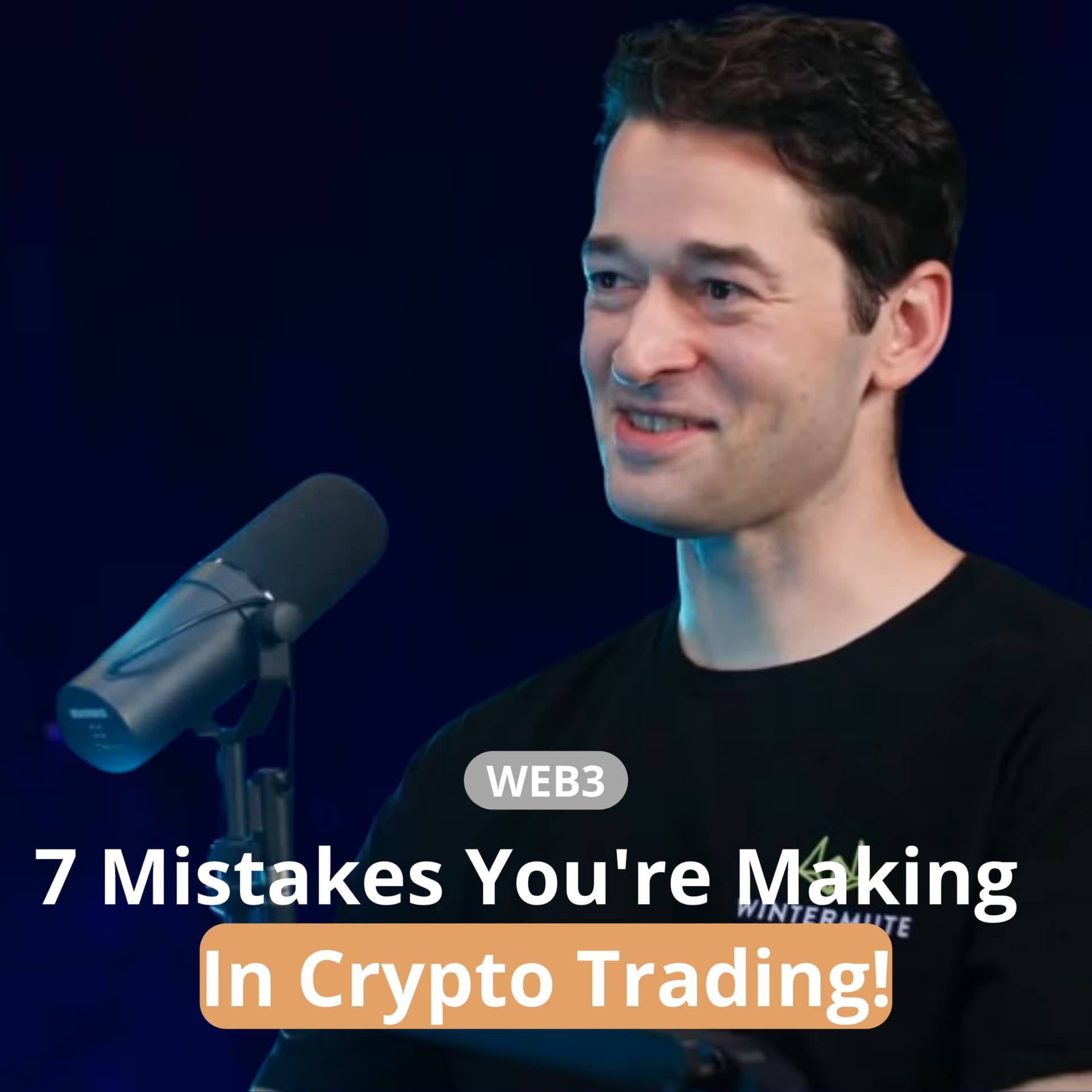

In short
When Shift Happens Podcast - Episode 57 Summary
Episode Title
Wintermute Co-founder: This Is How You Can Build a Crypto Empire from Scratch
Guest
Yoann Turpin - Co-Founder of Wintermute, a leading crypto market-making company.
Episode Description
In this episode, Yoann discusses a variety of topics including his journey into the world of finance and crypto, the importance of personal development, and insights into building a successful business in the crypto space.
Key Topics Covered
- Early Beginnings and Journey into Finance
- From a young age, Yoann had multiple career aspirations, including becoming a trader.
- He began managing his family’s stock portfolio at 12 years old.
- Early influences from his family background and community shaped his ambition and drive.
- Personal Growth and Development
- Language and music as tools for personal development.
- Yoann speaks multiple languages and plays several musical instruments, highlighting the importance of these skills in shaping his mindset.
- Entrepreneurial Insights
- Resilience: A double-edged sword; it's crucial for success but can also lead to ignoring valuable feedback.
- The journey of entrepreneurship is filled with ups and downs, emphasizing the need for adaptability and a willingness to pivot when necessary.
- Building Wintermute
- Wintermute started as a two-person trading operation and has grown into a significant player in the crypto market-making space.
- The company covers a large number of tokens and has a market share of approximately 15%.
- Importance of aligning with long-term investors and building a strong company culture.
- Investment Strategies and Mindset
- Discussed the significance of having a trading plan and the risks associated with leverage in trading.
- Emphasized focusing on long-term investments and the importance of patience in the investment process.
- Good vs. Bad Resilience
- Resilience is beneficial when directed towards the right problems; however, it can be detrimental if it leads to ignoring feedback and signals for necessary changes.
- In personal relationships, recognizing when to let go is as important as resilience.
- The Role of Emotional Intelligence (EQ) vs. IQ
- EQ tends to be more critical in today’s environment compared to IQ, especially in leadership and entrepreneurial settings.
- The ability to communicate effectively and build relationships is paramount.
Key Takeaways
- Personal Development: Engaging in continuous learning and development through music and language can enhance one’s cognitive abilities and adaptability.
- Entrepreneurial Spirit: Resilience is necessary, but it must be balanced with openness to feedback and the ability to pivot.
- Building Trust: Fostering strong relationships and having open communication is key to a successful business.
- Investment Philosophy: Focus on long-term investment strategies, managing risk, and understanding market dynamics are essential for success in crypto.
Sponsors
- Coinsilium: Provides funding and expert advice to Web3 and AI-powered companies.
- Byzant: A Web3 social network ecosystem for creatives.
- SwissBorg: Europe’s trusted crypto app for user-centric investment platforms.
Closing Thoughts
Yoann concludes with a prediction about the crypto market, expressing optimism for Bitcoin's price potentially reaching 100k within the next 12 months due to increasing institutional interest. He emphasizes the importance of staying resilient and adaptable in the ever-evolving landscape of cryptocurrency.
Connect with Yoann & Wintermute
- [LinkedIn](https://www.linkedin.com/in/yoannturpin)
- [Twitter](https://twitter.com/YoannTurpin1)
- [Twitter (Wintermute)](https://twitter.com/wintermute_t)
Connect with When Shift Happens
- [Website](https://www.when-shift-happens.co/)
- [Instagram](https://www.instagram.com/kevinffollonier/)
- [TikTok](https://www.tiktok.com/@kevinfollonier)
- [LinkedIn](https://www.linkedin.com/in/kevinffollonier/)
- [Twitter](https://twitter.com/yieldlabs)
---
This summary captures the essence of the podcast episode featuring Yoann Turpin, detailing key discussions and insights into building a successful crypto business and the importance of personal development and resilience.
Written by AI. May contain mistakes. Listen to the episode to check what was said.
Transcript
Automatic transcript. May contain errors.0:00And you have the kids who have 123 options of what they think they're gonna do. When I was four, I wanted to be a fireman, then a doctor, an astrophysicist. Then I was convinced I would go into trading from the age of 12. Trading from the age of 12. Yeah. Johan Turpin, a math genius and the founder of Wintermute. One of the leading global crypto market makers. Providing liquidity on over 50 exchanges and trading platforms. Why is it so important to not focus on the competition? I think focusing on competition could be discouraging when it looks like competitors are big, while they actually may not be.
0:31What is Wintermute today? We do three things essentially. So the core part of the business is we're the largest spot crypto market maker. Between winter and summer, we cover 250 to 350 tokens across 80 venues, and then we have about 15 % market share. In entrepreneurship, resilience is really seen as a key strength. You should never quit. But you told me that resilience could be a bad trade. Why? I think too much resilience may just mean that you may not be able to discern what's good and bad feedback. Resilience is only useful if you're actually going into the right direction. So you need to be assertive enough about what you're doing.
1:01But you also need to listen enough to other people. Some investors may be noisy, but some investors may have very useful feedback for you. So you need to be able to filter through that noise and that's not an easy thing to do. You've been working super hard, sleeping four hours a night, going through multiple businesses, making a lot of money, going through a marriage that didn't work, then going through another marriage. What's the key learning from these last crazy 10 years?
1:33cheers and let's start actually with the basics which is who are you oh who am i that's a pretty deep question to start with so i'll try to keep it as high level as possible but essentially some french bone um very much born in north of france as uh what some people would call you knowst as such so very much in a mining town even though i was essentially the son of a dentist um so it's called a bit of a bourgeois such a communist town in north of france so that that um that that gives a bit of context the other context is that essentially my father's side of the family is more of a industrial catholic family so used to be fairly wealthy as such and on in the paper industry side, so people had their names in a family books and so on.
2:27And on my mother's side, uh, she's the daughter of a unionist, a glassblower, uh, who used to just, just make less, but he, who became, um, and unions for representative of, you know, employees and so on. They, they can be part of essentially, uh, pension management and actually so both, both sides, you know, pretty smart and they got along quite well at the end, but essentially there was a bit of a, um, interesting. really, you know, more cultural sort of a social split basically in terms of like, you know, managing two very different sides of the family as a, as a kid. Um, so that's, that's one, one aspect.
3:02A second aspect is probably when you're at school, you have the kids who basically have no idea what they're going to do. And you have the kids who have about 123 options of what they think they're going to do. And I was on the second, second category. So, so when I was four, I wanted to be a fireman, then a doctor, then I want to be an astrophysicist until the age of about 12 and then when i was convinced i would go into trading from the age of 12. Trading from the age of 12. Yeah so and then from the age of 12 essentially i was running through um probably remember the figure magazine as such so they have basically financial pages so they're orange sort of salmon pages so i'll go through that i was quite quite young and essentially i i think i basically managed to convince my dad so that i would go and, you know, manage essentially the, the stock, the family stock portfolio.
3:53So 12, 12 years old. You were done was investing. So I was, I was already, it was more investing than trading to be quite honest, it was more like, uh, you imagine nine or 95, 96 or so. So it was all the, uh, some of them, you know, the early French IPOs and so on. So, so we'd review this and I would go on the mini tail and think it was page 6637, the credit, credit, and go and like type in, type things in. It would just be tiny sizes. It would be like a few thousand euros equivalent at the time. But it basically, I built some track. And the funny thing is I would actually already get paid a performance fee.
4:29At 12? Yeah, I had no high watermark. So wait, so. Denti's father. Yeah, exactly. And he was, so they already had this kind of philosophy of investment for their own money they were doing. yeah but he was mostly like a real estate like he would okay he would be like more into real estate and so on he had a stock portfolio and then i mean i think my parents were quite quite quite quite happy first and then a bit scared later of just uh you know empowering me with this um but but essentially i would get a you know 10 commission or like you know the the winnings and then no one would call we call the money when when things didn't work out uh so i had a had a pretty good deal at the time so basically build up a part of money and then i ended up um in a magazine called investi or whatever investing yeah i had basically an option guide that was published uh on matif and monop so i read through this and when i was 15 and you couldn't trade options as you know as an individual especially now i had 15 at the time so in 98 um but what you could do is you buy warrants um i didn't really know how expensive you know things things were such but uh but i ended up just trading some warrants until it's sort of between 15 and 18 and so on and then it went on like this so basically uh um through through with a small loan from my dad of about 5 000 euros equivalent i managed to get so i went through more like a french you know uh so an economics track and I went to uh perhaps a class prepare sort of uh to prepare you to a business call and as part of the business school I basically had the first internship that I that I did I managed to somehow um get validated to for me to spend three months gambling on cac40 futures uh as an internship okay so what do you mean by gambling on well I was I was trying to to to to show that I could make money trading you know cake 40 futures essentially and and with with hindsight it's like it was it wasn't that structured um i didn't actually lose money i would i spend a lot of money in fees um but uh but that was the next stage and the funny funny detail there is that i managed to get someone at a boursorama you may know so i think it's been bought by sojane in between so So, uh, uh, an online French online broker managed to get them to sign me off, uh, as a, as a, as a professional investor at, uh, to, for me to be able to trade features at the time.
7:11So just before that, you told me that you grew up in a mining town, right? Yeah. Yeah. And that you are from parents who did pretty well, but you were surrounded with people who were immigrants. and working really hard yeah so it was it was an interesting um now whatever you can call it a dichotomy or a split as such so we were living with enough money not to care about money not too much either but enough money to go to winter sports and so on essentially we're told like don't tell anyone you go to winter sports uh it's not you know the french culture is like doesn't doesn't make it easy to you you seen if you say that you do something it can be seen as showing off essentially.
7:55So they don't want us to, to be, uh, to be isolated from that, from that perspective. But what's, um, what's quite inspiring and probably explains why I'm still pretty hungry as such today is that I was essentially brought up with a lot of second, third generation, uh, you know, Polish Polish of, you know, uh, parents who, or people had their grandparents who were Polish miners, for example, um, uh, Portuguese, Spanish and so on. So a lot of immigrants, some North Africans and so on, but mostly, mostly, you know, mostly Polish because of the, of the mines. Um, and I think every single one of my kindergarten and primary school teachers were of Polish descent.
8:35Um, so you can imagine the 15 to 20 letters names finishing in ski. They get, get a lot of practice to, you know, the Lewandowski and then the that take a bit of practice, um, with this sort of mindset of, uh, you know, people being, being positively hungry and then positively just quite optimistic about the next generation. So essentially that, you know, their parents, so my teachers, basically they have their, their own parents would have come as, come in as minors. They, they became, you know, the teachers and then their own kids would become essentially, you know, the doctors or the, uh, the accountants and, uh, the lawyers and so on.
9:16um and so it was quite a good quite a good community and and the same sort of beyond school same sort of philosophy in like the swimming club where i spent hours and hours and hours of my my childhood uh tennis um and the music band or solo was quite a good quite quite well managed and quite a good uh group to be part of so very very strong you know communities as such like as you'd imagine in in movies about the north of fuzz literally have one specific movie in mind but it's actually fairly it's fairly true
9:56did your parents have some sort of expectations of you you know you come from this mining town but they're pretty well they're pretty well educated but they're seeing also there's probably still a bit of this mindset of i want my kid to do better than me and do better than people here and maybe leave i mean it could be you know parents they want the kids to do better and it can be sometimes really you know tough love and hard on their kids or for you it was just we just you know believe in you or they didn't even have to push you because maybe at 12 you just say, hey, I want to match the stock portfolio.
10:43You were pushing the parents. It was the opposite. It was the opposite for me. I had parents who I had a strange kind of school sort of pathway. I can be eternally grateful for my elder sister who basically told me math at four well enough so that basically i had no effort to make until the age of about 11 then i had a bit of like personal crisis was like oh shit for the first time i don't understand things immediately so i thought oh it's not i'm not sort of good good enough and basically i had like six months or a year where i like had a bit of a bit of a gap until you know like sort of um quatrième until i was 12 13 and then it was easy again but essentially i had school fairly easy because i have a good memory and I was excellent at math, for example.
11:36Did she, did your sister teach you math or were you the little kind of smart little brother who, when your teacher, your sister is learning math with your parents or learning geography and the capital, you're there with your kind of like both ears and you not only understand at the same time, but also start answering before her. because that's what my sister she's two years older i learned everything through her and i was actually faster than her so my my challenge would be to answer before her and that's how i learned a lot of things actually much earlier was it the same for you she was actually teaching no i mean i don't remember all of it but i know that so she's three years older and then she wanted to be a teacher at the time and then basically like she would have me she would be whatever five six and sit me down in the, we had a playroom, we had a decent house and my parents, we had a playroom where basically she would just put me in front of the whiteboard and I had to answer the questions.
12:41So I don't, it was so early that I don't exactly remember, but I remember it, you know, that that, like math was pretty easy because I had done it before kind of went through the whole primary and secondary school system. but I think I think that led me to maybe feel more more at ease and comfortable about you know trying more things um there's another aspect where I'm a bit of like we have big a big family on you know both you know my father father's got about seven siblings and my mom but two but it's basically there's triplets there's a lot of cousins and I'm more in the younger range of cousins I think you you also feel pulled forward because you interact with a lot of family, you know, family interactions and so on.
13:26And basically you get pulled forward because you deal with a lot of, you know, a lot of your cousins are a lot older, basically between three and seven, eight years older. And you have to catch up because they're just, you know, you, you know, it feels like, I think my, my mentality is at the time, and it's still the same as like, you, you're different. I always feel a little bit different. So if you're different, you, you have to be at the top or you, because you, you know you can't be in the middle you can't be mid-curve essentially so if you can't be mid-curve you have to be on the right side so so so i think i was very i've always been very good at putting a ton of pressure on myself so i didn't really my parents didn't really need to to fish too much and i had a lot of guidance from like a series of like girlfriends and so on who i wasn't even going for like a prep hour you know i was more than able to go um and basically just different people just listening and the different people guiding me but actually sort of you know second degree to the family but not really called to the family on like where to go next and what what to do um what to do best um yeah it's so um i think i've actually gained from my parents being a bit lax about what i would do and um um because it just helped it gave me the habit of just teaching myself a lot of things like once i was bored i just taught myself how to juggle i've done some calligraphy some latin calligraphy myself i started more languages after studying more languages after the age of 20 than before because i was i was a bit bored in business school essentially um what did you study actually uh economics economics yeah so i mean business management but with a kind of strong a big part of it was math just to select people because I did my bachelor in Switzerland and in Switzerland we don't have this prep thing you go to high school and you need to have the maximum grade is six and if you get four out of six overall you pass right and whether you have four or six you can go to university doesn't change anything the which is good the problem of that is there is no selection at the entrance of the university except for medicine, right?
15:41Because it's too expensive to have too many doctors to, to, to educate and train. Right. So we were the first year we were at 1000 starting 1000. So there is not enough. You need to arrive two hours before in the morning and they need to fight for like, you know, a seat and sometimes you sit on the floor, sometimes you would sit outside of the auditorium so you wouldn't even see or hear anything. Maybe you would hear because the professor would have a microphone, right? And so their way to select people because second year only 300 go, 250. Math everywhere. They would just like put math everywhere they could even in places where math doesn't make sense.
16:24And we had a lot of econometrics and that kind of stuff which they used to select, right? So it was more. on the technical side, which was interesting because you, it's kind of learning a new language, learning, you know, econometric. There was all these signs and Greek alphabet and everything you do, this thing, you know, I'm so proud I did this development, but is it really useful? Like, probably not. You're in this mindset where you think amazing because you did these two or three pages of development of things that doesn't make sense. But I was always super critical. I was like, I'm doing that.
17:04I take it as a challenge. I take everything I change and I want it to be to have the best grades. So I would do whatever it takes to get the best grades even in these, you know, classes that I really didn't like, just by ego. And also because I wanted to work for McKinsey, and I knew you needed to have the best grades to work for McKinsey.
17:24but deep inside I was always like nothing of this makes sense none of this professor inspires me because none of them worked before
17:35and also I knew I wanted to start a business very early on uh already in bachelor and um I wanted to not do a master and to go straight out building a business but my father was telling me no no no you're going to do a master because he did really well in life but he the last kind of like ultimate step of his career he could never go in big corporate because he didn't have a master for school so he was like kevin you're going to do a master so that in worst case you have everything you need and you do that school anyway so i chose a one-year master just uh it was three places hcc paris london business school and then one ie business school in madrid and i was just like I'm going to apply to the three of them because it's an 11 month master.
18:15So I can just like do this master as quickly as possible and then start my first company.
18:24We talked about sports. You told me you were doing a lot of swimming, right? Professional swimming. Yeah, pretty much. But I also call, I also call this cheating because I was born on first of so so i mean it's it's my way to be more yeah to sort of uh be be uh more humble than i should be on that side so it's a i think it was really formative so i'm very just like you i'm very competitive and uh i think before going into the detail of formative and i have a bunch of questions i wanted to talk about that five minutes ago but i was like i'm not gonna do it but now that you mentioned, I want to ask you, when are you born?
19:051st of June, I'm born the 13th of June. And so for school, especially for sport, it makes a massive difference. You want to explain why? So it's because you, you, you run into, you're competing in your year, but especially in years where you have the gross pass. I was basically, I think I gained about eight centimeters over the summer of my 12 years uh when i turned you know i was 12. so um i was basically 180 at 12 and uh and and and training trading stocks and swimming from the age of four so basically so basically uh i looked like an 18 year old uh so it was just it was just and and i remember seeing um and i was also it shocked a few people in my in my school because i was a year earlier school it's basically because i was from Jana could start earlier.
19:59But basically when you compete, you still compete with your year. So people who didn't know in which class I was basically saw like this tall guy who was just running with them, for example, and, uh, it makes a, it makes a massive difference. So I still have, uh, at my parents, I don't, I don't have them here, but I still have basically a pile, a mountain of various medals from, uh, from, from swimming and running and so on from essentially from this just skew of being born in like, uh, Janet, like Jan or Feb or so. How much do you think this being born early when you like sport and you do a lot of sport, being born early impacts your self-confidence in a very positive fashion throughout your life afterwards?
20:45Yeah. So I think it was, it was really crucial. And like the one time I was saying like math was a good like anchor in terms of feeling confident and like, you know, problem solving and then just giving you something you know how to do. Like even at the time when I was around 11, I had like a few things that I finally had to actually just go and digest and, and, and learn a bit deeper. And, um, so I had a bit of like more shaky confidence on the math side. I still had the, I still had the sports. So it just gives you, you know, and like, you want to have several legs. It's like, uh, it's like a business.
21:14You want to have several legs. Cause like as a, as a, as a personally, you want to have a few things that you can trust that you can, you know, you can, you know, maintain, have, you know, good, good self-esteem in general. um it gave me some bad habits as well I've realized later in life where it that swimming makes me it there's there's some of the good habits which have been um so we were talking about you know being born in a mining town which meant we had a very decent like swimming pools or facilities and so on to be honest for for the size of the town and we had good trainers but there were not really people I could compete with in the club especially in my in my in my style so it's more of a breaststroker and a backstroker and then essentially uh there was another guy who was a freestyler who was who was a French champion but essentially I would swim in like lanes with like much older people that's what I ended up doing but I came into the the the more the conclusion that um thanks to swimming that i basically the biggest thing i could do is just work on myself and do the best i could do as opposed to comparing and i still use this philosophy with you know competitors that we have today you know with wintermute also like it's more about you know focusing on doing what we can do best and you can kind of use competition as a guidance so like we're on new businesses and so on but caring too much about competition is a bit of a distraction so it's more about you know focusing on your own lane and focusing on generally what you can achieve by yourself why is it so important to not focus on the competition whether you are competing in sport or whether you're building a company I think it can be misguiding it's just um I think focusing on competition is is is often And one thing is it could be discouraging when it looks like competitors are big, while they actually may not be genuinely competitors.
23:10As soon as you scratch the surface, like most of the people who think that, you know, they compete with us, they don't really have the same offering. So I think that's one thing is like not sort of stopping for the wrong reasons too early. And sometimes there's, you know, the legacy problems, you know, typically, you know, considering winter mute there's there's people who compete with us who come more from traditional finance and so on and have all sorts of legacy infrastructure and so on and things are help them if things that really really don't help them uh especially in the crypto space so yeah it's it's i think it's just good to look at the competition to get a bit of guidance and like oh maybe maybe i should you know try this or try that um but you know it may not you know not be suitable to you know the culture of the organization and so on in general so and also by focusing so much on other people you are wasting so much energy that could be put to good use yeah when they don't even necessarily care about you or even know you exist so it's all a waste complete complete waste yeah so you you know i've done quite a lot of um you know web two and web three is most startup investor uh startup investing is you know you have a lot of people who sort of focus on competition too much and my rule of thumb is like well unless you have like 10 15 20 market share like why do you care about competition so what do you think about the famous or infamous competition slide in a equity pitch deck oh in a deck yeah because a lot of people say oh you absolutely need to put this thing because it shows you know who is your competition or are you much more like practical down to earth saying bro or sis i don't give a fuck about like build something do something and then you'll care later right i think you you should just build your own thing and and as you said it can be a distraction so just two things i think it is useful to have this sort of slice just to show that you know your market i think it's more like knowledge but it shouldn't be the focus so you're aware of your competitors so you're going back to the swimming the the the swimming analogy like you you know that who else is you know jumping in the water with you but to be honest like most races are run like you don't you don't you have no idea what the others are so you just there's there's so much you know foam going around and so on you just focus on doing the best race you can you don't you don't know you're just focusing on just you know touching the wall first and you know you have no idea uh where the others are So that's one comment, but it's also, I think it can be useful in a way that for, from the investor's perspective, it's a different work.
25:54So basically when you're an entrepreneur, you focus very, very vertically. You're digging, you're digging basically, you're being very focused. But from the investor's point of view, it's useful to see the competition because you're trying to pick essentially a winner in the market. and then and then you also it also from there's a second dimension where you're trying to pick basically you're trying to get a gauge of like oh if these guys are successful and they grow they can reach you know this competitive scale slash valuation slash so it's more thing is more from that perspective but you know it doesn't mean that you're showing you know the whole map of a country that you know that that people should just you know dig like it shouldn't focused essentially um so it's it's it's very much it's good for awareness it's good to show knowledge but it really shouldn't be the focus i think is if um what the focus should be is uh talking to you know existing or future customers um picking the investors right picking the employees right so these sort of things are so much more crucial than thinking of competitors and in the swimming context what would you look like to focus on yourself um yeah like there would be there would be really good trainers um apart from release there's not a lot of like teamwork as such um so it's more about um yeah good how do you alternate and a dry work basically the the focus in the gym versus how much time you spend in the water uh food and everything else just like any other athlete so it's probably much more similar to to sprinting uh you know in athletics as such.
27:32So the key benchmark is how much better am I doing today than yesterday or a month ago or six months ago? Yeah. And focusing on myself. Yeah. And if we apply this to life in general,
27:49because today it's extremely easy to, even if we don't want to, to compare ourselves with others, right? It could be in business, it could be in sport or could be just in the life game, you know, because we have social media where everybody's kind of addicted to social media. It could be on Twitter with, oh, this guy has a bigger P &L than me, or it could be on Instagram, oh, this girl is hotter than me, or this guy has bigger abs than me, you know? So in the context of you saying how it's more important to focus on yourself than on other people, why would you tell 25 years old Frank
28:33how can he turn his attention and energy towards himself to maximize his chances of his chances of success in life when social media makes it so easy to compare you know himself to others and even be jealous of other people what's the first step i think it's i think it's the general i mean to to add more color to it i think it's just makes it very easy for people to procrastinate and just basically just just you know just waste waste time i should have done this i should have done this i think um i think i think it's one one one habit i think it's so this is less from training but it's less from swimming but more from trading as a learning is um to be a good trader you have to be quite i mean nowadays it's very algorithmic and so on but but uh when i started trading uh trading options especially like it's things that are actually very difficult to to automate and essentially it's a lot about having a set of also being ready knowing what you will want what sort of you know positions do you want to you know be long or short i don't uh uh we can always can always define everything if when it's needed but essentially you know benefit from things going up or down uh you want to have a you want to have a trading plan ahead of time but also you know have certain set of limits and so on just have a have a trading plan um that you abide to but beyond that i think it's just uh um it's more about building something reliable um then really thinking about uh something you know as reliable and as scalable as possible as opposed to thinking of whatever someone else is doing as such because then you always rely on whatever they're doing and it's very much the case in like on twitter so like it's very like people are asking us for alpha so on like the next bitcoin is like you don't know that's that's not It's not what we do.
30:35I only know how to do two things well. It's like really short term, but just very much liquidity provision. So very, very, very statistical, very much like we get paid because we get pushed into a position that we don't necessarily want. And we just have to hedge it constantly, just as in hedging it, as in not being, you know, not making money because things are going up or down as such. And very much that in building the most reliable infrastructure to be there when things, you know, are more shaky. And then the other things we know how to do well enough is the really long-term investing. So essentially access to good deals and then filtering, just to make sure that you have access to deals and filter to pick the good deals in there.
31:17And that's essentially more startup slash foundation investing. So that would take more like five, 10, 15 years to get there. And that's more qualitative as such. but um yeah it's it's it's i think the habits to get to is just uh being uh like a beginner's mindset is good in general so just to go go back to first principles and say oh you know how you know if i'm learning whatever trading like what what are what are the good basics to start with um and have a model have some sort of model instead of you know if you don't have a model you're basically gambling um and and once you have the model it doesn't have to be good to start with but at least you have something that you can measure and evaluate and then you know and just you know um tweak a few things and and and um you know learn from essentially you want to have you know as much as much data as possible but um yeah i don't know like people procrastinating it's it's very, very bad habits, uh, because all that energy should just be spent in, you know, learning something or just bringing you into the right direction.
32:27Um, especially when you said, so it's not only the globalization is not only about the attention, but it's also about the competition. So basically, so, um, when you build a company today, there's a, there's a few people saying this out there and I'm, and I'm one of them is a, is that it's never been as easy to become a billionaire, but it's never been as hard to become actually a millionaire because it actually is just difficult to be somewhere in between so you either build a company that does really well and basically you know is is one of a market leader as such or like you basically try to be somewhere in the middle and then and then you know you you can't get enough space for yourself in the market so it's um like the competition is also is also global um but it's true it's just um yeah it's important to find your own your own your own niche as such and um yeah it's the the wall for attention is is quite uh i mean i think that's why we have the habits of like putting phones to sleep and um having focused conversations uh that's that's pretty good habit i think uh i think being more tolerant you're saying like with age what what what changes i think i'm quite tolerant of like saying loads of things that i don't know um just being quite open about it and just always go to it's not about me knowing something but it's more mean often me more knowing some expert or someone who knows more um uh and just um you know quote quote sourcing things well enough um i think in that way and it's more like 25 year old you know the franking question hopefully knows already where his spikes are he's got like a few things where he thinks that, you know, he's better at one than some other people.
34:15And then just focus on that. I think just people trying to be like very, very much like generalists and so on. I don't think it really works. I think, I think you're just better off, you know, focusing on your strength and, and, and, and scaling that and then just, and finding other people to, to fill the gaps, uh, than really, uh, just being like too much of a generalist. So you're saying more depth than breadth, right? yes ideally ideally you have two or three spikes were you very good um so i don't know like do you want to go through the exercise what would you be like what you think that you you're much better than the average at like i said there's a few few domains selling myself i think networking business 100 because i can get people in the zone when i start to talk and i've always been like that when I was 21 years old going to Hong Kong, having to sell myself to get to be the one getting a flat or a room in a flat with a guy who was 45.
35:16He was like, man, I had you on the phone, and I knew it was going to be you. And it's a strength and you should focus on that. And do only that. You're amazing at selling yourself. And I was the dude who had done all these math and all these things and struggled so much to get good grades. And you're telling me I should sell. I was like, Fuck, man. But I knew it. And with girls, it was the same, you know? Like everything, at the end of the day, everything is kind of like sales in life. Like the way you get investors or employees, like you need to sell them the fact that this is the place to work, right?
35:50Or if you want to be with a girl or I don't know, if you're networking or making friends, the way you talk. And a lot of people think sales is a manipulation. And I think it's absolutely not. the more you are honest and transparent and real the more people will like you and if you're likable they will want to do business with you or have a relationship with you or or hang out with you right so for me it's definitely business work sales which is why this this podcast and the other things we do around and which is why my other business that i'm running since eight years data analytics i'm the guy who started it get all the clients got all the teams together and then have bunch of like very engineers working on the projects and I'm running the business side, right?
36:37So it's that. And I accepted that despite having done all these good grades, I never used them to get a job. And I'm never gonna have to show the fact that I'm decent at technical stuff. But if I think about it, I'm definitely probably average or maybe not even at technical stuff because there's people like you or like other people so much or like all the people who work in my data analytics company they're so good they're engineers you know like i'm like i can't compete with that it's impossible so but you don't you don't you don't need to i think what's good is you want to have just enough technical understanding to make sure you're not hiring the wrong person for example you can have a dialogue so you want to be speaking the same language to a degree but then i mean hiring you should always hire smarter people anyway so um yeah on my side it's been more um very good the the math or the the the especially financial math there was good overlap from the first job essentially was math it was uh it's very entrepreneurial as such you know very very curious as a person that led me to be you know very much a language geek as well so speaking you know much better english than most french people when i when i started to work in holland and then the relationships are similar to you like the relationship side is more it's been more about remembering everyone whether when i've met them to the point of being creepy and you know personally as a stalker for some people were like why do you remember this are you following me kind of kind of thing but it's just for me it's just my way to show that I pay attention to people and try to try to try to have you know real real connection with people in life what kind of example like saying oh you remember something from a very long time ago or you know something that they don't expect you to know yeah because they still remember like whatever random family members from my first boss in amsterdam and you know their names and stuff and so it's more or you just scare people because you remember exactly why you met them six years ago and you haven't seen them for that's that's incredibly useful in sales.
Read the full transcript
38:50Or again, if you are talking to a girl and you remember what she told you, she'd be like, oh, you're listening to me. I can't believe it. I'm like, yeah, of course. And in business, like you met a guy and it was not the right moment to do business. And a year and a half later, you have this second meeting that you've been chasing like crazy to have, obviously. And then you remember these things from like a year and a half ago because you remember them, right? yeah and like it makes a massive difference absolutely and it's it's more just creating yeah just to be as useful as possible for you know the rest of my team is more like having the scale uh now i meet so many people that it starts to find its limits to be honest but but it's more about um yeah making interesting connections and so on and simply trying to you know, to overlap these domains and, you know, suggest, suggest, you know, new businesses, you know, to, to discussions with my co-founder and things like this, just, just find, find, find cues on, you know, what to do next.
39:53And it's often just, just having had these, these conversations or so. You talked, you talked about learning languages. You said before, I was studying business and I was bored, right? I started to learn languages. and we also talked about the depth versus breadth yeah right so i know that you studied speak about 10 languages so i studied 10 i speak maybe five or six or so like correctly yeah and you talked about music also yeah that you played or learned six instruments right yeah so so some of them some of them are much deeper like saxophone i played played it for like eight nine years or so uh did six years of piano two years of guitar um i tried six i tried the violin for six months i was getting too frustrated with it that's just this is very difficult so if you have a good enough ear you just know that basically when you start playing the violin that it's always it's always off so um but it's more i think it's about um this is the sort of pastime that i like to have so nowadays it's more like learning more more korean as such um but um yeah and so so to go back in the context it was post so when you get into business school in france basically you go through a prep the craft prep class basically more prep school before that and you tend to be quite cramming um you do whatever we basically do like er sort of hours like you know 120 hours a week physically of cramming and then you end up in business school which is great like socially and so on and there's a lot of good clubs to go to and and but um but essentially it's like 20 hours of sort of like yeah because the difficulty was to get into the business school exactly to pass the business school exactly and i was still in the years where you basically didn't really need to show up in class so so so so they changed that the few years after me but um but basically you could just be like no no no go to school and just spend time in like clubs and so on and do do still quite well um and uh and long story short i was i was feeling like a bit like it was more of an intellectual desert i did learn quite useful things a lot uh in in business school as well but I started learning more like Italian at the time and then obviously with my first job I moved to Holland and then what have I learned?
42:30Japanese in 2004 or so. So I started in 2004 and then ended up learning some more Chinese and then so I did more of the difficult ones already and it's more the past time. I think there's like a whole podcast you can dedicate to language learning. Just a question on that. How much is learning a new language the same as or similar as learning a new instrument? Um, we had Alex Vanewik on the podcast. It's a very good similar thing. So I consider music as a language. Math as well. Exactly. So I consider like, if you tell me, oh, like, say for you kids or whatever, like, who should, what should, what languages should you learn?
43:10So whatever, English, French and so on, and also math and music. I normally put this as languages. languages. So it's true that I think it depends on how far the instruments are from each other, but it's similar to languages in the way that you can have languages close to each other, let's say like, you know, German, English or so, or like, or French and Spanish and Italian and so on, like a group of languages as if you were playing like sax, you know, alto and sax tenor and so on, like, it's very, very, very similar. Um, it's probably easier to learn several instruments than it is to learn several languages um but what i like with the language learning is that it usually gives you like 50 of the culture is essentially in the language the way people talk to each other the way you know there's you know there's a certain degree of politeness or not so same thing in french or like korean has two different levels there's three levels in japanese there's two levels in chinese but to be honest like there's only one level that's really really used and then you you get a lot of the subtlety of like culture of people through language learning.
44:13What can be often difficult is that you need to get to at least an intermediary level where you can at least watch a few movies and so on to be able to maintain it. So some of these are, I don't have the time to maintain them, but for the Asian languages, I try to maintain them quite quickly, especially since I moved here. We had Alex Van Evic on the podcast and he speaks six languages. also, and we were talking about music and languages and how basically it's patterns. It's like math. It's very similar to math. You have patterns. And once you understand the key patterns, like the chords of a song, you can play the song.
44:52And once you understand how the language is structured, you can, it's much easier to learn and kind of articulate it.
45:01How is learning a new language or a new instrument the same as building a new company? in terms and i'm thinking here about again this pattern recognition and when you're building this company you are at the end of the day for me it's more there is a process to everything right you want to build wealth investing there's a process to it and once you understand it and you apply it usually works right if you want to grow social media there is a process to it if you want to learn a language the process to it if you want to build a company obviously depends the industries but there is always a kind of like playbook or process that's more likely to work right yeah yeah investing is very structured company building can be very instructive but sometimes you get like true disruptions can can be like quite quite surprising like you've got good examples there where um you know what three words do you know the company what three words I think I think it's it was originally British but um um it's basically people who don't know anything about maps who just decided that the addressing system was like very very badly set up anywhere in the world and then they decided that they would just define these new squares of like three meters by three meters across the globe and they give three words to define the location so you can give a rendezvous point someone in the middle of the desert now for deliveries for everything and so on so it became i don't know to what extent it's more probably good to be honest but uh but it's it's it's people who just didn't really know about you know mapping and addressing as such um and and came up you know you know pretty interesting solution to to a problem setting i think there's a degree where you should avoid being an expert in company building because a lot of people a lot of the experts i got a lot of smart people tend to i find all sorts of reasons not to do things uh with the with the podcast we did with my co-founder last week we were basically like he was like be delusional like basically don't underestimate yourself and so on so be very ambitious i think i think it's very it's fairly true i think it's really good to be very ambitious in company building in the way that target things that are that are you know quite big and and um and just try and get feedback and you need to find that you need to walk this fine line so if you're talking about process as such um at least the philosophy of it it should be like walking this fine line away you need to be assertive enough with your choices that you could you need to make real bets real choices and you know how you're building the company and what you know who your first customers are what your first product is and so on but you should also be you know being able to listen enough to like you know customers feedback or people people you know some investors may be noisy but some investors may have very useful feedback for you so you need to be able to filter through through that noise and that's not that's not an easy thing to do um there's a lot of network effects in in company building in the way that i think it's probably explains well so um that's my fourth venture my first venture did it fairly well and but it was also with two ex-colleagues from Optiversa that um the trading firm from from Holland I worked for when I was 23 to 27.
48:22So just after uni you went to Holland yeah working a trading firm exactly and then started your own your first company um yeah so I spent four years over there and I had to to sit for like a year and non-compete and then started my first company which was uh which was essentially a trading firm at a family office uh more like macro hedge fund in a family office training training rates and more complex stuff more like more listening to central bankers and thinking of how that would impact the prices and then taking positions taking bets essentially on them and then we um we started 2011 so we said we had the tsunami we had a greek vote we had a great crisis and so on basically in 2011 and we did pretty well like we returned about 162 percent so in that first year um with essentially a structure that was just being built um so you know that was a success to to agree with them but a lot the entrepreneurial journey for that for that company was a bit frustrating for me because we i was there to build a firm and basically the investors were just more or less like just there to allocate funds so we like i ended up three three years later i ended up just just taking my shares and then just you know doing something else um why exactly why you have to explain it in a simpler fashion because i know the story but what was the main problem of this first business despite making great money so it had one leg instead of having several legs so basically it was a bit too cyclical so what we were doing is we were essentially um taking so taking that some like a few dislocations in the market so we needed some big funds to to push the prices around fast to show to basically to to resurface to give us some opportunities to trade um these things happen obviously around you know 2011 there was a lot going on a bit bit early in 2012 but then towards the end of 2012 um you probably remember it was basically no such a negative interest rates um and then it's and it got pretty pretty static and pretty boring as such so a lot of the big funds a lot of people who would normally put large bets and you know shift things around in interest rates got you know just basically they they they had no reason to to go and be you know a trading activity there and um and at that time i just wanted to the the route for us was to you know extend to other asset classes and and essentially we essentially our investors so we had we quite stuck with a few backers and these backers but they were diversified we were not and basically didn't really want us to compete with all the groups that they had in invested in.
51:01So we ended up deciding to just go, go separate ways, but I took, uh, that took, um, another year and a half, you know, two years to really just, you know, negotiate everything out. So, uh, um, this is why, you know, choosing your investors wisely. So the key was the investors didn't have the same view or long-term view as you guys, the, the, the entrepreneurs. Yeah. There was, uh, an element of conflict where they were invested in, and people who who were already trading the assets that we wanted to try that's one one aspect and the other problem was that that's why i'm insisted i mean that's why winter mean is structured the way it's structured and so on with vcs and not like fund allocators and so on and uh so initially we got you know four we did four vc rounds as such and it's very much to have long-term investments so you want to you want to people who who bet in you for the long term it don't ask you every day you know exactly oh um you know how much have you made today and and you know it's just much more akin to a fund and we didn't want to fall into that trap um so these two aspects so short term long term and then the the aspect of like and more the conflict on that um what I said you know what I says can you cover and then you say a second company the second company was more on the venture studio side um so i was already quite actively investing in in the btw so i had some some some exit basically from the first company still um and i was more as a you know entrepreneur investor i was advising a few teams i think of on up to 14 balls at that at that time what age i was 31 okay yeah so i had a lot of people it's an interesting question because i had a lot of people on balls who were 70 or 80 and who looked at me on the first board meeting he's like what is he doing here and then and then over on the second meetings he would flip usually because i had often sadly i had more expertise and so on than them and in either the space or or neither i could help the team more um just because i was much more much more active and i had been there as an entrepreneur but um yeah it was an interesting interesting journey as such so 14 boards but bored yeah so you wanted to start another company so I used to call it you do you want to explain what it is yeah so that was um so there's the 14 but it's more like investing or angel investing I would call this more entrepreneurship as proxy so you you better into the people to build whatever company as such and then it balls like when you're in a you invest in an early stage startup as such um even once a month can be but the business may have changed dramatically within a month and you don't necessarily know about it and sort of like you just play catch up once a month and it's just it can be a pretty frustrating exercise um but it's quite it's been quite an interesting learning in terms of um yeah getting more scope in terms of different industries and different it was was quite centered around sort of more web to b2b sas so software as a service as such and because then I could help actually a good good enough network at the time so I could have commercial these different teams to to to sell and or try some you know proof of concept and so on at the time um and it's the question of like it was more a phase of exploration for me and then just learning a bit more around you know structuring around and so on um also set up another business at the time that essentially was doing cross-border a deal deal broking between essentially the uk and china why it was still you know easy not too difficult to do uh so around internet of things or so around some you know chips and so on um and there's a market actually for individuals or small firms boutiques sort of m &a under 100 million dollars deals so the lazar and so on the the big banks the the the investment banks they actually tend to do deals above 100 or maybe about like half a half a billion and they don't really they don't really help teams you know under 100 million dollars so you can you can make a living out of this so all of this merged into more more of winter mute at the end um so just the venture studio yeah this was the investing in these 14 businesses or you know that was me that was that was that was myself so what did you do with the venture studio the venture studio um turn into more of a um like a workforce platform now uh there is another like more an investment to a team that i i helped more as a an advisor investor but another team that turned into more than ai i'm one of a competitor of palanty in the uk as such a small data data science platform or data science is a infrastructure tray if you want um usually the good ventures to just turn into it they just build a certain knowledge base and then they turn into their own product um and um what was the problem with this business the problem with this business was that there's if um especially the event of interest you decide there's two two sides of it there's a there's a sign that's more that pays the bills that's more like digital agency type of things so consulting consulting and so on and you can build up you know businesses like this like to a few million maybe like early eight figures or so in revenues you have like a fairly static sort of 50-ish percent margin and so on if you do a good work you'll you'll you'll get there it doesn't scale that far so usually you you end up with doing like the venture studio side you end up spinning off products and so on the really big challenges about venture studio is that even if you can spin off good products it doesn't necessarily turn into its own startup over time you need to find you know CEOs you need to find like a team that that takes it over and that's why I explored quite a lot across the space especially in the UK but you know there's there's other models like the entrepreneurs first model or antler that you know as well so became you know for this because I became an LP and until I think 2017 18 or so um because of this because I thought they were treating that problem better than others uh by in antler yeah wow because they match okay yeah because they match you know they match um um they match founders or such and in a different way so they just go idea stage yeah um but the venture studio model i'm feeling this i'm still a bit on the side in terms of um i think i think it can work but it's just very difficult to to make it work i mean rocket internet is a big example of how to make it work but it's just i think it's maybe more the exception than the rule um anyhow it gave me gave me a bit of a platform in terms of um yeah just just another interaction with you know the teams i had invested in and then um it's more through uh through more me going back to trading in 2016 that i uh came across you know ico essentially early 2017 2017 and then you know um giant essentially uh you know confoundly went to mute at the you know very end um you know 2017 essentially
58:23so how did the lessons of the previous businesses help you build your new to the next level from the first business it was essentially choose your investors investors very wisely um choose um there's an also a more internal aspect of like the co-founders from my first business they were they were good but they were less probably less entrepreneurial and they're very focused on they were more juniors to me and that wasn't necessarily a good thing so i felt that i had not necessarily learned enough over this three four years and like from a training perspective so there's learning as an entrepreneur is also learning as that if you if you run a trading firm so there's also learning as a trader and then you want to have you want to be ahead of the curve or at least you want to learn as fast as your competition to at least you know maintain a certain whatever a certain knowledge level and so you don't you don't want to lose ground there and it may mean that or maybe like understanding these central bankers better uh maybe it's better modeling and so on maybe it's better infrastructure but you need to have you need you need to maintain at least a certain edge there and i and i felt that it wasn't the case really uh uh after the first of the first ventures i was there was also a key element to get um so that interesting aspect is that essentially so i took a found this one interview so um evgeny is essentially as senior as me sees is a year a year was for four months younger than me how old are you i'm 40 now and um but he had spent basically a decade at October um just a parenthesis here yeah this is the exact age that most studies show yeah the average successful founder is right whereas when you start when you go to university you think oh man entrepreneurship is the way I need to start a company in my 20s like Mark Zuckerberg but actually it's kind of it's less sexy of a story but most of the successful founders are 40 years old they're not 22 yeah or 29.
1:00:32Yeah. So I think, I think there's a bit of a, a mention that touched on that idea, but it's about network effect. Essentially. I think you, you get, um, you probably know, and especially through, through my investing experience in between, you probably, you know, what questions to answer, but even with that, it's more about, um, I was still told a lot of knows when i was starting to raise money from intimate because when we when we all um essentially i had some funds allocated to me to trade crypto on my side and then basically i was like okay i need to find another trader and like a cto like a senior dad because i'm really not the best coder so we're talking about also about knowing what your spikes are i perfectly knew that my spike wasn't coding so like i really needed someone to help there and also if you think of markets being 24 7.
1:01:24Some people, regardless if you want to take holidays or not, someone can be sick also, you need some, at least another trader, you know, you need to be helpful. You know, it can be sometimes to take a day off once a year. Exactly. Even if you don't want to, you should have it. It's just not, it's just not a good way to build a business if you don't have at least two persons who can trade. So, but so winter me started as you, I want to trade and I need to have someone. So it started as independent. He started as Yevgeny set up the company on the 25th of July, 2017. He was basically trading his own, his own account on Kraken.
1:01:58And he had a few hours running and he had essentially Haro at the time helping with the, the, the infrastructure, essentially the skeleton of the first, very first card, or like something called like something running on like a raspberry pie. And then basically I had on my side, I had an allocation from a, a macro hedge fund like who wanted me to trade crypto, crypto sleeve, a part of the fund that would basically cover crypto. And I was like, okay, I have this, but I'm not, you know, I need other people to help me. And it was just a, whatever you can call it, a match made in heaven and such, but it was key through an ex colleague.
1:02:28So from that trading firm from Holland, I just, you know, crowdsource, I think people that, another thing that that's really important for entrepreneurs who want to be entrepreneurs is that it's just good to share information, crowdsource things, and share ideas and so on all the time. And I, and I shared, I shared that problem with an ex colleague who was actually in boston french guy in boston who tells me oh you're gonna just move to london you should go and sit down with him and so and i thought it would be more to co-invest with you again to be honest at the time i didn't know that he was with each other well we knew each other from having worked together in holland you worked together yeah in 2007 2010 or so but but we're not in the same teams at all so sort of knew each other from afar so we had worked from the for the same company but we knew each other from afar and essentially what happened what ended up happening is that um i ended up you know coming in with more the fundraising experience and just taking them taking essentially you know very good team out of the garage essentially um and uh it's something else that i really really learned from from previous companies and i and i had i had like i was feeling like i was talking to some you know deaf people basically and and you know um after my first trading firm i tried to interview for like larger larger trading firms and i thought okay you know in that in that um impetus and willing to just learn more things i was thinking oh let's go for like let's join and like build like a new a new business for let's say 40 50 people uh you know trading firm and then um i was just trying to explain that what i thought was the main differentiation even for a trading business was culture you know how people are you know incentivize how they line are they incentivize to share knowledge and so on and then uh so we quite aligned on this very very point with uh with the evgenie uh so it's a really really really good thing and then um yeah we we put we put all the paperwork together essentially very early 2018 i think it's just i think that for the time for everything to be signed and paper it was probably like jan 2018.
1:04:27um and then it it was just around the time that the market was actually turning yes so we had this we had the spike at 20k and it basically was turning and then i spent And I had commitments from essentially a good friend of mine, like in March for like half of the seed realm, sort of like seed A. And then he insisted for good reasons. He wanted the other half to be filled. And I was like, I was running around London and basically all my network was very good on paper, but my network was a network of like hedge funds and family physicians and so on and people who were essentially completely allergic to crypto at the time.
1:05:00And I ended up finding actually good ground in people who, were more from my you know more the startup side of my life so the startup investing and so on so co-investors in various in various startups and so on um people who are like more more more um yeah more more happy to just take risk at your stage and so on and and um and that was that was good and i was very much in the line of the learning from especially from the first business of picking you know aligned long-term investors people who are just ready to just you know see see really see this as a vc investments like and if it works it's great but if it doesn't work they were ready to lose all their money and it was super useful because it meant that we were able to really focus on building first uh to the point that we only really started to trade more actively in mid-2019 so essentially it's a the first 500k of you know trading loan that we that we borrowed was uh 6th of august 2019 so you imagine like basically there's about two years of building before we really started to to to train more and it also just gave us the opportunity to do more things in d5 in 2019 or so uh that led to some you know investment opportunities typically typically dydx so you know i think it's important to to to really to really think of yeah so this alignment of interest between investors and picking your investors and also we got lucky on and and good in terms of picking the first employees as well in terms of entrepreneurial people there and then we also saw some of the employees were very good at the start and then some of the some of the ones who were very good at the start were not actually not that good as we scaled yeah and it was interesting to manage like people sensitivities who kind of wanted to run their own little team inside the company as we scale and then you just you know how do you manage that because it's true that's one of the key problems of companies at scale you can have even in the co-founders actually it can happen you can have amazing co-founders to start or key people to start but to go from one to ten people one to fifty but then they're just not they just don't fit the job anymore i mean it's probably even my role just changed a lot over time yeah but you are able to adapt whereas some people are not able to adapt true and need to changed i mean that's why we we bought we bought the first city out so uh so that's you want to talk about that no well i don't know how much is it was fairly cordial to be honest it was just um uh i think i think we were you're gonna and i were just ready to be you know full full-fledged workaholics on this as we still are and then just uh see ourselves and live through the company as such and it wasn't his case so it was just I think he got but I think everyone was pretty pretty happy with the deal he was a co-founder yeah he was the first but he was also able to be self-aware and say actually I'm not gonna that's super important actually I don't want to kill myself over this business it's not my mood therefore let's find a deal or something that we can do and move forward yeah I had insisted because I had experience of managing through a lot of my investments, having seen difficult, like co-founders splits and like, you know, companies that are not that mature, maybe have raised a few around and basically, you know, managing this sort of separation.
1:08:21So I had said everything in terms of vesting and so on. That was quite clear about how the vesting worked. So that was useful. It was also useful for me to change my role over time as well. so it's um but I think it's I think it's quite I think it's quite key to understand that I think there's there's the first phases where you have like the value creators and then you have more the optimizers later it's people who are much more like very good at you know implementing your very good operators but not you know not very good you know uh value value creators you you need to to manage the the pace I think it's also key to um you're talking about the playbook on entrepreneurship partnership is that um I think the first 10 to definitely the first 10 but like say up to the first 20 employees completely define your your culture so um and I think for a very long time I'm pretty sure still the case but like for a very long time like cultural fit it's the big it's a big part of like who do we hire who do who do we not hire um we also made a decision of keeping the team small so we have you know competitors have like three four five hundred people and we're still under 100 um and it's more about you know managing people's effort as a result but uh but i think it's easier to keep like a more consistent culture there and part of this culture is going to the office working together seeing each other yeah and not being just one person somewhere one person another place yeah being connected basically yeah mentally connected on the the vibe and the mission and you have this iteration or reiteration every day on why people are here right versus everybody doing their things on their side and maybe doing amazing work but that's not aligned yeah yeah i mean especially i think there's a few rare cases where you you can afford to be more decentralized when especially more the bd roles and so on you should come back to base often enough but you you can afford to you know you should be outside essentially that's what you're not that's the that's the key thing you should be out you're not home behind the laptop, either you're in the office with people, or you're outside meeting clients, investors.
1:10:29So basically, you are not at home, you're not doing the definition clashing of remote work is I'm basically chilling at home, or I can work from Bali, right? Or I can work from anywhere. It's okay. But actually not either like you're part of the core team. Either you are in the trenches, literally and like meeting people all day long and you and the key discussion with people who might say i want to work remotely because it's better might be okay do you want to be in the trenches every day and like wake up and do a million meetings and like it's very tiring right or do you prefer to be in the office with the team and part of the culture there's that's true there's also a dimension of let's say what can be you want to be as efficient as possible so you want to you know you want to focus on what problems you want to solve and you can solve and you know you know and you just want to ignore the small problems and such or especially if you're part of management basically the small problems should have been solved by other people first um but and in part of this working remotely is uh the temptation is just to text people just like to to be messaging people on slag and so on like at least the phone call is so much faster and easier.
1:11:46And then, and then meeting, like if you're in the same office, just like really just walking to someone's desk, it's just so much simpler. Um, and, and it avoids a lot of misunderstandings. Yeah. So you can receive a week by talking for 10 minutes. Mm-hmm. Absolutely. Yeah. So I tend to, tend to, tend to do. Yeah. Even whenever I need it, I'll just do like calls and just, it's just, it's just first if i have to type more than sort of four or five cents unless it's more like you know something you know contractual uh something that has to be written down because there's a certain level of complexity okay then maybe maybe you should put it on paper but apart from this like if it takes more than two three sentences if it if it needs an email or something like this usually just like a quick phone call is much faster but people love to remember you showing me that you had like 80 000 unread emails so people still love to text you right i love to take i do and see if you answer yeah i think there's a lot of there's a lot of you know sales pitches in there that are not uh um yeah that's a public service announcement i make regularly i just take a screenshot of how many people how many emails sorry guys i can't answer it doesn't work crazy no what what is winter mute today um as numbers as a i'd say what do you guys do because you said we started, we were basically two guys trading some money.
1:13:12What do you guys do today? And what are some key numbers that can help the audience understand how successful the business has become? So we do three things essentially. So the key part, the core part of the business is we're the largest spot crypto market maker. So we cover, you know, between winter and summer, cover between 250 to 350 tokens across 80 venues. And then we have about 15, so one five percent market share and then like the target for this sort of business is not 100 market share it's more 20 25 so and there's not a ton of space to grow uh there or just grow with the space on the spot side we're growing the derivatives business from singapore um and that means more tc so it's you know over the counters and trading more bilaterally so it's a big part of while we started a year and a half two years ago or so um and we have now more than a thousand counter parties so it's not only that us trading on the screen or on chain as in on the screen is just sort of trading c5 uh or on chain we also trade you know over you know telegram groups and slash on the fun um we also have api so we have proper advisors and some more fintechs of the world that they can plug into us for liquidity as well through through api so there's a bit of I mean, it's always very B2B.
1:14:30Even people who trade OTC with us tend to be at least high to ultra high net worth. And it goes up to the$50 billion hedge fund that has maybe half a billion to a billion deployed in crypto. And we also invest. So we have about$100 million deployed across 100 teams. It's purely from the balance sheet. There's no LP money. There's no external investors' money. So it's very much started as purely a strategic investment. and then we try to you know certainly like we have to make some return on this um so we you know we we we set it up as a different you know venture vehicle as such and we we have someone else uh you know managing it now so we still you know still a lot of synergies between the the core business and the investment side but it's more and more financially driven as such and then the third uh third or fourth dimension of the business is essentially we start to do venture building um so we've got people out there uh so the ceo of people is essentially an ex head of product of ours um we have wildcat now that's out there with lawrence and so on so you know a little twitter personality as such in in his own um and we'll have more more you know more more more projects as such that that will um you know either incubate or invest in as such that will be be closer to the business so at least that we can we can we can help you know at earlier stage um
1:15:57and that's that's about it for now like we we announced that we we started to trade we we started to trade on the CME not too long ago so it's funny funny to see that we finally go back to try to fly I was quite happy to see it because CME is pretty much the first market I ever traded in I mean not not as an individual more as you know professional trader um so it's quite quite you know interesting to go back to the source as such um and yeah we just we're there to be the good agents in the space we just hate anything that revolves around market manipulation and so on which i think you're gonna still has an article out there from 2018 about the good and bad and the ugly of the space and then we just try to just do our best to uh to be the to be the good agent and to be there quite quite aligned long term with uh with the rest of the ecosystem so um that's more or that's where we are which is one of the reasons you're still alive today exactly but actors probably most of them probably not all of them but most of them were punished pretty severely last year yeah flushed out of the system so you built you had a bunch of side projects and you built four companies right yeah and you said essentially the first one was worked well but there was this problem of alignment with investors, the next two were good to pay the bills, but not good enough to actually make it big.
1:17:15And the last one, basically wintermute became really huge. How do you go from a business that pays the bill to build to a mega profitable and scalable business? What's the mindset shift? Because probably a lot of entrepreneurs will stop at the first one. and there is a temptation to stop there because you spend so much of your own time into this that you're like oh i need to leave this thing that's working that pays the bills that might be a good cash cow to do something that i have no idea if it's gonna work right so so i still have co-founders on the venture studio side who are still operating the business essentially so you're completely right so it's about um so if you say i'm gonna give shares a way in between and so on but you find alignment there but essentially yeah you have to make a choice and like once you know you go through every time you build a company essentially you go through a certain amount of experimentation and then if it doesn't doesn't fit the bill um you need to do something else and if you can't do something else as a team then you just need to leave and um but i think one framework i like to use and i find cheesy i think it's just i think mentioned it i think it's um it's from this uh sales uh you guys saying uh corey on a corey on a cordon and there's a lot of things that's quite cheesy and like in his videos and so on but if there's one thing to remember it's actually the thinking 10x so if you think of your current business um and then how do you scale it 10x how do you use 10x and so on and a really good thing with this and like the intellectual exercise is that you just have to think of like you know can i with the current business model with the current like customer base and so on can i scale 10x or do i need to transform something and if you apply it to like a business like winter minute it's more okay it was there was there was like a very conscious exercise in automating everything but essentially it could be one of these things like moving from let's say people trading manually to to you know full automation and how do you get there um and you know i think it's it's it's a really interesting you know exercise to to go through and then maybe maybe it means that maybe the answer is that the market you're addressing is too small um and then you need to you need to you know you could use maybe you can pivot a bit your offering and then you you you target different customers um but i think it's a really really useful exercise to go through i think it's often really good to focus on a niche that you can dominate um and i think it's useful to have some experience i think you there's this uh you mentioned the sort of you know the the fact that a lot of more successful um entrepreneurs are more like the the venture that becomes successful they started more and there was 35 or so um which is the case case for me i was i was essentially 34.
1:20:18um i was 34 if you're getting with 33. so and i think it's the maturity of like people you know like you can you can cover enough things in terms of you know recruitment in terms of capital aggregation so the money you need to raise from vcs and the likes and then also i think you have enough experience to not make too many mistakes but even with this i think it took us um you can he was saying it the other day like there's a few tweaks that we were doing on the trading side until the end of 2019 that it still wasn't clicking things that we had tried in summer 2019 that wasn't necessarily working and it started to work like very late 19 early 2020 with with essentially with a bit more volatility uh and then we started to see that oh we've got good market fit there so that was more like the technical market fit um and it started to just you know uh like on the back of that we raised the series a and the series b um so essentially March to June 2020 and then basically the series B was essentially closed at the end of 2020.
1:21:23uh but it's also a commercial more of a commercial aspect a commercial uh tipping point as such a commercial product market fair um that was more about um us you know being quite aligned and being quite honest with you know many many foundations and helping them with market making and essentially signing about 160 deals over 2021 on the on the on the back of this so it's it's often more than one thing so um so scaling the 10x has been you know having the right infrastructure with the right culture with the right team um and in right market conditions and to a certain degree uh sort of you know with the the uh the back of 2020 2021 essentially and uh and during the winter to be actually continuously more and more because we've gained market share over the last two years as well um for good and bad reasons for for for bad reasons in the way that we lost some competitors we lost some competitors uh for good reasons in the way that we continue to generally build in the space uh um to you know i think who was telling me this uh may have been you there's a there's a cyclist analogy to this and between the between the the summer sort of um if you're trying to go faster on the way down it's kind of easy but you you maybe like save like a meter or two basically on your competitors but if you can go faster on the way up you may actually save minutes and minutes you know ahead of your competitors in cycling I don't do much cycling but so I'm just I'm I've told the person that I would quote him on that and and I like that because it means okay on the way up let's assume that this is winter and then you can actually push you know when it's more difficult if you can push when it's more difficult that you can generally uh improve your business for when you know the summer comes again um and hopefully we like we're in some sort of spring nowadays so what's what's the best way to be I mean to be able to to be faster when you go up the mountain so not not having overextended during the summer it's a big thing so if you look at if you look at our competitive landscape like people over hired and diluted the quality of their teams massively over like 2021 early 2022 to that was that's that's the big thing so you just overextend and you just it's it's very much a bad trade in the way that you you you dilute the quality of your workforce but also like you have you have a whole a whole lot of time and effort and uh you know blood sweat and tears just to go through to just go and basically shrink that workforce down and not upset too many people and um and you also said if you fire anyone like we we've never uh I mean we have some turnover uh but we never went through you know like layoffs per se um and you want to have some some amount of turnover um so like that or not of extending in the summer is a big thing um then second thing is just to be like you want to have after the first summer or so you want to have in a business that's resilient enough to at least pay the bills so you can be focused on you know on expanding the business there's all sorts of difficulty in terms of like exploration versus like exploitation that's social because you know how much do you explore and how much you focus on one thing and um the math behind it is more explore as much as possible during the summer and then basically be more focused during the winter um it tends to it tends to work um now it depends on like how much comfort like if you have a bit of leeway it's probably good to you know expand a bit beyond your core during the winter um which we which we have done through you know tc for example and through um a bit more iteration on you know incubating and and helping you know earlier stage teams um and yeah i think i think these are these are pretty useful principles in the same line of thoughts we talked about you said focusing you know in the winter let's say you don't know exactly what you want to do because you know for example you build a company it doesn't really work or it works but not well enough and you said before you should focus on what you're good at right but that's in theory right if you know what you what you what you want to focus on how do you choose a focus when you're not sure yeah so if you're not sure if it's not obvious you should still be exploring um and if you if you do have do have a you know, a spike, you do have like, you know, a very good competency in one domain.
1:26:26It's not, um, this is more or less what I did after the first business. When I was investing, I would just, I would advise some companies that would just get, you know, X percent, whatever X basis points or so. Um, percent of the, of the cap table as an advisor, let's call it two years. And then just, uh, it's, it's a difficult exercise in like managing the alignment because a lot of a lot of value you bring as an advisor is often during the first few months but you tend to have be committed to the team for a few years and then there's also a trap there if you're not conscious enough or you're not strict enough about your own time like an eight hour a month can turn into a full-time job but uh but that's that's halfway between you know exploring and then you know and still you know diversify so you still develop your your core skill set but but through you know expositions to to to um um exposing yourself to like enough enough teams and so on and there may be one one team that you want to join at some point um but not like it's i used to have this discussion with um i think it was 2014 or so after my first company was like people were like oh you should focus you're honest so like i was like just you know not naively but just very honestly just saying like if i don't know what to focus on like it's pointless so i think there's phases where it's pretty normal to have like a bit of um like a gestation like basically like like a bit of learning and just sitting back and such and and um i think it's good to be curious and just keep your ears and you know uh eyes peeled and so on and just making sure that um you don't miss an opportunity essentially um that yeah it's tricky because um that's really if you really have no clue about where to work and so on but then you know you have a certain competency that you can help enough people and and again it's even if it's an advisory role it should be akin to co-founding where you should be quite careful or you should be quite conscious that you know these are people i want to work with and i trust them and so on that's that's another dimension if you if you have a bit more of a hunch of like a certain space that you want to work in and so on then just learning by doing is the best so if you have people who can trust you with you know a bit of a bit of seed funding or so it's it's pretty fine to just take a bit of financing and then just and go on you know and explore a certain space uh again it's easier when you when you've done it several times um but it's yeah a lot of things you just you only discover by by talking to people and by you know iterating and by just you know by trying as well so it's um that's it's not an easy problem um but but it's difficult for everyone so you know it's like it's the the most important thing is just to try So you build a few companies, some work well, some work less well.
1:29:35And, but all of them, you could have continued, right? But you decided at some point, I'm going to leave this company, at least because what's finite is your time, right? And what's the most important is what do you spend your time that is finite on? And you have Steve Jobs who said, I mean, it's kind of a famous quote from Steve Jobs, which is something like, I'm pretty convinced that what separates successful entrepreneurs from entrepreneurs who fail is just never quitting. Resilience. And in entrepreneurship, resilience is really seen as this thing that's a key strength. You should never let go.
1:30:19You should never abandon. You should never quit. and by definition, if you never quit, as long as you survive one or another, you can't fail because you're not quitting and you're trying to find solutions and at some point you'll find one, right?
1:30:37But you told me that, and it was really interesting because I've heard this theory also from some other entrepreneurs, but not many actually. You told me resilience could be a bad trait. Yeah. Let's apply that to business. business, investing, and even relationships. So resilience, what does it mean? Essentially, it means that you can sustain a certain amount of pain for X amount of time, you know? So like, so this is what I said, it's the bad thing I've learned from swimming and there's only a few bad things, but I've got this capacity of like basically having no safety switch. So basically I can push and I can go and do my race and then just go and basically have to puke because i've pushed so much and it's it's something that actually ended up uh hunting myself i just opened my abs like 2011 or so but essentially going back to sports a bit too aggressively and then some things like this are like um that's why i actually have i have a pt now who basically tells me to stop uh so i think there's there's it's the same sort of um same sort of there's things that can you know help you go in a certain direction but resilience is only useful if you're actually going in the right direction you know what i mean is that and are you going in the right direction at least you give yourself uh i think it works well so steve jobs it works well if you're still open-minded as saying earlier it's like you need to walk this fine line where you need to be assertive enough about what you're doing but you also need to listen enough to other people and it's really difficult to find i think this is what makes entrepreneurship like so so difficult is that you need to be quite realistic as well about you know what what you know can be achieved at least in the short term as such you can be delusional about the long-term goal but you still need to be you know you still need to to to to to to go through you know achievable like uh shorter shorter term you know steps or so um because because you you need to be able to prove whatever to go from different funding rounds you need to be able to prove you know that you've reached certain kpis and such there's there's a few things to reach but i think um yeah i think too much resilience may just mean that you just you may not be able to discern what's good and bad feedback and you're just like oh you think that oh like it's a bad time it's normal it's part of building a company but i think it shouldn't be you know an excuse like to to not listen to to you know to to feedback and so on and um and there's an aspect when you have once you have product market fit and so on there's an aspect like you could apply to intimate where while we've gone through several you know cycles where we essentially lost competitors so some some have just done it some just completely disappeared some have more turned into uh you know investors essentially more more like the 2016 17 kind of uh generation of market makers that turn into investors essentially um there's a there's a few left um so it's true that there's once you once have product market fit it's probably a good quote but before that you still need to be able to to change direction and be be flexible enough really um so there's there's a balance there so i think it's a much more nuanced argument than just saying abuse be resilient um so yeah there's there's a there's a there's a limit to that is it the same in personal relationships oh yeah If you are with a girlfriend or wife and it's not going well, like how much?
1:34:02I'm someone who stays in, or stayed in bad relationships for too long many times. So being very resilient as a, no, I don't make that mistake. But that's a great example actually saying. But I behave the same way. Because I'm the same. And I always said for businesses, always super resilient. You can't kill me. You can really hurt me badly, but you can't kill me. In investing, in crypto it's the same. You make millions, you lose millions overnight. In Luna, it happened to me. It's just like, but you're still there, right? Like a cockroach, like Bitcoin is for, it's a financial cockroach. You want to be a cockroach, you can never be killed.
1:34:37And I always prided, prided? I mean, I always pride myself as saying in a relationship, I consider falling in love is very difficult. For me, it happened three times in my life, right? So it's something that's, let's say, rare, special. Doesn't happen like that. You don't have control over it. And the person in front might be not the best fit on like everything, but because for me, love is sacred. So I'm not going to leave this relationship. I can kind of, provided that the other person has the same mindset, kind of repair through things until the thing is kind of polished and better. So I'm never going to leave if I'm in love because it's so rare, right?
1:35:16So I put the love or falling in love above anything else. and i can't take any pain like and i was like i'm never gonna leave because i'm not a quitter yeah right but you can get so hurt with that yeah and how long do you stay there when i mean is quitting for losers basically right so i i used to be in your mindset and i've changed my mindset I would change my mindset because, yeah, especially when I think there's many definitions of love as such. I think it's the way we define it is more someone who generally helps you to grow and be happy. And I think, yeah, even if you fall in love, but that person may be very controlling or doesn't help you to grow or be happy, essentially.
1:36:16Um, yeah, I mean, uh, uh, uh, uh, change that, but, but I, I, I was in your, I was in your camp for many, many years and I learned that the hard way. So whatever, like it's, it's, it's part of, uh, it's, it's, it's part of life, but, um, yeah, so there's, there's very, very close similarities in terms of like behavioral pushing in one direction. Um, and yeah, it's not, it's not easy choices to make, but, uh, but yeah, long time long long time is just healthier choices to make i mean like for myself it's been it's been the case so the takeaway is resilience could be a bad trait that's a good one actually yeah you need you need it you need it for um once you it shouldn't blind you basically it's like it's imagine your bulletproof is shouldn't be like being bulletproof doesn't mean that you should be running you know across no crossfire all the time really you know um so it's um yeah it's just it's like many things it's it's better if it's balanced you said you've been investing for many years how important is investing to you and to people in general um for me it's like it's quite um um I mean I started so early that even when I had gap years and so on like if uh if I somehow um I'm not leaving winter mute for many many years to come but uh if I if I had to stop and sort of retire I would not be technically retiring I would still be essentially investing and I think I like the there's different dimensions to it there's um it was more it was more trading from let's say the the age of 12 to um like early 30s or so and then I the last decade I think I've barely made any public market investments and I've always really just focused on on you know private markets such that are startup to like create pure deals uh because I found I had better edge as such so I there's a there's a double dimension to it there's um there's a there's something that touches my um like my need to be competitive as such so you know the the rewards of uh it's less about money it's more about thinking that oh i've been able to back the right entrepreneur like by the right people and so on um but is it because you care about helping the right people build the right things or and or and i don't want to say an ego side but i felt i always loved investing because i was thinking i i can you know with grades i can have the best grades but some other people can have the best grades with a job or with a business you can build a good business but other i mean business is kind of different because if you build a great business it means you're doing some things right right but with investing you can really believe in thesis it's a very personal thing at the end of the day and you can go against the crowd and kind of prove yourself right or wrong and realize man i really understood some things i mean there's also luck involved obviously but that other people you know more investing in trends and crypto is definitely one of them a few years ago you know even 2018 19 most people thinking crypto is shit even earlier this year most people thinking it's shit you know yeah and you're like you stay there and like man i really i understand something that other don't and it helps you feel kind of good when the thesis works out yeah that's why that's because you're ahead of a certain curve that you get you get rewarded definitely and to be honest you can put entrepreneurship to a degree as part of investing you're investing your own time and sweat and into into it's much more narrow it's much more focused but it's also it's also you know a form of yeah a form of investing but um on the yeah i think there's also a dimension of like investing you can you can be really cool people i mean across the across the globe as such i think you can meet a ton of i mean for me i meet a ton of people who much smarter than me uh so there's there's a bit of an intellectual you know endeavor there um it's good to feel that you can help them along the way i think because you know if you're an entrepreneur investor on top of it that you've been there you've struggled at some point you had 100 100 no's to your uh to invest in your company and then you feel like okay well you know i'm helping helping a bit um i like the aspect of creating jobs or so like i said i mean this especially if it's tech companies is it can be questionable at some point if you're more creating natural creating job or not um i think it's you know just just backing people who just otherwise would be quite unemployable to be honest so i think i think it's just it's more like supporting like helping in that way it's quite rewarding to be honest so um even if sometimes it takes you 10 or 15 years to see your money back but that's that's another problem but i think i think that aspect is quite interesting so the entrepreneurship by proxy is quite interesting.
1:41:41You said you met a lot of people who are smarter than you. What's your definition of smart? So there's at least two definitions, which are quite different. I appreciate people who are very good at abstraction. So they're more like whatever the genius mathematician and so on and people who can solve interesting problems. That's that's one thing. but I also love people who can like a very good at communications or such or so synthesizing like complex things into something simple um that's something I'm hardly working on like very very uh very much working on um and it's not it's not an easy thing to do so you know helping like you say you have a data scientist in your team and I he can probably just do you know a good amount of things and then um beyond that like can everyone you know can everyone understand what he says when he gives a report and so you know what i mean and people who are able to do that articulate that complex things that for everyone else or most people to understand it's a bit of a still a bit of a an art of magic to me uh so i'm trying to learn from people like this um and yeah i mean there's there's a few things the third part of a sort of is it kind of overlaps communication but like people as you know as we discussed like who could good as selling slash building trust i think it's quite quite like it's it's being socially smart as such this is um it's very good so you need you need you need a bit of you know you need you know all all these things together to to make it work really one of the ways that people measure intelligence is iq and you told me you have an IQ of about 146 it depends on the measurements and it depends on but it was it's quite it's quite a long time ago I think people can work a bit on the IQ test so I tend to did you um yeah I think 137 was the first score and then you can work a bit on logical tests and so you worked and then you did it again yeah and then you just go like to 147 or so but it's very it's just it's just very very like uh it's very specific kind of i think it's only meant to measure the success in the school system something like this yeah most likely like this gmat thing or this gre thing but the the reason i'm talking about that is because you told me because i asked you i was like man you speak you know whatever you learn 10 languages learn six instruments and I asked you what's your IQ and you said last test was about 147.
1:44:17Einstein is about 160. And then you told me that you really hated being called a genius. You found an insult. Why? So I really, I think only like the genius side can only be for to define ideas and I think it shouldn't really be used for people because I think it uh two two things it does it kind of puts people in a different category of human beings which is which i think is a terrible thing to do because it discounts the fact that uh the genius in question may have spent years and years and years working on what they've achieved and i think it discounts the effort and also it kind of finds an excuse for other people not to try to do the same thing and which i think is just really sad because it means that that person actually may not be a genius like some some natural talent and some you know area as such but i think it's it's so much it's often so much more about doing and trying things that i think is just um when you're talking about instruments or language learning and so on so many people will tell you oh it's just so much easier to learn a language when you're a kid essentially you know yeah yeah it's kind of true but but it's kind of false as well because because when you're a kid you're just being fed you're being pampered blah blah and so on and the only thing you have to do is learn a new language and maybe learn some motor skills as well but essentially learn a new language if you think of you if you were as an adult if you had the you were fed like you didn't have to worry about work the only thing you had to do is learn a new language i'm pretty sure you'd learn a new language within like not record time but like so so it's just one of the things that i find so essentially i have the same sort of frustration with the sort of term genius it's sort of it's like it's a bit of um it's it's to use as an excuse to put a barrier why there shouldn't be a barrier like people should just try to do it and so you you think that people would give less merit to the fact that you built an amazing company like winter mute by saying oh you're a genius.
1:46:25So basically you were kind of meant to build a business like that without looking at, Hey, I've built another three businesses before that were not really scalable, scalable, not really working and so on and so forth. Right. So it's basically saying it's finding an excuse for the reason you're never going to achieve something by just saying this person is a genius, has a high IQ and therefore it's normal. I feel better if I'm not able to achieve things or if I'm not even trying. Yeah. Yeah. It's, it's, uh, it's exactly what people should avoid essentially finding, like we were talking at some point about procrastination and so on and distraction of social media and so on.
1:47:05It's typically the sort of things that, you know, you know, if you want to achieve that, just, just, just try it, just do it. You know, um, there's, um, there's, there's a few quotes. Um, I don't remember his name, but he worked, he, he became a billionaire because I think he was um he worked with um jim simmons um you know essentially in the in the hedgeman space so it's probably like a math prodigy at least i don't know if you want to call him a math genius or such but um but then you know there's people who are like number two after very very very smart people who did very very well and then they're what to do is like well i was only two hours behind that guy so basically he had to work like two hours more every day to to play catch up but it you know with stamina and with you know some some other other traits you know they could they could essentially catch up with the the you know the so-called geniuses and so on so um so i think it's more like you know people realize that it shouldn't be it shouldn't be a barrier um so you believe in hard work eats talents for breakfast oh massively that's the quote you were looking for yeah i think it's better to go for people who are very honest you need honest people people who are smart enough and then very hard working as opposed to like a very smart crook you know like you just that's i mean that's another dimension but uh i think it's yeah i think it's i think hard work you know the smart crook reminds me one of our first co-founder in my first company who i mean you know you don't know what you're doing you're 22 you're like i'm gonna find some other people who are smart and different and these dude had studied in uh stanford i think or Berkeley.
1:48:48I was like, oh, Berkeley, US school, you know, amazing. And after a few months, I realized that first there was a lot of blah, blah, blah, bullshit. But also that, you know, you start a company, you're basically rowing against the current. So it's already extremely hard. But I was realizing that he was doing, he was rowing in a different direction than us. So you're against the current and then you're going to different directions. And his goal was to, you know, get clients to then just say, look, I got the client plus I can do the work. So therefore I deserve more shares. So the whole complete wrong dynamics.
1:49:30So he was a very smart dude, but not the best values. And after a few months, and it's the last thing that you think when you start a business will happen. You're like, Oh, we're a few people, we come up together, it's gonna be so hard. And the last thing, because you don't realize that co-founders issues is the main problem in most businesses that fail, right? It's documented, but not talked about for some reason. So and then I remember after a few months just having to make the decision to say, man, this guy, we need to fire him. And I remember being in this meeting room, telling him I was crying like a baby, because it was kind of like a relief to have him leave.
1:50:08But also, I was so like, man, like feeling like he was betrayed us because I'm like, you're not in the same, how can you not be in the same vibe and mood and have the same values as us and go try to get your shares and everything. And just there like crying, crying, crying while firing him. And that day, when he saw me crying like that, literally like a baby, or in French we say crying like a Madeleine, Like I was crying so bad, like someone had died, you know? And then that day he became like more human. He was like, oh, he realized that he was basically being a cook. And he had acted badly. And then he basically kind of like settled easily and realized.
1:50:53But yeah, so definitely finding people who are, who have like good values and smart, hardworking, but often the smarter the people, the more they might be, they know they're smart, especially if they're young, can have too much ego and also they might be less socially good because the iq is high but the eq is not that high which leads me to the question why would you choose if you had to choose between high iq or high eq uh my eq is very but if you had to choose one or the other um i think eq especially in the the era of ai and so on i think eq just wins massively why um because i i think it's i think there's a great equalizer in terms of lots of things that i basically measured as part of iq in terms of logic and so on that you can get a computer to do it and then um it's it's it's more about there's a few things are much less scalable as such as uh yeah interaction with people so um so yeah i think think this is more crucial.
1:52:02Especially in a world where there's, I mean, with most of social media where things are quite antagonizing and so on, it's like being able to be a measured diplomat in many situations is quite useful. So yeah, I would value EQ more. But I think you do the best if you have really high EQ and then at least an average IQ. What's your biggest life learning from these last crazy 10 years, working super hard, sleeping four hours a night, going through multiple businesses, making a lot of money, going through a marriage that didn't work. Then going through another marriage. What's the key thing that you think is the most important?
1:52:52Um, communication is the most important. that's what i'm working on every day so i think uh and then it applies to like company building like the co-founder relationship is often beyond values it's often about um um like who's working on things long term and who's working on things short term people who work on things shorter term have less worries because they can they can hit you know the feedback loop is quite fast but people are working on things long term and it has to be done um communication is key there because you have to explain like oh this is why i'm spending that time on this thing because you know it will be really useful in the future and that's something that's something i learned the hard way here and there just uh through different ventures to be honest just because i tend to think really long term i tend to think it's obvious to me and i'm not always the best at explaining why it's obvious to me what's an example of something that's really a long-term thing that you're working on that's obvious but most other people would not understand um nowadays i don't have like an obvious example on but when you started when we started like winter me i was i was working on the beauty side three years ahead of you know of you know us really needing that we we needed to start you know the to build a network there but essentially like the apl offering we have today like we started it in 2020 or so so it's more about being like one two three years um you know trying to you know ahead of a curve and it's more as the business grew like we quite i think it became easier in some ways because you cover more of the market and the choices became actually more obvious um um but i think yeah articulating especially when you when you think things you know i think of things or you know work on things longer term it's just it's just pretty key pretty key to articulate um there's another big learning is in terms of um we're talking about resilience and so on and you know uh resilience like too much resilience not too good essentially it's sustaining some pain from various problems you have to solve um being able to focus on agree on the problems that have to solve you know whatever as a couple or as a as a team and so on is it's pretty key so you know there's a lot of things you need to ignore um hopefully when your team grows enough that basically all the small problems should be solved by by uh by team members before it resurfaces to to the management but essentially um even on the management level it needs to be like you need to to have a good amount of agreement on like which problems you you want to solve fast and then and you you want to be aligned on the solution so uh so what are the one percent of the problem that if we solve them will really move the needle and the 99 that just don't matter for now and making sure everybody's aligned yeah and this is why resilience is is useful because it's if you're good at ignoring noise then you just use your resilience for for all the things you need to ignore and uh uh unusual is in for like saying no to all sorts of people that you don't generally have you know the time for and so on um so yeah it's it's i think i think these these two things um and still like i'm still you know there's still no there's no perfect you know balance but we mentioned exploration versus you know focus and that's still um it's pretty obvious to me nowadays like essentially the only rational thing I can have as, as even as a, you know, spending every minute of the day, it should, it would be very rational for me to just work on winter meal.
1:56:35And obviously you need to stay sane and so on and you want to have, you know, a good personal life and so on. So, so I do balance this a bit, but I do spend, you know, still 15, 16, I don't know, 17 hours on, on the company every day or so. That's why you sleep for hours. You still have two or three hours for your wife or for to do something to eat. Exactly. But yeah, focus. I think, yeah, yeah. Just, just figuring out what's important and then, uh, putting, putting much effort there is a, is, is really quite, quite, quite key. Um, yeah. We have a tradition to, is a new tradition since two or three podcasts to close this podcast, which is to ask the guests what's their biggest prediction for the next 12 months.
1:57:23Prediction could be anything. Could be anything. Ideally something that people would not agree with or would be shocked about. interesting um i mean i'm too much in the crypto space to think of things but uh um don't take it don't take it as financial advice but um uh i would be i would be hopeful that we see you know btc above 100k i'll be hopeful it's not in the next 12 months yeah yeah just with institutional interest and just see you see so before 2025 yeah because usually we have this i mean usually there's not much data point but you have the halving and then after the halving there previous all-time high which is the same year but we don't go much higher than that so you think that we're basically gonna front run the classic cycle path i don't know did that work like this last time i think we did 3x so i think 2020 previous all-time high was 20k which was about the end of the year in 2020 you know that was i think 20k was like jan or feb 2018 we saw a spike there yeah and then and then back to 2000 then there was the halving 2020 and then went like to you know 10 12k and then it went spiked up to 20k and then i think around december or november i might be wrong 2020 we were at 20k which is basically the previous all-time high the same year of the halving but you're saying within 12 months which basically is still them in 2024 yeah it's just a random bet really okay i was hoping i was like oh man i mean the truth is if people expect something to happen the same way usually doesn't really happen the same way so people would expect maybe a big crash now because we had one because of covid so we tend to think in pattern but for me it's more function of the size of the market that's still tiny and institutional international interest and it's you know it's uh we know so the caveat to that is that we market mutual as such as the company there's the like we don't really have a specific bet on bitcoin but i like the fact it's just convenient for for for us as a business to see btc going up because it means cnn and bloomberg and so on speak about it and then basically traditional finance has to has to look into um i'll be hopeful i think things like tend to tend to to be a bit more volatile than what people think do you think that will go 100k 150 whatever and then there's gonna be another big crash um because people were not thinking i mean you think with cycle a lot of people say oh this is the last cycle they're more institutional interest and then it's kind of over these chances of like doing big returns but with all the leverage in the system all the these meme coins all the people who are just excited to kind of gamble.
2:00:33It's kind of, I don't see how we can have these booms and busts like for another couple of times. Just the way people are trying, just the way psychology works, right? Yeah, I think there's still a continuous, like think of the market as a prediction machine essentially. I think you'll still have things going up and down because someone decided it was too expensive and, you know, um so it's very much you know because the competition about you know who who's predicting the product who's betting on the price going up or down I think in terms of leverage you're you're correct it's uh um I normally say people don't take any leverage like imagine someone has a 10x leverage at 44k it goes back down to 40 they just wiped out like it's just uh for me it's for me the the best framework to use for crypto is just like it's like startup investing imagine yeah imagine you just you can't have loud leverage you can't have any leverage basically on startup investing you put your money there and basically just run it off uh and then you forget about it for you know three four or five years um and and uh and also think of like that's for the downside management to the psychology but also in terms of the upside I think what's really difficult with crypto is that um imagine the context of like um like an uber investor seed invested over three million dollars in 2008 and then they get a five and a half thousand x when they when it lists would someone in liquid venture in a crypto space would have would they have kept all the way up to five and a half thousand would they have kept their position probably not so i think it's a little sort of framework to think about um i know some people who quite in a long-term investors who just basically put it in cold wallet and just forget about it and just wait a few cycles it's been maybe a good way to do things i think it's um if you decide to to be more trading than investing that's a meaning as you trade back and forth you look at things short term you need to be ready like whenever you sell something you need to be ready to buy it back uh you know set some level and have you know have a framework around this and it's quite it's quite it's quite difficult it's very hard yeah it's so it's so painful to buy it's mentally the mental pain of buying that's why yeah it's so painful like for me it's horrible and actually i mean also selling when everything goes up extremely painful because you're never going to sell the top and you're going to buy the bottom so except if maybe you have your special algorithms but it's no it doesn't work like so you buy probably doesn't but like you buy and it's probably going to go lower and it's like a painful like oh man it might go lower so ah maybe another 10 and then you end up just buying higher than you if you you know maybe just where you sold so like the whole thing is such a mindfuck that is complicated it's complicated again the disclaimer is that we don't make money like taking direction bets yeah but i can tell you that um like personally equity portfolio so like what what i used to do a more rule of thumb that worked well is that when you buy something let's say if you're ready to take let's say a 10 loss or 20 loss somewhere when you make money on something you should make at least three to five times more money on this so the the position the bet that you took that works well you should make 50 60 plus percent if you're ready to lose 20 somewhere you know you need to to let your winners grow and the startup analogy is usually quite quite useful because it's more like whenever you invest somewhere you should look for like a 10x so you should be ready to basically have your money sort of locked in and then you'll be able to have any liquidity but also you should be able to to think that oh like i'll make 10 times my money whenever it works i'll make 10 times my money and it should make you more patient when you've done like 2x or 5x and i just just to wait for for a bit more if you're all in the top names in in crypto like it's it's probably difficult to get a 5x um so yeah it's the thing the most important thing is as I was saying at the start is uh it's just more to have a model to start with it may be like oh okay I'm ready to lose 10 % on the losing position and I will be strict to hack out of it but when it works I I let it run to make you know 30 40 50 and uh and at least you have a model to work with and then you think that or maybe maybe cutting a 10 loss is too tight the market is too volatile maybe that's maybe that's true but then it means that okay if you if you're only cutting when are you losing 20 then maybe it means that you need to have to make you know 60 80 100 whatever it works as well um and then in average you know you'll make some money but i think the good thing with this is that it it makes you think that okay if a position xyz is down 10 and i'm cutting i can't have much leverage on it you know what i mean or it just wipes you out so i think it's it's i think you know too much concentration is also one thing and it's more um i think i think a big way people do it wrong is if you can consistently make money um it's actually very difficult to scale from like a few hundred dollars to millions it's not what you're trying to prove when you have a few hundred dollars when you have a few hundred dollars you're trying to prove that you can make consistently money and then you can always if you can do that in a in a scalable way you can always get someone someone else to invest in you and you know essentially you're running a fund or you're earning someone else's money but um as long as you can prove you know how you've made money essentially there's there's a structure to it um you know and there's enough enough for a track record you'll be able to you know to basically just to scale from with other people's money um so yeah sort of the you know people aping and trying to make trying to make millions out of hundred dollars is it's just it's just not it's that's not really a framework it makes up for beautiful uh stories in the media exactly but but that's more of a fluke more more often than not and you know it's just um i don't think it's the target but it's definitely not worth trying to educate people on this podcast thank you so much for doing that man that was amazing thanks for the invite.
From the publisher
Yoann Turpin is the Co-Founder of Wintermute, one of the biggest market-making company in the crypto industry!
Behind Yoann’s cute face lies a 148 IQ (!!) giga brain who speaks 10 languages, learnt 6 musical instruments, built 4 companies and advised dozens of others.
We discuss life, entrepreneurship, music, languages, professional swimming, crypto, and much more.
Topics Covered:
- Language and Music as Tools for Personal Development
- Strategies in Crypto Trading
- Resilience: A Double-Edged Sword?
- Blueprints for Business Success
- Competition’s Edge in Self-Growth
- Entrepreneurial Ups & Downs
----
Sponsors:
-♾ Coinsilium provides vital funding and expert advice to Web3 and AI-powered early-stage technology companies.
https://www.coinsilium.com
-👾 Byzant is a Web3 social network ecosystem for creatives.
Get ready to create, connect and collaborate using Byzant's suite of user-friendly tools and decentralized applications.
https://www.byzant.xyz/
-🤖 SwissBorg is Europe’s top trusted crypto app offering user-centric investment platforms and DeFi asset management with reliability and innovation.
💰 Earn up to €100 by Registering to Swissborg via the following link:
https://join.swissborg.com/en/r/dylanJSAB
👇 Stay Connected:
Follow Yoann & Wintermute:
https://www.linkedin.com/in/yoannturpin
https://twitter.com/YoannTurpin1
https://twitter.com/wintermute_t
Follow When Shift Happens:
Website: https://www.when-shift-happens.co/
Instagram: https://www.instagram.com/kevinffollonier/
Tiktok: https://www.tiktok.com/@kevinfollonier
Linkedin: https://www.linkedin.com/in/kevinfollonier/
Twitter (X): https://twitter.com/yieldlabs
🕒 Timestamps for Quick Navigation:
0:00 Introduction
01:34 Early Beginnings
03:10 Finance Fascination
14:37 Personal Growth
15:05 Business School Challenges
17:35 Entrepreneurial Start
22:44 Mastering Self-Improvement
24:14 Languages & Music Impact
26:43 Company Building Journey
34:48 Networking Importance
40:03 Merging Arts & Business
51:02 Investor Selection
53:19 New Business Ventures
57:59 - Wintermute Origins
01:01:43 - Wintermute's Growth
01:08:53 - Company Culture Significance
01:18:11 Business Scaling
01:20:42 Learning and Mistakes!
01:33:51 Resilience in Relationships
01:37:29 Investment Strategies
01:41:44 IQ vs EQ
01:44:28 Genius Myths
01:52:53 Effective Communication
01:57:08 Future Insights
#Entrepreneurship #Crypto #News


