
In short
```markdown When Shift Happens Podcast
Episode Summary
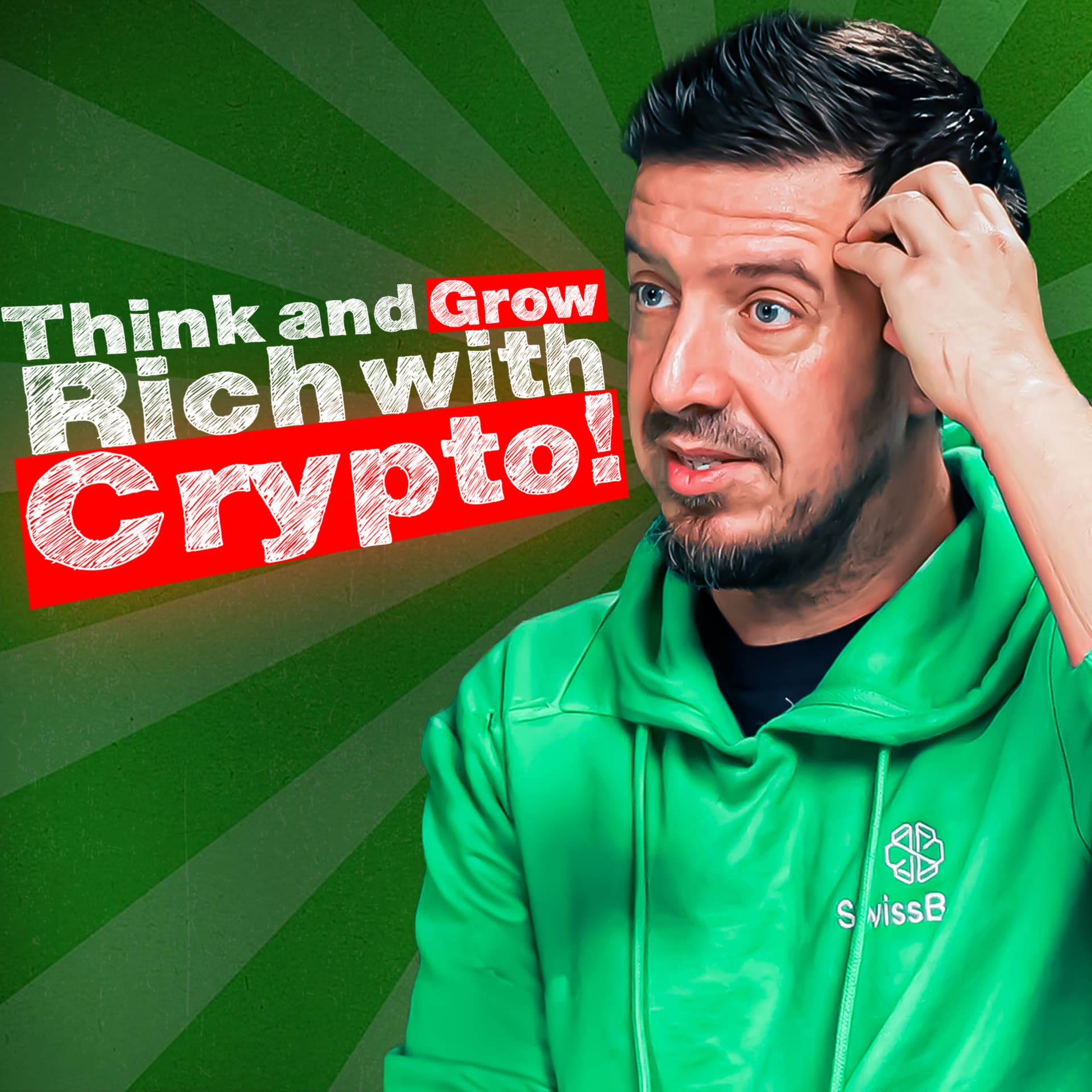
E66 - Swissborg CPO: How to Time the Crypto Market Top
Guest Introduction
- Alex Fazel: Chief Partnership Officer at Swissborg, Europe's largest Crypto Asset Manager with over 1 million customers.
- Background: A master at sales, a fan of Japan, and a true crypto enthusiast.
Key Discussion Points
- Emotional Intelligence and AI
- The role of emotional intelligence (EQ) in personal development and business.
- Differences in EQ between cultures, particularly Japan and France.
- The importance of self-awareness and understanding one's identity.
- Philosophy in Business and Life
- Win-Win Philosophy: The significance of mutual benefit in business dealings.
- Discussion on the principles from classics like "How to Win Friends and Influence People".
- The relationship between money, success, and happiness.
- Investing Insights
- Strategies for achieving financial freedom via crypto investments.
- The importance of knowing your "number" (the financial goal for freedom).
- Crypto Cycles: Understanding market phases and the psychology of investors.
- Contrarian Investing: The necessity of opposing the crowd for better returns.
- Timing the Crypto Market
- Insights on recognizing market tops and bottoms.
- Indicators to sell: media hype, influx of capital into low-quality projects, and the involvement of non-investors.
- Favorite Crypto Projects
- Eigenlayer: A project focused on restaking and enhancing security in decentralized finance (DeFi).
- Avalanche: Praised for its community satisfaction and growth potential.
- Creta: A gaming ecosystem with potential for mass adoption due to the popularity of gaming.
- Future of Investing
- Transition towards community-driven investments and social capital.
- The diminishing role of venture capitalists (VCs) in favor of community involvement.
- The rise of social tokens and direct investment opportunities in individuals.
Key Takeaways
- Struggle as Growth: Embracing challenges leads to personal and professional development.
- Mindset Matters: Cultivating a growth mindset and understanding emotional drivers behind decisions is crucial.
- Invest with Purpose: Connect financial goals with core values and community impact.
- Market Cycles: Recognize the cyclical nature of crypto investing to time entries and exits effectively.
- New Age of Investing: The shift toward community investments and the democratization of wealth generation through decentralized platforms.
Conclusion The conversation encapsulated essential philosophies on emotional intelligence, investment strategies, and the evolving landscape of crypto investing. The insights shared by Alex emphasize the importance of self-awareness, community, and strategic thinking in navigating both personal and market challenges. ```
Written by AI. May contain mistakes. Listen to the episode to check what was said.
Transcript
Automatic transcript. May contain errors.0:00I happen to be the brother of the CEO of SwissBorg, Cyrus Fazel. The only issue here, my friend, is that he's younger, he's smarter, and he's also more handsome, fortunately. Alex Fazel, the chief partnership officer at SwissBorg. One of the largest European crypto wealth management platforms with over 1 million users worldwide. What do you think is the biggest, most important skill that you've developed through living in all these different places? This is an amazing question because you have to go through struggles. It's absolutely a must. Even simple things like if you want to have a cold plunge or a cold shower, struggling is the process of creating something greater.
0:36What is a great salesperson? A salesperson will first identify major problems and provide a solution that will bring ROI, but will also help with ROI, return on effort. What are some of the red flags to watch for to start selling your crypto? Oh, my favorite question. The reason why I say this is because me in the first altcoin cycle from 2016 to 2018, I got wrecked city. Let's talk about Crypto Alpha. What projects are you really interested in? I do think that we're going to enter DeFi Bubble 2.0. There's too many projects. It's all over the place. But the beautiful thing about Bubble Burst is that some amazing innovation comes out and I think we'll be amongst those.
1:17what's your message to the 25 year old dude or gal who are looking for their purpose in life that's the one billion dollar question right there and i think
1:32you said cyrus is the eyes the vision antony is the brain and you're the mouth right not saying that we don't have brains though. So that's where I was coming to. You're probably more than a mouse. Who are you? So my name is Alex Fazel and I'm the Chief Partnership Officer at SwissBorg. I happen to be the brother of the CEO of SwissBorg, Cyrus Fazel. The only issue here, my friend, is that he's younger, he's smarter, and he's also more handsome, unfortunately. So I lost all three. How was it growing up with a brother that you think is smarter? I mean, he's younger, definitely. I mean, the age thing is a fact, right?
2:23Yeah. But then did you really feel like my brother is smarter? I did. And my brother looks better. And if yes, how did you grow up with that? And kind of, there's two ways. Either you say, I don't like my brother because he's smarter and he looks better. or you say, oh man, like I have other things I can bring to the table and we can act as a team and then build some great things. And SwissBorg is an example. Yeah, it's a really good question. So my brother, I think he inherited some of my dad's superpowers. So my dad's superpower is he's an intellectual. He's also very well educated and because he was in the UK and he had traditional style of education.
3:07and my dad for instance was a really good speaker like he's one of the most charismatic speakers I met so when we had Christmas dinners we're a Swiss Iranian family but dinners look more like an Iranian family very loud many people cousins aunts running all over the place and we'd be sitting at a table dinner table with turkey and in the United States and lots and lots of food you know they make sure to feed you a lot in Iranian families and even though it'd be super noisy as soon as my dad would open his mouth, it's like literally all the cutlery, all the conversations stopped and just everyone gravitated towards what he was saying.
3:44And he had this really amazing way of speaking, which he would pause. And you look at people in the eye and it gave goosebumps, right? It's like the energy in the room. Wow. And my brother, I think, inherited that. So he had that, you know guru charismatic type style while I was more an introvert in the sense where I was good at listening but I was not good at speaking um so and then in terms of the looks that's a different story but the how I measure this right uh whether it's a fact or not of course it's not a fact maybe there's one percent of the the world will think oh Alex is cute right but um my brother would walk into some room some days and he just he would see like a lot of you know girls when we're young in the junior high school in high school just literally like almost levitate towards him because he was so cute he looks he was so gorgeous he looked like a girl when he was a teenager before he started growing you know you know what i mean that's that's like next level good looks i guess when you when you look almost uh in between genders yeah so how did you feel to be honest i was very proud.
4:50I was very proud. The relationship with my brother was, you know, when we were kids, we would beat the shit out of each other after a good Bruce Lee movie, like literally karate, karate or Kung Fu kicks. And our relationship was very interesting. So I guess I was like an older brother taking care of the baby when he was little. Then we became best friends after a while. Then, you know, at a certain age gap, kind of like a second father, like a bit of a mentor. and then it re-evolves into another cycle, which is more a friend cycle. But it's really weird. You know how the relationships change over time.
5:26And you always manage to stay close to each other even when you were not living at the same place. Because what I noticed with my sister, for example, who I'm pretty close to now, is there was really that moment in our, I mean, our 20s. She's two years older, so she was also in her 20s, where I was building businesses. I mean, I was in Shanghai, Hong Kong, Singapore, and Madrid and London building businesses and first studying and then building businesses and kind of like lost touch to each other, right? I mean, I kind of lost it to everyone because I was just building and going crazy on that and kind of disappeared from the surface of earth until a few years later with a baby called the business.
6:08But yeah, and then we reconnected later and realized, oh man, that was actually bad, right? but you managed to stay very close to him even when because you live in a lot of different places right yeah it's it's a very good question I mean so when I left to the United States to do a double degree I was studying in south of France that was a bit tough I think you know leaving him you know alone with my mom and stuff like that but you know we grew up with a single mom anyways so him from the age of six roughly and me nine nine and a half so and I think you know the good thing about this is like oh no that's a sad story not necessarily because it built our character right and then it brought us even closer to each other um but i think you know when you when you grow up with like in that type of environment you have to trust and support each other even more right it's it's really funny i mean this is a very extreme example but when someone passes away in a family right which is probably a horrible probably the most horrible events right that you can face.
7:12But the positive side, when there's always a positive side, it'll probably make you even tighter with the family members because you realize, oh no, what if we lose him or her, right? We have to spend more time with each other. So the struggles, you know, always lead to positive conclusions and kept us tight regardless of where we were in this world. Absolutely. Probably one of the key learnings in life in general. And in business is the same. We have cycles. In investment, in business, business cycles. and then when everything goes to shit, it's very tempting to obviously be very sad or depressed or think it's the end or think we're stupid.
7:51But there is always like an amazing opportunity in every struggle. And sometimes it takes a lot of time to realize it and understand it. But once you understand that, you kind of become invincible because you realize, oh man, this horrible thing that happened didn't kill me. I'm still there and I'm much stronger than before. Yeah. A wise man once told me, Kevin, like you have to go through struggles. Like it's absolutely a must, right? Even simple things like if you want to have a cold plunge or a cold shower, that's a struggle, right? But it helps burn fat. It brings so many health benefits. When you go to the gym, you have to struggle.
8:33Like struggling is the process of creating something greater, right? and a wise man once told me that you know the yin and the yang you know how it's cut into the white and black like waves with the dots on both side i think that's what life is really about that concept of the dark and the white have to dance with each other you know it's always in movement and if you don't have the darker side you cannot have the white the white side so it's really in tandem and life is a dance right it's like struggling to yeah once again reach those positive places. Absolutely. Everything is temporary. Yeah.
9:10And I call this the pendulum, life pendulum for you, the life dance, but it's kind of the same thing, which is when everything goes really well, probably not going to last. Exactly. When everything goes to shit, it's probably not going to last either. And it's kind of like learning to embrace both because that's what life is, right? Otherwise life would be boring. I mean, probably would be better if life was amazing all the time, but that's not what life is. So we don't have the choice anyway. You literally cannot have an amazing life if you don't know, if you don't have some sort of standard of understanding what is a bad life or a struggle, right?
9:46So you're right. A hundred percent. You're Swiss, but you don't have a very Swiss accent. So we were born in the United States after the Iranian revolution in 78. So that was, have you seen the movie Argo with Ben Affleck? I think I have. where they're trying to escape Iran because the regime just flipped upside down. So that was pretty much the story of my dad and mom. They had to flee away from Iran because there was a brutal change in regime and just Iran in general. So my brother and I were born in the U.S. and I actually never lived in Switzerland. So my mom is Swiss, but she spent a lot of time in Paris.
10:30So she feels French as well. and then yeah my dad is Iranian but also lived in the UK and so it's very complicated now it's all over the place essentially. You lived in the US, Japan, France, the UK now you live in Dubai how did each of these places impact your personal growth and vision on what's possible in life? Personal growth so this is an amazing question because I have come to believe that obviously the education system is garbage. I'm sorry to say this, you know, when you're still teaching grammar, like what is a pronoun or verb? These are all things that are just absolutely useless in life.
11:12And I think schools should kick off by helping us understand ourselves first before becoming an expert in a topic. How do you get to discover yourselves? What are the ways to truly understand your identity? And then when you start understanding who you are, which is a, that's the endless journey, right? I'm still learning about myself. I'm sure, Kevin, you're learning about yourself day by day. But at least understanding yourself and then understanding your purpose and then connecting that to subjects and topics that make you passionate and making things less compulsory and more optional and free of choice.
11:47So I always thought school was garbage. However, Kevin, there was one class I'll never forget, which was a cross-cultural communication class. and that was really mind-blowing because a lot of the studies when you compare different cultures and ethnic backgrounds and nationalities you'll have spectrums right on one extreme to the other extreme and most of the time the two extremes are the United States and Japan because they're so different and I started realizing for example the U.S. and maybe countries like France um were or Switzerland. I mean, Switzerland is a bit higher context, but you have low versus high context cultures.
12:28So the low context cultures are the ones who will speak very direct. Yes. So the US is straight to the point. If you start a meeting, all right, what's on the agenda? What are we talking about? What was last meeting? And then boom. But in France, for example, slightly higher context, you'll talk a little bit more about the background. But in Japan, it's super high context. So that was very, very interesting. Then there was direct versus indirect. There was high levels of hierarchy and power distance versus low power distance. And so I started realizing, oh my God, Japan is the opposite of what I've lived.
13:02I want to go there. Yeah, I want to go there. Yeah, exactly. People must be literally like almost the opposite of who I am. And that sounded really mysterious to me. So you went there. I went there and it was indeed the polar opposite of me. How long did you stay there? 10 years. 10 years. So you love the actual, it's really interesting because kind of in the human nature to, I live in Asia, I live in Singapore, right? Most people in Singapore, they say, oh, why do you come here? I want to go to Europe. I want to live in Europe. I want to live in Switzerland. And I'm like, yeah, but like we all want what we don't have, right?
13:43So we're all like looking for the exotism, basically, one way or another, which is something extremely different from what we're used to. at least the most curious of us what did you do for 10 years in Japan? Yeah, so the first thing was to study the language I believe that if you really want to understand the culture you don't need to speak natively but studying the language will tell you so many things about the culture so for instance one thing that's really funny about Japan is when you disagree or you want to reject an idea, they may say perhaps, or maybe, or might be. It will never be direct.
14:25So for example, Swiss culture is also quite non-confrontational, but Japan is completely non-confrontational. So for me, it was just like, yeah, like you said, I think that people will naturally levitate towards things or people who are like them or who they would like to be like, right? But rarely want to spend time with people who are polar opposite because it's annoying, right? We go through our own biased lenses and we think that, oh, they're different from the way I see the world. So they're not interesting or I don't want to spend time with them. But just seeing like how dedicated, how precise the attention to detail, how determined they are at finishing tasks and all these things, how analytical, all these things that I was naturally rubbish at.
15:19And time management was one as well, by the way. They're so good with time. So I just saw it as, you know, oh my God, this is going to bring me so much more than an education because I'm literally developing my character, as I was saying earlier, which is much more important than learning about topics you'll never use in your life. What do you think is the biggest edge that you've, or the best, the biggest, most important skill that you've developed through living in all these different places? Japan, it's emotional intelligence. Because, for example, in France, emotional intelligence or EQ is very low.
15:53People get upset very quickly, right? It's a very political, you know, people get stressed and emotional very quickly. So usually the warm-blooded cultures, they will swing up and down very fast, right? but Japan it's so controlled almost sometimes in a negative way right so they will just keep it all internally until there's some sort of suicide right but the EQ in Japan is beyond belief why do you think the suicide rate is so high in Japan if the life quality is so good I think there are multiple things so the whole samurai concept of losing face is a huge thing. It's real. It still exists. Maybe people are not as manly and alpha as those days.
16:41Now Japan has become a lot calmer and softer, I think, relative to the Sengoku era, right? Where literally you'd be walking on the streets wearing your kimono and draw the sword and go for a duel, a battle to death, right? So it's changed, of course, a lot since then. But I think, yeah, EQ is probably one of the superpowers. And then dedication, determination. Like there's something which is called ganbaruki. And that means the energy to do your best. And they will not give up, man. Like they will keep going, which is a difficult thing to do when you don't have these little mini rewards or mini wins across the way.
17:22They'll keep, keep, keep. I went to Japan once and one of the things that struck me was people in a suit drunk in the evening walking in the street completely drunk, wasted. What's the reason for that? Because you don't see that in many other places, right? And that is intertwined with what we were just talking about because they internalize everything, right? The EQ, they won't let it out. Once they start drinking, Kevin, they go all out like all out karaoke's with what they call nijikai sanjikai so second after party third after party until until no tomorrow but the good thing about this before you see them wasted sleeping on the yamanote line the major train lines um they actually managed to open up thanks to alcohol so they finally some of that stuff which they struggle to communicate directly to their peers, it comes out.
18:21So I think it's a good way for them to open up. You said you were an introvert, but you became an extrovert. How is that possible? That's a very good question. I think it came through reading. So like the education system was for me, as I was saying, I have a very bad experience. I think it's garbage. Why? Is it because you were not good at school? Or let's say you were not having good grades because you were not interested by what was happening there? Or what's the reason why you had such a bad experience? Yeah, so I think the one size fits all just doesn't work. Now there are more and more options, right, in life.
19:07But growing up in the 90s, right, and maybe early 2000s is very different. And still now I would have to say it hasn't improved much. but you cannot measure someone's ability to succeed by having a questionnaire on something you don't give a fuck about. I'm sorry for my French. It's such a stupid way to measure success and intelligence, right? So the whole thing, I mean, already intelligence can be measured. IQ, yes, mathematics, numbers, how you can calculate things, solve problems. EQ, so IQ, EQ, CQ. CQ is a cultural quote in how good are you adapting to different environments, which I think now in a nomad world where we're traveling all around the world, the CQ is very important.
19:56And IQ, will it still be relevant when we read singularity with AI, where all the machines can do what the most intelligent man in the world can do a hundred times faster. So even the way we measure intelligence will change drastically. So the way they measure someone's aptitude and ability to succeed at school just to me is absolute garbage. So, yeah. Sorry for being so negative about this. So what should be done? There is a, I know you are a TEDx coach, right? In public speaking. So the reason I'm talking about TEDx is because we're talking about education. And one of the most watched TED Talks of all time is a TED Talk delivered by Sir Ken Robinson.
20:45It's called Do Schools Kill Creativity? And in there, it just talks about the fact that we should push more for arts, right? and music and creativity rather than the purely very objective classes that actually kill creativity and then kind of format everyone to become the same. And if everybody becomes the same, how are we going to solve problems or think differently or ask different questions? That talk is such an amazing talk. The way he graces the stage and plus he's very funny. Yeah. He throws in some really like ironic British like jokes. So yeah, absolutely. Creativity is key. Listen, Kevin, like I have a eight-year-old daughter, right?
21:37Of course, I'm helping her with math. I'm not saying that, you know, these IQ doesn't mean anything. Everything means something. But to me, the most important skill that I want to pass on to my daughter is for her to think about the world in a multidimensional way. so not just have her biases but think about it from your perspective from this person's perspective and be able to almost travel and see life from different lenses right because you know life is so ambiguous it's such a complicated thing you know we always want black and white but almost everything is in the gray zone right the the real facts and truth you can always question most of them, unless you say, okay, there are three people in this room.
22:27That is a fact. You cannot argue, right? So if you can think from different perspectives and understand different people's feelings, I think even AI will struggle to get there. Because AI, what it is, is you're feeding machine learning with data and it computes it faster than a human mind's brain. But what if I don't want my AI, I won't allow AI to have cookies on me. There's some things that I want to keep personal, right? I don't want to have everything in these machines that other people can access. Or if I have my own personalized robot that has its own AI within it, what if I tell it, I don't want this to be shared?
23:04Just like when you don't want your app to not be tracked. So for me, with the way things are evolving and the greatest lesson I would focus on is really seeing the world from a multidimensional lens. And that is a true superpower, I think. Will AI be able to do that? maybe because you'll be able to track your pulse, be able to track your mood eventually. But, you know, I think that's a lesson worth learning. How can someone train for that, seeing the world through a multidimensional lens? That came through books. And going back to like what you're saying about learning, not just becoming a speaker, which is something that I was naturally poor at, but I believe the nurture side of things.
23:48You can nurture yourself. And rather than doing education, finding the books that will help you, self-help books, personal development books, that will truly change who you are. And that's what helped me. Like I didn't learn anything at school, but, you know, I took time in my life where during four or five years, I wouldn't go out. I would just spend my weekends at a cafe with my favorite book, taking notes, and then setting up action items. How do I take this chapter two, three, four, make it actionable in my life in the next week so that really this doesn't become just theory but it becomes applicable as well you spent four to five years reading books so you probably read a lot of books right yeah a lot and probably a lot of them you don't remember because it's hard to remember everything but there's also a few that you love the most so let's talk about these books
24:44maybe your three favorite books we talked about them right the first one is think and grow rich by napoleon hill what is this book about and why is it so important for you absolutely so i think you know as i was saying for the education system we really need to understand ourselves first and have goals have the right mindset before Or interacting with others, right? So Thinking Grow Rich by Napoleon Hill, I think it was actually the core pillar to self-help. So there was a book prior to that called As a Man Thinketh, which is very old and I think 1870s, which inspired Napoleon Hill. But Napoleon Hill spent 20 years of his life studying the greatest and most successful thinkers of the early 20th century.
25:38and that is two industrial revolutions, right? He's studying people from 1860, 1870, all the way to 1940. And that's where the most technological advancements happened. Planes, the Wright brothers, we still fly a plane. Phones, Graham Bell, we still use phones. Of course, they have innovated, but they weren't invented. Everything, the railroads, the banks, everything that was created, electricity, right? All of that was created within these two industrial revolutions. And Napoleon Hill had the chance to interview Thomas Edison, Charles Schwab. He talked to Andrew Carnegie and Thomas Edison, some of these great, great thinkers.
26:21And because of those reasons, I'm like 20 years to write a book. I'm really diving into something that one single point, which is success, and then understanding how we can set our minds, program our subconscious mind to transmute. some sort of reality is very powerful. So what did you learn concretely from these greatest minds? So have you heard of a book called Secret? No. Secret was one of the bestsellers, I think in the 90s, early 2000s, which by the way is 100 % copied from Think and Grow Rich. They're taking the same concept. But I believe that writing down a goal that you really want to achieve on a piece of paper that you look at every single day, in the morning, in the evening, close your eyes, think about it.
27:13But not just think about the end result, but also visualize the struggle. What are the obstacles you may encounter along the path? And then visualize how you'd react to these obstacles. And there's something, Kevin, that I cannot explain. Even with Swiss Borg, when I started visualizing, because I wanted it so badly, weird things happen. The law of attraction sounds very corny, but it's so true. A hundred percent. It's so true. And guess what, Kay? When I stopped visualizing, these things stopped happening. When I stopped really putting my entire focus where there's a higher power that creates some sort of brain wavelength where I connect to you, I connect to the people naturally because we just levitate towards each other on the same frequency.
27:58It stopped happening when I stopped practicing that. so a lot of my dreams that I literally worked that I wrote on a piece of paper all of them happened Kevin all of them it's so weird absolutely focusing your mind on something is one of the most powerful thing you can do and I'm doing that for everything I'm doing basically and also I realized at some point oh I'm doing too many things at the same time yes and so I know because of that that because I give less attention to that thing And it doesn't mean attention like doing a lot of things. It just means I stopped thinking about that thing because I make the assumption that it's kind of like running on its own, right?
28:40That's the moment where probably at some point I should not be too surprised if there are some issues with that thing, right? And that thing could be a business, for example. Absolutely. It's amazing how you... Absolutely. Do you have some like freakish experiences, Kevin, where, because you were so into like seeing these things in the future and thinking about them and visualizing them that you're like, wow, this is too weird to be a coincidence, right? Like... I think it happens often actually. You know, you're thinking about things and you're kind of putting them in the back of your mind and then the right thing comes along that makes you take that step, you know, or start that thing.
Read the full transcript
29:22Or actually when you have your entire mind, I mean, obviously here we're going to talk about business, but when you put all your mind and soul and energy on one business, then you end up meeting all the right people in the right sequence for some reason, karma, whatever. Like they're basically being sent to you. And it's only because you're full onto that thing, right? Meeting the right people in the right sequence. That's exactly what I experienced. Like sometimes Kevin, I was on the train. I'd bump into a guy. His business cards would fly on the ground and I would see where he's working from.
29:55I'm like, that is the person that I talked about last week to a friend that I had to meet. Like, how can that happen, right? I mean, some people say, oh, how do you prove it? I mean, there's already like science showing that there are certain, you know, wavelengths or energy levels or frequencies that will connect you to through CT scans and MRIs, right? But as we improve science, we'll be able to see this, that there is an energy levels that you cannot just explain.
30:27There's another book that you love. It's called The Seven Habits of Highly Effective People. What a gem. Why? What a gem. You know, the whole multidimensional thing we're talking about earlier. So there's one of the principles of the highly effective people is the win-win principle. And I think that, for example, why is Bitcoin so good? It's because it's a multidimensional win-win. It's a win for the miners. It's a win for the investors. It's the win for those transacting. So many people are a part of that incentive economy, right? And so going back to the multidimensional thing, that is to me one of the superpowers.
31:06And what I love about that book is it teaches you first, there's three core steps in life. You're dependent on something when you're still beginning. Then you become independent as you can do things by yourself. but then you become interdependent as in the team needs you, you need the team and you can bring in better results than just by yourself. And that book is, it's a gem just from start to finish. It's so powerful when it comes to bringing a specific framework to how you act. And I think Think and Grow Rich and then Seven Habits follow each other really, really well from the mindset to the specific principles and actions you apply to your life.
31:51Why do you think there is so many people who don't understand this win-win concept, which is so important? Or win-win or win-win-win, right? Yeah, I think it's, as we were talking about, it's difficult to shift your perspective, right? Where do you think it comes from? From a place of survival? I need to take instead of giving and thinking more long-term? or because for me, I don't understand it. I don't understand how you cannot, because if you want the thing to happen, which is what everybody wants, right? You need to understand what is the most probable way that this thing is going to happen.
32:32Probably it's where everybody is happy, which means everybody is winning. So let's just take a step back and think differently about the situation to make it to win for everyone. Obviously it requires a lower ego or no ego and but why do so many for example let's take a very practical example to not go too deep into the the non-practical kind of theories LinkedIn my god every day you receive so many messages of like all these random people who are asking for things and I'm like if you were giving something even what like just I would answer like but what how can you just ask? I don't know you.
33:18Like, it's rude, right? It's not a win-win. Like, there's zero win for me and you're the one coming to me. So, like, right? And in business deals, it's the same. Like, if you think long-term, it's how is there a win for both? Because, like, we're going to grow together, you know? Or co-founders, when you start a company, who has, you know, how much shares, all that stuff? I mean, obviously it should be linked to what people bring to the table because there might be some people with much more experience or much more resources, etc. But like the win-win concept is so important and there's so many people who don't understand it.
34:00And I don't understand why. As you said, the in-mail are the requests on LinkedIn. They start with I, me, we. I, me, we. not we as in you and I, we as in our company. So already those pronouns don't make any sense, right? If you really want something to happen, it should be you, we as in together, right? So already when I see those pronouns, I immediately delete. I'm like, okay, this person hasn't done any research or is not trying to think about my perspective and what I want. So I think that's a really important point. And to be very honest, to go really extreme, Kevin, you know, the whole like win-win concept.
34:40As a matter of fact, when I was talking about being a super connector, I'm very comfortable with lose-win because I believe in the law of reciprocity, which comes from a book from Robert Cialdini called Influence. So once again, you're planting seeds, right? Because some people, they'll feel obliged to give back eventually. So the whole concept of, you know, crush the competition, you know, negotiate, twist their arm. I don't believe in that at all. It's very short-termist, right? So I don't mind the lose-win. On the contrary, many of the negotiation books out there, lose-win is very important, very successful tactic that I use for influencers.
35:19But also the number two thing that they don't talk about in negotiation books is having someone to lobby between the two teams. And lobbying is critical because all this sensitive information when you're just party A, party B, there's conflict. But if there are two guys on the side who are getting some of the more sensitive messages across, negotiations become much easier. Right. It's basically impossible for the thing not to work. I have this example actually with some, one of my businesses. There's this guy, I mean, he's basically selling, he's selling for us and we're kind of like white labeling our solutions to his client.
36:01And he's, I talked to the client, but he's the guy who's taking care of all the sales. So it's always going through him. And he knows the client perfectly well. And I also understand what they want. But like, because we go through him, there's always going to be this, this is a bit too high. Oh, this is good. Oh, it's impossible not for it to work, right? So this is an extremely interesting, actually a super interesting concept, which is almost a mediator, right? Yeah, it's a mediator, exactly. Like how do you make, how do you, I mean, except if someone is of bad faith, when there's a conflict or a deal or something that needs to be happening, except if one of the parties is of bad faith, then everybody should hope or aim for this thing to be a success.
36:47How do you increase the chances of success? Thinking win-win is one. The other one is having a mediator or someone in between who knows both, understands both, and kind of like communicate. It's true. It makes the whole difference. The mediator is actually even better than lobbyist because, as you said, Lobbyist almost sounds like someone has interest at heart of someone else. Yeah, mediator is a great term, I think. And just like when you have marriage counsel, right? You do counseling with somebody. There's always a mediator right there to kind of bring everything as close as possible to the center.
37:24Absolutely. I was thinking about divorces when you talk about that, right? Divorce, yeah. Because the way or conflict resolution in general between businesses or between a husband and a wife is you can go much cheaper. And also you can even find solutions through mediators. It's actually in law. there is a person called mediator that is a lawyer, but then you're not required to go to court and spend much more money and go public and all that stuff. Exactly. So absolutely. You talked about I'm willing to do a lose-win and it's the entire concept of bringing value. And you said the reciprocity, right?
38:03Yeah. It's the whole game. It's the whole game. Of course. I'll give you so much, motherfucker, that you have at some point, if you are a good person, you will have to give me something. You will have to because you will feel bad. You're like, why is this person giving me all that stuff, right? And in sales or networking is the absolute most important skills to understand. It really is. What is a great salesperson? What is a great salesperson? A great salesperson, that's a very good question, deep question as well. I think it's someone who can really shift their mind and perspective and that is there to create value.
38:48I think it's very important. So a salesperson will do, there are many ways of seeing this, but I think a salesperson will first identify major problems. So we'll see there's this person or this company has a major problem. and will provide a solution that will bring ROI, but will also help with ROE, return on effort. So maybe make a process easier, faster, more efficient, but then give you very easy measurables and deliverables. And that's on the logical side of the brain, but then on the emotional side of the brain is someone who comes across with great principles, values, someone you appreciate working with, that you respect and that's someone that I think is really just trying to create value for someone else or their company and believes they can do so.
39:44And that's, I mean, it's very simple, but I think those are kind of the core pillars. Absolutely.
39:56There's another book that you like a lot. how to win friends and influence people. Yeah, that's amazing. Because if we go back to thinking grow rich, right, we're talking about the mindset. We go to seven habits. We're talking about the habits, how you apply that to your daily life. But then you go to how to win friends and influence people. You're talking about interaction, finally. Now that I can, I know myself and I know what to do. I have to do it. I have to dance with a partner, right? So how do we influence people? So many takeaways, but one that really marked me was talking about why the Italian mobsters and mafia do what they do.
40:43So you go from the guy who's super ethical to guys who would kill anyone besides, you know, a wife or a child. And they were really explaining why we do what we do. And please do read the book for those watching out there. But one of the key takeaways for you is what we do every day in life is to feel important, to feel included. So even the guy who's a part of a mafia, who's going to run down and burn a local restaurant because it's not paying the taxes, who will, you know, bury a guy deep in the ocean just because things didn't go well. when they're walking down the streets and their limousine with tinted glass with tinted mirrors they feel important because the way people look at them oh you know they these guys are strong they're scary but they feel important and whether you're doing it in an ethically right way or wrong still everyone wants to feel important so that's his takeaway so if you can make someone feel important.
41:48And that can be into so many actionable items, not to be too theoretical, but for example, if I praise you, maybe I should praise your amazing podcast in front of other amazing people. And that will make you feel important. I said, listen, Kevin is running this podcast. I've been on 50 podcasts and this is the top three without a single ounce of a doubt. That will make you feel important. So anything you can do to make people feel important is a great way to making friends. So the idea here is if you make people feel important because you understand that, that's then how you can develop influence.
42:29Yeah. And rely masses towards a cause or a goal that you have. Exactly. Because you understand that everyone needs a sense of belonging. Exactly. The sense of belonging, that's exactly it. And Kevin, an extreme example, right? So there's one chapter on empathic listening, you know, really listening, not just with the brain, but also with the heart and feeling how they feel, right? And I remember, this is a very extreme example. I met this very powerful guy in Tokyo. He was running one of the biggest public TV channels, right? And I swear, Kevin, I was just asking him questions based on a topic that he was interested in, that I didn't necessarily know a lot about, but I just wanted to make him talk more about what he loved.
43:26And the deeper we went, the more his body language opened, the more his eyes would bulge out, the more he would get excited and use hand gestures, even being Japanese where, you know, body language is kind of controlled. and guess what at the end of that conversation i'd spoken maybe one or two percent of the time so it was a monologue and you know what he said he said alex that was one of the greatest conversations i've had in a long time it was not a conversation it was a monologue he gave me his business card where there are lots like people literally lining up to get his business card he gave me this card, he said, let's grab lunch next week.
44:05So I understood that, you know, really listening to people and, you know, getting them to talk. It is definitely not a dialogue. Being a therapist. Yeah, exactly. Which is what we're doing here, right? So because we're talking about books, I want to mention one that I really love that we talked about yesterday also, which is probably my favorite book from Tony Robbins, Money Master the Game. Ah, great book. And the reason why is I think everyone should understand the basics of investing. And Tony Robbins did an amazing job, even though he's not, I mean, he's probably an investor, obviously, with a net worth of probably half a billion.
44:45So he probably needs to invest, at least understand the basics of investing to know who should I give my money to, right? But one thing he did, it's very similar to what I think was Napoleon Hill did, right? Which is going to interview the biggest people. Yes. Right. So Tony Robbins did the same after the great financial crisis. He said, I'm going to talk to Ray Dalio. Ray Dalio, yeah. And all these guys. He was the first one to get such a long interview, right? Exactly. I'm going to talk to Ray Dalio. I'm going to talk to John Bogle from Vanguard and a bunch of other guys who are basically master at investing.
45:25Yeah. And I will simplify everything for all the millennial generation because 2008, right, millennials are, they should understand that they should start investing as early as possible. And they should also understand that investing is not complicated. it's made complicated by the entire system who needs fees right
45:54and I find it amazing to be honest because I realize oh man first why don't we learn that at school I don't know maybe because school is not as useful as you said but second I can take control of my finance and my future if I understand that And in a nutshell, it just says you need to buy ETFs, which are low cost, diversified funds, where you buy just the ticker or the fund, and then you're exposed to tens or hundreds of different companies. So basically, it's diversified already. If one of the companies dies, it's just replaced by another. You're not at risk. And second, he explained that if you just buy that, which we call buying the market, right?
46:41The average of the market, you're going to outperform 96 % of the active money managers. So who are overcharging people to underperform, which makes no sense again. And then he explained one key concept for people who want to reach financial freedom, which is, there's a chapter, it's called, What's Your Number? And it just explains you, you need to understand what's your number. What does that mean? How much do you need every month to live? Depending on where you want to live, if you have a family and so on and so forth. Maybe it's 5k a month, maybe 2k a month, maybe 10k a month. And then this number, knowing this number will help you reverse engineer year, what's the amount of wealth that you need to acquire in order to be financially free, right?
47:36For example, if it's, let's say 10K a month, you need to divide that number by, it's the rule of 4 % rule, right? And then it gives you an amount that, you know, 10K a month would be 120K a year. And then how much, how much, so 120K a year is going to be 4 % of a certain number. Yeah. that's the number I need to achieve. And then I can do all the financial planning and understand, you know, investing and do a compound interest on an Excel spreadsheet to basically know, based on what I'm earning today, what I can invest, or what I'm able to save and invest, I can reach that number within that many years.
48:18And basically I know more or less when I'm going to be there. It's not rocket science, right? And like, for me, it was a big game changer, understanding and kind of like, also then going out there and talking to my parents, were very educated, did really well in life, but are Swiss and trust the bankers. And telling them, hey, the banker is kind of screwing you. I mean, on one side, he's doing your service because you were very busy at your job, right? But on the other side, you could probably do it yourself and do much better and seeing their reaction. Kevin, you're 23 years old. What are you talking about?
48:56Also in Switzerland, you don't question the bankers, the suits, the lawyers, right? And yeah, so for me, they told me the day you make a million dollars or a million Swiss franc, you can come back to us and we'll listen to you. So then I was like, how do I make a million dollars as quickly as possible? And then I understood, oh, I need to understand this investing thing. And then I realized, oh, crypto is compounding on steroids, right? which compounded interest is one of the key chapters of the book too. Yeah, absolutely. And so if you understand that timeless principle of investing, then you understand crypto, you realize it's the same but on steroids.
49:36So why would I not go and have a look there and do something there? That is so powerful because literally we're just talking about the industrial revolutions. Right now, we're entering the financial revolution where, as you said, some people were controlling that power, the power of wealth, but now it's coming back into our hands. And I think if you want to be financially free, it will almost never happen through a salary. Never. It will never happen. Yeah. Naval Ravikant, I don't know if you listen to the podcast, how to get rich without being lucky. Just three hours and a half of like a masterclass on entrepreneurship.
50:22And he says the only way to get rich, to retire, to build wealth is to own a piece of a business. Yeah. Whether you build it yourself or you invest. Invest. Yeah, absolutely. That's what creates wealth. Either you co-founded a business and you have an exit, right? Or an IPO, or you invest in other businesses if you don't want to do it yourself. That's the only true way to be financially free. And I'd love to share some things to complement what you're saying and taking it back to the very first steps for those who are not investing out there, start tomorrow, right? Literally timing is perfect right now.
50:54But also just calculate. Let's say you're earning 3 ,000 euros a month. Let's try to save 300 of that euros, 10 % of your monthly income. If you can put that on the side and you can lock it up for two, three years without touching it, take that 300 euros or 200 euros and stack it, Literally like a piggy bank, right? So that is the first step of creating disposable income to invest, right? As you were saying. And then once you do that, the second part, as you said, that number, what's the magic number, I think is so important. Setting a goal and understanding it. Because, you know, in the seven habits, Stephen Covey talks about start with the end in mind.
51:38So what's the end goal? And then you try to figure out how to get there, right? So you set that goal, but also program your mindset because you're going to go through difficult times. I literally, so even when I try to buy the market at a low, Kevin, when I'm about to transact, I already program myself saying, it's going to go lower. I'm going to lose money. I'm going to lose money within the next, maybe even today, I'll be in the red. And tomorrow I'm going to be the red. And in one month I'm going to be in the red, right? So programming your mind to go through some sort of suffering and understanding the long-term mindset.
52:20And then, as you said, you compound over time. And actually becoming a millionaire is not that difficult. I mean, with roughly 10K in disposable income to invest, within three cycles of a crypto market, you'll become a millionaire within three cycles. So that's, let's say, three to four years. Within 12 years, you're a millionaire. So your assumption is? that you can multiply your 10k by, so by 10x would be two cycles. So would that be four? 100x, yeah. Over the average cycle, you'll do like a 10x, but then you compound that, right? So let's say you go from 10k to 100k, but then the market goes back down.
53:07Your 100k goes to, let's say, 40k. Okay. And then the 40k to another 10x, you reach close to half a million. And then the half million goes back to 200K and then 200K, another 10X. Then you're at$2 million within three cycles. And cycle is three to four years, right? So it's not that crazy, right? It's not crazy. The problem is, I mean, that's one of the things that brought me into crypto. I was like, I could invest in S &P 500 for 30 years or I could do it in, not like people think in one month or three months, but maybe in five to 10 years, right? I mean, then I realized it can happen much faster and much more crazy than you thought.
53:46And I'm being conservative, by the way. Absolutely. You can do better than that, right? But the problem is, you say, hey, look, you have 10K, you can become a millionaire with crypto within three cycles. But who wants to wait three cycles? That's the whole problem, right? The whole problem is your psychology is going to kill you as an investor. It's the biggest problem. You have these market cycles and you have people who do just dumb things because they're impatient and they want everything faster. And because you want everything faster, you make mistakes and then you lose everything. Yeah, so true.
54:27Let's start with the cycles, right? And let's take crypto because we're doing crypto stuff here. Why do we have cycles in investing? Yeah, it's a very good question. Why do we have cycles? I think that the cycles are essentially a combination of emotions on a chart with other cycles that are directly correlated. It could be economic cycles, geopolitical, political. And there's so many, because they're all intertwined in some ways, you can never just have happy times as we talked about before the yin and yang. And then, of course, there's also specific businesses, hedge funds that have an agenda.
55:12They need to make money, right? They're targets. So all of that combined is just like us in life, just like the seasonal cycles from summer to winter to spring to autumn. Like everything is cyclical in life. So maybe as a key kind of learning takeaway for people who are listening to this. because you know there is this four year cycle in crypto I mean at least if we look at the past but anyone who is kind of new to crypto kind of been there a bit but not really deep into it is going to say how can you know how can you be so confident it's going to go back up it's dead right last year it's dead no no don't worry four year cycle is a thing then you can listen to Raoul Pal talking about liquidity cycles, which is like a, it's a macro thing.
56:04It's not crypto, but it kind of karma, whatever, like the force, the universe makes that everything kind of matches at the same time, which is amazing for us because we know, you never know what's going to happen. But like, you're like, hey, usually there's this four-year cycle with this Bitcoin halving. Maybe since the beginning it's not the Bitcoin halving, but it's the liquidity cycle that makes a difference. But at the end of the day, who cares as long as if I have four or five different reasons for markets to go up, liquidity cycles, Fed having to cut rates, money printing because banks blowing up because the interest rates are too high, Bitcoin halving, Bitcoin ETF.
56:51You start to have all these combinations of factors that just make it a no-brainer for it to go up because he went up in the past with less factors, right? And so that's probably the key takeaway here is you need to understand that there is different forces that could all go against the market, go in different directions, but you also have these key moments every couple of years where everything is perfectly aligned. And this was the case in COVID, actually, COVID March crash, like Bitcoin having right after. Crazy money printing, closing everything down. And then you had Bitcoin lagging actually.
57:33People saying, hey, it crashed like crazy to 3.5K from 12K. It should be like digital gold. So therefore it's shit, right? It's not working as digital gold. And so then that's where you have your conviction. You say, hey, everything is aligned. Yeah. And even if for the next two months it's kind of not moving much, I know everything is aligned for it to go crazy. And then what happens? It goes crazy. It goes crazy. And now it's the same happening again, right? This year. And so probably the most important thing is to understand is obviously cycles, fear and greed. But then you have like bigger, much bigger forces that are not crypto related, that are macro related.
58:12And you also have the elections this year, right? US elections. And what happens during US elections? Stock market needs to go up because, right? That's one of the great ways for them to prove that they're worth being a president, right? Is to increase, to lower the unemployment rate, to grow the GDP, to get the economy back on track, to help people make money, right? So yeah, absolutely. That's a huge factor. So everything is lined up. Everything is lined up. For a beautiful year. And still we're early. I think, you know, people need to understand when you have these adoption cycles, right? Just like VC investments, the earlier you get in, of course, the more risk you're taking, but the higher the returns.
58:52And we still haven't really crossed the chasm. We're still not mainstream. People are aware, but do they hold it? Do they use it? No. Absolutely. So I think, as you said, this is probably the easiest cycle to make money psychologically because there's just fundamentally everything is being aligned. And I'm not talking just the ETFs, but everything, all metrics are looking good. Probably the key word here is a consensus. If something is not consensus, it's a good thing because there's money to be made. The day something is consensus... it's less interesting. But then if you look at, again, crypto and then larger picture, you could have something that became consensus in crypto, but because crypto is not consensus yet, it's still an amazing play.
59:49For example, I'm thinking about Solana here. Solana was completely non-consensus one year ago, and then it became pretty much consensus. I mean, maybe two or three days ago, there was another outage, but it's kind of a consensus trade in crypto now. This thing is going to, I mean, already started to do amazing return, probably 10x since the bottom even more. But it's going to continue, right? It's kind of like the darling of the layer ones for this cycle at least. So most people who don't understand these different layers of crypto kind of bigger picture macro, they might say, ah, Solana is over.
1:00:26I would argue, no, it's not over because it became consensus in crypto, but crypto is absolutely not a consensus trade amongst the macro world yet, right? which were you probably at your good spot in terms of, as you said, feeling almost like safe in something that's still going to do like a really great return. Yeah. And whenever you hear the death of Solana, the death of Bitcoin, buy. That's as simple as that because, you know, the best investors will do the opposite of what the majority will do. It's very simple, right? Simple to understand, very difficult to put into practice because emotions interfere.
1:01:06But as you said, when Solana, the death of Solana post FTX, all that crap, our CTO was saying technologically, this is flawless, fundamentally, community-wise, numbers on chain, all make sense. He went all in. And literally Cyrus, my brother, was talking about Solana when it was around$10, as you said. So one tenth of now. So you would have done more than 10x, as you said. Because once again, you have to play against the emotions. So the death of something is usually a very good sign. If you know fundamentally strong, just go opposite direction of the tides. Absolutely. So we call contrarian investing.
1:01:43Contrarian investing. Exactly. How can someone, because you say it's very difficult. How can someone become a great investor, which by definition is a contrarian investor? Yeah. So the two core emotions, as you know very well, Kevin, is fear and greed. Right? The fear side to me is very easy to fight. Because usually it's when the markets are reaching all-time lows. And the reason why is you can check all the data. You have years of data compiled to bring the rational mind to believe this is the right bed. So you have so much to look at historically. You have so many on-chain factors to verify, to reassure that emotion.
1:02:31promotion but the the greed side of things is very complicated because you're entering new territories with no data and you're thinking wait a minute i did a 5x i hit my goal but maybe i should wait for a 7x or i hit my 7x goal but maybe i should go for a 10 and that devil that's just on your shoulder saying not yeah not now not now we can make more money and because you have no data to look at, you just get wrecked, right? It's a classic meme of it's a classic meme of I just need another 2x. I just need another 3x, right? Absolutely. Which most people who are in crypto say and that's a really great learning actually.
1:03:16They say, the day you reach your goal that is a life-changing amount get the fuck out. And then the meme is like, yeah, but I just need another 2x, right? And so one key thing that I learned the hard way in 2022, probably I'm not the only one, is that understanding these cycles again. What is a crypto cycle? It's basically leverage. People starting to have some hope and then the hope gives place to excitement. And then obviously people only have a certain amount of money to invest. So they will say, how can I invest more? Or, oh, I can, I don't know, borrow some money against my house or sell my house for that.
1:03:59Or maybe leverage myself on crypto itself. And the same, this is just for the investor side. But then you have the same on the investing side. Where is the money coming from? Probably some debt somewhere, right? Because we know the entire fiat-based system is debt-based, right? So you basically have a pile of leverage piling up. Last cycle, it was, I mean, you are in the middle of it. It was crypto lending, right? Celsius, BlockFi, FTX, where they would promise us that everything was over collateralized, but it was not true. It was basically not over collateralized. So it was money given to these hedge funds that were having long short strategy, which basically means you're taking leverage even without wanting taking leverage as a retail user who just wants the 5 % or 4 % interest rate, right?
1:04:51so leverage piles up until it doesn't anymore, right? And when leverage piles up, everybody becomes rich on paper. And someone out there who is much smarter than all of us realizes there is a lot of value created on paper and that value can be realized if it's realized before everybody sells. So they will see that and they will come and start to break some things here and there to take the money out, breaking the Luna peg, the Luna stablecoin peg, shorting Luna, and so on and so forth. Even with Celsius, it was breaking the SCE peg, right? And then these smart people, very smart people, might be crypto people, probably outside of crypto, they know how, because money is not made or lost, it's just transferring from one place to another.
1:05:45So they know how to take the money made on paper by me, Kevin, or by you, Alex, and put it in your pocket, right? And that's a... And no matter... The most important thing is, if you don't realize this money in cash, in a house or whatever, someone somewhere will take it away from you at some point. except if it's a Bitcoin or an ETH in a cold wallet. Fine, right? But someone will take it from you at some point. And because there's just people who are much smarter than us in this game, right? 100%. And it's probably the, you need to, I mean, probably you need to have gone through the pain of losing a lot of money to understand, maybe I don't want that to happen again, right?
1:06:35Yeah. And then say, the day I reach my goals, I'm out. and maybe that's a way to fight this freaking greed that is a killer. When you sell, we have to sell. It's so painful. It's so painful. It's so painful. And you see it going up still. You're like, oh my God. The same as when you say, oh, when I buy, I know it's probably going to go down 30%. When you sell, you probably know it's going to go up. It's going to go up more, right? That's a really good point. the problem is one is more painful than the other. Yes. Because one, you are in the market. So you're like, I'm down 20 or 30%, but I trust that it's going to go up in the future.
1:07:17The other one is you're not in the market. So you have the freaking FOMO. Yeah. It kills you. To go back in and buy, right? That's a really good point. I hadn't thought about it from the other way. As in it kills you to see, it kills even more to see potential gains you could have made, right? Yeah. Yeah. It's so true. It's so true. What are some of the red flags to watch for to start selling your crypto? Oh, my favorite question. My favorite question. And the reason why I say this, Kevin, is because me in the first altcoin cycle from 2016 to 2018, I got wrecked city. Have you seen the movie Dumb Money, by the way?
1:07:54No. So I highly recommend for those who are out there, especially if you're new to investing. This movie literally portrays everything we're talking about in a fun comedy drama type style. And do you remember the GameStop issue? I remember the GameStop. Robinhood and WallStreetBets. I remember the GameStop story, which was, there was guys shorting the market, right? And then we have like the community online. Diamond hands. Exactly. Do you remember that? Destroying, I think one hedge fund like would have blown up if there was not like the ACC or some government organism that came and said, hey, Webinar, you shut down this and so on.
1:08:40People can't buy anymore. Like something crazy, right? Exactly. The buy button wasn't working. Only the sell button was working. Anyways, a complete scam. Once again, Wall Street trying to steal from retail because they didn't think the community would have enough power to go against their shorts, right? Beautiful story. Everyone should watch that movie out there. But first altcoin cycle from 2016 to 2017, 2018, I was a part of the dumb money. Like literally, as you said, not only I didn't sell, but every time we'd retrace, I'd buy more and catch the falling knife, you know, the hundreds of times.
1:09:13Of course. But so that was literally, but three cycles later, three altcoin cycles later, which is the only, they've only been, there have only been three altcoin cycles. I can confidently share a few signals, which I think are the deadly signals. Number one is the news, the media, right? If the media is starting to show Bitcoin every day or Ethereum every day, new all-time-I, new all-time-I, new all-time-I, and that from that source, then all of a sudden your family, friends, taxi driver are starting to ask you, oh my God, should I buy Bitcoin? people out of the blue who've never been following fintech, let alone crypto and Bitcoin.
1:10:00That's a huge flag. That's a huge flag, especially if you have old friends from, you know, a city in France or Switzerland asking you, oh, I'm thinking about getting all in. That's usually when the late majority come in, that's a massive signal. The second signal is excess of capital. So money is flowing into projects with zero fundamentals, garbage, right? So let's say I remember in the first cycle, there was a coin called DentaCoin, which is supposed to have your dental x-rays on chain, which maybe now could work, but it was back then an absolute crazy idea. There was also another project in the third altcoin cycle, which was printing 100 % APY per day.
1:10:49in terms of coins, that type of euphoria. And that coin was literally over$1 billion valuation. So when you see too much capital flowing into the system, and you see too many projects with zero fundamentals and pure speculation at a unicorn status, those are signals where you need to get out ASAP. So crazy valuations, excess capital, and just people wanting to get in the late majority, I think are some of the deadly sins of the end of a post-cycle. What's a crazy valuation? Because I could argue that, I think I read two days ago, I don't know the exact numbers anymore, but probably it was something like, hey, last cycle, there was 50 projects with more than a billion market cap.
1:11:39I'm inventing the number. I don't know if it's like 100 or 30 or whatever. Probably this cycle, there's going to be 10 times more, right? So the notion of what's a crazy valuation changes with time because first the industry matters. Also, there's more and more money printing, which is the reason why Bitcoin goes up and everything goes up, right? So what's a crazy valuation? I mean, one thing you could do, I'm just like grinsoming out loud, but you can't stop me, right? A very simple heuristic, which we talked about with Alex VanEvick from Nansen. I realized like the really smartest people in crypto, they have very simple heuristic and assumptions, which is forget about cash flow and all that stuff that people try to come and assign value to a project based on cash flow generating.
1:12:35It's more, hey, Bitcoin was 69K. previous all-time high was 20k that's a 3x ish right probably next one 2x ETH 1.4k 1.4k 1400 then 4.8k like and then you just start to look at okay, 4.8K probably does a 2X, still kind of safe-ish, maybe a bit less to be conservative. And therefore, what's the market cap of ETH? What's the market cap of Solana? Ah, let's say 10 times less. Ah, so probably it's going to go up higher, maybe by a factor of, you know, if one does 2X, maybe the other does 6X or whatever. And just like very simple heuristics like that. Yes. And that helps you determine what's a crazy valuation or not.
1:13:41Yes. And where the risk, when is it starting to become too risky? And maybe as a complement to that and to the notion of controlling investing, something I learned is where you make the meat of your return in a fairly safe fashion is between the bottom, which you will never catch, and the previous all-time high. anything that's above the previous all-time high it's starting to get very risky much more risk right so Solana being down at$8 or$10 you like previous all-time high 25x if you think the thing's not going to die probably a good time to buy if it goes back to previous all-time high 25x then it becomes 50x at 500 2x from previous all-time high starting to be very risky right and the reason I say risky Key means when do you want to get the fuck out of the crypto ecosystem to not have this other key player take everything from you?
1:14:42Yeah. Because when everything blows up, everything blows up. Yeah. That's the kind of approach, at least my approach. And that's the best approach. So like, because we talked about like the signals, right, that are dangerous, that are telling you it's time. But those are more like feeling, right? It's not very concrete in terms of numbers. You're bringing in very important numbers. And if you want to have specific numbers, and I agree with you 100%, I use three core metrics. Number one is total market capitalization. Where are we going as an industry itself to the next level? So, for example, if we peaked at$3 trillion in the last cycle, and this cycle on a conservative scale will probably be at$6 trillion, as you said, 2x.
1:15:28And some people are forecasting up to$10 trillion, right? Yeah. And then that's really important. Those numbers are really important because if you understood the mindset, which we talked about earlier, and your risk appetite, then you can easily make profits. If you're very sensitive and you have very low risk tolerance, get out of$6 trillion. If you're like me, I'm willing to play a little, bet a little more, I'll get out maybe$7,$8,$9 trillion. Can see the little devil there saying, don't sell. But last cycle I did relatively well. And then the second metric, so total market capitalization, then you have the single asset, all-time high capitalization, as you're saying, where was Solana specifically on each asset.
1:16:12And the third one is how long the cycle, which you also touched upon, how long the cycle. And the problem with the Wyckoff cycle of the four stages, right, which you can literally compare to winter, spring, summer, autumn, fall, very easy to break it down to four categories. They're very difficult to measure. But one thing that we do know is in the euphoria stages, we're talking about the markup stages where we go parabolic, right? It's anywhere between six to 12 months, three cycles. So what I would say is, okay, we talked about total market capitalization, specific token, all-time high market capitalization.
1:16:54But then the third part is how long will the euphoria stages be? Time component. So you look at what, Bitcoin halving plus nine to 12 months? Exactly. And then you say, I'd rather be out early than late, right? Yeah. So if I haven't reached my price targets or my objectives, but the time component is kind of like reached, Yeah. I should start to de-risk, right? Exactly. Even if there is not all the craziest sign yet of people going mad and everywhere, right? Yeah, exactly. So as you said, you know, once you start seeing double digit gains, Kevin, like almost on a weekly basis, right? And you're seeing the charts literally go parabolic.
1:17:36You're like, oh my God, if I'm conservative, let it go six months. If I'm a little more of a risk taker, nine, 12 months, you're playing with fire. So again, it's understanding oneself and then connecting that to the cycles. And that's the key to success, I think. So this is the framework for investing for this crypto cycle. Let's talk about Crypto Alpha. Yes. What projects are you really interested in? You mentioned the first one is Eigenlayer. Yes. Why do you think Eigenlayer is such an amazing project? Now, I do want to put a risk disclaimer. I do think that we're going to enter DeFi bubble 2.0 with the whole restaking things.
1:18:16There are too many projects. It's all over the place. LSD is all over the place. I was about to say, last cycle was a lending. This one, obviously, liquid staking derivative and restaking is going to create the next bubble because people just leverage themselves on their ETH, for example. 100%. And so many, I mean, there are projects that are absolutely pivoting. They're changing their whole business model to fit this narrative because they know it's the next bubble. But the beautiful thing about bubble bursts is that some amazing innovation comes out. And I think Eigenlayer will be amongst those most innovative.
1:18:50Because if you really want to bring the old money, the boomers' money, the TradFi money into DeFi, you have to have something that you do not have in their world, right? So let's say RWA, I'm super excited about it because you can have real world assets on chain, but you already have that off-chain, right? So maybe it'll open up accessibility, it'll democratize things, make it easier, make it more transparent, all the tools that blockchain does. But when it comes to the restaking collective, you're building something that has not been done before ever in finance because you're using money markets or lending and that collateral that you're using for one particular product or market, you can take it out and restake it elsewhere to compound your interest.
1:19:43And it's not just about compounding interest. It's about adding security to multiple networks. So the whole proof of stake concept is beautiful, right? I prefer proof of stake than high yield accounts, than bond markets, because there's no risk. Besides slashing, which we can talk about later, the risks are minimum. Very few funds have been lost on any proof of stake layer if you choose the right chain. So all of a sudden you're compounding that. And plus now, Eigenlayer, it's not just about leveraging your collateral to earn interest. They also have insurance mechanisms coming in place. You have the audits and all the security side of things where you will be able to play with risk as well.
1:20:26If you're conservative and you want to stake here and restake there, you can do it in a more conservative way rather than going degen and using maybe some products or setups that are riskier. So it's not just leveraged debt. I think it's very, very powerful. And imagine you can get relatively low risk, maybe 8%, 9 % on your ETH instead of 4 % or 5 % on Lido. Isn't that beautiful?
1:20:54Absolutely. Another one that you love is Avalanche. Yes. The Avalanche Ecosystem. Why? Avalanche is amazing, I think, in terms of investment because everyone's happy in their ecosystem. So when I do the value investor, Benjamin Graham, which we talked about, a boring book, but very useful, is to just talk to people on how they feel. I talk to the miners. They're very happy. I talk to, you know, the GoGoPool guys, LST. They're very happy. I talked to some of the top games in the industry building on Avalanche. They are very happy. And everyone seems to be very happy, which is just like Warren Buffett going to the office and talking to employees and management to see how healthy the ecosystem is, right?
1:21:39And then just in terms of asymmetrical returns in the top 10 by assets for all layers 0, 1, 2, it is fundamentally the strongest chain in terms of daily revenues. and the FDV, the fully dialed valuation relative to Solana, has more alpha, I believe, when it comes to fundamentally versus market cap. So I think it's a smart investment. And I've been saying that since, you know, AVAX was under$30 online. You also love gaming. And one project that caught your attention there is Creta, which is a gaming ecosystem token. Yeah. Why? Kreta is, so gaming, we saw the bubble in the previous cycle, right?
1:22:28But gaming, obviously, fundamentally, there's so many metrics. I'll give you one that's crazy. You know, Fortnite? Yep. This battle royale style where everyone fight to kill each other. They hit a record of nearly 50 million concurrent users at the same time, right? And that is more than all exchanges, MetaMask, on-chain, off-chain wallets combined at the same time. So a single game is bigger than the entire crypto industry in terms of people using the network simultaneously. But on top of that, Kevin, the adoption that's going to come through gaming is going to be absolutely amazing. I mean, we have an industry that's going to be worth, you know, six, seven hundred billion dollars combined, more than movies, TV and music all combined.
1:23:25And there's a real need. There's so many use cases that I just think that once one company like Creta, which is building a gaming ecosystem token with people from Japan, Korea, combining efforts that have been building games for 25, 30 years. I think that the vision is big and you know what's going to happen. Well, nowadays gaming, you have servers, right? You have to log into specific servers and there's a limit of 100 players on each server. So you have to scale through servers and it costs you a lot of money to run these servers, AWS, Google, iCloud, all that stuff. There's going to be something, there's going to be protocols that are going to be built without servers.
1:24:10serverless protocols, where your costs of running so many players simultaneously are going to drop significantly. And then all the worlds, rather than having up to a thousand players on one server, imagine having millions of people online in this metaverse world, you know, where you can literally go from traveling from one world, fantasy world, to a magical world, to an anime world, to a hyper-realistic world. Can you imagine that? Literally your character online, the Kevin, the virtual Kevin of you transforms and goes through worlds that you cannot experience in our own reality. That's crazy.
1:24:54I think a great way to end this podcast is to talk about something that you love to think about and also that you guys at SwissBorg are taking part in, which is the future of investing. What does the future of investing look like to you? That's a very good question. And I love to, let's talk about three different dimensions. And the first one is VC capital. Second one, thanks to you yesterday while we were smoking shisha, social capital, which I think is a very nice term to frame it, right? and then the third one i would say is some sort of it's related to social capital but it's a invisible form of currency which does not involve actual money it's capital in the sense of how much value bring society and i'll try to clarify this it's going to be difficult to explain but So what I've been noticing, Kevin, and we've been talking about this since the very first minutes of the show, is that we're going through a financial revolution, right?
1:26:06Where we're taking back the power. People now are becoming more and more educated. The financial IQ or financial intelligence is growing to become financially free. now something beautiful about the ICO era which we were born out of was that it was fair play level playing ground for all but unfortunately we went back to giving that money to the VCs and that is probably one of the biggest solutions other than micro payments for you know countries that are developing that's probably one of the biggest problems we need to solve because that There's a lot of wealth that's being created for seven to eight people behind their boardroom while this could go through the community.
1:26:53And it will be broken. And the reason why I'm saying VC capital will eventually become irrelevant, not just because you cannot have LPs going through a middleman and then investing on their behalf just to grow wealth within that 0.1 % of the world. But the community needs to be able to be a part of it. And that's what SwissBorg is launching, what we call Alpha, where we are negotiating. We're trying to reason co-founders that, hey, dude, instead of having like 14, 15 VC logos, which bring you very little users, they're bringing you capital. Why don't you have just your top three, four favorite VCs?
1:27:32Because maybe they'll help you get listed. They'll help you get capital for future rounds. But even that, I think, will be done on chain to the community in the future. Give some to the community. the best investor in the world is an investor that is also your user, right? So open that up. And it's probably more likely this best investor, your user, to not dump on you because they believe in the project or they're, let's say they're, I don't want to talk kind of negatively about the users, but they're almost more naive, which is an advantage for the person raising money because if the person is more naive, they're probably, they have a less cold approach to investing and dumping.
1:28:17The VC business is to make money. Yeah. I buy, I sell, I dump. That's the problem right there. Exactly. And you have timelines on top of that. Absolutely. Whereas the person who is a user will probably buy into your project and your narrative in an easier fashion because they're more naive. Because they also want to make money. Let's be honest. Like everybody who is investing wants to make money. but it's probably easier to get them to buy into your narrative and to support you, which is what you've done amazingly well at SwissBorg, right? And therefore, they're not going to dump on you or much fewer of them, which is going to make a massive, which is a win-win.
1:28:57And it's the thing we talked about before, like how do you make the situation a win? It's a win-win. You want more money. I mean, it's kind of a win-win-win. You want more money as a business to develop your business. You want the users. And then they want to be able to invest in something they could never invest in, right? That's 100 % right because VCs is highly concentrated money, which as you say, very often is exit liquidity, right? It's like, hey, you peasants, take this at a lower price, right? And making money off us buying in those times. And I think there's a very clear example of why social capital phenomenon, community driven investment is growing.
1:29:38And that's the KOLs, the YouTubers, right? So a lot of these guys are replacing the Warren Buffetts, are replacing all these guys on CNBC, on Bloomberg. The new generations are looking at their favorite YouTuber and almost seeing them as the financial advisor of tomorrow. and what's happening here is if you guys out there don't have lots of wealth right it's very hard to do what you're doing Kevin by the way like becoming a podcaster YouTuber is really it's a full time job it's maybe a seven day work week but I think as we're saying Kevin not only we need to take away that wealth from the VCs democratize that through the community for those who can invest but also create that third layer of social capital which is if you don't have a lot of money how can you bring value to a project?
1:30:29And for example, growing your own community, whether it's Twitch, YouTube, doesn't matter, right? Whether it's a private Telegram group chat, you can create that community. All of a sudden, you will be able to prove to these projects that, hey, listen, I'll bring you more value than most of the VCs that you have there. Why? Because we have ethical people with wealth, with great distribution or communication power that will help you scale your company. And these people can relate to me because they feel closer to me than to Warren Buffett, right? That's why, and it doesn't necessarily make sense, right?
1:31:07Like probably you should listen to Larry Fink, who is like an expert at managing trillions of dollars. But for some reason, people follow their favorite influencer or because they can relate, right? And therefore, this person has some sort of influence on what if he or she is backing a project or associated to that project, therefore the people who believe in him or her will also back that project. And it creates this very new way of investing. Absolutely. And if we can get that, and as the market matures, people no longer call us dumb money, right? Because we will eventually become smarter money.
1:31:49It's just that's how life should be. You know, if Bitcoin is about removing the banks, then investing, we need to remove the VCs eventually. And it has to be a meritocratic model that will help you. So it can be just, hey, look, I mean, SwissBorg Alpha is amazing for that. Everyone can invest. But this is not enough, right? Because you're giving the chance to everyone who are not really contributing with anything other than money. And it's not enough today to just vote with your money. it's, hey, what sort of other value can you bring? And in today's world, it's basically social capital and influence, right?
1:32:25And in crypto, it's even more the case. It's even easier to get associated to the best project very early on when you have built this social capital. Absolutely. That's the future. You create the future, basically. You create it together. Yeah. And even like, you know, Frentech, right? Which was a crazy concept, but there are a lot of learnings from that, right? Because even let's take the perspective of the company that's raising or maybe the individual that's raising. You know, imagine, and I use this example a lot. Do you like Justin Bieber? Yeah. Yeah. I think Justin Bieber has an amazing voice.
1:33:02And I tell everyone he's a great musician and he has an amazing voice. The music that he's done is because it's a machine to make music, to make money. And you need to target what people like. But like he's an amazing musician and he's an amazing singer. I love to listen to him doing acoustic music and singing. Acoustic. Well, that's the point. So imagine you saw Justin Bieber when he was a kid in Toronto or Vancouver. He was based in Vancouver, sorry. And he was playing acoustic on the streets and he just uploaded a video. And you're like, wow, this kid is gorgeous. He has great charisma and he has a very unique voice.
1:33:37And he could just say, hey, guys, I'm going to print my tokens. You know, I have 100 million tokens. If you want to donate, I'll give you my token. if you believe in my career and I want to become a famous pop star. That direct, socially driven type of investment is super exciting. Social tokens, basically. Yeah. The social tokens, which is, hey, you can help me out and participate in my future success if I become successful because you believed in me early. Yeah, exactly. And then whatever album sales he does, maybe we'll give back to you, you know, based on rev share programs. I think that that's where the future should go eventually.
1:34:14Amazing. That was an amazing conversation. Likewise. Thanks to you. Thank you so much for doing that, man. Thanks to you, my friend.
From the publisher
Alex Fazel is the CPO at Swissborg, the largest Crypto Asset Manager in Europe with more than 1 million customers.
Alex is also a master at sales, a fan of Japan, a dad, and a true crypto degen!
In this Conversation, we talk about:
- Emotional Intelligence and AI
- The Win-Win Philosophy in Business and Life
- How to time the Crypto markets top
- How to build financial freedom with Crypto
- Alex favorite projects: Eigenlayer, Avalanche and Creta
- How Swissborg is redefining the future of investing with their Alpha Platform
and Much more!
__________________________________
SPONSORS:
💰 Earn up to €100 and be eligible for multiple airdrops by Registering to Swissborg via the following link:
https://join.swissborg.com/en/r/dylanJSAB
🤖 SwissBorg is Europe’s top trusted crypto app offering user-centric investment platforms and DeFi asset management with reliability and innovation.
-♾ Coinsilium provides vital funding and expert advice to Web3 and AI-powered early-stage technology companies.
https://www.coinsilium.com
-👾 Byzant is a Web3 social network ecosystem for creatives. Get ready to create, connect, and collaborate using Byzant's user-friendly tools and decentralized applications.
https://www.byzant.xyz/
__________________________________
FOLLOW ALEX FAZEL & SWISSBORG
• Twitter: https://twitter.com/Alex_fazel
• LinkedIn: https://www.linkedin.com/in/alexfazel
• Instagram: https://www.instagram.com/alex_fazel01
• Twitter: https://twitter.com/swissborg
• Linkedin: https://www.linkedin.com/company/swissborg
• Instagram: https://www.instagram.com/swissborg
__________________________________
JOIN THE WHEN SHIFT HAPPENS CLUB
• Instagram: https://www.instagram.com/kevinffollonier/
• Spotify: https://open.spotify.com/show/7JqCB5tnRky7XS7NRFWQJt
• Apple podcast: https://podcasts.apple.com/gb/podcast/the-yield-labs-podcast/id1596083462
• Twitter: https://twitter.com/yieldlabs
• Telegram: https://t.me/joinchat/WmwpRFGjRIIyZTdk
• LinkedIn: https://sg.linkedin.com/in/kevinfollonier?trk=public_post_feed-actor-name
• TikTok: https://www.tiktok.com/@kevinfollonier?_t=8kLZf4aPbSQ&_r=1
__________________________________
CHAPTERS
0:00 Meet Alex Fazel
07:31 Finding Opportunity in Struggle
09:56 The Benefits of Living Everywhere
10:56 The Art of Self-Discovery and Personal Growth
13:13 Japan
15:46 Emotional Intelligence
24:20 Think and Growth Rich
30:20 The Win-Win Philosophy
39:55 How to Win Friends and Influence People
44:15 Money: Master the Game
46:53 Financial Freedom: What's your Number?
48:50 Crypto to Achieve Financial Freedom
53:50 Crypto Investing Cycles
01:01:00 Contrarian Investing for High Returns
01:07:36 How to time the Crypto Market Top
01:17:57 Crypto Alpha: Eigenlayer
01:20:55 Crypto Alpha: Avalanche
01:22:10 Crypto Alpha: Creta
01:24:54 Future of Investing
01:27:07 Swissborg Alpha Platform
01:29:30 Social Capital and Investing


