
In short
Remedy Robotics builds remote-controlled surgical robotics for time-critical cardiovascular procedures, focused on stroke care. The episode argues that delays in endovascular treatment cause major drops in recovery and that only ~3% of the world currently has access to mechanical thrombectomy. Remedy aims to expand access to “perfect” endovascular care worldwide by separating the surgeon from the patient.
Guest backgrounds
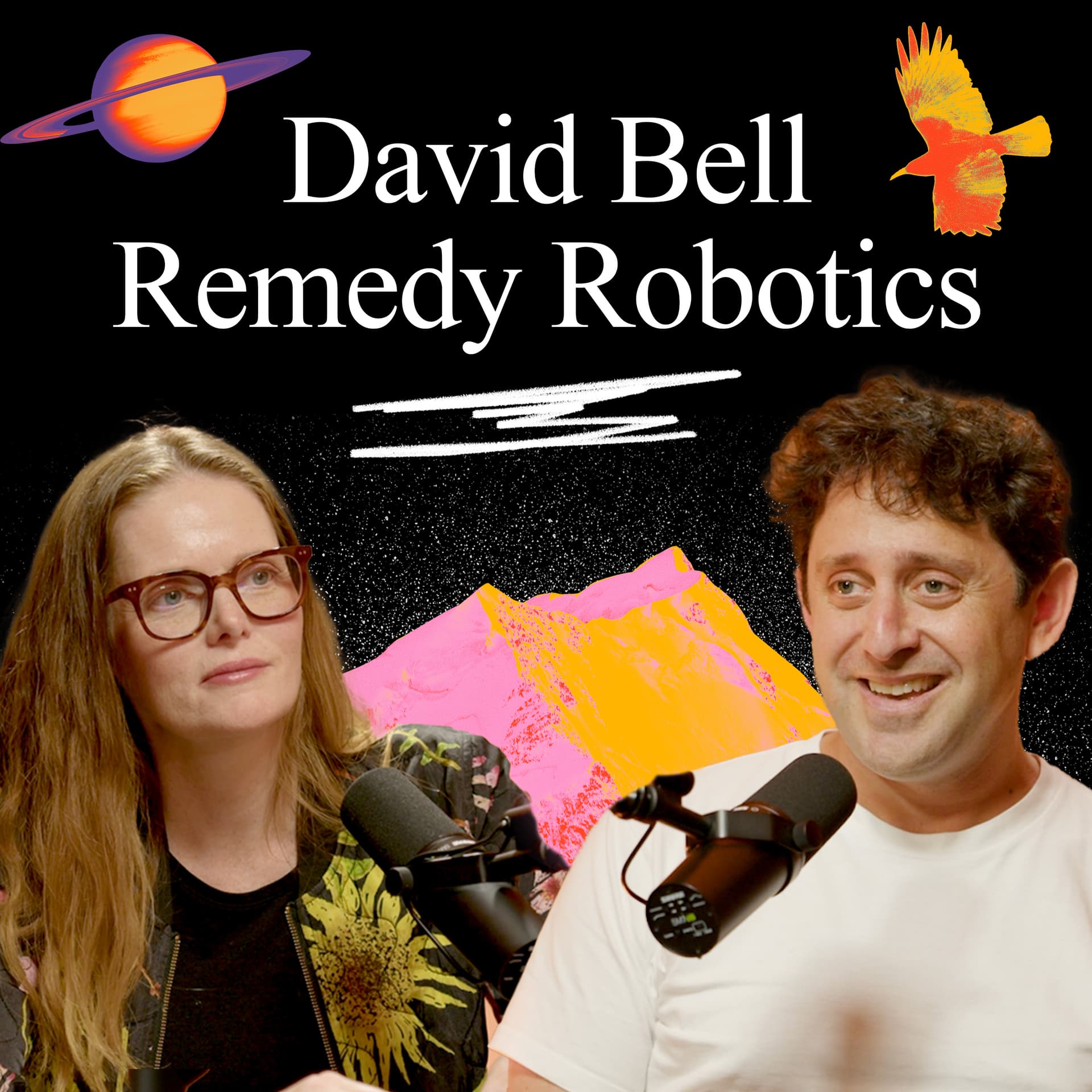
David Bell is co-founder and CEO of Remedy Robotics and a former surgeon. He previously worked in Sydney using surgical robots and performed ECMO retrieval in the South Pacific/East Coast, where many patients had no access to advanced care.
Key claims
For stroke, recovery chances fall ~12–15% per hour of delay; Remedy’s remote system can let a specialist treat patients in real time across countries. Hospitals need easy integration and workflow fit; nurses’ buy-in and IT integration are major purchase barriers. Full autonomy is not the goal; supervised autonomy keeps clinicians in the loop for judgment and incentives.
Notable examples
A “world first” fully robotic human endovascular procedure; four fully remote patients (Toronto, ~10 miles between hospitals) with procedures about twice as fast. Technical examples include CT-to-live x-ray vessel registration and a mechanism for precise control of a floppy guidewire tip (millimeter-level accuracy).
Written by AI. May contain mistakes. Listen to the episode to check what was said.
Chapters
Tap a time to open that second in VODavid Bell's Vision for Cardiovascular Care
2:44 to 3:40
David Bell explains how Remedy aims to revolutionize stroke care globally.
“So I want to start off with a really basic question.”
The Disparity in Stroke Treatment Access
3:40 to 4:44
Discussing the stark differences in stroke recovery chances based on geography.
“Well, it depends what hospital you present to in downtown Sydney, but let's assume the best case scenario.”
The Importance of Timely Intervention
4:44 to 5:46
Understanding how time-critical care impacts patient outcomes in stroke cases.
“And so let's talk about the timeliness of this.”
Economic Implications of Stroke Care
5:46 to 6:34
Exploring the broader economic impact of inadequate stroke treatment access.
“Okay, so let's just put that into some kind of context.”
David's Journey from Surgeon to CEO
6:34 to 7:52
David shares his motivations for leaving surgery to improve healthcare access.
“This affects a huge number of patients around the world.”
Building a Robotics Company from Scratch
7:52 to 11:41
Insights into the challenges of creating a robotics company for healthcare.
“one might argue, some of the hardest combinations of things simultaneously.”
Navigating the Go-To-Market Challenges
11:41 to 13:20
Discussing strategies for effectively selling and integrating technology in hospitals.
“So what was the hardest part of all of that?”
Understanding Decision Makers in Healthcare
13:20 to 14:00
Analyzing the key players who influence purchasing decisions in healthcare technology.
“Let's get into the kind of go-to-market challenge.”
Understanding Hospital Barriers
14:00 to 14:44
Dive into the challenges of integrating new technology into hospitals and the motivations of key stakeholders.
“Too fractured or high barriers to entry?”
Identifying Stakeholders in Medical Tech
14:44 to 18:05
Explore the various stakeholders involved in the decision-making process for medical technology adoption.
“It's all also about really understanding the deep motivators of the various actors.”
Show all 26 chapters
Developing a User-Friendly Product
18:05 to 21:04
Learn about the importance of user experience in the development of surgical robotics and clinician feedback.
“I think, how did you think through that challenge?”
Achieving Precision in Surgery
21:04 to 21:45
Understand the breakthrough mechanism that enhances precision in complex surgical procedures.
“And we're talking about really tiny margins as well.”
Redefining Surgical Expertise
21:45 to 25:30
Discuss the narrative around surgical expertise and how robotics can complement rather than replace it.
“We're not really, and this kind of sets us apart from a lot of other surgical robotics companies, we're not trying to build a robot that will replicate someone's expertise remotely.”
Patient-Centric Design in Robotics
25:30 to 26:49
Explore how patient perspectives and outcomes influence the design of surgical robotics.
“We haven't necessarily talked about their motivators or their feelings about this.”
Recent Innovations in Robotic Surgery
26:49 to 28:00
Learn about Remedy Robotics' groundbreaking trials and the implications for the future of surgery.
“We kind of flopped out of stuff in a funny way, but we did an amazing human trial.”
Surgical Precision and Feedback
28:00 to 29:50
Discover how surgical tools have evolved to enhance precision and control.
“Like, how could it not be that your tool moves exactly where you want it to go?”
Pivoting Towards Local Care
29:50 to 31:54
Learn about the strategic shift in focus from remote to local healthcare opportunities.
“So that's the sort of like rewiring as it were.”
Autonomy in Medical Technology
31:54 to 33:56
Explore the concept of supervised autonomy in surgical robotics and its implications.
“So let's talk a bit about autonomy in the product.”
Surgeon Perspectives on Technology
33:56 to 36:20
Understand how surgeons view the integration of technologies like Remedy in their practices.
“I should say we are a different type of surgery to what people would normally think of as surgery, like taking one's appendix out.”
Commercial Model for Robotics
36:20 to 38:35
Gain insight into the business strategy behind Remedy's robotic systems and consumables.
“You just have to bank that as a sort of fixed cost to the system.”
Defining Optimal Healthcare
38:35 to 40:40
Delve into what constitutes optimal healthcare and the impact of technology on it.
“So you need to understand what the mechanism of disease is.”
Evidence and Success in Healthcare Tech
40:40 to 42:05
Examine the importance of evidence in healthcare technology and the vision for Remedy's impact.
“Remarkably, like, I find myself, I should care more and I catch myself, right?”
Vision for Universal Access to Healthcare
42:05 to 47:14
Explore the ambitious goals of Remedy Robotics to provide global access to endovascular care.
“What would success look like for you for Remedy?”
Building Multifunctional Teams in Startups
47:15 to 48:28
Learn about the importance of team composition and technical talent in startups.
“I want to then turn a little bit to building multifunctional teams.”
Motivating Talent in a Startup Environment
48:29 to 53:15
Discover effective strategies for motivating and recruiting talented individuals in a startup.
“What worked for you then to take some of these extremely talented individuals and say, hey, we know we're a startup.”
Translating Skills from Surgery to Entrepreneurship
53:16 to 54:34
Understand the parallels and adjustments needed when transitioning from surgery to founding a startup.
“if you say to someone you're going to be working on x and the outcome will be y they better be working on X and the outcome better be Y.”
Transcript
Automatic transcript. May contain errors.0:00David Bell:We raised a bit of money and then we were like, I think we're going to have to build a robot. What does Remedy do? Remedy works on cardiovascular disease. We build robots to expand access to care. You're building a robot from scratch. You've enabled that robot with some pretty complex machine learning and AI tooling. Yes. On top of that, you have gone after a version of this where it could be operated remotely. Yes. So that my person in Bosnia potentially could be remotely treated by a specialist somewhere else. And you're doing this on one of the most high stakes moments in a patient's life with a kind of time crunch.
0:38David Bell:Jeez, when you put it like that, yes, I'm biased. I'm the CEO. I think it's an amazing product. But at the end of the day, there needs to be some objective measure of how good this thing is. a little bit of that objective measure of like, does this work, is this good, has gone out of healthcare, tech, and it's a problem.
1:00Stroke is the most significant cause of disability around the world and the second leading cause of death, where outcomes are tied directly to the time that it takes for a patient to receive intervention. In fact, the chance that a patient returns to independence after a stroke drops by about 12 % for every hour that intervention is delayed. At present, getting treatment is far from universal. Only about 3 % of the world's population actually have access to the kind of care that would put you in a strong position to not only survive, but return to some semblance of normal life post-stroke. Today I'm talking to David Bell, the co-founder of Remedy Robotics and a former surgeon himself, who as you'll hear has a vision that is nothing short of grandiose.
1:45His company has set out to ensure that wherever you are in the world, you can get access to stroke treatment. Part of the way they do that is by separating the surgeon from the patient. Sound nuts? Well, it kind of is. Remedy has built a surgical robot that can be administered remotely, meaning a trained surgeon in Sydney could be treating a patient for acute stroke care in Shanghai or Sofia or Suva and in real time. They've achieved a world first for this radical form of treatment. We not only talk about the technical challenges that the team has had to overcome, bringing hardware and software together to make all of this happen, including designing robots that need to be accurate down to the millimetre, because that's the space inside the blood vessels that they get to play in.
2:29But we'll also talk about his insight into how hospitals make the decisions about what technology to invest in, and therefore what you as a patient can expect in terms of care. Dave's an extraordinary human, and this is an extraordinary company on the cusp of something big. Over to Dave. Dave Bell, welcome to Wild Hearts.
2:50David Bell:Thank you for having me. So I want to start off with a really basic question. Yes. What does Remedy do? It's a great question. Remedy works on cardiovascular disease. We build robots to expand access to care. And basically, cardiovascular disease, it kills more people than all cancers combined. It's a huge condition, right? And the way that that's treated is through this novel method of surgery called endovascular surgery. And it's usually pretty time critical. When you need it, you need it there and then. But only 3 % of the world has access to that care. So Remedy basically builds the technology so that 100 % of the world has access to care.
3:25David Bell:And that means we build a robot, we build some medical devices, and we build a bunch of software that we hope to plant in all hospitals around the world so that everyone has access to kind of perfect cardiovascular care when they need it. Oh my God. Okay, let's break that down. I'm a patient. I've just had a stroke. Yes. Let me do two scenarios of this. I'm in downtown Sydney. Yes. What's my experience? And then I'm in like outback Bosnia. Yes. What's my experience? Well, it depends what hospital you present to in downtown Sydney, but let's assume the best case scenario. You present to a hospital in downtown Sydney.
4:01David Bell:You have a scan. Someone makes a diagnosis. They go ahead and do a procedure called a mechanical thrombectomy, which is basically a procedure where they move catheters through the blood vessels and suck out the clot. It's very, very time critical. So they're going sort of in your groin, is that right? In your groin, yes. When you wake up, assuming you get access to care as soon as possible, there's a 75, 80 % chance you'll recover. If you're in Bosnia, you present with the same symptoms. You'll have a scan, you'll get a diagnosis, but it's highly unlikely you'll be able to access that procedure.
4:33David Bell:So you'll probably be treated with medication or something intravenously through a drip. And there's probably a 10 % chance that you recover. Whoa. So there's a huge disparity. Wow. Okay. And so let's talk about the timeliness of this. Yes. Because from going deep on the company and knowing you very well for a long time, the thing that's always struck me is just how tiny the margin is that you have to work with medically to sort of maximize the chances of having quality of life on the other side. Could you walk us through a bit about that? Yes. There's a little bit of give, but basically, if you have a time-critical condition like a stroke, for every one hour you have to wait to get treatment, the chance of you returning to kind of work or independence drops by about 15 or 20%.
5:19David Bell:So if you have to wait to be transferred, or if you're living somewhere where there's very little access to care, you're not in a good spot. If you present to the right hospital and get the right care immediately, you're in a great spot, but you're really watching the clock. For something like hemorrhage or battlefield trauma or even kind of, unfortunately, gun violence in the US, you have far less time to be treated, right? You may be dead within an hour. So all of these conditions are kind of time critical and that's where we play. Yeah, amazing. Okay, so let's just put that into some kind of context.
5:49You've already described the sort of prevalence and need for this sort of technology and for the treatment itself. what are the kind of health system effects of this, right? Like downstream, like the rate of kind of disability that comes from a lack of care must just put enormous strain on health systems and the broader economy, right?
6:07David Bell:Yes. So looking after people who've lost their independence from a stroke is incredibly costly, right? And incredibly costly on the broader healthcare system. That's kind of one of the things that we play into and where we provide value. It does depend kind of which healthcare system you're in as to how much people care. but at the end of the day, someone is paying a lot of money if someone is disabled from a stroke and it's hugely unfortunate if that's simply because they haven't been able to get access to care. Why is this the thing you care about? Firstly, the size of the market, right? This affects a huge number of patients around the world.
6:41David Bell:I've always been very passionate about access to care. When I worked as a trainee surgeon in Sydney, I would... When you did these procedures? Yes, exactly. And I would spend my days using robots. And I was hugely skeptical, right? I would assist for most of the cases. And then at night, I would do what's called ECMO retrieval. So it's basically a life support retrieval in the South Pacific and across the East Coast. And all these people had access to nothing. And I thought it was crazy that we were using technology to kind of make small incisions on rich people slightly smaller. And all of these people had access to nothing.
7:15David Bell:And so I really started caring about access to care because, I mean, why should your post good kind of like determine your outcome? And then when I was doing these endovascular procedures, which are slightly different to surgery, I always felt like they were perfectible in a weird way because of the input image that I'm looking at when I'm doing them. And because of the number of movements that I have to do with my tool, it felt like a little bit of a game trying to get the absolutely perfect procedure. And so I basically combined those two interests. Let's go into, like you made this huge move of giving up on a very exciting and heavily invested in medical career that you had kind of gone into to founding a company that does, one might argue, some of the hardest combinations of things simultaneously.
8:01So just to make this plain for the listener, you've got hardware, obviously, building a robot from scratch. You've enabled that robot with some pretty complex machine learning and AI tooling that allows for seeing and visualizing the movement through the body of the catheter.
8:19David Bell:Yes. And also identifying identifying the spot for intervention. Correct. Very good. On top of that, you have gone after a version of this where it could be operated remotely. Yes. So that my person in Bosnia potentially could be remotely treated by a specialist somewhere else, either in Sarajevo or in London or in Sydney. And you're doing this on one of the most high stakes sort of moments in a patient's life with a kind of time crunch. Jeez, you put it like that. Yeah. Yes. Did you like set out and you were like, hey, I wonder how many dimensions of complexity I could put into this one problem?
9:00David Bell:I was very, very focused on what was the most impact we could have. And then I was also very focused on like what was the best use of me and kind of leveraging my expertise, which kind of when paired with my co-founders were kind of unique. And so we had experience in surgical robotics, machine learning. We'd done these procedures. There was this huge problem of access to care. The procedures themselves were a little bit sloppy at times. And so like, it never really felt like a choice. It felt like this is kind of all we can do. Once you knew the opportunity was there, you were like anything else would be a sort of halfway house.
9:37David Bell:A cop out. Interesting. Okay. So now I want to kind of get underneath. You obviously had to make a lot of decisions early on. When you start out with a company, no matter how convincing you are, and even if you've managed to get some funding, which you did relatively early on, you have to make a lot of hard decisions about how you're going to approach the problem. Yes. So I want to actually break down how you did that and how you thought about it for each of these dimensions, how you really approached the product challenge. What did you tackle first and why? Of course. So we started off as a software company and basically we thought that endovascular intervention, so movement of these tools through the blood vessels was automatable.
10:16David Bell:And so we thought we'd build the software to enable autonomous endovascular procedures. And just quickly, why do you care about it being automatable? Like what does that enable a system to do? Yeah. So our thinking has changed slightly on that, but initially the thought was that like, if it's automatable, you kind of solve that problem of access to care. There's a lack of access because of a lack of specialist expertise. And so if you can automate it, everyone's got it. The thing that we didn't necessarily think about was that it's got to automate something, right? And there was no hardware out there that could be automated.
10:50David Bell:So we raised a bit of money and then we were like, I think we're going to have to build a robot, right? And it also made sense that like, you don't want to be integrating this software with someone else's hardware anyway. So we built a robot and then basically we, as we delve deeper into the problem, it became clear that like, if we're going to do something remotely, we have to do it all. Right. And so that becomes kind of a very expansive product. And then as we moved forward, we started collecting all of this data to enable automation and that allowed us to do things pre-procedure and post-procedure that were unique.
11:25David Bell:And so we started expanding kind of across the patient journey, which was interesting. And then all of a sudden we're kind of a company that touches the patient when they first land in a hospital and kind of have their scan and then kind of plan to keep touching them until surveillance. So it's kind of, I don't know, the decisions have seemed very easy whenever they've come up. Okay. So what was the hardest part of all of that? Like when you kind of tackled one by one, you start out as a software company, you then realize you're in a hardware business. Yes. Then you're expanding the scope of that hardware.
11:57I remember a time where like one of the challenges you were trying to tackle was quite literally like latency.
12:03David Bell:Yes. Across jurisdictions. And how do we make sure that the gap between when a surgeon in Sydney is trying to operate the machinery in Bosnia, that there's not like a 10 second gap, which could be meaningful if they're like pushing left and they mean to push right. So like so many of these things seem to like the layers of complexity beneath the overall vision. Correct. Is so interesting. Is there something that surprised you about what was hardest? So we're a company, as you guys can probably tell, we're not a single breakthrough, right? It's 100 or more really difficult problems. And I think they're all hard.
12:39David Bell:I think one of the most difficult things is still, how do you make it very, very easy to kind of sell into and integrate into a hospital? And how do you make it very, very easy for an inexperienced nurse to stand by while someone else does this remotely, right? Because they're the person in the room with the patient. Yes. So a lot of the technical stuff is interesting because of kind of all of the different things we can do and bringing machine learning expertise into surgical robotics. But like that's come very naturally. A lot of the kind of like, how do we turn this product into something that is like seriously easy to sell and integrate is trickier.
13:19Well, I'd like to get onto that actually. Let's get into the kind of go-to-market challenge. Like you've been a surgeon yourself. You said you were using robots yourself and you were quite skeptical of them. Yes. Like walk me through what you anticipated the kind of approach to the market would look like and how that's actually played out.
13:36David Bell:Yeah, well, my bosses were mostly using robots and I was kind of assisting. I would use them occasionally. So my approach to the market was really informed by some experience I had with another company I started before this. So whilst I was at business school, I started a software-only med tech company. It was a company that kind of used algorithms to detect patient deterioration. And I found like selling into hospitals was tough because integration and IT were really, really difficult to work with. Too fractured or high barriers to entry? Basically, you're selling into a hospital and you're asking someone to do all the work who has no incentive to do the work, right?
14:15David Bell:And it was very difficult to get them motivated, right? So that kind of informed a lot of our development at Remedy, right? Like, how do we make it super, super easy to integrate this into a hospital? And how do we make it a no-brainer? And how do we make it a no-brainer to sell as well? Because like those very long sales cycles that people associate with kind of med tech and then these integration hurdles were something that kind of we thought were overcomable. And kind of by being systematic, I think we have, hopefully. Yeah. I mean, you sort of allude to this. It's all also about really understanding the deep motivators of the various actors.
14:50So maybe actually break that down for the audience. Like, who are the people at the end of the day who make these decisions? Because I certainly have been surprised in learning your journey that it's not the people I imagined ultimately pull the purse strings.
15:02David Bell:Who did you imagine? I mean, you kind of imagine it's hospital administrators and procurement. Yes. They don't, I mean, they have power. They do. They can block, but. At the end of the day, someone's got to use it. Yeah. And someone's got to want it, right? So I think one of the challenging things, and maybe this is one other slight divergence. I don't have a huge experience in startups or this world. So I'm approaching it from very - I don't know. It's your second startup. That's like twice the experience of the average founder. But I feel like a doctor, right? So I'm very much like, the weird thing here is that there are all these different stakeholders you need to appease, right?
15:35David Bell:So if you're settling into a hospital, the clinician has to want it. And they've got to really want it if it's expensive, right? So you need a very powerful clinician advocate and they're motivated mostly by patient outcomes. Is this good for the patient? But also, is this faster for me, more convenient? Is this going to make me money? So you have to appeal to those incentives. And then there's a kind of more business admin-y side. In the US, they'll call it a VAC. Here, it's probably the hospital admin. And you need to show them that you will kind of provide a return on investment for the hospital, right?
16:10David Bell:So that involves kind of appealing to the CFO, appealing to the CEO maybe. So those are your two main stakeholders when you're trying to sell. And then after you do that, you're trying to appeal to the motivations of an IT department or usually an IT department to integrate it and get it going, right? So yeah, it can be tricky. But even how much do you have to care about the physical environment? I mean, you've got like a robot. The last time I had a look at it, it's long. It's long. It takes up space. Like how much did you even have to like account for how standardized, for example, are surgical rooms such that you needed to like figure out like how does it fit into the literal space?
16:51David Bell:You care about it in as much as it's a barrier to purchase and it's not really. And you care about it in as much as how easy is it for staff to interact with and get it going. Yeah. Right. And so the length itself is a number, but how easy is it to get onto the table and working quickly? for a tech. So, so we think about like the tech, like their perspective and how, how they would feel when they're lifting it up off the wall and putting it onto the bed. That matters. Right. And I think that those sorts of perspectives are often ignored and they're huge barriers, right? The nursing perspective is a huge one too, right?
17:29David Bell:Because like nurses justifiably have a lot of power. If they hate using something, they'll, they'll make a big noise. Right. And when the doctor is trying to make a decision between kind of the normal standard of care or like the new robot, if the nurse is not on board, he or she will have a huge amount of power. So yeah. Yeah. That's super interesting. And again, probably not totally intuitive for people listening if they had never been in those kinds of environments. No. And I think that's one of our big advantages is understanding in great detail, those workflows of how stuff gets used and when and why.
18:03Okay. So you start work on this, you're obviously testing these ideas with people along the way.
18:08David Bell:Medium. What was your approach to, I've got this goal in mind where I'm like working toward first in human, like at all times you're sort of thinking about like, when can I get the proof point that will help me with a kind of regulatory barrier will help me with some unlocking of capital and, and on the path, but I need to backtrack from there to find the right kinds of, you know, clinician advocates. I think, how did you think through that challenge? Like what was your approach? Yeah. So, so for better or worse, I'm not someone who really believes in like needs finding and interviewing. And so because we were relatively expert, we went ahead and built a lot of the product ourselves because if you try and involve too many clinicians too early, it can get very confusing.
18:51David Bell:So we got the product to a point and then basically we wanted to, to find who, like, who are the key, key opinion leaders, I guess, in the space. And then one by one, get them involved. And they're all pretty passionate about it. So it was relatively easy. And we built a product in a way, luckily, that was really, really easy for someone on the other side of the world to use. Right. So initially, and we've had to change this, we had this robot in San Francisco that was somewhat cumbersome. Thank you for pointing that out, Kate. No, I didn't actually. I thought it was rather elegant. Beautiful.
19:23David Bell:And literally someone in Melbourne on their own laptop could log on and drive it, which meant we could involve all of these clinicians from around the world and kind of get them excited about the possibility of remote. And that was hugely helpful. I remember seeing a video of, you know, this very storied, I understand, a surgeon sort of reacting to the use of it. And it was this sort of amazing unlock. And I feel like for you as a founder, it was also a real moment of satisfaction to see, Yes. Like, tell me a little bit about that moment. What led to it? What did it unlock for you? These procedures are, they can look really simple, but there's a lot of stuff that's really, really tricky.
20:07David Bell:And I think we have a really good understanding of what's tricky and why. And so when we present this robot with all of these kind of tricky little aspects to clinicians and it just works, there's a huge amount of delight and they really, really want to use it. What would be an example of a thing that they didn't imagine you'd be able to achieve that you were like, let me show you what we have? So there's a lot. But for example, part of the difficulty in these procedures is you're advancing this very long kind of two, two and a half metre floppy guide wire that's around a quarter of a millimetre from the patient groin into the brain.
20:45David Bell:Right. And it's very, very difficult to control. It slips. It buckles. There's a lot of slack. And people have tried to do it in the past and just failed. That's really, really dangerous, right? And so we developed this novel mechanism such that when you moved it from the robot, you were in complete control of what the tip did in the brain. And the clinicians were just delighted. And we're talking about really tiny margins as well. Really tiny margins, yes. The connection between the like, I move right and I have 100 % confidence it's going exactly where I want it to go. Exactly. And I moved forward a millimeter kind of outside of the body on the robot around two meters away.
21:23David Bell:And the tip in the brain has moved forward as expected a millimeter. And that's actually very, very difficult to achieve. Interesting. Yeah. So it's that sort of confidence piece in the kind of the robot is an extension of me and my expertise. So great question. Not quite though, which comes a lot into our approach. We're not really, and this kind of sets us apart from a lot of other surgical robotics companies, we're not trying to build a robot that will replicate someone's expertise remotely. We're basically looking at endovascular surgery from a kind of Miss Frizzle Magic School Bus perspective.
Read the full transcript
22:03Say more for the audience that may not know that reference.
22:05David Bell:So, so Miss Frizzle, Magic School Bus, you should watch, voiced by Lily Tomlin originally. She would, uh, with her class go inside the body and inside all of these imagine, like amazing places. And I remember once I saw her go inside the bloodstream and I imagine her often on the tip of our tool and, and what would she do and what would she want, right? How would she want that tool to go if she had complete control from the tip of the tool? Right. And so that's really our approach. Really? which is like how do we perfect these procedures in ways that humans can't, right? How do we steer things?
22:41David Bell:How do we look at multiple things at once? How do we do things that a simple human cannot? That opens up a really interesting area that I'm keen to get into because part of the beauty of the product is that you make possible for expert surgeons to achieve things, as I understand, faster, with greater reliability, lower levels of sort of aftercare required because you haven't accidentally hit up against a vessel that you didn't intend to. That's the goal that we have. We have to prove that out, but the goal is for far less complications. I feel very hesitant saying that when we don't have evidence for that yet, but yes.
23:20David Bell:Okay. Well, I mean, I'll take your point. Yeah. I'll let you say it. There's a logic there that if you are moving more cleanly to the path that you want to get to, that there should be less damage along the way in the body. We await the sort of beautiful RCT that will prove that to us. But all of these things then enable them, and you sort of touched on it earlier, from the motivator of a surgeon enables them to actually also earn more money, not only do better by their patients, but potentially do more procedures and earn more money from them. But I'm also really interested in the deeper human motivators of these people that you are selling to these expert surgeons who have trained, you know, I mean, we talk a lot about what the sort of the typical surgeon presents as.
24:07They're a confident person that's worked very, very hard. They're extremely diligent, very perfectionistic. What does it look like to build something where you're saying, it's not just that I'm enabling you, I'm going to give you something you cannot do. Like how explicit is that conversation and how receptive is that audience to it?
24:24David Bell:It is relatively explicit. There's certainly a small fraction of surgeons, like from our data, roughly 10%, where we alienate them. They think they have kind of magic hands and that nothing can replicate what's in their hands from years of experience and training. And there's this kind of chutzpah that comes with thinking we can reinvent this modality. The overwhelming majority really like it. and they like it because it makes their life easier and faster. But there is something in how we message and market it because it can sound a little bit like we think we're better than you or we know what you're doing and you don't.
25:09David Bell:And that's not actually true. So there's kind of a needle to thread. Yeah. I mean, I think this is a challenge that so many companies face. Why exist unless you could do something that at least advances what humans can do without technology? and then how far can you go in that direction and building the sort of trust and confidence of the various actors. I'm actually interested, you know, we've talked a lot about patient outcomes. We haven't necessarily talked about their motivators or their feelings about this. Is it just the case of like most patients have no idea what's about to happen to them anyway, and they're in an acute situation.
25:42So their preferences are kind of moot at that point, or like how much does that play into the way you design?
25:47David Bell:Oh, unfortunately, I think that's very often true. But like, that's not the scenario around which we are designing. Yeah. I look at this through the lens of like, what would I want or what would I want for my parents in this same situation? And how do I make it a no brainer to go with our product? Right. So it should be very, very easy to explain to someone or their family member in a moment of distress why it's much better for their outcome that they go with a remote operation. rather than kind of waiting for someone to do it manually. And that's kind of a very important part of what we do. So talk to me a bit about you.
26:24You know, you're pretty far along now and you had some really exciting results. Feels early, but yeah. Well, you know, the sky is.
26:32David Bell:The limit. Yeah, exactly. But, you know, you've had a bunch of really interesting results and you've been able to go public. Like you stayed stealth for a very, very long time. Yes. But end of last year, you sort of opened yourselves up to the world with some really exciting, you know, human results. Can you walk us through what you kind of discovered through that? Of course. We kind of flopped out of stuff in a funny way, but we did an amazing human trial. Yep. It was the first time anyone had done a fully robotic endovascular procedure in a human before, which was amazing. And then we went and we did four patients fully remotely and no one had done that before either.
27:10And remind me, it was Toronto was one of the locations.
27:14David Bell:It was all in Toronto. It was all in Toronto, but not in the same space. Not in the same hospital. So another hospital around 10 miles away. And it was hugely impactful. We still need to publish the data, but all the patients did well. And the procedures were around twice as fast as what they normally would be, which was a huge outcome. And what do you put that down to? Was that the quality of the ML and the sort of diagnostic piece? It's a few different things. But normally when you're doing these procedures, you're kind of navigating under x-ray and you can't see the blood vessels. for example.
27:44David Bell:We have a feature that allows kind of registration of the preoperative blood vessels on the CT scan to the live x-ray. So all of a sudden the surgeon can see where they are. Seems obvious. It seems obvious, right? It seems obvious that you should see where you're going. And then we have a catheter where we can steer the tip to a specific point in 3D space that we want it to go. This is Lily Tomlinson's head. Correct. Exactly. Which again, seems obvious. You're moving through a blood vessel. Like, how could it not be that your tool moves exactly where you want it to go? But the nature of this surgery before is such that, like, there's a lot of guess and check and finagling and the user was not really in control of where their tip moved.
28:25David Bell:So a combination of things like that means these procedures are just kind of faster and safer. Cool. And what have you, like, have there been examples of since you've kind of really gotten the product in the hands of clinicians where you've changed the product meaningfully because of feedback? Kind of, but reluctantly. So there's a big debate about force, right? And again, I think that the high arching lesson is maybe a good one or not, but we got feedback from a lot of clinicians that we can't account for what they feel in their hands when they're doing these procedures. And it's really important that we measure force.
29:02Which is what? The strength with which they -
29:06David Bell:The strength with which this long floppy tool pushes on something two meters away while you watch an image with visual indicators of what's going on. The problem was when we measure that force, there's not really much there. Right? So what's happening is they're looking at an image and they're seeing visual indicators of them pushing against resistance or something. And they think they're feeling something in their hands. Wow. Yeah. Yeah. But from a marketing point of view, it's very difficult to be like, nah, you're wrong. You don't feel what you think you're feeling. So we actually kind of have to give them the force reading and show them.
29:42David Bell:And slowly one by one, they're like, oh yeah, maybe I'm not feeling much. I'm seeing everything. Interesting. Yeah. Yeah. Okay. So that's the sort of like rewiring as it were. Exactly. Of the kind of surgical experience. Yes. That's so interesting. we started out with Remedy going like hell for leather for the opportunity set around remote first and you talked about your own experience of you know working with patients who were coming out of parts of the pacific and other parts of remote areas that had no access to care and I can see and know why that's such a passion area for you I understand you've now made a pivot to an op well maybe in pivots the wrong way of describing it wash your mouth out of pivot yes The on-prem opportunity is big.
30:28Yes. And that is a big area of focus for the company at the moment. Talk us through that learning.
30:34David Bell:Yes, of course. So we, as a company, we started off, if I'm being honest, we wanted to build the software that allowed us to do autonomous stroke treatment remotely. And then we realized as people started to use the system that like they really enjoyed it. It was really easy for them to do, which like took a lot of mental load off. The procedures were faster and the procedures were safer. At the same time, we got a lot of regulatory feedback that like, you can't go straight to a remote procedure before you've done something locally. And so we basically thought if we can provide value locally, which we can, and the regulatory bodies who have a huge amount of power are telling us that, why not start there?
31:14David Bell:And so basically we're a company that, yes, we are passionate about access to care and yes, that's what we're pursuing. but the fastest way to get there might be with kind of a stop off with a local product that still provides value and helps patients. Brilliant. Did that feel hard as a trade-off or a learning? No, because commercially it was a much better decision. And I always looked at it to kind of, well, I'm not sure if I still look at it this way, but what's the fastest point to get to where we want to get to, which is everyone around the world has access to this perfect care. and by taking that stop off, I think we get there quicker.
31:53Brilliant. So let's talk a bit about autonomy in the product. Like, do you think it's still the desirable end state that you have a fully autonomous product?
32:02David Bell:I think full autonomy is not. Our goal and the most desired end state is supervised autonomy for a few different reasons. Number one, I don't think the patient wants a fully autonomous solution. number two we don't really provide value as a company well we provide a lot more value than by taking the clinician out of the loop a lot of fully autonomous solutions like their business model is that like we provide value by removing someone that's paid that's not really us and so the patient doesn't really want it and so why do it at all and then we've realized that like we're actually much better at controlling our own robot than the humans except for a few like tricky decisions.
32:45Oh, say more.
32:46David Bell:So we can do almost everything, but there are little bits of judgment along the way that require a human. For example, and again, it comes back to thinking about this through a patient, through the patient lens. Let's say you're treating Maria who's 80 and she has like mild dementia, but lives at home independently, but is in and out of hospital, increasingly confused. You've been up there twice to treat her stroke. You haven't quite treated it completely. There's a risk of huge complications if you go up again. Should an autonomous system be making that judgment call? I think it's very difficult for them too.
33:24David Bell:And so I think having a clinician in the loop to make those sorts of decisions while they still get paid is kind of a win-win for everyone. Yeah. So then, I mean, I'm interested in how, you know, you've come yourself from the surgical profession. Like what do your peers say about the experience of having technologies like Remedy in their kind of line of sight? Like, do they feel threatened by these kinds of technologies or by and large, are they seeing it as an opportunity for faster procedures and better patient outcomes and maybe more money? So the latter, mostly. I should say we are a different type of surgery to what people would normally think of as surgery, like taking one's appendix out.
34:06David Bell:That is very, very difficult to automate and a completely different kettle of fish. For what we're working on, as long as the surgeons are kept in the loop and get paid, they love it. And how different actually, so you're building, I mean, people may not fully appreciate this, you're building all of this from the US. You've taken on the US market predominantly first, but you're actually working in more than one market. How different have you found those different systems, the sort of different, are the systems operating with different motivators? Yes. And do you have to, how much does that shift your go-to-market approach?
34:38David Bell:Oh, extremely different. They're extremely different. And it's mostly kind of who's paying is kind of what's driving stuff. Is it just like single payer versus non-single payer systems? That's a big part of it. Really, in some way like Australia, we provide a huge amount of value for the money spent on post-stroke care, right? If you're disabled and you miss out on treatment. So is it like a quality adjusted life year calculation? Exactly. That drives the why? And it's very quantitative. In the US, it can be more difficult to tap into like who's spending money on that. And so that's not an incentive that we will really lean on as much.
35:16It's much more the like, how is the clinician feeling about it?
35:19David Bell:No, it's much more on how do you provide value acutely for the hospital that's kind of purchased the robot rather than the broader system. Okay. So then like breakdown, actually, I'm really interested in, you know, you've built this robot. You've obviously got enormous amounts of software that's always being improved upon. You've also got consumables. Yes. Talk us through the commercial model that is emerging for Remedy in this system. Yes. So the commercial model that we thought was kind of the best way to go and we still stick by is one that's motivated by how do we sell this thing and get it into hospitals as quickly as possible?
35:56David Bell:And then how do we make money as the user makes money, right? So that means that we plan to sell our robot for relatively cheap. The cost of goods of our robot is relatively low. And then make money from our consumables as the users do these procedures. And these are the catheters? These are the catheters. These are the single use things that kind of go into the body or need sterilization. Interesting. And so how does that feel when you know what the effort was to create the robot itself? You just have to bank that as a sort of fixed cost to the system. I think one doesn't want to complicate the business model too much.
36:33David Bell:But then there's like a whole other software machine learning element. And we like, how do we, do we add that into the game and charge kind of a software licensing fee? But really, I don't care, right? As long as the business model makes excellent money for us, as long as it really appeals to the incentives of the hospitals, and as long as it gives us flexibility to go into all markets around the world, which was very important for us and has gone into our strategy, I don't care how we make money. Brilliant. um so I'm then interested actually to kind of delve a bit more into the way that you think about impact and one of the things I've always loved about you Dave is that you don't hold back on what you think what you think good medical technology really looks like there's a burgeoning area of you know the intersection between AI and medical technology you've got a manifestation of that which is a sort of the software part of what Remedy does but I I do really want to impress upon our audience, like you've really chosen a particularly aligned, challenged version of having impact through medical technology.
37:40Why is this the thing? You know, you could have gone in so many different directions. In fact, you alluded to your earlier startup was, you know, using machine learning techniques to improve healthcare, but it wasn't a version that was as hard as this one. Why did you go after this?
37:55David Bell:So I think it was the obvious choice when I thought about it, the way I think about it, right? So there's a lot of healthcare technology in inverted commas out there today, but what is that working towards and what is optimal healthcare, right? So at Remedy, we would define what optimal healthcare is, right? And then there were lots of different disease states that went into kind of ensuring we have optimal healthcare and we basically ranked them by qualies. Quality adjusted life is. Or dallies rather, by dallies. And then for each of these disease states, they all have kind of a very predictable loop of care, right?
38:35David Bell:So you need to understand what the mechanism of disease is. You need to prevent it. Then you need to diagnose it. You need to treat it and you need to surveil it. And so when we put all of that in a table, cardiovascular disease and the conditions that we were focused on were all up the top. It was where we had our expertise. If we're going to work on something genuinely healthcare, that was the only way to go. Say more about genuinely healthcare. Not to be too controversial, but I think a healthcare company is one that works towards optimal health, right? And for us, we define optimal health, which I can tell you our definition.
39:12David Bell:I think it's subjective, but you can be specific. And I'd love to hear your thoughts on this. I have to remember it. But I think people like generally want to live to around 130, give or take. Do they? Maybe, maybe not. It's your definition. They want to have agency over when their life ends. Yeah. They want to be cognitively sound until the end. Mm-hmm. They want to be free of pain and disability. Yeah. Sounds good. That needs to be true for the Queen of England and also everyone around the world. Mm-hmm. And people need to be free of violence and they need to be able to make fertility and sexual decisions independently, right?
39:49David Bell:It's basically our idea of optimal healthcare. If you can do all of that, you're great. Now, there's a lot of healthcare companies that work on things that do not contribute to that at all. And I would say they are companies working around healthcare, right? So in healthcare operations or, dare I say, consumer health, whatever that is. So as long as you define your own version of optimal health and as long as you're working towards that and as long as you're kind of backed up by evidence and logic, not fluff and nonsense, you're a healthcare company. And so follow that line of reasoning. I mean, you've alluded earlier to like you stopped me saying we don't have the evidence for that yet.
40:34You obviously take very seriously the sort of proof points of remedy. How does that sort of play into, you know, you have to do some of that for regulatory purposes, but I can tell you care also about the legitimacy and integrity of those things.
40:53David Bell:I do. Remarkably, like, I find myself, I should care more and I catch myself, right? I'm biased. I'm the CEO. I think it's an amazing product. But at the end of the day, there needs to be some objective measure of how good this thing is. And that's what evidence is in healthcare. And that is how we ensure it's good for patients. It's our marketing. It's for regulatory. It's everything, right? So a little bit of that objective measure of like, does this work? Is this good? Has gone out of healthcare tech and it's a problem. What do you think would bring it back? I think when this stage of healthcare technology companies flop, it will come back.
41:36So sort of system will correct itself. Yeah.
41:39David Bell:Like there needs to be some objective measure of good, right? Like, and there's some really exciting technology, but how are you going to move the needle on my health? How are you going to extend my life? How are you going to make my life better? I don't care how exciting your technology is. The needle hasn't moved in healthcare, right? No one knows about that stuff. This is all in the venture world where like a lot of these companies are getting a lot of money, but like, will they make it to like impacting a whole bunch of patients? What would success look like for you for Remedy? Success for Remedy is one of our systems in every cath lab or hospital around the world so that we can go from that 3 % to 100 % so that 100 % of the world has access to perfect endovascular care.
42:23Setting yourself a really achievable target there.
42:26David Bell:Well, I think that's the goal. And so that, yeah, the Queen of England and, or the King of England, I should say, and Stephanie in Nigeria have access to the same care. I think that's how it should be. And then I think for us kind of doing that across multiple different conditions and pathologies and then moving across kind of the patient journey, which I alluded to before, like because of all the data we've had to collect and what we've had to do, we can provide a huge amount of value in diagnosis, in preoperative simulation, in decision making, and kind of moving across kind of the whole patient journey.
43:00Well, actually, you touched on exactly the question I was going to ask you next, which is a lot of people, it seems to me, who work in healthcare, get in this loop of like, deal with the acute thing, you deal with the acute thing, and then it's like a whack-a-mole. It's like, well, what's the pipeline of people coming to me with this acute challenge? And then I get, I work my way all the way back to sort of basically like large-scale public health programs as a sort of salve against the ultimate presentation. But the more you do that, the further away you are from the impacting of the real patient on the ground because you're impacting the potential patient and trying to change behaviors.
43:35How do you feel about the idea? You're obviously at the actual acute end, the definition of the acute end. How are you thinking about or do you care about trying to go upstream of that?
43:46David Bell:To a point in which we're expert, right? And by upstream, I mean like when the patient presents to hospital, right? Like we can help with the diagnosis, we can help with the decision-making, which kind of leads to this conflict where ideally no one would end up in hospital, right? And then where's remedy? So it was very important to me that we have a company that is super successful, even if that happens, right? Which is why we work on this multitude of pathologies and why we have value for like trauma and battlefield hemorrhage, right? And not just stuff that could potentially be cured by lifestyle measures, right?
44:25David Bell:Because we all want that. Okay. What can you imagine, like all of what you have learned, building robots, building machine learning and diagnostic tools that also allow for better visualization in the body. I know that you care about staying close to the things you know very, very well, but you mentioned earlier, I mean, there's appendices, there's all sorts of other things that we go into hospitals for and need surgeons for. Are there obvious next places that the kind of expertise you have built up through Remedy might next go? So, I mean, the next places are all within the cardiovascular system.
44:59David Bell:So there are about 30 different conditions that we plan to bite off. We're in the brain at the moment. We'll move into the heart. Which, by the way, is actually harder. Which is harder? Yeah. Like, I mean, people find brains terrifying. Yes. There are a few things about the brain that are really nice. And that is as part of the current workflow, everyone has a scan. So when you start the procedure, you know where you're going. In the heart, you're a little bit blind. You're often making a diagnosis and treating something at the same time. And that's very difficult. Is that just an information problem or is it we don't actually have the capacity to learn as much about the heart ahead of time?
45:37David Bell:No, it's that people can make relatively confident decisions about the need for treatment from a non-invasive kind of non-radiological medium like a blood test or an ECG. I see. So you're like, you need to have a procedure. Why bother with all the scanning? But in some instances, the final 5 % to 10 % is the meaningful difference between getting a good treatment and not. Well, it puts us in a difficult position, but they're not going to change healthcare for us. But you're basically then doing a procedure and making a diagnosis and doing the procedure at the same time. Interesting. So you're going to stay in the cardiovascular system, but it may involve some changes in the way that you deploy your capabilities on ML.
46:20David Bell:Correct. We will stay in the cardiovascular system, but we will start answering questions like, does this patient need treatment or not? How should we be treating them? Right. And then we may move into an ambulance. Whoa. which does allow you to deal with that like acute time horizon. Exactly, especially in trauma. And then there's still the question of there's a huge proportion of the world where we can build a robot but they're still limited by a lack of x-ray or operating room facilities. How do we provide care to that part of the world? Well, that's extremely exciting to think about the sort of exploding world of taking that because it does strike me the amount that the team has learned to get to this point is so extraordinary that there's got to be next horizons.
47:06Yes. Not to suggest that going from 3 % to 100 % all over the world itself isn't a grandiose enough goal that will keep you busy for some time. I want to then turn a little bit to building multifunctional teams. Yeah. So early on, you know, we've alluded to this, like you've done so many things simultaneously, you must have had to think quite hard about how you made difficult trade-off decisions, not only about what product you were building, what kinds of people you needed with these broad skill sets. Maybe for a founder who's also thinking about moving into a hard problem, what advice would you give them on building a team?
47:45David Bell:There's kind of a unique approach that we had, and that is that we understood the problem really well. We were problem experts, and we had a vague idea of the solution, and we really knew what the customer wanted. Because we knew all that already, we're going to go all in on technical talent, right? We're going to keep close to the customer through our clinical ties, but like our first 13, 14, 15 hires were all technical. They were kind of meticulously sourced and sought after, and we got the best that we could afford. And so that's really how we went about it. Once we built that sort of product, then we could start thinking about kind of commercialization and stuff, but we were really confident that the market wanted it.
48:28Yep. And so talk a little bit about the motivators for those people. What worked for you then to take some of these extremely talented individuals and say, hey, we know we're a startup. We're only starting. Yes, it's a big, hard problem. Like what dimension of the offer, the kind of remedy offer, particularly because you were also in stealth, right? So you didn't have the fanfare that other SF startups did. It's a regret. Is it okay? Say more about that.
48:52David Bell:So I did all the recruiting to begin with, right? And I think my response rate was okay, but getting past the spam filter or people thinking you're spam if you're still in stealth is something I should have thought about. And it was an issue. Now, once you get past there, I think people are really excited by the mission, right? But at the end of the day, money matters a lot. You've got to compensate them really well. And I think you have to compensate them. They can't feel like they're missing out. They have to feel passionate about the mission. And for a lot of the people that we were hiring, it was very important to them that we were going after something really aspirational, but tractable.
49:30David Bell:And that what they could do within it was like really specific and knowable, and they could leave their mark, which is interesting, right? So when we were hiring them, for example, we would say, you will be working on X, It will have Y impact. And that was very successful. That's amazing. And it doesn't surprise me when we talk a lot about motivators for people. And you might be aware of the sort of debate around status, wealth, and power being the kind of traditional way we think about how we motivate people. And behavioralists have now started talking about autonomy, mastery, and purpose being the ones that actually have the enduring motivation if you can tap into them.
50:11And this idea of the sort of mastery piece, like you are needed here because we need to get from here to here and you are going to be the person that will get us there.
50:20David Bell:Exactly. It's not just ego. It's actually I'm here to do a thing that I feel like I am uniquely placed to help with. And I had a lot of, I could really resonate with that because I'm in this spot because I thought about what's the best use of me. Right. And if I can tap into like, what's the best use of you? I think that really helped. And then also we had to be practical, right? For example, machine learning is a huge part of our company, right? But we're not going to be inventing new machine learning models. We are really interested in the machine learning people who are passionate about implementation.
50:55David Bell:And we need to say to them that like, we are the cutting edge of machine learning implementation. If you want that, this is us. And this is specifically what you'll be doing. And this is the best use of you. And we'll pay you a lot. Yeah. And not just a sort of razzmatazz of you get to work on exciting models. Exactly. Yeah, yeah. Where you could get someone that's like, I was excited, but I got missold. I hate vagary. And so like, I think most people hate vagary too. Yeah. Interesting. So I do want to just quickly ask you, you did the hard thing as a surgeon, becoming a surgeon, and now you're doing the hard thing as a founder.
51:28What's translatable about those two skill sets? And what's maybe something you had to unlearn from one moving to the other?
51:35David Bell:Well, I think there's an amount of ruthlessness that comes with surgical training that is useful, but doesn't always bode well in Silicon Valley and as a founder, right? Say more. I think a lot of people think Silicon Valley is very ruthless. My surgical training was very hierarchical. The boss would tell me what to do and I would do it. Now that I'm the boss, no one wants to be told what to do. They need a certain amount of flexibility, right? And so I've kind of had to unlearn that. And what else? To be quite honest, I always felt like a little bit of a square peg in a round hole in medicine.
52:14David Bell:I think medicine is this amazing profession, but I felt like it wasn't the best use of me. And I feel much more at home where I am now. So I haven't had to unlearn too much. I've had to learn a lot, but yeah. That's amazing. What's something that you sweat that you think other founders don't? Cool. I think the most important thing is what happens to the patient on the bed, right? You can raise this round, raise that round, make a lot of money. But like if a negative outcome happens to the patient on the bed, I sweat that a lot. I also sweat like talent a lot. And I presume and hope every other kind of early stage founder does too.
52:56David Bell:but like we are as good as the people we hire right and so they they have to be top-notch and happy and so I sweat that a lot. Interesting. Have you found anything that makes them happy that you think others don't understand? Similar to what we we said before right so I think I think people really like clarity especially the types of engineers we're hiring right like if you say to someone you're going to be working on x and the outcome will be y they better be working on X and the outcome better be Y. And they need very, very clear boundaries and clear instruction about what's next, how to plan.
53:33David Bell:And I basically kind of turn it over to them and ask them what makes you happy and kind of structure kind of for the really important hires. I try and kind of give them everything they want. Amazing. So my final question for you, Dave, what's something you've changed your mind about? I've changed my mind about a lot. I think someone once said something to me that like one of the biggest problems I had was that I think the whole world sees things through the same lens that I do. And every day I'm reminded of how untrue that is. So for example, I was that like irreverent CEO with no shoes on kind of problem expert, whatever.
54:11David Bell:And now we're like a series B company. And in the back of my mind, I'm like - With a multi hundred million dollar valuation. Correct. Does it matter what you wear? Does it matter that you've got all these windows open on your Zoom. To some people, it does. And so it does. And so I've had to change. Yeah, look at you. You're in a clean shirt. I know, seriously. But that's, I have a wonderful, yeah, a wonderful partner and kind of, I'm, yes. So thank you so much for joining us on Wild Hearts. Thank you for having me. It's been a real privilege.
54:48Thank you all so much for joining us for another episode of Wild Hearts. If you want to learn more from other ambitious people building, designing and creating the world that we all want to live in, then please hit the subscribe and follow button. It would mean the world to us, the founders, the operators and the investors who join us on Wild Hearts. This podcast is a labor of love from Blackbird and our production team. The show is produced by Joel Connolly of Blackbird. Our marketing genius is Laura Cofford and our editor is Andy Jones. Thank you all so much for listening and we'll see you all next week.
From the publisher
As a cardiac surgery trainee in Sydney, David Bell saw how much a stroke patient’s chances of recovery depended on their postcode. If they lived in Sydney and got treatment quickly, their chances of recovery could be 75-80%. But in much of the developing world where treatment options were often far more limited, it could be as low as 10%.
Today, David is cofounder and CEO of Remedy Robotics, a startup with the goal of making endovascular surgery – the catheter-based treatment for strokes like these – available to anyone who needs it, wherever they live. The need is enormous: stroke is the world's second leading cause of death and a leading cause of disability, and every hour of delay makes it less likely a patient will live independently again. Yet only about 3% of the world has access to the kind of care that lets patients not just survive a stroke, but get back to something like normal life.
Remedy Robotics have built a robot that is designed to be operated by a surgeon remotely. The aim is that a specialist in Sydney could one day treat a stroke patient in Suva. Remedy has already run the first fully robotic endovascular procedure in a human, as well as procedures on four patients fully remotely, in Toronto.
In this episode, Kate Glazebrook sits down with David to talk about his experience going from surgeon to startup founder, the nuanced details about how hospitals decide which technology to invest in, how remaining in stealth caused Remedy Robotics some challenges when it came to recruiting talent early on, and plenty more.