
In short
Climate tech’s next phase—moving from hype to pragmatism—while maintaining conviction as markets, policy, and customer needs shift; why community is central to building durable climate startups in Australia.
Guest
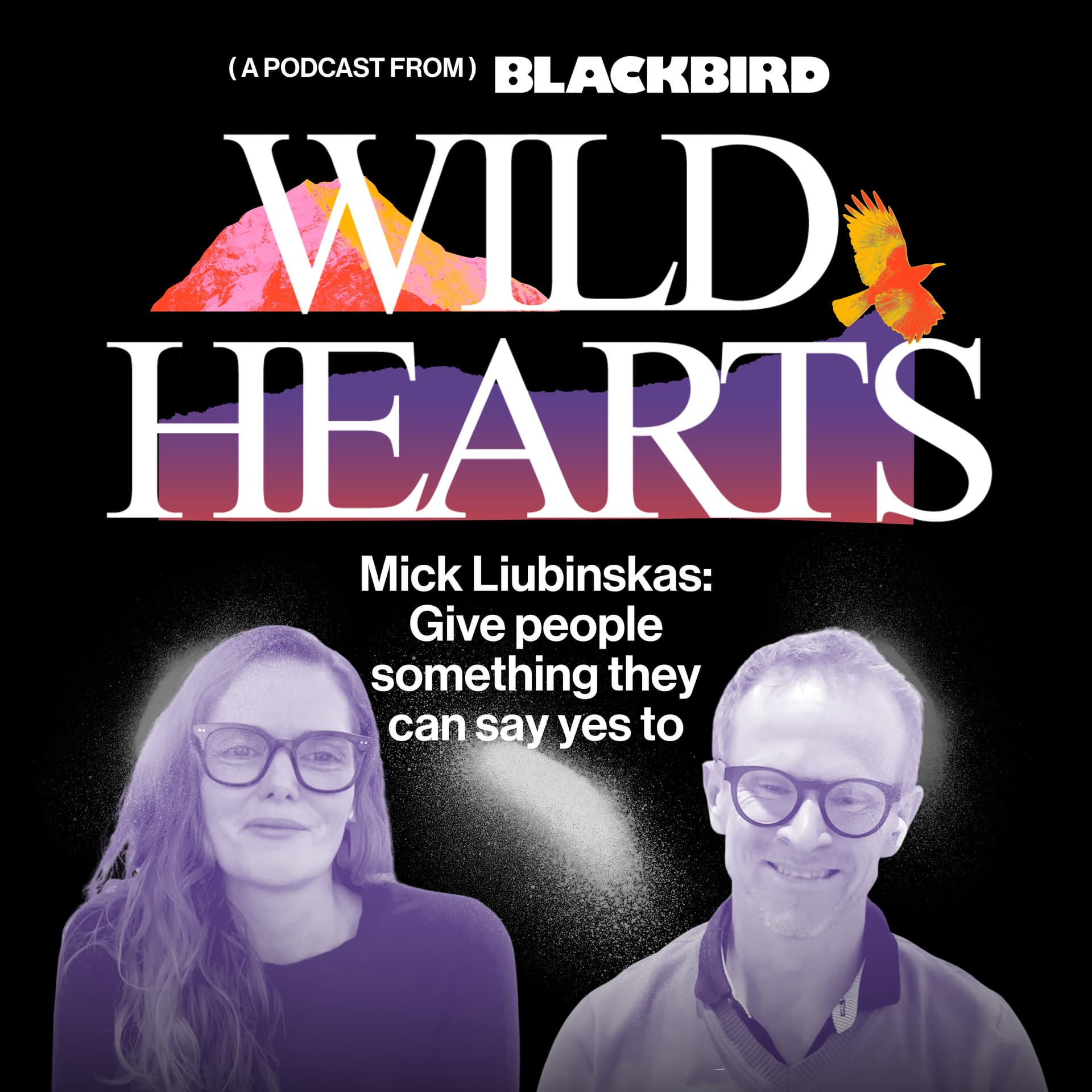
Mick Liubinskas (Mick Lubinskis), founder of Climate Salad, a community connecting climate-tech founders and investors; deeply embedded in Australia’s startup ecosystem. Background includes earlier community/tech ventures (Kazar peer-to-peer file sharing; Polonizer; Murudee) and a long-standing team-building instinct from basketball in Terrigal.
Key claims
Australia’s climate-tech funding has normalized; the “problem” isn’t solved—complex drivers now include policy, supply chains, and geopolitics. Climate tech must sell ROI language (energy security, cost reduction) rather than only emissions messaging. Larry Fink’s reduced climate mention is framed as pragmatic; early capital helped technologies reach economic value. Pure sustainability motivation alone won’t build scalable solutions—better products and business fundamentals are required.
Notable examples
IPCC reports; “negative sustainability” timeline; AMOC; need for genuine pilot customers in Australia; Hygiene Renewables; MGA Thermal (energy bricks); SunTech as a cautionary manufacturing lesson.
Written by AI. May contain mistakes. Listen to the episode to check what was said.
Chapters
Tap a time to open that second in VOClimate Tech Progress and Future Aspirations
0:00 to 0:44
Learn about the current state and future goals of climate tech in Australia.
“We wanted a thousand climate tech companies by 2030.”
Mick's Journey into Climate Action
2:45 to 7:38
Discover why Mick chose to dedicate his efforts to climate solutions.
“It's really great to be talking to you and to share this story.”
Understanding Change and Adaptability
7:38 to 12:09
Explore Mick's perspective on change and its necessity in climate work.
“Why is that a thing that you have always been drawn to?”
Larry Fink's Shift on Climate
12:09 to 14:00
Discuss the implications of Larry Fink's change in stance on climate change.
“into SAS earlier, then I think that's going to be the same in climate now.”
The Importance of Pragmatism in Climate Tech
14:00 to 15:00
Learn about the shift in climate tech narratives towards pragmatism and business viability.
“You're like, that's why you started it, but that's not the reason why a CFO is going to sign off on a$400 million Cicona batteries technology product.”
The Dual Purpose of Climate Entrepreneurs
15:00 to 16:50
Explore the motivations behind climate tech founders and their business goals.
“So actually, let's get under that because I actually think the semantics matter, right?”
The Complexity of Sustainable Solutions
16:50 to 19:10
Understand the challenges and complexities faced by sustainability-driven businesses.
“So last year, I finished a master's of sustainable development, and there's no way to get through that and not question whether we've been too aggressive on capitalism.”
Investment Trends in Climate Tech
19:10 to 21:00
Discover how investment patterns in climate tech have changed post-COVID.
“but it definitely does go to the additional complexity of building in this space is that, again, I think awareness and understanding of the sustainability side is really valuable.”
The Reality of Climate Challenges
21:00 to 22:40
Examine the real-world implications of climate issues and energy independence.
“seeing Meta drop their metaverse from their portfolio.”
Understanding Funding Dynamics in Climate Tech
22:40 to 24:40
Learn about the complexities of funding climate tech businesses and their unique challenges.
“probably in a much more complicated context.”
Show all 26 chapters
Building a Pathway for Climate Innovation
24:40 to 28:00
Discuss the obstacles and pathways for Australian climate tech innovation and its perception.
“It's still really valuable, but it's got to be done in a very different way.”
Challenges of Building Innovation in Australia
28:00 to 29:52
Explore the unique challenges faced by Australian companies in adopting and selling innovative products.
“And so I think you've got all those complications and you're trying to build a business along the way.”
The Polarizing Nature of Climate Tech
29:52 to 31:04
Understand the difficulties climate tech companies face in securing pilot customers and the cultural aspects affecting innovation adoption.
“I think the interesting thing that you allude to with climate tech is that in addition to the sort of R &D time it requires the kind of general challenge of, you know, physical technology mixed with software.”
Funding Models and Industry Growth in Climate Tech
31:04 to 34:28
Learn about various funding models for climate tech companies and the challenges in securing investments.
“Yeah, I would certainly say that the challenge to get a pilot, a genuine pilot customer in Australia that's not just got the money, but actually wants the value.”
Optimism in Climate Tech Progress
34:28 to 36:28
Discover the signs of progress in climate tech and the growing acceptance of sustainable technology in Australia.
“So I think you're absolutely right that there's, this is a bit harder and a bit different, but I don't think it's going to stop anyone.”
Lessons from SunTech: Manufacturing Opportunities
36:28 to 38:19
Discuss the lessons learned from SunTech's story and the potential for future manufacturing in Australia.
“No one asks whether I've got the World Wide Web or the information superhighway on my phone, like climate tech is being normalised and that's really exciting.”
The Future of Australia's Climate Tech Industry
38:19 to 42:04
Examine the future potential of Australia's climate tech industry and the factors influencing its growth.
“enormous amount of IP that's sitting in universities in CSIRO and in our companies out into the market.”
The Future of Climate Tech Companies
42:04 to 43:12
Learn about the potential growth and impact of climate tech companies in the near future.
Mick's Journey in Community Building
43:14 to 46:26
Explore Mick's background and his passion for community building through various ventures.
“I want to take a step back, actually, and you alluded to this earlier when you mentioned Startmate.”
Lessons from Basketball and Kazaa
46:28 to 49:24
Discover how Mick's experiences in sports and at Kazaa shaped his approach to teamwork and community.
“And it was obviously quite controversial in a lot of ways.”
The Dynamics of Successful Communities
49:26 to 53:32
Understand the strengths and challenges of fostering a vibrant community.
“and hardest features of communities is that they're not controllable entities, right?”
Challenges in Scaling Community Efforts
53:34 to 56:00
Examine the difficulties of managing and scaling communities, especially in the climate sector.
“you know, like the Sydney Startups Facebook group, like 20 ,000 people, like it's scale, like community is delicate.”
Community Dynamics in Australia
56:00 to 56:50
Explore the challenges and strengths of community collaboration in Australia.
“cruise communities online run by Alfonso and Rob and Wyatt all across Australia.”
Low-Cost Entry and Its Implications
56:50 to 1:01:00
Understand the rationale behind maintaining low entry costs in Climate Salad.
“And, you know, you run a very different business model, but equally you've made some decisions along the way that haven't made life easy for you.”
Personal Growth and Acceptance
1:01:00 to 1:03:00
Mick discusses personal growth, acceptance, and insights from his 40s.
“And that was the really harsh decision to make, was to let that team go and to tell the founders, we're not going to do it ourselves.”
Changing Perspectives on Climate Discourse
1:03:00 to 1:06:08
Mick shares his evolution in dealing with climate denial within his family.
“Or was it clear to you that your end goal is the one that's still front of mind and you were happy to adapt the pathway to that end goal, even if that looked very different from what you anticipated?”
Transcript
Automatic transcript. May contain errors.0:00We wanted a thousand climate tech companies by 2030. Doing pretty well. And in 2024, we were well put like 600, 650. We're like, that problem has been solved. What's the next problem? The pressures driving the climate industry are much more complicated. They're not purely a balance sheet or CFO. The technology is getting better. There's more customers. There's more scale. Like it's normalized. Like climate tech is being normalized. And that's really exciting. And I think we're going to prove that Australia can produce companies in this space. We are. We're creating right now in front of our eyes these companies, which are the case that is the poster children for the next 15 years of growth in this space.
0:44There is a version of this next conversation which is all about climate tech, about the scale of the problem, the volatility of the market, the rough trot that the sector's had over the last five to 10 years. And trust me, we do get into all of that. But what I really wanted to talk to my next guest, Mick Lubinskis, about was something harder to find. About how you hold conviction when the landscape keeps shifting. About how you navigate a room full of people who don't wake up every morning caring about the very thing that you've built your life around. About what kind of a builder you are and how you know.
1:22Many of you may in fact know Mick. He's deeply embedded in Australia's startup ecosystem and a legend of the climate tech scene. He's the founder of Climate Salad, a community for founders and investors trying to use smart capital and great innovation to find climate solutions. And so it's really not that surprising that he gives lots of interviews talking about climate. This isn't really one of those interviews. I mean, yes, we do talk about climate. Of course we do. because while I ask him to help me understand the market, we then just keep going and going. We get into why the trends in Australia don't match the global ones and why he, for all his years in climate, keeps coming back to community.
2:02How it's an instinct that goes all the way back to his basketball court in Terrigal long before any of this. We also get into whether you think BlackRock's Larry Fink was right to stop mentioning climate in his annual letter, which is either a pragmatic call or a capitulation depending on who you ask. Mick knows which one he thinks it is. A recent headline provocatively led with He's one of the godfathers of the Australian start-up sector so why isn't he a billionaire? And I ask him about that too. You'll learn a lot about climate but you'll also learn a lot about what makes Mick Mick and about conviction.
2:38I think you'll enjoy it. Over to him.
2:44so Mick what a delight to have you on Wild Hearts let's just go straight into it yeah I guess one of the things I wanted to hit you with right up front is you've hitched your considerable brain and energy behind the climate challenge and it's a challenge that you know is so big so contestable that you'd be inhuman if there weren't occasional times when you didn't want to throw in the towel every now and then. I'd love to know why you chose climate. Yeah, thank you. It's really great to be talking to you and to share this story. And I have shared parts of it before, but certainly looking to delve in.
3:20I would have considered myself always someone who, I think if you asked me before 2016, I would have said, yeah, I really care about the environment and I do as much as I can and probably more than most. I'm doing it, I'm above average in that area. And then I actually moved to the US with the Muraday program and was living in the US and the US appointed a brand new president and in 2017, like first day, pulled out of the Paris Agreement. And in terms of the thousand really lucky privileged things that have happened in my life, one of them is I met a guy who I was playing basketball with as a teenager named Nathan Fabian.
4:03And he ended up quitting his big corporate job and going to do international relations about 20 years ago and started working in sustainable finance well well well in advance so if i feel like i'm a veteran in nine years there are people like nathan who's been doing a long time anyway i messaged nathan and we used to play state league basketball together and i i said hey um this really sucks uh your job just got harder uh that that was my dig dig back at him and and he said uh yeah maybe it's time he got in the game and that was it. It was like a one-line email and I'm like, in the game, what are you talking about?
4:37Like, I'm a geeky nerd. What am I supposed to do? And he's like, we need 10 ,000 innovations to get back to sustainability. And he just attached the recent IPCC reports. Famously a great nighttime read, those IPCC reports. Such good nighttime read. So, you know, I opened up the big full report and then I closed it and opened up the summary and then I closed that and opened up the executive summary. And then I was just reading through and I think the combination of factors, right? It came in a time I'd moved to the US and given up lots of my board seats in Australia, a lot of my community roles.
5:12I just had this space in my life. My kids at the time were sort of two, four and six. So I was just like this new dad being a parent. I was also approaching 50 years of age and I was like, okay, I've spent since I was eight years old in technology. this incredible combination of like i'm a little bit bored i'm a little bit midlife crisisy don't quite want to buy a red sports car and here is this really you know one of my best friends in the world challenging me to say get get in the game get off the bench and get in the game because we need 10 000 innovations and i'm like this is a whole new area this is science and deep tech and this is really hard and it's actually policy and it's complex and there's billions of negative of dollars going negative against it and and partly it was kind of like I felt like I had to do it because I've got my kids and you know the day before I would have said I'm going to leave the world in a better place I'm working my butt off I'm going to give them good education good home lots of love and like that's going to be great and then I read these reports and I'm like maybe I'm not.
6:21Maybe I'm not. Maybe I do all those things and the world sucks because we couldn't get our act together and get back to sustainability. And then you look into it and we hit negative sustainability. We started consuming more resources than the earth can naturally replenish between 1970 and 1975, when I was born. So I'm kind of like, this is in my lifetime. this is in my lifetime this has happened if and if i back myself at all as someone who has capability and influence and the entrepreneurial talent to just start things get things done and this is a big challenge and i want to work for another 20 years my life and i want to leave the world in a better place for my kids like for me there was no other choice there was there was really really no other choice the only thing after that which i'm really really fortunate is that i'm massively driven by wanting change in my life.
7:17And we can dig into this. So for me, it was 99 % unknown. And that was a really good thing. I really wanted it. And it was high purpose, and it was going to keep me busy, and it was going to be great for my kids. It ticked all the boxes, and I wanted the challenge, and then I just got started. So let's go into that. Why change? Why is that a thing that you have always been drawn to? What's given you that orientation? Good question. I don't fully know the backside of that, like in terms of the full history. How I came about to know it was Michelle Duval has this incredible technology fingerprint for success.
7:55And I did my profile and it kind of raged you on as an entrepreneur across 100 scales. And one of the things that they talk about is, are you a business starter or a business builder? Like, can you get something off the ground fast or can you build something over 20 years? and I was definitely not the 20-year person like the Melanie Perkins, I'm doing this, this is my life work. That is really hard for me. And when I dug in underneath that, in terms of the why, there was this one metric, which was, do you like to work on something deeply for a long period of time or do you like change? And Michelle, when she was talking to me through my notes, it was like, so some people like a little bit of change.
8:38Some people like a lot of change. Mick, you are two standard deviations away from the norm. I think I was the highest ranked person for wanting change in my life. She's like, you will effectively break something that's working just to have change. And I'm like, oh my goodness, do I need to seek therapy? Was that a surprise to you? No, it really made sense actually because straight out of uni, I got a job at IBM and my mum and dad were like, he's going to work there forever he's set for his life and then 18 months later i'd left to go and work for a computer game company that had like a staff of five and i left this massive stability to go and do to go and do that so so it it re it was a reinforcement of who who i was and what i had done but i i didn't know it was kind of like measurable and how significant but it gave me a comfort and certainly as you approach middle age you sort of say what are the things i want to achieve who am i really and one of the big things was lean into that like i'm a i'm a person who wants to like is driven by change and here is this massive new change that has to happen you know go and go and play to your strengths so um so yeah it's it's it's confronting because i look at the people who build these big companies over a long period of time and and that's where you get real value and that's where you can get to massive scale and but you've got to just let it go like this you just gotta let it go and say that's that's not my role well I mean in some respects thank god you have such a tolerance for change uh because being in the climate change game uh requires a lot of adaptability right like it's a constantly changing environment around the work that you do which requires a high tolerance for that and you know the more recent ones is like we're seeing folks like Larry Fink you know who previously spent years and years and years telling the world that climate was the defining financial risk of our time and, you know, stepped out well ahead of a lot of folks in his world to do so.
10:39And now, you know, you don't see climate change mentioned in his letters at all. Sure. I'm interested in what your take is, you know, what do you think happens when a powerful person like that, who has been this sort of Starwarton advocate for this work, changes their tune? What do you think that does for people that you work with? So I think there's a massive the difference between the tune and their beliefs. So I mentioned my friend Nathan, he works for Principles of Responsible Investment at London. He's back in Sydney now, but their work was with Larry Fink and BlackRock on those letters. And I think there's a difference between, especially in climate and transition and the energy transition, there's a difference between what you may know to be true and how you actually go and get that done.
11:26And I think that's true with startups as well. You might have a big vision, but you've got to also be focused on what's in front of you. I think it's the right thing to do for BlackRock not to be out there and aggressively pushing in this front for a few reasons. One, because there's massive forces that are negative towards that who don't want it and they'll just automatically see it as a negative. They are sort of legally confronting that at the moment. So I think it's great that they came out about it, And I think they're right. And I think they will be proven right. Absolutely. In 2035, when we look back, we'll say that that is right.
12:02And I think we'll say we underestimated. I wish we did more. I wish we went faster. Absolutely. When we were doing SAS in the early 2010s, and everyone was like, boy, I wish I went into SAS earlier, then I think that's going to be the same in climate now. But I think because it's so complex, and this goes to part of the challenge for Australia, I think in terms of climate technology and making the most of it, purely you can't build an individual bit of software or an app and you put it out there and you target the US and someone puts it on their credit card and they purchase it in isolation. And one of the harsh realities for me when I used to be known as Mr.
12:40Focus and I'm like, great, I'm a tech guy. Now I'm just a climate tech guy. And then you look under the bonnet a little bit and you're like, so what is climate tech? well it's powering growing making moving and cooling so we're talking about energy transport built environments circular economy data nature adaptation resilience like like it covers everything and you're like what isn't it might be the better question it absolutely should touch everything right like in a will like in in some some in big ways some in small ways and that that complexity means that it's a harder thing to go and do but that doesn't mean it we shouldn't go and do it.
13:17It just means we have to bring more people along the way on the journey. We have to work in different ways and we have to work out a new model and a new plan. So that is really, really, really key. So I think now one of the big reasons why I'm completely okay with Larry not talking about climate at all is because he established that thought around that this is a big opportunity and that put a lot of capital into the earlier phases that generated all this this technology and development and that development got to the point of crossing over the a key point around economic value so lots of companies in climate salad our all our members a lot of them now can go and say here's a product it saves you money um that's great it also happens to be really good for the environment it's like so that's that's the that's the bonus so i i think there there was a required normalization around climate sustainability and energy transition vast majority of the world can't afford to um you know pay a green premium for these products we just have to make better products that's beholden on the on the entrepreneur to go and do that and i think that's that's where we're at now so in all of our companies when we when we look at the u.s market we're not saying buy our and buy our products it's great for trees save the whales we're saying energy security energy independence efficiency reduce your costs like and this is hard for some entrepreneurs because the first 10 slides of their deck are all like a built environment makes up 23 % of the global emissions.
14:50You're like, that's why you started it, but that's not the reason why a CFO is going to sign off on a$400 million Cicona batteries technology product. So actually, let's get under that because I actually think the semantics matter, right? Like, you know, they matter not only for the motivations of the kinds of people who get into climate, but also they matter on the customer side. So like on the one hand, you kind of see a bunch of, you know, when I looked at a bunch of climate tech conferences, for example, they're like ditching the word climate and talking about resilience. So clearly this move away from calling it what we were comfortable calling it in 21-22, because we've learned that there's more political backlash, there's more market backlash.
15:32As you said, you know, people may not be able to afford the premium that we once thought they could. And And I'd like to delve into your thoughts on that. But, you know, we're getting to this stage of a sort of pragmatism for climate tech founders, which asks of them to sort of speak almost in different language than they were getting into the game for. Now, for some of them, I'm really interested in what your reflections are. So Climate Salad, you've seen how many companies come through Climate Salad in its past eight, nine years? So Climate Salad was started five years ago. We just hit about 800 companies.
16:03Just over 700 of those are Australian and the rest are international companies who operate in Australia. You know, how do you think it breaks down? Let's talk about the actual people in your community. What percentage of them like got up anyway with a sort of dual purpose? Like, hey, I'm here to build a huge, valuable business and I'd love it to also have a kind of sustainability edge to it versus those who came straight out of a sustainability goal, who live and breathe this sort of existential crisis around what's happening with the climate and went after a solution. And now, like, how are people feeling and responding to this need for pragmatism around the way that they talk about what they do?
16:44It's one of the 20 complex things we're moving through, right? It's like, it's almost impossible. So last year, I finished a master's of sustainable development, and there's no way to get through that and not question whether we've been too aggressive on capitalism. And what's the cost of the progress? And I've been accused by people in my life, including my own father, about, well, you've benefited from all this growth and development and now you're questioning. And I'm like, yeah, I should. If it didn't come for free and it's having negative health effects, I should question that. But it really does go to that complexity because I think anyone with a pure sustainability drive will struggle to actually create the solutions we need to get back to sustainability.
17:29because that's the context of the world we're in. And can we make modifications and adjust that as we go? I absolutely think we will. Look at what happens if the world gets solar panels, batteries and an EV, the energy independence of the world increases massively. Whether you're in Sydney or in sub-Saharan Africa, that really, really applies. What's the effect going to be on the global markets? I'm not nearly smart enough to play the four-dimensional chess to go and work that out. But it is a reality of building a business in this space that there are so many, there's a lot more complexity in the rollout.
18:09So you're not just disrupting blockbuster videos with Netflix, you're disrupting supply chains and transmission and energy grids and all these things. It is much more complicated. I think there are people purely coming in to say, I'm entrepreneurial, I want to build a big business and this is how and and this is the opportunity of the time i'm going to make around sustainability and they may succeed but i i think certainly one thing i know being involved in start made very early on and and seeing blackbird is that someone who's only focused on the money will rarely care about the customers really be able to build a team really focused long enough to be able to go and go and solve that so we we we need this combination of i think respect and understanding of sustainability.
18:55My view is that we're actually going to be able to solve most of the problems by creating better products and that requires that combination of saying, hey, here's this new context and I'm going to build a business around that. So I think there's an element of that, but it definitely does go to the additional complexity of building in this space is that, again, I think awareness and understanding of the sustainability side is really valuable. But I do not think we will get there on that alone. Totally. So let's talk a bit about how things have changed, actually, for some of these founders, because it's actually quite fast, the rate of adaptation we're asking them to do, not only a sort of framing, how they frame up what it is that they're building, but also how they talk to customers about it, and even probably a deeper philosophical and moral level, like how do they understand what they describe their job to be every day.
19:50So, you know, I mean, you've seen this firsthand, climate tech's gone through somewhat of a washing machine as a concept in the kind of capital world, right? Like it hasn't been as extreme as crypto, thank God. But there has been a bit of a sort of boom and bust element to the sort of the climate tech space. So I had a bit of a look and it looked like sort of global figures. You know, we saw surge globally around investment into climate tech coming out of COVID, something like 40 billion Australian dollars invested in 2020 surge to, I think it was like 110. 10 billion in 22, which was the sort of height for the kind of global figures.
20:24And then there's been this sort of correction, we're back to about 60 billion last year. Interestingly, it didn't look like the Aussie figures actually tracked that same, you know, extreme rise and fall. In fact, it looks like it's been more like a steady rise year on year. So I'd love to ask you a couple of questions about that. First of all, for the audience, like, why was it, what was it about COVID in that era, or was it related at all, that drove this just this huge acceleration of capital into climate tech? Yes, I don't know if it's directly related. It may have been to some degree. I think it's really interesting to compare it to crypto or VR and seeing Meta drop their metaverse from their portfolio.
21:10But the question goes back to, are you solving a real problem? So I don't know whether crypto is solving a real problem that maybe distributed ledger, VR can solve some real problems. But I think the hype is bigger than the problem. And I do not think that is the case with climate. And again, it helps to have a master's of sustainable development because I can talk about the glaciers and I can talk about plastics in our bloodstream and I can talk about the AMOC. And that really helps me to know that. What's the AMOC for those in the audience who don't know? It's the Atlantic meridonial overturning current.
21:50It's basically how all the waters in the Atlantic Ocean move around based on heat and salinity. And it's like this massively complicated system, which decides whether you have a snow season in Colorado or not, or whether it's rains. It affects El Nino and La Nina. It's just this, it's one of those charts. I looked in my studies and go, you know, when people say, hey, do your own research. like i've i've done four years of research and i know one percent and i just massive respect all the scientists who do all this hard work so more good nighttime reading with your ipcc reports um that one's pretty interesting but this is a real problem so whether whether larry fink talks about it or not whether donald trump acknowledges it or not or my dad acknowledges it or not this is a real problem right and this is it's not going to go away but the reality is again this is it's it's probably in a much more complicated context.
22:47How we give energy to the world. Think of it agriculture. We have to provide energy to agriculture. We have this energy crisis right now. Farms need diesel because that's how they've been built. That's what they've been used to go and plant their crops and grow their crops. But that's also dependent on the weather. So you might have high energy costs, high input costs because you need more ammonia, more pesticides, and then you've got to produce more food. You can't pay anyone to pick it because of labor costs are too high because inflation is too high. And then I'm going to put it through the grocery supply chain, which might actually, because trucks aren't available, you might lose a lot of food.
23:27And then so then I complain, where's my spinach? So we just talked about maybe 40, 50 different products which could go and help there. I could have robotics. I could have on the farm. I can monitor the farms through satellites. I can have better supply chain. I can have electrified trucks, electrified farms, better insulation of products as they come to the home. So, again, one of the hard things about climate is actually we'll look back, I think, in 2035 and go, boy, I can't believe how different things are and I couldn't have imagined it's like this. And we're starting to see some of those early signs of that.
24:05So I think actually that early big boost of funding was in recognition or visibility towards that. But the reason why it hasn't just gone to strength to strength is because there was a hype cycle around. It was like, wow, that's a really big problem. Let's go and solve it. And then the normal models are great. 18 months later, so someone might have put money into a SaaS company. 18 months later, they've gone up to$3 million in revenue and all the numbers are great. and they'll go and raise a$10 million round. And their numbers are going to be completely different. It's a completely different business.
24:42It's still really valuable, but it's got to be done in a very different way. And the timeframes to get through that complexity, I think, is a big part of the driver. You can't think about it in the same way. So let's go underneath that. Like, you know, venture is used to making big bets on companies and we're used to risk, right? it. So that's not scary for a venture investing firm. Admittedly, when you move out of a simple software play or even a, quote, simple AI play, things get much more complicated. If you've got physical products, the hardware-software mix always results in things that are more complex.
25:18But we're also used to doing that. We do medical devices. We do, you know, space tech. We do all sorts of technology products that do exist in the sort of physical world. Maybe walk us through, Why is it like, what is it specifically about these kinds of products that mean that the kind of maybe the traditional returns profile might look different or the sort of customer and revenue profile might look different? And then maybe as a corollary to that, do you think that suggests that venture isn't well placed for some of these climate tech companies? Or is it that it's actually a time horizon issue that we're looking at?
25:57Yeah, I think it's all of those things, really. I think it's interesting to think about, you mentioned medical devices, and I think Australia has a, I wouldn't say that we are world renowned for it, but we've got some, you know, ResMed and Cochlear, we've got some really good examples of being able to do that. And there's a process you follow and there's a, the medical systems might be different, but I, you know, my cousin has a cochlear device and it's like his ear versus someone's ear in Lithuania is probably similar enough. And then if you look at space and you look at, if you had asked me 15 years ago, will Australia have a space technology industry?
26:32I'd be like, yeah, I don't think so. But we've actually got some really great credibility now and got some great companies and we're doing really, really good work. And I was listening actually to the Wild Hearts with Gilmore and how they had to blaze the trail. He said, we had to do it first and then everyone followed. So I think there's a similarity. I think we've already done it on medical devices. I think we're well underway with space. I think the reality in climate is that actually the first people through have to have got the machetes and they're carving the path. And that's the really harsh reality.
27:06And what investors want to see is a pattern. They want to see, ah, you have this amazing technology out of Macquarie University called Hygiene Renewables, and you go and get three customers, and then you get a grant, and then you get some VC and some debt, and then you go overseas and get a customer, and then you're a$100 million company. Great. let me go do that again. And despite having 800 companies in climate salad and 50 companies over 50 million valuation, and some of them really big, we still haven't been able to establish those patterns yet. And it's a combination of that it is harder.
27:39It's a combination of timing because the pressures driving the climate industry are much more complicated. They're not purely balance sheet or CFO. They are policy driven. They are supply chain driven. They are affected by COVID and they're affected by Ukraine and Iran invasions. And so I think you've got all those complications and you're trying to build a business along the way. It's made additionally complicated in Australia because we're a small, very spread out market, which is not used to buying innovation and very rarely do we buy innovative products that are Australian. So we have this significantly additional challenge that we, and I think it's possibly, and I'm doing some work on it right now, the perception that Australia corporate government has of our own innovations is actually more negative than international, just because we don't normally buy Australian innovations.
28:41so that makes it harder when when um when Louise from Hygiene or Olympia from GoTerra or Juliet from Floodmap takes their products to Australian corporates and says here's my product they're like an Australian technology company like really is it possible it's the world's best yes it is actually possible that it's the world's best it is and look we've we've lost our muscle around advanced manufacturing and all the government policy is trying to get that back both for sovereign capability and for economic growth, and again, transitioning out of fossil fuel and mining industries, not fully, but into some new sectors.
Read the full transcript
29:21So I think we want to go and do that. But look what China has done over 30 years to go and build that muscle. Like you can't just go to the gym once and do a couple of push-ups and expect that to solve that. But these companies are carving this path and establishing the patterns. and I think once we're getting really close to having that pattern visible and then I think it's going to flow and I think we're getting really close to that like I can I can fill it in my bones. Well that's good I mean that's the that's the kind of earned optimism that I think you've described yourself as having multiple times.
29:54Yeah. I think the interesting thing that you allude to with climate tech is that in addition to the sort of R &D time it requires the kind of general challenge of, you know, physical technology mixed with software. If you are doing a hardware type play in the climate space, you're basically contending with a much more polarizing environment for the customer to make buying decisions. Now, you'd hope in most instances, great climate tech founders are, you know, building something that has a clear ROI outside of its sustainability goal, right? You know, it saves the customer money or makes things faster or, you know, improves their lives in important ways.
30:35But I guess there's a certain kind of pole that sits around climate tech, which is also, you know, no one knows when government policy might shift and that will shift people's cost estimations of how much they want to invest in it and so forth. So I guess maybe I'm asking the too hard question, which is like, if you had to point to one thing that you think is a disproportionate burden on a climate tech company, whether they self-identify or don't pragmatically, what do you think the one thing is that makes it hard? Yeah, I would certainly say that the challenge to get a pilot, a genuine pilot customer in Australia that's not just got the money, but actually wants the value.
31:16Australia is an amazing place to live, but I think part of our culture is that we don't have a massive competitive drive for advantage. So we're not going to spend tens of thousands or hundreds of thousands or millions of dollars to try to use innovations in our companies and governments to try to get ahead. I think we do well, but we've kind of let the rest of the world make that decision. So I think there's definitely a flow on effect of that. But wouldn't you say that would also affect the pure AI plays, the SaaS companies, the Canvas and Atlassians of the world did succeed in getting local businesses to adapt, you know, and adopt new technologies.
32:01Is it that the specific buyers of climate tech are like particularly conservative, do you think? So I was an early customer of Atlassian and we were paying US dollars for the first five years. Like they were absolutely targeting the US market for a good reason. There was more customers and they were prepared to buy products. So I think the difference of software is that you can target globally much easier, much faster, and it is much more difficult in hardware or infrastructure. So out of all of our companies, about 80 % of them have a hardware component and half of them are kind of unit products and half of them are infrastructure products.
32:41So, well, you know, I think they don't know their full heritage of Australia, how hard it was just to build a SaaS. Like that model really worked. You found an Australian team, you built it in Australia, you paid Aussie dollars, you sold it in US dollars. So I think they were able to, and that at least got you to a point of function and value. Then you can get Australian customers as a consequence. But purely targeting Australian customers, it's the global first model, which I think is really hard. Partly because of that, there's now this kind of romantic notion that venture capital is the answer to all of my risk problems if I'm building any technology business.
33:16And I think the reality is whilst it might be the most visible, it's not an answer for all companies. It's a high growth funding model. And there are lots of other models out there. And in climate tech, we talk about this all the time is to say that that maybe only applies to 5 % of companies. And it's not to say it's not good. It's just there's lots of different paths. You might need lots of grant money. You might need to go overseas straight away and find an international partner. You might need debt financing or infrastructure financing. You might need to grow really slowly over 20 years. And that is the challenge of the complexity in climate tech is doing something which hasn't got a proven model and going to try to prove it.
34:01And then once we get enough proof of a couple of companies at Pascale, I think we'll actually then get more comfortable. It's not necessarily, it's actually taking less risk because I've got visibility to what a model might work. But it's absolutely, there's a really key role for venture as a part of this mix. We also absolutely need grants because Australia gets so much benefit out of this and the grants are already there, but they are also risk averse. Look at Breakthrough Vic, National Reconstruction Fund, even Arena, CFC. Arena, yep. Yeah, there's lots of money there, but they're not just flying it out the doors like all my founders would love them to do because they want to see line of sight to actually this working and creating the value they want to go and create.
34:47So I think you're absolutely right that there's, this is a bit harder and a bit different, but I don't think it's going to stop anyone. It's just a little bit harder. And then we'll all go, thank you so much for doing that. And there'll be a bunch of companies that follow after. I think one of the reasons why it's different to AI is because we've had our hype cycle and now we've got to go make it work. right i think vr and crypto have had their hype cycle and not worked nearly enough i mean there's value there but sas had a hype cycle as well and then there was real value and i think ai will as well although it's probably going to have a have a dip like every other technology has but the one thing that gives me confidence is actually we're through the hype cycle and we now have like the i got really excited in a very nerdy way last year when three companies in climate salad in a single week said, Mick, our sales cycles are getting shorter.
35:41And I almost cried. I was like, that's the sign to me this is working. This is the sign that you're pushing your scooter through mud and muck and molasses. And then all of a sudden, it just starts to move on its own like it's an electric scooter. We are almost there because all of those pressure points are driving. The problems are getting bigger. The policies are getting better. Manage reporting is changing the way people are thinking. I had a friend of mine who's a logistics manager for a big firm in Australia, ring me up and goes, Mick, my CEO asked me for a sustainability strategy for next year.
36:16What the hell is scope one? What's scope five? I'm like, there's no scope five. So that says to me that actually we're making progress and then the sales cycles are getting better. The technology is getting better. There's more customers. There's more scale. It's normalized. No one asks whether I've got the World Wide Web or the information superhighway on my phone, like climate tech is being normalised and that's really exciting. And I think we're going to prove that Australia can produce companies in this space. We are creating right now in front of our eyes, these companies, which are the case studies, the poster children for the next 15 years of growth in this space.
36:56Well, I love that optimism. And I think most people who've been around for a little while know the kind of cautionary tale of SunTech, right? How, you know, arguably, I think it's like something in the order of 80 % of solar PV technology that's deployed worldwide came from, you know, essentially technologies developed out of UNSW, who continue to pump out some of the best solar PV technologies. And we, of course, lost all of that manufacturing opportunity to China when we couldn't really find a way of keeping the founder here and showing that opportunity. Do you think, what chance do you give that we have really learned our lesson from SunTech?
37:33I really wish we had solved it. Like, and we have been talking about it for 20 years, like the work of NICTA and Cicada, Uniseed, like there are genuinely really good people running really good programs. we're haunted and hurt by structure, like this massively spread out small country, which gets massive amount of royalty revenue from coal, oil and gas and minerals. So we've kind of got a lot of dynamics which have made that harder generally and harder in climate. I had hoped that climate might be the impetus to genuinely drive a big push of this enormous amount of IP that's sitting in universities in CSIRO and in our companies out into the market.
38:29And I think it's, from my discussions with the universities, I think it is improving, especially since their business model is being challenged, their core business model but i think the reality is it none of that changes is there lots and lots of customers in australia for your products and therefore can you get lots of revenue and therefore you get lots of investors and talent and you touched on that before like all all the elements that are required to go build a really big industry we're actually a we're a little bit challenged on nearly all of them and being sub-scale on on any of them is an impediment to massive growth.
39:04So I don't think we're, even though I'm massively optimistic, I don't think at any time soon we are going to be challenging China in terms of advanced manufacturing. Like home batteries, I'm incredibly excited about. I'm getting mine installed next week. Like home batteries, EVs, and solar panels, like it takes massive supply chains, and that is being decentralized out of China, which I think is a really good thing for the world. Will that actually completely land in Australia? I don't think so, but can we process more minerals before we send them over? Can we assemble more here? And if I look at the technology, what Starman and Blackbird did to sort of pave the way, and obviously with all the incredible founders in SaaS, we now have a SaaS industry that generally works and it's at scale.
39:53And I see people walking around the streets with shirts and I'm just like, I give a little smile because I'm like, it's so good that there's that industry there. and there generally is a way for us to have complex product technologies and infrastructure-based technologies driven in Australia. Like MGA Thermal is an incredible example. Material scientists out of Newcastle Universities mucking around with two different materials, put them together. They create a reusable energy brick, right? Yep. That's complicated. Like maybe they'll be manufactured in China, but actually, do you know what? Maybe there's going to be 30 MGA manufacturing plants all around the world making these bricks that were made in Australia.
40:32And we're not going to employ everybody in that. Like it's crazy to think that we're going to make all the products and get all the value, but will we get our fair share? And my view of the fair share is like, it's a big chunk because we're great at grids. We've got natural resources. We've got renewable energy. We've got great researchers. We've got these combinations. We've got a big drive for it. We've got a nature we want to protect like we've got the elements and we've got the companies progressing so I think we can create that pattern I think that actually we will go and create this and it will be a bit better I don't think there's going to be a damn burst it's going to be oh my goodness look at Australia we've solved all these problems but I think we will play I get frustrated when people say we punch above our weight I'm like I think you're massively estimating our weight like we are we are incredible.
41:23I think that when people say that to me, it's like, oh, we're this little tiny lightweight. I'm like, we're a big economy in the world. We're on the best research groups in the world. Like we are, we should be, we should be heavyweights and we, and I think we can be in this space. And our emissions per capita is sadly amongst the highest in the world. So, you know, we've got a higher responsibility too. Exactly. There is so much here for us. And, and again, the really great thing um a big privilege i have is to expose people to this industry and i think a lot of people like they whatever you read might be in the newspaper what do you hear politically and you think okay all this uh negativity and then you you look and you go and meet some of the this is the the reason why climate sale ran all these events because we didn't have to do anything we just had to show you these companies and people go i had no idea and and then that changes your context and the next i had no idea is when five or ten of these companies hit 100 million revenue or a billion dollars in in value and the great use is if i'm if i'm using canva and i'm paying 30 bucks a month for it or versus if i'm buying um you know succona batteries or allegro or capricorn power like that they are two million dollar 50 million dollar 100 million dollar products so that they're slower to a million but they're faster to a billion and and we're going to tip over that point in the next few like in the next 18 months is my view like 10 of these companies are going to be at scale and we're going to go and that's going to that's going to be the dander burst and that's when all the investors who put some money into these companies we're going to start seeing the returns and then the cycle is going to flow and then and then we're going to go do more incredible things I can't wait for that moment, Mick.
43:14I want to take a step back, actually, and you alluded to this earlier when you mentioned Startmate. But, you know, for those in the audience that don't know, you were right there at the beginning of Startmate and indeed are credited with coming up with a name for Startmate, which thank you, by the way. So, you know, let's go back a little bit to kind of what makes you tick, Mick, because yes, Climate Salad is the thing you have been focused on for the better part of the last decade. but this is not your first foray into community building. In fact, you are, I would say, have a love affair with community as a mode for innovation and, you know, productive disruption.
43:48So when I looked back at your career, obviously you sort of started out in the music sector and sort of peer-to-peer sharing through Kazar, a provocative business to say the least, and I'd love you to talk a little bit about that. You then moved on to founders with Polonizer and Murudee, and now with Climate Salad. So I would love to get underneath. Why are you so bullish about building community businesses, especially given each time you would have learnt various versions of why those things can be hard? Yeah, it was interesting. One of the people I was lucky enough to work with twice was Audrey Jean-Baptiste, and she came and joined us at Climate Salad, and she took us through an exercise where we talked about the things that we do naturally without having to put energy into them and the things that require more energy.
44:36And one of the things was like, yeah, despite what I might call myself as a nerd, a geek or an entrepreneur, like I'm an investor, like I don't, I think I enjoy those things, but I'm not like naturally good at them. But community building, I just naturally did no matter what I was doing. And I hear it started with basketball, like back in high school, right? I mean, you even alluded to one of your basketball mates. Yeah. Yeah. And that was really interesting for me because I loved basketball, but it wasn't until I had a really incredible coach. Really, fortunately and randomly, my dad and a few other people got together and helped build a basketball stadium up at Terrigal.
45:17And because of that, they attracted a stadium manager who was Phil Matthews. He was one of Australia's best coaches and he ran our state league teams and he rented the training sessions and we had this group of 10 guys who were just 12 20 of us it was two squads it was just massively committed and it was it was this it had a complete change in me because i felt that before that i was a fairly sheltered central coast kid who was you know loved computers and technology but my my perception of what actual i was capable of was um was limited and then this this coach came in with this incredible skills and and lifted that and maybe really see see the wall in a different way and it came at a time when i was reading books but that's when i met nathan and um ben hamilton i played with my brother as well and a bunch of people that was um it was the first time i was a part of a team which was like significantly bigger than me and i was contributed to that and and i felt i i wanted to to do whatever i could to to have that feeling again of a team that would just like run and run and run and then kazar and i was about to go traveling around the world um and uh nikki hemming who i'd worked with at virgin interactive asked me to come and help out at kazar you know because i was the sort of follow-on from napster was file sharing and the way it was pitched to me was peer-to-peer is like this 99 percent uh efficient incredible technology that could distribute content around the world we could create this incredible place for artists of music and others.
46:50And it was obviously quite controversial in a lot of ways. But I was brought in with the view that we were going to take music and movies and art and create this great platform. And what it did was we were sued by about$800 billion worth of companies in the first week I was there or something. Which is sometimes a sign you're doing the right thing or you're being successful. I think in terms of the disruption side, it really it kind of was but it it meant that every single person in that team was a was there for the fight yeah they were there to do something new and and i was this 27 year old kid who had never worked on an international product before like i'd barely traveled like what i hadn't worked internationally and all of a sudden we had like 50 million users and it was just like this massive this massive business but the the combination of the team that was kind of like this is hard and people like people throwing rocks at us like people hate us like we were getting hate mail all the time all these sort of things like we're ruining music right it was like and then and see a technology at the time where um apple put out the ipod and the ipod people who are significantly uh you know are older than than my kids but my age the first ipod came out and said do not use this for uh pirated music and that was the deal steve jobs did with the music industry because it allowed mp3s on it and and there's and there's you look at it and go would would apple be where they are today if that sticker didn't exist um and we were on the other side like trying to create this sort of democratized um place for uh for me for artists and but again the really incredible thing was i had that feeling again like my basketball team that was this incredible group with people you know rowan and june and michelle and peter and mihail like this group of people who we were just we were so close we were just uh like we our officers got raided by forensic police uh deposed under californian law we had like the the office sweat for bugs like it was and i was i was 27 28 years away and i knew like from basketball and kazah i just want to work in teams that have that feeling.
49:01And I found it in climate, like the collaborative, like the shared purpose we all have, whether it's economic value and versus sustainability, we know why we're all here. And that just feels genuinely good. So yeah, I'll spend the rest of my life just searching for that moment to be in a team where there's that purpose. I mean, that's beautiful. But I think it's, you know, worth saying that sort of the best and hardest features of communities is that they're not controllable entities, right? Like that's the nature of them is that they're dynamic. They take on a life of their own. What would you say are the best and worst ways to support a great community, like to create one and then to foster it?
49:42How do you keep it vibrant and help it avoid that sort of descent or decay into sort of feudalism or all of the things you sometimes see in, you know, unsustainable communities. Yeah. Yeah, I think communities are a bit like cats and love, that the more you chase them, the more that goes away. But the beautiful thing about Climate Salad is that I set it up with my wife on weekend as a newsletter. And I was like, I want to create this newsletter. I want to talk about these climate tech companies. And at the time I'm bragging, like I know 10 climate tech companies. And so I was like, I just want to tell everyone about this.
50:19and because I didn't establish it with that view and but then a community got built around it I think that's what gave it a lot of core strength massively influenced by the incredible heart and soul of Charlotte Connell who's came in very early on came in on a like on zero like certainty and like a couple days a week what are we doing I don't know she set up the charter like she drove it like her she had this principle like i think her being in the surfing community and the work she had done like she was she taught me so much about that the the essence of what it was to create that of like you've got to be loving and you've also got to say no that's unacceptable at times so we had this also nice thing where it was like a hundred bucks a year and so if someone complained we're like no problems there's your money off you go and they're like oh it's like you're either in this community or not you're a contributor and i think that's the interesting part about community is even though there's a mix between sort of the really active and the lurkers there's this sense of actually to be a part of it you've got to be giving well you've got it you've got it like that's what makes a community really really valuable what one of my um my little nuggets of gold i took back from the u.s was um a guy uh new from school actually, James Quiles, he was the CEO of Strava for a while.
51:39And I was talking about this sustainability community. And he said to me, Mick, the value of the community is the value to the community. And I thought, oh, I like that. It's kind of like... Well, Strava knows community. They've done that well. Very well. So that is an interesting sense, but it is the difference between, and I said this to the team, I remember when Olivia joined, I think we had like, was this the three of us. I think we've done our first trade mission to the US and we were kind of, it was the end of it, we were celebrating. And I said, this is amazing. And I hope we can do more, but I just want everyone to know that it'll never be like this again, because when things are new and fresh and small, it's got this energy to it.
52:23It's got this newness to it. It's got this freedom to go and express. Then when you get a bit bigger, then things are a bit harder. We've got more funding at that point. We're running more sessions, more webinars, a bigger team, the industry scales. It's one of the reasons why two years ago we said, you know what? We're going to slow down. We're going to scale back, just run the community, and we're going to partner with the rest of it because continuing to do community is a delicate thing, starting with energy, growing it a bit and getting to scale. And we just went back to our original vision, which was we wanted 1 ,000 climate tech companies by 2030.
52:58Doing pretty well. and in 2024 we were we were well well put like 600 650 we're like that problem has been solved what's the next problem prove it at scale prove get 10 companies past a billion dollars in value that was our next goal so like stop doing webinars and introduction to climate technology things because that the foundation has been laid we've got to move on to the next challenge so So it is partly, again, because I'm driven by change, but partly because I'm experienced and I know what it's like to go too far into a community and to try to look after a 10 ,000, you know, like the Sydney Startups Facebook group, like 20 ,000 people, like it's scale, like community is delicate.
53:44The size and heart of it really matters. And do you think that there's an analogue here? You know, a lot of people talk about the sort of magic number when a company gets so big that people don't all know each other, you know, and back in the world when people worked in the same office, which of course we don't now anyway, but, you know, this sort of this delicate moment when, you know, it's usually said to be Dunbar's numbers sort of like between 50 and 100, depending on what you're actually measuring it by, you get this sort of qualitative shift in how people interact. Do you find that to be true for community or is it a case that they just, you know, is there like, you know, Facebook's old rule was like you just needed, what was it, eight of your mates to be there before you're sort of fully converted onto Facebook.
54:22Do you feel that there's a science behind how you make your communities function that you've learnt over time or is it still all art and feel? I think there probably is. I think there is, without the heart to feel it as well, it probably doesn't work either. I think it can be too precise, although I'm sure data-driven technologists would disagree with me. One of the very lucky things about Climate Salad was that we actually were an umbrella that pulled in together a lot of groups. When I brag about getting to 800 companies, it's not because there was only 20 when we started and we made another 780.
55:05Those companies existed and those companies were started. We just had this umbrella of sort of climate sustainability and even though if you were in ag tech which has got an incredible community but you were climate focused you could also join and it was the advantage of the hundred dollars was kind of there we wanted this light bar of of enough to commit so there wasn't just free but not so much that it's really expensive but it's you're looking at um you know great communities like innovation bay where they have the forums and then they have the bigger groups like you've got to get the different levels right climate cell has definitely struggled um in terms of scaling because things things start to get specialized because there's a hydrogen conference on which is great and but we can't run a hydrogen conference because that's small and focused and it's actually more than just the climatic side and then there is the circle economy groups and that's fantastic like that's uh you know there's these amazing uh climate cruise communities online run by Alfonso and Rob and Wyatt all across Australia.
56:08And someone's like, oh, they're eating your lunch. I'm like, no, they are giving me lunch. I can't do that. I can't go and run all those communities. That's what makes a group strong is when I do this bit, you go do that bit, and we work together. And it's one thing that actually makes it hard in Australia because we don't have massive scale. A lot of things are subscale. It's harder to go and do. But I think we now do have enough. There's enough foundation to actually to make the bits work, providing everyone's open to be lightly connected and support each other. There's not enough money. Like it's the government funding struggles to give money to the enablers, which I think is a real problem in Australia.
56:48Well, let's get into that, actually. I mean, because we have seen, you know, big changes in the ecosystem well outside of Climate Salad, you know, South by Southwest and, you know, Launch Vic, you know, Techstars have all sort of struggled to find a way of existing. And, you know, you run a very different business model, but equally you've made some decisions along the way that haven't made life easy for you. You've alluded to this earlier, like the cost of entry into Climate Salad has always been way lower than the value created for those who are in that community. you've made that decision intentionally I've spoken to people who've worked with you even when they've pushed up against you and said like Mick people are loving this community there's an enormous amount of value here why why keep the cost of entry so low is there an opportunity to do more first of all I'd love to hear from you like you made it life hard looking because it always therefore required probably funding from outside and partners what why did that matter so much to you to keep the cost of entry so low and what's it taught you?
57:49Well, I think I made the decision because of what I'd seen previously. Like Australia, the complexity between our industry, bigger industry and sort of the startup community and then investors and government. There's a lot of things that are conflicting there. Look at for startups and investing, look at portfolio and patience. you know a 10-year fund or 15 years from a startup to a return and you need to invest in 20 like that those kind of things don't sit well with government and i think there's a huge difference between something like launch fic which which i think was an incredible program run by really good people with a great purpose which funded our programs really well but like i think it's hard for government to see that the 20-year commitment and value of that because it just goes over multiple election cycles and it seems like they want faster returns.
58:46Versus I think Techstars and South by Southwest was brought in to solve a problem that actually is difficult to transplant. I've been to South by Southwest in Austin and it's got incredible soul. I've worked with companies in Techstars. That's got amazing programs. If you lay them on top of an industry that doesn't have the foundations, then it probably won't stick. Textiles might be a different example there, but we've got a lot of our own programs. We've got to learn our own skills. It's a bit like I'm a massive Matildas fan and getting an Australian coach and Australian support all the way through, that builds a broader foundation rather than just winning games and having trophies.
59:31And I think the same in the industry. So one of the big things for me was purely charging more money and doing things when there's a small ecosystem doesn't actually necessarily solve the problem. It actually just creates problems. Whereas I'd rather say, oh, you've got more money and you want to be in a great forum with other founders, go join Innovation Bay. They run a great program. We had some money to run a fund and we sort of looked at it and we tried really hard to sort of get it started. We're like, you know what? There are 10 other people running better funds than us and they're better suited for it.
1:00:01we'll just we'll just go and support them so there's there's partly a um a big experience which just says purely by having an opportunity does it like just because you just because you can't can doesn't mean you should um and being really deliberate about that value and what part of that ecosystem you want to play is is really really important um and the other one big thing for me was genuinely the the massive sacrifice that the climate salad team of jackie and allison and audrey and robin and um olivia um and christian like that and michael that they put in like they all came in for half or third salaries and they put really tried and we used all the funding and all of us and and we we hit that point of great scale and progress but to actually genuinely fund it and do it properly would have taken so much more and we went asked and there There just wasn't the value to go and create that.
1:00:57And we said, well, we're not going to do it half. We would rather do less but do it well. And that was the really harsh decision to make, was to let that team go and to tell the founders, we're not going to do it ourselves. We're going to partner on these things. And it looked like people rang me, oh, so climate sales closing down. I'm like, no, maybe Australia doesn't see this very much, but we've made a deliberate decision to be different and leaner to achieve a different goal and in a different way. But we've grown memberships in the last year, which is great. We're doing less but more. And that's harder, but it's because I've experienced the other side, like just wanting to do it's not a good reason to do it.
1:01:42It's interesting, Mick, because of the people I spoke to in preparing for this interview, it was really interesting the consistency in the way in which they describe you and the things that motivate you. So, I mean, the sort of V1 guy was definitely a feature of that, but also there was this sort of strong thread around like your loyalty, almost fealty to the things that you believe in. The sort of like some sort of described it as a sort of give first, take second approach almost. And you can hear that in your response there, like this sort of capacity to emotionally separate yourself from the ego that sits within all of us like of course more is more right and particularly in the tech ecosystem there is a hard it's a hard thing to do to say I'm not going for bigger is better I'm actually going for something that's different but your ability to reason your way through that at the same time this sort of like optimism I understand that in one of the psychometric tests you come out as like very high woo which for anyone who's done one of those they probably can relate to that and also your ability to sort of see opportunity in unlikely places.
1:02:50I guess I wanted to understand, like, is it that you are pretty naturally designed that way? Or do you find those kinds of decisions hard? Did you grapple with the kind of grow, not grow piece? Or was it clear to you that your end goal is the one that's still front of mind and you were happy to adapt the pathway to that end goal, even if that looked very different from what you anticipated? Yeah, I think it was definitely a combination. So certainly, I think it was actually an acceptance of what I always was and what I'm not. When I turned 40, my good friend Phil Moore sent me a long article, which was, you might start your 40s unhappy, but you'll finish them really happy.
1:03:36and the logic is that you start with your 40s still with a view that you're going to solve all the world's problems and do everything you want to go and do and you get the comfort with what you are and what you're not and what you are going to go and do and definitely through my 40s it was really really clear to me that despite being the core of my work like I'm not a great entrepreneur like I've had dozens of chances and by now I would have done that I'm just not a builder like i'd love to start things zero to one like there's this view of entrepreneurship being like total risk taker new things inventing things all the time but it's actually the grind which makes a good entrepreneur at like just taking something and working on it working on it being relentless and that really went against my nature and and just owning that um was was was really really key so but it is it's confronting because i work in this space i'm like oh i'm i work with entrepreneurs all day and it's kind of what I've been selling.
1:04:34It's kind of what I've been doing. And your ability to relate to the entrepreneurs in the program is also part of your credibility, right? Yeah. Well, I think so. It's like, it might be those that do do and those that don't teach and those who can't teach run accelerators. So final question for you, Mick, what's something you've changed your mind about? That's a really good question. So one which is pretty personally confronting is my my dad's a climate denier and i've spent the last kind of five six years trying to sort of convince him otherwise and talk through it and um so one thing and i always thought he's a really important person in my life i you know care about him deeply um and one big thing i've changed my mind about is that i'm gonna let that side go i'm not going to go and pursue that and there's there's a there's an extension of that which is all the disinformation out there and all the Facebook, Twitter, like slop of like, oh, it's, you know, renewables are terrible and they've clogged up the environment and EVs don't work and like all this sort of mass negativity.
1:05:35I've just got to go like, don't read the comments, put that over here. So for the big change of heart for me is like, don't, don't, that's not energy well spent. Go and work on the solutions. Give people, give people something they can say yes to. That, that is, that is the fastest way. So that's been a hard one for me personally with my dad. And then when I see that information, I just cringe. I'm like, oh, I can say something here, which is going to change their minds. And it's like, but I changed my mind to be like, don't do homework for strangers on the internet. Just go work on the solutions.
1:06:10Love it, Mick. Thank you so much. It's been amazing. Thanks, Kay. That's great, Chad. I've always loved getting to know you over the last few years and really excited about where we're going. So thanks for letting me share. My pleasure.
1:06:29Thank you so much for joining us for another episode of Wild Hearts. If you want to learn more from other ambitious people building, designing and creating the world that we all want to live in, then please hit the subscribe and follow button. This podcast is a labor of love from the Blackbird team and Day One. The show is produced by Camilla Herring from Blackbird. Our marketing genius is Laura Cofford. and our editors are from day one. Andy Jones, Sanjay Chabaria and Georgia Catalan. Thank you all so much for listening and I'll see you all next week.
From the publisher
In 2017, Mick Liubinskas got one line from an old basketball mate: "maybe it's time you got in the game." He'd just moved to the US, read the IPCC reports for the first time, and had three kids under seven. But he couldn't unsee it, so he got in the game.
Nine years on, Mick leads Climate Salad - a community of 800 Australian climate tech founders and operators that he deliberately chose to keep lean when it could have grown. He knows the funding volatility, the long hardware timelines, the challenge of selling Australian innovation to Australians who'd sooner trust the same thing from a US startup. But when three founders in the same week told him their sales cycles were getting shorter, he almost cried.
What this conversation gets into is the tension in climate tech right now: how do you hold genuine conviction about an existential problem while speaking a language that CFOs, customers and markets can actually act on? And what happens when you finally make peace with what kind of builder you actually are instead of the one you assumed you were supposed to be?
Kate sits down with Mick to talk about why he walked away from a tech career to work on climate, what he learned from building and deliberately shrinking a community, the one leading indicator that tells him the tide is turning, and what he changed his mind about.