Ask ChatGPT


 Wild Ideas Worth Living
27 Oct 2026 · 24m · 9 chapters
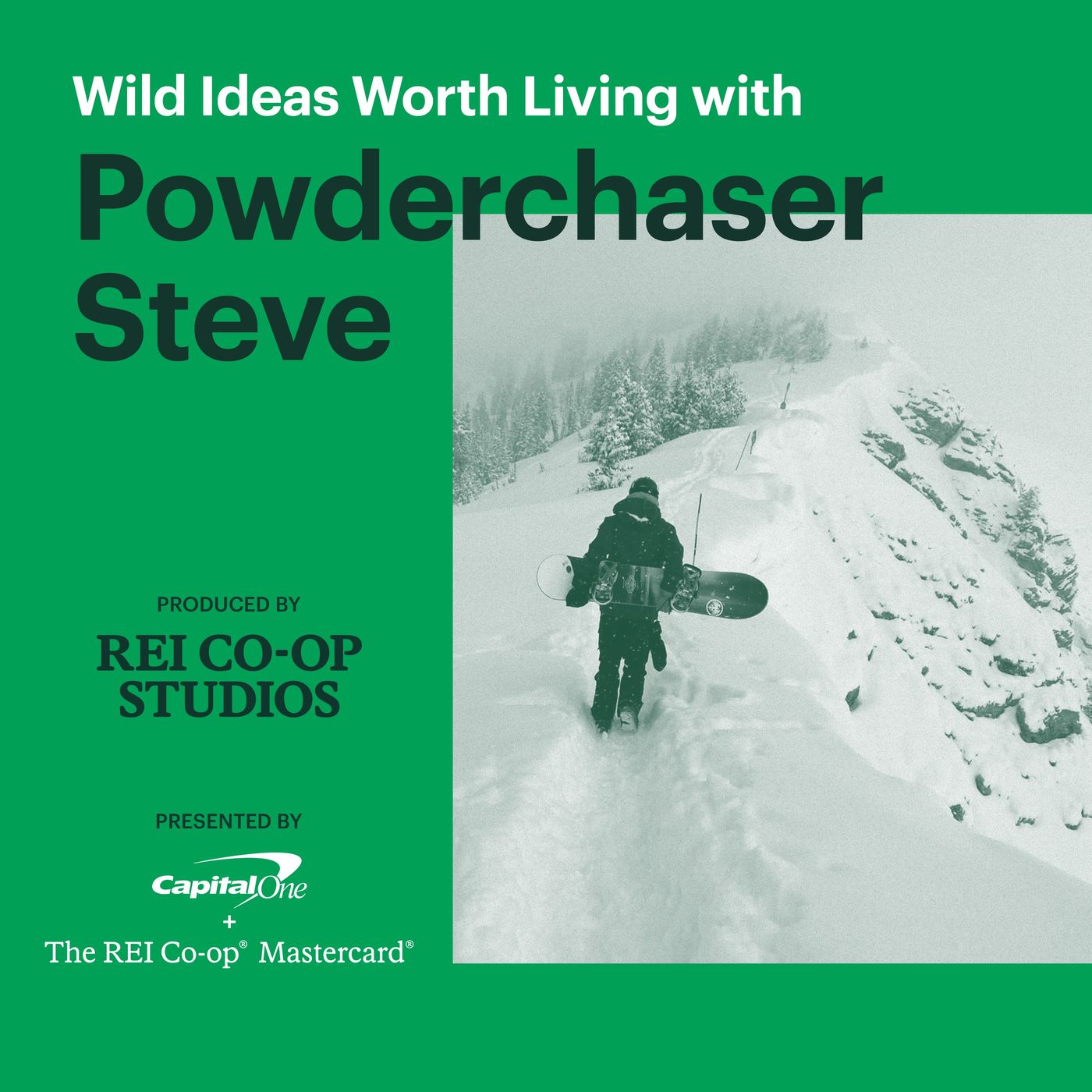
Powderchaser Steve explains how he finds the best skiing/snowboarding powder by combining early-morning “snow phone” calls, snow reports, and self-taught model reading (temperature, precipitation, snow ratios, wind direction), plus the emotional thrill of chasing storms and sometimes getting “skunked” (no new snow). He describes his grassroots PowderChasers.com email listserv/alerts and concierge forecasts, and how he balances chasing with a full-time medical sales job.
Steve (Powderchaser Steve) lives near Boulder, Colorado; grew up in Dobbs Ferry, New York, learned skiing at Bromley Mountain; moved West in early 1990s; works in medical sales (former EMT). Runs PowderChasers.com for decades.
Local, on-the-ground sources beat generic forecasts; wind and treeline/exposure matter; multi-mountain passes help; storms aren’t predictable 100%.
A “three-state chase” with 2+ feet at Crystal, then flying back to Snowbird for overnight powder, then chasing to Colorado; turning around on I-80 repeatedly for Tahoe; conference calls from chairlifts/lift shack during low cell coverage.
Written by AI. May contain mistakes.
Steve shares how he balances his passion for snowboarding with a full-time job.
“Despite his large following, Steve keeps his true identity a secret.”
Steve discusses his childhood love for snow sports and his move to Colorado.
“And I think anyone who wants to stay in the outdoors and do what they really love, being a happier employee makes them a better employee.”
Learn how Steve used local insights and snow reports to track the best powder.
“Forecasts then were more focused on urban areas where the weather would affect local commuters and traffic.”
Steve explains the excitement of chasing snow and the unpredictability of forecasts.
“You know, you weren't able to look at radars or anything like that.”
Steve shares stories of successful chases and the lessons learned from failures.
“And the mystery of nailing the chase is always there because you don't know whether you're going to nail it or not.”
Discover how Steve transitioned from a hobbyist to running a snow forecasting site.
“But I also remember other chases where I would go when there's no new snow.”
Learn about the beginnings of Powder Chasers and its evolution into a business.
“Powder Chasers started as a really small grassroots powder forecast site.”
Discover how Steve manages his snow chasing alongside a career in medical sales.
“I'm still snowboarding and working a regular job.”
Understand common mistakes in skiing and how to approach the chase for powder responsibly.
“I can do a top to bottom snowbird run in no more than six or seven minutes.”

Get the gist, explore an idea or ask about something said.
 Claude
On Wild Ideas Worth Living, what are the key points of this episode?
Searching your listeningAutomatic transcript. May contain errors.
0:01Not too far from downtown Boulder lives a man named Steve. He seems like a regular guy. He drives an all-wheel drive Volkswagen wagon and has worked in sales for 30 years. But behind this veil of normalcy, Steve is a legend in the world of snow sports. About 30 years ago, Steve started an email listserv where he analyzed weather patterns and geography to find the best powder to snowboard in the winter. This is how he earned the name Powder Chaser Steve. If there was a big storm coming, Steve would jump in his car. He loves driving through the harshest snowstorms, and he'll do pretty much anything to be on the first chair heading up the slopes the morning after a big snow.
0:44I think to a non-snowboarder or non-skier, it's really difficult for them to understand it. You know, all of your emotions, all of your negative feelings go away. There's no nerves. There's no you just blank out everything that's going on and you're just gliding through, you know, deep bottomless powder. You're just floating. I'm Shelby Stanger, and this is Wild Ideas Worth Living, an REI Co-op Studios production presented by Capital One and the REI Co-op MasterCard.
1:21Today, thousands of people subscribe to Steve's website, PowderChasers.com, to find the best snow for winter sports. Despite his large following, Steve keeps his true identity a secret. He's been highly successful in his career, and he doesn't want his boss to know that he's often taking conference calls from the ski lodge. Between sneaking out of the office to snowboard for an hour and watching the radars to follow a big storm, Steve has built himself a pretty adventurous, exhilarating life. Powder Chaser Steve, welcome to Wild Ideas Worth Living. You've been chasing powder for 50 years. That's amazing.
2:05Thanks, Shelby. So why are we only calling you Powder Chaser Steve and we're not allowed to say your last name? We just need to deal with the elephant in the room right now. Well, I've kind of made my life revolving around chasing powder and also keeping a regular full-time job and being successful at my career. And, you know, over many years of escaping the boss, if you will, I've been able to be a happier employee. And I think anyone who wants to stay in the outdoors and do what they really love, being a happier employee makes them a better employee. Let's go back. Where did you grow up? I grew up in Dobbs Ferry, New York and lived on a really big hill.
2:52I think it just got me into snow sports. And my dad took me to Bromley Mountain. That's where I learned to ski. Love it. So how old were you when you just fell in love with skiing and snow sports and you're just like, I'm going to figure out how to do this for the rest of my life? Well, that's a great question. I have to say I was born with a snow gene. And, you know, I think that some people just love snow from the very beginning. I remember not only sledding, I wanted to go outside and shovel the driveway, you know, and kids aren't usually shoveling driveways when they're really young. and I just loved it.
3:32So I think it kind of happened really young in life. When did you move out West? I think it was early nineties, I'd say. How did you know you wanted to go out West? Well, I transferred with the company I was with in Boston. And I definitely knew I wanted to move out West because I don't know if it was my trip to Vail or other just chasing powder at snowboard. But I think through my trips flying to either Utah or Colorado from the East Coast, I decided, you know what, the snow is generally deeper. We very rarely got rain in those days. It was a pretty easy decision. Once Steve moved out to Colorado, he started snowboarding more, but he realized that the thrill of the sport really depended on the quality of the powder.
4:29He could drive to any of the ski areas nearby, but the important part was knowing which one would have the best snow. At the time in the early 90s, there was no weatherman predicting big snow in the mountains. Forecasts then were more focused on urban areas where the weather would affect local commuters and traffic. So Steve took matters into his own hands.
4:56How did you predict where you were going to have powder, where you weren't? Well, you know, once I moved out west, I was a little bit older. I had a black book, actually. I call it my small black book. And I compiled phone numbers of CDOT, which is the Department of Transportation in Colorado, snowsheds. I was able to get local grocery stores, local bakeries, local gas stations, local hotels. It was filled with the town, like for instance, Steamboat or Vail or Aspen, somewhere within reach of where I was living in Boulder. And I was able to call these numbers that I had stashed in this little black book at four or five in the morning.
5:42And I was really careful to compile numbers where people would be awake. So that might be a snowplow shed. There was a place, it still exists today, actually, in Telluride called Baked in Telluride. That's the local bakery. And I would call them at 4.30 or 5 a.m. from Grand Junction. You know, hotel auditors, because if a hotel auditor told me, hey, it's dumping up here at Steamboat, I would buy him a six pack and leave it at the front desk for his night shift when he came in. You know, I would repay these folks. The other interesting thing is I was really careful on who I spoke to because sometimes you'd get somebody that say, oh, there's a lot of snow, but I'd always say, well, where are you from?
6:23And they would say, oh, I'm from Texas. And I'd hang up and call another hotel. If I could get a true local that says, hey, it's dumping, that made a lot more sense to me because I've been told many times by many people, hey, it's snowing, but you get there and there's three inches on the ground. So you're not necessarily using weather patterns and meteorology to predict the snow. You're using actual people on the ground? Back in the day before internet, you really didn't have much choice but to use people on the ground. And in addition to using people on the ground, you could also utilize snow reports.
6:59So, you know, I would gather snow reports from the Pacific Northwest and see, you know, how the storm is progressing, big storm, small storm. I would watch the Weather Channel. That did exist back then. The Weather Channel was always on in my house. And for those of you that remember the Weather Channel back in the day, they only gave the five-day forecast at 20 minutes after the hour. So combined with the Weather Channel and calling snow phones on a consistent basis and calling my secret stash of Black Book phone numbers, I was able to get up at four in the morning and pretty much figure out where to go.
7:39You know, you weren't able to look at radars or anything like that. The other thing that was very unique was that the Denver Post used to publish a 5 p.m. report from ski areas. so you could actually tell how much snow fell overnight because the morning paper would have their morning report or the Colorado snow phone. I still remember the number, 825 snow. And if you called that at six o 'clock, each ski resort would put their numbers in. So combined with the Denver Post from the day before at five, you could tell how much snow fell from the day before or overnight. How much do you know about like weather systems and wind systems?
8:18Have you studied any meteorology? Yeah, I've actually, I'm somewhat self-taught. I look at snow models just like meteorologists look at at NOAA or any of the meteorologists. We're all looking at the same models. That includes temperature, that includes water, precipitation amounts. We call that snow ratios. So obviously the colder it is, the more snow you're going to get out of an inch of water, where if it's warm, you're going to get much less snow. You need to study all those things and especially wind and wind direction. Wind direction is something I learned really early on. Like I know what resorts get more snow with different wind directions.
8:54So I've gotten really good at it. There's certain mountains that do still mystify me. Like, I don't know what the heck's going to happen. But generally speaking, it's not rocket science. But then again, even with the most amount of tools, like every webcam, every model, everything you could possibly think of, you can still get it wrong, which makes it exciting because there's no forecast that's the same. There's no storm that's the same. There's no chase that's the same. And the mystery of nailing the chase is always there because you don't know whether you're going to nail it or not. And I personally think the anticipation is better than the actual storm.
9:36Even when he's driving through a blizzard in the dark morning hours, Steve relishes every step of the chase. It's a little like praying for a snow day when you're a kid in school. The worst feeling is when Steve gets skunked, which means he puts in a lot of effort, only to get no snow at all. Still, his chasing has yielded some memorable days on the slopes.
10:03can you tell me about one of your best chases yeah so one of my more memorable ones is a three state chase you know it was two feet plus at crystal followed by hey do i stay here or do i jump on a flight and chase that storm back to utah and you know it was last minute i'm literally in the airport with a ticket standing at the gate and they're ready to close the door. And my computer is still open and I'm still looking at weather models. Hey, am I going to get on this flight or I'm not? And you get on and sometimes you make the big mistake and you get on and you fly somewhere and you miss out.
10:39But I flew back to Utah and scored another one to two feet at Snowbird. It was the same storm. You know, usually these storms give you like a 12 hour to 15 hour leeway. So the crystal storm was pretty much over by one or 2 p.m. that day. And I was able to make it back to snowbird where the next day was all overnight powder. So I skied snowbird right into the next morning. It was snowing continuously till about noon. And any storm in the Wasatch where it's still snowing into the midday period will generally hit Colorado that evening. And then I chased to Colorado and skied either Highlands or maybe the Vailback Bowls, I don't remember which, on the third day.
11:20And basically powder trifecta, three states, more than a foot, likely more than 20 inches in three days. But I also remember other chases where I would go when there's no new snow. So, you know, in addition to chasing powder and scoring, you also have skunks. What would happen when you got skunked? Like, what would you do? Worst feeling in the world. I mean, there's been so many times and even today, I mean, it doesn't happen to me that much anymore because there's a lot of information, but it always happens at some point. And every year I learned something new, even though I've been doing this so long, I always learn new things.
11:58You know, I distinctly remember waking up in hotels and looking out the window and seeing like no new snow. Your stomach basically sinks to the floor. You look at other resorts, snow forecasts or other resorts, snow reports, I should say, You know, calling that 825 snow line sometimes can be pretty depressing when you're sitting in one resort that has an inch or two, and then suddenly you hear Albie from the ski phone days where they had actually put out their own snow phone forecast. I don't know if any of you remember Albie, but he would get really excited and say, hey, it's a powder day. And then, you know, you're sitting in steamboat and you're two and a half hours away from Vale.
12:39There's just no way I'm going to make it. So it's a horrible feeling and it stays with you until your next powder day.
12:54For the last 30 years, Powder Chaser Steve has centered his life around finding the best powder in the U.S. to snowboard. He splits his time between Boulder, Colorado and Park City, Utah, but keeps a car and a bag of snowboarding gear in Seattle so that he can jet up to the Pacific Northwest at a moment's notice. At first, Steve's mission was completely selfish. He just wanted to squeeze in as many runs on perfect powder as he possibly could. Eventually, he started sharing his secrets with other skiers and snowboarders. Some used Steve's intelligence to chase down great snow for themselves. Others were happy to just follow along, hearing the stories of Steve's adventures as he searched for the best powder he could find.
13:45When did you actually start Powder Chasers as like your side hustle to have a website? You know, time flies. I would say it's 25 to 30 years. I, to be honest with you, I don't really keep track of dates. Well, tell me what it is. Yeah. Powder Chasers started as a really small grassroots powder forecast site. It had no intention of making money. It was really just a hobby. Like, hey, I'm going to put out a forecast every day. And I remember the old days, there was only one model that I was able to look at. And all it showed me was just precipitation every six hours. I would just add things up manually.
14:24But it was more or less a subscriber list where I will send you a powder alert when it's going to snow more than a foot. And it still exists today. You can still sign up on powder chasers and get powder alerts. and then slowly it evolves a little bit into a quasi business side business where I've brought on advertisers and advertisers have supported my ski addiction if you will the other thing you can do on powder chasers is you can go sign up for the concierge which allows folks to sign up and get very custom forecasts so like they say hey I want to ski next week or I have a trip planned in two weeks where is the best place to book my vacation and right now, we're still a very small business.
15:06It's only three or four of us that do this. And most of them are all my friends. You know, I'm having fun and I'm running this little quasi-small business. I'm still snowboarding and working a regular job. And I'm getting as much or more powder than most people. Steve has put a lot of time and energy into learning how to read weather models. But But chasing deep powder and sharing forecasts is just Steve's side gig. When he's not poring over radars and precipitation rates, he has a day job in medical sales.
15:43What's your job? You've always been in like sales. Can we say like the industry at least you're in? Well, actually, I was an EMT in the South Bronx at one point in my career. So obviously doing that, I had no opportunity to chase powder. Um, but from there I transitioned into sales and, you know, that allowed me a little bit more flexibility and, you know, my boss back then, and this was pre-internet, I think he was doing the same thing I was, but we never talk about it. You know, like, you know, I know you're into surfing, so I'm assuming surf culture is surf in the morning and then go to work, right?
16:23Yeah. I mean, it's changed. It's really similar to exactly what you were doing. Like back in the day, you just have to figure it out. The difference between surfing and snowboarding is I imagine with the, you know, when you're surfing, you cannot use your phone at all. Like you're in the water. Technology is probably changing that. But for you, how would you navigate working or quote working? Yeah, good question. Well, I mean, I have to admit in the old days of communications, you know, my old boss Kip, you know he used to leave the office a lot so I never really asked where he was going but his secret that he taught me was leave your jacket on your chair leave your office light on and leave the door open so I mean it worked I did it you know I was able to leave Denver and ski Loveland you know five or six runs and then head back to the office I'd be back in like an hour and a half you know it's really funny because if you think about it people are saying well, I'm trapped at work.
17:22I can't do this. Work today is remote in a lot of cases. So while I'm not a believer in big SUVs and Sprinter vans, you can do your conference call from the base. I've done conference calls on chairlifts. I will play hooky where, hey, I'm not going to be able to make this appointment today. I'm going to reschedule it. But there's one thing I won't do is I won't blow off a really important critical appointment. I'm in medical sales. Our customers come first. So there's times when I literally just can't chase. But there's also been times where I've been able to chase and do a conference call or speak to a customer from the base area.
18:00And if you think about skiing and snowboarding, how many minutes are you really actually taking to do that run? It's different than surfing. I can do a top to bottom snowbird run in no more than six or seven minutes. And then you're standing on a tram line for anywhere from 20 minutes to an hour. So those are all effective work times. But there's been two crazy situations where I've had no cell coverage and I had to get on a conference call. One of them was at Vail where I actually logged onto the conference call from the top of the mountain. I went up to the lift shack and left my phone with the attendee and said, listen for my name.
18:44If they call my name, Just let me know when I come back. And he said, no problem, bro. I took a nice run. I'd go back in and check with him. He said, nope, they didn't call your name. I'd take another run. And I think after two or three runs, I went back. The call was still going on. I just sat up there for 15 minutes. And then they actually called my name and I was there. So I did this conference call without even a phone in my pocket. But I mean, there's other times where I remember a really deep day at Taos. God, they had like 20 inches of snow. But I simply couldn't go out. You know, I was set up in my room with my computer.
19:18So you have to miss some of them. And once you get your next powder day, that all goes away.
19:27Some people work from home or even coffee shops. Steve works for mountaintops and ski lifts. He's been obsessively chasing powder since before it was cool and before the Internet made it accessible. While technological advancements have made it easier in many ways, there's still no substitute for the expertise that comes with decades of experience.
19:53What's a mistake that people make when they're trying to get the most out of a ski season? Social media has really changed the ski industry, in my opinion. It's increased crowds. It's made people more picky. B, another thing is people limit themselves to their pass. I am a big proponent of multi-mountain passes, by the way. I have most of them. But, you know, I have a lot of people reach out to me on powder chasers and they say, oh, I can only go here. I can only go there. I mean, who cares? I know lift tickets are expensive, but smaller ski areas are more reasonable. even one or$200 a day for a deep, deep powder day is worth it in my eyes.
20:36So I wouldn't say don't completely trap yourself to only where your past will take you. The other thing is a lot of people get wrong is they go to where the snow is the deepest, but they fail to understand the red flags. And there's a lot of red flags in chasing powder. I mean, I've turned around on Interstate 80, chasing out to Tahoe many, many times. I've turned around and turned around again and again and again on the same chase. You know, I hate to say it, but sometimes storms are too deep. Sometimes the mistakes they make are wind. You know, you may have a 30-inch powder day with a ton of wind that doesn't ski well.
21:15You're at the wrong resort. You're in exposed ridgelines. You're not skiing below treeline. So decisions to wear to chase powder are very complex. To me, it seems like you like thrill of the chase. You like mystery, which it's getting harder to find mystery today with all these tools that help us predict what our experience could be. I agree. The mystery of chasing is part of the enjoyment because you don't really know what you're going to wake up to every morning. And the anticipation is just as good as the end results. But it's kind of a game, if you will. And, you know, most of the time I win the game.
21:55But, you know, you can never predict every storm 100 % accurate. And every storm is different. There's no two storms alike. So it is a mystery. You know, it's never a repetitive event. It's always something unique. And that's what I really like about weather and about chasing powder.
22:18To check out snow predictions for your area this season, head to powderchasers.com or check out Powder Chasers on Instagram. If you want to follow Steve and see his amazing wildlife photography, you can find him on Instagram at Powder Chaser Steve. Shout out to listener Gunnar Olson for recommending Powder Chaser Steve as a guest. If you have an idea for someone we should talk to, write us an email at podcasts at REI.com. That's podcasts at REI.com. Wild Ideas Worth Living is part of the REI Podcast Network. It's hosted by me, Shelby Stanger, produced by Annie Fassler, Sylvia Thomas, and Sam Piers-Knitzberg of Puddle Creative.
23:02Our senior producer is Jenny Barber. Our executive producers are Paolo Motula and Joe Crosby. Thank you again to our partner, Capital One and the REI Co-op MasterCard. As always, we love it when you follow the show, take time to rate it, and write a review wherever you listen. And remember, some of the best adventures happen when you follow your wildest ideas.
Powderchaser Steve has spent decades studying weather patterns and geography in pursuit of the best powder. A snowboarder and self taught forecaster, he has built a reputation for predicting where the deepest snow will fall and chasing winter storms to find it. His passion for weather, snow and the pursuit of fresh tracks has made him a legend among skiers and snowboarders.
Connect with Powderchaser Steve:
Listen to REI’s Camp Monsters podcast!
Thank you to our sponsors:
Hosted by Simplecast, an AdsWizz company. See pcm.adswizz.com for information about our collection and use of personal data for advertising.