Ask ChatGPT

 Wild Ideas Worth Living
10 Nov 2026 · 35m · 20 chapters
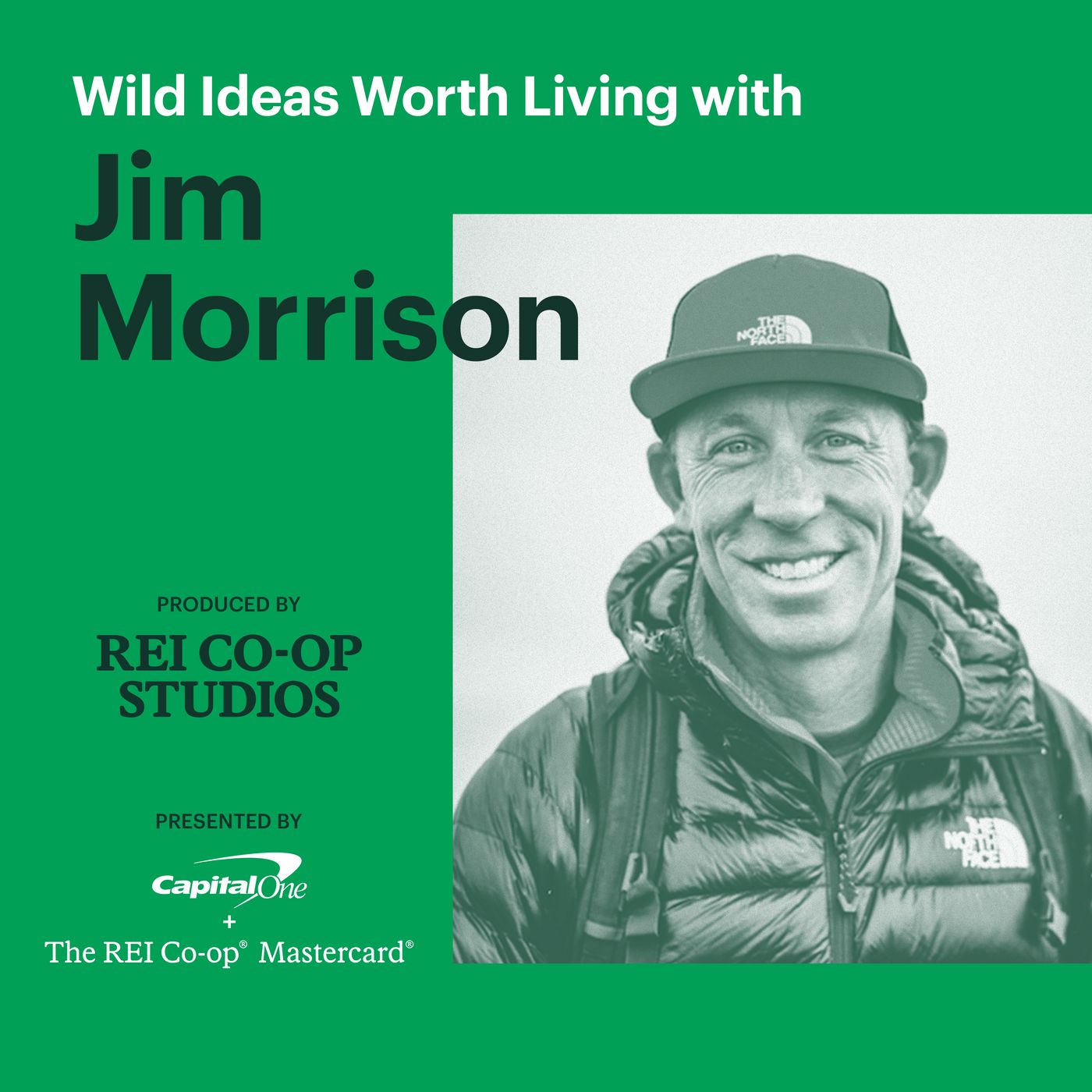
Jim Morrison discusses his life story and the first ski descent of Everest’s North Face via a direct route from China, including the team effort, gear/training, and how grief shaped his approach.
he and Hilary Nelson were first to climb and ski Lhotse’s west face (2018); Everest’s direct North Face route had not been climbed since 1991; his 2025 Everest expedition succeeded after multiple failed attempts; grief is processed by “doing what you can to get through the day” and carrying loved ones forward.
Hilary’s 2022 avalanche death on Manaslu; Jim’s two-day recovery/rescue mission; a 7-week equipment-and-weather waiting period; a storm burying tents; skiing for hours down Hornbine Couloir in icy, wind-hammered conditions; spreading Hilary’s ashes at the summit.
Jim Morrison (ski mountaineer; Tahoe-based; former athlete/filmmaking subject) and Jimmy Chin (mountain athlete/filmmaker; longtime friend; co-filmed preparations; joined the Everest climb).
Written by AI. May contain mistakes.
Jim shares his deep-rooted connection to Tahoe and his journey there.
“an REI Co-op Studios production presented by Capital One and the REI Co-op MasterCard.”
Jim reflects on his life with his family and the heartbreaking tragedy that changed everything.
“Yeah, it took me 15 minutes to get here from home, so pretty nice to be here in this place I love so much.”
Jim discusses how nature helped him heal after losing his family.
“but you've been showing it at film festivals and hanging with your girl, Oprah.”
Jim recounts his first meeting and growing friendship with Hilary Nelson.
“and started to learn, like, putting goals in front of me to get out and step over the proverbial barriers in life helped me push myself forward.”
Jim and Hilary's adventures culminate in their historic climb of Lhotse.
“I met Hilary in 2015, climbing the fifth highest mountain in the world.”
Jim shares the daunting goals they set for climbing Everest's North Face.
“It was the one thing that was right next to us.”
Jim recounts the devastating avalanche that took Hilary's life and its aftermath.
“Hillary was his everything, and in an instant, she was gone.”
Jim discusses the impact of Hillary Nelson and the importance of telling her story.
“without seeing something about Hilary Nelson.”
Reflection on how stories keep memories alive and honor those we've lost.
“And I was like, okay, well, let's make sure we don't stop talking about her.”
Discussion about preparation for adventures and how REI supports wild ideas.
“I only met her once and I was affected she's the girl that all of us looked up to she's the girl you want to be like Jimmy called her Athena and Gore-Tex which was pretty fitting is that Thunder?”
Jim shares his motivation to honor Hillary by pursuing their dream expedition.
“Seven months after his life partner, Hillary Nelson's passing, ski mountaineer Jim Morrison made a big decision.”
Jim talks about the film project and team assembly for the climb.
“she loved, which was often just going, doing hard things.”
Description of the complexities involved in the Everest climb.
“After he accepted, the two immediately began the intense process of assembling a team and applying for permits.”
Jim explains the significance of the route taken for the descent.
“So there are a number of routes on the north face.”
Jim discusses selecting his climbing team and the importance of trust.
“and stood on the summit together and all hugged, and everybody got back down safely.”
Jim recounts the detailed timeline and efforts to reach the summit.
“that if you work together and you can do impossible things.”
Discussion of the gear choices made for the different climbing attempts.
“And then we finally had this huge storm that buried everything, broke all our tents under two meters of snow, and we dug everything out and we set up new tents.”
Jim shares the intense emotions and challenges faced during his ski descent from Everest's North Face.
“But I was standing there in normal gloves, normal goggles, normal ski outfit, my ski boots, my Technica Zero-G ski boots that I ski with at the resort and I tour with here in Tahoe.”
Jim discusses the emotional impact of watching his documentary film about the expedition.
“What was it like finally watching your film where you climbed and skied down Everest for the very first time?”
A tribute to Yukta and other climbers lost in an avalanche, acknowledging their legacies.
“Earlier in this episode, Jim talked about the team that brought him to the top of Everest, which included his friend Yukta.”

Get the gist, explore an idea or ask about something said.
 Claude
On Wild Ideas Worth Living, what are the key points of this episode?
Searching your listeningAutomatic transcript. May contain errors.
0:03Hilaree Nelson: Jim Morrison is a prolific ski mountaineer. In 2018, he and his life partner Hilary Nelson became the first to climb and ski down Lodze, the 28 ,000-foot peak next to Mount Everest. Jim has been a professional athlete for over a decade, summoning some of the most difficult mountains in the world and skiing down extreme backcountry lines. In October of last year, Jim became the first person to complete the outdoor world's most notorious feat. He climbed up and skied down the treacherous north face of Mount Everest. Jim had been chasing this wild idea for years, fighting through personal tragedy, a global pandemic, a knee surgery, and the logistical obstacles that come with big expeditions.
0:53Hilaree Nelson: But Jim didn't let any of it stop him from attempting the most challenging route on the world's tallest mountain.
1:01Jim Morrison: Don't climb Everest by looking at the top of the mountain. Do it by stepping out of the first camp and making your way up to where it starts getting hard. And the grief process is the same. You just do what you can to get through the day. and when you find your way out of the house and you go make it around the block, you try to pat yourself on the back and accept that you did your best. And eventually you're going to take those loved ones you lost and you're going to carry them with you. You're going to celebrate them. It's not going to be as painful as it is today. It's going to get to a point where you enjoy celebrating who they were and who they are, how they've been on this journey with you.
1:53Hilaree Nelson: About a month ago, I was in Lake Tahoe and I got to sit down with Jim in person. Our conversation took place on a deck overlooking the forest with birds and thunder in the background. A note, this episode contains conversations about the tragic loss of loved ones. Please listen with care. I'm Shelby Stanger, and this is Wild Ideas Worth Living, an REI Co-op Studios production presented by Capital One and the REI Co-op MasterCard. Jim climbed the north face of Everest with mountain athlete, filmmaker, previous guest, and longtime friend, Jimmy Chin. Now their film about Jim's groundbreaking feat, titled Everest, The Other Side, is in theaters across the country.
2:45Hilaree Nelson: Jim Morrison, welcome to Wild Ideas Worth Living in the Wild. This is our first time we've ever done a podcast in Tahoe, in the trees.
2:54Jim Morrison: Thank you for coming.
2:56Hilaree Nelson: Yeah, well, thank you for coming. This is your hood, though.
2:59Jim Morrison: Yeah, it took me 15 minutes to get here from home, so pretty nice to be here in this place I love so much.
3:06Hilaree Nelson: Tell me a little bit about your connection to Tahoe before we get into Everest, the other side, and all the things you've been up to.
3:14Jim Morrison: Well, Tahoe's been home for most of my life. I started coming here. I grew up in the San Francisco Bay Area, and I started coming here on the weekends when I was a little kid. And by the time I was in high school, I was here every weekend, basically. And then I moved here my senior year of high school, finished school, independent study, and then went to college in Reno so that I could be outside and play and ski and live the life that I've been trying to live.
3:41Hilaree Nelson: And you're still here.
3:43Jim Morrison: I'm still here. I chased a girl to Telluride, Colorado and moved away from here. But I always have maintained my community here and I come back and I bounce back and forth between Aspen, Colorado now and here.
3:58Hilaree Nelson: So you've been on a whirlwind. Your movie Everest, the other side is just it hasn't released yet. By the time this comes out, it will have probably released into the world. but you've been showing it at film festivals and hanging with your girl, Oprah. It's been pretty cool to see you and what you've been up to. How's it been?
4:16Jim Morrison: It's been quite an adventure. It's been like a different kind of expedition.
4:23Hilaree Nelson: Jim has loved skiing his entire life to the point that he left high school early to ski in New Zealand, later finishing high school by mail. He ended up in Lake Tahoe, where he would coach skiing in the winter and work construction during the summer. Eventually, Jim started his own construction company, which is how he met Katie Jackson, a real estate agent in the area. Katie was also an avid outdoors woman, as well as a private pilot, and she and Jim spent a lot of time hiking, climbing, and flying together. The two fell in love, got married, and started a family. For a while, everything felt right.
5:06Hilaree Nelson: Then, in 2011, Jim's life took a heartbreaking turn. Katie was flying herself and their two kids from Tahoe to Los Angeles. They encountered a storm, and the plane crashed, leaving no survivors. Jim was 37 at the time.
5:29Hilaree Nelson: I'm curious you know after having lost your wife and kids how nature helped you heal and how you got back to skiing big mountains like where did that fit in
5:45Jim Morrison: yeah I just was you know devastated and broken and my life as I knew it It just ended all at once, instant. And I, finally, a couple days later, there was a huge snowstorm. And I got out of the house. The roads were like so snowy, you couldn't drive anywhere. And we went cross-country skiing. And just being outside provided a lot of room for me to breathe. And the wind and the elements and everything. You kind of have to, you're forced to deal with life. And then over time, I found myself down here on the West Shore of Tahoe, hiking up Jake's Peak. And I was crying, but I was walking uphill and I was putting one foot in front of the other.
6:34Jim Morrison: And I was proud of myself for doing it. And I was overcoming some of that just grief and emotion. And I just got a lot out of it. And I went home tired and slept better. and started to learn, like, putting goals in front of me to get out and step over the proverbial barriers in life helped me push myself forward.
7:02Hilaree Nelson: After the plane crash, Jim began spending even more time in the mountains. In 2013, he went to the Himalayas for the first time and fell in love with the massive peaks there. Two years later, he went on an expedition to Makalu, which is the fifth tallest mountain in the world. That's where he met Hilary Nelson, an incredibly accomplished mountain athlete with multiple first ski descents under her belt. He and Hilary both loved ski mountaineering, and they had an instant connection.
7:38Jim Morrison: I met Hilary in 2015, climbing the fifth highest mountain in the world. We went on this expedition together. I think I met her in the Kathmandu airport.
7:49Jim Morrison: And we just, we didn't succeed. We didn't make it to the top, but we learned a lot and we tried really hard. And she really helped me open up about some of the loss and some of the life that I'd lived and did a really exceptional job of listening to some stories. And I was able to get some stuff out that I don't think I'd ever talked about or ever gotten out with anyone else. And we just formed this incredible friendship originally and then really liked climbing at a similar pace and skiing. We wanted to ski the same place. And we really just saw the mountains and the way up and the way down and when to go and when not to go in a really similar light.
8:28Jim Morrison: And eventually started doing things together and skiing together and making out.
8:37Hilaree Nelson: Yeah, can I ask you about the love story? I'm always interested in that. Like love a good adventure, love a story. When was the moment you were like, yeah.
8:45Jim Morrison: Well, we talked on the phone a bit and then I asked her to go on a date with me at New Year's beginning of 2016. And she was driving to Aspen to meet me and she pulled over on the side of the road and talked to me and then she turned around and then she turned back around and came back. Because you were where? She was conflicted of where, like, am I going to take this step forward? And then we just kind of, it was pretty dramatic and full of fireworks. And we had an amazing time.
9:18Jim Morrison: And yeah, the rest was sort of history. We just took off and started really slow. And we wouldn't see each other very often. I lived in California and she lived in Telluride. And eventually we went on a trip down the Grand Canyon. And we spent a week together. and we had an amazing adventure every day. And then we just started planning things together and ride bikes, rock climb, and plan ski expeditions. And we found a lot of success together and just kept dreaming bigger and pushing each other to go farther and built a really dreamy life together.
10:03Hilaree Nelson: As Jim and Hillary spent more time together, they began going on bigger adventures. In 2018, they became the first to climb and ski down the west face of Lhotse, the fourth tallest mountain in the world. For a long time, this line had been considered a dream project in the ski mountaineering community, and their descent made headlines. But the whole time they were climbing Lhotse, Mount Everest stood in the background.
10:34Jim Morrison: Everest became what's next. It was the one thing that was right next to us. We had been looking at Everest, the whole expedition, talking about it, feeling it right there, and a draw and the pull of it was right there. And we started from that point forward talking about it and planning it. And sometimes Hillary would try to change the subject because it was a big, scary mountain.
10:59Hilaree Nelson: Jim and Hillary decided to climb a direct route on Everest North Face, coming from China rather than Nepal. This route is incredibly challenging and had only been successfully completed by five climbers up to this point. Once they reached the top, Jim and Hillary planned to ski back down, which nobody had ever done before. Almost immediately, the two started preparing and training, taking any chance they could to adventure on big mountains. Then in 2022, on one of their training expeditions, Jim and Hillary climbed Manaslu, another 8 ,000-meter peak in the Himalayas. They had reached the summit, transitioned from crampons to skis, and were beginning to descend.
11:48Hilaree Nelson: It was at this moment that Hillary was swept over a ridge by an avalanche, with Jim standing just 20 feet away. Jim wanted to ski after her, but he knew it wasn't safe. He was devastated. Hillary was his everything, and in an instant, she was gone. Two days after the avalanche, Jim was able to perform a rescue mission to recover Hillary's body.
12:26Jim Morrison: when Hillary passed away I I was on top of a really high mountain and a really inhospitable place, over 8 ,000 meters. And when she slid down out of sight, I couldn't understand why we were there and why we would take these risks. And I was really worried about, was she okay? Was she not okay? And I questioned, like, okay, if I can find you, if I can, if you're somehow, you saved yourself, you found a way to stop in this slide you were in, which I assume she did because she is this incredible, badass woman who is going to figure out a way to get home. I just kind of at that point was like, I don't ever want to come back here.
13:19Jim Morrison: I don't ever want to do this again. And eventually I did find her a couple days later and it was, she had passed away in the slide. And I came home and I didn't really want to go back to the mountains. But I did want to tell her story. I did want to talk about who she was and build, memorialize who she was. And I like to say she sort of broke the internet. There was a period of time after her death where you could not go on the internet without seeing something about Hilary Nelson. And I wanted to encapsulate that moment and have her kids really see who she was and how much of an impact she had on the world and young men and women and people all over the planet that had never met her, that were profoundly impacted by who she was and what her spirit was and how they influenced her.
14:25Jim Morrison: And eventually Everest became a way to keep that story alive and to honor her legacy and to talk about who she was and give me a chance to sit here and celebrate her and remember her. And my friend Timmy O 'Neill told me right after she passed away that people die twice. Die when their soul leaves their body and they die when spoken word or stories aren't told about them anymore. And that made a big impact on me when I heard that. And I was like, okay, well, let's make sure we don't stop talking about her. Let's keep telling the stories.
15:08Hilaree Nelson: Well, thank you for telling her story. I only met her once and I was affected she's the girl that all of us looked up to she's the girl you want to be like
15:20Jim Morrison: Jimmy called her Athena and Gore-Tex which was pretty fitting
15:25Hilaree Nelson: is that Thunder?
15:27Jim Morrison: yep
15:27Hilaree Nelson: awesome you've brought like the elements with you Jim I appreciate it
15:32Jim Morrison: maybe that's Hillary like making a little noise in the background
15:36Hilaree Nelson: that's really cool
15:53Hilaree Nelson: we talk a lot on this show about the training and gear you need to go after a wild idea with the rei co-op mastercard everyday purchases can support your wild ideas and turn them into limitless possibilities. Trail miles, summit views, and that family ski trip you plan to take this winter. Here's how it works. Card members earn 5 % in card rewards on every purchase at REI and 1.5 % on everything else. Groceries, gas, your morning coffee, it all adds up. And the best part, you can redeem card rewards as soon as you earn them. That means more rewards put towards those trail runners you've been eyeing.
16:34Hilaree Nelson: It's quick and easy to see if you're pre-approved with no risk to your credit score. To learn more about the REI Co-op MasterCard, go to rei.com slash mastercard dash podcast. That's rei.com slash mastercard dash podcast. Terms apply.
16:57Hilaree Nelson: SmartWool knows that winter doesn't always play nice. One minute it's a bluebird day on the mountain, the next, the sky is dumping wet snow and you're getting blasted with sideways winds. That's why Smartwool is introducing their first ever insulated outerwear collection, Winterloft. It's a down jacket, upgraded. Smartwool's new Winterloft insulation blends merino wool with recycled down. That means more warmth and versatility than you'd get from down alone, even if your jacket gets wet. From tailgates to snowball fights, a winter loft jacket is down for whatever. This September, you can find winter loft jackets and vests exclusively at REI.
17:41Hilaree Nelson: Shop the SmartWool Winterloft Collection at your local REI and warm up whatever goes down. SmartWool, go far, feel good.
17:58Hilaree Nelson: Looking for the perfect holiday gift? This year, give your loved ones something unforgettable. The gift of adventure. Whether it's hiking through iconic landscapes or exploring a new culture, REI and Intrepid Travel make it easy to give memories that last far beyond the holiday season. From bucket list destinations to small group adventures around the world, there's a trip for every kind of traveler. Explore upcoming trips at rei.com slash travel. That's rei.com slash travel.
18:43Hilaree Nelson: Seven months after his life partner, Hillary Nelson's passing, ski mountaineer Jim Morrison made a big decision. He was going to keep pursuing their shared dream to climb up and ski down the north face of Mount Everest. Jim wanted to honor Hillary's legacy and bring his memory of her to the top of the mountain.
19:04Jim Morrison: She was a force of nature and a beautiful person and soul and pushed herself really, really hard and was fiercely independent and really passionate about doing what she loved, which was often just going, doing hard things.
19:25Hilaree Nelson: Before Hillary passed, Oscar-winning directors Jimmy Chin and Chai Vassarelli had been filming Hillary and Jim's preparations for this expedition. They planned to make a movie about it. When Jim decided to honor Hillary's legacy and continue the project, he asked Jimmy Chin to join him on the climb. After he accepted, the two immediately began the intense process of assembling a team and applying for permits. This expedition was far more complex than the average Everest summit. Instead of climbing in the spring, they needed to go in the fall when there was more snow to ski on. The group had two failed attempts in 2023 and 2024.
20:07Hilaree Nelson: Finally, in October of 2025, Jim achieved his goal.
20:17Hilaree Nelson: ultimately you did ski down Everest you climbed up skied back down but you went down a different route than than people know Everest for most people think of Everest they think of the side where there's there's the giant lines of people you didn't do that you went down a route that
20:33Jim Morrison: how many people had ever climbed before we think five people have climbed up the the north face The direct north face, this particular route. So there are a number of routes on the north face. There's a few other routes that have a few other people that have climbed up them as well. But all of them, for the most part, one party or one group has climbed a few different routes. And then this route, which splits the center of the north face of Everest, was first climbed by two people in 1980 and then climbed again by two more people in 86 and one more person in 91.
21:10Hilaree Nelson: So it hadn't been climbed since 91.
21:12Jim Morrison: Since 1991, it's been attempted many times to go up it, and no one's been successful getting up it. And Marco Safridi tried to go down it by climbing the normal route on the north side and disappeared and hasn't been seen since. And we somehow got a really safe group of 12 of us up the base and stood on the summit together and all hugged, and everybody got back down safely. And it was really a historic climb just in and of itself for that reason.
21:46Hilaree Nelson: How did you decide who to pick and who did you end up ultimately picking?
21:52Jim Morrison: Yeah, I mean, the whole idea of going to Everest and going to the top and coming back down involves a team. And I built the best team I could. And I spent years trying and years working on it. And Hillary and I felt really compelled to talk to a friend of ours called Topo and his wife, Carla. They weren't available to come in the beginning. Then COVID happened and then we went with other people and we tried and we failed. And last year I talked to Topo again and he was really excited about the opportunity. And then we went to Forte, which is a village in Nkumbu that I've been to many times and have a lot of really close friends.
22:36Jim Morrison: that are Sherpa. And we sort of hand-selected a really incredible group of Sherpa from Forte. And then we also brought a guy named Yukta, who I had met in the process of rescuing Hillary's body. And he had risked life and limb to come into the mountains in a really, really hard and hospitable manner and try to help me find my partner. and he became an incredible force on our climbing team and an incredible amount of strength. And he broke his leg on an expedition on the second year at almost 8 ,000 meters and certainly could have been killed. It was, I think, to our knowledge, the highest altitude rescue of its kind, all done by hand, no helicopters, no mechanics.
23:35Jim Morrison: Just we lowered him off the face, carried him over miles and miles and miles of crazy inhospitable glaciated terrain and got him to our camp and drove him to the border and flew him in a helicopter to the hospital and he had surgery the next day. And a year later, he came back and stood on the summit of Everest and fulfilled his dream. And a big part of that dream was helping me get there. And that was really what this whole team became. It was like a bunch of people in a combined effort trying to achieve a really difficult goal. And it's something just like this, I think, really special about life and humanity, that if you work together and you can do impossible things.
24:21Jim Morrison: And I owe so much to everybody on the team. And the energy that that team had for me and like achieving this goal of getting to the top was so profound and so magical. And then skiing away from them, it was really wild. And I was like, okay, I hope I don't mess up this next turn.
24:42Hilaree Nelson: I want to talk a little bit more about the climb. I know it's in the movie and people are going to watch the movie. but that climb took i mean it took years but it also took how many days to get up
24:58Jim Morrison: well it took three expeditions over three different years and then the third expedition was seven weeks long and we spent seven weeks trying to move equipment up the mountain and get into position and wait for the right weather window and we just never got the right weather window over that whole period of time. And then we finally had this huge storm that buried everything, broke all our tents under two meters of snow, and we dug everything out and we set up new tents. And then over the course of five days, we climbed the mountain.
25:31Hilaree Nelson: It's incredible. What sort of gear choices did you make from attempt one to attempt three? Did you change anything that helped?
25:38Jim Morrison: We changed our style a lot. We were focused on trying to fix ropes up as high on the mountain as we could in the beginning. And then avalanches would come and rip those ropes out. And so we became determined not to fix ropes above camp two. And we were going to wait until the right moment. And then we were just going to go from the bottom to the top in one push and fix on the way. Essentially, we climbed with the same gear a year after year, but we learned like we can take lighter weight equipment. And we figured out it like personally I decided exactly what I was going to bring the first year and I made very few changes to that.
26:20Hilaree Nelson: What did you bring?
26:21Jim Morrison: Like I used lightweight crampons, Petzel crampons with aluminum heels that have little strings that hold them together. So I like the weight savings. I use the same skis every year, which are kind of a balance between uh lightweight skis that are made for ski touring and backcountry skiing but still heavy enough they have really good ski ability they're black crow's chem ox skis and the whole black crow's line of skis is like heavier than many of the competitors skis but they they ski really well and i'm pretty focused on the having fun part and going down part so that was an important decision
27:04Hilaree Nelson: Would you wear for clothes?
27:07Jim Morrison: I wore, I was really committed to not wearing a down suit, which is unique. And I think Hillary and I did that on a lot of the mountains we climbed. So I just used layers. I wore this North Face AMK kit. It was starts with, you know, really high performance base layers to lightweight down to future light shell with a really heavy down pair of pants and hound coat on top of it. And then I was able to, on the summit, take that down coat and those down pants off and basically be on the summit of Everest in a ski suit.
27:42Hilaree Nelson: Just like you'd be here at the ski area.
27:49Jim Morrison: I was standing on top of Everest. I had a super short window at a time because it was cold and it was windy. And I needed to get moving and get off the summit out of the wind in like the next 10 minutes. But I was standing there in normal gloves, normal goggles, normal ski outfit, my ski boots, my Technica Zero-G ski boots that I ski with at the resort and I tour with here in Tahoe. The exact same pair of boots went to the summit of Everest.
28:27Hilaree Nelson: So at the top, you had 10 minutes. That's it?
28:30Jim Morrison: I was there for about 45 minutes.
28:33Hilaree Nelson: 45 minutes, okay.
28:34Jim Morrison: It's real, things move really slowly. It probably seemed like 10 minutes. Yeah. Like if I described what I did, that's about 10 minutes, but it took 45 minutes to do that.
28:42Hilaree Nelson: Yeah. Tell me about that period where you're at the top and then you know you have to ski down.
28:51Jim Morrison: Yeah, I shared an incredible moment with Hillary at the top. I really felt a profound connection to her. And we had together achieved this dream. And I felt like she was there watching me and supporting me and cheering me on. And I looked out at Makalu and Lhotse, mountains we'd skied together and climbed together. And I spread some of her ashes there. And then I just shifted into getting my gear ready and taking my down off and taking my overboots off my ski boots, taking my crampons off and stepping into my skis and buckling things, making sure everything was just right. And I looked at my team who was taking selfies and celebrating and high-fiving and having a ton of fun and laughing.
29:39Jim Morrison: And I was like, you guys are in a different place than I am because I was about to drop into the North base and it was pretty, it was a daunting task. It was, I had to get really serious. I was nervous. and I just did it one step at a time. I've done everything in life. I figured out how to focus on the first turn and make sure I didn't screw it up. And then I figured out how to take the two turns in front of me and dissecting it into those two turns or those six turns or those 15 turns. Eventually, I skied across this upper summit snowfield into the Hornbine Couloir. And I just had such a long time of dreams and visualization and aspirations to get there and to like ski over to that thing and make turns down it.
30:25Jim Morrison: And the conditions were really bad, but I was like relishing this opportunity that I had to be here in this one time, in this one place. And I'd stopped a couple times and was like, I can't do another turn. And I'd study the situation and be like, no, I can't. I can make two more turns right here. I can make two more turns right here. And I'm really glad I did because I've had those with me forever. It was just relishing being there. And it was pretty awful conditions.
30:56Hilaree Nelson: Pretty awful, meaning like it's ice.
30:59Jim Morrison: There was a lot of like glacial ice in and around where I was skiing. And then there was a lot of wind hammered snow that was like a almost ice lens on top of it that was so unsmooth that it made it really hard to have an edge on. And I had to like make turns around these little undulations and just be really precise with it. And I felt like I was in the zone and I was very focused for that four hours. I was as present as you could be. And I had an exceptional, incredible ascent down there.
31:49Hilaree Nelson: Then what happens at the bottom?
31:52Jim Morrison: Then it was just like a complete and total breakdown at the bottom.
32:01Jim Morrison: I reconnected with Hillary again when I crossed the Bergshund. Almost immediately, I cried. I screamed. I talked to her. I couldn't believe I was still able to stand. I was physically and emotionally so exhausted, but so exuberant and so fired up that I'd pulled it off and that we had pulled it off and that this team had put this thing together and achieved this goal. And I skied back to camp and just standing there for a long time talking to my teammates in camp. They're like, do you want to sit down? and I didn't want to stop. I didn't want to sit down. I didn't want to take my ski boots off.
32:46Jim Morrison: I just was just on cloud nine and still really high from what we'd been through. And then I was stressed out about everyone getting down for hours and hours and hours. I sat there and just listened on the radio and waited for each person to get off the mountain and was just worried that something could happen. Until everyone was off the face, I wasn't going to be comfortable. And one by one, they all walked into camp and stumbled into camp and fell into camp, just completely and totally exhausted. And it was, yeah, spectacular achievement for all of us.
33:36Hilaree Nelson: the movie about Jim's descent titled Everest the other side premiered at the Venice Film Festival in September 2026 it's about so much more than just this expedition I was lucky enough to watch a press screener and I can tell you it's one of the most jaw-dropping emotionally raw adventure films I've ever seen.
34:05Hilaree Nelson: What was it like finally watching your film where you climbed and skied down Everest for the very first time?
34:12Jim Morrison: It was powerful. It's been a really long journey. We've been working on this project for seven years and been through a lot to get there and get to the other side of making it. And it was really, showing it in Venice was pretty spectacular. It ended with a huge standing ovation and it was really, really powerful. And there were a lot of tears and a lot of joy and a lot of people had broken hearts. And it was all the things, all the things that we feel and go through.
34:51Hilaree Nelson: What's the reaction been like? Anything surprising, anything super gratifying?
34:58Jim Morrison: Yeah, I mean, it's super gratifying to me when I meet someone that heard this story and is really impacted by it or really inspired to move forward with their grief or their Everest in their life. It's been really, you know, nice to share that story and to meet people that have figured out a way that this is what got them to step over there, crack in their asphalt, and move forward and live their best life and do their best at just going forward. And that's all you've got to do. Get your shoes or your backpack or your water bottle and step outside and check the weather and get the gear you need and go into nature.
35:46Jim Morrison: And there's a bevy of profound things that come at you when you walk in the trees and climb mountains and run down rivers and commune with Mother Earth. It's a wonderful gift she's giving us every day. We often get lost inside and in our devices and world of to-do lists that are longer than we can possibly get done. So put down the phone and go outside and go for a walk.
36:31Hilaree Nelson: You can see Everest the other side in theaters and on IMAX nationwide. wide. Earlier in this episode, Jim talked about the team that brought him to the top of Everest, which included his friend Yukta. Tragically, Yukta and a group of nine other climbers passed away in an avalanche on Broad Peak in Pakistan in July of 2026. The mountaineering community was devastated by these losses, and we want to recognize the legacies of Yukta and his fellow mountaineers. Wild Ideas Worth Living is part of the REI Podcast Network. It was created and is hosted by me, Shelby Stanger, produced by Annie Fassler, Sylvia Thomas, and Sam Pierce-Knitzberg of Puddle Creative.
37:21Hilaree Nelson: Our senior producer is Jenny Barber. Our executive producers are Paolo Motula and Joe Crosby. Thank you again to our partner, Capital One and the REI Co-op MasterCard. Thank you also to Joy and Mike Paskey for the amazing backdrop to record in Tahoe. We appreciate you. As always, we love it when you follow the show, take time to rate it, and write a review wherever you listen. And remember, some of the best adventures happen when you follow your wildest ideas.
38:03Thank you.
Jim Morrison is a ski mountaineer who has spent more than a decade climbing and skiing some of the most challenging mountains in the world. In 2018, he and his life partner, Hilaree Nelson, became the first people to climb and ski down Lhotse, the 28,000 foot Himalayan peak neighboring Mount Everest. In October 2025, after years of pursuing an even bigger objective, Jim became the first person to climb and ski down the treacherous north face of Mount Everest. The historic expedition came after years of personal tragedy, a global pandemic, knee surgery, and the immense logistical challenges of attempting one of the most difficult ski mountaineering objectives in the world.
Connect with Jim:
Explore upcoming REI x Intrepid Travel trips!
Thank you to our sponsors:
Hosted by Simplecast, an AdsWizz company. See pcm.adswizz.com for information about our collection and use of personal data for advertising.