Ask ChatGPT
 Working Hard with Grace Beverley
25 May 2026 · 52m · 20 chapters
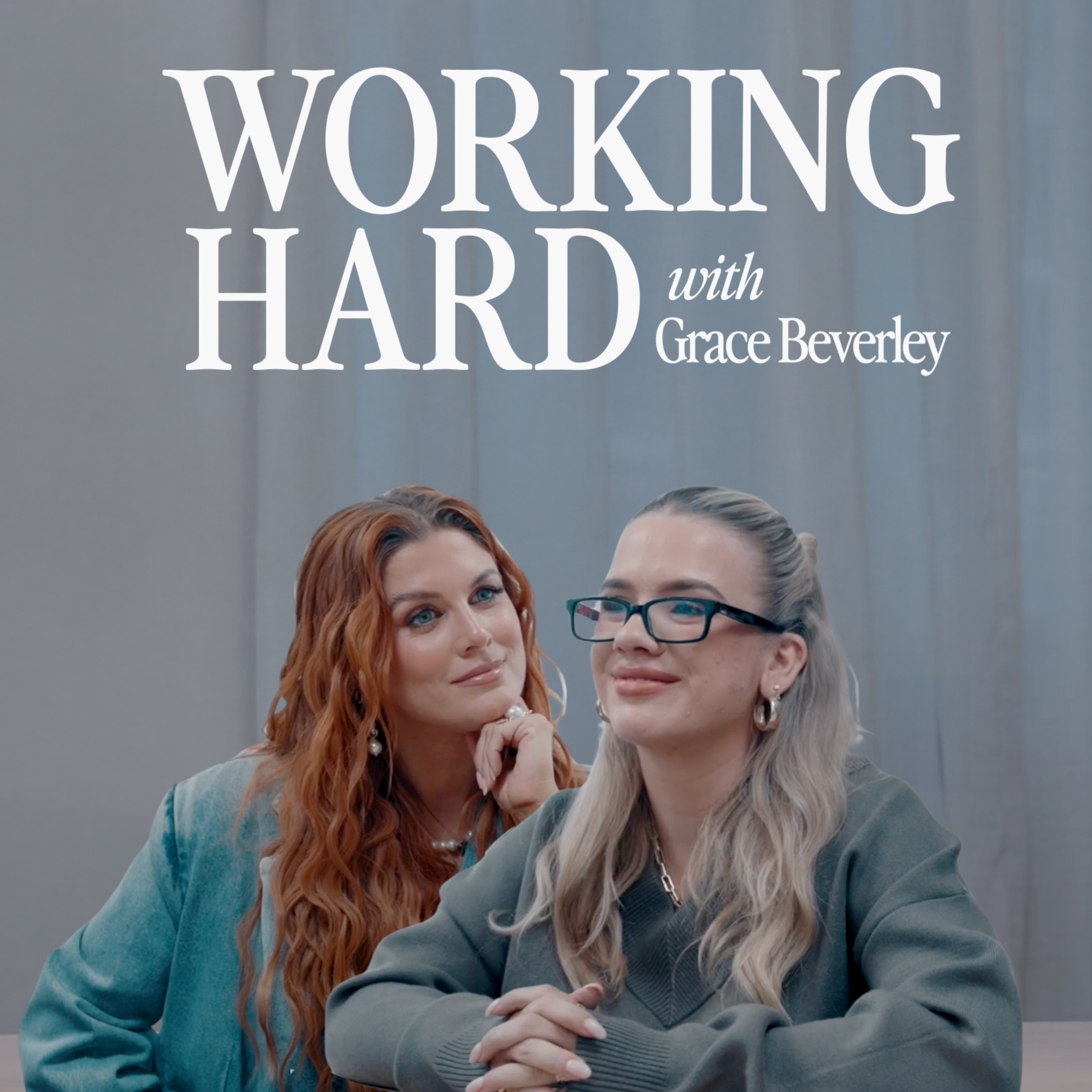
How labels, internalized misogyny, and “timelines” shape women’s identity in their 20s, and how to unpick them to build confidence, body acceptance, and fulfilling relationships in your 30s.
Ashley James is a broadcaster and writer; she’s a Sunday Times bestselling author, a DJ, and a mother of two young children (ages three and five). She describes her career starting after years of feeling “good girl” rules limited her.
School and patriarchy create double standards (e.g., “boys will be boys,” girls must adopt “masculine traits” to be taken seriously). In adulthood, conflicting expectations (be “sexy” vs “good”) can drive body dysmorphia and people-pleasing. “Running out of time” narratives (marriage, house, baby by 30) are arbitrary and can trap people in wrong choices. Singlehood isn’t failure; relationship status shouldn’t define worth. Body confidence improves when shifting from diet culture to health, strength, and freedom from restriction.
Teenage “pick-me” behavior; hypersexualization of her body; a breakup at 27 triggering “failure” fears; solo travel at 30 changing her perspective; reclaiming “spinster” as historically financially independent; raising kids without gendered policing (e.g., nail polish, dolls/prams); rejecting “bounce back” pressure after pregnancy.
Written by AI. May contain mistakes.
Ashley James shares her experiences with labels and expectations.
“It feels like work in terms of the output, but I feel like I love it.”
Discussion on gender double standards experienced in school.
“And it took me a long time, I think, to find myself and to break free of that sort of like beauty or brains or the need to be taken seriously and knowing that you can be taken seriously no matter what route you choose.”
Exploration of internalized misogyny and its effects on women.
“if even if it'd been rightfully theirs or whatever it might be.”
Ashley discusses the contradictions and challenges of motherhood.
“I'm not going to be negative like all the other mums, or I don't want mum friends because I won't only talk about my child because I'm not a loser.”
Ashley reflects on how labels evolve as we transition into adulthood.
Discover how societal labels and expectations shape personal identity in your 20s.
“I want to go back to kind of your 20s and like the start of you realizing these labels at school.”
Explore how societal timelines create pressure and feelings of failure, especially for women.
Learn about the importance of embracing singlehood and investing in friendships.
Understand the evolving definitions of happiness and success throughout life stages.
Delve into the historical context of the term 'spinster' and its implications.
“Spelled B-A-B-B-E-L dot com slash acast.”
Explore the historical context of terms like 'spinster' and their impact on women's choices.
“So they had so much freedom that other people didn't have.”
Discussing how societal timelines affect personal choices and happiness.
“How do you stop that from running your life?”
Reflecting on the impact of relationships and the importance of personal fulfillment.
Examining societal judgments regarding singlehood and relationships.
Discussing the shift in confidence from childhood to adulthood and its effects.
Strategies for promoting individuality and confidence in children.
Explore the evolving perception of body image and the toll of diet culture.
Discuss the challenges of postpartum body expectations and personal acceptance.
Learn practical methods to improve self-confidence and self-perception.
“a patriarchal view or whatever it is and so it's just slowly over time being your own friend yeah Yeah.”
Consider the value of advice from those you respect and admire.

Get the gist, explore an idea or ask about something said.
 Claude
On Working Hard with Grace Beverley, what are the key points of this episode?
Searching your listeningAutomatic transcript. May contain errors.
0:00Grace Beverley: Still waiting in line? Again? That's time you'll never get back. Save time and money with Stamps.com. Over 4 million businesses have skipped the line with Stamps.com. Join them to save up to 90 % off carrier rates from your computer or phone right now. Print postage for certified mail, registered mail, and packages in seconds. Then schedule a pickup right from your home or office. For a limited time, go to Stamps.com and use code PODCAST for a free welcome gift. Taxes and fees apply.
0:33Grace Beverley: If you've used Babbel, you would. Babbel's conversation-based technique teaches you useful words and phrases to get you speaking quickly about the things you actually talk about in the real world. With lessons handcrafted by over 200 language experts and voiced by real native speakers, Babbel is like having a private tutor in your pocket. Start speaking with Babbel today. Get up to 55 % off your Babbel subscription right now at babbel.com slash ACAST. Spelled B-A-B-B-E-L dot com slash ACAST. Rules and restrictions may apply. Here's a tip for you. There's a podcast out there with fans waiting to be your next customer.
1:14Grace Beverley: They tune in every week. They trust the host. And that host wants to talk about brands like yours in their own words to their audience. The problem is you just haven't been introduced yet. We're Acast, where that introduction happens. As the world's largest podcast marketplace, we let you browse shows, see who's listening, and book host-read sponsorships or run your own ads all from one platform. Transparent pricing, real-time data, complete control. Start advertising on podcasts by visiting acast.com slash advertise.
2:03Grace Beverley: what is up i'm grace beverly and welcome back to working hard the podcast shape guidebook on how to improve your own life and achieve what you actually dreamed of doing because life's too short for boring podcasts and bad advice what is up and welcome back to working hard today's episode is one that i have been excited to record for a long while now i was speaking to my friends the other day and we all agreed that there is this kind of moment and I think most women will recognize it where you suddenly start to realize just how many labels have been put on you throughout your entire life whether that is being bossy being a good girl being someone who's mumsy or a spinster and whatever it is and how easy it is to start living inside those labels without really questioning them and whether the same labels would ever be given to a man for example and I think the older I get, the more I noticed how much those kind of expectations shaped how we see ourselves and even what we allow ourselves to think or what we're allowed to think from an outside point of view.
3:01Grace Beverley: So today's episode is a bit of a big kind of honest conversation about all of that. I am joined by the broadcaster and writer Ashley James and we get into identity, confidence, motherhood and what it actually looks like to start unpicking some of those narratives and seeing them for what they actually are. We talk about shame, we talk about body image, speaking up and how your relationship with yourself evolves over time and I think if you're in a phase where you are questioning things a little bit or you are going through a big life change like me, this episode was designed for you so think of it as a bit of a guide to surviving your 20s and then thriving in your 30s.
3:37Grace Beverley: But before we get into it if you could just make sure that you are following the podcast on whatever app you are listening to it on that would be a huge help and it means that we can continue to keep the podcast all the bonus episodes and everything with it completely free for you so let's get into it
3:55Grace Beverley: Ashley James are you currently more working hard or hardly working? I'm currently working hard tell me about it the juggle is real you know I'm just I feel like I've been in the industry now for well since 2012 so whatever the maths is there a long time and I feel like it's a really exciting part of my career where I'm doing really exciting things obviously I've got a number one Sunday Times bestseller I'm on this morning I'm still DJing so I'm just like doing all of that and then parenting two very small kids who are now three and five and that's a really like beautiful pure period so it's hard work in work and motherhood yeah like trying to do both at the same time and show up as your full self to both yeah but it's you know what it's actually like It's hard work.
4:41It feels like work in terms of the output, but I feel like I love it. If I thought when I first left uni that I'd be doing this, I'd be delighted.
4:52Grace Beverley: Good. That's a good place to be. I feel like it's like you're doing the hard work, you feel challenged by it, but you also feel skilled, you know where it's going, it's something that you want to do. I feel like that's such an exciting place to be. And I'd love to speak all the way back to your first ever job. You speak a lot now about being labeled and being boxed in yeah when was it that you first I guess realized that labels were being put on you I think the first time I realized labels was holding me back or the first time I remember feeling like angry about labels was during my teenage years so I went to an all-boys school there were 37 girls and over 500 boys so yeah literally that that is the reaction that is the the reaction so that there is like real double standards between the boys and the girls but it was also enforced by the teachers so there was a real like boys will be boys attitude but also that if girls wanted to be taken seriously they had to almost like adopt very kind of what we call masculine traits in terms of like career ambition shunning fashion and makeup and things that were considered frivolous.
6:02So on top of that, there were all the like sexual double standards. So I think that was the first time I, even though I didn't get it, I felt like angry and frustrated that it felt like there was a different set of rules for girls and a different set of rules for boys. But that said, I was always super ambitious. So I think I always wanted to be like the good girl through the eyes of others. So, yeah, I think that's why it took me so long to get into the industry I'm in now because I didn't really think it was like a possible route. So I, you know, I worked really hard at A-levels than I did, you know, went to university and I always thought I'd kind of do the graduate scheme and then kind of whatever else.
6:39And it took me a long time, I think, to find myself and to break free of that sort of like beauty or brains or the need to be taken seriously and knowing that you can be taken seriously no matter what route you choose.
6:50Grace Beverley: It's so true, I think, that like what you kind of described in terms of the fact that when these labels are first put on you and you're first told well to be taken seriously you have to do this or you have to do more of this or you can't do that because of the patriarchy and the the reward system we do naturally become what would be known as pick meets like as in like it is a natural step because you're kind of trying to do the right thing you're like okay if this is the set of rules it might be annoying but this is the set of rules therefore if i'm the person who wants to have a high-powered job or if i'm the person who wants to get a boyfriend the natural next step is that you need to fit into those things, which I think is such a formative experience that so many of us have had throughout kind of teenage years.
7:30Grace Beverley: The system is so robust that it is natural that that's something that we almost need to go through and break out of. Yeah. And also like there's a chapter in my book called Something Like the Perfect Pick Me and I talk about this, but we are taught from such a young age and I'm seeing it now with my son who's only and is in reception at school this notion that like a girl is bad and it affects boys and girls because obviously in the case of my son he is learning that anything like a girl is less than and he's being teased for liking girl things but then on us it's like we don't want to be like girls because that's less than which is why we end up saying things like I'm not like other girls or why like even thinking back to early dating if somebody was like yeah my ex is a psycho I'd be like thank god because then it makes me feel like I'm safe then because she's so it's almost like it feeds into that narrative that I'm like okay well she must be a psycho and whereas now I'd see it as like a major red flag that someone would describe somebody that way because obviously there's so much history which I also talk about in the book around like the crazy woman and the like term hysterical and how like it's only really a hundred years ago that women weren't institutionalized at their husband's or father's word.
8:48Grace Beverley: Yeah. Any trial. No, absolutely. And all of this like bleeds through to where we are now in ways that I think so many, particularly like newer generations, we feel like we are so far from the life that they used to be. So like women not being able to buy a house or have a credit card or keep any of their wealth if they didn't have a husband, if even if it'd been rightfully theirs or whatever it might be. I think we think we're so far from that it's so recent that it is impossible that it would not have knock-on impacts and we know the real life impacts now but I think that like what I'm loving seeing coming through is more of that recognition of like guys we're actually we're kind of only just over the you know step and actually if you're not careful as we've seen in recent years things like Roe v Wade over being overturned like all of these different things it's very easy to get back there like it's very easy even just using the wrong language or using kind of we're seeing at the moment with the rise of the manosphere that i feel like a lot of the things i experienced in school it felt like things got better whereas now i speak to so many teachers and it feels like we've come back again where the attitudes are not only maybe as sexist but also the threat is more severe because this generation of school kids have a manosphere on literally in their fingertips but also have access to things like violent porn which when we were growing up it wasn't like that because I mean you still had to get it from the top shelf of a magazine like a newsagent so it is it's really scary but also what I found is this idea that you know we adopt so much internalized misogyny and we spend basically our whole lives unpicking it and I realized in my 20s I towards my late 20s is when I started to think I'm a feminist because before then I was like I don't identify with feminism yeah exactly like oh my I'm not a man-hater.
10:38And then when I started to really like to learn that it was obviously about equality and how much we're still not equal, it was only really when I became a mum that I realised how much internalised misogyny I had about motherhood. Because I remember saying things like, I'm not going to be negative like all the other mums, or I don't want mum friends because I won't only talk about my child because I'm not a loser. And then when I was on the other side of it and I was like, I don't have anything to talk about at the moment because it's like my whole life but also like why do we think it's acceptable like you could talk about a guy you've just met relentlessly but you can't talk about the thing you made yeah no 100 %
11:16Grace Beverley: I actually I'm so glad you brought that up because I've actually been having some like I've been having some troubled thoughts because I did a I did a post that was explaining the contradictions of motherhood and like particularly like motherhood perception online and even just like women's perception online when it's like well you should have a child to contribute to society in any way or to be a worthy woman and then but then if you do have a child like these are all the different things you're measured by and then like so many of the comments were like and it's always by women and it's always from women and like I do agree that there is absolutely a lot of internalized misogyny that a lot of people hold and is from women to women at the same time I don't think we can say it's always from women when it stems from the patriarchy because like absolutely yes like a lot of this shaming is coming from other women or other mothers or whatever it might be but like I really don't want to like stamp that label of like the amount of people in my dms being like yeah the mums are terrible like all of this and I'm like oh but I think that maybe gets us into the same place where we are what that I'm literally talking about is like yes there must be loads of judgment and yes I can see that and yes I can see the like just you waits and that you're doing it wrongs and like the all of that at the same time all of this stems from a system in which the patriarchy is the way things are run and therefore but we believe that there is only like space for so many of us that there is only one right way to do things that we have certain roles and like that all of these different things it's like I also don't agree with that yeah and I guess like with a patriarchy what people forget is of course women can uphold patriarchy because they are adapting survival modes and then like you say it's like there is no right way to do womanhood in the eyes of the patriarchy because it's like you know the comments that we'll all get I remember when I went back to work after five days with my kids and I feel really fortunate that I was able to obviously have them with me and I take them to like tv sets um Alf was born in lockdown so that wasn't possible but he was like obviously always in the background on the zoom calls and then with Ada she came to ministry of sound with me when I had a DJ gig and she had her ear defenders on she came to Steph's Pat lunch up in Leeds and she was looked after whilst I was on the show but there was this real kind of pushback on what's the point of having kids if someone else is going to look after them for you but that's a comment that's never put on a dad yeah and then even you know this idea of like a working mum as if a mum that chooses to stay at home doesn't work even though most people would say that going to work is easier than being at home because you don't get a break from that sort of like overstimulation and so there's so many impossible categories that a woman has to fit into because even when women say they don't want children it's like they're selfish but then if you have children but you try to exist outside of the acceptable parameters of why would you want to go away on your own that's selfish but if you stay at home you've given up your life and that's not what we fought for and like blah blah it's impossible it is impossible and I think that you know some of the comments that I really did agree with were people being like um yeah and actually the more you say this this is why you You should just do what feels right and know that you're never going to get it right in other people's eyes, but you can get it right in your eyes.
14:25Grace Beverley: I do. I mean, I fundamentally stand by that. I want to go back to kind of your 20s and like the start of you realizing these labels at school. How do you feel like those labels started to kind of carry over into your 20s? I think when I was 25, I quit my job at the time because I really wanted to get into this industry. and I remember thinking even if I just try at least I won't regret it um and it was almost like all the rules that I was given at school about dress a certain way leave something to the imagination pick brains over beauty um leave some like just all of those things suddenly when I entered the sort of like celebrity world it was like the opposite so I was being told you know like be sexy and it was kind of the era of like FHM mags and you know I didn't do the FHM mag but But I was suddenly like, wait, but that is so conflicting to the good girl that I was taught to be.
15:24And I think that's when I started questioning a lot of the labels. But also something for me that I have really struggled with and I still do to an extent is like the hyper sexualization of the female body because I've always had big boobs. And I feel like I've always been very like judged and police. So, you know, at school it would be like cover up. And then suddenly in the celebrity world, it was like, be more sexy. Yeah, if you want to make it. be sexy and I kind of got to a point in my late 20s where I had really bad body dysmorphia I was living in my overdraft like I felt like it was very like smoke and mirrors of success but I didn't feel successful but lots of people around me were successful and I didn't know who I wanted to be because I didn't feel comfortable or like myself being this like really sexy person but then I thought but I need to be like that if I want to be successful and it was I think I just got to a point where I was like I can't live by other people's rules anymore and I was such a people pleaser and I feel like so many of us are and I felt like no matter how hard I tried to get people to like me or to live by certain rules people didn't like me anyway and I think I just got to a point where I was like I feel like I just need to be myself and figure out what I want because people are going to dislike me and what I do no matter what I do.
16:41So I may as well be liked by the people for myself, if that makes any sense. Yeah, no, that makes total sense.
16:47Grace Beverley: And do you feel like that was a change that happened more in your 30s or did it start to happen in your 20s? No, I think the real point for me was when I was 27, I went through a breakup. It was the first guy I'd lived with. It wasn't actually a very long relationship, but when it ended, it was really hurtful because a he was the only person I'd lived with but also I think that invisible timeline that so many of us have um again because as we mentioned earlier even though we have evolved so much in terms of like laws and freedoms that women now have and even though we don't exist in a time where we literally had to get married for survival and social status and financial protection a lot of the expectations haven't actually evolved that much so we still think I'm running out of time if I'm not married and have a house and a baby by 30 I've left it too late or I'm left on the shelf or I won't be chosen maybe I need to stop being so picky maybe I need to settle you know all this language that like is still very commonly used so at 27 when I went through this breakup I was suddenly like engulfed with the idea of failure and being left behind and lots of my friends who'd stayed in their stable jobs were getting promotions and buying houses and then um you know lots of people were having engagement parties and getting married and i just felt like really upset and for three years between 27 and 30 i felt like a failure because i was like i don't understand why no one wants me and it was really weird because also at the time i was like every week i was like gq's woman of the week amongst other women and i remember they did this article of like how to date ashley james and i remember being like hopefully someone will see that and date me then there's one person in their entire readership yeah fingers crossed it works out but it was this weird thing that I was like from the outside everyone it's like how today actually like it was so hard but then I was like there must be something wrong deep down with me then because if I am good looking on the outside that I'm GQ's woman of the week and then people still don't want me like I must have something fundamentally wrong with me and it it It was only really when I turned 30, I had such a breakdown in the run up to being 30 because I just felt an enormous sense of failure, not just from my relationship, but also because my career hadn't got to where I wanted.
19:03And I was still in my overdraft. I remember like living in a flat and the walls were crumbling and I was just like, what am I doing? And everyone around me was like, you can give up, you can go back to a normal job. But I knew that I just needed to keep going. And that's when I actually went away by myself. It was like my first solo traveling experience. and that just completely changed everything for me because I think before I'd say things like I have so much love and no one to give it to and like there must be something wrong with me or like I don't know even like slight victim around it of like why hasn't it worked out for me and I think stepping out of the timeline and the expectations I was like my goodness there's so much world out there and I can put so much love into like hobbies and interests and then suddenly I started investing in like female friendship which I feel like I'd overlooked before because I almost saw it as like well hang out with your friends but obviously your best friend should be the partner and I think my female friendships really started to improve and evolve when I started to properly invest in them and not kind of see them as like a temporary stopgap until I found a boyfriend and then I actually started to go so much the other way that I was like why do people keep pitying me that I'm still single I feel like I'm living a really great and fulfilling life and I think now that's why I talk so much about timelines and labels and that idea of running out of time because ultimately I think when you're living a happy and fulfilled life and when you have single joy which isn't the same as like saying I never want a relationship it's kind of saying like until that happens I'm going to make the most of this chapter.
20:37You're still
20:37Grace Beverley: going to have a nice time like I'm still going to live my life my life is still worth living when I'm not remembering that it's not a race like a lot of your friends and it's happened to me that a lot of my friends who did meet really young some of them are going through breakups and that might have been their choice because they chose their own happiness and it wasn't making them happy or it might have not been their choice at all whether it was you know their partner's choice or some other life event happened so I think there's no point comparing your timelines and actually one of my friends has just had a baby at 44 so I think this very narrow idea that we have to have achieved everything we want between 27 and 30 I remember turning 30 thinking like I remember thinking I'm too young to be this old and I thought my career would be over because I was like well if I haven't ever achieved everything by 30 obviously no one's gonna want an old woman because I adopted did so much internalized misogyny and like ageism around what like the fact that women in their 30s were old and had no fun anymore and it's just been like the best decade and I do think me and all my friends are so much hotter than we were in our 20s so it's a lie so many of our timelines are these arbitrary imaginary kind of ideas that we have in our heads when in reality so much can happen for you in a few short years as long as you are aligned with the type of life that you want to be living or you're actually working towards the things that you say you want to work towards or whatever it might be this paralysis of the approach of 30 or whatever milestone it might be that you feel terrified about actually just holds you back so much from doing the things that you should be doing and should be enjoying um and I just think that the more we can move away from these arbitrary timelines I feel like we're making it so much harder for ourselves and we've inherited these timelines we haven't given them to ourselves we haven't decided that's right for our life we have inherited them and just because you have in your head oh I don't want to be single at 30 okay so what you stick in a relationship that isn't good for you for 27 28 30 you get to 31 32 you've stuck with this person for five years purely because you didn't want to be single at 30 and then if that was your biggest problem and now you're single at 32 or 35 or like whatever not saying that's a big problem but if that was your biggest fear and like you can't edge something over the line when it's not right and I think that that time spent like truly doubling down on like what's going to make your life a good life like what's going to make it in line with the type of life you want to live I think is so much better a way of spending our time I mean it's so well said I have a chapter in my book called singlehood and I look at like almost like my the first time I start questioning the narratives of like the happy ever after and all the timelines and looking at where all the expectations come around like why is it that from the age of 15 I was dreaming about happy ever after as being like this prince that was going to come and save me and the white dress without even really like understanding is this something I want like or you know because now I'm obviously with my partner but we're not married and that's like my choice that I decided that I didn't want to get married and I just never really like considered things for myself and I always say now that for me happy ever after is about happiness for you as an individual and hopefully that means it will be with the same person or that it will be the thing that you wanted to achieve at 28 in your career that might be the same thing at 50 but more often than not especially in this day and age I feel like for our parents they kind of did the same job their entire lives and maybe that's because that was just like how it was done but these days who I was at 20 and what I thought made me happy at 20 is not the same as the things that would make me happy now and I always think that sometimes it's choosing happiness every day and that is the happy ever after that I know I'm always gonna serve myself and actually you know at the moment I'm working hard like so hard but I might get to a stage where I'm like what am I doing it all for if I'm not being every pickup and that might be like a chapter that I evolve into that when I was 20 I would never have been like I'm going to sacrifice anything for my children because you know of that kind of like you can have it all narrative or the idea of a woman's success only being a CEO whereas actually I've accepted that for loads of women it's to be able to have the privilege to stay at home and I don't know what I will be in five years time because even when I think to the person I was five years ago or like in the BC times of before COVID, I've changed so much.
25:18Grace Beverley: Yeah, no, absolutely. And I think you have to allow that evolution to happen as well because like this rigidity around what you expect of your life and your timeline and all of that, it actually entirely prevents the ability to even adapt to new things that you might like and like to new lives that you might want to live. And you have to stay open-minded to that. And the only way of staying open-minded to that is like constantly checking in and like rejecting these other things that have been imposed on that. Still waiting in line? Again? That's time you will never get back. Save time and money with Stamps.com.
25:56Over 4 million businesses have skipped the line with Stamps.com. Join them to save up to 90 % off carrier rates from your computer or phone right now. Print postage for certified mail, registered mail, and packages in seconds. then schedule a pickup right from your home or office. For a limited time, go to stamps.com and use code podcast for a free welcome gift. Taxes and fees apply.
26:16Grace Beverley: Parles-tu français? Hablas espanol? Parli italiano? If you've used Babbel, you would. Babbel's conversation-based technique teaches you useful words and phrases to get you speaking quickly about the things you actually talk about in the real world. With lessons handcrafted by over 200 language experts and voiced by real native speakers, Babbel is like having a private tutor in your pocket. Start speaking with Babbel today. Get up to 55 % off your Babbel subscription right now at babbel.com slash acast. Spelled B-A-B-B-E-L dot com slash acast. Rules and restrictions may apply. I'm here on the job site with Dale, who's a framing contractor.
26:59Hey, good morning. Dale traded up to Geico Commercial Auto Insurance for all his business vehicles. We're here where he needs us most. Yep, they sure are. We make it easy for him to save on all his insurance needs, all in one place, with coverage that fits his business and bottom line. Oh, I shouldn't have looked down. It's all right. We're so far up here.
27:17Grace Beverley: Look at me. Take a deep breath. No, I'm good. So good. Get a commercial auto insurance quote today at Geico.com and see how much you could save. It feels good to Geico. I also loved the part in your book where you talked about, like, reclaiming the idea of a spinster. Yeah. Can you explain that a little bit for us for the podcast? Yeah, so I feel like a spinster is one of those other labels that's almost been used as a warning to what a woman is if she gets older past 30 and doesn't find a man. And I remember being at school joking with friends, being like, if we're not married by the time we're 30, should we get married?
27:56As if being with a platonic friend that you've got no love or sexual desire for or emotional intimacy on any big level would be better than being by yourself. So as I started to unpick a lot of these labels and where they come from, I realized that a spinster, where they were basically women who spun wool and they were one of the only women of the time who were financially independent. So they had so much freedom that other people didn't have. And obviously that term was weaponized because I think the patriarchy needs us to fear not having a man or not having male approval. So so much of the language, like, you know, spinsters often also had cats because cats were cheaper than dogs so the idea of being a crazy cat lady stems from like that similar time period and then obviously when you look at um the witches who were burnt at the stake a lot of them were spinsters and they had cats and that was where the kind of like wholesale and witch trials idea of like the evil cat they thought they was like they were working together as like the devil and the spirit or whatever it was and so when i started to think more than mario yeah but it's like so funny because now i feel like so many of us are like that actually sounds like a really lovely life like oh a hundred percent i'll what i'll live in
29:19Grace Beverley: a beautiful house by myself it's like you had to make us scared of that so we would feel like we would need to settle for anything that wasn't good enough like isn't you had to make that vision so scary for us that we settle and it was the same with the idea of like feminists during the suffragette period you know it was like this depiction of these women who were like ugly and old and because it's like well I don't want to be like that because our whole world is we're kind of taught that the male gaze and male approval and male validation is the most important thing so it was kind of almost turning women against their own interests because they were like well I don't want to be perceived as ugly and old and alone and that timeline we talked about in terms of like getting a mortgage, getting into a relationship, having children, getting married, like whatever it might be.
30:09Grace Beverley: How do you stop that from running your life? Because obviously you kind of broke out of that. And I think that so many people listening to this will feel like their only option is to be worried about that timeline, because if they're not worried about it, they're not doing anything about it. And especially high achieving women and a lot of people who listen to this podcast will be like, well, I saw everything else out in my life in terms of like how I aim for this that and the other like surely I need to just make that work somehow even if it's not right to tick off the timeline like how do you actually get out of that running your life I think it's just like understanding why we feel like that and unpicking it and hopefully that's what my book does in that kind of singlehood journey that I went on it was kind of learning like okay why do we fear crazy cat ladies okay because of all of this history why do we fear being the crazy ex-girlfriend oh okay because there's like this long-standing history that was even considered a medical term during the victorian times of where women were literally institutionalized or had their clitoris removed or their ovaries removed and what i think once you start to understand it even like today it's like the weaponization of the term woke is exactly the same as the weaponization of the term feminist or the weaponization of the term spinster like it it's trying to make you almost stay in line and and i think once you start to unpick it all that I speak a lot about how I chose not to get married and people will often say oh so you're anti-marriage and I say no I'm actually not at all I love like if my friends want to get married I'll be there and I'll love that for them because that's what makes them happy so what I'm anti is telling girls that that's what success looks like without them really having to question the history of marriage or you know what marriage actually means for example I've got friends who had children and gave up jobs all went down to part-time and then if their husband left them or he met someone else only the institution of marriage can protect them because obviously her earning potential has been decimated so actually there's like i mean it's not a very romantic case for marriage but it's a very practical like secure reason to get married and i think if we were just i think the kind of happy ever after fairy tale doesn't serve us it's not to say that you can't fall in love and have children but it's like maybe we just need to like think about it more so actually we can make the build a life yeah that serves us because so many I was actually speaking about it with my friends so many of us were saying like even though like some of us are going through like breakups some of us have gone through breakups some of us love our partners we all collectively said I wish we just hadn't wasted our whole like youth waiting for this I honestly think that all the time because I think that like I I can't sit here and say like oh I'm not worried about a timeline when I've done certain things on a timeline that might have been the things aimed for I absolutely had a timeline and I'm very I feel very lucky that I coincidentally seem to meet the right person on that timeline at the same time I wish I could go back and like shake myself the myself that was like getting out of a relationship and completely freaking out even though I would never have married that well I should never have married that person like as in they never would have been right for me we never would have built the life we wanted together I would have compromised every single thing about the life I want just to be picked and like I look back and I'm like I think that there would have been so much space for me just to be able to have like a great time with my friends building female friendships like something I believe so strongly in and have put so much time and effort into particularly like beyond marriage which I think is a whole other question because I think that some people seem always surprised that I'm like still taking girls trips or still going this place or still doing this and because I'm married and pregnant and like all of those things and it's like ah but I do just think that like I wish I could just go back and shake myself and be like worrying about it is not going to speed it up first of all so if that's what you're concerned about and you're just as likely to meet someone on a girl's trip exactly just actually spend the time enjoying your life and building a life that makes you happy if someone fits in that fantastic but it's more likely you're going to find the right person if they fit into your actual dream life rather than you building your dream life around the person that you happen to meet at the right time it's not worth it I think women also are like their relationship status is judged so much more than a man's because like even you know a term like he's an eligible bachelor as opposed to like a spinster or a crazy cat lady where and I definitely found when I was in my single joy period which was 30 to 33 a lot of other people around me were like are you still single or do you want me to set you up with and every time I went to like a wedding I'd always been like the creepy single table and I was like oh I see what they've done here they've tried to like put me next to someone that they think that I might date and I was like why can't people just like not think that a woman's only purpose is to be in a relationship because actually I'm sure we know tons of people who are happy in a relationship but also tons of people who feel really lonely in a relationship so I feel like we need to deconstruct this idea that like single equals lonely and relationship equals happy because then it I think it would allow us and empower us to make better choices to not feel like you have to settle and end up in the wrong relationship and also to be brave enough to leave the wrong relationship knowing that single does not equate to failure.
35:26Grace Beverley: Yeah no I absolutely agree with that and I'd like to come to speak a little bit too about confidence because I feel like I think a lot about the fact that little girls seem to be really confident and there is a point at which that seems to just be sucked out of us like if you are going to make it or you're going to get somewhere or whatever like your confidence has to be shrunk because I think we talk about like particularly women in their 20s as like imposter syndrome and needing to build up confidence and all of that I look at like young girls and I'm like no you're so confident you're so you know who you are like you're so excited about these things where do you think that shift happens do you know what this was the whole inspiration behind my book that I was looking my little girl is called Ada she's three now but when she was two she was looking at herself in the mirror you know how like puppies do and it was honestly like she was like zooming in on her face and looking at her tongue and looking at her belly and she just like had like so much love and wonder and like even in the car she asked to sit just rear-facing and I've got a mirror there so that mainly so I could see if she was napping or not but she just looks at herself in the mirror and I'm like oh wow yeah but that would have been you and it would have been me and it's like so what does happen that we get to like our teens or our 20s and then we no longer love our reflection we've been taught to actually look zoom in on all these like perceived flaws and same with her personality like she is so confident and like that girl can say no like she has the best boundaries and I think of like my life and I'd say that it was really in my 30s and late 20s that I start to really work on boundaries and not being liked and being able to say no and I was like wow all that therapy and self-development and I had it I had it as a child like that Ada is literally the person that we spend the rest of our lives trying to be and I really notice with language and labels how young it starts so when I had my son everyone was like he's going to be a heartbreaker whereas with Aja it's like oh you have to be careful with her she's going to be trouble you're going to have to lock her up not going to let her date till she's 30 and it's like so already we're using like quite oppressive language and then um you know at the moment like bossy is a term that's used on her a lot and it's like but Alfie has never been called bossy even though he will have the same meltdowns and have the same like assertion of boundaries but it's kind of like oh future ceo or like he's going to be a leader so i think when you're called bossy and i have memories of being called bossy it does kind of make you think okay i shouldn't speak up or i because nobody wants to be told off and nobody wants to be othered or you want to be a good girl and obviously as you go through your teenage years those labels kind of amplify because you have like tarty slut prude beauty and brains and all of these things you're you're almost being taught which like line to stay in and it can feel quite impossible as you navigate it all and then obviously there's like diet culture beauty standards I remember like my mum and her friends always commenting on like the food that I ate being like oh wow enjoy it while you can because when you get to our age it'll stick on your hips and I remember turning 25 being like I wonder if I'm going to get to that age now where it's going to stick on my hips and so you're kind of like absorbing all of this insecurity I guess so I think that's why so many of us spend our 20s and also we adopt the idea that we're not whole on our own that we need another half to be complete so we're kind of walking a walking floor that doesn't really know who they are because they haven't been allowed to figure it out they've just kind of been boxed in to be a good woman and just as an entirely selfish question as someone who is having a girl is there a way that you're raising her that you feel like is trying to fight those things specifically i think um i just let them both of my children because i see it with alph as well like he's been teased at the moment for liking girl things and i just i let them tell me who they are and i try not to prescribe them anything and you know alph and i will have chats about it if it's like mommy only girls wear nail varnish and I mean Harry Star I always pull out Harry Styles because he loves Harry Styles and I'm like I know that there'll be a picture of Harry Styles and nail varnish or I know that'll be and it's just like being like oh do you think so I've seen loads of guys that wear nail varnish or because I don't want him to adopt this attitude that being like a girl is less than and like of course they can be whoever they want to be but I also don't want to prescribe it for them so with Alf he had like dolls and push chairs and when he said on are there for girls I was like daddy daddy pushes a pram yeah he's not a girl yeah so I think it's just like and also hopefully they always know that they can tell me things because I'm not being judgmental so he said to me something about doing your hair is only for girls it just so happens that my hairstylist is called Michael and I was like is Michael a girl I mean obviously I can't protect them from the things they adopt from school or tv but hopefully I'll just always be able to talk about it with them and I'll never like make comments to Ada about how she has to cover up or because I think so many well-intentioned people do it with daughters and I remember as a teenager being told like leave something to the imagination or almost like putting the onus on me stop imagining me yeah but also as if like I could keep myself safe if I just dress in a different way whereas actually we know statistically that's not true but yet we still do it yeah like the onus all the time and I speak really openly in the book about I think I call the chapter silly girl about my experiences of sexual assault but I did blame myself because I didn't I didn't follow the rules to keep myself safe but ultimately we know that it's still not my fault and so I kind of really tried to speak to that so I think yeah I know that I can never protect them from society's messaging but in my house they'll always be safe and I'll also I'm mindful that I'll never speak badly about my own body or about other women's bodies or anyone's bodies around the house.
41:35Grace Beverley: Parles-tu français? Hablas espagnol? Parli italiano? If you've used Babbel, you would. Babbel's conversation-based technique teaches you useful words and phrases to get you speaking quickly about the things you actually talk about in the real world. With lessons handcrafted by over 200 language experts and voiced by real native speakers babble is like having a private tutor in your pocket start speaking with babble today get up to 55 off your babble subscription right now at babble.com slash a cast spelled b a b b e l dot com slash a cast rules and restrictions may apply i loved your kind of take in the book about body confidence and everything how have you thought about that over time like how has that changed as someone who was pushed to look a certain way and dress a certain way or whatever when you were trying to start out at the industry you're in now versus someone who's kind of I guess grown into themselves I feel really lucky that at school I did I didn't have body image issues I didn't like having big boobs and I didn't like the kind of judgment and sexualization that came with that but I didn't ever have worries about food or like needing to shrink myself but I think at university a lot of the conversation was around diets and so that started you know I started to see like exercise as something to do as punishment for eating as opposed to like at school where it was just like playing sport and so then when I entered the industry I very much felt like part of success was having this perfect body and of course the thing is with perfection it's unachievable so the more you focus on an ideal the more you criticize yourself because you're looking at yourself as like this zoomed in character and I remember having Emily I can never say her surname but Emily Ratajowski's body on my throne screensaver almost as like a warning to myself and a constant reminder that if you want that body you shouldn't eat these foods or you should like punish yourself in the gym every day um so it wasn't really like about health it wasn't about nourishment it wasn't about strength and then I developed really bad body dysmorphia which was where like no matter how I looked or what I wore I always felt like I was grotesque and that was really difficult to navigate whilst also being in the press because I'd see comments about myself and I'd internalize it all because ultimately I needed external validation I needed people to be like you do look amazing like you are amazing so if it took one comment of someone saying how big I look that would like destroy my whole entire world and I think I started to realize that actually when I got to the smallest version of myself I wasn't happy I wasn't healthy I wasn't loved I wasn't being picked by the opposite sex so it almost made me realize oh like I'm I'm I thought this would give me happiness give me confidence give me a sense of worth and actually I'm unhappier than ever so I think I just slowly started to unpick a lot of the messaging around diet culture and the beauty industry and this idea that a woman needs to be her smallest version to be respected and then having children I think it just gave me this total adoration and respect for my body that I was like wow like I worried so much about ruining my body but it's literally just grown a human and an extra organ and now I'm breastfeeding and like we should literally be carried around and fed grapes and given whatever we want but instead we're like painted as this like grotesque or while she's ruined her body now not bounce back all of those yeah and also because I had a lot of postpartum like health issues this bounce back culture really pissed me off because I was like I don't want to I don't care about bouncing back I care about my body working again I want to bounce back in and I want to like I want to be strong and I want to be healthy and like and I also saw it with my friends who did lose the baby weight another grotesque term I find that they were also being judged because it was like oh well you're not a good role model you're we're responsible and it's like what are we doing like what we are literally like still telling women what is an acceptable way to look and actually you can't win and now I think that the noise around shrinking ourself is louder than ever I just keep like saying to myself like I'm so much happier when I have when I live a life free of restriction and when I choose exercise that I enjoy doing because it's nice to move my body instead of because I need to shrink myself and it didn't make me happier and actually what it did was rob me of time and energy to focus on all the other amazing things in my life and you know sometimes it's like those cliche things of like well when I'm on my deathbed I'm not going to be like thank god I got back into my pre-baby jeans yeah two weeks after giving birth or thank goodness I stayed a size eight throughout my whole 20s like and no one's going to stand up at our funeral and be like we loved her so much she never ate carbs so like when you put it all in perspective and also I guess now I just never want my son and my daughter to think that they would ever have to change shrink and restrict themselves so it's it starts with me yeah no I think that's really powerful and I think that it is sometimes those like cliches that you're like yeah yeah it kind of like it does work like and it makes total sense like when I see friends torn up over like how they're looking or how small they are or how big they are or like whatever it might be it's like genuinely how you look is the least interesting thing about you it's so so tough particularly now particularly with social media I would love to know because I think all of these things are easy to hear about I think that some people might listen and be like okay yeah of course what do I do yeah exactly exactly yeah I think that's the thing like I used to think that it was like this journey of like well how can I love my body because I don't love my body so how can I love my body and actually I think it's like now my attitude is much more neutral that I can look at whether it's my tummy or my boobs or whatever and be like my boobs are a perfect example because there's so much slut shaming that even now in my late 30s I still feel like the comments around my boobs have been the same whether I've been breastfeeding whether I was a 14 year old it's almost like cover up and if you want to be taken seriously hide your boobs away because they are sexual and therefore bad and it's like okay I might not love my boobs but can I climb a mountain can I hug my children can I live my life so when I I don't it's not like I never ever think oh my goodness would I be happier if I like lost loads of weight but I almost have to be like I don't do this anymore and I try to treat myself like a friend so I'll be like why do you care about that or like don't worry about that like so I'm constantly having the conversation with myself in my head as I would a friend so it's like stopping negative thoughts and I think at first that's really difficult to do but the more you do it the more you kind of learn to stop those thought patterns yeah and it's just like you know same as like our natural judgment on other women I always like stop that thought and think like we don't think like that anymore that's actually a patriarchal view or whatever it is and so it's just slowly over time being your own friend yeah Yeah.
49:04Grace Beverley: And same thing about, I guess, general confidence, because I think that it's, again, easy to see in hindsight how some people have built confidence, but actually like the practical steps to genuinely building confidence in a world where maybe you don't fit in the way that you thought you would, or you don't feel as happy about X, Y, Z. What would you say the biggest ways were that you enabled your confidence to shift from that 30s to 20s? because I think that so many people probably listen and hold these views like I always have this massive cognitive dissonance between like hearing that and be like yeah and I don't care how I look and then I will feel shit about something or I won't like how a photo looks or I won't like how I look in something or whatever it might be and I'll be like ah you know it still gets to me and that's annoying because now I'm anti-feminist so like all of these different things so what would you say are the most practical steps you've taken to really increase that confidence or that difference between 30s and 20s.
50:00Yeah, I remember in my probably mid late 20s, googling how to be confident. And it really did feel like I was like, I can't almost like continue feeling the way that I feel. And so I'd love to say that it was like this one thing that I read or one thing that I did that I was like, oh, now I'm confident but I think it's just a very slow step of hanging out with people that like you and see your worth so that you're not feeling like you have to pretend to be a certain way it's learning boundaries so that you're not giving too much of yourself to people who don't deserve it and doing also like listening to what you want so whether that's hanging out more with people less with people being at home or like only you know what you need in those periods and you have to like listen to yourself and start listening to your own intuition and your gut and then it's like deconstructing all the messaging that you're receiving whether it's things we've talked about around like our relationship status and that feeling of running out of time whether it's that you know what success looks like you know maybe it is that you actually just really are in the wrong industry and that's what you thought you wanted to do at 18 but actually now you realize it's making you miserable and so it's whether it's like starting a site like a second job or setting off a hobby that you hope might become your main thing it's like listening to that intuition it's speaking kindly to yourself I remember I started this point system in my head where every day every morning I'd start on zero and if I was horrible about myself or someone else I'd go minus and then I'd have to like say something nice to someone and build it back up and I'd always try and end on zero and it sounds so silly but it took me such a long time because I was unhappy in myself I did find that I was like feeding off gossip and negativity and bitching because it made me feel better but it didn't really make me feel better it was almost just like trying to put other people down on my level it is those like little practical things that like
51:54Grace Beverley: enable you to like really check yourself I do the exact same if I'm like scrolling past something and I think something nasty I'm like now say three nice things about that person and same if it's like my friends when they're like you know they say something horrible about themselves I'm like okay three nice things. I think you'd be so surprised at how many people genuinely can't say three nice things about themselves at any one time. And it's like, how can you go through life making the right decision for yourself if you genuinely think so lowly of yourself that you could not at any time when someone asks you genuinely say three things that you like about yourself, anything about yourself.
52:26Grace Beverley: And I think that that's really like the crux of it. As you say, like, I love what you say about hanging out with people that like you, because I think that a lot of people would listen to this and be like oh okay yeah no that's one person who actually like does not make me feel good about myself because like I feel like I'm always on the back foot and it makes me feel uncool or like weird or like too much this or too much that and I think like that is really the difference it's like surround yourself with people who think about you the way you want to think about yourself and then make that happen like over and over and over again teach yourself what you like about yourself and I think it's not this thing of like oh my goodness I'm confident it's more that you look back like when I look back to who I was at 27 I'm like wow really did make some progress and also what you were saying about like feeling like a bad feminist if you have these like thoughts and feelings it's like I get Botox but I'm I also can objectively say that like aging like the ageism is part of like this misogynistic and kind of creepy expectation of women to look like their children and I can see all of that and be like yeah women should be allowed to age but then I'm like but I'm still problematic yeah and that's okay like you can acknowledge that like you would love to be body confident but you could still have moments where you're like but I think I would be happier if I was smaller but it's just like being kind to yourself in that process of like it's a journey I would love it if one day I'm like I I'm now gonna reject Botox I'm not there yet but I'm also aware that it's problematic so at least I'm self-aware but am I sort of feminist yeah absolutely because I don't want this I don't want this like that is just the way of the world and some people can not do it but it makes me feel better to do it and it maybe once I do more work on myself I won't get it anymore but I also won't judge other people surviving within the rules of the patriarchy but it's exactly this that also makes us like reject everything when you can't fit into the perfect box like as in you hear that all the time it's like oh I thought you were a feminist but you did this I thought you were this and you did this and it's like we are all going to be flawed and we are all going to have flawed approaches to things knowing how you feel and knowing that maybe there's a little bit of cognitive dissonance in the way that you I don't know as you've said get Botox do this do that like yeah fine like those things can all coexist and I think again it's another method of shame um for lack of perfection and realistically like you don't need to be a perfect anything we need lots of people being better versions of whatever it might be judging because it's easy to say for example suddenly i'm like i'm not gonna get botox anymore because actually we should age gracefully but then i would judge anyone else who chose to get any form of work done that doesn't make me a good feminist that makes me judgmental because i'll have things that i also i'm not good at so i think that's the reminder of like fight the system not each other yeah i really like that and before we end i'd love to know what the best piece of advice is that you've ever been given don't listen to advice from anyone that you wouldn't want to hang out with yeah i think that maybe that one's a better one than the like that you wouldn't want to trade lives with because i think that like you can have lots of advice from amazing people that they don't share the same dreams as you but it's like that mutual respect and kind of liking a person that that should make you want to take their advice i totally agree yeah and like you don't have to take anyone's advice especially when you're pregnant because i'm sure the noise is very loud it's like and also like choose your own happiness yeah i love that well thank you so much you've been fantastic
56:23Grace Beverley: If you've used Babbel, you would. Babbel's conversation-based technique teaches you useful words and phrases to get you speaking quickly about the things you actually talk about in the real world. With lessons handcrafted by over 200 language experts and voiced by real native speakers, Babbel is like having a private tutor in your pocket. Start speaking with Babbel today. Get up to 55 % off your Babbel subscription right now at babbel.com slash acast. Spelled B-A-B-B-E-L dot com slash acast. Rules and restrictions may apply. Still waiting in line? Again? That's time you'll never get back. Save time and money with Stamps.com.
57:07Grace Beverley: Over 4 million businesses have skipped the line with Stamps.com. Join them to save up to 90 % off carrier rates from your computer or phone right now. Print postage for certified mail, registered mail, and packages in seconds. Then schedule a pickup right from your home or office. For a limited time, go to stamps.com and use code podcast for a free welcome gift. Taxes and fees apply. Here's a tip for you. There's a podcast out there with fans waiting to be your next customer. They tune in every week. They trust the host. And that host wants to talk about brands like yours in their own words to their audience.
57:43Grace Beverley: The problem is, you just haven't been introduced yet. We're Acast, where that introduction happens. As the world's largest podcast marketplace, we let you browse shows, see who's listening, and book host-read sponsorships or run your own ads all from one platform. Transparent pricing, real-time data, complete control. Start advertising on podcasts by visiting a cast.com slash advertise.
I was so excited to record with Ashley James, I've loved her videos for ages, and I knew we'd get on like a house on fire. We talk about shame, body image, speaking up, and how your relationship with yourself evolves over time.
And I think if you’re in a phase where you’re questioning things a bit, you’re going through a big life change like me, or you’re trying to feel more confident, or just trying to understand yourself a bit better, there will be something in this episode for you.
So think of it as a bit of a guide to surviving your 20s, thriving in your 30s, and just generally learning how to live a bit more on your own terms.
I hope you love it!
+
ASHLEY JAMES
Her book, Bimbo: https://www.amazon.co.uk/Bimbo-Labels-Voice-Reclaim-Confidence-ebook/dp/B0FKSR3SRR
Instagram: https://www.instagram.com/ashleylouisejames/?hl=en-gb
TikTok: https://www.tiktok.com/@ashleyjames
+
SIGN UP TO THE WORKING HARD NEWSLETTER: https://graceb.myflodesk.com/k0sfhlac34
+
FOLLOW THE PODCAST
Instagram: https://www.instagram.com/workinghardpod/
TikTok: https://www.tiktok.com/@workinghardpodcast
+
DILEMMA SUBMISSION
If you'd like to submit any dilemmas to the podcast to be answered in the bonus episodes, please send them to [email protected] with the subject beginning DILEMMAS or DM us @workinghardpod on Instagram!
+
MY LINKS: https://gracebeverley.komi.io/
+
RETROGRADE, SHREDDY, TALA and THE PRODUCTIVITY METHOD are my own businesses, therefore any mention of them - whilst not being a sponsorship - is monetarily endorsed. As usual, sponsorships do not change my opinions nor my honesty, but I will always disclaim to make sure motives are clear 😊
Hosted on Acast. See acast.com/privacy for more information.