Ask ChatGPT
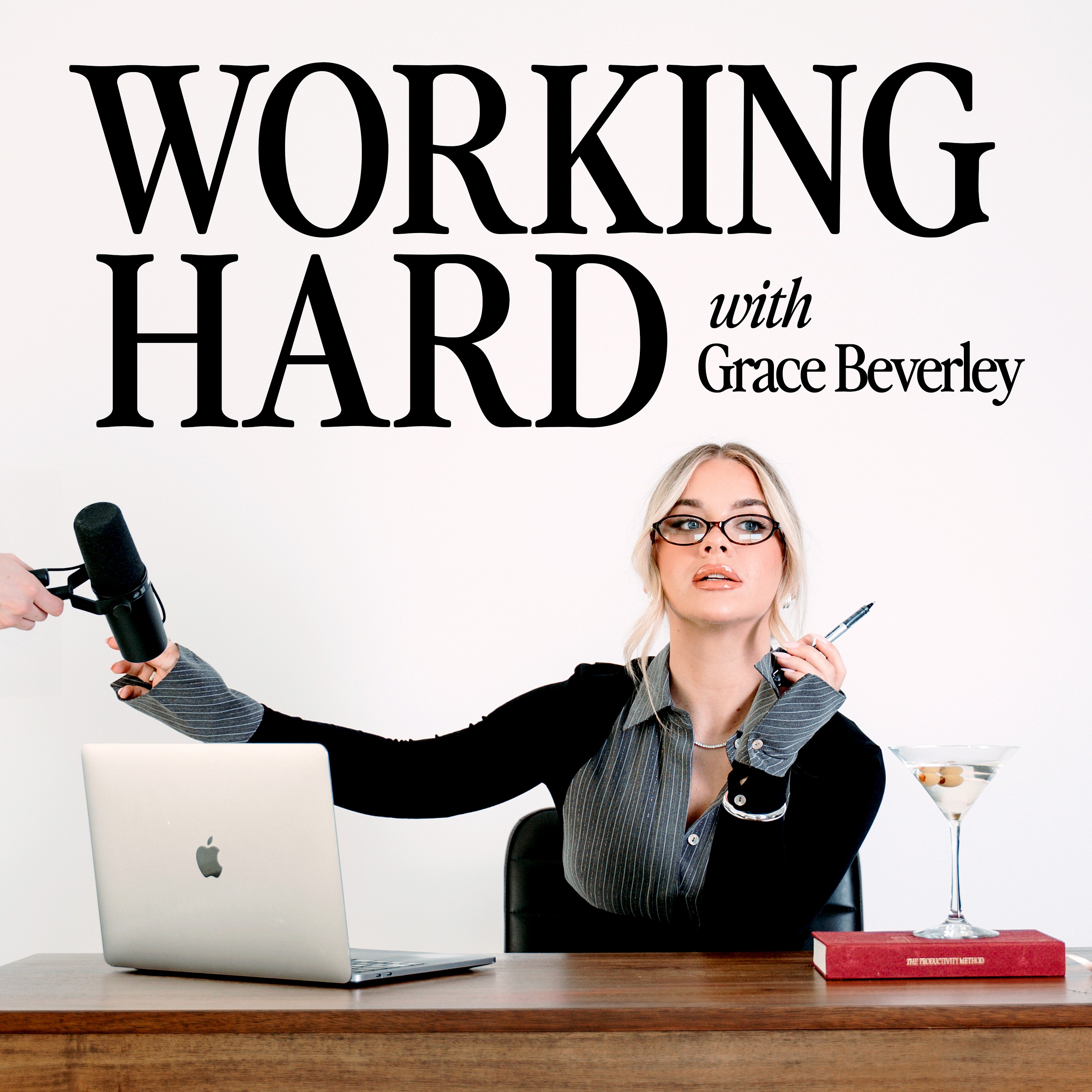
 Working Hard with Grace Beverley
29 Jan 2026 · 12m · 7 chapters
Description: Grace Beverley discusses the growing appeal of analogue habits in a digital age, exploring the concept of dopamine menus and how we can realistically embrace them for better mental health and fulfillment.
Written by AI. May contain mistakes.
Grace discusses the widespread desire for an analogue lifestyle and its implications.
“And I definitely think there's a sense that we're all overstimulated and quietly desperate to like touch some grass.”
Grace elaborates on dopamine menus and their connection to managing modern life's distractions.
“But anyway, we've talked many times on this podcast before about dopamine and reward.”
Exploration of how certain activities can enhance our mental state beyond screen time.
“When your life is lived largely through screens, that connection weakens and it's analog habits that restore it.”
Grace shares her process of creating a personalized dopamine menu to encourage analogue activities.
“The concept actually comes from ADHD coaching and it was developed by Eric Tibbers and Jessica McCabe as a way to support people when their brains slipped into autopilot.”
Practical examples of activities categorized as starters, mains, and desserts for a balanced dopamine menu.
“Like sometimes I even say to Amar, I'm like, can you help me get up from the sofa or could you confiscate my phone from me?”
Discussion on managing instant gratification and its impact on our mental health.
“Like things that are really not that hard, they're going to take under five minutes.”
Actionable tips for integrating the dopamine menu into daily life for better mental clarity.
“weird how our brains make us feel like so many of those things are not what you want to do when in reality you're going to feel so much better when you do that versus the scroll.”

Get the gist, explore an idea or ask about something said.
 Claude
On Working Hard with Grace Beverley, what are the key points of this episode?
Searching your listeningAutomatic transcript. May contain errors.
0:11What is up? I'm Grace Beverley and welcome back to Working Hard. the podcast-shaped guidebook on how to improve your own life and achieve what you actually dreamed of doing, because life's too short for boring podcasts and bad advice.
0:25What is up, guys, and welcome back to Working Hard. It is another Thursday bonus episode, and today I want to talk about something I've been thinking about a lot recently, which is like the collective craving for an analogue life that we all seem to be having. It's like everywhere you look right now, people are talking about getting off their phones and going back to basics and doing things with their hands, walking without headphones, like bricking their phones. And I definitely think there's a sense that we're all overstimulated and quietly desperate to like touch some grass. Then a few weeks ago, I came across the idea of dopamine menus.
0:58And while I don't think they're the answer to everything, they really didn't make me think about like what's going on underneath this wider shift. So today we're going to get into why analog habits feel so appealing right now and how dopamine menus fit into that bigger picture and what we can all do to embrace it in a way that feels actually realistic because I think it's really easy to have these cravings for a certain life or certain activities or whatever it might be and then at the same time well I personally find this at the same time like I'll still lose the battle to the scroll and I think that as much as you can want one thing our attention is being vied on by these like billion dollar companies as I always say like who are we to try and win that battle.
1:37But I think that also, because it's so easy to fall victim to the scroll, it also means that once you've done that once in a day, it's really hard to like claw your dopamine back. But anyway, we've talked many times on this podcast before about dopamine and reward. But what really feels different now is like the scale and intensity of this stimulation that we're all receiving. I was looking into this and research into attention and cognitive load shows that frequent task switching and constant notifications increase mental fatigue and our ability to experience sustained focus or satisfaction. Our brains just aren't built for like hundreds of tiny rewards an hour, especially when they come with no physical effort or recovery time.
2:20And I feel this so strongly because I don't know, I'm the type of person who has constantly task switched forever and wants to go a million miles per hour between all of these different things. So it feels so native to then be doing that on your phone, even without putting in the effort for something. And I feel like we all know that post-scroll feeling when you just feel a bit sad and restless rather than bored. Like you don't feel bored, you don't feel relaxed, you just feel like a little bit wired. And I feel like this is where the analog craving really starts to make sense. So activities like painting, cooking, dancing, moving your body, all shift attention away from constant input and back into the physical experience.
3:02So when you think about it, this all really also links back to theories of embodiment in psychology, which are basically the idea that we don't just need to think with our brains, we process emotions and stress through the body. When your life is lived largely through screens, that connection weakens and it's analog habits that restore it. And I think I started thinking about this kind of carnal response to things and how we are in our bodies ever since that episode that I did on I think it was why your phone is making you not feel sexy it was a better headline than that it was like the reason you don't feel sexy is because of your phone and it was talking about how much we're meant to be in our bodies rather than our minds and I was like wow I don't think I've ever been in my body a second in my life and then I was thinking actually when I have been in my body it is doing things like painting and cooking and dancing and having fun with friends in a way that isn't connected to a screen at all.
3:52Like you have that feeling of being in your body rather than being in your head. And we're meant to have that so much more than we actually do. And when I really think about it that way, like I can feel the difference. I can feel the difference of being in my head versus being in my body. And I want so much more to be in my body and to feel the joy of that. Like that does come with so much joy, even if it comes with effort. But this is also where dopamine menus actually come into the picture and despite the slightly like TikTok sounding name the idea itself is pretty grounded. The concept actually comes from ADHD coaching and it was developed by Eric Tibbers and Jessica McCabe as a way to support people when their brains slipped into autopilot.
4:34So TikTok kind of added the visuals and the metaphors but underneath that the idea is a way of categorizing different types of rewards based on how much effort they take and how they make you feel afterwards. So basically when your mental state slips most of us reach for the same default reward every time which is usually using our phone so regardless of whether that's actually helpful in the moment and the categories of these dopamine menus are loose but they usually fall into three types. So your starters which are low effort activities that gently interrupt over stimulation, your mains so more effortful activities that give you a deeper sense of satisfaction and your desserts which are instant gratification habits that are enjoyable but best kept intentional rather than automatic.
5:14So what's interesting is that none of this is new. It's essentially a frame for reintroducing effort-based analog rewards into our lives that are so dominated by digital shortcuts. And I read a quote when I was deep diving on where dopamine menus came from that I really liked. And it was, your grandma just called it doing nice things for yourself. Now it's got a brand identity, a font and a hashtag, which I think is why when I first heard about dopamine menus, I was like, oh God, another catchy, like trademarkable name for something. but it has a lot of backing and it makes sense. If you think about it, that feeling when your brain feels so saturated and you feel wired but you don't feel like you can get up and actually do something.
5:52Like sometimes I even say to Amar, I'm like, can you help me get up from the sofa or could you confiscate my phone from me? Because you feel like you physically are unable to do what you need to do for yourself and that is crazy and it's because getting up gives you less dopamine than swiping onto that next TikTok or whatever it might be. But based on this, I started thinking about kind of how I would build my dopamine menu with the aim of being more analog in 2026 and like connecting with my body a bit more and it was actually hard to think of it solely in activities that just bring me joy rather than things that would be productive but the goal is not to get more done it's to reset your mental state so that the hard stuff feels more achievable because when you're feeling so frazzled and your brain has just been used to scrolling or whatever it might be it feels really hard to get into a task that's going to take you an hour and use quite a lot of your brain.
6:37Like you want to stay at that surface level but in reality when you go to that deeper level you're going to feel so much better about it. But here's what I ended up coming up with. So appetizers or if you're from the UK starters which are quick boosts under five minutes long. A reminder that these are basically for moments where your brain feels noisy and overstimulated. You're not trying to like feel amazing. You're just trying to feel more present than you did two minutes ago and that is often enough to interrupt the scroll reflex. For example, you could make a cup of lemon water in the morning before touching your phone.
7:10You could put one song on your speakers and have a dance in the kitchen between calls. You could do a sudoku. You could stretch for a minute. You could water your plants. I find emptying the dishwasher a pretty good one. Like things that are really not that hard, they're going to take under five minutes. They're not going to take a lot out of you, but they're going to make you feel like, oh god, I actually just did something like that's kind of great and they're really not that difficult but they're definitely more difficult than like swiping that's what makes them so beneficial so then I came up with my mains which were things that take energy but give more back and just a reminder that these help more when I feel like flat rather than frantic so often I will have my starter for example those things I just talked about and then I will be able to do something like this but I feel like this is good to remind you that effort still leads to reward which I feel like is usually what's missing when motivation drops.
8:05It doesn't feel very exciting to do something that's going to take you an hour when you could get some dopamine from doing something that's going to take you 30 seconds. So my examples of these were cooking something from scratch like a new recipe I want to learn or just making something a bit more ambitious for dinner. Then another one is moving your body in a way that feels good so that could be like one of my favourite ones of these is like mad fit dance videos. Do you remember them from lockdown? Love. Never in a bad mood after a mad fit dance video. Or calling a friend and going on a walk, like doing something that feels good.
8:35But again, like all of those things are fun and a privilege. It's so weird how our brains make us feel like so many of those things are not what you want to do when in reality you're going to feel so much better when you do that versus the scroll. But it's so hard, like it's so hard to remember that. Then my desserts, what I came up with. These are things that are like fun, easy, but best in moderation. They're the things that feel good instantly and require almost no effort. And I feel like what I really like about this whole theory is that it's not about banning the desserts. Like these dopamine desserts are essentially things that you're going to associate more with like bad quote unquote dopamine things, like things that gives you the dopamine hits.
9:13But it's not about not having them. It's about making sure they don't take over the whole menu and you use them as rewards and you use them as and when you need them. Whenever we're talking about like not scrolling TikTok, we're not talking about like never doing that. I absolutely do occasionally scroll TikTok, but I just know that it takes too much away from me to be doing it regularly without frazzling my brain and making me feel like shit all the time and just really taking me out of the things that genuinely do give me dopamine. So things like this would be scrolling TikTok or online shopping or ordering your favourite Deliveroo.
9:45I think that seeing them as desserts really, really helps. Like, none of this is bad, it's just you wouldn't eat dessert all day, every day. You have to have the other things to make that a healthy part of your dopamine menu, and that, for me, fits so well into this idea of trying to be a little bit more analogue. Trying to be in my body more rather than my mind is just like, in a dopamine front, have I only had desserts? And I feel like one of my biggest tips here is to make the list on a weekend when you feel like you have some headroom and then you can use it as a little system on the days where you're stressed or you can't see the bottom of your to-do list and you're naturally like grabbing your phone to give you a little bit of a boost in between meetings or whatever it might be which means that you end up actually frazzling your brain and not feeling any more energized and not giving yourself the right amount of dopamine because you've gone and had a dessert again when you had three other desserts today and you haven't had your status or your main have you?
10:40I feel like if you want to take this a step further you could also schedule things into your calendar so that you know that by the time you're having dessert you've already had your starters and your main so it might be that in a day you get your TikTok time after you've already done something that is on a starter and a main understanding that you have to get dopamine in other forms than just scrolling social media or doing those instant gratification things but anyway I hope you like this random little chat I love it when I hear of a clever concept online and I initially think like oh for fuck's sake it's just another like very catchy trademarkable thing but it has a lot more oomph and depth to it and I do feel like that about a lot of these things like we had such an interesting chat about the winter arc after the bonus episode I did on that so I'd also love to know what's on your dopamine menu or how you're embracing analog this year because I feel like I do need some more ideas and also I'd really love to know whether you feel like it's actually useful or just another thing that will sit in your notes at and never be looked at again but as always please do send me your thoughts on the instagram i'm gonna post a lot about the visual side of this episode and like what has particularly helped me that will be on the working hard instagram but please do send me your thoughts on your dopamine menus as well and then we can share each other's ideas but that is it for today i hope you have a great week and i will see you on monday for another episode
12:06Thank you.
Today we’re going to get into why analogue habits feel so appealing right now, and how dopamine menus fit into that bigger picture, and what we can all do to embrace it in a way that actually feels realistic.
+
SIGN UP TO THE WORKING HARD NEWSLETTER: https://graceb.myflodesk.com/k0sfhlac34
+
FOLLOW THE PODCAST
Instagram: https://www.instagram.com/workinghardpod/?hl=en-gb
TikTok: https://www.tiktok.com/@workinghardpodcast?lang=en
+
DILEMMA SUBMISSION
If you'd like to submit any dilemmas to the podcast to be answered in the bonus episodes, please send them to [email protected] with the subject beginning DILEMMAS or DM us @workinghardpod on instagram!
+
MY LINKS: https://gracebeverley.komi.io/
+
RETROGRADE, SHREDDY, TALA and THE PRODUCTIVITY METHOD are my own businesses, therefore any mention of them - whilst not being a sponsorship - is monetarily endorsed. As usual, sponsorships do not change my opinions nor my honesty, but I will always disclaim to make sure motives are clear 😊
Hosted on Acast. See acast.com/privacy for more information.