Ask ChatGPT
 Working Hard with Grace Beverley
14 Jul 2025 · 1h 5m
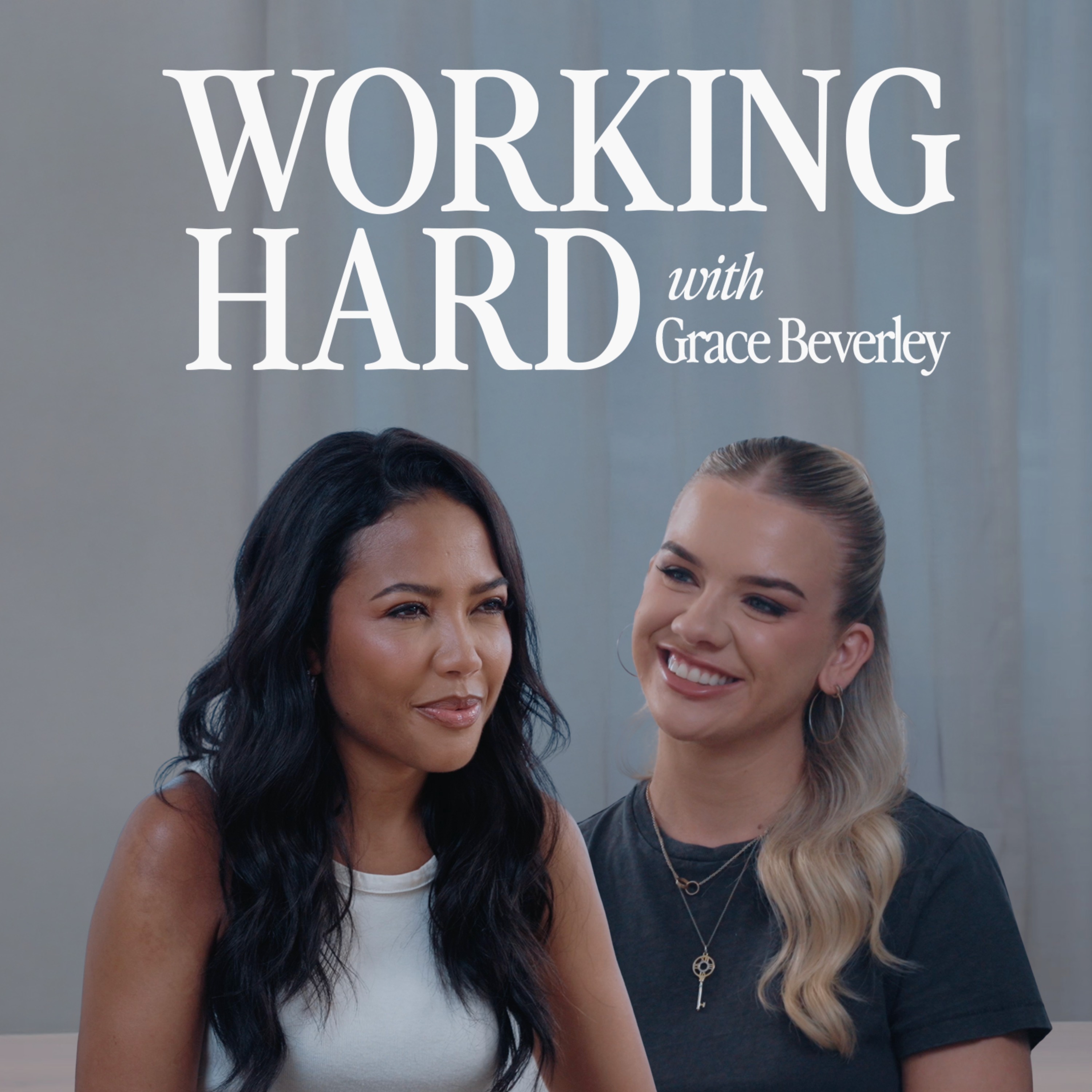
In this insightful episode, Grace Beverley interviews Emma Grede, a notable entrepreneur and co-founder of Good American and founding partner of SKIMS. Through their conversation, Emma shares her journey, work ethic, and the lessons learned in building successful brands. The episode explores themes of ambition, success, and the often overlooked realities of entrepreneurship.
Written by AI. May contain mistakes.

Get the gist, explore an idea or ask about something said.
 Claude
On Working Hard with Grace Beverley, what are the key points of this episode?
Searching your listeningAutomatic transcript. May contain errors.
0:28Hey, it's Adam Grant from WorkLife, a podcast from TED. software, you'll work smarter, not harder. Freshworks uncomplicates. Learn more at Freshworks.com.
1:00Go to Upwork.com now and find your freelance expert. That's U-P-W-O-R-K dot com. Post a job for free and get started today. Hi, friends. Grace from the Working Hard podcast here. When you're stretching every dollar, a little goes a long way, and Walmart Business is here to help. They make it easy to order what you need from tech and cleaning supplies to everyday essentials, all at low prices and with helpful tools like spend tracking and tax-exempt purchasing for eligible organizations. Because when your operations are smooth, your impact can be bigger. Visit business.warmart.com to get started.
1:43What is up? I'm Grace Beverley and welcome back to Working Hard, the podcast shape guidebook on how to improve your own life and achieve what you actually dreamed of doing. Because life's too short for boring podcasts and bad advice.
1:57what is up and welcome back to working hard when i started this podcast i wrote a list of my dream guests and it was kind of almost like a podcast vision board but today's guest was the first name i wrote down emma greed she is the co-founder of good american founding partner of skims and chairwoman of the 15 pledge emma has built some of the world's most talked about brands with the world's most talked about people and she is not just a behind the scenes operator although she is a very good operator. If you've ever heard her speak before, you will know she is bold with her goals, vocal on her values and unapologetically ambitious.
2:30This episode is not just for entrepreneurs. It is for anyone who wants to map out a path for their success. Emma's advice on work ethic, getting your foot in the door, confidence and balance is enough to write an entire book on just from this episode. And I really hope you love it as much as I loved recording it.
2:55Emma Greed, are you currently more working hard or hardly working? Oh, come on. You know the answers to that question. I'm always working hard. And is that your only setting? Yeah, I mean, I guess I'm like hardwired to work hard. And, you know, even if it's not professionally, like I'm a mum of four. So you're always working hard. Yeah, like it's ingrained. But I, you know, I work hard on like wrapping the Christmas presents. Do you know what I mean? It's just like who I am. A woman after my own heart. Yeah, do you know what I mean? The way you do anything is the way you do everything. I was literally about to say exactly that.
3:25It's just facts of who I am. Yeah, no, I completely agree. Like, why be house hunting without, like, a full spreadsheet and, like, doing the, you know, as you say, the wrapping. Like, I always think when I'm, like, doing something that just doesn't need to be done to that level, I'm like, it just wouldn't be me, would it? It wouldn't be you. It wouldn't be me, babe. So where did that work ethic originally come from, would you say? I think it comes from being raised in East London. Do you know what I mean? I was raised around, you know, we used to say like everyone was a grafter and that just like seeps into your spirit and who you are.
3:58But also I was very like in a rush to leave where I was from. And I was very much of that mindset that I just needed to like make some money to be able to give my life optionality. And that starts like super, super young. It's like, you know, I've said this a million times before, but it's like I've had every job. You know, it's like I've had the paper route. I worked in stores. it's like you know I assisted every single person in London around fashion week but you have to do all the things and so I think that work ethic pretty much continued because it worked for me you know what I mean it's like I wouldn't still be doing it if I was you know stuck in the same place but it's really worked out yeah it's when it gives you that kind of like a plus b like working hard equals freedom equals me being able to unlock all of these things so it becomes your any setting because you're like well this is what I've done to make me be in this position and therefore must constantly keep doing this it becomes like this cycle yeah which is good in some ways yeah because obviously it means that you don't just get somewhere and then stop and kind of sit back and chill but at the same time you know there's some times where you're like oh we'd love to be the type of person who just sat back for a little bit I don't really have that setting really yeah no because I'm actually very very good at like checking out you know and again I think a lot of that comes down to the fact that I've got four kids, right?
5:16So when you have like living, breathing human beings and you walk in the house and you've got the choice to answer your emails or to attend to your kids, like it all becomes very simple, right? Like it just is one of those things that your priorities get reshuffled. And even so, like before I had kids, I'm very, very good at just chilling out. You know, I've always had an obsession with reading. I would read all the newspapers the whole weekend. I get through books like a monster and I still do that now. So I'm quite high on my list of priorities. So I never like, I'm never that person to be like, I'm exhausted because I put myself last.
5:54Like it's just not my vibe. I don't do that. I never have. Just don't. Yeah, no, I really like that. And I think that it's, I think we hear so many stories of always being too far one way or too far the other way. It feels like to me as a person, you've kind of spent a lot of time sussing where you are on that and what you need to balance out the other side of being 100 miles per hour. And as you say, when you come home and there are kids that are like, you have to be fully present. Like it's going to be very hard not to be fully present when they're wanting to, you know, interact with you. It's true.
6:24I also think there's a lot of power in giving your all to one thing. And so that's what I've really learned that I get the best out of myself when I'm extremely focused on the one thing. So it's like when I'm in like my mum mode, like I am all in. I'm on the floor. I'm playing with the Legos. I'm building magnet tiles. I'm going to make the best possible castle that you've ever seen in magnet tiles. And like it becomes all about that thing. I'm actually, for someone who does a lot of things, I'm not a good multitasker. I do like things individually well and I like double down all out focus on them.
6:57I think that's such a good trait though because I think my biggest downfall is multitasking. I had to ban myself from multitasking because it's my it's the thing that's enabled me to get to where I am in that I'm so good at doing 100 things at once. And then I just realized that I do everything as if I have to multitask. And I don't think I have to. Like, I think lots of things you need to be present. You need to be like if you're choosing to do that thing, 100 percent do that thing and do it well. Whereas like I can default to being like, OK, and I'm going to make sure I'm back to this and back to this and stay in constant communication about this.
7:26And it's like, no, that's a that's a default. That's from before you had teams. Let's not do that. Yeah, and I think that comes again with, you know, as you learn and as things get bigger, like you physically can't do it all of yourself. And so a lot of what I've understood is, and actually I'm so grateful about this, is I don't need to do everything, but nor am I the best person to do everything. And so as the businesses have grown and as I've grown as a person, there's just people that are better at doing stuff than I am. You know, it's I just and I love that. I love finding those people. I love bringing them in.
8:00And I love being able to outsource certain parts of, you know, decision making. And that's actually made me very successful. The ability to let go, the ability to know that I'm not always the best one in the room and to relinquish things to people who are. I think it's actually it's a superpower, especially when you think about growing a business. And do you think you got good at delegating from right at the very beginning or was that a bit of a journey? No, that was a journey. You know, it's a journey. And also you make a lot of mistakes. So you realize, I think, you know, as a leader, I'm in constant development, right?
8:37So you start, you understand that when you start a business, it's your thing. It's often about you. And that's what made it great and what made it what it was in the beginning. But as things start to grow, and certainly when you're years and years in, it can never be about that. A, you'd never be able to sell a business. It would never be that successful. It naturally broadens. So there's something that comes with the longevity of a business that means that you have to open things up. But it is a learning curve. And I think that I spent a lot of time in my early 20s really chasing my tail and not understanding why things wouldn't expand.
9:12Well, it was because I was restricting it. I was literally holding it being like, but I need to do that, but I need to do that, but I need to do that. But I can do it better. And it's just not the truth. I know. And that's one thing that I find recurring over and over again, especially with like even myself, but also high achievers in my team is that also teaching them to be better at delegating so that they're not always like diving back into the weeds when the person who they're managing isn't quite getting what they need out of them. and it's like such a default because it's something that, you know, you trust what's got you to where you are.
9:43So you feel like you need to, especially in the public eye, like I think for a long time, I mean, up until November, I was still approving far more than I needed to and it really was, actually ended up ridiculous. Like I was still approving every single influencer we were working with, every single, yeah, every single socials post for tier one launches. Oh, no. Yeah. And I was like, obviously my hours were fucking ridiculous and so constant and I was like, I found it really hard to delineate between what would be good to let go of because it's responsible to let go of it and because there are better people that you've hired to do that and what would be negligent to let go of and what's going to then lead to some sort of crisis online or whatever it might be.
10:25I understand that, but I think that what you have to really think about, there's two parts of this. Number one, I've learned that you have to be happy with 85%. Yes. Like I never think that, you know, most people will get to the level that I expect something to be done. Like because that again, it's through my lens. How could you? Unless you're in my body, in my brain, it's never going to be done to how I want it. Right. So it's not about 85 percent good. It's 80 percent of the 85 percent of the way you would have done something. So first of all, you have to get really, really comfortable with that.
10:54The other thing is like, what are you optimising for? Like if you want to stay small, like that is totally fine. And I think a lot of businesses are supposed to be small. They're supposed to be niche. They're supposed to be for a specific consumer. But if you're trying to build something big and you're trying to scale, then you have to change your mindset. Because what you're optimizing for isn't for you to be, you know, checking every email. It isn't for you to be, you know, looking at every caption on like tier one product launches. That's not the point. The point is that you have to put your energy into the growth.
11:23And so for me, it's just a simple equation. It's like, where do I want to be? What do I want to do? And how do I optimize for that thing? And if you're optimising for growth, you just make different decisions. Yeah. No, I mean, you're so right. And I think that I really needed to fully stomach it and just to realise I was looking at the wrong metrics. Like, as you say, 100 % good for you doesn't necessarily mean 100 % objectively good. And if you're doing that again and again, but you literally are running yourself into the ground, then who's winning? And also you're taking away full autonomy for people who are in jobs that you have put them in when they're trying to do a good job.
11:53And you're kind of swooping in and being like, OK, well, this is what good would look like to me. it's like you can do that a little bit but also that person then just had all of their decision making taken away from them which isn't fine anyway I'm now using this for like therapy sessions well and and you're doing all right Grace I feel like I feel like it's working out for you darling so you've not got you know too much to worry about like eye twitching um so in terms of your kind of journey to to obviously where you got to you obviously credit being in East London and growing up in East London for a lot of your kind of hustle and ability to really get into the weeds and get to where you want to get to.
12:30Did you see entrepreneurship then as something that was, that you kind of aspired to? Like, is that what success looked like to you or did success look like something else? You know, I don't think I saw what I wanted, right? Like, the honest truth was, you know, if you're an entrepreneur in East London, you probably weren't doing something legal. And if you went out and worked a job, you probably hated it, right? There was like sort of those two things. And so what I, and I actually think this is equally useful. What I saw was a bunch of stuff that I didn't want. And I use that as like the momentum to like push me into what I wanted to do.
13:09So it's not like I was looking around being like, I'll take a bit of that. I'll take a bit of that. It's like, I just didn't like any of it. I was like, I don't want to be here. I don't want this type of life. This is not what I aspire to. And in a way, that's what really fed me. So it was really figuring out like that this wasn't the life that I intended to live. And I think what's really powerful about that is I think we see so many stories of motivation based on like, I wanted X. Like there is so much, I have a passion in X. I wanted to be specifically like this job. And then people are able to kind of, they know their direction, they know what they're moving towards.
13:41I think a lot of people struggle because they haven't necessarily pinpointed exactly what they want to do. They just know they want to do it well and they know they want to get to a certain lifestyle. So I think that's really powerful, but there wasn't necessarily a thing. It was a kind of, I know there's something out there and I know the type of life I want to lead and I'm going to find out what that is. How long did it take for you to pinpoint what your dream job then actually did look like? I think I knew that I wanted to be in fashion, but that to me was like a fantasy. You know, it's like someone saying like, I want to be happy, but not really knowing what's going to make them happy because I didn't understand the jobs in fashion.
14:16And I knew I wasn't a creative like fashion designer because you have to remember when I came up in the fashion industry, that was probably like the most creative time in fashion, right? You had Vivian Westwood and John Galliano and Alexander McQueen that were doing these like unbelievable things. And I never saw myself as being that type of creative. And I didn't understand the jobs that were in fashion. Like I had no exposure to anything. So I essentially went and just did a lot of work experience and started to find all the jobs I didn't want to do. Like I started in PR and I was like, no, not for me.
14:49Like, I don't want to do that. And then, you know, I went internally at like a bunch of design studios and I was like, well, no, thank you. Nobody's making any money here. And so I just like found myself going around and also going through like a process of elimination. But I think what is interesting and what's important to contextualize, especially for this audience and this listener, is that everybody's looking for their passion. Everybody's looking for their purpose. And that to me is just bullshit. You shouldn't look for your passion or your purpose. You need to look at what you're good at and go in that direction.
15:19And it just so happened that I, you know, again, coming from East London, I was a hustler. I'm a really, really good negotiator. And what I did was found myself excelling in jobs where there was like a piece of negotiation there where you had to get like two parties and bring them together to do something that was like mutually advantageous. And so my advice to anyone is always to think about what it means to take what you're good at and find how you can weave that into some type of job or career, because that's where you're going to be really successful. I love that advice. And I think what's so especially powerful about that is I think that lots of people assume that there is, and of course, it's a huge privilege to be in something that you enjoy doing and you have a passion for and you're good at and all of these things.
16:05But I think so many of my friends' journeys in the first stages of their career over the past few years, especially in corporate type jobs, they've assumed that if something is going to lead them to success and money, that it's probably not going to be something they enjoy. And that's so fair enough. And, you know, like sometimes that's going to be the case. But I do also think that a lot of them have now started to find their feet through knowing, okay, well, actually, I'm the type of person who will put in 100 times more hours than everyone else and I will, you know, as you say, I'm really good at negotiating or I'm really good with people or I'm really good with this.
16:35And so as long as you're weaving that into your job and you're making sure that if you have a real skill, you are doing that pretty much every day and it is somewhere in your job role. Otherwise, like you're being paid for and judged and basically monetized based on something that maybe you aren't even 50 % good at in comparison to other things. And I do think it's a lot easier metric to be looking at rather than like, is this my passion to look at? Like, am I doing the things that I am good at every single day? Really true. And would you say that early on there was a moment that was a big turning point for you in your career or even something small that felt like when you look back, actually, that that created a lot of knock on effects to lead you to where you are now?
17:20Yeah, I feel like actually it was working in a job where I felt underappreciated. And I feel like so many people can feel that deeply, right? You're in a place, you are working your butt off. You're perhaps like not remunerated in the way that you should be. Your talents are overlooked. And I felt myself like getting a little bit whiny, like a little bit miserable, complaining a lot. And, you know, my kind of default point of view is that everything starts with you, right? Like whatever you're trying to do, whatever you want to do, it's all about your point of view and you making it happen. And that was a big moment for me because I was like, I'm done being a victim.
17:57I am so over hearing myself constantly complain. What am I going to do about it? And so I decided to leave. And that for me was probably the best decision I ever made because, A, I had no safety net, right? So I literally had no choice but to find my next thing. But it let me know that I could do something else because I'd been in this particular job for like five or six years and you get indoctrinated and you're like, well, this is where I am. And this is what I do. And these are my people. This is like what I get for lunch. You know, it's like the whole thing was like so pre-planned and premeditated.
18:32And so making that leap was the best thing that I ever did. And just like getting out of where I felt I wasn't being seen properly. Yeah. And it's so easy to get into a routine that feels comfortable and you equate comfort to being the right thing rather than, especially if you're going through that routine again and again it's like leaving that job after five six years would have been akin to leaving a relationship after a few years because you as you say you know where you're commuting you know what you're getting for lunch you know the people all of these different things it's really easy to get to the point where changing something like that feels like a huge risk when actually probably the other way around is true like being so comfortable when actually you're not enjoying it is probably more risky than staying in something that you know you know isn't right for you it definitely is but it's it's not easy to make that decision no it's not easy and you know it's easier said than done because of course, I was like in my early 20s.
19:22So there was no responsibility. There were no kids. There was no mortgage. There was no like massive monthly outgoings. But again, depending on your background and where you came from, to me, the idea of financial insecurity is not something that I can live with. Like I will die if I don't know where my next money is coming from. And at that time, I really was living paycheck to paycheck. So for me, it was like an emergency situation. But it also helped me just go, this is definitely not how I should be spending my life and my time. And I think it's actually very good advice in your 20s to use that time really wisely to think about what is it that I'm good at?
19:59Am I in the right type of job? And how do I use these 10 years of my career to really figure it out so that by the time I get to my 30s, I've got some optionality. And I think that that is probably the single best use of your 20s. And how did the move to the US come about? Did that feel like a huge jump at the time? Oh, honestly, Grace, I can't tell you. It was so big because I had a two and a half year old and basically a baby, like an eight or nine month. And, you know, I'm very, very close to my family. I'm a real Londoner. Like, I love London. I love everything about London. It's like such a part of who I am.
20:40And I didn't love LA, if I'm really honest. I was like, this is a stupid place there are no sidewalks like literally literally i spent the whole time in la i'm making one turn and then get into a road yeah i was like i'm literally on the motorway yeah yeah i'm i'm about to walk on a freeway like it's it's so ridiculous so for me but also the mentality of the place right i was like this is an entertainment town this is not where you go to start a clothing line but again i'd be lying if i said that what came with the u.s was an enormous amount of optionality and the ability to scale. And it's very, very different from being in the UK.
21:17The business mentality is different. The opportunity is different. The size of the prize is very, very different. So that was also a massive move for me. So I did that at an age of like 36, where I'd done the slog. I'd owned an agency. I sold the agency. I had another company. I'd sold that company. So financially, I was very secure. And I knew that if it didn't work out, I could come home and I would be just fine. I'd just start another agency and I'd go again. So again, depending on the type of person you are, I think that really dictates some of those choices. I would never in a million years have gone, boom, I'm off and I'm just going to take my chance in Los Angeles.
21:53That's just not who I am. And if I'd asked you at the time, like, what's the goal from the US, what would you have said? Oh, I'd have said, like, world domination. I'm going to start a bunch of brands and they're going to be like culturally significant. So let's talk about that then. That's pretty much exactly obviously what you've done. I want to know how we get from A to B because obviously you've gone out there and you've gone you know I'm just going to try I'm going to try and hack this industry and I'm going to try and you know you obviously had this agency background and you knew you wanted to do something in fashion so what would you say were the key steps that took you from A to B if someone's listening to this and they're being like I know who Emma is and I know what she's doing but like how the fuck yeah that's what we all be asking I'm so glad you ask it in that way because it is the smartest way to look at it.
22:39And without the not wanting to like be hung up on words, but the try part is the really important thing, right? Because I had spent 10 years building a foundation, a knowledge of and an understanding of how celebrity accelerates brands. And so I had an intimate understanding of what they can do and what they can't do, more importantly. And so when you, like me, build a media agency, not only do you have a set of business acumen, right? I'd hired and fired and started agencies, opened offices in multiple countries. I dealt with big brands and small brands. I had worked with big celebrities and small celebrities.
23:17So I really understood that piece of it. I understood the media piece of it. So what you have to have is a foundation. It wasn't like I was like, oh, let me try this. It was like, I really understand this part of the business. I also then had spent a long time looking at this white space and understanding that plus size women were really underserved when it came to fashion and apparel more specifically. And so with those two pieces of information, the idea that I could run a business profitably, that I could run a company, i.e. like the staff piece of it, and then this idea that there was a massive missing thing.
23:55I took those three things and I put them together. Now, the bit that I didn't know was actually how to make a pair of jeans. Now you would say that could be a bit of a stumbling block. But again, I was like, I can teach myself that. But there were many, many trips to LA where I would go down to Vernon, which is like the dingy part of LA, and I'd knock on a factory door and I'd be like, hi, I'm Emma and I'd like to make some jeans and I wonder if you could help me. So I've really laid a lot of groundwork. But it was, again, it was knocking on the doors. It was making phone calls and saying, okay, like, how am I going to piece this thing together.
24:29And when it came to investment, again, because I had made a bunch of money from the sale of my agency, but I wasn't willing to put all of my own money in. I was like, I'll go halves, but somewhere along the line, I need to be bringing some investment in here. But if you don't know anyone in the investment community, I didn't know any bankers. I didn't know any venture capital. I didn't even actually understand how that worked back then. Where do you go? How do you even start? So I went to my clients and what was so wonderful is that I had 10 years of delivering excellent work to them. So I wasn't like, hi, will you help me like start this thing and like take a bet on me?
25:05It was like, hi, I'm the person that's been delivering you excellence in celebrity branded entertainment for the past 10 years. And I'm going to now do another version of that. And will you give me some money against it? And so do you like, I think the context is important because it's not like I burst out of nowhere and was like, Should we just have a punt together? Also, when you're putting some of your own money in, that gives investors an incredible ability to understand that you really have strong belief in your idea and you're willing to bet your own money. So that was another intrinsic piece of it.
25:38And then the moving to LA was almost like the cherry on the top of the cake because everyone knew I was for real. When you are, you know, eight month old baby, a two and a half year old moving to a place where you have no family and nothing, but you know that that's the right place to do the thing in. Like everyone around me galvanized around me and was like, she's for real. Like this girl is not messing around. She's really going to do this. So there was all of that that made Good American what it was. And then I also think that I'm not immune to thinking about timing because I don't think you could do the same thing.
26:13In fact, I know you can't do the same thing today. There was an arbitrage around celebrity. There was an arbitrage around social media. And what I mean by that is you could acquire a customer very cheaply on Facebook and we did. And that is no longer possible because of the way the algorithms work now. And so I was building a specific business in a specific time with a specific need that customers like really got behind. And it was like this perfect storm, this perfect fire. And if you said to me, like, would you do the same thing again today? No, because it wouldn't work. I'd have to do something else.
26:45Yeah, and it would be a completely different playbook. And I'm so glad you said that because I think that so many people I've spoken to on this podcast and I think that some of the most successful entrepreneurs in general, they all have had this kind of perfect storm moment that feels like they're tapping into a gold mine because it's so zeitgeisty. It's so of the time. it's the exact right place to be it's the exact right thing to be doing and I think then the natural conclusion from that is like how do you find that perfect storm like how do you look around in the industries at the moment and go okay well this is taking off this is doing well like a few years ago it was podcasts before that you know it was meta ads before that all of these different things like you know I started originally making money from pdf guides on the internet which just aren't really as much of a thing anymore but that literally like gave me all the cash I needed to be able to start the other things.
27:32And it's just finding the perfect storm. So if someone's listening to this and they're thinking, how do I find that perfect storm? How do I find that thing that's ready to be tapped into and is so of the moment? What would you recommend them? I think that you have to look at what's happening in culture. So one of the things, and again, a reason that I love to read the news is because there are threads, red threads that exist through everything. And my job, I think, as a CEO is figuring out the connection points, right? So let me explain that. Right now, we're in a really precarious economic climate, right?
28:10We all know what's going on in the US. We know that there are wars in the world. We know that there's uncertainty in the world. And so that puts you in an economically precarious situation. And the trickle-down effect of that to consumers is really real. When people don't feel secure, they don't spend as much. So I wouldn't be launching that type of brand, like a frivolous, you know, like if it's not like a need, like I don't think people want to just like spend their money on some newness now. It's like I'm going back. I'm going to what certainty is. I'm going to, you know, I'm going to buy Celine and Salaron and I'm going to buy the makeup that I've been using for years.
28:47I'm not testing out this new thing because that might be a waste of 20 quid that I don't have. So I think there's a time and a place you have to understand the economics. There's then the gold rush, right? Like, where is the gold rush? And right now we all know that that's in AI. And by the way, I think that every single woman that is listening to this podcast, it doesn't matter where they work, it doesn't matter what they do, has to get their head around AI because we missed, as women, the first tech boom. And we will miss this boom if we don't, like, really embrace it with every fibre of our being.
29:17And so right now you take a snapshot. You look at what is happening in the culture, what is happening in the economic climate, And then you figure out, what do I know and what can I bring? And I do believe in this idea of you being uniquely suited to doing something, right? It doesn't matter if there's a million brands that do what you do, you are not doing it, right? Like you have to understand that your unique take, that your way of bringing that to market, that whatever you do and you make is going to be very different from what else is out there. So I don't think that you have to come up with something entirely new and entirely fresh.
29:57You've just got to contextualise it within the context of the moment and then know that it's coming from you and therefore there will be something special about it. That's a really, really good way of looking at it. And I think it's so easy for especially aspiring entrepreneurs to go with the wind a little too much and to constantly be trying to look at this kind of silver bullet that's going to be the perfect business and all of these things. And of course, that doesn't really exist. But it's definitely true to say that there are absolutely some right place, right time moments and things. And I don't think many of the most successful entrepreneurs I've talked to on this podcast have not been doing specifically that.
30:31Like they are doing something that is so specifically of the moment, which is exactly why it taps into consumers' mindsets. Can I just say one thing? One thing that I think is also important. We've also kid ourselves or we We'll kid ourselves if we think or if we don't think about the timing around a business, right? People tend to overestimate what they can do in a year and underestimate what they can do in 10 years. And so you have to remember with businesses, like, it takes a really long time to build an incredible business. And we often are so short-term thinking about things, like if it doesn't pop off in year one, year two, year three.
31:09All of the amazing brands and businesses that we use every day. I think about how old they are. I think about how old Apple is. That's old. You know, it's like this stash has been around for ages. And so, again, you can't have short term thinking when you're imagining a business idea or thinking about starting things because it takes a lot longer than you think. And so you might be rooted in this moment in time and have that as a point of acceleration for your brand. But what happens when the culture shifts? Does your brand die? or do you have to like reimagine, reinvigorate, like do something else and move with the culture?
31:44So again, it's like you might not start something in the perfect time with the perfect firestorm around it, but kind of that's okay anyway, because that moment's going to go and you still got to be in business. Yeah, I think that's a really good point. And it kind of fights against the idea that you've got to find this like one magical thing that's going to make the perfect business. And in reality, it's okay, that might be there and there might be the product market fit, but realistically how you build the business around that and how you make sure like the marketing is or the logistics are or the product is or whatever are all tied together to be able to actually service that customer without kind of just being a little too trendy but not actually being enough for someone to actually make a sale.
32:19And I think that's a really good point too when it ties into obviously what you've done and starting brands with some of the most famous women in the world. I think that when you originally did that, there would have been some question marks around what the actual efficacy of that would be and whether it was something that was more of a flash in the pan, especially if you're going to investors because they're not looking at something that's just going to do well for one or two years or just going to be a glorified merch company. The market's uncertain. Revenues tied and hiring on hold. That's why results driven companies are using Upwork to keep work moving.
32:53Go to Upwork.com today and start hiring proven freelance talent fast. No bulky overhead, No rigid long-term contracts. Just the right expert right when you need them. Work smarter and faster with Upwork. Go to Upwork.com now and find your freelance expert. That's U-P-W-O-R-K.com. Post a job for free and get started today. When it comes to what your family eats and drinks, you know your choices matter. You're the expert because you know what fits your life. And getting it right starts with good information. That's why America's beverage companies are sharing more information about our ingredients at goodtoknowfacts.org.
33:35No spin, no judgments, just the facts straight from the experts for more than 140 beverage ingredients. Visit goodtoknowfacts.org. At Capella University, learning online doesn't mean learning alone. You'll get support from people who care about your success. like your enrollment specialist who gets to know you and the goals you'd like to achieve. You'll also get a designated academic coach who's with you throughout your entire program. Plus, career coaches are available to help you navigate your professional goals. A different future is closer than you think with Capella University. Learn more at capella.edu.
34:15you. I spend a lot of time, I guess, being asked about celebrity and influencer brands, obviously, because I have a platform online. And I think that the big difference that I always say is it's really easy to look at these celebrity backed brands and influencer backed brands and look at them as something that are always deemed for success, because how could they not? When then I also think we've seen that first horizon of influencers and celebrity brands that haven't worked out what do you think the difference is between those two things i i don't really believe in influencer brands right i just don't there's 40 million people that have 1 million followers on instagram it's like it's not special 200 million creators 200 million people a lot of people and i don't really think that what you did or what was happening a seven six five even four years ago is repeatable now necessarily because there's been so many changes and there's so much uncertainty.
35:18What everything comes down to when you're building a business or creating a company is product. That's it. Because talent can drive a consumer to a product once, just once. And the customer gets the product and if they love it, amazing, then you get another chance. And if they don't, it's over. It's over then. And actually it might not even be over because if you're famous, they might actually just tell everyone that your product's crap. And so you've got this like long tail effect on it. So the only thing that you can do is make an incredible product and service customers. And I think that the mindset shift for people starting businesses has to be around not how do I market this product and how does everybody find out about it?
36:05But it's about distribution because distribution is the thing, right? We are in a very attention poor economy. There is so much to look at. There is so much news. Like I could literally still be in my bed now having woke up at 5am looking and reading and absorbing information. So right now the game is how do I please customers? How do I delight a customer so much and they love what I do so much that they come back time and time again. And the only way you do that is by having incredible best-in-class products that people cannot live without. Yeah. And it's kind of, I think, with the influencer and celebrity brand side of things, it's like all that does is almost give an equivalent marketing grant to that brand.
36:50So it's like, imagine you've got this marketing grant that you're going to get X amount of posts from this person. And obviously that's not necessarily how it works internally, definitely not how it works for Tala with me, but that's the assumption because every other business problem that all other DTC companies are having are not suddenly solved because you've got someone talking about it online. In fact, you've got to suddenly operate from day one as a company that can service thousands of customers when you haven't even sold one single product before. So obviously, swing some roundabouts. Exactly.
37:17But I think that's really interesting. And I think exactly, as you say, like, we've obsessed over repeat metrics since day one purely because of that. And knowing that we're a business that was going to go for venture capital investment, obviously, if you're one person basically driving that whole business, you're never going to get that investment. Those metrics cannot look like that for you to actually get that investment. With the businesses you've grown, they are pretty culturally iconic. What would you say are the key things you've done to make these businesses a reference point in pop culture?
37:50We are really lucky because when you have a privately held company, you can do what you will with it, right? So we don't have to put things out in any specific time. We can be like in the moment and in the culture. And we just have the best people that are given a lot of freedom. And I would say that if you look at the campaigns and you look at some of the, you know, if it's collaborations or the partnerships and the things that feel the most interesting, they come from different places in the company and we've created a culture whereby the best idea wins. And so I think that that is probably the single best thing that you can do, really make it like part of the fabric of the place.
38:33There are, and it sounds really cheesy, but there are no bad ideas because you never know what's going to work. And I think that as soon as everybody thinks that they know what we're doing, we switch and we do something else. Yeah, I really love that. And I also think that that's one of the superpowers of businesses nowadays when actually often a lot of the young people in the company, they're the ones that have this kind of constant access to pop culture and what's going on and what's making them laugh on TikTok or Instagram or in meme culture or whatever it might be. And so it's kind of broken down this, a little bit of this hierarchical best ideas always come from the top approach because actually, you know, if your target customers like in their late 20s yeah well yeah even more so if they're there and that person only has one year of experience but is so good at hitting the nail on the head when it comes to those like iconic moments it turns everything on its head a little bit in terms of like who should we listen to and what ideas are good and where should we get these ideas from and how do we brainstorm so I guess my question is then how have you made sure that you know yes these companies operate in the way they need to in terms of team structure and approvals and whatever needs to happen, whilst also making sure that maybe people who might not be naturally in the room are getting their ideas through, because they might just be great ideas.
39:52Yeah, I think it just comes down to culture. And people make a big deal of culture. And I don't think it's really understood very well. Culture is who you hire, who you fire, and who gets promoted. That's it. Because what you're saying within those decisions. It's not about like your company charter. It's not about free lunches. It's not about, oh, we give everybody like, you know, fertility benefits. That's not it. The culture of the company is the people. Who you hire says everything about who you are and what you value. Who you fire, exactly the same. This behavior is unacceptable. And who you promote is like, this is what we care about.
40:29This is the behavior that gets you further at this company. So it makes things really clear. You don't need to say anything. You don't need to write a charter. You don't need to have anything on the wall. You don't need to have your mission, vision, values strapped anywhere. It's just those things. How do you make decisions and who is valued? And that says everything about the company. And once you get into the swing of making that very, very clear within your company, there are no guesses because everybody can see it. They're like, oh God, they just got such and such from this place. Oh my goodness.
40:58Did you hear he got promoted yeah because he behaves like this and this person does that and that is what's valued here so you create a culture by your actions within a company is what i'm saying and that is just how good things are bred yeah no i think that's a great point and i think it's a much more simplified way of looking at culture which i really like because i do think that culture especially like 10 years ago became this huge thing yeah where everyone was talking about everything to do with it and it became this kind of algorithmic formula and actually it's just No, it's a lot simpler than that.
41:26It's really simple and it comes from the top, right? So you have to model that behaviour. You don't have a choice. It's like everybody knows the culture of our businesses because it comes from the top and it filters down and there's just no exceptions. That's the one place where you can't be 85 % about anything. It's like we have like a zero tolerance for certain things and that means that somebody might have to be fired and leave on the day. Like that's just what it is. Yeah, it's definitely something that's come through from a lot of people who I've spoken to who've been really kind of clear and unshakable in what they believe their company culture is.
42:01And I think that's something that definitely sets aside certain companies from others. what is important in that though is obviously you having confidence in the view of the company that you see and in yourself and in the type of business you want to build and in the type of person you want to be when I hear you speak and hear you kind of share your theories on everything it's so clear that you have this really unshakable confidence in yourself so I'm really interested in kind of how you've built that over time because I'm under no illusion that that's you know maybe you've seemed always like that, but it clearly has a lot of backing in action too.
42:37So can you give some tips for people who want to build that confidence that you have? Well, I wonder if I can, you know, I think there's a part of me that's just who I am, right? I'm a naturally confident person and I don't really feel the need to conform. It's just not part of my identity. Like I'd rather sit alone. Like, you know, it's like I was always that type of kid. Like I'm naturally a bit of a loner, to be perfectly honest. And so there is some of that that is hardwired in me. But there's also, you know, again, some of it is upbringing. Some of it is like how you were raised. And I've spoken about it a billion times before, but I do think that how my mum raised me and my sisters was very formative.
43:21This idea that you're not better than anyone else, but nor is anyone better than you. And so I've always felt that there's been a lot of value in my opinion. And I think I was really lucky because when I was young and I was going around London doing all of these work experience placements, I felt like I had something to offer because I was different from everybody else. I was like my opinion, my point of view, my taste level, what I think is aesthetically pleasing, like was different to a lot of the people around me. And I didn't think that that difference meant that it was a negative. I thought I've got something to add here.
43:53And I really believe that. I also think that confidence comes from trying a lot of stuff, right? Because I have made so many mistakes, but I don't make a mistake and try to bury it. I make a mistake, I own it, I learn from it and I make sure it doesn't happen again. And so you start to build confidence. And it's important for, again, especially women in business to understand that very rarely is it about you. Very rarely are people watching in the way that you imagine they might be watching you. And so I have kind of taken that very much to heart. Like I don't take things personally. I don't think if a decision I made ends up being the wrong decision, that I'm bad, that that was like wrong of me.
44:36I'm like, that thing didn't work. Oh, well, on to the next one. You know, it's like I don't let it become something that like stifles me. And so I have a lot of audacity and that's fine. It's just working. Yeah, I love that. And I think that's a big difference as well between self-worth and just kind of believing that you always do the right thing. It's like when you say you might not do the right thing, but that doesn't necessarily affect how you see yourself or whether you think you're a good person. I do think that's something that everyone really needs to work to build. And I think you especially need to work to build it more if you didn't necessarily have parents who kind of said, no, stand on your own two feet and like back yourself and all of those things.
45:15I think it's a really important thing to build trusting yourself and trusting your decisions and trusting the fact that if your decisions aren't right that doesn't affect who you are how people should treat you how you should treat yourself all of it and I think that's a that's a tough distinction to have it is tough but I think that you make a lot of bad decisions like I if your job is solely making decisions all day which is what mine is you're gonna lose some some of will be bad. No one has 100 % kind of, you know, hit rate. I just, again, I think that I've been around for so long that almost everything is fixable, right?
45:54Like I never, ever sit there and go, oh my goodness, I did this thing and there's nothing that I can do about it. And I think I'm known as being someone who will be like, oh my God, I got that totally wrong. And I think people really trust you when you, you know, will go into a room and be like, that was such a shit decision I made. Like, what was I smoking? Like, what was I even on then? And then you have a discussion about it and then you move on. So again, it's like you have to own when you make a really bad decision. And the confidence comes from trying a lot of stuff. And I think that when we stay in a box, when we stay in our lane, when we stay small, it's really difficult to get confidence from that because you're constantly like covering things up and you're not doing.
46:39I always see myself as someone who is always in motion. I am always moving forward. I'm always looking over there at what the next thing is, the new thing, the good thing. That's just, again, who I am. And I don't expect not to fuck up. I don't expect to be perfect. It's a very, very interesting trait and a way that we're living this idea of perfectionism, that you have to be so perfect and I just don't think I need to be. And I worry as well the fact how much culture has shifted to this idea that we all need to be perfect, especially if we're putting ourselves out there, like especially if you're putting yourself online, especially if you're building anything in public, like you have to have this perfect execution, perfect decision making, all of this.
47:23I worry not just what that does for especially female founders, but also what that does to individuals. Because if we're putting it out there, that if you do anything publicly or you do anything visibly so you fail or your business doesn't work out or you make a bad decision or whatever it might be that you just should be wiped off the face of the earth like this approach it has to have a bigger knock-on effect not just on female founders and people building publicly but it has to have a bigger knock-on effect on everyone in terms of them looking at that and just being like oh okay well in my head now I know that I have to execute to this level all the time, every single time in order to be worthy of a place on the internet or a place.
48:04Well, we need to like, look, I'm raising four kids and what I'm teaching my kids is that you have to take responsibility for yourself, right? That means if you do something good, you literally are going to own it. You're going to say like, that was mine. I did that. But by the same token, you have to do that when you make a mistake. And I honestly believe in the inherent nature of like the good in people. And if you stand there and go, do you know what? I made a mistake. These things were bad. And also I've done that in our businesses, right? When our businesses have made mistakes, a bad product, like mess something up, we've gone, do you know what?
48:38We own that. We got that wrong. We're ever so sorry. We won't do that again. Let us take this thing back and we'll make it better. So that's just a mentality to adopt. And I really believe that that's massively appreciated in the culture that we're in right now. That's authenticity. That isn't a nice to have, that's like a need to have. We need to be forgiving. We need for people to be able to mess up and start again. But it all has got to be something that you own, right? And I think that too often people don't own their mistakes. And I've heard you say that wider as well, as one of your core principles is taking responsibility for your own life and believing that people need to do that.
49:16Definitely. I don't think that you can blame anyone for anything. And I think that we have tremendous power and I really believe in myself. And I think that that is what has got me to where I am today. Like I am a person who speaks to themselves well. I'm a person that is in like this kind of constant learning mode. But I think that is all about me making the very, very best of myself. And when I do something wrong, I'm like, oh, well, that was me too. you know but that that is a really important point of view I just know that everything works better when I'm like true to who I am and so that starts with me really like recognizing that part of myself yeah and I think that's really important and I think it's important to show as well because we can't be that if we can't see that and knowing from a position that you're in actually being able to own that and being very clear with like this is what I did right this is what I haven't done right.
50:10That's who I am. And like, that's fine as long as you're always doing your best. And I think that we have this very harsh approach to trying to make the right decision, but not always making the right one that we definitely need to pick up on.
50:40rigid long-term contracts just the right expert right when you need them work smarter and faster with upwork go to upwork.com now and find your freelance expert that's upwork.com post a job for free and get started today and you sparked conversation before when you've spoken about work-life balance who me i did what are you talking about just to let you know oh i think i missed that i want to really dig into this with you because I think that first of all I want to talk about whether you feel like there's a generational divide when it comes to things like hustle and ambition and kind of what you actually need to do to get to where you want to get to but also you know coming out of the first idea of like having it all came around in the 80s and that's first really when we started seeing lots of women working in the public eye and I mean women still couldn't have bank accounts at that point.
51:34So it's really not comparable and we've come a very long way. But I'd love first to know if you could summarise your view on kind of work-life balance and what we're meant to aspire to have. Totally, totally. So I think that again, because I'm going to be like a real stickler on words, balance is a word that's been really banded about specifically towards women, right? My darling husband Jens, who does as many interviews as I do, is never asked about balance between him, his four kids and the multiple businesses that he has. So let's like talk about it as what it is. It's preserved for female entrepreneurs.
52:05So already I'm pissed. That's the truth of it. So I think that because we ask that question just of women, it is something that needs to be really like, you know, dealt with like in a really special way. The first thing that I'll say is that extraordinary outcomes have to come with extraordinary effort. That doesn't matter if you're a businesswoman, if you're a sports person, if you're like Beyonce, like Beyonce works really hard. It's like really hard to fly around in a car all nights and put on like a lot of shows and do everything she does. She is like a million percent. So it's not any different if you're like Coco Guff and you're winning the tennis.
52:45It's not any different if you are some CEO who started a company and needs to make that right. So that is just the truth of that. To be at the top of anything, you have to do the most. There is no conversation about that. But not everybody's trying to be at the very top. Some people work traditional jobs and they have more of a, you know, a different set of expectations. And therefore, like, should they be able to do what they need to do, like in regular work hours and get out what they need, i.e. be able to like, you know, pay their mortgage and look after their kids or go on lovely vacations or pay off the student loans, whatever it might be.
53:26Like, yes, to all of those things. But I think the question that we're really talking about is like the harmony bit of it. It's like, can I work like really hard and still like look after myself and like have this like work and life harmony? Well, yes, because I believe that I'm like walking, talking, living proof of that. It's like I have my massages. My nails are always done. My hair always is good. My kids are all looked after and I'm killing it with my companies and I have a really nice husband. Do I have all of those things all the time? Never. Like just never. It's not possible because inevitably whatever I'm giving over here, it takes away from something over there.
54:09So that idea you can't have it all, all the time is really true. The idea that we kid ourselves by thinking, oh my goodness, like I can do all of these things and have all of these things all at the right time. I've never seen that be the case. So I think that the question of balance is really about like, it's so individual. Like if I ask myself, could I have work-life balance? The answer is no, I cannot because I have to have the trade-offs. I have to decide what is important and go for those few things because it's not possible for me. But if you are, you know, a lady that works a job at the doctor's receptionist and you should finish at four o 'clock and that's the end of your workday, should you be able to have balance?
54:53Yes, probably you should. That's just it. I'm really intrigued as to whether that approach has changed over time. Like when you would have been working long hours when you were maybe assisting people in fashion, like I know that it's crazy hours and I doubt much balance at all. what was your kind of approach then when it came to how do I make sure I'm still seeing my friends how do I make sure I'm still being pedal to the metal I didn't care I didn't care about seeing my friends because that's just not again that's not what I was optimizing for I was like I'll see them later and guess what I'm like have so many friends it's just it's just not what people want to hear right everyone wants to go like but seriously like I'm gonna you know I am going to work this job.
55:34I'm going to do three days a week and I'm going to see all my friends and I'm going to take all the vacations. That's cool. That's totally cool. But you'll have the result that goes with that input. These things are correlated, entirely correlated. And by the way, when Scott Galloway or Mark Cuban says exactly the same thing, please go into the comments. Please go into the comments and see what everybody says about it. Like, yeah, let's go, man. Like when a woman says it, it's that because your expectation of me is that I should be warm and cuddly and nurturing and tell you exactly what you want to hear.
56:08You know what, Grace, that business that you've just started, it's going to go from a million to 10 million. And you could probably just do like five hour days and like smile and it will all be fine. Like, no, no, like no. And guess what? Like, no, this is not me. Like being harsh or being difficult or being a bitch. It's actually just telling the truth. And we have got ourselves into a culture with toxic positivity. leads what everybody for the most part really wants to hear and I'm just not here for it. I'm only speaking of my experience, right? Which is all you can do. That's the only thing that I can do.
56:43I'm really interested to hear what you think the effect of social media is on this because I have opinions and I think that we've maybe spent too many years now seeing other people's end goals and not necessarily seeing the work that goes into it. So we have this simultaneous view on social media of like this real aspirational ability to be kind of here and doing these things and have teams and all of this. And at the same time, rejecting when people say, okay, but in order to do this, I had to do all of these other things and sacrifice all of these other things. And we're saying, oh, well, if your work asks you to stay after 5pm, then you should always say absolutely categorically, fuck that and you should leave the job.
57:24And I just think those two things don't necessarily go together. Like I think we're doing ourselves a little bit of a disservice by suggesting that you can get to X end goal without doing X work. And I do think seeing people's days in their life and all of that have maybe fed into that just culturally because we see the end goal. We probably didn't see the 20 people at every single stage that they had to beat out work ethic wise to actually get there. Yeah. No, I think that you're spot on about that. You know, I think we have to think of social media as a highlight reel it's the movie trailer it's just showing you like the good bits um it's also like not real and i think that what we have to do is have a real separation here because businesses aren't built like on social media alone um and lives aren't lived on social media alone and so we've just got to again get down to like what is what are we talking about here?
58:18We're talking about what hours that you spend at your job. We're talking about your ability to enjoy your life. And so I often think that, again, we've put all of these labels on things like work-life balance. We're talking about now how social media exacerbates some of those issues around that and what people think. But you've just got to get down to the crux of things sometimes, like what the actual issue is. Nobody enjoys the idea, or certainly I would never imagine that somebody would look at me and be like, she blinked and it all happened. Everybody has a journey, everybody has a story, and you see on social media, you put out what parts of that that you might want to.
59:02I don't really believe that we can blame social media. I think that you have to blame the culture at large because we've all decided that we're going to be like really surface about our information. And that's why formats like this, like podcasts, are so important because you get to strip away those initial layers and go really, really deep. And often if you ask more than those surface questions, you'll find a lot more underneath. And do you think there is a generational divide when it comes to like hustle and ambition? You know, it's an interesting one, actually. My answer to the question is going to be no, because I have 20 year olds and early 30s, you know, millennials get a really, really bad rap.
59:41But I don't think that it's like a generational thing. I think that it's more of a mindset thing because I have like some people that I work with, like who are sort of 27 year olds and they are killers. There's two people I'm thinking about in particular and they know they are. So, no, I don't think it's generational. I think it's more about individual mindset and what the culture, specifically post-COVID, did to how we think about and relate to work. Yeah, because I do think that's very true. And I worry about people coming into the workforce now, as you say, having certain expectations for certain outcomes without necessarily knowing the sacrifice that goes into those outcomes.
1:00:19And knowing that not every job needs to be for everyone. Like you, as you say, you absolutely do not need to be in a job that will ever ask you to stay past five or come in before nine or whatever it might be. But there is, you can't expect to have that and then also want CEO role where you're always going to be doing that. So there's kind of that, I do worry about the effect of that kind of pervasive narrative. Well, of course you would because you're an ambitious girl. Do you know what I mean? No ambitious girls disagree with me. Right. But I think that what is definitely right is there are also many different jobs for many different people.
1:00:51Do you feel more pressure then building the businesses now? You're more of a public figure rather than necessarily kind of being more behind the scenes. No, I don't feel more pressure. She's immune. Immune. No, I just think that, you know, I never think of myself as a public figure because, you know, I'm in business with the ultimate public figures. So it's not really that comparison in ways. It feels like not a thing. No, I don't. And I guess your focus is so much on doing the job as well. I think that there's a lot of expectation now where like people are in the public eye, that must be their main thing they're doing versus actually the day to day.
1:01:34Whereas what does your daily schedule look like when you're in LA and doing kind of more of the regular office work? Or are you in the office? Yeah, I'm in the office five days a week. Five days a week. I'm fully operational. So I am working every single day. My day is like a series of meetings. And, you know, I think I'm really lucky because I absolutely love what I do. I definitely think as companies get bigger, they're less fun. That's just the truth. They get bigger and they get more corporate. And there's a lot more difficult decisions to make. But, you know, in my heart, I'm like a, you know, I'm a gambling girl.
1:02:15And so much of what I do is having a feel for something and feeling that that's going to be a hit something and then gambling on it. And so that is like a huge part of my role. But I'm in the office every single day from 8.30 until 5.00. I leave sharp at 5 o 'clock. So I can go home and be at the babies. I know. Is that so LA? Yeah. I remember the first time I went to LA and we were putting on like a pop-up and it was years and years ago. And I remember being in like a meeting and the clock went to five and someone goes, oh, need to leave now. And I was like, oh, we've actually gotten a bet on in two days and we're still working out some things.
1:02:54And they were like, oh no, this is like, it's the traffic. Not at our companies. You know, it's like people are in the office until all time, seven, eight o 'clock. But it's like I have kids. And so that's like one of my hard lines. Right. It's like the tradeoff is I honestly could stay when you have businesses that are growing like that. And there's always something to do. But I have chosen to have four kids. And so at some point you have to go home and, you know, choose them. And so that's just what I do. And it also is a great like, you know, if the person at the top of the company makes that decision, it enables everybody to make that decision for their families.
1:03:30Right. So everybody knows I have a very even within the companies, we have a family first mentality. And so you're able to leave and go and do whatever you need to do. Parent teacher conference, go and get your kids to the dentist, you know, go home and do bed and bath and story time. That's just that's just part of who I am. And so do you encourage that within the company? Very, very much so. I love that. Very much so. And so obviously you're doing a lot of things already. You've got businesses to run. You're doing lots of interviews. You're kind of doing all these sorts of things that kind of now feed into your career and who you are.
1:04:04So how come you decided to add a whole new venture with the podcast on top of that? I'd love to know what the motivation was behind it, what your aim is with it. Yeah. Well, you know, with me, everything I do is really purposeful. And I decided to start the podcast because I've spent the last 20 years building and scaling businesses. And wherever I go around America, like when I'm in Selfridges yesterday, like people ask me a question, like, how do I start this business? How do I go and have this conversation, you know, to get a pay increase? How do I navigate like my corporate career? What's the right decision to make?
1:04:38When should I have kids? Like over and over and over again. And so in my head, I've been trying for such a long time to think about how do you scale mentorship? How do I take everything that I've learned and everyone that I know and put it all together in a way that would be like digestible for people? And, you know, I take a call every single day between 8 and 8.30 in the office. And I'll speak to like some new founder or someone who's got a business problem, somebody that's reached out to me. And it's exhausting. And I will still do it. I do it Monday through Thursday, not on Fridays. But I was like, yeah, I'm literally like, and it's so testing because, you know, then you look at those companies and I start thinking about those companies.
1:05:18Then I'm following those. It's just crazy. Anyway, so the idea of the podcast was ultimately like, how do you build mentorship and how do you help people build a life of their dreams? And so I just thought that I could get all of these incredible founders that I know and some of the experts and people that I've spoken to. And people like what's been interesting is I have so many people on that podcast that have never done a podcast. It's their first one. And, you know, I think podcasting is a very, very wide medium, but there's a very narrow viewpoint in there. And so I wanted to do something that would be for a girl that owns hairdressers and she is super successful, but she wants to open two more hairdressers.
1:06:01Well, she's not going to rage venture capital. She's not going to find a mentor and figure that out. And so I just thought I'm going to be that person that can help a lot of people with the information that they need. And of course, I'm going to do it in my way. So that means without the toxic positivity, without telling people that they can manifest their way to this incredible business, because that's just not the truth. And so I thought it was just a good opportunity to take everything I've learned and let some other people learn from it. Yeah, I love that. And with that in mind, I'd love to know what the most overhyped piece of business advice you've then got is.
1:06:44It would probably be something like to follow your passion, you know, follow your purpose. Because again, for so many people, how do you work out what that is? How do you know? And how do you know it's going to be something it's going to pay your rent like I don't know but I would say that that type of information is wholly unhelpful to end I always ask everyone what is the best piece of advice then you've ever been given this is an important one and I'm going to explain why it's important so the piece of advice is to make a decision and move on and the reason that's really really important again is because we can be stuck in this perfectionist track we can really believe that every decision is like so finite.
1:07:26And my experience is neither of those things. Like you are going to make so many decisions. You're going to make really good ones. You're going to make really bad ones. The most important thing is that you don't get stuck, right? That you don't stay in a place that keeps you small. Like literally one of my favorite quotes is, if you play small, you stay small. And we have to let ourselves dare and keep ourselves moving. And so if you take the mantra of, I'm going to make a decision and move on, it just unsticks you. And that is the single biggest thing for people. They get stuck. They get stuck where they are.
1:08:05They get stuck with their idea in their head. They get stuck doing the same thing. They get stuck not being able to ask for more. And so I want to unstick everybody. And so that's my best piece of advice. Yeah, I really, really love that. And I think as a fellow very decisive person, I also really agree with the idea of like make a decision and then make that decision right. Like do whatever you need to do to mean that that was the right decision. Don't spend all that time looking back at that decision being like, oh, it could be this, it could be this. Spend the time making that the right decision.
1:08:33Absolutely right. Well, thank you so much. You've been incredible. For the record, we are recording on a 35 degree day in London. Explain the shine, explain the shine. If we're sweaty, forgive us. we're only we're only girls just be happy you can't smell well thank you so much thank you my darling this was lovely thank you
1:09:08how many times have you wished you could be in two places at once with Wix you practically can Wix's website builder is packed with powerful AI tools to make running your business online easier build a full site just by talking with AI get an AI agent to manage your sales and marketing or work like a 10-person team even if it's just you so you don't need superpowers to get everything done you just need Wix try it now for free at Wix.com is it time to reimagine your future? The right business skills may make a difference in your career. At Capella University, we offer a relevant education that's designed to focus on what you need to know in the business world.
1:09:49We'll teach professional skills to help you pursue your goals, like business management, strategic planning, and effective communication. And you can apply these skills right away. A different future is closer than you think with Capella University. Learn more at capella.edu. you. Dr. India Woods here. As a veterinarian, I demand a lot of my scrubs on the job. That's why I show up in FIGS. FIGS are made for the sometimes crazy situations I find myself in. It doesn't matter if I have to squat, sit, bend, or even chase after one of my patients. FIGS moves with me and keeps me comfortable in the highest pressure situations.
1:10:25FIGS gives me one less thing to worry about. Get 15 % off your first order by visiting wearfigs.com and use code FIGSRX at checkout. That's wearfigs.com code FIGSRX.
When I started this podcast, I wrote a list of my dream guests. It was almost like a podcast vision board. And today’s guest, was the first name I wrote down. Emma Grede is the Co-founder of Good American, founding partner of SKIMS, and Chairwoman of the Fifteen Percent Pledge.
Emma has built some of the world’s most talked about brands, with the world’s most talked about people, and she’s not just a behind-the-scenes operator, if you’ve ever heard her speak before, you’ll know she’s bold with her goals, vocal on her values, and unapologetically ambitious.
This episode is not just for entrepreneurs, it’s for anyone who wants to map out a path for their success.
+
MY LINKS: https://gracebeverley.komi.io/
+
EMMA GREDE
IG: https://www.instagram.com/emmagrede/?hl=en
Aspire with Emma Grede: https://www.emmagrede.me/
+
RETROGRADE, SHREDDY, TALA and THE PRODUCTIVITY METHOD are my own businesses, therefore any mention of them - whilst not being a sponsorship - is monetarily endorsed. As usual, sponsorships do not change my opinions nor my honesty, but I will always disclaim to make sure motives are clear 😊
Hosted on Acast. See acast.com/privacy for more information.