Ask ChatGPT
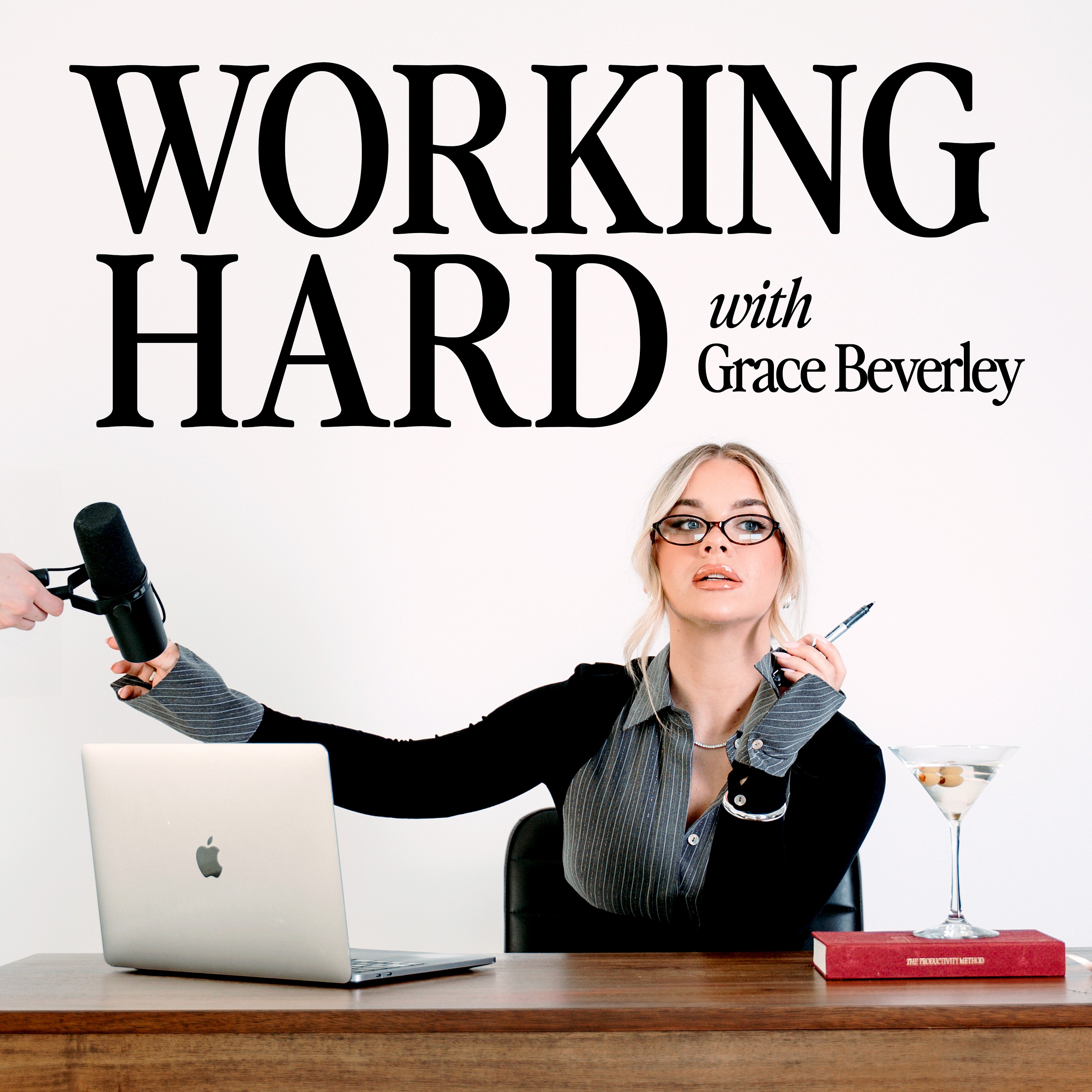
 Working Hard with Grace Beverley
12 Aug 2024 · 1h 10m
In the milestone 100th episode of "Working Hard with Grace Beverley," host Grace Beverley reflects on the journey of her podcast, emphasizing the importance of broadening the definition of "success" beyond traditional markers such as health or productivity. Each episode seeks to provide actionable advice and interesting conversations with various guests, offering listeners valuable insights for personal and professional growth.
Written by AI. May contain mistakes.

Get the gist, explore an idea or ask about something said.
 Claude
On Working Hard with Grace Beverley, what are the key points of this episode?
Searching your listeningAutomatic transcript. May contain errors.
0:00The market's uncertain. Revenue's tied and hiring on hold. That's why results-driven companies are using Upwork to keep work moving. Go to Upwork.com today and start hiring proven freelance talent fast. No bulky overhead. No rigid long-term contracts. Just the right expert right when you need them. Work smarter and faster with Upwork. Go to Upwork.com now and find your freelance expert. That's U-P-W-O-R-K dot com. Post a job for free and get started today. At Capella University, learning the right skills could make a difference. That's why our business programs teach you relevant skills you can take from the course room to the workplace.
0:39A different future is closer than you think with Capella University. Learn more at capella.edu.
1:03Because when your operations are smooth, your impact can be bigger. Visit business.warmart.com to get started. Hello and welcome to episode 100 of Working Hard Hardly Working. It stops. Hello and welcome to episode 100 of Working Hard Hardly Working.
1:31that is perhaps the most scared i've ever seen in my life that was the louder sound if you couldn't hear how loud that was honestly everything went silent in the office building room but we're gonna eat some cake um for context for anyone not my hand's shaking for explanation for anyone who isn't watching on YouTube, I am sat eating a cake. Oh, my knife's been lost in there. I'm eating a 100 cake because it's 100 episodes and we've just had the world's largest confetti cannon explode all over the office. I've actually lost the depth of my knife. But I thought we could spend this milestone together.
2:13And what we're going to go through today is talk about the absolute absolute best 10 pieces of advice that I have been given from this podcast. So as you all know, I ask people at the end of the episode, what is the best piece of advice they've ever been given? And this is a collation of just like the best advice that I've received in this podcast. So not necessarily just what they say at that point, but actually like life-changing things that are very much stuck in my mind ever since listening to that particular episode. So we're going to be learning a lot today. I tried to keep it as varied as possible.
2:49But when I was going back through this, I was like, this is great. This is great advice. I'm going to eat some cake. I truly cannot believe that we have made it to 100 episodes. But at the same time, it still feels like it's just the beginning. Like I've said this in pretty much every episode so far. But my aim for this was always just to have interesting, advice filled conversations, like not PR runs, not like a need to be here just to talk about one specific thing you're doing, like interesting conversations with interesting people. And when I started 100 episodes ago, I was very frustrated that kind of like life improvement podcasts were either just positioned as health or productivity and kind of business and how in fact life improvement stretches so much further than that.
3:36Becoming an interested and educated person means listening to other people's stories, hearing from diverse perspectives, learning what we're never taught at school, whether that's about heartbreak, finances, social causes we should care about, and so much more. Like to me, life improvement and becoming a better and more interesting person is all around those things. It's not just about being like healthier and reaching your kind of wellness goals. Like don't get me wrong, there is absolutely a place for that and you'll have heard us speak about this on this podcast. But like life improvement is like caring about shit that you should care about that doesn't affect you at all.
4:10And that is why we've concentrated so much on making sure that the breadth of this podcast is never just about like the biggest guests. It is about what makes the most interesting and insightful conversations and how we can learn from other people's stories. On that same subject, as I said, this week is going to be a bit of a different episode, but I've aimed for it to be like as useful as possible. You know, we don't party here unless it's productive. Who would do that? And I've trawled through hundreds of hours of footage to find what I think are some of the best pieces of advice that we have ever had from guests.
4:46So as I said, things that I came away from the episode thinking about for weeks, months, like still thinking about that. I created an original list of the best and we worked out that the episode would pretty much be about four hours long. So I've painfully whittled it down to 10 clips that I feel are the best life advice from the last 100 episodes. So they cover a huge range of topics from managing a team, building a career, sex, dating, mindset, money, skincare, so many different things that I feel like, dependent on who you are and dependent on what you value, absolutely are a big part of life improvement.
5:23I wanted for this to be the most useful episode we've done to date and also like the perfect place to start if you're relatively new to the podcast and want to have an explore of the archives, you could always listen to a little clip here and then think, actually, that episode is definitely something I want to listen to more of. So now it feels like because we have such an expansive mix of like a hundred different episodes of about a hundred different things, it feels like a great place to be able to give you a little bit of a like, a little bit of a contents page, you know? Also, if you like these type of compilation episodes, let me know because there is so much more gold that I have like heard on this podcast and then never forgotten about again.
5:59and I feel like we could do them by different themes. So let me know if you're interested in that. And I just want to say that whether you have listened to one episode or a hundred episodes, I cannot thank you enough for being part of this journey. This podcast has always been guided by what you want to learn and improve on. Like I am so grateful for the DMs and comments and whatever it might be of people requesting specific things. And we often go out to find exactly that thing, especially if it comes up a few times. So please never stop sending ideas and making this podcast alongside me because it is truly a product of everything that you request.
6:37I'm so grateful and we have huge, huge, huge plans for the future. So here is to the next 100 episodes. So we are starting off with a clip from one of my favourite episodes from the last year with John Amache. He's a renowned psychologist and the first Brit to play basketball in the NBA. And that kind of combination of those two things made for such an interesting episode on motivation and performance. And it was so actionable as well. And this is what I mean by it not just always being about like the biggest names in every single area. Like to me, you don't just need to have like loads and loads of followers to have an interesting perspective.
7:19And I think that, you know I'm not gonna lie like of course that's helpful for the podcast and of course we've had huge people on here too but this episode was such an example of how like there are absolute gems to be found that I haven't heard talking on other podcasts and I've had one conversation with them in real life and I'm like you need to come on this so um yeah I also think that the phrase smooth of silk was very much like based on his voice because this entire episode was like a guided meditation it was honestly like the whole team was sitting here like staring at him in wonder he's like fucking incredible um but before we get into the proper clip which is about self-awareness you need to hear this analogy for alpha males which unsurprisingly got millions of views on tiktok um when we posted it after the episode many of these and I hate this term, but many of these alpha type men.
8:18I heard somebody else talking about alphas. I wish this was my original thought, but it's like, when somebody tells you they're an alpha, you should believe them. And you should just say yes, because alpha is a type of radiation. And it's a type of radiation that's so weak that it doesn't penetrate into the body. But if it gets inside the body, it does tremendous harm. So you believe them. But alpha is also a type of program. It's a type of program that's so buggy, it shouldn't be released to the public. And so when a man tells you that they're an alpha, believe them, knowing those things are true.
8:52It's so amazing, right? So amazing.
8:58I feel like that is very much one of those analogies that you just need to store in your head for next time you're faced with someone. You know what I mean. Someone who's a bit like that. Anyway, the next clip is all about self-awareness and why self-awareness is the key to creating any sort of meaningful change in your life. So take it away, John. Know yourself. My mother, when I told her I wanted to play in the NBA after 45 minutes of a practice, she said one of the most frustrating things I'd ever heard. Son, would you recognize your soul in the dark? I mean, even as I say that, my ears are getting hot because I was so mad that she said, I've just told you I'm going to play in the NBA.
9:39Just tell me yes. It's amazing. Would you recognize your soul in the dark? And it's like, no, I don't know what you're talking about. And she was this idea that many of us, we go through life so focused on what we want to do that we spend no time thinking about who we are. And that if we stripped away the labels of I'm six foot nine, I'm black, I'm a man, I'm a brother, I'm a father, I'm a whatever it is. You strip these things away and you suddenly realize you couldn't describe yourself any differently than any one of the people around you. But that's so key. Knowing yourself is key to success in life because many people are self-sabotaged by things that they just never acknowledged existed.
10:21I'm incredibly lazy. It's a fundamental tenet of who I am. But I played in the MBA and my days are busy and productive because I've built systems that stop me because I am obedient also. So if it's in the diary, I will do it. Know yourself is so important. Most people don't. If you ask human beings, they will tell you 95 % of people will say, I'm highly self-aware. Now we automatically know that's rubbish, right? Because 95 % is not, that's just not real. But there's a wonderful researcher called Tasha Yurek, And she does studies on self-awareness, and she finds of that 95%, when you do a little bit of probing, about 10 % to 15 % are actually self-aware.
11:04That's the first damage that comes, the idea that you think you're self-aware, but you're not. And the second damage comes because people who are self-aware are often what they call internally, you talked about before, knowing your values and your principles, internally self-aware, but they aren't externally self-aware. They don't realize that their values don't meet the world in the way they think they do. And so the example I always give is the person you meet who says, the thing you need to know about me is that I'm direct and honest. It's like they know their internal values, but everybody listening to this has met that person, that man usually.
11:39And we all know that that person is cruel and callous and careless because his version of direct and honest comes across to others in a way that is not direct and honest, but cruel and callous and careless and thoughtless. And that's why self-knowledge is so important because you need to know not just who you are, but how you're met by the world around you. I think we spend so much time now in our internal monologues that sometimes it's hard to see how you appear on the outside. And actually, you don't need to only be concentrated on how you appear on the outside, but it is incredibly important to have a level of self-awareness in order to be able to understand how you come across, why certain patterns might happen to you again and again as well, in order to be able to then disrupt that if you want to, or lean into that if that's something you're really good at.
12:31I feel like that's come up time and time again on this entire podcast and it's something that the more time we spend investing in like building our self-awareness the better life we are able to build for sure like that's come up again and again and again and next up a talk about a tone shift it is a clip from the episode with psychosexual therapist Kate Moyle I am a pretty straight talking and open person but even I remember feeling nervous for asking Kate such frank questions about sex and sexuality but she very much put me at ease. She had great answers. And this is an episode I really recommend you going back to listening to if you haven't already.
13:11So here is Kate talking about the problems she sees most commonly in her practice. The one thing that comes up with everyone, irrespective of whether we are working on anxiety, you know, recurrent miscarriage, stress, desire, couple difficulties, sexual dysfunctions lack of sexual experience the one thing is shame right everyone's comes in with the feeling of maybe I'm the broken one you know am I broken I must be the problem it doesn't look like anyone else has these problems I don't see myself represented anywhere and for a lot of people having to reach out to a psychosexual therapist or any therapist a lot of the time can feel terrifying and feels like such a massive step and a massive ask for help.
14:01And do you think there's a kind of misrepresentation of, I mean, a lot of those things in terms of shame and being like, I'm not seeing myself represented and all of those things, I guess, are based on like a misrepresentation of what a quote unquote norm is and like whether there's a norm. Where do you think that generally comes from? I think it's in everything. I think We live in what we call a heteronormative society, which is that we assume that the standard is man meets woman and off they go into the sunset. And that's what we kind of use as the standardized model. So anything outside of that is then considered to be not normal in terms of when we use that terminology.
14:41within that we then have a normal model of sex which is that intercourse is real sex and everything else isn't right or doesn't count as much or isn't as important as important and so really then when we're talking to anyone about sex that's the that's the what's considered the norm and we know that that just isn't the case we see such a massive diversity in sexualities in sexual practices preferences desires wants and when you think about it we accept that in almost every other area of our lives we don't like to go to the same restaurants like food is a great um a great analogy because we don't like the same restaurants we weren't all bought up or grew up eating the same foods we have different tastes some of us like our food spicy some of it like it mild some of us like different cuisine some of us like to eat the same thing every night for a week someone else might be like I like to eat cereal at dinner instead of at breakfast there's and we're completely accepting we don't go to a restaurant and expect everyone around the table to eat the same thing to pick the same thing off the menu and if we do I think it would probably think it was weirder than everyone doing something different okay just trying to give you whiplash here we are going from sex to money this is the most recent clip I have included in this episode because I wanted to make sure that we're really digging into the archives.
16:06And I found this podcast has kind of blown up over the past few months. This is from my conversation with Vivian too. It's actually the most viral clip we have ever shared from the episode on socials. And I don't mean to sound like a kind of mystic Meg with a crystal ball. But as soon as I heard Vivian say it, I knew. Like, I knew that people would be like, oh my God, that makes so much sense. And also like, why the fuck do people, like, why don't we not learn that at school? like why is that not something that we're just taught like that to me is crazy and that is why I feel like it's so important especially as women who have often been taught that it's very like vulgar to speak about things like money um you know Vivian if you've listened to this episode she is not afraid to deliver some hard truths on spending and demanding your worth so this is definitely one to take note of and to have a go at like trying when it comes to your own finances To answer the question of how do I get rich AF, I always say you have to strip.
17:07And then everyone's like, what did she just say? So strip is an acronym and it is just a really simple process of how to boot camp your finances. So S stands for savings. I always encourage people to have three to six months of living expenses set aside in a high yield savings account. So the money being set aside for a rainy day can earn a little additional interest. Three to six months is the basic, but if you are head of household, you got kids, you have inconsistent income, you may want to look at something closer to six to 12. Up next, T is total debt. I'm an Aries, so I'm very impatient.
17:46And what I like to do with debt is rank it from highest to lowest interest rate. So you'll see stuff like credit card debt at the very top because that has an interest rate of 20 to 35%. Then you've got maybe like mortgages somewhere in the middle here. Right now, they're hovering around 7 % in the US. And then if you graduated college, when I graduated college, federal student loan debt, you could get a federal student loan with like a 3 % or 4 % interest rate on it. So that might be a little bit at the bottom. Whatever your stack looks like, make the minimum payment across everything. And then any additional dollars that you have for debt pay down, put towards the debt at the highest level of interest rate.
18:27This is going to help you pay your debt down the fastest while paying the least in interest. Up next, retirement. For my U.S. friends, this is something like your 401k at work or a traditional or Roth IRA individual retirement account. For our friends in the U.K. listening to this, this could be something like your stocks and shares ISA, your lifetime ISA, and potentially even a little bit of that cash ISA just to have money there. Just have it there. This is going to get you tax benefits. We love tax benefits because we are always looking for the legal ways to pay as few taxes as possible. I think that is just across the board.
19:11Good advice. Up next, I invest. It is not enough to open these accounts and chuck some cash in. A lot of people do that and they're like, I'm done. No, you're not. You didn't buy anything. You just have cash sitting in a special purse. OK, you got to take that cash and you actually have to buy stuff. And so when it comes to buying stuff, I typically recommend index funds that track the broader stock market, a targetate retirement fund that'll be diversified and planned out based on when you're going to retire. Or if all of this is making your head spin, just Google best robo-advisor 2024 and sign up with a robo-advisor.
19:53You take a quick quiz about your money goals. So how much do you earn? How much do you have? how old you are, what your family structure is going to look like, what do you want to do in retirement, then they will spit out an investment portfolio built for you. And then you take the quiz every year in case you start to make a lot more money or you have a child or you get married or something changes in your life. And this is great because it takes all of the guesswork out. And then last, P, we have to plan. You don't get to have happily ever after. You don't get to ride off into the sunset if you don't have a plan and know how to get there.
20:26And the easiest way to do this, I say, is to calculate your FU number. So what you do is you, when you're in a good mood, you sit in a room and you think about what does my perfect life look like for one year? Where do I live? Am I driving some sort of car? What does that look like? do I have a family? Do I have pets? Do I have a partner? Do I want to travel? Do I want to buy retail products? Do I want to take care of my parents in their old age? Think about all of that and then back out what roughly that would cost. Then you take that number and divide it by 0.04. For all of my friends who are not good at math, you get a bigger number.
21:13And that number is what But you would have to have invested in a conservative investment portfolio. That 0.04 represents 4%. You would have to have that bigger number invested earning you 4%. And that would essentially throw off enough investment returns so that you could live the exact perfect life you want without ever working again. Wow. That is great advice. I mean isn't it obvious why Vivian's advice here ended up getting over 3 million views she is so straight talking about things we all worry about and she pulls no punches when it comes to financial literacy she inspired me to take a Sunday afternoon to sit down and go through all of my finances but also just like start really putting time into understanding these things more like I think it is so easy to put your head in the sand when it comes to things that we don't understand.
22:09And the big reason why I try and get things on this podcast that maybe aren't things that get like the most engagement online has been because I believe that there should be resources from people that you might not be able to pay to give you advice on in order to be able to learn more and make your life better and just understand better about things that you don't know about. I will say that before this podcast, I, like this podcast as a whole, not just this episode, but like I really knew nothing about investing or like the best ways to look after my finances. The like most I'd heard was like generally how you should be dividing your income in terms of savings and investments and blah blah blah and even that didn't feel like appropriate for living costs now etc etc.
22:52So yeah I thought that was so interesting and so concisely explained. This next clip is conversely one of the oldest in this whole episode. It's from my conversation with Sharmadine Reid back in 2022. It was literally one of our first ever filmed episodes, so please excuse the video quality if you're watching this on YouTube. We've, you know, compared to our setup now, it is very much giving growth. Sharmadine was the founder of Wye Nails, Wye Magazine, Beauty Stack and the Stack World and if you don't already follow her, you absolutely should. She is a huge inspiration of mine, so having her on the podcast so early on was a huge moment for me.
23:28The part of our conversation that I really wanted to include was about the funding gap, another thread that we've discussed in many different episodes, but I think she put it really, really well. So according to Business Insider, you are one of just 10 black female entrepreneurs in the UK in the past decade who have raised VC. What in the flying fuck is that about? What I would say in addition to what you discussed previously about funding is that you can give, I got over the first hurdle. I raised VC money. I probably raised one of the top rounds for black women. The second hurdle, if you manage to get over that one, is how you spend that money.
24:18And one of the things I realized during my process as a VC-backed startup is that you can give two people one million and they're going to deploy that captain in a completely different way based on their experience, based on their personal barriers, what's holding you back and based on their network. And what I mean by that is in the first part of Beauty Stack, engineers don't want to work for black women. They don't want to work for women. There was this whole thing about the few engineers not really understanding that I was their boss. You know what I mean? So then you have to pay extra money.
25:01So you basically spend more money to achieve the same results than someone who's got a network who knows an amazing salesperson from their MBA. or you know there's so many there's so many eaten boys in tech right so they're able to call on their eaten boy mates oh come and do this job and in two months they're going to get more sales than the woman who's never been in that network because they're also selling to their friends so the two the if you if you're one of the few people that managed to women that managed to overcome the hurdle of venture capital you really have to think about how you're deploying that capital and I think investors should be way more supportive of like I got given that money and then left to my devices and I was like I don't really know about paid marketing how what is that like I've always built my business organically there are all these things that I just didn't know how to spend the money and it's one of those things that to correct the pattern it's not about just putting more money in one direction it's about putting it productively in a direction that you can constructively help people to be able to deploy that because like i mean we've talked about this before the we work founder raised how much like last month like and and we can't you know female founders especially black women like cannot raise money as in i don't mean that in terms of like an aptitude i mean that in terms of the landscape and it's like but you're throwing money in this direction because you know it works and why does it work because it's all built on unfair systems and it's all built built on a certain networking it's built on networks and the network and the community this is why I say my mission is gender equity through community because I think if you know someone who's the lawyer who's the salesperson if you know someone who's at a high position somewhere so that you can get that deal made that's how you actually raise your economic independence your mental autonomy everything I'm just like the the capital is just one part of the problem what you how you help that person build their network around that capital to make that capital as effective as possible is the second part and I feel like that's the next challenge I now when I raise again I will be looking exclusively for people who can introduce me to enterprise companies right that's it I'm like anyone can write me a check whoop you do i'm good at pitching i'll pitch it'll be fine yeah i will raise money again that's the fact of it but can you introduce me to three people at fortune 500 companies who are basically going to buy my software that's what i care about now female funding is as i said a thread that's carried through every year of the podcast and if it is something you're interested in i really really recommend my early episode with Michelle Kennedy and later episodes with Sojo founder Josephine Phillips, Stripe and Stare founder Katie Lopez, Trini London founder Trini Woodall.
28:01They all have businesses at very different stages but all speak about the funding landscape and what we can do to change it. We're going to come on to speak about mental health now and this episode was with Jason Fox and we spoke for so long and he really just kept coming out with incredible stories and advice even after the mic stopped recording but this was one of the most sensitive moments in the podcast where Jason who's been extremely open about his PTSD diagnosis spoke about why it actually wasn't the military that caused the condition and talked about a great visualization that he's learned to help you know when you're nearing breaking point just a trigger warning for this one that Jason does mention suicide so if you'd rather skip this clip just skip ahead i was like okay fine i'll go through this whole medical discharge um thing which i didn't want to do but i felt like i had to do it and then you know it happened pretty quickly within about three months i got medically discharged from the military and i can remember it was on the fifth of my my last day serving was on the fifth of april 2012 and i was expecting to wake up on the 6th of April feeling better and I didn't I felt worse can imagine and what was it like moving on because obviously the military is very much the definition of kind of your job is your life I can imagine that's not just it's not it's not moving on from a job it's a whole life inflection point what was that like for you it was it's the hardest thing I've ever done in my life I'd say it was um yeah it was horrendous to be honest I I mean obviously like my the job that I did was probably a catalyst but it wasn't the job that affected me more more than anything it was it was normal everyday life that properly affected me and the reason for that is because you know there's a lot of stuff that happens to everyone you know people keep saying I understand why you got PTSD because you're in the military in the special forces you're away fighting and I was like yeah I don't think it can be attributed to that it's more attributed to the fact that you know I met someone I got married we had a kid the kid was ill we argue car breaks down the washing machine breaks we ain't got enough money for the bills kids back in hospital we start splitting up get divorced you know all that stuff I've I've never once in my life as as anyone else being taught how to deal with that and it was that that was impacting me more but it was obviously mixed up with the other stuff and I think that's so important to say as well because I can imagine and it would probably be easier for you to sit here and say yeah of course I was in the military I was being shot at of course I would you know go down that to to openly say actually some of the normal quote-unquote stuff yeah was the stuff that really had that impact in amongst obviously other things but I think that's actually really really really powerful yeah I think um I mean I I thought about it a lot because I mean I left and um you know I I contemplated suicide whether it was going to happen or I don't know I was like stood on top of a cliff and everything was falling apart and I didn't I walked away and it was at that point I was like right I need to I need to do something if I'm not going to do that I need to make sure that I'm doing something that's going to change my life and one of the first things I did was I looked back at my life up to the point I was I started drawing lines that represented stuff that happened in my life and where the most lines converge as in like so if this is a really bad example for a podcast but if you draw like one long line which is you being born to where you are and then underneath that you draw other lines so that's your timeline then you do one that you know you've got a line that's your career your military career and then within that you've got career courses where you're expected to perform you've got marriage birth of kids divorce all those things cars breaking down everything i've mentioned before but where the lines all converge the most in a period of time that's probably where something was going to snap and if i'd have been paying attention to that at the time i'd have been able to address it better but no one ever does it's only with hindsight and And I was like, that's when it, and I can see it now and I could see it then.
32:33I was like, that's where I should have been paying more attention to myself and like checking in with myself and being aware that I need to be easy on who I am because things aren't going right. And things are looking like they're falling apart. I need to try and learn about normal life and how to deal with it. and I didn't but but doing that exercise after I'd been through a really sort of sticky period was cathartic and it helped me and I was like right this is what I need to start doing is start being aware of what's going on around me what I really loved about my episode with Jason is that whenever he spoke about the hardest moments in his life he also had actionable advice about how to get through them.
33:18And whenever I get very overwhelmed now, I really do think about his timelines theory. And I think that as a whole, he was just so open and explaining really, really well the things he kind of had to learn to mean that he got through that point. And through his own admission, you know, he hadn't been interested in looking at his mental health until he really got to breaking point and I do think that this was just a very very good piece of advice. And on the subject of actionable advice from a very very different area this next snippet was from without a doubt one of the most useful episodes for anyone with a business no matter what that business is.
34:02It's from the episode with Luxe Collective's Ben Gallagher back in January this year. Ben really created this type of social media strategy from scratch. They tested, they learned, they built all of this, especially over lockdown, and they've really like just tested and learned. And what he did in this episode was he was just extremely generous with actually revealing all of that. I think one of the toughest things in entrepreneurship is that like there's very, very little knowledge sharing. And I've always tried to break through that in this because if you're coming on this podcast, I'm going to ask you literally everything I think of while speaking to you anyway i had so so so many messages after this episode about how many of you had actually put his strategy into action so it was definitely one that had to be in this roundup let's talk about your social strategy because actually like on the topic i feel like that's one of the like it's such an exciting part of your business and i think it's so unique as well like your business has bigger social following than businesses probably like i don't know unicorns like billion dollar businesses for sure and that's incredibly exciting like you've done so well i want to get straight into the nuts and bolts of how you grew okay what was your strategy so we were on tiktok so early so we we got on there about 2019 so like three years before you you were you were even on it which is wild like imagine three years worth of work that we've accumulated like i feel like as i said fumbled yeah like rob it in why don't you we um so that that meant in like a lot of things but most importantly is that we were able to learn a lot quicker than a lot of people because we had years of experience in it so by the time lockdown came around i already knew what type of videos people wanted to consume so it was like i posted the first seven six seven videos and they were like rubbish like i i had no experience in content creation no experience in making a good engaging video like like nothing works and then someone sent a dm saying please can you show me how to tie a pair of alexander mcqueen trainers and i was in the office doing nothing i was like oh i'll just instead of explaining it to her i'll video it and i'll send her it as a message and then i thought oh instead of sending it to her as a message i'll post it on tiktok and then post it on instagram and then share it with her and then be like look I've made this video for you like come and buy some now like as a value proposition to her and then like I put my phone down and then I must have checked my phone like 12 hours later the next day and it was like 700 ,000 views and like genuinely from that moment I was like oh my god I know what people want to consume they just want to leave the video knowing something that they didn't when they entered the video so I was so I was like there's loads of people in my industry down south like there's no one really up north i think there's one up north there's loads of people down south that no one really knows about especially in the whole of the uk and like they're not that big businesses like they've had loads of investment but really they're not that big of a business so like how do we but the but the market's out there so how do we attract those people to come to our business and it's like well we need to create content on social media so i was like okay what works on social media so i was like okay giving value so instead of like looking at all our competitors and being like here's a picture of a birkin like the most expensive yeah the most expensive bag in the world like here's a picture of a chanel that you can't get because chanel won't sell you on like i have it do you know what i mean like here's seven things you can do to get someone to give you a birkin for 30 000 literally so i was like okay if i want to build an audience i'm gonna have to build a big audience and 80 of those people aren't gonna care what we sell it's just the 80 20 rule like 80 of them aren't going to care but to to get to that 20 i have to go through that 80 so i'm going to build i'm going to take the angle i'm going to use which i didn't know at the time my unfair advantage of being from liverpool as a teenager a boy talking about women's handbags and fashion i was like i'm gonna do this because it just got people so curious when they first came across me they were like what the hell is this guy doing literally 100 and like like when i bump into people who notice me off socials they're like like that's the first thing they say they're like i just got so intrigued because i've never heard or seen someone like you talk about this industry so the strategy has really evolved over time but the main thing of it is just providing value and i know that's a very blanket term of like oh you have to provide value or to be like come and be my client i'll provide you value but it's really like in simple terms is giving something to someone that they didn't know they wanted that they never had when they first came onto your profile yeah i mean i think that is so powerful and you would be surprised at how much value that would add to literally every single traditional business out there so instead of talking about the product you sell instead of talking about how you can benefit this company talk about so it's a part it's a it's a strategy i like to call hosting the party talk about the industry talk like we give people a reason why they come back onto your brand at 5 p.m every night when when your audience know you post give them a reason to come back so yeah the hosting the strategy it's like talk about your industry talk about the news in there talk about history in there talk about your opinions on there because everyone loves an opinion everyone has an opinion um so yeah that was the strategy we took and i'm so so surprised that people haven't copied us i mean they have copied us but they see it not work for about two months and they're like oh it's only worked for him because he's a for a lad from liverpool who talks about fashion and he's been doing it for for for whatever it's like it's not that it's that you just have to do it for three years and you have to post three times a day and if you don't want to do it if you don't want to do it then then but like i've i've done the blueprint for everyone who wants to build social media three times a day for three years go and do it like there's there's the plan that there's how you can get millions of followers if you work in social media or you know someone who does or you know someone who has a business who happens to sell on social media which is probably literally every business ever i would highly recommend sending them that episode it honestly like there were so many gems i actually made the entire social steams at my businesses listen to the episode because I was just like I can't regurgitate the amount of value he had in there and like we consider ourselves pretty social first um but honestly like I love the idea I love his view on testing and learning I love his idea of like hosting a party I love the whole thing about how everyone just wants to be educated or they want to be entertained like it's so squarely within what I believe about social media and I just think that you know he was so generous with just being able to actually like very clearly be like yeah this is what we do and this is how we do it and these were the big inflection points and this was where we grew loads but didn't sell a lot blah blah blah blah now we're heading way back into the archives to one of my first ever filmed episodes with the brilliant Candice Brathwaite Candice opened up on this episode about the hostility she faced as a black woman entering the mummy blogging and publishing worlds I would hugely recommend listening if you haven't already this clip though that I'm gonna play.
41:25She was so transparent about how her and her husband's incomes have changed as they've developed their careers. But this advice on choosing your partner is the clip from the episode that really like everyone went absolutely crazy about. And I think especially in a world where social media makes things look a lot better than they are for a lot of different people, especially when it comes to like the flashy stuff, when it comes to like genuinely choosing a partner who will support you and be there through your toughest times like that that could not be more important I see a lot of younger women saying their mid-20s I want a six-figure guy I want a seven-figure guy love that know your worth want a guy who's doing a b or c but I'm always interested in how you could become the six-figure person life is short but it can also be really long and things are always changing for a long portion of time for those four or five years my husband was the breadwinner no one batted an eyelid at that because that's the norm that's the societal norm and then in the middle of the pandemic he left a job that was literally draining his soul and I became the breadwinner we just don't see it like that in that in our household this pot has got to get filled up anyhow don't care who's doing the filling this is what the house needs who's dumping into this reserve also at this time where I'm being the breadwinner I'm already thinking five years down the line where I may want to take a career break and now he's going to have to step in so I just find the breadwinning conversation really interesting because in our house it's just a flip-flop it's like what if I please god no but what if I have another kid I just want to make sure the atmosphere is understanding I'm just using that as an example what if I want do you know I mean there are going to be some things I can't do and I'm going to have to pass the thing back to him.
43:16So it's been really good, I would say, for my confidence. I can't lie. It allows me to know that or believe that outside of our union, I can survive. And that's really important for all women, specifically black women who for, and I think a lot of our older aunties, as we call them in the community, they still struggle with this. They're stuck in relationships. They can't leave because they believe they can't be financially free. So to know that I can pour into my household in a way that is usually expected of men fills me with a lot of confidence. I love him to death, but if things ever went wrong, or God forbid, because this is happening to a lot of women I love right now, he dies.
43:59I'm not going to be sitting here thinking, well, not only is my emotional world rocked, but the way I live day to day is rocked. I'm like, And it's a big thing for women as well. I think that in general, the idea of financial independence as a almost just creating your freedom in a way that it's not going to, you know, it's not going to create complete freedom. You can still want someone who does that. but I do think there's this kind of slight danger in the conversation and of course from like my position I my career started very young I've come from a like big position of privilege like in terms of that I can't you know shout from the root shop like just be financially clear then you won't need like of course you can't but in terms of actually this glamorization of I want a man who does x y and z and it almost just kind of flipping the conversation again that kind of worries me And it's like, yes, know your worth, know what you want from a man 100 percent.
45:01But please, more so than that, know what you want from yourself. Also, I've been with I've been with really rich men, really rich, horrible men. And they're so stingy and they just they see women like that are so interchangeable. It's like buying a new pair of trainers because they know you are dependent upon them in that manner. And I would much rather a hardworking five figure guy who is going to exalt me to a place where I get to be an eight figure gal than the six or seven figure guy who is always going to try and oppress me. well it just also I think always creates a power imbalance because no matter what no matter what that if that difference is large in some way and I'm not saying that it shouldn't be and there'll be relationships that really do work in it and all of that but actually from from certain kind of like friends I've seen for example when that has been quite a different weighting if you have an argument and you you know you're on a holiday I can't tell you not to do something or ask you not to x y and z or have an argument and it not be already weighted based on the fact that you paid for this so in my second book sister sister i talk about this really well in the black community well in my house we used to call it gvm your get vex money yeah are you in a position to get vex do you have enough money to be angry and back your chat because like you said you can be on holiday where you're like I don't really want him looking at other girls you don't have your GVM so you feel like you can't say that because how are you getting how are you getting home if he's gonna be like and there's a lot of them that will well if you don't like it leave I'm also worried that it's making young men like broke to keep up with the whole thing that's so funny it's not funny it's not what you said but i'm just like what like when we when we create this ideal that like you have to be sorry this is so off topic but i think it's really interesting when we create this ideal that it's like oh you're fucking 21 it's like he has to take me to novikov on the first day and it's like so broke so unsustainable also then i think it doesn't encourage young men to double down on the things that, and you will need this if you decide to have kids.
47:26You might just want a man who is going to help you change your sanitary towel on God. In that moment, what's in his bank balance doesn't matter. Is he emotionally mature enough to deal with the realities of helping you become a parent?
47:44The market's uncertain. Revenues tied and hiring on hold. That's why results-driven companies are using Upwork to keep work moving. Go to Upwork.com today and start hiring proven freelance talent fast. No bulky overhead. No rigid long-term contracts. Just the right expert right when you need them. Work smarter and faster with Upwork. Go to Upwork.com now and find your freelance expert. That's U-P-W-O-R-K dot com. Post a job for free and get started today. at Capella University learning online doesn't mean learning alone you'll get support from people who care about your success like your enrollment specialist who gets to know you and the goals you'd like to achieve you'll also get a designated academic coach who's with you throughout your entire program plus career coaches are available to help you navigate your professional goals a different future is closer than you think with Capella University
48:48Okay, so we're now going on to a clip from the episode with Dr. Hazel Wallace. One thing I love about recording this podcast is the fact that I get the chance to rant about things that matter and like generally things that I think people should care more about. Call me boring, but that's my idea of fun, okay? And this was the moment that really ignited the anger in me about the lack of representation of women in the medical world and data overall. You'll have heard me talk about this in episodes with Dr. Helen O 'Neill, Will Ahmed and many more throughout the time that this podcast has been but I remember hearing this fact and literally being absolutely blown away and being like oh my god and then I remember Will Ahmed said after this She said 97 % of all of the data we have on the human body is based only on men.
49:4397%. Like, how do we believe that we know anything about women's conditions when that is the case? Anyway, listen to this clip. Until like the 1990s or something, you didn't have to have women in clinical trials or something. Yeah, it was most of the medical research we have is based on a male body and just extrapolated to a female with these. Which is wild. Even just like knowing about probably like one main difference between the sexes in terms of carrying children and like the menstrual cycle. How an entirely different hormonal profile, like how are we expecting to be like, this is an entire study we did on all men and maybe like one woman.
50:21You'd never be able to do that with like sample size, extracting it from like one person to a million people. So why would you do it literally missing out half the population? Well, this is it. And this is why it's so ironic, because they historically excluded women for three main reasons. The first is because of our fluctuating hormones. And that's a nuisance for them to control for. So they'll just pretend they don't exist. The second is the risk of pregnancy. So there's like an ethical issues. And the third is the fact that women have historically been primary caregivers. So they just can't like come to the trials.
50:55But researchers haven't made it like accessible that they would do eating trials. Okay, sure. Women are still very much primary caregivers. Yeah, and it's definitely, you know, now you do have to include sex disaggregated data, but it's happening so slowly. And by the time research happens, that changes clinical practice takes years. And in the UK, they released the Women's Health Strategy last year, which is basically outlining all the changes that they're going to do in terms of restructuring of the NHS and research. And that's a really positive step, but it's just paper at the moment. So everyone's always like asking me to go on the radio and talk about it.
51:37And I'm like, until I see any movements in this, I'm not willing to talk about it because we bring out papers all the time and change nothing. And I actually just want to jump in here. This wasn't even part of the plan, but I want to say that what was even wilder was talking to Will Ahmed and hearing what they were able to do when finally having women essentially involved in giving scientific data based on the customer base that Whoop has. Medical research is an industry that suffers, I believe, from really small sample sizes and just generally slow iteration. Technology actually as an industry is kind of the opposite.
52:23it. You have large sample sizes and you actually want to move at a fairly rapid pace. And a lot of the studies that I was reading as a college student had 20 people in them. And big claims were being made based on those 20 people. And so I thought to myself, wow, when we get this product on 100 people, 1 ,000 people, we're going to have actually some of the largest physiological studies. And of course, now we have this profoundly large data set. So the faster answer to your question is yes, all the work we've done has been based on medical research. Now we're at a stage where we're so big, we're doing a lot of the cutting ed research.
53:09You'll meet with our data science team and they'll be uncovering things that no one's ever talked about before. I'll give you an example because we just published this recently. So this measurement heart rate variability that I was mentioning before, really powerful for recovery. Turns out it has all these other really interesting signals. One, which we couldn't have anticipated was around pregnancy. And what we found in looking at, again, a small study on, I believe it was 12 women over three years. And they observed for 12 women who went through pregnancy that over the course of their pregnancy, their heart rate variabilities declined.
53:51So this would be a sign that they were potentially getting less fit or their body was under a lot of stress, which would make sense with the body evolving. But then very interestingly, at the 33rd week, these women experienced this sharp inflection in their data where all of a sudden their heart rate variabilities were rising right up to the day of giving birth. And so the researcher hypothesized, is hurry variability an important biomarker for pregnancy? And is the 33rd week this important inflection point before someone delivers? So we read about this research and we went out to our members and within a week's time, we had 2000 pregnant women contributing to science and sharing their data.
54:41And what's powerful about this data set is not only was it normal pregnancies, it was 10 % of the pregnancies were early deliveries, which is consistent with pregnancy in general. And so then the question became, well, is this heart rate variability trend that I just described where it decreases and then shortly before birth increases or delivery increases, is that a phenomenon that's specific to the 33rd week or is it seven weeks back? Because if it's seven weeks back, then it's predictive. And sure enough, what we found was it's seven weeks back. And so now we're developing the capabilities to be able to show a pregnant woman when we think she may be able to deliver based on that inflection.
55:29That is incredible. That is so interesting. I can imagine that people who invested in you early on are feeling very good about themselves. Yeah, I mean, it's fascinating. And that's just, that's one category of an infinite number of things that is going on in our lives. Going back to Hazel, she also had some incredible advice about how to advocate for yourself in the medical world. Believe me, I do not think that the onus should be on women to fix the gender healthcare gap. But obviously, when the data gap results in a gap in how we're diagnosing women as well, I think we've got to give ourselves the best chance.
56:09And I do think that this was a very useful piece of advice. What can people do in order to be able to improve their chances of being correctly diagnosed, etc.? I would say, first of all, don't feel like you are being a burden because that's something that women often feel like they are. the fact that women are more likely to be given a psychiatric diagnosis than a physical one for a physical problem compared to a man just really illustrates how we often see women as hysterical so like a lot of there's like research around a condition which causes a very high heart rate and lots of women are misdiagnosed with anxiety when they present with it because they'll say like I've got flutters in my chest and then the doctor will be like oh it's just anxiety like you're just an anxious woman um so don't dismiss your feelings um i hope no one goes away from this podcast after having like a coffee and thinking oh my god i'm having a heart attack but if you are having like severe chest pain that isn't going away after resting that is you know reason to call an ambulance but if you are experiencing any health condition regardless of whether whether it's like you know related to your heart or any part of your body never feel like you're a burden advocate for yourself if you feel like your GP isn't listening to you you're very much in your right to ask to speak to someone else you can bring someone with you you can take notes I think the most powerful thing for me when I've seen patients who've felt like they haven't been listened to is when they come in and they've had a diary of symptoms this isn't in my head I've been experiencing this for three months and yeah people might say they shouldn't have to do all of that research I should just believe them straight out but sometimes it's really powerful for you to like bring the facts and also it makes you feel a bit more like confident in what you're saying yeah because the patterns are on the paper so this is a slightly more recent clip from my chat with dr rangan chatterjee earlier this year about the benefits of morning routines i remember at the end of the episode rangan said he felt like he babbled um which is crazy because his advice was some of the most useful and actionable we have ever had on this podcast so i personally do have quite a specific morning routine that I've been working on for years.
58:20Now at this stage in my life, it happens to be between 30 and 45 minutes. Now I fully appreciate that some people will go, it's ridiculous, I don't have time for that. I talk to my patients about something called the three Ms. Mindfulness, Movement, and Mindset. What I do is I do 10 minutes of meditation when I wake first thing. So I live in a house, I go downstairs, I'm in my pajamas, I do 10 minutes of meditation. Second thing I do is I go into my kitchen and I love to drink coffee. So I'm very particular about my coffee. I weigh out my coffee, I put it in the French press and I put a timer on for five minutes.
59:01In those five minutes, I do a five minute strength workout. Could be press-ups, I might pick kettlebell that I've got in the kitchen, but I make it really, really simple. And then the third M is mindset. So after my little workout, I've got my nice cup of coffee, exactly the way I like it. And these days I journal. So I'll literally write in my journal. I answer some questions each morning, three particular questions that I ask myself every morning. And I think about the answers and I write them down. The reason I share that grace is because I believe morning routines are important. You don't need to get sucked into the two-hour routine the New York CEO does.
59:41If you can do that, great. But I appreciate most people can't. Even five minutes of intentional time each morning with your cup of tea, maybe journaling whilst you have a cup of tea, answering some important questions, I think that will transform people's lives. And I've seen it. It's done it for me and it's done it for thousands of my patients. Rangan then went on later in the episode to take us through the three questions that he asks himself every morning. I can see all the data on my YouTube channel, right? And this list of questions was the most replayed part of the entire episode. And I've actually written the questions in my notes so that I can refer back to them whenever I'm having a tough morning or also beyond just having a tough morning.
1:00:24Whenever like, I feel like I'm just in the wrong mindset for a good few days at a time or like a good few weeks at a time. This is, it's a great way to start your day. The three questions I ask myself every morning, and I think, you know, from the people who do this every morning, they say it totally transforms their days. Right, the first thing, what's one thing I deeply appreciate about my life? Simple question, right? We know from the scientific research that a regular practice of gratitude can help improve your moods. It can improve your decision making. It can reduce anxiety. It can reduce depression.
1:00:59It can help you sleep better. The lists are endless. Answering that question will take you 30 seconds, a minute maximum. What's one thing I deeply appreciate about my life? Second question, what's the most important thing I have to do today? It's one of my favorite questions. It's the anti-busyness question because for most of us, our to-do lists are never done. That's an endless list. Even if you think you've done everything, your focus is going to be, what did you not do? What is the most important thing I have to do today? Forces you to make a decision. And when you start off, you're often like, well, there's an important thing at work.
1:01:39There's an important thing in my home life. Fine, start off with two. But over time, you realize there actually is only one most important thing. And the point is, it doesn't matter what you put down. What matters is that you put something down. And then if you do that thing, it means that that day was a win, right? So some days for me, it's like, I must go for a 20 minute walk today. Okay. Some days it's like when the kids come home from school, I need to shut my laptop and make sure I'm fully present with them and listen to what they have to tell me. Other days is I must make sure after the kids have gone to bed, I spend some intentional time with my wife.
1:02:15by answering those questions it doesn't mean that nothing else in my life is important by saying i want to spend time with my wife doesn't mean that time with my kids is not important but it helps direct the focus each day and if that's all people ask themselves each day it is inconceivable that your life won't change because if you do that seven days a week then that means you're doing seven important things each week you're doing 28 important things every four weeks your life is going to start to change? And the third question is, what quality do I want to showcase to the world today? Again, I love this question, Grace, because so much of who we are is reactive, right?
1:02:56We think that we have to be the person who woke up on the wrong side of bed on a particular day, but we don't, right? We've got a lot more agency over how we show up in the world. So for example, you can write down, I want to show the world the quality of patience today or compassion today, right? And you set the intention, this is how I want to behave. And if you have time, you can think about it. Okay, that means when I get into work, I'm going to smile at my colleagues. If someone barges in front of me to get on at the tube, I'm not going to get annoyed. I'm just going to smile and go, maybe they're in a rush.
1:03:30Honestly, just spending a few minutes each morning answering these three questions will absolutely change the trajectory of your life. And if you do it every day, the same questions, you start to build up such a phenomenal self-awareness about yourself and you start to live more intentionally. And for the grand finale, we have the queen of skincare herself, Caroline Hirons. This episode is one of the ones I return to time and time again, just because it's such a well of knowledge. We had so much fun recording and Caroline is so brilliant and straight talking and I love her for it. And this was her advice for anyone starting to build their skincare routine.
1:04:13Buy an SPF. Don't sleep in your makeup. Don't smoke. Good ones. Short and sharp. Pretty simple. If you start there, then you're onto a winner, especially if you manage to get to like, you know, your teenagers. if you get them into and a routine doing it religiously like a routine is is key the early you start the earlier you start the less you need as you get older because the signs of sort of aging that most people complain about pigmentation wrinkles you know sagginess all that sort of stuff it's going to happen to us all eventually you can delay it the process a lot though if you're using spf for example and so should we all be using spf every day whether inside outside on your face.
1:04:57Yeah. If you want to help prevent, you know, if you want to sort of slow the passage of time, nothing's going to stop you aging. And why should you know we're a pro aging brand? We don't like to use the term anti-aging. If I use it, I use it in the context of letting people know what I mean, because the industry has made it such a relative term, but we're not, we're just, you know, healthy aging is better, like healthy skin. I don't like to use the term normal for sort of a skin that doesn't really have any kind of skin condition it's safer sort of I think and kinder to say balanced you know things like that we just try and tweak the language a bit but in terms of a sun factor the sun is fantastic I love the sun but it can and does cause damage you know so I'm not saying you have to slather yourself in a beach SPF when you're going to work in the winter that's not what I'm saying but on your face you can find a really sexy SPF that works well under makeup as well you're set and just if you want a cheat code based on what she's just said here were her five desert island products which if you have a look at their website and you see how many products they go through and review you'll know these products like have to be really really good five products all right let's get there oh don't not yeah that's it i need to lie down and think about this a cleansing balm number one um uh well my my sort of standard go-to has been emma hardy for years emma hardy moringa cleansing balm i've used it for years um there are other brilliant balms on the market i could name 20 but top of my head that would be the one most people who followed me for years ago she's going to say emma hardy um acid well the My favourite acid is P50 by Biologique Recherche, the 1970 version, which you can't even buy in the EU anymore because it's too strong.
1:06:45That's why I like it. Your face tingles, burns, and then goes bright red. But the next day your skin looks like you've had a head full of Botox. Off I go to the internet. Yeah, you won't get it. Off I go to America. Yeah, you have to go to New York. Yeah. So I've got that on tap, but I wouldn't use it every day. You know, it's too much, but it's a fantastic... It's just because it was innovative, you know, and I trained in biology research 20 years ago and it was just a really good education. Oh, God. Retinoid. I'll use my Skin Rocks Retinoid too, just because if I don't say something by my own brand, my team will kill me.
1:07:23And it's also great. It's a fantastic retinoid, let's be honest. Moisturiser. Only because I'm not going to sit here like those people go, oh, I only use my own product. I hate that. Kate Somerville, Peptide Kate. But you don't need that. You're 26. I need it. I am more than double your age. Kill me now. And then, I love that your team are laughing. My lot are like, that's what she's like. So, yeah, I've had, I should say SPF, but I'm on a desert island and I can't get off. I don't give a shit anyway. If it was SPF, it'd be like, I like ultraviolet, supreme screen. But if I could drop SPF because, you know, don't get me wrong, no one really wants to use an SPF every day.
1:08:03It's a drag. you know but you it's almost like putting on knickers if you want to go commander every day knock yourself out i don't know many women who do but knock yourself out um eye cream auto correct sunday riley i don't work with any of those brands none of them endorse me to say this now they're all going to make a pretty penny that's fine yeah just send it to me for free and would you believe that is all 10 clips done when i tell you i originally picked out over 30 moments as my top ones before the production team had to like wrestle me to the ground because we would have been here all day but let me know if you want me to do themed ones on specific things like relationships or business or whatever it might be I remembered like a lot that I think I don't know I think my brain can only store a certain amount of information but that's a problem for another day but I do think by category and that's why we've like put everything on the YouTube for example into different playlists is that you can like get into a mindset and then you can like go through all of these different ones and we try and make sure there's a good balance of advice from like like all of these different areas.
1:09:01So if there is an area you feel like we haven't covered as well, do let me know because I would love, love, love to tackle whatever that is. Honestly, we have tried to make sure that there is everything on here, like experts, incredible stories. We had the wonderful refugee Mez who told us about his story coming all the way from Eritrea to the UK, a journey that took a year. We had Kwajo Tuanaboa, who is this incredible housing campaigner, who basically got housing organizations to fix up when like by shining a light on like the terrible conditions that people were living in even in the UK when expecting to be able to be supported by their country and the country they pay taxes to and all of that we've had Katie Lopez who talked about how in one week she found out her husband was 1.5 million in debt and he left and then her house was robbed and to the people who have had the most unbelievable success stories that without a doubt have like these ties between them where you can see how these people have essentially like made their own luck.
1:10:08I love the idea of this curated life improvement from all different angles so that hopefully you can tune in every week and not necessarily know oh it's going to be on productivity or it's going to be on business or it's going to be on relationships but know that whatever it is hopefully it's going to add a lot of value to a certain area in your life. But all that is left for me to say is a huge, huge thank you to all of the incredible guests who have come to my office for a conversation, shared so much wisdom with us, and to every single person who's ever listened to this podcast. It is really just a chance for me to be able to follow like my passions and curiosities by speaking to incredible people.
1:10:48But I couldn't do it without you listening, sending in dilemmas sending me guest suggestions or sometimes like really strong guest demands and growing it beyond belief I cannot believe we are only just over a year in you know I don't do anything by halves and I won't rest until this podcast is the most useful actionable entertaining free resource on how to improve your life whatever angle that might be we've got big things coming and if there is one 100th episode of versary present you could give me it would be subscribing or following the podcast on whichever platform you're listening to it on it also means you can be reminded when a new episode comes out that might well change your life and you might not even know about it yet so you know this could be a two-way street can be a mutually beneficial relationship but no thank you so so so much to anyone who has ever listened shared liked project whatever it might be it I love doing this podcast like I love it so much it's a real departure from the rest of my work and I put it in once a month to hopefully build something that is useful um and a great resource so thank you
1:12:28management, strategic planning, and effective communication. And you can apply these skills right away. A different future is closer than you think with Capella University. Learn more at capella.edu.
Episode 100!! We've made it!!
I truly cannot believe that we’ve made it to 100 episodes, but at the same time it still feels like the beginning. I’ve said it in pretty much every episode so far, but my aim for this was always to have interesting, advice-filled conversations, with fascinating people. When I started 100 episodes ago, I was frustrated that “life improvement” podcasts were either just positioned as health, or productivity, and how in fact it really stretches so much further than that. Whether you’ve listened to one episode, or one hundred, I can’t thank you enough for being part of the journey - this podcast has always been guided by what you want to learn & improve on, so never stop sending ideas and making this podcast alongside me! I’m so grateful and we have huge huge plans for the future so here’s to the next 100!
+
EPISODES FEATURED:
John Amaechi: gracebeverley.komi.io/podcast/ep-76-why-youre-struggling-with-motivation-and-how-to-fix-it-with-john-amaechi-obe?id=f245b6bd-05de-4ecd-bf61-e116025b80e9
Kate Moyle: https://open.spotify.com/episode/7cKOEHSsMRuMaWa1o7meB1?si=5ec2e4302923466d
Vivian Tu: gracebeverley.komi.io/podcast/ep-86-how-to-change-your-relationship-with-your-finances-forever-with-vivian-tu?id=f245b6bd-05de-4ecd-bf61-e116025b80e9
Sharmadean Reid: https://open.spotify.com/episode/73UnPKyTbpBE7yXkBePMN5?si=8386e477267d41f6
Jason Fox: https://open.spotify.com/episode/1wwipdm3cQLxDYihB6gD54?si=2f29bbee42424d3e
Ben Gallagher: https://open.spotify.com/episode/4Qp021I7ZW2SAXTHGmi8jj?si=fde87f36f2904810
Candace Brathwaite: https://open.spotify.com/episode/73UnPKyTbpBE7yXkBePMN5?si=f669d199247e48f3
Dr Hazel Wallace: https://open.spotify.com/episode/6OGYQBxouN4fCuh5NqCX6A?si=3f9c477e6ac64dbe
Will Ahmed: gracebeverley.komi.io/podcast/ep-88-the-grit-it-takes-to-turn-your-idea-into-a-billion-dollar-reality-with-whoops-will-ahmed?id=f245b6bd-05de-4ecd-bf61-e116025b80e9
Rangan Chatterjee: gracebeverley.komi.io/podcast/ep-83-why-the-first-5-minutes-of-your-day-are-the-most-important-with-dr-rangan-chatterjee?id=f245b6bd-05de-4ecd-bf61-e116025b80e9
Caroline Hirons: https://open.spotify.com/episode/5aUFuHqdIQ6bl1lzK4kbWH?si=1547f73d78fb43e1
+
MY LINKS: https://gracebeverley.komi.io/
+
RETROGRADE, SHREDDY, TALA and THE PRODUCTIVITY METHOD are my own businesses, therefore any mention of them - whilst not being a sponsorship - is monetarily endorsed. As usual, sponsorships do not change my opinions nor my honesty, but I will always disclaim to make sure motives are clear 😊
Hosted on Acast. See acast.com/privacy for more information.