Ask ChatGPT
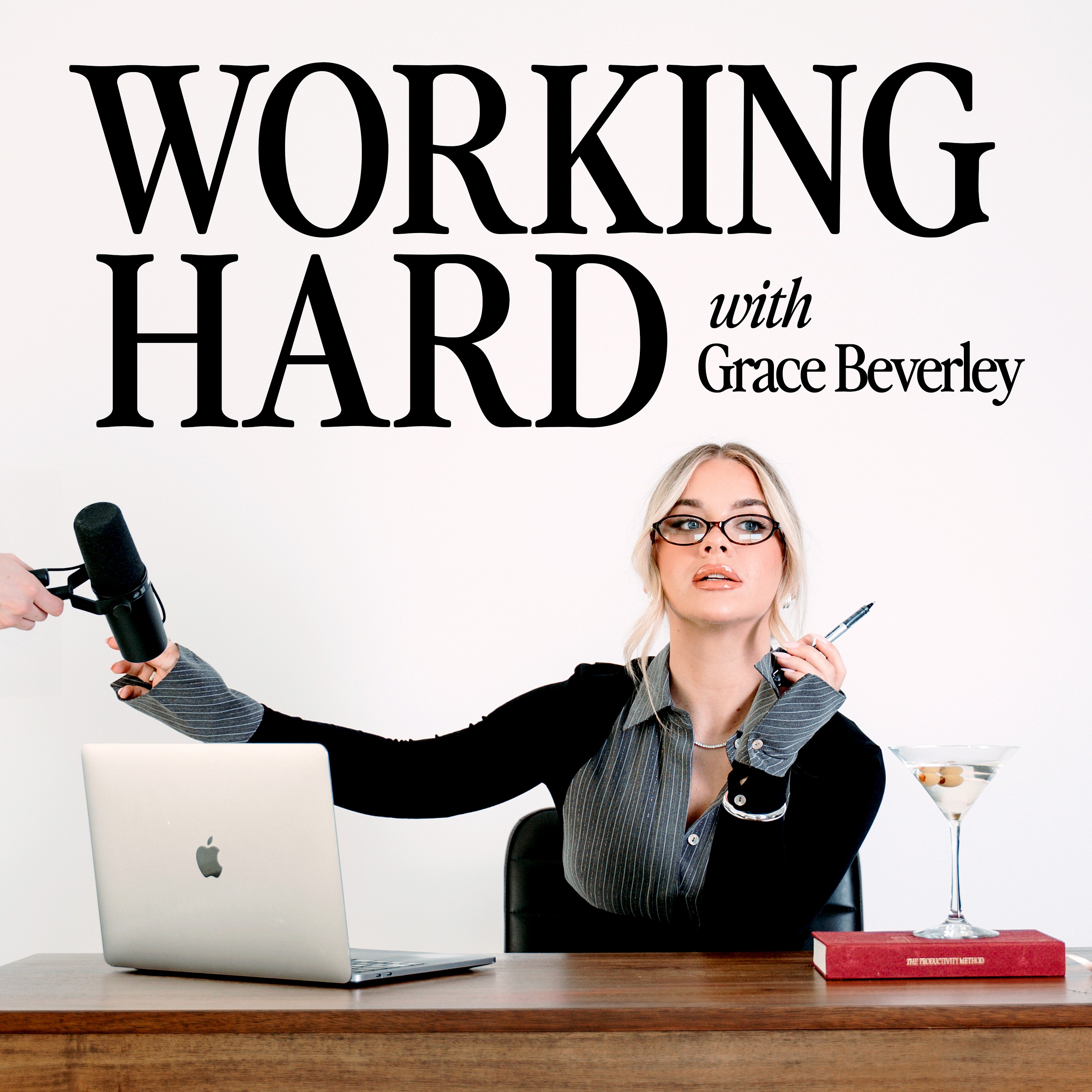
 Working Hard with Grace Beverley
2 May 2023 · 1h 6m

In this episode, Grace Beverley interviews Debbie Wosskow, a prominent serial entrepreneur in the UK. Known for founding Love Home Swap and the women-focused members' club AllBright, Debbie discusses her entrepreneurial journey, the importance of discussing finance, and the challenges women face in business. The conversation covers her experiences with startups, the emotional aspects of selling a business, and the necessity of female empowerment in entrepreneurship.
Written by AI. May contain mistakes.

Get the gist, explore an idea or ask about something said.
 Claude
On Working Hard with Grace Beverley, what are the key points of this episode?
Searching your listeningAutomatic transcript. May contain errors.
0:00Women need to get rich, get rich and invest their money in backing other women. What is failure anyway? You know, I think we kind of need to redefine what that means. Love Home Swap and five years later I'd sold it for X. And then there's what actually happened. Did you set up Love Home Swap knowing you were going to sell us? I've only ever done things knowing I'm going to sell them. Entrepreneurship can be the most amazing path to upside and getting rich. Let's not forget to talk about that. Things I never seem to learn is that you sell the dream and say you hire in a hurry. at every stage, and it's what I'm going through now, have an existential crisis.
0:37Yes. For me at that time, I'd just given away half my money. I kind of wanted it back.
0:53Hey guys, welcome back to Working Hard Hardly Working podcast. This episode's really good. It's just a big old chat and Debbie is so open and honest about her entire journey, but not just her entire journey as a founder and serial entrepreneur. I mean, she's done incredible ventures. She's had multiple exits. She's done really, really, really, really, really well and is incredibly inspirational. But also on top of that, she's just so boldly honest and open about things like women talking about money, about motivations behind things, all of these different things, which I feel like, especially in the podcasting world.
1:24I think because of the storytelling of podcasts, it's often easy to say things in a way that appeal to everyone. And I think that one thing Debbie does really well is she unashamedly talks about things like money and things like, you know, wanting to set up businesses and exit them in a way that other people don't. And I feel like it's really, really, really important for people to talk about that. And also for people to, especially for women, to talk about that and not be ashamed of it because there is absolutely no reason to be. and I feel like it's, I don't know, I feel like it gives a little bit of a warped representation of entrepreneurship when we talk about things only in terms of purpose and only in terms of, you know, having some big idea and wanting to dedicate our lives to it, etc, etc.
2:06Of course, that is often the case, but I also think that, you know, it absolutely can be the case too, that you want to set up an amazing business and exit it. And I think that as women, that's often seen as less acceptable or less talked about, especially within the business space. So I really hope you enjoy this episode. I thought it was really fantastic and a really great chat and definitely very unfiltered. So enjoy and as always, have a lovely day.
2:36Debbie Wasco is recognised as one of the most prominent serial entrepreneurs in the UK. She is the founder and former CEO of Love Home Swap, the world's largest online home exchange platform, which is where she made her name in the industry. Her most recent venture, Albright, is Britain's first ever members club for women and a place for women to connect, upskill and network both in person and online. As an angel investor, Debbie has an investment portfolio of several female founded businesses, including Tala, and is outspoken about the gender imbalances in entrepreneurship. She has become a trailblazer for female empowerment and digital disruption.
3:09And in today's episode, Debbie shares her insights on how she set up and scaled several successful startups including exiting them and the different experiences she's learned from all her different ventures. I'm very excited to talk to you we've had some in-depth conversations over dinner we've had some in-depth conversations in a business and speaker setting I feel like this will be a good middle ground. Yeah it's different. I'd like to go back to the very beginning to get a bit of context on you your life your upbringing what led to you even starting your first business could you start at the beginning and just tell me a little background okay so I grew up in Yorkshire which you wouldn't gather anymore given my extremely posh accent so I grew up in a Jewish immigrant family third generation immigrant family and it was a sort of classic immigrant upbringing in the sense that there were a couple of things which if you try and look back on why you've had this funny life and I have had a very funny work life I think some of it's just focused on what you know and what you grew up with and what you feel comfortable with so the two main things for me I think were no one in my family had a proper job everybody worked for themselves they wouldn't have called themselves entrepreneurs because that's quite a fancy word but they were business owners and those businesses were super humble right so my grandparents sold fruit and veg in Sheffield market on the other side my grandfather who died quite young and my grandmother ran a chain of sweet shops and off licenses across the north of England so what does that mean I think it means you talk about work around the table you talk about money a lot and that's not considered a sort of gauche thing and the the female role models in my life were really extraordinary women who had a lot of children and worked for themselves and my grandmother who died at 97 um having outlived a number of husbands which I can only aspire to was an amazing woman in many ways in that she she ran businesses she was a terrible driver that's something her and I have in common and my formative memories as a child were driving around with her in her armored van dropping cash off at the bank she never learned to reverse by the way I'm not very good at reversing but so relate and my mother ran her own business as well so I think some of it is you have to see it to be a it normalizes talking about business money you don't see anyone going off to work for a big company that just really wasn't a thing yeah and I think the other thing which um you might recognize a bit Grace's academic excellence was sort of non-negotiable right um it was really really really important to excel and be interested and be interested in the world so it always talks a lot about as well as business politics and books and that was the thing so you know it was a noisy argumentative feisty sort of upbringing but if I look at my siblings and depending on how you cut it divorcing remarrying is kind of a theme in my family there are seven of us in total and the majority of my siblings work for themselves if I sort of take them in order my next sister down is an entrepreneurial psychotherapist and then my brother Ben I work with in Love Home So which I'm sure we'll get to so in the kind of nature nurture debate I think family normalizing talking about how money gets made and spent is really important yeah and I think so un-British as we see it it was a very un-British family that's right I never talked about I don't think well my family did talk about money in a way but it would only ever be when it was I'd say in a bad way I'd say as in like and I also would say as a result of that just you having this I guess lack of emotional connection to it it's more just like this is what happens this is how you earn it this is how it you know goes out this is what you need to do to you know for the business to thrive whatever it might be just like an honest conversation about money rather than being always been very unemotional about money right and I and I think it stems from that and I'm really conscious of it with my own children that I also think it's important that they understand how it gets made and spent yes and that they don't have fear or anxiety or shame or Britishness around the concept of talking about what things cost and how we pay for them again in my family that would never have been framed as a thing but I think it's just a consequence of how these immigrant families who arrive here with nothing work of course and I think somehow then that makes the journey that you have to go through as an entrepreneur and as a young entrepreneur as you have been a lot easier because I don't think you have any fear yeah right um but also I think some of the tough stuff that really is critical to your success which is being able to negotiate being able to ask for money being able to ask men for money being able to negotiate a term sheet being able to say no that's not okay I think that was easier to some extent just having grown up with a lack of emotional connection around a sort of personal balance sheet yeah I think that's really interesting and just before we move on from that I'd love to know what you try to do then with your children you mentioned then in a way that they can understand the comings and goings and how to not necessarily sitting them down and teaching them how to negotiate but just like that type of attitude towards money and business how do you kind of impart that on them I mean this makes me sound a bit of a nutter but um my children have had a strange childhood anyways I think if you grow up with a mum who's an entrepreneur and I was a single mum with my two kids from them being a very young age I think you're you're in the mix when it comes to business in lots of different ways I've always just had to take them with me sure when they this doesn't mean I don't mean this to sound macho but if you're an entrepreneur and you're running a business and you have a child the child has to kind of come with you right so I've always felt like weird things like and in particular I can remember closing a transaction and turning out to a very fancy law firm with a baby that I was breastfeeding where all of the male lawyers had sort of had a heart attack about that and that was a while ago so I think it's become more normal so they've always been in the mix when it comes to work what does that mean my son who's 14 is a mini entrepreneur all that goes with that although I would have to mark his homework on his execution so he I'd say that he's very good at imagining a concept in marketing but he hasn't quite figured out how to produce a product yet so I give you the four examples he's quite obsessive so he became very obsessive last year about chilies okay right he felt that there was a gap in the market for homegrown chilies and because he's kind of used to that being a thing he set up littlevenicechili company.com bought the url he produced a load of um posters which he put up around the neighborhood people a bit more used to him and we had set up a sort of chili growing empire on the roof so the two things he hadn't thought about was one the birds ate all right all the chilies and two he'd like massively oversold the dream and yet there was no pipeline to producing the product you know the chilies chilies chilies chilies was all we talked about for about three months so what's my point apart from my son is eccentric I think that they're used to that being okay because and you all know this Grace that we get overtaken as entrepreneurs by the idea and by a passion and by a thing and it doesn't always stick right and sometimes you've just got to throw a load of stuff at the wall whether it's chilies or and I think that they find that process sort of normal I think what's also as you get a bit older you remember things that people have said to you a lot of these things came from my grandmother who was extremely blunt but she she said to me at quite a young age you like nice things which I do yeah I like shoes and dresses and things right yeah so you better earn your own money if you want to pay for them and then the other thing she always said which is a consequence of the sort of divorcing that goes on in our family is always have your fuck you money in a bank account right I think there's a point around that yeah which is around something that's been an extremely important thing to me for better for worse which is to be independent always yeah make your own decisions as my mother would say you know you do what you want Deborah you always do and she's sort of right so I think I try with the kids It's A, if Noah wants to be obsessed with chilies, he's got to earn the money to buy the chilies and live with the consequences of the chilies screwing up, which they did.
11:52But it's fine to do that. But two is to remind them that they have an extremely nice life as a consequence of my graft. Right. And they shouldn't take that for granted. And there is an expectation that they will be aware of that, not in a kind of annoying way, but just I think that it's really important that there's a connection in their mind between work and output. Yeah. and I also think that that's often framed in and like that's not a negative that's a very kind thing to do to children to give them a very representative and self-aware upbringing I hope so I mean they roll their I'm not saying yeah yeah no no of course yeah yeah clearly from now they're becoming teenagers they find it annoying but I think you do and maybe it's a consequence of our work life's grace that you are forced to think a bit about well why am I this way or what are things that people have said along the way and I think those formative moments for women around independence commerce ownership and ambition are really important and they made a big difference to my life I couldn't agree more and so what was your first job well I worked in Benetton I think you're either as a young person woman person a shop assistant or a waitress you were in my day and I was a shop assistant not a waitress yeah exactly like well at one so I've always done shops I still do it's my joke with Anna my business partner that I'm always a cheap stylist and in fact on the way over here and as well as buying my own shoes in Netoporter sale I sent Anna a few links of things I thought she would look good I love that and I also would like to be added to the distribution list for that yes you may thank you she's also like a size six in a very annoying ways so right you know how those yeah yeah you're like cool you're looking at this I would look awful in that but you would look amazing so I was a shop assistant that means I'm very good at folding jumpers and my wardrobe's always immaculate but I've always worked I mean I had you know Saturday jobs from the age of sort of 13 14 um but yes I think that the the inner shop assistant is always still there for sure and then so you went to university I did yeah did you do anything would you say kind of entrepreneurial before this stage did it all start after the your university so my big thing that i did at school um was young enterprise and i was indeed the national winner of young well congratulations and my business which was very 80s because it was the 80s and was selling scrunchies although they're back oh you know when it became a thing and the scrunchies got sold asda locally and we did a thing all that sort of stuff incredible so we sort of knocked it out of the park our or i was on an all-girls school and so the all-girls scrunchie collective so no I think and I think I was 14 or 15 at that time um and at university like I did lots of stuff and I was at a very privileged university and I ran the student newspaper and I was part of the union and lots of things like that um I think I've always felt like you have to just suck the marrow out of life and that's a big thing for me um I had I used to have a sort of standing joke with my ex-husband about things that you would never say about yourself and mine was I'm just going to lie down and flop right and so you know I like to be doing and I think that that tenant of being close to business and a big part of that of that for me is just about being around really cool smart people with lots of ideas yes I'm an extrovert I'm crap on my own really I like to be in the room yeah um sometimes after a lot of in the room I'm a bit like out of conversation but I do like to be in the room and I definitely come up with my best ideas through balancing them off other people and that's always been the case so a big part of being at university and I did a very sort of weirdy subject philosophy and theology a lot of reading and there you are there you are so you know what that's like so there's a lot of that isn't there and it and to recover from the that I had to be doing that and that's always been the way for me and philosophy so interesting so when you came out of university what did you think that your job was going to be so I mean again this is a sort of fairly standard thing from the university that I went to but the absolutely prevailing wisdom at the time was that you would do milk round interviews for either investment banking or management consultancy or council or law um so the work experience I did in my second year at university was in an investment bank I absolutely hated it I worked on the trading floor um I was told sort of on the first day and again this was the early 90s that I had nice legs so I wasn't permitted to wear trousers ever again and you know it was like a sort of standard trading floor in 1994 so I felt like that wasn't going to be my thing um and I went into management consultancy I did the milk round I had five offers I took the one that paid the most money I think I very firmly felt like I wanted to learn some stuff with a view to setting up my own business right and it was a really great first job although I mean life comes full circle because I now am a senior advisor to McKinsey but as a young mini management consultant um I was quite crap and I think that there's a lesson in that about doing something that you're not very good at I'd always knocked it out of the park in life academically and all of that and I joined a management consultancy as only one of two women and the intake of 20 and the only arts graduate and I found it really hard really really what did you find so hard about it was just super super mathematical and right right and whilst I've got enough to be dangerous there's just no way I was going to be top of the intake alongside people who've done engineering and maths like I really wasn't I was like the bottom I was the person that people didn't want on their team it's so interesting because obviously a lot of these places there was a I think there was a turn um a few decades ago when it was kind of like we're going to stop only taking people who did like economics and you know like and maths and like purely numbers based stuff because they want diversity of thought and they want people who you know are able to bring more to the table but then I because I kind of thought very much the same at that time I was like I literally will never be able to compete with these people and I saw that as intelligence rather than a difference in strengths yes that's because you were more mature than me I felt like okay this is what I have to do to prove myself right and I found it super hard but I think that is such a good life lesson in your first job because I was like I never want to be here again yeah I never want to be the person where they're picking a team because I've always been team captain and they're like no not yeah so and I think there is a point now when life comes full circle and this job I do for McKinsey where yes all of the soft skills around relationships and um being able to really get to the heart of a commercial problem and problem solving they're hugely valued but not when you're just starting out yeah they're not so I think that made me very resolved after a few of that to never put myself in that position again and I think there is a lesson in that about identifying early what your strengths are and playing to them and making sure that you've got people on your team who are good at the things that you are right and I think I had to learn that by going okay I'm in completely the wrong environment for me to shine yeah I think that's such an important lesson and how did you get from that point to your first business so I left consulting and I went to work for um one of the big communications agencies for the founder as his um slave basically it's sort of exec I don't know what I was called executive assistant something they are amazing jobs to do when you're young so I will have been 23 I was his bad carrier I sat in all sorts of meetings and helped to translate the what and the where with a view to setting up my first business which I did in 1999 were you even born then Grace I was I was two and I was thriving okay so it set the scene then it was dot-com one if you like I think it was the first time in recent economic history where being young to our earlier point um was really valued right which I think it is an important point I think it is again now right now I completely agree with that and as a sort of sidebar to that as I'm looking in my business life and in entrepreneurs that I'm backing and as an investor that's one of my criteria yeah but before 1999 it really hadn't been and I think what you saw then was the first wave of young entrepreneurs founding those early internet businesses lastminute.com and let's buy it and yahoo and all those businesses that I kind of grew up in my career with so it felt like I could launch my first business which was called Mantra which was a communications and digital marketing agency I mean some of the stuff that we did now you would find so painful because this is before yeah content right it's the beginning of the whole new language like anything you were just about sort of getting some paid media but not really it was much more about things like blogging and managing online opinion and taking comms online in a really linear way like and we were quite early to that and I was just turning 25 and my business partner was 26 and we built this really amazing agency business and it's a fantastic first business to build because we knew absolutely nothing about running a business and you if you're running a business which is where you're always two client wins away from greatness and two client losses away from disaster which is how we operated for the seven years that we ran it you learn a lot about cash flow and p &l and people and hiring and everything it's a really hands-on business and some of the disciplines that have held me in very good stead as the businesses that I founded have got bigger and bigger have been about living in cash flow checking the bank account every day you know really figuring out and I'd be interested in your take on this how to be a leader and I've got the opposite now but I was always a leader at a young age where everybody I employed was older than me and you need to work out who your corporate self is and how is that authentic but is it really on how do you it was we just and also we had an absolute ball I mean bear in mind we grew the business the business then fell off a cliff we grew it again we sold it to um the lowey group which is a big marketing services group in 2007 so we were at it for just over seven years and it was the making of me in in every way actually and not just financially but we screwed up so much stuff and i mean that first year of madness it's not really like that now and certainly not now because of um you know we're entering recession but maybe a couple of years ago where it was reasonably easy to monetize the proposition and so we had a service office on brook street opposite clarages which cost us a fortune clarages was sort of just like our you know company bar the time of your life and it was a laugh but you know we very quickly learned how to really really run it properly and all of the things that i think i'm known for and which are a sort of special source around really squeezing results out of a proposition and i learned the hard way yeah in that business that's so interesting that you just went straight into starting a kind of marketing consultancy we didn't know anything about agency yeah um but we had a phone and a computer and quite a lot of chutzpah yeah and and actually we had which I think is relevant to the now we had no dress book that was really meaningful in a way that it just that is very important yeah because even through people that I knew or I'd grown up with or I was at university with who who remain great friends Martha Lane Fox people like that we were all kids at the same time so actually you could generate a lot of fee income and innovate around proposition with people who felt and looked like you and much in the same way now as people are doing with social and content and innovation and building brands and influences and you know we had a whole different version of that 20 years ago so we were able to with reasonable confidence give it a go and I think a mantra then mantra which was my first business has always been remained a mantra which is what's the worst that can happen yeah um and the answer when you're 24 25 is not a lot right you do it doesn't work yeah but it's so easy to think that it is because I think that it doesn't matter like you have nothing to lose and when I talk about entrepreneurship particularly female founders which as you know Grace is my sort of specialized subject I think that there's such a concern around failure and embarrassment and letting oneself and others down and look I'm also being realistic yeah if you're founding your first business in your 40s as Anna my Albright co-founder did that is extremely brave right she had a massive job she's got kids and a mortgage and a thing 24 25 yeah it's much easier to roll the dice it is so interesting and I wonder I guess like how because we all have obviously responsibilities I feel like when you are young and especially if you don't have dependents and you're in a situation where it's like as you say what's the worst that can happen it's it's a really privileged position to be in but it's also a very I guess how do we get more people to think like that when it's so natural to think about all the responsibilities that you have that actually realistically you could still you know make work if everything did go wrong so I would say two things people like you like that's not blowing smoke it's just real I think more role models of young people who are doing it also the thing that didn't really exist when I was a girl was the side hustle right and even just sort of chatting a bit when I got here I think this sort of plural career where people go well I do this and I do that or you know I hosted a thing earlier this week and there were loads of young women in there and I was talking about the same things and the number of women who are doing a thing that we we or I would have thought about being the only route at 21 professional services or but but they have a side hustle of anything whether that's just monetizing their wardrobe or yeah we didn't really have that and so I think that the beauty of what I would have called when I sort of invented it a bit the sharing economy and it is I think that it gives us a softer landing yeah and a jumping off point and I think the recognition that indeed for for men and women but women is my dog in the fight I guess that we can mentally de-risk it by feeling like we've got more of a safety net I think we'll get more women to start in the first place yeah yeah and I think also there is that bias where you know when we look at the female funding stats where we look at we might as women think that there's less room to fail because it's I guess you've got all of that to overturn on your back so it's like oh well I'm another person proving that you know this doesn't work whereas actually the amount of the percentage of failed VC businesses from men will obviously be much higher because it's a much higher percentage but I guess wanting to prove that something can work because you've got the whole you know you've got the whole bias on your back of like not funding women yeah yeah do you really like that's not anyone's personal problem yeah we have so far to come yeah you know what I mean like if we're at one percent of all capital going to back a female entrepreneur which is where we are post the pandemic in the UK and if we're at 89 % of all capital backing a business co-founder by two like I mean I honestly think that the only thing that changes the conversation is more women trying yeah and more women writing checks 100 % those are the two things so don't worry about that and also what is failure anyway you know I think we kind of need to redefine what that means and I think in entrepreneurship as well failure is one of the like one of the key things that builds that trust because failure is so inherent in entrepreneurship as like a um you know the way you the way you learn so it might not be a full company failing but as you said with your experience you know you built it up and then it fell off a cliff and then you built it up again and sold it in everything I've ever done exactly yeah there's the story there's the love home stop and five years later I'd sold it for x and and then there's what actually happened which is a year and a half in the business model was completely broken we were down to a thousand pounds in the bank account we had to and I don't know anyone who doesn't have a version of that story yeah there are two things there's how you tell the pixie dust story to the outside world and then there's what happens when you're really trying to share the real real and the real real involves micro failures every single day it's what you do with them yeah no I think that's so true and I think when you when you see failure as a as a benefit and you see it as a way to further yourself then I think you know you start twisting that and it's not like failure just seeing failure as not bad I think is very important I don't want to be Pollyanna-ish about it I was listening Bear Grylls was interviewed this week you can take it a bit far i mean i don't know if you heard it he calls his alarm clock his opportunity clock there are certain things that are just too pollyanna-ish like sometimes that like sorry i do think there are certain things that like men in the public height like that's shit that's allowed to come out but anyway yeah and when we set our opportunity clocks in the morning um sometimes you have a shit day and sometimes things go wrong i'm not saying they But I am saying that the route to success is littered with things that we now frame as a pivot.
30:18And pivot, which I hate as a word, it's just another way of saying, you did this thing anyway. Yeah, no, I think that's so true. So you've sold this business and you obviously, well, you've been a serial entrepreneur since then. You've started a number of different ventures and done a lot, very well with a lot of different ventures. What happened in the time after that? was there a time that you considered okay maybe I'll take a bit of a break did you think that that was your kind of your career's work at that point what was your where was your headspace at after you'd sold that first agency well I'm not very good at break that break makes me anxious yes I can't I need a thing so there was never a sort of personal or a conversation with myself where a I was like I'm done and b I thought I'll just I don't know exist in a different way so I think the consequence of starting with all of this young is it does define you and it's part of what gives you energy even the bad stuff actually so I think that the die is cast and will always be cast that I need things um I had a newborn in 2008 I think I also really didn't want to be at home with my newborn as the only thing I was doing I just thought it's not me and yeah you know which I think is really powerful to say it just isn't um I think that we have been on a great adventure me and my kids but it's been an adventure yeah that's very much how we are together um um and I also ended up I suppose in that two-year period between selling Mantra and starting Love Homeswell I had a nice time in business so I teamed up with a guy called Simon Walker we had a business called Maidthorn Partners because he lived on Maidot Avenue and I lived on Thornton place I had a child then I had another child we did advisory work we invested a lot together and we also when we saw an idea that we liked we put our own money into seeing if we could get it off the ground so it was a different thing because it wasn't here is my one thing it was quite plural and I think that's also good and that's kind of what I'm assessing a little bit now because you know what what are my values have fun make have fun make money don't work with assholes and I think um I haven't always started to the third and that is sometimes I feel like you should make t-shirts or a mug um I was really able to do that in that time and out of that love home spot was born I guess the other thing that happened in in that time which I you know do talk about very publicly because I think it's important is that I ended up getting divorced when my daughter was less than one so I had a two-year-old and a one-year-old when I was a single mom and that really was not the plan and back to we're getting a bit Elizabeth Day here but anyway back to how to fail um I think a bit like the the first job that I was actually crap at the having a marriage go up in flames with really tiny children was not part of the plan yeah um and it was super hard but out of that out of the ashes of that love home swap was born and i also think work can absolutely be your salvation 100 when things are hard i think you need purpose i think you need the promise of the sun that are plans i think you need people i think you need determination and also you need financial realities and again do we talk about this enough as founders I don't know but for me at that time I'd just given away half my money and I kind of wanted it back yeah and no one was going to give it to me yeah so and that at moments like that you either lie down in the road and cry or you get your ass out you get your heels on you get your hair done and you're like right I'm back it's on I absolutely have to land this like there is a real imperative that's the point around what may or may not matter at 25 at 37 or 8 as I think I was then it really matters right so I think we should talk about that more yeah because we're not all doing it for the lols right we're doing it to get rich yeah and women need to get rich they need to talk about money get rich and invest their money in backing other women otherwise we don't change anything so love home swap which was a sort of five-year um journey towards selling I sold it for 53 million to Wyndham I owned a big chunk of the business that had to work yeah and when you decided to start that how how long after the after you decided to kind of go back to changing yeah yeah so um this the story the pr story is also true so yeah convenient great always convenient so nice easier to practice but the story is this i was coming back from a holiday when the kids were gracie would have been three months and so very fresh as well yes she was wee and Noah was too um and it was one of those holidays and again I don't this may not be your audience Grace but for people who do have really young kids your holidays become shit because if you go to a hotel you just sit in the hotel eating room service with the sound off obsessing about feeding and sleeping and we're on the plane on the way home stay on it stay on the film um when you get on the way home with like both children on my seat asleep I watched the film The Holiday true which is not the most amazing film oh I really enjoyed it you are I'm glad to talk about it last night I watched that film and spoken over that film playing above my head about 700 times brilliant TV and I thought does that even exist yeah right i want to be them yeah actually i really wanted if you've watched the film camera deer swaps with kate wins that they swap their homes cotswolds to la but they also swap their lives yeah that's what i wanted to do at that time so i'm like who am i even with this yeah so was she fresh out of a breakup as well she was they both well they they both there you are so wow i thought does that exist and then i think you'll relate you become very obsessed with things right so or I do and I think you do a bit so I got home and I was immediately does it exist and I'm like hmm it does exist in a sort of people printing out catalogues and sending them but there's nothing so this was 2011 yeah so well into there's nothing that felt boutique curated safe safe you know this was the very early days of Airbnb there was nothing that felt like it would be a choice for people like me and in particular for people with homes or second homes who when they went away both wanted to stay in a home rather than a hotel well that was kind of a new thing but also wanted to feel like the person whose home they were staying in had some skin in the game and they were also their own home was also on the site in other words in modern parlance was a community nobody really talked about that then yeah um so it was it was about that and so within three months we had a sort of fairly shit website up amazing and i'd got 250 of my friends to this stuff you have 250 friends friends and friends and um the sunday times did a thing and then we were sort of off to the races yeah a big part of it was two things that happened that were really important my brother ben um was about to go and do an mba and i dissuaded him from doing that and said i come here yeah my brother had been head of marketing at um ft.com so he knew about subscriptions and he's an all-round good thoroughly awesome human so ben came to do with me and then when we took it out to raise the first proper venture capital round and you will be familiar with this too as a sort of uh polymouse they were like yeah yeah yeah it's great you need to run it and it needs to be what you do you can't be doing it and 17 other things as well if we're investing right you need to yeah yeah 100 so that was the kind of moment so 2011 to 2017 um were the years of growing that and and also the sharing economy coming of age and i and i did a lot of that because i chaired the government review on the sharing economy i'm the author of the wasco report i don't recommend anyone read that's extremely long um advising the uk government on how to regulate the sort of transition from sharing economy platforms like airbnb and uber being caring sharing to them hitting some really thorny issues around the rights of workers around what was the role of platforms to protect them were people truly contractors what did they get health care what happened if I had a child so I did a lot of that and I chaired this massive government quango for a few years so I was the sort of queen of the sharing economy and as often referred to or the poster girl for it in the UK and that I think is another theme for me is I've always this probably goes back to family felt like you have to stand for something I say this all the time to the kids this is maximum eye roll for my 14 year you have to stand for something and for me interface with politics and policy and ensuring that the voice of the entrepreneur the voice of business and the voice of women is heard by policymakers I think is something that I can do and encourage others to do and that was an important part of that time yeah it was fun we got to stay in lots of houses around the world yeah I mean it sounds great I also would love to would love to do it we have we still have these really extraordinary case studies and continue you to do so of people who've figured out how it works and they've spent five years traveling the world yeah i can also imagine there are some people who live almost opposite lives where they want the other person's life just for two weeks a year happens every single year like like in provence or like in the us or whatever it might be and just like actually we want to be in that place for a month not pay for a month of accommodation somewhere i wouldn't want to pay a hotel of accommodation somewhere for a month and actually being able to have that swapping it's huge we have this family called the prince family because they came and see me in london and they done three they have four children they were homeschooling and they done three years of just being on the road oh my god amazing my new life goal has been established that's what you need to do so yeah it was a lovely business yeah exactly lovely business that now does incredibly well because I think even more so post the pandemic yeah the sort of nomadic community of course is a thing but yeah it was it was a great ride and what were the biggest things that you learned um from the second business in comparison to the first business I think we often get we get told over and over how like every business is so different and I think we kind of think yeah but most of the time you know the same things will happen I think there's some stuff I learned some stuff I seem incapable of learning right yes I'm very good at that okay so the things I learned were you're just quicker at stuff raising money is easier because you've already yeah already done it already sold you know so that bit is easier throughout my career had some of the same people around me for quite a lot of what I've done so I think you kind of get your 18 together um things I never seem to learn and still am really bad at and I think that this is a real baked in problem for entrepreneurs is that you sell the dream sell the dream sell the dream to raise the money you don't have any of the right people to deliver on the plan and say you hire in a hurry and you cock it up I do that I still do it yeah all the time I've just done it so I maybe that's just like a mental block for me yeah but I think um Anna my business partner in Albright will say the thing is if you're always selling the sunlit art plans I'm really good at that like give me a pen and I'll sell the pen right yeah then I think it doesn't actually make you a great judge of talent because once you get someone to the point of accepting particularly if you're making these really aspirational hires I'm a bit over it by then you know what I mean I'm like I've done my bit and also you just want them to start now and I don't know how to get better at that other than never being trusted to hire anyone on my own but I really really enjoy that I think that's really important to know and it's it's one of those things where I think we think is probably a non-negotiable and being an entrepreneur but actually knowing your strengths knowing your weaknesses there are going to be certain things someone to and also you know what it's like where you you've raised the money and and for all right and love homes what we raised quite a lot of money and you've got 25 people in the plan that you need now and so you just go into that yeah don't you like yeah and if you are a doer it's one of those things that you I mean hiring is something that you cannot just automatically scale like you can't just say we need x amount of people and get x amount of people there's months of delays there's months of the wrong people there's months of like all of these things and if you are a doer and you like to get if you're efficient and you like to get things done and you prioritize efficiency over perfection which is what most entrepreneurs do I'd say you're unlikely to be good at that it's going to be one of those things you're like but I'm getting it done yeah I'm like I've done it I can't say you're um you're a big planner Grace as I know and I'm a planner although not in as sophisticated ways you are but I love the list I love things off the list and I'm like need to hire those people done it yeah like oh my god they're a nightmare yeah so it's that but that's also one of your biggest strengths and I feel like that's the it's one of those things where it's like of course that is a recognized weakness of yours and you're like do you know what I'm not good at this but I feel like if you were good at that you wouldn't be as good at being efficient and being kind of just getting shit done when you need to get shit done and like you can't always have both like there are there are ways obviously we can hone and perfect but that's one of your real strengths i i think so and i think what it just shows over and over again is our output is only as collectively brilliant as the people we have around us and i think the ability is particularly over time you know what did i learn between business number one and business number four which is what i've just had it's hard to say don't trust me to do that or don't mean that to me or i I need X to make sure that I've done that.
45:47Also, in the same way as vulnerability is strength, that is one of the biggest strengths. Being self-aware about your weaknesses and also able to be, not necessarily self-effacing enough, but be able to swallow your ego in any moment you need to, to say, I'm not good at that. I think that was a real turning point for me in becoming a good founder and a good leader was actually the fact that I was able to walk into a room and rather than feel like I needed to be decisive in that moment, I'm a very decisive person, but it meant that if I don't didn't know the full facts I wouldn't want to appear like I didn't know the full facts and therefore would be decisive based on not enough information and I feel like one of the biggest learnings for me was realising that I need to be able to go into a room and just be like actually I have no idea about that could you take me through all of this and then I can make the decision I used to think that was weakness I totally relate to that and I think one thing I'm definitely better at now is saying even when I've heard it all I'm just going to have a think about that yeah i would never even if the decision because i because i've got another meeting afterwards and another thing afterwards and a thing and a blah and that's my block to make a decision actually it isn't so you can say i just need to let it marinate yeah i don't think i ever let anything marinate yeah when i was younger and now i do yeah and and learning that when you're a doer is very important um dropping things so um sort of jumping around a little bit but i'm sure will bring me in between thinking about what next now and um you know we're looking at lots of different things I think in the past I found it hard to let something go when I've become attached to it and I'm very good at that I'm desperately looking for um the business model if I think if I first thought there was one right so I at the moment we're looking we've spent maybe three weeks looking at a particular sector where both of us have gone we think that's a thing and we've got to the end of three weeks and we're like it's not a thing yeah and I don't know that I would have quite because I would have gone no no I can find it I can fix it I just need to go and see that person and we can think in the economics and I've got this kind of thing and I think we're just and I do a lot of we because Anna really has changed my life in lots of ways I've changed hers although she may wish she'd stayed in a really sensible job and never met me but I think that being able to have a relationship and soul founders don't always have this unless they hire really well where someone can say just fucking drop it yeah no yeah and I I will say that point on soul founders so I'm a soul founder but I've always had amazing people around me um and even from the I would say not necessarily from right at the beginning but from the points that it actually got serious it was kind of like I actually can't do that especially because I started the stuff at university it was like there's no way I can start this at this scale without having good people around me but ever since I've had a really really fantastic managing director who happened to be a match made in heaven from recruitment it's just I mean it's life changing having someone there who can literally look you in the eye shake you and go like yeah shut the fuck up it's not gonna you know like it's one of those really really important things yeah a hundred percent from anyone a hundred percent so before we get to that and before we get to kind of what's next for you now how did that feel first of all did you set up love home swap knowing you were going to sell it yes yes i've only ever done things knowing i'm going to sell them yeah i'm all about the selling love that i really really love that and i really i think that there's this especially on like business podcasts and stuff the amount of people that sit there and go and it doesn't absolutely this is not me saying that it's then all about the money it's not at all otherwise you wouldn't get up every day but actually being able to sit there and just be like no this is a business and I am aiming to sell it the aim is to create an incredible business sell it to the right person and have done that like I think that's really important the amount of people who sit there and say like oh no don't care about that I think two many of them who have built a business over 20 plus years and then sold it I've got five years of anything in me and then I'm bored and I think the the issue and perhaps this is a thing around doing b2c d2c and fronting things up in the way that you do and I have done in the end you feel like a stand-up comedian in need of some new material like to the point on the movie the holiday i mean it it's fine now because there's sort of clear blue water but during that time when someone will go how did you count the idea and i feel like i have to do this again i'm just gonna so i think you you come to a point as a storyteller where the story either needs to change or you need to change the story that you're telling and and then back to the point of have fun make money don't work with arseholes can we please make some money right can we not stay in the business forever and ever and ever not paying ourselves properly with investors with a screwed up cap table i mean grace i've seen so many women's businesses where it's just a mess and i have to sit with them and say what are you getting out of this what do you think what do you want what do you and i think that entrepreneurship can be the most amazing path to upside um personal fulfillment being in the world and getting rich let's not forget to talk about that last bit and I think yes there are different ways of doing it but my to date anyway I have conventionally started a business raised external finance owned less of the business than I did at the beginning sold part of the business or all of the business to make money if that's the cadence and and I know not all of your businesses are like that but if that is the cadence you're not making much money as you go along so make sure that there are some moments otherwise you're stuck and I've seen a lot of people get stuck yeah no I think that was very powerful and when you when you got that offer from Wyndon had you gone out and about to try and to look for offers or was were there kind of ones that came in and then you started exploring it was a different situation because they were investors in the business right so they had invested two years before we actually sold with an option to buy the business so I felt pretty confident two years before the sale that they would buy but I didn't know where when and how much yeah part of the reason to do it that way was specific to that business actually and I think there's also a point in there maybe somewhere that's useful sometimes the business you end up growing is not the business you think you founded at the beginning first mostly the case and what we ended up really scaling was something that felt a bit like a modern day timeshare and needed a call center type network to sell the product so what became clear when we were raising our series b was that we didn't just need money we needed access to inventory and systems so when we rate it was more the step before when we raised that round we we mostly spoke to strategics and that was the right thing to do because it absolutely accelerated the growth of the business between those two stages because we were able to plug into um call centers and actually when i founded love home swap on the plane and that at no moment then did i think i'm growing a time show i don't even know what time show was really but i think when you're in the business and i think this is another big theme for me is that all of the best things that have happened in my life have been because of people that I've met my mother's version of that would be you're never going to meet the man of your dreams in your kitchen she's right serendipity is a beautiful thing and the Wyndham serendipity thing was exactly that in that I was I somehow found myself at the European Timeshare conference because they'd asked me to speak and I went and I met the person so my point is that it's partly why the pandemic was so hard that we didn't have these moments of serendipity but don't underestimate the power of chance encounters to shape a business and that that was definitely a big part of the story of that business and how did it feel when you actually sold that I mean you sold it for a lot of money yeah it was incredibly successful how did that feel amazing and weird yeah that's how it always feels because it's been your life it's been your baby it's not that I felt emotionally attached to the concept of home shopping for the rest of my life so I didn't um I mean like it's great but I didn't it's very weird to leave anything it's weird to leave an office it's weird to leave a team you definitely at every stage and it's what I'm going through now have an existential crisis yes I can imagine who am I what's the point I think also you and I both like a schedule and a lot of that schedule is driven by output team like when that goes and you're sort of like what do I do I have to create my own busyness AJ will always say we're brand busy like that's part of our personal brand it is part of yours like structure and busy when that goes you can feel quite empty and I think that's something that a lot of my peers and friends who have sold businesses talk about that um another friend who's a very successful founder says always said to me at these moments you know it's an artificial construct that we've created in our lives to give it meaning and he's sort of right in a way which is the whole purpose of your life then becomes home swapping or athleisure or people's fitness plans or whatever and of course that isn't the whole purpose of your life but it can really fill a day with meaning and purpose and so when you lose that you feel adrift and people who are brand busy with focus who like output and who likes to get into bed at night thinking well I achieve this is yeah that it's very unsettling so it felt like all of those things I mean my bank account felt great yeah I bought a big house and I'm not you you should talk about that stuff but um transitions are weird so I'm assuming you never ever thought okay that was it that's the that's the career no no I mean this is a bit crazy but again serendipity is the thing so six months before I sold at the beginning of 2017 I went to a party that I nearly didn't go to of some parents of the my eldest child's school and the father said to me the summer night I think you should meet and what he was doing I think was he knew two female CEOs who was like rare kiss seriously that's what happened and that was Anna so ridiculous and so it's that the someone I want you to meet and we really and we really got on she's great and we bonded a lot over life universe everything our kids were the same age she's also a northerner although her accents she I'm much posher than she is as I like to remind her and so for the few months after that we would meet for cocktails or breakfast mostly cocktails and sort of put the world to right but out of that came a real theme and Anna had had a totally different career to mine very elegant as she is as a person she you know gone from being a graduate trainee really at hers to being the ceo in her mid-30s and she's a really extraordinary person but the theme for both of us was where are all the women like with exactly the same age there are no more women now than when we started however you cut the pie whether that's female founders getting funded women writing checks if there's a gender pay gap there's a gender savings gap women didn't like all of that and in anna's world she was the only female ceo of a media business in the uk okay it's one in six in leadership positions the glass ceiling was extremely manifest in her life so over that and we were in um a private members club um and on the back of a cocktail menu we scribbled this project albright after the madeline quote that there's a special place in hell for women who don't help other women because that had been a big thing for us that we that's how both of us are as people but also we felt very strongly that there was nothing that existed that was um a replacement in any way for the old boys club and we've been around the old boys club for all of our professional lives yes i was so used to being the only woman in the room i didn't even notice anymore i'd only ever pitched to men for money that's a weird thing if you think about it hard enough um and so albright was born off the back of this uh premise that we could combine purpose with profit always profit and that we could create a monster global sisterhood of amazing diverse women and build a business around that so when on the day i sold love home swap oh that was the next thing and age and i went to ibiza i was actually in ibiza which is where i go every summer and I've been going there since I was 18 in different guises and um I the deal the love homeshop deal ends up being leaked to sky and it all got accelerated once it had already happened no it hadn't quite closed oh god it was really stressful I had to fly back and and then it all got signed on the the day that I arrived back although I actually couldn't even get a flight off the island I ended up sprinting through Barcelona airport and anyway very adventure then when I went back and it was done AJ came out she always comes out in the summer and it was all on so no I didn't I mean I really didn't have any down time no that was a wonderful thing but also Albright has been the last five years of my life and it's been amazing and awful in equal measure and I do of course sometimes I thought I don't have a break out seriously sometimes I'm in my head looking at but if if people places and things give you energy then when you meet the right people and ideas emanate then you're sort of compelled to follow them yeah and so you've recently announced that you've sold yes from Albright yes could you tell me a little bit more about the the plan now and also the what that journey was like I know obviously it's a business that perhaps more than home swapping you obviously feel so passionately about so the process of kind of stepping away from that and the difference between that and you know how it was last time it's different some similarities but it's different I think Albright um has been all about us and our purpose and so that does feel differently to moving on from home swapping because we're not moving on from being women who care about women's networks we're not moving on from being women who invest in other women you know lots of that stuff is still brand us but the business itself had been through extraordinary times I mean that business grew so fast so quickly between 2017 and 2019 we raised a lot of capital there were businesses springing out particularly in the US like the wing which was different to us but you know it set I think a tone around having these conversations some of which were controversial around what it meant to be a woman in business and then the pandemic zeroed our revenues overnight literally zeroed them we had been on this um adrenaline driven sort of mad journey of opening members clubs in the US I was flying out to LA twice a month which really killed me and really screwed up my health but we're kind of on a mission and the business was really flying and then as happened to so many people in so many different ways but particularly a business that has so much exposure to physical space it was like oh my god now what like do we just go bust like is this the end of our sort of the oriest track record but i suppose again pivot there wasn't even pivot it was like right number one our community really needs as people are hurting they don't know what to do the average age of an albright member in the physical spaces is mid 30s a lot of people had kids and they were homeschooling the digital platform is younger but we were all stuck as you know so we moved very quickly or sort of overnight into um being in people's living rooms we every single day did ask me anything and loads of in conversations we the digital platform was due to launch in uh june of 2020 and we went into lockdown in march so we had to just launch it in march and it wasn't great we already had it underway though I mean it wasn't really but we did it we got it out and we did it and we were able pivot totally reinvent the business into a digital subscription platform which you will recognize into commercial partnerships around digital content into a leadership development program that could be delivered digitally it was so hard Grace um and the public facing aspect of it which you will relate to um there were some days where i really want to be asked anything i don't really want to put my face on and sit on instagram live or whatever you know so it was a really tough amazing extraordinary time as we came out of the pandemic buildings reopened the business was you know performing extremely well but it felt like towards the end of last year that there was an opportunity to do something that people generally don't do which is to plan succession and to plan succession for an all-female leadership team and that felt like something that we could do that was really different that we could sell some of our shares we still remain shareholders in the business but that there was a way through and onto the next stage of our personal journey that didn't involve being there until the bitter end and did involve empowering women yeah to take on a business that still had a life and a shelf life and for us to have a different role as non-execs of that business so that's what we've been working on this year so back to how'd I feel after love home swap weird yeah and I think even weirder with this business um because there was so much of us in it but also super happy for the team which is a combination of people who were there and people we brought in really happy for the community cheering everybody on from the sidelines and as proud shareholders but sort of on to the next thing I personally can't wait to see the reality of what the next things are but I mean your story is just incredible and I really appreciate how open you are about it all and I think that it frames a very important conversation for a lot of women so I'm excited for everyone to listen.
1:05:33Thanks for having me Grace.
Debbie Wosskow is recognised as one of the most prominent serial entrepreneurs in the UK. She is the founder and former CEO of Love Home Swap, the world’s largest online home exchange platform which is where she made her name in the industry. Her current venture, AllBright, is Britain’s first-ever member’s club for women, and a place for women to connect, upskill and network both in person and online.
As an angel investor, Debbie has an investment portfolio of several female-founded businesses (including TALA) and is outspoken about the gender imbalances in entrepreneurship. She has become a trailblazer for female empowerment and digital disruption, and in today’s episode, Debbie shares her insights on how she set up and scaled several successful startups, drawing on how brands can incorporate digital technologies into their running. We also talk about how companies can meaningfully enact feminism within their brand, bringing to light the power of community and female inclusion in the male-dominated tech industry.
- introduction into Debbie’s background
- normalising talking about money
- how to talk to your children about money
- Debbie’s early career
- investment banking or management consultancy?
- how Debbie started her first business
- dealing with the fear of failure
- you’ve sold a business, now what?
- dealing with a divorce, being a young Mum and running a business
- how Love Home Swap began
- the biggest learnings from business
- when to let go
- the aim in selling Debbie’s business
- the emotional side to selling your business
Hosted on Acast. See acast.com/privacy for more information.