Ask ChatGPT

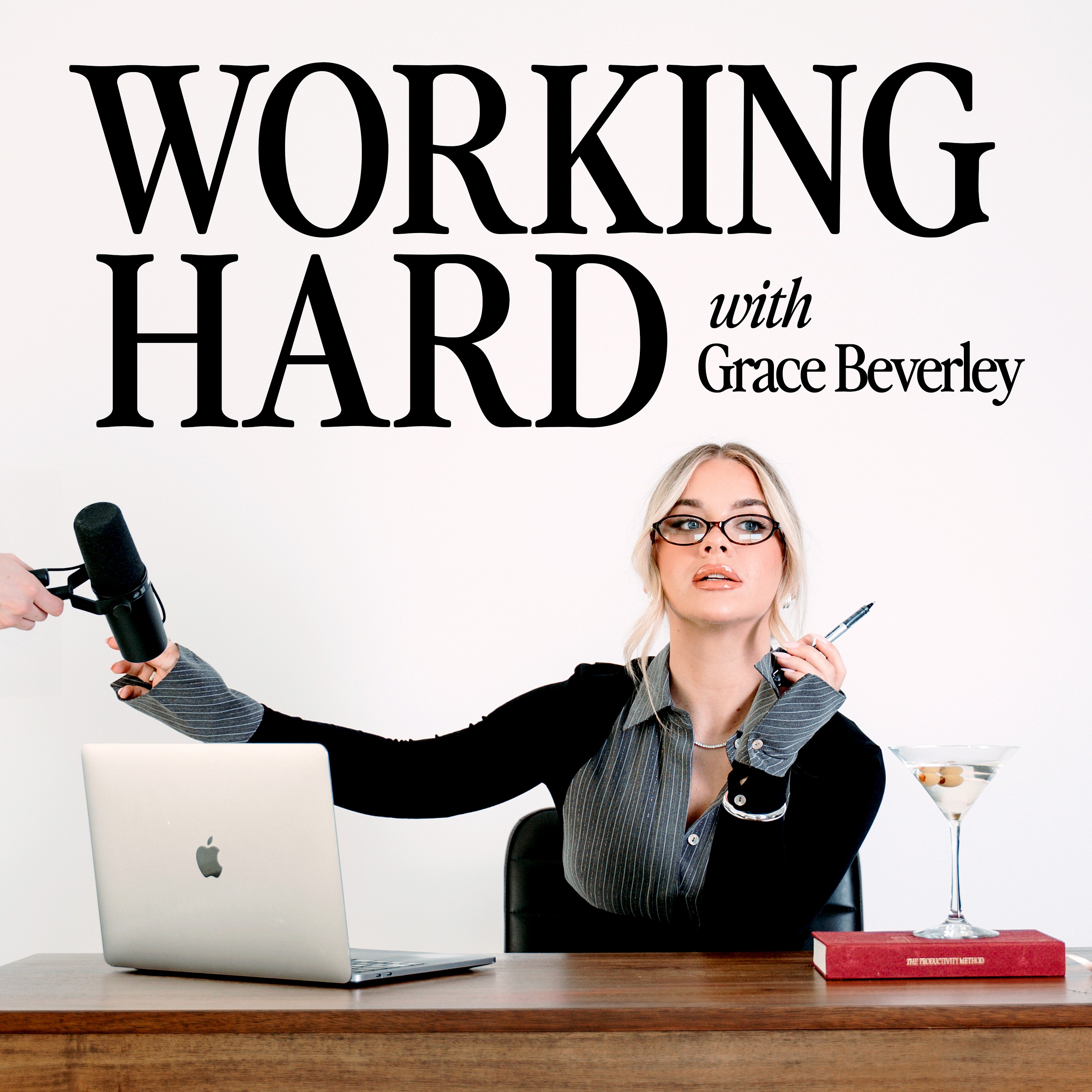
 Working Hard with Grace Beverley
30 May 2023 · 28m

In this inaugural solo episode of the "Working Hard with Grace Beverley" podcast, host Grace Beverley dives into the topic of impostor syndrome, one of the most frequently requested subjects from her audience. The episode aims to address career-related dilemmas, particularly how individuals can use impostor syndrome to their advantage.
Written by AI. May contain mistakes.

Get the gist, explore an idea or ask about something said.
 Claude
On Working Hard with Grace Beverley, what are the key points of this episode?
Searching your listeningAutomatic transcript. May contain errors.
0:00I feel like in podcasting there is a lot of like dilemmas on life things. There's not actually that much out there on worky, career progression, etc, etc dilemmas. This is my attempt to fill that gap. We know Grace loves a gap in the market. Fucking hell, give me planners any day of the week. In our first episode, we are going to be talking about imposter syndrome because that was pretty much the most requested out of everything. The first studies of the imposter phenomenon getting promoted young. Yes, queen.
0:42what is up guys and welcome back to working hard hardly working the podcast this is my first ever solo episode so if you listen for the guests and not for me this is categorically not one for you i wanted to do a load of solo episodes because i feel like there are certain topics that we talk about a lot on social media. I generally get a lot of DMs about and I thought we could have like a little one on each. Things like imposter syndrome, things like nailing a job interview, things like navigating your 20s and the way these sort of episodes are going to work is that I'm essentially just going to be answering your dilemmas on these specific things.
1:18So I feel like in podcasting there is a lot of like dilemmas on life things in general, like relationships, more like personal life stuff and I feel like there's not actually that much out there on these types of worky kind of career progression, etc, etc, dilemmas. So this is my attempt to fill that gap. We know Grace loves a gap in the market. Fucking hell, give me planners any day of the week. And today, in our first episode, we are going to be talking about imposter syndrome, because that was pretty much the most requested out of everything. But we're just going to get straight into it. I've got some stats to make you feel less alone.
1:52And we're going to go through them. So you're going to know exactly how many people have imposter syndrome, what imposter syndrome is and then we're going to answer some dilemmas on it. So let's be real, we've all had those days that kind of I'm not good enough, I'm a fraud or doubting yourself when things are not going right or generally a lot more of the time I find doubting yourself when things are going really right and feeling like maybe you're not meant to be in that situation. The good news is you're not alone. According to my very well prepared stats here, apparently over 70 % of people experience imposter syndrome which is, as we know, hardly surprising considering it was one of the most requested topics for this episode.
2:27And first things first, the definition of imposter syndrome, not to get really boring on you, but I feel like it's important to get clear on what it actually is, is the persistent inability to believe that your success is deserved or has been legitimately achieved as a result of your own effort or skills. This can generally come up in day-to-day life as a general feeling, like feeling like you don't deserve to be where you are or feeling like you shouldn't apply for a job because you aren't quite there yet or you feel like you're perhaps not ready for it. Sometimes that's true, but a lot of the time that is self doubt.
2:58And I guess the real question is, why do we feel that so much? I think one of the most important things to talk about when you think about imposter syndrome is the fact that the majority of people who have imposter syndrome are usually women and people from minority backgrounds. And I think that generally makes sense because if you look at stats and you go into a room and it's filled with people who don't look like you or aren't like you or whatever it might be, of course you're going to have imposter syndrome. I remember there's this incredible article I read on the Harvard Business Review. It was actually written by two black women in the US and they were essentially arguing to stop telling women they have imposter syndrome and instead start making workplaces better for women and especially black women and especially people from minority backgrounds.
3:44If you're going into a room and there are not people who look like you, then of course you're going to feel out of place. Of course, you're going to feel even subconsciously like you shouldn't be there. And so I think one of the most important things first and foremost is systemically, we obviously need to ideally make these workplaces better for a more diverse range of people, but also in general, making workplaces more diverse and having conversations about these things. So the people who are kind of pioneering that change and being the first in those positions, don't feel it so pervasively because I feel like then it can really stop you from progressing in the way you want to progress.
4:18I also think one of the really valuable things about imposter syndrome is you can almost use it as an inner thermostat to tell you if you're like pushing yourself outside of your comfort zone enough. So when you're feeling imposter syndrome, I feel like rather than seeing that as a negative thing and rather than seeing that as a sign that you're in the wrong place or you don't deserve to be where you are, instead seeing that as the perfect sign that shows that you are pushing yourself enough, that shows that you're pushing yourself outside of your comfort zone that shows that you're in a place that you're growing.
4:48I feel like we see it as a bad thing whereas perhaps we should be seeing it as a good thing because it really shows that you are outside of that comfort zone. Interestingly the first studies were done in the 1970s and if you look at the original research which I feel like is really important and not boring at all before you switch off has huge faults. So in this study there was nothing recorded about whether there were women from minority backgrounds in terms of race, whether there were different income levels, whether there were different genders, backgrounds. None of it was looked at in the original research.
5:20So it's very hard to get a full picture. And generally, interestingly, when you look at this original research, the idea of it kind of being a syndrome has these kind of medical undertones that really interestingly, and I'd actually recommend you listen to the episode with Hazel Wallace when we talk about medicine's approach to women, has some links to the idea of female hysteria that was very much kind of spread in the 19th century and it's kind of putting names on things that women face and instead of looking for actual systemic backings on it looking at it as kind of the fault of women and based on the fact that women are hysterical and all of this so pretty much all existing research on imposter syndrome when you look at it is clear that we should be pointing fingers at people who have imposter syndrome and looking at why they are at fault rather than looking at the societal issues that actually create imposter syndrome.
6:13I mean I as a woman in business am asked in every single interview whether I have imposter syndrome and I definitely have elements of it but I also think that there is this inherent problem with continuously asking women whether they have imposter syndrome and it's kind of like maybe when the common denominator is the fact that people who have it are people who generally are not represented higher up in workplaces we probably need to look at that a bit more so before we go into the dilemmas two things first of all I think it's very very clear that we've been looking at imposter syndrome wrong when we look at imposter syndrome as something that you're kind of like infected with and it makes you weak and like all of this completely wrong it's actually based on the fact that we need to make workplaces better but then second of all using imposter syndrome as this thermostat for telling you when you are pushing yourself enough aka if you are not feeling imposter syndrome you are maybe not pushing yourself outside of your comfort zone which as we know according to all of the quotes on instagram and pinterest and all of the other quotes things is exactly how you make change happens no change happens in your comfort zone and so if you're feeling imposter syndrome and listening to this episode i assume you are congratulations so we're getting into the first dilemma and this first dilemma is titled appropriately dream job i have landed my dream job it's a job in an industry i always wanted to break into.
7:27I will be working alongside some people who I've loved for years and with a team of buff bitches. Okay. But as much as I get really happy for myself, I also have these little what if fears popping up. I've not been doing this type of job forever, only a couple of years. And this level of seniority is only something I've had a few months experiencing currently. What advice do you have for someone who has their dreams come true, but is wrestling with their own self-esteem when it comes to their new reality? I feel like this is really interesting. and I feel like first and foremost, if you are ever offered your dream job, whether that might be your dream job in a few years, whatever it might be, you have a duty to yourself to take that job.
8:03I literally cannot stress that enough. It might turn out not to be your dream job, but no matter what your situation, you really have a duty to yourself to take that dream job. The kind of fear and do it anyway, I feel like is so, so, so important when you're looking at these types of things. And I think that as well, when it comes to applying for your dream job, if that comes up, you have a duty to yourself to go for what you really want. So I think first and foremost, never, ever, ever, as I've said, like use it as a thermostat, never, ever, ever let this stop you for going for something like that in the first place.
8:35And I also feel like we have this kind of misconception that you have to come into a workplace, first of all, like knowing a full job, but also pretending as if you know the full job, even if you don't. And I feel like that's actually not helpful. I feel like as an employer that doesn't necessarily help get the job done and I feel like realistically no employer is expecting a new person to come into the job and know how to do it inside out. Sure you might have expertise in the area, I assume that's why you've been hired for it, but being clear with what maybe not your weaknesses are but areas you haven't had as much experience in is really really important.
9:10I feel like you can do that at the same time as showing a real aptitude and thirst to kind of learn. So I feel like in this type of situation, it might make you feel better. And I also think it will make you perform better to be able to go in there, push yourself outside of your comfort zone, throw yourself into it. But you can also be really clear with where perhaps you haven't had as much experience. So coming in and being, you know, really clear that you're really excited for the job, but also being able to be like, hey actually I haven't had as much experience in Facebook ad manager we're just going to go for that and I'm really excited to be getting into it more bear with me while I'm learning a little I'm going to be doing some self-education on the side etc etc but if there's anything you feel I'm doing wrong with it please just stay vocal with me etc etc I feel like breaking down those boundaries between your manager and yourself is really really really important and personally as an employer I found that people who are really self-aware of their weaknesses or where they're maybe not doing as well or where they maybe come in with less experience I never see that as a downfall I only ever see that as a strength because generally the people with the best aptitude and the people with the most ability to learn are the people with most self-awareness around perhaps what their weaknesses are so if you feel like this self-doubt is coming from the fact you know you said you didn't have a lot of experience in this area you can be really clear with that but that does not mean that it will impede on your ability to do that job well and I feel like just keeping transparency there with your manager but also being really kind of enthusiastic to learn and doing some self-learning too I feel like one of the best things you can do to fight imposter syndrome yourself is by constant self-improvement and looking into areas that you maybe don't know as much but I also feel like it takes the edge off a little bit to just be like hey just FYI I haven't actually done that before really excited to get into it I'll do some research on that later and just flag with me if you feel like I'm doing anything wrong those are my favorite types of people to work with because it means that you kind of break down any of these barriers of feeling like either of you need to be perfect and instead you're kind of working out a problem together.
11:09Getting promoted young. Yes queen. I'm getting promoted however I'm much younger than everyone else in my team. How do I navigate the feelings of not being old enough to manage a team? Well I'm going to stop you right there. You were being promoted. You like one of the surest signs that you are good at what you do is being promoted internally. Stop worrying. Okay, fine, like maybe a little like thermostat moment where you're being like, sure, I'm pushing myself out of my comfort zone. That means I feel terrified, but also at least I'm doing what I need to be doing. But also you would not be promoted, especially not internally, if you were not capable of doing the job.
11:46However, I also think it's really important to say that in general, in our careers, as we are promoted higher and higher up in jobs we are also expected to manage more people and not everyone is going to be a good people manager not everyone is going to be naturally good at managing people and it's not something that we should just assume that we're going to magically be able to do just because we've been promoted so I feel like I always encourage with any promotion really really trying some self-learning like there is no doubt that if you're being promoted there's a reason for it but I also think if you're suddenly starting to manage a team and you haven't managed a team before there are a lot of things that you really need to learn and that I didn't fully appreciate that when I started out so I started managing people and I started doing it in a way that like a 21 year old would and I found difficult conversations really hard to have I felt like I had to be really like cold if I was having a difficult conversation etc etc and I feel like a lot of it comes with practice but I also feel like reading books or listening to podcasts or whatever it might be and just practicing new management techniques I used to literally have to tee myself up for about a week to go and have a difficult conversation with someone and then I deliver it in a very like non-grace way whereas like now if I'm going to have a difficult conversation with someone I'll have it in the same way as if I was going to have a difficult conversation with a friend but it's really interesting because we're actually not taught that in the rest of our lives like we don't have to have difficult conversations all the time we maybe have like a breakup or like an issue with a friend or whatever it might be like once a year if that and so I really think it is a life skill that you don't necessarily learn until you're managing teams.
13:21So on the imposter syndrome side, I'd say fuck that. Like you obviously don't need to have imposter syndrome. You are being promoted internally. Just use it as like a yay. I'm pushing myself outside of my comfort zone. But in terms of actually managing people, I would say investing some time into learning a little bit more about people management is so important. So that would be my answer for that one. No imposter syndrome, boo, yay, self-improvement, learning who you are as a leader and a manager, yay. How to cope with criticism. Even though you receive positive feedback at work, how do you not feel like you'll be fined, no, you'll be fired when something goes wrong at work?
13:56In general, how to cope and not to take criticism home with you, even if it's constructive. So I feel like this is a very much linked to my last answer. I feel like when it comes to criticism exactly the same is true. So usually with criticism in daily life we probably don't get that much unless it's nasty. Like you won't get much constructive criticism in your day-to-day unless it's like someone saying your outfit looks ugly or like trails on social media. Like we're not given very good constructive feedback in our day-to-day lives because generally people don't find it to be their business. Like it's probably most likely going to come from siblings or a relationship or a parent, like someone who you're close enough to to be able to do that.
14:38Other than that, I would say that the majority of people don't get criticism throughout like their day-to-day life unless it's at work. So I feel like, again, it's just a skill you need to learn how to do. And unless you are naturally confrontational, again, it's going to be something that you don't necessarily know how to deal with and you naturally feel really upset by criticism. and I feel like one of the best things you can do for self-improvement is get good at taking criticism this doesn't mean you need to take criticism all the time this doesn't mean you always need to listen to criticism but you have to be okay at receiving criticism there's a lot in like management styles around you know making sure you give someone a compliment before you give someone criticism or like whatever it might be you're not always going to have a manager who's amazing at giving criticism and sometimes criticism is going to be delivered in maybe like a more frustrated way if it's something that keeps coming up again and again and the best thing you can do for yourself is to learn to get good at taking criticism obviously in my previous answer when I talked about learning how to manage people I also think one of the most important things is learning how to give criticism effectively and kindly and clearly that's incredibly important so practice makes perfect as much criticism as you can kind of invite is really important so like think of it as feedback I love working with people who constantly invite feedback because I feel like especially as a people manager you know you're not always going to have a people manager who again finds it easiest to give feedback and then they might be getting constantly frustrated with some of your work and not really know how to give that feedback back without being you know a little bit too direct about it or whatever it might be so of course that's the manager's problem but I feel like that's going to happen again and again and again so you might as well get better at taking feedback too so I feel like practice makes perfect as much as you can invite feedback I think is great so especially when you're starting out a job just being really clear like I'm super open to feedback please keep open and transparent with me about how you're finding my work if there are things you'd rather I improve if there are things that you don't find the process is working etc etc etc I feel like a self-awareness is so important in the workplace and then the more feedback you kind of accumulate naturally I feel like then you start getting better at receiving feedback in general when maybe you didn't invite it and the thing is as horrible as it can be getting feedback the better you are at taking feedback the better feedback you will get and therefore the better you'll get at your job if you're someone who takes feedback really badly the likelihood is people are going to start being scared of giving you feedback because they think it's going to really upset you and then you're going to be given less opportunities to actually progress and do better and move forward but I completely understand how like at the beginning it's always going to feel like it's nasty or mean because that's how we generally get criticism in day-to-day life improving at receiving feedback and criticism is one of the best things you can do for your career career doubts I've basically started working since it was the legal age to be working I then went to university and since graduating I've worked and worked and worked I'm lost I've been in my job for a couple years now and I'm seriously starting to lose interest I feel like I need a career change before my 20s finishes but at the same time I'm terrified of failing by taking the unconventional path in life because for ages it was drilled into me that corporate equals successful.
18:01Do you have any practical advice for me? Well, coming from someone who was also like had it drilled into them that corporate equals successful, I feel like it is so important to contextualize how long we are likely to be working in this life. And I am sorry to depress everyone, but you are likely to be working for 40 years. I feel like that's generally, I mean, that's pretty much like starting work to near retirement age, sometimes even 50 years. So do not fall into the sunk cost fallacy. The sunk cost fallacy is basically thinking that because you've already started something and invested time and effort and money in it, you need to keep doing it.
18:41Otherwise it was a waste. The thing is that sunk cost, that's already done. If you continue to do it and hate it, that's worse. Like you're hating that. You might as well switch. There's still the same amount of sunk costs. So I feel like first things first, that is incredibly important to talk about. It often comes about, for example, like if you did a medicine degree and then you spent six years doing that and then you realized you didn't really want to do it you feel like you should do it because you spent the time learning it no no no that makes no sense at all when you really think about it because then you have the sunk cost and you have the lack of enjoyment you might as well have the sunk cost and enjoyment and late 20s is not fucking old at all like I refuse to believe that especially when you think about your career it is so so so important to not think about the start of our careers as sunk costs if you want a little episode to listen to going back to Chopay Delano's episode she talks about how your 20s are kind of like a playground in the workplace to see what you enjoy doing and learn on other people's money and I feel like that is so incredibly important and I highly recommend going back and listening to that episode it's only on the audio platforms if you're listening to this on YouTube but essentially I really believe that we need to stop thinking of like starting our careers as officially on our careers for life.
19:57We are working for longer than ever and we have so many more democratized options. There are still so many barriers to entry in so many industries, I know, but we have so much opportunity when it comes to actually what we could get into next, whether it's starting a business, whether it's trying a new career, etc, etc, etc. There are so many transferable skills that you will have learned from whatever you're doing. So do not fall in to sunk cost fallacy. It is not true. It's a fallacy. Anyway, the answer asked for practical advice and I've given purely hypothetical advice. So practical advice, I would say, first things first, kind of working out what you might like to do next.
20:34So what parts of your job do you enjoy? And bearing in mind that you're never going to go into a job and love all of it. So if that's the problem, then just like forget that because it's your job. It's not going to be the love of your life. But working out which parts of your job you actually enjoy, I think, is incredibly important and then when you're going on from there talk to a lot of people watch a lot of podcasts look at other people's jobs on social media and get a taste for as many things as possible because what you ideally want to do is you want to pinpoint what you want to do as soon as possible so that you can progress in it again as I said I think it's really important to know that you can switch whenever but realistically the older you get the more you'll have to lose in terms of like a mortgage a family to look after etc etc obviously that's assuming very conventional things but like statistically that's the case I feel like have a bit of a play around with it educate yourself on other career paths and what might be good for you what you might be most suited to and if you can try not to take the leap of like quitting there's so much on social media about like taking the leap quitting your job etc etc when realistically the majority of people cannot do that so I would say trying as much as possible on the side it might be going to some events where those types of careers are and like learning a bit more about it or whatever and then just applying for things before you end up quitting your job.
21:50I just I strongly believe in giving yourself a safety net so that would be my recommendation. Relationships. How do I know I'm good enough? After years and years of dating losers, oh, I have met a lovely man who is willing to do everything for me. I'm having zero doubts about him but I'm just not used to being in such a good relationship and I don't want to self-sabotage it. I know it sounds stupid but how do I adjust to being happy in a secure relationship. I love that this has been talked about as imposter syndrome because I really think that imposter syndrome in relationships is really a thing.
22:20And I am not a psychologist, nor do I have any qualifications. But what I would say in terms of relationships is that there is so much that comes up from like past trauma and like learning from past relationships or learning from like our parents' love that I feel like can end up being, I mean, that's literally psychologically proven if you watch the ted talk what was it oh why will marry the wrong person why you'll marry the wrong person anyway by like a la de bottom however that's meant to be pronounced basically talks about how the early childhood love basically determines the types of people we go for because it's the types of pain we're used to which is really interesting and also an entirely different topic so so sorry for bringing that up but you will watch that or listen to that but I feel like imposter syndrome in that way comes up in relationships where you don't feel like you are worthy of that type of secure love so I feel like first things first most importantly being self-aware about it is incredibly important I think realistically we're all going to have a lot of kind of past baggage trauma whatever it might be from previous relationships or previous associations with love in general and I feel like one of the best things you can do is be aware of that so that you can stop yourself acting purely upon that and I also feel like it's good to then have conversations about that like hey actually sorry I found myself self-sabotaging there because I'm just not used to x or like I used to have y and this really affected me or whatever it might be because as much as we'll all try not to bring things from past relationships into current relationships like trust problems etc etc it is like a part of it like makes us who we are and so I think it is incredibly important having like an open line of communication when it comes to that.
24:01So I feel like self-awareness, tick. You sent in an email. We love an email and that means you know what's going on. And I feel like the reason that's the biggest step as well is because you can just stop yourself in your tracks and understand what self-sabotage is. Where self-sabotage gets really effective and therefore bad is where you can't really notice it and so you're doing it subconsciously without like acknowledging that you're doing it so I feel like again it's one of those things when you're realizing that even in this situation you have imposter syndrome for a good reason the reason you have imposter syndrome here is because you aren't used to being in such a good situation and therefore you are out of your comfort zone because you are in a good situation and so again it's a thermostat for good we're happy I mean I'm not a psychologist so no one paid me for therapy but I do think that as long as you're aware of it and acknowledging it and having open conversation both in your relationship but also with your friends I think is so important I personally think that being able to talk to your friends about this is so so so important failing that a therapist but more expensive than friends I find just keeping open and being like oh I do this all the time and I know it's self-sabotage or whatever it might be I think is really really really important and then you can stop yourself in your tracks and you can just be really open and transparent about it and I think based on the fact that we're not going to heal automatically and therefore you know not do the self-sabotage even when we kind of have that past trauma I think it's like unrealistic so that's my answer for that one so that is all for wait I'm going to do the jingle again that's actually all the dilemmas so we've got through all the dilemmas successfully for the first ever solo episode I hope you really enjoyed them.
25:46I hope you did not hate my advice. I generally find I'm quite good at giving advice, guys. Following advice, maybe not so much, but here now you're condemned to listening to my advice. I'm going to read some fun facts on imposter syndrome before we close out so that you can be well versed as you go and recommend this episode to all of your friends. So firstly, it is widely cited that up to 70 % of the general population have experienced imposter syndrome. It was first documented in 1978 by Dr. Pauline Clance and Dr. Suzanne Emez, and whilst initially was thought to be more prevalent than women it is now considered to equally affect all genders interesting thirdly it is not a mental health disorder but a set of thoughts in response to stimuli such as achievements or accomplishments in some cases it can progress to depression and anxiety so if individuals are experiencing this continuously and it is impacting on daily life seeking the advice of a trained professional is infinitely helpful to recap i am not a trained professional.
26:41I have no qualifications. I have a music degree. Unhelpful. Researchers suspect imposter syndrome means you are less likely to explore the career market, which is why we are doing this episode. Imposter syndrome is technically a phenomenon and not a syndrome. A syndrome is typically used to refer to a medical condition and one that is pervasive. The imposter thoughts and feelings people experience occur in certain situations and are not present all of the time. so now you know it there you go you're welcome deeply researched a dissertation for you I hope you enjoyed this solo episode the first ever the pilot if you will if you hated it please let me know that's what a pilot's for I guess I hope you have a lovely day and please don't forget to rate the podcast on your favorite podcast app and as always have a lovely day
well well well if it isn't the first ever working hard pod solo episode! 🎙
there are so many 'dilemmas' podcasts about relationships and general life out there, but I've always wanted to be able to listen to one for work and careers and all the boring shit like that. It's always nice to hear that other people feel the same and we can all learn so much from each others work and careers, so here we are!
TL:DR
NEW: solo episodes answering your dilemmas
first up: imposter syndrome 🕵🏼♀️
- introducing our first solo episode!
- what is imposter syndrome?
- am I ready for my dream job?
- am I old enough to manage a team?
- how do I cope with criticism?
- does corporate = successful?
- how do I know I am good enough in relationships?
- imposter syndrome fun facts
Hosted on Acast. See acast.com/privacy for more information.