Ask ChatGPT
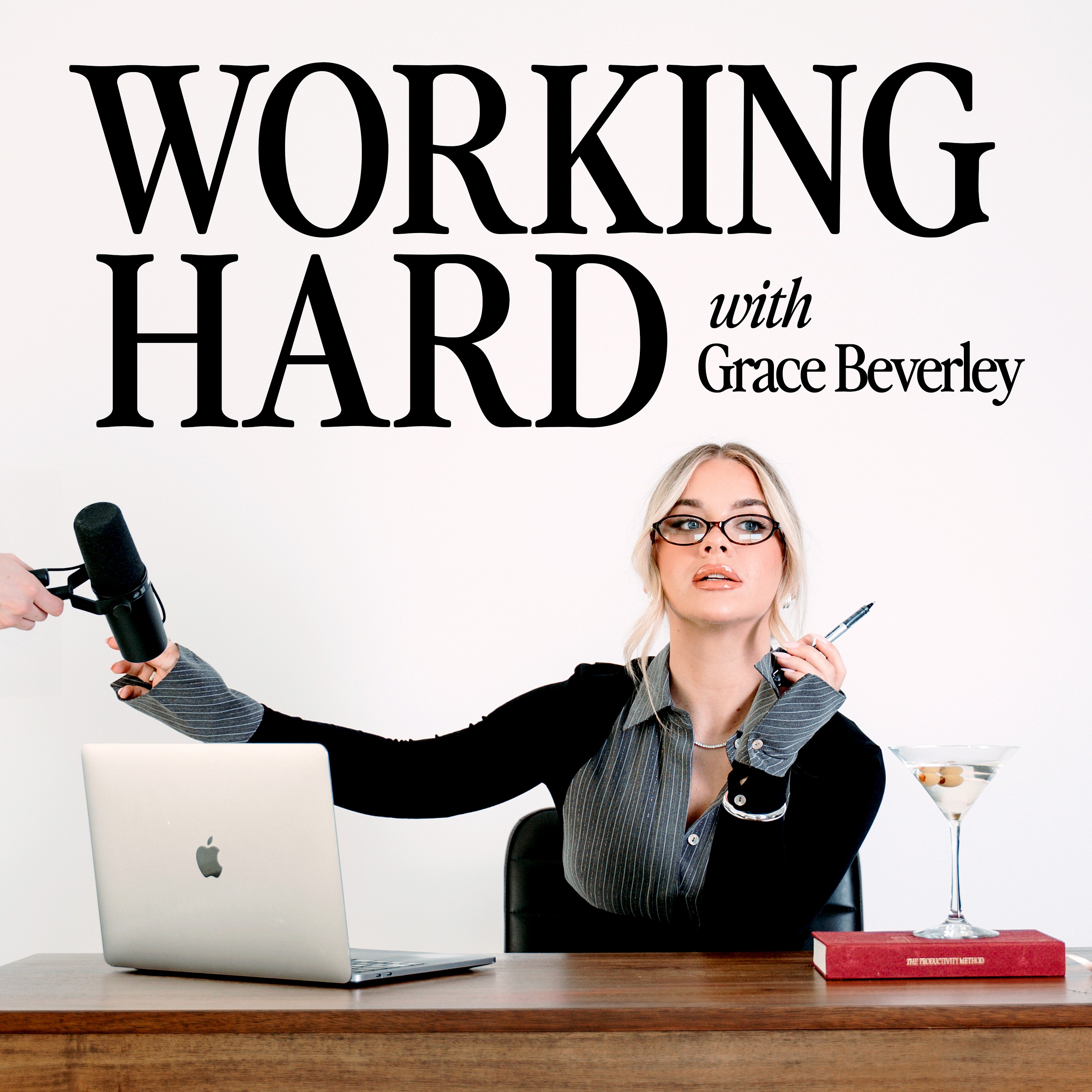
 Working Hard with Grace Beverley
8 Jan 2024 · 47m
In this episode of Working Hard, Hardly Working, host Grace Beverley interviews Gabby Logan, a renowned broadcaster and former rhythmic gymnast. Gabby shares her journey from sports to sports broadcasting, discussing life lessons and insights on success, determination, and resilience.
Written by AI. May contain mistakes.

Get the gist, explore an idea or ask about something said.
 Claude
On Working Hard with Grace Beverley, what are the key points of this episode?
Searching your listeningAutomatic transcript. May contain errors.
0:00Does it ever feel like you're a marketing professional just speaking into the void? But with LinkedIn ads, you can know you're reaching the right decision makers, a network of 130 million of them, in fact. You can even target buyers by job title, industry, company, seniority, skills, and did I say job title? See how you can avoid the void and reach the right buyers with LinkedIn ads. Spend$250 on your first campaign and get a free$250 credit for the next one. Get started at linkedin.com slash campaign. Terms and conditions apply. In business, communications is everything. That's why I use Ultitel.
0:33With voice calling, video conferencing, messaging, chat, fax, and more all in one, I get unified business communications that work wherever I do. All powered by AI and for just$18 a month. Request a demo today by calling 1-844-858-2835. Or learn more at ultitel.com. Hi friends, Grace from the Working Hard podcast here. When you're stretching every dollar, Alilla goes a long way and Walmart Business is here to help. They make it easy to order what you need from tech and cleaning supplies to everyday essentials, all at low prices and with helpful tools like spend tracking and tax exempt purchasing for eligible organisations.
1:13Because when your operations are smooth, your impact can be bigger. Visit business.warmart.com to get started. It was just the most horrific news. Today I am interviewing all-round legend and broadcasting Superwoman. One of the most recognisable broadcasters in the country. Bringing you some of the sport as it continues. Gabby Logan! What you put in, you get out. You can't fake it. Where do you think you got that tenacity and determination? My brother had died. No warning signs. It was devastating. And still to this day has the ripple effects. Families change forever when things like that happen.
1:51I can't imagine what that would have been like. I was not coping very well. You can't just keep running away from grief. Getting to the top is one thing. staying at the top is a different journey and there are a lot of people who want my job and I want to keep doing my job and if you were talking to the you who was just starting out what advice would you give her I think what is up guys and welcome back to working hard hardly working today I am so excited to be interviewing kind of all-round legend and broadcasting superwoman really Gabby Logan I have been incredibly incredibly excited for this episode and having just recorded it it does not disappoint.
2:36Starting out as a rhythmic gymnastic who represented Wales and Great Britain her career took a turn when she moved into the world of sports broadcasting and for the last 25 years she's been one of the most well-known faces on our screens whether it's the Olympics or the Euros you can guarantee she'll be making an appearance. Getting to speak to incredible women like Gabby is such an honour for me and it's only possible because of everyone who likes, subscribes and reviews the podcast. So thank you. And please keep subscribing so we can keep having brilliant conversations just like this one and get inspired and all go about our day to day making big moves, which is the aim of the game.
3:13Hi, thank you so much for joining me today. Thanks for having me. I'm very excited to have you here. I would love to start at the very beginning. I'd love to hear a little bit about your kind of early life and your childhood. Firstly, I know that your dad was a football player and eventually a manager. I'd love to hear the kind of impact that had on you, whether you looked up to him, looked up to his career, looked up to that kind of area as something that you always wanted to be involved in. Well, I definitely didn't look up to him in terms of wanting to work in his field. I looked up to him as somebody who was incredibly hard working and had had to leave home at 15 move countries move from Cardiff to Leeds to pursue his dream and his passion and his talent and I I knew the sacrifices that involved and you know how much he had kind of you know really labored and toiled to get to where he was but I didn't see working in football as a possibility even it was more about his attributes but equally on the other side I I, you know, my mom was also very hardworking, very tenacious, very entrepreneurial.
4:21So I had, you know, two parents who, you know, were grafters, I think. But my dad's sporting life did influence me in the sense of sport became kind of something that our family did. Right. So my sister and I were gymnasts. My brothers were footballers. We were all training hard all the time, competing, doing loads of sports. So it would be disingenuous to say that sport wasn't an influence, but working in football, that was never even on my radar. And do you think that was because of women not necessarily being as high profile in football in particular? There were no women footballers. We didn't have professional game for women.
4:57There were no women talking about football on television. But it was banned for a while. Well, it was banned for 50 years. Yeah. So it wasn't banned when I was a child. The ban had been lifted by then, but there was still no football in school for girls. and I mean you just didn't see girls playing football. I was kind of aware of it into my later teens that there were women playing football and when we lived in Canada when I was a child we saw women playing football because in North America it had kind of grown at the same rate for men. It started pretty much at the same time. I knew girls played it in corners of the world.
5:27People kept going about Norway. You know Norway's had this tradition of playing football but not in Leeds in 1986. Yeah because I remember I think as well with my childhood having the ban I mean, I obviously wouldn't have even known about it, but the kind of knock on effect of how something is seen generally in society and how something's looked at and kind of women playing football, all of this. I remember my we'd been late to sign up to like extracurriculars. I remember my dad signing me up for a football one and I had a tantrum and I was like, everyone's going to think I'm so uncool. And I was like, I have this like memory of that.
5:59And I look back now and I'm like, God, it would have been so cool to play football. You'd have been way ahead of the curve. I know, I know. Exactly. I could have, you know, that could have been my thing. I remember looking at it and I think it's, you know, how something looks to us as children is so important. And that's why, you know, we're doing role models now. Exactly. It's very much kind of how we see the world is how we see ourselves in that way. And I can't imagine what the difference also like would have been like. If you can't see it, you can't be it. I think it's, you know, absolutely vital in this area, isn't it?
6:29Because young girls, as you say, you know, were even when you were young, you know, and let alone when I was young, would not have seen people like Ella Toon or Jill Scott or, you know, Farrell Williams or Alex Scott, all these women who've been incredible for the Lionesses, they just didn't know they existed. They didn't see Wembley full for a women's football match. And when you see a full Wembley watching a women's football match, you know it's important. It kind of sends you messages, doesn't it? Even if you don't like football, you realise, well, this is a big deal. So, yeah, there was no big deal around women's football.
7:02In fact, women's sport generally was very under the radar. not covered to the extent, anywhere near it is now. And so you'd kind of pursued gymnastics at that age. Did you see that as something that you were going to do full time? No, because again, it wasn't a professional sport. We didn't have the National Lottery then, which funds a lot of Olympic sports now. So that's an Olympic sport. And so you do it for its own ends. You do it because you enjoy the training, you enjoy competing, you enjoy the discipline. It gives you something, you know, that you can't, almost untangible that you love. But it was never going to be a career as such, which my dad kind of couldn't get his head around as somebody who'd sacrificed so much for a professional sport.
7:40And for him, football was a way out of the council estate he lived on in Cardiff. And it was a way to a better life. And he couldn't understand why I was doing well at school. But I was kind of giving up all this time to do a sport which was going to come to nothing in his mind. And actually, even though I never earned any money out of gymnastics, it gave me incredible attributes and really great personal skills. you know away from the actual sport as well as you know giving me wonderful experiences and meeting brilliant people so it's not something I would regret and sport as a whole I mean anything that you do to that intensity I actually did gymnastics competitively and I remember the way it has to take precedence in the way that actually your body will remember if it doesn't and you're kind of constantly humbled again and again when you're like oh I really thought I could come back from this holiday having like you know actually really not done nearly enough on it you can't fake it like you really can't fake the effort putting it in like that 10 000 hours thing that really having to go do you think that at the beginning that gymnastics as well had that type of impact on you in terms of giving you that kind of high achieving mindset or high high training i think what it taught me was that what you put in you get out and like you just said then you can't fake it you know you can't just kind of rock up to a gymnastics competition it's kind of thinking that you've done imagining the work you know it has to be done and I think that's what it kind of it bled into my school life you know and I I put the work in there as well and got the rewards there and I could see that there was a happy marriage with effort and outcome and so it taught me to multitask it taught me timekeeping it taught me kind of about discipline and it taught me about how to deal with people in terms of like you know when your relationship with a coach you know being able to take critique being able to take criticism and being able to put that into action then you know I think all those things build up resilience and they build up a robustness and determiness to kind of do something and and to challenge as well sometimes in those situations away from school because your relationship with the teachers is very different to your relationship with a coach and sport so it doesn't matter what the sport is per se it's that environment I think and also understanding competition understanding your body as a young girl is really important as well because the pressures and I didn't grow up with social media and so I feel kind of blessed in a way that that element wasn't there but there is a very strong kind of feeling about your body when you're wearing a leotard all the time as a teenager you know I started my first period and the next day had British championships you know so and putting a leotard on the day after you started your first period as a 13 year old was quite a moment I'll never forget and feeling like you had to somehow kind of you know keep your body in a prepubescent state almost because you're wearing a leotard but trying not to have an eating disorder you know all those things that kind of you're wrestling with so eventually I kind of had a healthy relationship you know with my body and understanding what it could do you know and how your body is more than just something that is an aesthetic thing you know so yeah there's I think I look back and realize those lessons now I didn't necessarily at the time as a 14 year old process all of that I think you know you it's with hindsight isn't it and time and having my own kids and watching their relationship with sport as well I think you realize the values in that with your own kids have you encouraged them to be doing sports to a competitive level not so much the competitive level or they both have it's more about the things that I felt I got from it and and actually I wanted them to compete to understand competition but not because I wanted them to be the best in the country or something you know because I realized how brutal and ruthless sport can be and also you know what a hard teacher it is and that might not suit the personality so you know it's more about the friendships and community and purpose and feeling that actually, you know, when you're a young person, when you're a child, you've got that time to do it.
11:40You know, as you become, you know, older and you're an adult, you know, if sport isn't in your life from an early age, it's hard to get it in. And I do meet women who found sport later, you know, in their 30s. They've started to enjoy it. But they always talk to me about wanting, you know, kind of wishing that they'd had it younger because then it's part of you. You know, it's part of the tapestry of your life. And it's easy to dip in and out of it then. I'd like to speak about moving then to university. What were your current aspirations at the time? So while I was a gymnast, I was on Blue Peter, which was a big children's TV show live from Broadcasting House a few times a week.
12:15And I'd gone on there to advertise a gym competition when I was about 16. And it was the first time I'd been in a TV studio. And I just found it very exciting. I found the whole BBC building exciting. And I was about to start my A-levels the following year. And I thought, oh, I'd really like to work in this environment. And I wrote the editor of the show. and he wrote back and said yes go to university and come back and see me later kind of thing not particularly helpful step-by-step advice and I had thought I would go to university nobody in my family had ever been to university on either side my mum had always talked to me about going to university and so I did I went to Durham and I read law and in my mind I was always looking for experiences within broadcasting so so if I met somebody who worked in newspapers or radio or anywhere I mean obviously we live in a very different landscape now even sitting here right now doing this you know we are broadcasting in a in an environment that just didn't exist when I was growing up so you had to go to formal newspapers or you know radio stations and so when I got to Durham I started working for the local radio station in Newcastle I met a guy who was the boss and he gave me work experience and for the first three months I did kind of free shifts I used to go in in the afternoons when I didn't have lectures and learn how to put a news bulletin together I'd learn about reading the news then by the Christmas he was paying me and then by the end of my first year he was letting me learn how to drive the desk and you know do shows and by the time I graduated I'd had regular shows and I got offered the breakfast show so I kind of did an apprenticeship yeah for those three years and it was tough you know I was getting up at four o 'clock on Saturday and Sunday mornings to drive to Newcastle to do the early shifts I was doing late night radio shows at the weekends as well so a lot of my student life was kind of punctuated with Monday to Friday I was a student.
13:57Weekends, I was doing this job. And at the time, you know, kind of there's a bit of me kind of wondering about the sacrifice. But actually, I've got so much experience. You talked about 10 ,000 hours. You know, I kind of did that in my three years at university. So it was enormously kind of fortuitous. You know, when you look back and you think, why did I end up at Durham? Why did I end up at, you know, because when I was at Sixth Form College, they'd asked me to go to Oxford and they said I should sit the Oxbridge. and I didn't want to because my then boyfriend was moving to Newcastle and I thought, no, I'm going to be close to Newcastle.
14:27And I went to see a tennis match in Cambridge in my final year with my then boyfriend and I was like, oh my God, this is beautiful. And then I look back and think, if I'd gone there, I would never have had that radio experience. I never would have spent three years doing the radio, understanding broadcasting. So things kind of worked out for a reason, I think. And I had a great time as well. It sounds like your approach was very much, I need to create this, like I need to find little bits of it and also almost like kind of create my own masterclass in how I'm going to get there where do you think you even got that kind of tenacity and determination and also just fearlessness as well just being able to kind of gosh I was quite you know um ballsy really to pick the phone up you know like minute I arrived in Durham I called this guy and he was like you must have only just arrived like it's only freshers week you know because he'd Go out.
15:14Yeah, yeah. There's two kind of main things. One, what we just talked about, the background that I'd had in sport. And I think growing up in a family of four kids that was quite kind of robust and lots of sport and everybody being quite competitive. And so that was probably the upbringing in my parents. But then also in the summer before I went, my brother had died. He was 15 and he died very suddenly. And I mean, literally on the spot, no warning signs. And that definitely made me somebody who wants to seize the day and live life and get the most out of life possible. But coupled with that also in the immediacy of his death, there was a feeling that I had to live his life as well.
15:54So I think I was charging at that point through life. You know, I was really kind of wanting to grab every opportunity, but not just grab them, I suppose, like you just alluded to create them as well. So there was a kind of perfect storm. Yeah. And I'd like to speak about that, if that's all right. having received a phone call when you were at university it was just before actually oh really right before you were 19 yeah I was in my gap year I can't imagine what that would have been like so I wanted to take a year off before uni I was supposed to be traveling in the end I spent most of it in London doing lots of jobs that weren't related to broadcasting at all and just trying to kind of make ends meet it was the May and it was Maybank holiday so I was only a few months off going up to Durham and a phone rang and it was a landline you know mobile phones didn't really exist it was my mum it was about seven o 'clock in the evening and she was calling me to tell me that in the afternoon or late after after dinner my brother was playing football with my dad in the garden and he'd just fallen over into the grass he just collapsed and this was an hour and a half before this they'd rushed him to hospital thinking he had heat stroke or something it had been a hot day and he'd had a catastrophic heart attack basically a thing called hypertrophic cardiomyopathy which is where the heart as a muscle is enlarged and just stopped beating and um and he was dead there was i mean you can imagine as a family that have been very tight and close and my little brother was six at the time he was in the garden as well playing football my sister was a model and she was out in japan my younger sister so she wasn't there but um it was just the most kind of horrific news but also the biggest shock to our little family system you know and um he was a footballer of some repute you know he'd signed for leach united who just won the league that year what is the top league in england at the time it was uh the old division one so he was very good enormously talented he was about to start his professional life two months later you know it was it was devastating and still to this day has the ripple effects because obviously families change forever when things like that happen and my parents eventually got divorced and you know So what had seemed like our future became a very different experience.
18:07Yeah, I mean, I can't believe how much in that moment everything must have just changed. It's one of those things that you hear and no one thinks it because it doesn't add up. Like it doesn't make sense. And I can imagine that is not the normal order of events. No. And it being kind of that sudden and no preemption or kind of no thinking that could happen. I can't imagine how much that would have rocked your whole family. but also your experience of the world obviously 19 is a very crucial age in becoming the person you are it's your first kind of real your second year of being an adult as you say you were out of college you were kind of finding yourself in the world how did that experience at that age I guess impact your perception of the world and and who you are yeah and you don't ever really know what you would have been right of course you one looks back and think kind of okay I was obviously somebody who was hungry and determined and I'd you know put hard work in and but that accelerated kind of version of me if you like they're kind of you know I'm going for it now version I think was definitely more acute because of that and the reasons I just said before about feeling subconsciously I think at first that I wanted to just get the life that you know live the life that he couldn't live and try and do you know as much as I could but also coupled with that you've got the grief and sadness that you carry and that has to manifest itself at some point you can't just keep running away from grief you know so a kind of a year into uni I think it came out really when I'd done my first year exams and I was just feeling exhausted and feeling kind of you know like I was not coping very well and had to start talking to people about that you know because I'm I'd kind of gone through the first year a little bit like oh people seem really worried about trivial things and I felt like I had some insight into right and had this whole new vision of the yeah yeah and actually you know that's not a really good way to be as a 19 20 year old because obviously naive like you need to yeah and also you need to have empathy for people who are worried about what you see as something quite trivial you know like they couldn't get the flat they wanted or the accommodation they wanted for their second year at uni well oh that's not that important you know but of course it is really important to them at the time um or they couldn't get into the rowing team or they couldn't get the play that they wanted to get that is really important but to me I was like well you haven't lost your brother you know your family's all fine you know so in my mind I wasn't obviously vocalizing this but then I had to kind of you know work out that I couldn't go through life like that you know I couldn't only have friends who'd experienced devastating grief and tragedy right of course and to find any kind of connection with them and so I think eventually when I started you know I'd eventually see somebody to kind of have acupuncture who became a therapist and and when I started to work through all of those feelings and how I was dealing with relationships with other people because I think that's the important thing about a big event like that in your life it's not just you know kind of you having some kind of semblance of understanding it's how you then going to deal with the wider world and other people is really important and your siblings and you know because I think all those relationships change so that happened really early for me which is a good thing you know that I that I did start speaking to people because I think I've met people along the way and I spoke to people on my podcast who maybe left it 20 years you know and a lot of damage can set in I think in in your life in the way you medicate yourself you know whether you decide to self-medicate or whether you decide to have destructive relationships and all those kinds of things that can come from different kinds of trauma that we know and we talk about a lot more now in society which is great because I think people then have a better understanding that they can go and seek help and find a way to deal with it and live with it.
21:56How are your coping mechanisms now because I can imagine that grief is still very much there and some days more than others how have they changed since kind of what they were back then in the immediate aftermath yeah it's it's very different now because obviously the rawness goes you know so but I can still have moments and days where I start talking about him and I just find myself getting really emotional and or um there was a period in the build-up to my son is now 18 when he was about to turn 16 I realized that I had been holding something I think inside me willing him to get to 16 because my brother never got to 16 and that was a big kind of moment for me that I you know I realized that that we hadn't had a boy in the family since he died get to that age you know because my I'm the eldest and my kids are the eldest of all the grandchildren and so and my son has kind of followed a similar path he's a professional sportsman now and he'd kind of you know was having those similar experiences so and he never knew his uncle you know so it wasn't his fault you know yeah and it's how you treat somebody you can kind of subliminally either you're too protective or you're feeling a nervousness for them in their life and interestingly my son actually through his rugby had to have his heart tested around the same age he came back from school and said oh all the first team rugby players have got to have these you know i can't imagine how that must have felt yeah and he had to write you know on the form that his his uncle had died of this and it is completely it was an aberration in my brother's heart it wasn't a genetic link which it can be but you still have that feeling and then you start playing out scenarios in your head about you know he's got a twin sister and imagining how her life would change and you know and then seeing you know my my husband and I thinking gosh well how would our relationship change right you know how would we deal with it as a couple knowing that my parents didn't last you know that's catastrophizing things and that's where you learn I think to go okay just you know just take a step back here this is not happening and we're going to deal with this he had the tests he's absolutely fine you know and that's that's that you know it does come into play but I think now as a source of fortitude as well you know you can get through situations and you can you're going to be okay and it's going to be difficult but you are going to get there and inspiration as well I think is is what he is still to me and so you you talk about how at that stage you kind of had almost a feeling that you needed to live his life for him when you were then obviously going through university and then graduating how did that I guess manifest in what you were doing in terms of your you know the work experience you were getting where you were going right after graduating interestingly my journey into football which didn't take that long after uni I think there was probably something subliminal there about wanting to be in the environment he would have been in you know so I I was always a football fan and I was in the office on the radio station doing a breakfast show which had nothing to do with football per se but I would always go into the sports end of the office at the you know and talk about Newcastle United and talk about football and talk about sport and so one of the bosses said to me oh you really seem to enjoy sport why don't you do touchline interviews for us at St James's Park and I honestly thought that was kind of like just the best Saturday job ever like yeah I get to go football and you're going to pay for me I get to go to park parking space that alone getting past like the water I'd like I park right by the reception and I just go in that became a really fun Saturday job but I still didn't think it was a career move it was more like this is fun and my boyfriend at the time from uni was a Newcastle fan lived in Newcastle so it was like he loved it you know so we were having a fun time and then at the end of that season Sky Sports asked me to go for a screen test they'd see me doing the interviews pitch side asked me to go for a screen test and and I got a job at Sky and I started working for Sky Sports and I realized when I was researching for a match or something or for you know some work I'd be always looking at the age of the players and going I wonder if Daniel would have played now I wonder if he would have been playing in this match I wonder where he would have been playing and and these were people who would have been his contemporaries you know he would have grown up alongside these people and so I think I probably was feeling quite comforted by that without it being a deliberate move you know I didn't say I'm going to work in football so I can you know this can happen so yeah I think I was slightly drawn into that world maybe more than I would have been right and obviously having headed down to Sky in London that's you know that feels pretty big like yeah that was a big move did you feel at that time like that was your big break yeah I did I mean the first few months of that job I honestly felt like I'd won a lottery ticket right you know because I'd moved to London I'd always wanted to live in this Sky Studios are in Osterly and in my gap year I used to go to richmond for the afternoon i always wanted to live in richmond and i signed up for a flat in richmond and richmond hill and i was like 23 years old and i was kind of like you know i had i was taken to the west end to harvey nichols to buy suits for work and you know i felt like i was pretty woman in that scene you know where julia roberts walks down rodeo drive i had these shopping bags and i came home and i remember hanging all my suits around my bedroom in my rented flat kind of just lying on the bed admiring them kind of going i mean it sounds great yeah this pinching myself like this was my life you know I kind of couldn't believe it and of course the reality then of the work you know is but it was what I wanted to do and I was getting again going back to your 10 ,000 hours I was doing two live shows a night on Sky right so I was doing six o 'clock ten o 'clock I was getting so much experience which I'm so grateful for because if I made a little mistake at six I could correct it at ten and I was learning on the job but they knew that they knew they'd hired somebody quite raw I'd come from radio and from doing some interviews but not from live tv so I was really lucky to be kind of in a space where I was growing but also growing with people who there were a lot of young people who I who I now work with still in different channels that I work for who came through that apprenticeship at the same time and it was a very cutthroat environment because it was there was quite male environment and there's a lot of testosterone there but actually for the most part it was a really brilliant growth and learning space to be Tonight's meal, tilapia surprise with boiled cabbage.
28:02Begin cooking steps 1 through 50 now. Are you kidding me? Making dinner shouldn't feel like doing a thousand-piece puzzle. With Blue Apron's new one-pan assemble-and-bake meals, the hard part's already done. Pre-chopped ingredients, zero stress. Just assemble, bake, and enjoy. No complicated steps, no mountain of dishes. Try assemble-and-bake today. Get 20 % off your first two orders with code APRON20. Terms and conditions apply. Visit blueapron.com slash terms for more.
28:56Post a job for free and get started today. At Capella University, learning online doesn't mean learning alone. You'll get support from people who care about your success, like your enrollment specialist who gets to know you and the goals you'd like to achieve. You'll also get a designated academic coach who's with you throughout your entire program. Plus, career coaches are available to help you navigate your professional goals. A different future is closer than you think with Capella University. Learn more at capella.edu.
29:52I've come to realise have actually enabled me to pick up skills that I wouldn't necessarily think are transferable at first, but definitely are and have absolutely contributed to how I currently work and communicate with my teams day to day. When I was 17, for example, I worked as a social media coordinator for a language school, which was one of my first jobs within the social media industry, and it gave me real exposure to the day-to-day management of social media channels and how to utilise these channels to market a business, elements of which are very much still relevant in the work I do today.
30:18Over the last few years, I've also been fortunate enough to be invited to speak at various events and conferences and also launch my podcast, which has added to invaluable communication skills and public speaking skills, which can be attributed to all areas of work, no matter what industry you're in. During my time at university, when I launched my first business, Shreddy, I had to very quickly learn how to prioritize my workload and time management in order to be able to get my uni work completed and simultaneously work on my business. These two skills have been invaluable to me as I've continued on my career journey, so much so that I have developed a tried and tested method for productivity, which was not only a source of inspiration for my first book, but has enabled me to launch an entire business based on key elements of these skills.
30:56We'll be working with Indeed to bring you even more work-focused guidance and inspiration over the next few weeks, so make sure you keep an ear out for that. And in the meantime, think about the lifelong skills you might have and how you can be recognised for them by employers simply by uploading your CV for free on indeed.co.uk and let better work find you. and what would you say to someone who's in the industry now trying to get a big break I think there are so many opportunities in sports broadcasting now if that's the kind of part the world you want to work in which is a good place to be right now because sports still rates really highly sports rights are very expensive getting bigger the women yeah yeah exactly um I get as much experience as you can like I mentioned before I was writing off to places I was getting experience I get a lot of people contact me on social media and I always try and reply to them in some way and sometimes I get back messages years later and they're working at the BBC I bumped into a girl in the toilets at the BBC sport recently she came out the cubicle at the same time as me she's about 24 and she looked like she'd seen a ghost I thought oh my god I kind of had a toilet roll on my head or something and she went oh my gosh I wrote to you and you wrote back to me when I was 16 and I went to university and now I've got an apprenticeship and you know so yeah it was amazing and I think you know if you really want to do it there are there are really good routes into the industry it's hard work though you know and you've got to want to do it it's not about you know kind of like having nice makeup and hair and going on telly and kind of like feeling you know that this is a fun it's it's hard work um but it is very rewarding and you will you know you'll get a lot out of it but it is i think now a much more open space for women you know there are many more opportunities might not be in front of the camera you might want to be director you might want to be a producer but sport is vibrant and fun and all the things all the reasons we love sport as a you know as an entity you know reflect in sports broadcasting i think and with the existence of social media now obviously as you say like this type of setup wouldn't even exist do you think your route into the industry would have been different or kind of looking at routes into the industry now looking at the fact that you can kind of platform yourself do you think you would have taken a different approach yeah I'm sure I'm sure I would because I think also a lot of places are quite guarded now about work experience you know in the BBC you've got to be a certain age or you've got to have that you know so I probably wouldn't have just been able to kind of rock up to somewhere and give them a call yeah but I think now you can broadcast yourself right so you can create your own you know kind of youtube channel you can create your own instagram account that has lives and you know if you are knowledgeable and you can write well and you can deliver that orally as well then you've got a chance and when you're at university or college do loads of commentaries you know don't be afraid to when you're a student to work for free on those kinds of things because that you're building up a portfolio you're building up a body of work and you're building up experience without having to kind of put yourself in the you know in the firing line so there there are different ways in now it's a different industry now right and you were the first woman to host a live football match on terrestrial television yeah what was the culture like back then like the broadcasting culture as a whole what was the response to you even yeah there was there was a you know there were definitely those that didn't particularly want to see a woman talking about football I mean there are those now who don't definitely still exist yeah so but they were much more likely to write a column about it in a national newspaper then right they probably wouldn't do that now and so I had to you know kind of have a thick skin and let a little bit of criticism kind of bounce off we talked about criticism earlier it's important to take on board but equally when you get into a position where there are opinions being fired at you from all over the place you then have to work out the people you really care about right do I care about your opinion do I care about your opinion who is who's the person who I'm going to listen to so I'd I quickly kind of whittled them down into three or four people you know that might be my boss it might be a mentor it might be a parent you know somebody who I was going to actually take some positive and negative feedback from and not just take everything because of course you're never as good as people say you are and you're never as bad as people say you are if you remember those two things you could be quite measured I think you know because it's an industry where people will to use the expression blow smoke up your ass sometimes you know and that equally is wrong yeah no absolutely and I do think that's very true in a way that in a world where we've never received so much feedback yeah especially obviously kind of I mean on tv that's going to be amplified it's instant isn't it somebody's watching tv they're holding a phone in their hand almost always oh I'm going to tell her she doesn't look good today right exactly I'm going to tell her she just slipped up back in my start of my career they'd have to write a letter could they be asked to write a letter very rarely you know and generally the ones that came through were nice letters you know wanting a photograph wanting a signed autograph so the letters that came that were negative were few and far between whereas I'm sure if people had social media when I first started I would have been bombarded every night with you know their opinions I think there's a Brene Brown um quote that I have somewhere that's talking about how very happy to take feedback as long as you're also in the room getting kind of battered like also you know someone who's giving it a go trying like whether it's kind of entrepreneurship whether it's presenting whatever it might be there's a very clear as you said like with a with a coach you can take that criticism and that intense amount of criticism and feedback because it's that trust relationship there and because the expectation is they are there to help you be better that's obviously you cannot vet people in that way where you're reading through i sort out my own person you know so i had a guy who was a coach who sky had employed and i loved having feedback sessions with him and when i left sky we carried on that relationship you know he came to my wedding became a really good friend sadly he died a few years ago and i really miss So I was trying to find somebody, you know, even at my age and my experience, I wanted somebody I could sit down with, watch a match or whatever and have some feedback because there are a lot of people who want my job and I want to keep doing my job.
36:34I don't want to, you know, be slack about how I'm doing or what I'm doing. And he was somebody I really trusted. So if he said something to me that was a little bit negative, I believed it, you know. And I think you, you know, you have to kind of be honest with yourself as well, don't you? And that is a conversation you can have internally. you know am I am I kidding myself or can I be you know can I do this better that that's really important I think and you know there's expressions there about you know getting to the top is one thing staying at the top is a different journey and it's a whole different experience how would you recommend someone finds I guess their version of your mentor I suppose if if you're in a work space environment so you're already in that the beginning of that job or career it's looking out for the people that you think I like the way that they treat people I like the way that they work I like the way that they you know have their life is kind of going you know their values and and if they are what you think they are they'll probably be quite receptive to giving you advice and and help don't be afraid to ask that person you know for for a little bit of advice and mentorship and um I think it's better to have them somebody you know I mean don't you know don't be writing off Taylor Swift you know because she's not probably not gonna be able to do the job right sure but if you know it's in a closer proximity it might be somebody who you actually are distantly related to who you think not at the same job but actually look how they've navigated their life you know they've had setbacks and they've had disappointments and they they're doing well and i'd like to know kind of how they've found themselves in that position and ask questions i love it when i meet you know i do a lot a lot of different shows that aren't just sport and young runners on the show who are starting out in their career and i love it when they ask me questions and it doesn't happen often enough you know i did um you know countdown on channel four the dictionary corner you do five shows in a day and I did that recently and the guy who was the young runner there just asked questions all the time like even when he brought me my lunch he was asking me questions and and I ended up giving him some contacts for other shows that I thought he'd be good to work on he really wanted to get into sport and I recommended him to BBC Sport because we need people like that you know so if you spot them you want to help them right you don't ask you don't get and also you very much get in what you put out as you said like that person was just there doing what they wanted to do and getting it you know being like i want to ask this question i want to get this answer help more you know when you're in those situations at the very start think about what could i don't wait to be told right what else could i be doing that's helping people in this environment because nobody's given me a task for the last hour or so but actually there is things that you know there are things that people want try and be proactive with it you know you might not get it right but nobody will ever criticize you for trying to help you know I and if they do they're an evil person and they shouldn't be allowed in that environment yeah nobody will ever say stop being so helpful right so I think just just imagine you know the scenario for that person what do they need now they haven't had a coffee for a few hours I wonder if they're thirsty I wonder if I can help them you know carry their stuff I wonder if I can get them to you know just just all those things will put you in their mindset right no I completely agree with that I remember I did an internship at IBM and I remember I was in an area that I wasn't I wasn't truly interested in I liked the day-to-day but I wasn't kind of you know it wasn't my favorite area and I remember hearing like the head of e-commerce which is an area that I'm very much in now I remember hearing him speak at one of the grad days and I kind of went up afterwards and I was like is there anything like anything you need done like just whatever it is and he ended up running like a kind of e-commerce pitch competition and that was hugely formative in my experience in in the workplace and actually it was just about being a kind of ballsy intern and just going up and asking too many questions i think i think it's like you know you doing that shows enormous kind of tenaciousness and confidence but you probably had to fake a bit of that confidence you know none of us ever feel like you know you've got to kind of just go right okay how bad can this be what are they going to say and do it just get on with it and do it and don't worry about embarrassment i think to work in this industry it helps not to be easily embarrassed because there are situations where you know it's not going to always go to plan those conversations he could have turned around and said, sorry, what?
40:39You know, no thanks. But, you know, you did it. And I think you will get, the next time, you'll feel a bit better about doing that. And you build up that confidence in yourself. And you're now obviously a staple on our screens for the World Cup, the Euros. What's been your most memorable sporting moment? Oh, I've been so lucky to be in stadiums where England won a Rugby World Cup in 2003, where the Olympics in 2012, I worked on that, was incredible. The Women's World Cup this year, the final, which didn't go to plan but was still you know getting to the final was amazing the women's euro is probably one of the great days I think at work it's very hard to pick kind of one moment but I just feel like the stories of sport are kind of you know I look back and god I can't believe I've done this for nearly 30 years you think I'd kind of got bored of it or something by now but actually sport just the way it evolves the way new characters come in people you know I was working last night with Gareth Southgate the England manager doing a Q &A with him and we got talking about Jude Bellingham who's such an exciting prospect for England's men's team obviously plays at Real Madrid now and I was like you know just thinking god what could he achieve in his life and career and what what are his values what is I love sports people's kind of stories because you know from what I understand he's pretty perfect you know he kind of trains really hard he does I was going to Gareth surely he has a fault give us an edge yeah and he said we haven't found it yet you know is he rubbish at crosswords and I think you know sport continues to kind of fuel me I think and give me great inspiration and you know it's it's hard to pick just one thing but I I just love how hard people work in sport and you know what they give it really inspires me and having two grown-up children what quite grown up don't let them hear that you know they're still my babies okay having two baby children yeah I think my six foot five son would probably object to that description what advice are you kind of actively giving them about pursuing their careers going forwards taking over whatever they want to take over i think they've seen a lot from their parents just behaviors that they you know i sometimes see my daughter my daughter's really hard working she's having a gap year but she's she's horses and uh that's her thing and she competes and she gets up at six o 'clock every day she does that till lunchtime then she goes and nannies in the afternoon and then she's you know she's knackered at the moment because she's doing that six days seven days a week you know the horses but i kind of let her get on with it because she's really you know she's she's seen how you know we work and um the other thing that's pleasing about that is that she's seen how important sport is to us and she goes off and does her exercise and enjoys eating well and all those things that I haven't had to kind of go you must eat well well obviously I did buy healthy food in the house but she sees what that does to her so that's really pleasing that she's adopting those habits herself so I try not to kind of give you know too much um kind of if I see things that I think I wouldn't do that but you try and let her make those mistakes and do things herself.
43:23With my son, he's in that environment. He's in a professional sporting environment. He's playing professional rugby. So his relationship now with his dad has changed beautifully because for my husband telling him things for the last 10 years that would help him and him saying, no, I know how to do it my way. Now he's in that environment. He brings them up. They have a chat about things that he's thinking about, about rugby and that environment. So it's really lovely that he's able to share those experiences with him. And I'm really proud of both of them and how they work and how they enjoy what they're doing and pursuing their passions.
43:53Because I think when you have kids, the one thing you hope is that they will have passion for life and do something that they really enjoy. And it doesn't matter whether they are A-star students or whether they get into the top universities. I think it's about for the... I had that dream again. My small business needs an office admin, but I don't use LinkedIn and I hire an energy vampire. But also they're a literal vampire. and suddenly my team is spending all their time sharpening wooden stakes and buying bulk silver and rehearsing ancient chants and then i wake up don't let hiring nightmares ruin your dreams linkedin jobs new ai assistant takes insights from over 1 billion professionals to create a short list of the best fits for you get 50 off your first job post at linkedin.com slash pandora offer terms and conditions apply hey fidelity how can i remember to invest every month.
44:44With the Fidelity app, you can choose a schedule and set up recurring investments in stocks and ETFs. Oh, that sounds easier than I thought. You got this. Yeah, I do. Now, where did I put my keys? You will find them where you left them. Investing involves risk, including risk of loss. Fidelity Brokerage Services, LLC, member NYSE SIPC.
45:10Is it time to reimagine your future? The right business skills may make a difference in your career. At Capella University, we offer a relevant education that's designed to focus on what you need to know in the business world. We'll teach professional skills to help you pursue your goals, like business management, strategic planning, and effective communication. And you can apply these skills right away. A different future is closer than you think with Capella University. Learn more at capella.edu.
45:43For me, it was about them having passions and about them being, you know, good people who were nice to be around. And so far, so far that seems to be going well. So, you know, I'm always there for advice. And sometimes my daughter does say worrying things like, I think I'd like to do what you do when I try and say no. No, do your own thing. But, you know, she might want to work in broadcasting. And if she does one day, then, you know, I would give her advice. But I think I'd always try and kind of get her to forge her own path. And if you were talking to the you who was just starting out, the you who kind of run up that station in Newcastle, what advice would you give her?
46:20I sometimes look back and think, oh, gosh, I was rushing so much, you know, did I kind of stop and, you know, really kind of cement those experiences? But I was doing so much at the time and had a lot of energy and, you know, was doing all the shifts that came to me. I wouldn't I wouldn't tell her to not do those things. things like hobbies you know I was I started to learn the guitar when I was in Newcastle and then I stopped because I was too busy with my shifts I think look back and go oh my god I could have been playing the guitar for 25 years now you know I could have been playing the piano I wish I'd kind of like kept learning alongside my career aspirations I wish I'd done something else alongside that was so I might say to her you know pick the guitar back up or pick you know get back on the piano or do something for you that's kind of you know for your headspace it's so interesting because I think that's so valid but I also think that everyone who I've spoken to that has a really impressive career they all say you know I wish I'd not tried to grow up too fast and I wish I'd just you know as you say do something for you that's not necessarily for furthering your career and all of that I agree but I also kind of think there's definitely something in that that it's also been a real priority yeah from an early age but it's like sports people when you speak to really successful sports people they always say I wish I'd enjoyed it more at the time I'm like Well, you wouldn't have won six Champions League, like 10 Premier Leagues if you'd enjoyed it at the time.
47:38But they always say that when they get to the end. And I always go, like, the end is only like in your 30s still, you know, when you're a sports person. So, yeah, you're probably right. And even now sitting here at 50, I could probably still learn the guitar if I really wanted to. Yeah, definitely could. So I'm not, you know, I'm probably just, I think the word is procrastinating on that one. You're now doing a lot more work researching midlife as a crucial point in our lives, as a kind of inflection point as a whole with the Midlife podcast. Could you tell me a little bit about that and whether you feel if your career has kind of just started?
48:09Yeah, it's interesting because your viewers and listeners are at a certain junction in life. And there is another junction, I think, a little bit later, which is now becoming quite a pivotal period for people because we work longer than ever. We don't have one career. You know, our grandparents and parents would have had one job through their life you know retired at 65 and my generation is thinking about pivoting moving on changing retraining because they're going to work for another 20-25 years our longevity you know is increasing how we live the rest of our life you know and those habits actually and I've done nearly 100 episodes of the midpoint and we've had amazing guests you know from comedians to sports people to acts and actresses and experts who come on what is clear is that you know your health and well-being those are habits that will stand you in good stead for the rest of your life but in terms of career and changes in relationship you know all those things that I think you know can happen in a midlife we used to call the midlife crisis I think it's really good to be able to kind of navigate that period in a way that you would say puberty you know because we talk a lot about kind of teenagers and their changes but so much happens in midlife health-wise so I mean I started it I won't lie to you Grace as a completely selfish project because I was heading into that period but I've just really loved it and it's it's fascinating so yeah it's a good space to be in.
49:28You know especially with women where we're kind of looking at the fact that we obviously hopefully have a lot longer kind of working careers if we want to actually so much of what we've been taught is kind of get this in before you have kids get this in after you have kids and all of that and actually looking at it in an entirely different plane I mean my mum was probably a few years away from retirement and decided to take a whole separate job out moving from public to private sector and is having the time of her life and And she kind of was on the verge of that being the end of her career. And I think that that's hugely important to be talked about.
49:59I think having purpose, you know, I think society used to look at the kind of middle age beige type thing, you know, and people were kind of what 50 looked like 30, 40 years ago is very different to what it looks like now. Right. And I think we also intergenerationally, you know, because of digital and because of the kind of online world, you know, we have to kind of understand what's going on as well. That's midlife is you can't just ignore technology and ignore what's happening. So and that's going to keep you youthful in your outlook as well. So, yeah, it's it is fascinating. And I think age kind of is just boundaries are disappearing slightly.
50:31Well, thank you so much for joining me. This has been incredibly inspiring personally. And I have no doubt that it will have helped a lot of people specifically in broadcasting. But also, yeah, you have so much valuable advice. So thank you so much. Thank you very much for teasing out. Lovely to chat. Thank you.
50:51thank you so much for listening to this episode of working hard hardly working and getting all the way to the end congratulations that's your big achievement for the day i'm so grateful for community around this podcast and having gabby on today was such a special moment for me honestly i would appreciate it so much if you could like rate subscribe and review the podcast wherever you're listening to it and as always have an amazing week
51:18Thank you.
On today’s episode of Working Hard, Hardly Working I sat down with Gabby Logan, a broadcasting legend and all-around superwoman.
Starting out as a rhythmic gymnast who represented Wales and Great Britain, her career took a turn when she moved into the world of sports broadcasting, and for the last 25 years she’s been one of the most well-known faces on our screens, whether it’s the Olympics or the Euros, you can guarantee she’ll be making an appearance. She's also the host of The Mid Point podcast, which examines midlife expectations and challenges with guests, you can listen to The Mid Point here: https://podfollow.com/midpoint/view
Getting to speak to incredible women like Gabby is such an honour for me, I hope you enjoy listening!
Download Revolut for free and get £20 when you use your card! www.revolut.com/grace
Cashback subject to availability. Max £200 cashback per month. T&Cs apply. £20 Reward only available until 30th April 2024 and other T&Cs apply.
Hosted on Acast. See acast.com/privacy for more information.