Ask ChatGPT
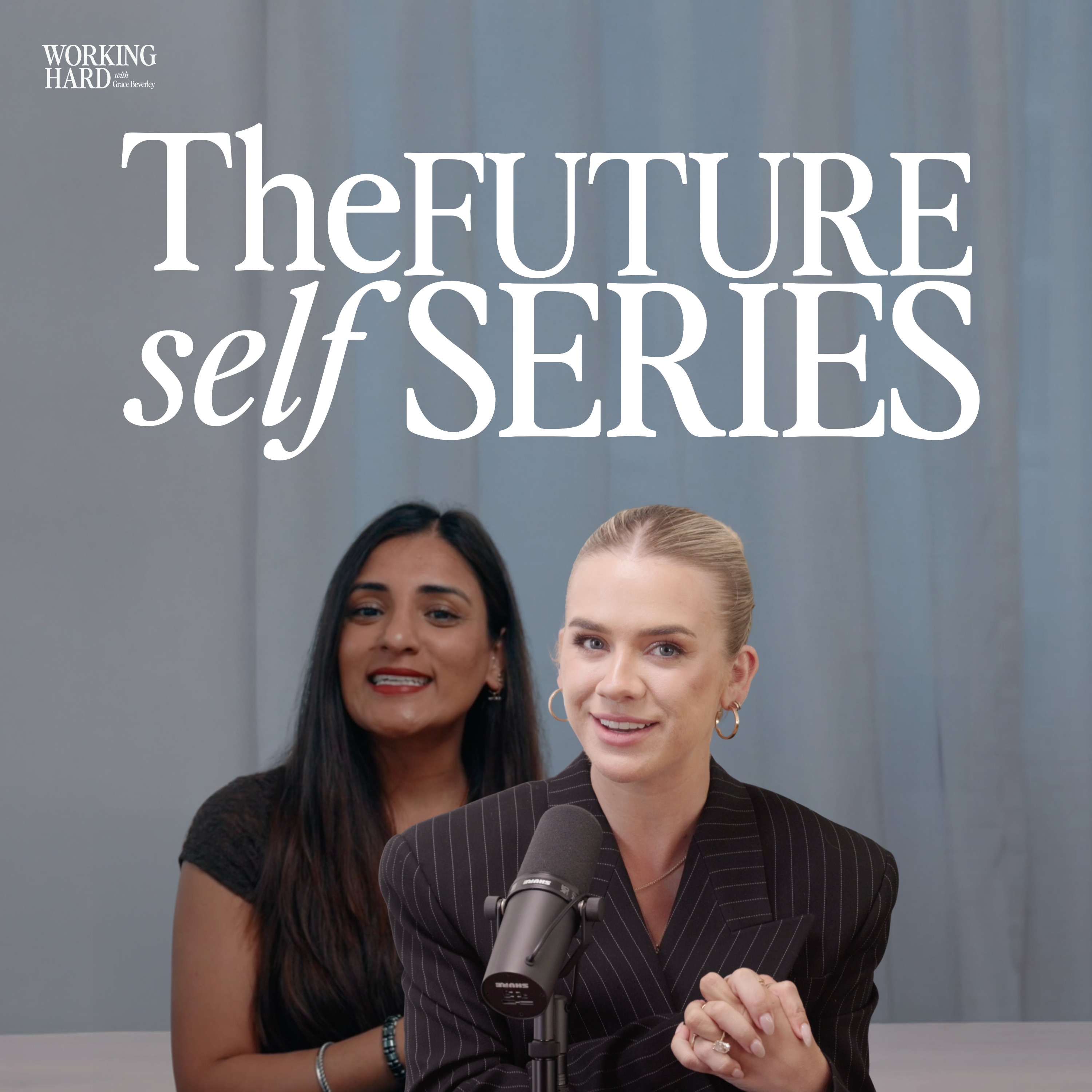
 Working Hard with Grace Beverley
11 Mar 2024 · 48m
In this episode, Grace Beverley interviews Kruti Patel Goyal, the CEO of Depop, discussing her career journey, insights on corporate success, and the realities of leadership in a fast-paced environment. Kruti’s experiences span investment banking, a decade at Etsy, and now her role at Depop, which she leads with a team of over 400 employees worldwide.
Written by AI. May contain mistakes.

Get the gist, explore an idea or ask about something said.
 Claude
On Working Hard with Grace Beverley, what are the key points of this episode?
Searching your listeningAutomatic transcript. May contain errors.
0:00The market's uncertain. Revenue's tied and hiring on hold. That's why results-driven companies are using Upwork to keep work moving. Go to Upwork.com today and start hiring proven freelance talent fast. No bulky overhead. No rigid long-term contracts. Just the right expert right when you need them. Work smarter and faster with Upwork. Go to Upwork.com now and find your freelance expert. That's U-P-W-O-R-K.com. Post a job for free and get started today. For a limited time at McDonald's, get a Big Mac extra value meal for$8. That means two all beef patties, special sauce, lettuce, cheese, pickles, onions on a sesame seed bun, and medium fries, and a drink.
0:42We may need to change that jingle. Prices and participation may vary.
0:59spend tracking and tax exempt purchasing for eligible organizations. Because when your operations are smooth, your impact can be bigger. Visit business.warmart.com to get started.
1:16Kruti Patel-Goyal is the CEO of Depop. It's a job many would have on their vision board, but behind every dream job is a hell of a lot of hard work and also good decision making. and before joining Depop, Crutty worked her way up the corporate ladder, starting out in investment banking, then climbing up the ranks at Etsy for over 10 years, ending up as the company's chief product officer and managing corporate development. She has also been named in Vogue's Power 25 list of the most influential women in Britain. As CEO, Crutty now oversees a team of over 400 employees worldwide and today we're seeing the reality of life with over 400 people relying on you.
1:52So what I really wanted this episode to be was an insight into how to grow an incredible corporate career, how to climb the ladder and Crutty's views on how it's not a ladder at all. Even talking about things like career breaks, taking a step backwards in order to be able to move forwards, even in terms of job role and even in terms of what you thought your next step would be. This episode was incredibly interesting. I learned so much about everything from management to career projections to how to structure and strategize your life and your path as a whole. I honestly think it was one of the most valuable episodes we've had on anything to do with corporate work and career building overall.
2:30So I hope you enjoy it as much as I did. Before we get into the episode, please make sure to go and rate this podcast and also to follow it on whatever platform you are listening to this on. I'm not sure you can actually even imagine how much of a difference it makes to the caliber of guests that we're able to get on, the conversations we're able to have. And I personally cannot wait for some of the conversations coming up and the people that we'll be talking to. So if you want to keep hearing them, make sure to go and rate and follow, please. And thank you.
2:58Thank you so much for joining me. Thanks so much for having me. I'm very excited for this conversation. I want to go straight in at the very beginning, and I want to talk about your career aspirations as a child. I would love to hear about any career aspirations that you had as a child. To be totally honest, I can't remember having a big career aspiration from a young age. And I think actually that's been possibly one of the ingredients of the secrets to my success, which is that I didn't have some end destination in mind. But I'll tell you a little bit about my childhood and I think some of the influences were that led me onto the path that I'm on now.
3:39So I grew up in a very small town in upstate New York, really the middle of nowhere. And the way that we got there is my parents were immigrants. They immigrated from India, initially to Canada, and then to the US, really as they started their entrepreneurial journey. So in the hospitality industry, and like many immigrants at that time, they were looking in search of a better life for their family. And they thought the best way to do that was to start a business that they could grow. And so that started in 1981, buying a small motel in a small rural town in New York. And really watching that grow and watching my parents build that business and put everything that they had into it was such a formative part of my understanding of business.
4:22I didn't understand big business, but I did understand all the grit and hard work that it takes to build something from the ground up. And ultimately, that business sent three kids through college in the U.S. And my mom will tell you probably that she always had an aspiration for me to become a doctor. But my oldest sister, thankfully, fulfilled that goal. And so, you know, one of the nice things about the educational system in the U.S. is it's quite broad-based. And so there's not this pressure to choose a path from a very young age. And so I very much went to college with the idea that this was my chance to go broad and really learn as much as I could.
4:59and use that as a way to figure out what it was that I wanted to do. But as it turns out, when I was graduating college, I still didn't really know what I wanted to do. And so the entire first phase of my career journey was that exploration to figure out what it was that I was meant to do. And the first step of that was in finance. And you might think, well, that's kind of a specific career choice. But at the end of my time in university, what I realized is because I didn't know what I wanted to do, I wanted to go somewhere where I felt like I could just learn a lot, learn some more tangible skills than what I had gotten from a liberal arts education.
5:34I studied economics, which was a great lens into the world, but still quite theoretical. And so I felt like investment banking would be a great place to just learn more and get paid to learn really, but keep lots of options open to figure out what was next. So I think you've said so many interesting things there that I want to jump on. I think, first of all I'd be so interested to know how the differences between the US and the UK in terms of how much we feel like our career needs to start early based on the fact that in the UK by if you do A-levels you're down to three subjects already and then the large majority of anyone going into higher education is then choosing one subject to go forward with I can't imagine that that would have anything other than like a very one track minded singular approach to like what you think your career is going to be that was just like an observation that like when I was thinking I've never thought about how much broader it is in the US in terms of how that links to us feeling like we need our career to be sorted from early but then the second thing that I think is incredibly interesting and really really important is the fact that you saw your first career move as it were as an opportunity to be paid to learn and I think that is so valuable one of the best pieces of advice I've ever been given or ever heard was actually on this podcast and I was talking to this amazing woman called Shopee Delano and she was basically saying that your 20s are an opportunity to learn on someone else's money like you're learning what you like you're learning what you're good at, you're learning on someone else's money, and that someone else's money is your employer's money.
7:18And we have such a rush nowadays, especially with the glorification of entrepreneurship and self-employment, to kind of get away from that. Whereas actually to see your early career as an ability to learn on someone else's money, an ability to just learn and be paid for it by your employer, kind of as an opposite view of university, you're not paying for it. It creates so much freedom. So I have a lot to say about this. First, I would say that it's not just the educational system, but I think actually social media and the different contexts that kids grow up in nowadays makes it feel like you're meant to find your passion, your one true calling as early as possible in life.
7:59And I think this push to find that one thing creates this pressure to define the destination. So define what it is that I want to do and then to draw the fastest line to get from where you are to that end destination. But sometimes that can be really limiting because it prevents you from seeing all of the things that are out there that you could do. And it might prevent you from really reflecting on exactly those things that you mentioned. What is it that I enjoy? What gives me energy? Where do I thrive? What is it that I get really excited about doing? What have I learned from this last experience and how does it inform what it is that I want to do next?
8:39It's easy to have blinders to those things instead of intentionally taking those opportunities to reflect and make decisions about your next step. So I think what I found looking back on my career is that there's a saying that you should think of your career like a jungle gym, not a ladder. I think it was made famous by Sheryl Sandberg in her book, Lean In. And I think it's such a great visual image that has very much been true in my career. You know, sometimes you need to take a step sideways to be able to move forward. Sometimes you need to move back to go around an obstacle. But it's hard to do that when you've got your sights set on this point ahead and you think that your job is to get there as quickly as possible because you learn so much along the way that helps you get to the right place.
9:27Right. And also helps you to realize where the end destination perhaps wasn't the right one to set. It's so much better, as you say, to take a few steps, quote unquote, back in order to be able to get to where the right forward is rather than just like the first one that gives that success Right. And I think speed is not necessarily the goal. Finding the right career or the right way to spend your time, your unique talents is the goal. And so going back to what you were saying earlier, this is where treating your career really like a lifelong journey in learning is really, really important. And I think now more than ever, careers are just not linear.
10:08People's careers have so many different phases. People have second careers, third careers. And that is more possible now than ever before, particularly, as you said, as entrepreneurship becomes a more accessible path for more and more people. And so, you know, looking back at my journey, the entire first phase, probably the first 10 years, were very much about this exploration and using my career as an opportunity to learn what it is that I was meant to do. And so I told you I started in finance. I started in investment banking. And I spent my first four years in finance. At each of these stages along the way, something really important about myself, what I wanted, what drove me, that ultimately led me to a place where I really wanted to build, where I've started to want to go deep.
10:55Right? So in finance, I got a really great piece of advice from a mentor there. They said, you need to figure out whether you love building or advising. Figure that as early as you can in your career. And in those four years, what I learned that I enjoyed the most was when we were talking to managers and leaders about what their business challenges and opportunities were and really digging into that. And it made it very clear that I actually wanted to be on the inside, rolling up my sleeves and building something of value versus being on the outside looking in. And there are lots of people who that's not what gets them excited.
11:30They just like solving problems. And going from problem to problem at different companies is really fulfilling. But for me, that was a really critical realization really early in my career. Ultimately, that led me to go to grad school and use that as an opportunity to shift directions. So from there, I went into media. It was a really interesting time to be in the media world because there was so much disruption happening in the media industry as a result of new technology that was beginning to emerge. these really nascent platforms that you might have heard of like YouTube that were coming on the scene.
12:01But we're really changing how people consumed media content and shifting it from traditional channels like television online. And there were so many great lessons that I learned over my time there. But the two that really stuck with me were how important it is to follow your customers. They're telling you what they need and what they want. And your success is based on your ability to listen and adapt. And then second, what a powerful force technology is as a force of disruption. Ultimately, that led me to go on and do some consulting. And then I took some time away from work to really think about what it was that I wanted to apply what I had learned to.
12:42And what became clear to me is that I wanted to work at a business that had a real positive social mission, that had purpose behind what it was doing, where I really cared about what they were building and how they were able to have a positive impact on the world. And that ultimately led me or initially led me to a nonprofit and ultimately to Etsy, where it really brought all of these things together in a really exciting way for me. I just want to talk quickly about that time that you spent away from work just as a, you know, realization that you needed to kind of recalibrate, take a step back, really work out where you were going.
13:18What spurred you to do that? And what did you learn from that experience? You know, it's interesting. I was going through maybe a little bit of a late quarter life challenge. I don't know if I'd call it a crisis. Very politically said. Well, a crisis feels a little bit more extreme than what I think I was experiencing. But, you know, I was really faced with the question of what success meant to me. And I think we're all faced with that at different times in our lives. But it was something that I was really struggling to try to figure out because all around me, I was seeing lots of my peers achieve what looked like great success, but in different forms.
13:54Some folks who had stayed in the same career path, continuing to build upward, who were becoming partners at their firms, folks who were making a lot of money, some people who were starting companies and seeing great success, some folks who were gaining a really big following on social media. And each of these things felt like success, but it forced me to ask myself the question, what is success for you? How important is money? How important is fame? How important are any of these different markers of success? And I needed to step away so that I could really listen to myself and not be distracted by all the noise around me, what everyone else was doing around me.
14:35I actually convinced my husband at that point, my husband of one year, that we should quit our jobs and travel around the world. So we sold all of our things and put what was left in storage at my parents' house, broke our lease, and on miles that we had gotten from our traveling in our previous jobs, bought two around-the-world tickets and traveled for six months. And we didn't have a lot of money at the time, so we did it on the cheap. We stayed on people's couches and worked a bit as we went, But it was a really great opportunity to find the quiet, to really think about what was important to each of us.
15:15And for him, it led him on an entrepreneurial journey. And for me, what it made clear is I really wanted to work in a purpose-driven organization. And I wanted to be a part of making positive change in the world. And that was what led me to go work at a nonprofit and then ultimately to Etsy. And were you ever nervous about taking a career break? Of course. Because you always wonder, what are people going to think? And how am I going to explain this? But what was really interesting is when I started to talk to people again after I got back from this trip, it was the only thing that they wanted to talk about.
15:47They didn't actually want to talk about my career experience as much as you would think. It actually became the central talking point rather than the thing that I had to explain. You know, people really appreciate when there's thought behind the decisions that you make, right, versus… What can feel like marketing? It was one of the best decisions I ever made because I credit that clarity with helping me find the industry and the role that I ultimately wanted to build in, that I wanted to go deep in. And that's where I've spent the last more than decade of my career. And so when you did join Etsy, what kind of level did you join at?
16:27And do you mind answering either how old you were at that point or how many years into your career? I was in my early 30s. And I think I was a director when I joined. Mind you, I'd been a director several years prior to that in a much larger organization. So it was a lateral move. And certainly had I stayed in any one of the businesses that I had worked in prior to that, I would have been farther advanced in terms of level or title in my career. but when I had the clarity of what I wanted to do and I could see that Etsy was the kind of place that I wanted to work my priority was how do I get in so that I can show what it is that I can do and I can start building from there so it was less important to me the level that I got in at but more that I had a chance to get in and start building and it was a great move because you know I started at Etsy, the company was about 150 people.
17:24So it was quite small given where it is now. So 150 people, about 500 million in gross merchandise sales. So that's the amount that's sold across the marketplace, bought and sold across the marketplace. And by the time I left Etsy for Depop, the company was over 2 ,500 people and 13 billion in GMV. So it was quite small when I started and very much in that scale up, you know, Wild West startup feel kind of a stage. You know, I got there and interestingly, I was hired to do a role that was similar to what I had been doing before, but was very quickly asked to shift gears and take on management of an entirely new team that had just been created called Trust and Safety.
18:07You know, over the course of the next decade, 11 years really at Etsy, I went on to go run five different parts of the business, all of which or most of which I had not had experience in before. You know, along the lines of what you were saying, careers not being linear, I really worked my way around the business rather than up the business, and I grew as the business grew. I will say that one of the things that was really special about Etsy, I said that it really brought together all of these things that I had been realizing through the course of my career that were important to me, brought together that, you know, opportunity to really grow and build a business because it was a growth stage, obviously a technology business at its core.
18:45But it's also a really mission-driven business at its core. Etsy, many people think of it just from a buyer perspective as a marketplace where you can buy really cool, interesting, unique, handcrafted goods. But it's also a platform for sellers. And it's a platform for independent creative entrepreneurs that enables them to compete on a global scale in e-commerce. The mission of Etsy is keep commerce human. And it's based on this idea that commerce or buying things is so much more fulfilling and meaningful when you create a connection between the two people between whom the transaction is happening.
19:17And that's happening less and less in e-commerce as you think about, you know, buying feels more like buying from a nameless, faceless platform most of the time or a commerce website. And it was a really powerful mission that really tied together, brought together everyone at the company. And there's something really special about the culture that that creates. So I found that in purpose and mission-driven businesses, the fact that everybody, whatever your function, whether you're in accounting or in product or in engineering, everyone shares this common mission that they all care really deeply about.
19:49That's what allows you to weather the highs and the lows of a business, those ups and downs that come through your careers, that you feel like you're working towards something that really matters to you. And you also feel like you're all in it together, trying to build something better and have a positive lasting impact on the world. Kind of at the core, what I was always focused on is what's the biggest problem that the company is dealing with that I can help solve? And I think it's that attitude or that approach that probably was the biggest factor in my ability to take on all of these new opportunities.
20:24You know, I went into each of these new roles. I really dug in and learned these new areas of the business that I hadn't worked in before. I was able to help solve problems that hadn't been figured out, right? The fact that I was successful at solving some of these problems or figuring out some of these new areas of complexity for the business was also a factor. I often give people advice, the advice that instead of focusing your career development conversations on how do I get to the next level, focus your conversations on what's the most important problem that I can help you, my manager, solve.
21:02Because then when the next problem comes up, you're going to be the person that they think of to take that on. And it's a very different orientation to growth. instead of what's in it for me. How can I contribute to solving something really important? That made a big difference. And then the other piece is just being willing to take the risk. You know, at each of these junctures, I could have let the fear of failure keep me from trying. But if you don't try, you don't know whether or not you're going to be able to do, you know, overcome the obstacle ahead of you or succeed at that next challenge.
21:43And so you can also let that fear of failure really drive you to work harder and give you the chance to see what's possible, what you can do. And so I think that all of those things played a big part in me having the opportunities to take on more and more and bigger and bigger challenges. And then the one other thing that comes to mind is a big part of being able to grow with a company like Etsy as the company grows is learning how to be a great manager. And I know that's something that you've talked a lot about in previous episodes. And being able to scale in one of these companies means that you have to go from being able to do and produce great work yourself to leading a team to be able to produce great results and solve great problems.
22:30And I really excelled at that. And it's something that I really enjoy doing. I mean, I think so much of my job is being a great coach. And so as I took on new challenges and bigger and bigger teams, I think all of those pieces came together and opened up more opportunities for me. I'm so glad you said that in a bit. I think that being a good manager and being able to nurture talent and being able to get better work out of people who you work with is just one of the most valuable things that you could ever bring to an organization and therefore to your own career. And I think it's a really big mental shift for a lot of people, right?
23:04Especially if you think about it, the first time you become a manager, especially in a bigger organization, you usually go from doing a job to managing people who are doing that same job. So this is a great advantage in some ways, right, because you know exactly what they do. But having to make that mental shift from the value of my day-to-day work goes from being some often very tangible output, analysis, presentations, marketing campaigns, whatever it might be, to leading other people to create great stuff with my guidance. all of a sudden I don't have this output to look at that gives me, you know, that feeling of I've created value in this period.
23:43And that's a really hard shift for people to make. So I think that that's one thing that's always struck me about, you know, growing as a manager. That's kind of the first step. And then the second is really being able to give away your work. There's this great article that I read, a blog post that I read years ago called Give Away Your Legos. and the idea is that to grow as a manager, you have to be able to build something, build a beautiful Lego tower and then be willing to give it away to somebody else so that you can go and tackle the next thing. And I think that as a manager, this idea that, look, in order for me to do more, I have to give away the thing that I have been really good at and entrust someone else with it and trust that I can guide them.
24:27That's a really powerful thing. I mean, when I look at my career, part of being a great manager of being a great leader has been getting myself to a point where I made myself dispensable, if that makes sense, or basically build my way out of a job, hire and grow a team to the point where I'm no longer needed. That's always the goal, right? And it's a really scary thing, but it's so important because that's what frees you up to go then take on the next thing. But a lot of that is about identifying talent, but also nurturing that talent and empowering them to do their best work. And so what does that mean?
25:02That means that you need to really understand people, help them understand their strengths, create a team where people can apply their unique strengths to the team's goal, create a trusting, collaborative environment where people feel safe to fail, where people feel safe to dissent, feel safe to give feedback in a way where people can bring their best selves to any job. I think that is so incredibly valuable. And I want to ask you one question on that.
25:58Upwork.com now and find your freelance expert. That's U-P-W-O-R-K.com. Post a job for free and get started today. Your sausage McMuffin with egg didn't change. Your receipt did. The sausage McMuffin with egg extra value meal includes a hash brown and a small coffee for just$5. Only at McDonald's for a limited time. Prices and participation may vary. I can imagine that whilst people might hear this advice and think yep that's fantastic I need to make myself dispensable I need to make I need to give so much to my team that they are incredibly fantastic and doing all of this great output one thing I do think is sometimes seen is where there's a little bit of insecurity about making yourself obsolete there tends to be tendency to hire people into your team who aren't going to take over your role and who you don't feel threatened by I can imagine someone listening might think great but I don't want to make myself obsolete I don't want to hire someone who's actually better than me into this kind of xyz into this direct report role what would you say to someone to encourage them to feel confident enough enough to kind of take that quote-unquote risk, as it were, to build their teams to be, to almost not need them so that they can progress?
27:24Such a great question. And actually hits on another piece of advice that I give people all the time, which is hire people that are better than you. And I think it takes a lot of humility and confidence, as you said, to first like know what you're good at, but know where your gaps are and be willing to hire people who are better than you. in those areas where you have gaps. But the thing that I think people need to remember when they're hiring folks is that, one, you're going to get so much more out of your team the better and better talent you hire. And if your job, if your success is based on how well your team operates, not how will you do as an individual, but again, this mental shift of how well that team can achieve a goal, then hiring the best people is the fastest way to get there.
28:14And then I think the second thing is, as you hire better and better people who can do more and more of your job, that's going to open up space and opportunity for you to do things that you didn't even think were possible because you never had the time to think about them. So it allows you to take on more and bigger and better things. But it's hard to see that until you take that leap of faith. And again, this is where don't let the fear hold you back because then you'll never know what's possible ahead. I mean, I just think that's incredibly important. And I think it's such a mindset shift that once you truly internalize, it really does open up the whole space above you in terms of moving up an organization.
28:58And it feels slightly counterintuitive at times. But actually, as you say, look at what success is for your role. If success is your team getting a better output, if you can find the people who will be your direct reports who are 10 times better than you, fantastic. Do it every time. Make your team, you know, the best output it could possibly be. And I think that is so valuable. I think that people worry that somehow they're going to get fired. And I've never seen anyone get fired for hiring someone great, right? So when you really start to think about what the assumptions are behind what you're afraid of, I think that that can help break down the fear as well.
29:38The worst thing that can happen is that you're no longer needed to do the thing that you're doing. And then what? Then I have time to think about all these strategic questions that I didn't have any time for before. And then what? I can go to my boss and have a conversation and say, I have more time. What can I do? It actually, I think, can flip the fear on its head by really examining what those assumptions are behind it. And I want to talk about your move to Depop. Could you tell us how that came about? So Etsy acquired the business because really it had a very different strength, both geographically and in terms of category than Etsy did.
30:17At the time, I was the chief product officer at Etsy, and I had been in that role for about four years. But as I had said, every two to three years, I had changed roles at Etsy and taken on something new. In 2022, the CEO of Depop decided it was time for her to step down and make her next career move. The CEO of Etsy came to me and said, I think this is the right next step for you. When I thought about it, it did make a lot of sense. I had spent 10 years, 11 years of my career working my way around the organization, learning about all different parts of this marketplace business. And here is Depop, an earlier stage marketplace where I had so much insight that I had to an experience that I could apply.
31:01And another incredibly mission-driven marketplace with a mission that I really believed in, which is to make fashion circular. And not only that, but another really amazing platform for entrepreneurship. And so, you know, I think that when I reflected on it, it made a lot of sense. And so in the summer of 2022, my family and I moved from Brooklyn to London and I took on this job as CEO of Depop. And what did that conversation feel like when you were essentially asked to become the CEO of Depop? You know, it was a little bit surprising at first because I was in a really good place. From a personal standpoint, we were finally back to a level of normalcy post-pandemic.
31:49My children were back in school full-time. We had this really amazing community that we had built in Brooklyn, and I knew how to do my job. So I will say that, you know, one of the challenges of changing roles every handful of years is you're always in this mode of, I need to figure out how to do this job. And while that can be scary and it can be energizing, lots of great things, but it was nice to be at a place where I was like, okay, I know how to do this role and I feel like I'm doing a good job of it to then be faced with another big potential shift. So it was surprising at first, and it was a little bit daunting because we started out the conversation talking about career aspirations, and I had never set my sights specifically on becoming a CEO.
32:38Frankly, when I started at Etsy, if you had asked me if I ever thought I would be the chief product officer at Etsy, I would have thought that was a crazy thing. So I was at a place that was far beyond what I had imagined at the company. It was surprising and it was a little bit daunting as any big career move can be. But then as we talked through it, as I talked through it with my boss, as I talked through about it with my husband, it really became clear that this was the place where I could contribute the most, both to Depop and to Etsy. And so that really made the decision clear. And then I think, you know, along with the fact that it felt like a really culturally similar organization, one that was deeply purpose driven, one with a really collaborative culture, it made it a lot easier to make, to take that leap, to take the leap across the pond, as it were.
33:30The big, big bond. If there's someone who's listening to this who is an aspiring CEO of a major corporation, as you are, what advice would you give to them in terms of their kind of career journey? I'd say ditch the 10-year plan. It can sometimes be limiting. Focus on what's next. Focus on what you want to learn next, what skills you want to build next. Knowing that you're building towards something bigger, but really focusing on that next step of your career is more helpful than focusing on the end point. and really be intentional about using each step along the way to reflect and make a really thoughtful choice about what it is that you do next.
34:16The second thing is what I said earlier, don't be afraid to take risks. Sometimes making a move sideways or making a move backwards can open up a lot more opportunities that you can't even imagine. And the third one, again, we touched on a little bit, which is really invest in becoming a great manager and a great leader, nurturing talent, hiring great talent, figuring out how to build great teams. You know, the last thing is mission matters. Find work that matters to you. Because as you grow, the title isn't what's going to fill your plate every day. Finding work that you really care about and a purpose that you connect to is what lets you weather the highs and lows.
35:00as you go along, because every day is not going to be a great day. Just having a sign outside your door isn't what gets you through the challenging moments in your career. And I'd love to know a little bit about kind of what your day-to-day looks like. I think about the job of a CEO as a combination of coach and conductor, right? So we talked a lot about coaching and building great teams. And I think of my job as setting clear, helping set clear direction and making sure everybody knows how their roles individually contribute to that direction, and then creating an environment where people feel like they can do their best work.
35:35And then as conductor, the job is to make sure that you understand all the different instruments in the business, all the different moving parts of the business, and how they fit together so that you can set the team up to work together in a way where they can really make great music. And so with that kind of as the framework, what does that mean that I do day to day outside of my other job as mom? So my days usually start with getting my kids up and ready and out to school before I start my day as CEO. But once I get to the office, as you would expect, I'm in a lot of meetings. And those meetings can range from everything from thinking about the strategy of the business to digging into a new product that we might be looking to launch to problem solving with someone, whether it's about some new challenge that's come up or a people challenge that someone's having as a manager.
36:27So I spent a lot of time meeting with folks in groups, but also one-to-one. And I spent a lot of time, a lot of dedicated time really trying to learn from our customers directly. So that could be reading research to understand, you know, what feedback we're getting directly from our customers, hearing what we're learning from them through their customer support contacts, looking at the trends that we're seeing, the trend reports that we're seeing across the platform, but also meeting with our sellers in person or sometimes virtually, sometimes in person to hear about what they need. You know, what role Depop plays in their lives, what their aspirations are, and how we can help them continue to build their businesses.
37:11And so that's been one of the most fun parts of the job, right? I spent so many years with one set of customers that I knew so deeply. And I've gotten to spend the last year and a half really digging in, learning an entirely new set of customers, a much younger audience, which has also been really fun. But really hearing about their varied journeys has been great because you have sellers on Depop who are, you know, clearing out their closets and using Depop as a way to live a more circular lifestyle. And then you have sellers who have built full-time businesses on Depop. And seeing that range of experiences and knowing that we play a part in that is really fun.
37:51I love so much the part of my job that is really getting to know our customers if you think about it you know my job is really it's working with our customers externally and internally and so that's what all of my day-to-day is built around and then I get to go home and go back to job number two which is being a mom or job number one but at the end of the day yeah obviously we've heard about how much incredible success you've had over your career and it's really an amazing career, an incredibly inspiring career to hear about. I'd love to know if you can talk about any of the hardest moments that you've had during your career.
38:30We've talked about a couple of them. You know, one of them was taking time off, you know, intentionally taking time off. Some of them have been taking the risks to take on jobs that I wasn't sure if I was well suited for, if I had the experience for. And of course, all of those come with the fear or potential of failing. And I will say, you know, every choice hasn't been perfect. Nobody's choices are all perfect. So every one of those choices and every one of those risks didn't necessarily pan out the way that I thought they would. And so there were some roles that I took that the company wasn't the right one, some where the role wasn't the right fit.
39:10And I think what's been, what was challenging in those moments is you're faced with failure, right? You're faced with feeling like you weren't able to do what you set out to do. And I think the challenge in those moments is really examining or really reckoning with this idea that my work isn't my worth. That just because I failed doesn't mean that I'm a failure. And going through some of those harder moments really causes you to examine that and forces you to really separate those two things. You know, one of the most challenging specific times or moments in my career that was not that long ago was during the pandemic.
39:53And, you know, the world was turned on its head overnight. And I talked a little bit just now about being a parent. And it was a really unique time as a caregiver, both personally and as a people leader, to have to navigate through. so overnight you know all of the structures that existed to allow you to be a working parent evaporated overnight no more in-person school no babysitters right you're you've got all of that goes away and then all of the structures that you had come to rely on at work also went away and you're solving you're you're faced with these challenges that no one has had to figure out before as a group.
40:39And so it created an incredibly stressful and challenging moment to navigate through. And as a caregiver, I felt a ton of responsibility at that time for hundreds of people that were on my team who were also all struggling through this moment. Some of them were dealing with the feeling of being isolated. They were single, living in a big city, far away from their families, other folks who are new parents who are navigating their own parenting struggles alongside their work, and other people who are struggling with caring for their aging parents or worried about the health of their families. So you have all of this going on, all of these people that you really feel responsible for caring for.
41:24And then collectively, we felt so much responsibility for the livelihoods of the sellers on the Etsy platform who were depending on Etsy in this moment to be able to continue to make a living every day was this brand new challenge. And there was so much pressure in this moment. And I will acknowledge that I'm one of the privileged folks who had security in terms of, you know, where my next meal was coming from. And I wasn't, we weren't ourselves worried for our health or, you know, we, we weren't, um, none of us were dealing with, you know, family who were in the hospital, at least in our individual family.
42:08But this moment in time was one of the toughest times to navigate through my career because there was so much pressure and I felt responsible for everyone. And the person who wasn't on the list was me. And so it really, it was a really tough period because there were a lot of days where I felt like it was going to break me. And the further we move away from it as well, really kind of looking back, we're like, wow, we really lived through that. Like that's... It was intense. Yeah. You've mentioned that you have one job of being at Depop and being the CEO and you have one job of being a mother. Yeah.
42:47I'd love to know at the time that you decided to start a family, do you feel like you had to compromise your career in any way? You asked about challenging moments in my life and my career, and this is another one that comes to mind as one of the most difficult times in my career, less because I felt like I had to make compromises, but more because I had a very challenging journey to parenthood. And that journey for parents, for many folks, whether it's to having children or when you have young children coincides with really the same years that you're building your career. And that's a tough balance to strike.
43:34And, you know, for me, when I say we had a tough road, you know, we suffered multiple miscarriages and multiple rounds of IVF and IUI before we had our kids. I have twins. They're now 10 years old, and they're absolutely the children that I was meant to have. It was a worthwhile journey for me. But what was really hard about it is struggling through that. And I really appreciate how much now people talk about the challenges of fertility more openly, because it's one of those struggles that feels so isolating. And at the time, when I was going through it, I felt like both I was struggling with these feelings of, you know, why isn't my body doing what it's meant to do?
44:23And really wanting to have a family, of course, but doing that while at work, having to show up and keep everything together. And so it really was very separate from my work life. And that I think is one of the hardest things that so many women on this journey deal with. And then of course, there's the added challenge once you have children, figuring out how to balance your priorities as a parent without feeling like you're shirking your responsibilities in your workplace. And it's one of the things that I really love about the places that I have worked, and frankly, something that I really care about a lot as a manager, creating an environment where people feel like they can bring their whole selves to work.
45:13I think it's incredibly important. We don't live these segregated lives where I'm one person at home and I'm a separate person at work. The truth is what you're experiencing outside of the office impacts how you show up to the office. And the more that we can be open about those things, the more we can all work together and support each other to do our best work, right? And so going back to what I was saying earlier, you know, I don't feel like I've had to compromise in my career, but I do think having children has forced me to really be very thoughtful about prioritizing so that I make sure that I'm not giving what I need to, to the things that are the most important to me.
45:55What would you say are the most important things that you've learned or that you've done in order to be able to, as you say, prioritize effectively and not feel like you're compromising your children or your career? Well, it's hard, right? Because there just aren't enough hours in the day. And all of a sudden, you go from having one full-time job to really having two full-time jobs and having to figure out how to do it all within a single day. I always tell the new parents that I work with that when you come back from parental leave is a really important moment to think about where your boundaries are and what your critical priorities are.
46:37And so the way I came to that realization is when I came back to work after parental leave, I knew that I wanted to get home every day to be able to put my kids to bed. And so even something that might seem small like that was very different than how I operated prior to having the kids, right? Where, you know, you just kind of work from morning to night and don't really think about it. So, you know, I think taking the time to say, what are my non-negotiables? What are the things that are really, what are the most valuable ways that I can be spending my time, both at work and with my family, and making sure that you carve out the time to do those things?
47:19So then all of the trade-offs are on the margin. but you're prioritizing those things that are the most important to you. So, you know, for me, that means that I see my kids off to school in the morning, and I'm home for dinner. And people know that those are times that I'm not available. And I time shift my work to be able to make sure that I can get everything else that I need to get done, done within that context. And so, you know, I think that really taking that time to identify what things are most important to you is really critical. I remember talking to another friend of mine who's also a working mom who said that for her, that non-negotiable was baking her kid's birthday cake every year.
48:03And so it's different for everybody, right? But knowing what that is makes it so that you don't regret not doing the things that really are important to you. There is no perfect time to have kids. And it's one of those things that you can't plan. So the thing to think about is when you're ready, just focus on when you're ready to actually start on that journey to parenthood. And then you'll figure out your career in that context. And you will fit in the things that are most important to you. But we often spend a lot of time thinking about when's the perfect time in my career. And when I started thinking about having kids, I took on a new role at Etsy.
48:41And then I took on another new role that required a ton of travel. And, you know, you figure it out as you go. But the most important thing is just to be ready to start on that path. Yeah. No, I think that's great advice. And I'd love to hear just before we end what one piece of advice is that you would give yourself at the beginning of your career. Remember that when other people are willing to bet on you, you should be willing to bet on yourself. There are so many risks. There are so many points in my career where I felt like I was taking a big risk. And in those moments, it's natural to question, am I ready?
49:20Do I have what it takes to do this? And in those moments, remembering that someone is willing to bet on you, and that should give you confidence that you should bet on you. that's the advice that I wish I would have had very early in my career and I learned it along the way but it's such a good reminder in those moments of doubt in those moments of fear well thank you thank you so much for coming on I mean I've learned so much and I have no doubt that so many people will take a lot away from this episode so thank you so much for being so open and honest and sharing your journey thanks so much I feel like we've just scratched the surface and could probably talk for hours about so much of this stuff.
50:04Agreed. Thank you so much.
50:19This episode is sponsored by Morgan Stanley's Thoughts on the Market. Today's financial markets move fast. Morgan Stanley moves faster with their daily podcast, Thoughts on the Market. thoughts on the market covers daily trends across the global investment landscape with actionable insights from morgan stanley's leading economists and strategists and with most episodes under five minutes long staying informed has never been easier listen and subscribe to thoughts on the wherever you get your podcasts
Kruti Patel Goyal is the CEO of Depop, it’s a job many would have on their vision board, but behind every dream job, is a hell of a lot of hard work.
Before joining Depop, Kruti worked her way up the corporate ladder, starting out in Investment Banking and then climbing up the ranks at Etsy for over 10 years, ending up as the company’s Chief Product Officer and managing Corporate Development. She’s also been named in Vogue’s Power 25 list of the most influential women in Britain.
As CEO, Kruti now oversees a team of over 400 employees worldwide. Today we’re seeing the reality of life with over 400 people relying on you. Her early career advice is incredible, I wish I’d had this conversation 5 years ago. So if you’re working in corporate, or you just want to hear what a CEO of an international company actually does day-to-day, this is the episode for you!
+
Download Revolut for free and get £20 when you use your card! www.revolut.com/grace
Cashback subject to availability. Max £200 cashback per month. T&Cs apply. £20 Reward only available until 30th April 2024 and other T&Cs apply.
+
TALA:
Website: https://www.wearetala.com/?utm_source...
Instagram: https://www.instagram.com/wearetala/?...
Need help? [email protected]
SHREDDY:
Website: https://shreddy.com
Need help? Support.shreddy.com
THE PRODUCTIVITY METHOD:
Website: https://productivitymethod.com/
Need help? https://theproductivitymethod.zendesk...
+
THE PRODUCTIVITY METHOD, SHREDDY and TALA are my own brands, therefore any mention of them - whilst not being a sponsorship - is monetarily endorsed. As usual, sponsorships do not change my opinions nor my honesty, but I will always disclaim to make sure motives are clear
Hosted on Acast. See acast.com/privacy for more information.