Ask ChatGPT
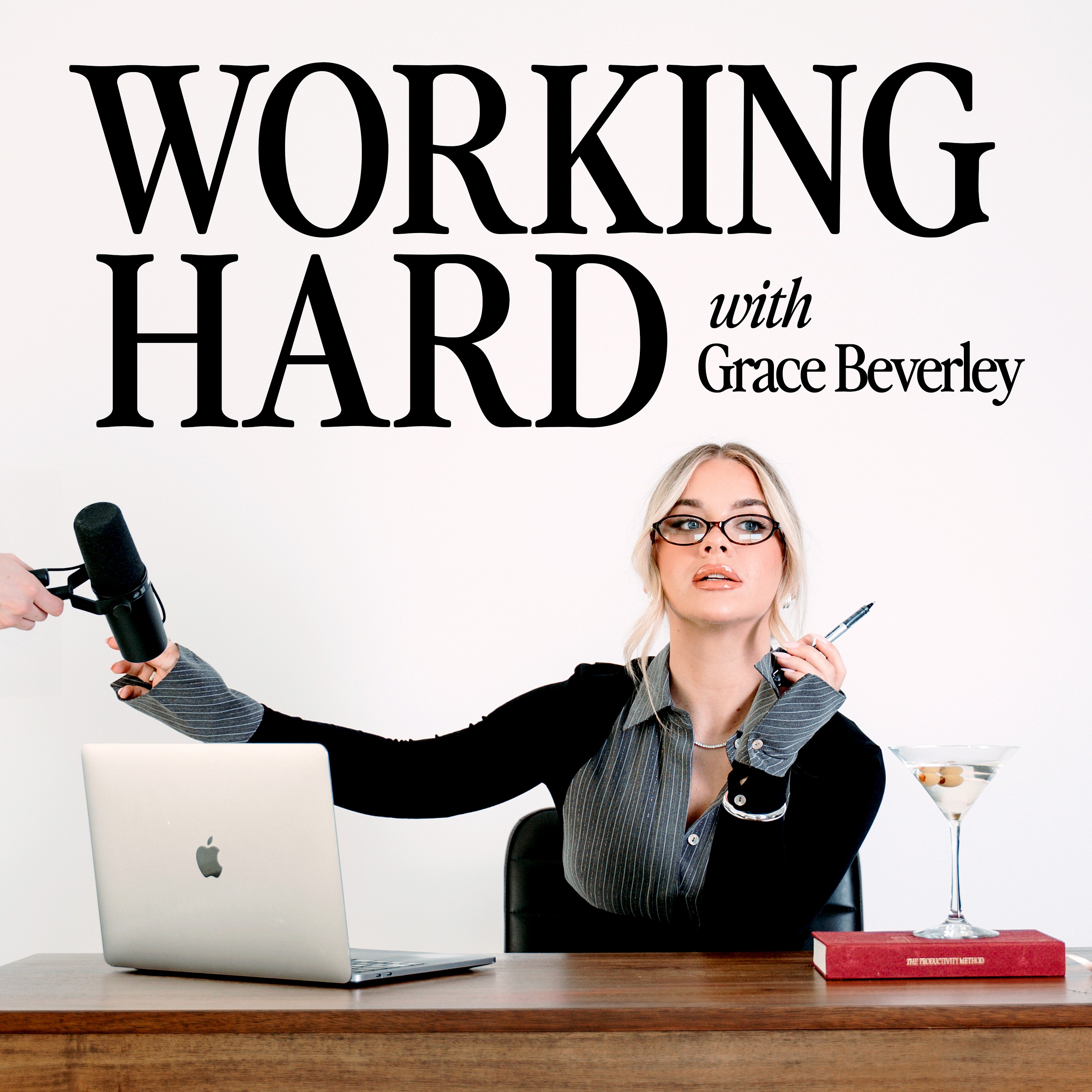
 Working Hard with Grace Beverley
22 Dec 2025 · 38m
In this festive episode of Working Hard, host Grace Beverley presents a curated collection of insights from various experts to help listeners improve their lives in 2026. The episode serves as a cheat sheet for personal development, covering key areas such as mindset, diet, relationships, and more. Grace expresses gratitude to her audience and highlights the importance of setting goals for the new year.
Written by AI. May contain mistakes.

Get the gist, explore an idea or ask about something said.
 Claude
On Working Hard with Grace Beverley, what are the key points of this episode?
Searching your listeningAutomatic transcript. May contain errors.
0:11What is up? I'm Grace Beverley and welcome back to Working Hard. the podcast shape guidebook on how to improve your own life and achieve what you actually dreamed of doing because life's too short for boring podcasts and bad advice.
0:25What is up and welcome back to Working Hard. I cannot quite believe it is already the end of the year but if you're anything like me and you're type A to your core obviously this time of year isn't just about like cozy nights and mince pies it's also about making sure that the year ahead is your best one yet and I don't know about you but I find that really fun. I really like the idea of going into a new year, not necessarily because of this like new year, new me, but it does feel like new opportunity. It does feel like new excitement. So today we're going through the best advice from this year.
0:53And the whole idea behind this is that I wanted you to have a kind of personal cheat sheet to make 2026 your most successful and most fulfilling year yet. And believe me, I took this very seriously. I went through every episode, pulled together the most powerful takeaways across the topics we all cared about most, and then curated them into one place so that you can hit January feeling ready, like feeling ready for 2026, feeling ready for the type of person you want to become and the type of life you want to live this year. So this is all the best advice to make that happen. But before we jump in, I just want to say a huge thank you to every single person who has listened, watched, shared, supported Working Hard this year.
1:30This podcast genuinely would not exist without you. And every single comment, every share, every time you tune in, it all means the absolute world. We are a tiny independently run podcast with a team of just one full-time person and we've poured so much into growing and improving the show. From bonus episodes to new series, the newsletter and my favourite place on the internet, the Working Hard Instagram. All of it is designed to make this podcast the most valuable free resource we can possibly give you and I cannot thank you enough for being here and for supporting. As a little thank you, we are doing a big fat end of year giveaway on the Working Hard Instagram.
2:04So head over there. The prizes are incredible. We've spent a lot of time thinking about what would make the prizes incredible, so I hope you enjoy that. And so before I get too sentimental, let's get into it. Here is everything you need to know to make 2026 your best year yet.
2:26We are starting with mindset, because realistically, if you're in the right mindset, then everything else falls into a place a lot easier, and it is very hard for everything to fall into place if you are not in the right mindset. I think everyone would agree on that. And I spoke to Sahil Bloom when I was in LA at the beginning of the year, which feels like a very long time ago now. And what he says about making a change in your life really, really stuck with me.
2:52The most challenging thing in the world is not being on a bad path. Everyone thinks that like being on a bad path is the worst thing in the world. The worst thing in the world is being on a good path that isn't yours. Because a bad path screams at you every single day that you need to make a change. A good path, there's actually a lot that says you should stay. Your bills, different responsibilities, different things. The people that are on the good path that really isn't theirs, generally speaking, never step off that. They wake up in 50 years and wonder what they just did with their life. And the thing that you need to think about if you're young is that your most precious asset, the most valuable thing you have in your life is your time.
3:36That's it. At the end of the day, it's the only thing that you can't get more of. You can't get it back. And we don't appreciate that enough in the moment. We don't think about the fact that these years in your 20s and 30s, this is the one shot you get at making this leap, taking that leap of faith, making that change, going and doing the thing that you know you're gonna regret not doing later in life. and so what I always say to people is like just do the one tiny action you don't need to just all of a sudden quit your job move 3 000 miles do what I did go do this like dramatic jump out of the airplane but you can do the one tiny action you can take the 30 minutes and explore what that other life could look like do the little bit of research start identifying problems if you want to maybe start a business start taking the tiny actions that allow you to generate some of that evidence that you could follow a different path than the one that you're on.
4:28I have this question in the book that says, if you were the main character in a movie of your life, what would the audience be screaming at you to do right now? We've all kind of felt that. You can watch a TV show or a movie and you just want to jump through the screen and like grab the main character and shake them and tell them like, go to the airport to chase the girl or like, don't go down in that basement, whatever the thing is. And you are that main character in the movie of your life right now. And there is something blindingly obvious that you are just ignoring because you don't have the benefit of that perspective.
5:01So forcing yourself to zoom out and see those things, like what are you just ignoring that's sitting right in front of you? What are you not doing that you should just change and take action on? Journaling on that, thinking on that, I guarantee you'll find some unlock in your life.
5:22I also found his advice on working out what you want from your life so important and a great reminder going into next year that you don't have to strive for a goal that doesn't suit you just because it's what society glamorizes or what the people around you want.
5:40You have to identify what you truly want, not what people tell you you should want, not what you think you should want, but what you actually want, and then go take action to build your life around those things. If you decide that what you want is to be the CEO of a company, of the company you're at, or to go build some extraordinary world-changing company, you have to be clear-eyed about what is required to go and do that. And it is going to be a lot of work. It is going to be very challenging. You have to create a lot of value for a lot of people along the way. That is going to take extraordinary inputs.
6:08But if you don't want that, if you want to work nine to five and you want to have time to, you know, spend ample time on all of your other interests and other things in your life and really build this, you know, life of balance across a bunch of different areas, that's fantastic. And there's plenty of pathways for you to do that. You don't need to feel like you have to go down the path that isn't yours, that you have to go down this default definition of success that the world has handed you. You can create your own. And if there's one thing I've learned, it's that you will never feel successful unless you create your own definition of success.
6:42Yeah. Because otherwise you'll just be chasing someone else's and you'll just be chasing whatever more the world has told you you should want.
6:55Even if I do say so myself, that one is such a good episode for a new year or for anyone feeling a little bit stuck. It was one of those episodes that as soon as we'd recorded, I was like, that is going to go down in the Working Hard Hall of Fame just as like a really helpful value add inspiring episode. he was so great and I'll link it in the show notes if you want to listen to the full episode okay so now we're moving from mindset to diet and earlier this year I spoke to the incredible researcher professor Sarah Berry I think so many of us get caught up in kind of new year fad diets and wanting to change every single thing about yourself in terms of like what you're eating and how you're working out and all of that and I know I've done that in the past for sure so I really wanted to include this advice from Sarah because it kind of was exactly the opposite of that and it's fact-based, it's measured, and it's just a really useful reminder for us all.
7:48I don't believe there's anything that should be out of bounds for women, for children, for men. I think there's certainly lots of foods that should be limited, but I think by denying ourselves something's just going to make ourselves want things more. I do think that we need to avoid carbohydrate-rich only foods that are very refined carbohydrates or limit them. So I wouldn't say avoid, actually. I think we need to limit very refined carbohydrates. I think we need to focus more on what we can add in rather than what we should not eat. So adding in plenty of fiber, but this is the biggest problem.
8:32It's a boring message. We need to be eating more fiber. But interestingly, I've actually found it since I've changed my diet a bit and focused on fiber and protein in order to reduce these blood sugar spikes, I have actually found it so counterintuitive from the way I've quote unquote dieted as I've grown up. You know, as a teenager, I tried lots of different fad diets and would really yo-yo between all of these different things. And actually the message was always less like the message was always restriction it was always reduction and actually it's so funny thinking of this kind of protein and fiber rule because I'm trying to get more so I might be having something and I'm like oh if I'm gonna have that because that's carb-based let me just make sure I have some protein with it and that addition rule has been so funny in my mind I've been like oh I'm really being thrown because like my diet culture has always said less and actually to be able to have positive impact whilst also adding more good things onto my diet has both been a lot more maintainable and sustainable because I've not felt restricted through the process but also just been such a kind of flip of mindset from what I've been used to as just as a woman in diet culture society and kind of having been always told you know if you want positive results it has to be less of this.
9:46You know this is one of the myths that I still think perpetuates out there for women is, you know, calorie counting, low fat food. Well, if you've taken the fat out of the food, firstly, it's going to taste like crap. But also, what are you adding in to replace that fat? The reason the fat's in that food in the first place is because it's either important to the structure of the food, it's important for the texture of the food, it's important for the taste of the food or the function of the food. And so So often, you know, you see these low calorie, low fat, no sugar, low salt. But often by removing these, other things are added in that are potentially worse for us in terms of our health or in terms of our weight.
10:27And then the whole kind of calorie counting. We know that, yes, reducing your calories in the short term works. We know that if you calorie count, you will lose some weight. But will you keep it off? And the evidence shows that 50 % of the weight loss that's achieved through calorie counting is always regained after two years, 70 % after five years. And so it's not a sustainable way to lose weight because as soon as you start calorie counting and restricting your calorie intake, your energy intake, our bodies are so, so clever. There's all of these counter mechanisms. And our bodies have evolved to survive famine.
11:05they've not evolved to live in that food environment that's now out there of excess and so our bodies are so clever in saying whoa hold on grace you're limiting calories whoa i have to preserve your body weight and so the hunger centers in your brain become heightened and so for all of the calories that you've restricted the hunger centers are going to be there saying seek out food seek out food seek out food now you can kind of battle against that for a certain period of time while you're, you know, trying to, I don't know, lose weight for a wedding or for your holiday. But you can't long term.
11:39I've already mentioned that. Are you getting married? Congratulations. OK, well, it might work depending on your wedding as long as it's not in two and a half years. Nope, it's in August. OK. And, you know, it will work for a short term thing because, you know, you could be hyper focused, for example, on your wedding. so you can you can battle against these hunger signals in your brain that go grace come get me come get me you know for this view but also at the same time what's happening is is that your metabolism changes and so your resting metabolic rate simply put also goes down a little bit so your body kind of goes into preservation mode so you've got this perfect storm of increased hunger preservation of energy.
12:25And yes, you can kind of battle against that for a certain period of time, but it's not sustainable. And that's why as well, calorie counting just doesn't work. And that whole idea of denial is not sustainable for most people. And that idea that, you know, like you said, of adding stuff in, adding in the healthy food and displacing the unhealthy food, I think that that's the best way to improve your diet. Think about what can you add in that will then naturally displace something else.
12:58Sarah's advice was obviously so measured and really interesting. And I actually think about that episode almost every lunchtime when I shovel my lunch down in five seconds flat, because I remember when she gave us the stats on how bad fast eating is for you. So I guess that's a goal for me for next year. We are now moving on to relationships and heading back to my episode from this summer with dating expert Matthew Hussey. This was his take on why so many of us struggle to find the right partner.
13:24I think for the same reason I struggle to to work less you know we have this conditioning that has us gravitating to what is familiar not towards what makes us happy and it's for many of us to do something different represents a form of danger disease discomfort we don't feel safe in unknown territory even if that unknown territory could make us happy and also unknown territory can be unattractive at first i mean you can find someone if you're used to the kind of highs and lows of a very tumultuous relationship or dating that always feels like drugs then when you find something that feels peaceful you might not experience it as peaceful you might experience it as boredom and that's a tricky place because now you go now you're in this dilemma is this the right person and i just need to like get used to this new feeling that's not chaotic and doesn't feel thrilling all the time and doesn't feel like when they're away I'm like lovesick, yearning for them.
14:43And am I just supposed to relax into this? Or have I settled? Is this the wrong person? Is this not peace? Is this just I picked someone who's safe and I'm bored and I'm going to pay the price for settling for this boredom 10 years from now when I realize I cannot be in this relationship because it doesn't stimulate me in a way that's going to keep me around forever? These are very, very hard questions. and it's it's much easier sometimes to just go back to what we know hope that we're going to eventually find someone who gives us all of the feelings that we want which often toxic people do often relationships where there's a lot of push pull keep us engaged when we always feel like we're chasing we never get to just sit and go is this person actually right because you're always on your toes if there's always a feeling of i'm trying to get you i never really stop and go do i want you and that's the cycle that many of us get caught in uh by the way you can get caught in that not just in the dating phase you can be in that in a relationship some of us i've been in a relationship like this where you feel like you're still kind of chasing in the relationship like we typically think we stop chasing once someone says yes to a commitment like oh we've decided we're going to be exclusive it's you and me we're an item now so we go oh now now i'm going to feel safe but there are some relationships where you still don't feel safe where you still sort of have this weird sense that someone's half out the door you don't know if you really have them you never really feel like they're yours that you're you know that they're committed on the level you are even though they've said they are and so in the relationship like that the chase never really ends and neither does the romance because of that neither does the kind of those giddy highs and those severe lows that is a very dangerous thing in itself because now if you ever leave that relationship or if that person leaves you you go in search of somebody else but somebody else can't give you forever that feeling that that gave you because the only reason you experienced that for so long was because you never really felt safe in that relationship.
17:00So no, we end up almost going, how can I find a secure, loving, healthy relationship that gives me all of the feelings of a toxic, unhealthy, chaotic relationship? And there's a conflict between those two things a lot of the time.
17:22Matthew is very wise and I'd recommend listening to that one if you have relationship related goals for next year or you're dating because it is such a good mental reset for the dating scene and speaking of resets I think the next clip is really important to include because I think so often with the content around the new year we end up criticizing ourselves for things we haven't achieved and I can guess if you're the kind of person who chooses to spend their time watching episodes like this that you also might have pretty high standards for yourself which if you're anything like me can sometimes slip into self-criticism.
17:53This is what Dr Julie had to say about exactly that and it's something really good to keep in mind especially when you're encouraging change.
18:05When I work for people in therapy who are just hugely self-critical a lot of them will try and hold on to it actually you know they want to deal with the low mood and the anxiety but they think okay if I'm not hard on myself I'm going to lose all my drive to succeed and and and they attribute all of their success so far to how self-critical they've been and how perfectionist they've been that's so me literally all of my bad traits I think have got me to where I am so I like try and fix them whilst also trying to preserve them while being like well if I yeah I do know that makes me miserable but I also you know I wouldn't be here and so it's so tough because you yeah yeah it's it's a cycle that you get into yeah and thing is you can access a sense of drive from a very um kind of threat-based place which is the if you don't do this then you're that or you'll never be good enough and all the kind of threat stuff that means that anxiety and depression accompanies the drive and then success or you can come at it from a place of self-acceptance So I am enough, but I also want the best for myself.
19:10And therefore, I want to see where my limits are and go past them a bit further and a bit further. Yeah. And when you go on that route, you can still experience drive and success and enjoy the ride, but you're much less likely to feel kind of anxious and depressed along the way. Yeah. I also want to know then how we kind of combat that negative self-talk without that also turning into toxic positivity. because I also think, you know, there really is another side and that's not necessarily beneficial as well. Yeah. And I think that's the key is lots of people misinterpret the idea of self-compassion with self-indulgence.
19:45Sure. So, you know, self-indulgence might be, let's say one of my kids decides he doesn't want to go to school today because he doesn't really feel like it. You know, indulgence for him might be me saying, okay, let's take a day off. And when you feel like it, we'll go back. Compassion would be, okay, I get that you don't feel like it. What's that about but also here's why being consistent with your education is really important and that's why we're going to push through that feeling today and do it anyway and touch base later and so compassion is actually doing the thing that is hardest now because you have your best interest in the future so you know often people think well if i'm kind to myself i'm letting myself off the hook from stuff that's good for me and it's really not that that would be indulgence So, you know, actually compassion can be really difficult.
20:31It's often the hardest thing now that leads to the better outcome in the long run. I feel like that ties in quite well to the idea of motivation then as well, because I think that a lot of people's motivation comes from different sources, because obviously that negative self-talk might be motivation for some people, or it might be like that that's what leads to them being disciplined. But I think one question we get again and again on this podcast is on motivation versus discipline and what you really need to cultivate and what is the difference between them and what should we rely on what's your take on that motivation you can't rely on because it's a feeling like any other so it will come and go and there will be days when you feel like yes i'm i'm going for it and and there might be lots of different things that have contributed to that feeling happening that day but there also will be days when you just don't feel like it and then you have to notice the urge to not do the thing that's good for you and act opposite to the urge to do that.
21:28So linking that to the self-criticism stuff. If you're always getting down on yourself, for example, the days you don't feel motivated, like I don't feel like it today. I'm such a loser. I'm so awful. I'm never going to succeed. Take that kind of idea of the way you might speak to yourself in your head on a bad day. I just need to be disciplined. I'm, you know, lazy. Compare that to how, let's say, an elite athlete would work right so an elite athlete pointed at me when you said that in what I was like really am I am I give that back yeah well let's say like um I don't know a tennis player they have to train so hard right every day but they don't feel like it every day and so they all employ a coach now an elite athlete would never employ like the high school bully to be their coach for them, right?
22:18Yeah, they're not going to employ someone to be their coach who would come around on those difficult days and say, you're never going to succeed, just quit. You know, they're going to employ someone that is honest with them, but has their best interests at heart and believes that they are capable of more than they think they are, and is willing to nurture them towards that, to say the things that will help them pull themselves up off the ground when they're really struggling or when they've just experienced a failure or whatever it is. And I kind of, whenever I'm working with someone who either is struggling with motivation or high self-criticism or a combination of the two, usually because high self-criticism, you know, trashes your motivation because you think, well, what's the point?
22:57I'm worthless. Then we, instead of thinking about, okay, what should I say to myself instead? You just get this feeling of, well, if that internal dialogue for me was going to sound less like a bully and more like a coach for an elite athlete, because it works, right? Elite athletes are the best in the world and we want to be our best so how could that internal dialogue sound more like a coach in a way that's going to help me kind of peel myself off the bed in the morning when I really don't feel like doing this or you know step into that really difficult scenario that makes me scared out of my wits but I know I could do it if I really tried and and also often you then get a sense of it so it doesn't have to be specific words you just get a sense of how differently you would approach yourself and that can be super super helpful
23:47I love Dr. Julie. I wish she was my personal therapist, but at least we have her episode and all her videos online. Obviously, I couldn't do a yearly roundup without including advice from the dream guest herself, Mrs. Emma Greed. This was her take on why confidence comes from taking risks and making decisions, which I replay in my mind all the time.
24:08I think that you make a lot of bad decisions like I if your job is solely making decisions all day which is what mine is you're gonna lose some some of them will be bad no one has a hundred percent kind of you know hit rate I just again I think that I've been around for so long that almost everything is fixable right like I never ever sit there and go oh my goodness I did this thing and there's nothing that I can do about it. And I think I'm known as being someone who will be like, oh my God, I got that totally wrong. And I think people really trust you when you, you know, will go into a room and be like, that was such a shit decision I made.
24:47Like, what was I smoking? Like, what was I even on then? And then you have a discussion about it and then you move on. So again, it's like you have to own when you make a really bad decision. And the confidence comes from trying a lot of stuff. And I think that when we stay in a box, when we stay in our lane, when we stay small, it's really difficult to get confidence from that because you're constantly like covering things up and you're not doing. I always see myself as someone who is always in motion. I am always moving forward. I'm always looking over there at what the next thing is, the new thing, the good thing.
25:22Like that's just, again, who I am. And I don't expect not to fuck up. Like I don't expect to be perfect. It's a very, very interesting trait and a way that we're living like this idea of perfectionism, like that you have to be so perfect. And I just don't think I need to be.
25:48Also, this wasn't in the plan, but I can't have an episode and not include a snippet of her advice on how to spend your 20s too.
26:00I think it's actually very good advice in your 20s to use that time really wisely to think about what is it that I'm good at? Am I in the right type of job? And how do I use these 10 years of my career to really figure it out so that by the time I get to my 30s, I've got some optionality. And I think that that is probably the single best use of your 20s.
26:28I feel like her short and like really useful, concise snippets, like that is why we love it, Magritte. I also wanted to include my conversation with Anise Mukherjee. I feel so lucky that we managed to get her on this year and there is a reason she's the leading endocrinologist in the UK. And obviously this came from a conversation around hormones, but it feels like it's just very good actionable advice for anyone on just how to keep healthy. And last year for me, one of my huge goals was sorting out my health in general and sorting out my issues with PCOS and my hormones generally. And I feel like that type of advice that's just to the point is so, so useful.
27:11This is really lifestyle medicine. So, you know, nutrition is important. There isn't one diet. There isn't one diet that works for everybody. Everybody's got different intolerances. there's lots of food intolerances now people have different preferences what i would say is if you have a real exclusion diet you need to make sure that if you're excluding any particular groups that would provide specific micronutrients you need to fill those in with supplements or whatever and really the rainbow diet whole food lean protein high fiber carbohydrates preferably and minimizing ultra processed and processed foods not excluding necessarily because it's almost impossible and it's not necessarily sustainable but minimizing those and filling your filling yourself up with with healthy food so so you know good quality nutrition is important but no no one is perfect no one has a perfect diet and if they say they have it's not sustainable or they're lying then yes movement in your daily life is really important sitting all day long is bad for your stress hormones, your adrenal glands, your cortisol.
28:17It has knock-on effects on sleep. It has knock-on effects on your reproductive hormones. So moving in your daily life is really important. And exercise is really important for strength and cardiovascular health. So, you know, you have to find what works for you. There isn't a correct exercise regimen. I mean, if my partner plays golf, he's managed to get me to play golf once in our 35-year relationship. I don't like golf. I like, I love HIIT. I love doing HIIT training. I love doing strength training, but that isn't for everybody. Some people will do HIIT training and feel worse or get a migraine.
28:51You have to find what works for you for the long game, because it's a long game. We need to stay fit and healthy for our whole life. And then sleep is very important. I talked about body clocks and the fact that all of our hormones follow different clocks. So if you have no routine, these body clocks for cortisol for sleep for female hormones they get they get out of whack and so we know that people who do night shift work you know they get more cardiovascular disease in the long term and and why is that and it's all linked with stress and stress responses and not having enough quality sleep so sleep patterns if you can have a regular sleep routine that's a good start and also if you have good quality sleep you produce various hormones and neurotransmitters in your sleep that suppress appetite.
29:37So you're less hungry the next day if you have a good night's sleep. If you don't sleep well, you're more hungry the next day and you don't crave an apple, you crave a donut, right? So you're going to eat less healthily. So these things are all interlinked. Toxic substances, so hard or soft or whatever, drugs, smoking, alcohol, they're all bad. So, you know, and again, I'm not expecting everyone to go cold turkey on having a glass of wine now and then, but these things are not good for us. And we need to recognize that if you smoke or drink or take drugs, it's going to have an effect on your health, on your hormones across the board.
30:11And then the stress management, laughter and social connection is really, it's profoundly important. And multi-generational social connections are really, really positive. You know, not just having one small group, but multi-generational groups and laughter. So it doesn't have to be a partner. It can just be a group of people who do an exercise together, whether it be at the gym or at the golf club or tennis or paddle or whatever, having those social connections is really good as a stress reliever. And it's really important part of lifestyle medicine. Social isolation is negative for everything to do with health.
30:53And all health is interconnected. It's not like you can say your hormone health will be good, but it won't help your cardiovascular health. It will, because if your hormone health is good, your weight management will be better, your wellbeing will be better, you'll be more motivated to do the things you want to do, you'll have a better quality of life.
31:15I feel like we need a niece back on at some point because I have so many questions for her still and I feel like so many of us do. And finally, we're going back to the beginning of the year and finishing the best advice of the year with a clip from our first episode of 2025. here is roxy nafusi's advice on how to reset for the new year
31:36there is this kind of real communal sense of a new beginning and that like energy that we're all in together is so uh contagious and electric and motivating and it's a time where you can really think okay i am starting afresh and so many people need that feeling they need to feel like they are leaving behind maybe a challenging year or a challenging time, or maybe that they're just so ready and invigorated to start a new year and think about, okay, at the end of 2025, what do I want to have achieved and who do I want to have become? And so I think it's an amazing time and I'm all for it. And I think this is the time now to really think about both what you want to leave behind and what you want to take into the new year.
32:23And I love getting really reflective at this time of year. And what is your kind of goal setting or resetting process when it comes to the new year? So it comes in two parts. I think the first is this reflection. So I will kind of lay out loads of questions for myself. So first it's thinking about maybe the more challenge, the challenges I face. So what were the challenges I went through? How did I deal with them? How could I have dealt with them better? What do I not want to take into the new year? And that could be people, friendships, like there aren't really many, but for some people, you might have some toxic friends you want to leave behind or relationships or people that you're texting that aren't giving you the love you deserve.
33:06It might be habits. You know, there are bad habits that you know you want to leave behind because you know they're not serving you. And I guess really that's the overarching question is what is no longer serving me? And then you want to think about what went well. You know, where did you show up for yourself? Where did you overcome a challenge and feel proud of that? What relationships really made you feel loved and respected? And how can you honor them going into the new year? And so that reflection for me is a really important starting point. And I absolutely love I like will light candles, get my journal out and make it a real experience.
33:43And then I go about doing my vision board. So for me, my vision board, I kind of split them into different categories so I have a large piece of card and I have sort of career personal life which is more like personal development so how who I want to become what habits I want to commit to relationships and then sort of like travel hobbies other miscellaneous the only time I'll ever use that word I'm good to say it out loud it felt so good I was like am I going to say that weird word and I nailed it I actually nailed it in 2024 I know so proud of myself um so then what i do is within each category and the reason i categorize is because i think it's really important for you to look at your life as a full picture you know not just it's very easy to just focus on this is the relationship i want or this is the career i want actually life is a culmination of all of those things so under each category i personally just bullet point my goals and I'm really really specific about them so what you don't want to be doing is you know just writing like career more money or promotion you want to be saying what's the exact job title you like or if you want to change careers you might want to be thinking about not only the job title and the exact figure you want to earn but also what do the relationships with your colleagues feel like how do you feel in the morning when you go to work how are you being challenged um do you feel like you're being given responsibility so you want to be really specific about everything that you can um and then you can add imagery if you want to to kind of like make it feel fabulous and get in an ad in that kind of inspiration but i think the mistake that people often make with vision boarding is by the way i don't use any imagery i just do bullet points do you yeah i just with my terrible handwriting a vision board of bullets of bullet point yeah bullet board if you will do you know what fuck I should have changed my vision board webinar to the bullet board webinar I know and then you could have trademarked it for fuck's sake next year next year um so I don't use imagery but you can but the thing is is when people make vision boards and I get tagged in a lot of vision boards and I think people make this mistake where what they're actually creating it's a mood board it's just a bunch of pretty images yes and yes look it's nice to be inspired by it but it's actually not helping you to focus your goals and really be specific and so for anybody that is making a vision board don't just do pretty pictures you've got to be specific and i think the thing is is why are we actually making vision boards or visualizing our future self or setting really specific goals we're doing it because we're trying to make our subconscious mind work for us.
36:33And it can only do that with the specifics. So, you know, the way it works just for anyone that wants the science behind it is that when we regularly visualize a goal or we have a specific goal that we're focusing on, the subconscious part of our brain, which accounts for 95 % of our brain's activity, will filter out unwanted information and seek out information that is aligned with those goals. So we have lots of different cognitive biases that we use that help us to do this but that's why you actually need to be specific and that is it thank you so much for listening and I really hope that this advice was useful for you as we look into the next year I have linked all the episodes I've featured down below in the show notes in case you want to go back through the archives and listen to the full conversations I highly recommend those were some of my favorites so if you haven't listened to them do listen to the whole episode and thank you so much for listening and I will see you very soon Bye.
It's the Working Hard Christmas party!! 🎄
And what better present to end the year with a curation of absolutely everything you need to know to make next year your best year yet!
And let me tell you I took this task seriously, I came up with key categories we most want to improve every year, and found the perfect clip for each of them, so you can make 2026 your best year yet.
+
EPISODES FEATURED:
SAHIL BLOOM: https://youtu.be/NtRCKfNi_KU
SARAH BERRY: https://youtu.be/abEDZ254cj8
MATTHEW HUSSEY: https://youtu.be/ufpOg6wnEOQ
DR JULIE: https://youtu.be/eDKamvLQ1dc
EMMA GREDE: https://youtu.be/mPn1JFfwfSE
ANNICE MUKHERJEE: https://youtu.be/q4s9KEwuet0
ROXIE NAFOUSI: https://youtu.be/JMFqm-P6KOw
+
SIGN UP TO THE WORKING HARD NEWSLETTER: https://graceb.myflodesk.com/k0sfhlac34
+
FOLLOW THE PODCAST
https://www.instagram.com/workinghardpod/?hl=en
https://www.tiktok.com/@workinghardpodcast?lang=en
+
DILEMMA SUBMISSION
If you'd like to submit any dilemmas to the podcast to be answered in the bonus episodes, please send them to [email protected] with the subject beginning DILEMMAS or DM us @workinghardpod on instagram!
+
MY LINKS: https://gracebeverley.komi.io/
+
RETROGRADE, SHREDDY, TALA and THE PRODUCTIVITY METHOD are my own businesses, therefore any mention of them - whilst not being a sponsorship - is monetarily endorsed. As usual, sponsorships do not change my opinions nor my honesty, but I will always disclaim to make sure motives are clear 😊
Hosted on Acast. See acast.com/privacy for more information.