Ask ChatGPT
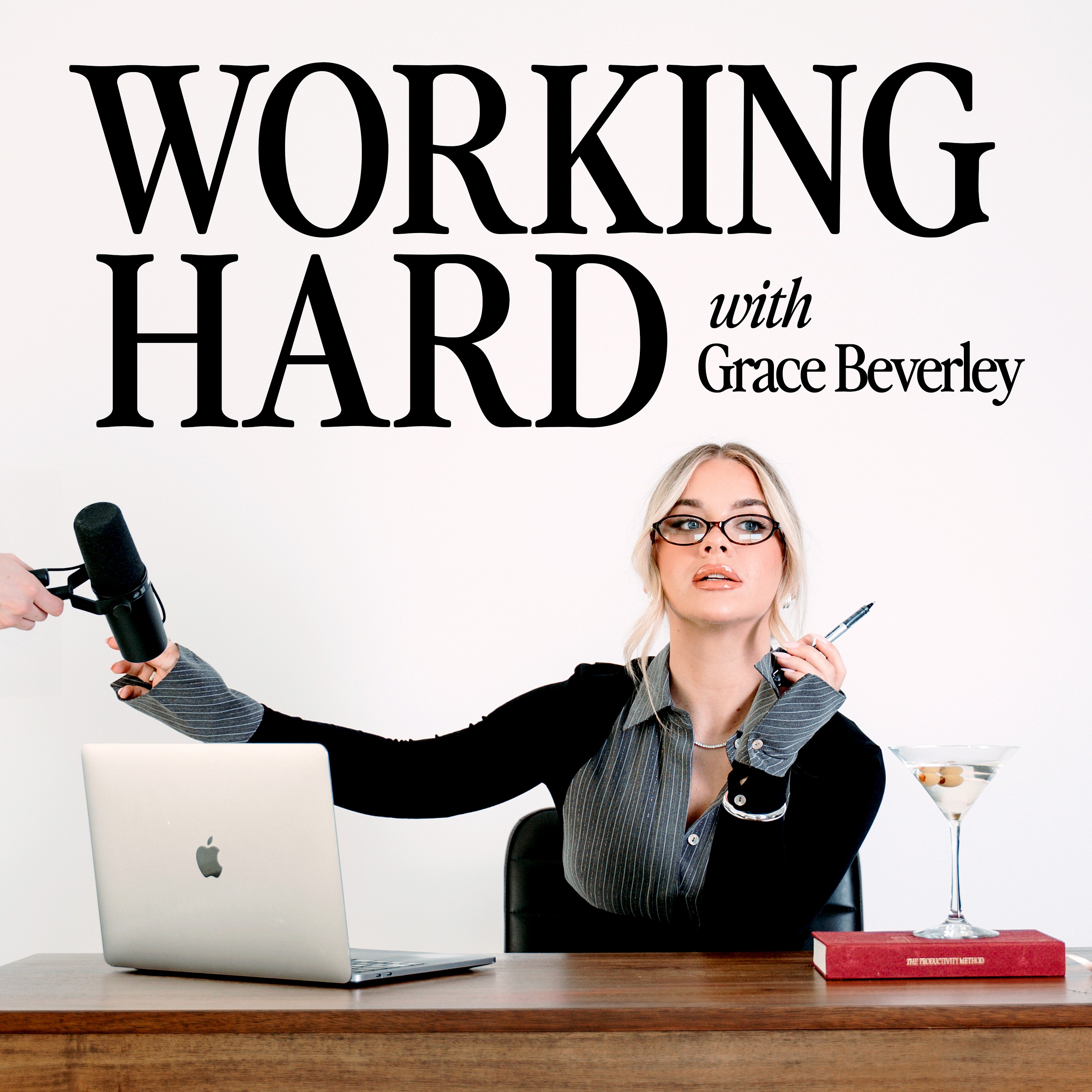
 Working Hard with Grace Beverley
26 May 2025 · 1h 9m

Working Hard with Grace Beverley dives into unique success stories across various fields, focusing on life lessons, personal growth, and the diverse definitions of success. In this episode, entrepreneur Grace Beverley interviews broadcaster and author Fearne Cotton, exploring the impact of career on self-worth and how to separate identity from professional success.
Written by AI. May contain mistakes.

Get the gist, explore an idea or ask about something said.
 Claude
On Working Hard with Grace Beverley, what are the key points of this episode?
Searching your listeningAutomatic transcript. May contain errors.
0:28Hey, it's Adam Grant from WorkLife, a podcast from TED. software, you'll work smarter, not harder. Freshworks uncomplicates. Learn more at Freshworks.com.
1:00Go to Upwork.com now and find your freelance expert. That's U-P-W-O-R-K dot com. Post a job for free and get started today. Hi, friends. Grace from the Working Hard podcast here. When you're stretching every dollar, Alilla goes a long way, and Walmart Business is here to help. They make it easy to order what you need from tech and cleaning supplies to everyday essentials, all at low prices and with helpful tools like spend tracking and tax-exempt purchasing for eligible organizations. Because when your operations are smooth, your impact can be bigger. Visit business.warmart.com to get started.
1:31This episode is sponsored by Loop, which I am thrilled about because I am genuinely obsessed with my Loop earplugs. Ask literally anyone who received a Christmas gift from me this year because my thing is that I like to gift things that I'm obsessed with. And I gave, I think, five different people different variations of Loop earplugs dependent on what I feel like would improve their life. I keep a pair of loop engage in my handbag a pair of loop dream by my bed and also my travel wash bag because if I forget that for an overnight flight I will scream I basically need a pair on me at all times they are the only earplugs that I have found that actually work filtering out the noise in a way that keeps me locked in if I'm in a busy cafe and want like the buzz and people around so I get to work but without the actual distractions because I'm the type of person who zooms into every conversation around me like a podcast.
2:18These are the dream ones I use for sleeping. I have the lilac ones and I have the black ones. As I said I have two pairs and I keep one on my bedside table and I keep the other one in my travel wash bag because I'm not going anywhere without it. I use them for sleeping and they are super flexible which makes them extra comfortable whether you're a side sleeper or a back sleeper. I'm a side sleeper so I'm super sensitive to any earplugs that are like very hard. They also keep me fast asleep if I'm on a long haul flight which is quite frankly a miracle and as someone with strangely shaped ears they also actually come with different size ear tips to make sure that they fit well and also I keep them in this case which it comes with which means that I don't lose them because a girl has been known to lose ear plugs.
2:54I am genuinely such a fan of the brand I could go on about them for hours I have spoken about them on TikTok before in terms of my sleep hygiene but we have a podcast to get into so I will instead just tell you that you can get 20 % off with the code loopxgrace.
3:17what is up i'm grace beverly and welcome back to working hard the podcast shared guidebook on how to improve your own life and achieve what you actually dreamed of doing because life's too short for boring podcasts and bad advice
3:31what is up and welcome back to working hard today's guest is someone whose voice has accompanied so many of us through the highs and lows of life through our teens and now our careers i am speaking to broadcaster, author and Happy Place founder Fern Cotton. From landing her first presenting job at 15 and being on pretty much every TV screen ever, Fern's career has been defined by a constant willingness to evolve and take on the next project. But despite her huge success, she's been on her own journey with identity, burnout and figuring out what success actually means to her. As you know, this podcast is all about having conversations in a frank, open way and having conversations that we don't actually see that often, especially not from people who are this successful and in this type of area of the media.
4:12And what I really wanted with this episode was to have some of those difficult conversations around things that I know both myself and Fern have struggled with. This episode is really for anyone who feels like their self-worth is completely tied to their career or their productivity or their success. Fern speaks so openly about how she actually unhooked her self-worth from her work and why setting boundaries has been one of her biggest lessons and also what she's learned about letting go of certain expectations around success. As you know, this podcast isn't just about interviewing people about their lives and careers and what happened and what came next.
4:43It's really about having conversations in a frank, open way, especially conversations that we don't often see in the media and we don't often see from people as successful as Fern.
5:04Fern Cotton, are you currently more working hard or hardly working? It's a really tricky one to answer, but I think I'm working hard, but parts of it feel like I'm not working at all. And that's because I've managed to integrate loves and I guess even hobbies into my working life now. So I'm working, but it feels fun and at times liberating and I'm learning, which I love. Learning never feels like work to me. Yeah, no, I love that. And I do feel like the more and more I ask that question, the more I realise I'm like, well, I guess the aim is to be working hard, but to feel like you're hardly working.
5:42And that's that I'm like, both at the same time. Yeah, exactly. I think, you know, two things can be true. And it's tricky because when you love what you do, which I feel so lucky that I love most of what I do, not all of it. There are bits that I do find really tricky. It's hard then to go to bed and not be thinking about it as you fall asleep. or when you're, you know, sat waiting for the kids to come out of school that you very rarely have that empty headspace where you can, you know, daydream about something or just think about nothing. I'm constantly trying to work out what's next. How can I do this better?
6:16So I think that's the bit that sometimes feels like hard work because I'm not giving myself enough space often to think outside of work. But saying that, I still feel incredibly lucky and privileged that I love what I do. We always talk about the benefits of loving what you do. I think that you've obviously touched briefly there on some of the downfalls of loving what you do and how that kind of can infiltrate into every single part of your life. And I want to come on to speak about that because I think that when you love what you do, you tend to over-index on thinking about and spending time working, which is hugely profitable in a way because you're able to benefit off that and you're able to bring this kind of extra bigger to your work that you might not be able to do if you didn't truly love and want to spend time both thinking about and doing the work.
7:06But at the same time, I don't know, I definitely have got to a place where even though I absolutely love my work, I'm kind of like, oh God, is this normal to be spending this much time thinking about and doing work? And is it good for me? So I want to definitely come on to talk about that. You also started very, very young in this industry. So I want to go back to the beginning a little bit. What were your dreams when you landed your first job in the industry at 15? I just wanted to live an extraordinary life, which might sound very wanky, but I was a kid. Yeah. And I spent my whole sort of school life staring out the window.
7:47I was brought up in the suburbs of London, northwest London. And I just remember sitting there thinking, oh, everything's so great. And I don't want to be learning about algebra and whatever boring stuff I was having to learn. I just wanted to do something exciting. And I went to a drama school and a dance school outside of my normal school. And I loved it. And I found my tribe and these people that wanted to be on the stage and dance and act. And it felt exciting and buzzy. So I didn't really care what it was as long as it was exciting. And I did feel really motivated to do something outside of doing A-levels or going to university.
8:27I kind of had an inkling that wasn't the route I was going to take. although I loved some subjects at school I loved art I loved sport I loved English I just thought I want to do something else and I think there's a little bit of room for me to explore and sort of push around over here and see what I can do and what I can achieve and I was loving dance and drama school so I think at that point when I you know went to tons of auditions loads of negative feedback and missing out on opportunities that I really wanted and then I managed to get this one job on the Disney Club, which was the first TV show I did.
9:03And I just couldn't believe it. I couldn't believe that I'd got my foot in the door because that's the hardest bit. You know, I had so many friends trying to make it in the West End or get onto a TV show. And it's so hard to get that first gig. And I think then once you've got it, that's where the hard work begins. That's where you've got to stay in it and look for more opportunities. I think at that point, I didn't really think too long and hard about what direction I was headed in or what I wanted to do I just wanted a foot in the door and that was very much it. Right and when you say that you kind of really wanted an exciting life or you wanted a life filled with excitement and all these different things did that to you at the time look like just kind of showbiz related things because I know I ask because I when I was younger I was like I want to you know I don't know what I want to do but I know I want to be really good at it and I thought in my head this one version of success was like people like tottering around offices in like pencil skirts and heels and like you can see the whole skyline it's all of this that like in my head yeah was success and I was very surefire set on that because in my head that was what was going to give me a big life so I asked that as a kind of equivalent to you did an exciting big wonderful life always look like this showbiz kind of industry I think so and I think there were lots of factors that led me to that conclusion because obviously I'm quite a bit older than you and I certainly didn't have female role models in the business sector there weren't any there was absolutely nothing of the sort that I could look to and think I want to do that whereas at the time you know certainly growing up in the 80s and 90s, I was obsessed with pop culture.
10:47Everybody watched the four main TV channels. Every one of my friends would come in, we'd talk about the big breakfast, what Denise Fowlton was wearing. We'd watch Live and Kicking at the weekends. We'd listen to the chart. Everything was based around popular culture. So that was our everything. That's all we talked about. And that to me was excitement. That was the opposite of my life. I had a perfectly fine childhood, just regular bogslander childhood but i wanted that i wanted excitement i wanted to go to the tfi friday studio i wanted to meet zemi ball i wanted to be in the thick of that pop culture so i didn't care so much what it was or if it was even showbiz i just wanted that but i think there are lots of contributing factors you know maybe that is partly my personality that i i want in on that but i think also it's what's available to you at the time and we I think had less options as young women growing up as to what those roots might be yeah no definitely I actually think because when I think about it I think you're so right I actually don't think I knew or knew of many like super successful business women I think what I saw is people like going um getting on the tube when I because I would take the tube to school and getting on the tube and being like really fancy dressed up and we'd be like oh I like those shoes I was like yeah exactly I'm like that girl is carrying a satchel um but yeah no I think that I think you're so right it's kind of our views of success are so inherently informed by what in childhood we saw as better than what we were currently doing and what presented itself as like a step up and this kind of made it and I always find it so funny what different versions of those things were for different people because I do really think it informs what we see as success later on and obviously because you landed your first job at 15 and your first job that was actually related to your career as well which I think is different from you know the type of work I was doing at 15 which wasn't something I was looking at as a career how do you think that impacted your mindset or your kind of identity thinking about your career from such an early age?
12:56I mean, it definitely did because I was under quite a lot of pressure, I guess, from a young age because all eyes are on you. I mean, I was very lucky that there was no social media. So the commentary around what I was doing was much lesser than it would be today or certainly is lesser than what I experienced today. So back then, as long as I was pleasing the bosses, the TV execs, the producers, directors, and that my parents thought I wasn't being an absolute dick on TV, then I was sort of happy enough. But there was pressure because, you know, you're also a teenager and you're wanting to go out and snog boys and all that sort of stuff.
13:33And I think I felt an extra layer of responsibility that I had to be very well behaved. And also it felt like such a thin veneer between the life I was living on this TV set and being hurtled back to, I'm just a school kid again. So I didn't want to mess up. I knew how much was riding on it and I was never complacent about that. And I'm still not. I still feel one step away from it all going all the time. And that's why I think, that's, I think, a personality thing. I work really hard and I don't stop thinking about what I'm doing because I don't want it to go. I love it. I love it too much. And I think there is, you know, for any one of us, There's only one tiny twist of fate or maybe a day between you doing well and it all going OK and it all going.
14:23And I understood that from day one. So I think it instilled that in me hugely. And I think a lot of it really came before I got my job. You know, my work ethic is from my parents. I'm from a working class family. My dad was a sign writer for the entirety of his career. my mum worked two, three, sometimes four jobs at one time and I just saw them working really hard. So I've never felt particularly comfortable having those days where I'm floating about and I don't really know what to do with myself. So I think part of my makeup is from childhood and imbibing what I saw my parents do and then part of it is from starting work very young and feeling like I probably should have a plan so that this doesn't end anytime soon.
15:12I know you've spoken about kind of the more you progress through your career, how you started to tie your identity more and more to your work and to what you viewed as success. Can you talk a little bit about that and how that's affected you as a person? Because I can imagine at the beginning, great, and that's exactly the type of mindset that gets you the next job and get keeps you pushing at the same time I can imagine there's a bit of a wall when it comes to like you know well now I'm having to keep pushing all the time and I'm feeling a little bit like where does this end yeah I mean I'm still figuring that out now if I'm really honest with you I probably tie way too much of my self-worth to achieving things and doing things well or certainly to the best of my ability but I think there's this weird secondary layer with my career certainly when probably my old career more so than the one I'm in now.
16:07But when you're a TV presenter, specifically, it's all about being liked. So I became subconsciously, I'd say, obsessed with how likeable I was, because if I wasn't likeable, I didn't have a job. So that's a big problem. If you are for a minute, a little bit cringy, or you say something that's a little bit off that isn't just you know like in a regular setting oh god that was a bit embarrassing but I'll move on from it you know it's a matter of your survival in the career so I had this really strange and probably still do to some extent relationship with being liked which is 80 % of being a presenter you know you've got to have the skill set and be good at it but to be a TV or radio presenter, you've got to be likable.
16:57And when you start overthinking that, that becomes very problematic. Because what does it mean? It's so nebulous and hard to pin down what it is to be likable. And a lot of my self esteem was attached to that. So, you know, I guess in my late 20s, early 30s, when I started to rethink everything, and I was having a patch of bad mental health, That was one of the things that was really highlighted for me, how much weight I was putting on that. And I'm not saying that I'm massively far down the line with that one, but I'm much more aware that I have the inclination to want to be liked by people too desperately because there's that survival element to it.
17:41And that sounds a bit dramatic, maybe saying survival, but it kind of is. If I haven't got a job, I'm fucked. So, you know, I can't do anything else. So I think I'm much more aware at this age that I'm allowed to just be myself. And on some days that is really hyper and enthusiastic. Other days I'm pretty chilled out and quiet and I'm going to turn up like that and that's okay. And I don't have to force my personality on people so that they like me. so I think it's it's become more about that than it has achievement really is how how likeable I am and as I said you know at the age of nearly 44 I am still unpicking that one now yeah I think that's so interesting I think that it's very important you speak about that I also think that to some extent as much as it will have been amplified so much in your career because as you say it's a lot of like is anyone going to sit there for an hour watching someone that they really can't stand like you know that it's a big part of yeah the the presenting side of the career at the same time I also think there are parallels here between what women face a lot of the time across all different aspects because we know I mean there have been literal studies done that show that likability in women a decreases as you get more successful so um if you asked a group of women if they liked someone that's going to go down the more successful that woman is just statistically but also the fact that we demand women to be likable in order for us to kind of validate their success I think I've seen so much stuff online that there might be posting about a woman who's super successful and if it was an equivalent post about a man it would be you don't really care if you like that person you just take their success at face value completely whereas if that's a woman and you don't like that person, for some reason we need to tear down every single aspect of that woman's success.
19:38And I think, you know, that will manifest for people in the public eye, but that will also manifest from people from day to day when actually women are demanded to be people pleasers in all different aspects of their life, whether that is in the office, whether that is at, you know, school with other parents, whether that is, like, whatever that might be. We demand that women be likable in order for them to get through life less affected. It's wild. It's wild. And like you say, it affects so many elements of your working and personal life, whether it is not setting very clear boundaries for people because you don't want to be seen as a bitch.
20:18Oh, my God, she taught... Or delegating. Oh, my God, she told me to do something. You would never question it if it was a male boss. And I've experienced this from male and female bosses and even my own sense of judgment when you have to sort of check yourself. And also I think it stops when I look at either other people doing what I do today or similar vein of work to you. I think it stops women talking about really practical matters like money. We're not allowed to talk about money publicly or striving for success or even really ambition. You know, I'm I'm not shy in saying that I'm I'm hugely ambitious, massively.
20:55And I don't think people like to hear that from women. If it was a man, they'd go, yeah, good on him. Like, what's he going to do next? for women it's like oh get you do you think you are being ambitious or you know certainly the money conversation it's really tricky whereas i'll read articles about other podcasters or entrepreneurs and and sort of celebrating their success wow how did they reach that how did they succeed in that it's so systemic and broad and you know i don't think any of us can change it anytime soon i bloody hope we can and i'm sure the next generation of young women will massively help in doing so but it's a huge historic problem that dates hundreds of years back so it's um it's so interesting in the work sector that it's holding so many women back still massively yeah it's so funny that you say that I think the um money thing is one in particular I was listening the other day to um shameless podcast and they were talking about the fact that they get a lot of inbound from press because they've got this amazing um media company and they were you know they get a lot of inbound from press being like you've got all these different successful podcasts how much you're actually making like what's the business doing can we do a profile on you and they have to decline a lot of these profiles because the positioning then of successful women doing this company becomes less well this wasn't what they said this is what i've read between the lines but becomes less enjoyable to consume their success when actually we know oh you're making millions off this yeah it's a british thing too a hundred percent i think we love the underdog who's kind of not doing great.
22:25And then when people start doing well, we're like, sorry, who do you think you are? It's so awful. So you've had this added layer of both needing to be likeable as a woman, as a presenter, wanting to be ambitious and wanting to get to the next level, but not being able to be too ambitious or vocal about that ambition because it makes you less likeable, which leads to less success. Very complex. Can imagine there's a lot of... I don't think I should be a therapist in this because I don't think I would actually help. But do you think then that you've sometimes in different areas of your career or I don't know, maybe in press, whatever it might be, that you've had to be careful about celebrating your success or playing down your success in order to keep that likeability?
23:09Yeah, I mean, yes, I don't think I even have to try to play it down. I very rarely celebrate anything I do, which I know is sad. You know, I wish I took time to celebrate little milestones more, but I don't. And that is that is kind of a little evil mental trip up that I have where when I've been through shit things, when I've had, you know, the rug pulled from under me or I've been through tough times. I think the more that happens, sadly, the less frequently you'll celebrate moments where things are going well because you're not trusting of it. And I say that knowing that that's not right. You know, I go to therapy every week.
23:52I'm going straight after this, actually. Not because of you. We'll give you lots to unpack. Just because it's a Wednesday. And that's my therapy day. But it's something that I know I have great trouble doing because there's like one little horrible voice that goes, don't get too cocky. I wouldn't get too cocky about this. There's another voice that goes, yeah, okay, all right, but you could do better. You know, I'm never satisfied with not where I've got to or the outside validation, how much I'm capable of. I feel like there's always, I could always be doing better. I could always be doing better.
24:28And I think also some of it is because I'm untrusting of that being, it being real or I think something awful is going to happen afterwards. So, you know, that's more of a psychological thing rather than it being anything about being a woman in business. I think it's just, you know, that's just my own pitfalls from having had some rough, rough times. Yeah, no, absolutely. The market's uncertain. Revenue's tied and hiring on hold. That's why results-driven companies are using Upwork to keep work moving. Go to Upwork.com today and start hiring proven freelance talent fast. No bulky overhead. No rigid long-term contracts.
25:09Just the right expert right when you need them. Work smarter and faster with Upwork. Go to Upwork.com now and find your freelance expert. That's U-P-W-O-R-K.com. Post a job for free and get started today. I'm no tech genius, but I knew if I wanted my business to crush it, I needed a website now. Thankfully, Bluehost made it easy. I customized, optimized, and monetized everything exactly how I wanted with AI. In minutes, my site was up. I couldn't believe it. The search engine tools even helped me get more site visitors. Whatever your passion project is, you can set it up with Bluehost. With their 30-day money-back guarantee, what have you got to lose?
25:47Head to Bluehost.com to start now. Did you know adults 60 plus lose more than$60 billion each year to financial exploitation? Greenlight's new Family Shield plan empowers you to monitor your accounts for suspicious activity, protect yourself with up to$1 million identity theft coverage, and reassure loved ones that you're safe with location sharing and place alerts. Get peace of mind today at Greenlight.com slash protect. That's Greenlight.com slash protect. and so how since kind of recognizing this this tie between work and your identity and your kind of self-worth or self-esteem how have you started to undo that because obviously you're still doing big things and you're still um reaching new levels of success and that's fantastic and I think that it's important to see that doing self-work especially when it comes to not tying identity and work together it doesn't need to be about stopping being successful no I'd love to hear from you particularly because you know this is part of my journey too how have you started to unpack that and still reach for success whilst not making your self-worth entirely dependent on that I think becoming a mum in the most cliche way has helped without really any thought or effort because my priorities are different and I get such enjoyment, satisfaction, and I'm learning constantly through parenting.
27:20You know, it's relentless in the best way and the most challenging ways. So I think I've started to put much more focus on that. Certainly, you know, one of my kids is about to become a teenager, which is just wild to me, and that's a whole other set of learning for me. and I'm really enjoying discovering who I am through that. And it just turns the mirror back to you constantly parenting. So I think that's shifted my focus a lot because it's, you know, more important than work. And I think it's also changed the flavour of ambition that I have around work. Before, it was in a very basic way all about numbers.
28:05So it was when I was a presenter, how many people watch the TV show? How many TV shows am I doing? How many meetings have I taken this month about the TV shows I could be doing? And it was just about bigger, better, more noise. And it's not about that for me now, mainly because, you know, I reached a lot of the highs that I wanted to. I posted the biggest radio show. Well, one of the biggest radio shows on Radio One, the biggest music show on Radio One for years and years and years. couldn't have been more listened to couldn't have had any bigger pop artists and bands on there what did I feel better about myself because of that no of course didn't absolutely not so I learned that lesson the hard way so now ambition is less about any numbers it's not about podcast listens you know obviously it's always nice you want people to listen so you can keep doing it but it's I don't need to be the biggest podcast in the world I don't need to have the biggest brand on the planet what I want to do is know that I am learning and getting better every time I do something so we've done how many episodes of happy place we've been going for seven years I bloody well hope that every time I sit down with a guest I do a better job than I did the week before and that to me is success that is progress I'm learning and also I think it's about flexibility I'm not set in stone anymore I used to just think how can I be like Ant and Dec and that was the only route it was that route and that was the end result now there's no end result I don't know where I'm going with this I haven't got a clue and it's not about being the biggest biggest of anything it's just about learning and going oh god I've walked down this I didn't know I was going to go and do this over here this seems fun this I wasn't expecting this and every time you do something new you become a slightly different version of yourself where you peel back more layers and go god I didn't know this was inside I didn't know I had this in me I didn't know that I could learn this or I could give this a try you know I want to constantly be changing challenging myself and feeling like I'm on my toes I don't want to get complacent I don't want to rest on my laurels so success feels like that rather than I must be the best whatever it takes and you know slowly withering away because you're pushing yourself every day it's kind of someone said to me the other day something really interesting about looking at the difference between power and I don't mean power in an ego way I mean in just like an you're feeling empowered versus force and I think so much of the workplace because of you know it being it used to be incredibly male orientated it was all about force next what we're doing now what's next week what What's next year?
30:51Projections, it's force, it's pushing. And actually you can have great success in a more gentle, holistic and a way that isn't about constantly depleting yourself and pushing and pushing. So it's about your own inner power rather than this force, which is sort of to me draining. And, you know, the older I get, I don't want to feel like that. it's so true because I think that a few years ago if you told me essentially what you were saying there which is I've changed the metrics of success from just views and numbers and kind of accolades and stamps of success to learning improving exploring you know widening the breadth of what I'm doing and actually enjoying that all of those things I would have still listen to that and be like that's that's cute you know and it's so cute but like it's so funny because I'm actually at that stage now where I'm like okay address the fact that you've been in this career for 10 or so years and the more and more you do and the more you start and the more awards you get or stamps of this it doesn't actually make you feel better about yourself It doesn't add to your self-worth.
32:10It doesn't add to your perception of self, any of those things. It may well even take away because it kind of opens up this, what could I total be doing? And looking at that and being like, sure. So can we start to measure things by like, did you enjoy today? Yes. Could you set next week up more in a way that would enjoy it? So what are those things? What things give you energy and what things drain you? Things that give me energy, meetings. things that drain me spending seven hours straight at my laptop trying to get through things even though I think it energizes things me because I love getting things done just like really getting to grips with those things I think has made the biggest difference in my career and my happiness and my sense of self and my sense of self-worth at the same time I do really think that until you're ready to hear that you're never gonna hear that I think there are gonna be so many people who listen to this podcast like I would have been a few years ago that would have just yeah as I said just been like that's lovely I'm gonna still keep running myself into the ground because there's almost this like masochistic view of success yes like I'm not succeeding unless I am bulldozing every single one of my boundaries because if a boundary is there it is a boundary that is kind of holding me back from success rather than holding me up as a person who deserves my own boundaries yeah it's just a very male that's all we've heard over the years it's like a male view on success and it's like well I just don't think it has to be that about pushing boundaries moving out of your comfort zone it's like yes we should be challenging ourselves and we should be learning but not to our detriment and I think you know I'm the same as you Grace I probably would have 10 years ago maybe a bit longer ago thought what a bollocks like yeah or I would have looked at successful people and gone well it's all right for you because you've done it and now you can step back.
33:58And, you know, yes, I have had great success in areas, but I've also learned because I've had that great success that like you've said, it doesn't make you feel any differently about yourself. And you've got to look at why am I doing this? Why am I pushing myself to this extent? Who am I doing it for? Am I doing it to prove to other people that I'm important? Am I doing it so other people respect me? Am I doing it because I got bullied at school or or because one of my parents doesn't believe me, I'm not talking about me now, but just generally. You've got to look at all of those things and then actually know that your success won't fix any of that.
34:36The only thing that will fix it, or I don't really like the word fix, that will help you to ease those feelings is having a little look inside yourself and going, God, I do feel like shit today, or I do feel really not very confident today. And actually winning an award, being the biggest and best of whatever, that won't do it it will not do it I've tried I've tested the theory for you you don't need to bother it doesn't work be ambitious because it lights you up it makes you feel excited you jump out of bed in the morning but don't do it because you think it's going to fix all your problems because it won't yeah no I totally totally agree with that and I wish I had actually internalised it earlier so if there's any chance that anyone's listening who could actually benefit from that without hitting an actual wall would love you to try because I didn't plan it that one and make room to have fun You know, I had probably say like a decade where I totally actively deprived myself of fun, became a martyr.
35:34I just thought I had to do everything for everyone and work so hard and make sure that everybody I was working with felt, you know, loved and valued. And I just pushed myself so much. I left no room for anything. And I was parenting. So obviously, you know, I still am. But I really try and make much more room just for a bit of fun and silliness without any achievement at the end of the day, other than I've had a nice time. Yeah. And I'll let myself sit on the sofa with the duvet when the kids have gone to bed and watch absolute bullshit on the telly and not feel like, well, I should be watching something educational to, you know, enlighten myself.
36:13No, just like enjoy yourself a bit as well, because life's bloody short. And, you know, I want to get to hopefully an old age and look back. And I know I'm not going to go, well, I'm so glad I worked myself to the bone there. I'm going to look back and think, oh, my God, remember that time I laughed until I cried? Remember that time I was out with my girlfriends and we were being so stupid and had the most fun? That's the stuff we're going to remember. Not how many bloody podcast listeners we had or how many awards we won. We're not going to give a shit about that stuff. Yeah. Yeah. And it shows because each time that happens, if you're not at a place where you're solving your this identity self-worth kind of work conversation, you know, because you get something and you're not thinking about it five minutes later.
36:53And that's about the next thing. Yeah. There's always another level up that you can take. Always. Yeah. And we've spoken before, actually, about how with so many different projects you've done, you know, ones that you think are going to be a surefire success, sometimes flop, and ones that you aren't so sure about sometimes will change your life. how have you dealt with that and how do you think about that moving forwards because I think that obviously so much of your career has been trying new things and trying your hand at different different parts of different industries but also loving something and it not working is really hard it's horrible it's horrible oh I've I've wept I've cried I've had tantrums I've done all the stuff that everybody does you know I'm not going to pretend that I'm this super robust person that's gone oh well I loved it that that's what counts no it's really sad and disappointing I'm a piece of shit I hate myself now I must be a worthless piece of shit of course you know I've had books that I've thought would be the biggest book I've ever written and they've been middling and then books that I've thought oh that'll do and they've done really really well you know you can never never gauge it it's so weird and then I've had whole projects or even if I look back at my presenting career.
38:08You know, I was so dead set on being a presenter and the best one I could. And I knew I was competent at presenting. So when I didn't get gigs, when I missed out to even, you know, great friends of mine, I'd be absolutely gutted. And I would go away and think, there's got to be something wrong with me. I must be weird or there's something that people are seeing when they're watching the TV that's putting them off. And I would question everything about my personality and get myself into a right hole about it you know and probably I haven't dealt much better with it these days when things don't go well you know it doesn't stop me from trying but I think being disappointed is all part of it and I don't think you can mitigate that I think if you want to try new things get ready to massively fuck up because it will happen every successful person that we know of has tried something and it's gone massively wrong and I haven't got any surefire way of dealing with disappointment or failure.
39:05It feels bloody horrible. You can easily spiral into self-loathing, which I do all the time still now. And then at some point you start to pick yourself back up again, depending on who you've got around you and maybe how many tough things you've been through before. And if you've built up a bit of resilience and then you can hopefully pick yourself back up. But, you know, there's no harm in, you know, falling to your knees a bit and having a good old cry and feeling disappointed it's you know we're not robots we're humans and I think you've got to really feel it to be able to move past it. It's funny because I think your industry is one of those ones that doesn't actually allow you to partake in the industry unless you're willing to see yourself fail because you you might have had I don't know say your radio one job that doesn't guarantee that your next job is going to be bigger and better nor the next one nor the next one I always say that one of my favorite things about myself is that since I've started in this career there's never been a moment where I haven't been willing to flop publicly again like I've you know started so many new things and I kind of have been happy with the fact that even if I start something and it hasn't worked I like the fact that I'm willing to keep starting new things your career is one where you really don't have the choice you have to just keep going for new things and you have to I'm sure have some articles that come out that go you know fern cotton passed over for this job which actually a lot of other industries don't have oh god I've had all sorts of terrible shit written about me I can imagine like as in yeah it's just horrendous but what would you then advise someone who's listening to this who their their industry isn't one where they have to really put out the next thing over and over and over or go for the next thing and publicly potentially fail what advice would you give them about feeling kind of fearless about putting their work out into the world even when there is a chance that it will flop people that we see succeeding have had for whatever reason that moment of courage to put themselves out there or their work out there whether it's art writing you know I have a lot of people asking me on Instagram even you know about poetry because we've had several poets on the podcast and they want to share their poetry desperately but they're so nervous because they feel it's so exposing the only difference between someone that's you know has their poetry read and someone that hasn't is they've dared to put it out there and it feels so exposing and you feel so vulnerable putting yourself out there or your work out there or giving something new a try but if you really want to do it you haven't got any choice and I think some you know it's tricky because I'm I'm always sort of slightly reluctant to give advice because I think everybody is so different and it's not for everybody you know for some reason my upbringing and my personality has given me no choice but to keep trying and I've had massive public flops and moments of pain and for some reason I'm able to pick myself back up again and I might even go as far to say I'm slightly proud of myself sometimes for doing it because I think even back you know 12 13 years ago I was having a rough time I think how the bloody hell did I go back out and go on the telly or talk publicly I don't know if I would have the strength to do it now that might sound a bit dramatic but you know I was feeling bloody awful at that time I think how did I do it but I just think I don't have another option.
42:35I don't have a plan B. I want to, you know, give my kids as nice life as I can. And I don't want to struggle too much myself. So I've got to pick myself back up and put myself back out there, whether people ridicule me, mock me, don't like me, ignore me, maybe even worse. I don't know. But I'll give it a try. And I think that's down to my personality. And some people won't have that in their makeup. They don't want to. They don't want to put themselves out there you know I maybe shouldn't talk about my brother because he lives a very private life but I use him as a great example he's someone that does not want to put himself out there I massively respect that you know sometimes I post pictures of him on Instagram I think probably should have asked Jamie if that was okay because he's he's not that guy he doesn't want to put himself out there and he leads a very successful and brilliant life it's just very different to mine so I think it's not for everyone if if you feel like you're in the mindset you can put yourself out there and you can take it give it a go if you think that that's going to be too hard for you heartbreaking for you maybe it's not right yeah and I also think that there are certain opportunities or ideas or businesses whatever it might be that come up that you physically feel like do you know what I would rather the the inclination to try this is too heavy versus the fear of failure and I think some of the sometimes that's a good kind of thermostat or barometer in terms of whether that's a you know whether it's something that you should be doing because if there's something that you can't stop thinking about the only guarantee that it's going to fail is you not actually trying like you're not actually putting that out there yeah and I think that that makes a really big difference and as you say you as a person might have a huge propensity to take risks and try new things and put yourself out there or you might have a very little one and understanding where you are in that scale but just truly understanding that as well if there's something that you want to do again and again and again like it's a new business or it's a new I don't know a new career or whatever it might be if you're always thinking what if yeah that's also probably a good indicator that the only guarantee you're never going to do that is if you just don't even do yourself the justice of giving that a go yeah and I think you've got to look at how you're talking to yourself you know I had this weird day yesterday where I had such a negative voice in my head just same oh my god what's going on weird the moon i know it's about saying there's something in the stars plus blame venus fucking hell venus again uh retro what was it mercury retrograde one of those bloody things anyway we're both having this day right so my my voice yesterday was just going you're a piece of shit and it was being so horrible and i was like god i haven't had this for a while so i'm curious i haven't had this for ages like that That used to completely dominate my brain.
45:25But I was like, God, I haven't had this for ages. But it took me down. And I think we've got to all look at how much we're letting that rule the show, how much we're willing to write that and give it a try and say, do you know what, I can hear you. I'm not going to listen to that. I'm going to put something more positive in place. I think that stops people trying. Or, because there's also the other flip side of this conversation is, when do you give up? and you know I've got a lot of friends who want to be actors want to be writers and they haven't had their break yet which again you know it's interesting terminology because what is that what is that break but you know they're desperate to get to the next level or to really be able to do it full time say that might be the break and you know the question is when do I give up do I give up and I think that is all down to you there's no rule on this one there's no set rule book that says if if by this age you haven't made it give up no if this is your vocation if you love this and it's still bringing you joy you still have hope keep on going you know I think it's down to the individual you know and that voice in your head you know you've got to really watch how negatively you're talking to yourself and if that is stopping you doing something I don't think that's a good enough reason I think you need to you know we've all got you know neuroplasticity our brains are malleable enough to be able to change that awful little voice we've got in our heads to hopefully lead us to more opportunity.
46:50No, absolutely. And I think that's so right. And I think that understanding your different tendencies and your leanings towards negative voices or negative times when you kind of get yourself into those cycles is really important too. Because knowing, for example, yesterday, I'm just thinking about the fact that yesterday, I knew I was in that mindset. And again, like you, I was like, where's this from? Because I haven't had this for a bit like I haven't had this kind of incessant internal voice of being like and I think that also knowing on those days I'm just like I'm not doing anything big today like I'm yeah just like not gonna do anything big gonna get to the end of the day gonna enjoy it yeah gonna you know not gonna push the boat out not gonna try and save the world not gonna try and make my career any bigger just going to get to the end of today and I think that's so important too because in the past I would have been like right today I'm going to prove this voice wrong and I'm going to do all of this I'm going to put this out there and I'm going to I don't know film double the amount of content and then I'm going to do double the amount of emails and I'm going to all of this and it's like you're never going to outrun that voice that's a today issue it is get through today it is try again but it's so you know I find that fascinating I've I'm loving you saying that because, you know, as someone kind of older, I look at you and think, fuck, you're so impressive.
48:08Like, you're doing so much and you've got so much drive. But not only drive, you're so together. And although I was, you know, successful in my arena at your age, I was also out getting absolutely shit-faced all the time, rolling into work, having not slept. You know, I was sort of messy. I was a bit messy. But I managed, you know, luckily in my industry, that was usually quite encouraged as well in the music industry. But I look at you and I just think, God, how impressive. You must mentally just be so together all the time. So to hear you say that and actually that you have to change your tact on any given day, I think is really cool to hear.
48:48Really cool. Well, first of all, thank you, I think. But I think the biggest thing for this is that we're all sitting here thinking this about each other. I know. Like as in any given industry, it's not just us two. It could be your colleague. It could be your manager. It could be the person you went to uni with. Let's just fight our own battles. And let's just like really work out what they are and how to get to the bottom of them. And how to just make sure, not like I live this amazing happy life. But like how do I make sure that tomorrow is a good day? How do I make sure that today is a good day?
49:21And I find that so interesting because I think that it's crazy. I think that women will change the tone of this conversation because sadly, and this is not me having a pop at men whatsoever, sadly, men haven't been given the space in business to go, yes, I'm a CEO, but fuck me when I get home, I feel dreadful. Or, oh, my God, I'm the best at what I do. But today, all I've done is berate myself internally. You know, I don't think men have the space to do that. And I hope that by women doing that, not only are we giving female entrepreneurs, business people the chance to hold their hands up and go, I'm really struggling.
50:05I know I look successful, but actually, you know, I feel like I'm really out of my depth or I'm scared or I feel like I shouldn't, you know, I've got imposter syndrome. Then actually that will open the conversation up to men to have the same chat and say, well, we're the same. We feel no different at all. But they just haven't been given the space to show that vulnerability. I think that we will lead the way in that conversation because the working world is made for men. Yeah, of course. So we're trying to be as successful and do things as big as men have done in the past. But bear in mind, we're also having a menstrual cycle monthly that we're not honouring at all, by the way.
50:45We're like, I'm on my period, but just like push through and like, you know, pretend that I'm not my period and I haven't got this banging headache and I'm not completely bloated. And we're pushing through periods and we're not honouring that at all. That is not coming into the work conversation. And it is a huge part of our lives, let alone then when you get to my age and your hormones changing, let alone when you bring motherhood into the picture where we know that women are still predominantly. And this is generalizing, but I think it's pretty solid generalizing that women are still doing the lion's share of the household chores, the organizing with the kids, the organizing for school, usually are the primary carers.
51:20we're not bringing any of these female issues into the workplace conversation although they are impacting so much of our well-being how we're moving through the world and how we're operating we're still trying to work in this male framework and it's like what are we doing we're killing ourselves trying to do this it's absolutely well we need to change the infrastructure so that it works for us and we can be a success but we're not battering our bodies mentally draining ourselves the whole time yeah you're totally right that we're like we're trying to reach the same heights without being able to claim the same practices both practically the ones that don't work for us or the ones that don't um you know as you say whether they work for a 28-day hormonal cycle or a 24-hour one which is what men have um or you know whether it's just the fact that we can't own the things that work for us because it doesn't feel feminine enough when we're going and talking about them online or whatever it might be but also it's just yeah it you I think you're totally right that we will be the ones to redefine this conversation because we've been able to speak about it just as we haven't been able to speak about the more masculine things without getting cancelled yeah you know I don't know I've I and I agree with you this is probably I don't know maybe I'll kick myself saying this um but the for example I often think about the uh when Molly May said the kind of 24 hours in a day thing and she I just think that so whatever you think about that so many men have said the exact same thing on exactly the same podcast or similar podcast or whatever and it's never been a problem but it's a problem because women are the ones fighting the battles of wider society and whether you think that that is correct or incorrect it's us who has to rectify what should be the way we speak about things but then we allow men to be in their own lane talking about what works for them and we don't need them to qualify their success or their routine or whatever it might be because it's what works for them and we just we're just like yeah well they're successful so what and actually we don't apply that same thing to women and it's women judging other women by the way like this is not men who would have a pop at you for saying that this is women because we've all been conditioned to believe that there are certain places for women in the workplace or in society and what we can and can't talk about so I think you know still the patriarchy leading it but I think this conversation I think women will lead it and I think men will benefit from it which is brilliant we'll all benefit from it from working in a way that isn't impacting our nervous systems and our bodies and our mental health so negatively because what's the point yeah yeah yeah no I think you are totally right and I think that I've never actually looked at that side of this kind of well I can't say this online because I can't act like a man in business would I actually haven't thought about the positive other side of that and like if I am forced to be radically transparent in what does and doesn't work then the idea is not just that that's completely transparent but also that that opens up the conversation because if I do well whilst doing that then other people can understand that actually getting to a point in your career and being like do you know what the only metric for me here isn't financial it isn't awards it isn't numbers it is me being able to actually enjoy my days and not feeling like a shell of myself which I have for so many years of my career because I have been truly at 100 miles per hour and truly only ever thinking about the next thing and never enjoying the current thing and when that looks online just like this picture of success that I've been very happy to portray and at the same time me being completely and utterly burnt out and at the end of my tether that's not actually helpful for anyone because all that is doing is leading the next you know I remember times where I've been like the most burnt out I could possibly be and it will be a week where I get double the amount of LinkedIn posts as usual about people being like and this is what she's done and like this and this and this and this and I'm like and she's a shell and she's currently in bed yeah she's currently not sure how she's going to get out of said bed you saying that is the important bit you know you can do that if that if you have a period where you're a bit burnt out you know we all go through it but I think being honest about it so people can look at their own expectations of themselves and actually know what the sacrifice is because there's always a sacrifice there always is you know you're not breezing through any of this and I can sit here and be deeply impressed by what you're doing but I also understand that it's not easy and I think you know often people don't want to hear that either they don't want to hear that you know you haven't got it easy because your life looks great and gorgeous why aren't you really happy all the time why aren't you completely satisfied all the time because we're human beings we're really fucking complicated it's not that easy we could have a room full of people and we've seen this happen with so many musicians or actors screaming their name in adoration they love them they walk off stage they feel like shit that doesn't make them a bad person that doesn't make them ungrateful we're complicated humans with rich backgrounds that are very bloody complicated that make things every day challenging and I think you know we're all so different as well we're trying to apply the same rules for everyone and same value systems for everyone it doesn't work like that and I think by you being really honest and just saying yeah I'm a big success but also sometimes I'm absolutely burnt out is really really important yeah and that's actually one of the like one of the only reasons at points where it's been so exhausting and I've been like something's had to go that I've been like actually there is no way the podcast is going because that is specifically the area in which you're able to see different sides like you're able to see if you've listened to all of these podcasts like you you're definitely able to see the times I'm struggling more you're definitely able to see these like you know more of the sides of kind of the reality of this type of thing and I think that it's all relative and I think when you say why aren't you happy or why aren't you satisfied or any of those things that's also compounding i think anyone who is listening to this and is struggling with this type of thing that's exactly what you are thinking on top of this it's like and on top of everything why isn't this good enough for you and i think that we absolutely need to be kinder to ourselves in terms of all of these aspects the market's uncertain revenues tied and hiring on hold that's why results driven companies are using upwork to keep work moving Go to Upwork.com today and start hiring proven freelance talent fast.
57:59No bulky overhead. No rigid long-term contracts. Just the right expert right when you need them. Work smarter and faster with Upwork. Go to Upwork.com now and find your freelance expert. That's U-P-W-O-R-K.com. Post a job for free and get started today.
58:19on this topic I think this fits in pretty well with happy place and why you kind of started that I think when I originally saw happy place it was well it was a good while ago and it was definitely well before people in your position were kind of really starting their own things and putting their names on anything that wasn't necessarily tied to big broadcasting corporations or big networks or whatever it might be what spurred you to start happy place given the fact that other people weren't really doing similar things i think i just knew what i was doing was working for me i think you know i've been presenting from yeah 15 16 and at this point i was in my early 30s so I can't do maths, but a long time.
59:09And I'm not going to be numbers at all. And I just thought, what am I doing? You know, nothing made sense to me anymore. And I was constantly disappointed by myself, by the industry I was working in, which can be joyful, but can be really toxic, like many industries. And I knew it was battering my self-confidence, battering it to the point of no return. and I just thought what the hell am I doing and I was about to well at this point I left radio when I was pregnant with my second child um because I knew I just needed a big big big shake up I just thought I someone else needs to do this job that is really hungry for it and I need to start again just like what am I doing so I left radio left all the tv stuff I was doing I wasn't doing loads at that point but I was doing celebrity juice and a couple of other bits and bobs and I was really lost.
1:00:07I didn't know what I was going to do next. It wasn't like I thought, right, I'm going to leave and I'm going to start this whole like mental health, wellbeing thing. I didn't have a clue what I was doing. The first sort of, I guess, happy place in its inception was a book that I wrote called Happy. And that book was, so I'll give it a try. I'll write about how I'm really feeling for once because, well, I hadn't written anything at that point, but I'm going to talk about how I'm really feeling. Because when you're a presenter, there's no space to do any of that. You have to cheer everyone up. You know, you're talking to five million people every morning and you've got to be bloody well happy and play that little mix song and talk about how great it is.
1:00:48And, you know, that's the job. And I loved that. But when you're really struggling, there's no room to say, like, I feel like shit today. You know, any of you lot feeling the same? Text in if you're feeling like a bag of trash. I mean, we would have got, I'm sure, like a lot of engagement on that that topic but there's certainly not what you do in that area of the media still quite traditional so I wrote this book called Happy and I was terrified to put it out I thought I would probably go under the radar because it's just me waffling on about stuff but have I said too much you know should I talk about me feeling this bad and at this point I'd been on antidepressants and I was just feeling really out of sorts.
1:01:33I was terrified. And that book seemed to resonate with people more than anything I'd ever done before. And that was a big lesson for me, that actually you can connect via pain with people much more deeply than you can with happiness or just sort of everyday fluff. and that was really surprising like god I'm really connecting with people through sort of shared pain I guess and you don't want to go into that too much and that'd be the only way you connect with people but it's really magical when you can use that as a point of contact with your audience so I thought god there must be something in this and again it was really slow it wasn't like I went let's do let's do a podcast let's do a festival I guess after writing a couple more books I wrote one about panic attacks and one about negative voices in your head around that sort of time podcasting was starting to build momentum you know people started long before me but it certainly wasn't anywhere near where it's at now and I thought well I love interviewing people that's the part of the job I do love so maybe I'll just start interviewing friends initially and talk about life you know very broadly and maybe go into you know niche areas of mental health if it comes up and started doing that and people really liked it and again I was totally surprised that it was hooking into to the audience that I'd talked to on the radio and talked to on tv and that very incrementally has built into us you know having these festivals that we do every summer and launched a marketplace this year and we publish books now and it's just very slowly I'm not in a rush it's a very slow burn building out so we can hopefully talk about more subjects to more people in differing ways that suits everybody and I'm constantly surprised by it and constantly excited constantly learning and constantly challenged by it yeah I really love that and I love the fact that it was kind of something that wasn't going to run in the area of the industry you were in at the time so even though you maybe didn't know it you were kind of inventing that opportunity for yourself i was trying i mean i'm not gonna lie my ego took a good bashing because you know i still get this now people will go oh i don't see you on the telly anymore you know oh yeah god i just have disappeared that's what's happened whereas actually like i'm in my eyes i'm doing better than i've ever done so yeah started the podcast initially just interviewing friends didn't know where it was going to go I mean of course I didn't I had no clue if people were going to like it I had no clue obviously how the podcast world would move which is the other exciting bit you know you can start in an industry but that's evolving at its own rate too so that's been the most exciting thing is being part of this whole wave of podcast popularity me learning and the podcast evolving you know I would hate to listen back to the first episode because I'm sure it is a very different situation to the ones that I'm hopefully making now and I hope that if I'm still doing it in 10 years I'd look back at the one I did yesterday and think the same and that feels like progress so I think really what I want to do is keep the podcast evolving keep it exciting I want to keep learning from the topics but also to keep broadening out in interesting ways so the festival is a big one for us you know we do two a year, Cheshire and London.
1:05:00We bring the brand to life at the festival with all sorts of activities you can do from entry level to, you know, people that want to go and do a deep dive meditation. And, and think of new interesting ways to have this chat. So, you know, publishing books is a really great way of us having these conversations that takes me out of it. I don't need to be in every corner of Happy Place. You know, it's about other people telling their stories or offering expert advice. And that's exciting to me that I don't know what the next iteration of happy place will be I don't know what the next corner will look like I'm just constantly feeling around for our blind spots and for audience members that feel like we're not catering for them so that's why I don't sleep at night it's too much to think about it's too much one thing to another she tries to make a place where it gives her balance and now she can't stop thinking about the place that gives her fucking balance it's ridiculous but at least from the podcast like like even yesterday we did a podcast and the person speaking gave me so much to think about in a positive way that I was like that was therapy yeah that was free therapy whereas with me you now actually have to go to therapy not at all taken either way um obviously amongst all of this you are still a public figure and you're trying to keep your peace maintain your peace live this kind of new version of life that you've now defined for yourself in terms of what success looks like how do you maintain being a public figure whilst also keeping that peace um I find it really hard it's the bit of my job that I really struggle with if I'm honest you know the actual job itself I love I love chatting to people I love writing I love the creative element more than anything that really gets my juices going but being in the public eye I struggle with massively And I think I always have, but I didn't feel I could say that before because it was like, well, tough shit.
1:06:52That's part of the job. Don't moan because you're really lucky. Yeah, but I find it really hard. Who wants people slagging them off publicly? No one. Who likes people who don't know you having a real assumption about you and telling you exactly what that assumption is? No one. You know, it is not fun. There is no fun to being in the public eye. It's, of course, a delight when someone comes up in the street and says, oh, my God, that episode of the podcast, I cried. I'm always going to give you a hug in the street and say, God, thank you so much, you've made my day. That bit is lovely. All the rest of it being written about in the papers.
1:07:33I used to get papped, not anymore, too boring, but getting papped every day, fucking nightmare. People thinking they know you when they know nothing about you. They've made assumptions from Instagram and hearing you do a podcast. At home, I'm a different person. I'm telling my kids to put the shoes on. I'm burning dinner. I'm being really quiet and introverted and listening to quiet, chilled out music. I'm a different person. And that's more me than anything. So I struggle with it hugely. And I don't know if I do cope very well for it or if I'm built for it, if I'm honest. I think some people are and I don't think I am.
1:08:13It's funny because I tried to stop or I stopped earning mainly from social media because I know I'm a people pleaser to a fault. And I was like, I can't people please this many people. It's physically impossible. So that's why I kind of originally tried to pivot my career and change what I was relying on for my earnings. But I hear that so much in kind of what you're saying when it comes to like, is this good for me? and how can I make sure I am earning money and making a living and going towards the version of success that I want for myself whilst also not getting deeper and deeper into these tendencies that I have that actually are not well suited to this part of the job.
1:08:56No. I protect myself in ways that I can. For instance, I could never go on a reality show or a Strictly or whatever because for me it'd be too exposing. I'd feel totally nerve rattled during the experience. the exposure of that would be too much for me to handle and I wouldn't cope. So I don't do that sort of thing. And I, you know, I'm sure they're really fun. I'm probably, I probably love Strictly. I love dancing. I'd probably love to go on Traitors or whatever. I, I'm not the sort of person that at this point could do that. So that is me protecting myself as much as I can. Which is such a good lesson as well in knowing your limits, because actually what some, someone might say to you is that's the best next step in your career.
1:09:36And there'll be an equivalent for every single person listening to this something can be good for one thing aka success finances whatever it might be and not good for you and knowing the difference between those things is so incredibly important because that's the difference often between you being successful and unhappy and maybe a different type of success and happy and I think that's something I've had to learn because you know I'll look at my peers you'll look at yours and go oh they did that maybe I should do that because that's working for them and they are bigger better more successful but we're all different that isn't going to work for me it doesn't work with how I know I can integrate my actual life and my working life I'm wanting to be a mum that is present and is there I can't do it all none of us can do it all it's really toxic to think that we can do it all we cannot unless we want to feel like shit so be picky be choosy do what works for you and that might mean that you're not quite as successful as you believe you should be in a traditional sense.
1:10:36Who cares? Like go for happiness or go for what lights you up. Go, you know, some of my favourite days when I'm at home painting for me, I am high as a kite. I am in a creative flow. And yes, I might post on Instagram and get a little bit of a ego boost from that. But in the day when I'm actually painting, I couldn't be happier. And that is the most successful day for me. I love that. And to end, I'd love to know what the best piece of advice is that you've ever been given. I'm really, um, I'm a... No one knows your business better than you. So who better to create your website than, well, you?
1:11:18Wix's website builder puts it all in your hands. Create a beautiful website just by talking with AI or choosing from thousands of templates. Customize every detail with simple drag-and-drop tools and get everything you need to start running business your way. Build more, think bigger, and do it all yourself on Wix. At Capella University, learning the right skills could make a difference. That's why our business programs teach you relevant skills you can take from the course room to the workplace. A different future is closer than you think with Capella University. Learn more at capella.edu. Bubba Wallace here with Tyler Reddick.
1:11:57You know what's more nerve-wracking than waiting for qualifying results? Waiting for the green flag to drop. Instead of pacing, you rev up with Chumba Casino's weekly new releases. It's like a fresh set of tires for your brain. Play for free at ChumbaCasino.com. Let's Chumba! No purchase necessary. VGW Group. Voidware prohibited by law. CT &C's 21 Plus. Sponsored by Chumba Casino. I'm a bit sniffy about advice because I think often advice is dispensed, disguised as advice but actually it's someone else's nostalgia and I really learned this lesson when I had kids because everyone goes definitely don't do this and definitely do that and oh I remember when I did this and blah blah and I'm going oh right yeah okay I'm quite overwhelmed but tell me more And actually, it's just them having a little reminisce and getting nostalgic.
1:12:49So I'm very cagey about what I take on advice wise, again, because we're all different. But I think so much advice is just wrapped up in other people's nostalgia. And actually, I've learned all my biggest lessons from messing up, not from other people telling me what to do and what not to do. It's just from me messing up. So I'm never, even if someone gives me advice, I just sort of instantly dispose of it. I just don't take it on board. And that's not because I'm being arrogant. It's because I just think, yeah, I'm sure that was true for you, but it might not be for me. Right. Yeah. No, I'm totally with you.
1:13:26And it's kind of then like, take what works for you. Yeah. Leave what doesn't. Yeah. Maybe that's good advice. Just go with. Even fun. The only piece of advice you'll actually ever take. Exactly. Just listen to Grace. I'm doing that as a win for the day. That's success. Well, thank you so much for joining me. This has been fantastic. And I feel like we could have talked about this all day long. I mean, we could sit here till like June. Till the girls come home. Do you know what I mean? Grace, I've loved it. Thank you so much. Thank you.
SPONSOR
Use my code LOOPXGRACE for 20% off: https://bit.ly/43i5CLx
+
TODAY'S EPISODE
Today’s guest is someone whose voice has accompanied so many of us through the highs and lows of life, through our teens, and now our careers. I’m speaking to broadcaster, author, and Happy Place founder, Fearne Cotton.
From landing her first presenting job at 15 to blowing up and being on every TV screen, Fearne’s career has been defined by energy, openness, and a constant willingness to evolve and take on the next project. But despite her huge success, she’s been on her own journey with identity, burnout, and figuring out who she is when the job title fades away, figuring out what success actually means to her.
As you know this podcast is about having conversations in a frank, open, way, that we don’t actually see that often, and this episode was exactly that. This episode is for anyone who feels like their self worth is tied to their career. Fearne speaks so openly about how she unhooked her self-worth from her work, why setting boundaries has been one of her biggest lessons, and what she’s learned about letting go of expectations.
+
FEARNE'S LINKS
Tickets for Fearne’s Happy Place Festival are on sale now at: www.happyplaceofficial.co.uk
Happy Place: https://happyplace.komi.io/
Fearne's Instagram: https://www.instagram.com/fearnecotton/?hl=en-gb
+
MY LINKS: https://gracebeverley.komi.io/
+
RETROGRADE, SHREDDY, TALA and THE PRODUCTIVITY METHOD are my own businesses, therefore any mention of them - whilst not being a sponsorship - is obviously monetarily endorsed. As usual, sponsorships do not change my opinions nor my honesty, but I will always disclaim to make sure motives are clear 😊
Hosted on Acast. See acast.com/privacy for more information.