Ask ChatGPT

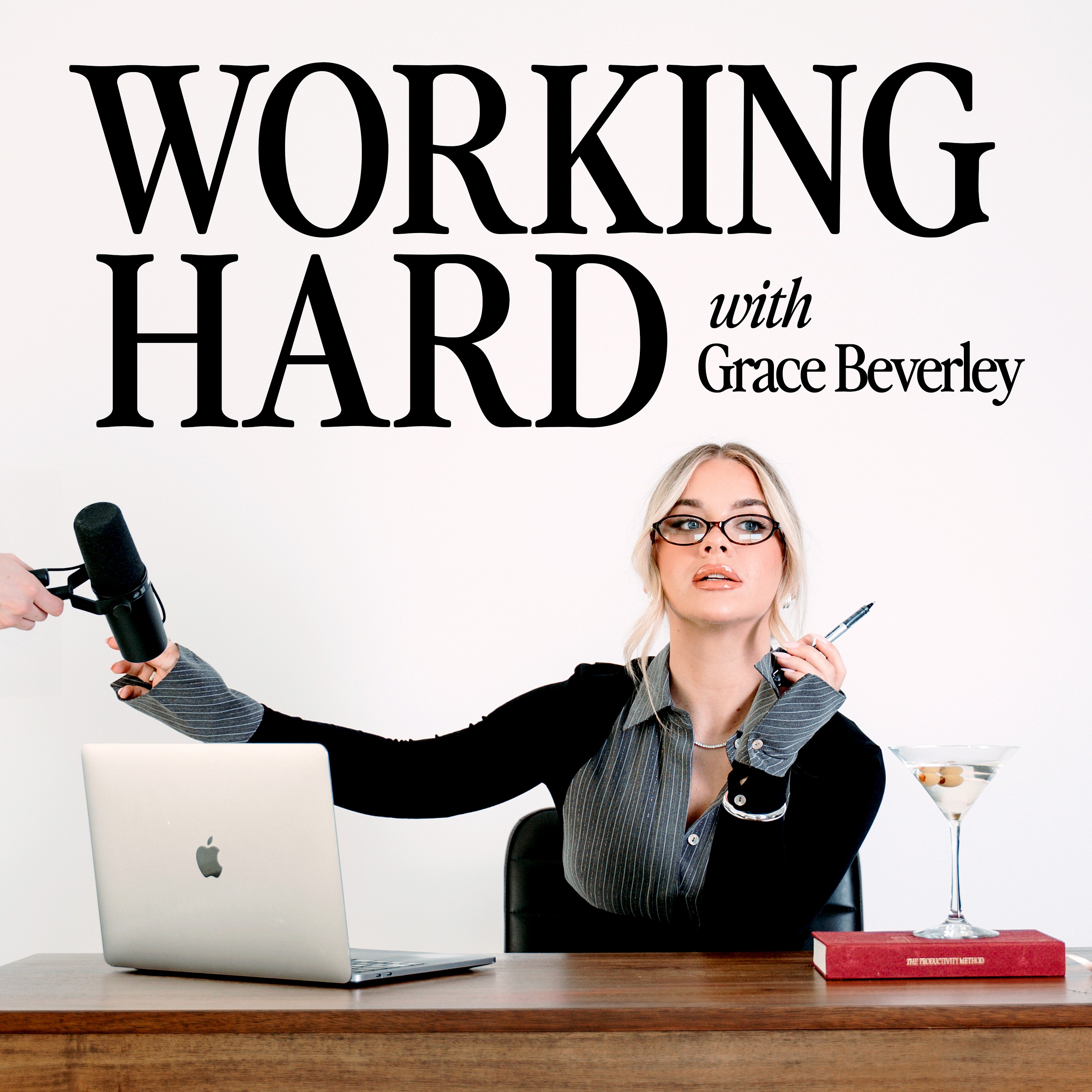
 Working Hard with Grace Beverley
20 Jul 2026 · 1h 6m · 18 chapters

How to build better habits by changing beliefs, not relying on willpower; separating pain from suffering; using “turnaround” belief work to stop self-sabotage; and clarifying what can/can’t become a habit.
Nir Eyal, author and lecturer who studies habit formation in the brain, distraction, and what high performers do differently; previously wrote Indistractable and develops habit theory.
Willpower and to-do lists don’t solve the real bottleneck—belief does. Pain is not the same as suffering; interpreting discomfort as “data” reduces suffering and sustains action. People stall by over-preparing and by limiting beliefs like “I’m not ready” or “there’s no time.” Beliefs are tools, not facts; you can choose liberating beliefs without requiring other people to change. Also, not all behaviors can become habits: habits are low/no-conscious-thought impulses; effortful behaviors require routines plus belief/script work.
“Flowers from a judgmental mom” turnaround exercise (Byron Katie-style four questions); students who visualized grades did worse; Richter rat study (15 minutes to 60 hours after conditioning); athletes visualize obstacles (e.g., Michael Phelps’ goggles).
Written by AI. May contain mistakes.
Nir Eyal discusses beliefs, productivity, and the relationship with work.
“Over 4 million businesses have skipped the line with Stamps.com.”
Nir Eyal discusses beliefs, productivity, and the relationship with work.
“Nir Eyal, are you currently more working hard or hardly working?”
A deep dive into the distinction between pain and suffering in productivity.
“But this is basically, you know, has its roots in stoicism and in Buddhist philosophy.”
Exploring how to recognize and overcome limiting beliefs that hinder progress.
“Then you're saying neuroscientifically, like it actually makes the whole thing a lot harder for yourself.”
Strategies for self-reflection to identify areas of dissatisfaction and growth.
“Well, it can, in many ways, it feeds what we call limiting belief.”
Learn how to identify areas of suffering in your life and the importance of inquiry-based stress reduction.
“So there's a whole methodology to how we do this.”
Explore the turnaround technique for changing limiting beliefs into liberating ones.
“Like it motivates me to do this hard work.”
Hear Nir Eyal's personal story illustrating how to apply the turnaround technique to shift perspective.
“I can tell you an example of how I've done this in my own life, because sometimes if you talk about the studies and the science, people's eyes kind of glaze over after a while.”
Discover how to view beliefs as tools for happiness rather than absolute truths that cause suffering.
“We ask ourselves, could the opposite be true?”
Examine the pitfalls of positive thinking and its impact on expectations and outcomes.
“It's giving yourself a different story, a different belief set to decrease your suffering.”
Learn why positive visualization can backfire and how mental contrasting is more effective.
“If you can tell yourself they're not and have a far better outcome.”
Explore the misconceptions about habits and how to effectively build routines.
“in developing that habit theory to be the way we know it to be.”
Explore the underlying psychology of distraction and how motivation can be sustained.
“The problem is the deeper psychology of distraction.”
Discuss the effects of phone addiction and how technology influences habits.
“I want to quickly come to speak about phone addiction.”
Examine the responsibility of parents regarding children's use of technology.
“because it's infiltrated so heavily into the way we're learning, into the way we're communicating, into whatever it might be.”
Explore the implications of social media use among children and the need for regulation.
“But do you know what the minimum age to use TikTok is here?”
Learn actionable strategies to build better habits and minimize distractions.
“First thing, recognize that just because something is difficult doesn't mean that's bad.”
Emphasizing the importance of personal accountability in overcoming distractions.
“Now there's a lot more to it, but we need another hour to show you how.”

Get the gist, explore an idea or ask about something said.
 Claude
On Working Hard with Grace Beverley, what are the key points of this episode?
Searching your listeningAutomatic transcript. May contain errors.
0:00Still waiting in line?
0:02Nir Eyal: Again? That's time you'll never get back. Save time and money with Stamps.com. Over 4 million businesses have skipped the line with Stamps.com. Join them to save up to 90 % off carrier rates from your computer or phone right now. Print postage for certified mail, registered mail, and packages in seconds. Then schedule a pickup right from your home or office. For a limited time, go to Stamps.com and use code PODCAST for a free welcome gift. Taxes and fees apply.
0:43what is up i'm grace beverly and welcome back to working hard the podcast ship guidebook on how to improve your own life and achieve what you actually dreamed of doing because life's too short for boring podcasts and bad advice.
0:58What is up and welcome back to Working Hard. So a while back I did a video on habit theory and it kind of took on a life of its own. So many of you messaged me about it and it's still one of the most popular episodes we have ever done. So when I heard that the expert I spoke to in that episode was finally actually coming to the UK, I really wanted to make a recording happen. I was like, this is squarely what we talk about on the podcast. There is so much I want to ask him about from the origins of the theory itself and how you can use it practically. So we just had to make it happen. Nir Eyal is an author and lecturer who has spent years studying what makes humans tick, how habits actually form in the brain, why we're all so distracted, and what people who actually achieve extraordinary things genuinely do different with their days.
1:43Essentially, he's an expert in a lot of the things that we love to talk about on this side of the internet. So we get into the habit loop. Why willpower doesn't work? What's actually happening when you can't put your phone down? The beliefs that hold us back and how to shift all of that to be able to live the life you want to live. I absolutely loved having this conversation. I almost just didn't look at my questions at all purely because I felt like I was just having a dinner party conversation where I wanted to get into the absolute crux of how I can use this to make my life better in the everyday.
2:16Before we get into it, you know the drill. Please make sure you're following the podcast on whatever app you're listening to this on. That means that this will land on your feed every Monday morning and it is the best thing you can do to support us to keep the podcast completely free. So let's get into it.
2:34Nir Eyal, are you currently more working hard or hardly working?
2:37Nir Eyal: I would say that I'm doing both. I'm hardly working on the things that don't matter and I'm working hard on the things I do. And I guess as someone who studies work and productivity a lot, you're probably thinking about how hard you're working and what work looks like and how that is reflective of your wider life. What would you say work kind of means to you as someone who does spend a lot of time looking at the data and the science behind that? So I think if you would have asked me a few years ago, actually when we did talk a few years ago, I would have been much more likely to tell you that it's about the task and fitting in as much as you can in your day.
3:16Nir Eyal: And now I've realized that upstream of productivity is belief. That the bottleneck is actually not the tasks we have to check off our to-do list. That actually that could be a pretty terrible productivity technique. And there's some reasons why to-do lists are terrible. We can talk about that as well. but that the way you look at the work that you're doing, what you believe about what does work mean has a much greater impact. Because from studying the most successful people, whether it's in business, the arts, entertainment, athletics, they have a different relationship with things that are painful, that they are able to separate pain from suffering.
4:01That's so interesting because I think about this personally a lot without the actual data behind this. I've always been a little bit of probably a workaholic, but I feel this, it's kind of sounds cringe in a way to say, but genuinely I feel very lucky because the work I do is work I get so excited about that actually, as you say, it kind of doesn't feel painful. Like it doesn't, it's not the association I have with work. I feel very lucky to do this. And don't get me wrong. I also have shit days where I'm like, what is this? And why is my day looking like this? And why, you know, And why have I chosen this job and all of that?
4:34But a lot of the time, I feel like I'm able to have much better stamina and work ethic, not because I'm the most diligent person in the world, but because I find the work I'm doing interesting.
4:47Nir Eyal: That's huge. And I guess what you're saying is that that should kind of be the aim. That is the unlock in life. And I didn't make it up. I wish I could take credit for it. But this is basically, you know, has its roots in stoicism and in Buddhist philosophy. And now the neuroscience is actually backing this up, that pain is not suffering. Those are two separate things. And we conflate the two, but they're not the same. Another reason I find that really interesting is because, as you say, if pain isn't negative, if pain isn't suffering, if pain is just like friction or like whatever it might be to get across something, then that is exactly how you get the dopamine back.
5:25Like I love really simple tasks that feel annoying but make you feel great after. Like I always say I have this Friday reset approach to a Friday, which is the way I set up my work day to make it as productive as possible and like reduce the Sunday scaries. and on those days I always say it's like starting with a dopamine starter so just I don't know unloading the dishwasher or folding your laundry or whatever it might be that is some of my favorite like as you said it kind of pain because it's it's not actually you're not truly engaging in doing anything so difficult that it makes you frustrated or whatever it might be it's really easy to access and cross that type of friction and get a massive reward for it aka getting your dopamine going for the day and you know you feel like when you start doing one of those things you suddenly want to take everything off else off your list as well so what you're doing is very much
6:24Nir Eyal: aligned with what high performers do in that it's not about necessarily willpower it's not about grinding. It's not about discipline. It's about changing the story. And for you, the story is dopamine. Which, by the way, we can debate on whether it's true or not. Like the whole dopamine squirt thing. That's not true. Yeah, you have. You get the squirt of dopamine. Oh, right. Sure. That's not true. Dopamine is not cocaine. But the way it's used is, oh, I check social media because I get the dopamine squirt. That's become a practical fiction. Because it sounds true. And, you know, as someone who studies this stuff, I bristle at it.
7:02Nir Eyal: It's like, that's not how dopamine works. On the other hand, if there's a story that helps keep you motivated, if there's a belief that works to your advantage, who am I to say don't use it? And so what you're able to do is to say doing this stuff gets me going. It's a privilege to do it. It helps me. And that's actually the more important macro lesson. The macro lesson isn't is it real that dopamine does this and, you know, that's gobbledygook. What's really important is, is there a story you're telling yourself that what you used to feel was discomfort is data? It's just information. Your interpretation of that information makes it either suffering or not.
7:44Interesting.
7:44Nir Eyal: And that's the big revelation. That's the big aha. And if you, I guess then if you can have a better relationship with what you consider suffering versus what you consider just part of your day to day or a necessary step one to going to step two. Right. Then you can also feel a lot better about the work you are doing and the direction you are going in because it doesn't, it doesn't feel like if you tell yourself, oh, for fuck's sake, I've got to go to work today. Yeah. Then you're saying neuroscientifically, like it actually makes the whole thing a lot harder for yourself. And that is the major life unlock in all areas of existence, whether it's physical health, whether it's our professional goals, whether it's our relationships.
8:26Nir Eyal: It's all about the story we tell and what we call limiting beliefs. And so that's what I've been researching over the past six years since we spoke about my last book, Indistractable, is why is it? This was my frustration that I do these office hours with folks. Anybody who reads one of my books, every Wednesday night or 15 minutes each, I do an hour. Anybody can call me and we can talk about any of my books. I love it. And I started getting these funny phone calls that maybe like one out of 20 calls, someone would say, hey, Nir, I read Indistractable. I liked it. I really liked it. But I wanted to let you know that it didn't work for me.
9:01Nir Eyal: And I'd say, oh, tell me more. You know, I spent five years writing that book. There's 30 pages of citations to peer-reviewed studies. It changed my life. Hundreds of thousands of people have read it. Let's go step by step. Let's start with step one. How did step one go for you? And they'd say, you know, I read step one. I read it. I definitely read it. I just didn't do it. I said, okay, no problem. I get it. No problem. Let's go to step two. How did step two go for you? They'd say, yeah, you know, I read step two as well. I definitely read that one. I just didn't do that one either. And at first I was kind of frustrated.
9:35Nir Eyal: I was like, did I write a bad book? Is it my readers? Like, what's going on here? And then I realized, wait a minute, I do this too. Don't we all do this? We've all listened to podcasts and YouTube videos and read books and talked to gurus and experts, and yet we don't do it, right? And in an age of so much information where we basically know what to do and want the rewards, we want the benefits, why aren't we doing it? Yeah, and it's that classic getting stuck in the planning and research stage of things. Like I say it all the time with people starting businesses, there is so much information out there now.
10:06You could genuinely spend your entire life, like every second of every day, working out how to start the best possible business and how to grow that business. And you've done absolutely nothing until you've actually done it. And I think it's really easy to kid ourselves that we are doing the most diligent thing by preparing as much as possible. and actually there is such thing as over preparation not in knowing too much but in so little action that actually the only thing more you could know about starting a business now you are going to learn by actually doing it and you have to get off that and I think with social media and the access to information it's obviously incredible but at the same time you can kid yourself and stall yourself into this kind of inaction purely because it feels I don't know It feels like it's a procrastination.
10:57It's just a form of procrastination.
10:58Nir Eyal: Well, it can, in many ways, it feeds what we call limiting belief. Sure. And one of the most common limiting beliefs I hear is, well, I just, I'm not ready. I don't know enough. I need more information. And, you know, the definition of a limiting belief is a belief that saps motivation and increases your suffering. That's a limiting belief. A liberating belief is a belief that gives you motivation and decreases your suffering. And so the trick is to free yourselves from those limiting beliefs, right? I don't have enough time. I can't make sales calls. I'm not good at math. I'm not really a born entrepreneur.
11:33Nir Eyal: I'm no good at public speaking. Oh, there's no time, right? That's probably the most common limiting belief I hear all the time. There's no time. Are these things facts or are they beliefs? And what's the difference, right? So a fact is an objective truth. It is something that is true whether or not you believe it, okay? The world is more like a sphere than it is flat. That's a fact. Okay, sorry, flat earthers. Sorry, flat earthers. The world doesn't care what you believe. A fact is a fact. You cannot change facts. Faith is on the other end of the spectrum, right? Faith is a conviction that does not require evidence.
12:04Nir Eyal: God rewards the righteous. It's a matter of faith. There's no amount of evidence that's going to change someone's mind about that, nor should it. It's a matter of faith. But between fact and faith is a belief. And a belief is defined as a conviction that is open to revision based on evidence. And what blew my mind is that we don't choose these beliefs. We just carry them around. They came from our upbringing, from our parents, from our culture, from something somebody told us, an experience we had. And we carry them around with us and it colors everything we do, like literally how we see reality.
12:39Nir Eyal: And we don't question those beliefs. We just keep them. And we don't ask ourselves which beliefs are serving us and which are hurting us. And so we can be super motivated and try and get self-discipline and know all the right things to do and want the benefits. But if we don't have the right beliefs, we sabotage ourselves. And I think this is one of those classic things around self-awareness where it's hard to know what you don't know. Exactly. So how do you work out what your limiting beliefs are? Because they're probably so ingrained for most people that they don't truly know that actually they've been labeling themselves X, Y, Z, and therefore only taking opportunities that are as far from that as possible when actually that's just a belief.
13:16It's not a fact.
13:17Nir Eyal: Yeah. That is the big challenge because beliefs, you know, our limiting beliefs are like our face. If I told you, look at your face. Go ahead. Look at your face. How do you do that, right? You can look at your hands. You can look at your feet. You can't look at your own face. But we all have a face. Interestingly, we can see everyone else's face just like we can see everyone else's limiting beliefs. Did you notice that? You can see your partner, your kids, your parents, your colleagues. You can see everybody else's limiting beliefs. Can't see your own, right? Just like your face. You can't see your own face.
13:50Nir Eyal: You can't see your own limiting beliefs. They're hidden to you. The only way you can see your own face and the only way you can see your own limiting beliefs is to reflect. You need a mirror. You need something outside of yourself. My daughter likes to call this the nearer. That's great. She should walk in front. Yeah, right? And so how do we do this? So there's a whole methodology to how we do this. It starts with asking yourself where you're stuck, like being honest with yourself. Where is there suffering, annoyance, discontent? Where is that area of your life that you know you could do better in some way?
14:24Nir Eyal: Like you shouldn't have to suffer through anything. Like I used to kind of think like, oh, it's all about self-discipline and grit. And it doesn't have to be that way. You don't have to suffer through these things. And in fact, the most successful people out there, they do these things that everybody else thinks is painful, and yet it doesn't hurt them the way it does the rest of the people who quit. It's something that motivates you, like you were saying. Like it motivates me to do this hard work. That's actually the secret is finding out where are you suffering and then asking yourself why. Where is that suffering and why do I feel it?
15:00Nir Eyal: And then you've got a lot more, right? And then that's where the beginning of this process that it's called inquiry-based stress reduction. And I can walk you through how to do it, actually, where we do what's called a turnaround to move our limiting beliefs to liberating ones. Can we go through that? Sure. Yeah, yeah. This is not the structure I had intended, but I'm so interested in this. And like in my mind, what's coming up again and again, because I'm actually seeing different people I know and myself as well. And what I feel limits each of us. and how much of that is probably majority mindset based and majority, as you say, learned what we consider facts that we put on ourselves again and again.
15:43It's like, well, I'm just not like this or this is not, you know, I'm not good at this or whatever it might be that over and over and over have given us the life that we are living.
15:53Nir Eyal: Yeah. And as you say, then the other side, the liberating beliefs, I think most of those are actually to thank for all the good things that have happened in my life and where I feel very positive about my work and where I've got to in my career and various different things. So I'm very interested at this point of like, OK, you've identified where do I feel like I'm suffering in my life? Yeah. Where do you go from there? Wow. OK. Should we start? Let's start. OK, so we can do this a couple of ways. I can tell you an example of how I've done this in my own life, because sometimes if you talk about the studies and the science, people's eyes kind of glaze over after a while.
16:29Nir Eyal: So I can just illustrate, I can share with you what most changed in my life, having really gotten deep into the science of this. Or if you have something that you're suffering with, we can use you as the guinea pig. Or I can go first and then maybe you can go. You go first and I'll offer up if there's any additional information. Okay. Because I'll get a mind blank. No problem. So this is one of the areas that most changed in my life. One of my beliefs that I've held on to very strongly for decades has been that my mom is very judgmental. She's a very hard to please person. And a few years ago, I wanted to buy her some flowers for her birthday.
17:08Nir Eyal: Problem was I was in Singapore where I live and she is in Central Florida where I grew up. But I found a florist in Central Florida. I called them up. I found the perfect bouquet. I know she was going to love it. I put in the order. I went to bed at one in the morning thinking my mom's going to call me tomorrow and tell me what an amazing son I am. How thoughtful. That's not what happened. Not at all. What happened was I call her up the next morning and I say, hey, mom, did you get the flowers I sent? And she said, yeah, I got the flowers. But just so you know, those flowers were half dead. So don't order from that florist again.
17:45Nir Eyal: To which I responded something like, well, that's the last time I buy you flowers. Something not so nice. and my wife was right next to me. You know, we write the book together. She's my editor and, you know, she knows all the research that I've been working on and she turns to me and she says, Nir, would you like to do a turnaround on that? To which I said, no. Absolutely not. I do not want to do your hocus pocus, mumbo jumbo, touchy feely. I need to vent, okay? Because didn't you just hear what happened? Like clearly she's being super judgmental and hard to please. I need to vent. That's what we're supposed to do when someone hurts our feelings.
18:22Nir Eyal: We're not supposed to keep our feelings bottled up inside, right? We're supposed to speak our truth. We're supposed to tell them how we feel, right? Well, thankfully, I knew enough about what the research says. That's actually not helpful. That when we vent about people, when we gossip, when we talk poorly about others, we are cementing our beliefs about them. Sure. And we don't see people clearly. We see people as we believe them to be. More accurately, we see people as we are, not as they are. So I took a deep breath. I took my wife's advice, and I did a turnaround. What is a turnaround? A turnaround is a technique that was started by a woman by the name of Byron Katie.
18:54Nir Eyal: Have you heard of Byron Katie? No. And she calls it the work. And she actually, if you look even back before, where is the origins? It actually is a 2 ,500-year-old technique that goes all the way back to Aristotle. And this technique offers up the opportunity to reflect on your beliefs. You don't have to change your mind. You don't have to believe anything differently because one of the things you have to realize, the brain hates changing its mind. The brain hates changing its mind from an evolutionary basis. Your brain does not care if you're happy. Your brain doesn't care if you're satisfied.
19:25Nir Eyal: Your brain doesn't care if you're fulfilled. Your brain doesn't care if you're at peak performance. It doesn't care about any of that stuff. Your brain's primary job is to keep you alive. That's what it wants. So your brain is constantly pulling you towards passivity. So if you're working on something and you feel stuck and you don't know why, this is your brain trying to protect you. Because remember, from an evolutionary basis, doing what you did yesterday and thinking and believing what you did yesterday got you here today, didn't it? So that's what the brain wants you to do tomorrow because it means you're safe.
19:59Nir Eyal: So good things are nice, but bad things will kill you. So change is dangerous. So your brain is constantly trying to keep you passive. So realizing that, we're not gonna try and change your mind. If you go into it and say, I need more discipline, I need to change my mind, I need to be better, you're gonna resist. Your brain is going to fight you tooth and nail. Rather, you're collecting a portfolio of perspectives. Okay, so this is what we're going to do. So think to yourself, where are you stuck in some way? Where do you feel suffering and annoyance in your life in some way? It could be as small as, you know, when I go to the airport, there's too long of a line.
20:32Nir Eyal: Or I'm stuck in traffic. Or there's a relationship I need to work on. Or I know I've been wanting to lose weight, but I haven't been able to. Whatever it might be. Where is there a bit of suffering in your life? What's the reason? And now we're going to ask ourselves four questions. This is inspired by Byron Katie. So question number one is, is it true? That reason that you're suffering, is it true? So for me, in my case, I wrote down, my mother is too judgmental and hard to please. That was the belief, okay? Is it true? Is it true? Obviously, right? Who does that? If someone sends you flowers from halfway across the world, you don't complain.
21:12Nir Eyal: You say thanks, yes? Yes. Yes, exactly. Thank you. We're friends now. So clearly that's a stupid question. Question number one. Maybe Byron Katie had it wrong. Okay, let's skip question number one. Question number two. Is it absolutely true? Sounds like the first one, right? It's a little bit different. Is it absolutely true? Meaning 100 % of the time, no exceptions. There's no other possible reason other than my mother is too judgmental and hard to please. Would I be 100 % sure? Not really, right? There could have been another reason. I don't know what the other reason is, but okay. Could have been another reason.
21:46Nir Eyal: Third question. Who am I when I hold onto this belief? When I believe my mom is too judgmental and hard to please, who do I become? How do I feel? I'm short-tempered. I'm not very nice. I'm kind of this 13-year-old version of myself that I don't really like. Okay, now the fourth question. Who would I be without that belief? If I had a magic wand and poof, that belief just totally dissolved, how would I feel? Just imagining it, I all of a sudden felt lighter. I felt better. I felt more like the person I wanted to become. So in just four questions, I realized that the thing that I thought was a fact was just a belief, that holding onto it made me suffer, and that letting it go, I felt a lot better.
22:28Right?
22:29Nir Eyal: So now comes the turnaround. Okay, now's the fun part. We ask ourselves, could the opposite be true? So whatever that excuse, reason that you're where you are, that you're suffering, whatever to you feels like a fact, how could the exact opposite be true? So in my case, what's the opposite of my mother's two judgments on heart to please? What's the opposite? My mother is not two judgments on heart to please. Could that be true? Well, she did say thank you. She was saying a statement of fact that, okay, the flowers weren't so nice. So maybe she was just trying to help me, right? Maybe she was trying to just make sure I didn't get scammed by this florist.
23:07Nir Eyal: Could be, right? Okay, now a third belief. What's the opposite of my mother's two judgments on heart to please? the opposite could also be I am too judgmental and hard to please. How could that be true? Well, wasn't I the one who was rehearsing in my head exactly the praise that I deserve for doing this nice thing for her? And when that didn't come exactly as I wanted to hear it, I lost it. So who's being judgmental? I was, right? Okay, now the fourth belief, the opposite of my mother's too judgmental and hard to please could also be I am too judgmental and hard to please towards myself. and this brings us to what's called a misattribution of emotion it's a it's a really important concept in psychology that when we feel bad on the inside we look to attribute it to something on the outside she i can't believe she said that to me that person cut me off in traffic like did you hear what my boss said you know what's happening in the news oh my gosh all this stuff is happening outside that's why i feel crummy on the inside that's what i attribute my feelings to and that's what i've done to my mom so okay here's the quiz out of these four new these four beliefs.
24:10Nir Eyal: I had one original, three new ones. Which one is true? Which one's false? All of them? None of them? Who cares? Who cares? We spend so much time debating the facts that when you said this, you were intending to hurt my feeling. That's the fact, right? But these aren't facts. These are beliefs. And so I can choose which one serves me because beliefs are tools, not truths. Beliefs are tools, not truths. That one belief, the first one I had, My mother is too judgmental and hard to please. In order for me to stop suffering, she has to change. You don't know my mom, but that's not going to happen. That is not going to happen.
24:48Nir Eyal: When we wait for other people to change so we can be happy, don't hold your breath. You're going to suffocate. The other three beliefs I could do something with. Now, does it mean I have to be best friends with my mom? No. Does it mean we have to hang out every day? No. It doesn't mean any of that. It just means I don't have to suffer anymore. Right. Yeah. I mean, I find that incredibly interesting. And I think that what I hadn't expected the crux of it to be really is if that wasn't true and it would enable you to be a lot happier, why don't we just act like it's not true? Like it is true. So it's more about establishing what beliefs would put you in the best stead to live a successful and happy life.
25:29And the ones that aren't helping that, how can we get rid of them even if... we still kind of somewhat believe that they might be true.
25:41Nir Eyal: Without needing anything to change. One of my beefs with positive thinking and manifesting, and there's a million different flavors of it, so I'm not saying all of them, but some of them do it right. But there's a few problems with positive thinking and manifesting and vision boarding. And part of the problem is that it starts from this position that when I get this thing, when something changes, then I'll be happy. Then I'll start suffering. When I feel abundance, when I have a good job, when my partner starts being nice to me, when my kids behave, when these things happen, when I have the beach body, then I can stop suffering.
26:19That's a belief, a limiting belief.
26:21Nir Eyal: Because until I see that, that number in my bank account or that person doing what I need them to do and the world conforming to everything that I want it to do, I can't be happy. Right. And that's a myth. Yeah. It's up here. So it's limiting beliefs as a form of procrastination as well, because it's kind of you consistently telling yourself that something needs to be solved in order for you to get from A to B. And actually, in reality, the only thing that needs to be solved is you not thinking that something needs to be solved for you to get from A to B. It's giving yourself a different story, a different belief set to decrease your suffering.
26:56Nir Eyal: Now, it doesn't mean you don't need to want things. It's okay to want things. It's okay to want to improve your situation, the lives of others. That's fine. But you shouldn't have to work hard at it. You can do it without the suffering. And it kind of links as well. We've done some episodes on this podcast around the idea of luck and engineering your luck and all of these different things. And I think it links quite well to, you know, there have been studies that show that if you like people who think they are lucky people, good things happen to them. Like that you essentially create it by thinking it.
27:28Therefore, in the wager approach, surely you would opt to consistently think that you are a lucky person rather than go around telling everyone and yourself, oh, these things just don't happen for me. Like that's just not, you know, unfortunately, life just doesn't work that way for me. If you tell yourself that over and over, even if you live the exact same life, there is a marked difference in the actual outcome. And it's kind of there might be all of these very annoying things that are getting in your way and that are feeling like suffering and all of this. But the lesson seems to be cool. If you can tell yourself they're not and have a far better outcome.
28:07Nir Eyal: Why not? It's not too painful to do. Totally. Totally. Absolutely. The pitfall is sometimes that people – you can be right for the wrong reasons. And I think sometimes people think that, oh, if I'm thinking positive, I'm putting in an order into this cosmic slot machine that's going to give me stuff. And I think that can be dangerous because when it doesn't happen for you, what then? Does that mean the universe doesn't like you? Does that mean that you did something wrong? You didn't vibrate hard enough or something? That can be very dangerous. So just doing the vision boarding, just thinking about the outcomes, it turns out there's a lot of research that shows that just focusing on that stuff actually backfires.
28:47Nir Eyal: For example, students who visualized and manifested getting a good grade on a test did worse than students that didn't. Why? Because they'd already placed the order, right? They called up Grab and the universe was going to deliver them stuff, right? And what happened? They worked less at getting the thing they wanted, okay? So the right way to do it, the right way to manifest, the right way to vision board is called mental contrasting. Mental contrasting is when we contrast what we want with how we are going to feel on the way to getting it. That's a big difference. So it's not I'm going to sit here.
29:22Nir Eyal: I used to be clinically obese. And when I would do the vision boarding and the manifesting on I want a beach body while I was on the couch, nothing changed. But when I started preparing myself psychologically, what am I going to do? By the way, this is what athletes do. It's a great example of how the self-help industry took something that was true and made it false, right? That athletes don't visualize the gold trophy. They don't visualize the medal. That's pointless. That's the outcome. You know what they visualize? They visualize what am I going to do when something gets in my way physically and psychologically.
29:53Nir Eyal: So I'm on offense and defense is coming at me. What am I going to do? I'm skiing down the mountain and I slip. What's going to happen? Like Michael Phelps, he has this great story where he was swimming in the Olympics and his goggles fell off. Now, I would flip out, right? End of the race. But he had visualized a bajillion times, okay, my goggles fall off, no problem. I count the strokes. I know what I'm going to do. Nothing to get worried about, nothing to be afraid of. That's the step that we miss when we manifest in vision board. So when I lost weight, the critical step was to prepare myself, not, oh, I want, I want, I want, I want, gimme, gimme, and I'm not going to be happy until I get it.
30:30Nir Eyal: Rather, okay, I'm going to a birthday party this weekend, and I know someone's going to offer me some birthday cake. but I'm trying to reduce my calories. What am I going to do and what am I going to say when I really want the cake, right? So I know I'm going to want the cake. What am I going to say to myself and what am I going to say to the person who's offering me the cake in advance? How do I rehearse that script so that I ultimately do what I say I'm going to do? So it's not just about the outcome. It's about contrasting it with the difficulty, the pain that's in your way. Now, how do you do that?
31:03Nir Eyal: You need to have a different belief around the pain. You need to have a script ready that tells you that feeling bad is not bad. That's a huge mind shift, right? Feeling bad is not bad. That pain minus the suffering is purpose. There's a reason there that I feel that discomfort, and there's nothing wrong with it because you know what? This is what it feels like to get better. So I used to, whenever I was hungry, whenever something was difficult, whenever I was struggling with my weight, that was bad, bad, bad. I got to escape. I got to get out of it, right? Not supposed to feel hungry. All that food chatter, which I still constantly feel.
31:37Nir Eyal: I feel the food noise, right? I constantly have cravings. But now the script, the belief is, hey, this is what it feels like to get better. It's okay. There's nothing wrong with being hungry once in a while. It's all right. Because that's what it feels like to get better. And that's what I do with all sorts of difficult tasks to make, to change how I view them. It's still pain. It's still information. I still feel those things. But now I don't suffer from them anymore. Right. So it's being able to anticipate the obstacles that will be there rather than purely. Yeah. And I guess that comes with having an awareness for also what it even takes to get to where you want to get to.
32:14And I think that, you know, where some things like manifestation can fall short is jumping to end goals when actually you might not know you're probably three years away from that rather than six months away from it. And you're just going to get discouraged in those six months because you perceive that to be a much shorter journey. And actually, you need to have awareness of the pain, quote unquote, that this is going to take and therefore be able to use the manifestation and visualization to be able to actually overcome that as well as doing all the work.
32:48Nir Eyal: Right, right. And telling yourself that different story. So, for example, with my mom, to return to that story, I didn't tell you what happened after. This isn't in the book, but I'll tell you what happened after. You know, I had to tell her about this chapter, right, about the whole flower story because I wasn't going to let millions of people read it in the book before she got to hear it. So I had to tell her, right? And I told her, you know, she read the chapter. And I thought, honestly, that she was going to tell me, wow, you know, you were so introspective. You know, amazing that you took responsibility for your suffering.
33:21Nir Eyal: That's what I thought she was going to, you know, come around. You know what she tells me? She says – I called her up. I asked her if she read the chapter. She says, I told you those flowers were garbage. So, yeah, in that moment when I heard that, I definitely had that pain of pain, right? I can't – I'd be lying to you if I told you it didn't hurt. Of course. I was like, oh, I felt that. But it didn't become suffering. Like normally before I'd done the turnaround and had a new liberating belief prepared in advance that I had to write on a Post-it note. and put on my desk so I'd see it every day.
33:55Nir Eyal: Before, I would have said, if she said something like that, I would immediately jump into, there she goes again. She's always like that. That's so like her, reinforcing my beliefs about her. Instead, I felt the pain, right? The signal came, but it wasn't suffering. You know why? Because now I had a new liberating belief. Now my liberating belief with my mom, take a deep breath, and I repeat to myself, we're all working with the tools we have. That's my new liberating belief, right? Is it true? Is it false? I don't care. It works. For me, you should come up with your own. Everybody should come up with their own.
34:27Nir Eyal: But I came to that through the turnaround process. We're all operating with the tools we have. What does that mean? For me to want my mom to behave differently, it's like asking her to speak Latin. My mom does not speak Latin. Why would I demand that she speaks Latin? She doesn't speak Latin. She doesn't have that tool. So why do I demand that she speaks to me exactly the way I would like to not hurt my feelings? That's ridiculous. We do that all the time, right? Somebody does something to us that we don't like and we feel they have to change. We're all operating with the tools we have. So now that I have that liberating belief, I can take it out.
35:01Nir Eyal: I'm prepared for the obstacles along the way.
35:2024-7 and schedule pickups from your office or home. Save up to 90 % with automated rate shopping. That's why over 1 million small businesses trust Stamps.com. Go to Stamps.com and use code PODCAST to try Stamps.com risk-free for 60 days. I want to come to talk about habit theory because I know you've played a huge role in developing that habit theory to be the way we know it to be. And as we've already discussed on an episode before around kind of what that is and everything. I think a lot of people though now, now it's discussed so much, believe that they really understand what makes a habit, what forms a habit, all of those things.
36:02What do you think most people actually get wrong about habits though? So the thing that most people don't realize about habits is that habits don't work for all behaviors.
36:14Nir Eyal: So when people say I want to build a habit around something, what they really mean is they want to have done it. Not do it. They want to have done it. I hate exercise, so I want to build that exercise habit so it'll happen on autopilot. Like there's some magic button I can push. And that difficult thing I hate doing will just happen on its own. I really don't like meditating. It's really boring, but I want to start a meditation habit. I don't really like writing, but I hear you're supposed to journal every day, so I should start a journaling habit. But what's the definition of a habit? The definition of a habit is the impulse to do a behavior with little or no conscious thought.
36:49Nir Eyal: Many people never look up the definition. That's the definition of a habit, the impulse to do a behavior with little or no conscious thought. How exactly do you journal without thought? If you're exercising and you want to get better, you want to beat your PR, that's going to take a lot of conscious thought. If you're meditating and you're not in conscious thought, you're doing it wrong. You're asleep. So many behaviors that people think, well, I'm just going to turn it to a habit. There's some magic button that is just going to happen without effort. They don't realize that many behaviors will never fit the definition of a habit.
37:24Nir Eyal: It will never become a habit, but they think, oh, there's some magic number. Somebody told me that they're, you know, 66 days or 44 days or whatever. There's no magic number. They think there's some magic number. And when it doesn't work, what happens? They don't say, oh, the method is wrong or the person who taught me it didn't look at the research. They think, I screwed up. I'm wrong. I'm deficient. I'm bad. And then they're worse off than they started. So I think it's really important that we realize that some behaviors can become a habit. If you can do a behavior with little or no conscious thought, yeah, it can become a habit.
37:52Nir Eyal: For example, you know, when you first learn to drive a car, you need a lot of conscious thought, right? You've got your hands on the steering wheel and you're paying attention and you have to think about it very, very carefully when you first learn it. But then when you get more practice, it does become a habit and you can listen to music, you can have a conversation. You can do all kinds of things because driving becomes something you can do with little or no conscious thought. It can become a habit. It's a learned skill. But some things will never, ever become a habit and we shouldn't even try to make them a habit.
38:19Nir Eyal: Rather, we should make them into a routine. A routine is defined as a series of behaviors frequently repeated. So you can have a writing routine. You can have an exercise routine. You can have a meditation routine. But calling it a habit, I think people misunderstand that they expect it to be effortless. They expect it to be easy. And it's actually two different processes. For one, we can build a habit for certain behaviors that can be done with little or no conscious thought, but with other behaviors that require comfort with the discomfort, right? That writing consistently, exercising consistently, meditating consistently, it's not going to be so easy.
38:56Nir Eyal: There's going to be some pain. And that's where I think the belief work comes from to reinterpret that story. But But they're diametrically different behavior change processes. And what that sounds like that you're kind of speaking about is the idea of building yourself systems. Because I come back to that quote again and again. It's like you don't rise to the height of your goals. You fall to the level of your systems or whatever it is. My buddy James. Yeah. Like how do you actually build systems that work then? I think it starts with what type of behavior you're trying to change. So I guess the morning routine trend is generally around like setting your alarm a bit earlier, maybe doing some reading or some journaling, going to the gym or doing some stretching, like things that don't feel part of a rushed, you know, morning routine, which people are trying to develop.
39:43But obviously it's a series of things.
39:46Nir Eyal: I think it starts with, is this something I can do mindlessly? Sure. If it's something you can do with little or no conscious thought, you follow the steps of a habit loop, which are very well discussed. People kind of know them by now. If it's something that requires effort, don't fool yourself on trying to make it into a habit. It's going to backfire because the definition doesn't fit. It's the wrong tool for the job. It's like, you know, could you nail something in with a screwdriver? Yeah, but that's not the right tool. You need, instead, you need a hammer. So you've got to find the right fit.
40:17Nir Eyal: So if it's something that requires effort, don't expect it to be easy. I think that's a very, very important point. So, and I think this is what we're seeing right now. We're seeing a lot of people who tried the habit formation stuff, and they're still not in that journaling habit. They're still not in the meditation habit. They're still not in the exercise habit. And they don't understand why. I did all the steps for a habit. And it's because certain behaviors cannot become habits. If they're effortful, we need a belief set. We need to change how we see the behavior to expect the discomfort so that we can see it as something that we want versus something we're trying to avoid.
40:55Right. And so it's about kind of building that over time, would you say? Do you think it's mostly down to willpower and discipline? Do you think it's down to planning?
41:04Nir Eyal: It doesn't have to be. I think it's about reminding yourself of that belief set. You know, I'll tell you a secret. I write my books not because I have the answer, but because I need the answer. Like, this is how I stay sane. Because what I'm looking for are solutions to my problems, right? And thankfully, I've had a lot of them to solve over the years. And when I have a topic that I read everybody else's books on the topic, and most of the time, somebody's figured it out already. And that's great. But maybe like, you know, every five, six years, there's a problem. And I try all the existing solutions, and it doesn't work.
41:39Nir Eyal: Like that's what happened with distraction. With Indistractable, all the books out there, just stop using your phone. Phones are evil. You know, some professor who has tenure telling me not to check email. Thanks, stupid. That's not really helpful, right? Like how are we supposed to do that exactly? Like our livelihoods depend on technology. We're just stop using it. So I needed a more practical solution. And that's not the problem. The problem is not our cell phones. The problem is the deeper psychology of distraction. Why are we looking for escape? If you think it's the phone, you're wrong. It's that we're escaping our discomfort.
42:13Nir Eyal: That's why humans have always been distracted. For 2 ,500 years, Plato talked about distraction. So we need to get down to these deeper reasons why and not stick with these very surface-level solutions. So I write my books when I'm looking for the answer. And for Beyond Belief, what was bugging me was that even when I knew exactly what to do and I wanted the benefit, it wasn't happening. And willpower and grit and discipline only takes you so far. Like you can do that temporarily for small bursts, but over the long term, you won't continue. Even though we know the number one most important trait of whether you will achieve your long-term goals, it's not intelligence, it's not resources, it's not knowing the answer, it's whether or not you quit.
43:05Nir Eyal: That is the number one most defining trait of whether you will meet your goals. So what we need to focus on is, well, what sustains our motivation? Have you, by the way, have you ever heard of the Richter rat study where they put them in the cylinders of water? Yes. Yeah. That really blew my mind. So they had this experiment. Kurt Richter back in the 1950s had a simple question, which was how long can a rat swim? So he takes a bunch of rats, puts them in a cylinder of water, and he stands there with a stopwatch. And he figures out a rat can swim for 15 minutes before it gives up and drowns. It doesn't exhaust itself.
43:36Nir Eyal: It just kind of gives up. So he wants to see, can he get the rat to swim for longer? What kind of intervention can he do to make the rat more persistent? So what does he do? He takes a new group of rats. He puts them in the cylinder of water. And this time, he stands there with a stopwatch. And at the 15-minute mark, he reaches in, takes out the rat, dries it off, lets it catch its breath for a second, and then plunk back into the water it goes. And he does this a few times. He conditions the rat to expect that persistence pays, that salvation might be possible if the rat keeps swimming. So now when I ask a crowd, okay, how much longer did the rat swim for?
44:14Nir Eyal: Started out at 15 minutes. 15 minutes was the natural limit of this rat. How much longer did the rat swim for? Do you know the answer? No, I don't. You don't know the answer. No, no, no. I want you to guess. First experiment, 15 minutes. That's how long a rat swims before it gives up. How much longer did the rat swim after the conditioning? In one go. Yeah. 20 minutes? 20 minutes. How long? 30 minutes. 30 minutes. 45. An hour. Whoa. 15 minutes to an hour. That's four times more persistent. Four times longer. Think about that for a minute. If I told you that I have a magic solution that's going to make you four times more persistent, you know, for people who give up on their business, I've got something that's going to help you sustain yourself four times longer.
44:54Nir Eyal: It's going to help you exercise four times longer. It's going to help you make four times the sales calls, whatever's difficult for you, four times more persistent. Wouldn't that be off the charts amazing? That'd be crazy, right? But the rats didn't swim for 60 minutes. The rats swam for 60 hours. Fuck off. 60 hours of nonstop swimming from 15 minutes. What the hell happened? What changed? The bodies of these rats didn't change. They didn't suddenly become Michael Phelps rats. Same exact rat bodies. Their environment didn't change. As much as we talk about you have to change your environment and all that, nothing changed in the environment, same cylinder of water.
45:33Nir Eyal: The only variable left, we can't ask the rats, but the only thing left might be that something changed in their minds. That suddenly there was some kind of switch that was flipped. And now all of a sudden, what was always within them, see, this is the real point. The 60 hours was always there, but they kept quitting at 15 minutes. The study is not about the rats. The study is about you. It's about all of us. We keep stopping ourselves at 15 minutes because we believe that is our limitation. So we give up. Because remember, the number one defining trait of whether you meet your goals is whether or not you quit.
46:06Nir Eyal: We keep quitting at 15 minutes when we have the 60 hours in us all along. So how do we bring that into our day-to-day? We break the limiting belief. We have to recognize, we have to see our face, we have to see our limiting beliefs, as uncomfortable as it can be sometimes because We're very comforted in doing things the way we've always have. That's what evolution wants is to keep you doing what you've always done. And recognizing just like those rats who died. Think about it, right? They gave up 15 minutes and drowned, right? And that's what we're doing to ourselves. We are limiting ourselves thinking, well, this is a fact.
46:41Nir Eyal: This is a truth, right? That's my limit. And so we put ourselves in these cages of our own device in so many ways that we don't realize that our beliefs is what I call the three powers of belief. Beliefs can change what you see, literally what you're able to see. I can show, maybe you can put it up in the video later. You know, I can show two people an image. It's called the Khafer illusion. And based on where you grew up, you will either see circles or you will see squares. Okay? Circles or squares. I don't know if we can bring it up, but it's fascinating. The same image. If you were born in a pre-industrialized society, if you're born in somewhere that they don't have a lot of right angles, you'll see circles.
47:26Nir Eyal: But if you were born in a place that has lots of bricks, brickwork and right angles, 90 degrees, you'll see squares because that's what you expect to see. That's what your prior experience dictates. So if we can see things so vastly different based on our priors, our prior beliefs, this explains so much. It explains why we have interpersonal conflicts. Because we don't even see our own reality clearly. We can't even see someone else's reality clearly. So beliefs change what you see. They change what you feel, not just feelings, but physiologically, your pain and suffering. And they change what you do, your sense of agency.
48:02Nir Eyal: So beliefs literally dictate who you become. And so I forgot what the original question was, but hopefully. How you become a rat that swims for 60 minutes. Okay. So you recognize that there's three truths here. Number one, you don't see reality clearly. None of us do. That you are capable of far more than you believe, a la the rat study, and that what you believe dictates your reality. Now, it doesn't dictate everyone's reality. It dictates your perception of reality. So having the intellectual humility to realize, wait a minute, I don't see reality clearly. None of us do. And we can talk about why that is.
48:42Nir Eyal: That opens you up to the possibility that you can change your beliefs. That beliefs are not facts. They're not faith. They're changeable. They're malleable. Beliefs are tools, not truths. That's so interesting. And I think it's so visceral when you explain it with the rats. Yeah. I do feel like the rats sometimes.
49:17registered mail and packages in seconds. Then schedule a pickup right from your home or office. For a limited time, go to stamps.com and use code podcast for a free welcome gift. Taxes and fees apply. I want to quickly come to speak about phone addiction.
49:35Nir Eyal: Okay. Because when you're talking about a lot of this and we're talking about habit theory, I think that so many of the negative habits we've built, and you've spoken a lot about negative, or maybe not calling them negative habits, but you know things that you can build that are just as strong but maybe don't have as good an impact on your life what's kind of happening in our brains when we develop something like a phone addiction because I am of the opinion that most of us are pretty addicted to our phones or some device of some form and we've become pretty adept at building those habits because of what the technology is like and many other reasons.
50:19So what is our brain doing in that environment? And how do we, I guess, come on to approach positive habit building, as it were, when we're literally fighting the billion dollar tech that's constantly going for your brain time?
50:36Nir Eyal: Okay. So I'll give you the simple answer is that it's just a conditioned response that all products and services, all products, your product, big companies, small companies, restaurants, dry, every product has one job, and that is to modulate your mood. Everything you do, you're doing to feel differently. Motivation, you know, we used to think that motivation is about carrots and sticks. It's not. Motivation is about one thing. It's about the desire to escape discomfort. Everything you do is about the desire to escape discomfort. The carrot is the stick. What does that mean? even wanting to feel good is itself psychologically destabilizing.
51:16Nir Eyal: Wanting, craving, lusting something is itself uncomfortable. That's how your brain gets you to do things. So again, back to pain. It all stems back from pain because if everything you do is about the desire to escape discomfort, everything, that must therefore mean that time management is pain management. Money management is pain management. weight management, it's all pain management. Now, these companies, all companies, your company, is fundamentally fixing some kind of pain point. I don't want to feel bored. I'm going to listen to a podcast. I don't want to feel lonely. I'm going to call a friend.
51:55Nir Eyal: I don't want to be uncertain. I'm going to check the news, right? It all connects to some kind of feeling. That's all it is. Now, let me push back a little bit. As you said, you feel like we're all addicted. And I hear this a lot. What is an addiction to you? A irresistible, consistent impulse that you kind of have to perform or you feel uneasy. Okay. Okay. That's not, that's pretty close to the definition of an addiction is a persistent compulsive dependency on a behavior or substance that harms the user. Sure. So if you have any of that definition missing, it's not an addiction. So you can say - Okay.
52:35So you can't have a positive addiction.
52:37Nir Eyal: There's no such thing as a positive addiction. No such thing as a positive addiction. It doesn't exist. Because the definition of addiction, it has to be negative. And you call exactly a great point. I have a consistent dependency on my car. Right? I depend on transportation to get to work. Am I addicted to my car? Right? I have a dependency on my wife. Right? I would feel very, very bad if I didn't have a connection with my wife. Does that mean I'm addicted to my wife? No, because it's not causing me harm. And even if something does cause me harm, let's say it's, you know, many times if I'm scrolling too much or drinking too much or smoking too much or eating too much, sometimes I regret that, right?
53:17Nir Eyal: But the vast majority of people have a little circuit breaker. And the circuit breaker says, when I have too much, hey, ease up. Because remember, lots of things that are addictive don't addict everyone. We all have a glass of wine sometimes. Are we all alcoholics? No. We have sex. We're not sex addicts. But some people do get addicted, though. There is such a thing as sex addiction. There is such a thing, obviously, as alcoholics. But are we all addicted to those things? No. The thing is, we love the limiting belief of believing we're addicted. Sure. Why? Because the word addiction comes from slave, addictio in Latin, slave.
53:56Nir Eyal: And we love thinking it's the tech companies. Mm-hmm. Love it. because now it's not me doing it. It's Zuckerberg. It's OpenAI. It's the tech companies. They're making billions and they have algorithms and they're running our brains. Is that true? For some people, it is true, right? For people who are actually pathologically addicted, absolutely, it's about 3 % to 5 % of the population. We can talk about what is addiction and how that works. But for the vast majority of people, it's not an addiction. It's a distraction. So what I would argue against that is that the earlier and earlier this is being introduced into people's lives, the less control people have over it.
54:35And therefore, the more likely it is to actually be what you would qualify as an addiction because it's infiltrated so heavily into the way we're learning, into the way we're communicating, into whatever it might be. So if you are on TikTok at 10 years old, I would be so surprised if the way your brain works doesn't genuinely change in comparison to someone who wouldn't be like in terms of the the chemical responses in terms of the level of dopamine you need to actually engage you in terms of all of the these different things probably not the right terminology because i don't know anything behind the science but but in terms of to me there feels like it feels like there must be a difference and this is not about apportioning blame it's not like okay well that's the fault of this person i personally believe that things like social media and particularly short form content is the earlier and earlier it's introduced the more likely it is to be an actual addiction and for far more than three to five percent of the population purely because you genuinely can't escape it for all of these different reasons and it becomes harmful in xyz ways on your so you're cognitive development
55:47Nir Eyal: on your you know all of these different things so you're taking issue of it uh the use by children So when I'm saying I think most people are addicted to their phones, I'm not fighting against the 3 % to 5 % statistic because I think more people should be able to qualify for phone addiction so that they don't have the guilt of it or whatever it might be. But I think the easier and easier it's becoming to genuinely spend a whole day on your phone and not have that circuit breaker means I feel like we've passed that point. Okay. So I'm not familiar with it in the UK. In the US, I know what it is.
56:20Nir Eyal: But do you know what the minimum age to use TikTok is here? I think it's 13 everywhere. Okay. Why is a parent letting a child use a product that the manufacturer of the product says don't let your kid use? And parents say, oh, yeah, but all their friends are using it. Who the hell pays for the phone? You do. If you're letting a 10-year-old use a product that the manufacturer says do not let your kid use, I'm sorry. That's on you. But even if you're 13 and you're using it and then you're going to school and trying to concentrate in a lesson and all of these things. So whether the minimum age is 13, 16, 18, I don't really care.
56:55Nir Eyal: There's got – I think there should be a minimum. There already is a minimum, right? In the U.S. and the U.K., it's 13. Whether it's 13, 16, okay, fine. There's some kind of minimum age. All for you. I'll go one step further. I think we need legislation that – and I've said this eight years ago. We need legislation that protects people who are pathologically addicted. because why do we protect children? Why do we have a law that says children are a protected class? Now, I'm not going to let my 17-year-old walk into a casino. I'm not going to let her walk into a bar. She's not ready for that. She's not of age yet.
57:27Nir Eyal: We have that because we believe that children are of not sound body and mind. And you know who else is in sound body and mind? People who are pathologically addicted. So I've been calling for years now for what's called a use and abuse policy that says we need some kind of number, right? Because unlike other addictive products, you know, if you watch BBC all day, you know, we used to call them news junkies. Is the BBC going to tell you, hey, go get a life, buddy. Like you're watching too much news. There are people who are addicted to watching the news. You go into a pub while there's a football match, a big football match.
58:01Nir Eyal: Try and turn off the TV. See if you will walk out with your life. Am I wrong? Tell me I'm wrong. A persistent compulsive dependency that harms the user. There are people who cannot stop watching football. Right or wrong? Correct. When was the last time anybody asked you about, hey, what's the legislation we're going to do for football addiction? So, so, those companies, the alcohol manufacturers, the football leagues, they don't know how much you're using. Okay, they don't have any personal identifiable information about you. The tech companies do. They do. So what I've been arguing for is we need legislation that says we need a circuit breaker that says if you have used our product X number of hours a week, 30, 40, 50, give me a number.
58:48Nir Eyal: I don't know what the number is. We need a number. And if you use the product that much, we're going to send you a respectful notification that says, hey, you've used our product in a way that indicates you may be struggling with an addiction. How can we help? Can we blacklist you? Can we temporarily make it more difficult? Can we give you resources for addiction, et cetera, et cetera, right? But the rest of us, if you're not a child and you're not pathologically addicted, leave me alone. I don't need a nanny state telling me why this is bad for me. And most importantly, what am I wasting when I use social media?
59:20Nir Eyal: What am I spending? What's the cost of social media? It's time. Do you honestly think if TikTok and Instagram and all these companies one day said, you know what, we're done. We're out of business. Do you really think people will go back to reading Shakespeare and Chaucer? No. We will get distracted by something else. So the worst that's happening right now is that people are wasting their time. Now, there's other issues with social media, you know, like filter bubbles and disinformation. That's a whole other question, right? We're talking about you're addicted. You're wasting too much time. So one is this question of, like, who am I to judge how you spend your time?
59:57Nir Eyal: You know, video games bad, but watching football on TV okay? What the hell is the difference? I don't know. I don't want the government to tell me where I'm allowed to spend my leisure time. And meanwhile, under our nose are way worse addictions. Because when you go into one of these pubs and you can start gambling real money, you're losing your livelihood. And nobody's talking about this. We're saying social media is addictive. Social media is bad for you. But what about the people who we've allowed to spend their life savings on sports betting? That's huge in the United States, huge here. and nobody talks about that either.
1:00:32Nir Eyal: That's a way, way, way worse than social media. Although, I mean, I don't know the way it's set up in the US. There's a lot of legislation around advertising and limits and all of that around gaming, which I completely agree with your suggested approach in terms of, I don't think we have the terminology yet. I don't think we have the, as you say, the amount of hours and all of these things holds us back from putting in actual, you know, not just resources, but kind of limits and all of those different things. Because of course, as you say, It's not, you know, someone who's doing social media as a job and needs to be knowing all the trends and they're being blocked from it.
1:01:05Nir Eyal: It's kind of the pot calling the kettle black here. Yeah. Right. Like, you know, I love the quote by Paul Virilio. He said, when you invent the ship, you invent the shipwreck. Okay. When you invent the ship, you invent the shipwreck. Did we stop sailing ships? No. You hear fewer shipwrecks than ever before. We didn't stop sailing ships. We made them better. We made them safer. Yeah. And so that's what's happening now with social. So is social media good? Yeah. Is social media bad? Yeah. Everything, every new technology has goods and bads. Is AI good? Yeah. Is AI bad? Yeah. It's going to be both.
1:01:39Nir Eyal: We need to figure out how to navigate it appropriately, starting with not sitting here and saying, I want the government to fix this problem. I want the tech companies. Hey, Netflix, your shows are way too interesting. Please, can you make them less entertaining? Apple, your device is too user friendly. Please stop. This is ridiculous. You know, if you asked our grandparents a few generations ago, hey, what's your biggest problem today? You know what? I live in a world where we have so much food that I overeat. I live in a world where we have information and entertainment at my fingertips. Isn't that terrible?
1:02:10Nir Eyal: Are you kidding me? This is our problem? Yeah. It's because we're so lazy that we automatically adopt this belief that someone is doing it to us. And that is true. It's not your fault. You didn't invent Facebook. You didn't invent TikTok. you didn't invent the iPhone. It's not your fault, but it's your responsibility. Yeah. Okay. So for anyone listening to this, who's then like, fine, I can take responsibility. I know that it's something that I struggle with. I'm using my phone too much in comparison to pursuing all these other opportunities or building the life I want or whatever it might be.
1:02:42It might be their responsibility is also very hard to overcome as with any addiction. So where do we start in order to be able to use all this incredible research that you have done around habits and around how to build the life you want, where do you start in actually moving in that right direction to be able to get away from what is a pretty tough thing to get away from?
1:03:04Nir Eyal: First thing, recognize that just because something is difficult doesn't mean that's bad. You want to get in shape? It's difficult. You want to build a family? Difficult. You want to build a business? You tell me. Difficult. Feeling bad is not bad. Everything worth having in life is on the other side of hard. Okay, so start from that. Second, stop saying you're addicted, right? If you believe you are addicted, you are. When people think they're addicted and there's nothing to be done, guess what they do? Nothing, right? And that was exactly what the tech companies want. The tech companies love it when we all say to ourselves, we're all addicted.
1:03:39Nir Eyal: They are counting their money. They love it when we say that. Stop it. Then we've got four steps. Step number one, master internal triggers. realize the problem isn't this. The problem isn't this. The problem isn't this. The problem is that you are looking for escape from discomfort, boredom, loneliness, uncertainty, fatigue. Time management is pain management. If you don't know the root cause of why you can't sit with your kid and have a conversation and you're checking your phone, phone. It's not the phone. It's that you don't know how to deal with discomfort. You just haven't learned. You don't have to learn how to deal with these internal triggers.
1:04:19Nir Eyal: Step two, make time for traction. If I look at your calendar and you've got nothing on it, what did you get distracted from? You can't say you got distracted unless you can tell me what you got distracted from. So if you just got a to-do list with a million things on it, but you didn't plan your time, come on. Oh boy, do I support. Yeah? Why, you're a big time boxer? Big, yeah. I just gave a talk. I had a thousand people in a room. And I say, how many of you keep to-do lists? Everybody keeps to-do lists. How many of you keep a time box schedule? Three or four hands. And the studies, if you look at the literature on how many studies show to-do lists work, almost none.
1:05:04Nir Eyal: How many studies show that time boxing works? Thousands of studies. You can't get distracted. You can't, sorry, you can't say you got distracted unless you know what you got distracted from. You must plan your day. Okay. What did you get distracted from unless you told me here's what I wanted to do? That's step two. And there's a whole process of that, turning your values into time, et cetera. Step number three, you hack back the external triggers. All those pings, the dings, the rings, that's kindergarten stuff. It's not just about your phone or your computer. It's stupid meetings you didn't need to attend.
1:05:35Nir Eyal: It's emails. You know, 50 % of emails that knowledge workers sent did not need to be sent. 50 % of the emails they received did not need to be received. So it's hacking back all of these external triggers step by step. The fourth step has to be done last is preventing distraction with pacts. It's deciding in advance what you will do when distraction rears its ugly head. And if you do those four steps, master internal triggers, make time for traction, hack back external triggers, and prevent distraction with pacts, anyone can become indistractable. Wow. Well, that's not a bit. Now there's a lot more to it, but we need another hour to show you how.
1:06:09Nir Eyal: But it's really not that hard. Like the amount of people who complain about this problem is immense. And the amount of people who actually say, what can I do about it, is puny. Yeah. And actually do the thing. Just do the thing. Don't wait for the government to fix this. Don't wait for the tech companies to fix it. They're not going to fix it. And because I remember when I wrote Indistractable, it was all about social media. Now it's all about AI. And you know what? In another five years, it's going to be something else. We're always going to be distracted by whatever. And also you'll find a way around it once the government does something.
1:06:38Nir Eyal: By the way, I did this. I got rid of my cell phone. I got rid of my computer. I got a word processor and one of these flip phones from the 1990s. I was like, well, if everybody's telling me it's the internet, it's the apps, that's the problem. You know what I did? I was like, okay, now I'm going to focus. I'm going to write. Nothing's going to get in my way. Here I go. Except, you know what? I should probably clear my desk. Now would be a great time to take out the trash. Oh, the laundry. I should probably do the laundry now. You're always going to find distraction unless you know why. And I would love to speak to you for at least three more hours.
1:07:08But unfortunately, we can't. We have time constraint. And so I will end by asking you what I ask everyone, which is what is the best piece of advice you've ever been given?
1:07:16Nir Eyal: The best piece of advice that I've ever been given, I think I'll refer back to the rats, that you are capable of far more than you can imagine. Remember those rats, they gave up at 15 and we all have those 60 hours within us if we believe we do. I like it. Thank you so much. You've been amazing. Thank you.
1:07:59We'll see you next time.
1:08:1190 % off carrier rates from your computer or phone right now. Print postage for certified mail, registered mail, and packages in seconds. Then schedule a pickup right from your home or office. For a limited time, go to stamps.com and use code podcast for a free welcome gift. Taxes and fees apply.
A while back I did a video on habit theory and it kind of took on a life of its own, loads of you messaged me about it and it's still one of the most popular videos I’ve ever done. So when I heard that the expert I spoke to in that video was finally coming to the UK, I knew I needed to make a recording happen.
Nir Eyal is an author and lecturer who has spent years studying what makes humans tick, how habits actually form in the brain, why we're all so distracted and what people who achieve extraordinary things actually do differently with their days. Essentially, he’s an expert in a lot of the things we love to talk about on this side of the internet. I hope you love the episode!
+
WHERE TO FIND NIR EYAL
+
SIGN UP TO THE WORKING HARD NEWSLETTER: https://graceb.myflodesk.com/k0sfhlac34
+
FOLLOW THE PODCAST
Instagram: https://www.instagram.com/workinghardpod/?hl=en
TikTok: https://www.tiktok.com/@workinghardpodcast
+
DILEMMA SUBMISSION
If you'd like to submit any dilemmas to the podcast to be answered in the bonus episodes, please send them to [email protected] with the subject beginning DILEMMAS or DM us @workinghardpod on instagram!
+
MY LINKS: https://gracebeverley.komi.io/
+
RETROGRADE, SHREDDY, TALA and THE PRODUCTIVITY METHOD are my own businesses, therefore any mention of them - whilst not being a sponsorship - is monetarily endorsed. As usual, sponsorships do not change my opinions nor my honesty, but I will always disclaim to make sure motives are clear 😊
Hosted on Acast. See acast.com/privacy for more information.