Ask ChatGPT
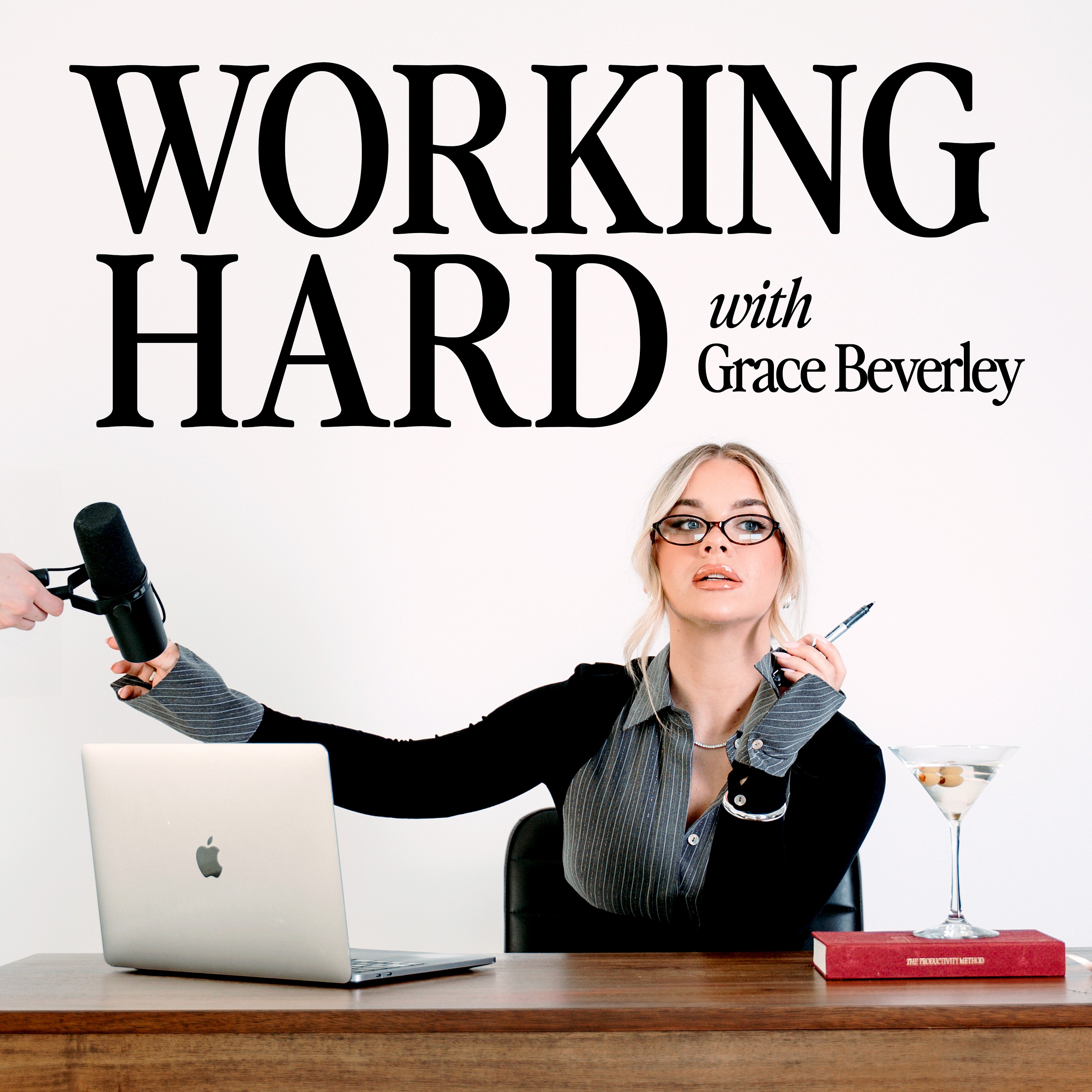
 Working Hard with Grace Beverley
22 Jun 2026 · 49m · 18 chapters

Building wealth in your 20s/30s via radical financial transparency, frugal “frugal chic” spending, and early investing (UK-focused: emergency fund, debt payoff, Stocks & Shares ISA, low-cost ETFs).
Don’t let income growth trigger lifestyle creep; keep expenses stable to define “enough.” Financial literacy starts with education, then tracking spending, then building a 3–6 month emergency buffer. Investing should be started simply and consistently (ETFs/index funds), after clearing consumer debt.
Mia McGrath, UK personal finance content creator and investor; born in China (Wuhan), adopted at 18 months, grew up in Lewisham; worked in entry-level fashion, then used side hustles/investing and brand deals to grow wealth.
Savings growth from 50K at age 23 (June 2024) to 100K investment portfolio after moving out (Feb 2024) and over 200K by the next year; she refused to increase spending despite rising income and says her spending stayed the same. She describes early frugality (e.g., cooking at university, making coffee at work) and “insecurity tax” purchases driven by emotional insecurity.
Written by AI. May contain mistakes.
Grace introduces Mia McGrath, a young financial influencer.
“What is up and welcome back to Working Hard.”
Mia discusses her transition from fashion to finance.
“But like, have you always worked to that level or is it something that you've picked up recently?”
Mia shares details about her financial growth and savings journey.
“And so I thought, well, if I can give back in a way and share what I'm doing, hopefully it can reach people that have never heard of investing.”
Mia reflects on her adoption and how it shaped her money beliefs.
“Could you talk to me a little bit about, well, about that and about how that's kind of informed your view of money?”
Explore the personal motivations behind striving for financial independence.
“Not to say that I was poor, but I couldn't have anything I wanted.”
Learn about the transition from a traditional job in fashion to becoming a content creator.
Understand how mental barriers prevent aspiring creators from starting their journeys.
Discuss the financial mindset shift towards frugality and its implications.
Examine how cultural norms around spending have evolved over time.
“So I kind of acted like that money wasn't there.”
Get key advice on developing financial literacy and managing money effectively.
“What would you say three things are that someone who wants to develop financial literacy should start doing with their money?”
Explore how personal insecurities can influence spending habits and the importance of maintaining a consistent lifestyle despite income growth.
“Is there anything that you do with your finances now that or just with your money generally that you think people would be surprised about?”
Learn essential steps for starting to invest, including the importance of an emergency fund and the benefits of index funds.
“I want to come on to talking about investing because I actually first learned about investing properly through this podcast, through having Friends That Invest, Simran on.”
Discover the significance of compound interest and the advantages of beginning to invest early, even with small amounts.
“I don't want to think about where I need to withdraw my money, all of that.”
Discuss various forms of passive income, including cashback, dividends, and side hustles to increase financial security.
“in my early twenties so that I could set that investing foundation up and that was going on in the background.”
Learn how to leverage additional income without falling into lifestyle creep, focusing on investments and savings.
“And I think that like the main thing that ties all of this together is like finding what works for you and not falling victim to lifestyle creep.”
Learn how to effectively utilize passive income for long-term financial benefits.
“But at the start, I mean, with zero capital, zero experience, you're going to be starting out.”
Explore practical financial decisions on spending and investing in various categories.
“I want to do a quick save or splurge quickfire.”
Understand the common struggles of financial literacy and how to address them.
“I think it's just a common phrase that goes around, but it's create more than you consume.”

Get the gist, explore an idea or ask about something said.
 Claude
On Working Hard with Grace Beverley, what are the key points of this episode?
Searching your listeningAutomatic transcript. May contain errors.
0:00When you're a maintenance engineer in a beverage manufacturing plant, you keep production lines moving and quality on track because there is no room for slowdowns. With Grainger's vast selection of high-quality motors, sensors, belts, and hard-to-find parts, you can get what you need fast and all in one place, so nothing gets in the way of getting the job done. Call 1-800-GRAINGER, click grainger.com, or just stop by. Grainger. For the ones who get it done.
0:30Grace Beverley: Who knew Walmart business could help a thriving office motivate their employees? Pamela knew. She uses Walmart business to get the assortment of items her team needs at the prices she loves. As the office manager, it's my job to make sure my team stays on top of their game. I can get the basics like cleaning supplies and paper towels. But what they really care about, snacks. And she can get everything they need when they need it. Greg loves wheat crackers, Brenda Crave sour candy, and Max, oh boy. He needs protein bars and milk and applesauce and turkey. Built for your business. Who knew? You've got social dialed in.
1:02Grace Beverley: Search is doing its thing. So why do your marketing results look the same as six months ago? That's because you're fishing in the same pond as everyone else. Podcast listeners are a different audience entirely. More engaged, harder to reach through traditional channels, and ready to act when someone they trust makes a recommendation. We're Acast, and we put them right in front of you. Browse thousands of the world's leading podcasts, book host reads or run your own ads, and track every conversion in real time. Same skills you already have, brand new results. ACAST. ACAST.com slash advertise.
1:52What is up?
1:53Grace Beverley: I'm Grace Beverly and welcome back to Working Hard, the podcast shared guidebook on how to improve your own life and achieve what you actually dreamed of doing, because life's too short for boring podcasts and bad advice.
2:06Grace Beverley: What is up and welcome back to Working Hard. I am really excited for today's recording. Essentially, I was scrolling the other day and I came across this video and in the video, the creator just sat down and took you through exactly what every single section of her income an investment portfolio looked like, like actual numbers and details and everything. And I remember watching it thinking about how radical her transparency was and also how useful it felt. And so I went on a mission to find out who this person was. And it turns out she'd built a whole platform of being transparent about finances and building wealth before the age of 25.
2:41Grace Beverley: And she has an incredible story as well. Mia McGrath was born in China. She was adopted at 18 months old by British parents and she grew up in Lewisham. After university she went for a junior role in fashion until a year into her job she set herself a challenge. The challenge was to use side hustles and investing to build herself as much wealth as possible and in two years she has made hundreds of thousands doing exactly that. She's built her whole platform around this idea of frugal chic which is essentially about living a really good life while being genuinely smart with your money at the same time, which I think is such an important distinction, particularly when so much of social media now is focused on consuming as much as possible and keeping up appearances and looking a certain way and all of this.
3:25Grace Beverley: It is quite radical to be frugal and be so transparent about it in this way now, in a way that is shown to be glamorous and exciting, where actually it's maybe the opposite of what is seen to be glamorous and exciting throughout the rest of social media, which is maybe having as much as possible. So in this episode, we get into the money moves that she has made in her 20s, her best actual hacks for building financial freedom, and what she wants to de-influence us on when it comes to spending. Before we get into it, please make sure you are following the podcast on whatever app you are listening to it on.
3:54Grace Beverley: This means that new episodes land in your feed every single morning and means we can keep it completely free for you and only you.
4:05Grace Beverley: Mia McGrath, are you currently more working hard or hardly working? Definitely working hard. Yeah, I'm in my grind era right now. But like, have you always worked to that level or is it something that you've picked up recently? I think I've always had a strong work ethic. My parents always wanted me to try hard at school, but I think when I started out in my career, I definitely wanted to do 110%. But I think that now translates into me being self-employed and my own content. I very much go the extra mile. It's fair to say, but I am constantly working. And I think most self-employed people will be able to relate to that.
4:36Like you switch the nine to five for a 24 seven.
4:39Grace Beverley: no it's so true and I think also part of it is the mental load of it too because even if you're not working there's like the trying to work out what even is the best next piece of work to be doing to be able to get the type of work you want all of that it's very like even if you're not working your brain still kind of has to be doing that I think very few people are good at completely being able to switch that off I think I am sometimes like my partner's very good at just grounding me and saying like put the phone down let's watch film or something but even when I like go to the cinema or like I look at art I'll think oh you know how would I apply that to my content like you know how have they managed to retain my attention like I'm always just taking inspiration for myself yeah so I guess that would be considered working too yeah no I know and I totally get that and I do think also that can be a benefit some sides because it's like you're clearly so passionate about what you do that you're able to see this insight from many different things in terms of how it applies to you it's definitely like a blessing and a curse but for anyone who hasn't yet come across your work or what you're kind of putting out online how would you describe what you do?
5:41So I would say that I am a content creator where I make sort of personal finance lifestyle content my key message or mission is to spread financial literacy and to positively influence people's spending behavior for me I had a shopaholic phase and after that I came out of it and I got really interested in saving and investing and I sort of went down this path of self-education, like coming home every day and watching YouTube videos and like really trying to understand the topic. And so after that, I set up my investment portfolio and it was kind of like a hobby for me. What I share online is almost coming from that beginner lens.
6:15Grace Beverley: Yeah. And also you've kind of become an expert in terms of your own finances and your own journey. And I think that's what I find so interesting about your content and what you've shared is like this radical transparency around what you are doing, what you aren't doing, and not necessarily it being from a background of kind of like, oh, I've always earned this through this side hustle. I've always done this. It was kind of a conscious decision to be like, right, this is my role now. If I want to get to this type of money, I need to do X, Y, Z. I actually came across you because you shared your investment portfolio.
6:50Grace Beverley: What made you decide to be so transparent around what you were actually doing. When I started posting content June 2024, I was speaking about finance very generally. I was just explaining what dividends are. I was just explaining investing or things that I was doing, but I was being very vague. I wasn't talking about numbers. But as soon as I mentioned how much I had in savings, my content definitely got more attention. But I became known because so few people were doing that. There's obviously a lot of finance influencers that talk about this stuff, but they tend to be like from America or Canada.
7:22There's not many people in the UK being transparent. So I think my content kind of stood out. And in a kind of very shallow way, I thought, well, this is working, let me continue. And I started when I was like 23. So perhaps I was a little bit immature. And I just thought, well, this is what works. And I feel comfortable sharing this. So hopefully it can be beneficial to others. And also, I decided to share because that's kind of what got me into investing. Like I was watching other people's portfolio breakdowns. And so I thought, well, if I can give back in a way and share what I'm doing, hopefully it can reach people that have never heard of investing.
7:54Grace Beverley: Yeah, and I really love that about your background. I think that so much of finance feels gatekept for people who have come through a finance track in some way. So whether they're studying it, whether their parents did it, whether like all of these different things, it feels very siloed towards people who naturally have a predisposition to understand it for some reason. And what I really love about your background is the fact that like, and we'll go into this in a sec, but you were working in a fashion career. And this has been more of a lifestyle decision rather than a kind of like career and expertise decision, which has enabled you to actually be able to build up a huge amount of savings and change your life entirely in a way that you have been completely transparent about.
8:33Grace Beverley: I think it's a really unique story, which is why we don't often see it. But actually it's what everyone's trying to do. Like not everyone's trying to work in finance, but yes, everyone's trying to, well, most people are trying to get to a point of financial comfortability where they can actually live the life they want to live or work towards that. And since then, because, you know, it's been two years since you started posting about your investment portfolio and kind of the savings over time. Can you give us a little bit of a picture of how your savings have grown since, when was it, July 2024 to now?
9:06Yeah, so June 2024, I had 50K in savings at age 23. and I'd done that through a mix of my internships and I saved throughout that whole year and then I did another year of internships after I graduated and then it was a mix of like reselling side hustles and obviously living at home is a massive privilege and benefit and that meant that I could put away like more than half my income but something that I guess I got backlash for at the time is like how could I talk about this when I live at home because not everyone has the privilege should do that but something that I was always like transparent with is not everyone is transparent about that I wanted to tell people that there are loads of people living at home that don't do this too so you know perhaps it's more for a niche audience but I think it's nice to share anyway
9:55Grace Beverley: yeah no and I think that's it it's still incredibly impressive I know a lot of people who have lived at home for a number of years and not got close to that savings number who might have been at the same earnings number and of course like privilege is a massive spectrum there are many many different reasons for this that and the other even with that it is I would say percentile wise it massively outperforms the average of kind of what people have been able to do and put their mind to and all of that and I think that the internet doesn't love nuance and the internet doesn't love this kind of approach of like okay well this is still impressive for this setting or whatever it might be but you're such a clear example of actually like okay you might not be in this setting if you're not in this setting here's what you can still do if you are in this setting like look how much you can achieve.
10:39Yeah and to answer your question over time especially with posting content it allowed me to get brand deals and that was a huge source of income alongside my 95 job. So when I finally moved out February last year I had a little bit of an extra safety net in terms of extra income I was earning. So last year I hit an 100k investment portfolio. Wow. And then this year because of the nature of what we what we do obviously with brand deals you have much larger scope to have your own business as opposed to what you're able to earn from a nine to five so it's steadily grown to over 200k wow that's incredibly impressive i think it's easy to sit
11:15Grace Beverley: and be like okay you have this you don't have this like all all of these different things what you're laying on the table is this is what i don't do have this is what i don't have this is what i've done with it and i think so that we need so much more of that online and i think it's easy to scare people away from doing that because you're never going to get it quite right but actually to have gone from an entry-level fashion job to even have been able to build up 50k in savings at that point that is unbelievable like that is really really impressive to go from that in under two years to over 200 grand in an investment portfolio is just like it's so so so impressive and it's so exciting that you're being so radically transparent about it does it make you feel really proud to think about i never i'm classically british i never like to like acknowledge it even though I talk about it in my content it feels weird to give myself a pat on the back about it no and I get that but you should thank you I'd say I want to go back kind of even further to I guess your your whole origin story we've touched on the fact that you were working in a fashion entry-level job going back even further you've spoken about your adoption story and your kind of background.
12:26Grace Beverley: Could you talk to me a little bit about, well, about that and about how that's kind of informed your view of money? Like, where does this perspective come from? Yeah, so I, when people ask me where I'm from, I'm from, say, London, and then they ask, oh, where are you really from? Which they said, that is a microaggression, but fine. But yeah, I've got to tell them. So I am from China. More specifically, I'm from Wuhan. So it's not the place with a great reputation, but yeah that's where I'm from and so I was born there but I was like abandoned and left outside of a school basically in a basket and then I was taken like found and taken into an orphanage I was fostered and like lived there for I don't know a year and I was adopted when I was about 18 months so my British parents put English took me in and I grew up in Lewisham for the first 23 three-ish years of my life.
13:22And yeah, so I think that really shaped my perception of money because even though I had like a middle-class background, I think that upbringing or that origin perhaps created like a bit of instability in me. I mean, I have no idea because it happened so early on. And of course, with trauma and stuff, you can never really work out how it's connected. But I think because of that, I really knew that I couldn't take anything for granted. I think that's given me a lot of drive because even though I've had privilege, I don't think it's to the extent where I've felt like I've had everything. I think when I got into my teenage years, my parents experienced a lot more financial abundance, but up until then, things weren't as abundant.
14:00They were a bit tight. Not to say that I was poor, but I couldn't have anything I wanted. So that really motivated me in the future to want financial freedom and to be able to afford the lifestyle I wanted. I don't know if it's directly correlated to being adopted, but I do think having that rough start definitely sparked something within me yeah and I can imagine as
14:21Grace Beverley: well and obviously like I like I haven't been through that so it's it's it's hard to kind of have a direct relation to it but I think that what what I can imagine is also the element of control and taking your life into your own hands like that's really what you've done over the past few years is looked at what you have versus where you want to get to and being able to kind of draw a line between those two things and just be like, great, well, this is what I want. How am I going to get there? And what does that mean for me? And I think realistically, that quite naturally comes from wanting to remove the chance of instability.
14:54Grace Beverley: And I think that that can come from many different things. But we often see that for a reason of drive in like many different people I talked to on this podcast. And I can really see that kind of coming through in terms of like, you made a huge decision when working in entry-level fashion to actually make a big pivot and that is a huge risk it's also seen as the opposite of a risk for some people who want to have control it's seen as more like well this is the one thing I have to do to get to a place where I'm not going to feel this instability so what was the reasoning behind your decision to kind of leave where you I guess had just entered into in the fashion world yeah so I'd always had this idea that I would pursue this whole career in fashion I would climb the ladder but I think for me when I started posting content I didn't see it as a side hustle even it was honestly a hobby because I didn't know I could monetize it I didn't really understand how the influencer world worked so I think for a while I was just posting and slowly over time like I've documented my journey brand deals went from 200 pounds 500 pounds to my first four-figure brand deal but I think when it started to creep into the five-figure brand deals that's when i had a huge mindset shift because i was like this is serious like this isn't just pocket money anymore like i think the main thing for me is when i started to out earn my nine-to-five salary but not just superseding it but like you know doubling or tripling it i thought well if i'm constantly having to say no to events i'm constantly having to go to the work bathroom and like take you know sneaky calls like i'm kind of actually inadvertently saying no to money so for me it was an opportunity cost where I thought the riskier thing would be to stay because if I'm got a lot more earning potential here and I thought what would happen if I put the 40 hours a week that I'm putting into this job with my work ethic with my drive like what if I put that into my own thing that's already driving this much money in my spare time in my evenings what would happen if I gave eight hours a day to it and so I think that was the bet I took on myself I very much had no idea what would happen and what even drove you to start creating the content before you even left the job like while you were still in that role what was your mindset what were you trying to achieve I got interested in stocks and investing at university I had these male friends that showed me their investment portfolios and as I mentioned went down this rabbit hole of learning about it but to me it was like a hobby that I couldn't express I couldn't talk to anyone about it when I tried to show my friends my investment portfolio that felt really odd like it felt like I was trying to show off to them but I really just wanted to share something with them and I mean of course they're my friends so they were really positive about it but I felt like I was making them uncomfortable so in a way it was easier for me to share that with the whole world than it was to share it with people closest to me but it wasn't just that I think because I couldn't talk about it with anyone I so desperately wanted to share what I'd learned and what changed my life to be cliche it really was just one of those videos that was like just posts the content and I was just scrolling I thought well why don't I just try this if it fails and no one's going to see it and I started on TikTok which is very much like you're posting into the ether so I thought it doesn't matter.
18:05Grace Beverley: Yeah and I think it's such a good example as well of like not waiting till you're ready and I don't mean that in any way other than the fact that like it's not like you were coming into it from that from an expert perspective at that point like you're coming into it as someone who works a separate job who wants to achieve financial literacy he wants to achieve financial security and therefore these are the things I'm doing and I think so many people have a mental block around well I'm not good enough at this yet or I'm not an expert on this yet not everything needs to be from an expert perspective and actually it's only in the past few years where really like that has been a lot of what is you know people choose their niches before that point it was kind of well I'm interested in this therefore I post about this like I started posting about fitness I was absolutely by no means so I couldn't even go stick to the gym that's why I was posting about it like it was from an accountability point of view and then it's like you're able to build something that is an interest into I guess an upskill into a you know career in the sense that you've done it and I think that that's such a good lesson for a lot of people who maybe hold themselves back thinking that actually well I need to be an expert which for most people is going to be 10 years in something so realistically okay well what can you do now.
19:17Grace Beverley: One thing that I found really interesting about your journey is I read about your kind of decision to, from that point where you were in that entry-level job, to kind of basically double down and have a focus on finances to get to the best place possible. Like, you switched to quite a frugal lifestyle, as you already said, and as you spoke about in your financial privilege substack, which I thought was such a good read, kind of laying out what you do have, what you don't have the position you're coming from you also lived at home you made big decisions on spending all of that what was the initial I guess like light bulb moment around that and what did it look like in terms of like I'm going to stop being a shopaholic I'm going to do these things I'm going to put these things in place I think it was at university when I had like my first actual experience of managing money myself I you know wanted to make my student loan last but I was in this environment where like people I shared with they were like on the first day ASOS parcels Deliveroo vapes and all of this kind of stuff and I thought oh I don't know if I should behave like that because I don't know if it's going to last so I almost swung the opposite direction and I was a bit too extreme and in hindsight like some of the stuff I did is ridiculous I would I had social anxiety as well so I didn't want to use the washing machines and pay three pounds each time so I'd wash all of my clothes by hand which was very time consuming but it just saved me a lot of money and then I would cook every meal from scratch which I know is very normal but you know in the halls I was in it wasn't so I was the only one cooking these elaborate meals people would look at me like what the hell are you doing it's just that's just reminding me because when you were saying I took that too far I was on the phone to my sister the other day and she was cycling home from work and she'd just done a food shop and it was in her basket and she dropped a cucumber and it it rolled under a taxi she was like I'm just gonna get off because I'm gonna wait for the taxi to drive away and I was like what with your cucumber she goes yeah because it's gonna drive off it hasn't gone like under the wheel and then she just waited for a few seconds picked up her cucumber and I was like I'm big on being frugal I'm big on saving money I think perhaps picking up your cucumber from underneath the taxi is maybe a step too far like I will buy you a cucumber.
21:34Grace Beverley: Let's not like as in let's keep our stuff off the road.
21:41Grace Beverley: But those are good steps. And I think that you're so right. There's been this adjustment in culture of like what is normal and acceptable. Like a takeaway used to be a treat. A taxi used to be a treat. A shopping spree used to be a treat. Like how all of these things have been democratized is amazing in so many ways because of course it increases accessibility to more people which is absolutely what's needed. But like, do we need to be spending a few hundred pounds on the first day our paycheck comes in? No. And maybe the fact that you wait for the paycheck shows that it's, you know, as in like, that's a bigger chunk.
22:13Grace Beverley: So it needs to be something that you wait for. And maybe therefore it's something that needs to be considered longer. And it's not like a monthly thing. Like you wouldn't say yes to a 200 pound monthly subscription from ASOS probably. And yet sometimes, you know, that's what's really happening. Yeah, I definitely had that mindset shift. And when I was doing my internships, I definitely kept the same habits. So I refused to buy lunch at the office and things like that and not buy coffee out every single day. I'd make the coffee at my work. And, you know, to a lot of people, that would just seem a bit miserable.
22:43But for me, I was a bit crazy. Like I was very obsessed with like financial freedom and reaching these goals. And so doing those things to me felt like progress. I felt like I was in control and perhaps it was a little bit too restrictive. but I think you have different phases of life and I think your early 20s a lot of people just start out on entry-level salaries like that isn't really the time to be splashing the cash if you don't have it so in a way I was living within my means and I was doing the most sensible thing I could have at the time because if you have the chance to live at home even for a year or year and a half like I did nothing is necessarily guaranteed you do have a safety net but if you inflate your lifestyle to not have accounted for rent or anything, you move out, you're going to have to adjust or you're going to have to have this shock period where you have to completely rethink your lifestyle.
23:30So I kind of acted like that money wasn't there.
23:33Grace Beverley: Yeah, because I think you're right in that a lot of the decision to live at home, I think for a lot of people, like, of course, it's a huge privilege. And of course, it can be hugely beneficial. At the same time, lifestyle creep is a massive thing. So if you have that extra money there, like how many people who are living at home are actually saving the rent, like genuinely saving the full amount the rent would be. And of course, like if the, you know, the only way you can do a job is by living at home because it's not on a London living wage or whatever it might be, then like I completely, completely get that.
24:02Grace Beverley: You're right that in some scenarios, it's like, okay, so you're living there to save this, but are you actually saving this? Are you actually living within the means that you set out to even be? Hey, Yetis. This is Nick and Jack from the Best One Yet podcast. Now, the last company we worked at, they used Paylocity and everything just worked. It wasn't until launching our own media business, this show, that we realized how rare that is. Because Paylocity is one delicious burrito of operational needs. They roll up HR, finance, and IT seamlessly into one delicious bite. When everything wraps together like that all at once, your workforce, your tech stack, your business.
24:39You don't need more tools. You don't even need cilantro. You need one solution. And that is why Paylocity built a single platform to connect HR, finance, and IT with AI-driven insights and automated workflows that simplify the complex and power what's next. Or as we call it, a delicious operational burrito. Yes, we do. Experience a one place for all your HCM needs, besties. So start now at paylocity.com slash one. Paylocity.com slash O-N-E.
25:06Grace Beverley: Grainger knows when you're a procurement manager for an office park, you're not managing one building. You're managing all of them. And to stay ahead, you need to see through walls and around corners. Lights about to fail, filters ready to clog, HVAC on its last leg. If you wait until something breaks, you're already behind. Count on Grainger for quality products, easy reordering, and 24-7 support. Call 1-800-GRAINGER, click grainger.com, or just stop by. Grainger, for the ones who get it done. Who knew Walmart business could help a thriving office motivate their employees? Pamela knew. She uses Walmart business to get the assortment of items her team needs at the prices she loves.
25:44Grace Beverley: As the office manager, it's my job to make sure my team stays on top of their game. I can get the basics like cleaning supplies and paper towels. But what they really care about, snacks. And she can get everything they need when they need it. Greg loves wheat crackers, Brenda Crave sour candy, and Max, oh boy. He needs protein bars and milk and applesauce and turkey. It's Walmart, built for your business. Who knew?
26:08Grace Beverley: So if anyone's listening to this who is in their early 20s, they don't believe they're fully financially literate or maybe even slightly financially literate, I want to get into some practical advice. What would you say three things are that someone who wants to develop financial literacy should start doing with their money? When it comes to financial literacy, I think the first step is to learn. But that doesn't mean, you know, just opening up a textbook. there's so many resources that are available now like podcasts books my favorites are the psychology of money by morgan housel think and grow rich it's a great one too and friends that invest as well but i think books are a great way and then so the first step would be to educate second step would be to know where you currently are you can't move forward you can't do anything like save or invest until you actually have an understanding of what's going on every single month so it may seem obsessive but tracking my spending changed everything because i started to notice patterns like what I really valued was I actually sticking to what I valued and then after that I would build up an emergency buffer which is three to six months worth of your living expenses and that basically secures you in case of emergency but also so that you've got that there you can consider riskier things like investing starting a business later on.
27:23Grace Beverley: And what would you say are the biggest money leaks that you see? I think definitely the insecurity tax when you're constantly paying tax um for you know these companies making you feel like there's a problem that you're constantly trying to fix we live in that world and obviously as founders we operate in that world but at the same time as consumers it's just having that level of discernment and thinking do I actually need this or am I just trying to patch something emotional um because I think growing up a lot of purchases that I regretted were linked to insecurity so sure when I was younger like I would order weird stuff on Amazon like double eyelid tape because I grew up like receiving a lot of racist comments against my eyes so I thought oh like that's something I need to change about myself so it's not necessarily just because I think often women's purchases are policed as being frivolous and that's not what I'm referring to I'm more referring to those purchases that are a bit darker than that they're the things that you know you might feel insecure about and then you make a purchase based on that and you regret it later on.
28:21Grace Beverley: Is there anything that you do with your finances now that or just with your money generally that you think people would be surprised about? Something that might surprise people is my spending has remained completely the same. Really? Yeah, I've shared my spending transparently or my income and expenses. And as my income has risen and got into the multiple five figures, I refuse to spend more because I don't really see the point if I was happy on my normal average salary, then I could be happy now. There's not necessarily anything else I need to feel complete. And I think that's quite a powerful feeling because a lot of people increase their income, whether it's getting that pay rise, or even people in our industry like influencers or footballers, they have these massive incomes and they think, oh, suddenly I can buy all these things.
29:05And it's not necessarily to stop that because you feel insecure or out of a scarcity mindset. But it's also to consider that more isn't always more. And if you increase your income, you kind of get those golden handcuffs that now you have to earn that amount to maintain that lifestyle. I would much rather prefer to keep my expenses the same every month because that's my definition of enough.
29:29Grace Beverley: And I think so many people who will have seen your income growth and your wealth growth will assume that the first thing that changes there is a lifestyle. And I think, I mean, obviously one of the reasons why your wealth has been able to grow so quickly is not just earning more, but actually keeping things the same like not suddenly driving a fancy car or like doing this that and the other that doesn't actually improve your life I think that it's such a good and refreshing way of looking at things particularly in a world of so much consumerism when actually it's fucking hard not to fall into that all the time like it is really really hard and doing that is actually incredibly impressive I want to come on to talking about investing because I actually first learned about investing properly through this podcast, through having Friends That Invest, Simran on.
30:21Grace Beverley: And literally that episode I have listened to so many different times. And I was so embarrassed that before that point, I was like earning money and have been very fortunate position to, you know, have my earnings increase at a rapid rate and like be in a comfortable position from early. and I didn't understand investing. Like it really terrified me because it felt so intimidating. It felt like something, if other people need to be qualified to do it as a job, surely I need to be qualified to do it for myself. And actually I went on a real journey to educate myself both through, as you said, things like reading, mainly though things like podcasts and things like Reddit even, like just being in the right threads, reading other people's things.
31:04Grace Beverley: Like I love lots of the kind of like financial transparency threads around like fire UK. So the financial independence retire early, like all of these different ones where people show how their things grow over time, how much they're actually spending a year, all of that. But I do think that most people look at investing and they still find it very intimidating. So where would you recommend someone starts if they're listening to this and they're like, yep, I still don't invest my money. And therefore I'm essentially losing money every year. Where would you recommend that they start? So the first thing I do is make sure I've got that emergency fund.
31:38As I mentioned before, it's three to six months worth of your living expenses. I would make sure that I paid off any consumer debt. So credit cards and planer because your stock market returns are not going to outpace the level of interest on those. And then once you've done that, you're kind of in a good position to start. If you're in the UK, I would make sure that you're using a stocks and shares ISA, which is a tax advantage account that we have where you can deposit up to£20 ,000 every tax year. and you don't pay any capital gains or dividend tax. And in plain English, that just means the profits on your investments.
32:10You don't have to declare any tax on that. I would then look into ETFs, which are baskets of hundreds or thousands of stocks. And these passively track a list. They're also often interchangeably called index funds. Slight difference, but for the average person, they're basically the same. So you've got the S &P 500, which is the top 500 largest companies in the US. You've got indexes like the FTSE All World, which is over 3 ,000 companies in the whole world, but it's made up 61 % of the US, but you just have an extra bit of global diversification. So overall experts like Warren Buffett, for example, who is like a renowned investor, have said pick a low cost broad market index fund.
32:50And what he really means by that is pick one of those and make sure to look at the costs of the ETF and basically just invest consistently. So I think what a lot of people don't realize, especially when they're 18 or in their early 20s, is the magic of compound interest. It's often called the eighth wonder of the world for a reason. If you start with smaller amounts like£50 or even go to larger amounts like£100, it can really snowball over time. And when you show people things like that with the compound interest calculators, they're always shocked by the results that, you know,£50 a month can turn into half a million, you know, obviously by retirement age.
33:27But those are obviously theoretical. But obviously, over time, you might increase your income or, you know, you might have a bonus and put that in. So it's often not as linear as people think. But yeah, obviously, there is risk. But you can reduce that by taking a long term time horizon and also by diversifying with the ETF. It doesn't mean that it's risk free, but it's definitely to me a lot safer than leaving it in cash because year on year that's devaluing to inflation.
33:52Grace Beverley: Yeah, no, absolutely. And I think what you said about compounding trust is so important and creates this kind of urgency of like, if you keep telling yourself over and over, like, I'm going to get into investing next month, next month, next year, like all of that. really if you have any leftover after all of your essential expenses it should absolutely form a part of what you are doing every month with your money and that compounding over time is what is so important because if you started this when you were 18 even if it was 10 pounds a month you would be sickened to know how much you could have made in that time and it's really I think another thing is that I always assumed that it was too much work like I always thought but I don't know which stocks are doing well.
34:34Grace Beverley: I don't know what's happening in this. I don't want to think about where I need to withdraw my money, all of that. The largest amounts I've made from investing have all been through index funds, literally just sticking the same amount of money or increasing it when, as you say, you get a bonus or whatever it might be every single month into like, I've chosen two index funds. And that is just what I do again and again and again. And it's like, that is, it's so passive like you can literally set up the automations that make it happen and I think it's so easy to feel like something's overwhelming when actually the tech means that it is categorically not overwhelming now like investing is not overwhelming anymore you need to pick an index fund or two and go into it every month even if it was like five quid a month and I think that it feels like such a barrier and I totally understand why because it did for me for years too but I wish more people would just do it.
35:30And I like your point about starting small because I've always told people that as a way to make a lot of people feel encouraged that it's not just for people who already have money or already rich but a lot of people get up in arms like oh well£20 won't make a difference but like you know it's about the intention and over time you will increase it eventually and also you can be doing things simultaneously like increasing your income and having a side hustle or starting a business on the side there's so many things that you can be doing so I always like to add that caveat that you know sometimes you could say start with small amounts and people could find that not inclusive but I
36:02Grace Beverley: think it is yeah yeah 100 % and what are the biggest investing mistakes you see particularly women in their 20s making I think prioritizing appearances over building up security and building up assets because I think we have this idea there's a lot of pressure for your 20s to be your prime years I think a lot of people like we talked about earlier want to buy into the lifestyle before they've actually got the foundations in place. So, I mean, it may seem sad, but I wanted to sacrifice like living my best life or living a luxurious lifestyle in my early twenties so that I could set that investing foundation up and that was going on in the background.
36:38I could build up a side hustle. So I was working extra hours and evenings, but that trade-off meant that I'm in a position now where I have so much more financial freedom with my time and money. I just think, yeah, I may not have looked the most stylish or you know beautiful at that age but and it also means that maybe I didn't go clubbing as much or all of that but now I'm in a position where I have a lot more freedom and that's only within a few years of putting my head down.
37:04Grace Beverley: And the exponential growth within that time as well has been that the freedom that you've achieved now has been massive in comparison to the freedom you would have achieved then by allowing yourself 150 quid more on online shopping. Yeah. And you talk a lot about passive income on your page what do you think are the best forms of passive income that you know I can understand someone might be listening to this and going yeah well I'm staying in my nine to five and therefore I'm not going to get to 200 grand in the next two years maybe I need to find some extra ways to earn money what would be your recommendations on the best forms of passive income that you would start today so with passive income a lot of people like well does it even exist uh there are many forms like you can have cash back on your spending which I think is pretty passive.
37:51You can have dividends from stocks, which is technically passive, but it does have risk. You could have things like affiliate marketing, even if you're not an influencer, there are ways of utilizing it, digital products. There's a lot of different sources of passive income. But the easiest one for beginners to get into is honestly cashback or rewards on their spending. I never spend for zero. I always like to get some kind of reward whether it's cashback or Avios points. I think it's so important to get that reward for your spending. I've seen people get really discounted flights just because they use their Amex to spend all year.
38:24For me, I think investing is one of the ways that you can make passive income, even though the income isn't always directly paid to you because it's accruing and also it's unrealised gains. So you haven't technically got that money yet to spend. It doesn't mean you've got that profit yet. But I do think that over time, as it compounds, like we said, over decades, to me, like in the last year I've made 20 ,000 pounds on my investments like wow it just about is someone's full-time salary so and that's for me not doing anything I don't check it hardly ever so I think investing is one of the ways you can make passive income but obviously you need the money to get
39:00Grace Beverley: started yeah no absolutely and I think one of the things as well is that like there's this obsession with passive income and saying oh well this isn't fully passive yeah there's a spectrum right there's a full-time job which is absolutely not passive like most of the time you're having to work at least a 40 hour week and these are all the different things you're doing and this is what you're earning for it there's completely passive like investments there's also a lot in the in between like if you work from home a few days a week can you do dog sitting at your house for those days like rover like i pay so much to rover for when i need dog sitting like if you're going to be sat at home could you not go and pick up someone's dog and they sit at home with you all day and you have a nice lunchtime walk like same with doing like surveys online same with house sitting same with like all of these different things yeah they're not fully passive but you're probably going to be doing half the things anyway and fully passive it doesn't need to be fully passive or not passive at all like there is a middle ground and I think that we sometimes get so caught up particularly online and the like lack of nuance between these things if you can just like earn a little bit extra like every single person who's been a dog sitter for me for example has another job that they just happen to work from home and I look at you know what I pay them a day for that type of thing and I'm like god you're earning a solid amount extra and I think that you know there are so many people who could be doing that it doesn't just need to be the obsession of like oh well I want to print money it's like yeah okay well we all do realistically like that's not gonna happen unless you strike across an absolute gold mine so what are the things that you are doing that you could monetize in some way where maybe it's not fully passive but it still doesn't take away from your life massively but it's definitely able to add in terms of income yeah for sure I think there's definitely like for the listeners like a difference between side hustles and then passive income but my thing is like I'd love to do I always was an advocate for doing a side hustle and then funneling that into things that could give you passive income right because like you said rover all these different things they are extra work and for someone maybe who's a nurse or something like that they probably you know like everyone has different circumstances so like if you do work really long shifts maybe it's not an option but I think if you can do a bit of extra work to increase your income and then you put that into something that can grow your money even if it's not investments it could be just choosing a higher yield savings account you know not going with your traditional high street bank offering you 0.01 percent and going with something that's keeping up with inflation I think that's a nice way to earn passive income Yeah, no, that's a really, really good point.
41:39Grace Beverley: And I think that like the main thing that ties all of this together is like finding what works for you and not falling victim to lifestyle creep. Because I think that all of those things. So if the aim is to increase your income somehow by increasing your work and funneling that into passive income, so you're not necessarily taking hours on elsewhere, unless you can, which I think lots of people could. and I'm not saying you know hustle 24 hours a day all of this like I'm not saying that but realistically could you go pick up a dog and sit at home like as in you know like it's not gonna ruin your life but like that difference into the passive income one thing you also need to do is not see that extra income unless you truly which a lot you know lots of people would need that extra income but if you if that is on the on top stuff make sure it is the on top stuff like make sure that is going into your investments make sure that isn't becoming okay well I say it can take an extra holiday a year or I can buy this much more from this on online shopping site or whatever it might be it's like as much as that feels like a lifestyle improvement the compound lifestyle improvement you can get from truly utilizing passive income and investments and stuff is what is really gonna see the difference kind of from now to actual financial freedom It's just about building leverage, isn't it?
42:55Trying to work smarter, not harder. But at the start, I mean, with zero capital, zero experience, you're going to be starting out. But that's why I said the season. So like at the start, you might be saving a lot, being very frugal, taking on extra side hustles. But I think I'm a classic example of how that might be the case for one part of your life. But in another part of your life, it can change. And there's light at the end of the tunnel. You don't have to be doing that forever. but I think very few people are wanting to go through that phase of extreme focus with their money.
43:24Grace Beverley: No I think that's totally fair enough and I think that thinking of it not necessarily as like indefinite because if it's to improve your standard of living and you hate being that frugal then maybe it doesn't improve your standard of living again it's like what works for you and what actually fits into your lifestyle and what trade-offs are you happy to make in order to get to a certain future it might be not many in which case great but also you can't sit there saying oh, it should be this, but it's not this when you are actively choosing that, if you are actively choosing that outcome.
44:16that all at once, your workforce, your tech stack, your business. You don't need more tools. You don't even need cilantro. You need one solution. And that is why Paylocity built a single platform to connect HR, finance, and IT with AI-driven insights and automated workflows that simplify the complex and power what's next. Or as we call it, a delicious operational burrito. Yes, we do. Experience a one place for all your HCM needs, besties. So start now at paylocity.com slash one. paylocity.com slash O-N-E.
44:48Grace Beverley: I want to do a quick save or splurge quickfire. I'm going to give you a category and you tell me whether it's worth splurging on or saving on and why. I want to do this because I think that there are many different things that, like, of course, frugality is, again, a spectrum. There are going to be different levels that different people aspire to and adhere to. But I think really there are also some areas that maybe you don't skimp on and end up shooting yourself in the foot. so I'll go through them moisturiser save you should splurge on active ingredients ones with like scientific evidence but the stuff that's just going on your face I like to use simple CeraVe the ordinary those types of brands more budget friendly and then might splurge on active ingredients instead eating out splurge surprisingly because even though I love to cook at home I think eating out is usually where I might see my family my parents or friends so I'm not going to scrimp on that yeah and I guess if you have the balance of it like you're not I think what's important is not falling into the like, oh shit, I didn't go to the shop again.
45:50Grace Beverley: And like, I can't be bothered. So I'm going to get takeout when I didn't even plan it and didn't even necessarily want it. I think like that's the real difference. Yeah, sure. Holidays. Kind of half and half. I'm not one to go and stay in a hostel and backpack and be super frugal in that sense. Like I'd rather go on a bit more of a luxurious side. But like I, for example, went to Thailand for£780 for like seven nights. Wow. Flights, hotel, breakfast. so like I would like to find a good deal but I don't necessarily want to be tight in that area don't find it like a holiday yeah if I'm gonna work this hard I want my holiday to feel like a holiday yeah wardrobe basics splurge because I'd much rather have fewer pieces that are higher quality because I barely shop like I'm doing this challenge where I only buy one item a month so much rather only own fewer pieces but better quality yeah and I can I can imagine when you're doing that it's like really makes you think about the individual purchase and like is this if it's a white top for example is this something I'm going to be wearing for a long time is it going to actually stand the test of time even if I love it now which also it just makes everything more thoughtful and like even in-person shopping versus online shopping all of those things that allow you to really think about things coffee save I don't really enjoy the process of getting one every single day it's not like a habit for me I sometimes just don't really appreciate it so when I make it at home, it's just, I don't know, it makes more sense to me.
47:15I don't believe in the idea that like millennials can't buy a home because they buy five pound coffees. Like I don't believe in that idea, but it's just a personal choice. I'd rather not spend money on that. Yeah. Because it adds up. It could be like, I don't know, if you get one every day, it could be a thousand pounds a year I worked out once. So I'd rather put that in my investments. Yeah, totally fair enough. Tech? Save. I'd rather buy something from a secondhand website like back market and I keep my tech for a very long time until it literally can't function. Like I was using AirPods that would make a hissing sound constantly finally finally repaired them because i thought no i'm a businesswoman now i need actual functioning tech but for a while i would save on that area
47:51Grace Beverley: yeah like not needing to upgrade your iphone every time there's a new one exactly rent surprisingly splurge because i think with the nature of what i do being comfortable in my environment and showing where i work and where i live like i think that's important and so i I went like in zone two, I pay like 1.4K, which is a lot more than I, you know, I started paying that when I was on 30K a year, which is a big chunk of my income. But I knew I had that side hustle income to supplement that. But that was, you know, in theory, quite a risky financial decision. But I'd much rather pay to have the space and to be central so that I can get to events quicker.
48:31So in a way, I think it does have a high return on investment. Trend led pieces. save even though some people think my style might be a bit boring because i tend to go for more timeless stuff i just in the past have regretted all of the different trends or micro trends i've bought into so i just see it as a waste of money yeah i think there's fun ways of engaging in a micro trend for example like you could go on vintage and get it second hand or a charity shop i like to shop my fun pieces second hand too because i feel like it's just more sustainable
48:58Grace Beverley: and low cost and it gets gives you a great feeling when you find it i love vintage and Like even the process of like building up my explore page to be in line with the things I want and then finding little gems, like it's so much more rewarding than being on a site where you search that exact thing and they've got thousands of products and there's, you know, one that matches it and it's like, yeah, perfect. That's so easy. You don't get the same joy out of it as like actually, it's like the fulfillment. You get out of the like challenge of finding like these perfect zebra boots or whatever it might be.
49:30Grace Beverley: No, I totally agree with that. Before we end, I think this is a really important question to ask, because I think that lots of people will listen to this and either have a moment where they go and absolutely sort things out or they think I need to sort things out. But it's like there's an embarrassment around it. There's a barrier in terms of like the work of like working out how much you're actually spending and cutting down some subscriptions and like all of these different things. What would you say to someone who is embarrassed about not having their finance sorted and that's holding them back from actually sorting it out?
50:02Well, I'll just say to them that is completely normal. I think that's most people because the UK in general just doesn't have much financial literacy. We don't learn about these things in school. I mean, private schools do, but I didn't go to one, so I had no idea. And then if you don't, if your parents don't tell you, where are you supposed to go? There's no obvious place to learn about it. And sure, there's lots of books and podcasts, but it feels very fragmented. It's like there's no one place to actually understand it. The individual has the responsibility to go and find out, but that's quite a lot.
50:32so I would say to them like don't feel overwhelmed or like don't feel embarrassed because it's completely normal um like just start small I like to call these like micro habits but just start by checking your bank balance more regularly um start by just making that save versus splurge list so that you're aware of like your values and what you actually want to spend on because a lot of things I think the biggest challenge is mindless spending not really knowing why you're spending um but once you have those priorities it's easier to see where you're
51:02Grace Beverley: directing things yeah no I think that's really really good advice and I think also you don't need to tell the world you're doing something before you actually do something like if you're embarrassed about something great let's go home sort it out and like you can feel I bet you felt amazing after you like fully sorted out what am I mindless spending on like what are what's what are these shopping sprees all of that also most people I've come across who have got really into investing they've actually got into it a lot later than you have there's there's it's kind of been finding out about it well into their 20s 30s 40s and then finding it and finding it such a hack and all of this and I think that it's never too late but you do want to start when you can so it's kind of like what can you do now to like there's no point putting your head in the sand to avoid that and to end I'm going to ask you what I ask everyone which is what is the best piece of advice you have ever received?
51:53So it wasn't by anyone in particular. I think it's just a common phrase that goes around, but it's create more than you consume. I think I never realized this growing up. I always thought, you know, you're kind of conditioned to be a passive consumer in society. And I did have like an entrepreneurial streak, but I didn't really like express it. So I think I started realizing this when I started making content, like obviously at the start, I had no idea I could make money from it. So it did feel like a creative outlet. That's what I want to tell people it doesn't matter if it's content a blog even posting on linkedin like something could feel cringe at first but creating something is truly how like anyone in this world has ever like done something or fulfilled their dreams like you don't get anything by waiting passively for something to happen to you i really love this idea of being high agency so you know believing that instead of the world happening to you you happen to the world you're in control of your choices and I think creating is one of the ways you can do that.
52:49I love that, that's such good advice.
52:51Grace Beverley: Well thank you so much for joining us, you've been incredible and I love following your journey. Thanks so much Grace.
53:19Hey, Yetis. This is Nick and Jack from the Best One Yet podcast. Now, the last company we worked at, they used Paylocity and everything just worked. It wasn't until launching our own media business, this show, that we realized how rare that is. Because Paylocity is one delicious burrito of operational needs. They roll up HR, finance, and IT seamlessly into one delicious bite. When everything wraps together like that all at once, your workforce, your tech stack, your business, you don't need more tools. You don't even need cilantro. You need one solution. And that is why Paylocity built a single platform to connect HR, finance, and IT with AI driven insights and automated workflows that simplify the complex and power what's next.
53:56Or as we call it, a delicious operational burrito. Yes, we do. Experience a one place for all your HCM needs, besties. So start now at paylocity.com slash one. Paylocity.com slash O-N-E. When you're a maintenance engineer in a beverage manufacturing plant, You keep production lines moving and quality on track because there's no room for slowdowns. With Grainger's vast selection of high-quality motors, sensors, belts, and hard-to-find parts, you can get what you need fast and all in one place so nothing gets in the way of getting the job done. Call 1-800-GRAINGER, click grainger.com, or just stop by.
54:35Grainger, for the ones who get it done.
54:39Grace Beverley: Who knew Walmart business could help a thriving office motivate their employees? Pamela knew she uses Walmart business to get the assortment of items her team needs at the prices she loves. As the office manager, it's my job to make sure my team stays on top of their game. I can get the basics like cleaning supplies and paper towels. But what they really care about, snacks. And she can get everything they need when they need it. Greg loves wheat crackers, Brenda Crave sour candy, and Max, oh boy. He needs protein bars and milk and applesauce and jerky. It's Walmart, built for your business. Who knew?
This episode is a guide to building financial freedom and being radically transparent about how to do it.
Today I'm joined by Mia McGrath, who you’ll probably know from her super transparent money journey online, she went from earning a starting salary in her junior fashion job to being on the road to her first million, and she's documented every step of the way, super transparently. She has a fascinating story and was so open as to how that's impacted her life and her attitude to her finances.
MIA'S LINKS:
Instagram: https://www.instagram.com/miarose_mcgrath/?hl=en
Website: https://www.miamcgrath.co.uk/
TikTok: https://www.tiktok.com/@miarosemcgrath?lang=en-GB
+
SIGN UP TO THE WORKING HARD NEWSLETTER: https://graceb.myflodesk.com/k0sfhlac34
+
FOLLOW THE PODCAST
Instagram: https://www.instagram.com/workinghardpod/?hl=en
TikTok: https://www.tiktok.com/@workinghardpodcast
+
DILEMMA SUBMISSION
If you'd like to submit any dilemmas to the podcast to be answered in the bonus episodes, please send them to [email protected] with the subject beginning DILEMMAS or DM us @workinghardpod on instagram!
+
MY LINKS: https://gracebeverley.komi.io/
+
RETROGRADE, SHREDDY, TALA and THE PRODUCTIVITY METHOD are my own businesses, therefore any mention of them - whilst not being a sponsorship - is monetarily endorsed. As usual, sponsorships do not change my opinions nor my honesty, but I will always disclaim to make sure motives are clear 😊
This episode is not financial advice and we are not financial advistors!
Hosted on Acast. See acast.com/privacy for more information.